Blog

  • 2014 Qoros 3 Hatchback [video]

    Qoros has unveiled the 3 Hatchback model ahead of its official public debut scheduled for March at the 2014 Geneva Motor Show. There are two pictures and a video of the second model in the range.

    The design and engineering of the compact (C-segment) Qoros 3 Hatch draws heavily on the brand’s first model, the Qoros 3 Sedan. While it is similarly inspired by contemporary European automotive styling themes, it displays a subtle, youthful evolution of the distinctive signature Qoros design cues to inject greater sportiness to the car’s appearance.

    “The new Qoros 3 Hatch will appeal to the modern metropolitan always-connected customer who needs a little extra versatility provided by the hatchback body style”, commented Vice Chairman of Qoros, Volker Steinwascher.

    “It offers those with active outdoor lifestyles or young families extra practicality, combined with added coolness thanks to its more spirited, sporty look”, he added.

    As well as rear lamp clusters and tailgate specific to the hatchback, the Qoros 3 Hatch features subtle visual changes at the front that differentiate it from the Sedan – notably to the front grille, front bumper and front fog lights. These create a bolder ‘face’ and a more compact, dynamic, sporty appearance that will appeal to a new, more lifestyle-oriented group of customers.

    The interior boasts key ergonomic features, refinement, understated quality and equipment are shared with its sedan compatriot, although new upholstery colour combinations and materials will provide a fresh, new ambience.

    Actually Qoros 3 Hatch looks pretty and and with a 1.6 liter four-cylinder engine offered in naturally-aspirated and turbocharged versions, it will deliver nice driving pleasure. The engines can be mated to either 6-speed manual or an automatic dual-clutch gearbox.

    Both Qoros 3 Sedan and 3 Hatch will be assembled in plant located in Changshu, China.

    httpv://www.youtube.com/watch?v=yhEGQ3CaZ2o

    Source: Qoros

  • 2015 Subaru WRX STI Starts With Limited Launch Edition

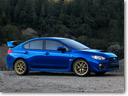
    Subaru-WRX-STI-Launch-Edition-shadowSubaru-WRX-STI-Launch-Edition-mediumAs promised, the 2015 Subaru WRX STI is now official at the Detroit Auto Show. In what can be described as a celebratory spirit, the Japanese company has decided to sell 1000 units of it in limited form called the Launch Edition. It’s more recognizable feature is the only available paint job called WR Blue Pearl. Gold-painted 18-inch BBS alloy wheels finish the legendary look.

    In true STI nature, the power comes from a 2.5-liter flat six – the whole 315 hp package that is. This, along with an STI Short-Throw Shifter 6-speed manual, should bring a genuine sproting feel to the driving experience. It’s the whole package really. You get a rather stiff chassis, Active Torque Vectoring, Multi-Mode Driver Controlled Center Differential (DCCD), Symmetrical All-Wheel Drive…gasps for air… Multi-Mode Vehicle Dynamics Control (VDC), and SI-DRIVE powertrain control system. Don’t forget the Brembo disc brakes and the Super Sport ABS that overseers them. Wheel size: 245/40 R18 all around. Inside, you should be expecting Alcantara, a bit of leather, black on blue color prevalence and STI logos sewn here and there. The steering wheel is new and is as flat-bottomed as it can be.

    The Launch Edition is pretty well equipped with luxuries that will appeal normal people as well (as opposed to gear heads who drink brake fluid for breakfast). Consider the Keyless entry system, LED low-beam headlights, dual-zone climate control, heated front seats, heated wing mirrors, windshield wiper de-icer, HD radio system with great USB connectivity, a 4.3-inch LCD screen with loads of information on it.

    Source: Subaru

  • 2015 Acura TLX Prototype And TLX GT Race Car Debut At NAIAS

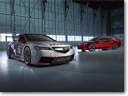
    2015-Acura-TLX-GT-Race-Car-THUMB2015 Acura TLX Prototype along with TLX GT Race Car was exclusively introduced at the North American International Auto Show. The prototype was developed around the theme “Red Carpet Athlete” and it actually shows how a car can deliver a blend of luxury refinement and sports-sedan athleticism, with exhilarating performance. In fact, TLX joins the ILX and RLX as the third vehicle in brand’s sedan lineup.

    The exterior of the TLX Prototype was decided in Acura‘s Athletic Red Pearl paint. It expresses the sporting character of the car, which is additionally emphasized through its low and wide stance, shortened front and rear overhangs, dynamically sculpted fender arches, and purposeful character lines.

    The vehicle also sports Acura’s signature Jewel Eye LED headlights which add advanced and bright-eyed appearance while producing superior down-the-road illumination. In addition, the car runs on custom-made five-spoke 20-inch alloy wheels fitted 265/35ZR20 low-profile tires. On the other hand, the sculpted hood with its sharply creased bilateral ridgelines hints at the performance capabilities of new Acura powertrain.

    Another exclusive feature is the tailor-made side mirrors, which have a row of LED lights fused into their base. In terms of dimension, the TLX Prototype is 3.8 inches than the current TL, but still has the same 109.3 inch wheelbase. Despite the more compact exterior, TLX has spacious interior with an open and airy greenhouse, commanding sight lines, ample cargo capacity and seating for five persons.

    TLX will be offered as a two-wheel or an all-wheel drive variant; with two high-performance, highly fuel-efficient new engines; two new advanced transmissions; and the next generation Acura Super-Handling All Wheel Drive (SH-AWD) and Precision All-Wheel Steer (P-AWS) dynamic performance and handling technologies.

    In details, the powertrains are the new 2.4-liter 16-valve inline 4-cylinder with direct-injection and Acura’s i-VTEC® valvetrain. The first unit is coupled with new 8-speed dual clutch transmission (DCT) with torque converter.

    For even greater power and performance, there is available the 3.5-liter SOHC V-6 that also employs direct injection and VTEC variable valve control and cam timing along with fuel-saving Variable Cylinder Management (VCM) cylinder deactivation technology. The unit is matched with a new 9-speed automatic transmission with closely spaced gear ratios and a wide overall ratio range. Both powertrains utilize Acura Precision All-Wheel Steer (P-AWS) technology with independent left and right rear wheel toe control.

    Furthermore, the TLX will include an Integrated Dynamics System (IDS) to allow for further personalization and a sportier driving experience. The system features four driving modes – ECON (Economy), Normal, Sport, and a new Sport+. Depending on the mode, it adjusts the Electric Power Steering (EPS), throttle response, SH-AWD and P-AWS control logic, transmission shift mapping, Active Noise Control settings and HVAC control in accordance with the preferences of the driver.

    The prototype also uses the Advanced Compatibility Engineering (ACE) body structure and will be available with Acura’s most advanced safety and driver-assistive technologies like Collision Mitigation Braking System (CMBS), Forward Collision Warning (FCW), Lane Departure Warning (LDW), Lane Keeping Assist System (LKAS), Adaptive Cruise Control (ACC) with Low-Speed Follow and Blind Spot Indicator (BSI).

    Under the lights of the Show in Detroit also was the entirely new 2015 Acura TLX GT Race Car. With its reveal Acura Motorsport announced its plans to move up to the GT category of the growing and highly competitive Pirelli World Challenge Championship.

    There it will compete next to the Audi R8 LMS, Cadillac CTS-V, Chevrolet Corvette, Dodge Viper, Lamborghini Gallardo, Mercedes SLS, Nissan GTR, Porsche 911 and Ferrari 458. The racer was developed from the production Acura TLX by HPD.

    To be more precise, the TLX GT Race Car will include HPD chassis and aerodynamic performance parts approved for Pirelli World Challenge competition, and will be powered by a direct-injected twin-turbocharged V6 engine. In addition, it was announced that the vehicle will use brand’s Super-Handling All Wheel Drive (SH-AWD).

    Source: Acura

  • Nissan Sport Sedan Concept Previews The Future 2015 Maxima

    Nissan Sport Sedan Concept was teased in the beginning of this year when it showed to the public its futuristic looking front-end design and avant-garde LED head-lights. At the Detroit Auto Show the concept was fully revealed boasting performance, innovation and technology.

    Sport Sedan Concept marks also the celebration of company’s 80th anniversary. The vehicle is a design study with a particular highlight on next-generation design and sporty style. It actually previews the future production 2015 Maxima, which is intended for those keen on cutting-edge design and driving dynamics.

    Along with the Nissan Resonance and Friend-ME, the car includes signature design aspects that we will see in the future Nissans. Such are the V-Motion front aspect, “floating” roof and boomerang-shaped headlights and taillights.

    To go further into details, the exterior of this Nissan features low and wide proportions, with a lowered hoodline and reduced ground clearance. The “V-Motion” movement of the front end flows from the dramatic chromed grille up through the hood. At the front are positioned the large LED boomerang headlights, a deeply scooped front fascia and wide and sloped windshield.

    Next, the profile of the vehicle also makes a powerful impression. It has a dynamic bodyside lines adding a strong sculptural feel and connecting the wheels and tires. Precisely, the Sport Sedan Concept runs on custom 21-inch aluminum-alloy wheels mounted with low-profile 275/30R21 tires.

    At the rear we see high deck, large chrome trunk accent and wide and deeply scooped rear fascia. At last, the final touch of the exterior’s unique appearance is the “Strad Amber” paint, which is a result of the application of an orange-amber topcoat over a base of gold paint.

    The interior of the concept vehicle also previews some key new design elements of the future production cars. For instance, premium materials are found throughout, diamond-shaped graphics on the quilted seats have been applied, and panels were included that add to the sense of dynamic motion. The interior also features high-contrast colors and facet metallic accents.

    At last, what is important to mention is that the front-wheel drive Sport Sedan Concept will be powered by a 300+ horsepower (220+ kW) 3.5-liter V6 powertrain. The engine will be matched with a sport-tuned Xtronic CVT transmission and will include an innovative suspension layout with performance dampers.

    Nissan Sport Sedan Concept Dimensions:

    Length 191.7 in. (4,870 mm)
    Width 75.3 in. (1,912 mm)
    Height 54.3 in. (1,378 mm)
    Wheelbase 111.2 in. (2,825 mm)
    Front overhang 39.1 in. (992 mm)
    Rear overhang 41.5 in (1,053 mm)

    Source: Nissan

  • World Premiere: 2014 Chevrolet Corvette C7.R Racecar

    At the North American Auto Show Chevrolet made two exclusive premieres. The first on is of the breath taking Corvette Z06, whereas the second – of the 2014 Chevrolet Corvette C7.R Racecar. Both cars were co-developed and represent the closest link between Corvettes built for the road and for racing. They share the masterful engineering of brand’s specialists and are equipped with new technologically advanced components in terms of chassis architecture, engine and aerodynamics.

    For the racing season this year, Corvette Racing will enter two C7.Rs which will compete at the 52nd Rolex 24 At Daytona in ten days as well as the GT Le Mans class in 11 races around North America. It is also expected to be confirmed the participation of the team at the 24 Hours of Le Mans in June.

    In 2013 Corvette Racing won five races and this success was due to the technology transfer between Corvette production cars and race cars. Many of the architectural and aerodynamic features of the C7R are based on equivalent components and technologies found in the 2015 Chevrolet Corvette Z06.

    For instance, the first one is the brand new aluminum frame, which was built with the extensive utilization of advanced manufacturing materials such as laser welding, Flow-drill-machined fasteners and a GM-patented aluminum spot-welding process. The goal was to make a production structure for the cars which is much stronger than previous ones.

    The second feature that both cars share in common is the direct fuel injected engine. It is created in such way that it delivers greater efficiency and can make a significant difference in long-distance endurance racing such as Daytona and Le Mans through fewer time-consuming pit stops.

    In the aspect of aerodynamics, Corvette C7.R features forward-tilted radiator, functional hood and front-quarter panel vents, and rear transmission and differential cooling intakes. Z06 and C7.R share strategies for improved cooling and aerodynamic downforce, including similar front splitters, rocker panels, and front- and rear-brake cooling ducts.

    Of course, there are differences between both cars and they are mainly defined by the limitations of GT rules. First of all, C7.R has the same powertrain as the C6.R that has a displacement of 5.5L, and has no forced induction. In comparison, Z06 is equipped with supercharged 6.2L unit which develops 625 horsepower (460 kW). Despite these differences, both engines are based on the historic small block architecture.

    The racecar is also built with modified suspension because of the wider racing tires and larger brakes, according to the GT regulations. The ducts on the C7.R can be seen on each of the rear quarter panels, above the brake ducts, which will draw air to help cool the race car’s transaxle and differential.

    In addition, the rear wing has been made more more-significant part of vehicle’s aero package. A larger radiator inlet generates smoother airflow over the rear wing and makes its use more efficient to the handling and stability of the C7.R at higher speed.


  • Porsche 911 Targa: A Modern Classic Debuts

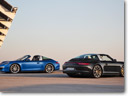
    Porsche-911-Targa-shadowPorsche-911-Targa-mediumThere it is. The Porsche 911 Targa marks its world premiere at the Detroit Auto Show. We are genuinely excited about this one, because you know, it brings something fresh to the table. Yes, it’s a reinterpretation of a classic, but even that is welcome in our books in this world of compact-SUV dominance.

    How does the Targa essentially differentiate itself from the rest of the Porsche lineup? Well, it’s a coupe but it’s not, a convertible but not entirely. It has a retractable roof over the driver and passenger seats, a wide bar where you’d expect to find the B-Pillers, and a wrap-around rear window without any pillars again. This being the 21st century and all, everything happens electronically.

    Basically, the Targa system has two movable parts: a soft top and a glass rear window. With the press of a button, the rear window, which is attached to the convertible top compartment lid, opens up and tilts automatically. All the while, two flaps open in the Targa bar, releasing the soft top’s kinematics. The convertible top gets released, folded into a Z-shape as the roof opens, and stowed away behind the rear seats. Once the top has been retracted, the flaps in the bar close and the rear window moves back into position once again. The roof takes around 19 seconds to open or close only when the vehicle is stationary. In case you don’t want the wind in your hair when the top is down, a deflector integrated in the cowl panel frame can be put up manually.

    Although Porsche are being silent about the weight, they do stress out that the rear window is made from an extremely lightweight laminated safety glass. Inside the cabin, the front roof element is lined with black fabric while the Targa roof bar boasts a layer of Alcantara.

    As for the oily bits, the Targa – in true Porsche fashion – comes in to models: the 3.4-liter, 350 hp 911 Targa 4 and the 3.8-liter, 400 hp 911 Targa 4S. Both are all-wheel drive exclusively. The former comes with a 7-speed manual as standard. Should you chose, however, to equip it with Porsche’s Doppelkupplung transmission and the Sport Chrono Package, you’d be able to hit the 60 mph mark in 4.8 seconds.

    The 911 Targa 4S, on the other hand, does the same stretch in 4.4 seconds with the same ticks on the options list. Both versions get pretty good gas mileage as well. From 32 to 28 mpg depending on the model choice and transmission.

    Standard equipment on each model includes leather interior, sports seats, automatic climate contro, Bi-Xenon headlights, 7-inch color touch screen navgation, digital radio, MP3 connectivity, Porsche Stability Management, Porsche Traction Management and a three-year warranty.

    The Targa 4S adds to that 20-inch alloy wheels, Porsche Active Suspension Managemnet, torque vectoring, and a rear limited slip differential.

    Source: Porsche

  • 2015 Lexus RC F – 456HP and 518Nm [video]

    Lexus has published a nice video showing highlights of the powerful 2015 RC-F Coupe. The direct rival of BMW M4 and the new C-Class AMG was presented at the 2014 North American International Auto Show (NAIAS).

    2015 Lexus RC-F Coupe comes with complete aggressive body kit including reworked front and rear bumpers as well as a pair of revised side skirts and ventilated front fenders. There is also a new front hood, an F-mesh grille and a set of big 19” forged aluminum wheels fitted with performance tires. Furthermore, the car can be equipped with a carbon fiber package including roof and an active rear spoiler that deploys at 80 km/h (50 mph) to generate additional downforce.

    The interior boasts sport seats, revised instrumentation, alloy pedals and an “elliptical cross-section thick grip steering wheel”.

    2015 RC-F Coupe is powered by an all-new 5.0 liter naturally aspirated V8 – 456HP (335 kW) and 518Nm (383 lb-ft) of torque. 0-100 km/h in 4.6 seconds and a top speed of 270 km/h (168 mph) – electronically limited.

    The RC-F also comes with a sport-tuned suspension, a stiff front lower brace and a Torque Vectoring Differential with three different modes: Standard, Slalom and Track. It guarantees perfect traction at all conditions.

    Enjoy!

    httpv://www.youtube.com/watch?v=CZXlTW4-n6Q

    Source: Lexus

  • Kia GT4 Stinger Concept Out Of The Shadows

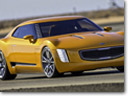
    Kia-GT4-Stinger-Concept-shadowKia-GT4-Stinger-Concept-mediumPure, unadulterated fun is the idea behind the Kia GT4 Stinger Concept which has now gone public in Detroit at the North American Auto Show. An engine at the front, rear-wheel drive, 2+2 seating and an acceptable price. Could eventually Kia be taking on the BRZ and the GT 86? Let’s hope so.

    What we do know for sure, however that the GT4 looks amazing. Yeah, it’s a concept and that’s what it’s supposed to look like, but this one does the job particularly good. It’s 169/7 inches long, 74.4 inches wide and just 49.2 inches tall. It sits close to the ground on 275/35R20 Pirelli Pzero performance tires (235 at the front). Consider us more than impressed with the creeping LED lights, the see-through A-pillars, the silky-smooth sculptured body, and the overly simplified back end. It really is a masterfully designed thing. Props to you, Kia Design Center America (KDCA).

    Enough admiration, though. It’s time to get serious. Like under-the-hood kind of serious. There’s a real engine hiding in there – it’s Kia’s acclaimed T-GDI 2.0-liter unit tuned to churn out 315 hp. All of that power is sent to the rear wheels via a close-ratio six-speed manual transmission. The stopping power is courtesy to the Brembo Gran Turismo 15-inch crossdrilled rotors and four-piston calipers.

    The GT4 should be an adrenaline blast in the corners as well, considering the near perfect (52:48) weight distribution, the quick-ratio steering rack and its relatively low unsprung mass which stands at 2,874 pounds.

    Small wonder then, that you don’t even get a stereo, nor carpets. Door handles? Nah, try pull straps for a size. “It’s a totally selfish design. The design team at KCDA is full of gearheadsand enthusiasts, and the GT4 Stinger is the perfect car for that kind of crowd.” comments chief designer, Tom Kearns

    Source: Kia

  • Jeep Wrangler Sahara Restyled By Vilner

    Vilner Jeep Wrangler Sahara is the new proposal from Art Studio Vilner for the New Year. The talented Bulgarian tuners have made this Wrangler look even better – more luxurious and cozy.

    Inside, the Jeep is a true masterpiece. The designers have decided to give the vehicle an interior in two colors – black and red. As materials they have used leather and Alcantara. The originally white ceiling has been painted in black, while the plastic elements on the doors, steering wheel and the air outlets on the dashboard has been slightly metallized.

    To make it even more harmonious inside, the tuners have created new belts in the color of the seats. As a special treat for they client, they have designed an individual travel bag in the style of the interior.

    In terms of exterior, Vilner decided to reinforce the masculine look of the car via the substitution of the old 17” wheels with 20”. Then, the Wrangler has been equipped with LED headlights, LED fog lights and LED rear turn signals. Chrome has been used for the door handles, grilles, mirrors and the tank cap.

    As a final touch, chiptuning has been performed. The original 200 horsepower (147 kW) of the 2,8 CRD Engine have been enhanced to 261 hp (192 kW), while the torque was raised from 460 Nm (340 lb-ft) to 558 Nm (412 lb-ft).

  • 2015 Mercedes-Benz S 600 Debuts At NAIAS

    2015-Mercedes-Benz-S-600-THUMB2015 Mercedes-Benz S 600 has debuted in Detroit and it showed what it hides under its hood: the V12 biturbo engine. The top model in the S-Class range will be offered with long wheelbase and with a luxurious package of equipment.

    At the Show was also announced that not only the S 600 but al models in the current range will be upgraded with the addition of a head-up display, touchpad and Collision Prevention Assist Plus.

    Precisely, the V12 engine has an output of 530 hp (390 kW), and the displacement of the engine has increased from 5,513 to 5,980 cc. The maximum torque is 830 Nm (613 lb-ft) and is available from 1,900 rpm. Mercedes-Benz S 600 will also feature for the first time the ECO start/stop function as standard. The combined fuel consumption of the car is estimated at 25.4 mpg.

    What have to be highlighted are the features of the engine: all-aluminium crankcase, one-piece chain drive, forged crankshaft in high-grade quenched and tempered steel, modified forged pistons, new engine control unit, new dedicated ignition coil with twin-spark ignition, cam follower, two intake and one outlet valves (three-valve technology), hollow-stem outlet valves, filled with sodium, low-temperature cooling-water circulation with separate expansion reservoir.

    As a standard the S 600 will be equipped with variety of technologies such as the LED Intelligent Light System, the Magic Body Control suspension with Road Surface Scan and the Driving Assistance package Plus. The latter comprises Active Lane Keeping Assist, Active Blind Spot Assist, BAS PLUS with Cross-Traffic Assist, Distronic Plus with Steer Control and Stop&Go Pilot, Pre-Safe Brake and Pre-Safe Plus.

    To go further into details, all of the functions of the head unit will be controlled by fingertip gesture, thanks to the optional touchpad. The latter offers an additional, full-function input option over and above the existing COMAND Controller and LINGUATRONIC.

    The head-up display displays important information directly in the driver’s field of view on the front windscreen. It provides important data on speed, speed limits and navigation instructions.

    Collision Prevention Assist Plus also comes as a standard here. Next to the Brake Assist system, which helps to protect against collisions at speeds of over 4 mph, this system adds another function: if the danger of collision persists and the driver fails to respond, the system is able to carry out autonomous braking at speeds of up to 124 mph, thereby reducing the severity of collisions with slower or stopping vehicles.

    2015 Mercedes-Benz S 600 will be available on the market in March.

    Mercedes-Benz S 600 (long wheelbase) Specifications

    Engine

    Number of cylinders/arrangement 12/V, 3 valves per cylinder
    Displacement cc 5980
    Bore x stroke mm 83.0 x 92.0
    Rated output kW/hp 390/530 at 4900 – 5300 rpm
    Rated torque Nm 830 at 1900 – 4000 rpm
    Compression ratio 15.5: 1
    Mixture formation High-pressure fuel injection with common-rail
    technology and two turbochargers

    Power transmission

    Transmission AMG SPEEDSHIFT PLUS 7G-TRONIC
    automatic transmission
    Gear ratios Final-drive ratio
    1st gear
    2nd gear
    3rd gear
    4th gear
    5th gear
    6th gear
    7th gear
    Reverse 1
    Reverse 2
    2.47
    4.38
    2.86
    1.92
    1.37
    1.00
    0.82
    0.73
    3.42
    2.23

    Chassis and suspension

    Front axle Four-link front suspension with coil spring, twin-tube gas-filled shock absorbers
    Rear axle Multi-link independent rear suspension with coil spring, twin-tube gas-filled shock absorbers, torsion-bar stabiliser
    Braking system Internally ventilated and perforated disc brakes at front, internally ventilated and perforated disc brakes at rear, electric parking brake, ABS, Brake Assist, ESP®
    Steering Electromechanical rack-and-pinion power steering
    Wheels Front: 8.5 J x 19; rear: 9.5 J x 19
    Tyres Front: 245 / 45 R 19 Y; rear: 275 / 40 R 19

    Dimensions and weights

    Wheelbase mm 3165
    Track, front/rear mm 1624 / 1637
    Length (overall) mm 5246
    Width (overall) mm 1899
    Height (overall) mm 1497
    Turning circle m 12.3
    Boot capacity max.* l 500
    Kerb weight acc. to EC kg 2185
    Payload kg 555
    Perm. gross vehicle weight kg 2749
    Tank capacity/incl. reserve of l 80/8

    Performance and fuel consumption

    Acceleration 0-62mph sec. 4.6
    Top speed mph 155
    Combined fuel consumption mpg 25.4 – 24.9
    CO2 emissions g/km 264 – 259

    Source: Mercedes-Benz

  • It Is Official: 2015 Chevrolet Corvette Z06 Premiered In Detroit

    2015-Chevrolet-Corvette-Z06-THUMB2015 Chevrolet Corvette Z06 was finally revealed at the North American International Auto Show in Detroit. The most track-capable Corvette in the Chevrolet’s has been presented in its full glory and the brand finally unveiled the official specifications of the car, and we must say it is extremely exciting!

    What is new here is that the Z06 is equipped with a supercharged 6.2L engine which as expected will produce 625 horsepower (466 kW). There will be two options of transmissions offered: a seven-speed manual or a brand new high-performance eight-speed automatic one with paddle shifters for manual control. What is more, there will be also offered a track-focused Z07 Performance Package which will adds more aerodynamic downforce to the car and will feature Michelin Pilot Super Sport Cup tires and Brembo carbon ceramic-matrix brake rotors.

    To go further into details, under the hood of the Corvette sleeps the new LT4 6.2L supercharged V-8 engine. It produces 625 horsepower (466 kW) and 635 lb-ft of torque (861 Nm) and features Direct injection, Active Fuel Management (cylinder deactivation) and continuously variable valve timing in order to deliver enhanced fuel efficiency.

    The higher output of the unit is supported via the following features:

    • Rotocast A356T6 aluminum cylinder heads
    • Lightweight titanium intake valves and machined connecting rods
    • High 10.0:1 compression ratio
    • Forged aluminum pistons with stronger structure
    • Stainless steel exhaust headers and an aluminum balancer
    • Standard dry-sump oiling system utilized with dual-pressure-control oil pump

    Undoubtedly, the other major highlight here is the debut of the 8L90 eight-speed paddle-shift automatic transmission. It has been designed to improve both performance and efficiency. In fact, the transmission offers full manual control via steering wheel paddles for performance driving.

    Seeing the pictures of the car, we must confirm that its design is more than striking. In order to deliver the levels of grip needed for the Z06’s performance targets the car was equipped with large Michelin tires: at the front are in size P285/30ZR19 and at the rear – in size 335/25ZR20.

    The fenders have also been extended, giving the Corvette Z06 a wider and lower appearance. This is also visible at the rear fascia. The tires are mounted on lightweight and spin-cast aluminum wheels and fitted with massive Brembo brakes.

    The aerodynamic downforce of the Z06 was enhanced thanks to the addition of the following elements:

    • front splitter, spats around the front wheel openings, a unique carbon-fiber hood with a larger vent, and the rear spoiler from the Corvette Stingray’s Z51 Performance Package
    • available carbon-fiber aero package – in either black or a visible carbon-fiber finish – adds a carbon fiber front splitter with aviation-style winglets, carbon fiber rocker panels, and a larger rear spoiler with a fixed wickerbill
    • available Z07 package add larger winglets to the front splitter, along with an adjustable, see-through center section on the rear spoiler for track use

    The ravishing exterior of the car features also one-of-a-kind grille, complemented with a larger hood vent, which includes brake-cooling intakes and wider grille outlets on the bottom that serve as air diffusers. There are also additional cooling elements include larger front fender vents and air blades over the inlets on the rear fenders.

    Inside, the car is fully wrapped with premium, soft-touch materials such as Napa leather, aluminum, carbon fiber and micro-suede. The focus of course is on the new flat-bottomed steering wheel. Z06 will be offered with two seating choices comprising of a GT seat and a Competition Sport seat.

    2015 Corvette Z06 has been designed with extensive utilization of lightweight materials and features advanced driver technologies such as the SLA-type front and rear suspension, which has been uniquely calibrated for the higher performance threshold. Next, the third-generation Magnetic Selective Ride Control dampers which come as a standard can be adjusted for touring comfort or maximum track performance via the standard Driver Mode Selector, which offers the Launch control, Active handling (StabiliTrak electronic stability control), Traction control, Performance Traction Management and Electronic Limited Slip Differential (eLSD).

    The latter helps make the most of the torque split between the rear wheels. It includes hydraulically actuated clutch and is fully integrated with Electronic Stability Control and Performance Traction Management systems. Its calibrations offer the following Modes:

    • Mode 1: default setting for normal driving and emphasizes vehicle stability
    • Mode 2: engaged when electronic stability control is turned off in the Sport or Track modes.
    • Mode 3: automatically selected when Performance Traction Management is engaged.

    The performance data and pricing of the 2015 Chevrolet Corvette Z06 will be announced closer to the start of production. The car is expected to be available in early 2015.

    Source: Chevrolet

  • 2014 Audi A8 L Security – VR7 Ballistic Protection

    Audi has unveiled 2014 A8 L Security meeting the class VR7 ballistic protection. The bullet-proof premium saloon is available with two engines and a number of upgrades.

    The dimensions of the vehicle are 5.27 meters long and with a 3.12 meter wheelbase. The V8-powered model features LED headlights, while the W12 version gets the Matrix LED technology.

    The engine range includes a 4.0 liter V8 TFSI – 435HP (320 kW) and 600Nm (442 lb-ft) of torque. 0-100 km/h in 7.5 seconds and fuel consumption of 10.9 liters / 100 km (21.5 mpg US or 25.8 mpg UK). The powerful 6.3 liter W12 FSI naturally-aspirated engine has 500HP (368 kw) and 625Nm (461 lb-ft) of torque. 0-100 km/h in 7.1 seconds and a top speed of 210 km/h (130 mph). It needs 13.5 liters / 100 km (17.4 mpg US or 20.8 mpg UK).
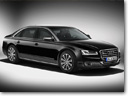
    The model has been certified by the German Ballistics Testing Center in Munich. It complies with the VR 7 ballistic protection standard requirements. What is more, the car has some areas with armor complying with VR 9 and VR 10 classes.

    The additional safety equipment of 2014 A8 L Security include an emergency exist system, a fire extinguisher system and an emergency fresh-air system. Other special features are a smoke extractor, selective unlocking of doors, LED signal system for convoy driving, siren, flashing lights and an accident data recorder.

    2014 Audi A8 L Security is now available to order.

    Source: Audi