Blog

  • Ferrari SP48 Unica: A new One-Off from Maranello

    2022 Ferrari SP48 Unica

    The Ferrari SP48 Unica, the latest addition to the Prancing Horse’s One-Off series, was unveiled today and joins the most exclusive group in Maranello’s entire production: unique, absolutely bespoke cars crafted to the specifications of a single client and designed as a clear expression of their own individual requirements.

    The SP48 Unica, designed by the Ferrari Styling Centre under the direction of Flavio Manzoni, Chief Design Officer, is a two-seater sports berlinetta developed on the F8 Tributo platform. Its taut lines and aggressive stance make it instantly recognisable with respect to the original model, and it is unmistakable too, thanks to its arrow-shaped front profile. Central to achieving this effect was the redesign of the headlights and the subsequent relocation of the brake air intakes.

    A pivotal aspect of the design of this unique new car is the extensive use of procedural-parametric modelling techniques and 3D prototyping (additive manufacturing) which enabled the Ferrari Styling Centre designers and Maranello’s engineers to completely redesign the front grille and engine air intakes. This advanced production process resulted in perfect 3D grilles that seem carved from a solid volume creating a sense of seamless continuity and dynamic fluidity.

    The procedural graphic solutions adopted on the bodywork dialogue directly with the grilles and influence the SP48 Unica’s overall design: the transition from black – which includes the windows, roof and engine cover – to the body colour is especially clear. The striking visor effect of the front is further heightened by the reduction in the size of the side windows and the elimination of the rear screen, highlighting the powerful muscularity of the SP48 Unica which seems sculpted from a single block of metal.

    The plan view emphasises the central section of the roof which includes a graphic representation of the air intakes set into the rear part of the carbon-fibre engine cover before the rear wing. This angle allows the viewer to appreciate the styling research that went into the SP48 Unica and reveals the sophisticated interplay of symmetries and intersecting lines created by its forms.

    The SP48 Unica’s thermal-fluid-dynamic design has been honed and perfected to guarantee it satisfies all cooling requirements in addition to delivering a different aerodynamic balance. The biggest changes compared to the F8 Tributo’s styling include the air intakes for cooling flows for the engine on the front bumper and beneath the rear spoiler. Each has a deep procedural grille, every section of which is optimally angled to maximise the amount of air passing through. The car’s configuration also allowed the engineers to locate an intercooler intake immediately behind the side windows, which in turn enabled them to reduce the dimension of the intakes on the flanks. The longer rear overhang reduces suction from the roof area, boosting rear downforce.

    Although the cabin retains the F8 Tributo’s technical identity – excluding the rear screen – meticulous development work was lavished on achieving the perfect combination of colour and trim to reflect the SP48 Unica’s sleek, sporty and aggressive personality. A good example is the specially developed black laser-perforated Alcantara® used on the seats and most of the cabin trim, beneath which are glimpses of iridescent reddish-orange fabric that match the exterior colour. Its motif picks up the hexagonal motif of the grilles and the procedural livery on the roof, creating an appealing continuity between the car’s interior and exterior. In the SP48 Unica cockpit, the eye is immediately drawn to the polished sill covers with the same laser-embossed hexagonal motif. Matte carbon-fibre imbues the cockpit with a sense of technicality and exclusivity, and is complemented by the Grigio Canna di Fucile accents.

    Designed for a long-standing client who was deeply involved in every step of its creation, the one-off Ferrari SP48 Unica is a bold interpretation of a sports car and cleverly enhances its racing soul and vocation for speed. The SP48 Unica achieves its goal of transforming an existing model to masterful effect, taking inspiration from and paying homage to the company’s core values of innovation and passion.

  • The all-new Audi RS 3: Legendary performance revolutionized

    2022 Audi RS 3 sedan - Front Angle

    Today, Audi of America announces the return of the attainable entry point to the Audi Sport portfolio with the all-new second generation Audi RS 3 Sedan. The RS 3 reaches new heights in dynamic handling with an RS Torque Splitter included for the first time in an Audi vehicle that actively distributes torque to the rear axle with two RS 3-specific Audi drive select models to accompany its legendary quattro lineage. The all-new RS 3 Sedan showcases an expressive exterior design matched with progressive interior design elements that emphasize the car’s sporty position.

    Exterior design – Powerful proportions and expressive details

    The second generation Audi RS 3 exhibits powerful proportions and expressive details starting at the front where a wider RS front bumper underpins a redesigned Singleframe grille with honeycomb grid structure in matte black flanked by larger air intakes than the predecessor. The flared wheel arches include a functional side air outlet signaling a nod to Audi’s motorsport heritage and the front track is widened by 33mm (1.3 inches) in comparsion to the predecessor.

    At the rear, the RS 3 integrates a glossy black rear lip spoiler on the trunklid for dynamic balance and a sportier look. The motorsport-inspired details include the redesigned RS-specific rear bumper with built-in diffuser and RS exhaust system which includes a fully variable flap control with large oval/elliptical tailpipes on both the left and right side. The RS 3 can be painted in a total of eight different colors, including the Audi Sport specific Kyalami Green and Kemora Gray finishes.

    Audi’s commitment to lighting innovation continues to progress. The RS 3 includes standard front Matrix-design LED headlights with a darkened bezel featuring all-new digital daytime running lights with a 3 x 5 LED pixel segment – when the vehicle is locked or unlocked, the R-S-3 checkered flag sequence appears on the driver’s side, while a checkered flag appears in the pixel field on the passenger side. When driving, the checkered flag remains illuminated as a daytime running light below the headlamp on both sides. At the rear, LED taillights include dynamic turn signals and an RS 3-specific coming home/leaving function sequence.

    The RS 3 is standard equipped with 19-inch cast aluminum wheels in a dynamic 10-Y-spoke design with graphic print and reverse staggered summer performance tires. For the first time optional Pirelli P Zero Trofeo R motorsport tires can also be mounted and were developed specifically for use on racetracks. An available Carbon package adds carbon fiber mirror housings, rear spoiler, and side sill inlays underlining the RS 3 performance quotient. Additionally, an available Black optic plus package offers the 19-inch 10-Y-spoke design wheels finished in full matte Black, Black Audi rings and badges, and a Brilliant Black roof for a distinctive sporty contrast.

    Interior Design – Visual driving engagement

    On the interior, performance enthusiasts are met with engaging motorsport elements that form a genuine driver-oriented cockpit. The standard equipped 12.3-inch Audi virtual cockpit plus displays pertinent performance data through a new “RS Runway” design. In this mode, the values are displayed in a manner that visually resembles an airplane runway – presenting the highest number of revolutions in the foreground, and lowest in the background. Additionally, the Audi virtual cockpit also includes an exhibit of g-forces, lap times, and acceleration from 0-60 mph, 0-125 (200 km/h) mph, quarter mile, and eighth of a mile.

    The RS-specific blinking shift indicator in manual transmission mode changes the RPM display from green to yellow to red – blinking in a manner identical to that used in motorsports scheduling the ideal time to change gears. This signal is also presented in the available head-up display, which presents relative data onto the windshield within the driver’s line of sight. The center 10.1-inch dashboard display can also show the coolant, engine, transmission oil temperatures, as well as the g-forces and tire pressure figures.

    A three-spoke round design RS sport leather multifunction steering wheel with hands-on detection includes polished zinc die-cast steering wheel paddles. The steering wheel also now comes standard with a steering wheel button specific for RS driving modes including RS Performance, RS Individual, or the most recently used mode. Fine Nappa leather front sport seats come standard with RS embossing and RS-specific honeycomb stitching, and provide the perfect balance of support with 8-way power front seats with 4-way power lumbar and driver memory.

    Available for the first time, the RS design package includes distinctive elements of green throughout including the seat shoulders finished in Micrommata green Dinamica, a center bar of air vents in Micrommata green, floor mats with RS logo and green stitching on piping, green edging on seatbelts, a carbon atlas matte inlay, and the center console trim in high gloss black. A standard black headliner frames the cabin with an additional element of sportiness.

    The epitome of driving dynamics – The RS Torque Splitter, DCC, transmission, and brakes

    An Audi first – the RS Torque Splitter – is one of the most significant performance innovations in the RS 3. Audi quattro supports the rear-axle differential with an upstream multiplate clutch package that has now been replaced by an electronically controlled multiplate clutch on each drive shaft. This innovation enables the RS Torque Splitter to distribute the drive torque for the rear axle fully variably between the rear wheels. The result is better stability, especially on wet ground, and improved agility during fast cornering.

    Several influencing factors of operation prompt character, including longitudinal and lateral acceleration, steering angle, throttle position, current gear, and yaw angle. When cornering, the RS Torque Splitter increases drive torque to the outside wheel to significantly reduce understeer. For example, if the driver pushes through a fast left turn, drive torque is immediately distributed to the right wheel. The RS Torque Splitter is fully integrated in to Audi drive select, and also varies based on selected five different mode selections:

    • Comfort mode – prioritizes front axle efficiency
    • Auto mode – offers balanced front/rear torque distribution
    • Dynamic mode – offers as much torque as possible to rear axle
    • RS Torque Rear mode – allows for controlled drifts
    • RS Performance mode – designed for track use to minimize understeer and oversteer in fast cornering

    To support an even closer connection to the road and track, the all-new RS 3 introduces the standard RS Sport suspension plus with dynamic chassis control (DCC) sitting 10mm (0.39”) lower than the Audi S3, and 25mm (0.98”) lower than A3. Serving as a progressive successor to Audi magnetic ride the DCC offers continuous and individual adjustment based on several factors including road conditions, driving situations, or mode selection with Audi drive select, while dynamic height sensors measure vertical acceleration of the body and relative movement to the wheels. When RS Performance mode is engaged, the shocks are preset to minimize vertical oscillations while optimizing lateral dynamics to reduce potential wheel bounce and to amplify cornering characteristics. The seven-speed dual-clutch S tronic® transmission arranges lightning quick shifts with optimized circuit time and sporty spread between gears.

    The RS 3 comes standard with newly developed and larger front steel brakes offering 20% better cooling compared to its predecessor thanks to integrated airflow guides in the bumper and undercarriage. The 6-piston fixed caliper front brakes utilize 375mm (14.8”) brake discs, while the rear brakes use a single-piston caliper with 310mm (12.2”) brake discs, with all calipers painted red. Designed for high performance driving, an available ceramic brake option with 380mm (15.0”) front ceramic discs exhibits powerful braking ability, while reducing overall weight by 22 pounds – and remains more resistant to brake fade thanks to faster temperature reduction.

    Hear that heritage sound? It’s legendary performance.

    The five-cylinder engine has deep historical roots in Audi’s DNA, and is a fundmental pillar of the emotional connection to the Audi Sport brand. The engine has achieved countless victories in motorsports from the legendary Group B rally courses around the world, to the tarmac in the IMSA GTO and at the Nürburgring in the legendary 24-hour race, the five-cylinder has prevailed. It even earned the  “International Engine of the Year Award” nine times in a row since 2010. Yet – it is the unique and distinctive sound of the five-cylinder engine that has captured the emotion of enthusiasts. Due to the odd number of cylinders, and more specifically, the 1-2-4-5-3 firing order, the Audi five-cylinder engine’s sound is unmistakable and presents a symphonic rhythm that is accompanied by deep tone characteristics, which can be further enchanced with the available RS sport exhaust system.

    Besides its visibility in motorsports, the legendary engine harkens back to the Ur-quattro coupe from the 1980s, and remains one of the brand’s more powerful engines with 401 horsepower and 369 lb-ft of torque – an increase of 7 horsepower and 15 lb-ft of torque over the predecessor, which brings the RS 3 from 0-60 mph in just 3.6 seconds and improvement of 0.3 seconds over the predecessor. The RS 3 available in the U.S. is also the most powerful and raucous sounding RS 3 in the world, further amplifying the sound and presence of the legendary five-cylinder engine. Additionally, the all-new Audi RS 3 set the lap record for compact cars on the Nürburgring Nordschleife with a time of 7 minutes 40.748 seconds

    The 2022 Audi RS 3 is slated to be on sale by this summer.


    MSRP pricing detail

    Model
    2022 Audi RS 3 Sedan $58,900
  • Kia Soul

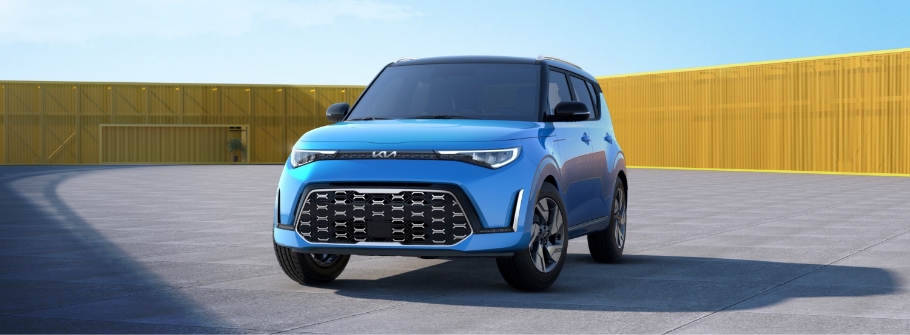
    2023 Kia Soul - Front Angle

    The new 2023 Kia Soul, arriving later this summer, features refreshed design elements inside and out, a simplified lineup, new smile-inducing colors, and two option packages brimming with technology and convenience. Soul redefined the boxy small-car segment when it was first launched in 2009 and has evolved steadily since, appealing to customers across generations with its edgy good looks, practicality, and efficiency. Pricing will be announced closer to the vehicle’s on-sale date.

    “The Soul defined a whole new segment of small cars when it first entered the Kia lineup and it continues into the 2023 model year with as much fun, practicality and style as ever,” said Steve Center, COO & EVP, Kia America. “The basic form remains, which is what more than 75,000 happy Soul owners loved so much about the funky runabout last year, representing a nearly 5 percent increase over sales in 2020. The new 2023 Soul is set to continue that trend with its refreshed design inside and out, advanced technology and feature-packed trims.”

    Soul has always been set apart by its bold yet functional design and the 2023 model year continues that tradition with an all-new front fascia. The new grill is set off with available LED headlights and redesigned fog lights. New Daytime Running Lamps and turn signals round out the front-end redesign. New available 17- and 18-inch alloy wheels and a redesigned rear fascia and taillights complete the exterior enhancements. A multitude of solid and two-tone exterior paint schemes remain and are complemented by new two-tone paint programs: Clear White with Fusion Black roof, and Surf Blue with a Fusion Black roof.

    Inside, what worked best remains and what has changed has made a good thing better. Logically placed switchgear falls readily to-hand while the 10.25-inch (standard on all but LX trim) touchscreen with navigation is a welcome addition to the tech-forward cabin.

    Simplifying the lineup for 2023, the Soul is offered in LX, S, EX, GT-Line, GT-Line Tech trimlines, each featuring a long list of standard and available equipment. The X-Line and Turbo have been discontinued, although many of the features are found in the new variants. The new LX Technology Package includes Blind Spot Collision Avoidance (BCA), Rear Cross Collision Avoidance (RCCA), and 16-inch alloy wheels; neatly bundling sought-after features in an already well-equipped offer.

    The GT-Line Technology Package ups the ante with a wide range of sought-after features and driver-assist systems. A Harman/Kardon premium audio is accessed through the 10.25-inch color touchscreen and features an external amplifier, subwoofer, and door-mounted tweeters. Multi-colored LED speaker lights pulse in time with the tunes and the heated front seats offer a warm embrace during cold-weather drives.  The GT-Line Technology Package also includes:

    • Forward Collision Avoidance Assist with Junction Turning capability (radar + camera type)2
    • Highway Drive Assist3
    • Navigation based Smart Cruise Control
    • Electronic Parking Brake
    • Power driver seat
    • High-gloss interior trim
    • LED headlights and taillights
    • Cargo Cover
    • Dual-level cargo floor

    Highlighting Kia America’s commitment to safety and security, a number of previously optional features are now standard across all trims, including:

    • Forward Collision Avoidance Assist-Pedestrian (FCA-Ped; camera type)4
    • Lane Keeping Assist + Lane Following Assist5
    • Driver Attention Warning6
    • Lane Departure Warning7
    • High Beam Assist
    • Rear Occupant Alert (door logic)

    For 2023, Soul is powered by a single powertrain. The efficient 2.0-liter inline four cylinder produces 147-horsepower at 6,200 rpm and lays down 132 lb.-ft- of torque at 4,500 rpm through the front wheels. Kia’s Intelligent Variable Transmission is standard across all variants.

  • GMC Introduces First-Ever 2023 Yukon Denali Ultimate

    2023 Yukon Denali Ultimate - Front Angle

    The GMC Yukon helped create the Denali brand — now the 2023 GMC Yukon Denali Ultimate trim elevates the iconic sub-brand.

    Distinguished with exterior and interior details, next-level materials, innovative available technologies and impressive capability, the new 2023 Yukon Denali Ultimate is the most premium Yukon ever offered.

    In addition to its elevated interior and exterior design, Yukon Denali Ultimate introduces the available class-leading, trailering-capable Super Cruise1 driver assistance technology to Yukon, including the capability to automatically change lanes or tow while driving hands-free on compatible roads2.

    The 2023 Yukon Denali Ultimate also brings elevated comfort and conveniences, such as 16-way power front seats with massage. Additionally, the 2023 Yukon Denali Ultimate introduces an advanced 18-speaker Bose Performance Series audio system to GMC for the first time, including head restraint-based speakers for front-row passengers. Etched metal speaker grilles provide an elegant look that fits seamlessly into the premium interior of the Yukon Denali Ultimate.

    The 2023 Yukon Denali Ultimate goes on sale this fall with a standard 6.2L V-8 or available Duramax 3.0L Turbo-Diesel. Both engines are paired to a 10-speed automatic transmission. Capability remains important as ever with standard Magnetic Ride Control, standard Air Ride Adaptive Suspension, standard Active Response 4WD™ system with electronic limited-slip differential and Auto Track two-speed transfer case.

  • Lamborghini Squadra Corse presents the new Huracan GT3 EVO2, the racing version of Huracan STO

    2023 Lamborghini Huracan GT3 EVO2 - Front View

    Lamborghini presents the new Huracán GT3 EVO2, designed and developed by Squadra Corse of Sant’Agata Bolognese based on the Huracán STO, with which it shares important design elements, rear-wheel drive only, and a naturally aspirated V10 engine, which in the road version delivers 640 horsepower.

    Compared to the Huracán GT3 EVO, which was homologated in 2019 and based on the Huracán EVO road car, the GT3 EVO2 fully complies with the new FIA 2022 technical regulations and features all-new aerodynamic solutions and intake system. The unmistakable hexagonal airscoop design and the rear fin are derived from Huracán STO, contributing to a more efficient intake system and better car balance. The airscoop is connected to a snorkel, replacing the side air intakes, which optimally channels the airflow directly into the engine, resulting in greater responsiveness to the driver’s demands. The introduction of 10 electronically actuated throttle bodies increases the efficiency of the V10 with titanium valves; the entire system, designed by Lamborghini Squadra Corse, is fixed to the engine by just four screws, a solution introduced for the first time on the Essenza SCV12, to facilitate maintenance work.

    The fully carbon fiber bodywork features a muscular design created in collaboration with Lamborghini’s Centro Stile. The new splitters, diffuser and underbody enhance aerodynamic efficiency. The carbon fiber floor, coated with high-strength Zylon fiber, together with the new diffuser, provides greater downforce than the current generation GT3 EVO. Other innovations include the rear wing, which is mounted on aluminum alloy pillars (Ergal 7075 T6) inspired by those of the STO. The new supports allow for greater precision in adjusting the wing compared to those of the EVO model.

    The redesigned roll cage, with the introduction of two rear pillars, and the new carbon-Kevlar honeycomb side panels, already tested on the Essenza SCV12, increases safety in the event of impact on the doors in compliance with the FIA 2022 regulations. The plexiglas side windows are now fixed to the carbon fiber door panel by means of a ring of screws for greater structural rigidity and reliability.

    The braking system has also been updated with new calipers and pads designed by Squadra Corse to optimize performance in both endurance and sprint races. These solutions, combined with dedicated traction control (TCS) and anti-lock braking systems (ABS), have been developed to make the car easy to control in low-grip conditions, even by gentlemen drivers. The car is delivered to customers equipped with PZero tyres (325.680-18 at the front; 325/705-18 at the rear) from long-time Squadra Corse partner Pirelli.

    Giorgio Sanna, Lamborghini Head of Motorsport, commented: “The new Huracán GT3 EVO2 is not simply an evolution of the current car. It’s a new project that reinforces the technological transfer between Lamborghini’s motorsport division and the company and inherits two difficult tasks: to prove as successful as the previous generations of Huracán GT3, which have won more than 40 international titles in six seasons, and to match its commercial success by helping to reach the target of 500 Huracán racing cars since 2015.”

    The car will be delivered to customers from the second half of 2022, and previous Huracán GT3 EVO model can be upgraded to the GT3 EVO2 specifications via an evolution kit. Its track debut is slated for the 2023 Daytona 24 Hours.

  • The Lamborghini Aventador LP 780-4 Ultimae – It takes time to become timeless

    2022 Lamborghini Aventador LP780-4 Ultimae Roadster

    Automobili Lamborghini announces the Aventador LP 780-4 Ultimae: a celebration of the iconic V12 super sports car and combustion engine in a final production model, concentrating the purest features of all Aventador editions into a perfect finale. The Aventador LP 780-4 harnesses the performance of the SVJ and intensifies the sophisticated elegance of the Aventador S, converging design and dynamism into a decisive collector’s piece in both coupé and roadster forms.

    “The Aventador LP 780-4 denotes the final, purest, timeless naturally-aspirated production V12 Lamborghini,” says Stephan Winkelmann, President and CEO of Automobili Lamborghini. “It delivers the essential twelve-cylinder experience in terms of inimitable design, engineering solutions and the most emotive driving experience, and is the definitive Aventador concluding an extraordinary era. It is the last of its kind: it delivers the maximum power and conclusive performance expected from Lamborghini’s current V12 engine, combined with our inimitable flagship’s design DNA. The Aventador was destined to become a classic from launch, and the Aventador LP 780-4 is the most beautiful expression of timeless design and technical solutions in a final edition: Ultimae.”

    After more than a year where events worldwide were cancelled due to the pandemic, the Aventador LP 780-4 Ultimae coupe and roadster will be displayed at the UK’s 2021 Goodwood Festival of Speed in front of automotive enthusiasts and owners.

    Power and performance

    The Aventador LP 780-4 Ultimae’s elegant lines belie the performance of this final edition. The twelve-cylinder, 6.5-liter ‘Longitudinale Posteriore’ (LP) engine delivers 780 CV: 40 CV more than the Aventador S and 10 CV over the SVJ to its permanent four-wheel drive. The LP 780-4 Ultimae celebrates the visceral character, power and performance of the Lamborghini’s Aventador’s ten-year evolution, including the know-how of the Nürburgring-Nordschleife record SVJ powertrain set in July 2018; the super sports technical advances and luxury of the S mode; and the purity of the original Aventador concept. It is the grand finale of the traditional V12 combustion engine, and the ultimate Aventador in every sense.

    The Aventador LP 780-4’s unique, extremely rigid and lightweight carbon fiber monocoque, and extensive use of carbon fiber throughout the body, contributes to its dry weight of just 1,550 kg. The coupé version, weighing 25 kg less than the Aventador S, delivers the same weight-to-power ratio as the SVJ at 1.98 kg/CV accelerating from 0-100 km/h in 2.8 seconds and a top speed of 355 km/h, with 720 Nm of torque at maximum 6750 rpm, and optimized VVT (Variable Valve Timing) and VIS (Variable Intake System) for an optimised torque curve. Its CCB braking system delivers 100 km/h to standstill in just 30 m.

    Lateral control is optimized through four-wheel steering, introduced on the Aventador S, ensuring agility at low and medium speeds and enhanced stability at high speed. Lamborghini Dynamic Steering (LDS) on the front axle is calibrated for responsive feedback with sharp turn-in while adapted to integrate with the active rear-wheel steering on the rear axle: separate actuators respond in five milliseconds to drivers’ steering movements, allowing a real-time adjustment to steering angles enhancing cornering properties.

    The LP 780-4 Ultimae’s design adopts a specific front bumper concept for increased aero load on the front, with longitudinal performance similar to the SVJ. The ESC is calibrated for fast, precise traction control and vehicle dynamics, recognizing and adapting to differences in grip, including on low-grip surfaces such as snow and ice. The permanent four-wheel drive, due to the rear-wheel steering, is calibrated to allow more torque to the rear axle so that when powering off, less torque is shifted to the front axle to allow sporty but safe over-steer behavior. The systems are managed by Lamborghini Dinamica Veicolo Attiva (LDVA) that processes precise, real-time information on body motion via sensors, thus defining the best response of all active systems to deliver the best vehicle dynamics in every condition.

    Delivering the state of the art aerodynamic performance, the front splitter and open ‘mouth’ of the LP 780-4 directs additional airflow to optimize aerodynamic efficiency, engine and radiator cooling. The front bumper’s airducts and side cooling inlet reduce aerodynamic interference from the front tires and optimize wake flow to the rear radiator, with the Ultimae’s lightweight rear bumper completing the dynamic exterior and celebrating the SVJ’s track-oriented heritage.

    The active aero system’s rear wing moves into three positions – closed, ‘maximum performance’ and ‘maximum handling’ – dependent on speed and the drive mode selected, optimizing the car’s overall balance and working with vortex generators created in the front and rear of the chassis’ underside to maximize air flow and assist with brake cooling. Transmission is via Lamborghini’s lightweight Independent Shifting Rod (ISR) 7-speed shifting system, providing robotized gearshifts in up to 50 milliseconds.

    The Aventador LP 780-4 Ultimae’s drive modes allow the pilot to select not only STRADA, SPORT and CORSA dynamic options, but in EGO mode choose their own parameters for optimum set-up 2 of the Lamborghini active suspension (LMS), traction controls (engine, gearbox and four-wheel drive) as well as steering.

    A final production masterpiece – Ultimae

    The Aventador LP 780-4 Ultimae celebrates the Lamborghini Aventador’s complex yet elegant lines and surfaces: the culmination of Lamborghini’s aspirated-V12 design legacy. Paying homage to the benchmark performance of the SVJ and the ageless super sports elegance of the S model, it takes the best components of both to create a perfect balance between performance and dynamism with an enduring sophistication.

    A new palette of options for exterior and interior is created for owners of the 350 coupés and 250 roadsters numbered editions of the Ultimae, offering a refined yet dynamic, elegant yet distinctive representation of the last Aventador. Its silhouette, clean and unfettered, is as recognizable and timeless an outline as other V12 Lamborghini classics such as Countach, Diablo and Murciélago. The new collection of tone-on-tone colors are elegant while recalling the Aventador’s powerful original design cues taken from the world of aeronautics. Offered as standard are 18 colors, with an unprecedented range of options and more than 300 colors available through Lamborghini Ad Personam, allowing owners to create their own, unique piece of Lamborghini V12 motoring history.

    The Aventador LP 780-4 Ultimae coupé is launched in a two-tone, grey-on-grey configuration, with lines and details such as the front splitter’s outline and ‘teeth’ picked out in matt red Rosso Mimir, with the accent line continuing along the car with matching accents on the rear fins of the visible carbon fiber rear diffuser: elite performance and design purity in perfect harmony. On the Aventador LP 780-4 Ultimae Roadster, the roof is also offered in visible carbon fiber.

    The matt Grigio Acheso and Grigio Teca external colors’ elegant yet sporty two-tone is echoed in the interior: black leather and Alcantara base materials feature stitching and trim in a complementary grey to the exterior, with ‘Y’ seat inserts in black Alcantara. An optional laser cut ‘Y’ repeat motif with contrast backing color on seats and dashboard, distinguishes the Ultimae model: a dynamic, stylistic feature offered for the first time. The LP 780-4’s comfort seat is taken from the Aventador S, with the ‘Ultimae’ name embroidered into the seat bolster, while the A-pillar driver dashboard area carries the 001 of 350/250 reference to the limited edition.

    The client can play with the ‘S’ line highlights in seat, door and dash trims with three standard colors, (silver, bronze and white), a further five foptional colors and, of course, the almost infinite spectrum of options through Lamborghini Ad Personam. A standard carbon fiber package CFK highlights exterior and interior features, and the exterior is available in a matt finish to match the exterior colors with low gloss.

    Silver Dianthus 20” and 21” forged alloys come as standard together with further 20” and 21” options in Dianthus, Leiron and Nireo in bronze, black and titanium, fitted with Pirelli PZero Corsa tires. The exterior features the extension of the color accent livery in three colors: white, silver and bronze matching the accent on the front bumpers and the rear diffuser fins. Silver calipers as standard are joined by a range of further optional caliper colors that are echoed in the wheel monolock.

    The Aventador LP 780-4 Ultimae Roadster is launched in Blu Tawaret and Blu Nethuns with the roof panels in high gloss black carbon fiber. The driver and passenger environment is just as refined: the customizable TFT digital dashboard displays driver modes as well as controlling in-car connectivity. Apple CarPlay manages voice activated communications and entertainment, with the Lamborghini telemetry system available as an option for those wanting to celebrate the last Aventador on track. From launch, the Aventador LP 780-4 Ultimae will be available in both coupe and roadster configurations in the Lamborghini network with the exception of the markets: Mainland China, South Korea, Vietnam, Brazil and Chile.

    Technical Data

    Lamborghini Aventador LP 780-4 Ultimae

    CHASSIS AND BODY
    Chassis Carbon fiber monocoque with aluminum front and rear frames
    Body Engine bonnet, rear air inlets and spoiler in carbon fiber; other panels in aluminum and synthetic material
    Suspension type Push rod magnetorheological active front and rear suspension with horizontal dampers and springs
    Suspension geometry Aluminum double wishbone fully independent front and rear suspension.
    ESP ESC integrating ABS and TCS with different characteristics according to the driving mode selected
    Brakes Carbon-ceramic brakes with fixed monoblock calipers in aluminum with 6 pistons (front) and 4 pistons (rear)
    Ventilated discs (front – rear) Carbon ceramic brake discs
    (Ø 400 x 38 mm – Ø 380 x 38 mm)
    Steering Hydraulic assisted power steering, with 3 different servotronic characteristics coupled with Lamborghini Dynamic Steering (LDS) and Rear Wheel Steering (RWS), managed by drive select mode
    Steering wheel ratio 10:1 – 18:1
    Steering wheel turns lock to lock 2.1 – 2.4
    Steering wheel diameter 358 mm
    Tires (front – rear) New Pirelli P Zero Corsa 255/30 ZR20 – 355/25 ZR21
    Rims (front – rear) 9”JX20” H2 ET 32.2 – 13” JX21”H2 ET 66.7
    Kerb-to-kerb turning circle 11.5 m (37.73 ft.) – average value, variable due to dynamic condition, thanks to LRS
    Mirrors External mirrors heated, electrically adjustable and foldable
    Rear spoiler Rear electronically operated spoiler with 3 positions; completely panelled underbody
    Airbags Driver, passenger, side airbags. Knee airbags only for specific markets
    ENGINE
    Type V12, 60°, MPI
    Displacement 6,498 cc (396.5 cu. in)
    Bore and stroke Ø 95 mm x 76.4 mm (3.74 in. x 3 in.)
    Valve per cylinder 4
    Valve gear Variable valve timing electronically controlled
    Compression ratio 11.8 ± 0.2
    Maximum power 780 CV(574 kW) at 8,500 rpm
    Specific Power output 120 CV/l (88.3 kW/l)
    Maximum torque 720 Nm (531 lb.-ft.) @ 6,750 rpm
    Engine speed, maximum 8,700 rpm
    Power to weight ratio 1.99 kg/CV
    Emission class EURO 6 – LEV 3
    Emission control system Catalytic converters with lambda sensors
    Cooling system Water and oil cross flow cooling system with variable air inlets
    Engine management system Lamborghini Iniezione Elettronica (LIE) with Ion current analysis
    Lubrication system Dry sump
    DRIVETRAIN
    Type of transmission 4WD with Haldex generation IV
    Gearbox 7 speed ISR, shifting characteristic depending on drive select mode
    Standard AMT
    1st gear ratio2nd gear ratio3rd gear ratio4th gear ratio

    5th gear ratio

    6th gear ratio

    7th gear ratio

    Reverse ratio

    Final drive ratio (rear – front)

    3.9092.4381.8101.458

    1.185

    0.967

    0.844

    2.929

    2.867 – 3.273

    Clutch Dry double plate clutch, Ø 235 mm (9.25 in.)
    PERFORMANCE
    Top speed 355 km/h (xxx mph)
    Acceleration 0-100 km/h
    [0-62 mph]
    2.8 sec.
    Acceleration 0-200 km/h
    [0-124 mph]
    8.7 sec.
    Braking 100-0 km/h
    [62-0 mph]
    30 m

    Lamborghini Aventador LP780-4 Ultimae Roadster

    CHASSIS AND BODY
    Chassis Carbon fiber monocoque with aluminum front and rear frames
    Body Engine bonnet, rear air inlets and spoiler in carbon fiber; other panels in aluminum and synthetic material
    High pressure RTM carbon fiber Hard Top painted
    Suspension type Push rod magnetorheological active front and rear suspension with horizontal dampers and springs
    Suspension geometry Aluminum double wishbone fully independent front and rear suspension.
    ESP ESC integrating ABS and TCS with different characteristics according to the driving mode selected
    Brakes Carbon-ceramic brakes with fixed monoblock calipers in aluminum with 6 pistons (front) and 4 pistons (rear)
    Ventilated discs (front – rear) Carbon ceramic brake discs
    (Ø 400 x 38 mm – Ø 380 x 38 mm)
    Steering Hydraulic assisted power steering, with 3 different servotronic characteristics coupled with Lamborghini Dynamic Steering (LDS) and Rear Wheel Steering (RWS), managed by drive select mode
    Steering wheel ratio 10:1 – 18:1
    Steering wheel turns lock to lock 2.1 – 2.4
    Steering wheel diameter 358 mm
    Tires (front – rear) New Pirelli P Zero Corsa 255/30 ZR20 – 355/25 ZR21
    Rims (front – rear) 9”JX20” H2 ET 32.2 – 13” JX21”H2 ET 66.7
    Kerb-to-kerb turning circle 11.5 m (37.73 ft.) – average value, variable due to dynamic condition, thanks to LRS
    Mirrors External mirrors heated, electrically adjustable and foldable
    Rear spoiler Rear electronically operated spoiler with 3 positions; completely panelled underbody
    Airbags Driver, passenger, side airbags. Knee airbags only for specific markets
    ENGINE
    Type V12, 60°, MPI
    Displacement 6,498 cc (396.5 cu. in)
    Bore and stroke Ø 95 mm x 76.4 mm (3.74 in. x 3 in.)
    Valve per cylinder 4
    Valve gear Variable valve timing electronically controlled
    Compression ratio 11.8 ± 0.2
    Maximum power 780 CV(574 kW) at 8,500 rpm
    Specific Power output 120 CV/l (88.3 kW/l)
    Maximum torque 720 Nm (531 lb.-ft.) @ 6,750 rpm
    Engine speed, maximum 8,700 rpm
    Power to weight ratio 1.99 kg/CV
    Emission class EURO 6 – LEV 3
    Emission control system Catalytic converters with lambda sensors
    Cooling system Water and oil cross flow cooling system with variable air inlets
    Engine management system Lamborghini Iniezione Elettronica (LIE) with Ion current analysis
    Lubrication system Dry sump
    DRIVETRAIN
    Type of transmission 4WD with Haldex generation IV
    Gearbox 7 speed ISR, shifting characteristic depending on drive select mode
    Standard AMT
    1st gear ratio2nd gear ratio3rd gear ratio4th gear ratio

    5th gear ratio

    6th gear ratio

    7th gear ratio

    Reverse ratio

    Final drive ratio (rear – front)

    3.9092.4381.8101.458

    1.185

    0.967

    0.844

    2.929

    2.867 – 3.273

    Clutch Dry double plate clutch, Ø 235 mm (9.25 in.)
    PERFORMANCE
    Top speed 355 km/h (xxx mph)
    Acceleration 0-100 km/h
    [0-62 mph]
    2.9 sec.
    Acceleration 0-200 km/h
    [0-124 mph]
    8.8 sec.
    Braking 100-0 km/h
    [62-0 mph]
    31 m
  • Hyundai Motor announces i30 N Drive-N Limited Edition

    2023 Hyundai i30 N Drive-N Limited Edition - Front Angle View

    Hyundai Motor has announced the i30 N Drive-N Limited Edition, an exclusive, special version of the high-performance Hyundai i30 N hatchback. This unique edition of the new i30 N delivers the same high-performance driving experience with a distinctive exterior and interior design. The limited run of 800 units began production in the last week of April, with 75 vehicles destined for the UK1.

    To develop the i30 N Drive-N Limited Edition, Hyundai enhanced the current i30 N using market feedback, media feedback, and inspiration by N-thusiasts – its community of Hyundai N fans – who have already been modifying their own vehicles. The exclusive edition is available in two body colours – Phantom Black Pearl and the new Serenity White Pearl.

    The  i30 N Drive-N Limited Edition is equipped with the i30 N’s 2.0 T-GDi engine, with peak power of 280PS and 392 Nm torque, combined with Hyundai’s in-house developed eight-speed wet-type dual-clutch transmission with three N performance functions for an even sportier experience: N Power Shift, N Grin Shift, and N Track Sense Shift. By using the N Grin Shift (NGS) button, the car will get a “boost” of additional 10 PS for the amount of 20 seconds.

    New, exclusive design

    The exterior and interior designs of the i30 N Drive-N Limited Edition have been carried over from the new i30 N to deliver the same fun-to-drive experience wrapped in a more exclusive package.

    The exterior will feature 19-inch forged alloy wheels in a dark bronze matte finish; black Hyundai badges; special decals on the side, front and rear; and two dedicated Drive-N badges in dark bronze matte on the side fenders. The badges on the i30 N Drive-N Limited Edition also display the GPS coordinates of the home of the N models, the Hyundai Motor Europe Test Center at Nürburgring in Germany. Hyundai’s high-performance cars are developed, tested, and honed at the Nürburgring-Nordschleife since 2011.

    The interior of each unit is outfitted with a unique numbered badge, depicting its position among the limited volume of 800 total units. Instead of leather, Alcantara with red stitching will cover the steering wheel, gear lever, armrest, and handbrake. All accents decorating the interior will be in red colour. This applies to the seat belts in the front and rear, the steering wheel N buttons, the inserts and stitching of the N Light Seats with its new pattern. The i30 N Drive-N Limited Edition also has exclusive floor mats with specific lettering.

    UK pricing and specification will be confirmed in due course.

    Hyundai N: Never just drive

    Hyundai N’s brand slogan is ‘Never just drive’. This claim captures the mindset and spirit of N: Do more than simply drive. Enjoy every second of it.

    To ensure this, the high-performance engines found in Hyundai N models are tuned for great responsiveness and excellent power output. This display of power shows customers that driving is not just about reaching a destination – it can be exciting as well.

  • 2023 Toyota GR Supra Adds Manual Transmission and Enhanced Drive Dynamics

    2023 Toyota GR Supra Manual Transmission

    From the moment of its launch in 2019 the GR Supra captured the spirit of TOYOTA GAZOO Racing – one that’s all about the joy of driving. For 2023, it adds one more dynamic element: a six-speed intelligent Manual Transmission (iMT). For drivers who love the control and rewards offered by precisely timed manual shifts, it might be the Supra they’ve been waiting for.

    True to the GR Supra’s thoroughbred engineering quality, this development wasn’t simply a matter of using an off-the-shelf solution. Engineers developed a manual transmission specifically for GR Supra, with components designed specifically to suit the power and torque characteristics of its 3.0-litre 382 horsepower engine. At the same time, the GR Supra’s braking control systems and suspension have been retuned for even better performance – changes that are being introduced throughout the model range.

    The manual transmission will be available as an option on the Supra 3.0 and 3.0 Premium and a limited A91-MT Edition model will also be produced for model year 2023 only. Available colors for the MT 3.0 and 3.0 Premium will include all standard Supra colors plus a new Stratosphere Blue color, which will also be available on Supra 2.0. The A91-MT Edition will be available in Matte White and CU Later Gray. Pricing for 2023 GR Supra MT versions will be announced later this summer and models will be available at Toyota dealerships later this year.

    Manual Transmission Designed for Supra Power

    Available on the 3.0, 3.0 Premium and a limited A91-MT Edition model. The manual transmission installed in the GR Supra has been engineered and tuned specifically for use with the coupe’s straight-six engine.

    The engineering team modified an existing transmission housing, driveshaft and gear set and removed elements that were not required, such as the acoustic package, which reduced weight. At the heart of the transmission is a newly engineered large diameter clutch with a reinforced diaphragm spring. With a larger friction area and a stronger spring, this new component has the high-performance capability appropriate for use with the GR Supra’s high-torque engine.

    The newly developed 6-speed manual gearbox also features an intelligent Manual Transmission (iMT) programmed with new software that prioritizes sporty performance. When upshifting, the parameters are tuned to optimize engine torque at the moment of clutch engagement and release; on downshifts, the software has been fine-tuned for consistent performance. The iMT is set as the default but, if the driver prefers, it can be switched off in Sport mode.

    To avoid a sluggish take-off and a low in-gear acceleration feel, the final drive ratio has been shortened, from 3.15 (in the GR Supra automatic) to 3.46 (in the GR Supra MT). The result is response and gearing appropriate for sports car performance.

    Close attention was also paid to how a manual shifter could be accommodated in the driver’s cockpit. The lever ratio was specifically set to minimize the effort required to make shifts and engage reverse gear. While the weight and shape of the 200g gear knob, along with the quality of shift engagement, have all been precisely defined. Ergonomics were also top-of-mind, as the console unit and position of the drive mode selector were adjusted to provide a 1.7-inch clearance between the shift knob and the control panel.


    Toyota GR Supra - Manual Transmission

    TOYOTA GAZOO Racing: #savethemanual

    The GR Supra was Toyota’s first global GAZOO Racing (GR) model and the dream of Toyota President Akio Toyoda to deliver a car that is purely about the joy of driving.

    Subsequently, the introduction of global models, like the GR Yaris and last year’s arrival of the GR86 coupe, have reinforced the special qualities that define the GR brand – cars that are born out of a passion for driving and draw directly on the world championship-winning expertise and experience of TOYOTA GAZOO Racing.

    At launch, the 2020 GR Supra was offered with a straight-six 3.0-litre engine with 335 hp/365 lb.-ft. of torque matched to an eight-speed automatic transmission. In 2021, the GR team increased the 3.0 Supra to 382 hp and 367 lb.-ft. of torque and introduced a turbocharged four-cylinder GR Supra 2.0 with 255 horsepower and a stout 295 lb.-ft. of torque.

    While the car and its performance have received high praise worldwide from media and fans alike, perhaps inevitably the question of whether a manual gearbox would be available persisted. Now that it’s official, the addition of a manual transmission option to the Supra line-up means Toyota will offer all three of its U.S. GR models with a stick, which is standard on the upcoming GR Corolla and available as an option on GR86.

    Tuned for Traction, Stability and Agility

    The GR Supra’s traction and braking have been optimized for operation with a manual transmission.

    With an automatic, it’s possible to use second gear when pulling away uphill when opposite wheels are on surfaces with different grip levels – for example, when the car is parked on partly icy road, progress is smooth with no rolling back or wheel slip. With a manual gearbox, first gear must be used and releasing the clutch brings a greater risk of wheel spin. To address the issue, Toyota engineers have tuned the car’s TRAction Control (TRAC) system to achieve smooth operation like that experienced with an automatic. The system is also optimized for the GR Supra’s characteristic high engine torque, wide tires and rear-wheel drive.

    The car’s behavior when accelerating out of a corner is a key element in the “Fun to Drive” quality Toyota has developed for the GR Supra. For the new manual version, the traction control has again been the focus to ensure an ideal balance of agility and stability when exiting a corner on the throttle. TRAC intervention has been calibrated to maintain stability – so the car keeps faithfully to the driver’s intended line – while allowing the right amount of power for a sporty experience.

    The ambition to make the GR Supra fun to drive in the most demanding scenarios has helped inspire the introduction of a new Hairpin+ function. This is designed to allow more freedom and reward when taking tight bends on an uphill gradient (more than 5%) with a high-friction road surface. More “freewheel” spin can make such routes more enjoyable to drive, so Toyota has optimized engine torque control to allow a greater difference in the degree of wheel spin on the left and right-side tires.

    To counter the possibility of “snap-off” oversteer – something that may be hard to control with the car’s Vehicle Stability Control (VSC) alone – an Anti-Roll Program (ARP) has been adopted for both the manual and automatic versions of the GR Supra. This intervenes at an earlier point with the VSC to cover any sudden loss of grip when the car’s high-response suspension setting it used.

    In addition, the Track mode has been tuned to allow for easy drifting with freedom of throttle control. The vehicle remains agile, but there is less risk of spinning thanks to specific engine and torque control.


    Toyota GR Supra (2023) - Front, Rear

    Special Edition and Updates Across the Lineup

    The A91-MT special edition will be a 500 unit limited-run model that comes equipped with exclusive Cognac leather-trimmed seats, GR logoed Alcantara shift knob and a 12-speaker acoustically tuned premium JBL sound system. On the outside, a red “Supra” Badge and red GR Supra emblazoned calipers punctuate its extreme, condensed design. It will be offered in two exclusive colors, Matte White and CU Later Gray, and comes equipped with unique forged 19-inch Frozen Gunmetal Gray wheels. Under the hood, red strut tower braces add one more accent to the already bold Supra.

    All 2023 GR Supra 3.0 models, both AT and MT versions, will benefit from a retuned suspension with re-tuned shock absorbers for improved roll balance and ride comfort. The mechanical components in the electric power steering and the system’s operating parameters have also been re-tuned. All 3.0 models will have an active rear sport differential standard.

    The 3.0 MT will come equipped with new 19-inch forged aluminum wheels and be available in previously available standard and premium colors plus the new Stratosphere Blue color. On the inside heated, black leather-trimmed seats are now standard. The 3.0 Premium has everything you’ll find on the 3.0, plus a red and black leather-trimmed interior, full color heads up display, acoustically tuned 12-speaker JBL sound system and Qi Wireless charger standard.

    Supra Connect1 is also available. This advanced technology suite is designed to help you get more from your GR Supra 2.0 and 3.0 with Safety and Technology Package, 3.0 Premium and A91-MT Edition and includes features like Automatic Emergency Call, Real-Time Traffic Information, Roadside Assistance and the available Supra Connect iPhone® app to lock/unlock the doors and activate Ventilation Now and Ventilation Timer features.

    Key Standard Features Include

    2.0 3.0 3.0 Premium A91-MT
    Available in
    Automatic
    Transmission only
    Available in
    Automatic and
    Manual Transmission
    Available in
    Automatic and
    Manual Transmission
    Available in Manual
    Transmission Only
    Active Exhaust Everything in 2.0
    Grade Plus…
    Everything in 3.0
    Grade Plus…
    Everything in 3.0
    Premium Grade Plus…
    Automatic engine
    Stop/Start
    Active rear sport
    differential
    Leather-trimmed
    Seats
    Exclusive Cognac
    (Tan) Leather-trimmed Seats
    18″ Cast – Aluminum
    Wheel
    New 19″ Forged
    Aluminum Wheel
    Full-color Head-Up
    Display (HUD)
    Unique Red “Supra” Badge
    Aerodynamic
    underbody panel
    Adaptive Variable
    Sport (AVS)
    suspension system
    12-speaker JBL HIFI
    Surround Sound
    system
    Red Strut Tower
    Braces
    Dual rear exhaust Sport pedals Toyota Supra Connect Alcantara Shift Knob
    8.8-in. full-digital
    TFT LCD gauge
    cluster
    Heated seats Qi-compatible
    wireless charging tray
    with light indicator
    Absolute Zero, Nitro
    Yellow(premium
    color), Nocturnal,
    Renaissance Red,
    Stratosphere Blue
    Absolute Zero, Nitro
    Yellow(premium
    color), Nocturnal,
    Renaissance Red,
    Stratosphere Blue
    Absolute Zero, Nitro
    Yellow(premium
    color), Nocturnal,
    Renaissance Red,
    Stratosphere Blue
    Matte White, CU Later
    Gray


    Options and Packages Include

    2.0 & 3.0 3.0 Premiun & A91-MT
    Safety & Technology Package AT – Includes
    Full-Speed Dynamic Radar Cruise Control (AT
    Only), Blind Spot Monitor(BSM) with Rear
    Cross-Traffic Alert (RCTA), Parking Sensors
    with Emergency Braking Function (AT Only)Safety & Technology Package MT – Includes
    High-Speed Cruise Control, Blind Spot
    Monitor (BSM) with Rear Cross-Traffic Alert
    (RCXTA), Parking Sensors
    Drivers Assist AT 0 Includes Full-Speed Dynamic
    Radar Cruise Control (AT only), Blind Spot
    Monitor (BSM) with Rear Cross-Traffic Alert
    (RCTA), Parking Sensors with Emergency Braking
    Function (AT only)Drivers Assist MT – Includes High-Speed Cruise
    Control, Blind Spot Monitor (BSM) with Rear
    Cross-Traffic Alert (RCTA), Parking Sensors
  • Porsche 911 Sport Classic: back to the future

    2023 Porsche 911 Sport Classic - Front Angle View

    2023 Porsche 911 Sport Classic is the second of four collector’s items that Porsche has presented from its Heritage Design strategy. A total of 1,250 examples of the limited-edition model by Porsche Exclusive Manufaktur will revive the style of the 1960s and early 1970s. Like its immediate predecessor, the 997-based 911 Sport Classic presented in 2009, the appearance of this model is inspired by the original 911 (1964 – 1973) and in particular the 1972 911 Carrera RS 2.7. The 911 Sport Classic can be ordered now, with prices starting from 272,714 euros.  Delivery will be available from European Porsche Centres from July 2022 onwards and additional markets will follow.

    “The Heritage Design models represent the more emotionally driven concepts of the Porsche product strategy,” says Alexander Fabig, Head of Customisation and Classic. “This unique approach sees the Style Porsche design department working with Porsche Exclusive Manufaktur to reinterpret iconic 911 models and equipment from the 1950s through to the 1980s and to revive design features from those decades.” Porsche is launching four limited-edition models over an extended period. The first of these was presented in 2020: the 911 Targa 4S Heritage Design Edition with design elements from the 1950s and 1960s.

    Porsche Design has also created a high-quality chronograph exclusively available to drivers who purchase the collector’s edition vehicle. The watch seamlessly picks up on numerous details from the new 911 Sport Classic design. As part of the Heritage Design Classic package, selected interior elements of the new 911 Sport Classic will also be available for most current 911 models.

    Reinterpreting historical design elements

    The wide body – otherwise reserved for the 911 Turbo models – a fixed rear spoiler in the style of the legendary ‘ducktail’ Carrera RS 2.7 and the double-bubble roof underscore the distinctiveness of the new 911 Sport Classic.

    As with the first 997-generation 911 Sport Classic launched in 2009, the designers were inspired by the Fashion Grey paintwork of the early Porsche 356 when choosing the exclusive paint finish for the new limited-edition model. “The new 911 Sport Classic is the first vehicle to feature Sport Grey Metallic paintwork,” says Michael Mauer, Vice President Style Porsche. “Grey is never boring, quite often a statement and always cool.” As an alternative to the exclusive Sport Grey Metallic finish, the new 911 Sport Classic is also available in solid Black, Agate Grey Metallic or Gentian Blue Metallic. Twin stripes painted on the bonnet, roof and rear spoiler in light Sports Grey emphasise the car’s sporty design.

    In the interior, the iconic Pepita houndstooth pattern can be found on the door panels and seat centres, while two-tone, semi-aniline leather upholstery in Black/Classic Cognac provides an elegant contrast with the exterior colour.

    550 PS for the most powerful manual 911 available today

    The powertrain concept is equally unique: the 3.7-litre, twin-turbo flat-six engine transmits its 405 kW (550 PS) to the road via the rear wheels only. In combination with the seven-speed manual gearbox, the new 911 Sport Classic is the most powerful manual 911 available today.

    The gearbox has an auto-blip function that compensates for engine-speed differences between the gears with a brief burst of revs when shifting down. The standard sports exhaust system is specially tailored to the model for an even more emotive sound experience.

    The suspension, based on that of the 911 Turbo and 911 GTS models, meets high performance requirements: thanks to the standard Porsche Active Suspension Management (PASM), its shock absorbers respond to dynamic changes at lightning speed. PASM is combined as standard with the sports suspension, which features a 10-millimetre-lower ride height.

    Source: Porsche


  • Mercedes-AMG C 43 4MATIC: more power and efficiency for Saloon and Estate models

    2023 Mercedes-AMG C 43 4MATIC - Front Angle View

    With technology derived directly from Formula 1, the latest generation of the Mercedes-AMG C 43 4MATIC sets new standards for innovative drive solutions both as a Saloon (combined fuel consumption 9.1-8.7 l/100 km, combined CO2 emissions 206-196 g/km)[1] and as an Estate (combined fuel consumption 9.2-8.8 l/100km, combined CO2 emissions 209-199 g/km). Following its premiere in the Mercedes-AMG SL 43, the AMG 2.0-litre four-cylinder engine, the world’s first series-production unit to feature an electric exhaust gas turbocharger, is now also being used in the C-Class. The new form of turbocharging guarantees particularly spontaneous response across the entire rev range and thus offers an even more dynamic driving experience. The turbocharger is operated via the 48-volt electrical system, which also feeds the belt-driven starter-generator (RSG). In the Mercedes-AMG C 43 4MATIC the unit produces 300 kW (408 hp) and, in certain driving situations, is able to call upon a brief additional boost of 10 kW (14 hp) from the RSG. The standard rear-axle steering, the AMG Performance 4MATIC permanent all-wheel drive with rear-biased torque distribution, the AMG SPEEDSHIFT MCT 9G transmission with wet start-off clutch and the AMG RIDE CONTROL suspension with Adaptive Damping System also contribute to the dynamic driving experience. In keeping with this, brand-specific features in the equipment and appointments as well as in the exterior and interior design emphasise the performance-oriented character of the new Mercedes-AMG C 43 4MATIC.

    “The C-Class has always been an absolute success story for Mercedes-AMG. With the innovative technology of the electric exhaust gas turbocharger, we are once again significantly increasing the attractiveness of this latest generation. The new turbocharging system and the 48-volt on-board electrical system not only contribute to the outstanding driving dynamics of the C 43 4MATIC, but also improve its efficiency. In this way, we are demonstrating the tremendous potential that lies in electrified combustion engines. The standard all-wheel drive, the active rear-axle steering and the quick-shifting transmission all serve to enhance the Driving Performance that is the hallmark of AMG”, says Philipp Schiemer, Chairman of the Board of Management of Mercedes-AMG GmbH.

    At the heart of the new Mercedes-AMG C 43 4MATIC is the AMG 2.0-litre four-cylinder engine, which combines innovative technologies and high performance with exemplary efficiency. At the same time, it remains true to a tradition typical of the brand: not only was it developed entirely at the company’s site in Affalterbach, but it is also manufactured there in accordance with the principle of “One Man, One Engine”. In this process, Mercedes-AMG combines the craftsmanship of its highly qualified employees with the latest production methods of Industry 4.0 and a high degree of digitalisation.

    The internally named M139l engine (l for longitudinal installation) is the world’s first series-production engine to be turbocharged with an electric exhaust gas turbocharger. The innovative system is a direct derivative of the technology that the Mercedes-AMG Petronas F1 Team has been using so successfully in the premier class of motorsport for many years. The new form of turbocharging guarantees particularly spontaneous response across the entire rev range. This leads to an even more dynamic driving experience, while at the same time increasing efficiency.

    The functional principle of the electric exhaust gas turbocharger in detail

    An electric motor around four centimetres thin is integrated directly on the turbocharger shaft between the turbine wheel on the exhaust side and the compressor wheel on the intake side. Electronically controlled, this drives the shaft of the turbocharger directly and thus accelerates the compressor wheel, before the exhaust gas flow takes over the drive in the conventional way.

    This significantly improves the response directly from idle speed and across the entire rev range. The combustion engine responds even more spontaneously to accelerator pedal input, while the entire driving feel is significantly more dynamic. In addition, the electrification of the turbocharger enables higher torque at low revs. This also increases agility and optimises acceleration from a standstill. Even when the driver takes his foot off the accelerator or brakes, the technology is able to maintain boost pressure at all times, so ensuring a continuously direct response.

    Powered by the 48-volt on-board electrical system, the electric exhaust gas turbocharger operates at speeds of up to 175,000 rpm, which enables a very high air flow rate. The turbocharger, electric motor and power electronics are connected to the combustion engine’s cooling circuit to create an optimal temperature environment at all times.

    The closed-deck design of the M139 – adopted from the world of motorsport – ensures maximum rigidity in conjunction with low weight and allows peak combustion pressures of up to 160 bar. The areas around the cylinders are mostly solid, and the cover plate is penetrated only by smaller ducts for the coolant and engine oil. Other design highlights of the engine include NANOSLIDE technology, with which the linings are coated so as to reduce the friction between piston and cylinder. This gives the linings a mirror-like surface for minimal friction, is twice as hard as conventional grey cast-iron liners and therefore makes them much more durable. The coating made its debut in the AMG V8 engine M156, has been used to refine other AMG engines for many years and can also be found in the Formula 1™ engine of the Mercedes-AMG Petronas Formula 1 Team.

    Another outstanding feature is the two-stage petrol injection. In the first stage, particularly fast and precise piezo injectors deliver the fuel into the combustion chambers at pressures of up to 200 bar. The second stage adds intake manifold duct injection with solenoid valves, which is needed to achieve the engine’s high specific power output.

    The high output also necessitates a sophisticated cooling system that can cool the cylinder head and crankcase to different temperature levels. This measure makes it possible to maintain a cold cylinder head for maximum power with efficient ignition timing, along with a warm crankcase to reduce internal engine friction. The cylinder head is cooled by a mechanical high-performance water pump; the crankcase is cooled by a second, electrically driven water pump. After a cold start, this pump remains passive until the engine has warmed up. In operation it is regulated by the engine control unit so that the crankcase is always cooled according to need.

    300 kW (408 hp) and 500 Nm enable sporty driving performance

    In the 2.0-litre four-cylinder in-line engine, innovative technology helps the Mercedes-AMG C 43 4MATIC to achieve a rated output of 300 kW (408 hp) at 6750 rpm. The maximum torque of 500 Nm is available at 5000 rpm. Depending on the situation, the system also briefly provides an additional boost of 10 kW (14 hp) through the belt-driven starter generator (RSG). The second-generation RSG acts as a mild hybrid, providing this temporary power boost as well as functions such as gliding and recuperation for maximum efficiency. At the same time, the 48-volt technology also increases comfort, as the transitions between the start-stop function and the gliding mode function are almost imperceptible.

    The C 43 4MATIC Saloon accelerates from a standstill to 100 km/h in just 4.6 seconds, while the C 43 Estate takes only slightly longer for the same exercise, at 4.7 seconds. The top speed is electronically limited at 250 km/h in both models. By adding the optional AMG Driver’s Package, it can be raised to 265 km/h in each case. The great efficiency potential of the innovative turbo technology is revealed by the combined consumption figures according to WLTP of 9.1-8.7 l/100 km for the Saloon and 9.2-8.8 l/100 km for the Estate.

    AMG SPEEDSHIFT MCT 9G transmission with wet start-off clutch and AMG Performance 4MATIC

    Power is transmitted via the AMG SPEEDSHIFT MCT 9G transmission (MCT = Multi-Clutch Transmission), in which a wet start-off clutch replaces the torque converter. It reduces weight and, thanks to its lower inertia, optimises response to accelerator pedal input, especially during spurts and load changes. The elaborately calibrated software ensures extremely short shift times as well as fast multiple downshifts if required. In addition, the intermediate throttle function in the “Sport” and “Sport+” driving modes delivers a particularly emotionally appealing gearshift experience. There is also the RACE START function, which ensures optimal acceleration from a standstill. The ECO start/stop function is automatically activated in the “Comfort” drive program; the “Glide” function can be activated in “Individual”.

    The AMG Performance 4MATIC permanent all-wheel drive features an AMG-specific torque distribution between the front and rear axles of 31 to 69 percent. The rear-biased configuration provides for enhanced dynamic handling, including higher lateral acceleration and improved traction when accelerating.

    AMG DYNAMICS standard component of the AMG DYNAMIC SELECT drive program selection

    The five AMG DYNAMIC SELECT drive programs “Slippery”, “Comfort”, “Sport”, “Sport +” and “Individual” permit a wide range of vehicle characteristics, from comfortable to dynamic. The distinct driving modes offer an individual driving experience, precisely tailored to different driving conditions. In the “Sport” and “Sport+” programs, the engine’s responsiveness, the transmission’s shifting behaviour and the suspension and steering are tuned to be particularly agile.

    The C 43 4MATIC also features the integrated “AMG DYNAMICS” driving dynamic control system as a component of the AMG DYNAMIC SELECT drive programs. This enhances the stabilising functions of the Electronic Stability Program ESP® with interventions to add agility to the steering characteristics and additional ESP® functions. When cornering at speed, for example, brief braking intervention at the inner rear wheel generates a defined yawing moment around the vertical axis for responsive and precise turn-in.

    The extent and effectiveness of these interventions depend on the AMG DYNAMIC SELECT program selected, whereby drivers using “Individual” mode can determine the settings for the AMG DYNAMICS levels “Basic”, “Advanced” and “Pro” for themselves. The ESP® can be adjusted in three stages. “On” is the standard selection that offers high safety, adapted to the sporty character of the overall vehicle. “Sport”, on the other hand, allows higher drift angles, while “Off” allows the system to be switched off completely for a particularly sporty driving style on closed-off race tracks.

    AMG RIDE CONTROL suspension with Adaptive Damping System

    The AMG RIDE CONTROL steel-spring suspension with Adaptive Damping System, which is standard on the C 43 4MATIC, combines decidedly sporty driving dynamics with the long-distance comfort typical of the brand. The basis for this is provided by the front axle, with specially developed steering knuckles and suspension joints on the spring control arm, and by the rear axle, which also features elastokinematics designed for driving dynamics. Complementing this, the Adaptive Damping System continuously adapts the damping at each individual wheel to the current demand – always taking into account the preselected suspension level, the driving style and the condition of the road surface. In addition to an improvement in ride quality and comfort, this leads, above all, to an increase in driving safety. There is a choice of three different damping maps (“Comfort”, “Sport” and “Sport+”).

    Three-stage AMG parameter steering and standard rear-axle steering

    The steering layout of the C 43 4MATIC contributes to the improvement in both dynamics and comfort. The three-stage AMG parameter steering system, for example, features a variable steering geometry ratio that adapts to the selected drive program. At high speeds, the steering power assistance decreases; at low speeds it is steadily increased. As a result, comparatively little steering effort is required at low speeds, as well as when manoeuvring and parking, while the best possible control over the vehicle is maintained when driving faster. In the “Sport” and “Sport+” suspension settings, the driver also experiences significantly more feedback about the driving condition via the steering wheel.

    The new Mercedes-AMG C 43 4MATIC brings rear-axle steering to the best-selling model series from Affalterbach as standard. It operates with a maximum steering angle of 2.5 degrees. Up to this point, the rear wheels turn in the opposite direction to the front wheels at speeds of up to 100 km/h (variable depending on the AMG DYNAMICS setting). This leads to a virtual shortening of the wheelbase, which in turn results in significantly more agile turn-in, less steering effort and improved manoeuvrability. For example, the turning circle is noticeably reduced when turning or parking. At speeds above 100 km/h (variable depending on the AMG DYNAMICS setting), on the other hand, the rear wheels turn in parallel to the front wheels – up to a maximum of 0.7 degrees. This virtual extension of the wheelbase has a positive effect on driving stability, leads to a faster build-up of lateral force when changing direction and thus to a more direct reaction of the vehicle to steering commands. The response of the rear-axle steering depends on the selected AMG DYNAMIC SELECT drive program.

    AMG sports braking system and AMG exhaust system with sporty engine sound

    The AMG sports braking system with silver-painted brake callipers and black “AMG” lettering guarantees outstanding deceleration values and optimum control. On the C 43 4MATIC, internally ventilated and perforated brake discs measuring 370 x 36 millimetres with 4-piston fixed callipers are fitted at the front axle, and discs measuring 320 x 24 millimetres with 1-piston floating callipers at the rear.

    The AMG exhaust system with its sporty engine sound provides the appropriate acoustic background. Depending on the drive program selected, the noise level ranges from balanced and discreet to emotionally sporty. The sound characteristics are controlled via an exhaust gas flap, depending on engine speed and load. For the occupants, the listening pleasure can be further enhanced by the addition of the option AMG Real Performance Sound. The actual engine sound is picked up by a sensor in the exhaust system and fed into the interior for a particularly emotive sound experience.

    Characteristic AMG elements for the exterior and interior ensure a sporty, refined appearance

    Outside as well as inside, numerous AMG-specific details underscore both the dynamic and the luxurious character of the C 43 4MATIC. In terms of exterior design, these include the AMG-specific radiator grille with vertical struts in chrome, the AMG front apron with flics, sporty air intakes and chrome-plated trim element, the matching side sill panels, the diffuser-look rear apron and the two round twin-tailpipe trim elements. The C 43 4MATIC is fitted with AMG light-alloy wheels and 18-inch tyres as standard, with 19- and 20-inch tyres available as options.

    In the interior, such features as AMG seats with a distinctive upholstery layout and seat covers in ARTICO man-made leather/MICROCUT microfibre in black with red contrasting stitching and red seat belts provide a particularly sporty touch. Further options include leather and nappa leather seat covers. Added to this is the AMG Performance steering wheel in nappa leather, with flattened bottom section, perforated in the grip area and with silver-coloured aluminium gearshift paddles. The two round AMG steering wheel buttons allow fast and unerring operation of various dynamic driving functions and of the AMG DYNAMIC SELECT drive programs. The instrument panel and the beltlines are upholstered in ARTICO man-made leather with red topstitching. The sporty-luxurious atmosphere is rounded off by AMG sports pedals, AMG floor mats and illuminated door sill trims with AMG lettering.

    The MBUX infotainment system includes various AMG-specific displays and functions. These include special displays in the instrument cluster, in the portrait-format multimedia central display in the centre console and in the optional head-up display. Added to this is the shortcut button for the AMG DYNAMIC SELECT drive programs. AMG TRACK PACE, the data logger for use on the race track, is also integrated. The software records more than 80 vehicle-specific data such as speed, acceleration, steering angle and brake pedal actuation ten times per second while the car is being driving around a race track. In addition, there is a display of lap and sector times as well as additional training and analysis tools.

    Technical data

    Mercedes-AMG C 43 4MATIC

    Engine
    Number of cylinders/arrangement 4/in-line
    Displacement cc 1991
    Rated output kW/hp 300/408
    at engine speed rpm 6750
    Additional output (Boost) kW/hp 10/14
    Rated torque Nm 500
    at engine speed rpm 5000
    Compression ratio 10.0
    Mixture formation combined direct petrol injection and intake manifold injection, turbocharging by means of electrically assisted exhaust gas turbocharger
    Power transmission
    Drive system All-wheel drive with rear-biased torque distribution
    (31:69 percent)
    Transmission AMG SPEEDSHIFT MCT 9G (automatic transmission with wet multi-disc start-off clutch)
    Gear ratios
    1st/2nd/3rd/4th/5th/6th/7th/8th/9th gear 5.35/3.24/2.25/1.64/1.21/1.00/0.87/0.72/0.60
    Reverse 4.80
    Suspension
    Front axle AMG RIDE CONTROL suspension with aluminium double wishbones, anti-squat and anti-dive control, lightweight coil springs and stabiliser bar as well as Adaptive Damping System
    Rear axle AMG RIDE CONTROL suspension with aluminium double wishbones, anti-squat and anti-dive control, lightweight coil springs and stabiliser bar as well as Adaptive Damping System
    Braking system Hydraulic dual-circuit brake system; 370 mm brake discs at front, internally ventilated and perforated, 6-piston aluminium fixed calliper; 320 mm brake discs at rear, internally ventilated and perforated, 1-piston aluminium floating calliper; electric parking brake, ABS, Brake Assist, 3-stage ESP®
    Steering Electromechanical speed-sensitive power steering with rack and pinion, variable steering ratio (12.8:1 at dead centre) and variable power assistance
    Wheels front: 8.0 J x 18; rear: 8.0 J x 18
    Tyres front: 245/45 ZR 18; rear: 245/45 ZR 18
    Dimensions and weights
    Wheelbase mm 2865
    Front/rear track mm 1.591/1.602
    Length/width/height mm 4.791/1.824/1.450
    Turning circle m 11,98
    Boot capacity l 455
    Kerb weight acc. to EC kg 1765
    Payload kg 515
    Tank capacity/of which reserve l 50/7
    Performance, consumption, emissions
    Acceleration 0-100 km/h sec. 4.6
    Top speed km/h 250 (electronically limited; 265 km/h with opt. Vmax increase)
    Combined fuel consumption l/100 km 9.1-8.71
    Combined CO2 emissions g/km 206-196

    [1] The stated figures are the measured “WLTP CO₂ figures” in accordance with Article 2 No 3 Implementing Regulation (EU) 2017/1153. The fuel consumption figures were calculated on the basis of these figures.

    Mercedes-AMG C 43 4MATIC Estate

    Engine
    Number of cylinders/arrangement 4/in-line
    Displacement cc 1991
    Rated output kW/hp 300/408
    at engine speed rpm 6750
    Additional output (Boost) kW/hp 10/14
    Rated torque Nm 500
    at engine speed rpm 5000
    Compression ratio 10.0
    Mixture formation combined direct petrol injection and intake manifold injection, turbocharging by means of electrically assisted exhaust gas turbocharger
    Power transmission
    Drive system All-wheel drive with rear-biased torque distribution
    (31:69 percent)
    Transmission AMG SPEEDSHIFT MCT 9G (automatic transmission with wet multi-disc start-off clutch)
    Gear ratios
    1st/2nd/3rd/4th/5th/6th/7th/8th/9th gear 5.35/3.24/2.25/1.64/1.21/1.00/0.87/0.72/0.60
    Reverse 4.80
    Suspension
    Front axle AMG RIDE CONTROL suspension with aluminium double wishbones, anti-squat and anti-dive control, lightweight coil springs and stabiliser bar as well as Adaptive Damping System
    Rear axle AMG RIDE CONTROL suspension with aluminium double wishbones, anti-squat and anti-dive control, lightweight coil springs and stabiliser bar as well as Adaptive Damping System
    Braking system Hydraulic dual-circuit brake system; 370 mm brake discs at front, internally ventilated and perforated, 6-piston aluminium fixed calliper; 320 mm brake discs at rear, internally ventilated and perforated, 1-piston aluminium floating calliper; electric parking brake, ABS, Brake Assist, 3-stage ESP®
    Steering Electromechanical speed-sensitive power steering with rack and pinion, variable steering ratio (12.8:1 at dead centre) and variable power assistance
    Wheels front: 8.0 J x 18; rear: 8.0 J x 18
    Tyres front: 245/45 ZR 18; rear: 245/45 ZR 18
    Dimensions and weights
    Wheelbase mm 2.865
    Front/rear track mm 1.591/1.602
    Length/width/height mm 4.791/1.824/1.466
    Turning circle m 11,98
    Boot capacity l 490-1.510
    Kerb weight acc. to EC kg 1.810
    Payload kg 515
    Tank capacity/of which reserve l 50/7
    Performance, consumption, emissions
    Acceleration 0-100 km/h sec. 4.7
    Top speed km/h 250 (electr. limited; optional: 265 km/h)
    Combined fuel consumption l/100 km 9.2-8.81
    Combined CO2 emissions g/km 209-199

    [1] The stated figures are the measured “WLTP CO₂ figures” in accordance with Article 2 No 3 Implementing Regulation (EU) 2017/1153. The fuel consumption figures were calculated on the basis of these figures.

  • Mercedes Benz T-Class: The premium-small van for active lifestyles

    2023 Mercedes-Benz T-Class - Front Angle

    Room for the whole family – with up to three child seats on the rear bench seat. Plenty of loading space for leisure and sports enthusiasts. Sliding doors provide quick boarding and disembarking and flexible loading options. Contemporary design, extensive range of safety equipment and versatile connectivity. “Life gets big”: With the new T-Class, Mercedes-Benz is bringing comfort into the private small van segment whilst also offering an entry route into the world of the brand with the star to all those who need lots of space. This completely new model combines multifunctionality and a huge amount of space with a high-end level of equipment: Whether it be the standard MBUX infotainment system and electric parking brake, the optional 17-inch light-alloy wheels, KEYLESS-GO or ambient lighting, or even the ARTICO man-made leather/MICROCUT seat upholstery, the new T-Class boasts a versatile range of equipment highlights in its segment. A comprehensive range of standard safety equipment, including seven airbags and numerous driving assistance systems, makes it a state-of-the-art, reliable companion for families and active leisure enthusiasts. Prices start at under 30.000 euros[1] for the T 160 (combined fuel consumption in accordance with WLTP: 6,7 – 7,2 l/100 km, combined CO2 emissions: 153 – 162 g/km)[2] with 75 kW (102 hp) petrol engine, manual transmission and basic specification.

    “With the new T-Class we are extending our portfolio with a true premium small van that combines roominess and functionality with style and comfort like no other vehicle in this segment, says Mathias Geisen, Head of Mercedes-Benz Vans. The T-Class is perfect for everyone who needs plenty of space – from active families to sports enthusiasts. With it, we are steadily pursuing our strategic course of growth in the premium segments.”

    The private small van segment has grown significantly in the last few years. The T-Class has been developed specifically for families and leisure enthusiasts who need plenty of space for their everyday lives as well as for weekend trips or sports activities, but who also set great store by comfort and style.

    Multifunctionality elegantly packaged

    The new T-Class is instantly recognisable as a member of the Mercedes-Benz family. Its design is distinguished by balanced proportions and a sensual surface design with reduced lines. Muscular shoulders and striking wheel wells underline the vehicle’s power and emotive appeal. The standard chrome-plated radiator grille and body-coloured outside mirror housings, door handles and front bumper add premium-character touches. There are also door sill panels with Mercedes-Benz lettering and optional 17-inch light-alloy wheels. The elegant paint shade rubellite red metallic is also available for the T-Class.

    The small van combines compact exterior dimensions with a huge amount of space. The five-seater T-Class is 4498 millimetres long, 1859 millimetres wide and 1811 millimetres tall[3]. A long-wheelbase variant with up to seven seats will follow.

    Further benefits of the T-Class which make everyday life for families and active leisure enthusiasts easier and more comfortable: the low loading sill of just 561 millimetres makes it easier to load heavy objects. Wide-opening sliding doors on both sides of the vehicle allow comfortable access to the rear passenger compartment. This enables children to get in and out of the vehicle quickly and safely in narrow streets and parking spaces. It also provides a choice of loading from three sides, including the tailgate. The sliding doors provide an opening measuring 614 millimetres wide and 1059 millimetres high. The rear seat bench folds down as standard to create a virtually flat loading area with the luggage compartment floor. This allows the vehicle interior to be adapted as needed to the specific requirements of the day. The luggage compartment features a tailgate with heated rear window as standard. A two-section rear door is available as an alternative. Both sections of the door can be locked in the 90-degree position and can be pivoted to the side at an angle of up to 180 degrees.

    New high-value appeal in the small van segment

    As far as the interior is concerned, Mercedes-Benz is bringing a whole new high-value appeal to the small van segment. It is on par with that of the successful compact car family. Even the standard equipment specification includes the following: MBUX infotainment system with 7-inch touchscreen and smartphone integration, multifunction steering wheel with Touch Control buttons, air conditioning, KEYLESS Start, instrument cluster with 5.5-inch colour display, height-adjustable driver’s seat, an enclosed glove compartment, a luggage compartment cover and pockets on the front seat backrests. Plus there is LED interior lighting and, depending on equipment specification, ambient lighting with up to eight colours (Style and Progressive Line).

    The choice of materials also reflects the premium character. The centre armrest is covered in black ARTICO man-made leather as standard. For the door armrests and door centre panels, the T-Class has adopted the contemporary finely structured NEOTEX from the Mercedes EQ all-electric models. It combines the appearance of nubuck leather with high-tech neoprene. All models have a high-gloss black trim element in the instrument panel. The interior and load compartment are carpeted. Two equipment lines are available to enhance the high-quality appeal even further.

    “Style” and “Progressive” equipment lines for an individual touch

    The Style Line focuses on refined styling with dynamic touches. Hallmarks of exclusivity include the standard seat covers in black ARTICO man-made leather/MICROCUT microfibre with double topstitching, and high-gloss black trim elements on the doors and centre console. As an option, these trim elements are available in matt limonite yellow and the seat covers in black ARTICO man-made leather with white contrasting topstitching. Both the front and rear door centre panels are covered in the contemporary NEOTEX imitation leather. Providing additional touches are the chrome highlights on the air vents, loudspeakers and door handles. The driver’s seat has a lumbar support and the front passenger seat is also height-adjustable.

    Practical folding tables are installed on the back of the front seat backrests. Items such as smartphones, tablets or children’s toys can be conveniently placed here. Exterior features of the T-Class Style include 16-inch, 5-spoke design wheels and dark tinted windows for the rear and tailgate.

    The Progressive Line places even greater emphasis on elegance and luxury equipment. One unmistakable element is the high-end NEOTEX trim with contrasting topstitching on the upper section of the instrument panel. Seats in black ARTICO man-made leather with white topstitching and trim elements in matt silver on the centre console and doors further accentuate the vehicle’s high quality character. The sliding doors have electric windows. The exterior makes a visual statement with a chrome trim strip on the tailgate, 16-inch 10-spoke light-alloy wheels and LED High Performance headlamps.

    Intuitive MBUX display and operating concept as well as digital services from Mercedes me

    The T-Class is equipped as standard with the MBUX (Mercedes-Benz User Experience) infotainment system. Among its strengths are the self-teaching software, the high-resolution display, smartphone integration with Apple Car Play and Android Auto, the Bluetooth hands-free system and digital radio (DAB and DAB+). Equally pioneering is the intuitive operating concept via 7-inch touchscreen, Touch Control buttons on the steering wheel or – in conjunction with the optional Navigation Package – via the “Hey Mercedes” Voice Assistant. The latter even understands colloquial speech. Users therefore no longer need to learn specific expressions.

    The T-Class is already prepared ex works for the use of many digital services from Mercedes me connect1. These include remote services such as Remote Retrieval of Vehicle Status or Remote Door Locking and Unlocking. These services allow users to conveniently check the most important information about their vehicles at any time from home or while out on the road. Equally practical: Thanks to Navigation with Live Traffic Information and car-to-X communication, customers drive with the latest real-time data. This allows them to avoid traffic congestion efficiently, thereby saving valuable time.

    Destinations can also be entered as three-word addresses using the what3words system (w3w). what3words is the easiest way to specify a location. As part of this system, the world is divided into 3×3-metre squares with an unmistakable three-word address. This can be a great help when searching for a destination.

    High level of safety features: numerous driving assistance systems and seven airbags as standard

    In matters of safety features the new T-Class has a lot to offer as well. Numerous driving assistance systems come as standard alongside a tyre pressure loss warning system and the Mercedes-Benz emergency call system. These include Hill Start Assist, Crosswind Assist, ATTENTION ASSIST, the fatigue warning system, Active Brake Assist with cross-traffic function, Active Lane Keeping Assist, Blind Spot Assist and Speed Limit Assist. The Driving Assistance Package is available as an option and additionally includes Active Distance Assist DISTRONIC (also available as an individual option) and Active Steering Assist2. For additional convenience and safety when entering and exiting parking spaces, there’s the optional Active Parking Assist with PARKTRONIC and reversing camera. In combination with the optional trailer coupling, the T-Class also has Trailer Stability Assist. Also contributing to the high level of active safety are the optional LED High Performance headlamps (standard for the Progressive Line). They increase safety at night due to their wide beam pattern and light of a colour similar to daylight. They also use less power.

    The T-class also meets the high safety standards set by Mercedes-Benz where restraint systems are concerned. A total of seven airbags are installed as standard to protect vehicle passengers. In the event of a severe side impact, the centre airbag for example is deployed between the driver’s seat and the front passenger seat and thus serves to reduce the risk of the two occupants coming into contact with one another.

    When it comes to safety, every little detail has been well thought out: iSize standard child seat fixings with ISOFIX anchorages and TopTether are fitted on the outer rear seats as well as on the front passenger seat. For safety reasons, automatic child seat recognition is installed to ensure that the front passenger airbag is deactivated when your mini co-pilot is on board. A mat integrated in the seat surface detects the weight distribution on the seat in order to determine whether a child seat is fitted. Special child seats equipped with a transponder are not required. To accommodate a fourth child, a booster seat can be installed on the centre seat of the rear bench seat. As additional protection for the little ones, the sliding doors and the optional power windows in the rear compartment are equipped with child safety locks.

    Modern, high-torque, fuel-efficient engines

    At market launch, one diesel and one petrol engine, each offered with two output ratings, will be available. The four-cylinder engines are noted for their plentiful pulling power, even in the low rev range, and for their optimized consumption figures. For even swifter acceleration, for example when overtaking, the 85 kW diesel model features an overpower and overtorque function. Up to 89 kW of power and 295 Nm of torque can be called upon briefly. All engines are combined with an ECO start/stop function. Alongside the six-speed manual transmission, the two diesel models and the more powerful of the two petrol models are also available with the seven-speed dual-clutch transmission (DCT).

    An overview of the engine range

    Model T 160 d T 180 d T 160 T 180
    Cylinders Arrangement/number 4, inline
    Displacement cc 1461 1332
    Output kW/hp 70/95 85/116 75/102 96/131
    at rpm 3750 3750 4500 5000
    Max. torque Nm 260 270 200 240
    at rpm 1750 1750 1500 1600
    Fuel consumption, combined WLTP[4] l/100 km 5,3 – 5,9 5,5 – 5,9 6,7 – 7,2 6,6 – 7,3
    CO2 emissions, combined WLTP1 g/km 138 – 154 144 -154 153 – 162 150 – 165
    Acceleration
    0-100 km/h
    s 15,1-15,3 13,2-13,6 14,7 11,6-12,85
    Maximum speed km/h 164-165 175-177 168 183-184

    Focus on sustainability: the new all-electric small van

    Sustainability is firmly anchored in the Mercedes-Benz business strategy. A key element here is emission-free mobility. As part of the “Ambition 2039” initiative, the company is aiming to offer a CO2-neutral vehicle fleet by 2039 and to ensure that it will have no relevant effects on urban air quality. As early as the end of this year, Mercedes-Benz is set to have battery-electric vehicles available in all segments in which the brand is represented. From 2025 onwards, all new vehicle architectures will be exclusively electric. Customers will thus have a choice of a fully electric alternative for each model. As a result, sustainability is a key aspect of vehicle development. The T-Class platform has therefore been designed with powertrain flexibility in mind, enabling both combustion engines and a battery-electric drive to be used. Following on the heels of the eVito, eSprinter, EQV and the upcoming eCitan, the future EQT2 (currently still in development) completes the electric van line-up and will enable Mercedes-Benz to offer both business and private customers an alternative electric version in all van categories – from the small van to the large van.

    The EQT[5] will combine the multifunctionality and high-end appeal of the T-Class with locally emission-free mobility – and in so doing also has its own unique character. This is evident in the Concept EQT unveiled last year. The vehicle’s distinctive exterior appearance, with aesthetically pleasing black panel front grille gives a foretaste of the production vehicle to come.

  • Subaru Announces Pricing on 2023 Solterra Electric SUV

    2023 Subaru Solterra Electric SUV - Front View

    Subaru of America, Inc. today announced pricing on its first-ever all-electric SUV, the 2023 Subaru Solterra. The highly anticipated Solterra is packed with new in-vehicle technology while staying true to its Subaru heritage with industry-leading safety and go-anywhere capability.  The 2023 Solterra is offered in three trim levels, Premium, Limited, and Touring, and will begin arriving in limited numbers at Subaru retailers this summer.

    Pricing for the 2023 Solterra starts at $44,995 MSRP for the Premium trim level, before a potential Federal tax credit of up to $7,500. 1, 2 In addition, the Solterra may qualify for additional state incentives, including single rider carpool lane access in California. 3 The Limited trim carries a starting manufacturer’s suggested retail price of $48,495. The top-of-the-line Touring trim is priced from $51,995. The destination and delivery charge for the 2023 Solterra is $1,225. 1

    Solterra comes standard with a new Symmetrical All-Wheel Drive system that now channels smooth linear output from Subaru StarDrive® Technology, providing outstanding traction and capability in all kinds of weather and terrain. Subaru StarDrive delivers substantial on-demand torque at all speeds with driver-selectable power and regenerative modes.

    The all-new electric SUV delivers a total of 215 horsepower and 249 lb.-ft. of torque from front and rear electric motors. Solterra is equipped with Dual-Function X-MODE® with Snow / Dirt and Deep Snow / Mud modes on all trim levels. The system also features Grip Control and Downhill Assist Control for increased performance in low-friction and off-road conditions. With 8.3 inches of ground clearance, Solterra is best in its class. Standard Active Cornering Assist and Vehicle Stability Control provide better stability and handling. This combination provides versatility in both off-road and city driving.

    Solterra’s high-capacity lithium-ion battery pack provides plenty of daily range. The electric SUV can quickly charge just about anywhere with its Level 2 AC and DC fast charging capability. With DC fast charging, Solterra can charge up to 80-percent of total battery capacity in under an hour. 4

    To simplify the charging experience while traveling, mobile apps work with the vehicle’s multimedia system to help locate thousands of charging options nationwide, including thousands of DC fast-charging stations and Level 2 charging stations. Charging at home is also made easy and affordable with Level 1 or Level 2 compatibilities. 4 With up to a 228-mile range for the AWD SUV, owners can explore the city streets and the open road with confidence. 5

    The all-electric SUV offers a suite of standard EyeSight® driver assist technologies including Emergency Steering Assist, Intersection Collision Avoidance Support, Pre-Collision Brake Assist, Lane Departure Prevention, and Dynamic Radar Cruise Control with Lane Tracing Assist.

    An all-new multimedia system debuts on Solterra with an available 12.3-inch high-resolution horizontal touchscreen (the largest screen for Subaru ever). The new system comes standard with wireless Apple CarPlay® and wireless Android Auto™. A wireless charging phone dock in the center console is standard on Limited and Touring trim levels.

    Solterra Premium

    The well-equipped Solterra Premium has a value driven starting price of $44,995 and comes with an extensive list of standard features including heated front seats and exterior mirrors; windshield wiper de-icer; 18-inch aluminum alloy wheels paired with 235/60 R18 tires; 7-inch LCD gauge display; Automatic Climate Control with S-FLOW; Rear Seat Reminder; and LED headlights (multi-beam low and single beam high).

    The Premium trim comes standard with an all-new multimedia system featuring an 8-inch high-resolution touchscreen; smartphone integration with wireless Apple CarPlay®, wireless Android™ Auto; AM/FM HD stereo; SiriusXM All-Access Radio (4-month audio trial subscription); integrated streaming (30-day free trial); and Bluetooth hands-free phone and audio. A wireless charging phone dock for the center console is also available as an accessory.

    SUBARU SOLTERRA CONNECT (SSC) offers connected services for safety, remote access, service, navigation, and Wi-Fi (all services come with a free trial subscription). SSC features include Remote Climate Control and Remote Lock/Unlocking via smartphone; cloud-based navigation; and more. New Intelligent Assist for SSC allows voice control for the driver and front passenger for features including dual-zone climate control; cloud navigation operation; and integrated streaming operation.

    The Premium comes equipped with Blind Spot Monitor; Rear Camera Detection with Pedestrian Warning; and Parking Support Brake (PKSB). The PKSB system can apply the vehicle’s brakes if an obstacle is detected while reversing. Also standard is Safe Exit Assist, a safety feature that provides an audible and visual warning if it detects approaching vehicles before driver and/or passengers open their door.

    For added convenience, the Premium comes equipped with power door locks, power exterior mirrors, and power windows with one-touch auto up/down. The vehicle charge port on the left front fender includes a power lock and automatic charging cable lock. The center console is equipped with five USB ports including a USB A input/charge port in the front, upper section; (dual) USB C charge ports in the front, lower section; (dual) USB C charge ports in the rear.

    Solterra Limited

    The Solterra Limited starts at $48,495 and includes all the standard equipment from the Premium and adds the all-new multimedia system featuring a 12.3-inch high-resolution horizontal touchscreen; smartphone integration with wireless Apple CarPlay®, wireless Android™ Auto; AM/FM HD stereo; SiriusXM All-Access Radio (4-month free subscription); integrated streaming (30-day free subscription); Bluetooth hands-free phone and audio; and available cloud-based navigation system (one-year free subscription). A wireless charging phone dock in the center console is also standard on Limited.

    For the first time in a Subaru, a 360-degree Panoramic View Monitor provides an overhead view of the vehicle for better all-around situational awareness while parking. Advanced Park, a parking assist feature that parks the vehicle (parallel or perpendicular) using a system of cameras and sensors. For the Limited trim, the Parking Support Brake system adds Rear Cross-Traffic Alert. The new Digital Key allows the driver to access and start the vehicle with their smartphone. This feature works through the SUBARU SOLTERRA CONNECT app.

    The Limited also adds comfort and convenience features including a 10-way power driver’s seat; heated rear seats (outboard positions); heated steering wheel; Harman Kardon premium audio system; LED fog lights; power rear door with automatic close and height memory; rain-sensing wiper system; and roof rails. The Limited comes standard with a roof spoiler (split) and 20-inch aluminum alloy wheels paired with 235/50R 20 all-season tires.

    Solterra Touring

    The Touring trim level, with a starting price of $51,995, includes all the standard equipment of the Limited, plus a digital rear-new mirror with view position adjustment and HomeLink®; ventilated front seats; panoramic moonroof with power sunshade; and front and rear LED footwell lighting. The Touring trim also has a two-tone exterior paint option.

    SOA has partnered with EVgo to provide customers with access to a public charging network of more than 46,000 locations across the U.S. This includes access to 800+ public fast charging locations and 1,200+ L2 charging stalls spanning 68 metropolitan areas and 35 states. 6  Plus, EVgo is the first public EV fast charging network in the U.S. to be powered by 100% renewable energy. For more information, please visit www.evgo.com.

    Solterra reservation holders will receive a Charging Choice Offer in anticipation of their upcoming vehicle delivery. Subaru is finalizing two possible offers for reservation holders including a EVgo Charging Credit or money towards the purchase and installation of a Home Level 2 Charger by QMerit.

    With the purchase or lease of a new Solterra, customers will also receive up to 10 days of Subaru Just DRIVE Rental at no-charge from their participating Subaru retailer. This program allows the rental of Subaru vehicles though participating Subaru retailers.

    2023 Subaru Solterra 
    Model/Trim Transmission Applicable Option MSRP 1 MSRP plus Destination and Delivery ($1,225)
    Solterra Premium CVT 11 $44,995 $46,220
    Solterra Limited CVT 31 $48,495 $49,720
    Solterra Touring CVT 41 $51,995 $53,220
    2023 Subaru Solterra Paint Options
    Color Paint Charge Paint Charge + Two-Tone
    Harbor Mist Gray Pearl $395 $890
    Elemental Red Pearl $395 $890
    Cosmic White Pearl $395 $890
    Galactic Black $0 NA
    Smoked Carbon $0 $495