To mark the international launch of the new R27, Renault Sport Technologies will present the Clio Renault F1 Team in Amsterdam today. This will be a unique opportunity for enthusiasts to celebrate the achievements of the two-fold world champion Formula 1 Team with the unveiling of a unique car packed with sports features and technologies. Offering sensations of pure performance, passion and driving pleasure, the special edition Clio Renault Sport asserts its identity across a unique look and sporty dynamics, boosted by range of equipment drawn from the best of competition vehicles.
Asserting the Renault F1 Team identity
With its red brake callipers, its new Sirius yellow colouring and exclusive Renault F1 Team and World Champion markings, this special edition of the Clio Renault Sport will be immediately identified with its older sibling, the Mégane Renault F1 Team. The interior features Récaro seats, and the numbered plate evokes its unique sports character.
Renault Clio F1 R27
Chassis and settings for ultimate efficiency
Clio Renault F1 Team R27 rests on a Cup chassis. BeBop 17” Dark Anthracite wheels provide more sensation and road-holding accuracy. Its base is lower than the Clio Renault Sport, efficiency is improved by adjusted shock-absorbers and specific springs. This means more performance and extreme pleasure. The general public will find more details on this Special Edition Clio Renault F1 Team R27 at the next Geneva Car Show. Test drives and commercial marketing at a later stage.
On 7th March, 2007, the cry of “Cast off!” will go up in Geneva for the “EDAG LUV”, the lat-est concept car of EDAG Engineering + Design AG. Conceived as a niche vehicle, the LUV presents a maritime appearance from its bows to its stern, and is targeted at customers who are not looking for just an ordinary car, and who appreciate something more distinctive.
Oiled teak on the bonnet, inside as the floor covering , and again on the elegant loading plat-form, gives a nautical flair. The dimensions of the “EDAG LUV” are also imposing. Taking as their basis a high end SUV, the EDAG Engineering + Design AG designers and engineers have constructed an LUV with an impressive overall length of 5.70 metres. Over 2 metres wide and 1.80 metres high, the “EDAG LUV” is a real eye-catcher. Behind the two rows of seats with ample space for 5 passengers, there is a teak-covered loading platform. This, in keeping with the maritime look of the concept car, has the distinct air of a quarter deck. Retractable clamps mounted in the teak flooring provide the owner of the “EDAG LUV” with the same kind of practical means of securing loads found on ships and boats.
“LUV”, the name of the concept car, is also a German nautical term, meaning “luff”: Apart from this, however, the term also defines a new vehicle segment, namely the Luxury Utility Vehicle.
The harmonious lines of the body’s design enable the loading platform and passenger cell to be joined together so elegantly that the utility vehicle character frequently manifest in pick-up models is no longer evident.
“LUV”: A new vehicle type which, with its originality, size and elegance, has clearly been de-veloped by EDAG as a niche vehicle for a target group who prefer vehicle concepts which diverge to one side or the other of the mainstream.
The entire project, from the concept defining stage, through the design process and devel-opment, culminating in the ready-to-drive prototype, took just three months to complete, and is ready for conversion into a premium edition. With the EDAG LUV, the world’s largest, in-dependent engineering partner has once again demonstrated its abilities as an all-round developer – from concept to production readiness. The “EDAG LUV” is an example of how, with an economically acceptable outlay, it is possible to transform a model for volume pro-duction into an independent niche vehicle.
EDAG is currently in close contact with prestigious vehicle customising companies, looking into the possibility of a potential “launch” of the “EDAG LUV”.
The introduction of the third vehicle of the X90 Programme, which will go on to feature a total of six vehicles within the framework of Renault Commitment 2009, not only forms part of the programme’s ongoing development but also contributes to the group’s international growth.
Logan Van slots in perfectly with the Logan Programme’s overriding philosophy and, in addition to representing unprecedented value for money in its segment, meets the needs of customers looking for a basic, modern, robust and affordable van.
Renewal of the Dacia commercial vehicle range Logan Van marks both the modernisation of Dacia’s commercial vehicle line-up in Romania and the expansion of this range on the international front. Logan Van will go on sale in Romania and Bulgaria in February 2007 before becoming available in other markets from the end of 2007.
Aimed essentially at small business owners, tradesmen and traders, as well as small and medium-sized fleets, Logan Van will permit Dacia to develop brand loyalty in Romania while opening up fresh opportunities in other markets.
Dacia’s Pitesti factory in Romania also produces Logan Saloon and Logan MCV. The maximum production capacity of Logan Van is 200 vehicles per day. Logan Van is derived from Logan MCV and this has enabled the new model’s development and production costs to be kept to a minimum. Production-related investments for the two models amounted to €110 million for a total outlay of €154 million. Logan Van benefits from the Renault Group’s experience in the realm of commercial vehicles and, by associating this commercial vehicle engineering expertise with the best of what the X90 Programme has to offer, the new model combines commercial vehicle robustness with passenger car equipment levels. The Logan concept applied to the commercial vehicle world Like other vehicles in the Logan family, Logan Van has been developed for use in highly varied and often extreme conditions. It features the same simplicity and robust materials that have become a hallmark of the Logan range.
In Romania and Bulgaria, Logan Van is available with a choice of two petrol engines – the 1.4 MPI 55kW or the 1.6 MPI 64kW – or the 1.5 dCi 50kW diesel engine, all of which come from the Renault Group’s powerplant range. Logan Van naturally benefits from the same level of active and passive safety as Logan MCV.
Logan Van also shares Logan MCV’s design and volumes and, like the latter, features passenger car-style rear doors on all versions. These doors ensure wide access to the cargo area from both the left- and right-hand sides, unlike many of its rivals in the same category which permit access from one side only. Meanwhile, rear access is via 1/3-2/3 split asymmetric upright doors.
Dacia Logan Van
Logan MCV and Logan Van’s body structure was designed from the outset with both the passenger car and commercial vehicle variants in mind. Its strength and rigidity were consequently engineered to stand up the sort of constraints associated with commercial vehicle use, without neglecting either comfort or handling performance. The structure notably permits a standard payload of 800kg which puts Logan Van at the top-end of the small van segment.
Logan Van features a maximum load-carrying volume of 2.5 cubic metres, while its overall length – up 200mm compared with Logan Saloon – permits a maximum cargo length of 1,936mm, an unprecedented figure for its category.
All these features are naturally available at an extremely attractive price, with tax-paid prices starting from €6,700 in Romania.
Ford Motor Company today unveiled the world’s first drivable fuel cell hybrid electric plug-in that combines an onboard hydrogen fuel cell generator with lithium-ion batteries to deliver more than 41 mpg with zero emissions. The vehicle is built on a flexible powertrain architecture that will enable Ford to use new fuel and propulsion technologies as they develop without redesigning the vehicle.
“This vehicle offers Ford the ultimate in flexibility in researching advanced propulsion technology,” said Gerhard Schmidt, vice president of research and advanced engineering for Ford Motor Company. “We could take the fuel cell power system out and replace it with a down-sized diesel, gasoline engine or any other powertrain connected to a small electric generator to make electricity like the fuel cell does now.”
The new HySeries Drive™ powertrain featured in a Ford Edge uses a real-world version of the powerplant envisioned in the Ford Airstream concept unveiled earlier this month at the 2007 North American International Auto Show in Detroit. The HySeries Drive powertrain delivers a combined city/highway gasoline equivalent fuel economy rating of 41 mpg. For those who drive less than 50 miles each day, the average jumps to more than 80 mpg.
“We wanted to take what was in a ‘gee whiz’ vehicle like the Airstream and connect it with something people are driving on the road today, something that wasn’t just a futuristic concept vehicle,” Schmidt said.
Ford Edge HySeries
The plug-in hybrid is powered by a 336-volt lithium-ion battery pack at all times. The vehicle drives the first 25 miles each day on stored electricity alone, after which the fuel cell begins operating to keep the battery pack charged. This provides another 200 miles of range for a total of 225 miles with zero emissions. Individual experiences will vary widely and can stretch out the time between fill-ups to more than 400 miles: drivers with modest daily needs would need to refuel only rarely, drivers who travel less than 50 miles each day will see fuel economy well over 80 mpg, while those with long daily commutes will see somewhat lower numbers as the fuel cell must run a larger fraction of the time.
The Ford Edge with HySeries Drive can travel at speeds of up to 85 mph. An on-board charger (110/220 VAC) can refresh the battery pack when a standard home outlet is available, making the concept a true plug-in hybrid.
When the battery pack is depleted to approximately 40 percent, the hydrogen fuel cell – supplied by Ford partner Ballard – automatically turns on and begins generating electricity to recharge the batteries. Like a conventional automobile, the Ford Edge with HySeries Drive will go until it runs out of fuel – in this case via a 350-bar hydrogen tank that supplies 4.5 kg of useable hydrogen.
The HySeries Drive name is derived from the powertrain’s structure: a hydrogen fuel-cell-powered series hybrid drivetrain. This highly innovative approach reduces the size, weight, cost and complexity of a conventional fuel cell system by more than 50 percent. It also promises to more than double the lifetime of the fuel cell stack.
This flexible powertrain architecture enables the use of new fuel and propulsion technologies as they develop and become available without the need to redesign the vehicle and its control systems.
Certainly, many significant technical hurdles need to be overcome before a vehicle such as the Edge with HySeries Drive can become a reality. Fuel cell vehicles remain expensive, costing millions of dollars each. And the single biggest hurdle to plug-ins remains the cost of lithium-ion batteries. Much work also needs to be done to make fuel cells more durable and to create a hydrogen infrastructure.
Hydrogen Part of a Broader Effort At Ford
Research into hydrogen, including the Ford Edge with HySeries Drive, is part of Ford’s overall effort to address the challenges of climate change and energy independence. Ford is moving ahead with a range of technology solutions simultaneously, including vehicles such as the Ford Escape Hybrid and Mercury Mariner Hybrid, hydrogen fuel cells, hydrogen internal combustion engines, ethanol, clean diesel and refinements to gasoline fueled engines and advanced transmissions. Some of the technology, such as that seen in Ford’s lineup of hybrid vehicles, represents near-term approaches. Other technology, including hydrogen fell cells, must be viewed as a long-term option.
Ford began working on hydrogen technology in the early 1990s. Ford’s first hydrogen fuel cell vehicle, released in 2001, was based on a lightweight aluminum sedan body, which also was used in the development of the company’s first hydrogen-powered internal combustion engine.
The company currently has a fleet of 30 hydrogen-powered Focus fuel cell vehicles on the road as part of a worldwide, seven-city program to conduct real-world testing of fuel cell technology. The fleet has accumulated more than 300,000 miles since its inception. With this fleet on the road, a great deal of information that can be integrated into future fuel cell vehicle propulsion systems is being generated in different local environmental conditions.
Having the fleet outside the confines of Ford Motor Company also has allowed the team to gain valuable feedback on servicing vehicles in the field. As a hydrogen infrastructure is developed and implemented for the fleet at each location, lessons learned are being generated to ensure that the customer and hydrogen fueling interface is seamless and customer friendly.
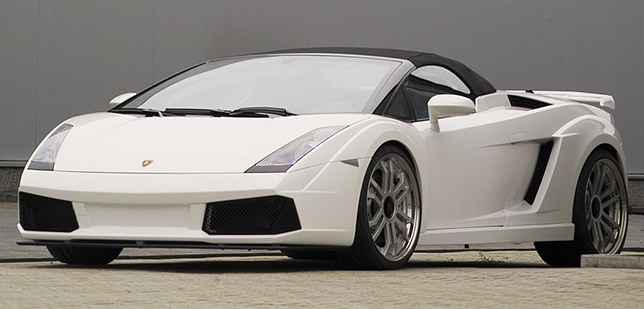
Until recently, the German tuning company IMSA was not more than just an insider tip. But by now, it has achieved the ultimate breakthrough thanks to its first product, the Lamborghini Gallardo GTV. After all, the company from Brüggen treated the Gallardo’s power unit like nobody dared before. After this special treatment, the V10 power unit develops maximum output of 610 hp at 7900 rpm. In the near future, it will also be possible to experience this pleasure in an open car since all GTV parts are now available for the Spyder as well.
Special emphasis was made on road capability.
In spite of the increased engine power and the high torque of 655 Nm at 5300 rpm, IMSA wanted the Gallardo to be suitable for every day use; it had to offer the best possible driving fun even under bad weather conditions.
Therefore, the four-wheel drive amongst other things was adjusted to the new performance. Even during extreme driving manoeuvres, the Gallardo’s new-tuned sport chassis offers great stability and driving control.
Lamborghini IMSA Spyder GTV
The necessary grip is provided by broad 245/30 ZR 20 front and 325/25 ZR20 rear tyres.
IMSA’s focus was on muscular design and, thus, the Gallardo Spyder is equipped with new front and rear aprons and flared wheelarches as well as distinctive spoke wheels with central locking and a discreet rear spoiler. The interior is designed to meet any customer’s individual wishes: leather, alcantara, aluminium and CFRP are on offer to refne the Gallardo’s cockpit.
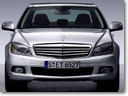
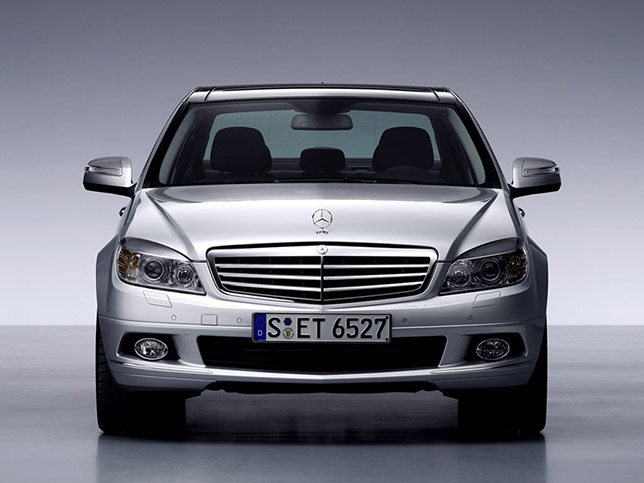
The new Mercedes-Benz C-Class is celebrating its world premiere today at the Mercedes-Benz World in Stuttgart. The new C-Class sedan offers outstanding safety, comfort and agility, and stands out through a product concept that emphasizes variety to meet the most diverse customer requirements. In addition, the three individual models have a visibly different appearance from one another. “Through innovative high-performance technologies we aim to raise the bar even higher when it comes to safety, comfort and agility in the segment of compact premium automobiles,” says Dr. Dieter Zetsche, Chairman of the Board of Management DaimlerChrysler AG and head of the Mercedes Car Group. “The new C-Class will thus set new standards when it comes to providing the most sophisticated driving experience in its segment.”
Individual design of the new C-Class underscores its agility and comfort
The distinctive design of the new C-Class, which will arrive at dealerships in Europe at the end of March and in the U.S. just a few weeks later, is based on the modern Mercedes-Benz idiom. For the first time in a Mercedes sedan, the model variants differ from one another through different front views. The AVANTGARDE model with its centrally positioned Mercedes star is an extremely agile C-Class in a sporty design. For customers who rather prefer a comfortable and elegant ride, Mercedes-Benz offers a truly classic model in the CLASSIC and ELEGANCE lines with the traditional Mercedes radiator grille. “With this design variety, the new C-Class can be tailored even more specifically to what typically are very heterogenous customer demands in this segment. Depending on the line, the new C-Class sets an individual tone in terms of comfort or agility,” says Dr. Klaus Maier, Executive Vice President Mercedes Car Group, responsible for Sales and Marketing.
Mercedes-Benz C-Class
Newest technology ensures maximum driving pleasure and safety
Technical innovations in the new C-Class include the AGILITY CONTROL system, which adjusts shock absorbers in line with the driving situation and provides for even more direct steering. The model is also equipped with the ADAPTIVE BRAKE system – yet another innovation in chassis technology that offers additional assistance features. The highest levels of safety are ensured by seven airbags, seatbelt tensioners and belt force limiters, all of which come as standard equipment. Also standard are the NECK PRO headrests, which support and protect the heads of the driver and the front passenger within fractions of a second if the vehicle is hit from the rear. In addition, Mercedes-Benz is offering blinking brake lights that help prevent rear-end collisions as standard equipment in the new C-Class. The model is also the first in its segment to be equipped with the innovative Intelligent Light System that features five different headlight settings, and the PRE-SAFE® occupant protection system, which automatically activates measures that protect the driver and the front passenger if an accident is imminent.
New gasoline and diesel engines provide for even better performance and sophisticated driving experience
A total of four modified engines, three gasoline engines and one diesel, are available for the new C-Class. With an impressive increase in performance of up to 13 percent, these engines also make a powerful contribution to the dynamic character of the vehicle. Mercedes-Benz engineers paid particular attention to refining the four-cylinder engines, whose output and fuel economy have been significantly improved. The C 220 CDI, for example, now consumes up to 0.3 liters less fuel per 100 kilometers. The advanced V6 engines in the C-Class program remain unchanged.
The C-Class: A best-seller in the Mercedes-Benz product lineup
C-Class models have been among the most popular vehicles in the Mercedes-Benz product portfolio ever since the launch of the 190 Series – the so-called Baby Benz – 25 years ago. With the latest model changeover, the fourth generation of the C-Class will now continue the success story of its predecessor, the 203 Series. More than two million sedans, station wagons and sport coupes have been sold of this model since its market launch in March 2000. This makes the 203 Series the best-selling C-Class model ever. Germany is the most important market for the C-Class, accounting for approximately 30 percent of worldwide sales. The new C-Class will be built at the Sindelfingen and Bremen plants in Germany and at the East London plant in South Africa.
Superior Safety, Comfort And Agility
Safety, comfort, agility: these are the outstanding attributes of the new C-Class. In late summer 2007, Mercedes-Benz will continue its successful strategy and offer two C-Class models in the U.S, a Luxury Sedan and a Sport Sedan. All model variants share the latest, state-of-the-art technology.
The new C-Class is larger in virtually every dimension over its predecessor. Interior space has increased in the areas of rear legroom, front and rear hip room as well as front and rear shoulder room.
The design of the new C-Class is based on the modern Mercedes idiom, which reflects the technical superiority of automobiles bearing the star with taut lines and large, tranquil surfaces. The pronounced wedge-shape of the front end serves to emphasise attributes such as agility and performance. For the first time in a Mercedes sedan, the radiator grille is used as a distinguishing feature to position the model variants more clearly. Three extended, horizontal louvres and a big centrally positioned Mercedes star characterize the Sport Sedan as a traditional design feature of sporty Mercedes models. Together with the sporty, high-quality appointments, this feature emphasizes the youthful, agile appearance of this C-Class.
In the Luxury Sedan, Mercedes-Benz employs a three-dimensional, louvred radiator grille with a high-gloss paint finish to accentuate other brand-typical attributes such as comfort and luxury.
The two choices for the C-Class allows Mercedes customers to accentuate individual choices, and configure a C-Class to suit their personal taste and lifestyle even more emphatically than before. All the models offer the same extraordinary driving experience that the sedan provides by virtue of further technical improvements. Both by its outstanding long-distance comfort and its dynamic handling, the C-Class sets new standards in this market segment.
Shock Absorbers Automatically Adapt to the Driving Situation
AGILITY CONTROL – this is the term used by Mercedes-Benz for all new and further developments that improve both comfort and agility in equal measure. This standard package includes the AGILITY CONTROL suspension, which controls the shock absorber forces according to the driving situation: when driving normally with low shock absorber impulses, the damping forces are automatically reduced for a noticeable improvement in ride comfort – but without any compromise in handling safety. When driving more dynamically, the maximum damping forces are set and the car is effectively stabilised. The AGILITY CONTROL steering of the new C-Class has a ratio of 14.5, and is therefore six percent more direct than the steering of the preceding model. The likewise included AGILITY CONTROL gearshift reflects the sporty character of the C-Class with a short travel and precise shifts.
ADAPTIVE BRAKE is another new development in the area of running gear technology. This is based on the technology of the S-Class and provides additional support functions for even more safety and comfort. Examples include Start-Off Assist for uphill gradients, priming the braking system in critical situations and light contact to dry the brake discs in wet conditions.
The Latest Mercedes Inventions Ensure Maximum Safety
During the course of its development, the new C-Class successfully passed more than 100 crash tests, including the particularly demanding, in-house impact tests of which some go well beyond the legal requirements. Passing these is a precondition for the highest accolade in automobile safety: the Mercedes star. Occupant protection is based on an intelligently designed bodyshell, 70 percent of which consists of high-strength and ultra high-strength steel. Compared to the previous series, Mercedes-Benz has enlarged the deformation zones even further and improved energy flows. The front-end structure of the new C-Class has four independently acting impact levels, which enable forces to be distributed over a wide area while bypassing the passenger cell.
The safety technology in the interior has been complemented with the very latest protection systems. Seven airbags are included as standard equipment: two adaptive airbags for the driver and front passenger, two sidebags in the front seat backrests and two large windowbags which extend from the A- to the C-pillar during a side impact. The driver, front passenger and the passengers on the outer rear seats also benefit from belt tensioners and belt force limiters as standard.
Interior Design “Cast from a Single Mould”
When developing the cockpit, Mercedes designers took their lead from the sporty sector and included clearly laid-out dial instruments such as may be found in roadsters or coupes. Silver-colored bezels, black dial faces, white markings and glowing orange needles perfectly combine form with function for a high value impression and easy legibility.
Equally clearly laid out and well-arranged, the two-tone dashboard and centre console of the new C-Class form a harmonious unit in line with the “design cast from a single mould” principle. The same applies to the integration of the colour display at the upper centre of the dashboard. This is perfectly positioned within the driver’s line of vision, but can also be covered or folded away as required, without switching off the radio, navigation system or other units linked to the display. If the pivoting cover of the display aperture is closed, the infotainment units continue to operate.
New Control Concept for Clarity and Comfort
The central display is part of the new control and display concept which the new C-Class has adopted from the luxury-class Mercedes models. Its major advantage is rapid access to frequently used functions, which means that the driver does not need to relearn, is able to maintain familiar habits and feels at home immediately. All the control and display elements necessary and important during a journey are located in the cockpit, i.e. in immediate proximity to the driver.
In the same way, linking the standard multifunction steering wheel with the instrument cluster is an important precondition for rapid access to a wide range of information and functions in the driver’s direct line of vision. Other functions such as infotainment are shown by the display at the center of the dashboard. The driver and front passenger are able to control the radio, navigation system or telephone by using a controller on the center console, or access the main menus using direct selection keys.
COMAND Provides Voice Operation, a Music Server and DVD Navigation
The Audio 20 and COMAND APS systems are a range of newly developed, optional infotainment units for C-Class passengers. They all feature a keypad for entering telephone numbers and radio frequencies, as well as a Bluetooth interface which wirelessly connects the mobile phone to the hands-free system. An integral 6-CD changer and the voice control system are available on request.
The multimedia system COMAND APS offers even more functions than before in the new C-Class. One new feature is a Europe-wide navigation system whose data are stored on a hard disc (30 gigabytes). The high-resolution maps are shown on a color display (7-inch) which pivots away and disappears beneath a cover at the touch of a button. Other functions of COMAND APS include a music server with a four-gigabyte memory, a DVD-player for video and audio, and the voice control system, which Mercedes-Benz has likewise improved further: the driver no longer needs to spell out the names of countries, towns or roads, but is able to speak them as whole words. The voice control system is just as convenient when selecting radio stations or entries in the telephone directory.
The C-Class Is the Bestseller in the Mercedes Lineup
The new C-Class replaces a model series of which more than 1.4 million units have been sold since spring 2000. All in all, Mercedes-Benz has delivered more than two million of the Sedan, Estate and Sports Coupe models in the previous C-Class to customers all over the world. This makes the C-Class the bestseller in the Mercedes-Benz passenger car range. is the largest market for the C-Class, accounting for around 30 percent of worldwide sales.
Siam Nissan Automobile Co., Ltd. (SNA) today announced the introduction of its all-new pickup truck, the Nissan Frontier Navara. The all-new Nissan Frontier Navara will provide a major boost to the Nissan business in Thailand, a market that is dominated by the one-tone pickup segment. With the Frontier Navara, SNA will achieve 40,000 units in the pickup segment and 55,000 units in total sales in fiscal year 2007. (more…)
The SEAT dealership network in Spain already features a new “Black & White” version for the Altea range, a limited series with only 200 units on offer in Spain. Its name is a reflection of the combination of mágico black body paint and pale Moonrock leather upholstery, a unique colour scheme within the range that enhances the Altea’s roominess and lends a touch of elegance that has nothing to envy of higher segment vehicles.
The Altea Black & White’s exclusiveness does not stop at its elegant colour combination and top-notch trim level. Its extensive list of standard comfort and safety equipment sends it directly to the top of its range.
Using the Stylance trim level as a guideline, the “Black & White” adds Moonrock leather upholstery, heated seats, audio equipment with MP3 and eight speakers, Bluetooth connection for hands-free telephone, metallic paint and 17 inch alloy Zenith wheels.
These standard elements are complemented with steering-wheel mounted controls, rear parking sensors, ESP, volumetric alarm, rain sensing wipers, automatic lights-on, dual zone climatiser, trip computer, cruise control, front and rear power windows and electric park position door mirrors, among others.
Exclusively available with the 140 hp 2.0 TDI engine, the SEAT Altea “Black & White” is listed at 25,280 euros.
Ford F-Series Super Duty, the industry’s leading heavy-duty work truck and a mainstay of businesses throughout America, has been overhauled for the 2008 model year. Ford’s Super Duty pickup has been the leader in the over 8,500-pound truck segment since launch, offering best-in-class payload, gross vehicle weight ratings (GVWR) and trailer tow ratings. The new Super Duty, which will go on sale in early 2007, will help ensure that Ford Motor Company maintains its nearly 30 years of leadership in the pickup truck business. (more…)
New technology cuts emissions by up to 21 per cent and improves fuel consumption by up to 24 per cent Tax-busting 60.1mpg 118d is BMW‘s most economical production car. The new BMW 1 Series goes on sale in spring 2007 and features a model line up that includes the most fuel efficient production vehicle BMW has ever produced. The introduction of a three-door model and a revised five-door come as a raft of new fuel-saving innovations are rolled out across the range.
Technologies such as Brake Energy Regeneration, Automatic Start-Stop function and Electric Power Steering are combined with lower rolling resistant tyres and a gearshift change indicator to encourage economical motoring. These innovations are in addition to the use of variable valve technologies and High-Precision Direct Injection engines on some 1 Series models that boost power output but cut fuel consumption and emissions.
The BMW 118d, BMW’s most economical car, manages its record 60.1mpg figure courtesy of these features in conjunction with the use of further lightweight engineering. The car now has an aluminium crankcase to save weight. Aside from the BMW Hydrogen 7, the BMW 118d also posts the lowest ever CO2 emissions of any BMW recording 123g/km (putting it into the Band C category for Vehicle Excise Duty).
BMW 1 Series
Other engines in the new 1 Series range record economy improvements of up to 24 per cent compared to the previous model, while emissions have also been cut by up to 21 per cent. These improvements have not been to the detriment of driving pleasure. The new 1 Series is powered by a range of engines whose outputs have increased by up to 20hp with a consequential improvement in performance figures.
New fuel saving technology
Brake Energy Regeneration (iGR) makes its debut on the 1 Series. The system uses an Intelligent Alternator Control (IAC) and an Absorbent Glass Mat battery to recycle previously lost energy, in turn saving fuel. This is achieved as the IAC reduces drag on the engine by only engaging when required to charge the battery, whereas a traditional alternator is always pulling power from the engine. Additionally, the energy generated by the engine on over-run (under braking or descending a hill) was previously wasted. Now this lost energy is utilised by the IAC to charge the battery. iGR alone is responsible for a three per cent improvement in fuel economy.
The new 1 Series comes with Automatic Start-Stop function to cut fuel consumption. Standard on all manual transmission models (except 130i), the system automatically switches the engine off when the vehicle is stationary and the driver puts the car into neutral. To restart the driver only need engage the clutch again before pulling away in the normal manner. Should he not want to use the Automatic Start-Stop function it can be manually switched off.
The use of Electric Power Steering results in a 90 per cent energy saving compared to a conventional mechanical hydraulic steering system. Power assistance is now provided by an electric motor that works only when required, such as turning a corner. Other fuel saving enhancements have been made courtesy of various ancillary devices, such as the air-conditioning power supply being disconnected from the drivetrain when not in use. Even flaps behind the kidney grille improve economy, closing up for improved aerodynamic efficiency should the engine require less airflow. The feature also improves cold starting times.
Low running costs
The plethora of new technology showcased in the BMW 1 Series will have a significant impact on cost of ownership for customers. For the company car driver all but two engine variants now sit in the Band C category for Vehicle Excise Duty. This results in a saving of up to £505 for someone paying 40 per cent tax and up to £278 for those in the 22 per cent tax bracket. For all owners fuel consumption improvement means a 12,000 miles-a-year driver will save approximately £250 off the fuel bill.
Traction and safety
All BMW 1 Series models come with Dynamic Stability Control with Dynamic Traction Control for the best combination driving pleasure and safety. DSC allows drivers to make the most of the 1 Series’ 50:50 weight distribution and rear-wheel drive configuration for the best on-road performance. The BMW 130i comes with five additional functions with its DSC+ system for enhanced convenience and driver safety: Hill Start Assistant, Brake Pre-tensioning, Brake Drying, Brake Fade Compensation and Soft Stop.
All BMW 1 Series have six airbags as standard, the Brake Force Display function on the rear lights to highlight sharp braking and Run-flat tyres with Tyre Puncture Warning System.
A new style of BMW 1 Series
To herald the introduction of the latest generation of engines, BMW’s designers have refreshed the interior and exterior styling of the five-door model. The 1 Series now features a larger kidney grille for improved airflow to the engine. The lower front spoiler has also been reprofiled to create a larger air intake, while the spoiler protrudes further for a more pronounced, sporting look. The headlamp cluster remains the same size but a darker cover gives a subtle, more distinguished front end.
At the rear a restyled bumper gives the impression of a wider, lower car. The rear lamp cluster now features a new arrangement of lights, but retains its original shape.
The new three-door 1 Series features the same styling cues but its side view is naturally different. The passenger doors are longer than those on the five-door model and are also frameless in the style of a coupé. Inside, customers will also be able to choose between either a four-seat or a five-seat configuration. In the four-seat arrangement rear passengers are separated by a central storage compartment and sit in more sculptured seats. As a no-cost option the five-seat layout offers the traditional bench seat standard on the five-door 1 Series. The introduction of higher quality materials and minor changes to the layout of the interior enhance customer comfort and practicality.
Optional highlights
The new 1 Series comes with MP3 and USB stick capability for the best in in-car entertainment. Customers with their favourite music loaded on an Apple iPod or a USB stick can now plug these into the car to continue their listening. Tracks are selected via steering wheel controls or the iDrive system.
The optional Adaptive Headlights that turn to follow the intended course of the car have been improved on the 1 Series. Cornering light function is added to the package as standard. This means two additional lights turn at speeds of between 22 and 40mph to further illuminate the direction of travel on a twisting road.
The new MINI hatch line-up will soon be complete, when the new MINI One and MINI Cooper D models are unveiled to the public at the International Geneva Motor Show on 8 March 2007. The entry-level One features a perky 95hp 1.4-litre petrol engine, while the Cooper D boasts performance and fuel efficiency from an all-new 1.6-litre 110hp turbodiesel powerplant.
After JE DESIGN, a well-known SEAT customising specialist, tuned the new Leon two months prior to its market launch, the same tuning specialist from Leingarten, Germany, has now turned its attention to the “FR” version.
The core of the modifications is the power boost to the 2.0 TDI engine. Instead of 125 kW (170 bhp), it now generates a solid 142 kW (193 bhp) with a torque increase from 85 to 410 Nm. The modifications to the engine management system permit better driving performance: A top speed of 224 km/h (series: 218 km/h) and acceleration from 0 to 100 km/h in 7.6 seconds (series: 8.2) send out a clear message! The power boost comes with a TÜV parts certificate. Needless to say, the TDI still complies with the EI regulations. An electronic power boost for the new 2.0 TFSI with 147 KW / 200 bhp leads to a terrific 180 kW (244 bhp) with a torque boost up to 355 Nm at 1,850 rpm. Here, too, the modifications to the engine management system permit enhanced driving performance: A top speed of 235 km/h (series: 229 km/h) and acceleration from 0 to 100 in 6.5 seconds (series: 7.3)! This power boost also comes with a TÜV parts certificate. In each case, the price includes a 1-year guarantee on the engine, drive train and gearbox. Upon request and subject to an extra charge, this can be extended by a further 12 months. A power boost for the new Leon CUPRA 2.0 TFSI with 176 KW / 240 bhp is in the pipeline. (more…)
 To mark the international launch of the new R27, Renault Sport Technologies will present the Clio Renault F1 Team in Amsterdam today. This will be a unique opportunity for enthusiasts to celebrate the achievements of the two-fold world champion Formula 1 Team with the unveiling of a unique car packed with sports features and technologies. Offering sensations of pure performance, passion and driving pleasure, the special edition Clio Renault Sport asserts its identity across a unique look and sporty dynamics, boosted by range of equipment drawn from the best of competition vehicles.


 The introduction of the third vehicle of the X90 Programme, which will go on to feature a total of six vehicles within the framework of Renault Commitment 2009, not only forms part of the programme’s ongoing development but also contributes to the group’s international growth.


 Ford Motor Company today unveiled the world’s first drivable fuel cell hybrid electric plug-in that combines an onboard hydrogen fuel cell generator with lithium-ion batteries to deliver more than 41 mpg with zero emissions. The vehicle is built on a flexible powertrain architecture that will enable Ford to use new fuel and propulsion technologies as they develop without redesigning the vehicle.

 Until recently, the German tuning company


 The new Mercedes-Benz C-Class is celebrating its world premiere today at the


 Siam
 The SEAT dealership network in Spain already features a new “Black & White” version for the Altea range, a limited series with only 200 units on offer in Spain. Its name is a reflection of the combination of mágico black body paint and pale Moonrock leather upholstery, a unique colour scheme within the range that enhances the Altea’s roominess and lends a touch of elegance that has nothing to envy of higher segment vehicles.


 Ford F-Series Super Duty, the industry’s leading heavy-duty work truck and a mainstay of businesses throughout America, has been overhauled for the 2008 model year. Ford’s Super Duty pickup has been the leader in the over 8,500-pound truck segment since launch, offering best-in-class payload, gross vehicle weight ratings (GVWR) and trailer tow ratings. The new Super Duty, which will go on sale in early 2007, will help ensure that Ford Motor Company maintains its nearly 30 years of leadership in the pickup truck business.
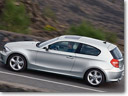 New technology cuts emissions by up to 21 per cent and improves fuel consumption by up to 24 per cent Tax-busting 60.1mpg 118d is

 The new MINI hatch line-up will soon be complete, when the new MINI One and MINI Cooper D models are unveiled to the public at the International Geneva Motor Show on 8 March 2007. The entry-level One features a perky 95hp 1.4-litre petrol engine, while the Cooper D boasts performance and fuel efficiency from an all-new 1.6-litre 110hp turbodiesel powerplant.
 After JE DESIGN, a well-known SEAT customising specialist, tuned the new Leon two months prior to its market launch, the same tuning specialist from Leingarten, Germany, has now turned its attention to the “FR” version.