Blog

  • AC Schnitzer Mini RS6

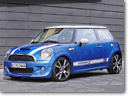
    AC Schnitzer MINI RS6Retro but not old-fashioned – sassy and practical – authentic but no copy: Few cars have mastered the balancing act as well as the new MINI, the latest generation of which is now in the showrooms. In design terms it remains true to its predecessor, but doesn’t stop there technically. In detail no MINI looks like the next, because individuality takes priority amongst its owners.

    Anyone wanting to stand out from the crowd of MINI owners, not just in appearance but also in performance, should turn to AC Schnitzer. The present focus of the tuner’s development activities is the new 170 HP turbo engine in the Cooper S, for which AC Schnitzer develops a performance upgrade. And when the driver puts the power down, the sound track plays loud and clear, thanks to the sonorous twin sports silencer with chromed Racing tailpipe.

    Full gas to the next corner – and through it at full speed! Touring Car legend Manfred Wollgarten set up the AC Schnitzer racing suspension on the North Loop of the Nürburgring – and it runs rings round the already very good standard suspension. You can feel the difference just with the AC Schnitzer suspension spring kit. But back from the track to the city: Out of the reflective glass facades flashes the face of a model athlete. AC Schnitzer achieves this masterpiece with a few tricks. The front bumper has a new front spoiler.

    Painted in body colour, and with its striking prominent corners, it sets a clear visual highlight. The sassy rear has also been subtly lifted. The rear skirt from AC Schnitzer, painted in contrast to standard, has a diffuser which effectively pulls the MINI down to the tarmac.

    Two sporting wheel designs, the brand-new Bicolor wheel Mi2 in 7.5 x18″ and the Mi1 in the classic AC Schnitzer look in 7.5 x 17″, complete the sporting range. And naturally the enthusiastic MINI fan has a wealth of matching accessories for the interior.

    Such as the attractive controls and sports pedals of aluminium – naturally from AC Schnitzer.

  • Porsche 911 GT2

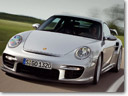
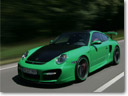
    Porsche 911 GT2Presenting the new 911 GT2 at the Frankfurt Motor Show, Dr. Ing. h.c. F. Porsche AG, Stuttgart, is proudly launching the most powerful 911 so far homologated for road use. Through its striking design with large air intakes at the front and the rear wing so characteristic of this very special model, the new 911 GT2 expresses the power and performance potential of the fastest-ever 911 right from the start even at a standstill.

    Available exclusively with rear-wheel drive and a manual six-speed gearbox, this high-performance athlete accelerates to 100 km/h in just 3.7 seconds and reaches a top speed of 329 km/h (204 mph) on average fuel consumption of just 12.5 litres/100 km (equal to 22.6 mpg imp) in the New European Driving Cycle (NEDC), thus offering a level of fuel economy regarded as quite impossible in this performance class just a few years ago.

    The power unit of the new 911 GT2 is based on the six-cylinder boxer engine of the 911 Turbo, with air supply by two exhaust gas turbochargers featuring variable turbine geometry (VTG). The 3.6-litre boxer engine achieves its maximum output of 530 bhp (390 kW) at 6500 rpm, with maximum torque of 680 Newton-metres maintained consistently between 2,200 and 4,500 rpm. With its unladen weight of 1,440 kg or 3,175 lb, finally, the 911 GT2 offers a power-to-weight ratio of just 2.72 kg/6.00 lb per horsepower.

    The increase in engine power by 50 bhp over the ”regular“ power unit is provided in the new 911 GT2 by two turbochargers with a larger compressor wheel and a flow-optimised turbine housing raising turbocharger pressure to an even higher level. And for the first time Porsche’s engineers have combined the turbocharged engine with an expansion-type intake manifold – a genuine revolution on turbocharged power units.

    The expansion intake manifold uses the principle of oscillating air in the intake manifold during the cooler expansion phase, keeping the temperature of the fuel/air mixture lower than in the 911 Turbo. This, in turn, means a significant increase in all-round efficiency, with fuel consumption down by up to 15 per cent under full load despite the increase in engine output.

    The 911 GT2 offers new achievements also in terms of emission management and control: This is the first Porsche homologated for the road to feature a rear silencer and tailpipes made of titanium as standard equipment. This expensive material reduces weight by approximately 50 per cent versus a comparable component made of stainless steel to just 9 kg.

    The new 911 GT2 comes as standard with PCCB brakes featuring brake discs made of a composite carbon fibre/ceramic compound ensuring maximum stopping power maintained with an extremely high level of consistency. A further advantage is that PCCB brakes reduce the weight of the unsprung masses versus comparable grey cast-iron discs by approximately 20 kg or 44 lb.

    Yet another feature fitted as standard is the electronically controlled PASM Porsche Active Suspension Management. (PASM). The GT2 comes on 19-inch light-alloy wheels running at the front on 235/35 ZR 19, at the rear on 325/30 ZR 19 sports tyres.

    The new 911 GT2 will be at the dealership in November 2007. The base price of the car in Germany is Euro 159,100.-, the market price including 19 per cent value-added tax Euro 189,496.-.

  • JE Design Audi Q7

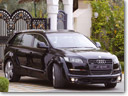
    True to the motto of “everything or nothing”, the car styling specialist from Leingarten,Germany, customizes the Q7 to create an impressive car. In addition to the muscular wide body kit, which makes this Audi look even more powerful, JE DESIGN is also offering a performance enhancement, new rims and an electronically lowered suspension. (more…)

  • STARTECH Jeep Compass

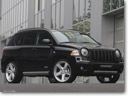
    STARTECH Jeep Compass180 hp (178 bhp) / 132 kW of rated power and a peak torque of 360 Nm (266 ft-lb) for the 2.0 CRD model, as well as a wide range of exclusive accessories: STARTECH offers an exclusive customization program for the Jeep Compass that features numerous innovative detail solutions and leaves nothing to be desired.

    The STARTECH SD3 tuning kit for the Compass turbodiesel model can be installed by any authorized Chrysler–Dodge–Jeep dealer in less than 30 minutes. It unleashes the true power inherent in the two-liter diesel engine. The additional 40 hp (39 bhp) / 29.4 kW and the enormous torque that’s already available between 1,750 and 2,500 rpm, are the result of an auxiliary control module that governs the engine electronics. The engine tuning can be further optimized with the STARTECH stainless-steel sport exhaust. The latter is integrated into the STARTECH individualization concept for this Jeep model based on a brand-new
    idea.

    The two oval tailpipes left and right are seamlessly integrated into the STARTECH rear molding, which is part of the striking designer suit for the Compass. It is styled like an underride guard. The rear molding can also be installed sans sport exhaust.

    The replacement for the front apron is also shaped like a modern underride guard and lends the five-door a more aggressive expression. The front can be further refined with two stylized air dams below the turn signals. Their ‘eyelashes’ give the 4×4 a sharper profile. The STARTECH body conversion is rounded out by rocker panels shaped like running boards.

    The STARTECH look is further dominated by custom-tailored tire/wheel combinations for the Compass, available with diameters of 19 and 20 inches, instead of the stock 18-inch wheels. The STARTECH Monostar IV five-spoke wheels are silver polished and fill out the space below the wheel arches nicely. They are mounted in size 8.5Jx19 all around with tires in size 255/40 R 19 or in size 9Jx20 in front and back with tires in size 245/35 R 20 all around.

    STARTECH also offers progressive-rate springs that lower the ride height of the American SUV by some 30 millimeters. The lowered center of gravity gives the vehicle even sportier and safer handling characteristics.

    STARTECH also adds exclusive and individual highlights in the cockpit. These include stainless-steel scuff plates with illuminated STARTECH logo and high-quality velour floor mats. Exclusive highlights in the Compass cockpit are added with the STARTECH Lifestyle interior upgrade package. It includes leather-covered door trim with embossed Compass logo and color-contrasted ornamental stitching that also adorns the trim piece for the dashboard. The interior is further upgraded with high-gloss silver-coated loudspeaker moldings that are designed to look like a compass.

  • Mitsubishi i MiEV SPORT

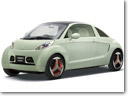
    Mitsubishi i MiEV SPORTBased on the i MiEV,*1 the pinnacle of Mitsubishi Motors’s environmental technology, the i MiEV SPORT maximizes the sporty possibilities of the zero-emissions electric vehicle. The high power and environmental performance of its electric motors make it an exhilarating drive that delivers superior environmental performance.

    Design

    The “fastback” exterior design expresses the quickness of the car with an appearance that is pleasing and lively. An efficient, environmentally friendly electric vehicle thanks to its compact size, it also possesses exceptionally fluid styling. A simplified interior styling creates a pleasant space, allowing occupants to feel at home. Geometry, metallic materials and body epitomize the futuristic electric vehicle. Interior lighting, too, has been carefully thought out, with the use of many blue LEDs suggestive of nature, creating a sophisticated, cutting-edge atmosphere.

    The light green exterior marks another association with nature. The pearlescent paint, which shines when hit with direct light, brings feelings of advanced, futuristic technology and environmental peace of mind. The interior is sporty and dynamic as a result of the substantial use of mesh materials, while the space, with various natural elements, fosters feelings of both security and comfort.

    Packaging

    Like the i MiEV, i MiEV Sport uses a rear-midship design in its layout. Making use of the relatively long wheelbase of this platform, a high-capacity lithium-ion battery is installed in the lowest area under the floor, and components including a motor and inverter are arranged beneath the luggage compartment. This layout provides optimal distribution of weight, front and rear, and a lower center of gravity for stability, sporty performance, and a spacious interior.

    Body Structure

    An aluminum space frame — a combination of aluminum extrusions and aluminum die casting — is light, rigid and strong; helping to improving performance by minimizing weight.

    The optimum layout of structural members, including front-side and cross members, efficiently absorbs crash energy in the event of front-end or side collision. In a collision from the rear, EV components under the back seat and rear floor serve as a barrier to ensure the integrity of the passenger compartment. By making use of the rear-midship layout and utilizing Mitsubishi’s latest RISE (Reinforced Impact Safety Evolution) body, the concept realizes excellent occupant protection in collisions from any direction, even when colliding with a vehicle of different height or weight.

    Powertrain / S-AWC

    The system employs a structure consisting of three permanent magnetic synchronous motors. One in-wheel motor is placed at each front wheel; a single motor drives the rear wheels, as is used in the “i MiEV” system. An E-4WD system electronically optimizes the output of all motors. In addition, a new E-AYC (Electric Active Yaw Control) system is employed to directly regulate torque at the left and right rear wheels via an electric motor. In addition to the E-4WD and E-AYC, the S-AWC system integrates ABS and ASC (Active Stability Control) systems, thus independently controlling driving force, traction and braking at all four wheels, for total maneuverability and maximum stability.

    Energy Saving Technology/Environmental Technology

    Energy-saving environmental considerations are seen throughout the i MiEV SPORT. Effective use of energy is achieved by installing an auxiliary photovoltaic generator on the roof, a power-generating fan inside the front grill, and regenerative braking functions to recover energy when the car is slowing down. Much of the lighting is by bright, power-saving LEDs, including in the rear combination lamps and vehicle interior, and the efficiency of the air conditioning is enhanced by the use of heat-absorbing window glass. In addition, Green Plastic — Mitsubishi Motors’ unique plant-based resin technology — is used wherever possible for interior components in another nod to the environment.

  • Mercedes-Benz C63 AMG

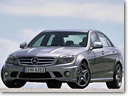
    Mercedes-Benz C63 AMGIn the German Touring Car Championships (DTM) the new AMG C-Class ensures exciting motor racing at the highest level, and now its roadgoing sister model is celebrating its debut: the new C 63 AMG. Its AMG 6.3-litre V8 engine develops a peak output of 336 kW/457 hp and a maximum torque of 600 newton metres – unrivalled figures in this segment. Accordingly the C 63 AMG accelerates from zero to 100 km/h in 4.5 seconds, while its top speed is electronically limited to 250 km/h. In conjunction with an all-new front axle, speed-sensitive AMG sports steering and the new, 3-stage ESP Ò, the AMG sports suspension ensures both outstanding driving enjoyment and exemplary handling dynamics. A combination of expressive design, a decidedly sporty interior and a high level of everyday practicality makes the C 63 AMG a unique high-performance car. The market launch will commence in early 2008.

    With the new C 63 AMG, Mercedes-AMG GmbH is making a confident statement to mark the 40th birthday of the company. The new V8 flagship model is now the fifth generation of the AMG C-Class, whose family tree goes back to the C 36 AMG of 1993 – the very first vehicle developed as a cooperative venture between Daimler-Benz and AMG.

    Merely the appearance of the C 63 AMG is impressive enough, with its wide, road-hugging stance. The new bonnet with its prominent power domes conceals the independently developed AMG 6.3-litre V8 engine, which develops a fulminating 336 kW/457 hp at 6800 rpm from a displacement of 6208 cubic centimetres. In this respect the C 63 AMG comes very close to the 470 or so horsepower delivered by the AMG C-Class racing touring car in the DTM series. This high output also benefits the power-to-weight ratio, which is a very favourable 3.6 kg/hp.

    The torque developed by the AMG 6.3-litre V8 engine need fear no comparison either. The maximum of 600 newton metres at 5000 rpm is unrivalled in this class, and the torque curve is equally impressive: from 2000 to 6250 rpm the driver always has more than 500 newton metres on tap – ideal for powerful acceleration in any engine speed range.

    V8 with thoroughbred racing technology and a designer exhaust note

    Introduced in 2005, the V8 engine is installed in numerous AMG high-performance cars and excels with its thoroughbred motor sports technology.

    Perfect cylinder charging is guaranteed by the vertical arrangement of the intake and exhaust ducts, as well as the magnesium variable intake manifold with two integral throttle flaps. Other high-tech features include variable camshaft adjustment, four-valve technology with bucket-type tappets, a particularly rigid aluminium crankcase of closed-deck design and the low-friction TWAS coating on the cylinder contact surfaces.

    Among the particular strengths of the AMG V8 engine are outstanding responsiveness and enormous pulling power – by virtue of its large displacement, it develops over 30 percent more torque than comparable engines in this performance class. Electronically controlled fuel delivery is another reason for the outstanding agility and responsiveness to movements of the accelerator. With its sporty AMG sound, which was designed-in during a series of sophisticated trials, this eight-cylinder powerpack from Affalterbach offers the unique excitement of a fast-revving, naturally aspirated engine – an audible and immediate experience whether at low, medium or high engine speeds.

    In the interests of optimal reliability, the C 63 AMG has a particularly efficient water cooling system and large engine and transmission oil coolers. Located behind the large apertures in the AMG front apron, these coolers ensure non-critical operating temperatures at all times – even under the extreme stress of the racetrack.

    Like all AMG high-performance engines, the AMG 6.3-litre V8 is built in the AMG engine shop on the traditional “one man, one engine” principle. This means that one technician is responsible for hand-assembling a complete V8 engine to the highest quality standards – which is attested to by his signature on the AMG engine plate.

    AMG SPEEDSHIFT PLUS 7G-TRONIC with blipping function

    This high-performance eight-cylinder engine has the perfect partner in the form of the AMG SPEEDSHIFT PLUS 7G-TRONIC transmission. Equipped with AMG steering wheel shift paddles and three driving modes, the seven-speed automatic transmission allows a decidedly sporty or more comfort-oriented style of driving according to the driver’s preference. The different modes – “S” (Sport), ” C” (Comfort) and “M” (Manual) differ in their shift characteristics and speed: gearshifts in “S” mode are around 30 percent faster than in “C”, and no less than around 50 percent faster in “M” mode. Pressing a button is sufficient to activate the desired driving programme.

    The new C 63 AMG is the very first AMG car to feature an automatic throttle-blipping function during downshifts. This not only enhances the driver’s emotional experience – the almost completely jolt-free downshifting process also reduces the load-change responses and has a particularly positive effect when braking before bends on the racetrack.

    Redesigned front axle with 35-millimetre wider track

    The C 63 AMG owes its outstanding handling dynamics to the AMG sports suspension and an all-new three-link front axle design. The stiff configuration of the springs and gas-pressure shock absorbers ensures optimal road contact and low body movements when negotiating serpentine bends at speed. The new front axle has a 35-millimetre wider track – visible by the more widely flared wheel arches – and therefore ensures lower dynamic wheel loads when cornering. A number of features make for substantially more stability and precision in all driving situations: the redesigned wheel location at the front axle is 100 percent more rigid, leading to a considerable improvement in steering precision. Another benefit makes itself felt when braking, as the new wheel location ensures an immediate response even under high dynamic stresses.

    In combination with completely newly configured elasto-kinematics, the new wheel location provides greatly improved lateral dynamics and allows the driver of the C 63 AMG to benefit from significantly higher cornering speeds. A larger torsion bar stabiliser, new head bearings and dampers with rebound buffer springs further enhance this stability and precision. Steering feedback is also improved by the new kinematics. The speed-sensitive AMG sports steering has a ratio of 13.5:1, but feels more direct as a result of moving what is termed the instant centre of motion at the front axle. A more rigid Hardy disc in the steering column, as well as modified steering characteristics, make a further contribution to increased precision.

    The multi-link independent rear suspension has also been thoroughly re-engineered, with a twelve-millimetre wider track and more camber leading to improved cornering performance. Reinforced drive shafts and drive joints increase fatigue strength and round off the improvements to the rear suspension of the C 63 AMG.

    The completely newly developed AMG sports suspension combines outstanding handling dynamics with the long-distance comfort to be expected of a Mercedes – which also means that the C 63 AMG has the characteristic virtues of a genuine AMG.

    18-inch AMG light-alloy wheels, 19-inch wheel/tyre combination on request

    The C 63 AMG is appropriately fitted with new, 18-inch AMG light-alloy wheels in a five-spoke design. Painted in titanium grey, these high-sheen wheels in size 8.0 x 18 and 8.5 x 18 are shod with wide-base tyres in size 235/40 R 18 (front) and 255/35 R 18 (rear). Even more dynamic handling is made possible by the optionally available 19-inch AMG light-alloy wheels in a multi-spoke design. The front wheels are in size 8.0 x 19 with 235/35 tyres, with 9.0 x 19 wheels and 255/30 R 19 tyres at the rear.

    Generously dimensioned AMG high-performance braking system

    Internally ventilated and perforated disc brakes all-round reside behind the spokes of the AMG wheels. The front brakes have size 360 x 36-millimetre discs with six-piston fixed callipers, while deceleration at the rear is by 330 x 26-millimetre discs with four-piston fixed callipers. The AMG high-performance braking system is characterised by great sensitivity and high fade-resistance.

    3-stage ESPÒ with Sport function as a new feature in the C 63 AMG

    The Electronic Stability Program ESPÒ is specifically configured for the dynamic performance of the C 63 AMG, which is the first AMG model to feature the 3-stage ESPÒ with a Sport function. This system offers three different control settings, and is a logical further development of the AMG ESPÒ philosophy. The ESP key in the centre console enables the driver to choose between three modes – “ESP ON”, “ESP SPORT” and “ESP OFF” – the currently active mode is shown in the central display of the AMG instrument cluster.

    In “ESP ON” mode, the onset of handling instability leads to braking intervention at one or more of the wheels, accompanied by a reduction in engine torque. Briefly pressing the ESP key activates “ESP SPORT”. In this mode the braking intervention to counter oversteer or understeer, as well as the accompanying reduction in engine torque, allows a higher dynamic threshold and, for instance, corresponding drift angles – which means that the driver of the C 63 AMG benefits from considerably more active driving pleasure. ESP Ò is restored to its normal function as soon as the brake pedal is operated.

    Prolonged pressure on the ESP key activates “ESP OFF”. There is no intervention to control the handling dynamics, and no reduction in engine torque – thus increasing driving enjoyment even further. “ESP OFF” should only be used by experienced drivers on dedicated racetracks. In this mode too, operating the brake pedal restores all the normal functions of ESPÒ.

    The system’s traction logic is active in all three ESP Ò modes. If one of the drive wheels threatens to spin, specific brake pressure is applied to create the effect of a mechanical differential lock. This means that the engine power is optimally transferred to the road.

    More distinctive exterior design than ever before

    It is not only in technological but also in visual terms that the new C 63 AMG is more distinctively different from the standard C-Class than ever before. The front end is dominated by the new bonnet with its two pronounced power domes, as well as the trademark AMG radiator grille with a central star and two louvres with chrome inserts. The honeycomb pattern of the grille is also reflected in the large air dams of the new, athletically contoured front apron which forms part of the AMG-specific bodystyling. The fog lamps with chrome surrounds are spaced well apart, acting together with the flared front wheel arches to accentuate the width of the car – with the striking transition from the front apron to the wings leaving a particularly strong impression. The side air vents in the front apron serve to expel the hot air from the oil coolers. If the C 63 AMG is specified with the optional bi-xenon headlamps or the Intelligent Light System, the headlamps are also dark-tinted.

    Eye-catching features when viewed from the side include the 18-inch AMG light-alloy wheels, the harmoniously integrated “6.3 AMG” lettering on the front wing and the AMG side skirts. At the rear the standard LED rear lights, the AMG rear apron with its black diffuser insert and three pronounced diffuser fins, as well as the AMG sports exhaust system with two chrome twin tailpipes, provide further visual highlights that are hallmarks of the brand. The AMG spoiler lip on the boot lid reduces lift and ensures greater handling stability at high speeds.

    AMG interior with new sports seats and performance steering wheel

    This decidedly sporty theme is continued in the interior of the C 63 AMG, which now has special AMG sports seats with integral head restraints for the first time. The seats not only feature a new design with cross-piping and AMG lettering, but also an adaptive backrest with adjustments for the side bolsters and lumbar support. The standard upholstery in ARTICO man-made leather/AMG fabric is available in a choice of black or reef grey – or as an option the interior can be further enhanced with particularly high-grade leather in black, reef grey or black/sahara beige.Perfect handling control is assured with the new AMG performance steering wheel in a three-spoke design, which has a rim diameter of 365 millimetres and a flattened lower section. The upper section is covered in perforated leather, and two silver AMG shift paddles enable the gears to be shifted manually.

    Mercedes-Benz C63 AMG Interior

    AMG main menu with a wide variety of displays

    The trademark AMG instrument cluster in a tubular design features newly styled dials, AMG-specific lettering and a new night-time design. Eye-catching details include the 320 km/h speedometer scale, AMG lettering, red needles and the “6.3 V8” logo in the rev counter. The AMG main menu in the central display allows numerous settings, with “Warm Up”, “Set Up” and “RACE” modes activated via buttons on the AMG performance steering wheel. “Warm Up” displays the engine oil and coolant temperature, “Set Up” the current ESP Ò mode and the transmission mode “S”, “C” or “M”. “RACE” mode makes the RACETIMER available, with which the driver is able to measure lap times on a racetrack.

    Development and design of the C 63 AMG

    Creating a new car is a complex undertaking, and this certainly applies to the new Mercedes-Benz C 63 AMG whose conceptual phase commenced in 2004. This began with the fundamental feasibility study known as packaging. The new C 63 AMG was first constructed as a digital model, the engine, cooling system, fuel system, drive train and axles being “married” with the bodyshell to examine buildability. In spring 2005 the first 1:4-scale design models were produced on the basis of drawings and computer images, and in addition the first testing & development vehicles were already built on the basis of the preceding C 55 AMG. This made it possible to test major assemblies such as the drive train, brakes and axles. The latest onboard measuring technology provided valuable data such as engine oil, coolant and brake disc temperatures – but other aspects of interest were lap times e.g. on the north loop of the Nürburgring, as well as measurable, precisely defined handling manoeuvres to provide comparisons between different axle configurations. These tests were accompanied by extensive aerodynamic tests on the bodyshell of the C 63 AMG, and it was only then that the final design was approved.

    Following approval of the concept in the autumn of 2005, the first fully-fledged prototypes of the C 63 AMG were built. At the same time the high-performance saloon was also produced as a digital prototype. Computer simulations made it possible for the “real” development prototypes to exhibit a very high level of maturity during the first rollout. These simulations included the most important vehicle functions, such as handling dynamics, the engine and drive train, bodyshell durability, suspension performance, passive safety, the engine’s thermal characteristics and performance/fuel consumption.

    From Affalterbach to every climatic zone on earth

    The standardised and highly sophisticated AMG development and test programme for the C 63 AMG began in summer 2005. Over the next couple of years around 20 vehicles were dispatched all over the world from Mercedes-AMG GmbH in Affalterbach, to be subjected to strenuous tests in every climatic zone.

    Test, analyse and optimise – that is the creed of the specialists at AMG to achieve the objectives laid down in the book of specifications. Another decisive aspect was an ongoing dialogue between Design and Development, so that any necessary technical modifications were also implemented in design terms.

  • ABT AS5

    The new Audi A5 combines a sporty and an unobtrusive design to a powerful, elegant and individual appearance. “A uniquely beautiful car and thus a real challenge for us,” says Hans-Jürgen Abt. The managing director of Abt Sportsline raved about the new Coupe from Ingolstadt, but he emphasizes that “our designers and engineers were able to improve the outstanding base model even more”. (more…)

  • Nothelle TT

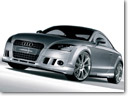
    During this year, nothelle looks back on a fourty-year history of vehicle individualization programs. Since 1967, the name nothelle has been affiliated with supreme engineering aesthetics. Nothelle offers an unmatched array of extensive experience far beyond any other company within this field. Hardly any other company has gathered such a wealth of experience. The refinement program for top-range Audi models meets the highest standards and combines experiences acquired from motor sports with the traditional nothelle values of quality and exclusivity. The enthusiasm for motor sports and innovative concepts is the foundation of the individualization programs for vehicles from Audi.

    (more…)

  • Novitec Quattroporte

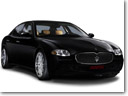
    Novitec Maserati QuattroporteHigher performance through new adjusted engine electronic with modified group of curves as well as higher cutoff speed to 7800 rpm. Power-optimized exhaust system in stainless steel with 2x83mm outlets left and right.

    Stainless steel coil over suspension Sport (dual adjustment) including dual adjustable stainless steel shock absorbers with separated expansion reservoir at damper housing, compression and rebound adjustable in front and rear as well ad CAN-control unit.

    Aluminium spacers made of high-strength aluminium, corrosion-protected by anodize, set of 2 pieces including mounting material
    performance: 304kW (413 hp) / 7.100 rpm
    max. torque: 468 Nm / 4.650 rpm


  • BMW 1 Series Coupe

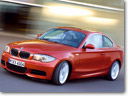
    BMW 1 Series CoupeBMW will introduce a modern and authentic performance coupe that draws inspiration from its iconic 2002 models of some 40 years ago. The next BMW legend, the 1 Series Coupe, represents the core BMW philosophies of pure performance and premium design. By combining sporty rear-wheel-drive dynamics, agile handling, powerful engines and seating for four, the 1 Series Coupe will reinvent the niche that the legendary BMW 2002 created.
    On sale in the spring of 2008, the 1 Series Coupe will be available in two versions; the 128i and the 135i. Powered by a 3.0-liter, 230 horsepower inline 6-cyinder engine that generates 200 lb-ft of torque, the 128i Coupe will feature Valvetronic valvetrain management and aluminum/magnesium contruction—core elements of BMW’s EfficientDynamics. The powerful 135i Coupe features BMW’s twin-turbocharged 3.0-liter inline six-cylinder engine that produces 300 horsepower and an incredible 300 lb-ft of torque from as low as 1,400 rpm.

    With its direct piezo gasoline injectors, twin low-mass turbochargers and air-to-air intercooling, optimum performance and economy is achieved with no loss in engine response. For the 135i Coupe, acceleration from 0-62 mph is accomplished in 5.3 seconds and top speed is electronically limited to 155 mph. Both engines feature on-demand engine coolant pumps that improve fuel economy and reduce parasitic losses for increased output.

    Handsome looks with sporting intentions

    The new 1 Series Coupe combines unique, dynamic and unmistakable design elements with a powerful and muscular body. The greenhouse with its characteristic “Hofmeister kink” is moved rearward and offers a particularly nimble look with its long hood. The short overhangs, long wheelbase and large frameless doors sit on a body with a striking shoulder line for a modern interpretation of BMW’s characteristic look. On the 135i Coupe, an M Aerodynamic Kit is standard.

    The 1 Series boasts aggressive rear end styling. The trunklid has an integrated spoiler chiselled into the rear end of the car to accentuate the short rear section. On the 135i, an additional lip spoiler provides greater downforce on the rear end at high speeds.

    The individual sections within the L-shaped rear taillights give the vehicle a lower, sportier look. Horizontal lights integrated in the rear light clusters offer a homogeneous lighting effect with the help of light-emitting diodes (LEDs). This light design, as found on other BMW models, makes the BMW 1 Series Coupe stand out at night. Also, the Adaptive Brakelights operating in two stages in relation to brake application force are yet another feature typical of BMW, with the additional benefit of extra safety on the road.

    The standard Adaptive Xenon headlights (optional on the 128i) complete with integrated Cornering Lights make driving in the dark safer than ever. The daytime headlight function in typical BMW style with two corona rings on each headlight unit enhances the perception of the car under normal and “murky” light conditions.

    Luxurious interior appointments with today’s technology

    The innovative interior design incorporates high-quality and sophisticated trim elements with luxurious upholstery and color choices. A 60/40 split rear seat is standard. The control console for the entertainment and air conditioning functions is integrated smoothly and harmoniously into the dashboard through its soft radii and flowing surfaces.

    The controller featured in the iDrive system with the optional Navigation system is integrated in the center console, again following BMW’s characteristic philosophy. Galvanized pearl gloss surfaces adorn the interior door handles, the glove compartment handle, the radio’s rotary knobs, the knobs of the automatic air conditioning system, the iDrive Controller, and the ornamental trim strips featured on the sports steering wheel.

    The BMW 1 Series Coupe is available with a choice of two upholstery options—sporty and comfortable Leatherette or rich Boston Leather. Boston Leather upholstery adds further style to the high-quality impression of the interior. And as a practical feature, map pockets are integrated in the lower part of the doors. The optional Sport Package includes sports buckets seats with enhanced side support and are finished in highly distinctive leatherette materials or Boston leather.

    Enhanced iDrive and integration of an external MP3 player

    BMW’s iDrive is included with the optional navigation system. It enables the driver to control all secondary and comfort functions such as communication, air conditioning, entertainment and navigation functions easily and conveniently.

    This latest version of iDrive is equipped with six Programmable Memory Keys that allow the driver to program functions that are used particularly often such as navigation destinations, radio stations or specific telephone numbers. Touch-sensative sensors on these buttons preview the function on the iDrive screen before the button is depressed. This allows the driver to choose the stored function safely and conveniently, keeping his or her eyes on the road in the process.

    A wide choice of audio and communication are also available, never before seen in the compact performance market. These features include SIRIUS satellite radio, HD radio, Premium Sound system and Bluetooth interface. For simple and straightforward connection of an MP3 player, an Auxiliary input jack is standard, and a USB port for direct control of an Apple iPod or iPhone media player is available as an option.

    High-tech suspension with newly-developed differential

    In typical BMW style, the new BMW 1 Series Coupe transmits the power of the engine to the rear wheels. This design concept and configuration – engine at the front, drive wheels at the rear – guarantees optimum traction, good weight distribution front-to-rear, excellent directional stability, and predictable handling.

    The new 1 Series Coupe has a sophisticated suspension system with an aluminium double-pivot front suspension and a five-link fully independent rear suspension in lightweight steel. BMW’s Dynamic Stability Control (DSC) also includes a Dynamic Traction Control (DTC) function that provides electronic intervention to prevent loss of vehicle control, but at a higher threshold before activation. This allows the driver to experience more spirited driving on dry roads and offers more flexibility when driving in more challenging conditions such as in the snow.

    If the driver desires, both DSC and DTC can be disabled entirely. Active Steering, a variable ratio steering system exclusive to BMW, is available as an option. The DSC system on the 135i Coupe is designed specifically for performance-oriented driving. For instance, the accelerator pedal has a quicker response rate and electronic rear brake management is used to simulate a differential lock for stronger acceleration in turns.

    The rear differential on the 1 Series comes from a new generation of final drives optimized for running smoothness. Featuring double-helical ball bearings for the first time, the differential runs at an even lower operating temperature reached more quickly than before thanks to the reduction of fluid required in the differential.

    The front suspension on the BMW 1 Series is also built to a standard quite unique to its competitive group. The double-pivot spring and strut front suspension with its anti-roll bar, is made largely of aluminium and offers an optimum combination of stiffness and low weight. The very stable track control arms and thrust rods, as well as exact wheel guidance, make an important contribution to the car’s driving dynamics.

    High safety standards exceed international requirements

    No less than six airbags come standard within the new BMW 1 Series Coupe for optimum protection of the car’s occupants. The advanced frontal airbags are activated in stages in relation to impact severity while the side airbags integrated into the sides of the front seat backrests reduce the risk of injury at chest and hip levels in side impact situations.

    HPS (Head Protection System) side curtain airbags fitted in the roof lining protect both the occupants on the front seats and the passengers at the rear. The new BMW 1 Series Coupe also comes with crash-optimized seats with specially padded headrests and backrests significantly reducing the risk of injury in an impact from the rear.

    All seats within the 1 Series Coupe are fitted with three-point inertia-reel seat belts and headrests, with the front seat belts fastened on the frames of the driver’s and front passenger’s seats, keeping the belt in an optimum position around the occupant’s hips regardless of seat height or for-aft seat adjustment.

    Also, the driver’s pedals move back automatically with a predetermined amount of deformation in the event of a frontal collision so that the risk of driver foot injury is reduced. And last but not least, the rear seats come standard with LATCH attachments for child seats.

    M-inspired performance for the 135i Coupe

    The 135i Coupe offers more performance and a striking look thanks to M-inspired components. Features include an Aero kit for additional downforce at speed, better brake cooling and enhanced aesthetics while the Sports Suspension offers higher traction and reduced body roll with 18-inch wheels and performance tires. The Sports Suspension also includes with a high-performance brake system incorporating six-piston fixed calipers on the front and two-piston fixed calipers at the rear.

    BMW Ultimate ServiceTM:

    Providing owners with incredible value and peace of mind
    The BMW 1 Series Coupe will feature BMW Ultimate ServiceTM, a suite of services that includes the BMW Maintenance Program (formerly called Full Maintenance), Roadside Assistance and the New Vehicle Limited Warranty. BMW AssistTM with TeleService is part of the optional Premium Package or can be ordered separately as a stand-along option.

    BMW Ultimate ServiceTM includes:

    The BMW Maintenance Program is the only no-cost maintenance program in the industry that covers wear and tear items like brake pads and rotors for 4 years or 50,000 miles, whichever comes first. BMW owners pay nothing for all scheduled inspections, oil changes, brake pads, wiper blade inserts and other wear-and-tear items.

    BMW Roadside Assistance is one of the industry’s most comprehensive plans available. Not only is it no-charge for the first 4 years, but there is no mileage limit. BMW drivers enjoy the assurance of on-the-road help 24 hours a day, 7 days a week, anywhere in the United States, Canada and Puerto Rico. This includes everything from flat tire changes, emergency gasoline and lock-out assistance, to towing, alternative transportation and even trip-interruption benefits. This service also includes valuable trip routing advice.

    BMW AssistTM provides the driver with services that enhance on-the-road security and convenience, for added peace of mind. It is a part of the optional Premium package and can also be ordered separately as a stand-alone option. BMW is the only vehicle manufacturer that offers this service for 4 years at no additional cost. Most other manufacturers cover only the first year of service.

    The in-vehicle equipment for BMW AssistTM includes GPS technology and hands-free communication functions accessed via buttons in the overhead or center console. Vehicle occupants may request emergency or other services simply by pressing a button; the BMW AssistTM system then transmits the location and vehicle information to the BMW AssistTM Response Center.

    A response specialist will then speak with the occupants to coordinate dispatch, notify emergency contacts on file, and link BMW Roadside Assistance or emergency services as needed and requested. A severe accident automatically activates the BMW AssistTM call as well. The BMW AssistTM Safety Plan also includes Remote Door Unlock and Stolen Vehicle Recovery services, which can save the owner time and money.

    TeleService automatically notifies the BMW center when a vehicle will need service. This feature allows the Service Advisor to proactively set up a customer appointment and have the needed parts ready.

    BMW AssistTM subscribers can also enroll in the BMW AssistTM Convenience Plan (available at an additional cost of $199 per year) to avail themselves to many BMW AssistTM Concierge services, from travel planning to dining reservations, shopping assistance and event tickets, as well as receive directions, and traffic and weather information. A selected destination and its phone number can be sent directly to the on-board navigation system and Bluetooth®–linked mobile phone, after a push of the new Concierge button.

    The Convenience Plan also includes Critical Calling, a new service that connects the driver in case their mobile phone is not in the vehicle or its battery is discharged. After pushing the SOS button, a BMW AssistTM response specialist will link the driver to his requested party for up to five minutes and for up to four events per year.

    As before, the BMW AssistTM system includes Bluetooth® hands-free phone connectivity with hands-free phonebook access and dialing by name or number via the steering wheel controls. Use of this feature requires a customer-provided compatible Bluetooth® mobile phone.

    Performance with a conscience

    BMW strives to produce its motor vehicles and other products with the utmost attention to environmental compatibility and protection. Integrated into the design and development of BMW automobiles are such criteria as resource efficiency and emission control in production; environmentally responsible selection of materials; recyclability during production and within the vehicle; elimination of CFCs and hazardous materials in production; and continuing research into environmentally friendly automotive power sources.

    Tangible results of these efforts include the recycling of bumper cladding into other vehicle components; water-based paint color coats and powder clear coats; near-future availability of hydrogen-powered models; and various design and engineering elements that help make BMWs easier to dismantle at the end of their service life.
  • TechArt GT Street

    TechArt Porsche 911 Turbo GT StreetWith its 2001 TechArt GTstreet based on the Porsche 911 Turbo of the 996 model series, TechArt Automobildesign created one of the fastest and most powerful street-legal sports cars of its time. The next evolutionary stage of this fascinating concept celebrates is now available: The new TechArt GTstreet, based on the 911 Turbo of the latest 997 series, starts at 245,000 Euros MSRP.

    Like the predecessor the new GTstreet edition centers on a powerful engine: The 3.6-liter twin-turbo flat engine is modified by the TechArt engine specialists and now develops 630 hp / 463 kW at 6,800 rpm, up from standard 480 hp / 353 kW. Peak torque increases from 620 Nm to 820 Nm at 4,500 rpm.

    The TechArt TA 097/T3 engine conversion comprises two special VTG turbochargers, a new air box with sport air filter, high-performance manifolds, intercoolers and a stainless-steel sport exhaust system with high-performance catalysts. The precise optimal interaction of all modifications is ensured by a newly programmed engine management system.

    Power is transferred to all four wheels via a modified transmission with TechArt gear-throw shortening.

    Thus equipped the TechArt GTstreet delivers performance that firmly places it among the world’s fastest sports cars: 0 – 100 km/h in just 3.2 seconds, 200 km/h after just 10.9 seconds and a top speed of 345 km/h speak volumes.

    The body kit for the TechArt GTstreet was created in the wind tunnel, and offers an optimal symbiosis of aerodynamic downforce, minimized drag and striking design.

    The front fascia of the GTstreet with retractable carbon-fiber splitter produces downforce on the front axle and provides radiator, oil coolers and brakes with more cooling air, thanks to its large, striking air inlets. The auxiliary headlamp units with daytime running lights and fog lamps improve active safety. They also give the car even more passing clout.

    The TechArt GTstreet fender flares on the front axle add 10 mm to the two-door’s width and give it an even more dynamic appearance. But that’s not all: The air outlets behind the front wheel houses optimize brake venting. The larger air ducts in the rear sidewalls provide engine and intercoolers with a larger supply of cooling air. For an optimal transition between front and rear fenders the TechArt designers have developed rocker panels that complement the new contours. TechArt mirror and headlamp moldings provide the finishing touches.

    The TechArt roof spoiler extends the roofline and optimizes airflow to the adjustable rear airfoil of the GTstreet.

    The TechArt GTstreet rear fascia with integrated carbon-fiber diffuser contributes to the strong downforce generated on the rear axle. It also provides the perfect backdrop for the quad exhaust of the TechArt high-performance exhaust system.

    TechArt Automobildesign offers a number of versions of its popular Formula wheel in sizes 8.5Jx20 in front and 12Jx20 on the rear axle. GTstreet buyers can choose from several color combinations and between the one-piece Formula and the multi-piece Formula II designs. The Formula II wheel features an exchangeable wheel lip. For optimal tires TechArt chose ContiSportContact 3 high-performance tires in sizes 245/30 ZR 20 and 325/25 ZR 20.

    The large 20-inch wheels also provide the necessary space for the especially powerful and durable TechArt high-performance brake system. It features six-piston aluminum fixed calipers and 390-millimeter discs on the front axle. The rear axle is fitted with 365-millimeter discs and four-piston fixed calipers.

    The TechArt GTstreet comes with a TechArt VarioPlus coil-over suspension that is based on the electronically adjustable PASM damping system of the 911 Turbo. This chassis allows individual ride-height lowering by up to 25 millimeters and push-button selection of two different damper settings, “Normal” or “Sport.” However, the dampers are not limited to these presets. Sporty driving automatically results in firmer damper settings in both modes, thus combining excellent ride comfort during normal driving with agile and responsive handling during fast cornering.

    The cockpit of the TechArt GTstreet also differs distinctly from the stock 911 Turbo. Among the differences is an exclusive leather interior with color-contrasted stitching and sporty CarboBlack highlights. The coupe is further equipped with an ergonomically shaped TechArt sport steering wheel, aluminum foot pedals, foot rest and shifter, as well as with illuminated door sills sporting the TechArt logo.

  • ABT TT Roadster

    Before the first preliminary designs were published, it was clear that the leading Audi tuner ABT Sportsline planned to cause a sensation with the new Audi TT, as the first TT is one of the favourite cars of the Kempten-based company with a long tradition. And this is due to the fact that the race version of the Sports Coupe 2002 won a lot of DTM (German Touring Car Series) races. (more…)