Category: Redirect

  • Polestar vehicles

    2021 Polestar vehicles1

    Polestar, the electric performance car brand, has collaborated with luxury fashion house Balenciaga to help showcase its latest fall collection.

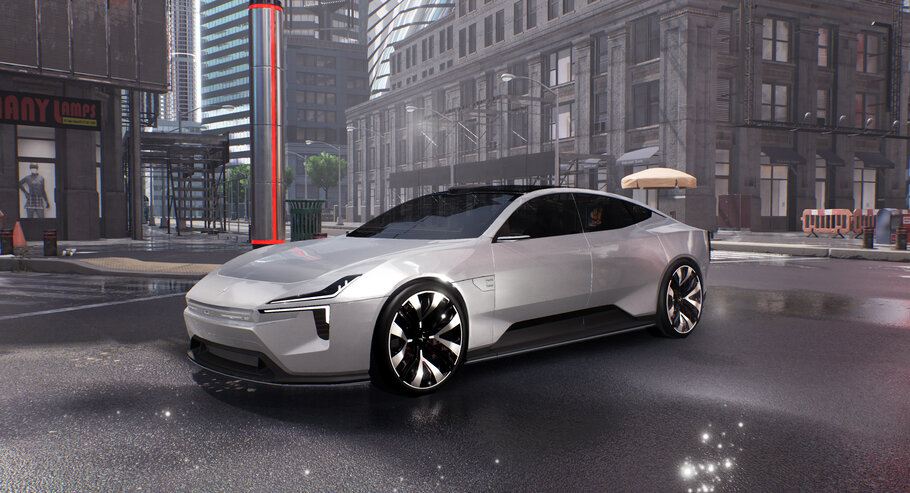
    The new fashion collection will debut in “Afterworld: The Age of Tomorrow”, afuturistic video game set in the year 2031. The team at Balenciaga approached Polestar to help add depth to the virtual environment by placing Polestar cars on the streets in the game.

    Inspired by the Polestar Design Contest, the gamified city will feature futuristic vehicles designed by the Polestar Community, as well as Polestar’s own Precept. Vehicles from designers including Konrad Cholewka, Arthur Martins, Charlie Nghiem, Rash Tagirov, Mattias Waltz and John McInnis were all chosen.

    Balenciaga comments: “Balenciaga’s first video game, Afterworld: The Age of Tomorrow, is set in a near and hopeful future. To make the setting more realistic and exciting, Balenciaga chose to work with other forward-thinking companies, populating the game with their newest designs. The innovative electric vehicles, including the 3x Moto, the MMXL, the 0, the Pickup, and the Polestar Precept, compliment Balenciaga’s ideas on luxury and sustainability, and so made a great addition to the project.”

    Polestar believes that open collaborations lead to innovation, and the brand is building a reputation for identifying and working with so-called kindred spirits. On this occasion though, it was the other way round and Balenciaga’s Demna Gvasalia was so intrigued he reached out to see if Polestar wanted to be part of the project.

    “At Polestar, our aim is to be a leader in the shift to sustainable mobility, as we design towards zero. When Balenciaga reached out and explained the Afterworld project, inspired by the slow return to a healthier balance of nature and industry, we felt it was a perfect match for us,”says Maximilian Missoni, Head of Design at Polestar.

  • Volvo XC60

    ??????????

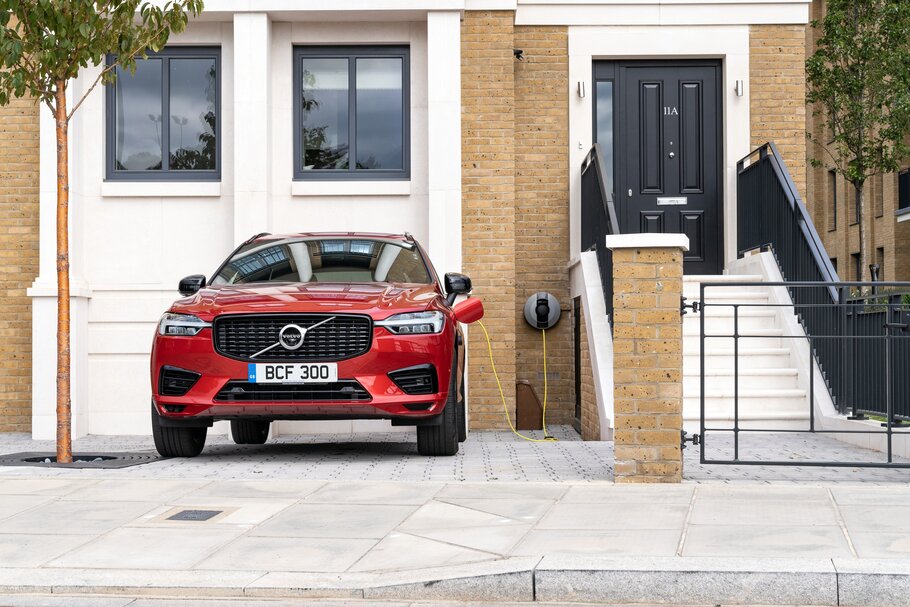
    Volvo’s award-winning XC60 mid-size SUV is now available with a full range of electrified powertrains. The former World Car of the Year is offered purely with hybrid power, from mild-hybrid petrols and diesels to petrol-electric plug-in hybrids.

    Mild-hybrid powertrains

    Every mild-hybrid powertrain in the XC60 range combines a powerful 2.0-litre engine with a 48-volt battery and a KERS kinetic energy recovery system to reduce fuel consumption and improve driveability and response, especially at low speeds. An integrated starter generator also provides faster, quieter restarting of the engine.

    This mild-hybrid set-up can be combined with front-wheel drive in the 197hp B4 diesel and 250hp B5 petrol for optimum efficiency, or with all-wheel-drive for extra stability and security, especially in slippery conditions. The 235hp B5 diesel and 300hp B6 petrol mild-hybrids are offered exclusively with all-wheel drive.

    Extensive plug-in hybrid range

    The XC60 is available with three plug-in hybrid powertrains. These combine a supercharged and turbocharged 2.0-litre petrol engine that drives the front wheels and an electric motor that powers the rears, ensuring the plug-in hybrid’s exceptional efficiency is twinned with the reassurance of all-wheel drive.

    Recently introduced to the XC60 range, the entry-level plug-in is the Recharge Plug-in Hybrid T6. Despite having a total of 340hp from its petrol engine and electric motor for stirring performance when needed, its high-voltage battery enables it to travel up to 32 miles on electric power alone, with no tailpipe emissions and without using a drop of petrol. Its CO2 emissions from 55g/km are the lowest of any XC60, while WLTP Combined fuel economy is up to 113.0mpg. It also sits in the 14% BIK band for company car tax, making it a cost-effective choice for company car drivers.

    The Recharge Plug-in Hybrid T6 is available in popular R-Design and Inscription trim levels, along with keenly priced Inscription Expression (£50,695 on-the-road), which makes a plug-in hybrid XC60 more accessible than ever.

    Sitting above the T6 is the 390hp Recharge Plug-in Hybrid T8, which is available in highly specified R-Design Pro and Inscription Pro form. The range-topper is the 405hp Recharge Plug-in Hybrid T8 Polestar Engineered, which has a series of powertrain, suspension and brake upgrades to make it the most dynamic of all XC60s.

    Every plug-in hybrid XC60 has a 11.6kWh high-voltage battery that can be completely recharged in as little as two and a half hours.

    An XC60 for all tastes

    Steve Beattie, Volvo Car UK Head of Sales, said: “The XC60 has always had the perfect blend of luxury, technology and safety, and now, thanks to the latest advanced hybrid powertrains, it has broader appeal for both private buyers and company car drivers.

  • BMW Motorsport SIM Racing

    2021 BMW Motorsport SIM Racing1

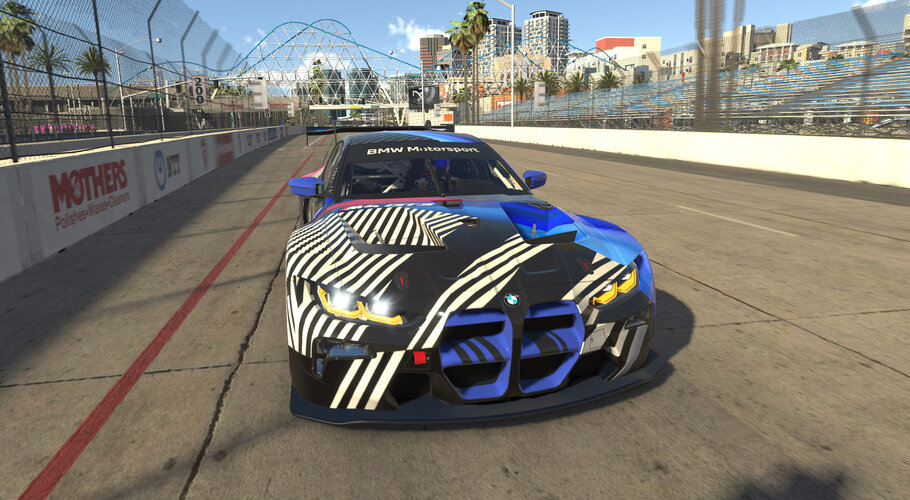
    BMW Motorsport is expanding its sim racing activities in the coming year. As well as various different BMW SIM Cup formats, it will focus on new partnerships with four top teams and founding a “BMW Motorsport SIM Academy”. A “BMW SIM World Tour” is also planned, and is scheduled to start with a roadshow in Austria in 2021. Even more virtual BMW race cars will be available on the most important sim racing platforms, and the development of innovative sim racing hardware with BMW Motorsport know-how will also continue. The goal is to incorporate the sim racing community as an equal partner in all programmes and, together, to continue the boom that virtual motor racing in Esports has enjoyed in 2020.

    “In recent months, we have experienced an incredible dynamic in sim racing,” said Rudolf Dittrich, Head of BMW Motorsport SIM Racing. “At BMW Motorsport, we have learned a lot this year and are determined to put what we have learned into practice, with regard to our 2021 programme. The area of hardware development will also focus on technological innovations and new developments next year. Our BMW SIM Cups will once again play an important role, but in an adapted form. Our cooperations with four of the best sim racing teams in the world, and our new academy, see us continue our approach of promoting sim racing as part of the community through mutual dialogue. Together, we will continue to fuel the growth in this exciting Esports sector. The BMW Motorsport sim racing programme provides the ideal basis for this.”

    BMW SIM Cups.

    Last year’s successful Cup formats on various sim racing platforms will be continued and expanded in 2021. This allows the best sim racers in the world to continue to compete in the BMW M8 GTE on the iRacing platform within the BMW SIM GT Cup. Over the course of the year, the BMW M4 GT3 will also be introduced. The virtual version of this car is currently being developed by iRacing at the same time as the real car is being developed. The BMW SIM M2 CS Racing Cup will also offer spectacular racing again. However, it will no longer take place exclusively on the Nürburgring-Nordschleife, but at various racetracks within the support programme for the GT Pro Series on rFactor 2. New to the programme is the BMW SIM Time Attack by Assetto Corsa Competizione. This sees drivers race against the clock with the BMW M4 GT4 in monthly competitions. All participants have the same goal: to compete at the BMW SIM Live event, which will once again provide the stage for the grand finales of all the BMW SIM Cups in 2021.

    BMW Motorsport cooperates with top sim racing teams.

    The partnerships with four of the best sim racing teams in the world underline the fact that BMW Motorsport is very ambitious and determined to celebrate victories in Esports. Team Redline, Williams Esports, G2 Esports and BS+COMPETITION will compete with BMW cars and represent BMW Motorsport at many top-class sim racing events on the biggest platforms in 2021. Each team brings its own specific strengths and different focusses to the partnership. Team Redline can look back on a unique success story in sim racing and is one of the favourites in every race that features a Redline car. The Williams Esports team is positioned very broadly in sim racing and regularly challenges for victories and titles on many different platforms – with the same name as the Formula 1 team. BS+COMPETITION has a big squad of so-called hybrid racers, who are successful in real and virtual motor racing. BMW and G2 Esports already cooperate successfully in other areas of Esports. Sim racing is now being added to this cooperation. The focus of G2 Esports Sim Racing is on outings in the Assetto Corsa Competizione simulation.

    BMW Motorsport SIM Academy.

    With the construction of its own academy, sim racing is being given a physical home at BMW Motorsport. At the “Home of BMW Motorsport SIM Racing”, ambitious and inexperienced sim racers will be given the opportunity to call on the extensive range of training opportunities and motor racing expertise at BMW Motorsport. This begins with coaching from professional sim racers in the BMW Motorsport SIM Racing partner teams, and continues through to mental training courses, which BMW works drivers have been attending regularly for many years, in order to optimise their concentration during races. The training sessions at the BMW Motorsport SIM Academy are available streamed online and – as soon as it is possible again – in person. The academy is currently being set up. Further details of this programme will be announced during the first half of 2021.

    BMW SIM World Tour.

    Also new for 2021 is the BMW SIM World Tour. This will – if the pandemic situation allows it – kick off in April 2021 with an innovative roadshow through Austria, under the motto “From Showroom to Racetrack”. Mobile BMW racing simulators offer customers and interested parties the opportunity to enjoy an immersive motorsport experience, with the prospect of winning attractive prizes and a place in the national final. A total of 40 event days throughout Austria are planned for the pilot project. The car of choice for the virtual heats will be the entry-level model in the BMW M Customer Racing range – the BMW M2 CS Racing.

  • Volkswagen Golf Estate

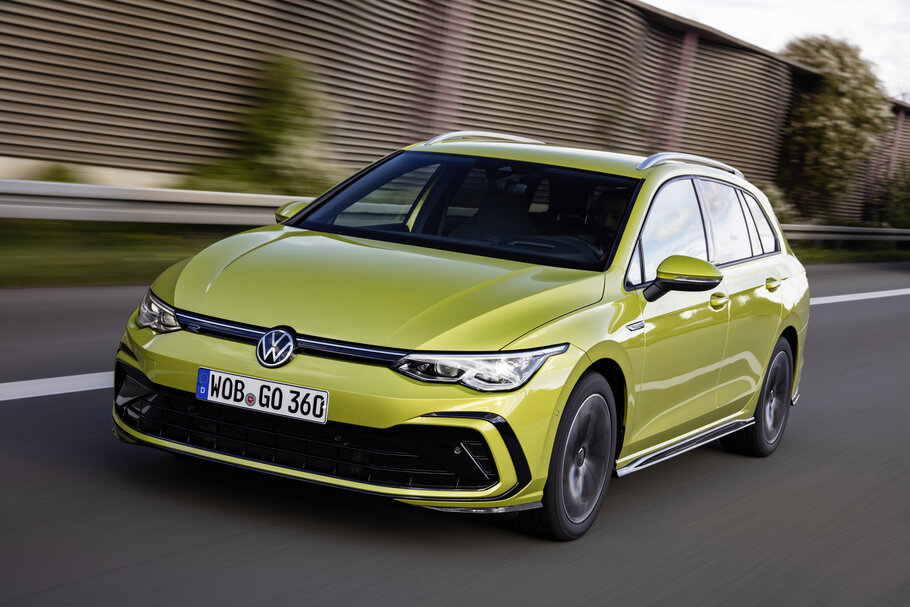
    The new Volkswagen Golf Variant R-Line

    The Golf Estate arrives in the UK available to order now in a diverse range of specification and drivetrain configurations split across three new trim levels: Life, Style and R-Line. The new Alltrack variant also makes its first appearance and is characterised by increased ground clearance, an all-terrain look and 4MOTION permanent all-wheel drive.

    The initial wave of engine and gearbox options in the new Golf Estate opens with a 1.0-litre 110 PS engine, fitted with a 6-speed manual transmission as standard, but available also as an eTSI-designated 48V mild-hybrid powerplant with the brand’s 7-speed DSG transmission. Depending on the chosen Golf Estate trim level, the other engines available to order from today are a 1.5-litre 130 PS TSI, 1.5-litre 150 PS TSI, 2.0-litre 115 PS TDI and 2.0-litre 150 PS TDI, all available with 6-speed manual gearboxes. In addition, 1.5-litre, 130 PS eTSI and 150 PS eTSI mild-hybrid units are also available, exclusively with the 7-speed DSG transmissions as standard. A 2.0-litre 200 PS TDI engine with 7-speed DSG and 4MOTION is reserved exclusively for the Golf Alltrack.

    Performance figures for the range of engines offered in the Golf Estate and Golf Alltrack are undeniably respectable: the Alltrack is capable of 0 to 62 mph in as little as 7.1 seconds (2.0-litre 200 PS TDI), while even the entry level 1.0-litre 110 PS TSI unit will carry the Golf Estate to 62 mph from a standing start in a sprightly 10.5 seconds.

    Clearly identifiable as a sibling of the new Golf hatchback, today’s Estate family of models features a longer roof line and more muscular shoulder section which combine to give it a more overtly sporty appearance than its predecessor.

    The increase in length also alters the car’s proportions, making the Golf Estate appear more substantial but also lower. The new model is 4,633 mm in length and now boasts a wheelbase of 2,686 mm (respectively 349 mm and 66 mm increases compared with its predecessor). The new Golf Estate is 1,789 mm wide and 1,455 mm high (without roof rails). In comparison, the current Golf hatchback is 4,284 mm long and boasts a wheelbase of 2,619 mm. The height and width of both Golf versions are identical.

    Larger external dimensions translate into more useable space inside this new estate. Five occupants can be transported comfortably, while the car’s extra capacity is most noticeable in the rear where maximum legroom increases from 903 mm to 941 mm. Luggage space is enhanced, too, and passengers can stow their belongings in a generously dimensioned boot. When loaded to the top edge of the rear seat backrest, today’s Golf Estate offers 611 litres of storage space (six litres more than the Golf Estate Mk 7) and when loaded to the roof with the integrated luggage net partition up to the front seat backrests, the volume increases to 1,642 litres (up 22 litres).

    The Golf Estate Life, Style and R-Line, and the Golf Alltrack, all offer an ascending selection of features that help mark out the new models as leaders in the fields of technology, safety and driver assistance – while every new car boasts a generous selection of standard-fit equipment.

    The entry-level Life specification includes many features not traditionally seen as ‘entry level’ such as automatic LED headlamps with separate LED daytime running lights; dynamic headlight range control; tail lights incorporating LED technology; a body-coloured rear spoiler; ‘Norfolk’ 16-inch alloy wheels; interior ambient lighting with 10-colour adjustment; leather trimmed gear knob and multifunction steering wheel; Discover Navigation system with 10-inch colour touchscreen; FM and DAB digital radio receiver with six speakers; Bluetooth connectivity; App-Connect and the Volkswagen eCall emergency SOS call service.

    Life buyers also benefit from the likes of Active Info Display Digital Cockpit Pro: a 10.25-inch high resolution TFT dash display screen with customisable menus; Car2X connectivity; Dynamic Road Sign Display; Front Assist and Adaptive Cruise Control; Lane Assist and parking sensors front and rear.

    Step up to the Style trim and the range of design, comfort, safety and convenience features grows still further. Among the highlights for Style buyers, in addition to the features found in Life models, are: ‘Belmont’ 17-inch alloy wheels; LED ‘Plus’ headlights; High Beam Assist; front sports seats; 30-colour interior ambient lighting; 3-Zone climate control air conditioning; Side Assist and Traffic Jam Assist; and Lane Change Assist.

    Golf Estate R-Line buyers can look forward to even more in the way of standard-fit equipment with, in addition to the above, 17-inch Valencia grey metallic alloy wheels; R-line body-coloured bumpers; tinted glass from the B pillar backwards; R-Line door and side trim panels; an R-Line three-spoke heated leather steering wheel; sports suspension; Driving Profile Selection; and progressive steering.

    The Golf Alltrack returns with rugged, SUV-inspired styling and 4MOTION all-wheel drive which endows it with strong capability beyond paved roads. The model is also marked out as a top Golf by its honeycomb-design fog light clusters – also seen on the GT family of variants. The Alltrack receives 17-inch ‘Ronda’ alloy wheels, illuminated front grille and silver roof rails, while both driver and passengers can enjoy 3Zone climate control. Like the GT family of models, the Golf Alltrack also benefits from an enhanced suite of driver assistance systems, with Travel Assist, Emergency Assist, Side Assist and Lane Change Assist included as standard.

    At launch today, the Life specification is available with three petrol engines, each with a 6-speed manual gearbox as standard, or the option to include a 7-speed DSG alongside a 48V mild-hybrid system. These are available in 1.0-litre, three-cylinder 110 PS, or 1.5-litre, four-cylinder 130 PS and 150 PS versions. The Life’s diesel option is the frugal and flexible 2.0-litre 115 PS TDI, allied to a 6-speed manual gearbox.

    While Style buyers can’t opt for the 1.0-litre engines, they have the additional choice of a 2.0-litre 150 PS TDI mated to either a 6-speed manual or 7-speed DSG. R-Line models are equipped exclusively with the higher-powered, 150 PS petrol and diesel units, each offered with a choice between a manual or automatic transmission. The range-topping, 2.0-litre 200 PS TDI with 7-speed DSG and 4MOTION all-wheel drive is reserved for the Golf Alltrack, and is perfect for traversing trickier terrains than asphalt.

  • Dacia Sandero

    DACIA SANDERO III (BJI), DACIA SANDERO STEPWAY III (BJI CROSS)

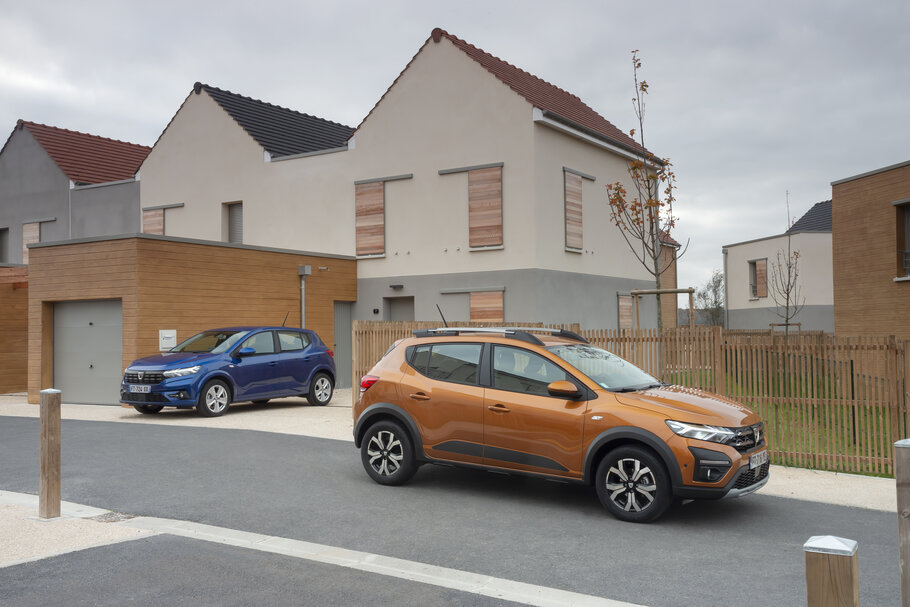
    Dacia has announced full pricing and specifications for the most affordable new car on sale in the UK, the All-New Sandero, and the rugged best-selling version – the All-New Sandero Stepway.

    Debuting a mature new exterior design and an all-new interior, both models benefit from a significant uplift in quality. They feature the latest in connected technology, whilst still maintaining Dacia’s undisputed practicality credentials, the All-New Sandero and Stepway models go on sale in the UK from 1 February 2021.

    For customers keen to get hold of the new model, pre-ordering for the All-New Sandero and Stepway opens on 2nd December via a dedicated online portal for just £99. Those who order via the portal will receive 3 years’ free servicing and will be first to receive their car when deliveries begin in April 2021.

    Priced from just £7,995 OTR, the All-New Sandero remains the UK’s best-priced new car, while the All-New Sandero Stepway offers desirable crossover style and rugged charm from as little as £10,995 OTR.

    All-New Sandero and Stepway models feature more equipment than ever, but remain loyal to Dacia’s ethos of offering simple, no frills, quality motoring with everything a driver could need at an affordable price. All models boast new LED lights, the latest multimedia systems for enhanced convenience and low running costs.

    Keeping things even simpler, the Sandero and Stepway models come with just two options to choose from depending on the specification – metallic paint and a spare wheel.

    There’s also more interior space, wrapped up in a grown up package with new design details that make Dacia’s best-selling models more desirable than ever.

    EXTERIOR STYLING

    Built on an all-new efficient CMF modular platform, the All-New Sandero and Stepway feature an evolved contemporary exterior design with new details giving it greater presence and a more premium look on the road.

    The overall lines are smoother and wheel arches more pronounced, this combined with a lower roof and angled windscreen give the Sandero the impression of sitting lower to the road, while Dacia’s new signature Y-shaped LED daytime running lights – linked via decorative chrome trim – give the car a recognisable presence from the front.

    Innovative Flexwheels, featured on Comfort models, provide the look of an attractive alloy wheel but the convenience of a trim being more affordable and more robust, while small details around the vehicle complete the more grown-up look. The door handles are shaped for greater comfort and convenience, an electric boot release features on most models and revised wing mirrors ensure improved aerodynamics and less wind noise – for a more refined cabin.

    The All-New Sandero Stepway takes all of these changes and adds a number of rugged elements befitting of its Stepway name. Instantly recognisable by the Stepway logo beneath the unique front grille, extra cladding and metal skid plates around the car, the Stepway is undeniably ready for action.

    It sits 174mm higher than the regular Sandero and features innovative adjustable roof bars that can be easily converted into a roof rack, meaning all kinds of loads up to 80kg can be accommodated without fuss. Wheelarch cladding and textured reinforced lower door sections complete the exterior style enhancements for its go-anywhere look.

    The versatile All-New Stepway also features the clever Flexwheels while newly introduced Prestige specification features attractive 16-inch diamond-cut alloy wheels.

    All versions of the All-New Sandero and Stepway feature bright LED lights as standard, delivering enhanced night-time visibility by up to 37% in beam length and 9% in beam width. At the rear, Dacia’s distinctive light signature has evolved and ensures the Sandero stands out.

    INTERIOR

    The All-New Sandero and Stepway’s interiors have seen a significant uplift over the previous model, introducing a range of new technologies, superior quality, and greater comfort and convenience features than ever.

    The dashboard design is completely new to both models, with new fabric inserts on the doors and across the dashboard, plus a sleek new air vent design, making the interior look and feel more upmarket. On All-New Stepway models, the more adventurous theme is carried over from the outside with unique upholstery featuring Stepway logos and exclusive orange trim on the air vents plus orange stitching to the door trims and seats.

    Redesigned seats feature on all Sandero models offering greater comfort and support, including the availability of premium upholstery and an adjustable armrest on selected models. A repositioned, smaller gearlever and a steering wheel with greater reach and height adjustment ensures drivers of all sizes can find a comfortable position.

    The All-New Sandero and Stepway offer the space and practicality of a supermini at city car prices. A 1/3-2/3 split-folding rear bench is available (depending on the version), expanding the generous 328-litre boot space even further. With the rear seats in place, the large boot features an adjustable boot floor, giving customers a choice of two positions, while rear seat passengers get an extra 42mm of space over the previous Sandero, providing best-in-class rear legroom.

    There’s more space for smaller items too, thanks to 21 extra litres of storage space in cubby holes and pockets throughout the cabin.

    TECHNOLOGIES AND SAFETY

    The All-New Sandero and Stepway offer more technology and features than ever before, continuing to give customers desirable and useful equipment at an affordable price.

    All versions offer smartphone connectivity, with a versatile new Media Control docking station for mobile devices that sits neatly on top of the dashboard. Operated using the new free Dacia Media Control app and Bluetooth or USB connection, the driver’s smartphone becomes the multimedia system that can be easily removed.

    On Sandero Comfort and Stepway Comfort and Prestige, an eight-inch Media Nav touchscreen system comes as standard, including navigation, media, Bluetooth, plus smartphone mirroring via wireless Apple CarPlay and Android Auto. The screen sits on top of the dashboard angled slightly towards the driver, making it simple to operate, with an easy-to-use interface and four speakers throughout the vehicle.

    A designated ‘Car’ tab gives access to the vehicle’s driver assistance and safety systems. All Sandero and Stepway models are fitted with Automatic Emergency Braking System (AEBS) that identifies the distance to the car in front (between 4-106mph) and triggers an audible and visual warning if there’s a risk of a collision. Brake force can be applied if not enough action – or none at all – is taken by the driver to slow down.

    Blind spot warning – standard on Sandero Stepway Prestige – warns the driver of a risk of collision with another vehicle located next to or behind the car during lane changing. Four sensors around the vehicle monitor the driver’s blind spot area, and activates a flashing LED in the door mirror if another vehicle is detected.

    Useful features such as hill start assist and park assist provide even more driver convenience. Hill start assist prevents the vehicle from rolling back when pulling away on a hill, while park assist uses sensors around the vehicle – plus a reversing camera on selected models – to aid with tricky parking manoeuvres.

    The first Dacia to be based on the CMF modular platform, all Sandero and Sandero Stepway models now offer superior strength and structural rigidity, increasing protection in the event of a collision. The structure is reinforced and collisions can be detected more quickly, deploying new curtain and side airbags more rapidly. An E-Call emergency call system is also standard on all models, operated using an SOS button placed next to the interior light.

    UK SPECIFICATIONS AND PRICING

    The All-New Sandero and All-New Sandero Stepway’s trim line-ups mirror Dacia’s brand ethos of being simple and no-nonsense while delivering quality at an affordable price. The All-New Sandero is available in Access, Essential and Comfort trims, while the All-New Sandero Stepway comes in Essential, Comfort and Prestige specifications.

    To keep things simple, just two options are available across Sandero and Stepway models, depending on the version. A spare wheel can be added to models powered by the SCe 65 and TCe 90 engines for £175, and metallic paint is available on all models excluding the Sandero Access for £560.

    All-New Sandero is available in Access trim from just £7,995, and includes automatic LED headlights with Y-shaped LED daytime running lights, 15-inch steel wheels, front electric windows, speed limiter, phone docking station, Automatic Emergency Braking System (AEBS) and six airbags.

    From £8,995, the All-New Sandero Essential adds 15-inch wheel covers and body coloured bumpers, while inside there’s a height-adjustable driver’s seat with armrest, plus a fully adjustable steering column and centre console with open storage. Manual air conditioning, cruise control and remote central locking with automatic locking when driving away also feature. Media Control is also standard, featuring DAB radio, Bluetooth and USB connectivity.

    Available from £11,595, Comfort adds 15-inch Flexwheels, electric mirror adjustment, electric front and rear windows, body coloured mirrors, keyless entry, an eight-inch Media Nav touchscreen display with navigation, DAB radio and smartphone replication, plus automatic wipers. On the outside there’s also chrome surround to the front fog lights, plus parking sensors and a reversing camera at the rear.

    For the rugged All-New Sandero Stepway, the core specification remains strong, with Essential models the entry point to the range. Available from £10,995, it comes with 16-inch Flexwheels, tinted windows, LED headlights, front foglights and black roof bars on the outside.

    Inside, a height-adjustable driver’s seat and armrest, adjustable steering column, open centre console storage and manual air conditioning are all standard, along with Media Control with smartphone app. Automatic lighting and rear parking sensors boost convenience, while Automatic Emergency Braking System (AEBS) and an E-Call function are also standard fit.

    Building on this is Comfort trim, available from £12,595 and adding electric windows front and rear, modular roof bars, electric adjustment for the door mirrors (finished in body colour), a leather steering wheel, keyless entry, cruise control and automatic lights and wipers.

    On the outside there’s also chrome surround for the fog lights, rear parking sensors and a reversing camera, plus an eight-inch Media Nav infotainment system inside for navigation, media and smartphone replication via Apple CarPlay or Android Auto.

    Sitting at the top of the range is the newly introduced Prestige trim boasting a generous equipment list on top of Comfort, available from £13,395. It builds on Comfort specification with 16-inch alloy wheels, centre console with integrated armrest and storage, an automatic parking brake, heated front seats, climate control, front parking sensors and blind spot warning.

    Every model comes with an inflation kit as standard, but can be fitted with an emergency spare wheel at extra cost.

    ENGINES

    All Sandero and Sandero Stepway models come with a range of Euro 6D-Full-compliant engines, the stringent emissions standard that comes into effect on 1 January 2021.

    Following its introduction earlier in 2020, Dacia’s TCe 100 Bi-Fuel powertrain is available on
    All-New Sandero and Stepway models. Using an LPG bi-fuelled 1.0-litre three-cylinder engine paired with a six-speed manual transmission, the Bi-Fuel powertrain delivers lower CO2 emissions when running on LPG, and longer overall driving range of more than 800 miles when both fuel tanks are full and used in parallel. The LPG tank is located in the spare wheel well.

    Also available on Sandero is the SCe 65 – a naturally aspirated 1.0-litre engine with a five-speed manual transmission and a turbocharged TCe 90, available with a choice of six-speed manual or newly introduced CVT automatic for added ease-of-use.

    Stop&Start – which automatically turns the engine off at a standstill – is standard on all Sandero and Stepway models to reduce emissions and boost efficiency.

  • JMS tuning

    2020 JMS tuning

    As a result of the global corona pandemic, a year with practically no tuning fairs and meetings. After the Tuning World Bodensee in Friedrichshafen and the PS Days in Hanover, also the undisputed highlight of the year of the refinement and customization industry, the Essen Motor Show, was canceled, so that the community in this extraordinary season – apart from a few smaller events – practically only could come together online. How relatively this “only” can be rated, however, was shown by the tuning specialists at JMS Fahrzeugteile by hosting a mega-tuning event on the last Saturday of November and sending it out into the world via a professional live stream from the large forging hall of Motorworld Manufaktur Metzingen.

    In front of the great backdrop of the historic industrial building, JMS Managing Director Jochen Schweiker and especially presenter William De Fensfoster from d-fens.tv presented products and project vehicles from JMS customers, suppliers and business partners to the livestream viewers – even some world premieres were unveiled.

    For example, the suspension experts from KW suspensions rolled a Lamborghini Huracán with the brand new Variant 5 coilover suspension into the colorful spotlight of the forge hall, which was also equipped with an exclusive Novitec finish: In addition to a Torado N-Largo kit, the Italian fighting bull was wearing 9×20- and 12.5×21-inch rims with tires of the dimensions 245/30R20 and 325/25R21.

    ST suspensions, also a brand of the KW universe, presented the ST XTA Plus 3 coilover kit with 3-way adjustment as a world premiere. This was already installed in a Focus ST with 19-inch Motec MCR2 ultralight wheels.

    One of the program highlights was undoubtedly the world premiere of the two new wheel designs from the Barracuda Racing Wheels brand sold by JMS: The new “Dragoon” design from the Barracuda Ultralight Series was already installed on a VW Golf, while the Nissan Silvia drift car from the Drift Team “Driftinglele ” rolled on the new Barracuda motorsport rim “Summa”. Both wheels will be available in three different colors from next spring.

    JMS Fahrzeugteile presented various tuning conversions, the focus of which was on different segments, such as chassis technology, exhaust technology, body kits, wheels and much more. Particularly impressive: vehicles created as joint projects, for example in cooperation with KW, Eisenmann, Friedrich Motorsport, Senner Tuning, TR Exclusive, cardiologie and Schwabenfolia, such as a BMW M2 Competition, a Ford Focus ST or a 360 hp Cupra Leon ST.

    The exhaust gas experts from Eisenmann Exhaust provided the audience with technical information about their exhaust systems and presented a 3-series BMW of the current generation G20 with Oxigin alloy wheels and a Z4 with gasoline particle filter as project vehicles. As a world premiere, Eisenmann had brought new tailpipe variants.

    The “Multimedia” tuning segment was not neglected either: the Gladen car hi-fi specialists presented various components, illustrated by vehicles such as the BMW X5, Tesla Model 3, Hyundai i30 N or Mercedes-AMG A 35.

    RaceChip presented an increase in performance via a chip tuning box for the new Golf 8 and provided interesting information about the product range.

  • Fiat 500

    2021 Fiat New 5001

    Full pricing and specification of the 100% electric New 500 has been announced for the UK market. The city car will arrive in UK dealers in early 2021 in both hatchback and cabrio bodystyles. With two battery options and the longest range of any electric city car on sale today, the New 500 will be priced from £19,995 OTR (inclusive of PiCG*).

    Fiat first democratised mobility in the late 1950s with the Nuova 500 – providing affordable personal transport across Europe and beyond. Fifty years later, Fiat reinvented the city car segment with the current 500 – the bestselling city car in Europe. 2020 signals the arrival of the New 500, the first fully-electric vehicle from FCA, and a city car that remains affordable and provides a raft of best-in-class features such as its range, autonomous driving and variety of battery options.

    The New 500 range

    The New 500 range is made up of three trim levels – Action, Passion and Icon. Each provides a high level of standard specification to suit different lifestyles.

    New 500 ACTION

    The entry-level New 500 ACTION is fitted with a 70kW motor, accelerating from zero to 62mph in 9.5 seconds and with a limited top speed of 84mph.

    The New 500 ACTION includes a lithium-ion battery with a 23.8kWh capacity, resulting in a range of more than 115 miles in the WLTP cycle, or over 150 miles when only driving in the city. With the average commute under 30 miles per day, customers would only need to charge the New 500 around every four days.

    The New 500 ACTION is equipped with a 50kW fast charging system, so charging the battery to ensure enough mileage for the average commute takes less than 10 minutes. A 3kW cable is also included for charging at home or at work. The Combo 2 socket, located on the rear right side panel of the car, powers fast charging in both AC and DC. For charging at home or in public, a three-phase 11kW Mode 3 cable is available to purchase, along with a Wallbox by Mopar.

    Numerous ADAS features are standard with New 500 ACTION including Drowsy Driver Detection, to monitor driver concentration levels; Autonomous Emergency Braking, which along with other vehicles can also recognise cyclists and pedestrians; Lane Keep Assist, a system that alerts the driver to get back in lane when it detects any drifting; and Traffic Sign Recognition, which reads road signs and recommends the correct speed to drive at.

    As standard, the New 500 ACTION is equipped with an e-Mode selector to choose between three driving modes – Normal, Range and Sherpa, to select according to preferred driving style and requirements.

    Where connectivity is concerned, the New 500 ACTION receives ‘smart audio’, turning any smartphone into its infotainment system. It consists of a smartphone cradle, an ergonomic base to mount your smartphone either vertically or horizontally, a Bluetooth connection to link a smartphone to the speakers in the New 500 and a specific app to use inside and out of the car.

    As for the exterior, the ACTION receives halogen headlights and 15-inch wheels. Inside, the entry-level version is packed with technology: from the auto-start button (Keyless Go), rear parking sensors and electric parking brake to the configurable 7-inch digital TFT colour screen in front of the driver – taking the place of a conventional instrument panel in the New 500, on which the driver can see all the most important data for the car, including range and charging status. The interior trim features a black dashboard, while the seats – in Seaqual yarn – include a geometric chevron motif and silver-coloured stitching.

    The New 500 ACTION is available as hatchback only.

    New 500 PASSION

    The mid-range version of the New 500 is available with the 42kWh battery, providing a best-in-class range of up to 199 miles in the WLTP cycle, increasing to 285 miles when only driven in the city. It features 85kW fast charging, so recharging the battery to 80% range takes 35 minutes, or to 30 miles takes around 5 minutes.

    Externally, the PASSION stands out with 15-inch two-tone gloss finish wheels and LED daytime running lights. Inside, the New 500 PASSION debuts FCA’s new infotainment system with a 7-inch touchscreen, wireless Apple CarPlay and Android Auto for connected services and a DAB radio. The new system also boasts the Natural Language interface system with advanced voice recognition. Talk to the car using the wake word “Hey Fiat”, to control its range and charging settings, program the air conditioning and choose favourite music.

    In addition to the aforementioned equipment on New 500 Action, cruise control and climate control are also standard with New 500 PASSION.

    There are two interior trims to choose from: dark with a black dashboard and seats in Seaqual yarn with chevron motif and silver-coloured stitching, or a brighter environment with a white dashboard and blue seats including the chevron motif.

    The 118hp motor has an output of 87kW, providing a maximum speed limited to 93mph and acceleration from zero to 62mph in 9.0 seconds and zero to 31mph in 3.1 seconds.

    New 500 ICON

    The New 500 ICON receives the same 42kWh battery as the PASSION trim level with best-in-class range of 199 miles in the WLTP cycle and rapid recharging with its DC fast charging system, running at up to 85kW.

    ICON receives another best-in-segment feature – a new 10.25-inch ‘cinerama’ touchscreen display, with integrated GPS and the infotainment system. The landscape high-definition touchscreen fits perfectly into the car’s dashboard, having been designed to eliminate driver distractions.

    Externally, the high-end version of New 500 stands out for its 16-inch alloy wheels, with a dark finish, while the interior of the New 500 ICON sets the benchmark for city cars to come with many first-in-segment features available as standard. Passive entry, enabling handsfree access to the New 500, has never been seen before on an A-segment city car and is standard on the New 500 ICON. An even more distinctive feature is the New 500 ICON’s black button-free ‘pebble’ – a smart wearable key that can be carried in a pocket or bag, which communicates with the car automatically unlocking the doors when the pebble is close to the car and locking them again with a simple tap on the door handle. The ‘pebble’ is made of a special bio-based polycarbonate.

    Elegance and exclusivity have guided the Centro Stile designers in their selection of lighter, brighter soft shades for the interior trim. The 500 ICON dashboard is painted the same colour as the bodywork. A natural wood effect is also available on the dashboard and steering wheel made with a vegan material rather than leather.

    The elegant fabric seats with Seaqual yarn and pinstripe motif can be chosen in a choice of dark grey, with the 500 logo and copper-coloured details, or a light grey version paired with blue flecks and silver 500 logo and details.

    High-tech and connected

    When designing the Group’s first electric car from the ground up, the FCA engineers created a new structure around the electric motor, integrating new control, safety and entertainment technologies. The result is a car that has the best dynamic performance in its class, agile and fun to drive, comfortable, quiet and always connected. Engineers looked to the ease of use of a smartphone, in order to bring the same concept to the automotive industry.

    That was the starting point for the New 500’s technology ‘ecosystem’, aimed at assisting customers in the various on-board and off-board ways they use a car, and at making it easy-to-use and intuitive. The goal was to transfer to the New 500 all the automation systems that make our life easier and more enjoyable: from a Wi-Fi hotspot to the Alexa voice assistant.

    The latest infotainment system, a connected platform created by FCA for the future, is available with a 7-inch screen in the PASSION version and 10.25-inch in the ICON, a custom interface can be created on the New 500 and it even uses an advanced voice recognition system, activated hands-free with the phrase ‘Hey Fiat’. Connectivity features are enabled by the new UConnect Box, offering access to the New 500’s UConnect Services, one example of which can transform the car into a Wi-Fi hotspot to connect up to eight devices at the same time.

    These connectivity services are usually reserved for higher segments, but for the first time Fiat makes them accessible on an A-segment car, with features developed specifically for electric cars. The Fiat mobile app in connection with UConnect allows for a raft of features never before seen on a city car. For example, ‘Dynamic Range Mapping’, shows on the map the area that can be driven, calculating the maximum possible distance based on remaining range and other parameters. Not only does the app allow viewing of the charging points located nearby, it also displays a graphic indication on the map of those that can be reached based on your current battery charge level. The maps are always kept up to date, using over-the-air updates.

    The ‘My Car’ service can check the battery charge level of New 500 remotely from the app. ‘My Remote’ enables customers to schedule vehicle charging for the most convenient time slots; locate the nearest public charging stations and pay directly from their smartphone providing access to a network of 200,000 charging points throughout Europe; find the car’s exact location; lock and unlock the doors; turn the lights on and off; and program the air conditioning system. The systems of the New 500 can be continuously developed and updated over-the-air.

    The New 500 moves up to level 2 autonomous driving

    During the creation of New 500, engineers and designers considered every aspect of its possible interaction with the road, starting with safety. The New 500 therefore includes numerous Advanced Driver-Assistance Systems (ADAS)as standard, including Attention Assist, Lane Control, Traffic Sign Recognition and Autonomous Emergency Braking making it easier, safer and simpler to drive, as well as being the first car in its segment equipped with level 2 autonomy.

    With an aim to humanise the technology, by implementing solutions tailor-made for the 500, engineers have enabled much more accurate risk level monitoring. This also means that the automatic warnings associated with these ADAS features are less intrusive.

    EV mode selector

    The New 500 gives the driver a choice on how they drive their electric car thanks to the inclusion of three driving modes, which can be selected to match their driving style.

    In ‘Normal’ mode, the car drives like any automatic transmission with an internal combustion engine, if with surprisingly exceptional performance for a city car: output of 87kW – equivalent to 118hp, 220Nm of instantly-available torque, and acceleration from zero to 31mph in 3.1 seconds, or zero to 62mph in 9 seconds.

    In Range mode, the New 500 offers the option of a new driving experience, using only one foot. The ‘one-pedal’ function means acceleration and deceleration can be controlled by the same pedal. When the pedal is not pressed, the car recovers energy to the maximum, making it slow down until it comes to a complete stop. This driving style, ideal for urban use, means the car can recover a great deal of its energy.

    When the remaining range is low, ‘Sherpa’ mode can be engaged to optimise the available resources to ensure the destination is reached. ‘Sherpa’ driving mode works on several components to ensure either the destination set on the navigation system or the nearest charging station is reached whilst the New 500 still has enough charge.

    The technological and social ‘ecosystem’ of the New 500

    Fiat has created a system of physical and digital services and solutions to make zero-emissions driving as easy as possible. From the easyWallbox – the plug-and-play home charging solution developed exclusively by ENGIE Eps, via the ‘My Easy Charge’ apps to be able to find a charging point anywhere in Europe, to a single card for charging and payment, valid throughout Europe at almost 200,000 charging stations.

    For those who have concerns about switching to a fully electric car have at their fingertips Fiat GOe LIVE, a free app on iOS and Android platforms to simulate the use of a New 500. The simulation highlights the potential economic and environmental benefits of using the New 500 rather than the customer’s current car. The app also provides useful information on the e-Mobility experience, can locate charging stations throughout Europe and enables online ordering for the New 500.

    Finally, FCA has launched its Vehicle-to-Grid (V2G) project, which uses electric car batteries as systems to distribute stored energy. In partnership with ENGIE Eps and Terna, a pilot system has recently been inaugurated at Mirafiori, destined to soon become the largest in the world, enabling bidirectional interaction between FCA’s fully-electric cars and the grid.

    As well as recharging the cars, the project will use the batteries to provide grid stabilisation services. Once fully operational, it will be possible to connect 700 New 500 with the system powered by 12,000 solar panels on the roof of the plant, reducing CO2 emissions by over 2,100 tons.

    Amarcord for New 500 AVAS

    New 500’s Acoustic Vehicle Alert System (AVAS), is inspired by Italian creativity. To warn pedestrians and cyclists of its presence, at speeds of up to 12.5mph, the New 500 uses the tune composed by Nino Rota for Amarcord, a movie that symbolised Italian culture, just like the 500 does.

    Design

    When designing the New 500, Centro Stile focused on the soul of the car, a product to be a statement of the Italian spirit. It is exactly that Italian creativity that marks out the style and design of the New 500, an electric car that is also beautiful.

    The New 500 is the first electric car with a soul that embodies its entire lifespan, made up of 63 years of history and successes. This is first identified at the front of the car with the designers conceiving a highly modern facade to give it a powerful identity. Since its debut in 1957, it could be said that the ‘clean face’ of the 500 can be linked to an electric car’s, a true one-off in the automotive landscape. The silhouette also follows the play of references between the past and the future, with all three generations of the 500 defined by the same central line and the characteristic of their proportions. It is a silhouette that stands out and that was destined to be carried over to the 2020 model.

    The 500 remains true to itself, yet is subject to renewal – the addition of the battery pack under the new floorpan offered up the opportunity to create a car with new dimensions, an evolution in line with its original proportions. The New 500 is a little wider, longer, the wheelbase is broader and even the wheels are larger, while the interior boasts a roomier passenger compartment.

    The chassis layout is better proportioned, resulting in a perception of increased stability and dimensional presence.

    Overall, the appearance of the New 500 conveys a more powerful and robust character, more compact and elegant, with clean and simple lines.

    All its interior spaces have been redesigned to give passengers the feeling of sitting on a ‘romantic bench’. In the continuous interaction between past and future, many references are also made here to the forms used in the first 500 such as the slender and elegant dashboard; the minimalist buttons ordered like a piano keyboard; the now iconic circular instrument panel; and the steering wheel, which once again has two spokes.

    In addition, the interior space available has been organised using various modular storage compartments, to meet passengers’ every need.

    Compared to previous versions, the New 500 is decidedly more elegant and sophisticated, including in the choice of materials. With the 500 of the last decade attracting the worlds of interior design and fashion, interior designers of the New 500 have strengthened this tie by using more refined textiles with a pinstripe effect and mélange treatments. Meanwhile, they have also emphasised a link with nature and well-being by using warm and soft shades, with an element of innovation in materials used. The designers’ quest for eco-friendly and recyclable materials, which has taken shape in the application of vegan leather or Seaqual (a fibre derived from recycled plastic partly collected from the ocean) seats, chrome replacement paints and mats made of recycled fibres.

    The New 500 dashboard has also received the same treatment from designers. As well as still being able to choose a bodycoloured dashboard, a style now synonymous with the 500, other materials are available inspired by natural elements such as wood, with innovative treatments including three-dimensional and graphic surface printing and weave work that recall true craftsmanship, all interpreted with contemporary 500 flair.

    For the exterior colour palette, the hues of the New 500 are mostly iridescent, to emphasise the inspiration drawn from nature. Alongside the three colours launched with La Prima launch edition, six other paint options are available across the range: Earth Grey, Glacier Blue, Rose Gold, Cloud Grey, Ice White and Onyx Black.

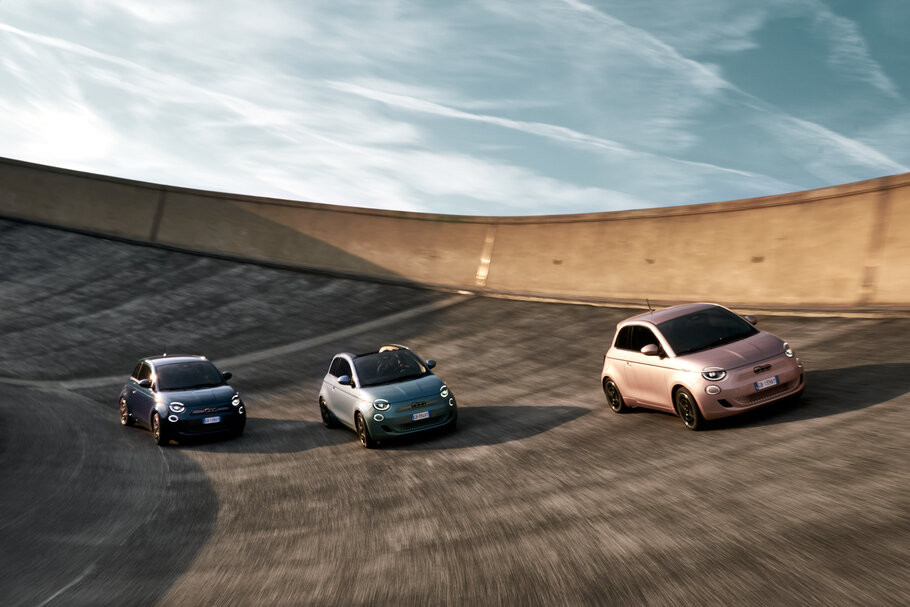
    New 500 3+1 unveiled

    New 500 is now made up of three body styles, hatchback, cabriolet and now 3+1.

    Centro Stile designers have been working on a smart solution with identical dimensions to the cabrio and hatchback versions, but with a small third door on the passenger side. Just like the first 500 in 1957, which featured doors hinged to the rear. The result is a new body, to add to the hatchback and cabrio, with unchanged dimensions and not a single centimetre added to the footprint. The only difference is a weight increase of only 30kg, with no effect on the car’s handling or range.

    The third small door opens in the opposite direction, and given the lack of a centre panel in the door itself, means rear passengers can jump in more comfortably and load and unload large items more easily. With the 3+1, the 500 aims to remain alongside customers who have changed their habits and requirements, but not their taste.

    The New 500 3+1 will firstly be made available for left-hand drive markets.

    Sky Drive, the roof garden that tells of the sustainable soul of the New 500

    Sky Drive, a new park Fiat will open in the City of Turin, will share its inauguration with Casa 500 on 4th July 2021. Located on the roof of Lingotto, the former Fiat factory that featured as one of the first conversions of industrial archaeology in the 1990s, the past and future will come together to create Sky Drive. Developed by a team of specialists led by the architect Benedetto Camerana, the project covers 27,000m2 of pedestrian walkways, driveways and gardens.

    Sky Drive is poised to become the highest hanging garden in Europe by extension: the 28m high roof of the former factory will become the site of a green lung spread over more than 6,000m2, as the result of a meticulous selection of the highest quality woods, with tremendous natural value that will appear to recolonise the built environment. A system of eco-friendly tanks, which collect water and moisture to irrigate the plants, will make it possible to construct a seemingly spontaneous garden, one that will blend in perfectly with its surroundings.

    The arrangement of greenery will also embody one of its philosophies, with the creation of various themed areas depending on their proximity to the flowerbeds of the Pinacoteca Agnelli art gallery – which will use them for fun educational activities aimed at children – or to the restaurant due to open which could in turn use them as an urban kitchen garden for herbs sourced as locally as can be. It could also be a green space to tell the story of the city and its development.

    Sky Drive is to be so much more than a garden. It will be a project dedicated to greenery, the environmental concerns of the Fiat brand and the new sustainable face of Turin at the foot of the Alps. The fourth floor of the Pinacoteca Agnelli will also play host to Casa 500, a museum focused on the history of the infamous city car, in the past, present and future. To find out more, the Virtual Casa 500 can now be visited

    In December, in Lingotto, Green Pea will open as the first Green Retail Park in the world focused on the theme of ‘respect’: 15,000m2 over 5 floors, aimed at changing our relationship with energy, movement, our homes, clothing and leisure. The ground floor – to be known as ‘Life’ – will play host to FCA’s first retailer of the future, selling only electric and hybrid cars such as the New 500
  • Mazda MX-30

    2021 Mazda MX-301

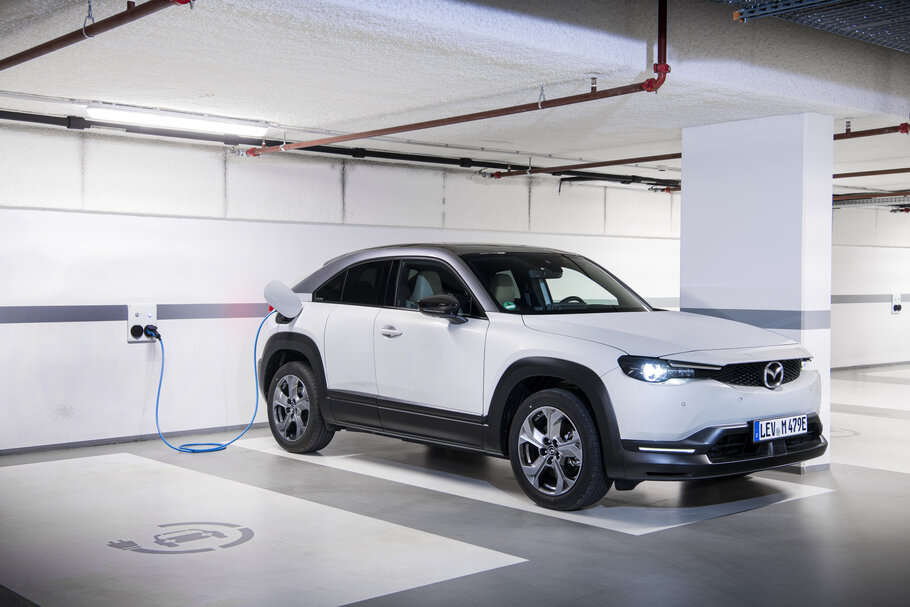
    Full UK specification and pricing has been revealed for the Mazda’s highly anticipated first all-electric production vehicle – the Mazda MX-30. With the UK customer deliveries beginning in March next year, this stylish and versatile crossover EV features an AC synchronous electric motor and a 35.5kWh lithium-ion battery that delivers a range of approximately 124miles and comes with AC charging up to 6.6kW and DC rapid charging designed to meet 125A Combo Charging standards.

    Having previously announced the pricing of the 500-model limited edition Mazda MX-30 First Edition – Mazda UK has now revealed the price and specification of the full MX-30 line-up. Available across three generously equipped model grades – SE-L Lux, Sport Lux, and GT Sport Tech, the three-model line-up, complements the already revealed First Edition.

    Standard equipment on all UK MX-30s includes LED headlights with daytime running lights, reversing camera, Mazda Radar Cruise Control with Intelligent Speed Assist, navigation, and a head-up display. Each MX-30 comes as standard with a Type 2 AC charging cable and a socket for 50kW rapid charging, which can in just 36 minutes deliver up to 80 percent battery charge. In addition, packages for home charging solutions from Mazda’s preferred partner NewMotion ensure MX-30 owners in the UK will be ready for charging convenience.

    The first opportunity to order and take delivery of this unique, stylish, and driver-focused Mazda BEV – the £27,495* MX-30 First Edition can be pre-ordered now and is available with a choice of free-of-charge Ceramic Metallic or Polymetal Grey Metallic single colors. The First Edition can also be ordered with either £950 three-tone Ceramic Metallic or £1,250 three-tone Soul Red Crystal Metallic paint. This three-tone design further marks out the MX-30’s unique styling with a brilliant black roof and metallic dark grey upper side panels to contrast the Soul Red Crystal or Ceramic Metallic main body color. Other standard equipment highlights on the First Edition include adaptive LED headlights, satin D pillar trim and signature LED rear lights. Inside, the First Edition features a light and modern cabin ambiance with light grey cloth and stone leatherette combined with orange seat stitching. Eight-way power-adjustable driver’s seat and chrome interior details, plus heated front seats complement the interior style.

    With UK deliveries starting in March 2021, the 500 First Edition MX-30s will be the debut cars to arrive in Mazda dealerships followed by the now announced full range, which starts with the £25,545* Mazda MX-30 SE-L Lux. Marked out by 18-inch Silver Metallic alloy wheels, black door mirrors, and a black grille, it’s exclusively offered in a single tone paint design with a choice of five colors: standard Arctic White solid, or £550 Polymetal Grey Metallic, Ceramic Metallic, and Jet Black Mica, plus £670 Machine Gray Metallic.

    The £27,545* MX-30 Sport Lux promises to be a popular model in the range. It features 18-inch Bright Metallic alloy wheels and sees an increase in standard equipment with the addition of power seats, lumbar support adjustment, and smart keyless entry. Like the First Edition, there’s the option to choose the optional three-tone design on Soul Red Crystal or Ceramic Metallic main body colors. In addition, Polymetal Gray Metallic can be matched to a Brilliant Black roof and Silver Metallic side panels.

    The range-topping GT Sport Tech costs £29,845* with a light grey cloth interior trim and £30,045* when equipped with a dark grey interior and brown artificial leather. The range-topping GT Sport Tech MX-30’s equipment tally includes a front wiper de-icer and a power and tilt sunroof, while inside a heated steering wheel and 12-speaker Bose surround-sound complement the generous standard specification.

    As can be seen from the specification tables below, all MX-30s come with a comprehensive standard safety specification, while GT Sport Tech adds to this with a host of extra active safety technology and a 360-degree view monitor. Across the entire MX-30 range and the limited-edition First Edition, the MX-30’s distinctive, stylish and sustainable cabin features high-quality materials and a driver-focused interior. The lower console incorporates a 7-inch color touch-screen air conditioning control panel, and in a nod to Mazda’s founding as the Toyo Kogyo Cork Company in 1920, the Mazda MX-30 features cork-lined center console trays and inner side door handles. Harvested from the bark of trees without felling, the use of cork and door trim materials that incorporate fibers from recycled plastic bottles is perfectly suited to Mazda’s first pure-electric production car. Benefiting passengers and drivers alike, the sense of space is enhanced with a floating center console that sits independently from the dashboard, while the use of environmentally-friendly materials has been carefully matched to meticulous quality and finish.

    Externally, the MX-30’s looks will leave just as strong an impression, reflecting a unique expression of Kodo design, the MX-30’s styling emphasizes the car’s beauty as a solid mass, while the freestyle doors and framed glasshouse hint at the open spaciousness of the cabin. The front doors open forward to an angle of 82 degrees, while the rear doors open backward to an angle of 80 degrees to reveal the stylish and driver-focused interior.

    Staying true to the ‘Jinbai Ittai – car and driver as one’ ethos found across Mazda’s combustion engine range, the Mazda MX-30 has been designed to deliver the intuitive responses, natural feedback, and involving handling you’d expect of a Mazda. Electric G-Vectoring Control Plus (e-GVC Plus) enhances chassis performance by using motor torque to optimize the front-rear load shift for improved stability and the MX-30’s Skyactiv-Vehicle Architecture is specifically tailored to complement the smooth power delivery of the e-Skyactiv drivetrain. The dynamic focus also extends to a throttle pedal that delivers a seamless transition between linear power delivery and smooth regeneration on liftoff, equally, the braking system offers a seamless transfer between energy regeneration and hydraulic brake action.

    Commenting on the Mazda MX-30, Managing Director, Mazda Motors UK, Jeremy Thomson, said: “our first all-electric Mazda heralds an exciting start to Mazda’s second century in business. With the First Edition MX-30 order book now open, customers in the UK can reserve a car for just £800 for delivery early in 2021. A battery-electric vehicle conceived and created with Mazda’s well-renowned focus on distinctive styling, innovative technology, driver-focused dynamics, and class-leading interior quality, the MX-30 will be a stand out addition to the rapidly evolving EV marketplace. Part of Mazda’s multi-solution approach to efficient vehicles, the launch of our first pure electric car is a milestone moment for the brand and a landmark moment for our dealers and customers here in the UK.”

    Adding, “with the announcement of pricing and specification of the three-model UK MX-30 line up, our customers and dealers can see that next year we will have a well-equipped EV range that forms part of an electrification strategy that has already seen Mazda M Hybrid, mild hybrid fitted as standard to the Mazda3, Mazda CX-30, and manual Mazda2s. And over the coming months across our digital platforms and our dealer network, we will have a range of opportunities for potential customers to get familiar with the MX-30, ranging from answering their questions to seeing the car and even opportunities for early test drives.”

  • Ferrari Omologata

    2021 Ferrari Omologata1

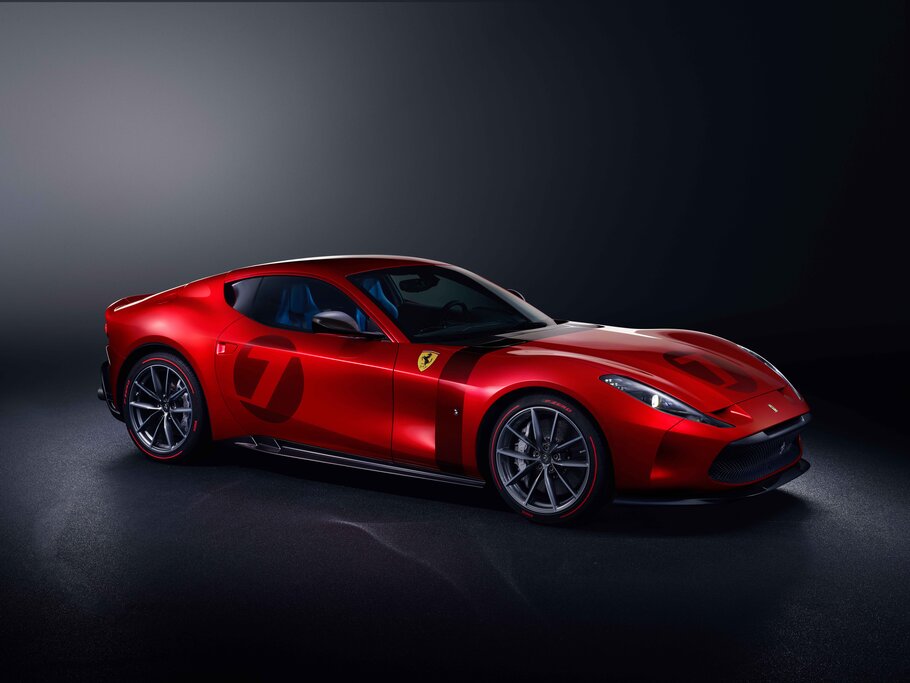
    A unique Ferrari has been seen lapping Fiorano today during a brief yet intense shakedown. While the V12 engine note reverberating around the track may have sounded familiar, the car’s arresting looks are unique although guaranteed to strike a chord with the marque’s aficionados. With its Rosso Magma finish and sophisticated racing livery, the new Ferrari Omologata is a clear descendent of Ferrari’s great GT tradition spanning seven decades of history.

    Commissioned by a discerning European client, the latest offering in Ferrari’s line of unique coachbuilt one-off models is a vibrant evocation of the values that define Ferrari in relation to GT racing: a car that is equally at ease on the road as it is hitting the apex on the track in the hands of a true gentleman driver.

    The Ferrari Omologata project took a little over two years to complete from the initial presentation of sketches, starting with images that covered a variety of inspirations, from racing heritage to sci-fi and references to modern architecture. The idea from the onset was to create a futuristic design with distinctive elements reinterpreted in a fresh manner to provide the potential for a timeless shape that is certain to leave a lasting impression.

    To achieve this, the designers unlocked every possible area of freedom from the underlying package of the 812 Superfast, keeping only the windscreen and headlights as existing bodywork elements. The objective was to exploit the proportions of the potent, mid-front layout to deliver a very sleek design defined by smooth volumes and undulating reflections, uplifted by sharp graphics with sparingly distilled surface breaks wherever dictated by aerodynamic functions. The trickiest aspect was striking the ideal balance between expressiveness and restraint: the Omologata had to ooze street presence whilst maintaining a very pure formal language.

    The designers carefully studied the stance and attitude of the car from all angles, defining a tapering front volume from the flattened oval grille. The rounded section over the front wheel arches, emphasized by a contrasting stripe wrapping across the bonnet, seems to naturally extrude from the grille. The rear of the door, the flank develops into a very potent rear muscle that neatly blends upwards into the three-quarter panel. The entire volume is rendered deliberately imposing through the elimination of the rear quarter light, while three horizontal transversal cuts in the fastback volume visually lower the rear mass. The tail is surmounted by a prominent spoiler which adds not only downforce but a more aggressive, sporty stance. Overall, the car appears to be poised to attack the tarmac even at a standstill, and, seen from the rear, the deeply set single taillights underline the tension.

    Uniqueness in more than name
    Satisfying every safety constraint for road homologation without interfering with any of the usability and tractability of a Ferrari is always a huge challenge for the design team led by Flavio Manzoni, the more so when starting from an existing platform. Omologata was indeed a keyword that resonated throughout the development of this, the 10th front-engined V12 one-off Ferrari has delivered since the 2009 P540 Superfast Aperta. Beyond the clear instructions coming from the client and down to every detail on the car, the designers effectively took into account countless variables to make this a bespoke model through and through, one which could easily find its place in any Ferrari showroom. The quest for the ultimate touch went as far as developing a new shade of red just for the livery, to match the fiery triple-layer Rosso Magma over darkened carbon-fibre finish.

    Inside the car, a plethora of trim details suggests a strong link to Ferrari’s rich racing heritage. The electric blue seats, finished in a tasteful combination of leather and Jeans Aunde® fabric with 4-point racing harnesses, stand out against a full black interior. In the absence of rear quarter lights and screen, the atmosphere in the cabin is purposeful, reminiscent of a bygone era. Metal parts on the dashboard and steering wheel are finished with the crackled paint effect associated with the great GT racers of the 1950s and 1960s as well as with Ferrari’s engine cam covers. A hammered paint effect so often used in cars such as the 250 LM and 250 GTO finds its way on details such as the inner door handles and on the Ferrari F1 bridge.

    A fitting one-off exercise, the Omologata manages to encompass a range of subtle Ferrari signature design cues without falling into nostalgia. Its hand-crafted aluminium bodywork is sprinkled with almost subliminal details, in a way that challenges the enthusiast to identify the various sources of inspiration that played a part into its inception.

  • McLaren 765LT Visual Carbon Fibre

    2021 McLaren 765LT Visual Carbon Fibre1

    The first customer-ordered examples of the new McLaren 765LT are now being hand-assembled at the McLaren Production Centre in Woking, UK. Deliveries of the new McLaren ‘Longtail’ – the most extreme McLaren Super Series model to date – will begin at the end of this month.

    Just 765 individually-numbered cars will be offered globally to customer order with 2020 production fully allocated and expressions of interest far exceeding total production.

    The McLaren 765LT incorporates all of the renowned McLaren LT attributes, including driver engagement, minimized weight, track-focused dynamics, optimized aerodynamics, and increased power. A comprehensive engineering program of weight reduction has resulted in the superlight 765LT tipping the scales at 80kg* lighter than the already class-leading 720S. The 765LT’s bespoke aerodynamics features carbon fiber panels manufactured for the first time at the McLaren Composites Technology Centre in the Sheffield area, plus a ‘Longtail’ active rear wing.

    The combination of the lightweight (1,229kg at minimum dry weight) and the extreme power and torque of the 4.0-liter, twin-turbocharged V8 McLaren engine – 765PS and 800Nm respectively – underpins the incredible acceleration of the 765LT. As well as the expected sub-three second 0-60mph and 0-100km/h performance, the new LT is capable of reaching 200km/h (124mph) from standstill in just 7.0 seconds – 0.2 seconds ahead of target. Standing quarter-mile (400m) acceleration is similarly impressive at 9.9 seconds – again, better than expectations.

    The first examples of cars specified by McLaren Special Operations (MSO) are being shared with customers. Operating to its established principle of always pushing the art of the possible, MSO has created a number of innovative and complex paint techniques that showcase a whole new level of personalization possibilities.

    The Strata theme unveils a unique, graphical ‘art in motion’ paint scheme, inspired by a city skyline and realized in a three-color design requiring 390 hours of hand painting and finishing. Strata’s Azores orange base color is fused with Memphis Red and Cherry black, the two overlay colors running through the paint scheme in opposite directions to meet and blend on the panels of the 765LT’s dihedral doors. The unique paint scheme is further enhanced by a cohesive design language across the entirety of the car, both inside and out. The brake calipers form part of the color blend, the front calipers being Volcano Red, and the rears Azores Orange, while the interior boasts a host of color-coded features from the MSO Bespoke range, including orange seat perforation and a push-to-drink system in Memphis Red.

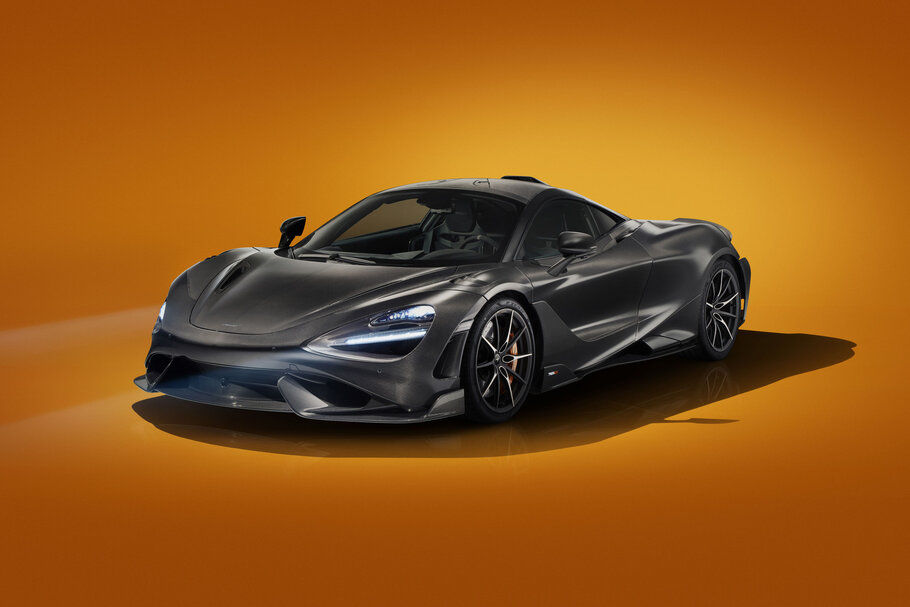
    A second theme based around a 3D honeycomb theme, called ‘GEOHEX’, features a striking combination of MSO Bespoke Tarmac Black and Tokyo Cyan paintwork with Visual Carbon Fibre components from the MSO Defined range along with a number of matching interior details. One of the most captivating projects yet is a car with a full Visual Carbon Fibre (VCF) body, a demonstration model of which has already been produced in response to customer enquiries. The demonstration model has been built in Clear Gloss Carbon Fibre to demonstrate the purity and intricacy within the weave alignment. The 765LT MSO Bespoke Carbon Fibre Body is available in a number of bespoke tints which can vary in complexity depending on the intended design.

  • Ford Mustang Mach-E GT

    2021 Ford Mustang Mach-E GT1

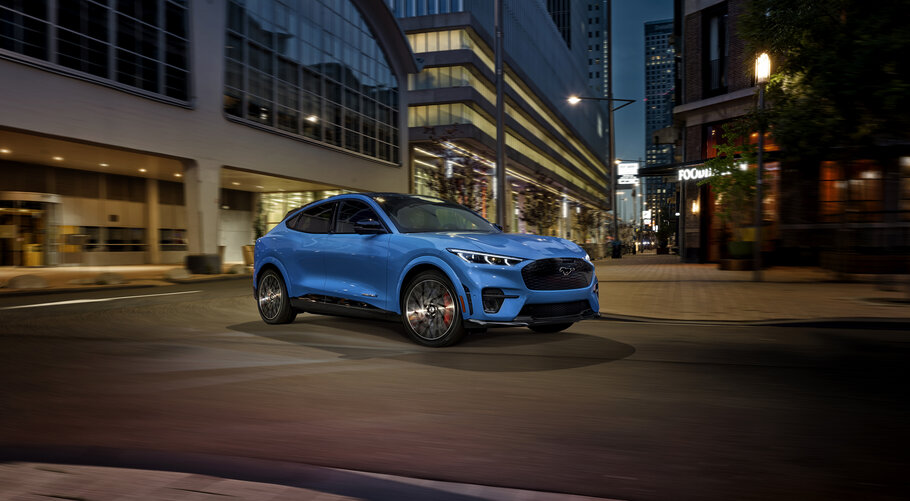
    Ford today revealed for the first time in Europe the high-performance Mustang Mach-E GT that will deliver 3.7‑second 0-62 mph acceleration1 when introduced to the region in late 2021.

    No other vehicle in its class can accelerate faster than the Mustang Mach-E GT, featuring a 465 PS, all-wheel drive, battery-electric powertrain for drivers ready to take full advantage of the performance benefits of all-electric driving.

    Mustang Mach-E GT will be supported by an industry-leading ecosystem delivering seamless, integrated access to charging across Europe – for complete peace of mind on the move. Ford today announced Mustang Mach-E customers placing an order this year and into 2021 will receive five years of free access2 to the FordPass Charging Network that has grown by almost 25 per cent in less than one year – to now include more than 155,000 charge stations across Europe.

    Mach-E customers will also receive one year of free access2 to the IONITY fast-charging network that has now established more than 270 charging stations en route to a targeted 400 by the end of this year.

    The Mustang Mach-E GT made its European debut today in Rotterdam, Netherlands, as Ford continued its Go Electric roadshow with hands-on, engaging activities to help de-mystify electrification and inspire confidence in consumers about the different types of electrified powertrains available and their benefits.

    “The new Mustang Mach-E GT shows what all-electric performance really looks like, but performance counts for nothing without the confidence to use it. Our charging initiatives mean Mustang Mach-E customers can enjoy the electrified Mustang driving experience with the knowledge that they can recharge quickly and easily across Europe,” said Stuart Rowley, president, Ford of Europe.

    Electrifying performance
    Mustang Mach-E GT delivers the spirited performance and character of the iconic Mustang sports car alongside the ability to carry five occupants in all-electric refinement. A 465 PS, dual-motor powertrain applies 830 Nm of available torque independently to the front and rear axles for even more responsive handling, and 0-62 mph acceleration equal to the Tesla Model Y. Top speed is limited to 200 km/h (124 mph).

    A bespoke specification includes MagneRide adaptive suspension, 20‑inch alloy wheels, red-painted brake callipers and unique exterior colours including Grabber Blue and Cyber Orange. Inside, a 15.5-inch full HD touch display supports a next generation SYNC communication and entertainment system3 that actually learns from driver behaviours to make smart suggestions. The enhanced interior also features Ford Performance seats and a unique steering wheel with suede inserts.

    Mustang Mach-E GT features as standard an 88 kWh (useable) extended-range battery for a targeted WLTP pure-electric driving range of up to 310 miles,4 supported by Intelligent Range, which more accurately predicts how much range drivers have using past driving behaviour, weather forecasts and crowdsourced data from other Mustang Mach-E vehicles.

    Ford also today announced that the standard Mustang Mach-E equipped with an extended-range battery and all-wheel drive delivers 5.1-second 0‑62 mph acceleration5 – equal to the Tesla Model Y Long Range model – and a targeted WLTP pure-electric driving range of up to 540 km (335 miles).4

    The company is delivering peace of mind for its all-electric and plug-in hybrid vehicle customers via the FordPass Charging Network – the largest network of public charging stations in Europe with approximately 30,000 stations added since October 2019.

    In partnership with NewMotion, Ford customers will be able to use the FordPass app to effortlessly locate, navigate to, pay for and monitor charging at locations across 21 countries – initiating and paying for services from a single account2 for a simplified ownership experience.

    Ford is also a founder member and shareholder in the IONITY consortium – delivering high-power charging stations along motorway routes and at key European locations. The FordPass Charging Network and IONITY initiatives could be particularly beneficial to electrified vehicle owners who do not have the facility for a private charge point at home or at work.

    Charging with up to 150 kW at an IONITY station, Mustang Mach-E in extended-range battery, rear-wheel drive configuration is estimated to add an average of 73 miles driving range within approximately 10 minutes of charging6 and has a targeted WLTP pure-electric driving range of up to 379 miles.4

    No one-size-fits-all solution
    Ford believes a broad range of electrified powertrain solutions is the most effective path to a more energy-efficient future for drivers. Ford is introducing 17 new electrified models to the region by the end of next year.

    Earlier this year the company called on governments, industries and institutions to support the push for electrification with faster expansion of public charging infrastructures. In the meantime, Ford’s diverse range of hybrid vehicles is helping greater numbers of customers save fuel costs, support clean air initiatives and transition to electrification with confidence.

    Seventy-five per cent of Puma models sold up to August this year are equipped with a Ford EcoBoost 48-volt mild hybrid powertrain. Fifty-five per cent of new Kuga sales in the same period have been Kuga Plug-In Hybrid models.

    A U.K. trial of 20 Transit Custom Plug-In Hybrid vans covering more than 150,000 miles found that 75 per cent of the fleet’s mileage in Central London was completed using pure electric power – dramatically reducing tailpipe emissions in the inner city.

    Full hybrid variants of the Ford S-MAX and Galaxy models are joining the Mondeo Hybrid early next year, following a €42 million investment in Ford’s Valencia manufacturing plant, Spain – including a state-of-the-art battery assembly facility.

    “The sales speak for themselves. We believe customers are finding mild hybrid, full hybrid and plug-in hybrid powertrains fit seamlessly with their lifestyles, and that’s why we’re seeing really encouraging take-up of our electrified models,” Rowley said.

    Ultimate electric propulsion
    Also making its European debut in Rotterdam is the all-electric Mustang Mach-E 1400 – a one-of-a-kind prototype with more than 1,400 PS of power.

    The result of 10,000 hours of collaboration by Ford Performance and tuning specialists RTR Vehicles, Mustang Mach-E 1400 is aimed at bridging the gap between what an electric vehicle can do and what customers tend to believe it can do.

    Aerodynamics are optimised for shape and location, and seven motors have a huge range of adjustability to set the car up for everything from drifting to high-speed track racing.

    “One is a production model, the other an extreme prototype, but our Mustang Mach-E GT and Mustang Mach-E 1400 have something in common, which is immediate, adaptable power delivery, creating a driving experience that has to be experienced to be believed,” Rowley said.

  • Volvo Polestar Precept

    2021 Polestar Precept1

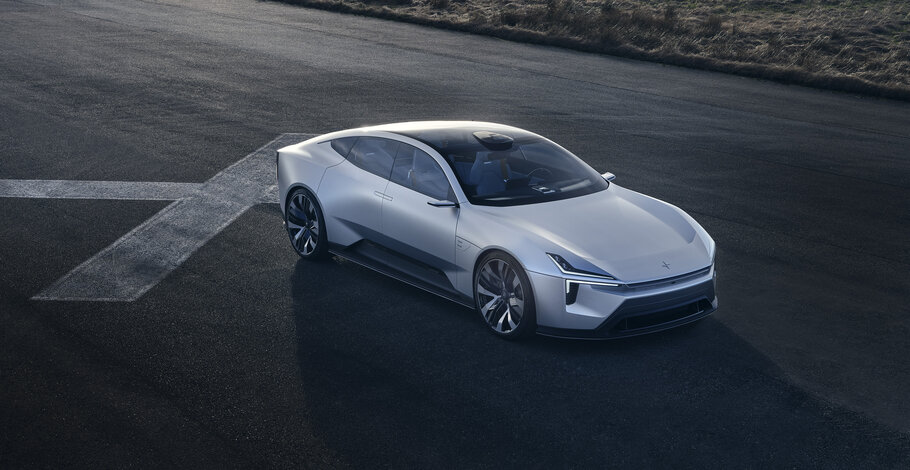
    Polestar has confirmed it will put the Precept into production. Revealed earlier this year, the Polestar Precept started life as a manifesto to illustrate the brand’s future vision and was described as a commitment car, not a concept car.

    Showcasing the Swedish electric performance brand’s future design direction, Precept also highlights Polestar’s path for digital technology and the use of innovative sustainable materials, inside and out.

    “‘Stunning. Spectacular. Cutting-edge. We’d like to see it on the road!’ – this is what the press wrote about Precept and the public said, ‘We want it’, so we decided to build it,” comments Thomas Ingenlath, Polestar CEO.

    “Consumers want to see a change from this industry – not just dreams. Now, Precept becomes an even stronger statement. We are committed to reducing the environmental impact of our cars and our business. The aim has to be climate neutrality, even though I recognize that is a long-term goal.”

    The interior of Polestar Precept features a mix of sustainable materials including recycled PET bottles, reclaimed fishing nets, and recycled cork vinyl. A flax-based composite developed by external partner Bcomp Ltd has featured in many interior and some exterior parts. Polestar’s ambition is to bring much of this sustainability into production.

    With product development underway, Polestar confirms it will produce Precept in China, where a new production facility will be established. The aim is to ensure the facility will be carbon neutral and one of the most intelligent and connected automotive production facilities in the world.

    This climate-positive narrative was started by Polestar’s original manufacturing facility in Chengdu where the Polestar 1 is produced. Inaugurated in 2019, the Polestar Production Centre became the first LEED Gold-rated automotive production facility in China and runs on 100% renewable energy.

    “China is a home market for Polestar and we recognize the increasingly important drive for greater sustainability here,” continues Thomas Ingenlath, speaking at the Beijing International Automotive Exhibition 2020. “With this new factory, we will again raise the bar, aiming to produce the most advanced and premium electric car in China with the lowest carbon footprint.”