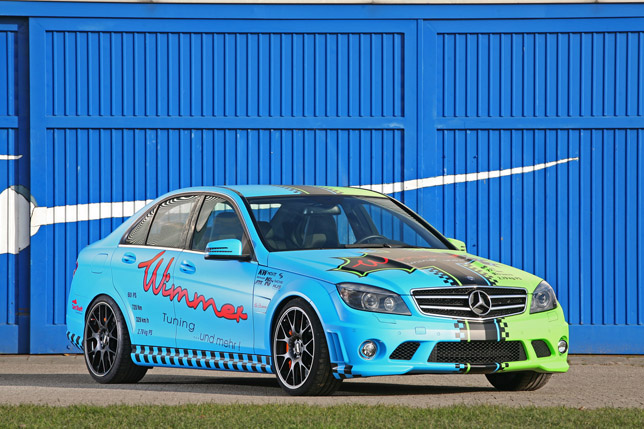
The BlueGreen Eliminator is the transformation of a C63 AMG Performance.
The one of the major chip-tuners – When Wimmer RS – prepares for the tuning scene a street car. And currently Germany is making preparations for the winter time season and of course Wimmer RS’ tires are squealing during the work on the “blue-green project“. The well reknown Solingen gives their pros because this amazing car have some specific features like sport camshafts. Moreover the cylinder head was developed during the improvement of the V8 engine which capacity amounts to 6.3 liters. In addition, the incoming air is being optimized and therefore optimized by a sport air filter by K & N.
What is more, the next starting points are a manifold, down pipe and special sport catalysts from the HJS. Furthermore there has been made a hand-made stainless steel exhaust system from the Wimmer House. Of course it is precisely transformed and tuned to cope with all the power of the engine – and this innovation completes the mechanical alterations. These adjustments deprive the eliminator of a uncomfortable and loud sound, which can also be controlled in three stages – all this is possible thank to the electronic throttle control by the Wimmer House.
The tuning of the WIMMER engine electronics is stunning and if you drive the car – definitely breathtaking. The function of this new adjustment is to make a round steady driving experience. And for all this to become a real dream come true in charge are high-quality mechanical modifications.
The effect of all these measures is enormous 601 hp (376 kW) and 720 Nm (531 lb-ft) of torque. This value will be very well appreciated by the genuine car freaks.
These modifications had lead up to the engine specific weight which is 2.79 kg/hp. As a result, the flatout is 329 km/h. And if you still wonder about the price of the engine conversion – it is 19 900 €.
You have to prepare approximately 2.600, – € if you want Wimmer RS to mount a clubsport coilover suspension by the KW Company – and for this price you’ll get a better control on the road. And for the additional 22.000 € you can have a brand new brake system, which includes MOV’IT-ceramic brake system of 380×40 mm with 6-piston brake calipers at the front and 362×28 mm with 4-piston brake calipers at the rear (all this behind the wheel of BBS – CHR VA 8,5 x19 and 9,5 x19 HA).These characteristics ensure a superb braking and allow the brake calipers cruelly biting the front axle and rear axle disc brakes.
Almost all of the modifications have been made by Wimmer in this blue-green project. Exception is made from the Dunlop Sport Maxx GT 235/35-19 and 265/30-19 tires.
Another one goes for the Cam Shaft Company in Kempen, which has made the complete foiling of the body with blue and green /matte, the left lane on the highway is voluntarily vacated. Foliation price is 2975, – €.
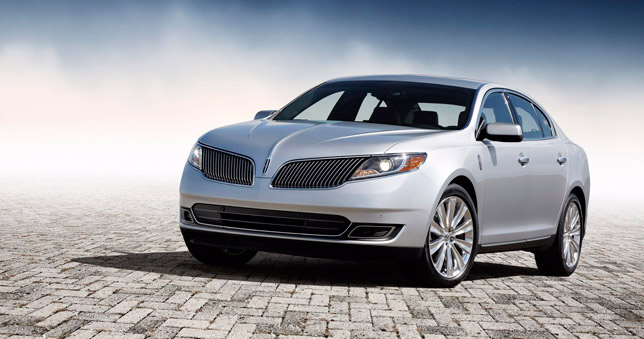
The new 2013 Lincoln MKS solves this dilemma between smooth ride and satisfying, confident handling. It and stands out, because it is the only car in its segment to have Continuously Controlled Damping (CCD) as standard equipment. The CCD ensures that the driver will have exciting and comfortable driving, while at the same time it will be dynamic and involving.
CCD is always tuning and refining the ride quality, and more importantly this is regardless of road conditions. Additionally CCD delivers also its on-road benefit by significantly extending the chassis’ capabilities compared to a chassis with non-adjustable struts and shock absorbers, known as “dampers” by chassis engineers.
Real-time damping
The new CCD dampers for the 2013 MKS offer expanded and improved control range in comparison with the fixed-rate dampers fitted to the 2012 MKS.
The system’s powerful processing speed and fast-acting mechanicals enable CCD to constantly read the road surface and continuously adjust damping rates in real time across the three selectable ranges – Sport, Normal and Comfort.
Lincoln drive control
The Lincoln Drive Control brand new interface makes MKS different and it is orientated towards drivers’ choice, who can select through various programmed modes like Normal mode, Sport mode, and Comfort Mode. Moreover the electric power-assisted steering recalibrates are providing more road feel and greater steering effort. In this way the engine responds more directly to the driver’s inputs. For example, the Comfort mode instructs the CCD suspension to run in its softest range. The dampers exert 10 to 15 percent less control compared to the Normal mode. Additionally the electric power assisted steering system also reduces the effort needed to turn the wheel at low speeds, for example, when parking. Definitely CCD is the core new technology, which will change everything in the automobile world, and it is totally orientated towards the drivers’ choice! So appealing, isn’t it!
Engines and transmissions
The standard engine for 2013 model is a more powerful and efficient 3.7-liter V6. It now includes twin independent variable camshaft timing (Ti-VCT), which offers the ability to vary camshaft timing to optimize the opening and closing of both the intake and exhaust valves. In this way the engine’s responsiveness and efficiency is being increased.
Specific accessory technologies were added to the 3.7-liter V6 to improve fuel economy performance and efficiency. The 3.7-liter delivers an estimated 19 mpg city/28 mpg highway for the front-wheel drive model and 18/26 mpg with the all-wheel-drive model. And tuned dual-exhaust system enhances low-end torque. Furthermore is to be mentioned the Smart Battery Management which also contributes to this improved economy by prioritizing the recharging of the vehicle’s battery at optimum times.
3.5-liter Ecoboost V6
No news here: the premium engine for 2013 still remains the twin-turbo 3.5-liter EcoBoost® V6, an engine that provides V8 performance with the fuel economy of a V6. And don’t forget that The EcoBoost V6 winned a place on Ward’s 2010 “10 Best Engines” list. The fuel economy of the EcoBoost/all-wheel-drive powertrain is projected to be 17 mpg city and 25 mpg highway – isn’t that impressive?! Indeed, the engine combinations for the 2013 Lincoln MKS offer an outstanding combination of more refined power and enhanced fuel economy.
Efficient six-speed transmissions
The 2013 Lincoln MKS is equipped with two versions of the six-speed SelectShift AutomaticTM transmission, both with steering-wheel-mounted paddle shifters. At one hand the 3.7-liter Ti-VCT V6 uses the 6F-50. On the other we have the more powerful 3.5-liter EcoBoost, which uses the heavy-duty 6F-55 which benefits from high-energy friction materials, a larger ring gear and a specific torque converter to handle the high torque output of the twin-turbo V6.
All-wheel drive
The system intelligently routes power only to the front wheels for improved fuel efficiency. For instance when driver input or road conditions indicate that slip might occur, the system sends power to the rear wheels to help prevent tire slip.
The additional information is that the all-wheel drive is standard with the twin-turbo 3.5-liter V6 and optional on the 3.7-liter V6.
More capable braking system
Improvement in the braking system is much needed here because it has to match the engine’s extra power and the suspension’s additional handling capabilities. For that reason Lincoln has significantly upgraded the MKS braking system for 2013 – it will unquestionably give the driver confidence and control. The modification is the following: new vented front discs measure 13.86 inches (352 mm), more than an inch larger than in the 2012 model. And to enhance brake cooling, the “hat” portion of the front brake disc is also vented.
Steering
This is where the focus id put on: the MKS steering system received a thorough makeover for 2013. The gear ratio is quicker (15:1 for 2013 vs. 17.1:1 for today’s MKS), making the steering more immediately responsive at all speeds. In addition, the steering boost is now electric rather than hydraulic. Last but not least the new electric power-assisted steering (EPAS) complements CCD in contributing to the driver-tunable Lincoln Drive Control experience.
The improved performance is due to the steering gear which is now solid mounted to the chassis’s front subframe. Moreover, a brace has been added under the vehicle (across the transmission tunnel) to strengthen the subframe’s mounting points to the chassis.
EPAS replaces the traditional hydraulic-assist power-steering pump with an electric motor. For that reason this is helpful to save fuel because the motor operates only when assistance is required, (unlike the hydraulic systems that run continuously).
Active park assist
Again EPAS is also the primary technology behind the available active park assist (APA) system. How it works: An ultrasonic sensor precisely measure open spaces to find a suitable parallel parking spot. For the sake of the comfort of the driver, he or she retains full control of throttle, brakes and shifting the entire time the APA is engaged.
Torque vectoring control
The new Torque Vectoring Control (TVC) system is set to Sport Mode. This TVC helps the MKS drive through corners with greater balance and poise. Moreover it individually influences the speed of the front wheels to enhance cornering agility by mitigating against a dynamic condition engineers refer to as understeer.
Sync
The next generation of the award-winning SYNC system is now easier to use: new, simpler screen designs, improved user interface, the larger and bolder fonts which make screens easier to read, SYNC’s voice recognition experience and etc. This is how SYNC has developed from a stand-alone module for communication and entertainment to a fully integrated operating system for Lincoln vehicles. It is to be highlighted that SYNC also enables the interior of the MKS to become a Wi-Fi hot spot when linked to a data-enabled cellular device. This means that with an active Wi-Fi, passengers can link to the Web on their tables or laptops.
Lane keeping system
Brand new for the 2013 MKS is a Lane Keeping System that complements the complete collection of driver assist technologies, in addition to the comprehensive safety package including six airbags, anti-lock brakes, traction control and AdvanceTrac® ESC (electronic stability control). It also includes Lane Keeping Alert and Lane Keeping Aid, which add significantly to the advanced driver assistance features already available on MKS. A good instance is that this Lane Keeping Alert helps the driver to avoid leaving their lane unintentionally because of distraction or tiredness. Furthermore, Lane Keeping Alert utilizes a forward-facing mono-vision camera mounted behind the rear-view mirror to begin looking for lane markers. A control unit monitors the data and determines when the vehicle is wandering out of its lane and as the vehicle approaches the outer boundary of its lane, the system vibrates the steering wheel, reminding the driver to pay attention. Brilliant, isn’t it!
Auto high-beam headlamps
Auto high-beam headlamps are also included. They use the windshield-mounted camera to monitor traffic conditions and control high-beam activation.
Collision warning
Collision Warning as expected, helps prevent common traffic accidents such as forward-looking, with the help of the long-distance radar which identifies potential obstacles. These warnings allow the driver to brake before a potential accident.
Adaptive cruise control
Collision warning is paired with adaptive cruise control (ACC). The reason for that is that both features use the forward-looking radar system. They have the range of up to 600 feet, and this adjusts vehicle speed to keep it at a safe distance behind another vehicle in the same lane, no matter of the weather conditions like fog or rain.
Blind spot information system
This brand new and thoughtfully considered Blind Spot Information System (BLIS®) with cross-traffic alert detects the vehicles in blind spots during normal driving as well as traffic approaching from the sides when the driver is reversing out of parking spots. This happens because of the BLIS radar sensors which continuously monitor each side of the vehicle to detect when another vehicle enters the defined blind spot zone (within 45 feet).
Mykey
What is MyKey® – it is the system that allows parents to restrict certain Lincoln MKS features when in the hands of a MyKey driver. It is made generally to ensure that the driver won’t exceed a maximum speed of 90 km/h for example, or it deactivates the Traction Control System that limits tire spin.
Exterior
Yes, the design is stunning and breathtaking. The new 2013 MKS has A-pillar forward, including the grille, HID headlamps, front fascia, hood and front fenders, fresh 19- and 20-inch aluminum wheels, new fascia, LED tail lamps, exhaust tips and a new decklid design that improves access to the trunk. And in one word: it is significant!
Interior
These styling updates are made for the sake of the transformation of the cabin. The interior is dominated by lines that sweep up from the center stack and flow out to the sides. Subtle ambient lighting adds to the interior’s luxurious, high-tech environment. All this new styling is promised to be seen in the upcoming future models of Lincoln.
Infotainment systems
The new MKS offers two audio systems: a standard one and an optional one. The standard system includes AM/FM/CD/MP3/satellite sources playing through a 210-watt system that drives 10 speakers. On the other hand the optional audio system is THX® II Certified Car Audio System with AM/FM/CD/DVD/ MP3/HD Radio capability and 16 speakers, including a 10-inch subwoofer. SiriusXM satellite radio with six-month prepaid subscription, an auxiliary input jack and a USB port are also included. What is appealing in this system is that the volume is being automatically adjusted according to vehicle speed. Conclusion: this is definitely an exceptional acoustic performance that brings home-theater sound to the road.
Luxurious, organic, comfortable
Luxury and comfort go hand by hand. This Lincoln style is supported by equipment that enhances occupant comfort. Lincoln’s available multi-contour seats incorporate seven computer-controlled air bladders to provide occupants with maximum adjustment. In addition both driver and passenger seats feature individual static settings as well as dynamic massage settings.
The seat surfaces are provided by the Bridge of Weir leather company, which uses a unique organic tanning method that results in a production of material free of chromium. This definitely makes the car more eco- and environmentally friendly, and more importantly – fully recyclable, leathers available.
Crafted details
For drivers who live in colder climates, a new heated steering wheel is considered. It raises the wheel rim’s surface temperature from minus20 degrees Celsius (minus 4 degrees Fahrenheit ) to 23C (74F) in only five minutes.
In addition new woods (Prussian Burl and Brown Swirl Walnut) and leather colors (Hazelnut and Light Dune) complete the extensive list of interior changes for 2013. And with it the person driving that beautiful luxury and comfortable car will be really unique. Why? Because two Lincoln interiors featuring natural woods display the exact same grain pattern.
After-sale care
Lincoln offers a comprehensive warranty and complimentary maintenance package on all of its vehicles, including: Four-year (50,000-mile complimentary maintenance), which includes coverage for oil and filter changes, tire rotations and multipoint, four-year, 50,000-mile bumper-to-bumper limited warranty,five-year, 60,000-mile safety restraint limited warranty and unlimited mileage corrosion limited warranty, six-year, 70,000-mile powertrain limited warranty.
On sale
The 2013 Lincoln MKS will be crafted in Chicago and is expected to arrive at Lincoln dealers this spring.
Land Rover will exhibit the DC100 Concept at the 2011 Frankfurt Motor Show. The manufacturer also confirmed, that production of a new Defender is intended for 2015.
The Land Rover DC100 concept builds upon the essential elements of the car’s character and allows Land Rover to open the debate and inspire people to dream about the Defenders of the future.
“Replacing the iconic Defender is one of the biggest challenges in the automotive design world; it is a car that inspires people worldwide. This isn’t a production-ready concept but the beginning of a four-year journey to design a relevant Defender for the 21st century.”, commented Gerry McGovern, Director of Design, Land Rover.
“Loved the world over for its simple, honest and distinctive design, we are determined that the new Defender will be true to its heritage, while meeting the requirements of a changing global market.”, added John Edwards, Global Brand Director, Land Rover.
We plan to engage with existing and potential customers to help us finalise the details of the new vehicle. One thing’s for sure, it’s going to be an exciting journey, and we can’t wait to get going.”, Mr. Edwards finished.
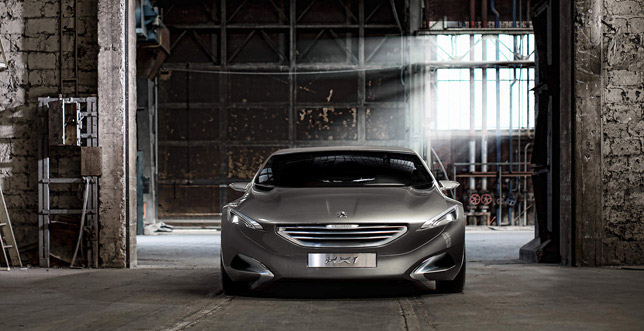
The HX1 Concept Car gives Peugeot the opportunity to once again illustrate the marque’s ability to reflect on new ideas, learn how to evolve and to continually reinvent itself.
The brief for this concept was to produce a vehicle for up to six people, offering strong styling, that is sporty and efficient and at the same time giving a unique driving sensation.
To achieve this, the HX1 transcends the notions of adaptability in all areas, with its extreme aerodynamics (‘flaps’ are deployed to optimise aero efficiency according to vehicle speed), its tapered, low MPV architecture and its HYbrid4 power plant integrating ‘plug-in’ technology.
A unique and transformable concept, aiming for maximum efficiency
Adaptive
The HX1 is a prospective concept designed to help envisage future solutions in numerous fields: architecture, aerodynamics, modularity, equipment, interior materials and the environment, not forgetting, of course, powerplants. These considerations have led to very strong bias that breaks from the norm and guided by a theme: ‘Metamorphosis’, to give the vehicle the capability to adapt itself to its environment, to life’s conditions, driving conditions, etc. and at any time.
Architecture
To meet specifications, the HX1 has been designed with an MPV architecture with unique dimensions: low (1.373 m) and wide (1.990 m overall) and with a length of 4.954 m.
This allows for a volume suited to pure, elegant and sleek lines that delivers a low Cd figure for maximum overall efficiency.
Four reverse-opening ‘half-scissor’ doors can be opened wide for ease of access to the HX1 passenger compartment. These kinematics have also been researched in terms of practicality and to allow accessibility under all circumstances.
The passenger compartment is structured so as to offer maximum comfort for the two passengers in the rear row and maximum sensation for the occupants of the first row. If required, two retractable seats can be configured in a centre row due to a clever system of “pull-out seats”, based on the same principle used on the HR1 Concept Car (First shown at the 2010 Paris Motor Show); these additional seats are integrated behind the front seats.
Peugeot Hx1 Concept
Aerodynamics
Designers have taken aerodynamics to the extreme with HX1. When stationary and at low speeds the HX1’s styling makes it appear sculpted from a solid form as the moving parts have been adapted to optimise air flow and to enhance the car’s environmental performance. The seven ‘spokes’ in each wheel rim spike, fashioned like a turbine blade, open to create a flat disc surface. At the same time, a spoiler and two side skirts located at the top of the tailgate are deployed above 62.1mph. When moving, the HX1 therefore adapts itself ‘physically’ to its environment.
The vehicle has a Cd of 0.28; an outstanding value for a vehicle with an MPV silhouette.
All of these aerodynamic devices have evolved thanks to the free rein given to the immense creativity of Stylists.
Styling not restricted by norms
Futuristic exterior styling, sculpted through aerodynamics
The HX1 is a vehicle that is pure in style; sculptured, upmarket and exuding dynamism and exclusivity. Aerodynamic, its sleek, elegant and fluid lines seem to have been tailored by the wind itself. They subtly underline the athletic, even muscular, character of the vehicle. Each surface is sculpted with precision, each detail is crafted intricately: mirrors with integral rear view cameras, brushed aluminium window surrounds, millimetre-perfect panel gaps and flush fittings, etc.
At the front, the HX1 enhances Peugeot’s latest design identity. The theme of a unique ‘floating’ front grille, which appears ‘detached’ from the bodywork has been designed to harmonise with the car’s tapered lines. The precisely-carved feline head lamps give it an appearance that is evocative of the Marque’s badge and history: the lion, proudly displayed on the front of the bonnet. This look is refined by an LED lighting signature, easily recognisable in the daytime or at night. This visual signature is also found in the rear lights, the boomerang shape of which follows the lines of the rear design.
A high-tech and range-topping interior that refines the ‘Motion & Emotion’ brand signature
The pure and futuristic design of the dashboard and seats, the materials used (floor and fittings in natural oak with inlaid fibre optics, brushed metal, leather, etc.), existing equipment (digital displays, touch-sensitive screens, etc.), designed lighting (LED spotlights, strips backlit by the natural lighting on the headlining, etc.); all of these contribute to create an environment where modernity meets refinement, natural materials meet technology, and so on. This all symbolises the Marque’s vision of an upmarket, range-topping interior.
The passenger compartment reflects the Peugeot signature:
‘Emotion’
The front has been designed to provide the driver with maximum sensation. The environment is very sensory and high-tech, with its use of brushed metal and digital components. Here again, the vehicle will adapt itself in the real life situation of the driver. Indeed, the steering column can be moved backwards and forwards electrically in line with the seat adjustment for complete ease of access. The steering wheel movement loads up automatically when the car is put into ‘cruising’ mode for enhanced driver stability and comfort. Finally, the central multifunctional display can be adjusted, leaving only the essential information visible on its edge.
The instrument panel is designed to create the experience of having complete control over the vehicle, like the ‘head-up display’ which presents all of the information to the driver without them having to take their eyes off the road ahead.
“Motion”
At the rear, maximum attention is dedicated to ‘added value’ of features and passenger comfort. The environment and the materials used are bright and natural, a mixture of folded and stitched leather. The two sculpted rear seats recline, a set of controls are grouped in the centre armrest. The centre console includes a minibar and a coffee machine, a discreet acknowledgement to the extensive history of Peugeot products. This console is adorned with white Carrare marble, specially milled ‘by hand’, which contributes to the exclusive and modern environment.
HYbrid4 ‘plug-in’ power plant: even better suited to its surroundings
The HX1 integrates HYbrid4 technology, an innovative modular architecture that figures in the Peugeot range on the 3008 HYbrid4, the first diesel hybrid in the world; technology which will also be present on the 508 RXH in 2012.
The principle behind HYbrid4 is clever, yet simple: With an internal combustion diesel engine at the front (powering the front wheels) and an electric motor to the rear (powering the rear wheels), this technology enables all four wheels to be driven when the engine and motor work together, for increased safety and traction in extreme conditions. It also enables the vehicle to be driven at low speeds powered just by the electric motor in ‘Zero Emissions Vehicle’ mode.
Under the bonnet of the HX1 the engine is a 204 bhp, 2.2 litre HDi diesel, linked to an automatic
6-speed gearbox; the same powertrain as that used on the 508’s range-topping GT version. Coupled with a 70 kW (95 bhp) electric motor, the combined output can develop a potential 220 kW (299 bhp).
However, one of Peugeot’s priorities is to maintain its position as environmental leader in the years to come. The HX1 therefore takes us one step further. It is equipped with ‘plug-in’ functionality: the lithium-ion batteries can be recharged by ‘plugging in’ the vehicle to a standard 240V mains electric socket. This means that it can have a longer ‘ZEV’ range, i.e.: it can cover up to 18.6 miles in all-electric drive mode. The HX1 thus obtains a combined fuel consumption of 88.2mpg with CO2 emissions of 83 g/km.
Ferrari has exclusively prepared two examples of its all-new, mind-blowing creation, the Ferrari FF at the top of Plan De Corones in the Dolomites at 2,350 meters height, where the newly-premiered four-seater with four-wheel drive will be tested by the press for first time.
The two V12 Ferrari rides will be driven at a special ice and snow track located at the start of the vast ski area, trying to demonstrate in full its four-wheel drive possibilities under fierce conditions.
In the video bellow, Ferrari is showing us how the cars have been taken to this area, which can only be reached by the ski-lifts. The two Ferrari FF rides have been transported with a CH-47 Chinook transport helicopter from Viterbo’s 1st Regiment Antares backed by three Agusta 205 helicopters from the 4th Regiment Altair from the Italian air force in Bolzano.
In this highly anticipated test event, more than 200 journalists from the world’s famous publications will take a part, trying to give us their most accurate opinion on how the ride is handling on the track and what kind of experience to expect from it.
With the world premiere of the BMW Concept ActiveE at the beginning of 2010, just a year after presenting the MINI E, the BMW Group underscored the rapid and consistent continuation of its intensive research and development activities in the field of electric mobility. This concept has now become perceptible and tangible reality in the form of the BMW ActiveE.
Aston Martin V8 Vantage S is the purist sport automaker’s latest addition, which benefits from a long list of newly developed driver-focussed features all aimed at providing customers with more exciting experience, power and dynamics.
Inspired by the 2011 Vantage GT4 race car and already available for order at the Aston Martin official dealer network, the amazing Aston Martin V8 Vantage S sports an enhanced version of the 4.7-liters V8 engine which now delivers the staggering 430 horsepower (321 kW) at 7300 revolutions and 490 Nm (361 lb-ft) of peak torque at 5000 rpm. In addition to the higher figures, the super sport athlete also hosts a new ground-up developed Sportshift II transmission with seven short ratio gears that delivers the most engaging and intense driver involvement.
Dr. Ulrich Bez, CEO of Aston Martin shares: “The Vantage S epitomises every attribute of the V8 Vantage and pushes the driver experience beyond what we have offered before. It combines dynamic exhilaration with all the charming finesse, beauty and practicality already associated with the Vantage range.”
Besides the new drivetrain upgrades, the “S”-badged Vantage showcases larger diameter front brake disc with new six-piston front brake calipers, all-new springs and dampers, wider rear wheels, as well as new dynamic stability control (DSC) system. Standard features also include Hydraulic Brake Assist (HBA) which provides assistance in emergency braking situations and Hill Start Assist (HSA).
On its exterior, the Vantage S has a new, lower, carbon-made front bumper with larger air intake, re-styled rear bumper and side sills, extended deck lid and a new 19-inch ‘V’ spoke rims wrapped in high-performance tyres.
The Aston Martin V8 Vantage S is available as both, coupe and Roadster, but unfortunately the price tags are still mystery.
Audi A1 received another tuning package, but this time from the German tuner MTM.
The 1.6 TDI diesel engine is boosted to 121PS (89 kW) from the factory 105PS (77 kW) and the torque raised to 282Nm, instead of 250Nm. The performance package is priced at €1 199.
The 1.4 TFSI engine with 122PS (90 kW) is boosted to 152PS (112 kW), again for €1 199 and if you pay additional (more…)
Lamborghini Gallardo in white? Yep, and it looks awesome. Lamborghini Gallardo White Edition is the latest project of the tuner Anderson Germany.
The exterior features a matte white finish, an aerodynamic body kit consisting of a new front apron, side skirts, a rear diffuser and a rear wing. Gallardo White Edition also boasts a sport suspension for better performance and awesome stance, black 20″ wheels fitted with performance tires and last – tinted windows.
You may expect that a pure sports car will be spartan inside, but it is rather comfy. The interior features Alcantara upholstery, white carbon fiber trim, and two-tone sport seats.
Lamborghini Gallardo White Edition is powered by 5.2 liter V10, which has a revised ECU, a high-flow air filter, and a sport exhaust system. The upgrades result in total output of 600PS (441 kW), which is 40PS more than LP560.
Audi RS 3 Sportback is the famous brand’s latest addition, aimed at delivering fans staggering performance figures, exclusive styling and precise handling in ultra fresh, compact package. (more…)
Saker has introduced two new models – RapX and Sniper, which are developed specially for track use. The company are specialized in building only racing cars, but they are planning to create road legal vehicles, too.
Both models are powered by a turbocharged Subaru engine and are priced at around 50 000 EUR. The engine is 2.0 litre Turbo Flat 4 with 275bhp at 5800RPM and 340Nm at 4400RPM. The power-to-weight ratio will be over 300bhp per tonne. (more…)
 The BlueGreen Eliminator is the transformation of a C63 AMG Performance.






 Audi A1 received another tuning package, but this time from the German tuner MTM.


 MTM has unleashed its Christmas present for the fans, showcasing a fresh program for the recently premiered, compact Audi A1.
 Audi RS 3 Sportback is the famous brand’s latest addition, aimed at delivering fans staggering performance figures, exclusive styling and precise handling in ultra fresh, compact package.
 Saker has introduced two new models – RapX and Sniper, which are developed specially for track use. The company are specialized in building only racing cars, but they are planning to create road legal vehicles, too.