Category: Car Makes

Car Makes

  • VW R GT Touareg

    The Touareg R GT is nothing less than the pure essence of a high-performance luxury SUV. What was formerly a 2005 model with a V6 engine and 6-speed automatic transmission is now a 500-horsepower road-carver that doubles as a luxurious limousine. Like the other R GT models on display at SEMA, the Touareg has an HPA-built twin-turbocharged V6 under the hood, special chassis enhancements, a KW Variant 3-way coilover suspension, and a high-performance braking system supplied by Brembo.

    The Touareg’s revised lines give it the look of a well-bred urban cruiser. A Volkswagen Individual body kit, gleaming silver paint, and 10 x 22-inch custom-built, forged-aluminum, mono-block Avus® wheels mounted with Michelin ultra-high-performance Diamaris tires lend it a commanding visual presence that matches the powertrain’s dominating performance.

    Volkswagen Touareg R GT
    Volkswagen Touareg R GT

    Front sport bucket seats, an integrated single roll hoop, and the safety systems required for a weekend at the track are complemented by the luxury of black leather upholstery with gray suede centers, a Bugatti spun-aluminum trim kit by Volkswagen Individual, a black Apple iPod module, and rear PSP system.

    Street and track performance has not yet been measured, but with its 500 horsepower and massive torque, the Touareg R GT will certainly be an extreme expression of “Fun to Drive”.

  • VW R GT Passat

    The answers to those questions might very well be found among an intriguing trio of project vehicles built specially for the SEMA Show. The Jetta R GT, Passat R GT and Touareg R GT are not just flights of fancy branding. The badging on each of these one-offs tells a story of advanced platforms enriched with strategic applications of factory and aftermarket expertise.

    HPA replaced the base 2.5-liter engine with a twin-turbocharged, twin-intercooled, 550-horsepower variant of VW’s 3.2-liter, 240-horsepower six-cylinder V6 that powers the R32. To ensure that every bit of the torque gets to the ground in the most entertaining way possible, HPA fit VW’s highly acclaimed DSG twin-clutch transmission and 4MOTION all-wheel drive, both systems suitably modified by HPA to complement the engine’s bravura performance. A KW FIA GT 3-way coil-over race suspension and WRC-spec Brembo brake system were also installed to help harness the forces unleashed by the twin-turbo V6.

    Cloaked with a special smoke gray paint treatment in the best Q-ship tradition, the revised coachwork includes new front and rear bumper fascias, side rocker panels and bespoke rear spoiler, offset by contrasting graphics and smoked glass treatment. The Jetta R GT’s willingness to run is revealed by the huge Michelin ultra-high-performance tires mounted to the 9.5 x 19-inch custom-built, forged-aluminum, modular Avus® alloy wheels. Should the Jetta R GT hit the track, changing to a set of 9.5 x 18-inch mono-block, forged-aluminum DTM-spec Avus wheels is quick and easy with their DTM-style center locks and the AP Racing air jacks incorporated within the Jetta’s framework.

    Similar technology and design was applied to create the Passat R GT, born from a European-spec 2006 Passat 3.2 V6 FSI with DSG transmission and 4MOTION all-wheel drive. A rewarding runner in its own right, the European Passat 3.2’s powerful engine, world-beating transmission and all-wheel grip provide an excellent basis for a SEMA special. The mechanical transformation by HPA resulted in dynamics that launch the Passat R GT into supercar dimensions, and its sleek, entirely modern bodywork was given the muscular look of a highly toned European high-performance sedan by Volkswagen designers.

    Volkswagen Passat R GT
    Volkswagen Passat R GT

    Modifications begin with a twin-turbo conversion package that features dual exhaust manifolds, each carrying a Garrett GT25R ball-bearing turbocharger. Charge cooling is optimized by twin intercoolers, and the exhaust gases pass through a quad bypass emissions system that retains the stock catalytic converters. It boasts an extraordinary output of 575 horsepower and massive torque to match.

    The Passat R GT’s track-prepped chassis is suspended by a KW Variant 3-way coil-over racing setup, and the required upgraded braking is supplied by the Brembo-supplied system available on the Phaeton. The Passat R GT rides on the same high-performance Michelin radials as fitted to the Jetta R GT, as well as the forged-aluminum Avus® alloy wheels. HPA also modified the DSG gearbox for more revs between each upshift to match the engine’s increased output.

    Volkswagen’s California design studio chose gleaming candy white paint to clothe the modified bodywork, consisting of new front and rear bumper fascias and side rocker panels. Contrasting black leather cloaks the interior, offset by touches of white piano lacquer trim, a white Apple iPod® module up front and a white Sony PSP® in the rear. Of course, befitting a car that can cross Europe in hours, it features VW’s highest-quality sound system and full navigation.

  • VW EcoRacer

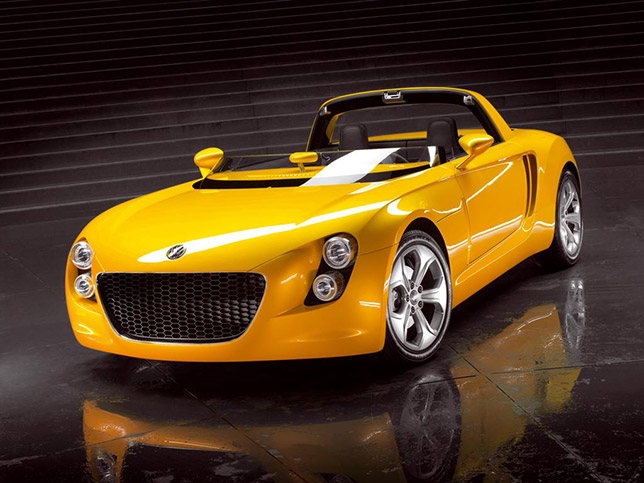
    The prototype consumes a mere 3.4 liters and has a maximum speed of 230 km/h. The Volkswagen EcoRacer is a Coupe, Roadster and Speedster all at the same time. At the Tokyo Motor Show (October 22nd – November 6th), Volkswagen presents an incredibly economic sports car. The EcoRacer’s average fuel consumption is as low as 3.4 liters and it reaches a maximum speed of 230 km/h.

    Thanks to its carbon fiber body, the middle motor sports car weighs a mere 850 kilograms and accelerates in only 6.3 seconds to 100 km/h. This sports car is powered by a 100 kW turbo diesel of the next generation and stands for a trend setting synthesis of rock-solid economy and an abundance of sportiness. 230 km/h, 6.3 seconds, 3.4 liter – a data combination that is as rare as it is fascinating.

    Volkswagen Ecoracer
    Volkswagen Ecoracer

    The body design with its new sports car front configuration, LED head and rear lights-system, solid proportions and strong lines, demonstrates that even very economical cars can be a fascinating drive.

    Another world premiere at the Volkswagen booth: the new Polo GTI is being introduced. With 110 kW / 150 hp it is the strongest Polo since the series was introduced thirty years ago. The exterior and interior concept of this powerful compact intentionally shows similarities to the legendary Golf GTI. Starting in spring 2006, the Polo GTI will be available in select markets. Price in Germany: 18,950 Euro.

  • VW Polo GTI

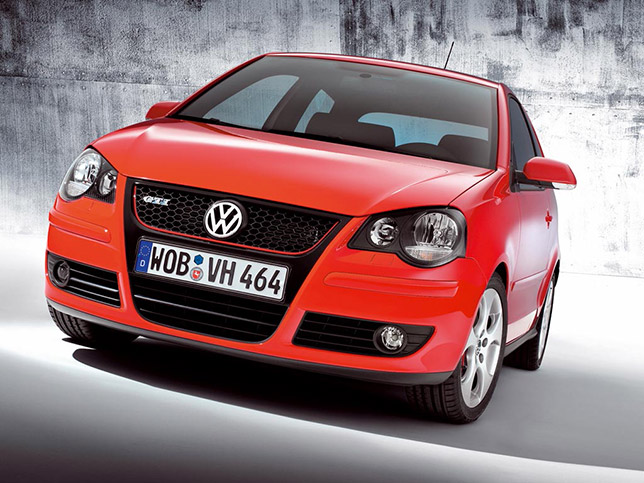
    On October 19th Volkswagen will introduce the new Polo GTI during a world premiere at the Tokyo Motor Show. With 110 kW / 150 hp it is the strongest Polo since the series was first introduced thirty years ago. The exterior and interior of the powerful compact deliberately bares a resemblance to the legendary Golf GTI. The Polo GTI will be available in select markets starting spring 2006. The price in Germany will be: Euro 18,950.

    The GTI trade name is one of the best known brands in the automotive world. In 1998 the last GTI debuted in connection with the Polo. It was 125 hp strong and 205 km/h fast. Now 150 hp and a maximum speed of exactly 216 km/h are reached. Further cornerstones of the new Polo GTI: The 0 to 100 km/h sprint in 8.2 seconds, 229 Nm maximum torque (at 1,950 rpm) and 7.8 liter average fuel consumption.

    Just as with the Golf GTI, Volkswagen has equipped the new Polo GTI with a turbo motor and intercooler. Because: if it says GTI it should have the real torque moment characteristic. The Polo GTI features a 1.8 liter five valve-four cylinder providing a potent push from the torque as well as excellent elasticity scores. On board the Polo GTI the fourth gear acceleration from 80 to 120 km/h takes a mere 7.5 seconds. Outside the Polo GTI as well, but it isn’t half as much fun.

    Volkswagen Polo GTI

    It a fact that the new Polo GTI is a consistently sporty and safe automobile with extreme crisp driving features and a GTI specific exterior and interior. Look at the exterior: the front of the ‘little’ GTI displays the typical radiator grille theme of the ‘big’ GTI – black, v-shaped, upper air entry with honeycomb shaped protection grid. The dual headlights are cased in black, just like the standard equipped fog headlights in the outside air vents.

    It is no secret that these GTI insignias work best with black, silver or white and most perfectly with red paint. Red are also the front and rear break calipers of the firm gripping wheel disk brakes. The 16 inch alloy wheels, in the style of the Golf GTI, with their five u-shaped openings, look like a stroboscope and make the calipers stand out – even at full speed. The wheels come in the format 205/45 R 16. The tires lunge deep into the wheelhouse; the sport chassis (with standard ESP) is 15 millimeters deeper than the standard derivate. Black side skirts visually underline the dynamic chassis design.

    A self-confident rooftop spoiler (with integrated third break light) above the hatchback provides optimum propulsion ratings on the rear axle. Far below that is the chromed plated double exhaust pipe which really looks sharp.

    The interior is also in the style of the GTI. As always, the new Polo GTI is equipped with special sport seats and the classic checkered design ‘Interlagos’. Sports steering wheel, gear shift knob and covering as well as the handbrake grip come in leather. A metal type surface visually and sensually enhances the middle console as well as the side vent openings in the cockpit. Fine points such as the red cross-seams on the interior of the steering wheel as well as the red edges of the otherwise black seatbelts show a great love to even the smallest details. The metal embossed shift scheme on the gear shift knob and aluminum foot pedals fit perfectly into the picture.

    One doesn’t have to miss anything in the Polo GTI just because it’s sporty. As usual the operation is perfect, the quality high, the cargo area large (270 to 1,030 liters) and the rear bench flexible (1/3 to 2/3 including foldable seatback). Apart from the tried and tested chassis, a soothing level of passive security is also provided by the front and side airbags; the passenger airbag can be de-activated.

    Volkswagen in Japan: The most successful importer for five consecutive years

    The Polo GTI is highly anticipated by the Japanese Volkswagen dealers. Then entire series is extremely successful from Tokyo and Osaka. This holds true for the entire Volkswagen brand. Models such as the New Beetle and Golf GTI enjoy cult status. With the ‘Golf GTI Cup Japan’ Volkswagen Racing puts on its own racing series. In 2004, Volkswagen was the number one import brand for the fifth year in a row; nearly every fourth new foreign car in Japan was graced by the VW logo. With the brands Audi, Bentley, Lamborghini and Volkswagen, the Volkswagen AG represents the strongest automobile corporation among the importers.

    All the data and descriptions included in this press release are valid for the programme of models available for sale in Germany. Different details may apply in other countries. This information may be subject to change or correction.

  • VW Passat Design Package

    Passat customers can now upgrade their vehicle using the “design package” from Volkswagen Individual: the package gives both the saloon and the estate versions an appealing, personal and sporty touch.

    The love of the car is often reflected in the details: with dark chrome radiator grille, side window trims and rear lettering in the new “design package” for the Passat, for example. The anthracite-painted 18 inch “Chicago” alloy wheels with five double-spoke design and gloss finish are also an eye-catcher. These are combined with a 15 millimetre lower sports suspension which is specifically tuned to match the wheels. Tinted rear and side windows match the dark chrome and wheels.

    A look at the vehicle interior shows the attractive contrast between dark nappa and light-coloured “Sensitive” leather in “Snow Beige”. The two-tone concept is adhered to throughout, with the door panelling also in “Snow Beige”, for example. The multi-function steering wheel and gearstick knob also have light-coloured stitching and the fabric foot mats have a light-coloured surround. The dark, brushed aluminium decorative strips and the sill panel strips with “Individual” lettering give the vehicle an individual touch.

    Volkswagen Passat
    Volkswagen Passat

    Other useful features in the “design package” include fog lights, heated windscreen washer jets, heated front and rear seats which can be regulated separately and two-zone “Climatronic” air conditioning system. The “RCD 200” radio-CD system with four speakers in the front completes the range.

    The “design package” for the Passat and Passat Estate is available to order across Europe for the Sportline equipment range. The package is available in Germany for 6 102 EUR with normal chrome fittings and exclusively with dark chrome for 6 402 EUR starting in the autumn.

    Other individualisation products
    In addition to the “design package”, Volkswagen Individual also offers a wheel range with four high quality wheels in both 17 and 18-inch format for the Passat and Passat Estate. Alongside the “Chicago” model, this includes the 18-inch “Samarkand” alloy wheels, the 17-inch “Avignon” alloy wheels and the five double-spoke model “Siena”. The “Siena” and “Avignon” models are available in titan silver or sterling silver. The “RCD 500 Dynaudio Sound” sound system with ten-channel amplifier and ten speakers can be ordered on request and can be combined with the “RNS MFD-DVD” DVD navigation system.

  • VW Golf V GT

    At the International Motor Show (Cars) in Frankfurt, Volkswagen is presenting a ground-breaking innovation in the development of direct injection petrol engines: The world’s first twin-turbocharged FSI engine – the “Twincharger”. The engine developers at Volkswagen have taken an unusual approach to achieving lower fuel consumption values: Reduction in cubic capacity alongside the combination of an exhaust turbocharger with a compressor.

    With the new 1.4 l 125 kW Twincharger engine, Volkswagen has impressively succeeded in pushing ahead with the logical further development of its own FSI technology to achieve even more driving pleasure and efficiency. The combination of exhaust turbocharging with an automatically switched, high-speed mechanical compressor develops the same torque as a high volume naturally aspirated engine at the same time as achieving lower consumption values.

    In particular, the high level of torque developed at low engine speeds means that drivers can delay shifting gear for longer. This means customers are going to be even more excited about turbocharged SI engines – particularly since the average consumption is only 7.2 l/100 km (39.2 mpg). In addition, the design of the exhaust system helps to keep consumption as low as possible when driving at speed on the motorway.

    However, driving pleasure is increased even more whilst retaining the low consumption values: From spring 2006, namely, the “Twincharger” can be combined with the fascinating DSG direct shift gearbox.

    VW Golf V GT 2005

    It is a successful synthesis between driving pleasure and economical responsibility. The compact power unit develops 125 kW / 170 PS and a maximum torque of 240 newton metres in the range between 1750 and 4500 rpm. With this engine, the Golf GT has a top speed of 220 km/h (136 mph) and reaches the 100 km/h (62 mph) mark in only 7.9 seconds. Its considerable torque makes the engine feel like a high-volume naturally aspirated engine, while the possibility of driving with fewer gearshifts keeps the overall fuel consumption down to a frugal 7.2 l/100 km (39.2 mpg). And, it goes without saying, there is plenty of power in reserve for overtaking on country roads.

    Another performance variant of this innovative Twincharger engine with 103 kW / 138 PS (maximum torque 220 newton metres) will be available from early 2006, initially in the Touran compact MPV, and after that the Golf will also be available with this engine.

    The new compact FSI with twin-turbocharging will first be used in the sporty Golf GT. This variant is positioned between the Golf Sportline and the Golf GTI. Its exterior is differentiated by an individual front section with a V-shaped grill in the body colour as well as special alloy wheels. Special sports seats and a three-spoke sports steering wheel lend additional appeal to the interior. Another power unit for the Golf GT will be available from the end of 2005 also: the powerful 125 kW / 170 PS 2.0 TDI. This four-valve TDI engine with piezoelectric pump/nozzle injection elements and a diesel particulate filter as standard gives the Golf GT extremely sporty performance with a torque of 350 newton metres, combined with attractive consumption values.

  • VW Touareg W12

    The performance of the new VW Touareg W12 has been increased through modifications within the engine by 22 kW / 30 PS. At the same time the maximum torque increased from 550 to 560 newton metres, and is now available from 2750 instead of the previously 3000 rpm. The overall effect is an even smoother delivery of power.This powerful character can be found in the Touareg W12 Executive, newly designed by Volkswagen Individual. The exceptional SUV offers a level of powertrain technology and equipment with a maximum torque of 600 newton metres, which is unrivalled by any other off-road vehicle.

    VW Touareg W12

  • VW EOS

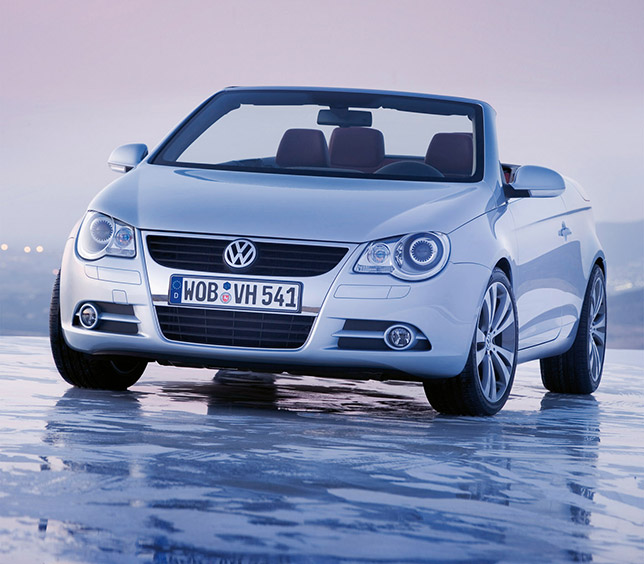
    IAA world premiere: 18 months after the concept C study made its debut at the Geneva Automobile Salon, Volkswagen now presents the series version of its new convertible coupe in the form of the VW Eos. This is the world’s first four-seater car with a five-section CSC roof; the folding hard top combines the characteristics of a coupé, sliding and convertible roof, thereby unifying three different car concepts to form a whole.

    Consistently new design

    CSC design: When closed, the CSC roof curves in an arc between the rear end and the windscreen, giving rise to an outstanding coupé roof which is both elegant and sporty. The roof’s curve is elongated, the rear end muscular and the overall impression is one of high quality. When the roof is open, the 4.41 metre long and 1.79 metre wide VW Eos also clearly reveals that it has been specifically developed as a convertible coupé, and that its body concept has not been derived from any other model in existence. The CSC roof has enabled the windscreen frame to be kept short and the rear compact, lending the vehicle sensuous proportions in the style of a classic convertible.

    CSC characteristics: The five-section CSC structure offers not only optical, but also practical advantages. Firstly, pure convertible feeling. As the windscreen frame – the roof cross member, to be perfectly accurate – projects far less into the interior than is the case with many similar solutions, there is nothing above the driver and front passenger but blue skies. Secondly, optimum entry and exiting. The shorter windscreen frame makes it easier to get into the VW Eos when the top is down, as the driver or passenger does not have to manoeuvre his head past the frame. Thirdly, the integrated glass/sliding/tilting roof, because the sun does not always shine, nor is it always summer. In such cases, the glass/sliding/tilting roof fitted in the VW Eos lets in light, air and good humour.

    Full opening and closing are very speedy, by the way, taking around 25 seconds from the first “clack” to the last “click”. The system concludes the process with a signal tone, confirming that the roof is either open or closed completely. In addition, the CSC roof offers the general advantages of unimpeded suitability throughout the year and minimal driving noise when closed. It is also less appealing to vandals than a soft top. Of course, a roll-over protection system, which shoots out within a maximum of 0.25 seconds increases safety in critical situations.

    VW EOS 2005

    Very wide and powerful

    Dimensions: The convertible coupé is 1.79 metres wide, 4.41 metres long and 1.44 metres high. In relation to each other, these dimensions enhance the vehicle’s dynamics. In comparison with its length and height, the vehicle’s width lends the VW Eos a particularly powerful appearance. Its large track width (over 1.55 metres) not only looks good, it also contributes extensively towards the extraordinarily agile and safe handling characteristics exhibited by the VW Eos. The result is pure driving enjoyment regardless of whether the roof is up or down.

    Scheduled for launch in spring 2006 above the New VW Beetle convertible

    Market launch: TheVW Eos is scheduled to be launched in Europe in spring 2006; the other continents are set to follow the same year. The car will open up a new sub-segment and will be positioned precisely between the A (Golf) and B class (Passat). In parallel, the New Beetle convertible, over 126,000 of which have been built and which underwent a facelift in 2005, will further extend its position as successor to the Golf convertible at the centre of the A class.

    Engines: Volkswagen makes specific use of technical synergies between its model series. Take the engines, for example: In detail, these encompass four petrol engines with outputs ranging from 85 kW / 115 PS, 110 kW / 150 PS and 147 kW / 200 PS to 184 kW / 250 PS plus a 103 kW / 140 PS TDI equipped with a diesel particulate filter as standard. Four-cylinder direct injection engines are fitted to provide outputs up to 147 kW, whilst the 184 kW variant derives its power from six cylinders.

    Sporty, elegant interior

    Passenger compartment: The interior design is also new. Whilst the functional and operating details (e.g. light, air conditioning, radio systems) are familiar from other models, many fundamental VW Eos elements are new developments. These include the cockpit, the door and side trim panels and the rear seat system. Volkswagen is additionally fitting electrically activated easy-entry seats for the first time: These “remember” the driver’s and front passenger’s longitudinal seating positions, and return to these – once the rear passengers have entered or exited the vehicle – at the push of a button. When the roof is open, a volume of 205 litres is available; when closed, 380 litres of stowage space are on offer. As standard, a power latching system closes the boot lid the last few millimetres. A through-loading aperture is additionally integrated into the rear bench seat.

    One equipment version, many equipment details

    Equipment: The VW Eos will be launched in just one high-quality equipment version. Permanent details fitted as standard will include ESP, safety-optimised front headrests, front airbags and specially developed side head-thorax airbags; 16″ alloy wheels (V6: 17″), air conditioning system (Climatic / V6: Climatronic)), fog lights, electric window lifters, ambient lighting, leather-covered steering wheel*, gear lever knob* and handbrake lever* plus sports seats* (* = standard as of 103 kW, optional extras for 85 kW). Optionally, innovative features such as a Dynaudio sound system with ten-channel amplifier, ten loudspeakers and
    600 W output power or bi-xenon headlights with dynamic and static cornering lights will be available for the VW Eos.

  • VW Golf R32 2006

    VW Golf R32 -  front angleIt was the most powerful Golf ever. The VW Golf R32 powered by a 177 kW (241 bhp) engine was first launched in August 2002. Not only was it one of the hottest cars on the road, it also sold like hot cakes: three times as many R32’s were sold than originally planned. These are excellent prospects for its successor.

    Now comes a new R32 based on the Volkswagen Golf V generation. This time it packs 184 kW (250 bhp) under the bonnet; the permanent 4MOTION four-wheel drive again promises excellent roadholding. The new model will see its world premiere at the 59th Frankfurt Motor Show (15 to 25 September). Presales in Germany start on 19 August. Market launch will be at the end of September. Prices for the new Volkswagen Golf R32 start at €32,200.

    From the outside, the best Golf ever is not only recognisable by the R32 logo. Similar to its predecessor, the new top Golf has a design and equipment all of its own. The VW Golf R32 has a top speed of 250 km/h and comes either with a 6-speed manual gearbox or the optional dual clutch gearbox (DSG). Equipped with the DSG the “R32” is even faster: 6.2 instead 6.5 seconds from 0-100 km/h. Despite all this, the model is unusually easy to handle.

    From the front, the new R32 generation is immediately recognisable by its unique aluminium-effect shield-shaped radiator grille. At the top of the grille are double aluminium cross struts. Under the number plate there is another central air scoop for the powerful 3.2-litre V6 engine. Two more large openings on each side of the shield-shaped radiator grille are intended for fresh air supply. As opposed to all other Golfs, there are air ducts at the bottom and on either side of the fully painted front bumper. The lines of the air duct continue into the side skirt all the way along to the rear bumper.

    The rear of the VW Golf R32 is also designed as a fully painted bumper. Only the middle section in the shape of a diffuser is in black. The two round tailpipes made of polished stainless steel are placed centrally next to each other and are integrated prominently in the rear bumper. A glance at the outline of the VW Golf R32 shows the 18-inch light-alloy wheels (type “Zolder“). They are fitted with 20 spokes and continue the design theme of the first R32 wheel. The spokes still allow glimpses of what lies behind them: brake calipers painted blue. They come with 345 mm (diameter) discs at the front and 310 mm at the rear.

    The 225/40 tyres bear the Y-pattern tread for high-speed tyres up to 300 km/h. A large-size rear spoiler makes sure that the rear wheels stay firmly on the road. The fact that the wheel-tyre combination sits snugly in the wheel housings is partly due to the 18-inch wheel size but also to the specially tuned sports running gear that is lower by 20 millimetres.

    VW Golf R32 2006 - Front

    The sporty concept of the VW Golf R32 is a theme that permeates the entire vehicle. Take the interior, for example. There are distinctive instruments, sports seats, pedals in aluminium look and special applications that emphasise the sporty nature of the Golf. The sports steering wheel, with perforated leather along the grip area, and the R32 gear shift knob lie firmly in the hand.

    As opposed to the more purist style of the Golf GTI, the R32 top model boasts a dazzling array of standard equipment at no extra price, such as automatic air conditioning (Climatronic), the RCD 300 audio system with ten loudspeakers, anti-theft alarm system plus, multifunction display, automatic anti-dazzle interior mirror, rain sensor, tyre pressure monitor and the complete safety programme comprising six airbags, ESP and brake assistant. The standard bi-xenon headlights light up the night like day.

    The Golf range: The Golf tops the new registration statistics in Europe. Not only that: no other car in this segment offers so many different engines. With the introduction of the VW Golf R32 the model range now stretches from 55 kW (75 bhp) to 184 kW (250 bhp). Including the VW Golf R32-V6, there are ten engines on offer – six petrol and four diesel. This year two more interesting engines will be added to the Golf range. The Golf remains an exciting car to watch.

  • VW Passat Estate

    The new VW Passat Estate is currently in pre-production, and its launch in Europe is imminent, with the first cars set to debut on August 19th at Volkswagen dealerships in Germany. Advance sales will begin on June 3rd, with prices starting from 22,900 euros, which includes standard features such as air conditioning system (Climatic), roof rails, electronic parking brake, and ESP.

    The Passat Estate is among the most successful cars in the world, with over 4.3 million units produced to date. The latest generation has been designed with even more refined professional functionality and presented in an attractive package. Its VW design aims to create anticipation for the new Passat Estate and other exciting things to come in the current VW model lineup.

    Passat Estate design in detail

    The Passat saloon’s design, launched earlier this year, has a distinctive, trendy, and progressive look. The chrome shield-shaped radiator grille is the brand’s new face, which highlights its uniqueness. While the front of the saloon and the estate appear similar, their dissimilarities are visible from the B-pillar. The side lines and rear part of the five-door vehicle reveal Volkswagen’s excellent design. The Passat Estate’s appearance is traditional yet unusual. Its design is a clear indication of a Passat, but it has a stronger and more emotional feel than its predecessor’s timeless elegance.

    The car’s silhouette is robust, with the lower edge of the side windows slanting upwards towards the rear section and the top edge downwards. The “window line” gradually tapers from the B to the D-pillar, producing a “lighter,” “elongated,” and “sportier” impression. While the roofline has a subtle curve towards the back, it makes the roof side members more prominent below the roof rail and towards the D-pillar. A trim strip incorporated into the sill panels and the rear bumper element emphasize these “tapered” lines. The LED rear lights, with their distinct day and night design, and the pronounced haunches above the rear wheels, provide the design with a sense of presence.

    VW Passat Estate

    The new Passat Estate boasts a bigger and more athletic appearance due to its unique silhouette design and powerful haunches, which add to its elegance. However, this modern appearance does not compromise the car’s luggage compartment capacity or suitability for daily use. Despite appearing lower and more dynamic than its predecessor, the new Passat Estate is actually 1.9 centimetres taller, measuring a total of 1.52 metres.

    An overview of the dimensions of the new VW Passat Estate

    The new Passat Estate boasts a spacious interior and exterior design. It is 4.77 meters long and 1.82 meters wide, which is 9.2 centimeters longer and 7.4 centimeters wider than its predecessor, providing more room for passengers. The luggage compartment can hold up to 603 liters when loaded to the cover and 1,731 liters when fully used, including the 90-liter spare wheel well. The fuel tank capacity has also been increased to 70 liters, and it can carry a maximum load of 638 kilograms.

    A selection of the standard equipment available in the new VW Passat Estate

    The new VW Passat Estate will be available in four equipment lines, namely Trendline, Comfortline, Sportline and Highline, similar to the saloon version. The base model, Trendline, comes equipped with standard features such as ESP, air conditioning system, six airbags, 16-inch wheels, central locking with remote control, electronic parking brake, electro-mechanical power steering, folding luggage compartment floor, asymmetric split folding rear seat bench, and black roof rails.

    In addition to the features of Trendline, the Comfortline, Sportline and Highline models offer more chrome details, extended centre console with armrest, storage compartment, and rear plug socket, electric rear windows, and a 6-way electrically-adjustable driver seat. These three equipment lines also come with unique features such as folding passenger seat backrest in the Passat Estate Comfortline, sports suspension in the Sportline version, and chrome roof rail in the Highline version.

    The new optional equipment for the Passat Estate

    In addition to these features, the new VW Passat Estate also has a clever rear section with a low loading sill and an optional easy open function for the tailgate, which opens automatically when the driver “kicks” their foot under the rear bumper. The luggage compartment can also be equipped with an optional electrically deployable tow bar which swivels out from underneath the vehicle. This feature makes it easy to attach a trailer without having to bend down or dirty your hands.

    The new VW Passat Estate engines

    The Passat Estate will offer eight engine options, with only the entry-level engine (75kW/102 PS petrol engine) being carried over from the previous range. Four new petrol engines are available, all featuring homogeneous direct injection, with power outputs ranging from 85 kW/115 PS to 147 kW/200 PS. Additionally, a 3.2 litre V6 FSI engine with 184 kW/250 PS will be added to the range in the last quarter of 2005, and will come standard with 4MOTION four-wheel drive. The 150 and 200 PS versions of the Passat Estate can be recognized by twin tailpipes at the rear left, while the 250 PS version features a large tailpipe on both left and right sides.

    For the first time, each of the three TDIs will be used in the Passat Estate series. The diesel engines will come in three different units, offering 77 kW/105 PS, 103 kW/140 PS, and 125 kW/170 PS. The most powerful TDI features a highly innovative piezo-operated high-pressure fuel injection system and comes standard with a diesel particulate filter. The filter will be an optional addition for the TDI engines with 105 and 140 PS.

    Source: Volkswagen
  • Volkswagen Beetle

    VW Beetle 2006 - Front Angle
    Volkswagen of America, Inc. revealed its “new” VW Beetle and VW Beetle convertible which has a subtle but stylish new look that fashionably updates, yet maintains, the core emotional appeal of the iconic new Beetle design, first launched in 1998.

    The 2006 VW Beetle and the convertible will be launched in September of this year and will come standard with a more powerful new 2.5 liter, five-cylinder engine that creates 150 horsepower (versus the four-cylinder, 2.0 liter that created 115 hp).

    Another significant technical update is standard traction control with Electronic Stabilization Program (ESP).

    Styling changes for the 2006 VW Beetle include bolder, slightly sharper bodylines, especially at the wheel wells and bumpers that are tailored for a more modern overall impression. New details include a larger, more oval headlight treatment, new taillights, and new bumper designs; inside, the freshening involves a new instrument cluster design with chrome applications to the instruments and also the air vents.

    Volkswagen said it will release more details on the 2006 models later this summer. The automaker showed the 2006 VW Beetle in conjunction with its 50th anniversary as a subsidiary in the U.S.

  • Yes! Roadster

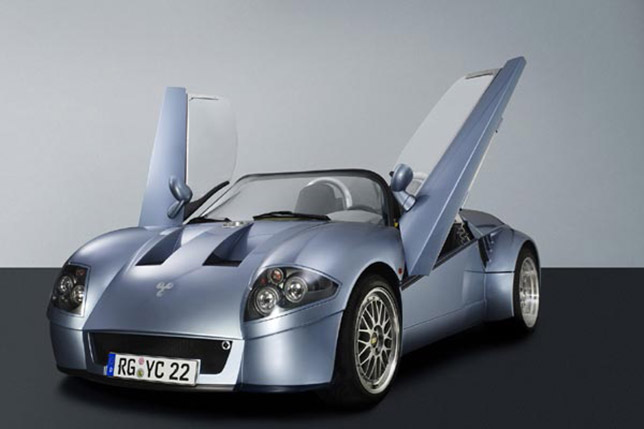
    It can well be expected that their expectations will be met: Both the YES! Roadster and the YES CUP/R are a manifestation of the creed of two company founders and current managing directors Herbert Funke and Philipp Will: Reduce to the core. And for the two designers this means that the direct car-road communication must not be interfered by unnecessary gadg-ets. Hence, what the owner of a YES! will purchase is nothing more and nothing less than a driving machine.

    Translated into plain figures this means: Like the original YES! Clubsport model the new YES! Roadster possesses a performance-enhanced 1.8 liter 210 KW (286 hp) Volkswagen turbo engine that takes the car from 0 to 100 km/h in just 4.2 seconds at 5900 rpm and with a maximum torque of 330 NM. These characteristics place the car in the top performance range. The second new development YES! CUP/R even surpasses the features of the Roadster.
    The vehicle’s 250 kW (340 hp) 2.0 liter turbo engine meets all racing de-mands: chassis, undercarriage, brakes – the entire technology has been designed for the in professional motors sports. Apart from the engine features, the car’s ultimate lightweight design plays an important role: All three models are based on an aluminum space frame, enhanced by the use of composite materials for the carbody and understructure.

    YES! Roadster

    Taylor-made hand manufacture

    The production of the cars at the Funke and Will plant, established in 2001, strongly differs from the familiar mass output. Each YES! sports car is a hand-manufactured unique to which the purchaser contributes to a large extent. Before completion, the fine tuning is made on-site together with the buyer to adapt the car’s every detail to its subsequent owner: colour, special features, ideal sitting and switching position, and pedal alignment. This participation concept and the 100-percent hand production make the YES! a singular occurrence on the sportscar market. The same holds true for another feature: On the company’s 2.2 mile long former runway of an old military air field, the buyer can test-drive his car up to maximum speed. And finally: the manufacturers’ service concept matches the car’s individuality. If necessary, a YES! partner comes to the customer, 24 hours a day, seven days a week.

    It started with a diploma thesis

    The YES! sports cars owe their birth to the graduation of the two company founders at Co-logne Technical College. In the scope of their final thesis the two engineers designed road-ster. A friend, the Stuttgart based designer Oliver Schweizer developed the cars styling. The prototype was first presented under at the International Motor Show IAA in Frankfurt and generated an unexpected demand. Owing to this favourable development the engineers decided to set up their own business. The start-up company’s highly positive development on the hard-fought international automobile markets proved the founders right to uncom-promisingly pursue their initial concept of a minimalist pure sports car.