Category: Car Makes

Car Makes

  • Renegade 4xe: the Jeep take on the plug-in hybrid

    2021 Jeep Renegade 4xe Limited1

    With its most recent step into the world of electrification, the Jeep plug-in hybrid propulsion solution is capable of enhancing the legendary off-road capability of its line-up of SUVs, starting with the Renegade 4xe plug-in hybrid. This latest evolution of Jeep® fully reflects its core values of freedom, adventure, authenticity and passion.

    Jeep has always pioneered new segments and new technologies. Its legend started in 1941 with the Willys-Overland, the first ever mass-produced 4×4 vehicle and continued in 1949 with the launch of the four-wheel-drive Willys Wagon, which created the Sport Utility Vehicle. Its renowned off-road capability has endured ever since and it is now being electrified the Jeep way.

    4xe
    The Jeep Renegade 4xe is centred on the pillars of efficiency, performance and responsibility. It will be the most fuel-efficient Jeep SUV ever, with the new 4xe technology offering zero tailpipe-emission in full electric mode.

    Efficiency is not achieved at the expense of performance. The Jeep Renegade 4xe remains true to its all-terrain vocation while offering an enhanced driving experience on the road, with smooth responses and acceleration. The increased torque generated by the electric motor and the ability to adjust it with extreme precision ensures even greater four-wheel-drive capability on any terrain, for extreme off-road adventures.

    Thanks to the plug-in hybrid electric technology, CO2 emissions are lower than 50g/km in hybrid mode* and the cost of ownership is reduced. However, the Jeep brand’s focus on sustainability runs deeper than this and starts even before these vehicles hit the road, thanks to a manufacturing cycle designed to have the lowest environmental impact.

    The all-terrain evolution
    The Jeep Renegade 4xe is built at the FCA Melfi Plant in Basilicata (Italy), where the Jeep Renegade has been in production since 2014. The Plant Academy is a breeding ground for ideas and experiments and spawned a ‘talent factory’, for developing personnel potential, in the Melfi factory which has since made a significant contribution to FCA’s electrification strategy.

    Although production of the Jeep Renegade 4xe is in Melfi, the first full-cycle Jeep factory outside North America, the development process culminated at the Arjeplog Proving Grounds in Swedish Lapland. Up to 3,800km of road tests were clocked up to put the Jeep Renegade plug-in hybrid through its paces in all conditions that customers might need to tackle. An array of activities were carried out to ensure quality, safety, reliability, and comfort in all conditions.

    The new plug-in hybrid electric technology elevates the capability of the Jeep Renegade by increasing off-road prowess, while also enhancing its on-road performance in everyday driving. It is not only at home on sand, mud, rocks, snow, or ice, but its capability and driving pleasure also shines through in the city.

    Leader in off and on-road driving
    Courtesy of the plug-in hybrid technology, the new Renegade 4xe offers the best performance and driving dynamics of any Jeep SUV ever. It is literally capable of ’going anywhere and doing anything’ and features legendary 4×4 capability, developed over almost 80 years of history.

    At the same time, it is ideal for everyday driving in the city, thanks to the plug-in hybrid system that allows it to travel with zero tailpipe emissions for a range of up to 26 miles in full-electric mode*. On longer jaunts, combined with the internal combustion engine, CO2 emissions are less than 50g/km in hybrid mode*. In case of extended off-road driving, two electric motors featuring Powerloop ensure that eAWD traction is always available.

    ‘Blue’ design cues distinguish the new Renegade 4xe
    The new Jeep Renegade 4xe stands out from its internal combustion engine (ICE) counterparts thanks to the striking blue Jeep, Renegade and 4xe badges. An additional push cover on the vehicle’s left side, towards the rear, covers the charging port and is unique to the 4xe model.

    Inside the cabin, a 7-inch TFT colour display and Uconnect NAV with 8.4-inch touchscreen, Apple CarPlay, Android Auto and DAB radio are offered as standard. Black accents adorn the air vents, speakers, and center console bezels on the Longitude and Limited trims, while the Trailhawk trim sports Ruby red accents.

    The Renegade 4xe also feature a new six-speed automatic transmission selector, updated Selec-Terrain rotary control with eAWD modes (4WD Lock, 4WD Low, Hill Descent Control) to engage the different driving modes – Auto, Snow, Mud & Sand, and Rock – including the new Sport mode for enhanced throttle response and steering.

    Jeep Renegade 4xe, power and performance
    The Jeep Renegade 4xe pairs a 1.3-litre turbo petrol engine with an electric motor, located between the rear axle, which is powered by an 11.4 kWh battery that can be recharged while driving or through an external power outlet or charge point. On its own, the efficient 1.3-litre turbo engine delivers a power output of 130hp or 180hp, plus the 60hp produced by the electric motor, giving a total of 190hp in the Longitude and Limited version or 240hp in the Trailhawk model. In terms of torque, the electric motor produces 250Nm, while the combustion engine delivers 270Nm. The combination of an internal combustion engine and the electric units guarantees performance and maximum driving pleasure, with acceleration from zero to 62mph in around 7.5 seconds and a top speed of 81mph in full electric and up to 124mph in hybrid mode.

    A full line-up
    The new Jeep Renegade 4xe line-up includes three trim levels – Longitude, Limited and Trailhawk – all featuring four-wheel-drive (eAWD) and a six-speed automatic transmission.

    A wide range of customisation options are available, with up to 18 different exterior colors including Alpine White, Glacier, Granite Crystal, Jetset Blue, Blue Shade, Sting Grey, Colorado Red, Carbon Black and Solid Black. Bikini and Omaha Orange and exclusive to Limited and Trailhawk trims and Matt Green can only be found on the Trailhawk. In addition, up to four specific wheel designs are available for the Renegade 4xe.

    Safety
    The new Jeep Renegade 4xe comes with a suite of the most advanced ADAS systems available including high-visibility full LED headlights, Forward Collision Warning and Lane Departure Warning Plus, Intelligent Speed Assist and Traffic Sign Recognition and front and rear parking sensors. Jeep Renegade 4xe also features the new Drowsy Driver Detection system, offered for the first time in a Jeep model.

    Additional safety features include Blind Spot Detection, ParkView rear backup camera with dynamic grid lines, automatic Park Assist and Keyless Go can also be specified.

  • Volvo cars starts production of fully electric XC40 recharge P8

    ?????????????????????????????????????????????????

    The XC40 Recharge Pure Electric P8 is the first of several fully electric Volvos to come, and today’s production start represents a significant step towards Volvo Cars’ ambition to reduce its CO2 footprint per car by 40 percent by 2025. That same year, it expects 50 percent of its global sales to consist of fully electric cars, with the rest hybrids.

    Customer demand for the XC40 Recharge P8 has been strong and, while order books remain open, every car scheduled to be built this calendar year has already been sold. The first cars are scheduled to be delivered to customers in Europe later this month.

    The start of customer car production follows a period of preparation in which the Ghent plant has built a limited number of pre-production cars. This process, standard procedure for every new model, aims to optimize the production flow and ensure top-notch quality of every car built. All relevant production staff has also received extensive training on safely building electric cars.

    “Today is a momentous occasion for Volvo Cars and for all employees here in Ghent,” said Javier Varela, Head of Global Industrial Operations and Quality. “As we continue to electrify our line-up, the Ghent plant is a real trailblazer for our global manufacturing network.”

    As a fully electric version of the best-selling XC40 SUV, the first Volvo to win the prestigious European Car of the Year award, the XC40 Recharge P8 is based on the Compact Modular Architecture (CMA), an advanced vehicle platform co-developed within the Geely Group.

    The all-wheel-drive XC40 Recharge P8 offers a projected range of more than 249 miles (400km) (WLTP, Worldwide Harmonised Light Vehicles Test Procedure) on a single charge and output of 408hp. The battery can charge to 80 percent of its capacity in approximately 40 minutes on a fast-charger system.

    The new, Android-powered infotainment system offers customers unprecedented personalization, improved levels of intuitiveness, and embedded Google technology and services, such as the Google Assistant, Google Maps, and the Google Play Store. The XC40 Recharge P8 also receives larger software and operating system updates over the air.

    While building on the excellent safety standards of the original XC40, Volvo Cars’ safety engineers have completely redesigned and reinforced the frontal structure to address the absence of an engine, meet Volvo’s high safety requirements and help keep people as safe as in any other Volvo.

    The battery pack is protected by a safety cage embedded in the middle of the car’s body structure. Its placement on the floor of the car also lowers the car’s center of gravity, for better protection against roll-overs.

    Inside, an innovative approach to all-round functionality gives drivers plenty of storage space, for example in the doors, under the seats, and in the luggage compartment. Because it has no internal combustion engine, the car gives drivers even more storage space via a so-called ‘frunk’ under the bonnet.

  • Seat adds range-topping 1.5-litre TSI engine with DSG transmission to the Arona line-up

    Seat Arona1

    SEAT is adding to the Arona range with the introduction of a 1.5-liter TSI engine available exclusively with a seven-speed DSG dual-clutch transmission.

    The new engine option will be the most powerful in the Arona line-up, boasting a 0-62mph time of just 8.2seconds and a top speed of 130mph**.

    Even with the extra performance, the 1.5 TSI DSG delivers up to 45.6mpg of fuel efficiency and CO2 emissions as low as 140g/km based on the combined WLTP cycle.

    The new powertrain is RDE2 compliant, meaning it meets the Euro-6d Final emissions standards and emits less than 60mg/km of NOx.

    Available on the FR and FR Sport trim, this latest addition to the range will be the sportiest Arona on offer and comes with outstanding levels of equipment as standard.

    FR trim includes full LED headlights and taillights, SEAT Drive Profile with four different modes, FR sports seats, electric folding side mirrors, rear parking sensors, Full Link smartphone integration, and wireless phone charging.

    FR Sport adds 18” ‘Performance’ alloy wheels, microsuede upholstery, a digital cockpit, and heated front seats.

    Richard Harrison, Managing Director, SEAT UK, commented: “SEAT is constantly looking to evolve its model line-up based on innovation and consumer demand; with the market continuing to shift towards automatic transmissions, it was time to add a new engine option available with the DSG dual-clutch transmission.”

    The SEAT Arona is the brand’s small SUV and is designed, developed, and produced in Barcelona, at the brand’s Martorell facilities.

  • UK line up confirmed for revised KIA Picanto and Rio

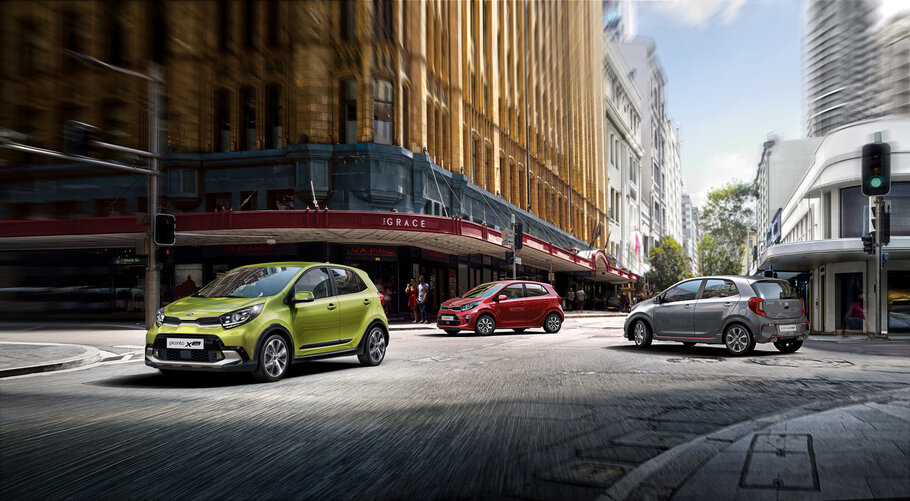
    2021 Kia Picanto and Rio1

    Kia is cutting a dash this autumn, with updates to its small car collection. On sale from today, the Picanto and Rio both adopt a series of changes to the interior and exterior. Key highlights include the introduction of a new Automated Manual Transmission and ‘Smartstream’ powertrains on the Picanto and a 48-volt mild hybrid ‘Eco-Dynamics+’ drivetrain for the Rio. That’s alongside engine enhancements, revisions to the model line-up, upgrades to technology, the addition of extra equipment, and the latest safety systems.

    Picanto: More distinctive with ‘class-above’ technology
    The smallest model in Kia’s line-up has been substantially upgraded with a new range of safety systems and telematics technologies that you’ll normally see on more expensive models. The revised Picanto features lower CO2 emissions from its new ‘Smartstream’ powerplants and adopts bold styling updates, both inside and out.

    The upgraded Picanto brings with it a suite of advanced safety technology from Kia’s larger cars, making it among the safest cars in its class. It also offers Kia’s new ‘Phase II’ UVO Connect telematics technologies, enhancing vehicle connectivity, with a new 8-inch touchscreen display now offered on grade ‘3’ models and above.

    The ‘face’ of both the ‘GT-Line’ and ‘X-Line’ Picanto models has been revised to give each car a more purposeful design. This starts with the ‘tiger-nose’ grille, which features a new textured surround and open-link appearance. The chrome-effect surround forms a sweeping shape that extends into the lower part of the headlights and gives the car a wider, more planted appearance. Each side of the ‘tiger-nose’ features a red highlight on ‘GT-Line’ models or more technical black trim on ‘X-Line’ models to resemble air intakes.

    Both versions of the car now feature redesigned headlights and four-bulb LED daytime running lights. At the rear, the car also features a new LED rear combination lamp design and a slimmer fog light design, creating a more recognizable rear light signature at the same time.

    Each of the ‘GT-Line’ and ‘X-Line’ models features refreshed front and rear bumper designs with sharper creases in the bodywork for a more contemporary appearance. The changes create a more rugged, robust-looking design for ‘X-Line’ models and, for ‘GT-Line’ models, an appearance which visually links the car to higher-performance ‘GT’ models in Kia’s model range. The larger, wider air intake in the lower bumper is accented by the ‘GT-Line’ body-colored bumpers with gloss black highlights and jewel-like fog lamps. ‘X-Line’ models echo the appearance of SUV protective skid plates, with metal-effect trim bearing the ‘X-Line’ logo, and a gloss black surround which extends from the front grille into the wheel arch surrounds at the side of the car.

    The upgraded Picanto offers a choice of eight vibrant paint finishes, designed to make the car stand out. A new alloy wheel design for grade ‘2’ strengthens the Picanto’s sporty character and is a 16-spoke, 14-inch design.

    UVO Connect ‘Phase II’ telematics with new 8-inch touchscreen
    The Picanto features a larger 8-inch ‘floating’ touchscreen navigation system, replacing the earlier 7-inch system. It also features Bluetooth multi-connection, enabling users to pair up to two mobile devices at the same time – one for hands-free phone and media use, the other for media use only. The system features Apple CarPlayTM and Android AutoTM as standard.

    Offering Kia’s UVO system, the Picanto gives drivers access to live traffic information, weather forecasts, points of interest, fuel prices, and details of potential on- and off-street parking – including price, location, and availability. The UVO App, compatible with Android and Apple smartphones, enables owners to activate a range of functions and features remotely. Users can remotely send route directions to their car before a journey; check the location of their vehicle, and access vehicle reports and diagnostic notifications.

    New ‘Smartstream’ petrol engines
    The latest Picanto is available with two new ‘Smartstream’ petrol engines, each maximizing efficiency and lowering CO2 emissions compared to their predecessors. The engine line-up features a 1.0-liter T-GDi (Turbocharged Gasoline Direct injection) engine producing 99bhp, or a 1.0-liter DPi (Dual-Port fuel injection) engine producing 66bhp.

    A five-speed manual gearbox is standard on all of the engine choices, with a five-speed automated manual transmission (AMT) available on all grades, except ‘1’.

    Automated Manual Transmission (AMT)
    The updated Picanto is the first model equipped with Kia’s new Automated Manual Transmission (AMT). The AMT is based around a five-speed manual transmission with clutch and gear shift actuators to automate clutch operation and gear shifts. Using a single dry clutch, the AMT is a cost-effective option for customers who favor the convenience and ease-of-use of an automatic transmission, without sacrificing the fuel efficiency of a conventional manual transmission.

    New Advanced Driver Assistance (ADAS) Systems
    Several of Kia’s latest Advanced Driver Assistance Systems (ADAS) and a range of new active safety systems to enhance occupant safety, make the Picanto one of the safest cars in its class.

    Standard from specification ‘2’ and upwards, the Picanto’s Advanced Driver Assistance Systems includes Forward Collision-Avoidance Assist (FCA) with a vehicle and pedestrian detection. The updated Picanto is also equipped with Kia’s Vehicle Stability Management (VSM), Torque Vectoring by Braking, Cornering Brake Control (CBC), and Straight-line Stability (SLS) systems as standard, helping drivers maintain control under braking and cornering. The updated Picanto is now fitted with seven airbags as standard throughout the cabin, including a driver’s knee airbag. It also features an ISOFIX child-seat tether and anchor points.

    Rio:  Updated design, mild-hybrid technology, and new connectivity
    A range of enhancements has been revealed for the Rio this autumn, with mild hybrid technology the headline act, alongside new ‘Smartstream’ engines and a ‘clutch-by-wire’ intelligent manual transmission designed to enhance efficiency.

    The revised Rio introduces updated exterior and interior styling, alongside new safety equipment, Kia’s brand new ‘Phase II’ UVO Connect infotainment system, and a new larger 8-inch touchscreen.

    Changes to the exterior styling include a narrower ‘tiger-nose’ grille, with a lower, wider front bumper and bolder fog light surround. A new 16-inch eight-spoke alloy wheel design is introduced for grade ‘3’ models and two new colors are introduced – Storm Grey and Azure Blue – bringing the color palette choices to seven.

    Inside, the Rio brings together a range of visual, material, and technological updates to create a more upscale and enhanced quality ambiance. The biggest change is the introduction of a new larger 8-inch touchscreen on grade ‘2’ models and above and a higher-resolution color 4.2-inch supervision cluster display.

    ‘EcoDynamics+’ petrol mild hybrid with new intelligent Manual Transmission
    The Rio is the first Kia powered by a petrol mild-hybrid electric vehicle (MHEV) powertrain. The new ‘EcoDynamics+’ powertrain pairs Kia’s new ‘Smartstream’ 1.0-litre T-GDi (Turbocharged Gasoline Direct injection) engine with Kia’s 48-volt MHEV system, maximizing fuel efficiency with electric torque assistance and regenerative braking.

    ‘EcoDynamics+’ has been engineered to deliver greater efficiency from internal combustion engines on the road, seamlessly deploying and recuperating electric power. The system supplements the engine’s torque output with power from a compact 48-volt lithium-ion polymer battery and extends the engine ‘off time’ with a new Mild-Hybrid Starter-Generator (MHSG) unit.

    The MHSG is connected by a belt to the engine’s crankshaft and switches seamlessly between ‘motor’ and ‘generator’ modes. In ‘motor’ mode, under acceleration, the MHSG provides electric power assistance to reduce engine load and emissions. As the car decelerates, the MHSG has the ability under certain conditions to switch to ‘generator’ mode, recuperating energy from the crankshaft to recharge the battery.

    The new ‘EcoDynamics+’ powertrain reduces Rio’s CO2 emissions and is offered on the 118bhp versions of the new engine. 48-volt powertrains with seven-speed dual-clutch automatic transmission (7DCT) will be equipped with a Drive Mode Select system, giving drivers the choice to customize their drive with ‘Eco’, ‘Sport’ and ‘Normal’ modes.

    The Rio ‘EcoDynamics+’ is also one of the first models from Kia to be equipped with the brand’s new intelligent Manual Transmission (iMT). The ‘clutch-by-wire’ system contributes to the MHEV system’s greater fuel efficiency and lower CO2 emissions while retaining the driver engagement of a conventional manual transmission. Instead of a mechanical linkage, the iMT’s clutch is controlled purely electronically. It integrates seamlessly with the MHSG to switch off the engine earlier than Kia’s Idle Stop & Go start-stop system when coasting to a halt, improving overall fuel efficiency.

    The 1.25-litre ‘Smartstream’ engine
    There is a further petrol engine in the Rio line-up, a four-cylinder 16-valve unit featuring Dual-Port injection technology. The 1.25-liter unit is from the ‘Smartstream’ family of engines and has been redesigned compared to the engine in the previous Rio.

    Cutting-edge ‘Phase II’ UVO Connect infotainment
    Offering Kia’s UVO system, the Rio is among the first Kia vehicles to offer new ‘Phase II’ UVO Connect telematics features. Rio gives drivers access to a range of ‘Phase II’ On-Board Services, in addition, to live traffic information, weather forecasts, points of interest (POIs), fuel prices, and details of potential on- and off-street parking – including price, location, and availability. The system also features Online Voice Recognition, supported by server technologies, which lets users give voice commands, hands-free, to search for nearby POIs, addresses, weather updates, or send text messages.

    The UVO App, compatible with Android and Apple smartphones, also offers a range of new ‘Phase II’ features, enabling owners to activate a range of functions and features remotely. Users can remotely send route directions to their car before a journey, check the location of their vehicle, and access vehicle reports and diagnostic notifications.

  • New Ford Kuga SUV steers ahead of the pack in first-ever assisted driving ranking from euro NCAP

    Ford Kuga SUV1

    Ford Co-Pilot360 driver assistance technologies designed to deliver an intuitive and stress-reducing driving experience have earned the new Ford Kuga SUV a leading position in Euro NCAP’s first Assisted Driving grading.

    Kuga finished ahead of vehicles including the Tesla Model 3, Volvo V60, and Volkswagen Passat in the overall ranking, following independent testing of technologies that automatically help the SUV maintain a comfortable driving distance from vehicles ahead, stay centered in its lane, and adjust the speed to within legal limits.

    Euro NCAP’s new Assisted Driving program evaluates features that share control of the vehicle with a driver who retains full responsibility; helping to detect and respond to objects and events for effortless, confidence-inspiring journeys.

    Kuga scored more than twice as many points as the Tesla Model 3 in the Driver Engagement category and significantly outscored both the Volvo V60 and Volkswagen Passat for Safety Backup during two weeks of tests, which also assessed the effectiveness of Vehicle Assistance from the technologies.

    “For all the freedom and independence it gives us, driving on today’s busy roads can be a demanding and stressful experience. That’s why we designed technologies to take some of the strain from drivers and help them focus more clearly on the road,” said Stuart Southgate, director, Safety Engineering, Ford of Europe. “We worked hard to make Kuga’s assisted driving experience as intuitive, natural, and engaging as possible so that drivers would enjoy taking full advantage of the technologies available.”

    Kuga’s available Adaptive Cruise Control (ACC) with Stop & Go, Speed Sign Recognition, and Lane Centring uses a combination of radar and camera to monitor the road and traffic ahead, and can automatically keep pace with traffic and road flow as well as speed restrictions in many driving scenarios.

    Stop & Go – available with Kuga’s eight-speed automatic transmission – enables the ACC system to bring the vehicle to a complete halt in stop-start traffic using up to 50 percent of total braking force, and automatically pull away if the stopping duration is less than 3 seconds. For stopping durations greater than 3 seconds, the driver can push a steering wheel button or gently apply the accelerator to pull away.

    Speed Sign Recognition can adjust the vehicle speed to within legal limits by monitoring the roadside and overhead gantries for speed signs, in addition to using information from the on-board navigation system.

    Lane Centring technology monitors road markings and can apply gentle but discernible torque to the steering system to help drivers stay centered in their lane whenever the ACC system is activated. Designed to support drivers at speeds up to 125 mph, the technology will deliver visual and audible warnings if it detects a lack of steering wheel input from the driver.

    “The Ford Kuga demonstrates across a wide variety of cars tested that a Good grading is achievable on a high-volume family SUV,” said Richard Schram, technical director, Euro NCAP. “Ford impressed in our first ever Assisted Driving technology grading, showing high performance in all areas and a good balance between Driver Engagement and Vehicle Assistance with a robust Safety Backup.”

    Kuga also features advanced technologies designed to help prevent or mitigate the effects of accidents, including Blind Spot Assist and Intersection Assist – both making their global debuts – and Pre-Collision Assist with Active Braking.

  • Mitsubishi shogun sport: the UK’s most capable seven-seat 4×4 is now even better value

    MITSUBISHI SHOGUN SPORT1

    The Mitsubishi Shogun Sport is now available from just £29,975 OTR, including three years of free servicing, representing outstanding value for money for customers in need of a truly tough and rugged 4X4 vehicle.

    Built with some of the toughest environments in the world in mind, the Shogun Sport remains the most capable full-size off-roader ever produced by Mitsubishi Motors Corporation (MMC), combining a powerful 181PS 2.4-litre turbo diesel engine with an advanced Super Select 4WD-II system that has been engineered to take on even the most challenging terrains.

    Every Mitsubishi Shogun Sport, including a dedicated commercial version, is equipped with four transmission hardware settings, four Terrain Control System traction modes, a switch-operated locking rear differential as well as several additional software systems to help with extreme off-road or towing situations, including Hill Start Assist, Hill Descent Control, Uphill Control, Downhill Control, Throttle Release Control, and Rapid Kick-down Control.

    Underpinning its sure-footed dynamics is a double-wishbone front and multi-link rear suspension, fully coil sprung, while the mount points and the structure of the lateral rod mounts have been engineered to provide straight line and cornering stability.

    And yet despite being so capable in the harshest of driving environments, Mitsubishi Motors’ off-road flagship also delivers bold and distinctive styling; ample interior space with seven-seat capacity and high levels of luxury including an eight-speed automatic transmission with paddle shifters, a touchscreen infotainment system with DAB and smartphone connectivity, leather upholstery with electrically-adjusted front seats and dual-zone climate control on all variants.

    The Shogun Sport is also equipped with a number of key safety technologies as standard including LED headlamps, tail lamps, and DRLs; Hill Start Assist; rearview camera, reversing sensors, and speed sensing automatic door-locking. Top-of-the-range Shogun Sport 4 models are additionally fitted with Adaptive Cruise Control (ACC); Forward Collision Mitigation (FCM), Blind Spot Warning (BSW); Ultrasonic mis-acceleration Mitigation System (UMS) and a 360° camera.

  • Volvo XC60 crowned best used large SUV in the what car? Used car of the year awards

    ??????????

    The Volvo XC60’s lasting quality and excellent value have been recognized with the Used Large SUV title in the 2021 What Car? Used Car of the Year Awards, announced today.

    Now in its fourth year on sale in the UK and positioned at the heart of Volvo’s multi-award-winning SUV line-up, the XC60 continues to be a top pick for customers and critics alike in an increasingly competitive market. The XC60 stands out from its premium rivals with its distinctive, cool Scandinavian-inspired styling, exceptional safety technology, and seamless blend of comfort and practicality.

    The strength of Volvo’s SUV range was further demonstrated by two category price-point wins for the seven-seat XC90 – itself a double winner in last year’s What Car? Used Car of the Year Awards. The flagship model was named best Used Luxury SUV (under £25,000) and, in T8 Twin Engine/Recharge Plug-in Hybrid T8 form, best Used Hybrid (under £40,000).

    In bestowing the award on the Volvo XC60, Mark Pearson, What Car? Used Cars Editor, said: “We’ve always loved the upmarket look and feel of the XC60, and admired its excellent driving manners and bright, airy and extremely cosseting interior. Despite sitting in a class full of compelling competitors, its impressive combination of luxury and refinement, and its strong safety credentials, gave it the edge this year. Bought at a couple of years old, it’s also superb value for money, and a worthy winner of our award.”

    David Chesterman, Volvo Car UK Used Car Programme Manager, said: “This award is a great validation of what the XC60, and indeed our full SUV line-up, has to offer as a class-leading pre-owned proposition. Customers in the used market can be confident that in choosing a Volvo, they are buying a car that’s highly desirable, luxurious, practical, and built to last.”

    The best way to purchase a pre-owned Volvo is through the Volvo Selekt Approved Used Car scheme. Available only through official Volvo retailers, this service provides complete peace of mind, with every car undergoing more than 150 individual checks prior to being offered for sale.

    All cars are prepared for rigorous Volvo standards, including software upgrades to ensure optimum performance. The package includes a minimum 12-month/unlimited-mileage warranty for cars up to five years old (cars older than five years get a six-month warranty as standard), together with cover for the car’s next MoT test and a minimum 12 months’ Volvo roadside assistance.

    Customers also have a 30-day/1,500-mile exchange guarantee should they not be completely satisfied with their car. Terms and conditions apply.

  • Both generations of Nissan leaf celebrated in what car? Used car of the year 2021

    Nissan1

    The Nissan LEAF has scored a hat trick of official recognition for used examples of the popular EV.

    The Nissan LEAF (40kWh), launched in 2018, has been named Used Electric Car of the Year in the What Car? Used Car of the Year Awards 2021. The first-generation model, on sale from 2011-2017, also won its price point (up to £13,000) in the same category. Consumer champion Which? The magazine has also named the first generation LEAF a “Best Buy” for 2020 in its annual reliability survey.

    Mark Pearson, Used Car Editor, What Car? said; “We’re delighted to give the Nissan LEAF our Used Electric Car of the Year Award this year. This second-generation model is a truly affordable EV that’s always impressed us for its practicality and ease of use, and with its impressive real-world range it’s also a great everyday proposition.”

    “With plenty of used examples around now starting from some pleasingly low prices, it really does bring zero-emissions motoring within the reach of a large number of buyers.”

    What Car? praised the “rounded and refined package” of the second-generation Nissan LEAF (40kWh), with its driving range, practical boot space, and standard-fit safety technologies such as blind-spot monitoring and traffic sign recognition.

    The first-generation Nissan LEAF was also commended by What Car? against similarly priced electric car rivals for its practicality and reliability. The LEAF won its price point in the same Used EV category because numerous post-2017 examples within a £13,000 budget feature the higher capacity 30kWh battery pack giving the LEAF greater range over rivals.

    The annual Which? car reliability survey sees more than 47,000 motorists surveyed about their cars so consumers can be more informed with reliability ratings for hundreds of cars. In the data collected, it was determined the reliability in years three to eight of the first-generation Nissan LEAF’s life was class-leading. The LEAF was awarded a prestigious “Best Buy” title.

    Andrew Humberstone, managing director, Nissan Motor (GB) Ltd., said; “We’re delighted to see both generations of Nissan LEAF continuing to receive official praise in the growing used EV market. The LEAF is the entry point to EV driving for thousands of motorists, whether that’s in the latest generation LEAF e+ or used examples which now date back to 2011 and represent a very accessible route to EV ownership.”

    “Nissan focuses on ensuring its product line-up offers customers value and enjoyment at every stage of the car’s lifecycle. Through innovation and a pioneering spirit, we’ve led the EV market for almost a decade and have successfully converted thousands of drivers to the benefits of zero-emissions driving. It’s also great to hear that the advanced technologies we developed on the Nissan LEAF were a major factor in both generations of the vehicle receiving these awards.”

    The Nissan LEAF (2018>) has previously been awarded for its used credentials. It was named the “Best Used Electric Car” in the Driving Electric 2020 Awards which celebrates the best hybrid, plug-in hybrid, and electric cars on sale today.

    These awards come in addition to a long line of accolades for the first-generation Nissan LEAF, which was recognized in the used car market as the “Best EV” in the Auto Express Used Car Awards three years in a row from 2016-2018.

  • Seat Ateca named what car? Used car of the year

    SEAT Ateca1

    The SEAT Ateca has been named Used Car of the Year at the 2021 What Car? Used Car Awards.

    The coveted award is the latest of a number already in the SEAT Ateca’s trophy cabinet, which was also named Small SUV of the Year by What Car? shortly after its launch in 2016.

    The Ateca has since earned critical acclaim from across the industry, while orders have recently opened for the New SEAT Ateca in September.

    With 18 What Car? Used Car of the Year categories up for grab, a panel of experts considered the all-round ability, value, and the availability of desirable versions to select the eventual winners, with the Ateca named the overall winner.

    In particular, What Car? praised the Ateca for offering one of the most enjoyable driving experiences in its class, without compromising on ride comfort, alongside a unique combination of all-round desirability, practicality, and outstanding value for money.

    As an overall winner, the Ateca was also named Family SUV of the Year while its smaller sibling, the Arona, brought home the Best Used Small SUV award.

    Similar to its bigger brother, the Arona was recognized for its outstanding driving experience as well as class-leading practicality.

    The awards build on SEAT’s established recognition in the used car market, with the previous generation Leon also being named What Car?’s Used Car of the Year in 2018.

    Mark Pearson, Haymarket Automotive’s Used Cars Editor, said: “Here is an immensely likable family SUV that can now be bought for under half what you’d need to buy one new. None of the other category winners could match its combination of all-round desirability, practicality, and excellent value for money. It’s great to drive, too, with top-notch handling and a range of punchy and efficient engines. On top of that, it’s comfortable, reliable and its interior is both spacious and well equipped.”

    Richard Harrison, SEAT UK Managing Director, said: “SEAT entered a new era with the launch of its first-ever SUV, the Ateca, which brought some much-needed fun and sizzle into the SUV segment. That winning formula, also since mirrored with its Arona and Tarraco SUV siblings, has taken the UK market by storm, with consistently strong demand for Ateca in the new and used car markets.”

    “It’s tremendous the strengths of our SUV range is being recognized in the used car market and shows SEAT is leading the way with offering a lasting quality product, that puts a smile on your face for many years. These awards give further confidence to used car customers that they can rely on SEAT cars to deliver class-leading design, driver-appeal, engineering, and technology.”

    Purchasing an Approved Used Ateca or Arona from a SEAT retailer ensures the buyer gets a full-service history check and comprehensive multipoint check with every car, minimum 12-month Warranty, and Roadside Assistance, along with a 12 month MOT protection policy worth up to £750. Customers also benefit from complimentary five-day Drive Away Insurance and a 30-day exchange promise if the vehicle does not meet expectations.

    Customers that purchase an Approved Used SEAT from a participating retailer will benefit from an extra year of Approved Warranty and MOT protection, be able to purchase two services for £79, as well as take advantage of a 6.9 percent APR finance offer on all vehicles up to five years old.

  • The new BMW 4 series Convertible

    Fabian Kirchbauer Photography

    The sporting prowess and exhilarating driving experience of the new BMW 4 Series are taken to even greater heights with the addition of the new Convertible version.

    With its standalone design, brand new soft-top construction, diverse line-up of engines, advanced chassis technology, and impressive levels of standard equipment, the new BMW 4 Series Convertible delivers the brand’s hallmark driving pleasure in a highly exclusive form.

    Sharper than its predecessor and echoing the bold style of the BMW 4 Series Coupé, the new BMW 4 Series Convertible blends sporting driving pleasure and open-air thrills to continue the 35-year legacy in this model class that began with the first BMW 3 Series Convertible.

    All models feature the M Sport specification as standard, with the new, even more, performance-focused M Sport Pro Edition also available. In addition, both specifications can be upgraded with the Technology Pack – one of several option Packs that enable a high level of personalization.

    The new arrival to the sixth model generation’s model range – the BMW M440i xDrive Convertible – offers standout performance courtesy of a 374hp six-cylinder in-line petrol engine, with power transferred to the road via a Steptronic eight-speed gearbox and the intelligent xDrive all-wheel-drive system.

    There will also be a choice of two four-cylinder petrol units and a four-cylinder diesel from launch in March 2021. Two straight-six diesel engines will join the engine line-up later in 2021.

    The new BMW 4 Series Convertible will be built at BMW Plant Dingolfing.

    Exterior design: distinctive, sporty, and elegant

    The striking proportions and stylish elegance of this open-top four-seater follow the lead of the BMW 4 Series Coupé and ensure the car’s sporty profile.

    At the same time, the brand’s new design language has produced a distinctive interpretation of the low-slung silhouette long-established as a signature feature of midsize BMW convertibles.

    The newcomer’s powerful presence also stems from its larger exterior dimensions. At 4,768 millimeters, it is 128mm longer than its predecessor, while width has increased by 27mm to 1,852mm and the wheelbase by 41mm to 2,851mm. With the roof closed, it stands at 1,384mm. It also benefits from increased track widths (+ 28mm at the front, + 18mm at the rear).

    Front end with expressive, tradition-rich styling highlights 
    Alongside the car’s proportions, it is the front end of the new BMW 4 Series Convertible that highlights its standalone character and distinguishes it most clearly from the new BMW 3 Series Saloon. The defining element is its large, vertically emphasized BMW kidney grille, which – as on the new BMW 4 Series Coupé – has a pronounced forward slant and, for optimized cooling, employs large air intakes with a mesh structure as standard.

    Full-LED headlights are fitted as standard. There is also the option to specify the Visibility Pack, which adds BMW Laserlight and high beam assist. BMW Laserlight includes the adaptive cornering function with variable road illumination optimized for urban and motorway driving and, at speeds above 37mph, increases high-beam range to a maximum 550 meters and follows the course of the road.

    New darkened headlights are also available for the M440i xDrive as part of the exclusive Shadowline Pack. Other variants can also be fitted with these stylish headlights if the optional performance-focused M Sport Pro Pack is chosen.

    Dynamic side profile, powerful stance, elegant roofline 
    Its dynamic side profile helps to give the new BMW 4 Series Convertible a low-to-the-road look, while contoured surfaces intensify the car’s high-performance character.

    The precise lines and three-dimensionally sculpted surfaces of the rear wheel arches combine to give the new BMW 4 Series Convertible a striking look, particularly with the roof down. This impression is reinforced by the slim rear light units extending into the flanks. The lights are darkened, with their rear bars illuminating to reproduce the L shape familiar from other BMW models. When closed, the roof flows into the car’s shape to reinforce its sporty appearance.

    New panel bow soft-top: comfort, timeless style and minimised weight blended into one 
    The innovative panel bow soft-top on the new BMW 4 Series Convertible blends the strengths of a retractable hard-top and the traditional appeal of a fabric roof. It comprises large panel bow elements with a flush-fitting glass rear window, several layers of insulation and a fabric cover available in Black as standard and Anthracite as an option. The acoustic and thermal comfort of the panel bow soft top roof are far superior to that on a conventional soft top. It also 40 per cent lighter than the outgoing model’s retractable hardtop.

    The roof is powered by an electric motor that enables it to open or close within 18 seconds at the push of a button, including while on the move at speeds up to 31mph. The variable soft top compartment allows luggage capacity to be increased from 300 to 385 litres when the roof is closed.

    Interior: premium seating for four with an emphasis on refinement and driving enjoyment 
    The BMW 4 Series Convertible’s driver-centric cockpit design features a large screen-grouping formed by the instrument cluster and Control Display. The ergonomically-optimised arrangement of the controls emphasises that this is a car built for driving enjoyment – as do standard features including electric sports seats in the front with automatically extending and retracting belt feeders, Vernasca leather trim, seat heating and a leather sports steering wheel, plus the clear individual seat design of the two rear seats.

    M Sport as standard. M Sport Pro Edition for even more excitement 
    Every BMW 4 Series Convertible comes with the M Sport specification as standard. This includes large front air intakes, a sculpted rear apron, M Sport suspension, 18-inch M light-alloy wheels, sport seats upholstered in Vernasca leather trim, knee pads on the centre console and a Sensatec dashboard.

    The Live Cockpit Professional, Ambient Lighting, electric seats, reverse camera, reversing assist, Welcome Light Carpet, three-zone automatic climate control and 10.25-inch CID are also included in the generous standard specification.

    Customers can opt for the M Sport Pro Edition specification, which adds such highlights as Jet Black 19-inch M light-alloy wheels, a choice of three Individual paint shades – Tanzanite Blue, Dravit Grey and Aventurin Red (from 07/21) – and the M Sport Pro Package. This package encompasses a selection of features including darkened headlights, M seatbelts, the new Sprint Mode, Adaptive M Suspension and Enhanced Active Sound Design that delivers a sporty engine soundtrack in the interior.

    M440i xDrive: the ultimate BMW 4 Series Convertible
    New to the BMW 4 Series Convertible line-up is the M440i xDrive.

    Powered by a 374hp six‑cylinder in-line petrol engine, the flagship model has a standard specification designed to complement the enjoyment of open-air driving with performance that would be respectable on a racetrack.

    The M Sport differential, with electronically-controlled, fully-variable locking function in the rear differential, is fitted as standard along with red M Sport brakes, M seat belts, 19-inch light M alloy wheels and the M Adaptive Suspension.

    Four- and six-cylinder engines with BMW TwinPower Turbo and mild-hybrid technology for greater performance and efficiency.
    Mild-hybrid technology features in the new BMW M440i xDrive Convertible and all diesel model variants to boost both performance and efficiency. Fitting a powerful 48V starter-generator and a second battery allows far more braking energy to be regenerated and stored. This energy is used to supply the electrical system, lighten the combustion engine’s workload and increase its power. The starter-generator produces an electric boost effect that instantly delivers an additional 11hp for overtaking or even quicker getaways off the line.

    The 374hp straight-six engine under the bonnet of the flagship model is joined in the range by two four-cylinder petrol units, generating an output of 184hp in the new BMW 420i sDrive Convertible and 258hp in the new BMW 430i sDrive Convertible. The entry-level unit delivers combined fuel consumption of up to 49.6mpg and CO2 emissions from 140-131g/km, while the more powerful version’s figures are 47.1mpg and 147-138g/km.

    A 190hp four-cylinder diesel engine, featuring BMW TwinPower Turbo technology with two‑stage turbocharging, powers the new BMW 420d sDrive Convertible. It returns combined fuel consumption of up to 67.3mpg, with CO2 emissions of 119-111g/km, while the similarly-turbocharged BMW 430d sDrive Convertible, which is due to arrive later in 2021, delivers figures of up to 50.4mpg and 147g/km.

    Eight-speed Steptronic transmission as standard 
    This is the first time that all model variants in the BMW 4 Series Convertible range have been fitted with an eight-speed Steptronic transmission as standard.

    The advanced transmission offers sharp shift dynamics, comes with shift paddles on the steering wheel and introduces the new Sprint function. This prompts the powertrain and shift characteristics to maximise handling performance when putting in a sudden burst of speed or overtaking.

    Improved body rigidity and optimised chassis geometry 
    The body’s rigid structure is stiffened further still by the addition of features such as convertible-specific bracing, an aluminium shear panel at the bottom of the front end, and side skirts with extremely high torsional rigidity. As a result, the static torsional rigidity of the new BMW 4 Series Convertible is four per cent higher overall than that of its predecessor. An intelligent mix of materials serves to optimise both weight and crash safety. The car’s low centre of gravity, improved aerodynamic properties and highly developed chassis geometry, mounting and set-up result in even sharper handling.

    The standard M Sport suspension incorporates specially tuned lift-related dampers. Customers can also opt for adaptive M suspension with electronically controlled dampers as part of the M Sport Pro Pack.

    High level of personalisation via option packs and single options 
    An array of option Packs allows customers to tailor the BMW 4 Series Convertible to their individual preferences.

    Available for all models are the M Sport Pro, Technology, Technology Plus, Comfort and Visibility Packs. All combine several features that together enhance the BMW 4 Series Convertible in a variety of areas, the wide range of Packs ensuring there is one to suit the requirements of every owner whether they have a preference for refinement, performance, style or comfort.

    The Packs are complemented by five, top-quality single options that can be added to all variants, consisting of Harman Kardon speakers, Anthracite roof, heated steering wheel, trailer tow hitch and the innovative Air Collar that ensures front seat occupants are comfortable with the roof down even in colder conditions.

    Wide range of driver assistance systems 
    A far wider selection of driver assistance systems compared to the preceding generation of the BMW 4 Series Convertible serves to boost comfort on long journeys and increase safety in situations where the driver does not have a clear view. Park Distance Control with sensors at the front and rear, front collision warning with brake intervention, Lane Departure Warning including lane return with steering assistance, and the Speed Limit Info system are all now fitted as standard. A reversing camera and Reversing Assist are also standard.

    The optional Driving Assistant Professional, included as part of the Technology Pack, adds several features. These include the Steering and Lane Control Assistant with the new Active Navigation function, which enables it to use navigation data to detect any necessary lane changes. There is also a new Emergency Lane Assistant which automatically guides the new BMW 4 Series Convertible to the most appropriate side of its lane in tailbacks on the motorway. In conjunction with BMW Live Cockpit Professional, 3D visualisation of the surrounding area presents both the traffic situation and the possible courses of action offered by activated driver assistance systems as a graphic in the centre of the fully digital instrument cluster.

    New digital services: BMW Maps, BMW Intelligent Personal Assistant, smartphone integration, Remote Software Upgrade 
    The driver and passengers in the new BMW 4 Series Convertible will benefit from the wealth of possibilities brought by the introduction of BMW Operating System 7. Display content can be configured individually, while the Control Display’s touchscreen, the proven iDrive Controller, the multifunction buttons on the steering wheel and voice control provide intuitive multimodal interaction between driver and vehicle, depending on the situation.

    A built-in SIM card with 4G LTE connectivity and the standard Connected Package Professional enable use of the BMW Intelligent Personal Assistant and other digital services, including BMW TeleServices, Intelligent Emergency Call, Real Time Traffic Information with hazard warning, and the Remote Services and Concierge Services.

    The standard BMW Live Cockpit Professional features a fully digital screen grouping comprising a digital instrument cluster (with a screen diagonal of 12.3 inches) behind the steering wheel and a 10.25-inch Control Display. The cockpit’s fully digital instrument display provides enough room to accommodate an excerpt from the navigation map, status indicators for the driver assistance systems or 3D visualisation of the surrounding area.

    Besides calculating routes and arrival times with speed and precision and updating real-time traffic data at frequent intervals, the cloud-based navigation system BMW Maps also lets drivers enter any word when searching for the journey’s destination. Thanks to the optimised smartphone integration feature, also included as standard, the vehicle’s operating system now supports Android Auto in addition to Apple CarPlay. The Remote Software Upgrade feature enables improved vehicle functions and additional digital services to be imported into the car over the air.

  • Hyundai motor launches dynamic all-new i20 n line

    2021 Hyundai i20 N Line1

    Following the unveiling of the all-new i20 earlier this year, Hyundai Motor has announced the latest model in its N Line portfolio: the all-new i20 N Line. The newest member of the Hyundai family features exterior and interior design elements inspired by Hyundai’s high-performance N range for an even more dynamic experience.

    The all-new i20 N Line combines the comprehensive connectivity and safety technology of the all‑new i20 with N Line sportiness through the enhanced interior and exterior elements.

    “With the all-new i20 N Line, we are bringing our stylish and sporty trim option to the i20 for the first time,” says Andreas-Christoph Hofmann, Vice President Marketing and Product at Hyundai Motor Europe. “With this new model, we are ensuring we can meet the needs of an even wider customer base by offering exclusive performance-styling inspired by our N brand to emphasize the motorsport roots of our brand.”

    The sculpted aesthetic of the all-new i20 N Line’s exterior design is based on Hyundai’s ‘Sensuous Sportiness’ design identity while at the same time offering refined performance-oriented design cues. The dedicated front bumper is exclusively accented with a grey character line for an even more sporty feeling. It features a stylish black cascading grille equipped with the N Line badge. The grille pattern draws on the style of a chequered flag, further emphasizing the all-new i20 N Line’s track-inspired look.

    To emphasize the car’s motorsport-influenced styling, the N Line trim features sporty grey accents and a sleek rear bumper, which combine to enhance optic and aerodynamic performance. The triangle-shaped fog lamp and chrome twin-muffler exhaust system emphasize the all-new i20 N Line’s dynamic look and set it apart from the base model i20.

    All-new i20 N Line customers can choose from four exterior colors: Phantom Black, Aurora Grey, Polar White, and Brass. With the Polar White i20 N Line, an optional two-tone Phantom Black roof is available, offering even more scope for personalization.

    Inside the car, all-new i20 N Line customers benefit from N-branded sporty seats, which feature the N logo and exclusive red stitching, as well as a dedicated N steering wheel. Other N Line enhancements include metal pedals and the leather N gear shift knob with red inserts.

    The all-new i20 N Line will be available exclusively with the 1.0-liter T-GDI 120PS engine. The version has been refined in terms of suspension, engine response, and exhaust sound for an enhanced driving experience. It will also be available with 48-volt mild-hybrid technology, resulting in greater fuel efficiency. Another new feature available in combination with the 48-volt mild hybrid system is the Intelligent Manual Transmission (iMT), leading to even greater fuel efficiency. To match the tuned driving performance, the all-new i20 N Line offers dedicated 17‑inch alloy wheels with a two-tone finish.

    Like the base model, the all-new i20 N Line offers the latest version of Hyundai’s Bluelink technology including a wide range of Connected Car services such as Hyundai Live Services, as well as remote features via the Bluelink smartphone app. The all-new i20 is also equipped with Hyundai SmartSense safety features and complies with the highest European standards.

    With the all-new i20 N Line, Hyundai is enhancing the all-new i20 with a further trim level to offer customers even more choice.

    The all-new i20 N Line will be available across Europe from spring 2021.

  • Another far-reaching change for the Audi A3 Sportback – the new 40 TFSI e plug-in hybrid

    2021 Audi A3 Sportback 40 TFSI1

    A little ‘e’ goes a long way in the latest Audi A3 Sportback – it means that this new TFSI e-version of the high-tech compact hatchback can travel effortlessly, economically and environmentally soundly under purely electric power for up to 41 miles, and then for hundreds more when its powerful and frugal TFSI engine takes up the task. The new Audi A3 Sportback 40 TFSI e plug-in hybrid will be available to order in the UK later this week in Sport or S line specification with prices starting from £33,060 OTR, and will reach its first customers here towards the end of the year.

    “Compact hatchbacks are of course particularly well suited to urban environments, as are electric vehicles, so combining the two formats in a state-of-the-art package displaying all the essential Audi hallmarks naturally creates an attractive proposition for daily commuting and city driving,“ says Director of Audi UK Andrew Doyle. “The beauty of the new A3 Sportback TFSI e is that it can also reach the city limits well before it reaches its own  – it can travel far further afield impressively efficiently and then be refueled and recharged quickly and conveniently. It’s a consummate all-rounder.“

    With the A3 Sportback 40 TFSI e, Audi is continuing its electrification offensive, which has already brought plug-in hybrid versions of the A6, A7, A8, Q5, and Q7 models to market. Now, the compact models are following suit. The A3 Sportback 40 TFSI e brings the concept first employed in its successful predecessor, the A3 Sportback e-tron, right up to date, and it will be followed in the near future by a more powerful variant with an even greater emphasis on performance.

    TFSI engine plus electric motor: drive, power transmission, and battery
    A 1.4 TFSI serves as the combustion engine for the compact plug-in hybrid model. The four-cylinder petrol engine offers a peak power of 150PS and makes more than 250 Nm (184.4 lb-ft) of torque available in the range between 1,550 and 3,500 rpm. It works with a permanently excited synchronous electric motor which is lighter and more compact than its predecessor and has a greater power density. It produces 80 kW and 330 Nm (243.4 lb-ft) of torque, and as before is integrated into the housing of the six-speed S tronic transmission.

    Together, the 1.4 TFSI and the electric motor deliver a system output of 204PS. When they join forces to deliver maximum boost, system torque reaches 350 Nm (258.1 lb-ft). The compact plug-in hybrid model sprints from rest to 62mph in 7.6 seconds on its way to a top speed of 141mph. In the WLTP test cycle, it proves capable of returning up to 282.5 mpg with a CO2 output of no more than 31g/km. A six-speed S tronic transfers the output from the engine and motor to the front axle. The dual-clutch transmission is equipped with an electric oil pump that maintains oil supply and enables gear changes to continue even when the TFSI is deactivated temporarily.

    The lithium-ion battery is located below the vehicle underbody in the area of the rear
    seats of the A3 Sportback 40 TFSI e. Its 96 prismatic cells store 13.0 kWh of energy, around 48 percent more than the installation in the A3 Sportback e-tron due to improved cell chemistry. A separate cooling circuit controls the temperature of the battery. It can also be coupled with the air conditioning system, if necessary. This allows customers to drive on electric power even at higher outside temperatures.

    Efficiency takes priority: drive management
    Optimal efficiency is always the target for the drive management system, which is supplied with a large volume of data by the navigation and assistance systems and the network of vehicle sensors. The new A3 Sportback 40 TFSI e always starts electrically, up to a temperature of -28 °C, and if required the driver can then ensure that electric drive is always prioritized throughout the journey using the EV button. WLTP test data confirms that up to 41 miles can be covered using the electric motor alone, meaning that the majority of everyday journeys can be completed with zero local emissions.

    Fully electric travel is possible at speeds of up to 87mph, while at the other end of the scale the statutory e-sound of what is known as the Acoustic Vehicle Alert System is emitted at low speeds to warn surrounding pedestrians and other road users that the vehicle is approaching.

    When the A3 PHEV is in hybrid mode, the two power sources divide the work intelligently. In the interest of efficiency, the drive management system selects freewheeling with deactivated TFSI in most situations when decelerating, allowing the car to coast. Two special modes can be selected via the MMI operating system: “Battery hold” and “Battery charge.” In “hold” mode, the available battery charge is held at the current level. In “charge” mode, as much electricity as possible is supplied to the battery.

    Dynamic mode and S gear: full force acceleration
    To influence how the drive system and other features such as the power steering and S tronic operate in the new A3 Sportback 40 TFSI e, the driver can also use Audi drive select, which is a standard feature and offers selectable Comfort, Auto, Dynamic, and Individual profiles. If the S tronic is set to S gear in the Dynamic mode, the hybrid drive exerts its maximum force on kick down, releasing the full boost torque for up to ten seconds. As soon as pressure on the accelerator pedal eases, the electric motor automatically switches to recuperation. The resulting deceleration creates a true one-pedal feeling.

    While braking, the electric motor performs the deceleration alone up to around 0.3 g, which is sufficient to take care of the vast majority of braking applications in everyday driving. The hydraulic wheel brakes only come into play if the driver presses the pedal more forcefully. The transition is virtually imperceptible, and recuperation remains active. While braking, the electric motor can recover up to 40 kW of energy.

    Sport and S line versions of the A3 Sportback 40 TFSI e are factory fitted with 17-inch and 18-inch alloy wheels respectively, but as wheel size can bring about minor variations in the compact hatchback’s electric-only driving range customers have the option to go up or down in size depending on their preferences. Thus the S line can be fitted with a 17-inch wheel as a no-cost option so business users can still qualify for the six per cent BIK banding,  The wheels are carefully controlled by a sophisticated multi-link suspension system combining refined ride comfort that complements the plug-in hybrid’s hushed electric-only cruising with excellent stability and composure for occasions when the full 204PS output is put to good use on more challenging roads.

    Charging at home and on the road: a full charge from a conventional socket in just four hours
    When the time comes to charge the new A3 Sportback 40 TFSI e it can be plugged into a domestic AC wall box using the Type 2 cable supplied. A full recharge of a completely empty battery takes a little more than four hours, and the driver can decide when this takes place by using the myAudi app to define activation and deactivation times, meaning that cheaper off-peak electricity supply periods can be factored in. The app can also be used to remotely activate and modulate the climate control via a smartphone or tablet so that the driver can return to a car that is not only fully charged but also perfectly temperate inside. When outside temperatures are low, electric heating elements warm up the interior, while the electrically powered air conditioning cools the interior down when outside temperatures are high.

    Charging is of course also possible at public charging points, and the myAudi app can also help here by pinpointing their location across the country and also facilitating their usage by highlighting those that are available to subscribers to the e-tron charging service. The service enables owners of Audi e-tron and TFSI e models to activate and pay for charging at numerous public charging points operated by a total of 18 suppliers across the UK using one RFID payment card that pools all costs incurred into one simple monthly invoice.

    Typically Audi A3: driving pleasure and great everyday utility
    With its concave flanks, heavily slanted C-pillars, pronounced shoulder line, and accentuated Quattro blisters the A3 Sportback 40 TFSI e has an athletic stance, particularly in S line form with its exclusive styling treatment. LED headlamps to flank the wide, hexagonal Singleframe in both versions, and can be optionally upgraded to Matrix LED units. Their digital daytime running lights, a pixel array consisting of 15 LED segments, generate an e-shaped light signature – the symbol of the plug-in hybrid drive.

    The interior with its crisply defined dashboard, striking air vents, attractively sculpted door handles and new compact gear shifter has the same purposeful air. It seats five comfortably while providing up to 280 liters of capacity for their luggage. To access the compartment, an electric tailgate that can be opened and closed easily with a foot motion is available as an option. When the rear seats aren’t required, capacity can be increased to 1,100 liters by folding the seatbacks.

    The cabin design neatly and discreetly integrates a central 10.1-inch MMI Touch screen and a 10.25-inch fully digital Audi virtual cockpit. The primary 10.1-inch touch-screen display gives access to all media, navigation and internet-based Audi connect functions and includes handwriting detection as well as natural language voice control. In the TFSI e models, it also displays information on the energy flow between the various components of the hybrid system. In addition to its wide range of functions, the Audi virtual cockpit in the TFSI e models also features a power meter that displays the system’s output, the drive system status, the recuperation activity, the battery’s state of charge, and the range.

    Intelligent and versatile: connectivity and equipment
    Like all new A3 models, the compact plug-in hybrid is equipped with the third-generation modular infotainment platform delivering ten times more computing power than its predecessor.

    MMI navigation plus offering flexible and intelligent route guidance with satellite images from Google Earth and predictions on the development of the traffic situation is standard, as is Audi connect, which performs all its connectivity tasks at LTE Advanced speed and includes an integrated Wi-Fi hotspot. A connection between the car and the user’s smartphone is easy to establish via the standard Audi smartphone interface and myAudi app, and the optional Audi Phone Box can link the device to the vehicle aerial and charge it inductively.

    Audi connect makes a broad spread of web-based services available, including online traffic information, news, weather, and additional resources such as local fuel pricing, opening times, and user reviews relating to points of interest. In the longer term, it will also be able to make use of the swarm intelligence of the Audi fleet to provide Car-to-X features such as lane-by-lane information on traffic flow, alerts for upcoming hazards such as slippery roads and fog, and an assistant that will make it easier to find an on-street parking space in selected cities.

    As well as the sophisticated infotainment technology that features as standard, equipment highlights for the A3 Sportback 40 TFSI e-Sport include dual-zone electronic climate control, twin leather upholstery and the assistance systems Audi pre sense front, lane departure warning, turn to assist, and swerve assist.

    Over and above their larger wheels and exclusive styling, S line models add LED rear lights with dynamic rear indicators, privacy glass, front sport seats with S-embossing and contrast stitching, and upgraded interior inlays.

    New option highlights include a panoramic glass sunroof, and Ambient Lighting Pack offering a choice of 30 interior lighting colors adjustable via Audi drive select, and a Comfort and Sound Pack bringing on board upgraded Bang & Olufsen audio, and enhanced parking system, and front-seat heating. In the driver aids section, the adaptive cruise assist system is also a stand-out – it assists the driver in many situations with steering, accelerating, and braking within the limits of what is currently legally permissible, and is available as part of the Driving Assistance Pack.