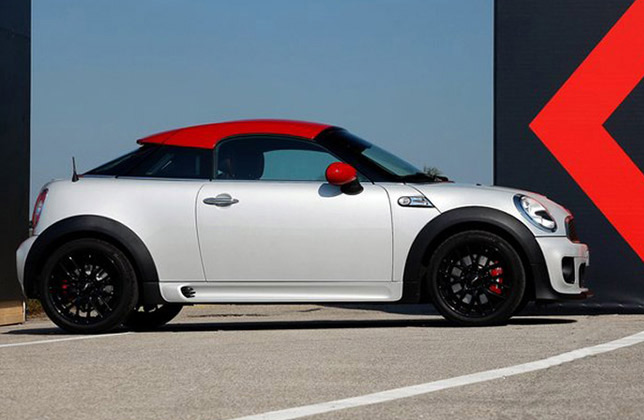
MINI has announced the US price list for the Roadster model, which starts at just $24 350 for the entry level and rising all the way up to $27 350 for the top-of-range Cooper S Roadster. The prices exclude destination tax.
2012 MINI Roadster is powered by a 1.6 liter four-cylinder petrol with VALVETRONIC delivering 122PS (90kW) at 6000RPM and 160Nm (118 lb-ft) at 4250RPM. From 0 to 100 km/h in 9.2 seconds and a top speed of 199 km/h (124 mph). It is pretty decent performance for cheap roadster with small engine. Furthermore, it returns 49.6 mpg (5.7 liters per 100 km) and 133 g/km of CO2.
The top-of-range Cooper S Roadster has a 1.6 liter turbocharged petrol with 211PS (150 kW) at 6000RPM and 260Nm (192 lb-ft) at just 1850RPM. From 0 to 100 km/h in 6.5 seconds and a top speed of 237 km/h. With this engine, the open-top MINI becomes a real sports vehicle. The average fuel consumption is 7.3 liters per 100 km (38.7 mpg) and 169 g/km of CO2.
2012 MINI Roadster
Specifications:
MINI John Cooper Works Roadster:
Four-cylinder petrol engine with MINI TwinPower Turbo technology and numerous technological details carried over directly from motor sport.
Displacement: 1,598 cc, output: 155 kW/211 hp at 6,000 rpm,
max. torque: 260 Nm/192 lb-ft at 1,850 – 5,600 rpm (280 Nm/207 lb-ft with Overboost at 2,000 – 5,100 rpm). Acceleration 0–100 km/h (62 mph): 6.5 seconds, top speed: 237 km/h (147 mph). Average fuel consumption according to EU: 7.3 litres/100 kilometres (38.7 mpg imp), CO2 emissions: 169 g/km.
MINI Cooper S Roadster:
Four-cylinder petrol engine with
MINI TwinPower Turbo technology. Displacement: 1,598 cc,
output: 135 kW/184 hp at 5,500 rpm, max. torque: 240 Nm/177 lb-ft at 1,600 – 5,000 rpm (260 Nm/192 lb-ft with Overboost at 1,730 – 4,500 rpm). Acceleration 0–100 km/h (62 mph): 7.0 seconds,
top speed: 227 km/h (141 mph). Average fuel consumption according to EU: 6.0 litres/100 kilometres (47.1 mpg imp), CO2 emissions: 139 g/km.
MINI Cooper Roadster:
Four-cylinder petrol engine with fully variable valve management based on the BMW Group’s VALVETRONIC technology. Displacement: 1,598 cc, output: 90 kW/122 hp at 6,000 rpm, max. torque: 160 Nm/118 lb-ft at 4,250 rpm. Acceleration 0–100 km/h (62 mph): 9.2 seconds, top speed: 199 km/h (124 mph). Average fuel consumption according to EU: 5.7 litres/100 kilometres (49.6 mpg imp),
CO2 emissions: 133 g/km.
MINI Cooper SD Roadster:
Four-cylinder turbodiesel with MINI TwinPower Turbo technology. Displacement: 1,995 cc, output: 105 kW/143 hp at 4,000 rpm, max. torque: 305 Nm/225 lb-ft at 1,750 – 2,700 rpm. Acceleration 0–100 km/h (62 mph): 8.1 seconds,
top speed: 212 km/h (132 mph). Average fuel consumption according to EU: 4.5 litres/100 kilometres (62.8 mpg imp), CO2 emissions: 118 g/km.
Exterior dimensions:
Length: 3,734 millimetres (MINI Cooper Roadster: 3,728 millimetres, MINI John Cooper Works Roadster: 3,758 millimetres)
Width: 1,683 millimetres
Height: 1,390 millimetres (MINI Cooper Roadster: 1,384 millimetres, MINI John Cooper Works Roadster: 1,391 millimetres)
Wheelbase: 2,467 millimetres
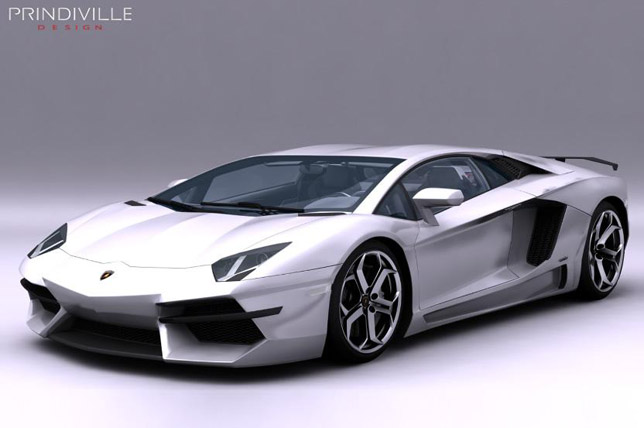
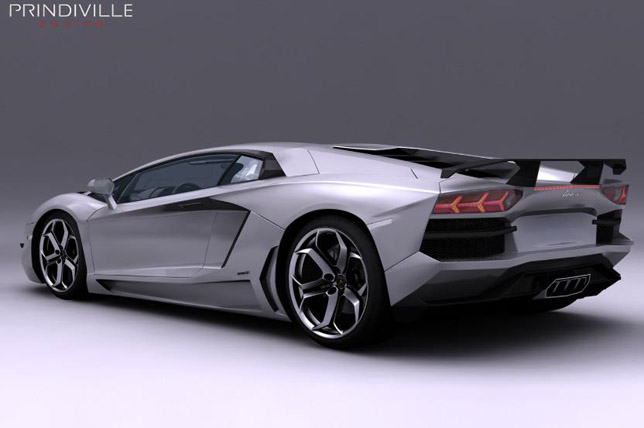
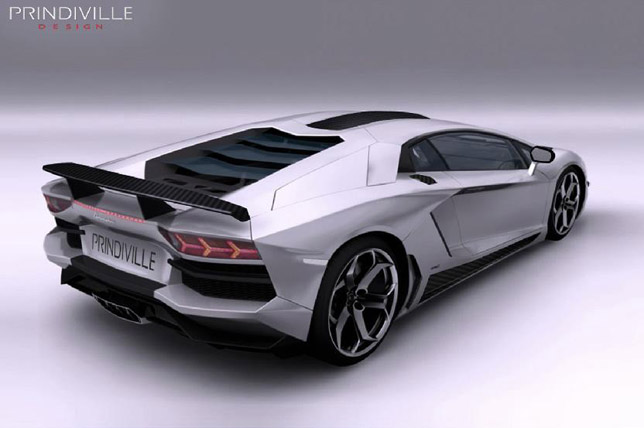
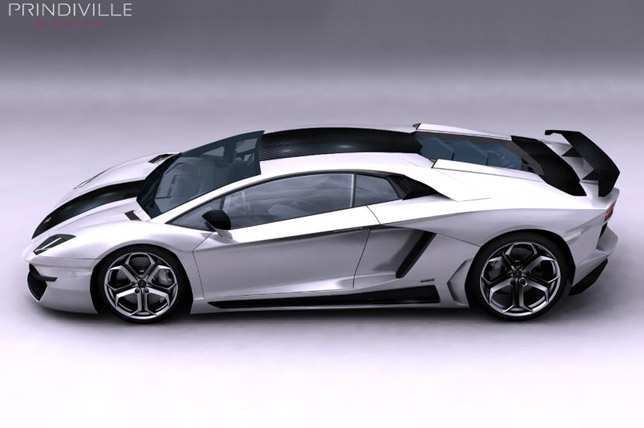
Prindiville Design has relaunched in flamboyant style with a range of stylish visual tuning packages and performance enhancements for three of today’s most iconic cars – the Lamborghini Aventador, Ferrari 458 and Range Rover Evoque.
On Focus we have the tuned Lamborghini Aventador LP700-4 coming with new body panels offering weight savings of up to 65% compared with standard items. There is also a new two-tone exterior finish.
The Aventador is powered by a 6.5 liter naturally aspirated V12 with 700PS (515 kW) and 690Nm (509 lb-ft). It is further boosted by Prindiville with a new titanium sports exhaust system, which is also 80% lighter than the factory version. There are also a new high-flow induction system and of course an ECU re-map.
The interior can be trimmed however an owner desires. There is a wide choice of luxurious leathers and other lavish upholstery materials, available in an exciting palette of colours.
2012 Mercedes-Benz ML 63 AMG will hit the US market in March. It is priced at $95 865 including $875 destination charge.
It’s characteristics are the same as the EU version – a new 5.5 liter bi-turbo V8 engine with 525PS (386 kW) and 700Nm (519 lb-ft), which can be boosted to 557PS (410 kW) and 760Nm (563 lb-ft) with the AMG Performance Package.
The performance is great for such big and heavy SUV – 4.7 seconds to 100 km/h and a top speed of 250 km/h (155 mph) – electronically limited. Still, the engine is not very thirsty – 11.8 liters per 100 km on combined cycle.
The engine is mated to AMG SPEEDSHIFT PLUS 7G-TRONIC system – a 7-speed automatic gearbox with several functions – C (Controlled Efficiency), S (Sport) and M (Manual).
The AMG Performance package also includes an engine cover in high-quality real carbon, callipers in red painted finish and the AMG Performance steering wheel in Nappa leather/DINAMICA.
2012 Mercedes-Benz ML 63 AMG
The five-spoke light-alloy wheels in dimensions 9J x 20” with 265/45 R 20 up front and 10J x 21” with 295/35 R 21 at the rear axle give extreme stability. The brake system includes discs all-round in size 390 x 36 mm – front and 345 x 26 mm – rear.
The interior comes with electrically adjustable AMG sports seats, four-spoke AMG Performance steering wheel with aluminium shift paddles. There are also aluminium trim elements, leather upholstery and some AMG badges. The distinctively designed instrument cluster with colour TFT monitor, AMG welcome logo and AMG main menu is exclusive to the ML 63 AMG. The designo Exclusive package features Nappa leather upholstery on the AMG sports seats with an unusual diamond pattern. It is available in designo marron, designo porcelain and designo black.
Lingenfelter has announced two special Signature Series performance packages for the Chevrolet Camaro.
The Signature Series 1 package features style modifications including a new front hood, redesigned front spoiler, a pair of extended side skirts and a trunk lip spoiler. The interior comes with new seats, a set of aluminum pedals and an individually-numbered plaque. The package also includes a Magnaflow sport exhaust and a sports-tuned suspension.
The Signature Series 2 package is all about performance. It includes a complete Corsa stainless sport exhaust system and some modifications for the mighty LS3 V8 engine – a Magnuson TVS2300 supercharger, a high-flow intake system and bigger fuel injectors. The result is 608PS (447 kW).
The exclusive 20” Lingenfelter forged alloy wheels are fitted with 275/40 ZR20 at the front and 315/35 ZR20 tires at the rear.
Lingenfelter provides a chassis dyno report after the installation is completed and covers the engine with a 3-year/36 000-mile warranty.
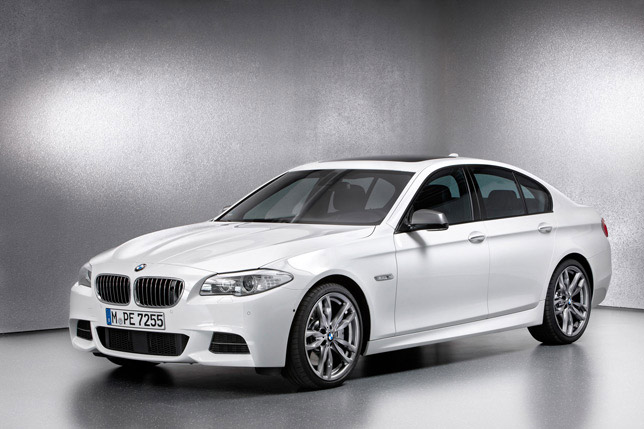
A new range of BMW bets on an electric driving experience at the expense of a few litres of Diesel. Say hello to the BMWxDrive 5 series, X5 and X6 M-performance specs. By “M-Performance”, BMW actually mean “Not quite M cars but they are out there”. All three vehicles harbor a magnificent 3.0 L game changer and all have been developed by BMW M GmbH engineers.
Despite the obvious lack of flaring wheel arches, road sweeping side skirts and flamboyant tail pipes that give the M niche its identity, there are design alterations on each and every one M-Performer. The wing mirrors for example are air-flow friendly, there’s a trunk lip-spoiler on the sedan and the wheels are a batch of specially designed, M-Performance alloys. (19-inch, double spoked ones for the sedan and the Touring, 19-inch, V-spoked for the X5 and 20-inch double-spoked for the X6). Above all we still have the M branding on the door steps and on the steering wheel, on the gear stick and at the boot lid.
But on that boot lid we notice something else. Why the “550” and also why is there a ‘d’ at the end? Before we start judging let’s clear some things up – the l6, 3.0 L TwinPower Diesel unit is an engineering milestone. You get 280 kW/381 hp and the mesmerizing 740 Newton metres (546 lb-ft) of torque available to you after only a 2000 rpm climb. Three turbo chargers, two small ones countering the turbo lag and a big one for maximum boost, will work together for that ever crisp throttle response. Sounds more like “TripletPower” to me. Another oily bit that deserves some spotlight is the latest common rail injection system with maximum pressure capacity at 2200 bars. With it power extraction is more efficient then ever.
BMW M550d xDrive (2012)
Needless to say all that newfound power is rather useless if one doesn’t know how to tame it and put it on the road. That’s where the blokes at BMW M GmbH step into place once again. Eight speed automatic gearboxes come with all the M-Performance cars and an intelligent xDrive AWD system overseers the chassis which is bound give dynamics a new name. M pedigree can be seen throughout the tuning of the suspension, the body, engine and transmission mounting, springs and dampers, all standard and optional chassis control systems, and the Servotronic mapping for the hydraulic steering. The touring and the X 5 and X 6 get air-suspension as standard on the rear axle which benefits comfort and practicality. Then there are the road safety systems and the luxury toys that can make anybody’s head spin.
BMW M550d xDrive Touring (2012)
At the end of the day, It always comes down to the 0 to 60 mph sprint. And thanks to all the M strains, the M 550d xDrive sedan does the job pretty well – 4.7 seconds and on to a top speed of 250 km/h (155 mph). In the mean time the Euro 6 3,0 L engine returns an average fuel consumption: 6.3 litres/100 kilometres on the Euro cycle and CO2 emissions amounting to 165 g/km. The Touring does the sprint for 4,9 and consumption and exhaust is by an inch higher. The more heavy X 5 and 6M50d‘s underscore on the 0 to 60 time but are still very, very brisk when one remembers that those things weigh two tonnes and above: 5.4 seconds for the X 5 with 7.5 litres/100 kilometres in return and 5.3 seconds for the X 5 with 7.7 litres/100 kilometres. Put into perspective those figures are stunning, wonderful and sensible. Will this be enough to convince the public that oil burners have a future in a world of petrolheads?
The Citroen DS is still young and ripe but already it has set on maturing into a hefty lineup : the DS3, DS4 and DS5. Unlike the standard range, the DS line with its bold design and bonkers features is for people with the driving enthusiasm of teenagers or lunatics. The Citroen DS5 is the latest addition to the line-up and the first one to feature Full Hybrid Diesel technology with the Hybrid4 version. It will join an already successful market of DS vehicles with around 180 000 units sold and counting.
And know, the International Automobile Festival has decided that the DS needs some recognition so the Design Grand Prize is rightfully allocated to Citroen to honor the vigorous design team and the car marque as a whole. The award was presented to Jean-Pierre Ploué, Director of Styling for the PSA Peugeot Citroën Group on 25 January at the official ceremony marking the 27th International Automobile Festival.
Citroen DS Line (2012)
In the mean time, rally driver Sebastien Loeb who has been racing Citroens since 2001 and is the only driver in the world with eight consecutive World Rally Championship titles was honored by the Festival’s jury. Because of him, Citroen has enjoyed much success as a manufacturer of rally cars (seven titles to be exact). This year is looking good too, as he has already sealed a victory at Monte Carlo, the first rally of the new season, which took place last weekend. That success story is the reason to honor Loeb’s exceptional sporting career by presenting him with a Palme d’Or (golden palm) award.
RENNtech Tuning usually deal with ECU tunings and exhaust system fiddling. Now the Mini Cooper has been introduced to them and it wont be an exception.
ECU upgrades will be available for both Mark 1 (2006-2010) and 2 (2010-present). The RENNtech people have an already developed tuning program for BMW so why not MINI? Significant change after the upgrade, can be felt in the “S” and John Cooper Works editions. By modifying the ignition timing and throttle mapping, optimizing air/fuel ratio, overriding the top speed limiter and tinkering with the turbo where possible, RENNtech’s ECU upgrade has managed to extract 45 hp more from the standard engine. On Mark 2 MINI that ECU boost can be initiated by the press of a button (the sport button) so that the driver can have full control on the engine works.
RENNtech MINI
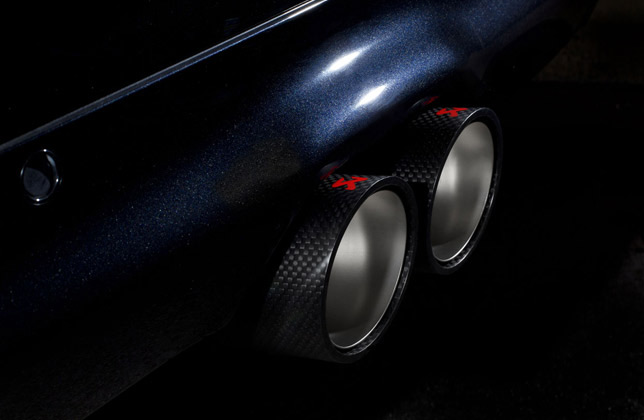
To round things up, RENNtech have thrown in an Akrapovic Evolution Exhaust system and an optional down pipe for the additional 8 hp and 10 lb/ft of torque. Who says toy dogs can’t bite?
Fiat has announced the price list for MY2012 Punto. The small city car is priced from just £9 990 OTR for the Pop 1.2 8-valve model. It hits the UK market this month and represents outstanding value for money.
The most expensive version is the Lounge 1.3 MultiJet priced at £15 600 OTR. It boasts automatic dual zone climate control, leather steering wheel, front fog lamps, 7 airbags, cruise control, ambient interior lighting and electric sunroof as standard.
The engine range includes six power units complying with EURO 5 regulations: 1.2 8-valve petrol 69PS, 1.4 8-valve petrol 77PS, 1.4 16-valve MultiAir petrol 105PS and 135PS, TwinAir 0.9-litre petrol 85PS and 1.3 16-valve MultiJet diesel 75PS and 85PS.
The new Punto comes in three main levels – Pop (base), Easy (mid) and Lounge (high).
Added to these are a sports version based on the Easy level grade called GBT, which will lead the advertising campaign developing within the sports association between Fiat UK and British Cycling.
The evolution of the Punto range includes external styling changes incorporating fully colour coded front and rear bumpers for a more sophisticated look, while three new exterior colours are introduced: Brit Pop Blue, Tango Red and Underground Grey.
2012 Fiat Punto
Inside, new sportier seat fabrics and refreshed dashboard inserts identify the new car, along with a revised specification to provide a more defined spread of choice for customers and a more focused selection of options.
Standard equipment in the entry-level Pop model includes remote central locking, electric front windows, driver and passenger airbags, window airbags, radio/CD/MP3 player, electric power steering and height-adjustable driver seat.
Easy trim level adds such equipment as leather steering wheel, 15” alloy wheels, and air conditioning, GBT level additionally gets sport suspension, rear spoiler and side skirts, while Lounge adds climate control, front fog lamps, cruise control, ambient interior lighting and electric sunroof.
Source: Fiat
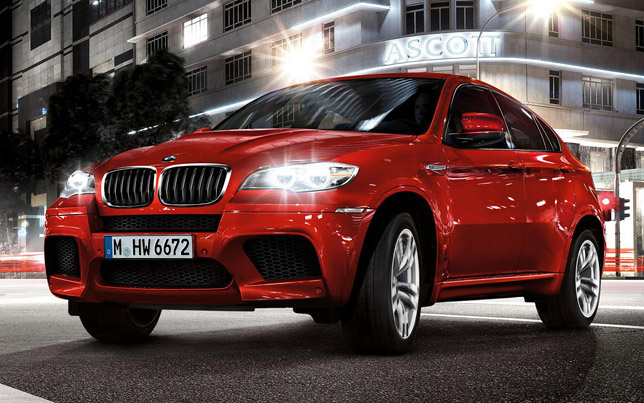
BMW has announced the new facelifted version of X6 M. The Sports Activity Coupe comes with the same engine and performance details, but with some exterior and interior changes.
Outside the new X6 M features different front grille and new LED headlights. The interior will now feature better choice of new leather upholstery.
2013 BMW X6 M is powered by a brutal 4.4 liter twin-turbocharged V8 with 555PS (408 kW) at 6000RPM and 680Nm (502 lb-ft) of torque at just 1500RPM. It is mated to a 6-speed M-Sport automatic gearbox with paddleshifters on the steering wheel. The power is put on the road through the world’s most intelligent AWD system – xDrive.
The performance is superb – 4.7 seconds to 100 km/h, to 200 km/h – 16.9 seconds and a top speed of 250 km/h (155 mph) – electronically limited.
All this is thanks to a number of technologies – M TwinPower Turbo Technology with exhaust gas manifold connecting both rows of cylinders, Twin-Scroll twin-trubo technology, High Precision injection and double VANOS.
The new BMW X6 M comes with DSC including ABS and M Dynamic Mode, CBC Cornering Brake Control, DBC Dynamic Brake Control, ADB-X electronic differential lock, Dry Braking, Fading Compensation, Start-Off Assistant; Dynamic Stability Control interacting with xDrive all-wheel drive system, Dynamic Performance Control, HDC Hill Descent Control, Adaptive Drive. All this is standard!
2013 BMW X6 M
Safety features include airbags for driver and front passenger, side airbags for driver and front passenger, head airbags front and rear, crash-activated headrests at the front, three-point inertia-reel seat belts on all seats, with belt latch tensioners, belt force limiters and belt stoppers at the front, crash sensors, rollover sensors, Tyre Defect Indicator.
There are also Adaptive LED Headlights, Park Distance Control, Head-Up Display, cruise control with brake function. Furthermore, you can order: back-up camera with Top View, Side View, Speed Limit Info, High-Beam Assistant, Automatic/Enhanced Emergency Call.
The Sports Activity Coupe stands on enormous 10J x 20″ alloy wheels at the front fitted with 275/40 R20 tires and 11J x 20″ fitted with 315/35 R20 at the rear.
The gross weight is 2305 kg.
Besides the brutal engine, the X6 M needs 19.3 liters per 100 km in the city, 10.8 liters on the highway and 13.9 liters on combined cycle.
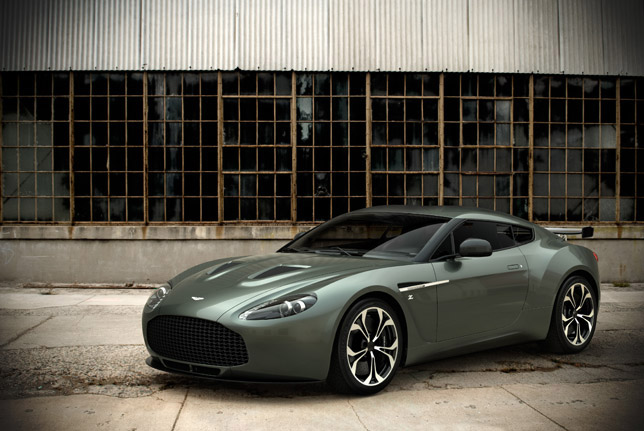
Aston Martin will exhibit the V12 Zagato at the Kuwait Concours d’Elegance. This is the only event of its type in the Middle East and plays host to some of the world’s finest automotive art from over 19 countries.
“We are excited to show the new V12 Zagato for the first time in production form at the Kuwait Concours d’Elegance. Over 50 years since the introduction of the iconic DB4GT Zagato, Aston Martin and Zagato have collaborated to create this modern interpretation which remains true to the original focus of craftsmanship, performance and exclusivity.”, commented Dr Ulrich Bez, CEO of Aston Martin .
Aston Martin V12 Zagato will be run in limited edition series of just 150 units. The sports car comes with the company’s acclaimed 6.0-litre V12 engine – 517PS (380 kW) and 570Nm (420 lb-ft).
The price for this masterpiece is £330 000, excluding local taxes.
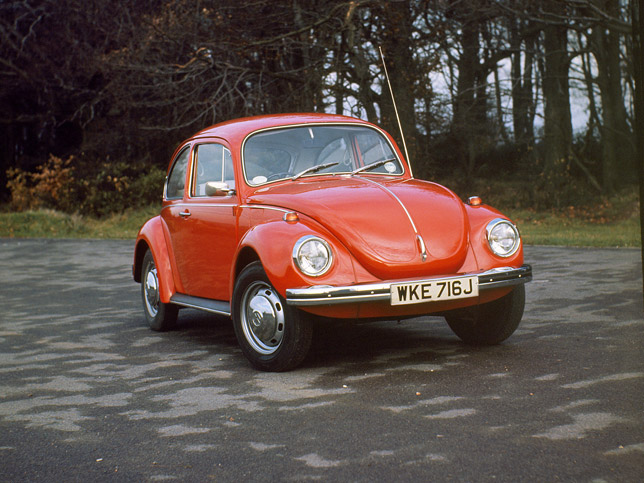
Can you believe that at first the now so popular Volkswagen Beetle was firstly intended to be a mass-production car, which can be afforded by an average person? Well, the beginning of the story of the famous car started just like that in pre Second World War period. The history of the emblematic car began in 1934, when Hitler himself, announced his vision for a “peoples car”. To be more precise the literal meaning of Volkswagen is “peoples car”, this is how the brand actually got its name. The most famous car designer at that time – Ferdinand Porsche – was entrusted to construct the vehicle. However, Hitler insisted on his own vision of the car, which must carry two adults and three children and have a low consumption of gasoline. However, the most prominent factor had to be the price – 1000 Reichmarks, which for Ferdinand Porsche seemed to be unreasonably low.
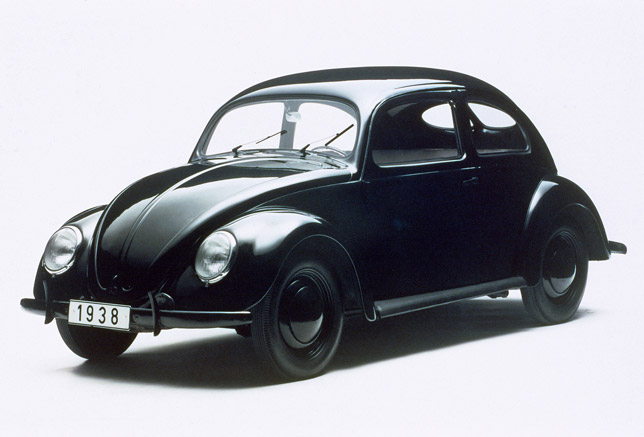
The first prototypes called “Type 60” came out in the 1935, and included one saloon model and one convertible. These vehicles were made from alluminium mounted on wooden frameworks. All this represented the body. A year later the bodies were mounted on steel floor panels. The top speed of the car was estimated around 105 km/h. As expected, this provoked a huge interest among Germans, and everyone wanted to buy a car. Hence, this led to the construction of factory in 1938. Nowadays this same factory is the biggest factory in the world. The name for the future Beelte was chosen by Hitler himself, and meant literally “Strength through Joy Car” – KDF Wagen (or Kraft Durch Freude Wagen). However, as we all are familiar, in 1939 the Second World War began, and hence the production changed its purpose. Now it was for military vehicles.
1938 Volkswagen Beetle Original
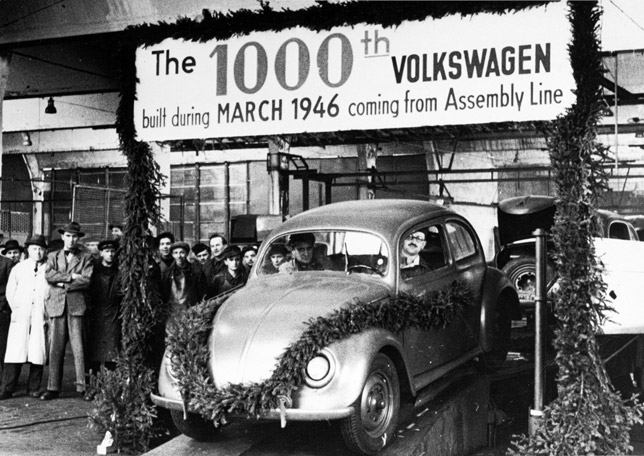
The war eventually ended in 1945, but the production of the Volkswagen continued. However, it was much slower than the pre-war. Cars were put together with the last materials left from the bombardment and stored in the basement. In contrast just a year later, the production of the vehicles was 1000 a month. It is almost unbelievable that the numbers of the manufactured cars went to 19 000 in 1948, and the astonishing 46.000 in the next year. In this year the range of the produced Volkswages was extended. It now featured two different convertibles, one with two seats and one with four.
The 1000th Volkswagen Beetle built in 1946 coming from Assembly Line
The 50’s was a prominent decade for the famous vehicle, where the tradition was established. Moreover there were so many additional changes added, which improved the performance of the car. One example is that there were included hydraulic brakes. Another good instance is the 15×5 inch tires, or the taillight of each rear fender. However, probably one of the most important changes in the design that has been made during the 50’s the single oval rear window which took the place of the two-piece one, and thus improving the visibility. In this decade the engine grew to a full 1.2 liters one. Interesting information to be shared is that during 1955 and 1956 there was a Beetle Deluxe, which was the only model of the vehicle exported to the U.S. Although there were a lot of modifications made further throughout these ten years, the Volkswagen remained a slow car, which was considered a huge problem. In the 1956 for example the car acceleration from 0 to 50 km/h was made in 7.5 second, the top speed was just 110 km/h. Nonetheless, people bought the car with eagerness. At the end of the year of 1959 there were in total 575 407 cars sold. Furthermore, 120 442 Beetles of these were sold only in the U.S.
The great success achieved in the 50’s is what made the Volkswagen Beetle and Icon in the next decade. The elements of the new 60’s Beetle were even more enhanced: new steering wheel, better seats design, and plastic headliner. Moreover the fuel tank was redesigned to make more space for the luggage. More importantly, during the first years of the decade there was included a conventional fuel gauge and bigger taillights. In the mid of the decade there was included a new powerful motor and by the end of the 60’s there’s a new 1.5-liter engine, making 53 HP (39 kW). However the car was still not fast enough, although the acceleration form 0 to 50 km/h went to 5.9 seconds. A huge innovation in technical terms was the introduction of the new optional Automatic Stick Shift semiautomatic transmission in 1968. It allowed the driver not to press the clutch pedal while shifting the gear.
However, in the 1970’s the picture weren’t that much successful as was the previous decade. There were several reasons for that, but probably most significant is the presence of other competitor companies like Renault and Toyota on the market. So during the 70’s the fame of the Beetle slowly began fading away. Of course there were a lot of innovations included in the car during these years. In the beginning of it the engine grew to 1.6 liter and now produced 60 HP (44 kW). But again the acceleration was literally disappointing. In the ext years, the Beetle got another significant change that has to be marked – this time in suspension. It adopted MacPherson strut front suspension. This was the beginning of the model, called “Super Beetle”. Of course during those years the car underwent a lot of modifications in order to keep with the trend. Unfortunately, the start of the end of an era was marked with the closure of the VW’s plant in New Zeland in the beginning of the 70’s. Another important factor for the waning fame is the start of the production of the replacement of the Beetle, which was named Volkswagen Golf. This led to more factories which didn’t produce more Beetles and slowly it’s popularity due to lack of innovations and improvements of technology began fading away.
1970 Volkswagen Beetle
In the eighties the production of the iconic vehicles continued, however strongly narrowed to only one plant on Mexico. In addition this plant stopped exporting vehicles for Europe and it was used mainly as a taxicab in Mexico. This plant continued producing Beetles till the first years of the 90’s too. And more interestingly it even produced the 21st million Beetle. However the end was near and the plant ceased working. In the end of the 90’s the designers from Volkswagen decided to revitalize the iconic car. Thus in 1998 was produced (again in the plant in Mexico) a more stylish variant of the vehicle. It now produced the 115 HP (84 kW), had 2.0 liter engine, five-speed manual or four-speed automatic transmissions, and independent suspension. At the end of the 1999 the Beetle included ABS brakes, 150 HP (111 kW) turbocharged 1.8 liter engine.
The beginning of the new Millennium was successful too. In the 2002, there was made a sporty model, called Beetle Turbo S, with venerable 1.8T turbocharged engine, which made the total 180 HP (133 kW) at 5,500 rpm and 173 pound-feet of torque from 1,950 rpm to 5,000 rpm. Due to these numbers in the model was included for the first time a six-speed manual transmission. However there was still something missing, and this time it was something which had to remind the customers for the original Beetle. In 2003 Volkswagen launched a brand new redesigned Beetle Cabriolet with 2.0-liter and 1.8T engines. Since then the brand continued producing the emblematic vehicle further enhanced and improved. In 2006 the brand revealed its “new” Beetle (including a convertible model) which had a subtle but stylish new look that fashionably updates. Yet, it maintained the core emotional appeal of the iconic Beetle design. It got the 2.5 liter, five-cylinder engine which creates 150 HP (84 kW). Another significant technical update here was the standard traction control with Electronic Stabilization Program (ESP).
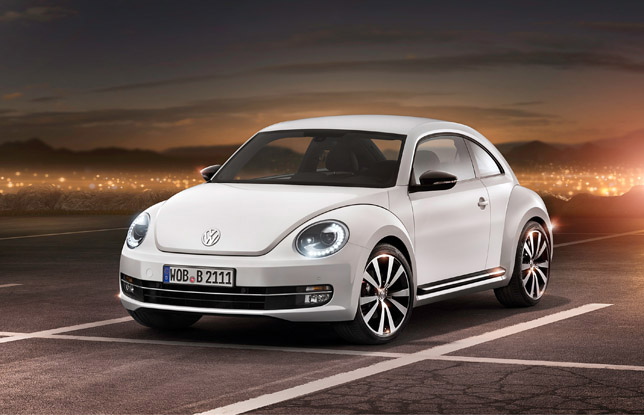
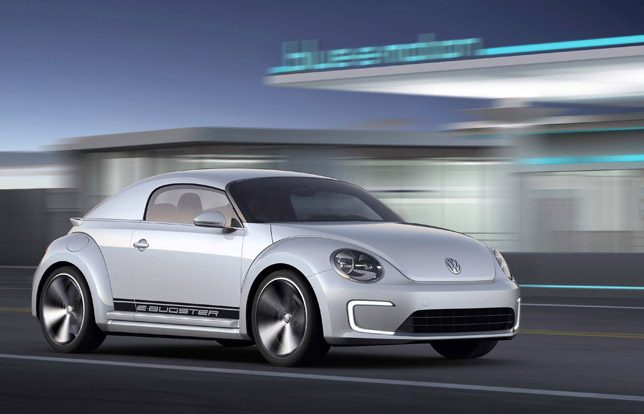
Now, in 2012, we are about to see the coming of two Beetle versions. The first one is, to say so, a regular one, with improved design, aerodynamics, modern interior and appealing exterior. The second one, in my opinion, is a pure development of the iconic car. Moreover it matches the “demands of the times” and is purely … electric! It is named Volkswagen E-Bugster, and although it is still in a concept mode, it is electrifying! This concept vehicle was revealed at the 2012 North American International Auto Show in Detroit. The new two-seated E-Bugster continues Beetle’s sporty theme, but is powered by an electric motor which provides 85 kWh of power.
2012 Volkswagen Beetle
2012 Volkswagen E-Bugster Concept
To sum up, the Volkswagen Beetle has almost 80 years old history and more importantly – it continues it nowadays successfully. Although it remained mostly unpopular with its original name, which is Volkswagen Type 1, the Beetle remains the longest-running and most-manufactured car of a single design platform. In the world all-in-all there are over 21 million manufactured models of the emblematic Volkswagen.
Since 1975 Overfinch has been redefining the legendary Range Rover and yet making new standards in terms of luxury, style and performance. The brand new 2012 Overfinch Sport GTS is a pure expression of this philosophy. It is the latest progression of the Overfinch styling package. More importantly it has a striking new face. This is due to the dynamic lines of the new front bumper. Furthermore the Overfinch Sport GTS is enhanced further by the LED Daytime Running Lights. Undeniably the Overfinch Sport GTS sets a benchmark that every luxury car will aim to achieve. Of course, the designer have included exclusive interior which gives the car a unique personality. This styling package is something which every 2012 plate Range Rover Sport customer should have. But don’t worry, the 2012 Overfinch Sport GTS Aero ll styling package can also be fitted to post-2010 Range Rover Sport models, and thus giving the model the 2012 plate look. Orders for delivery in March have already started.
2012 Overfinch Sport GTS2012 Overfinch Sport GTS2012 Overfinch Sport GTS
 MINI has announced the US price list for the Roadster model, which starts at just $24 350 for the entry level and rising all the way up to $27 350 for the top-of-range Cooper S Roadster. The prices exclude destination tax.


 Prindiville Design has relaunched in flamboyant style with a range of stylish visual tuning packages and performance enhancements for three of today’s most iconic cars – the Lamborghini Aventador, Ferrari 458 and Range Rover Evoque.
 2012 Mercedes-Benz ML 63 AMG will hit the US market in March. It is priced at $95 865 including $875 destination charge.


 A new range of BMW bets on an electric driving experience at the expense of a few litres of Diesel. Say hello to the BMW xDrive 5 series, X5 and X6 M-performance specs. By “M-Performance”, BMW actually mean “Not quite M cars but they are out there”. All three vehicles harbor a magnificent 3.0 L game changer and all have been developed by BMW M GmbH engineers.


 The Citroen DS is still young and ripe but already it has set on maturing into a hefty lineup : the DS3, DS4 and DS5. Unlike the standard range, the DS line with its bold design and bonkers features is for people with the driving enthusiasm of teenagers or lunatics. The Citroen DS5 is the latest addition to the line-up and the first one to feature Full Hybrid Diesel technology with the Hybrid4 version. It will join an already successful market of DS vehicles with around 180 000 units sold and counting.


 RENNtech Tuning usually deal with ECU tunings and exhaust system fiddling. Now the Mini Cooper has been introduced to them and it wont be an exception.
 Fiat has announced the price list for MY2012 Punto. The small city car is priced from just £9 990 OTR for the Pop 1.2 8-valve model. It hits the UK market this month and represents outstanding value for money.

 Aston Martin will exhibit the V12 Zagato at the Kuwait Concours d’Elegance. This is the only event of its type in the Middle East and plays host to some of the world’s finest automotive art from over 19 countries.