Chrysler Group has just launched a television commercial named “It’s Halftime in America” and it aired during the 2012 NFL Championship game.
In the video is staring the famous super star Clint Eastwood. The ad lasts almost 2 minutes and 10 seconds. More importantly he speaks a monologue that is encouraging and inspiring, especially for people who have lost everything due to the economical crisis, or people who have gone under devastating tragedies. Although there are al lot of downfalls in everybody’s life, Eastwood’s calling is to look ahead towards a brighter future. He gives as an example the people of Detroit city, who have gone through a lot! This is an inspirational commercial which aims towards the brighter future, and at the same time recalling the great past of the Chrysler vehicles.
It''s Halftime In America Chrysler CommercialIt''s Halftime In America Chrysler Commercial
As you see this iconic Range Rover received and upgraded appeal from Kahn Design. This was made through the feature of the Cosworth‘s engineering with quintessential British. This Imperial blue Cosworth Range Rover Edition now has even more style, comfort and luxury. It is now boosted with wide vented front and rear wheel arches with integrated LED running lights in the front air dams, brake calipers finished in liquid gold, RS front grille with 3D mesh, exhaust side vents, Cosworth branding, matt pearl grey or matt black paint detailing (door handles), side vents, grille surround and Cosworth machined and vented aluminum foot pedals.
Next to the powerful Cosworth engine enhancement, there is also featured a combination of alterations to the supercharger and ECU programmingq, which are taking effect as an even more rapid Range Rover. In addition the Kahn stainless steel quad exhaust system is centered on a radical design, which reflects an attraction to a pluto-matic lifestyle. The vehicle is completed with a cross hair exhaust feature.
The Cosworth interior package is excellent and done with a lot of attention on the details: great finishes and top end design make it even classier. Cosworth included also in the interior a front and rear seats in diamond quilted perforated black leather with a carbon trim, carbon fibre interior trim, Cosworth speedo in blue, yellow rev counter, diamond gear selector, Churchill time clock with Swarovski diamond bezel and Cosworth door entry sill plates.
Next to be mentioned are those great wheels on which the Rover sits – namely 22″ Kahn RS wheels. The RS wheels are synonymous with elegance and innovation due to their simple clean lines, soft organic surfaces on the edge of the spoke and a purposeful mechanical centre.
SR Project Kiluminati – The Contempo Renaissance – is the name of this incredible and astonishing tuning of the Ferrari 458 Italia model. It also called SR Project Kiluminati Ferrari 458 Pure Five, because it was the work of collaboration between SR Auto Group and PUR Wheels.
The result is this unconventional bold and distinct vehicle, for which every Ferrari fan will fall. Undeniably every Ferrari it wears this amazing attitude of style and class, however it is now even more enhanced by this exciting tuning.
The company “PUR Wheels” has contacted SR Auto Group in order to make this result happen. They had an idea for a wheel design which will pay homage to the past in a modern fashion. The idea in general consisted of using a three spoke wheel, which nowadays is considered to be old fashion. Nonetheless, we don’t see the end-result as old fashioned, do we? And they took this chance! This is how the named “design 5ive”, Project Kiluminati was born.
SR Project Kiluminati Ferrari 458 Pure FiveSR Project Kiluminati Ferrari 458 Pure Five
Kia has released first image (teaser) of the new Track’ster Concept car, which will make its official debut at the 2012 Chicago Auto Show. The vehicle is created by California Design Studio.
The concept car boasts LED taillights and aggressive dual exhaust system.
There are no further details about the car or its engine, but probably it will share the Veloster’s 1.6 liter turbocharged petrol with 211PS (155 kW) and 265Nm (196 lb-ft).
Full details and additional photography will be released on Wednesday 8th February. A design sketch was released on Thursday 2nd February.
Having fun on four wheels these days is easy, right? Indeed, there is a lot of power out there to play with. However, “with great power comes great responsibility”… is what many car manufacturers have in mind now. That is why today we have speed limiters, brake assist, lane departure warnings, ABS, ESC, TCS, xDrive, and many, many more abbreviations that keep us safe and sound and on the road. Everything is automatized and we as drivers start to feel isolated and neglected. All is rather convenient and indeed safe, but there’s something amiss. Our primal instinct to be in a constant search for the ultimate thrill is starting to boil and cars today are having a hard time satisfying it.
Happily however there are exceptions – a familiar, yet small company called Ariel still offers that what many other do not any more – an unbridled fun generator called the Atom. Founded in 2001, Ariel is a 7 employee, Somerset (England) based firm that produces performance vehicles. It’s production portfolio consists of four projects – The Ariel Atom 1, 2 and 3 and the Ariel Atom 500 – all rather limited in numbers and there’s a reason for that. To begin with, if it’s a car it doesn’t look like one, if it’s a bike, it has four wheels and a steering wheel. It doesn’t come with a windshield nor a roof and not even a boot for that matter. The chassis is also a body and a frame and all the various car mechanics are slightly or completely exposed to the human eye. So, in terms of practicality it is a disaster. But now we are going somewhere – it’s exciting just to look at.
The Atom certainly wasn’t made to pull up next to that fancy restaurant you were thinking of visiting. I mean, because of the disheveled person sitting next to you who used to be your elegant partner and because of the bugs in your hair and between your teeth you are likely to be rejected a table that evening. And why would you and your passenger look like that upon arrival? Well, when you operate an Atom you always feel the temptation to give it the beans, partly because it’s so light (612 kg) and partly because it has a magnificent supercharged 2.0 L, 300 bhp Honda Civic Type R engine ready for exploiting. And that is if you don’t go with the 500 which has an even more hardcore 3.0 liter John Hartley V8 engine that develops 500 bhp (in a car weighing less than a ton!). So in essence, when you put your foot down your body is getting destroyed by immense G forces and skin pulling wind resistance (no windshield, remember?).
That gives us an idea how much the Ariel Atom does not care about safety and driver aids. While thundering down the road, stomp on the brakes and you’ll end up skidding off in a vast cloud of tire smoke for there are no anti-locking systems to interfere. Dare a mistake at a high-speed bend and you’ll miss the electronic stability control that puts you back in line. Yet, the thing about the Atom is the improbability of something going wrong and that has something to do with it’s nimbleness and ease of control. It doesn’t need all the computerized gizmos which only add weight in excess. Instead, steering is light and sharp (you can actually see, while driving, the front wheels clipping apexes and working their magic), the gearbox is a charm and 0 to 60 takes less than 3 seconds – what more does an adrenaline junkie need?
So it’s no wonder that the Atom gained such praise from automotive reviewers and critics over the last several years. It’s a technological landmark that is fun and extraordinary to drive – just a little bit of road legal lunacy in our everyday sensible lives.
The DSC (Dynamic Stability Control) is BMW’s electronic stability control system. It controls the suspension with the help of three other single programs – ABS (Anti-lock Brake System), ASC + T (Automatic Stability Control + Traction) and CBC (Cornering Break Control).
The system was firstly introduced back in 1997 offered on BMW 740i/L and 750i/L. Nowadays, all BMWs come with DSC III as standard including DTC (Dynamic Traction Control). The DTC allows more wheel slip meaning a more dynamic driving style with higher wheel traction including DSC controlling stability. In other words, the DTC will allow you to drive more aggressively without suiciding yourself.
The DSC system is very complex and interesting. It constantly checks vehicle speed, steering angle, wheel rotation, lateral and transverse acceleration, brake pressure and yaw to register imminent instability when cornering, especially on slippery conditions like snow and rain. When instability moment is registered, the DSC intervenes via the engine management system. It reduces drive torque and activates each wheel brake individually to keep the car stable. Everything this happens within milliseconds, so do not think you don’t need this system.
So, the DSC uses ASC+T to cut the engine power and, if this is insufficient to maintain traction, it also uses ABS to apply braking power wherever it is needed.
httpv://www.youtube.com/watch?v=ncE-Vk7egRo
The DSC uses a lot of sensors to work properly. First, it monitors the steering angle sensor to detect the driver’s chosen path. After that it uses lateral- acceleration to define the forces, which must be transmitted to the road by the tires. The rate-of-turn sensor defines the car’s degree of rotary movement and the brake-pressure sensor define the longitudinal forces acting between tires and road surface under braking.
If something went wrong while driving and the car begin to oversteer or to understeer, the DSC can counter the situation by applying brakes. All electronic and hydraulic systems are very rapid and precise, so the driver can hardly feel them.
While ASC + T analyzes the longitudinal forces occurring in straight-ahead operation, DSC additionally registers and analyses lateral dynamic forces.
When cornering at high speeds, DSC counters unstable vehicle states such as oversteering or understeering
The DSC feature can provide maximum stability when cornering.
With DSC there is a significant reduction in the risk of skidding.
The DTC (Dynamic Traction Control) is a sub-function of the DSC system. Besides offering sports-style driving, it provides a small amount of wheel spin improving traction, especially on deep snow, slush or loose terrain. In some occasions more slip generates better better traction and more thrust.
The DTC alloys sports-style driving and even permits controlled drifts. Still, the driver retains complete control over the vehicle in every situation and the Dynamic Stability Control’s stabilising measures remain active even when the DTC is activated.
When you start the car and you are in normal driving mode, the DSC is active. One short push on the DSC button: the DTC is enabled and DSC restricted. One long push on the DSC button: DSC and DTC off.
So, we strongly do not recommend turning the Dynamic Traction Control off, because it is very dangerous.
At Skoda these days are busy developing their not yet ready for production “Green E Line” vehicles – a segment of electric cars based on the Octavia Estate. Right now, a fleet of ten E Lines is undergoing a phase where day to day conditions are recreated so see how the cars behave. The whole green thing is a part of Skoda’s plan to excel in the field of fuel efficiency. Other projects concerned with that often work to optimize the TDI and TSI drivetrains and also various transmissions.
The gathered data will be of extreme value for fine-tuning to get the most out of the cars. Issues that concern potential customers can also be addressed – being extremely silent in traffic might be a disadvantage for example.
The whole testing procedure comprises of three phases: the first and the second are ongoing now and deal with in-house (on the Prague airport to be more exact) trials and research of the car’s various systems. The third phase, set to begin in March this year, will put the fleet to the real test as the cars will go to different institutions other than Skoda Auto (government, educational institutions etc.) for further research and testing in real life conditions.
Skoda Green E Line (Octavia based)
Because of being based on the Octavia Estate, the Green E Line is ideal for harboring electric car components such as batteries, motors and electronic controllers. Power output stands at 85 kW and generous figure of 270 Nm. (because of being electric, torque tends to be always high and instantly available throughout the whole rev range). A zero to sixty time is said to be around 12 seconds and top speed is as high as 135 kph. On a single charge it is estimated that the E Line will go for 150 km which is more than enough to satisfy various European communities.
Nowadays the automotive industries enhance further their environmental friendly technologies and work on the development of vehicles which produce less CO2 emissions. The hybrid cars are a consequence of this philosophy. They include two engines – one electric and one fuel powered, and this is how they minimize the fuel consumption in drastic levels. In addition they also include a special system which stores more energy in a battery included in the vehicle. The fact that it includes two engines is probably the most controversial one, and it raises many negative and positive feedbacks in the customers of such vehicles around the world. Can they be considered as car of the future? It is only a matter of time to be understood. However, let’s review the advantages and disadvantages of this technology.
PROs:
First of all the main advantage is that such car is fuel efficient. It effectively spares you a lot of money on fuel. The second one, as you already know, is that hybrid vehicles produce far less toxic emissions and thus are considered as environmentally friendly. Third, with a hybrid, you can enjoy the city driving even more. There are several reasons for this: the mileage ratings of such car are higher in the city. For instance, when you are caught in the traffic and you stop, the battery generates more electricity which can be successfully utilized during the lower speeds. Next to be mentioned is that the hybrid car is unbelievably silent. It is even so silent that when you drive it, some times you doubt that it is working. Yes, you got it – the electric engine is completely soundless. Another benefit that you can get form a hybrid is its battery is durable. Test made on different hybrid vehicles show that after a considerable amount of kilometers driven, the cars battery performance is almost the same. And at last one of the best things about the hybrids is that they need far less maintenance, than an ordinary car. What I have in mind here is that due to the two engines, the gasoline one needs less care. And for example, you need to change the oil in more kilometers traveled, compared to normal car.
CONs:
Now, let us see the other side of the hybrid technologies and review some disadvantages. The general disadvantage of hybrid cars is that their retail price is extremely expensive in comparison to the ordinary cars. Another negative issue here is that those vehicles have far greater weight and the reason for this are the heavy batteries mounted in them. Third, they aren’t as fast as normal cars. However there are also some major disadvantages here, which are concerning some safety factors. Because they are made from lighter materials and store some additional voltage in their batteries, they tend to be very risky in accidents. Furthermore, hybrids are not very convenient, while driving on the highway. What I mean hear is that they have lower highway mileage and compared to some diesel vehicles, they produce the same fuel efficiency.
To sum up, the cars of the future seem to be very beneficial when driving in the city area for example. They also produce less CO2 emission, which nowadays is a major factor that must be taken straightly at hand. Moreover, although their retail price is far greater, compared to an ordinary car, when you make the basic mathematics, the fuel that it consumes during its utilization will spare you a lot. At last, although it is not a convenient car during long traveling, it is the perfect vehicle for an environmentally conscientious person.
Take a look at the hybrid vehicles which, which some popular brands are currently producing:
2013 Volkswagen Beetle TDI will be revealed at this year’s Chicago Auto Show.
The new diesel powered Beetle does not have any exterior modifications except “TDI” badge, some more chrome and 17” alloys. Inside, there is a new instrument cluster with a stopwatch, oil temperature and turbo boost gauges.
The model line-up includes three trim levels: TDI, TDI with Sunroof and TDI with Sunroof, Sound, and Navigation. Standard equipment includes power windows, cruise control, V-Tex Leatherette seating, the kaeferfach secondary glovebox, Bluetooth®, a leather-wrapped multifunction steering wheel with audio controls, three auxiliary gauges, Keyless entry with push-button start, and a Media Device Interface with iPod® cable.
The base TDI has 17” alloy wheels, and an interior and exterior chrome package. The standard RCD310 audio system has an AM/FM radio, CD player, Bluetooth®, and eight speakers.
TDI with Sunroof adds a panoramic tilt/slide sunroof that is fully 80 percent larger than the one fitted to the New Beetle. The model’s Premium VIII audio system has a full-color touchscreen display, a six-disc CD changer, and an SD card reader.
TDI with Sunroof, Sound and Navigation is the top-of-range model. It has the RNS 315 NAV system with a 5” touchscreen display. The Fender® Premium audio system that offers concert quality sound is also standard. This has an additional subwoofer, proprietary Panasonic® speaker technology that covers the cabin with directional sound, and 400 watts of output power.
2013 Beetle TDI is powered by a turbocharged 2.0-liter diesel engine with 140 PS (103 kW) and 320Nm (236 lb-ft). It is available with a choice of 6-speed manual or dual-clutch DSG transmissions.
The 2013 Beetle TDI will hit the US market this summer.
Mopar, the automobile parts and service arm of Chrysler Group LLC, celebrated its 75th anniversary recently and to in order to make it a big one, they revealed 4 new custom cars that belong to the Chrysler Group: Mopar ’12 300 (Chrysler 300), Fiat 500 “Stinger,” Mopar Jeep® Compass “True North” and Dodge Dart “GTS 210 Tribute.”Mopar ’12 will be available this summer straight from the factory, while components of the Fiat 500, Jeep Compass and Dodge Dart custom configurations will be available in the fall as stage kits or as separate components from the Mopar catalog.
“Customization is king,” said Pietro Gorlier, President and CEO of Mopar, Chrysler Group LLC’s service, parts and customer-care brand. “These head-turning ‘Moparized’ vehicles show how we can go to the next level of personalization. With our best-in-class offerings of parts and accessories, we give our customers every opportunity to further enhance the appearance and performance of their vehicles.”
Mopar ’12 300
This project was realized thanks to the success of previous ones like the Mopar versions of the 2010 Dodge Challenger and 2011 Dodge Charger. The already uxorious flagship sedan has turned into a performance tribute to celebrate Mopar’s 75th anniversary with unique appointments, high-performance parts and appearance items straight from the Mopar parts catalog.
It has a 363 horsepower 5.7-liter HEMI V-8 engine under the hood which is clever enough to use only four of its cylinders under light throttle. A five-speed W5A580 automatic transmission takes care of the incoming power while drivers will be able to shift trough the gears with the special Mopar Auto Stick without any danger of over revving the engine. Also because of the rear differential being enhanced from 3.06:1 to 3.91:1 for the final-drive ratio, the ’12 300 can reach 60 mph from a stand still in no more than five seconds.
Suspension has also been tweaked to be 42 percent and 23 percent stiffer at the front and rear respectively compared to the standard touring setting of the 300. For that extra grip P245/45R20 Goodyear Eagle F1 three-season tires replace the all-season ones and high-performance brake linings are mounted to dual-piston front and single-piston rear calipers which deliver fade-resistant stopping performance.
The street image of the car is where Mopar have really excelled. Black Chrome seven-bar grille and grille-surround goes with the black-accented headlamp bezels and fascia accents for an overall low-profile look. From the Gloss Black exterior contours of the Mopar ’12 300, Mopar Blue A-line body-side stripes stick out. The car comes with large 20-inch by 8-inch Mopar forged-aluminum wheels which are painted in Gloss Black and are ornamented with Mopar center caps. One the fenders one can find “Mopar 75” badges that feature the Mopar Blue “omega” logo. Another thing that distinguishes the ’12 300 from ordinary Chryslers is the the deck lid “Mopar Design” badge that suggests exclusiveness and refinement.
Inside the darkness goes further on with the gloss black interior and Mopar Blue accents all over. Blue is also the stitching that goes over the black leather and heated sport seats. Its the same story with the thick-rimmed steering wheel and the paddle shifters and the Mopar shifter handle. There’s more than that as well – matte carbon hydrographic accents garnish the instrument panel and the center console while Piano Black is used on the interior center stack, instrument panel, steering wheel, gauge cluster and door panel elements for that extra polished look.
In terms of luxuries the Uconnect® Touch8.4 is definitely a highlight. It provides all of the occupants with a state-of-the-art infotainment and entertainment system. The audio system is a 506-watt Alpine nine-speaker composition with complete with a subwoofer, 12-channel amplifier with 506 watts of power and digital signal processing (DSP) for 7.1-adapted surround sound.
Other electronics get themselves busy keeping the driver and passengers safe – adaptive-forward lighting (AFL), high-intensity discharge (HID) projector high and low-beams with automatic headlamp leveling, Forward Collision Warning (FCW) with adaptive-cruise control (ACC), Blind-spot monitoring (BSM) with Rear Cross Path (RCP) detection, ParkSense® front and rear park assist system, LED-illuminated rear fog lamps, exterior mirrors with supplemental turn signals and approach lamp. Additional safety features include a HomeLink universal transceiver, rain-sensing wipers and SmartBeam® headlamps.
To get one of these 500 limited edition luxury bundles will cost around $49,700 (MSRP) which includes $825 for destination.
Mopar 12 300 Chrysler 300 (2012)
2013 Dodge Dart ‘GTS 210 Tribute’
Although a newcomer, the Dodge Dart is quick to get some attention from Mopar with more than 150 accessories available for customization. Based on an Alfa Romeo, the Dart is already sporty looking and agile. However with 2 more kits, Mopar have introduced even more versatility to the car.
Stage 1 upgrade is a looks upgrade that also deals with the aerodynamics of the car. Matte-black trim pieces can be seen ornamenting the exterior – a lower chin spoiler, side sills, rear spoiler and rear-diffuser panel. The hood is made from carbon fiber for lightness and it has a large air-scoop for that aggressive look we all want. 18-inch, 10-spoke forged alloy titanium-colored wheels complement the overall exterior customization.
Red and black hues have also penetrated the interior as the Katzkin leather seat fronts, door panels, center armrest and map-pocket inserts are all in Red Ruby. The stitching is black on the seats and armrest and Piano Black motives stand on the floating island bezel. The steering wheel is a combination of Red Ruby and black again with red stitches for contrast.
Stage 2 deals with the performance and is basically a calibration for maximizing fuel/air mix and spark advance. With the improved air-flow intake and low back-pressure exhaust, the Dart achieves 210 horsepower as opposed to the base engine which has 184 horsepower.
Mopar Dodge Dart 'GTS 210 Tribute' (2013)
2012 Fiat 500 ‘Stinger’
For this project, Mopar have taken a Fiat 500 S and introduced two upgrades as well and much like the Dodge Dart, one is for style and grace and the other one is for performance and grunt.
Stage 1 has the emblematic 500 “whiskers and logo”, and circular projector lights all framed in Black Chrome. Other things that follow the same pattern are the exterior door handles and mirror caps. The 17-inch by 7-inch Abarth Hyper Black aluminum wheels with wider 205/40 R 17 performance tires complement the whole black theme while the body itself is Giallo (yellow). The headlights and taillights are tinted and Mopar vinyl graphics ornament the body side and roof.
Stage 2 incorporates Mopar’s cold-air intake and a free-flowing cat-back exhaust system which give the Stinger that extra torque and pull while performance brakes with cross-drilled rotors for additional surface-heat dissipation enhance the stopping power.
Mopar Fiat 500 'Stinger'
2012 Mopar Jeep Compass ‘True North’
Addong black is also the way Mopar have enhanced the Jeep Compass’s look – the roof, wheel flares, lower fascia, door cladding and grille are all in matte-black. Matte black are also the 16-inch alloy wheels with BF Goodrich All Terrain tires. The suspension has been raised by 2 inches thanks to Rocky Road Suspensions.
The inside of the Jeep Compass is introduced to a Kicker sound system that consists of front and rear speakers, amplifier, sub-woofer and lift gate speakers. The center gauge cluster on the other hand now shows pitch and roll values which extends on the Jeep’s off-road abilities. A Mopar bright pedal kit, door-sill guards, rear-cargo tray, shift knob and neoprene seats complement each other while enhancing the quality feel of the cabin.
Edo Competition has announced their tuning package for the most powerful Panamera – the Turbo S model. The brutal GT car accelerates to 100 km/h in the blink of an eye – 3.5 seconds.
The performance package boosts the mighty 4.8 twin-turbocharged V8 to whopping 700PS and 880Nm of torque. This is an increase of 150PS and 130Nm. The top speed of edo Turbo S is 340 km/h (211 mph), but still if is way far behind G-Power Hurricane RS. The package includes high flow air filters and catalytic converters, a pair of new turbochargers and exhaust manifolds. There is also a stainless steel high performance exhaust system featuring butterfly valves. Of course, everything is perfectly tuned on dyno.
The stance of the vehicle is improved by installing edo body lowering module and a set of new 22” sport wheels with 265/30 ZR22 (front) and 305/25 ZR22 (rear) tires. The wheels can be custom-painted even in carbon fiber look.
Finally, the interior is also touched with the finest leather, paired with other high-quality materials replacing the factory trim.
edo Competition Porsche Panamera Turbo S
Specifications:
Engine
Twin-turbo V8
Capacity 700 hp / (515 kW) at 6,500 rpm
Max. torque 880 Nm at 2,500-5,200 rpm
Specifications
Top speed ca. 340 km/h (electrically restricted)
0 – 100 km/h (0 – 62 mph) in 3,5 s
Power
Power increase to different variations including:
ECU recalibration, high flow air filters and catalytic converters, new turbochargers and exhaust manifolds, as well as a stainless steel high performance exhaust system featuring butterfly valves. All modifications are tested and tuned on a dynamometer.
700 PS/865 NM – duration: 4 weeks, only at edo competition
Increased Performance
Power increase to 700 PS/865 NM
ECU recalibration
high flow air filters and catalytic converters
new turbochargers and exhaust manifolds
as well as a stainless steel high performance exhaust system featuring butterfly valves
All modifications are tested and tuned on a dynamometer.
Exhaust System
A stainless steel high performance exhaust system featuring butterfly valves
The sound level of the high performance exhaust can be adjusted via remote control
Two settings (Super Sound and Stock) are available at the push of a button
Wheel-/ Tirecombination
22” sport wheels
Three-piece with forged center, hand-polished stainless steel outer rim, 39 stainless steel bolts
KW has introduced Variant 3+ and Clubsport kit for the hottest hatchback on the market – 2012 Audi RS3.
The Variant 3+ coilover kit is specially created to improve the handling without sacrificing the ride quality. The kit has 16 levels of damping adjustment as well as height adjustment between 5-35mm at the front and 0-25mm at the rear.
The Clubsport kit is available in both 2-way and 3-way adjustment. It is specially prepared for using on the tracks using racing springs and high-performance dampers. What is more, KW’s Clubsport coilovers are fine tuned on the Nurburgring for maximum performance. Each damper system features a separate expansion tank to allow independent adjustment of compression in both high-speed (14 levels) and low-speed (6 levels) driving. The KW Clubsport 2-way and 3-way is also height adjustable by 5-35mm at the front and 0-25mm at the rear.
Additionally, the KW 3-way Clubsport Suspension comes supplied with preassembled aluminium uniball strut mounts which are also adjustable and which allow optimum fine-tuning for various sports tires and tracks.
Despite its immense circuit ability, KW’s Clubsport coilover remains TÜV approved allowing the RS3 to be driven to and from circuits with ease.
 Chrysler Group has just launched a television commercial named “It’s Halftime in America” and it aired during the 2012 NFL Championship game.





 At Skoda these days are busy developing their not yet ready for production “Green E Line” vehicles – a segment of electric cars based on the Octavia Estate. Right now, a fleet of ten E Lines is undergoing a phase where day to day conditions are recreated so see how the cars behave. The whole green thing is a part of Skoda’s plan to excel in the field of fuel efficiency. Other projects concerned with that often work to optimize the TDI and TSI drivetrains and also various transmissions.


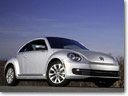 2013 Volkswagen Beetle TDI will be revealed at this year’s Chicago Auto Show.


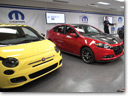 Mopar, the automobile parts and service arm of Chrysler Group LLC, celebrated its 75th anniversary recently and to in order to make it a big one, they revealed 4 new custom cars that belong to the Chrysler Group: Mopar ’12 300 (Chrysler 300), Fiat 500 “Stinger,” Mopar Jeep® Compass “True North” and Dodge Dart “GTS 210 Tribute.” Mopar ’12 will be available this summer straight from the factory, while components of the Fiat 500, Jeep Compass and Dodge Dart custom configurations will be available in the fall as stage kits or as separate components from the Mopar catalog.


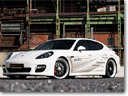 Edo Competition has announced their tuning package for the most powerful Panamera – the Turbo S model. The brutal GT car accelerates to 100 km/h in the blink of an eye – 3.5 seconds.


 KW has introduced Variant 3+ and Clubsport kit for the hottest hatchback on the market – 2012 Audi RS3.
