Category: Auto News

Auto news – automobile industry news. Articles about all the latest car models and concepts. Breaking news, uncovered secrets.

  • Range Rover Evoque Convertible Concept

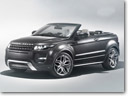
    LR-Evoque-Convertible-Concept-thumbGet ready for something new. Although the markets today are flooded with all kinds of SUV’s, Land Rover are going to introduce one that will fascinate the world. Welcome to the Land Rover Evoque Convertible Concept. A world debut is set for the 82nd Geneva Motor Show in no more than two weeks time.

    The Convertible Concept is actually a standard Evoque Coupe that has sped through a really, really low bridge and the hard top was scraped clean off the car. Well, it is actually more complicated than that, but it will have the Evoque’s engine lineup – a 2.2-liter diesel with 150bhp or 190bhp, and a 240bhp 2.0-liter petrol unit. That may come as a disappointment for some as it is common knowledge that making a convertible takes some extra weight and strengthening. The soft-top retracting mechanism is neatly snug below the belt-line and the distinctive shape of the original has been preserved to near perfection.

    Inside, one still gets a hefty amount of Evoquishness – Terrain Response, surround cameras, Park Assist, an 8-inch dual view touch screen and a Meridian sound system. Predominant colors in the passenger area are Lunar and Ivory while outside, the body work is Causeway Grey metallic, complemented by 21-inch wheels that have a Titan silver finish.

    The Evoque Convertible Concept really does look like a bathtub with a windshield but in a sort of a cool way. We really like the uncanny feel that this car radiates and we hope other people like it too. Production is still questionable and most likely the Geneva Show will play a decisive role in the concept’s future. Should the reception turn out positive we might see it in a couple of years on the streets.

    Land Rover Evoque Convertible Concept
    Land Rover Evoque Convertible Concept

    Source: Land Rover

  • MEC design Mercedes-Benz W204

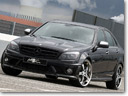
    MEC-AMG-C63-thumbMEC design have released an overhauling program for the Mercedes-Benz C-class. It covers all the W204 range – from the C180K to C63AMG. Nothing groundbreaking – Just a bit of sound and style, a dash of chrome, and some carbon fiber.

    To start off, we have a set of special “mecxtreme III“ 1-piece 9×20″ wheels, wrapped in 235/30 ZR 20 all rounders. A choice between two rear diffusers is given. One is carbon fiber, the other isn’t. Also, both of them are only compatible with the C63 Coupe with AMG Styling kit (sports package), post 2011. Then there’s some badging – A chromed “MEC Design” logo for the boot lid and – a replacement for the Mercedes-Benz star – a “MEC Design” emblem.

    Inside, four floor mats finished with precious velours/ nubuck-leather embroidery and a MEC Design-logo will set you back 171 euros ($228). An even more voluminous expense is the MEC steering wheel which will be yours for 1,250 euros ($1,673) in exchange for the old one. Make that 1,440 euros ($1,928) if you want carbon inserts in it. Other than that, the wheel is said to be ergonomic with perforated leather on the handling area and MEC design inscriptions at the lower end.

    Finally, to make sure that you don’t go anywhere unnoticed, MEC have provided some artillery pieces – two stainless steel mufflers with four oval tailpipes, sizing 115x85mm. The 4 cylinder models C200CGI, C250CGI should also get a splitter Y-piece pipe so that they can accommodate the two mufflers from each side. Here’s how a C63 AMG makes use of that orchestra:

    httpv://www.youtube.com/watch?v=VLkP4UKeT6M&feature=youtu.be

    MEC AMG C63 Mercedes-Benz
    MEC AMG C63 Mercedes-Benz

    Source: MEC design

  • 2012 BMW 640d xDrive Coupe

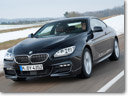
    BMW has added two interesting models to the new 6-Series line-up. The 2012 640d xDrive Coupe and Convertible will arrive in the showrooms this spring. The world’s most intelligent AWD system – xDrive teams up with a six-cylinder in-line diesel engine featuring BMW TwinPower Turbo technology to take driving pleasure to another new level.

    The performance is insane – 0-100 km/h in 5.2 seconds and a top speed of 250 km/h (155 mph) – electronically limited. Furthermore, this performance comes with 5.7 liters per 100 km (49.6 mpg on combined cycle) with 149 g/km CO2.

    The brilliant 3.0 liter six-cylinder twin-turbocharged diesel delivers 313PS (230 kW) at 4400RPM and 630Nm (465 lb-ft) at 1500RPM. The engine is mated to a 8-speed ZF automatic gearbox, which is tuned precisely to the performance characteristics of the power unit. In ECO PRO mode, the power reserves of the sporty diesel engine play a prominent role in ensuring a relaxed and extremely efficient driving style at low engine speeds.

    The latest generation of the most powerful diesel engine boasts a low-weight all-aluminium crankcase and the latest development of BMW TwinPower Turbo technology. This package of technology comprises multi-stage turbocharging and common-rail direct injection whose piezo injectors work with maximum pressure of  2 000 bar. The car’s two-stage turbocharging generates instantaneous and forceful power delivery, while the injection system sprays the fuel into the cylinders in precisely measured quantities to ensure clean and efficient combustion.

    The Driving Experience Control switch can also be used to call up SPORT, SPORT+ and COMFORT modes, and – if the optional Dynamic Damper Control or Adaptive Drive are selected – COMFORT+. As well as the accelerator progression, engine responses, power steering characteristics, intervention thresholds of the DSC stability control system and shift dynamics of the automatic transmission, this also allows the driver to adjust the damper settings and anti-roll control.

    2012 BMW 640d xDrive Coupe Interior
    2012 BMW 640d xDrive Coupe Interior

    The new BMW 6 Series Coupe can also be equipped with a specially developed M Sport package. The aerodynamic, exterior and interior components designed in familiar M style clearly showcase the sports car character of the 6 Series Coupe. Equipment includes an M aerodynamics package with bespoke body components for the front end, side sills and rear apron, exhaust tailpipe embellishers in Chrome Dark, LED front fog lamps and 19-inch light-alloy wheels in M double-spoke design. 20” light-alloy wheels in M double-spoke design can also be ordered as an option. Inside, features such as M-specific Alcantara/leather sports seats in Anthracite with Blue contrast stitching, an M leather steering wheel with multifunction buttons and gearshift paddles, and Aluminium Hexagon interior trim strips all play their part in creating a full-blooded driving experience. The M Sport package also includes door sills bearing the M logo, as well as an M driver’s footrest.

    The BMW 6 Series Coupe offers seating for four immersed in a luxurious ambience, while its 460-litre boot can accommodate three 46-inch golfbags or two medium-sized hard-shell suitcases plus a flight case. The comfort-enhancing equipment fitted as standard in the new BMW 6 Series Coupe includes 2-zone automatic climate control, a multifunction steering wheel, electric steering column adjustment, electrically adjustable and heated exterior mirrors, Cruise Control with braking function, a rain sensor with automatic headlight range control, a HiFi audio system and the control system iDrive with

    2012 BMW 640d xDrive Coupe
    2012 BMW 640d xDrive Coupe

    Source: BMW

  • 2012 Subaru Legacy Tourer – Price £26 865

    Subaru UK has announced the price list for the new 2012 Legacy Tourer. The family vehicle starts at £26 865 OTR for the entry level 2.0 D S model and goes up to 31 375 for the top-of-range 2.5i SE Navplus*. The new Legacy Tourer comes with a lot of significant technical improvements and equipment upgrades. It will deliver more satisfaction to owners and in the same time, it will lower the running costs and environmental impact.

    The next-generation Boxer diesel engine meets Euro 5 regulations with emission of just 149 g/km CO2 and astonishing fuel economy – 49.6 mpg (combined cycle). Importantly, the latter drops the car’s VED band down to level F, saving customers £35 per year. These figures are achieved thanks to a more efficient turbocharger, new exhaust-camshaft timing and lighter connecting rods, new oxidation catalytic converters and Diesel Particulate Filter (DPF).

    In terms of power, the diesel is very good – 147PS (108 kW) at 3600RPM and 350Nm (258 lb-ft) at 1600RPM. 0-100 km/h in 9.6 seconds and a top speed of 193 km/h (120 mph).

    The engine is mated to a 6-speed manual gearbox and a Lineartronic automatic is available as an option.

    Suspension modifications for all 2012 Legacy models include new bushes for the front anti-roll stabiliser bar mounts to improve ride comfort, new pressed upper rear suspension arms to reduce weight (saving 2 kg per car), and new pillow-ball bushes in the rear wishbones to reduce friction and provide a smoother ride.

    2012 Subaru Legacy Tourer
    2012 Subaru Legacy Tourer

    The exterior modifications of the new 2012 Legacy Tourer are minor – new door mirrors, a higher-resolution rear view camera (SE NavPlus only) and the availability of a new colour – Ice Silver Metallic. The interior benefits from a single-CD unit featuring a large LCD display screen together with USB and iPod connectivity and steering wheel-mounted controls.  On diesel models (with manual transmission) the instrument cluster now has a ‘shift-up’ indicator to encourage an economical driving style.

    Standard equipment includes cruise control, a glass ‘tilt-n-slide’ sunroof, dual-zone fully automatic air-conditioning, a premium audio system with six speakers (including two tweeters), automatic lights and wipers and a powered driver’s seat.  A Bluetooth® hands-free system with voice activation is fitted as standard, while all but the S model are trimmed in black leather.  Models with Lineartronic transmission feature steering wheel mounted paddle-shifters as standard.

    SE and SE NavPlus models add a Sports Package which comprises a sports front bumper and front grille, dark tinted headlamps, larger 18” alloy wheels and special Bilstein dampers.  SE NavPlus models also feature a new DVD navigation system as standard, with a high-resolution eight-inch display for optimum clarity.
    In the UK, the 2012 Legacy is available in a selection of six exterior body colours – one new colour (Ice Silver Metallic) – alongside five popular carry-over colours, Satin White, Galaxy Blue Silica, Crystal Black Silica, Graphite Grey Metallic and Camellia Red Pearl.

    2012 Subaru Legacy Tourer:

    Model £Price
    (OTR)
    CO2
    g/km
    VED
    band
    Insurance
    group
    £P11D
    value
    Diesel
    2.0D S 26,865 149 F 20E 26,680
    2.0D SE 29,070 156 G 21E 28,850
    2.0D SE NavPlus 31,370 156 G 21E 31,150
    Petrol
    2.5i SE* 29,075 196 J 19E 28,575
    2.5i SE Navplus* 31,375 196 J 20E 30,875

    *with Lineartronic transmission as standard

    Source: Subaru

  • 2012 Caterham SP 300 R

    Finally, the mighty Caterham SP 300 R will be ready for testing by the customers. They will get the chance to put the new car through its paces for the first time on Thursday, 1 March. This race car is built with only one purpose – to give maximal thrills to its driver. The project is co-developed by Lola Cars and will sit alongside the legendary Seven in Caterham’s product portfolio.

    “The SPR is very quick and a little like a formula car in that I could feel the downforce working and giving it lots of grip and balance. It was great fun to be able to give it a blast in Jerez and I look forward to testing Caterham’s road and race cars more often.”, commented Heikki Kovalainen.

    “We can’t wait to see how our customers react to the SP/300.R, it’s a real thrill to drive and very engaging so we know they’ll love it. These coming weeks are the culmination of a massive effort from a big team of people and we are very close to achieving our objective, so it’s very exciting for everybody involved. Over the coming months, there will be numerous opportunities for people to experience the SP/300.R.”, Simon Lambert, Caterham Motorsport Manager added.

    The SP 300 R is powered by a 2.0 liter Ford Duratec engine with 304PS (224 kW), which is coupled with a Hewland semi-automatic FTR gearbox. The overall weight is just 600 kg (1 323 lbs). This means a power-to-weight ratio of 500BHP per tonne.

    The performance is astonishing – 0-100 km/h in 2.5 seconds and a top speed of 274 km/h (170 mph).

    Other interesting point are the full race suspension, 13” race rims with Cooper Avon Tyres, an integrated roll-cage, a 6-point harness, a fire extinguisher and fuel cut-off switch. There are also AP racing brakes and steering wheel with data display.

    The price for this toy is £60 000.

    2012 Caterham SP 300 R
    2012 Caterham SP 300 R

    Source: Caterham

  • Mazda CX-5 with Smart City Brake Support

    Mazda has announced their latest technology named Smart City Brake Support (SCBS). It practically helps a driver to avoid frontal collisions during city driving at low speeds. The all-new 2012 Mazda CX-5 compact crossover will be equipped with SCBS. The safety system uses a laser sensor to detect a vehicle or obstacle in front of the Mazda CX-5. If the driver fails to slow the vehicle appropriately, or to take avoiding action, SCBS automatically activates the brakes and reduces the engine output at the same time. In such way, the SCBS helps to avoid collisions rom rear-end collisions at low speeds, which are among the most common accidents in the city.

    Actually, the system works at low speeds between 4 km/h (2.5 mph) and 30.5 km/h (19 mph). As we mentioned a laser sensor, which is mounted at the top of the windscreen detects a vehicle or obstacle in front of the car. It also monitors the gap between the two vehicles and the closing speed. If the SCBS calculates that there is a risk of a collision occurring and the driver were to take no action, the safety system pre-pressures the braking system. This ensures a faster response when the driver activates the brakes. Still, if there is no action from the driver, an automatic braking operation is activated. Remember, it is only effective within speeds from 4 km/h to 30.5 km/h.

    Mazda Motor Corporation is working hard on its safety technologies. The manufacturer is aiming for the ultimate goal of realising an accident-free and safe motorised society. Mazda intends to extend its advanced safety technologies, such as SCBS, to future new models, following its debut on Mazda CX-5, to contribute to provide all customers with driving pleasure together with outstanding environmental and safety performance.

    Mazda CX-5 with Smart City Brake Support
    Mazda CX-5 with Smart City Brake Support

    Source: Mazda

  • The Exclusive “Nissan CMF” Next-Generation Vehicle Engineering “4+1 Big Module Concept”

    Nissan-INVITATION-Concept-THUMBNissan has just announced the introduction of its next-generation vehicle engineering concept. It carries the name Nissan Common Module Family (CMF) and it is going to be featured in vehicles in 2013. The innovative CMF technology combines modular engineering with Nissan’s own engineering technologies, in areas such as simulation and variation engineering  and simplicity. With the development of CMF, Nissan expects to raise the popularity of its products and thereby significantly expand sales volume. Since a long time already has Nissan been promoting vehicle platform communization. It started with several vehicle variations derived from a single platform. As a result, this has become critical to achieving the rapid improvements in products, which is necessary for a company to survive in the competitive market. Nissan is aware that each new vehicle that is developed must include distinctive characteristics, improved fuel economy, passenger safety and IT features, and the rapid application of the latest technologies into the development process. It is important now that volume efficiencies must be achieved with the help and use of common vehicle structures, components and parts. Up to now, it was difficult to balance such contrasting elements. However, Nissan is fully embracing these challenges and implementing its next-generation “Nissan CMF” vehicle engineering strategy.

    “Nissan CMF” Next-Generation Vehicle Engineering “4+1 Big Module Concept”
    “Nissan CMF” Next-Generation Vehicle Engineering “4+1 Big Module Concept”

    In details, the application of Nissan CMF determines the use of four modules – engine compartment, cockpit, front underbody and rear underbody – as well as the architecture for electronic components, with each module having appropriate variations. What is important here is that vehicles are designed by combining these modules in different ways. Hence, all this results in variety of vehicles, depending on the module configuration: from compacts, large-sized vehicles through to tall SUVs. All of them can be efficiently designed.

    Nissan brand made a committement to introducing 90 new technologies by 2016 and Nissan CMF is one of them. It will enable commonization that transcends vehicle segments, efficiency, and make the application of attractive new technologies across several models.

    Source: Nissan

  • 2012 Ford B-MAX features the new SYNC technology

    Ford_B-MAX ThumbThe so strongly awaited and anticipated new 2012 Ford B-MAX will feature class-leading technology, which will make this small family car a powerful one. Ford B-MAX makes its first public appearance at a key technology event: the Mobile World Congress in Barcelona.

    The reason for this is featured in the vehicle new SYNC technology: a voice-activated in-car connectivity system that takes the integration of mobile devices, voice control and convenience to a new level with extensive device compatibility and voice command in diverse languages. Moreover, the new SYNC technology can seamlessly connect to mobile devices various means: it not only includes Bluetooth, an iPod and flash drive compatible USB connection but also brings a potentially lifesaving feature in Emergency Assistance. This is the only feature of its sort which is designed to respond to a crash by using the customer’s connected mobile phone to call the emergency services directly. Ford also expects to have over 3.5 million SYNC-enabled vehicles on the roads of Europe by 2015.

    The new version of the B-MAX features the Ford Easy Access Door System which is unique for the car and integrates central body pillars into the hinged front doors and sliding rear doors to create large, unobstructed openings on either side of the car. Moreover, the B-MAX engine range delivers 15 per cent more economical motoring with class-leading fuel economy and CO2 emissions available on both the 1.0-litre EcoBoost petrol engine and 1.6-litre TDCi diesel engine.

    The firs one can develop 120PS (88 kW) and offering 114g/km CO2 emissions and fuel economy of 4.9l/100km (57.6mpg. Furthermore, Torque Vectoring Control, will improve driving dynamics and cornering control. On the other hand, the Active City Stop will help drivers avoid low-speed collisions using a forward-facing infra-red camera to detect objects in front of the car and automatically apply the brakes in case the driver fails to respond. The 2012 Ford B-MAX will make its world debut at the 2012 Geneva Motor Show in early March and later this year will go on sale in Europe.

    2012 Ford B-MAX Compact Multi-Activity Vehicle
    2012 Ford B-MAX Compact Multi-Activity Vehicle

    Source: Ford

  • Ford Evos Concept includes future technology experience

    Ford-Evos-Concept THUMBThe exciting Ford Evos Concept was firstly unveiled to the public at the 2011 Frankfurt Motor Show. It shows how technology can significantly improve the driving experience for each customer. It is based on connectivity between the vehicle and the driver’s “personal cloud” of information. Furthermore it includes technology vision for enriched customer experience with the means of personalization, adaptation and creativity. In addition Evos Concept is designed around a technology experience which embraces a new generation of driver interaction and awareness which is currently under development in the Ford Research and Innovation laboratories. With information from the drivers’ personal cloud, the vehicle can provide the same connected lifestyle the driver experiences at home or office. The car knows the driver, and automatically adapts handling, steering and engine controls to deliver an exceptionally dynamic driving experience. Moreover, Ford researchers are focusing in this area in order to deliver on four key customer benefits: personalization, seamless enhancement of the driving experience, looking after the driver’s well-being and delivering smart electrified powertrain optimization. The technology used in the cehicle draws from a detailed understanding of the driver’s preferences and driving habits. Hence, the Ford Evos Concept can easily combine this personal information with additional data from the cloud, such as the driver’s work schedule and local traffic or weather conditions. This information provides a personalized and seamless experience as the driver transitions in and out of the car. In addition, it could automatically play the same music or news program that was just streaming at home, or heat or cool the interior to an ideal temperature before the driver gets in without having to be requested by predicting departure time based on his calendar.

    Ford Evos Concept
    Ford Evos Concept

    What about the efforts put to enhance the driving experience? The current technology requires vehicle chassis settings to be defined based upon the abilities and tastes of a cross-section of drivers and the topography of typical roads. The concept predicts tuning handling and performance to the road that is ahead and the specific individual behind the wheel. More importantly it has the ability to learn driver’s habits and capabilities and overlay map and weather data sourced from the cloud to adjust powertrain, steering, suspension and braking systems for optimum enjoyment, comfort and safety. Undeniably, all this takes driving experience to a new level. In addition, Ford researchers have already developed technologies focused on driver wellness. What I mean here is that they have developed for example, technologies which can monitor the heart-rate of the driver. With a seamless connection to the cloud, the Ford Evos Concept monitors the physical state and workload of the driver and adjusts the driving experience accordingly. The Ford Evos Concept also includes advanced air quality sensors and filtration systems to help allergy sufferers. It is location aware: it can access air quality data from the cloud and suggest a healthier route to the destination.

    Completing the vision for the Ford Evos Concept is a state-of-the-art lithium-ion plug-in hybrid (PHEV) powertrain. Ford ‘powersplit’ hybrid architecture allows the electric motor and petrol engine to work together or separately to maximize efficiency. Of course, the “cloud” connectivity would offer choices to improve the performance and efficiency by selecting the optimum combination of powertrain modes for any given journey. Being a “cloud”-optimized powertrain, it will know when is the best time to save energy and when is the best time to switch modes. For this purpose it uses the information it has about the travel route, the emission zone restrictions and current weather conditions.

    Another important fact about the Ford Evos Concept is that it was especially developed to introduce the new Ford design direction. It includes key design elements which will be applied to forthcoming Ford vehicles. In particular, the Ford Evos Concept was conceived as a dramatic fastback concept. It combines striking new profile with innovative proportions. A lot of attention has been put on the lines of the body, which conceal a unique new format, with a four-door, four-seat layout. This results in dynamic appearance with surprising practicality. Reflecting the exterior, the interior of the Ford Evos Concept is built around the driver, and is innovative and brings more style to the cockpit. In this way the driving pleasure will be with a stylish and 100% secured.

    Source: Ford

  • Where it All Started – BMW M1

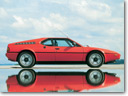
    BMW-M1-thumbThroughout the years, besides being utterly magnificent, M BMW cars have always been a statement. “I am the kind of person which has a an impressive annual income, a family, clout and an insatiable thirst for sideway buffoonery”. Whichever M car one might choose, the perks are always going to be the same – practicality and sensibility get you trough the mazes of society while sheer power and playfulness make for a great time at the countryside. Small wonder then, that today many well dressed men consider the M batch of BMW’s as a really, really good investment. But few people ask themselves, how and when did it all begin? Let’s just say, that the whole practical performance, 5-door saloonishness was definitely not the case at the beginning of the M odyssey. Enter the 1978 M1 – BMW’s first and only mid-engined road car.

    BMW M1 (1978-1981)
    BMW M1 (1978-1981)

    Its birth hadn’t been easy. The company had to act quickly as, at the time, the Porsche 911 was becoming increasingly dominant in the field of motor sports. Believe it or not, BMW needed help. And that help came from Lamborghini. Sort of. The Italian company was assigned to do the design, engineering and production work. Without a doubt, that sounds like a recipe for success – BMW overseering the company that brought to the world the Lamborghini Miura and the Countasch. Probably one of the most talented designers ever, Giorgetto Giugiaro, sketched the lines of the M1 with a particular signature that can be seen in other works of his, such as the Lotus Esprit. Sadly, the times were tough, an oil crisis swept the world and Lamborghini went bust. That meant that BMW had to turn to someone else to finish the job. It was a painstaking process that consumed both time and money. The end result was an overpriced, plastic car of a thing that spawned only 455 times. On top of that, by the time everything was sorted out, most of the motor sport regulations moved on and the Bavarian was left trailing behind.

    Lotus Esprit S2 (1978-1981)
    Lotus Esprit S2 (1978-1981)

    The real tragedy however, is that, for its time, the M1 was a really decent car. It had the looks, it had the quintessential supercar setup (2 seats, mid-engined, rear-wheel drive), it weighed like a super car (1400 kg) and it had a wonderful 3.5 liter straight six engine that developed 273 bhp. And it wasn’t some sort of an experiment power plant, but a proper one with a Kugelfischer mechanical fuel injection system and DOHC operating 24 valves in total. Later on the M635Csi and the first-generation M5 would get pretty much the same engine.

    And that’s the thing about the M1. It died off quickly for a novel cause. Mercifully, the M badge stuck on, but now the BMW people were caught thinking – “Why don’t we shove such an engine in one of our own pefectly good saloons, beef up the brakes and suspensions and see what happens?” Today the results are evident. Almost every BMW car in the conteporary line up has an M counterpart which is hugely successful on the market and almost always highly valued by critics and automotive  journalists.

    BMW M1 (1978-1981)
    BMW M1 (1978-1981)
  • Front Wheel Drive vs. Rear Wheel Drive

    It is very difficult to say which is better between a front wheel drive (FWD) and a rear wheel drive (RWD). The conception is quite different. Actually, both have nothing in common in road behavior. When you get at the limit of your car, the pros and cons appear the most.

    The FWD is famous with its understeer, while the RWD with its oversteer. Both understeer and oversteer are quite shocking in everyday or normal driving conditions and should be avoided. Often the electronic safety systems take care for this, but some old cars do not have them and even in a brand new one, there is always a possibility to get yourself in trouble.

    Simply put, understeer is when the car does not turn enough and leaves the road in straight line and the over steer is when the car turns sharper than intended and could get into a spin. For experienced drivers managing with oversteer is easier, because it is more predictable, especially when the car is equipped with limited slip differential (LSD). If the car goes understeering just release the throttle and apply some brakes, if needed. If the car goes oversteering you have two options. First is to powerslide the corner, if the car has enough power and the second option is the same like the understeering situation. Powersliding is extremely hard and should be done only at the racetrack and never on public roads. In a few words, it means to apply the throttle in a turn enough to make the rear wheels break traction and slide out. All this is made with a proper countersteering.

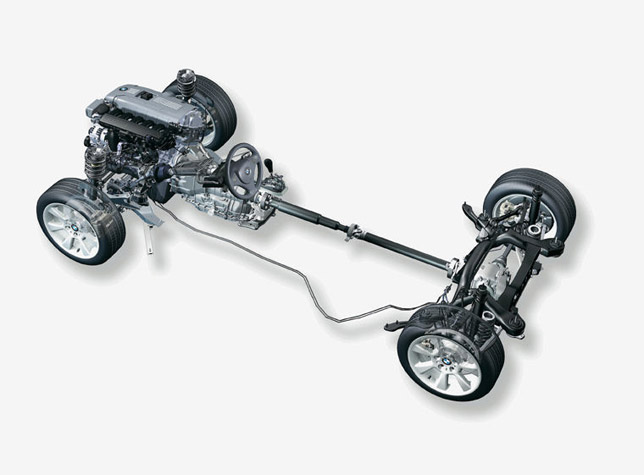
    Other very important thing is that the RWD has a lot more losses in power compared to the FWD mainly because of the more moving parts. The FWD layout is engine -> clutch -> gearbox -> differential -> axle shafts and the RWD layout is engine -> clutch -> gearbox -> joint -> driveshaft -> joint -> differential -> axle shafts. As you see, the torque should “go” more way to reach the rear tires, instead of reaching the front. Again, simply written is that you lose about 12% of your engine power, if you have FWD car and about 15%, if the car is RWD. That’s why you will see the notion – wheel horse power – WHP. For example often a 150HP FWD car is a lot faster than a 150HP RWD car because the second has a lot more losses in power through the drivetrain.

    Obviously the RWD cars are very fun to drive, because each axle has to do its own task – front to steer and rear to power. The FWD cars are safer for beginner drivers, especially in low traction conditions (rain or snow). They are also more economical, because they put more power on the road and often are lighter. Other important thing is that the manufacturers can’t make very small RWD cars or they shouldn’t because they are very unstable.

    So, next time you are seeking a new car be sure what you are searching for.

    Rear Wheel Drive
    Rear Wheel Drive
    Front Wheel Drive
    Front Wheel Drive
  • Some facts about Electric Vehicles

    Behind the history of the electric vehicle are more than hundred years. Yes, I was surprised to find out this too. In particular, their history began in the middle years of the 19th century. However, at this time it was really costly to afford such automobile. Moreover, compared to internal combustion vehicles, the electric ones had much lower speed. Gradually this led to their extinction worldwide. Nowadays what we experience is quite the opposite. As we can see ourselves on the market are gradually being launched vehicles, which are powered by alternative fuel or are electric ones. This of course has to do with environmental issues.

    The hydrocarbon fueled vehicles seem to cause great damage to the environment, because of the gases they emit. Or in other words, the automotive industry is now trying to take some precautions for the evil done, develop and promote environmental friendly vehicles and raise the global awareness in this particular area. We all want to live in less contaminated and better world, don’t we?
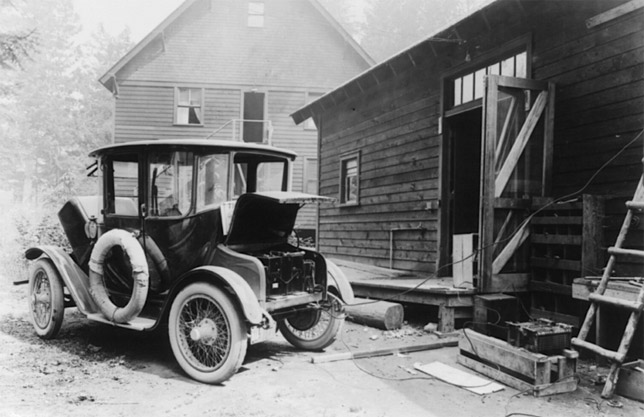
    Electric car from early 20th century charging

    In fact, for the first time in history, electric cars became popular after the mid-nineteenth century. Then the electricity was actually a strongly preferred method for automobile propulsion. Back in 1987 the electric cars found their first commercial use in the United States. For instance, the taxies in New York City were electric. They were manufactured by the Philadelphian Electric Carriage and Wagon Company. During the twentieth century the main manufacturers of electric vehicles in the U.S. were Anthony Electric, Baker, Columbia, Anderson, Edison, Riker, Milburn and many more.

    Although that at this time the electric cars produced relatively slow speed, they had some advantages over their rivals. What I have in mind here is that they produced less noise, vibration and smell, which were a characteristic of gasoline powered vehicles. In addition, they did not require gear changes. And hence the electric car became famous among people living in the city, who could use their optimum potential. Furthermore, the electric powered vehicles didn’t require manual start as oppose to gasoline ones and were easier to drive, which lead their popularity growth among women.

    And even back in the beginning of the twentieth century the electric car was considered the cleaner, quieter and of course the more fuel-efficient car, in comparison to the gasoline vehicle. However, by the 1930s the latter one became the “bigger star” and more importantly – what made it more popular was its lower price. They also developed far greater speed to their equivalent electrics. And adding to all this – the invention of the electric starter by Charles Kattering (in 1912) – gasoline cars became easier to operate. Then came the use of the muffler, which reduced significantly the noise they produced.

    The total eradication of the electric automobile from the world was also possible due to the mass production of the gasoline Henry Ford vehicles, which even were at an extraordinary price – more than six time cheaper than the electric ones. After this expansion, no one really remembered the electric cars …

    Until the late 1970’s and early 1980’s when the world experienced the first big energy crises. This led to the renewed attention on alternative fuel and electric vehicles. As a result, in the beginning of the 1990’s, the California Air Resources Board (CARB) set the requirements for the development of more fuel-efficient and lower-emissions vehicles.

    The highest aim here was the production of zero-emissions vehicles. The electric ones were what they were looking for. Then the automotive world came to see some great electric models, such as Chrysler TEVan, Ford Ranger EV pickup truck, Honda EV Plus hatchback, or Toyota RAV4 EV.

    However, the market wasn’t fully prepared to embrace this new ecologically orientated step, so the models were taken off production in the end. Another recession followed in the 2000’s, which lead to the increased need for smaller cars, hybrid cars and of course electric ones. One of the most famous nowadays electric cars manufacturer Tesla Motors, in 2004 began the development of the Tesla Roadster, which was firstly launched on the market four years later. Nowadays we have many examples of electric cars, developed and produced by famous carmakers. Such are: Mitsubishi i MiEV, Nissan Leaf, Mercedes-Benz Vito E-Cell, Smart ED and many more.
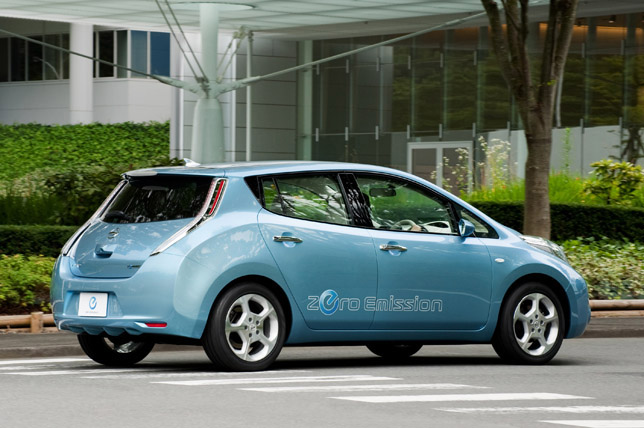
    Nissan LEAF

    To sum up, when the electric vehicles were invented, they seemed to be the best choice of and for the future. Moreover, the electric car produces no pollution to the environment and can be the greatest choice for the city dwellers, who are concerned about the world around them and want to make a positive change.

    People won’t loose from comfort, road handling, safety, performance or durability, because the electric vehicles are similar to the gasoline powered ones. Another big advantage is also their low cost to operate and more importantly they have the potential to be more reliable because they include fewer parts and mature technology.