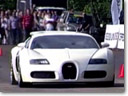
Let’s continue with the reaction time. With several words, it is the time between the green light signal and when the car passes the starting line. Normal reaction time is between 0.5 to 1 second and if it is under that, the driver is either lucky or trying to “cheat”.
All this characteristics are connected and can explain everything that happens on the race track, even how the driver controls the car.
The time and the terminal speed are the most important characteristics and normally the proportions are these: 15 to 14 seconds on ¼ mile – 150 to 160 km/h, 14 to 13 seconds – 160 km/h to 175 km/h, 13 to 12 seconds 175 km/h to 190 km/h, 12 to 11 seconds from 190 km/h to 210 km/h and all cars in the 10 second mark and below that have terminal speeds of more than 210 km/h.
So, what happens, when the car have high terminal speed and bad ¼ mile. Usually, there are two reasons – bad start and low traction after that. The cars, which are not 4×4 and have a lot power like turbocharged BMWs, Porsches or Mercedeses. The conclusion is more wheel spin leads to bad ¼ mile time and high terminal speed.
So, it turns that drag racing is not only a chase between two cars on a straight line and changing gears or waiting for the automatic transmission to do that. There are a lot for very important factors, which can work in your benefit, if you know them and try to improve not only your car, but yourself, too.
More power, less weight and good, prepared driver – the formula of the success at ¼ mile races.
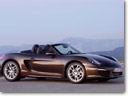
Porsche will exhibit the new 2012 Boxster alongside the Panamera GTS and 911 Carrera Cabriolet at the Geneva Motor Show at 09:30 on March 6 in Hall 1.
As we previously wrote, the 2012 Boxster features all-new lightweight body, new flat-six engines with direct petrol injection, a completely revised chassis and evolutionary styling.
It is powered by a 2.7 litre boxer engine with 265PS (195 kW) and a 3.4 litre flat-six with 315PS (323 kW). Both models feature a manual 6-speed gearbox as standard, with the 7-speed dual-clutch Porsche Doppelkupplungsgetriebe (PDK) available as an option.
Built in Zuffenhausen, Stuttgart, the new Porsche Boxster will hit the UK market from May 5.
The Boxster is priced from £37 589, and the Boxster S starts at £45 384.
2012 Porsche Boxster S
The manufactureris unveiling the 911 Cabriolet to a European audience right on cue for the open air season. The new model offers sporting drivers the option to enjoy the renowned dynamic qualities and iconic design of the 911 Coupe combined with the added versatility and driving pleasure offered by its folding convertible roof.
The roadster shares its new, high tech aluminium-steel body with the Coupe and extends this innovation to its all-new, unique hood. When raised, the design of the hood ensures the iconic 911 roof line is retained in its entirety. Intelligent lightweight design, including the use of magnesium in the hood frame, ensures reduced weight for increased responsiveness, lower fuel consumption and greater comfort. As is the case with the Coupe model, the new 911 Cabriolet is significantly lighter overall than its predecessor.
The new 911 models are on sale now starting from from £79 947 and the Carrera S Cabriolet is £89 740.
2012 Porsche 911 Carrera S Cabriolet
Panamera GTS is based on the regular model, but comes with updated 4.8 liter naturally-aspirated V8 engine with 430PS (316 kW) at 6700RPM and 520Nm (384 lb-ft) at 3500RPM. It is coupled with a 7-speed Porsche Doppelkupplungsgetriebe (PDK) transmission.
Despite to kerbweight of 1 920kg, the 4-door coupe accelerates to 100 km/h in 4.5 seconds and has a top speed of 288 km/h (179 mph).
A tuned chassis boasting performance-oriented options is standard; with the air suspension at its normal level the Panamera GTS sits 10 mm lower than the other models in the Panamera range and its damping is designed to be tauter, reinforcing the sporting personality. Dynamic performance is further enhanced by the combination of 19-inch diameter Panamera Turbo wheels, 5 mm rear wheel spacers and larger brake discs from the Turbo – recognisable by their red brake callipers.
The appearance of the Panamera GTS is characterised by numerous black exterior styling details. The high-gloss black exterior package comprises the side window trim, the decorative trim on the rear lid, the headlight washer unit cover, the rear diffuser and the side air outlet panels which lend a particular sporting touch. In combination with the black side skirts, the tail end and the matt black tailpipes of the sports exhaust system the result is clear-cut and striking.
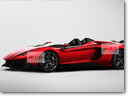
Here is a picture of a special convertible version of the hyper car – Lamborghini Aventador. It is set to be revealed at the Geneva Motor Show, next week. The name of the project is Aventador J Speedster.The J Speedster will share the same brutal engine – a 6.5 liter V12 with 700PS (515 kW) at 8250 RPM and 690Nm (509 lb-ft) at 5500RPM. It is coupled with a 7-speed ISR gearbox specially supplied by Graziano Trasmissioni Group. The performance will also probably the same – 0-100 km/h in 2.9 seconds and a top speed of 350 km/h (217 mph).However, at the Geneva Motor Show will be displayed the roadster version of Aventador, which is a different model.Stay tuned for more information!Lamborghini Aventador J SpeedsterLamborghini Aventador J Speedster Source: Autoforum.cz
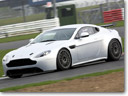
Aston Martin will reveal the new 2012 Vantage GT4 at the Geneva Motor Show, next week. The revised sports car features an all-new aerodynamic package plus further improvements to the rollcage and fuel tank.
The aerodynamic package includes a carbon fibre rear wing, which generates a lot of downforce, especially combined with a new larger front splitter.
The re-designed rollcage conforms to the latest FIA regulations and improves access and legroom.
Last improvement is the mid-mounted, 115-litre fuel tank, which lowers the centre of gravity and helps for better weight distribution. The fuel tank has twin quick-fill entries in the rear quarter.
The Vantage GT4 is powered by a 4.7 litre V8 with 436PS (321 kW) at 7300RPM and 490Nm (361 lb-ft) at 5000RPM.
The price is £119 500.
“We have taken the opportunity to make some quite dramatic aerodynamic enhancements to the Vantage GT4, which will close the performance gap between this entry level GT car and the GT3. We have also fitted the car with the same roll cage and fuel tank configuration that’s found in the Vantage GT3 and GTE. We are about to sell our 100th Vantage GT4 and since its launch it has been one of the most successful cars in its class; the Vantage GT4 and its predecessor, the Vantage N24, scored many 24 Hour race class victories, the 2010 European GT4 Cup title and also back-to-back championship victories in the Nürburgring VLN series in 2010 and 2011.”, said John Gaw, Managing Director of Aston Martin Racing.
“The revised version has very large boots to fill, but given the effort we’ve put into developing the upgrades and following a successful first outing, we’re very confident that the 2012 Vantage GT4 will pick up where its predecessor left off.”, he added.
Hyundai will reveal another interesting model at the 2012 Geneva Motor Show. The turbocharged 1+2 door Veloster Sports Coupe will showcase the latest ideas of engineers at the Hyundai Motor Europe Technical Centre in Rüsselsheim, Germany.
The main updates are the boosted power output and increased low-end torque to best suit European driving tastes and enhance driver enjoyment.
The Veloster Turbo is powered by a 1.6 liter T-GDI with twin-scroll turbocharger – 186PS (137 kW) and 270Nm (199 lb-ft).
“UK drivers tend to prefer more torque from a lower engine speed, so our European engineers have specified a set-up that still provides a substantial increase in power – up from 140 ps to 186 ps – while also delivering the desired low-end torque. The resulting package is very competitive against the performance of competitors such as VW Scirocco and Vauxhall Astra.”, said Tony Whitehorn, President and CEO of Hyundai Motor UK.
“Veloster has quickly established itself as a fun car and a unique proposition. The enhanced performance will increase the Veloster’s appeal for drivers who want the perfect combination of stand-out design, a fun drive and the practicality of a hatchback.” Mr. Whitehorn added.
2012 Hyundai Veloster Turbo EU
In terms of performance, Veloster Turbo is very good – 8.4 seconds 0-100 km/h with manual gearbox – 6-speed. CO2 emissions and fuel economy figures for the car will be announced nearer to launch in the UK.
The new Veloster Turbo has the same practical appeal as the original model, thanks to the innovative 1+2 door design. It also now features unique front and rear bumpers and foglights, new rear spoiler and grille, new 18” alloy wheels with chrome inserts, projection headlights with unique LED headlight accents, and unique LED taillights. These elements further accentuate the car’s eye-catching styling and add a greater emphasis on its performance.
The Veloster Turbo will come with Hyundai’s industry-best Five Year Triple Care assurance – a combination of a five-year unlimited warranty, five years of roadside assistance and five years of vehicle health checks.
Hyundai has released pictures of the all-new i20, which will make its official debut at the 2012 Geneva Motor Show.
The new model comes with refreshed styling, enhanced equipment and the lowest CO2 emissions of any conventional powertrain car on sale today.
The engine range includes the new 1.1 litre, 3-cylinder ‘U-II’ diesel engine with 75PS (55 kW). If, you opt for Blue Drive, this engine will emit just 84 g/km of CO2.
The engine was developed at Hyundai’s Diesel Centre of Excellence – part of the European R&D set-up in Rüsselsheim, Germany – and showcases Hyundai’s expertise in clean diesel technology.
There is another power unit with sub-100 g/km emissions – 1.4-litre ‘U-II’ diesel with 90PS (66 kw). When combined with Blue Drive technologies, it emits 96 g/km of CO2.
Dimensions: width – 1710 mm, height – 1490 mm, increased length – 3995 (by 55 mm) and wheelbase – 2525 mm.
“The i20 has been very popular with European buyers since it came to market in 2009, thanks to its combination of efficiency, quality, practicality and value. With an enhanced engine line-up that includes the lowest CO2 emissions for a conventional powertrain, and sharper styling influenced by fluidic sculpture, the All New i20 will appeal to a broader range of buyers, including younger consumers. The assurance of our industry-best, comprehensive Five Year Triple Care package makes the All New i20 an even more attractive proposition.”, said Allan Rushforth, Senior Vice President and Chief Operating Officer of Hyundai Motor Europe.
Volkswagen has announced the Cross Coupe concept at the Tokyo Motor Show last year, which is powered by a plug-in petrol-electric hybrid system. Now, it is turn to a new model – Cross Coupe Concept II. The vehicle will make its official debut at the 2012 Geneva Motor Show in few days.
The new Cross Coupe Concept II will have even more frugal plug-in hybrid drivetrain boasting a superb 157 mpg fuel economy. The drivetrain includes a turbodiesel direct injection engine (TDI) and two electric motors with overall power of 306PS (225 kW). As we mentioned, the fuel consumption is as low as 1.8 l/ 100km and 46 g/km of CO2. The performance is also at decent level, because the SUV can reach speeds of 220 km/h (137 mph). Really, these will be amazing achievements considering the weight of 1 858 kg.
Further information about the Cross Coupé will be available when it makes its debut at the Geneva Motor Show on Tuesday 6 March.
Yesterday we discussed two of the most popular alternative fuels – biodiesel and alcohol fuel. As we already became familiar, both are efficient not only in ecological terms, but also in economical ones. Given that the concerns around the global warming are escalating, I presume that in the future, there will be a great necessity for vehicles which emit less CO2 or are with zero emissions. Hence, this leads to the though that even more alternative ways for propulsion are going to arise in the near future. As we all can see, even now on the market, there is a big expansion of electric vehicles and hybrid ones. In addition, the brands are competing in the development of vehicles which are both fuel efficient and ecologically preserving.
First, let’s review one popular alternative fuel: propane. It is a compressed natural gas which almost everybody has used in their homes. However, it is popular as an alternative fuel too. It is a by-product of natural gas processing and petroleum refining. The process is called cracking. What is commonly used as vehicle fuel is actually a mixture of propane and butane, or more familiar as liquefied petroleum gas (LPG or LP gas). It is not necessary to state the environmental benefits of its use and the fuel efficiency it delivers for they are already very well known. Take a look at some models, which are using this type of fuel:
Extremely utilized way of alternative vehicle propulsion is through the means of electricity. The good news is that although the EVs were very popular more than hundred years ago, their development now flourishes. Moreover, it seems that the automotive world is in a stage of competition. The different brands are investing nowadays more than ever in the development of technologies, using electricity as alternative fuel. The EVs use electricity which is stored in battery in the car and don’t emit CO2. Although, they aren’t as fast as their gasoline powered rivals, they are considered perfect for city driving. Some of the electric vehicles, already on the market:
2012 Smart ForTwo Electric Drive
Did you know that ammonia can be used as fuel? In fact, ammonia has been proposed as a practical alternative to fossil fuel for internal combustion engines back in the beginning of the last century. In addition, it can be successfully used in already existing vehicles, which engines need only slight modification. Ammonia is beneficial in terms of zero emissions and economical efficiency.
Liquid nitrogen is another type of emissionless alternative fuel. Liquid nitrogen vehicles are comparable in many ways to the electric vehicles. However, they use liquid nitrogen to store the energy instead of batteries as it is in the case of EVs. They have several advantages that should be mentioned. First of all, they can be powered through the electrical grid (which contributes to their eco-friendliness). Secondly, there wouldn’t be any transportation of the fuel, since the power is delivered from the electrical grid. This is also economically viable. Next, the maintenance is also at low costs. At last but not least, the liquid nitrogen vehicles don’t have the degradation problems of the battery systems.
To sum up there are many different types of alternative fuels and nowadays even more are developed and considered for commercial use. Of course the main reason for this expansion of research is the negative environmental impact which the gasoline powered vehicles are causing, due to their high levels of CO2 emissions in the atmosphere. Undoubtedly, in the near future the commercial use of electric cars or hybrid ones won’t be considered as extravagancy but as a high level of environmental awareness.
Vehicles with Zero Emissions – the future of the automotive world
Drag racing is one of the most interesting events in the automobile world, especially for the spectators. Essentially, it is a race between two vehicles on a special dragstrip, which is a long straight facility for conducting acceleration events. When we say vehicles, we mean everything that can run… fast! – motorcycles, cars, sports cars, “funny” cars and top fuellers. This time we will talk about ¼ mile races – 402.33 meters.
There are two main types of events – start-and-fast beat, which is very “easy” to do. Just step on the gas pedal, when the lights are green and change gears (if you drive manual). The second type is bracket racing, which is very popular, too. The contestants choose their fastest time that they think is possible and who finishes first is a winner, but if you beat your announced time of 14.20 with for example 14.05, you will lose. These rules give opportunity to slow cars to catch up with very fast ones.
Now to say something about times just to have some idea for what’s really going on at the dragstrip. Usually, the normal cars around and under 200HP are in the range of 18 to 15 seconds. Those, which have sports nature, are from 14.9 to 13 seconds and the best of them are under 13 to 12 seconds. The cars with times under 15 seconds has at least 200HP and they are not very heavy like 1500kg (3306 lbs) or more. The cars around 13 seconds have 300 to 400HP and those under 13 seconds are extremely powerful – 500HP and more. Of course, there are a lot of exceptions, but normally this is the situation.
Other very important thing is the terminal speed, which again can show you how powerful the car is and how it uses that power and puts in on the tarmac. Again, usually the normal cars have terminal speeds of 120-140 km/h. The sports ones – 140 to 160 km/h and the best 160 to 190 km/h. If you see a car with over 200 km/h, it is either very tuned or very powerful with poor driver.
The start is extremely difficult, because the driver needs to know his car very well. Of course, a start with powerful car is more tricky and, but if you have launch control – congrats.
The first 60 feet (20 m) usually take from 1.6 to 2.4 seconds or more, if the driver can’t drive his car very well. Once again, the normal cars (if driven perfectly) are between 2.8-2.4 seconds, the sports ones from 2.4 to 1.8 seconds and if the time is around 1.4-1.5 seconds, this is either very powerful 4×4 vehicles or a RWD with slick tires.
This week’s fresh “eco” air is a small review of some of the alternative fuels available for use. A simple fact is that humanity sooner or later will experience the necessity of their utilization. Hence, the aim of the article is not only to raise the ecological awareness, but also to lift up the veil of ignorance around the alternative vehicle fuels that can be successfully utilized. (more…)
Fancy a unique feature on your BMW Z4? Well, add some character with Lamborghini Countach style doors. Spread those wings and turn heads as you go – its the LSD-door hinges offered by LSD. That type of upgrade is a first among BMW Roadsters with a foldable hardtop.
The standard door structure pretty much stays the same. It’s the hinges that make the difference. The package includes them and all the necessary wiring and mounting materials and accessories. TheLSD door fittings are attached to the original mounting points of the dismantled original hinges. Adjustable, mechanical stops prevent the doors from opening too far or, when open, prevent the door from falling inwards or downwards. Thanks to the Guided Roller System (GRS), all of the processes can be executed precisely and safely.
All parts provided come with TUV certificates and, on the car, the doors fare just as good in crash tests. So the LSD solution for the Z4 turns out as a very clever and seamless way to add some spice to this iconic roadster. All and all, one has to pay $2.308 for that privilege.
Another Carlsson gem at the 2012 Geneva Motor Show – the Carlsson Mercedes-Benz SLK will showcase all there is to showcase in exclusive accessories. The interior has been adorned with some Nappa leather, the exterior with some aerodynamic bits and pieces along with some wheels and there’s a performance upgrade for that extra punch.
Additional power comes from something called CB25 S. It’s a package for the SLK engine. Alongside a C-Tronic additional control unit from Carlsson’s Plug-and-Drive series, the kit also sees a new, larger intercooler. At the end of the day we have 176 kW (239 BHP) rushing out as apocalyptic thunder from the flow-optimized, stainless steel rear muffler.
Visually, the Carlsson SLK harbors an aerodynamic package similar to the one found in the AMG sports package. At the front there’s a Carlsson bumper with an RS lip spoiler made from carbon. Grille inserts made from electro-polished stainless steel replace the plastic honeycomb grille found in the front skirt of the series model. At the back we also have a new skirt insert along with the diffuser and a trunk lip spoiler. Thanks to a suspension tweak, the SLK sits lower by 30 mm on a set of Carlsson light metal alloy wheels measuring 8.5 x 19 inches at the front axle and 9.5 x 19 inches on the rear.
Inside a hand-stitched Nappa leather festival opens up as you step in. It’s called the Carlsson Signature Line and no matter what the temperature, the natural and exclusive material on the seats constantly assimilates to the temperature of your own body. In case you forget, Carlsson have scattered numerous reminders that this car is their child – Carlsson pedal overlays, Carlsson footrests, Carlsson door locking pins made from brushed aluminum, door sill panels and the glass wind deflector with the laser-printed Carlsson logo.
 Let’s continue with the reaction time. With several words, it is the time between the green light signal and when the car passes the starting line. Normal reaction time is between 0.5 to 1 second and if it is under that, the driver is either lucky or trying to “cheat”.

 Porsche will exhibit the new 2012 Boxster alongside the Panamera GTS and 911 Carrera Cabriolet at the Geneva Motor Show at 09:30 on March 6 in Hall 1.


 Here is a picture of a special convertible version of the hyper car – Lamborghini Aventador. It is set to be revealed at the Geneva Motor Show, next week. The name of the project is Aventador J Speedster.The J Speedster will share the same brutal engine – a 6.5 liter V12 with 700PS (515 kW) at 8250 RPM and 690Nm (509 lb-ft) at 5500RPM. It is coupled with a 7-speed ISR gearbox specially supplied by Graziano Trasmissioni Group. The performance will also probably the same – 0-100 km/h in 2.9 seconds and a top speed of 350 km/h (217 mph).However, at the Geneva Motor Show will be displayed the roadster version of Aventador, which is a different model.Stay tuned for more information!


 Aston Martin will reveal the new 2012 Vantage GT4 at the Geneva Motor Show, next week. The revised sports car features an all-new aerodynamic package plus further improvements to the rollcage and fuel tank.


 Hyundai will reveal another interesting model at the 2012 Geneva Motor Show. The turbocharged 1+2 door Veloster Sports Coupe will showcase the latest ideas of engineers at the Hyundai Motor Europe Technical Centre in Rüsselsheim, Germany.


 Hyundai has released pictures of the all-new i20, which will make its official debut at the 2012 Geneva Motor Show.


 Volkswagen has announced the Cross Coupe concept at the Tokyo Motor Show last year, which is powered by a plug-in petrol-electric hybrid system. Now, it is turn to a new model – Cross Coupe Concept II. The vehicle will make its official debut at the 2012 Geneva Motor Show in few days.

 Yesterday we discussed two of the most popular alternative fuels –


 Drag racing is one of the most interesting events in the automobile world, especially for the spectators. Essentially, it is a race between two vehicles on a special dragstrip, which is a long straight facility for conducting acceleration events. When we say vehicles, we mean everything that can run… fast! – motorcycles, cars, sports cars, “funny” cars and top fuellers. This time we will talk about ¼ mile races – 402.33 meters.

 This week’s fresh “eco” air is a small review of some of the alternative fuels available for use. A simple fact is that humanity sooner or later will experience the necessity of their utilization. Hence, the aim of the article is not only to raise the ecological awareness, but also to lift up the veil of ignorance around the alternative vehicle fuels that can be successfully utilized.
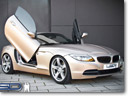 Fancy a unique feature on your BMW Z4? Well, add some character with Lamborghini Countach style doors. Spread those wings and turn heads as you go – its the LSD-door hinges


 Another Carlsson gem at the 2012 Geneva Motor Show – the Carlsson Mercedes-Benz SLK will showcase all there is to showcase in exclusive accessories. The interior has been adorned with some Nappa leather, the exterior with some aerodynamic bits and pieces along with some wheels and there’s a performance upgrade for that extra punch.


