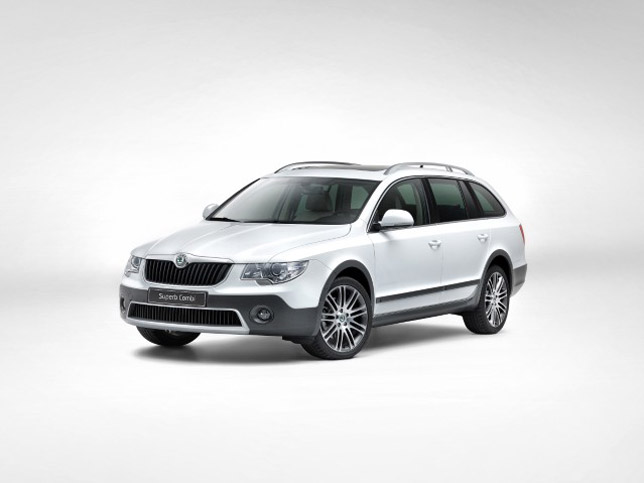
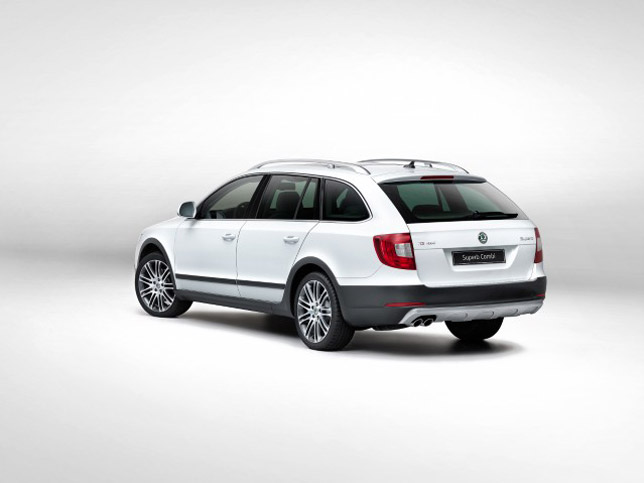
2013 Skoda Superb Combi Outdoor is the latest enhancement that the brand has made on the Supreb Combi model line up. All the models included in it are comfortable and practical; What make the “Outlook” so special however, is that it gives the Skoda more off-road look.
The new model will be available with all Skoda Superb engine versions with front- and all-wheel drive, except for the GreenLine variant. In addition, the offroad attitude that this car inherently has, will now stand strong even beyond paved roads.
2013 Skoda Superb Combi Outdoor
Next, not only that the “Outdoor” version extends the model line, but it also comes equipped with features such as robust synthetic panelling for the rear bumper, the wheel wells and the doorsills. Compared with the standard Superb, the front bumper is fitted with a larger air intake and round fog lamps.
2013 Skoda Superb Combi Outdoor will fit perfectly in the urban environment as well as in the country one. And hence it will suit perfectly drivers which have an active life style. The vehicle will also deliver them enough spaciousness, precise workmanship and an excellent price.
Ford Evos Concept is an exceptional vehicle which is going to make its first Asian appearance at Computex 2012, which is one of the biggest and most important computer exhibitions in the world.
The Evos Concept, which was first unveiled at last year’s Frankfurt Motor Show, not only embodies Ford’s new global design language but also offers a glimpse of the company’s vision on integrating more technology into its vehicles.
The Evos Concept started from a vision of an outstanding design. In addition, the designers intended for the concept to include the momentum of innovations like the SYNC in-car connectivity system.
The latter system offers a new generation of driver interaction and awareness and is currently under development by Ford. The aim is to offer uncompromised connectivity between the vehicle and the driver’s ‘personal cloud’ of information.
Ford Evos Concept
For example, the vehicle can utilize information from the driver’s cloud to provide the same connected lifestyle they experience at home or office. In other words this means that the car knows the driver, and automatically adapts handling, steering and engine controls to deliver an exceptionally dynamic driving experience.
In addition, this amazing connectivity system can also provide an integration of on-board data about driver preferences with cloud-based information such as work schedules, music and weather conditions, and local data delivered through vehicle-to-vehicle communications.
Evos Concept will also enchant its drivers with the same music or news they were listening to on live streaming at home. Or for instance, can also cool the interior to an ideal temperature before the driver gets in by simply predicting departure time based on his calendar.
Almost unbelievably, Ford’s researchers have also included technologies which can improve driver’s health and wellness while driving. How is that possible? There are features included such as the heart-rate monitoring seat and certified allergy-free interiors connect to the cloud to monitor the physical state and workload of the driver, and adjust the driving experience.
Ford Evos Concept
And for all people who suffer from allergies, the Evos Concept comes equipped with advanced air quality sensors and filtration systems. They are ‘aware” of the location and thus can access air quality data from the cloud and suggest a healthier route to the destination.
Another highlight here is that the Concept uses the power of the cloud in order to get more information on the driver’s behavior and travel patterns. Thus it will be able to predict the destinations and adjust the control strategies for the state-of-the-art lithium-ion plug-in-hybrid powertrain. Therefore, Evos can switch between running on battery or engine power in order to use the least amount of energy for any situation.
Ford Evos Concept explores adaptive vehicle technologies to redefine the driving experience. For instance, the chassis settings can be defined based upon the abilities and tastes of a cross-section of drivers and the topography of typical roads. Again, here the concept car predicts the tuning handling and performance to the road ahead and the specific individual behind the wheel.
At last but not least, what is very specific for this concept is that it utilizes Ford’s “powersplit” hybrid architecture. The latter allows the electric motor and petrol engine to work in collaboration or separately in order to optimize efficiency.
The advanced powertrain typically runs in all-electric mode before switching to charge-sustaining hybrid mode for continued optimal fuel efficiency. The cloud-maximized powertrain automatically “knows” when to save energy and switch modes It does this by using information about the vehicle’s predicted travel route, the emission zone restrictions during the journey and current weather conditions.
2012 Toyota 86 is a sportscar which is much appreciated and awaited and more importantly which now goes on sale. In fact the 86 model is an aim for a grand return to Toyota’s sporting roots. And the brand does this with the world’s only combination of a front-mounted, free-revving, horizontally opposed “boxer” petrol engine and rear-wheel drive!
The car is indeed unique, because it combines a one-of-a-kind powertrain format, compact design, light weight and a low centre of gravity. All this results in the best possible power-to-weight ratio. Of course, this also contributes to a maximum driving pleasure – lively, accessible performance and highly engaging dynamic abilities with minimal electronic intrusion.
2012 Toyota 86 is being offered in two grades – GT and GTS, which are both powered by a 2.0-litre flat-four engine. In addition, Toyota‘s D-4S direct-injection technology enhances the throttle response, power and torque over a wide range of engine speeds.
2012 Toyota 86 GT
In details, the maximum power the vehicle is 147kW – equivalent to 100hp per litre – and peak torque of 205Nm (151 lb-ft). Additionally, fuel economy is absolutely remarkable for a sports car: it is only 7.8 litres/100km for manual variants – and even better for automatic versions at just 7.1 litres/100km. CO2 emissions are 164 grams/km (auto) and 181 grams/km (manual).
Both engines can be mated to a newly developed six-speed manual gearbox, which offers quick, precise shifting through closely stacked ratios. The other option in terms of gear box is the Lexus IS-F-inspired six-speed automatic transmission, with shift paddles mounted on the steering wheel, combines direct response with an extremely fast shifting speed of only 0.2 seconds.
The 86 includes an aerodynamic and stylish body design built around a low, highly compact chassis for optimum handling and performance. The vehicle also comes equipped with wide array of standard equipment: seven airbags, a five-mode stability control system, traction control, anti-skid brakes, 16-inch alloy wheels, cruise control, air-conditioning, CD sound system, daytime running lamps (DRLs) and a multi-information display.
The 86 GTS runs on 17-inch alloy wheels, and has in its equipment a 6.1-inch display screen, satellite navigation with live traffic updates, auto-levelling HID headlamps, leather-accented front seats, dual-zone climate-control air-conditioning, aluminium pedals, LED DRLs and red stitching highlights.
The unique visual identity of Toyota’s cars is due to the distinct T-mesh pattern in the front grille, door-switch base, instrument panel, meters, triangular rear-centre foglamp and spare-wheel cover. The models in both grades also include numerous exclusive sporting details through both the exterior and interior, including a conrod motif to the HID headlamps, twin exhausts, instrument dials, air vents and gear-lever base.
The 86 piston logo can be see on the car’s front wing and is based on the car’s unique front boxer engine, rear-wheel drive powertrain format. It also is a representation of the vehicle’s tyres sliding in a four-wheel drift, highlighting the perfect on-the-limit balance of the 86.
2012 Toyota 86 GTS
2012 Toyota 86 Pricing:
Grade
Price
86 GT manual
$29,990
86 GT automatic
$32,490
86 GTS manual
$35,490
86 GTS automatic
$37,990
2012 Toyota 86 Specifications:
Engine
Engine type
2.0L-Boxer 4
Capacity (cm3)
1998
Cylinders/valves
Boxer 4/16V
Description
Four cylinders, horizontally opposed, 16-valve, DOHC, four valves percylinder and alloy cylinder block
Bore x stroke (mm)
86 x 86
Compression ratio
12:5:1
Max. output
147kW @ 7,000rpm
Max. torque
205Nm @ 6,400-6,600rpm
Recommended fuel type
98 or more Octane
Fuel-tank capacity (L)
50
Transmission
Type
Six-speed manual
Six-speed sequential-shift
automatic (with paddle shift on GTS 86)
Ratios: 1st
3.626
3.538
2nd
2.188
2.060
3rd
1.541
1.404
4th
1.213
1.000
5th
1.000
0.713
6th
0.767
0.582
Reverse
3.437
3.168
Final drive
4.100:1
4.100:1
Steering
Turning circle
10.8m (tyre), 11.4m (body)
Type
Rack and pinion Electric Power Steering (EPS)
Suspension type
Front
MacPherson strut with coil springs, gas-filled dampers and rose-jointedstabiliser bar
Rear
Double wishbone with coil springs, gas-filled dampers and rose-jointedstabiliser bar
Capacities
Seating
4
Cargo space height
391mm
Exterior dimensions
Overall length (mm)
4,240
Width (mm)
1,775
Roof height (mm)
1,285
Wheelbase (mm)
2,570
Tracks (mm)
Front: 1,520 Rear: 1,540
Interior dimensions
Front to rear couple distance (mm)
700
Front legroom (mm)
1065
Rear legroom (mm)
759
Driven wheels
Rear
Wheels and tyres
GT
16 x 6.5J alloy with 205/55 R16 tyres
GTS
17 x 7J alloy with 215/45 R17 tyres
Brake type
GT
Ventilated front and solid rear disc brakes with anti-lock braking system(ABS), electronic brake-force distribution (EBD), brake assist (BA) and vehiclestability control (VSC).
Front disc size: 277mm diameter by 24mm thick
Rear disc size: 286mm by 10mm thick
GTS
Ventilated front and ventilated rear disc brakes with ABS, EBD, BA andVSC.
Front disc size: 294mm diameter by 24mm thick
Rear disc size: 290mm diameter by 18mm thick
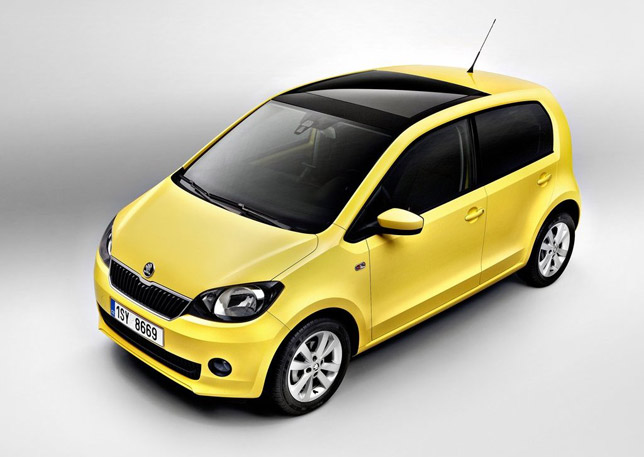
2013 Skoda Citigo is the all-new five door vehicle delivered by the Czech brand and is now officially on sale. This is the sixth version of the award-winning model line-up and Skoda’s first urban car.
Although it has a simple design, it also will bring its customers a lot of style in their day-to-day life. It will also offer outstanding maneuverability, a lot of comfort, convenience and technical mastery.
In addition, the Citigo is also the first Skoda model, which wears brand’s revised “winged arrow” corporate badge. Skoda targets with this car to get the attention of younger drivers and families who need a second car.
The advantages of the Citigo are many. First, it has a spacious and bright cabin which can easily accommodate four persons. It also has the largest boot in its class and a five-star Euro NCAP safety rating.
2013 Skoda Citigo
The vehicle’s engine is a 1.0-litre three-cylinder petrol one. It delivers 75 hp (55 kW), and comes equipped with the GreenTech fuel-saving technologies including stop/start and brake energy recuperation.
The engine is mated to a five-speed manual transmission as standard. However, as an optional choice there is an automatic gearbox also available. Citigo’s official combined fuel economy is 68.9mpg and CO2 emissions are 96g/km.
The model comes in three high specification trim levels – S, SE and Elegance, to which can be added a wide range of optional features. Some of which are is the Personal Infotainment Device (PID), a dashboard-mounted touch-screen technology providing Bluetooth, sat-nav, and trip data.
Prices for the 2013 Skoda Citigo line-up start at just £7 630.
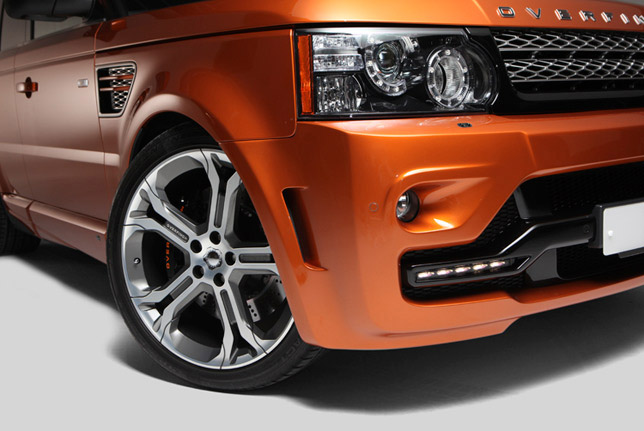
Overfinch are releasing are preparing for the 2012 Goodwood Festival of Speed (June 28th – July 1st) and it shows. Here’s a teaser video of their Range Rover Sport set for a debut there. We know for a fact that it’s called the Overfinch Range Rover GTS-X – the kind of abbreviation one would normally give to a sleek, mile-crunching grand tourer and not to a boxy SUV that has the drag coefficient of a wall.
Still, Overfinch suggest that the supercharged engine the used now churns out 575 bhp (65 bhp more than the current Supercharged 5.0-liters V8 Range Rover Sport) thus enabling the GTS-X do the 0 to 60 mph run in just 5-seconds. That’s pretty impressive. Other than that, an extensive body kit overhaul is quite visible, LEDs (can’t go without them), a Brembo set of brakes and, judging by the sound, some new plumbing as well.
More details are expected to spring up as we get closer to the Goodwood Festival. As for now, enjoy the video:
There is no doubt that BMW 640d Gran Coupe F06 M Sportpackage is one of the best looking new cars in the world. It is simply stunning as you can see in the video below.
It is powered by the famous BMW TwinPower Turbo inline 6-cylinder diesel engine with 313HP (230 kW) at 4400RPM and 630Nm of torque at just 1500RPM. 0-100 km/h in 5.4 seconds and a top speed of 250 km/h (155 mph). Simply great performance for a car weighing 1865 kg.
Furthermore it is superbly efficient – 6.8 litres / 100 km in city, 4.8 liters / 100 km on the highway and a combined cycle of just 5.5 litres per 100 km.
The F06 M Sports comes with complete aerodynamics package as well as some other upgrades like lowered suspension and nice interior trim.
Toyota has announced some very nice upgrades for their latest model – the sports car GT 86. These goodies are available only in Germany.
Thanks to its affordable price from € 29 990 sports car fans this is still much room for customization.
The exterior boasts decorative films in black or silver, mirror caps in carbon optics and 18” alloy wheels. The black matt varnish costs €389, fully polished wheels in Himalayan Grey are €399 and shiny graphite “Ultraleggera” set is €529 (excluding tires). An even more intense driving experience allows the lowering of the body by 30 mm – a set of springs for €189.
The interior can be upgraded with a Touch & Go navigation systemwith Google local search and Bluetooth/USB/iPod connectivity. This pleasure is €695 and if you want the JBL sound system, you have to search deep in your pockets for another €1045.
This weekend, two sporting events will come to Detroit – the Chevrolet Grand-Am 200 at Belle Isle on Saturday and the Chevrolet Indy Grad Prix on Sunday. The former will have a ChevroletCamaro ZL1 pacing the contenders while the latter will get the Chevrolet Corvette 427 Convertible.
“With Corvette and Camaro, Chevrolet has two of the most popular, and most iconic, performance cars in the industry,” said Chris Perry, vice president, Chevrolet Global Marketing. “It will be very exciting to see them leading the field as racing returns to Detroit.”
Looking at the statistics, its clear that those two are the right choice – back in 2011, every third supercar sold in the US was either a Camaro or Corvette. This year, that trend is still up as total sales for Camaro lead its nearest competitor, the Ford Mustang, by 13 percent through April. For the same period, Corvette sales are 39 percent higher than its nearest competitor, the Porsche 911
But we need other numbers to be convinced that the Camaro and Corvette are as appealing as they say. Fortunately, those numbers are present as well: The 2012 Camaro ZL1 Coupe which will have the job to pace the Grand Am is the most powerful one up to date – 6.2 liters of displacement, V8 cylinders, supercharged, it’s engine develops 580 hp and 556 lb-ft. of torque. It sounds raw, but it isn’t. The magnetic suspension is looked after by a sophisticated Performance Traction Management so that you have infinite amounts of grip. Then, even when the infinite comes to an end, the six-piston Brembo brakes to keep you out of trouble. As a result of all that, the Camaro ZL1 goes from 0 to 60 mph in 3.9 seconds and has a top speed of 184 mph. It’s current record at the Nürburgring stands at 7:41:27.
Similarly to the Camaro, the 2013 Corvette 427 is the most powerful convertible Chevrolet out on the markets. In fact it’s one of the most powerful convertibles in general. It has an engine from the Corvette Z06 which erupts with 505 hp and 470 lb-ft. of torque every time you step on it. Because of extensive use of carbon fiber, the 427 is lightweight as well – 3,355 pounds. (for a convertible). That means a power-to-weight ratio of 6.64 – or one horsepower for every 6.64 pounds of vehicle mass. That puts to shame well-established brands such as Audi, Aston Martin, Ferrari and their respective convertibles. For the Chevrolet Corvette 427 to do a 0 to 60 mph run it takes 3.8 seconds and the top speed boarders 190 mph.
Prior Design Ford Mustang C5 is not the latest transformation by Prior Design. Although we are already familiar with this incredible car and its more astounding tuning, there were released some additional new and absolutely exclusive pictures of the muscle car.
The body kit for the Mustang features new front bumper with large air intakes. In addition to that it also comprises of pair of modified side skirts and newly styled rear bumper.
All these features can’t go without the Mustang which can offer any driver impressive numbers in terms of power and speed. The C5 is powered by a huge 5.4 liter supercharged V8 delivering 500 horsepower (373 kW) at 6000RPM and 650Nm (480 lb-ft) of torque at 4500RPM.
PRIOR-DESIGN Ford Mustang C5
This outstanding engine works together with a six-speed manual gearbox delivering all that torque needed for more than enjoyable and exciting ride. You can take a look at some of the updated images in the gallery below:
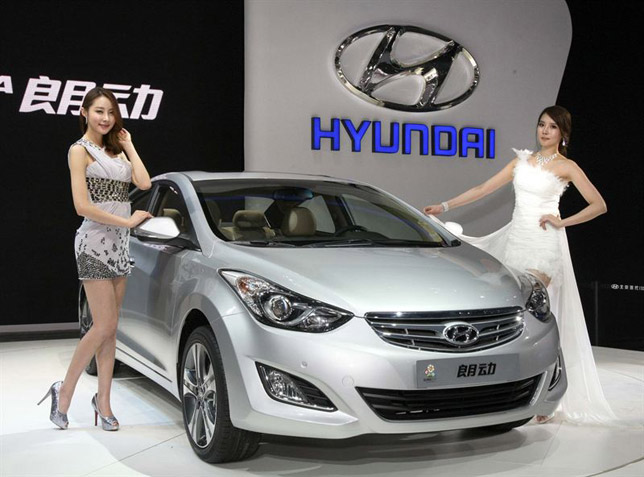
2013 Hyundai Elantra has been exclusively unveiled for the Chinese marks at the 2012 Beijing Motor Show. The new Hyundai model is exclusively designed for China and includes differentiated design and improved features.
The Elantra will carry the name “Langdong” (or 朗動 in Chinese). Next to this car was showcased the all-new Santa Fe as well. Langdong can be translated as a “dynamic (car) for the new generation” and this show where the marketing target f the brand lies.
Langdong will be produced in Hyundai’s new, third plant in Beijing starting the second half of this year. In fact, the Langdong is based on a design concept under the name Wind Craft. The latter is part of Hyundai’s design philosophy of Fluidic Sculpture. The Fluidic Sculpture has been successfully applied to the company’s entire lineup for three years.
Its design includes aggressive front-end design with wraparound headlights. They create the feeling of motion and powerful stance. The streamlined character line on the side volume sweeps back dramatically toward the rear, giving the entire vehicle the appearance of having been crafted by the wind.
Langdong model has compact dimensions, and yet providing the feel of a larger car. It has an overall length of 4,570 mm, width of 1,775 mm, height of 1,445 mm and a wheelbase of 2,700 mm.
More importantly, the car can be equipped with either a 1.6L or a 1.8L MPI engine. The first one has a maximum power of 93.8kW (127.4 hp) and a maximum torque of 155.5N.m (15.9kg.m). Pn the other hand the 1.8L engine has a maximum power of 107.4kW (146.1ps) and a maximum torque of 174.6N.m (17.8kg.m). Both can be mated to a 6-speed manual or an automatic transmission.
The new model will deliver its customers an excellent fuel economy as well and includes Hyundai’s Active ECO driving mode.
2013 Hyundai Elantra (Langdong)
Inside of the car only premium materials were used, and in addition feature premium technologies such as: navigation system, dual-zone and fully automatic air conditioning; ventilated, fully adjustable power seats with seat heaters, an LCD instrument display and push-button start.
In terms of safety and security the vehicle is equipped with series of active and passive safety features: side air bags, an emergency brake reminder, tire pressure monitoring system, Blue Link infotainment system, and etc.
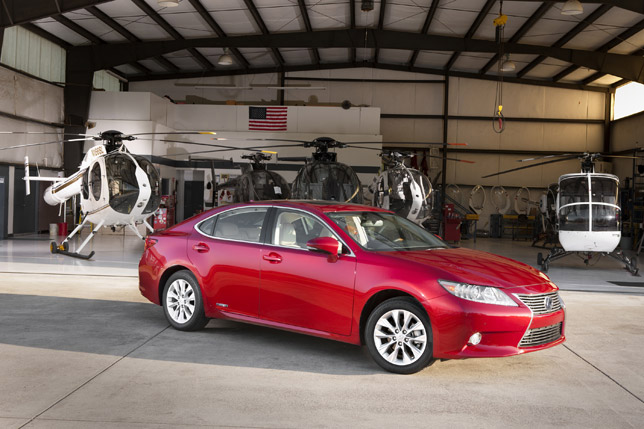
2013 Lexus ES 350 and Lexus ES 300h Hybrid are the sixth generation of Lexus’ popular luxury sedan. As new models they of course offer new and progressive design, refinement and even higher quality. Both vehicles are now available with Lexus Hybrid Drive.
More importantly, this is the first Lexus ES, which will include the Lexus Hybrid Drive. It comes equipped with a 2.5-liter four-cylinder Atkinson cycle engine, which is expected to provide fuel economy ratings of approximately 40 mpg city, 39 mpg highway and 39 mpg combined. In addition, thanks to it the ES 300h is able to generate 200 horsepower (147 kW).
In addition, this engine is low friction and uses a sophisticated power management system and high compression ratio (12.5:1) to increase the efficiency. Moreover, it includes electric water pump, electric power steering, and an integrated hybrid electric motor/generator. Surprisingly, this engine does not require any accessory belts, the result of which is that the beltless design helps improve fuel efficiency and the overall reliability.
2013 Lexus ES 300h Hybrid
On the other hand the 2013 Lexus ES 350 is powered by a 3.5-liter V6 engine with Dual VVT-i. As a result of the powerful engine, the vehicle is able to produce 268 horsepower (197 kW) at 6,200 rpm and 183 Nm (248 lb.-ft.) of peak torque at 4,700.
The engine is mated to a six-speed sequential-shift automatic Electronically Controlled Transmission which comes equipped with intelligence (ECT-i). The latter provides improved driving performance, fuel efficiency and smooth shifts. The fuel economy of the car is additionally improved due to the use of friction materials. Its fuel economy numbers are 21 mpg city, 31 mpg highway and 24 mpg combined.
Both Lexus models include Drive Mode selector, which offers selection among Normal mode, Eco one and Sport one. When Normal mode is on, it delivers mixture of performance and efficiency likable for everyday driving.
On the other hand the Eco mode is more suitable for cases when the driver really wants to save from fuel. The last mode, the Sport one, enhances the powertrain and steering responsiveness, and for the ES 300h, the IP changes from the hybrid power monitor to a tachometer.
One additional mode comes for the ES 300h which is named EV and allows short distance drives, at reduced speed, utilizing only the power from the hybrid battery pack.
2013 Lexus ES 350
Some suspension changes, including stiffer body and a quicker steering gear ratio, were include in the 2013 variants of this model. They result in more precise handling.
In details, the front suspension uses the opposite-wound coil springs to help enhance straight-line stability. The rear suspension is also revised in terms of geometry and improved shock absorber damping characteristics. The rigidity of the body has also been enhanced due to the use of lightweight, high tensile strength steel, added bracing and more spot welds.
The ES will run on the standard 215/55R17 low rolling resistance tires on 17-inch alloy wheels. As an option there are available 17- and 18-inch high-gloss alloy wheels.
In terms of safety and security these vehicles come equipped with wide array of standard and optional safety features: Blind Spot Monitor with Rear Cross Traffic Alert (RCTA), Available Lane Departure Alert (LDA), Pre-Collision System (PCS), 10 airbags as standard equipment, Whiplash Injury Lessening (WIL) front seats, Lexus Safety Connect, including Enhanced Roadside Assistance, an Emergency Assistance Button (SOS), Stolen Vehicle Location services, and Automatic Collision Notification.
A luxury feature include in the Lexus is the enhanced NuLuxe seating surfaces, which were developed in order to help reduce environmental impact. The interior colors available are Black, Light Gray, and Parchment. Trim colors and materials include Piano Black, Espresso Bird’s-eye Maple, plus Bamboo for the ES 300h.
The exterior of the new ES includes a lower profile and clean styling lines from front to rear. It carries Lexus’ distinctive spindle grille. The “L” design motif is reflected in the LED daytime running lights and combination rear lamps. Fog lamps are integrated into the sculpted lower front bumper fascia.
The ES 350 comes equipped with dual exhaust pipes, while the ES 300h features an exceptional rear design with hidden exhaust and an integrated rear spoiler. Other details specific to the hybrid include unique blue badging and distinctive 17-inch alloy wheels.
2013 Lexus ES 350 Interior
How about the interior of the car? The ES features improved sightlines and visibility, logically placed controls, and new cabin materials. More importantly, there is provided a greater rear seat legroom and knee room which result in more spacious passenger cabin. In particular, the rear headroom is increased by 0.8 inches, knee room is increased by 2.8 inches and legroom is lengthened by 4.1 inches.
The cockpit now includes separate display and operation zones. The instrument panel is longer and shows the important information on a 3.5-inch color TFT multi-information display screen directly in the driver’s line of sight.
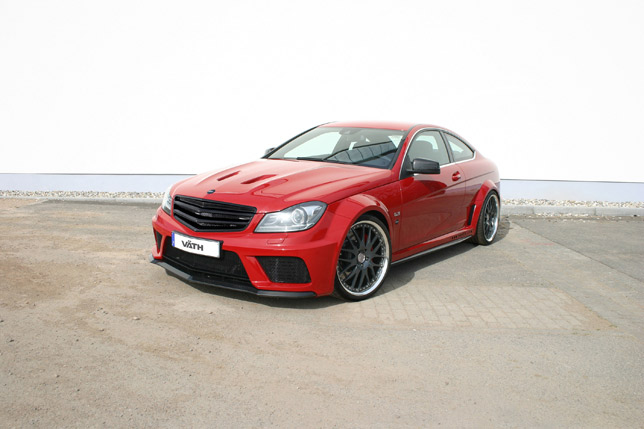
Long time, no see from Väth. Still, here’s a Mercedes-Benz C63 AMG Black Series. The German tuners however, would prefer to call it the V63 Supercharged – more power, more pipes, more stopping forces at work and less ride height. Throw in some wheels and you’ve got yourself a true Väth product.
A “normal” engine in a C63 AMG Black is pretty satisfying, isn’t it? Well, according to our friends here, there’s always room for more. And technically, they are right. Sure, it develops 510 hp but it is, and has always been, naturally aspirated. Väth quickly tended to that issue, hence the name (Supercharged?). They also fiddled with the engine electronics, slotted in big intercoolers and concluded that the V63 now shreds it’s tires with 756 hp and 800 Nm of torque. To cite some performance figures here – 0 to 100 km/h – 3.6 seconds, Top speed: 350 km/h (with the right tires).
In addition, a stainless steel exhaust-manifold system has been provided as well as a catalyst device further down the line, and a silencer with a remote-controlled valve at the back. No new tailpipes though. The new shock absorbers allow the Black to be lowered or elevated within a 20-65 mm range. 405 mm discs on the front axle ensure that you have the stopping power to match the dynamic performance. Over them, three-piece forged wheels have a functional and aesthetic purpose – 9 x 12-inches with 255/30/20 of rubber at the front and 11 x 12-inches at the back wrapped in sizes 295/25/20 tires.
Inside, you don’t get much except a costly new steering wheel with leather/leather or carbon/leather or even wood patterns. Also there’s an extension of the speedometer which will now count to 400 km/h.
 2013 Skoda Superb Combi Outdoor is the latest enhancement that the brand has made on the Supreb Combi model line up. All the models included in it are comfortable and practical; What make the “Outlook” so special however, is that it gives the Skoda more off-road look.
 Ford Evos Concept is an exceptional vehicle which is going to make its first Asian appearance at Computex 2012, which is one of the biggest and most important computer exhibitions in the world.


 2012 Toyota 86 is a sportscar which is much appreciated and awaited and more importantly which now goes on sale. In fact the 86 model is an aim for a grand return to Toyota’s sporting roots. And the


 2013 Skoda Citigo is the all-new five door vehicle delivered by the

 There is no doubt that BMW 640d Gran Coupe F06 M Sportpackage is one of the best looking new cars in the world. It is simply stunning as you can see in the video below.
 Toyota has announced some very nice upgrades for their latest model – the sports car GT 86. These goodies are available only in Germany.


 Prior Design Ford Mustang C5 is not the latest transformation by


 2013 Hyundai Elantra has been exclusively unveiled for the Chinese marks at the 2012 Beijing Motor Show. The new


 2013 Lexus ES 350 and Lexus ES 300h Hybrid are the sixth generation of


 Long time, no see from