Category: Auto News

Auto news – automobile industry news. Articles about all the latest car models and concepts. Breaking news, uncovered secrets.

  • 2014 Jeep Cherokee, Grand Cherokee And Wrangler Get Altitude Models

    Jeep-Cherokee-Altitude-THUMBTwo years ago a very special line up of vehicles appeared on the marked. We are speaking here about Jeep’s Altitude line-up. The name came to life when the brand introduced a production-intent concept Grand Cherokee and connected with customers to name it. “Altitude” emerged as the winning name, and later Jeep created a limited run of Altitude models across its lineup.

    The limited editions are regarding the Cherokee, Grand Cherokee and Wrangler models. The 2014 Jeep Cherokee Altitude can boast with its stealth-like visual stance, thanks to the use of gloss black grille surrounds, roof rails, lower applique and badging at the front fascia, and a black daylight opening. It can be ordered in the following exterior colors: Brilliant Black Crystal Metallic Clear Coat, Bright White Clear Coat, Billet Silver Metallic Clear Coat and Granite Crystal Metallic Clear Coat.

    The vehicle runs on 18-inch gloss black painted aluminum wheels and will be exclusively offered in 4×2 or 4×4 configurations. Unlike the other two models, the Cherokee Altitude is offered with a choice of two powertains: the 2.4-liter MultiAir®2 Tigershark I-4 and the 3.2-liter Pentastar V-6 one. The latter delivers 271 horsepower (200 kW) and like the Tigershark is matched with a nine-speed automatic transmission.

    The same engine can be found in the 2014 Jeep Grand Cherokee Altitude. However, it is mated with an eight-speed automatic transmission, and produces 290 horsepower (213 kW) and 352 Nm (260 lb.-ft.). The model is based on the latest Laredo and is also offered in 4×2 or 4×4 configurations.

    Grand Cherokee Altitude will have the same exterior color choices as the Cherokee, but it will add Deep Cherry, Granite Crystal and Maximum Steel. Other exterior design cues include front grille gloss black bezel inserts, fog lamp bezels, lower front fascia applique, badging, rear step pad surround, 20-inch five-spoke aluminum wheels, halogen headlamps with black bezels, grey satin gloss tail lamp bezels, platinum chrome grille texture, bright dual exhaust tips, lower body-color fascias, wheel flares and side cladding, a body color antenna and an SRT-style roof rail.

    The interior of the SUV features the following: black Capri leather seats with perforated suede inserts and black stitching, leather wrapped steering wheel with paddle shifters, standard 8.4-inch Uconnect touch screen and power sunroof.

    In terms of technologies, the vehicle is fitted with the Security and Convenience package that comprises of remote start, auto-dimming rear view mirror, security alarm, 115 volt outlet, universal garage door opener, cargo cover, heated front seats, heated steering wheel, power liftgate, ParkView back-up camera and ParkSense rear back-up sensors.

    At last, Jeep Wrangler Unlimited Altitude, which is based on the current Sahara model, sports incredible exterior design. Here can be seen the matte black grille with gloss black throats, head lamp rings and Jeep badge, gloss black front and rear bumper appliqués, 18-inch seven-spoke aluminum wheels, Freedom Topbody color and matte black “WRANGLER” decal on the hood.

    Wrangler boast a standard black leather seats with black stitching, a leather-wrapped steering wheel with black painted spokes and black stitching, black finish hex bolts and black painted vent rings and door, instrument panel grab handles and Wrangler Connectivity Group.

    This limited edition model is also equipped with the V6 engine which was finely tuned to generate 285 horsepower (210 kW) and 352 Nm (260 lb.-ft.). The transmission choice here consists of standard six-speed manual or available five-speed automatic transmission.

    2014 Cherokee, Grand Cherokee and Wrangler Altitude models are going to be available at dealerships this spring.

    Source: Jeep
  • Canadian Tire Present An Ice Truck [video]

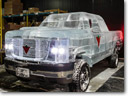
    Canadian-Tire-Ice-Truck-shadowCanadian-Tire-Ice-Truck-mediumWhen life gives you lemons, you make lemonade, goes the cliché saying. Apparently, however, lemonade isn’t good enough for Canada. In fact, forget the lemons, they have ice to deal with. Lots and lots of ice. What do you do with it? An big truck of ice, that’s what.

    And we’re not talking about a sculpture or anything. No, this is a fully (or at least satisfyingly) functional truck with a real engine, an exhaust system, a bed-frame, big snowy tires and a pair of bumpers. The other bits, however, are quite…erm… melty. It even has a pine air freshener made up of ice. How cool is that?

    Very. See, Canadian Tire – the company backing the project – didn’t just build it for fun (although, one does wonder). Among other things, they sell car batteries. In order to showcase their dependency even in the coldest of environment, they chilled deep froze one such battery to -40 Celsius and then put it in a truck made of ice. It’s just like in the movie Inception…sort of.

    No clue what the engine is or all the other, usually relevant stuff, but just by seing it move, we really don’t We are really at a loss of words here. Oh, and the battery running under these conditions is also… you know… impressive. Go check it out:

    httpv://youtu.be/rrFRaviVyQU

    Canadian-Tire-Ice-Truck-medium-2

    Canadian-Tire-Ice-Truck-medium-3

    Canadian-Tire-Ice-Truck-medium-4

    Picture Source: Canadian Tire via Facebook

    Video Source: Canadian Tire via YouTube

  • Renault Spices Up F1 With The Introduction Of Energy F1-2014 Power Unit

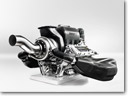
    Renault-Energy-F1-2014-Power-Unit-THUMB2014 FIA Formula One World Championship is introducing a radical technical regulation changes. The cars that will compete will be powered by new powertrain technology, with a powerful turbocharged internal combustion engine coupled with energy recovery systems.

    Furthermore, the power output will be increased up to unseen levels in over five years. Two types of energy will propel the cars – internal combustion and electrical energy. The first unit will produce power through consumption of traditional carbon-based fuel, while the second will be harvested from exhaust and braking by two motor generator units. Of course, both will work in harmony. Such engines are to be called now “Power Units”.

    Since these announcements have been made, Renault came up with the statement that it is entirely prepared for this technical revolution by introducing the Energy F1-2014 Power Unit.

    The new Power Unit key elements include the following:

    • 1.6-litre turbocharged V6 internal combustion engine
    • Direct injection
    • Maximum engine speed of 15,000rpm
    • Potent Energy Recovery Systems incorporating two motor generator units – the MGU-H, recovering energy from the exhaust and the MGU-K recovering energy from braking
    • Electrical energy recovered stored in a battery
    • Combined maximum power output of 760 hp (559 kW), on a par with previous V8 generation
    • Double restriction on fuel consumption: fuel quantity for the race limited to 100 kg (-35% from 2013) with fuel flow rate limited to 100 kg/hr max (unlimited under V8 regulations)
    • Engine development is frozen during the season, only changes for fair and equitable reasons are permitted
    • 5 Power Units permitted per driver per year

    To go further into details, the internal combustion V6 engine includes cylinders arranged in two banks of 3 cylinders arranged in a ‘V’ configuration over a common crankshaft. It has a displacement of 1.6 litres and will make around 600 hp (441 kW) alone.

    Furthermore, all Power Units must include direct fuel injection (DI). This is a key sub-system at the heart of the fuel efficiency and power delivery of the power unit. Here fuel is sprayed directly into the combustion chamber and not into the inlet port upstream of the inlet valves. The fuel-air mixture is formed within the cylinder.

    Next, the turbocharger utilizes exhaust gas energy to enhance the density of the engine intake, thus producing more power. In addition, it allows smaller engine to make much more power than its size would normally permit, while the exhaust energy is converted to mechanical shaft power by an exhaust turbine. The mechanical power from the turbine is then used by the compressor and the MGU-H.

    You might ask what is MGU-H. The answer is simple: on the Renault Energy F1, the turbo rotation speed is primarily controlled by the MGU-H, however a wastegate is needed to keep full control in any circumstance. In comparison, on conventional turbo engines, a wastegate is used in combination with a turbocharger to control the high rotation speeds of the system. In fact, the wastegate is a control device that allows excess exhaust gas to by-pass the turbine and matches the power produced by the turbine to that needed by the compressor.

    MGU-H is connected to the turbocharger and acts like a generator by absorbing power from the turbine shaft to convert heat energy from the exhaust gases. The electrical energy can be later directed to the MGU-K or stored in the battery.

    On the other hand, the MGU-K operates as a generator that recovers some of the kinetic energy during braking. In addition, it also converts it into electricity. When the car accelerates, the MGU-K is powered by the Energy Store and the MGU-H. In these cases it acts as a motor and propels the car.

    At last, the Battery or Energy Store consumes recovered Heat and Kinetic Energy. The stored energy can be utilized by the vehicle with the MGU-K or can be also utilized to accelerate the turbocharger with the MGU-H. The result is two times more power and the energy contributing to performance is ten times greater.

    Renault Energy F1-2014 Power Unit Technical Specifications

    ENERGY F1-2014
    Engine
    Displacement 1.6L V6
    Number of cylinders 6
    Rev limit 15,000rpm
    Pressure charging Single turbocharger, unlimited boost pressure (typical maximum 3.5 bar abs due to fuel flow limit)
    Fuel flow limit 100 kg/hr (-40% from V8)
    Permitted Fuel quantity per race 100 kg (-35% from V8)
    Configuration 90° V6
    Bore 80mm
    Stroke 53mm
    Crank height 90mm
    Number of valves 4 per cylinder, 24
    Exhausts Single exhaust outlet, from turbine on car centre line
    Fuel Direct fuel injection
    Energy Recovery Systems
    MGU-K rpm Max 50,000 rpm
    MGU-K power Max 120kW
    Energy recovered by MGU-K Max 2MJ/lap
    Energy released by MGU-K Max 4 MJ/lap
    MGU-H rpm >100,000rpm
    Energy recovered by MGU-H Unlimited (> 2MJ/lap)
    General
    Weight Min 145 kg
    Number of Power Units permitted per driver per year 5
    Total horsepower 600hp (ICE) + 160hp (ERS)

    Source: Renault

  • 2015 Kia K900 Now With V8 Power

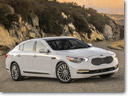
    2015-Kia-K900-shadow2015-Kia-K900-mediumThe K900 – Kia’s flagship sedan – now comes with a V8 engine. V6 engines will also be available, but they won’t be the top of the top now, will they? Also, each version of the 2015 model year has quite a few equipment packages, so you’ll have to extra careful in your choice.

    The V6 K900 base range – which will go on sale later this year – is called the Premium. It’s still pretty luxurious with front and rear park-assist sensors and cameras, a leathered interior, a multimedia steering wheel, LED interior illumination, a 12-adjustable driver’s seat and power lumbar support and a few more bits.

    For that extra something, you can equip the V6 with a Technology Package. It offers a variety of gadgets that, supposedly, should make your life easier. To name a few, consider the 16-way power adjustable driver’s seat with power headrests and cushion extender for added thigh support. Or how about the first-ever-in-a-Kia color Head-Up Display (HUD)? It displays not only things like speed and navigation directions, but also draws and provides information from the Blind Spot Detection and Lane Departure Warning systems (both of which are also standard on the Technology Package). Also included in the package is the radar-based Advanced Smart Cruise Control (ASCC) which is just plain clever (keeps a certain distance from the traffic upfront by adjusting the speed of the car by itself).

    The most expensive K900 model you can have would be the V8 with the added VIP Package (daft name). It incorporates all of the features above plus super-fancy back seats with multi-stage heating and cooling. Both of them recline independently and have power lumbar support and lateral headrest adjustability. Behind the wheel of the VIP V8 one finds the “largest TFT instrument panel ever offered in a Kia”. On the centre console: a 9.2-inch display that offers access to the Driver Information System. Think of it as Kia’s version of the iDrive. It even has a similar rotarty knob. From there you control the 900-watt Lexicon high-fidelity audio system, the navigation, the lot.2015-Kia-K900-medium-2

    Enough IT lingo, though. Let’s move on to the essential bit – the V8. It’s a 5.0-liter GDI (Gasoline Direct Injection) plant with dual CVVT variable timing on all 32 valves. It’s rated at 420 hp which is 109 more than the V6. The V8 utilizes a roller-type chain and a Teflon coated crank oil seal to reduce wear and tear. A sophisticated catalytic converter is said to help reduce emissions, but we don’t know any figures on that yet. The accompanying automatic transmission sports 8 gears. The shifts themselves happen at different rpm points depending on the mode of driving selected (Eco, Normal, and Sport).

    The 3.8-liter Lamba V6 is still the most powerful Kia six-pot with 311 hp. It too uses the GDI module and CVVT. A three-step Variable Intake System (VIS), on the other hand, ensures optimum low- and mid-range torque. The Lamba is mated to the same 8-speed transmission the V8 but with appropriately modified ratios.

    The chassis is 75 percent high and ultra-high tensile strength steel and holds an advanced five-link fully independent, sub-framed suspension. Front coaxial coil-spring shock absorbers and a new friction bearing in the steering column enhance straight-line stability and steering precision. The back benefits from individual coil springs and shock absorbers which in turn allows negative camber.

    The K900 V8 includes as standard equipment staggered P245/45P-19 front and P275/40R-19 rear tires on 19-inch chrome alloy wheels.

    Source: Kia

  • 2015 Lincoln Navigator Is Here

    2015-Lincoln-Navigator-THUMB2015 Lincoln Navigator has just been officially introduced by the luxury brand, which aims to offer with it a modern interpretation of the classic vehicle. Refinement have been applied to both exterior and interior with one of the main highlights – Lincoln’s iconic split-wing grille that has been reintroduced.

    The SUV features a sleeker front that sports new design of the hood, while the rear end now features a power up/down tailgate. On both ends, the Navigator boasts jewel-like LED lights, as well as high-intensity discharge (HID) adaptive headlamps with LED accents.

    The new Lincoln runs on standard 20-inch machined aluminum wheels, while as an option customers can chose the Reserve Package that comes with 22-inch polished aluminum wheels and chrome-accented running boards.

    The same package also offers the following additional interior equipment Reserve Package: an updated cabin all-wrapped in luxury leather; a hand-wrapped, leather instrument panel with contrast stitching and leather glove box door; and Premium Ziricote wood trim.

    A highlight here is the new steering wheel which is Wollsdorf leather-wrapped and wood-trimmed and that offers a thicker grip and softer touch. Navigator has been designed to accommodate up to eight persons via the second-row option.

    More importantly, this SUV is powered by the fuel-efficient 3.5-liter EcoBoost twin turbocharged, direct injection unit that is expected to produce 370 horsepower (272 kW) and 583 Nm (430 lb.-ft.) of torque. The powertrain has been mated to the special six-speed automatic transmission with SelectShift that allows the person behind the wheel to manually control gears if desired.

    The vehicle is offered in standard-length (207.4 inches) and extended-length (222.3 inches) version, as well as four-wheel-drive and rear-wheel-drive configurations. There is available Control Trac Four-Wheel-Drive system, electric power-assisted steering, and Lincoln Drive Control with Continuously Controlled Damping (CCD).

    Additional technologies that need to be mentioned are the Hill Start/Descent Assist, Nivomat, keyless entry via a door-mounted button, keyless engine ignition, SYNC with MyLincoln Touch with 4.2-inch LCD display, an 8-inch touch screen in the center stack, Blind Spot Information System (BLIS) and standard rearview camera.

    The production of 2015 Lincoln Navigator will begin later this summer. It is expected in showrooms in early fall.

    Source: Lincoln

  • 2014 Volkswagen Beetle 1.8T – US Price $20,295 USD

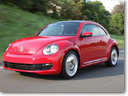
    Volkswagen US has announced the pricing of the 2014 Beetle 1.8T. The new engine replaces the 5-cylinder 2.5 liter unit and has the same power and more torque.

    The direct-injected 1.8T has 170HP (127 kW) available at 700 fewer RPM and 249Nm (184 lb-ft) of torque at 2,750RPM. As you may suggest, the turbocharged engine is more economical than the 5-cylinder. The new one will return 33 mpg US on the highway with the 6-speed automatic gearbox, which is 4 mpg more. The city mileage is now 25 mpg US (from 22 mpg) and the combined fuel economy now stands at 28 mpg US.

    The 5-speed manual gearbox will do 24 mpg US in city; 33 mpg US on the highway and 27 mpg US on combined cycle.

    Other innovation is the new electric power steering, which replaces the old hydraulics one.

    2014 Volkswagen Beetle 1.8T is priced from $20,295 for manual and $21,395 for automatic models. The convertible is $25,170 available only as automatic. The prices exclude $820 destination charge.

    Source: VW US

  • Larte Design Infiniti QX60

    LARTE Design has presented their tuning package for the Infiniti QX60. The new black appearance gives the QX60 more aggressive and stylish look.

    The Russian tuning company manufactured all parts from PU RIM, which guarantees high rigidity and light weight. The body kit includes a new radiator grille featuring wide struts and a grille insert in the front apron. There are also twin fog lamps and five square LED DRLs. At the rear, there is a quad exhaust system from stainless steel, which can be mounted within the bumper for a cleaner look.

    Last, but not least, Larte Design fitted the QZ60 with Design a bespoke set of 22” alloy wheels finished in matt black and fitted with low-profile tires.

    Larte does not offer any performance packages for now.

    Source: Larte Design

  • Tesla Model S With Vorsteiner Flow Forged V-FF 101 Wheels

    Vorsteiner-V-FF-101-Tesla-Model-S-shadowVorsteiner-V-FF-101-Tesla-Model-S-mediumIt’s nice to see Tesla back in the news, even if it’s just by proxy. Vorsteiner – the California-based tuning company with a rather German name – have laid their hands on a Tesla Model S, which coincidentally (or not) is also a Californian brain child.

    Maybe because it’s such an interesting choice (an electric car), Vorsteiner didn’t do much in terms of modifications. In fact, it’s just your average wheel-change-scheme: away with the stock 19-inch aluminum alloy wheels and on with the Vorsteiner set. They’ve gone for the 20-inch V-FF 101 Flow Forged Alloy wheels. Supposedly, they are even lighter than the standard ones. Sporting 285/35 R20 Michelins rather than the stock 245/45 R19 Goodyears must be taking a toll on the Tesla’s range; but let’s be honest, the new wheels most definitely do not look out of place on the Model S.

    Just a reminder, the Tesla Model S is an all-electric RWD sedan powered by a 60 kWh lithium battery pack. It has pretty much all the features you would find on any of the executive saloons: Electronic Stability Control, Traction Control, big, ventilated ABS, an independent back suspension, Xenon headlights and LED back lights, a 200 watt, seven speaker system, eight airbags and many more.

    Source: Vorsteiner

  • Datsun Offers Glimpse At Forthcoming Concept Car

    Datsun-Concept-Car-shadowDatsun-Concept-Car-mediumJust a quick reminder that Datsun is back. The Nissan-sourced brand will be hitting the markets from this year on in specific areas such India, Indonesia, Russia and South Africa. So what better way for the company to start gaining media attention than appearing on the Delhi Auto Expo 2014 which kicks off on the 5th of February and will last until the 11th

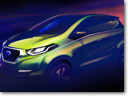
    And here is a sketch of what you should find at the expo when the time comes. It’s a concept car that’s supposed to show the brand’s future design direction.

    Frankly, we don’t know how to feel about it. It sort of looks like a sub-compact crossover, and we’ve never been fond of these. Then there’s the styling itself. There seems to be a bit of Ibiza in there, a Ford Fiesta as well; it just doesn’t feel that fresh. Then again, it’s supposed to be accessible and simple. Agree to disagree?

    We’ll just have to wait and see the real thing…which won’t be the real thing because it’s a concept, but you know what we mean.

    Source: Nissan

  • Kia Launches VR7 Line For Picanto, Rio, Cee’d

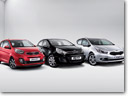
    Kia-VR7-Range-shadowKia-VR7-Range-mediumKia are planning to introduce a new range for the Picanto, Rio and, cee’d (low-case spelling) models. It’s called the VR7 which sounds sporty but it really isn’t.

    All VR7 models should have a high level of standard equipment. That means air conditioning, leathered steering wheel and gear shift knob, Bluetooth connectivity and USB and AUX ports. On the exterior the new trim-line cars will showcase a selection of features usually found on premium models: alloy wheels, reversing seonsrs, electrically adjustable heated door mirrors, and electric windows on all doors.

    The Kia Picanto VR7 comes in either a 3- or 5-door version. The latter holds a slightly more powerful 1.0 engine with 84 hp. (the 3-door has 68 hp). Either way, you get an entirely comprehensive automotive package complete with things such as ABS with Electronic Brakeforce Distribution (ESB), Brake-Assist System (BAS), Electronic Stability Control (ESC), Vehicle Stability Management (VSM), six airbags and Hill-start Assist control (HAC).

    The Kia Rio VR7 models are again in either 3- or 5-door shells. The 3-door Rio VR7 comes only with a 1.25-liter 84 hp engine and a 5-speed manual. All the while, the 5-door can have the same engine or a 1.1 CRDi diesel with 98 hp and a 6-speed manual ISG transmission. All the Rio models boast color-oriented bumpers, exterior door handles and door mirrors. Needless to say, ESC, VSM, HAC and Anti-theft Alarm System are again included.

    Finally, the cee’d VR7 family. Weather you’re going to go with a pro_cee’d, a 3-door cee’d, a 5-door cee’d or a cee’d Sport Wagon, you will always end up with a 1.4 engine. All but one have the same power output: 98 hp. The one exception is the cee’d CRDi engine which develops 89 hp. All cee’ds have a 6-speed manual and all have a great bundle of standard extras: a rear spoiler, projection headlights, front fog lights and daytime running lights.Kia-Picanto-3door-VR7-medium

    Kia-Picanto-5door-VR7-medium

    Kia-Rio-3door-VR7-medium

    Kia-Rio-5door-VR7-medium

    Kia-ceed-VR7-medium

    Kia-ceed-SW-VR7-medium

    Kia-Pro-ceed-VR7-medium

    Source: Kia

  • Nissan GT-R DT1200R – 1 mile in 22.484 seconds with 371 km/h

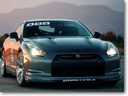
    Once again Garage D proven that Nissan GT-R is one of the best sports cars in the world. This time the tuned GT-R DT1200R managed to set an impressive time at 1 mile as well as at ¼ mile drag race.

    Nissan GT-R Mk.1 DT1200R has no less than 1200HP and it needs just 9.450 seconds to cross ¼ mile mark with epic 265 km/h. One mile is finished in 22.528 seconds with 371 km/h, which is pretty amazing.

    In the video we can also see a second start versus Audi RS6, which the GT-R humiliates. During the second start, the DT1200R does ¼ mile in 9.360 seconds with 266 km/h and 1 mile in 22.484 seconds again with 371 km/h.

    The DT1200R is completely street legal.

    Enjoy!

    httpv://www.youtube.com/watch?v=XNhnl9TZjP0

    Source: Dragtimesinfo

  • Radical RXC and RXC Turbo – Street Legal in the US [video]

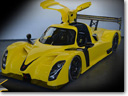
    Radical RXC and RXC Turbo are approved for street-legal use in the United States. Both sports cars look more like track-only models, but they meet all requirements for everyday use.

    Radical RXC is powered by a 3.7 liter V6 – 380HP (283 kW) and 433Nm (320 lb-ft) of torque. The RXC Turbo comes with a 3.5 liter EcoBoost V6 – 460HP (338 kW) and 678Nm (500 lb-ft) of torque. 0-100 km/h in 2.6 seconds and a top speed of 298 km/h (185 mph).

    The British manufacturer has been working with American RXC owner Jeffrey Cheng to get the car approved. The task is extremely difficult, especially with low-volume British sportscars. Still, they succeeded, where others have failed.

    Radical RXC complies with all regulations for both Europe and worldwide in all key criteria areas – visibility, crash safety, noise and emissions.

    httpv://www.youtube.com/watch?v=9XPiraU7XFc

    Source: Radical