Category: Auto News

Auto news – automobile industry news. Articles about all the latest car models and concepts. Breaking news, uncovered secrets.

  • KW Coilover Kits For BMW 4-series convertible [VIDEO]

    KW-BMW-F33-Fahraufnahme-tKW-BMW-F33-Fahraufnahme-651

    BMW is well known for their outstanding standard dynamics but when you add a high-end technology coilover kit the performance of the BMW vehicles improves amazingly. The presenting of the V1, V2 and V3 coilovers for the BMW 4-series convertible (F33) greatly improves the dynamics and the lowerring of the front and rear axle by 65 millimeters. There are number of BMW cars equipped with KW dampers, some of which are BMW FR3 and BMW M325i.Adjusting the rebound takes exactly 16 clicks using the piston rod. The KW coilovers can be installed on the BMW 4-series to provide more modifications like: additional engine performance, bigger wheels, etc.

    The KW Variant 1 offers comfortable sporty ride, on the other hand, the Variant 2 can offer 16 adjustable damping. But Variant 3 suits all driving conditions with its 16-clicks adjusting rebound, Soon enough the KW coilovers will be in stock for 435d xDrive and 435i xDrive- both 4 wheel drive versions of the BMW 4 series convertible. If customers want balance between sporty handling and daily use, there is nothing better than Variant 1 for their desires. All these coilover kits are made up from stainless steel and allow lowering of 40mm to about 60 mm for both axles. However, the KW coilover will be available for the BMW 4-series convertible.

    There are additional details regarding the damping technology which you can see in the following Youtube video.

    httpv://www.youtube.com/watch?v=pRABTRAShzE&feature=youtu.be

    Source: BMW

  • An Attractive Audi A5 ABT AS5 Dark Now Comes at a Good Prize

    2014-Audi-A5-ABT-AS5-Dark-t2014-Audi-A5-ABT-AS5-Dark-651

    The black painted Audi A5-based ABT Dark only comes in unique new impressive design.  The ABT AS5 Dark is one of the some available as a Coupe or Sportback. There are bright red elements on the front spoiler and the rear skirt set. The tailpipes are chrome-plated in black. There are 20-inches ABT CR wheels, making the vehicle look more aggressive with wide 265 tyres. There are new floor mats as well. ABT Sportline has decorated the AS5 Dark with labels and emblems inside and outside. There is a four-pipe exhaust system which sounds incredible, which, produce different sounds depending on engine type. ABT AS5 Dark Coupé & Sportback – additions

    • ABT AERODYNAMICS
    • ABT front spoiler lip
    • ABT side skirts
    • ABT rear spoiler
    • ABT rear skirt set
    • ABT “Dark”-decal set
    • ABT “Dark”-emblem set

    ABT WHEELS in CR-Design in 9.5 x 20 inch. You can also get them also as complete set of wheels with sports tyres in 265/30 ZR20 ABT EXHAUST TECHNOLOGY

    • ABT rear muffler with four end pipes (black-chromed)

    ABT SUSPENSION

    • ABT spacers

    ABT INTERIOR

    • ABT “Dark”-floor mats
    • ABT emblems at the headrests

    Audi-A5-Abt-Sportsline-AS5-Dark-651-(2)

    Source: Audi

  • Driving Pleasure of Suzuki Swift with ap tunning

    2014-Suzuki-Swift-t2014-Suzuki-Swift-651

    For more than a decade, ap has provided its customers with high-end technology suspension kits. That technology is best known for beeing high quality and outstanding processing while beeing cheap at the same time. If customers are looking for new lowering spring and coilovers for their Suzuki Swift, available both as three- and five-door, ap Sportfahrwerke offers those kind of amazing additions for the car model. The starting price of the lowering springs is 151,31€ along with shock absorbers the springs allow lwoering by up to 30mm, which tangibly improves the handling of the Suzuki. However, the coilovers enable handling of 65 mm. The back axle is possible to be lowered from 35 to 65 mm, whereas the front axle between 30 to 60 mm. The recommended retail prize for the Suzuki coilovers, without the all-wheel drives is 589,05€.

    Theese are in brief all the additions:

    • ap coilovers and ap lowering springs available
    • increased steering precision and track stability
    • TÜV-tested and German engineering

    This is the perfect combination between sporty looks, safe, comfort. You can drive even sportier and still be compact in everyday life. The suspension kit is easily entered into the car’s documents due to TÜV’s included certificate.

    2014-Suzuki-Swift-ap-technology-651-(4) 2014-Suzuki-Swift-ap-technology-651 (2) 2014-Suzuki-Swift-ap-technology-651-(3)

    Source: Suzuki

  • Infiniti Q80 Inspiration Revealed at the Paris Auto Show

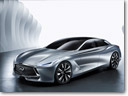
    Infiniti-Q80-Inspiration-THMBInfiniti Q80 Inspiration which was teased a several times the last month was revealed today in its full glory at the Paris Auto Show. The bold concept also shows Infiniti’s future plans for design and smart powertrain technology. Q80 Inspiration’s name indicates production intent and suggesting not only changes in the design language, but also an introduction of ingenious technologies and more importantly, brand’s ambition to launch into a new segment.

    The presence of the car is firstly defined by its proportions. Its width is 2010mm (79.1 inches) and length – 5060mm (199.2 inches), while the height measures 1340mm (52.8 inches). In other words, the Q80 is luxurious sedan-like car with a fastback contouring.

    Inside, there are four individual seats. The most striking thing about this vehicle is that its doors are portal-style ones. Driver’s interface is simplified, while the unique head-up display (HUD) keep the complex algorithms of the intuitive technology hidden from view, showing only the information drivers need.

    The person standing next to the driver also gets an HUD for display of external information. In addition, each rear passenger has a touch screen at the back of the front seat rest. The interior is exquisitely detailed and includes quilted leather seats as well as Alcantara, leather and metal finishes. The sculptural panoramic glass roof bathes with light this unique interior. 

    Q80 Inspiration is powered by a downsized twin turbocharged 3.0-liter V6 and a hybrid electric powertrain. The total output is 550 hp (404 kW), but the car is still capable of returning 5.5L/100km (42.8 mpg) and 129g/km of CO2 emissions. What is more, the smart drivetrain has the ability to switch from rear wheel drive to all wheel drive on demand.

    Furthermore, the concept vehicle uses an autonomous driving technology system, which features cameras, lasers and sensors. They can be employed by the driver when needed through a button on the left-hand side of the steering wheel. All the needed data is delivered to the driver via the HUD display and is projected on the windscreen. This enables them to utilize the driving assistance at their own judgement.

    Source: Infiniti 

  • Ettore Bugatti Legend Makes European Premiere

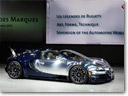
    Ettore-Bugatti-Veyron-THUMBEttore Bugatti, the last legend was revealed in August at the Pebble Beach Concours d’Elegance. Now, the unique model is making European premiere in Paris. This is the sixth and final model of its Edition „Les Légendes de Bugatti”. It is dedicated to Ettore Bugatti, who was the founder and patron of the brand. What is more, at the event, the luxury company is also celebrating the successful completion of its Legends Edition.

    From the six Legends, Bugatti will build only three vehicles per model. This makes 18 vehicles in total, and they have been sold out even before the final model was unveiled. With these editions, Bugatti honors important personalities and cars in its company history.

    Last year, the super sports car manufacturer presented the Legends model “Jean-Pierre Wimille” in California, then “Jean Bugatti” was revealed at the IAA in Frankfurt, while the “Meo Costantini” was shown at the Dubai Motorshow. This year, the company revealed the “Rembrandt Bugatti” at the Automobile Salon in Geneva and “Black Bess” at Auto China in Peking.

    Ettore Bugatti is based on the Bugatti Veyron 16.4 Grand Sport Vitesse, just like the other Legends. The sports car produces powerful 1200 horsepower (882 kW) from its 8-liter W16 engine, which in addition generates 1500 Nm (1106 lb.-ft.) of torque at 3000-5000 rpm. This car needs only 2.6 seconds to cover the sprint from 0 to 100 km/h (0-62 mph) on its way to a top speed of 408.84 km/h (254 mph). These numbers make it world’s fastest production roadster ever built.

    This is also one of the most expensive production super sports cars. Veyron is limited to 450 units in total, from which 300 are coupes and they are already sold out, and 150 roadsters. After all Veyrons have been built, Bugatti will begin a new chapter in its history of success.

    Source: Bugatti 

  • Lamborghini Asterion LPI 910-4 is a Hybrid with 910 Horsepower

    Lamborghini-Asterion-LPI-910-4-THUMBAt the 2014 Paris Mondial de l’Automobile Lamborghini has unveiled its first plug-in hybrid (PHEV): the Lamborghini Asterion LPI 910-4. Asterion defines a solution to significantly reducing CO2 emissions through technologies available today. In addition, it also offers the unique Lamborghini driving feel with superior power. The car has a pure electric range of 50 km.

    Asterion LPI 910-4 returns a 4,12 l/100 km fuel consumption on the combined cycle (NEDC) with exceptional CO2 emissions of 98 g/km. The car’s engine, the V10 5.2 liter FSI one, is based on a monocoque made entirely of carbon fibre. The unit is located longitudinally as a mid-engine and is coupled with a seven-speed dual-clutch transmission, located behind the engine at the rear transaxle. The lithium battery is placed in the central tunnel area.

    The hybrid architecture of the model is achieved via an electric motor which includes an integrated starter motor and generator (ISG), placed between the V10 engine and the double clutch gearbox. There are also two electric motors at the front axle fed by the ISG power with a torque vectoring function. The system allows the car two driving modes: a hybrid and pure electric drive mode.

    V10 5.2 l mid-engine can generate up to 610 horsepower (449 kW) and 560 Nm (413 lb-ft) of maximum torque. The three electric motors add further 300 hp (220 kW), which means the total hybrid power is achievable to a maximum of 910 hp (669 kW). The acceleration from 0 to 100 km/h happens in only 3.0 seconds. The top hybrid/combined speed is 320 km/h.

    The exterior of the car is decided in Blue Elektra glittered colour. The Asterion has clearly defined lines, the front end is produced as a single component, giving the Asterion a dynamic look, while the headlights are realized in materials such as forged carbon and titanium.

    At the rear, we immediately see the remarkable rear lights, including a grid covering two radiators, and a clear separation between body colour and black parts. A transparent engine cover is comprised of three hexagonal glasses that turn according to the engine driving mode: pure electric, hybrid power or pure thermal engine power. The vehicle runs on Pirelli tyres fitted with 20″ and 21″ rims in carbon components.

    Inside, the minimal contemporary interior of the Asterion reflects the exterior design. The two seats are positioned higher than those in Lamborghini super sports cars. They are wrapped in Extensive Bianco Celaeno (ivory) and Marrone Attis (brown) leather. Materials such as aluminium and forged carbon fibre, as well as titanium are also visible inside.

    Asterion’s steering wheel includes three buttons from which the driver selects his engine driving mode: Zero – for zero emissions/full electric; I for ‘Ibrido’ (hybrid); and T for ‘Termico (thermal) power. The portable tablet helps in managing the climate control and other functions including GPS and in-car infotainment.

    And if you wonder why this model is dubbed with this name, well Lamborghini says that LP stands for ‘longitudinale posteriore’, which is the position of the conventional engine, I stands for ‘ibrido’, 910 for the system power and 4 for the permanent 4WD system. In addition, the vehicle is inspired by the Asterion – the name of the mythical Minotaur, a hybrid figure and symbolic cross-breed.

    Source: Lamborghini 

  • Volkswagen XL Sport is Powered by Ducati Superleggera V-Twin Engine

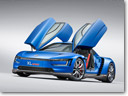
    Volkswagen-XL-Sport-THUMBVolkswagen XL Sport Concept is being shown for the first time at the Paris Auto Show today. This vehicle is a lightweight sports car, based on the XL1. Just like it, the XL Sport will be built in only 250 examples. This concept achieves its best ratio between weight of 1962 pounds, power – 197 hp (147 kW) and aerodynamics – CdA of 0.44 square meters. This combination allows the car to achieve an impressive top speed of 168 mph.

    The vehicle is powered by world’s most powerful two-cylinder engine – the Ducati 1199 Superleggera’s V-Twin unit, which has been modified for use in the XL Sport. It is coupled with a seven-speed DSG dual-clutch automatic transmission. From a standstill the XL Sport needs only 5.7 seconds to reach 100 km/h (62 mph).

    Furthermore, here the chassis has been also significantly redesigned chassis. It incorporates high-strength steel subframes which house upper and lower control arms at the front with pullrod actuation for the dampers. At the back, the control arms at the back have pushrod. The car runs on forged magnesium-alloy wheels fitted with 205/40 R18 front and 265/35 R18 rear high-performance tires. XL Sport has a powerful ceramic brake disc setup.

    XL Sport shares the same basic design as the XL1. Its central monocoque and most of the body panels are manufactured in carbonfiber-reinforced polymer (CFRP) using the RTM (Resin Transfer Molding) process. The monocoque includes slightly offset seats for the driver and passenger. XL Sport that is currently on a display in Paris is 168.9 inches long, 72.7 in wide and 45.4 in mm high. The wheelbase measures 95.4 in.

    The new concept model has some distinctive exterior traits such as the dual LED headlights and the XL1’s signature LED daytime running lights, air intakes on either side of the headlights and vents in the rear fenders. In addition, there are no conventional door mirrors. Instead, they are replaced by e-Mirrors. These are small streamlined cameras integrated in the fenders that send images of the surroundings behind the car to two displays inside.

    At the rear, we see wide “shoulders” above the wheels and an extendable rear spoiler. There also is a coupe-shaped roofline without a rear windshield. The iconic red LED ribbon follows the shape of the rear section and is framed at the sides by another, vertical, LED element. And at last, there is a black diffuser that merges into the completely enclosed underbody and is finished at each side with a chrome exhaust tip.

    Inside, the interior of the XL Sport is based on the XL1’s. There are some changes made, such as the digital instrument cluster which includes a lap timer and oil pressure display. There is also a carbon fiber cowl that extends across the top of the instrument cluster. The steering wheel has decorative red stitching and has been equipped with aluminum-alloy shift paddles. The red color also appears through the seat belts to harmonize the design inside.

    Source: Volkswagen


  • The high Spec tech behind modern vehicle manufacture


    Many drivers take for granted the technology that goes into getting their vehicle off the assembly line and onto the road. The fact that motor vehicles even exist is down to the growth of radical technology in the 19th century – the internal combustion engine – aided by the increasing availability of petroleum. Technology continues to shape the motor industry and in recent decades the sector has become incredibly high-tech. Indeed, the availability and precision of engineering technology has allowed car manufacturers to create a generation of truly advanced vehicles.

    Engineering innovation is particularly notable in the luxury car sector of the motoring industry. Precision is essential in the supercar segment, with manufacturers required to make niche vehicles that can withstand the type of driving conditions that the ordinary family car would never be exposed to. Many of the technologies used in racing cars have gravitated towards mainstream manufacturing too, from developments in engine technology to the use of lighter materials, such as aluminum, in the bodies of vehicles.

    The advent of computer aided design (CAD) has been a great boon to car manufacturing, allowing designers and engineers to bring their concepts to fruition. A key element of CAD is that it facilities cooperation between designers and engineers, making the sharing of information so much easier as the feasibility of a project is evaluated and the concept moves towards the factory floor. Modern CAD software even allows the simulation of actual vehicle performance. From the point of view of marketing and selling the finished vehicle, CAD also allows designers to create visual prototypes of what it will look like. CAD can be employed along each step of the way, including the development of tools from specialist manufacturers such as Transducer Techniques, who offer load cells requiring precision engineering, to accurately measure the type of forces they are designed to measure. CAD systems for automotive design are even used to identify and eliminate faults in the design, using 3D simulations to model real-life situations in which vehicles are exposed to various conditions, such as high speeds and adverse weather conditions.

    Of course, high-tech is not limited to the manufacturing floor, with modern, luxury vehicles featuring high-spec systems that make the actual driving process as smooth as it can possibly be. The level of electronics featured in luxury models is astonishing; with some cars relying on a level of software integration that people might more readily associate with an airliner. From adaptive cruise control to sensors that enable safer parking, software is used to manage many of the features that people have come to take for granted in their vehicles. In recent years, mobile technology has been integrated into vehicles, and has moved from the luxury segment down into more mainstream market segments.

    Technology, therefore, plays an integral role in the manufacturing of modern vehicles. Nonetheless, it is humans who design technology and not the other way around, so the role of real-life automotive designers still remains central to the design of high-tech vehicles.

  • Rolls-Royce Phantom Metropolitan Collection Debuts in Paris

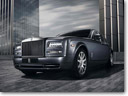
    Rolls-Royce-Phantom-Metropolitan-Collection-THUMBRolls-Royce Motor Cars is today premiering the Phantom Metropolitan Collection at the Paris Motor Show. The car is inspired by the modern metropolis and features exquisite hand-crafted design. Only twenty units of this beautiful model will be available to commission. As you can see, the car and specifically it’s interior pays homage to the world’s great metropolises.

    Precisely, this was achieved via application of marquetry, which is the art of inlaying small pieces of wood veneer to form decorative motifs. When Phantom’s signature picnic table is opened, the occupants see an elevated view of the city. This view was created through the expert application of 500 individual wood veneer pieces.

    On the other hand, when the tables are closed – the occupants see a different perspective of the cityscape. The cityscape theme extends and includes the Aetherius Greyleather colour, which was created to echo the colour palette of the modern city.

    In addition, the 6,800 two-tone stitches to the central rear seat flutes form an abstract image of a skyscraper. There is also a bespoke clock, which extends the theme to the front of the car. It features a rotating bezel that expresses the 24 of the great cities of the world and their time zones.

    Going on the outside, the exterior of this Rolls-Royce is decided in Darkest Tungsten, inspired by city skylines finishes. The exterior is rounded-out with a hand-applied coachline, which depicts an abstract silhouette of skyscrapers.

    Source: Rolls-Royce

  • The 1970 Ford Mustang Boss 302 – raw power for all car enthusiasts

    1970-Ford-Mustang-front_thumb1970-Ford-Mustang-front_651

    If you look back in time you will easily discover a number of popular, even iconic muscle cars. Today many of them still serve their owners and each one of them has a story to tell. But did you know that there are muscle cars, situated on top of muscle cars? That is, they are improved versions? Like the 1970 Ford Mustang Boss 302 that’s an enhanced version of the regular Ford Mustang of that age? Don’t worry if you failed this little test – now we are going to tell you something more about this great car.

    Just like many cars in its class the 1970 Ford Mustang Boss 302 has a story to tell and it’s a long and interesting one. Designed to compete in SCAA’s Trans-Am series, the 1970 Ford Mustang Boss 302 carries strength and adrenaline in its veins right from the start. The car is an improved, more powerful version of the standard Ford Mustang of that time period and it even features a few more upgrades compared to the 1969 Ford Mustang Boss 302, which was the first model ever produced. Despite all the years that have passed by the importance and popularity of the car are still here as the Ford Mustang Boss 302 was once more produced as a modernized model in the years 2012 and 2013.

    But what makes the 1970 Ford Mustang Boss 302 such an icon? The answer is simple: everything! The car is a powerful animal even for today’s standards and do we need to tell you how valued it is nowadays? Built in limited numbers 40 years ago the vehicle is a hotly contested item if you happen to see it somewhere for sale and highly valued by collectors who keep one such Mustang here and there. The improvements featured in the 1970 year model add some spice to the picture too. The car is powered by a 4.9-liter V8 gasoline engine that outputs 290 HP (213 kW) and 290 lb-ft (393 Nm) of torque; the same engine is found in the year 1969 model. But like we said, the 1970 Ford Mustang Boss 302 has been touched here and there. For example the car comes with a diameter reduction of the intake valve from 2.23 inches (5.66 cm) to 2.19 inches (5.56 cm), which increases low-end torque for slightly better initial acceleration. Another change from the year 1969 model is that there is an increase in the engine compression ratio too – from 10.5:1 to 10.6:1. The most important change regards the water pump – it is moved to the driver’s side, which also means changes in the radiator and the plumbing. The pump features 0.75-inch ball bearings to improve durability and a ceramic-faced impeller seal. The rest of the engine changes include an updated pulleys system, new accessory brackets, a new vibration damper and more. What’s even better is that even nowadays, more than 40 years after the debut of the 1970 Ford Mustang Boss 302, there are engine parts everywhere so fixing the engine in case of need should not be a problem.

    1970-Ford-Mustang-rear_651

    An engine is nothing without a transmission so here it is – the 1970 Ford Mustang Boss 302 features a 4-speed Toploader manual transmission but don’t hope to find one with an automatic gearbox as it was never offered even as an option. To make things a bit more interesting Ford offered the manual transmission in two versions – with wide-ratio or with close-ratio; both are easy to identify by code – close-ratio is code 6, while wide-ratio is code 5. Both of them offer a Hurst T-handle shifter. The transmission is said to be very durable as with time passing by it became the basis for today’s NASCAR Jerico transmissions. Even if you encounter problems, you can easily rebuild it – parts are plentiful and a master repair kit costs only around USD 140.

    A powerful engine needs powerful brakes or otherwise how will you stop? Well, the 1970 Ford Mustang Boss 302 provides them. The car has power front vented discs that are strong enough to stop the car that weighs 3200 pounds (1453 kilograms) from 60 mph (97 km/h) to zero in just 112 feet (34 meters). You’d better wear a seat belt or you’ll fly through the windshield if you attempt this somewhere! The rear brakes are cast-iron drums – an industry standard. Just like all other car systems that we have mentioned so far, the brakes can be easily serviced – you can find pads, new drums and cylinders for much less than USD 100. In addition to that you can find rear brake disks in aftermarket shops.

    We can’t continue the description of this great car if we don’t say a few words about its chassis and interior. The chassis of the 1970 Ford Mustang Boss 302 is also a bit upgraded thanks to its Trans-Am origin. The car features “competition” suspension that consists of an independent front, tube shocks, coil springs rated at 320 lbs/inch and an anti-roll bar. There are rear leaf springs and staggered tube shocks that handle the rear load and an anti-roll bar that is not included in the year 1969 model. Unfortunately the 1970 Ford Mustang Boss 302 does not come with power steering as standard; available as an option it does not require much else than standard maintenance.

    1970-Ford-Mustang-inside_651

    The description of this great and iconic car will not be complete if we do not say a word about what you will find inside the car. The 1970 Ford Mustang Boss 302 is a muscle car but it knows how to be gentle and that’s why it treats you with a comfortable interior. Colored in black as standard the interior offers high-back, vinyl-clad bucket seats and instrument gauges that fit the 1970 Ford Mustang Boss 302 as a muscle car. The only things that are missing are the full-length console and the tach and trip odometers but they were offered as options back in the day. If you are lucky enough you will be able to choose among different colors for the full-length console too. On the outside you will find faux vents that underline the racy front end, reflective back stripes that come out of hood stripes at the aft edge, Boss 302 decals and other similar goodies. After all a muscle car does have to look like a muscle car, right?

    The 1970 Ford Mustang Boss 302 does look and feel great, doesn’t it? Unfortunately like with everything else we have to go back to real life. Only 6318 such Mustangs were produced decades ago and as you can imagine they are hard to find nowadays. Even if you encounter one of them prepare to spend between USD 46,500 and USD 105,500 on the car depending on its condition and looks. This is not cheap but at the same time the car is worth it. You not only get a muscle car, you get a living icon. If the 1970 Ford Mustang Boss 302 is your dream, then go for it – after all dreams exist to get fulfilled, don’t you think?

  • 2015 Honda CR-V Makes European Debut Tomorrow

    2015-Honda-CR-V-THUMBSwindon-built 2015 Honda CR-V has new looks to show and it will do that at the Paris Motor Show, which starts tomorrow. The iconic for the brand SUV gets more powerful 1.6 litre i-DTEC diesel engine from the Earth Dreams Technology series, which generates 160 horsepower (118 kW) and 350 Nm (258 lb-ft). The unit will be mated with a nine-speed automatic transmission, thus delivering reduced emissions and improved fuel economy.

    The refreshed model has brand new features such as the headlamps, front grille, fog lights, skid-plate and bumper. At the back of the car, the CR-V gets new LED combination lamps, a refreshed tailgate design and bumper.

    Furthermore, the aforementioned engine will be hidden under the hood of the four-wheel drive model. This powertrain delivers outstanding performance and low CO2 emissions, and comes to substitute the previous 2.2 litre i-DTEC diesel.

    When the unit is coupled with a six-speed manual transmission the CR-V emits below 130 g/km of CO2. Even more: when the engine is matched to the new nine-speed automatic transmission, the CO2 emissions of less than 135 g/km. This rating is up to 20% better than the previous generation.

    The two-wheel drive diesel CR-V will be equipped with the well-known 120 hp (88 kW) PS 1.6 litre i-DTEC diesel engine, and when coupled with the manual transmission it will emit just 117 g/km of CO2.

    The official reveal of the model will happen tomorrow, at Honda’s stand at the Paris Motor Show during a press conference.

    Source: Honda


  • Citroen C3-XR Crossover Unveiled at C_42 on the Champs Elysées

    Citroen-C3-XR-THUMBCitroen C3-XR compact SUV was unveiled today at C_42 on the Champs Elysées. The crossover is robust, elegant and dynamic. It will be launched in China in December, which will extend company’s cover of this market. In fact, nowadays the Chinese market represents more than one in four sales for the brand. The fast sales growth for the brand in this country is supported by a rapidly expanding network of 470 dealers. Models such as C-Elysée and C4 L are an example of the good recognition by the customers there.

    C3-XR is an embodiment of Citroen’s contemporary approach based on the values: strong design, remarkable comfort and technology choices. The symbolic location, at which the crossover was presented, was chosen to celebrate the 50th anniversary of Franco-Chinese diplomatic relations and emphasise the French origins of this SUV.

    The model is based on the Citroen C-XR Concept that was unveiled at Beijing Motor Show in April this year. The comfort is of the highest standard, due to the benchmark levels of interior space, the roomy and welcoming driving position, and the ride comfort.

    In addition, C3-XR also benefits from the latest innovations that the French company offers. For example the technological equipment features keyless entry and start, reversing camera, grip control and Citroen’s telematic services.

    Citroen C3-XR will be powered from launch by the THP 160 S&S engine coupled with the latest generation EAT6 automatic gearbox. It will be produced at Wuhan, China, with sales starting in December.

    Source: Citroen