Category: Auto News

Auto news – automobile industry news. Articles about all the latest car models and concepts. Breaking news, uncovered secrets.

  • Audi R18 for 2016 Motorsport Season Debuts in Germany

    Audi R18 Front View PremiereMeet the new Audi R18 which is absolutely ready for the new motorsport season of 2016. The car has just celebrated its world premiere in Munich, Germany, showing that it is the most ever produced. The world premiere happened on the occasion of the Audi Sport Finale at the Audi Training Center Munich on Saturday.

    And here is the big news: for the 2016 season Audi Sport has substantially re-designed the Audi R18. The LMP1 race car will compete in the in the Le Mans 24 Hours and in the FIA World Endurance Championship (WEC). It is absolutely ready for a win, because it now includes innovative aerodynamics that are representation of the newest lightweight design philosophy, modified hybrid system with lithium-ion batteries for energy storage, plus an efficiency-optimized TDI engine.

    SEE ALSO: Here Are The Three Audi Models To Represent the Brand at 2015 LAMS 

    Audi R18 Side View

    All of this speaks of impending win and I am definitely looking forward to see what happens. As a matter of fact, Audi Sport says that with this car it is setting a clear signal, highlighting the aim of putting “the pedal to the metal in motorsport, deliberately relying on TDI”. And by the way, this engine is regarded on of world’s most successful automotive efficiency technology competing at Le Mans.

    2016 FIA World Endurance Championship (WEC) is beginning in April and its start will be at the Silverstone, UK. There Audi Sport Team Joest will be fielding two new Audi R18 cars. Porsche, which is a “sister brand” of Audi, has also agreed to compete in the Le Mans 24 Hours and the WEC season with only two instead of the most recent three cars. And this is in the interest of maximum cost efficiency.

    It is indisputable that the Audi R18 marks a major step in company’s motorsport development.  But let’s see what happens when the season starts. Stay with us!

    Source: Audi 

  • Bentley Rolls Off the Production Line the First Bentayga in Anthracite

    Bentley Bentayga Production Start Bentley Bentayga is the first luxury SUV of its class offered on the market. Yes, we have the Cayenne but here we are speaking of a different and higher kind of luxury experience. The Bentayga will be the benchmark against which all other SUVs are measured and will be definitely defining a brand new segment of the luxury SUV.

    The good news is that the first ever Bentayga has just roll off the production line in Crewe, UK. As a matter of fact, the model is the reason for one of the biggest investment programmes (£840 million) in Bentley’s history. Precisely, for four yeas since the start of the work on the model, 1,500 UK jobs have been created.

    SEE ALSO: 2017 Bentley Bentayga SUV is Now Official! [VIDEO]

    Besides the ambitious £800 million investment into the Crewe factory, the Bentayga is backed by £9.5 million from the Regional Growth Fund. It has obviously created hundreds of valuable skilled jobs for the area and secured the future of production onsite.

    The Bentley Bentayga is currently entering full production and those who have purchased it should expect their deliveries from January next year. The very fist car that has rolled off the production line was finished in Anthracite paint color and was handcrafted for about 130 hours.

    Bentley Bentayga Production Start in Crew

    Facts About Bentayga

    I am not going to say a lot about this model, because all you want to know is featured in the link above. Make sure you visit it to find out whether this is your vehicle. But I should mention some interesting facts about this SUV.

    The First Edition will come in 608 units only and this will be for all customers globally. And along with it buyers will also receive a special Breitling watch to compliment their new and shiny SUV.

    Bentayga will be driven by a 6.0-liter W12 engine, producing 608hp (447kW) and 900Nm of torque. This means that the luxurious vehicle can go from 0 to 100 km/h (62mph) in just 4,0 seconds and chases the top speed of 301km/h (187mph).

    Bentley Bentayga SUV

    The go-anywhere attitude is highlighted by integrated skid plate into the lower section of the front bumper and alloys in size ranging from 20 to 22-inch. There is also a huge panoramic glass roof, which takes almost 60 per cent of the total roof surface.

    These details make the Bentayga the fastest and most powerful, most luxurious and most exclusive SUV in the world, doesn’t they!

    Source: Bentley 

  • The Rebel Awakens. Watch the Latest Video of Porsche Cayman GT4 Clubsport

    Porsche Cayman GT4 Clubsport Video ScreenshotTen days ago Porsche presented at the L.A. Motor Show its brand new and ecstatic Cayman GT4 Clubsport. Now the luxurious company promotes the car with furious video showing-off the how the sports car behaves in action. There is really nothing much said about it, except for this: “If the rebel inside you dreams of this. Get him on track… Rebels race harder.”

    And I really like it because it describes the spirit of the Cayman GT4 Clubsport so well. It is a rebel and according to this video it definitely races harder than anyone else on the track… or? I would like to hear your thoughts of comparison here.

    SEE ALSO: Track-Bred Porsche Cayman GT4 Clubsport Debuts in L.A. 

    Anyway, the rally car as described by Porsche is the perfect vehicle for ‘recreational and club racing’.  It is mid-engined, driven by 3.8-litre flat-six unit, which is positioned behind the driver’s seat. Some sports characteristics are too contributed by the custom six-speed Porsche double clutch with shift paddles on the steering wheel and a mechanical rear-axle locking differential.

    Porsche Cayman GT4 Clubsport Beautiful Rear

    Other cool equipment features about this car include lightweight strut on the front and rear axle, 380-millimetre steel brakes, anti-lock brake system, purpose include welded-in safety cage, a racing bucket seat and six-point harness. The alloys are of 18-inch size with five-bolt forged rims with Michelin tyres.

    And if this rebel calls your spirit then you should definitely consider a test drive (at least). If ou are living in Europe, then you can purchase Porsche Cayman GT4 Clubsport at 111,000 euro. North Americans will have to pay for it at least $165,000USD.

    httpv://youtu.be/XY3GXRsMZng

    Video Source: YouTube

    Source: Porsche 

  • The Advantages of Boxer Engine Design

    The-Advantages-of-Boxer-Engine-Design-SubaruIt is said that “boxer engines” get their name from the way that the pistons move. The pistons move horizontally, in an opposing, side-to-side manner sort of like two boxers punching at each other. Over the years, this unique design has been used from everything from Volkswagons, Porsches to Subarus and BMW motorcycles.  Boxer engines are an elegant engine design and offer natural advantages for automotive design engineers.  Let’s take a closer look at these unique engines.

    Engine balance

    It’s all a matter of physics.  When you get pistons, rods and crankshafts spinning away in an internal combustion engine, you get a lot of vibration.  With standard V-shaped engines, these vibrations can be difficult to remove because there is no natural way to cancel them out.  What design engineers do with V-engines is build opposing “counterbalances” on the crankshaft and other parts. It’s a less than optimum design technique but it does work.

    With boxer-type engines, however, it’s easier.  The opposing pistons balance the internal engine motions out due to the opposing movements of the pistons and crankshaft.  When one piston is heading toward Top Dead Center (TDC), an opposing piston is rushing to the Bottom Dead Center (BDC) of its stroke and the result is that the two forces cancel out each other out and the engine essentially runs vibration free.

    Just for the record, it should be noted that there are other engine designs that naturally cancel out internal vibrations. The straight six, the straight eight, the V12 and the V16 engine types all can be designed for natural counterbalance. None of them, however, lie down flat like a boxer engine does.

    It started long ago

    The commercialization of the boxer design started in 1896 when Karl Benz developed the first internal combustion engine with horizontally opposed pistons. He called it the Kontra engine because the action of the opposing sides of pistons cancelled out engine vibrations. (Kontra in German means “against”). Various cars have used boxer-type engines over the years. Perhaps one of the earliest and most prolific uses was on the VW air cooled flat four, which became the standard engine of the Volkswagen Beetle and remained in production for almost 70 years before being discontinued.  Porsche has long utilized boxer-style engines in their 911 and succeeding model variants.

    Today the largest manufacturer using a boxer engine design is Subaru.  Subaru has been using boxers for over 45 years now and uses them in all their models today.  You could say that the boxer engine is part of the Subaru DNA.

    Ultra-low center of gravity

    A horizontally-designed engine can sit low in the engine bay because it simply isn’t as tall as other upright engines.  This directly contributes to a vehicle’s low center of gravity since the center of gravity on an opposed engine is much lower to the ground compared to an in-line or V design. This allows for far better lateral acceleration when driving. In addition, the benefits to handling are enormous. Better turning/cornering capability, decreased roll, and better grip of the roadway all come natural to the flat engine.

    Engine accident dismount

    In the unfortunate event of a front end collision, a boxer engine can easily be designed to “dive” under the passenger compartment.  Consider how safe that scenario is compared to a bulkier, V-type engine design that cannot be easily designed to dive under a vehicle.  In a bad collision with a large V-6 or V-8, the engine will be pushed into the engine compartment causing considerable injury.

  • Airbags – What You Should Know

    Airbags – Whaat You Should KnowThe concept of the airbag, a soft pillow to land against during a crash, had been around for many years before anyone thought of using them in cars. In fact, the first patent on an inflatable crash-landing device for aircraft was actually filed during World War II.  None were made during the conflict and it wasn’t until the 1980s that the technology migrated into the automotive industry.
    The early automotive airbag designs were impractical and expensive. The main concern for design engineers was the storing and releasing of a compressed gas. Issues were raised such as where to store the container for gas in the car, how to develop a mechanism that allows the gas to expand quickly, and how to make sure that the stored gas would have a shelf life at least equal to that of the car.

    These issues were addressed in the 1970s with the invention of small propellant “inflators,” devices that initiate a chemical reaction that releases hot nitrogen gas into the airbag. This device was a major stepping-stone in the development of airbag technology.

    Technically, the goal of an airbag is simple: slow the passenger’s forward motion in a crash as evenly as possible but do it in a fraction of a second.  The whole process starts with signal from a motion sensor.

    Motion sensors are chip-based accelerometers that continuously measure forces on moving cars. When one of these sensors detects a large, collision-level force, it sends an electrical pulse to the automobile’s airbag inflation system.  Typically this ignites a charge that produces a hot blast of gas which drives the airbag out from its storage site in the car at more than 200mph. The inflated airbag, along with seatbelts, prevents the driver and passengers from being thrown very far forward. The whole inflation process happens in only one-twenty-fifth of a second and serious injury is usually avoided.

    It didn’t take long to learn that the force of an airbag can hurt those who are too close to it, particularly children. Researchers have determined that the risk zone for driver airbags is the first 2 to 3 inches of inflation. So, placing yourself 10 inches from your driver airbag gives you a clear margin of safety. The rules are different for children. An airbag can seriously injure or even kill an unbuckled child who is sitting too close. Experts agree that children 12 and under should ride buckled up in a properly installed, age-appropriate car seat in the rear seat of a car.

    In certain special cases, car owners can request the ability to deactivate their airbags. Generally speaking, you can’t deactivate your airbag without installing a retrofit on-off switch.  And you can’t just have a dealer install one for you. Dealers have to contact the NHTSA and get permission.  Go online and look for the NHTSA brochure, “Airbags and On-Off Switches: Information for an Informed Decision,” and the accompanying form, Request for airbag On-Off Switch.  This information will allow you to decide whether disabling your cars airbag system will make your car safer under the conditions that you typically drive in.

    Source:  Earnhardt Chrysler

  • Choosing Head Units

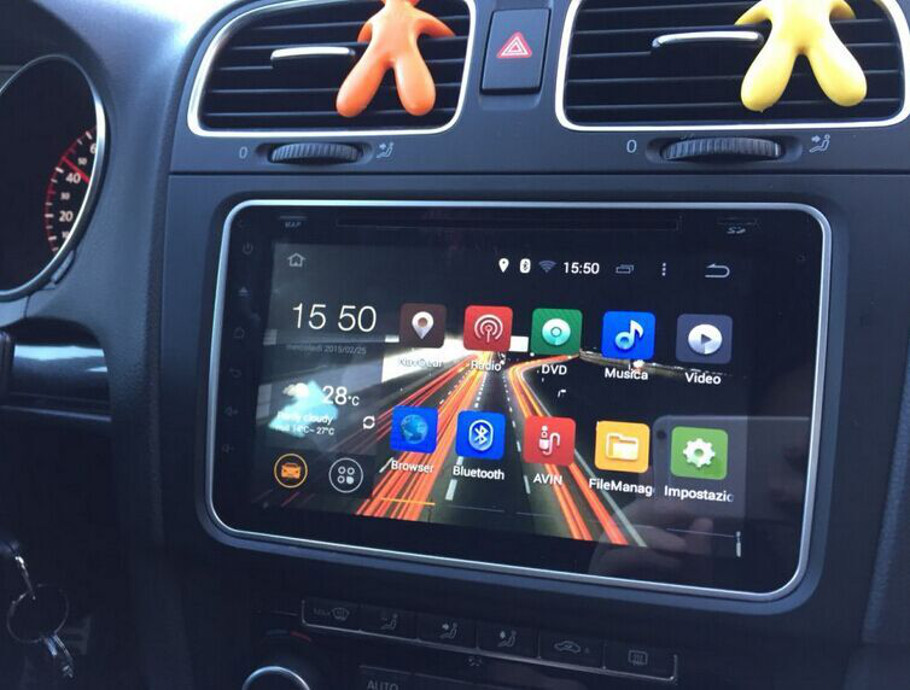
    Choosing Head UnitsIt’s often called a radio, but a “head unit” is a perhaps a better term for this audio component since it is the brains and command center for a car’s sound system. The head unit is usually located on the dash and allows you to choose things like: what station to listen to, the music volume, what song you wish to hear – along with many other functions. Here’s an in-depth look at the various elements that make up today’s automotive head units.
    The Tuner

    In the early days, the only entertainment option in your car was to tune in a radio signal — hence the name “tuner.”  Today’s, tuners vary from simple to complex and allow you to select AM and FM stations and in some cases, several digital formats. Digital formats are preferred by some because they provide audiophile quality sound that is free from analog noise.

    The first of these digital formats are the satellite-based systems such as Sirius and XM. These are subscription-based services that offer hundreds of channels of programming.  Because the systems are digital, the stations don’t fade the way AM and FM does as you drive away from a transmission area, and the sound is very high quality. Another digital format is HD Radio.  Generally located in metropolitan areas, HD signals are a high-quality digital simulcast of standard analog AM or FM programming. Some stations also broadcast completely separate programming on sub-frequencies that are only available with an HD tuner.

    Disc-Based Music Sources

    Car head units also play recorded material from various sources. Many units still allow one to play CDs and MP3 music files that have been burned onto discs. Some head units also have a built-in hard-disk drive that can store music files transferred from a CD or DVD. Disc-based storage formats are still popular but many users today prefer iPod-type portable sources.

    Portable Music Sources

    Virtually all modern head units today offer some way to integrate portable music players like the iPod into a car’s audio system and control them through the head unit. The most basic connector is the “aux-in jack.” You plug an inexpensive accessory cable into the aux-in jack, which in turn connects to the headphone jack of an iPod or other music player. A better way to connect a portable music player is via a USB port. In most cases, you can operate the device using the head unit’s controls. The battery will also be charged when it’s connected via USB. Most cars with USB ports will play music files directly from a USB thumb-type memory drive as well.

    Bluetooth

    Finally, a technology called Bluetooth audio can wirelessly send music files from a compatible device to the car’s audio system. Bluetooth capability also allows for hands-free phoning and you can hear a caller’s voice over the sound system’s speakers. There’s a caveat with Bluetooth, however: The controls are limited to basic functions such as play/pause and track-skip forward/back, and the head unit usually doesn’t show source-related information such as an artist or song names.

    Controls

    In addition to operating the selected audio source, the head unit can also tailor the sound with bass and treble controls or with a built-in equalizer. Higher-end head units also use sophisticated digital signal processing (DSP) technology to further shape the sound and control the ambient noise that’s common in a car’s interior cabin. Many car audio systems have volume controls on the steering wheel that can change radio stations or music tracks. Some head units have circuitry that allows driver to operate an audio system via voice commands.

    When looking to purchase a head unit for your car’s audio system, Georgiacdj.com suggests that you do your research and make sure you choose a unit that meets all your needs.   The good news is that head units are a very popular product today so the variety is vast and prices are reasonable.

    Article Source: Georgia Chrysler Dodge Jeep Ram

  • About Car Audio Amplifiers

    Car Audio AmplifiersIf you are installing a high-end sound system in your car, you are likely considering the purchase of a separate power amplifier.  Factory sound systems do have built-in audio amplifiers but they may not satisfy the needs of enthusiasts with a desire for powerful sound – that’s when separate power amplifiers come into play.

    In this article, we will look over the basic parameters that you should be knowledgeable about when choosing a power amplifier for the ultimate audio sound system in your car.

    It Starts with the Head Unit

    The audio that you play in your car comes from a “head unit”.  Head units are what you see on your dash with a radio tuner, CD player, USB port and other functions integrated.  They are the source of the sounds that you are going to play through your audio system.  Head units are designed to allow you to easily switch sources, change stations and adjust sound bass and treble.

    Then it goes to a Pre-Amp

    After the sound signal is developed in the head unit, it has to be processed by a preamplifier or “preamp.” The preamp stage is also where such tone controls as bass, treble and equalization tailor the audio before it is fed to the power amplifier. Part of the preamp processing involves circuitry known as a crossover. Crossovers electronically divide the full-range audio signal amplifier into separate frequencies for woofers, mid-ranges and tweeters. Think of a crossover as an audio-signal traffic cop, directing specific frequencies so they can be reproduced by specialized speakers. Generally speaking all the pre-amp functions are performed in the head unit.

    Then on to the Power Amplifier

    Following the preamp processing, the sound signals are fed to a power amplifier. The amplifier is the device that creates a high-power electrical current to drive the speakers. Vacuum tubes were once used to amplify electrical signals but today automotive power amplifiers use power transistors.

    During amplification, amplifiers generate heat, so heat management is a major part of an amp’s design. That’s why an important part of an amplifier’s exterior is made up of what is known as a “heat sink.” Similar to a car’s radiator, the heat sink has fins that create surface area to radiate the internal heat generated by the amplifier.  This brings up another point: since these heat sinks release heat, it is best to install them in a well ventilated area.
    Amplifier Power Ratings

    Amplifier power output is measured in watts per channel. A higher wattage rating for an amplifier means more power is available to drive the speakers. The industry standard for amplifier wattage ratings is RMS. This stands for “Root Mean Square” and is a mathematical equation for measuring the magnitude of the output signal. When you are comparing different amplifiers, be sure to compare RMS ratings and not “Peak Power” ratings which are usually much higher. In fact, the Consumer Electronics Association trade group administers a voluntary car audio amplifier power measuring standard called CEA-2006-A. Look for CEA-2006-A wattage ratings on the amplifiers you are considering.

    Do Your Research

    Amplifiers are probably the most misunderstood part of a car audio system. Many simply want “powerful amps”.  As we hope you understand from the article above, don’t just go for the highest power ratings.  Look for CEA-2006-A certification and a high quality brand as well.

    Source: Palmer Dodge

  • Fresher Than Ever: AC Schnitzer Upgrades the Recently Premiered BMW 3-Series

    2015 AC Schnitzer BMW 3-Series It is still fresh and new, but it has already a comprehensive upgrade: two 3-series LCI models are now geared with numerous additional features with the aid of tuning specialists AC Schnitzer. The engineering team has helped  to improve the power units of the 316d and 335d to additional 139hp (102kW) for the 316d  and 360hp (263kW) for the 335d model.

    All the performance upgrades make the 3-series even more interesting and more appealing for customers and fans. In fact, one more time readers of magazines have voted AC Schnitzer for the best engine tuner.

    SEE ALSO: Believe it or Not This Uprated BMW 1-Series is Incredibly Powerful! Covers 0-100 km/h in 4.5 Seconds!

    The 3-series LCI models benefit from the incorporated adjustable AC Schnitzer Racing suspension with adjustable compression and rebound settings, while the ground adhesion is improved by combination of suspension components and wheel and tire sets. And in order to achieve visually appealing stance, the team geared special wheels that widens the wheelset for the 3-series models.

    2015 AC Schnitzer BMW 3-Series

    On the other hand, interior is geared with AC Shnitzer Black Line aluminum cover for the BMW i-drive system controller, widened choice of gear knobs, Black line aluminum handbrake handle and restyled aluminum pedal set. And for these who are still not satisfied: the tuner has also geared the vehicles with front spoiler elements, carbon mirror cover, rear roof spoiler and rear spoiler, along with stylish desigh stripes and rear skirt protective film. How cool is that?

    2015 AC Schnitzer BMW 3-Series

    Source: AC Schnitzer


  • Believe it or Not This Uprated BMW 1-Series is Incredibly Powerful! Covers 0-100 km/h in 4.5 Seconds!

    BMW 1-Series by AC Schnitzer Side ViewThis BMW 1-Series by AC Schnitzer has impressive motorsport qualities and it has just debuted at the Essen Motor Show. I’m sure that there is rarely anyone who could expect a brute power from the ‘smallest’ in any range, but the case here is exactly the opposite. Since the tuners at AC Schnitzer were involved, there is literally no doubt that we could expect something even worth of race track competition.

    M50d Power Instead the Standard Unit

    Precisely, the experts have equipped the car with the M50d power plant and impressive performance upgrade. This powerplant is originally found in the 5-series, and this is the reason why the “Diesel M-Technik” unit propels the 1-series a long way forward.

    SEE ALSO: Another Essen Motor Show Debut: Meet the Falcon Based on BMW X6 M [VIDEO]

    In addition, after the performance upgrade the concept engine of the ACS1 5.0d now delivers 400 hp (294 kW) and 800 Nm (592 kW) of torque. So, it is no surprise that this “mini” could jump faster than many sports cars out there. Precisely, it is capable of 0-100 km/h acceleration time in just 4.5 seconds. By the way, the acceleration from 80-180 km/h is even more impressive: the ACS1 5.0d takes just 7.9 second for this.

    Other Upgrades

    BMW 1-Series by AC Schnitzer Rear View

    Other upgrade goodies that contribute for better performance include AC Schnitzer charge-coolers and sports catalysts, and tuning company’s logo over the engine. Well, the last one might not boost the horses but it definitely says whom to thank for the increase in power and speed.

    In addition, the 1-Series also received sports silencer and two chromed tailpipes in “Racing”, “Racing Evo”, “Sport” or “Sport Black” styles, in right and left combination. Furthermore, the “cornering comfort” is provided via the in-house made racing suspension, which is also entirely adjustable in height. In details, it delivers lowering by 35 – 45 mm at the front and 40 – 50 mm at the rear. Anotherr option is the AC Schnitzer sports suspension and suspension spring kit that contributes for a 30 mm lowering at the front and rear.

    Exterior Looks Better?

    BMW 1-Series by AC Schnitzer Front View

    Are there any aero components in this project? The answer is positive. The tuners used a combination of two-piece AC Schnitzer front spoiler elements, the front spoiler, chromed front grille in the export version, and rear roof wing. There is even a rear skirt, which has received a protective film and carbon mirror cover. The AC Schnitzer design stripes round out the exterior enhancements included for the bodywork of the 1-Series.

    But How About the Interior?

    AC Schnitzer also changed the interior of the 1-series BMW via the “Black Line” aluminium cover for the “i-Drive” system controller, AC Schnitzer key-holder, a gear knob with digital gear display, the “Black Line” aluminium or leather gear knob, “Black Line” aluminium handbrake handle, foot rest and aluminium pedal set, and velour foot mats.

    This is yet another very cool project by AC Schnitzer shown at the Essen Motor Show and we are very excited to share it with you. The guys are really doing their job just great and we definitely hope to hear from them more often!

    Source: AC Schnitzer

  • Ben Saunders and Minna Sillankorva Tackled Down The Arctic Silverstone Challenge [VIDEO]

    Land Rover SVR Sport Land Rover Ambassador and polar explorer, Ben Saunders, decided to swap his shoes with winter tires for his Range Rover Sport SVR and to put this change to the test near the Arctic Circle. There is also a new film released by Land Rover that shows the journey of the famous adventurer from ice driving beginner to experienced professional in Sweden on a full-scale replica of the Silverstone Grand Prix Circuit.

    And with special instruction by the experienced driver and former rally champion, Minna Sillankorva, Ben tackles the challenge of driving on ice with the Land Rover’s performance-oriented flagship, Range Rover Sport that produces 550hp (404kW) through its V8 power unit. In fact the machine is capable to go from 0 to 100km/h (62mph) in just 4.5 seconds and is the first model to use the SVR designation that will be adopted by future Land Rover and Jaguar performance-oriented vehicles.

    SEE ALSO: Kahn Continues its Strong Relationship with Land Rover with the Introduction of Silver Defender Hard Top

    But the titanic power is not the only thing that makes the vehicle so interesting. It also features enhanced all-terrain performance upgrades, including Terrain Response system that automatically tailors a range of vehicle’s settings to fit the road conditions. Also, the four-wheel drive system with two-speed transfer case and 50/50 percent torque split delivers unmatched capability and flexibility.

    Land Rover SVR Sport

    Another sweet system that aids Ben in his adventure is Land Rover’s Torque Vectoring: it constantly balances the distribution of engine torque between the four wheels during cornering which eventually improves grip, stability and steering response. This system also monitors the vehicle via Dynamic Stability Control module. When it accelerates in corners, the system uses special sensors to detect the onset of understeer.

    Land Rover SVR Sport

    https://youtu.be/MDIhoIKd9RM

    Source: Land Rover 

  • G-Power and the Beautifully Uprated M4 F82 Bi-Tronik

    G-Power BMW M4 F82 Bi-Tronik Front ViewG-Power rises again with a special tuning for the M3 and M4. The car depicted here is the BMW M4 F82, which has received a very special optimization for its powerful engine. And instead of its standard 431 horsepower it now shows a lot more! The upgrade happened via an in-house developed Bi-Tronik 2 V2.

    The result: an output of 560 hp (412 kW) and 720 Nm (531 lb-ft) of torque. This conversion catapults the Bavarian to 100km/h from a standing start in just 3.8 seconds. If the Vmax limitation is removed, then the top speed could be raised to a theoretical 330km/h. In reality, the car will achieve around 310km/h.

    SEE ALSO: G-Power Releases M6 Convertible Producing 740 hp and 975 Nm

    G-Power BMW M4 F82 Bi-Tronik Rear View

    The dramatically enhanced performance was proved via test runs on the dyno and real world testing on the autobahns and country roads. What is more, complementary to the Bi-Tronik 2 V2 package, G-POWER installed downpipes which minimize the exhaust back pressure.

    Furthermore, the car was also equipped with G-Power titanium exhaust system with four 90-millimeter tailpipes. They are optionally available in titanium or carbon finish, thus saving 7.1 kg.

    At last, we should say about the addition of 21-inch HURRICANE RR forged alloy wheels, which were shod with 245/30ZR21 and 295/25ZR21 Michelin tires. Don’t miss the thrilling video about the car and check out the gallery below.

    Source: G-Power 

  • What Makes 2016 Honda Pilot So Safe?

    2016 Honda Pilot2016 Honda Pilot received the highest 5-Star Overall Vehicle Score in the National Highway Traffic Safety Administration (NHTSA) New Car Assessment Program (NCAP). But this is not all: 2016 Pilot also earned the TOP SAFETY PICK+ rating from the Insurance Institute for Highway Safety (IIHS) when equipped with the optional crash prevention system, which makes it the first three-row SUV machine with such high achievements and ratings.

    Honda Sensing, available for Pilot EX trim levels and above, is what makes this sweetie special. It offers improved awareness with its countless systems, some of which are Collision Mitigation Braking System, Forward Collision Warning, Lane Keeping Assist System, Adaptive Cruise Control, Lane Departure Warning and Road Departure Mitigation. Furthermore, all these systems benefit from the adoption of a sensor fusion technology integration that deliver enhanced sensing and the ability to identify and anticipate multiple collision scenarios. And of course, it initiates warning and emergency braking when needed.

    SEE ALSO: 2016 Honda Civic Coupe Is Here!

    Also, 2016 Pilot adopts the next-generation of Honda’s Advanced Compatibility Engineering body structure, along with the 3-bone underbody frame design. This incorporation, along with Honda Sensing suite ensure major benefits for the overall safety of the passengers. Further safety features include Vehicle Stability Assist, electronic stability control system, Anti-lock Braking System, Brake Assist, front, side, side-curtain airbags and special interior design that prevents neck injury in cases of collision.

    The latest generation of Honda Pilot is designed and developed by Honda R&D Americas, Inc, in Los Angeles and Ohio and is exclusively manufactured by Honda plant in Lincoln, Alabama.

    Source: Honda