A time of 5.5 seconds for the sprint from a standstill to 100 km/h and an electronically governed top speed of 250 km/h put the performance SUV from Audi on a par with high-calibre sports cars. The engine limits its consumption to an average of just 11.9 litres/100 km.
The new V12 TDI is the crowning glory of an engine line-up brimming with dynamic performance – each and every one of the diesel engines from Audi generates a high output and tremendous pulling power for a sporty drive. This character has emerged over and over again in the brand’s models, not least in the form of the six- and eight-cylinder 2.7 TDI, 3.0 TDI and 4.2 TDI models. (more…)
Aggressive and elegant, expressive and sophisticated, the 2008 Cadillac CTS exudes a dramatic design presence. This all-new luxury sedan not only pushes Cadillac’s acclaimed design theme higher, it aims to redraw the boundaries of the normally conservative luxury sedan category. Inside and out, the 2008 CTS contradicts many traditional design conventions. CTS’ design expresses its serious performance intent, yet also is more elegant and luxurious. It’s a sedan in the heart of the luxury market, yet reaches for the charisma of a sports car. CTS is thoroughly new and contemporary, even while it evokes the grandeur of classic Cadillac cars.
Since the inception of the first-generation car in 2002, CTS is about trend-setting design. The edgy form of the CTS initially created controversy. But from the moment it hit the market, its design also attracted lots of buyers, with design often noted as a top reason for purchase. The all-new 2008 edition extends that edgy and contemporary character, with an injection of elegance.
On the exterior, there’s no mistaking the five-passenger sedan’s stronger stance, thanks to a two-inch wider track. Additionally, the overall shape of the CTS features a faster profile with more rake, coupled with surfaces that add elegance and grace. Borrowing from Cadillac’s legendary heritage, design cues include vertically shaped headlights and taillamps, signature light emitting diode (LED) exterior lighting, horizontal spline lines and its dihedral-shaped hood, all highlighted with many bright and jeweled accents.
2008 Cadillac CTS
Just as definitive of CTS’ evolution in design is the dramatically new interior. Like the exterior, it expresses luxury and performance themes with appointments that are both purposeful and elegant. Advances in surface development, technology, materials and construction combine to make the CTS cabin a compelling blend of technical sophistication, precise tailoring and luxurious character.
Exterior: sporty sophistication meets substance
Coupled with a new overall shape, the most evolutionary dimension of the 2008 CTS comes in the form of a two-inch wider track as a result of the addition of the new, optional all-wheel-drive configuration. The wider stance gives the new model a more planted, capable and well-grounded appearance that’s exemplified by much tighter tire-to-fender relationships.
The wider stance also enables more tumblehome – the vehicle sides are sculpted inward – delivering an appearance of rear-wheel-drive performance with a lower roof line, without compromising headroom or a roomy interior.
Additionally, a wider, tapering sail panel, lower, more sculpted hood, smoother wheel housing lips and a tighter wheel-to-body relationship help communicate the CTS’ agility as well as its sophistication and substance.
Seven-spoke, 17-inch wheels or available nine-spoke, 18-inch wheels surround larger high-performance brake calipers and rotors. Both painted and machined finishes are available for the standard 17-inch wheels. The larger, 18-inch wheels are available in a premium multicoat finish or a high-polish finish.
Inspired by Cadillac’s landmark Sixteen concept car, the CTS front appearance is immediately recognizable, yet also is new. The large, chrome dual-textured grille is significantly more vertical in shape, and is both aggressive and intricate. A large center-positioned wreath and crest add to the three-dimensional face. The front fascia is balanced with vertically stacked headlamps with bright bezels stacked in a staircase-like array. The lower air intake is flanked on both sides with fog lamps and brake duct intakes.
Side air extractors located forward of the front doors are a modern homage to Cadillac’s grand heritage. Additional bright details include chrome molding surrounding the side windows, and three-inch chromed exhaust outlets.
Even on the rear of the car, where many sedans are ordinary, Cadillac designers injected charisma. The vertical taillamps are a Cadillac trademark. The roofline and rear backlight have a coupe-like profile. At the centerline, the decklid carries the angular and directional theme of the front.
Dimensionally, the 2008 CTS is 191.6 inches (4766 mm) long, 72.5 inches (1841 mm) wide and 58 inches (1472 mm) in height. Wheelbase is 113.4 inches (2880 mm) with a front/rear track of 61.8 / 62.0 inches (1575 / 1585 mm).
Interior: performance and elegance combine
The 2008 CTS represents a new design theme for Cadillac interiors, emphasizing technical precision with elegant, hand-crafted details. Dramatically different from the original, the interior design is decidedly more upscale, with added ornamentation, luxury and attention to detail. Strict attention to packaging, premium materials, surface development and comfort combine to meet the discriminating tastes of luxury performance sedan buyers.
Upper instrument panel and door trim surfaces are hand-cut, sewn and wrapped by expert craftsmen. Analog instrumentation that is tightly framed with a compact hood tri-tubular, chromed cluster, is defined by bright accents. An integrated center stack design, with either a satin metallic finish or genuine Sapele wood, blends into the lower instrument panel that sweeps forward and away of front-seat occupants. The hand-assembled center console leads seamlessly into the center stack, providing a sportier “cockpit” feel for the driver and passenger without compromising space.
Heated and ventilated seats incorporate new “thin-seat” technology for maximum occupant comfort and enhanced rear-seat leg, knee and foot room. A signature V-shaped medallion appears as a decorative touch on the backs of the front seats. French stitching is used throughout the interior, including the upper instrument panel, door inserts, seats and the shifter boot.
Clean, white ambient light emitting diode (LED) soft backlighting is positioned in the door pulls, foot wells and recessed between the upper and lower instrument panels. The result is a dramatic effect similar to recessed lighting used in contemporary homes.
The leather-wrapped steering wheel includes standard integrated controls for cruise and audio system.
Inside and out, the 2008 CTS exemplifies an evolution of Cadillac design that achieves a remarkable combination of luxury, technology and performance in a sedan aimed at creating the desire and head-turning quotient normally reserved for sports cars.
Following a record setting sales trend and the successful launch of the all-new G sedan, Infiniti is keeping the momentum going with today’s unveiling of the 2008 Infiniti QX full-size luxury sport utility vehicle at the North American International Auto Show in Detroit.
With a new interior and refined exterior, Infiniti is enhancing and improving what customers already love about the QX – styling, technology, comfort – without compromising its towing capacity and interior roominess. (more…)
Kia Motors America (KMA) today during a press conference unveiled the all-new Kia Kue crossover concept vehicle at the North American International Auto Show (NAIAS) in Detroit. The press conference also served as the official public debut in North America for Peter Schreyer, new global design chief of Kia Motors Corporation (KMC).
“We’ve instilled confidence and integrity in our consumer base with vehicles that provide value, quality and safety,” said Len Hunt, executive vice president and COO of KMA. “Kue embodies the next phase of our brand evolution, which will instill pride and passion in our customers through great design.”
The Kia Kue employs a different approach to the crossover utility vehicle segment by taking elements of what makes a CUV to a new level, namely performance. Kue is designed first and foremost as a driver’s vehicle. While possessing SUV characteristics and capabilities, the Kia Kue focuses more on giving the driver an exhilarating driving experience on the way to the home improvement center than on how much it can haul.
The Kia Kue has a monocoque platform that sits on 22-inch tires with a wheelbase of more than 114 inches, packaged in an overall length of 186 inches. Though purely a concept, the Kia Kue does, however, hint at future styling directions for Kia Motors.
Kia Kue
“Good design shouldn’t look like you are trying too hard,” said Tom Kearns, KMA chief designer. “The future Kia direction will incorporate the ‘less is more’ philosophy but still include a heavy dose of boldness to be distinct.”
With its four wheels pushed to the corners and exterior skin tautly stretched over its underpinnings, the Kue sits powerful and poised. Draped muscular wheel flares play a nice contrast to crisp beveled sections found elsewhere on the body. Swept back headlights connect to the front grille to create a clean, aggressive down-road appearance. The side window shape flows effortlessly into the rear backlight where two centerline hinging doors open to access rear storage. A single side door that incorporates a negative skive shape opens scissor style for easy ingress and egress.
On the inside Kue continues the clean, athletic theme with bold understated simplicity. With a four-passenger seating arrangement and custom-built bucket seats, Kue is a vehicle both driver and passengers can enjoy. A technology-driven interface designed to adjust to driver and passenger preference is the focus of the interior functionality. Touch pad and motion-sensing controls are used to adjust things like audio and climate, and the entire system is programmable so that one surface may activate the stereo for one driver and temperature for another. Rear passengers have their own, separate interface.
The generation-next functionality of the interior is complemented by the use of sophisticated seat and surface materials and a modern color palette. Carefully selected materials and textures are vital components to the interior design of Kue, and they create an upscale feel that is both modern and inviting. A mid dark interior theme with highlights was chosen in place of the typical light interior common to many concept cars. Overall, the Kue interior presents a new perspective of upscale function with an emphasis on comfortable, user-friendly interaction.
Just as inviting is Kue’s appeal to be driven in a sporty fashion. Fitted with a 400-horsepower, DOHC, supercharged 4.6-liter V8 that twists out 400 lb-ft of torque, Kue is a true performance vehicle. Helping the driver harness all that power is a full-time all wheel drive system yielding predictable driving characteristics both on- and off-road.
Developed by the KMA design team as an expression of Kia’s global design language, the Kia Kue is a true reflection of the Kia brand and the passion it embraces.
Mazda North American Operations (MNAO) today debuted the 2007 Mazda CX-9 seven -passenger crossover sport-utility vehicle (SUV) at the New York International Auto Show. Arriving in Mazda dealerships in early 2007 , the CX-9 is designed and engineered specifically for North America. The Mazda CX-9 provides unique Mazda design and energetic performance as well as an up-market interior with class-leading space and unmatched versatility.
Like the Mazda CX-7 presented earlier this year, the CX-9 is a clean break from the traditional boxy SUVs crowding the US market. While styling echoes the CX-7, CX-9 is not a lengthened three-row CX-7, and CX-7 is not a shorter-wheelbase CX-9. Engineered with Mazda’s “Soul of a Sportscar” signature , CX-9 deftly blends sporty driving spirit with seven-passenger SUV practicality. Standing out from existing crossover SUVs – vehicles that deliver SUV practicality with a passenger car driving experience – the Mazda CX-9 is the insightful solution not only to the modern family’s complex need but also to the enthusiast driver’s desires . A nd of course Zoom-Zoom is standard.
2007 Mazda CX-9
“The North American market continues to play a leading role in Mazda Motor Corporation’s global future and financial health,” emphasizes Jim O’Sullivan, president and CEO, MNAO. “The all-new CX-7 and CX-9 were engineered specifically for North America to help us fulfill ambitious goals. The CX-9 represents everything a Mazda SUV should be, offering ample power, striking appearance, fun-to-drive vitality , precision build quality and unexpected versatility. While other vehicles in this category focus only on what’s behind the drivers seat for the family, we have engineered a unique solution that is equally as exciting for the driver. ”
Mazda C X-9 targets y oung couples and modern families . These outwardly-focused families haven’t lost their desire for high-intensity leisure activities, learning experiences and social interaction. It is also ideal for couples with grown children who pursue an active lifestyle. Mazda CX-9 is specifically designed to make these complex pursuits as easy and as pleasurable as possible.
SPACE TO STRETCH
The Mazda CX-9 rides on one of the longest wheelbases in the segment, providing easy access to its three-row seating. There’s ample room for adults in every position and sufficient cargo space to accommodate modern American families. Under the sleek exterior is an interior that will impress demanding customers with its space, utility, versatility, and premium features.
To ease accommodations for all drivers, the driver’s seat and steering column move quickly and easily over a long range of adjustment. The 60-40 split second row not only carries three in comfort, it also offers approximately five- inches of fore-and-aft slide travel and a reclining backrest. In the 50-50-split third row, the seating position and leg room are both class-leading in numbers and real comfort. Entry to the third row is easy, with nearly 26 inches of access space between the folded second-row seat and the C-pillar. Even with the third row occupied, the CX-9 provides 17.2 cubic feet of cargo capacity, eclipsing many large sedan trunks. Both second- and third-row seats fold flat to allow additional storage all the way up to the back of the front seats.
Extra thought is invested in small details, such as how the CX-9’s seat releases are configured. For example, releasing the second row seat in order to enter the third row requires only one simple hand motion to unlatch the seat and move it forward. Likewise, a clever strap attached behind the third row seat’s backrest serves as both a release for folding the seat and a means of pulling it back erect again.
EXTERIOR STYLING A PRIORITY
Many mid-sized crossover SUVs strive for the utilitarian look. The Mazda CX-9, however, is designed to evoke a strong pride of ownership. Without sacrificing versatility or efficiency, the CX-9 strives for the sophisticated appearance of a vehicle costing two to three times as much. Its smooth and flowing silhouette, prominent wheels and tires, muscular fenders and steeply angled windshield and backlight give the CX-9 a dramatic-but-refined look.
CX-9’s front end is unmistakably Mazda , with its elegantly sculpted sporty five-point grille and wide, bold bumper . A horizontal streak of chrome floats on the front grille bar, giving a distinctive and high quality feel. S ide windows form a flowing, open and modern greenhouse, allowing clear vision from all seating positions. The unique trapezoid chrome exhaust pipe accentuates the fine detail put into the design.
INTERIOR STYLING STANDS OUT
Once inside the CX-9, t he driver is greeted by a neatly organized combination of cylindrical shapes and blacked-out instruments on a T-shaped instrument panel . Brightly edged gauges with metal-look trim and indirect blue illumination set a cool mood. Indirect lighting also is embedded in the front and rear door trim and ceiling for a warm glow. Horizontal elements in areas such as the center panel, door trim and seat design intersect with vertical accents to create the same harmony present in fine furniture.
Interior craftsmanship and attention to detail is visible everywhere. S oft trim is elegantly configured and constructed of top-quality materials and seats have an inviting yet sporty look and feel appropriate to this type of vehicle. The dash panel houses large, clearly marked entertainment and climate controls. Delicate stitching and the metallic look of the floating door trim-grips reveal the designer’s fine eye for detail.
ENERGETIC AND REFINED POWERTRAIN
At the heart of every Mazda lies a spirited engine. The CX-9 is powered by a new 3.5-liter V-6 with a preliminary rating of 250-horsepower . Advanced features include dual-overhead camshafts, four valves per cylinder, variable valve timing, a high compression ratio and electronic throttle control. While six-speed automatic transmissions have until now been exclusive to premium-priced SUVs, the CX-9 provides that desirable feature as standard equipment. The direct benefits to Mazda customers are optimum acceleration and passing performance, coupled with excellent highway fuel efficiency.
Drive is either through the front wheels or via Mazda’s advanced A ctive T orque -S plit A ll- W heel D rive system. On all-wheel-drive models, various sensors signal control modules to automatically apportion torque to those wheels most able to provide solid traction. A computer-controlled coupling, connected with the rear differential, automatically adjusts the torque distribution, allowing up to 50-percent of the drive power to be sent to the rear wheels, depending on traction conditions. This all-wheel drive system has been especially well received in MAZDASPEED 6 and CX- 7 applications.
SURE-FOOTED CHASSIS & BODY
The stiff unibody of the Mazda CX-9 provides a sound foundation for a poised ride and agile handling. Computer-aided-engineering analysis was used to optimize this structure, delivering high torsional and bending rigidity with minimal weight. Extra laser welds and adhesive weld bonding have been applied in critical areas for enhanced stiffness. Damping sheets applied to floor areas and acoustic foam filler added to body cavities assure a quiet , high quality cabin environment.
In front, the perimeter frame mounted to the unibody through six rubber isolators supports the powertrain, the engine-speed-sensitive rack-and-pinion power steering, and a low friction strut-type suspension system using coil springs. The multilink rear suspension consists of one trailing arm and two lateral locating members per side. To minimize cargo-compartment intrusion and permit a wider load space, the rear coil spring is positioned between the lower lateral member and the unibody. A damper is located as close as possible to each rear wheel to provide excellent motion control with minimal friction. Anti-roll bars at each end maximize agility and control during assertive driving.
Twenty-inch, V-rated, low-profile radial tires ( P 245/50R – 20) are standard equipment on the top Grand Touring model while Sports and Touring editions roll on P 245/60R – 18 tires. As a result, CX-9 looks and feels unusually nimble for its size and is the clear class leader for driving pleasure.
SAFETY WITH ADVANCED TECHNOLOGY
The Mazda CX-9’s safety features are highlighted by an advanced Roll Stability Control (RSC) system that uses both body-roll rate and wheel speed sensors to determine when corrective action is necessary. A momentary torque reduction, combined with an automatic brake application, assists in restoring the CX-9 to an even keel.
Four-wheel disc ventilated brakes include an Anti-lock Brake System ( ABS ) to prevent lockup during emergency use. When excessive wheel slippage is detected, a T raction C ontrol S ystem (TCS) automatically reduces driveline torque to help restore traction. Dynamic S tability C ontrol (DSC) reduces driveline torque and automatically applies one or more brakes to minimize under- or over-steer during emergency maneuvers.
Additional protection is provided by sensor-activated side-curtain airbags which extend from the first to the third row. These inflatable restraints deploy in the event of a lateral collision or a rollover to reduce the likelihood of injury and limb or head ejection. Inflation is maintained for approximately six seconds for maximum effectiveness, although the only way these systems work properly is when used in combination with seatbelts. Pretensioner devices automatically remove slack from the belt system immediately after a moderate or greater frontal collision and load limiters are incorporated to provide some give as the occupant moves forward. The CX-9 ’s front headrests incorporate new design features which are designed primarily to reduce neck injuries during rear impacts.
CX-9 ’s robust unibody uses the Mazda Advanced Impact-Energy Distribution and Absorption System to help protect its cabin from deformation harm in the event of a collision. A combination of large-section members, some made from high-tensile steel, envelope the passenger compartment to absorb impact energy while guarding against intrusion.
TRIM AND ENTERTAINMENT FEATURES
CX-9 is offered in three trim levels: Sport, Touring and Grand Touring.
More detail on specific model content will be available closer to launch, but standard features on all trims include air conditioning, power windows, power door locks with remote keyless entry, cruise control, and six airbags. To help avoid accidents, all CX-9s are fitted as standard with D SC, RSC and ABS with brakeforce distribution. An optionally available power-operated lift gate provides one-touch opening and closing access to the cargo hold.
Features available in models and packages include leather interior trim, power adjustment for front seats, high intensity discharge headlamps with automatic-on, rain-sensing wipers, mirror-mounted turn indicators and driver’s-seat memory.
Headquartered in Irvine, Calif., Mazda North American Operations oversees the sales, marketing, parts and customer service support of Mazda vehicles in the United States, Canada and Mexico through nearly 900 dealers. Operations in Canada are managed by Mazda Canada, Inc., located in Ontario, Canada, and in Mexico by Mazda Motor de Mexico in Mexico City.
Showing its commitment to improving the world’s air quality, Mazda North American Operations (MNAO) will unveil the all-new 2008 Mazda Tribute Hybrid-Electric Vehicle (HEV) at the 2007 North American International Auto Show. With a hydrogen-powered version of the RX-8 and a hydrogen-powered hybrid version of the MAZDA5 undergoing extensive testing in Japan, the Tribute HEV is the latest environmentally friendly vehicle to join the Mazda lineup.
Tribute HEV will debut in mid-2007, as a 2008 model-year vehicle. Mazda will provide more details – exact timing, pricing, distribution, sales volumes, etc. – closer to the launch date.
“With virtually all new Mazda vehicles sold in the U.S. earning either Low Emission Vehicle (LEV) or Ultra Low Emission Vehicle (ULEV) status, protecting the global environment is a long-standing concern of ours,” said Robert Davis, senior vice president, Quality, Research and Development, MNAO. “The Tribute HEV is the next step towards strengthening Mazda’s environmental efforts.”
Mazda Tribute Hybrid SUV
A “full” hybrid, the Tribute HEV can run on 100 percent electric power up to approximately 25 mph, maximizing in-city fuel economy and making it one of the least-polluting vehicles sold. Still, the Tribute HEV stays true to the Zoom-Zoom Mazda owners have come to expect by delivering the performance required by SUV owners. The Tribute HEV provides plenty of power yet meets California’s strict Advanced Technology Partial Zero Emissions Vehicle (AT-PZEV) requirements by achieving Super Ultra Low Emissions Vehicle II (SULEVII) standards, plus zero evaporative emissions standards – the strictest emission regulations a gasoline-fueled vehicle can meet.
The Tribute HEV offers superior environmental performance with its MZR 2.3-liter gasoline engine, which has been modified to run on the Atkinson combustion cycle for superior fuel efficiency. The Atkinson cycle modifies the timing of the closing of the valves, enabling the engine to realize more power with cleaner emissions. At low speeds or in low-load situations, drive is provided by a permanent magnet AC synchronous electric motor, producing 70 kW @ 5,000 rpm and 330 V maximum voltage.
When additional power is required, the Tribute HEV’s 2.3-liter DOHC 16-valve Atkinson cycle four-cylinder engine seamlessly engages, contributing 133 horsepower at 6,000 rpm and 124 lb.-ft of torque at 4,250 rpm. As a result, the Tribute HEV pushes out a combined 155-hp, with 0-60 times comparable to a 200-horsepower V-6 engine, while increasing city-driving fuel economy by nearly 75-percent. The Tribute HEV is equipped with a smooth-shifting, electronically controlled Continuously Variable Transmission (CVT) that realizes seamless, highly efficient adjustment of the gear ratio under electronic control.
Once the vehicle reaches speeds above 25 mph, or vehicle load exceeds a certain threshold (such a fully-laden vehicle or a “jack-rabbit” start), the motor supplements the gasoline engine, providing extra torque as needed. During deceleration, it charges the battery by working as a generator. The generator-motor also provides power boosts during heavy load situations, helping Tribute HEV accelerate briskly to speed. In addition to fuel-free operation, electric motors deliver maximum torque at low rpm, so they are an ideal complement to gasoline engines that generate peak power at higher rpm.
The transition through four modes – all-electric, gas-electric, gas-only and charging the battery pack – is seamless, and the only clue to the mode in which the vehicle is operating is the “charge/assist” gauge on the dashboard.
An electronic vehicle system-controller manages charging, drive-assist and engine-starting functions. This device shuts the engine down during coasting and at stoplights to save fuel. It also enables the traction motor to convert to a generator to provide engine-braking and recharge the batteries.
Equipped with standard front-wheel-drive or optional electronic four-wheel-drive, Tribute HEV is offered in two trim levels, Touring and Grand Touring. Mirroring design cues shared by its gasoline-powered sibling, Tribute HEV offers a bold, rugged exterior set off by 16″ alloy wheels and new front and rear fascias, hood, liftgate, body-side molding, power side view mirrors, headlamps, taillamps and standard fog lights – features that can all be found on the redesigned conventional 2008 Tribute as well.
Like all good SUVs, the Tribute HEV has a commanding driving position, great visibility, good ground clearance, a tall roof and large cargo area. The elevated seating position and superb visibility mean drivers get a better view of the road when weather conditions are bad, such as heavy driving rain. The vehicle seats five adults in comfort. Storage compartments in both front doors provide easily accessible storage options. In addition, a center console storage compartment with removable bins offers enough space to store a laptop. There is 29.2 cubic feet of carrying space behind the rear seat when it’s up, and 66 cubic feet when the seatback is reclined. The rear seat is asymmetrically split 60:40, which improves carrying versatility. For extra practicality, the tailgate features a rear window that lifts separately, ideal for loading less heavy objects.
Safety is a priority. The all-steel unibody construction is not only very rigid, it is also enormously strong. The crumple zones and ‘Triple H’ construction are designed to absorb and redirect energy away from the passenger cabin. ‘Triple H’ refers to the H-shaped structures in the sides, floor and roof that provide a rigid cell around the cockpit. Side impact door beams are also fitted, further to improve safety in a side impact.
The Tribute HEV comes with advanced front airbags that use various sensors to deploy each front airbag with exactly the right amount of force to deal with the impact. Sensors measure the weight of the seat occupant, the force of the impact and the seat distance from the steering wheel. Side airbags, fitted into the seats rather than the doors – so they work equally effectively, irrespective of seat position – are standard. Front side-impact airbags, side-impact air curtains, independent multilink rear suspension and four-wheel Anti-lock Braking System (ABS) are also standard. Front three-point seat belts have pre-tensioners to reduce slack in the early moments of a frontal impact. In the rear, all three seats have three-point belts and adjustable head restraints for extra safety. Providing additional safety and security, a tire pressure monitoring system is standard.
The Ford Five Hundred sedan packs nearly 30 percent more power and boasts a new look inside and out for the 2008 model year. On sale by summer 2007, the Five Hundred features a new front end resembling the popular Ford Fusion, more horsepower and torque thanks to a new 3.5-liter V-6 engine, a new transmission and all-wheel-drive system and safety upgrades that include Ford’s available AdvanceTrac® electronic stability control system. Structural upgrades to further improve crash protection include reinforcements in the footwell area and new interior door panels.
“Customers love the Five Hundred’s ride and package, and its safety reputation is excellent,” says Cisco Codina, Ford’s group vice president of North America Marketing, Sales and Service. “For this year, we’ve dialed up the appeal with a new, more expressive look, a more powerful engine and more than 500 changes to make this great car even better.”
The Five Hundred’s 3.5-liter Duratec V-6 now delivers 260 horsepower and 245 pound-feet of torque. It also benefits from the same smooth shifting, six-speed automatic transmission and the same available all-wheel-drive system as the new Ford Edge. Importantly, even with the upgraded powertrain, real-world fuel economy for the front-wheel-drive model is expected to remain in the range of 21 city and 29 highway – thanks to advancements in powertrain technology.
New look inside and out
The Five Hundred’s new look aligns it with the Ford Fusion. New from the A-pillars forward, the Five Hundred now features Ford’s signature three-bar chrome grille. A sculpted hood adds a touch of crisp detail, and a new front fascia is chamfered at the outer edges, adding structure to the design. All-new side mirrors are smaller yet provide better visibility and reduce wind noise. Chrome side vents, door handles and mirror caps give the Five Hundred Limited models a more expensive appearance. New taillamps carry the horizontal theme to the rear, while a new rear fascia houses chrome-tipped dual exhausts.
Ford Five Hundred
Ultra-quiet interior and plush ride
For 2008, the Five Hundred’s sound package has been completely revised, helping make it as quiet as many luxury cars. The new sound package includes such technologies as expandable foam pellets in the A-pillars to reduce wind noise and the use of an advanced sound-deadening material called Sonosorb in the doors, headliner and pillars. Sonosorb increases sound-deadening efficiency by 20 percent while retaining the same thickness as the material it replaces.
Engineers also reduced road noise by stiffening the area where the rear package shelf meets the floor pan. Even the heating and air conditioning were improved by making the system 50 percent quieter than before.
The Five Hundred’s quiet, confident ride starts with an already solid foundation. Upgrades include revised shock towers that help increase front suspension travel by 10 percent, new dampers and springs in both front and rear, and a revised, retuned rear suspension.
One of the most significant changes is how the engine is mounted in the vehicle. Previously, the engine was mounted to the front subframe. On the new model, the engine is bolted to the body with hydraulic mounts to reduce vibration. By moving the roughly 300-pound engine off the subframe, engineers were able to better tune the suspension and, ultimately, create an even better ride.
Maximum convenience and space
The Five Hundred features the most spacious interior of any large sedan, with best-in-class legroom front and rear and 60/40-split fold-flat second-row seats. With the fold-flat front-passenger seat, items up to nine-feet long can fit inside.
Five Hundred also offers a number of must-have technologies. In addition to a standard auxiliary audio input jack, available convenience features include a voice-activated navigation system, a DVD entertainment system and factory-installed SIRIUS® satellite radio. Ford SyncTM is also available on the new Five Hundred. Sync is a voice-activated hands-free in-car communications and entertainment system which fully-integrates mobile phones and digital media players. The Sync in-car communications system was developed in collaboration with Microsoft and will be offered exclusively on 12 Ford, Lincoln and Mercury products in North America beginning this year.
Building on safety leadership
The 2007 Five Hundred is already the segment leader in safety, earning five stars in all four categories for the U.S. government’s crash tests. Five Hundred was also the first Gold Award winner from the Insurance Institute for Highway Safety (IIHS) and is the class leader in rear crash performance.
For 2008, Five Hundred offers the added safety and control of Ford’s AdvanceTrac® electronic stability control system. AdvanceTrac can predict the vehicle’s intentions using a sensor to detect and measure oversteer and yaw by monitoring the vehicle’s speed, throttle position and steering wheel angle. When the system senses wheel slip, brakes are applied where needed to help keep the car tracking safely on its intended path.
Five Hundred comes standard with dual-stage driver and passenger front air bags, seat-deployed side air bags for driver and front passenger and Safety CanopyTM side curtain rollover air bags for both rows.
Subaru today presented the North American debut of its re-designed 2008 Subaru Legacy and Outback models, at the 2007 North American International Auto Show at Cobo Hall. Subaru also debuted its new flagship sedan model, the Subaru Legacy 3.0 R Limited, a first-ever 6-cylinder Legacy model for the North American market.
An All-Wheel Drive pioneer, Subaru is the only brand to equip all its models with Symmetrical All-Wheel Drive as standard. The Legacy 3.0 R is positioned to compete against midsize All-Wheel Drive performance sedans and introduces a performance-oriented paddle-shift transmission along with Subaru Intelligent Drive (SI-DRIVE) performance-control plus Bilstein Sport Suspension and 18-inch wheels and tires.
The 2008 Legacy and Outback model lines are each distinguished by revised styling for 2008, featuring new grille with chrome crossbars and a central Subaru logo that represents the company’s aeronautical heritage. The new 2008 Subaru Legacy features all-new front sheet metal with a larger grille opening, new front and rear bumper fascias, and new headlights and taillights. The new front and rear bumpers feature reduced overhangs for a sportier and more contemporary appearance.
Subaru Outback
For 2008, the Subaru Outback also debuts new front sheet metal, but features a larger and more upright grille for a bolder appearance. Combined with the new grille and front fascia, the re-designed fenders and hood deliver a more rugged look. The Outback also features unique fog lights and new wheels for the XT and six-cylinder models.
Inside, Legacy and Outback models gain a redesigned instrument panel and revised interior fabrics. A telescopic steering column and a new integrated ignition key/remote entry unit are now standard. Distinctive electroluminescent gauges, formerly featured only on the turbo Legacy and Outback models, will now be on the 6-cylinder models for 2008. On the premium models, a redesigned steering wheel offers additional controls, including the audio system, cruise control, the multi-information display and separate SI-DRIVE controls.
For 2008, the advanced Vehicle Dynamics Control (VDC) stability and traction system will be offered in more Legacy and Outback models, and the Tire Pressure Monitoring System (TPMS) is now standard on all Legacy and Outback models.
Outback Safety Leadership
The Subaru Legacy has garnered the highest award from the Insurance Institute for Highway Safety (IIHS) – “Top Safety Pick” – in the midsize car segment. Both the Outback and Legacy achieved the highest rating (“Good”) in IIHS frontal offset, side and rear impact tests. In addition, both the Legacy and Outback received 5-star ratings for the driver and front passenger and rear passengers in the National Highway Traffic Safety Administration (NHTSA) New Car Assessment Program (NCAP) crash tests.
New Paddle-Shift Transmission
In the turbo and 6-cylinder Legacy and Outback models equipped with the 5-speed automatic transmission (standard on 6-cylinder models), new steering wheel paddle shifters add a new dimension of driver involvement. The driver will be able to manually control gearshifts by using either the console shift or the paddle shifters. Adding to the driving excitement with this transmission is a new “downshift blipping control” that gives the rev-matching behavior of an expertly shifted manual transmission. This transmission also features improved shift quality and performance for 2008.
SI-DRIVE: Three Levels of Performance in One Car
The 2008 Legacy 3.0 R Limited shares its 3.0-liter DOHC 6-cylinder Boxer engine with the Outback 3.0 R L.L.Bean Edition. This smooth powerplant produces 245 horsepower at 6,600 rpm and 215 lb.-ft. of torque at 4,200 rpm. The Active Valve Control System (AVCS) variable valve timing system, in concert with Active Valve Lift System (AVLS) technology, helps optimize power at all engine speeds.
In the 2008 Legacy 3.0 R Limited and 6-cylinder Outback models, the driver will enjoy exercising more control over this turbine-smooth engine with the SI-DRIVE system. SI-DRIVE, which was first introduced for the 2007 model-year Legacy and Outback turbo models, allows the driver to maximize engine performance, control and efficiency by choosing from among three selectable modes – “Intelligent,” “Sport” and “Sport Sharp.” The driver selects the performance mode by using a rotary dial on the center console or, newly added for 2008, a button on the steering wheel.
SI-DRIVE enables three distinctively different modes of vehicle performance characteristics by regulating the engine control unit (ECU) – as well as the transmission control unit in the automatic transmission models – and by fine-tuning the electronically controlled throttle.
With “Intelligent” mode selected, the system reduces engine torque and maximum power and switches to a more relaxed throttle response curve and is an excellent choice for smoother response while commuting in traffic congestion, for example, where it can also help boost fuel efficiency by up to 10 percent. In addition, “Intelligent” mode’s more relaxed responses and lower torque output make it an ideal complement to the low-traction-surface driving capability provided by the Subaru Symmetrical All-Wheel Drive System.
The SI-DRIVE system’s “Sport” mode yields quick throttle responses and powerful, linear acceleration. In “Sport Sharp” mode, the SI-DRIVE system modifies the engine’s electronic throttle mapping to deliver quickest throttle response and more power earlier. Delivering maximum driving enjoyment, “Sport Sharp” mode is ideal for tackling twisty roads and for confidently merging or overtaking other vehicles on the highway.
With the 5-speed automatic transmission (standard on 6-cyl. models), SI-DRIVE affects the transmission’s shift patterns with the performance mode selected and holds each gear longer, through the rpm range and downshift quicker under hard acceleration, making it an ideal performance partner for the new paddle-shift automatic transmission.
The SI-DRIVE system includes instrument panel displays that allow the driver to monitor performance. The multi-information display located in the tachometer face – in addition to providing trip computer functions – denotes the selected SI-DRIVE mode and provides an active torque curve display. When “Intelligent” mode is selected, an “ECO” gauge encourages efficient driving habits, and in vehicles with a manual transmission, a shift-up indicator blinks to signal the optimal shift point for maximum fuel efficiency.
Bilstein Sport Suspension
The Bilstein Sport Suspension equips the Legacy 3.0 R Limited with performance-tuned shock absorbers for improved cornering. Though similar to the Bilstein Sport Suspension used on the Legacy 2.5 GT spec.B, the system on the 3.0 R Limited differs in components and tuning and is configured for a ride-and-handling balance unique to this model.
On the 2008 Legacy 3.0 R Limited, standard 18-inch alloy wheels are fitted with 215/45 R18 Bridgestone Potenza RE92 all-season tires (Bridgestone Potenza RE050A summer performance tires in the same size on the 2.5 GT spec.B model). A 4-wheel disc Anti-lock Brake System (ABS) with Electronic Brake-force Distribution (EBD) is standard on all Legacy models. The 3.0 R Limited features the same 4-wheel vented disc brakes as the 2.5 GT Limited and 2.5 GT spec.B models.
Stealthy Design, Luxurious Interior
The Legacy 3.0 R Limited exterior is distinguished by subtle aerodynamic side ground-effects moldings with chrome trim. This model also features an exclusive 7-spoke, 18-inch alloy wheel design. This new, sophisticated performance model projects an even “stealthier” appearance than its 2.5 GT spec.B sibling, without that model’s tell-tale functional hood scoop that is featured on all turbocharged Subaru models.
The Legacy 3.0 R Limited and 2.5 GT spec.B models also differ in interior design. The 3.0 R Limited emphasizes a more subtle, luxurious cabin with standard perforated leather seats. The Subaru Navigation System will also be standard on the 3.0 R Limited.
Standard luxury features in the 3.0 R Limited include performance-design power-adjustable front seats with 2-position memory system for the driver, dual-zone automatic climate control, power glass moonroof, 4-stage heated front seats, and heated exterior mirrors. The standard audio system includes an in-dash 6-disc CD changer and Satellite Radio capability.
Symmetrical All-Wheel Drive
Subaru All-Wheel Drive systems are organized under the “Symmetrical All-Wheel Drive” branding umbrella. Symmetrical All-Wheel Drive is a total system that integrates a lightweight horizontally opposed (Boxer) engine and a full-time power distribution system.
Subaru will again offer three different versions of Symmetrical All-Wheel Drive in the 2008 Legacy and Outback models, each tailored to the type of transmission. The 2008 6-cylinder models (and the turbo Legacy and Outback models equipped with the 5-speed automatic transmission) use a version of the system called Variable Torque Distribution (VTD). A planetary gear-type center differential works with an electronically controlled continuously variable hydraulic transfer clutch to manage power distribution. The VTD system normally directs more power to the rear wheels (45:55) to enhance handling agility, and it continuously adjusts the power distribution in response to driving and road conditions.
Models with the VTD system are also equipped with the advanced Vehicle Dynamics Control (VDC) stability and traction system. VDC is designed to help keep the vehicle going in the direction the driver is steering, especially in slippery road conditions. The VDC system can be deactivated for conditions that require some wheel slippage, such as extricating the car from deep snow. VDC will be available on additional Legacy and Outback models for 2008.
In all Legacy and Outback models with a manual transmission, a viscous-coupling locking center differential distributes the power 50:50 front to rear. Slippage at either set of wheels will send more power to the opposite set of wheels. On 4-cylinder Legacy and Outback models equipped with the 4-speed automatic transmission (standard on 2.5 i Limited models), an electronically managed continuously variable transfer clutch actively manages power distribution based on acceleration, deceleration and available traction, also transferring more power to the wheels with the best grip should slippage occur.
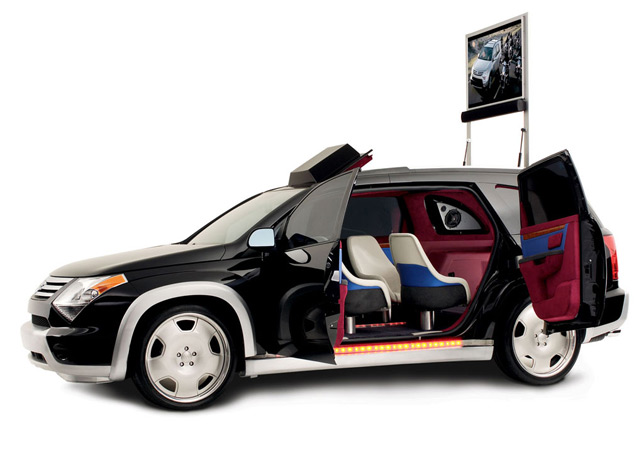
Built by the Carlab of Orange, Calif., and based on the all-new 2007 XL7, the Flix concept offers film and entertainment enthusiasts the ultimate mobile movie experience. The Flix’s ultra-rich, super-clean and modern exterior accentuates the redesigned body of the all-new XL7. The XL7 concept is dressed in midnight black paint with platinum accents and deep crimson “theater red” perimeter LED linear emitters encircling the lower valence of the midsize SUV.
In addition to its eye-catching exterior appearance, the Suzuki Flix is outfitted with an unprecedented in-vehicle movie system. After parking at the optimal film-viewing destination, Flix’s clamshell roof can be opened, revealing a maximum-size moonroof that serves as a 60-inch movie screen. Additionally, the XL7 concept’s front roof panel vents, giving way to a high-density digital projection system to display a family’s movie of choice. For those who prefer the traditional drive-in movie experience, Flix’s projection system can be positioned to display movies nearly anywhere – the side of a building, a billboard or almost any wall.
The interior look of the Suzuki Flix resembles a contemporary private screening room, dressed in plush materials to evoke elegance and sophistication. The XL7 concept features four individual bucket seats that pivot 180 degrees to view the elevated giant screen. The Suzuki Flix also is equipped with a next-generation, high-definition DVD player with integrated hard drive for maximum AV storage, a professional THX/SDS-theater quality sound system, pivoting quarter window speakers and red door/floor strip lighting to further enhance the in-vehicle movie experience.
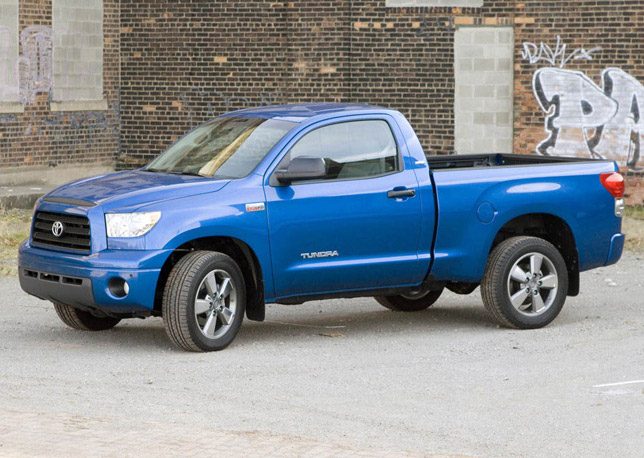
Toyota unveiled the all-new 2007 Tundra CrewMax full-size pickup at a press conference here today at the 2007 North American International Auto Show. CrewMax, arriving at dealers in March, will join the Tundra Regular Cab and Tundra Double Cab models, which arrive in February.Designed, engineered and built in America, the formidable Tundra line-up will set a new standard in the full-size pickup truck segment for performance, capability, standard safety features and styling.
“Tundra brings proven Toyota engineering, quality and durability to an intensely competitive full-size pickup market,” said Jim Lentz, Toyota Motor Sales executive vice president. “The all-new Tundra is a historical launch for Toyota, because we are significantly increasing our production potential and presence in the full-size pickup truck category.”
Larger in every dimension than the model it replaces, the 2007 Toyota Tundra is available in 31 model configurations, with a choice between 4×2 and 4×4 drivetrains. The 2007 Toyota Tundra offers three cab styles, three wheelbases, three bed lengths, three engines, and three trim levels. Tundra has been engineered for “true truckers” and can be configured to serve as a work truck, recreational truck or luxury family truck.
The 2007 Toyota Tundra brings the “power of the fist” design theme of the Toyota FTX Concept Truck to the showroom. From the side, the body’s distinct “barbell” form with pronounced wheel arches conveys the truck’s inherent strength. Character lines and fender flares add dimension and strength as well as an unwavering stance. The SR5 and Limited Grade models stand apart with a bold chrome grille surround.
Tundra backs up its tough new styling with the performance of an available new 381-horsepower 5.7-liter i-Force V8 engine teamed to a new six-speed automatic transmission. The i-Force 5.7 is one of the most powerful engines to be made available in a half-ton full-size pickup.
Toyota Tundra Crewmax
Tundra offers three cab styles: Regular Cab, four-door Double Cab, and the super-sized four-door CrewMax with the segment’s leading rear-seat legroom. Tundra Regular Cab comes in DX trim level and can be upgraded to SR5 with an option package; the Double Cab and CrewMax models come in SR5 and Limited trim levels. Tundra offers high levels of user technology, including available Bluetooth cell phone compatibility, high-end audio and an optional navigation system that integrates a wide-screen rear backup camera.
Power for Big Jobs
The 2007 Tundra offers three levels of power. In Regular and Double Cab models, a standard 4.0-liter V6 produces 236 horsepower at 5,200 rpm and a healthy 266 lb.-ft. of peak torque at 4,000 rpm. The mid-grade option for these models – and standard for the CrewMax models – is an enhanced version of the proven Tundra’s 4.7-liter i-Force V8 producing 271 horsepower at 5,400 rpm and 313 lb.-ft. of peak torque at 3,400 rpm.
Tundra models equipped with the 4.0-liter engine will have city/highway fuel economy ratings of 17/20 mpg. Tundra 4×2 and 4×4 models equipped with the 4.7-liter engine will both have city/highway fuel economy ratings of 15/18 mpg.
Both the V6 and the i-Force 4.7 V8 feature DOHC 4-valve cylinder heads and Variable Valve Timing with intelligence (VVT-i) for responsive power across the engine’s operating range. Both engines are teamed exclusively with a five-speed automatic transmission that offers greater flexibility than competitors’ four-speed automatics.
Updated flex lock-up torque converter control enhances transmission response and efficiency. For added driver control, the Tundra five-speed automatic features uphill / downhill shift logic. All Tundra models feature sequential shift as standard equipment.
i-Force 5.7 – A Force to be Reckoned With
The Tundra’s trump card under the hood is an all-new 5.7-liter i-Force V8 that is available in every model configuration. Specifically designed for full-size pickup applications, the i-Force 5.7 uses a long-stroke configuration (stroke dimension of 4.02 in. is more than the bore width of 3.70 in.). As a result, in addition to its impressive 381 horsepower at 5,600 rpm, the i-Force 5.7 unleashes 401 lb.-ft of peak torque at 3,600 rpm.
Tundra 4×2 and 4×4 models equipped with the 5.7-liter engine will have city/highway fuel economy ratings of 16/20 mpg and 14/18 mpg, respectively.
The i-Force 5.7 V8 uses aluminum for the cylinder block and DOHC heads. This engine’s more advanced Dual VVT-i controls valve timing and overlap on both the intake and exhaust valves, which also helps optimize power, fuel efficiency and emissions.
On all Tundra engines, the Acoustic Control Induction System (ACIS) uses butterfly valves inside intake manifold to switch the length of the intake tract in two stages, based on rpm and throttle angle, to improve torque across the engine speed range. Tubular stainless steel headers flow into a full stainless steel exhaust system with laser-welded, high-capacity mufflers for optimal efficiency and a commanding, powerful sound.
The i-Force 5.7 and 4.7 share a crank-hold electronic starter control that uses a “twist and release” ignition switch. The ECM controls the starter relay to prevent failed starts and “grinding” on a re-start attempt. Both the 5.7- and 4.7-liter Tundra engines meet the Ultra-Low Emissions Vehicle, or ULEV II, emissions certification.
The i-Force 5.7 is teamed exclusively with a new six-speed automatic transmission, which is only slightly larger than the five-speed automatic. Shift logic adapts the transmission’s shift maps to driver input.
Both Tundra transmissions use new Toyota “WS” (world-standard) fluid with a flat viscosity/temperature curve (cold viscosity is close to warm viscosity). This fluid reduces friction and wear, enables faster vehicle warm-up, and never needs to be replaced.
Next year, select 2009 Tundra models equipped with the 5.7-liter V8 will offer flexible fuel capability with E85 ethanol.
Chassis Built for Capability, Control and Ride Quality
The 2007 Tundra is built on a new frame that is optimized for vigorous work duty, impact safety, and ride quality. There are three Tundra wheelbases: 126.8 inches for Regular Cab/standard bed models; 145.7 inches for Regular Cab/long bed, Double Cab/standard bed and CrewMax models, and a massive 164.6 inches for Double Cab/long bed models.
The Tundra’s advanced TripleTech frame uses wide, full-boxed frame rails for the front portion, reinforced C-channel under the cab and an open C-channel underneath the bed to maximize strength, ride quality and durability.
Compared to the previous Tundra, the new model features more reinforced areas, increased high strength steel, increased steel gauge, and higher-rigidity suspension mounts. The engineering pays dividends in both work capability and ride-and-handling.
The double A-arm front suspension uses coil-over spring shock units, and a front-mounted steering rack helps enhance steering feel and response. The Tundra is equipped with the largest standard wheels in the segment – 18 x 8 inches with 255/70 R18 tires. Limited grade models step up to standard 18 x 8-inch aluminum-alloy wheels with wider 275/65 R18 tires. As an option, Limited models can be outfitted with factory-optional 20-inch alloy wheels with 275/55 R20 tires.
Compared to the previous Tundra, an increased tire-turning angle reduces the turning radius. The rear suspension features staggered shocks that are mounted outboard of the leaf springs to improve the shock’s dampening efficiency. Spring rates have been tuned to provide a flat vehicle stance when fully loaded, and the spring “toe-out” mounting improves towing stability. Tuned bump stops improve controllability with large loads.
An optional TRD (Toyota Racing Development) Off-Road Package is available and combines off-road tuned suspension featuring Bilstein gas-charged mono-tube shock absorbers; 275/65 R18 B.F. Goodrich Radial T/A off-road tires on unique 18-inch alloy wheels; fog lamps, and special graphics.
The Segment’s Most Advanced Brakes
Toyota equipped all new-model Tundras with the segment’s most advanced standard braking systems. The four-wheel disc brake system uses large ventilated rotors front and rear: the front rotors measure 13.9 inches in diameter and 1.26-inches thick, with four-piston calipers. The rear discs measure 13.6 x 0.71-inch and use two-piston calipers. Anti-lock brakes (ABS) with Electronic Brake-force Distribution (EBD) and Brake Assist (BA) are standard on all models.
EBD optimizes brake pressure at each wheel for greater control under braking, especially when cornering. The Brake Assist system is designed to determine if the driver is attempting emergency braking. If the driver has not pressed firmly enough on the brake pedal to engage the ABS, the system supplements the applied braking power until pedal pressure is released.
A New Level of Pickup Truck Traction Management
The 2007 Tundra scores another first for the full-size pickup truck segment by equipping every model with the company’s most advanced traction-enhancing dynamic control. First, the standard Automatic Limited-slip Differential (A LSD) provides computer-controlled cross-axle torque management that allows some wheel-spin (necessary for some surfaces). Compared to a conventional mechanical limited slip differential, the A-LSD system helps provide better acceleration in deep sand or mud and on low- or mixed-friction surfaces.
The combination of A-LSD and Vehicle Stability Control (VSC) as standard equipment on every model is a significant first in the segment. In contrast, some competitors restrict these important safety systems to certain models. The Tundra’s VSC system integrates traction control (TRAC) on all models, and enhances traction on or off-road by helping to keep the vehicle going on its intended course. VSC detects front-wheel slide and rear-wheel slide during cornering and attempts to control either condition with throttle intervention and/or by braking individual wheels.
The integration of these technologies also brings with it driver-selectable versatility to tackle just about any road surface or driving condition. “Normal” mode enables all traction and stability capability. “TRAC Off” activates A-LSD, to help extricate the Tundra from extreme conditions. The “VSC Off” mode turns off all of these systems.
4×4 Capability
The combination of A-LSD and VSC gives the two-wheel drive Tundra models far better traction in more situations than could once be expected from a pickup truck. For more demanding conditions, Tundra’s 4×4 configurations offer a part-time, shift-on-the fly four-wheel drive system featuring a six-pinion planetary reduction gearset to provide HIGH and LOW ranges. The driver selects the drive mode using a dial on the dash.
The V6 and i-Force 4.7 V8 Tundra models’ rear differential uses a 9.5-inch ring gear, and the i-Force 5.7 models step up to a 10.5-inch ring gear – one of the largest in the segment. All Tundra differentials are made using new machining technology: “face hob” gear cutting for ring and pinion gears yields stronger tooth form and a greater engagement area for increased torque capacity and reduced gear noise.
Safety
On the safety front, all Tundra models feature the STAR safety system as standard equipment. As a result, Tundra will offer one of the most comprehensive suite of standard safety equipment in the full-size pickup market. The STAR safety system found on all of Toyota’s SUVs includes ABS, Electronic Brakeforce Distribution (EBD), Brake Assist, Vehicle Stability Control (VSC) and Traction Control (TRAC). Tundra is the first full-size pickup to feature standard front and rear seat side and roll-sensing side curtain airbags in all models. Three-point seatbelts and adjustable headrests for all seating positions are likewise firsts in the segment. The front seatbelts integrate pretensioners and force limiters.
Towing Capability
The optional Tow Package for i-Force V8 models increases towing capacity significantly, up to 10,800 pounds, depending on the model and drivetrain (see specification sheet). The Tow Package is available on all V8 models and is standard on Double Cab Long-Bed models.
The Tow Package starts with a one-piece hydro-formed towing receiver integrated into the frame prior to bed installation. The structure attaches to each side of the frame around the rear spring shackles’ frame cross-member with 12 bolts. Tow Package rear springs provide increased full-load rear suspension height and maintain full range of suspension travel. The Tundra stays level even with 1,000 lbs. of tongue weight or payload.
The Tow Package also upgrades Tundra’s cooling and electrical systems. A water-to-oil engine oil cooler speeds engine warm-up and reduces friction at startup. The automatic transmission fluid warmer – first in the segment – warms the fluid quickly under cold ambient conditions, and the instrument panel gains an automatic transmission fluid (ATF) temperature gauge. A power steering fluid cooler is added below the radiator.
Electrical upgrades include an under-dash connector pigtail for a third-party trailer brake controller, both a seven-pin and a four-pin trailer brake connector near the hitch, and a higher output alternator (depending on engine). The final touch is a set of optional telescoping towing mirrors (available on 5.7-liter V8 models only). When the Tow Package is ordered for the 5.7-liter-equipped Tundra, its six-speed automatic transmission gains a TOW/HAUL shift mode, selectable by a dedicated switch. The TOW/HAUL shift mode applies specific logic for transmission upshift and downshift control, favoring and holding lower gears when accelerating or decelerating to enhance driver control and safety.
Three Bed Sizes
Tundra Regular Cab and Double Cab models are offered in standard bed
(78.7-inch) or long bed (97.6-inch) configurations; the CrewMax comes with a short bed (66.7-inch). In all models, the bed measures 22.2 inches deep. The Tundra’s new lockable all-steel tailgate, with tailgate assist, can be effortlessly opened and closed with just two fingers – and it can easily be removed. A standard cargo lamp provides generous illumination at night.
A Deck Rail System, standard on Limited grade models and available on all others, adds to cargo bed versatility. Featuring adjustable tie-down cleats connected to the rails of the all-steel bed, the rail system can be used to secure many types of loads, with a 220 lbs. rating per attachment. The roster of Genuine Toyota Accessories available for the Tundra includes a number of cargo bed enhancements, including a tonneau cover, bed mat, bed liner, bed extender, Deck Rail accessories, storage boxes, cargo divider, tie-downs and utility hooks.
Front Office “Command and Control”
Inside the new Tundra, the driver is surrounded by a U-shaped “command and control” center that helps provide an unobstructed view of the road and gauges, while keeping all knobs, switches and buttons within easy reach. Dash and door panel forms emphasize function yet are far from austere.
Before crafting the Tundra interior, the designers studied “true truckers,” customers who put the greatest demands on their pickups, including ranchers, foremen and construction workers. Because many true truckers wear protective clothing as part of their jobs, the new Tundra features large door handles and easy to turn control knobs that can be operated even while wearing work gloves.
Owners who spend a lot of time on the job site often use their trucks as mobile offices, so the designers gave Tundra increased storage capacity for this usage. The 3.4-liter upper glove box can hold a standard Thermos™ bottle, with additional space available in the 9.5-liter lower glovebox. The massive center console on bucket-seat models can hold a laptop computer or hanging file folder storage – a pickup truck first. For optimal comfort, the center console armrest features a four-inch slide range. The Tundra cockpit provides two 12v DC power outlets – one on the dash and one in the center console. CrewMax models add a third outlet at the rear of the center console. For added convenience, the outlets remain live for up to two hours after the ignition is switched off.
Room and Comfort for the Whole Crew
The Regular Cab offers more behind-the-seat storage than other pickups, and the Double Cab features front-hinged doors that open to 80 degrees for easy passenger access.
The Tundra Double Cab models provide a roomy rear seat with a 22-degree backrest angle and 34.7 inches of rear legroom for comfort on par with some midsize sedans. The Tundra CrewMax lives up to its name, providing a limousine-like best in class rear legroom at 44.5 inches in its rear most position. Moreover, CrewMax rear seat versatility is enhanced with the segment’s only reclining and sliding rear seat. A 10-inch slide range allows the owner to custom-tailor passenger comfort and room for onboard cargo. CrewMax models provide additional storage under the rear seat.
On Double Cab and CrewMax models, the standard power rear windows retract completely into the doors. The Regular and Double Cab models offer a split sliding rear window to enhance interior ventilation, with a power vertical slide-down rear window standard on CrewMax models.
The 2007 Tundra offers four interior colors, including richly textured fabrics and deep-grain leathers available in four colors. As another nod to refinement, CrewMax limited models offer an optional power tilt/sliding moonroof with an automatic variable-position wind deflector.
Interior Storage
Toyota maximized space and added convenience within all Tundra cabs. A concealed compartment to the right of the shift lever can hold a Thomas® guidebook. The built-in toolbox behind the rear seat of all models provides clean, accessible storage for the jack, handle and lug wrench. In Double Cab and CrewMax models, the rear seat backs fold in an easy one-hand operation to provide a flat floor storage area. In all Tundra models, the front doors feature large storage pockets and can also hold two 22-ounce bottles. Rear doors on Double Cab and CrewMax each hold one bottle.
Leave the Job Site Behind Once You Get Inside
Once inside with the doors closed, occupant comfort starts with controlling the temperature. Standard High Solar Energy Absorbing (HSEA) glass helps filter solar heat and most UV (skin-sensitive) light energy entering the vehicle, reducing occupants’ sun exposure, helping to keep the interior cooler and enhancing durability of interior materials. Limited grade models receive standard IR-cut glass, further reducing solar levels from infrared rays.
The Regular Cab DX and all SR5 grade models come standard with a versatile dual-zone manual climate control system with a seven-speed blower, sync-mode and a replaceable dust and pollen filter. In Limited grade models, the standard dual-zone automatic climate control system features a segment-first independent upper/lower temperature control. Its cooling performance reduces cabin-cooling time by five to 10 minutes compared to the previous Tundra.
The four-spoke steering wheel features standard audio controls in Limited grade and on the Double Cab with the optional JBL audio system. The available manual tilt and telescoping steering wheel is a first in the segment, as is the available power tilt and telescoping steering wheel. Showing Toyota’s attention to detail, the rolling-ball telescoping steering shaft improves wheel-tilt feel compared to splined-sliding types.
Tundra Limited models give up none of the work ethic and add more refinement than ever seen on a Toyota pickup. A few more notable features that distinguish the Limited Grade models include: chrome, power-retractable, heated auto-dimming side-view mirrors; leather-trimmed, heated power-adjustable front bucket seats (10-way for driver, 4-way for passenger); an overhead console; rear door privacy glass; Optitron meters and a multi-information center featuring selectable readouts for the clock, outside temperature, and fuel economy; and a user-customizable interface that allows the Tundra owner to set keyless entry feedback; door unlock mode (one press/two press); automatic door locking programming; headlight auto-off timer, and the interior light timer.
Options to Entertain and Inform
The Regular Cab DX model comes with a standard AM/FM/CD stereo with four speakers and an audio input jack; SR5 models add a six-speaker system, and Limited grade models upgrade to a standard JBL AM/FM audio system with six-disc in-dash CD changer, 440-Watt 5.1 channel surround sound, 10 speakers (12 in CrewMax), Bluetooth® compatibility, and steering wheel audio controls. This system (with 10 speakers) is an option for the SR5 grade. All Tundra audio systems can play MP3/WMA formatted CDs.
CrewMax models offer an optional Rear Seat Entertainment (RSE) system that combines a nine-inch wide-screen LCD monitor, DVD player, two sets of wireless headphones and a remote control.
An available DVD navigation system includes a JBL audio system and integrates a rear backup camera. The camera automatically projects an image of what its lens can detect behind the vehicle onto the navigation system’s LCD screen when reverse gear is engaged, excellent when backing up the Tundra to a trailer, or for positioning a boat trailer on a launch ramp.
A multifunction rear view mirror, standard on Limited grade models and optional for others, combines an electrochromic auto-dimming mirror with a digital compass and HomeLink® transceiver.
Nissan has revealed its 2008 Rogue crossover, which will be on display at the 2007 North American International Auto Show in Detroit early next month. It will go on sale in September 2007 at Nissan dealers nationwide.
The 2008 Nissan Rogue will be available in two models, Rogue S and Rogue SL, each with a standard 2.5-liter 4-cylinder engine, Nissan’s advanced Xtronic CVT (Continuously Variable Transmission), Vehicle Dynamic Control (VDC)) and 4-wheel disc brakes with Anti-lock Braking System (ABS). An all-new all-wheel drive system with yaw moment control is also available on both S and SL models.
Available technology features include Intelligent Key, Bluetooth Hands-Free Phone System, satellite radio and a powerful Bose–developed audio system with AUX input and MP3 playback. Rogue also offers a long list of standard safety features, including front seat-mounted side-impact supplemental air bags and roof-mounted curtain supplemental air bags for front and rear outboard occupants.
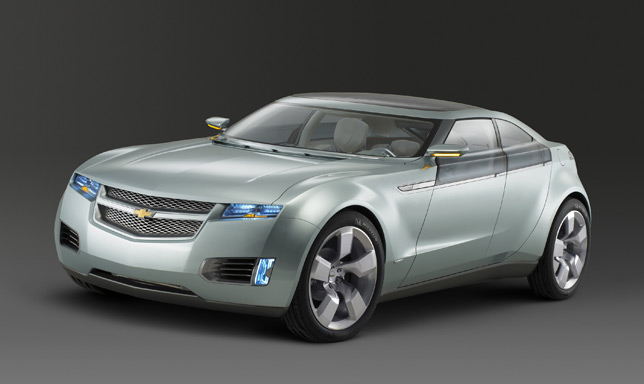
While the technologically advanced Chevrolet Volt has the capability to travel 40 miles on electricity alone, at first glance, the concept could easily be mistaken as simply a design statement.
The Volt conveys an immediate message of agility and sophistication, with exterior proportions more commonly associated with classic sports cars. Twenty-one-inch wheels and sheer, taut surface relationships reiterate the statement. The Chevrolet Volt’s athletic design challenges the notion that an environmentally conscious vehicle can’t be beautiful and possess an aesthetic spirit that matches its driving characteristics.
“We’ve leveraged our resources around the globe to develop the design aesthetic for the Volt,” said Ed Welburn, vice president, GM Global Design. “It was important that the design capture the face of Chevrolet as it’s recognized around the world.” Design and engineering collaboration between GM designers and GE Plastics, using unique material technology and design engineering support, helped achieve the Volt’s distinctive appearance. True to the heritage of its Chevrolet bowtie, the Volt’s exterior design suggests spirited performance and is wrapped in a stylish package, with classic Chevrolet performance cues that hint at both Camaro and Corvette.
Inside, a host of current or near-term technologies and materials, combined with ingenious use of ambient light, creates an interior environment that’s light, airy and thoughtful.
“First and foremost, this is an advanced technology vehicle that uses little or no fuel at all. But we didn’t see any reason why that should compromise its design,” said Anne Asensio, executive director, GM Design. Asensio led the design team that created the Volt concept, with designs solicited from GM’s studios around the world.
“We wanted a size that connected with everyone, so we designed a small car,” said Asensio. “In the end, the interior design team from England inspired the final interior execution, and the exterior was the work of the Michigan advanced design team.
“Our job was to design a vehicle people could easily imagine seeing on the road,” said Asensio. “It couldn’t be a ‘science project,’ because that’s not what this car is all about. It had to be realistic, executable and carry the essence of the Chevrolet brand.”
Athletic, bold exterior
Sized for an urban-centric lifestyle, the Volt concept sedan carries dimensions similar to a Chevrolet Cobalt, with an overall length of approximately 170 inches (4,318 mm), a height of 52.6 inches (1,336 mm) and a width of 70.5 inches (1,791 mm). However, the Volt’s proportions, dictated by the layout of its electrically driven powertrain system, make it distinctly different from its mainstream Cobalt sibling.
“The configuration of the drive and energy components dictated we push the front wheels forward and outward to the corners,” said Bob Boniface, design director, GM Design, and lead exterior designer. “We wanted to keep the overall dimensions relatively small. This is an urban-centric car, so it needs to fit into small areas.”
The Volt’s proportions, combined with large wheels, wide front and rear tracks (64 inches / 163 mm, front and rear) and a tight wheel-to-body relationship, enable a sporty, confident stance. Other key proportional highlights include a dash-to-axle length that positions the driver far rearward of the front wheels; large 21-inch by 7.5-inch wheels; short front and rear overhangs and departure angles that deliver a sense of taut, compact energy. Also, the offsets between the upper glass elements and tire planes (the glass is inboard of the face of the tires) contribute to the sedan’s balanced stance and enhance the vehicle’s dynamic static image, resulting in pure, athletic proportions.
“What’s beautiful about the proportions is that when you think about some of the competitors out there, you tend to think of those vehicles as ‘the sensible shoe,’ “said Boniface. “People buy environmentally friendly cars because they feel it’s the right thing to do, not necessarily because of their looks or to make a fashion statement. But the Volt is different. It’s something one would buy because it is so compelling to look at, and the fact that it has the potential to never burn any gasoline – that’s just a bonus.”
Transparent roof and beltline
The Volt’s roof, side glass and beltline are constructed of GE Plastics transparent, glazed polycarbonate material that delivers the scratch resistance and gloss surface appearance of glass, combined with the formability of a plastic composite.
As a result, the Volt provides the driver and occupants with exceptional visibility, enabling a “city lights” theme in which the outside world passes through to the interior of the vehicle. Also contributing to the visibility is a shouldered, tinted side glass – constructed of the same GE polycarbonate material – that enables a dual beltline.
Additional exterior design elements
In addition to the upper daylight opening and roof, key exterior panels are made with a GE Plastics composite, and each – in and of itself – is designed as an artful shape that could be displayed on its own. As a result, the exterior panels fit together like a well-crafted puzzle, with flowing surface-to-surface cut lines that bring a sophisticated composition and overall harmony to the Volt’s exterior appearance.
The front door hinges enable enhanced entry/egress to the vehicle, as well as a graceful, forward-leaning door cut line. Milled from billets of stainless steel, the hinges serve as design elements, extending into the front quarter fenders and incorporating a plug-in recharging port access on both sides of the vehicle.
The vehicle face – designed to carry a serious, confident appearance – is clearly Chevrolet, with a twin-port front grille, center-positioned bowtie and lower air intake. Horizontal headlamps with aluminum bezels deliver a jeweled appearance, leading to translucent light-emitting diode (LED) forward illumination elements.
The underside of the vehicle consists of a flat, composite molded belly pan that is integrated with the fascias and rockers for a clean, uncluttered and finished appearance. The belly pan – which contributes significantly to the Volt’s 0.30 coefficient of drag – contributes to the sedan’s overall impression of refinement and demonstrates the design of the underbody was just as important as the upper body.
Thoughtful interior
The interior environment of the Volt was designed to appeal to an urban dweller who desires a smart, daily-use vehicle, according to Wade Bryant, design director, GM Design.
“On the interior of the Volt, you’ll find technologies, materials and an environment that enable the car to help make life simpler for a person who’s environmentally conscious and leads a city-centered lifestyle,” said Bryant. “It’s ergonomically correct, provides connectivity to the world, and demonstrates smart responsibility through the use of lightweight, recyclable materials.” Two such examples are the instrument panel topper and steering wheel made with GE Plastics.
Bryant said the interior environment of the four-passenger Volt is defined by a host of current or near-term technologies and materials combined with the ingenious use of ambient light. “It’s definitely based in reality. All the things you see on the interior are within reach in the next few years.”
According to Bryant, the interior team and the exterior designers worked closely together to make the Volt look like one vehicle. Two examples of their collaboration are the dual beltline and the door hinge that’s visible outside of the car. “We designed this as one element that comes inside the door and becomes the interior pull handle,” said Bryant. “It’s all about integration, refinement and thoughtfulness.”
Super Imaging instrument cluster
Super Imaging is an innovative, dual-mode technology display that provides two visual levels of vehicle information to the driver in the instrument cluster. It is a design innovation developed to provide a primary interface between the driver and the vehicle’s key feature: the next-generation, electrically driven propulsion system.
“The dual-mode instrument cluster was developed to highlight the car’s plug-in capability,” said Bryant. “The powertrain technology is the key feature, so we wanted to make sure the interior communicated that, and the driver would have a sophisticated, fun and useful interaction with the electric-drive system.”
The first level of information – configured similarly to a conventional instrument cluster – provides traditional data in the form of analog, three-dimensional (3D) LED displays, including three gauges for fuel level, speedometer, odometer, battery level and the transmission “PRNDL” indicator. The second level of information – a transparent screen positioned in front of the 3D LED displays – delivers color, animated data related to the Volt’s advanced propulsion system with a holographic-like appearance.
Super Imaging works by using invisible, fluorescent inks that are printed on the transparent screen. When illuminated by an ultraviolet (UV) laser projector located behind the instrument cluster (from the driver’s perspective), the inks become excited, and provide four-color illumination and animation.
Foam/fabric surfaces
Compression-molded foam with a textile-patterned surface layer is applied on the entire lower instrument panel, lower door trim panels and rear quarter trim areas. The material enables soft, tactile, low-gloss surfaces throughout the interior cabin that appear hand-crafted and specifically tailored to the car.
This material, used in some of the latest luggage designs, enables zippered access to traditional storage areas such as the glove box, doors, etc. The material is very inexpensive, wears well and enables flexibility in design.
Composite panels
Molded GE plastic panels provide thin, structural interior surfaces that can be cantilevered in space. The material is applied on the upper instrument panel, seat backs, center console sides and door inserts.
Light, strong, affordable and recyclable, the panels are sheathed in reconstructed scrap leather to achieve a soft, hand-crafted surface.
Use of ambient light
The aspect of light – from outside and within the vehicle – is played throughout the interior environment. Highlights include a transparent upper roof that provides large quantities of natural light and is enhanced with thinner pillars and rail sections; Gelcore® LED indirect lighting around the roof periphery that illuminates during evening hour entry/egress and can be seen from outside the vehicle; LED functional storage lighting that passes through transparent zippers and provides ambient light during evening hours; and conductive ink controls situated on the interior surface of the glass roof that provide touch access to lights, OnStar buttons and more.
“All the storage areas are lighted internally, and the light escapes through the clear zippers, so you’ll always be able to find your storage at night,” Bryant said. “It all adds a nice little ambient effect, and the illumination will be color-keyed to the instrumentation lighting color. It’s functional and cool, and when you open it, light from the interior storage area spills out.
“A big enabler is the transparent upper roof. It provides the Volt with more natural light than most other vehicles. It’s very distinctive and appealing.”
 Aggressive and elegant, expressive and sophisticated, the 2008 Cadillac CTS exudes a dramatic design presence. This all-new luxury sedan not only pushes Cadillac’s acclaimed design theme higher, it aims to redraw the boundaries of the normally conservative luxury sedan category. Inside and out, the 2008 CTS contradicts many traditional design conventions. CTS’ design expresses its serious performance intent, yet also is more elegant and luxurious. It’s a sedan in the heart of the luxury market, yet reaches for the charisma of a sports car. CTS is thoroughly new and contemporary, even while it evokes the grandeur of classic
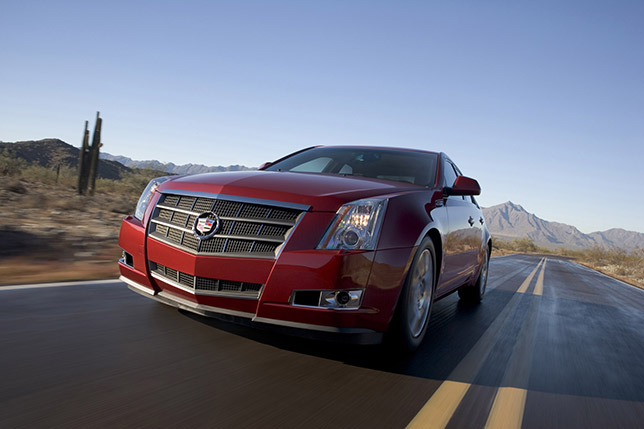


 Following a record setting sales trend and the successful launch of the all-new G sedan, Infiniti is keeping the momentum going with today’s unveiling of the 2008 Infiniti QX full-size luxury sport utility vehicle at the North American International Auto Show in
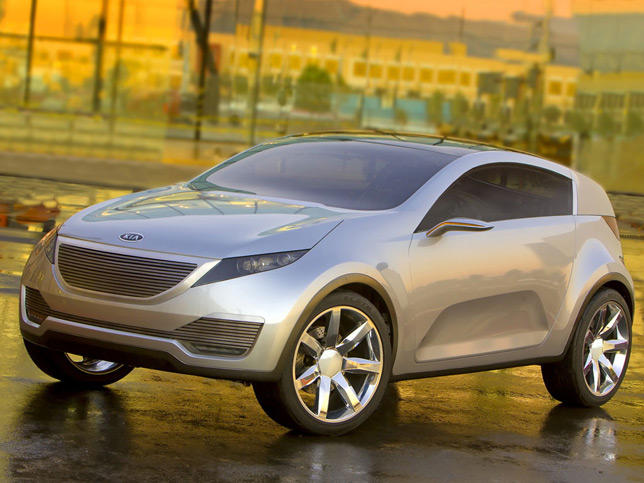


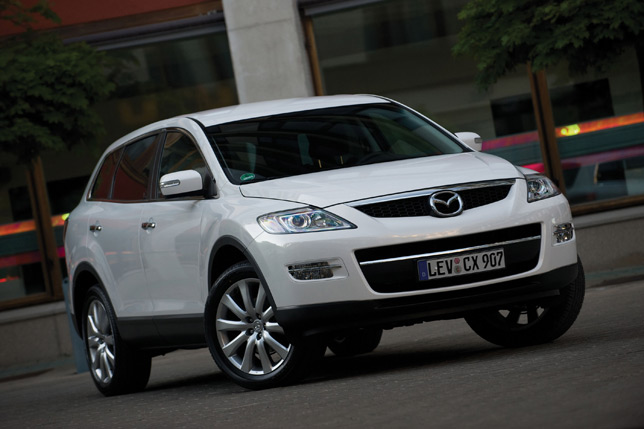


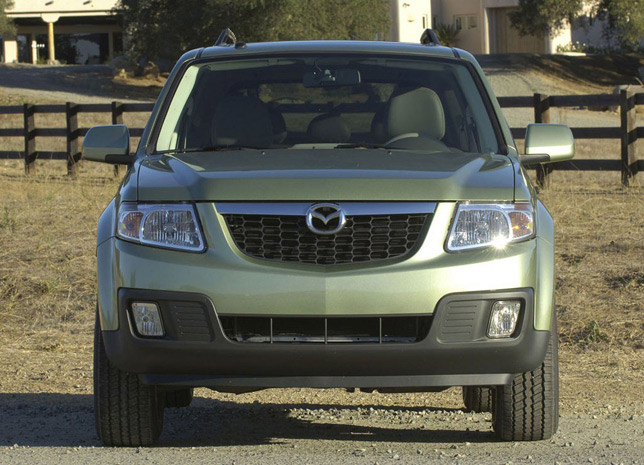


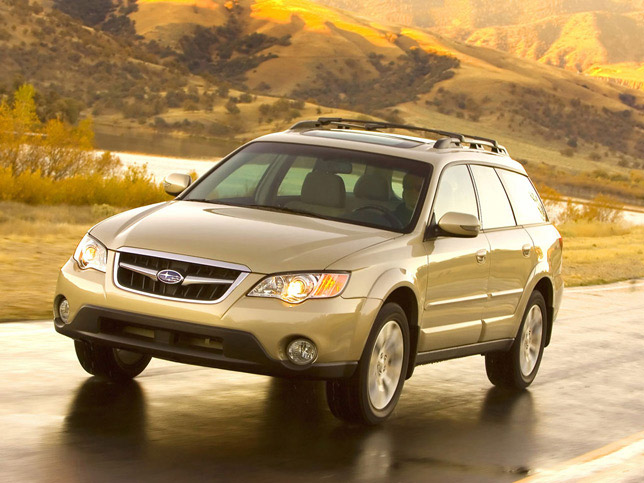


 Built by the Carlab of Orange, Calif., and based on the all-new 2007 XL7, the Flix concept offers film and entertainment enthusiasts the ultimate mobile movie experience. The Flix’s ultra-rich, super-clean and modern exterior accentuates the redesigned body of the all-new XL7. The XL7 concept is dressed in midnight black paint with platinum accents and deep crimson “theater red” perimeter LED linear emitters encircling the lower valence of the midsize SUV.