Category: Auto News

Auto news – automobile industry news. Articles about all the latest car models and concepts. Breaking news, uncovered secrets.

  • Bentley Brooklands

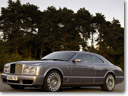
    Bentley BrooklandsThe Bentley Brooklands is a stunning new model that marks the company’s return to the luxury coupé market and reaffirms its reputation as creator of the world’s most exclusive coupés. It is the ultimate Bentley: a stylish, four-seat, grand touring coupe with classic British proportions and muscular performance.

    Bentley’s chairman Dr Franz-Josef Paefgen describes the motivation behind the new coupé: “Bentley’s proud sporting pedigree, forged by the exploits of the immortal ‘Bentley Boys’ on the famous Brooklands racetrack in the 1920s, was the inspiration for our new coupé, capturing all the style, power and splendour of that era.” *

    Sporting design cues are matched by the phenomenal performance engineering of Bentley’s legendary Crewe-built V8 engine. The new Bentley Brooklands possesses the most powerful V8 the company has ever produced – a 530bhp, twin-turbocharged 6.75-litre unit that also produces a prodigious 1050Nm of torque.

    Each Brooklands coupé will be hand-assembled, employing traditional coach-building techniques and the craftsmanship skills in wood veneer and leather hide for which Bentley is renowned. To ensure exclusivity, lifetime production will be strictly limited to just 550 cars, with deliveries expected to start in the first half of 2008.

    Exterior Design: Classic British Proportions

    Bentley’s rich coupé heritage provided the stimulus for Director of Styling, Dirk van Braeckel and his design team. For van Braeckel, the task was very clear: “To create a powerful, muscular and rakish grand touring coupé with classic British proportions, in the finest Bentley tradition.”

    While the new Brooklands is influenced by Bentley’s fine coupé lineage, its design and engineering are thoroughly contemporary. The proportions of long bonnet, short front overhang and long rear overhang achieve the design objective perfectly, while the low roofline, steeply raked screens and pillarless side glass convey both power and movement.

    As the Brooklands will be built in very limited volume, the designers were able to introduce unique features that necessitate specialist coach-building techniques, as Programme Director, Ashley Wickham, reveals: “The Brooklands’ beautiful flowing lines are testament to the traditional coach-building skills and craftsmanship of Crewe’s highly talented workforce.”

    The ‘floating’ rear screen, for example, is a contemporary take on traditional coachbuilt Bentleys. The lower edge of the screen sits well above the upper edge of the boot lid to provide a flowing, flawless line to the back of the car. This can only be achieved by individually hand-welding the rear wings to the C-pillars.

    The fitment of 20-inch diameter wheels as standard, signalling the surefooted, robust and dynamic character of the new model, reaffirms the powerful stance of the new Bentley coupé.

    Interior Design: Peerless Craftsmanship with a Sporting Character

    Dirk van Braeckel describes the mission for the Bentley interior design team: “To create the perfect Bentley coupé: sumptuous hand-crafted luxury with a distinctly sporting character.”

    As in every Bentley, peerless craftsmanship is to the fore, enhanced by the warmth and richness of the finest natural materials. To tailor for their individual requirements, customers may choose from an extensive palette of hides, veneers, carpet tones and seat belt colours.

    Its four-seat architecture and deeply bolstered seats lend the Brooklands’ interior a distinctly sporting atmosphere, complemented by design accents such as aluminium foot pedals and footrest. A new, single-piece, hide-trimmed roof lining flows uninterrupted from the front windscreen all the way to the rear of the car, mirroring the long, sleek profile of the elegant exterior.

    The interior designers sought to offer the very highest levels of comfort and legroom, in true Bentley grand touring tradition, while the pillarless window design enhances the feeling of space.

    The Brooklands’ cabin is wider both front and rear than the previous Bentley Continental R coupé – the rear by 10 percent – and it easily exceeds the interior leg, knee and headroom of any luxury coupe on sale today. This allows four adults to be accommodated in supreme comfort. Individual rear seats with electrically operated sliding cushions, set further back than on the Azure, are separated by a new centre console, incorporating both storage and cup holders.

    Most powerful Crewe-built V8 ever – 530bhp, 1050Nm

    Beneath its muscular, rakish, coach-built body lies the most powerful Crewe-builtV8 engine ever produced, developing 530bhp. Maximum torque is an astonishing 1050Nm, the highest ever developed by a production V8 engine. Although performance figures are subject to final confirmation as part of the on-going development programme, the new Bentley coupé will deliver supercar levels of in-gear acceleration combined with Arnage refinement.

    At the beginning of the project, Dr Ulrich Eichhorn, Member of the Board, Engineering, tasked his power train specialists to deliver an extraordinary driving experience in the Bentley coupé tradition: “Exhilarating, effortless, accessible performance for those truly passionate about their driving was our prime objective.”

    Launched in the Bentley S2 saloon in 1959 with a capacity of 6.23 litres, the legendary, Crewe-built V8 engine has continually evolved. The first V8 was very advanced for its time with an all-aluminium construction, a five-bearing crankshaft and a well-supported camshaft, producing nearly 200bhp and 400Nm of torque. The result was a light and supple powertrain that produced maximum torque at low engine speeds, the hallmark of every Bentley ever produced.

    1969 saw the capacity grow to 6.75 litres, where it remains to this day, but by far the most significant change came in 1982, with the introduction of a turbocharger to create the near-300bhp Mulsanne Turbo, a car that transformed the image of Bentley. In 1999, the single turbo engine, by now featuring port injection and charge cooling, was installed in Arnage, with twin turbos arriving in 2002, developing up to 450bhp.

    For the 2007 model Arnage, the V8 engine saw a step-change in performance and refinement which became the starting point for the new Bentley Brooklands. A re-profiled camshaft and new, low-inertia turbochargers, which operate with greater efficiency at lower engine speeds have resulted in reduced turbo lag, enhancing that prodigious wave of torque at any revs, the hallmark of a true Bentley. These changes extend the power potential of the V8 in the Arnage to 500bhp and 1000Nm of torque. For the Bentley Brooklands, further component optimisation and engine calibration ensure record power and torque levels from this hand-assembled engine.

    As with the latest Arnage, the V8 engine is mated to a six-speed transmission with strengthened casing that transforms the way in which both parts of the drive train communicate. A sophisticated, locking torque converter and ESP system ensure that the driver can readily access the prodigious power. A semi-automatic function allows manual gear selection for even greater driver control.

    *The challenging Brooklands banked racetrack, which this year celebrates its centenary, was the birthplace of British motor racing. During the 1920s and early thirties, Brooklands, located in Surrey, England, was the scene of some of Bentley’s greatest racing triumphs, forging an inextricable link between the company’s motorsport heritage and this historic race circuit.

  • Seat Freetreack Prototype

    http://www.automobilesreview.com/pictures/seat-freetreack/This year, SEAT has once again succeeded in surprising visitors to its stand in Geneva with a concept car that showcases the look of a forthcoming road-going model: the Altea Freetrack Prototype. Far from being a mere styling exercise for the Technical Centre in Martorell, the SEAT concept car unveiled at the Swiss show gives a preview of the styling and technological innovations of the Altea Freetrack that will soon be making its debut both on our roads and off them. (more…)

  • BMW M3 Concept

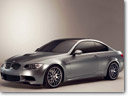
    BMW M3 ConceptThe BMW M3 Concept Car features a high-revving V8 engine that is anticipated for the series car once it goes into production.

    The M3 Concept Car gives an indication of what to expect when the production version of the E92 generation M3 Coupe is released.Bred on the race track for the road, the M3 Coupé has been an icon for more than 20 years. (more…)

  • Honda Small Hybrid Sports Concept

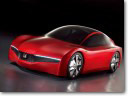
    Honda has unveiled a concept model which represents its interpretation of how a future hybrid model might appear. Honda Small Hybrid Sports Concept, a design study model, demonstrates a unique fusion of advanced environmental technology, exciting styling and fun-to-drive characteristics. This is its world premiere for the model, which has been penned by the design studio at Honda R&D Europe based in Offenbach, Germany. (more…)

  • Spyker C12 Zagato

    Victor Muller, CEO of Spyker Cars, and Andrea Zagato, CEO of Zagato, today unveiled the Spyker C12 Zagato at the 77th Geneva International MotorShow. Norihiko Harada, Zagato’s Automotive Chief Designer, and Muller co-operated closely to design this limited edition of 24 sports cars to be delivered from March 2008 onwards. The world première of this ultra-exclusive version of the C12 range celebrates Spyker’s entry into the world of Formula One and marks the first integration of design elements and styling cues from the Spyker F8-VII Formula One car into the Spyker road car range. This point was underlined by the unveiling of the car being performed by Spyker’s Formula One race driver, (more…)
  • Lotus Europa S Luxury Touring Pack

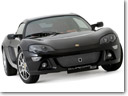
    The Europa S, the Lotus that introduces the brand to enhanced levels of practicality and refinement, has a new Luxury Touring Pack Option which stretches the Europa S towards the more luxurious end of the spectrum.

    The Luxury Touring Pack Option dresses the interior in the smart attire of saddle tan leather, chocolate coloured leather and brown carpets. Where the standard Europa S uses lightweight composite components for items such as the steering column shroud, dash top, instrument and ventilation binnacles and sill covers, the Luxury Touring Pack Option on the Europa S covers these and other components with four hides of soft high-grade saddle tan coloured and chocolate coloured leather.

    Supportive sports seats are fitted and are also clad in saddle tan and chocolate coloured leather in a stripe pattern. Safety critical composite components such as the passenger airbag door are coated in a high-tech soft-to-the-touch material. An engine start button and a solid Walnut and Tulip wood gearknob finish off the interior package.

    Lotus Europa S Luxury Touring Pack
    Lotus Europa S Luxury Touring Pack

    The Luxury Touring Pack Option also stretches to the boot: with brown carpet covering the whole of the boot area including the battery cover, a saddle tan coloured leather trimmed tailgate inner, luggage straps to prevent luggage from moving in the boot (Lotus still expects a laden Europa S to be driven hard!), and a saddle tan coloured leather oddment bag which is fixed to the boot compartment.

    Exterior additions to the Luxury Touring Pack Option include tinted rear and rear three-quarter glass, body coloured front driving lamp surrounds, side air-intake surrounds and roof air-outlet grill. All other exterior grilles such as the front radiator grilles and the rear light grille surrounds are coloured silver.

    All these added luxuries add very little weight to the feather-light Europa S so spirited drivers will not be penalised by opting for the Luxury Touring Pack.

    Availability

    The Luxury Touring Pack Option is available on the Lotus Europa S from April 2007 priced at £1,250 in the UK and £1,75

  • TechArt Magnum de Sede

    Exclusive automobile interiors have gained TechArt Automobildesign worldwide fame and recognition. The Swiss furniture manufacturer de Sede occupies the same lofty position in the area of seating furniture. The idea of combining the unique qualities of both companies in new automotive creations was born in 2006. At the Geneva Motor Show 2007 they present a 600-hp / 442-kW TechArt MAGNUM featuring the new TechArt interior line ‘de Sede of Switzerland.’

    TechArt Porsche Cayenne Magnum de Sede Interior
    TechArt Porsche Cayenne Magnum de Sede Interior

    de Sede was founded more than 50 years ago, and is run by its two owners, Hans-Peter Fässler and Bernhard Schüler. Privateer Fässler is a passionate art and car enthusiast. The world-renowned manufacturer of exclusive luxury furniture is home in Klingnau, Switzerland. Only cows from Switzerland and southern Germany are used to make the various types of de Sede leathers. de Sede sells its chairs, sofas and tables in 120 countries around the globe.

    With the TechArt interior line ‘de Sede of Switzerland’ these exquisite materials now also find their way into the automobile. The exclusive de Sede leathers are specially treated to account for the harsh climate conditions in an automobile.

    TechArt Automobildesign’s company-own upholstery shop places utmost importance on perfect workmanship down to the last detail. Highly experienced upholsterers transform the high-quality de Sede leathers into covers for seats, doors, dashboard, roof pillars and headliner.

    TechArt Porsche Cayenne Magnum de Sede
    TechArt Porsche Cayenne Magnum de Sede

    In addition to choice de Sede leathers the seats also feature a unique soft-touch padding structure with areas of gradual firmness that are custom-tailored to the human body. The result is exceptional seating comfort combined with excellent lateral support.

    Maximum comfort is paramount in the rear compartment too: Custom-developed individual seats for the rear mirror the front-seat design, and come with a custom-tailored center console covered with the finest de Sede leather. The integrated compartment for drinks, snacks and storage is lined with elegant Microsede material and features illuminated glass holders for the two Rosenthal® glasses with engraved TechArt MAGNUM logo. A small refrigerated compartment is hidden behind a precious-wood lid between the rear seatbacks.

    The TechArt interior line ‘de Sede of Switzerland’ also features a state-of-the-art multimedia system. Two LCD touch screens are integrated into the back of the front headrests. Rear passengers can choose between watching a DVD on the 6-disc DVD changer or programs from the integrated digital TV tuner. They also serve as monitors for playing games on a Playstation2 game console. The sound is carried by wireless RF hi-fi headphones.

    Color-coordinated carpets with de Sede leather borders and embroidered TechArt logo round out the design concept in the interior and even in the trunk. TechArt further adds color-coordinated instruments, sporty aluminum or hand-made precious-wood applications as well as a sport-steering wheel covered with comfortable de Sede.

    With the TechArt interior line ‘de Sede of Switzerland’ the two partners offer a unique interior design that brings the legendary comfort of a de Sede sofa to the automobile. The MAGNUM is based on the Porsche Cayenne Turbo. With it, TechArt Automobildesign offers not just exclusive interior design but also dominating power and a strikingly styled exterior.

    With the TechArt TA 048/T3 performance kit the twin-turbo V8 engine delivers 600 hp / 442 kW and a peak torque of 865 Nm. The 4×4 storms from rest to 100 km/h in just 4.5 seconds, on its way to a top speed of 292 km/h.

    The perfect complement to the power kit is the TechArt fully stainless-steel TechArt sport exhaust system. Cayenne owners can choose to combine the rear muffler with the stock tailpipes of the car or with four chrome-plated TechArt tailpipes.

    The fender flares of the TechArt MAGNUM body conversion add eight centimeters to the width of the SUV from Zuffenhausen. That means there’s room for king-size 10Jx22 one-piece TechArt Formula or the new Formula II multi-piece design light-alloy wheels all around. The ContiCrossContact UHP tires in size 295/30 ZR 22 on front and rear axles are approved on the Cayenne for speeds up 300 km/h.

    The TechArt MAGNUM front apron looks great with its strikingly styled large air inlets. It features two fog lamps and two high beams, and its refined shape reduces lift on the front axle at high speeds.

    The TechArt MAGNUM side sills form a harmonious transition between front and rear fender flares.The TechArt MAGNUM rear apron features custom cutouts for the two intertwined oval-shaped tailpipes of the stainless-steel TechArt sport exhaust system. An integrated diffuser helps reduce lift on the rear axle.

    TechArt Automobildesign further refines the Cayenne body with headlight moldings, a three-piece tail lamp molding and a rear panel that carries the shape of the rear apron over to the tailgate.

    The new TechArt hood is strikingly styled and features air outlets for improved venting of hot air from the engine bay, thus contributing to a thermally healthy engine.

    TechArt Automobildesign also modifies the suspension of the widened Cayenne extensively. For vehicles equipped with air suspension there is the TechArt sport module, which can lower the ride height of the SUV for on-road operations by up to 60 millimeter. For tough off-road use the ride height can be increased by up to 70 millimeters.

    TechArt Automobildesign can also refine the Cayenne interior in countless ways. The options for the Porsche Cayenne range from exclusive cockpit accessories to the completion of the leather interior available ex-factory to an entirely new individual TechArt fully leather interior. Also available is a stylishly integrated state-of-the-art multimedia system.

  • Nissan X-Trail

    Nissan has revealed its second-generation X-TRAIL at the Geneva Motor Show, and it appears the new model is almost identical to the outgoing version. Major changes are the all-new chassis and body design, a range of four different engines including two diesel variants with an automatic transmission, upgraded Intelligent ALL MODE 4WD and a more comfortable interior.

    The first X-TRAIL was an exceptional success for Nissan, so when it came time to develop that car’s replacement, designers weren’t willing to muck with the basic formula. This meant that the new model would have to remain a hugely capable compact SUV with serious off-road credentials and class-leading performance.

    Nissan X-Trail
    Nissan X-Trail

    Each model comes standard with air conditioning, power windows front and rear, and Bluetooth mobile phone connectivity, as well as a side and curtain airbags, ABS and EBD. Optional extras include Xenon headlamps, roof rails with fully integrated driving lamps, and satellite navigation with a full color screen shared with the rear parking camera.

    The new chassis features strut-type suspension at the front with a multi-link system at the rear. Engines on offer include a revised version of the 2.5L gasoline four-cylinder unit found in the current model, two new turbo-diesel units and third 2.0L gasoline unit, with all three engines sourced from Renault. Standard on all versions is a six-speed manual transmission, though a new six-speed auto and another CVT unit are optional on some models.

  • Toyota Hybrid-X

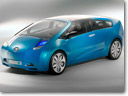
    Toyota presents a world premiere at the Geneva Motor Show with the reveal of Hybrid X – a concept car that proposes a new design language for hybrid models, while also acting as an innovative technology showcase for future generation hybrid cars.

    Hybrid X is a vision for future environmentally friendly motoring. It fits clearly within Toyota’s environmental strategy of offering sustainable mobility for modern families. Hybrid X further extends the use of Hybrid Synergy Drive® which is becoming an enabler for vehicle concept innovation and allowing Toyota to push forward to new frontiers.

    Hybrid X is designed as a four door, four seat open-space concept. It has the dimensions of a conventional family car with an overall length of 4,500mm and wheelbase of 2,800mm. The width is 1,850mm and height 1,440mm.

    Hybrid X has been created and developed by Toyota’s European styling centre, ED², in the south of France. It proposes unconventional creative solutions that will themselves potentially become the signature points of a specific hybrid identity.

    Toyota Hybrid-X
    Toyota Hybrid-X

    Hybrid X follows the core values of the Toyota brand design philosophy under two consistent themes: J-Factor and Vibrant Clarity. J-Factor refers to the local and global acceptance of Japaneseinspired design and cultural form, while Vibrant Clarity is the design language used to express the J-factor. Through Vibrant Clarity, designers will infuse future vehicles with a completely original identity and emotional intensity that will be uniquely identifiable as coming from Toyota.

    In this context, designers created an unconventional fusion of strength, lightness and emotion through the futuristic body shape. There is fusion of thought also – a symbiosis between the exterior and the interior so that, as you look at the exterior, you can imagine the interior with clarity and vision.

    Interior designer, Laurent Bouzige, says: “Hybrid X is conceived as a multi-sensory experience. There is a formal style in the shape of the vehicle and the material used but every other reaction is linked to the passengers’ senses of sound, smell, sight and touch through interactive ambience.”

    The strongest form element of the exterior shape is the two ‘U’ shapes created by the massive upper glass frame area and the unconventional A and C pillars. When viewed from above this gives the impression of a vast X – hence the name of the concept, Hybrid X.

    The U-shaped pillars allow the general shape of Hybrid X to achieve a superior aerodynamic form which is further enhanced by smooth surface lines and the integrated rear spoiler.

    At the same time the glass area greatly enhances visibility to create an ‘open-space’ concept which “frames the vision” in all directions, including up.

    Access and innovation are features of the rear-hinged passenger doors which open electronically at the touch of a button. Dynamic hints of driving performance are provided by the customised 20-inch alloy wheels with ultra-low profile 225/40 R20 tyres.

    The smooth, aerodynamic lines of the front are unbroken by headlamps which are integrated into the dashboard and are now part of the interior of the car. These LED lamps are ‘intelligent’ and display graphic forms through animation, adopting the interactive concept of Hybrid X to communicate safety information to pedestrians or other drivers, such as safety distances, acceleration and braking.

    Across the rear the energy-efficient LED lights form another U shape, reflecting the design signature of vehicle as a whole.

    Fusion between exterior and interior styling is clear from the swooping curves of the interior surfaces. Here there are classic ergonomic solutions and the multi-sensory experience is most keenly developed as the car responds to human interaction. The human element is further emphasised by an artistic drawing printed on the inside door panel.

    The driver can set the ambience within the car via an interface in order to control the four senses of sight, sound, touch and smell. LED lighting systems within the car provide a variety of illumination and are changing in harmony with different musical backgrounds. A perfume diffuser fills the air with gentle, relaxing aroma while the use of many different materials and textures on the interior surfaces provides variety to touch.

    The drive-by-wire steering pad features a screen in its centre to relay vital energy information to the driver about the energy flow path, fuel consumption, gear position. Interactive navigation and Bluetooth connectivity is provided by a second screen in front of the driver.

    A third touch screen, in the console, controls the ambience settings, such as the entertainment and audio systems, lightning operation and air conditioning. A sensitive touch on the steering pad allows the driver to switch information on the screens.

    Space saving seats are formed using injected foam techniques which create comfort while reducing weight. In order to further promote human interaction, the two independent rear seats can swivel by 12 degrees to allow passengers to enjoy the scenery or a more intimate ‘tête-à-tête’.

    For now, it is clear Hybrid X is an innovative vehicle that conceives how Hybrid Synergy Drive® technology can deliver economical, cleaner and more comfortable motoring. It is a step closer to Toyota’s vision of the ultimate environmental driving technology and its design will influence the entire Toyota brand and its hybrid models in the future.

  • Renault Clio Grand Tour

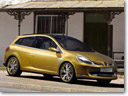
    Renault introduces Clio Grand Tour Concept at the 2007 Geneva Motor Show. A glimpse of developments to come within the Clio III range, Clio Grand Tour Concept targets drivers looking for a small, dynamic and attractive estate car with the abilities of a classic grand tourer. Finished in special Comet Gold paintwork, Clio Grand Tour Concept is powered by the 2.0 16V 200hp petrol engine, a unit that promises incomparable driver appeal. The cabin is bright, practical and comfortable – the perfect place for relaxing journeys.

    And with its large, easy-to-load cargo area, Clio Grand Tour Concept is geared very much towards leisure activities. Developed around photographic and multimedia themes, the show car has a very high specification and includes a number of benchmark electronic features.

    A powerful, dynamic presence

    At 4.2 metres in length, Clio Grand Tour Concept will appeal to drivers who want a compact estate with the panache of a grand tourer. There is no mistaking its provenance. Clio III’s distinctive profile is easily detectable, although the shape is enhanced by more pronounced curves. Fitted with bespoke side panels and a rakish tailgate topped by an aerofoil, Clio Grand Tour Concept fizzes with power and energy. The three-door bodyshell, roof bars, wider front and rear wings, sculpted sills, air ducts and rear diffuser underline its potency.

    At the front, a wide air intake grille cools the naturally aspirated 2.0 16V 200hp engine. The streamlined front lights house high-performance LEDs and the compact rear lights encapsulate Clio Grand Tour Concept’s nononsense character. The rear-view mirrors and bumpers are painted Comet Gold, like the bodywork. A subtle array of pixels can be picked out on the sides of the bodywork, suggesting the worlds of multimedia and photography. Hunched on aluminium wheels – 18-inch rims at the front, 19-inch at the rear – Clio Grand Tour Concept looks effervescent and dynamic.

    Renault Clio Grand Tour
    Renault Clio Grand Tour

    A large, practical boot

    Clio Grand Tour Concept’s generous proportions will meet the needs of customers looking for a car that blends practicality and character. Its adaptable interior and longer rear overhang (bigger than that on a standard Clio III) combine to provide excellent load-carrying capacity. Clio Grand Tour Concept has an impressive 430-litre boot and the cargo area measures 1.7 metres in length. Svelte, individual seats with integral head-rests offer comfort and good body support for up to four occupants. The rear seats fold easily to create a flat load area. In an instant, the Clio Grand Tour Concept transforms into a two-seater coupe – a 100% fun car with a 1,275-litre load capacity.

    Comfort and driver appeal

    A cocktail of the Clio III’s remarkable roadholding and sheer driving pleasure, Clio Grand Tour Concept is a car for free spirits. Its dynamic attributes allow the naturally aspirated 2.0 16-valve engine to show its full potential. It’s a flexible (215Nm of torque at 5,500rpm), powerful (200hp [145 kW] at 7,250rpm) unit that is lively when required, yet docile and tractable in everyday driving. Mated to a six-speed manual gearbox, it accelerates from 0-100kph in just 7.2 seconds.

    Underneath, however, Clio Grand Tour Concept is still a Clio – and that means it’s supremely comfortable and easy to live with. The practical interior is perfect for relaxing journeys. The wide, panoramic glass roof creates a bright, airy ambience that highlights the generous cabin dimensions and large boot. The elegant dashboard incorporates a navigation screen and analogue/digital speedometer. A great deal of attention was paid to interior lighting. Yellow in tone – Renault’s corporate colour – it gives the cabin a certain vibrancy, which echoes the car’s entertaining character. The centre console, boot floor and door trims also disseminate streaks of yellow light.

  • ItalDesign Vadho

    ItalDesign VadhoOnce again, Geneva offers the opportunity to develop research on form and contents that break away from the industrial approach that Italdesign Giugiaro adopt daily in order to supply their worldwide clients with designs that best suit their markets. The challenging “diversion” this year represents a niche theme meant to be heatedly discussed: a super-sporty extreme two-seater fuelled by hydrogen to meet the increasingly pressing need to promote and develop alternative and environment friendly propulsion systems and to explore the potential challenge offered to design by a more flexible “displacement” of the chassis lay-out in new engine, mechanical, and electronic equipments.

    The decision to remove the steering wheel took Italdesign Giugiaro to the creation of a highly innovative driving system: two joysticks are fixed on the armrests of the pilot’s seating and pedals unit, where all elements can be adjusted and customized to the driver’s needs. The armrest/joystick/ electrical pedals and seating unit is not connected to the chassis. This and its by-wire impulses system allow to adapt the different versions with right, centre and left driving with no onerous works once the vehicle should go into production. This system presents design – construction and performance – characteristics that prompted Italdesign Giugiaro to patent it.

    VAD.HO is meant to be an open “work in progress”: it has been positively welcome by BMW that accepted to provide for it their series 7 12 cylinders hydrogen powered engine.

    One curiosity: the acronym “VAD.HO” is a play on words that uses the name of the Vadò industrial area in Moncalieri where Italdesign Giugiaro headquarters have been located since 1974, and also refers to the hydrogen propulsion system adopted for the vehicle (vado – or “I go” in Italian – on H).

    The cockpit
    This model immediately puts all its ambitions on the line: a longitudinal cockpit in polycarbonate emerges on the left-hand side while the right side houses the engine and hydrogen propulsion devices in the centre. The two Argonauts are seated in tandem in the fuselage, settled into a comfortable and super-equipped ergonomic cockpit.

    The joysticks are fixed in the armrests that are integral with the pilot seat (the left armrest can be raised to facilitate getting in and out of the vehicle).

    Designers and technicians believe that this solution facilitates naturally comfortable – and therefore stable and precise – steering manoeuvres and activation of all the joystick commands, including driving and secondary devices such as entertainment and other options.

    In order to facilitate manoeuvres in curves without having to twist or rotate your wrists, the joysticks were conceived with two grips that help the necessary movements. The joystick moves back and forth along the armrest to ensure driver comfort, as well as the sliding pedal block that, hinged on the lower part, adjusts to the seat, which is in turn fixed to the chassis.

    The control group is designed as an IT console with liquid crystal displays designed for aeronautic applications (EFIS – Electronic Flight Information Systems). The digital driving instrumentation is positioned centrally under the rear-view continual video monitors and the navigator; side video cameras project films externally. The surface occupied by the instrumentation is in any case limited, in order to allow the pilot maximum external visibility.

    Access to IT data from the console is also available to the rear passenger by means of a dedicated joystick, similar to the driver’s, and two monitors built into the back of the driver’s seat. The faces of both pilot and passenger are filmed by video cameras and may appear on reciprocal monitors to enhance team interaction.

    Thanks to video cameras installed in the frontal optical group, the driver can use the monitors either for parking radar and for an infrared effect for night-time driving, or interactive driving between the car and road infrastructures, when they become available.

    Passengers get into the vehicle through two integrated doors/domes that are hinged lengthwise onto the structure and lift gull-wing style. The living space for the pilot and passenger are definitely comfortable because they were calculated at an “OSCAR percentile” larger than 95% and therefore more spacious than those of a luxury sedan. The rear passenger is able to stretch out his legs and change his position by adjusting the footrest platforms on the sides of the front seat. The armchairs are also equipped with four-point belts that can be regulated all around.

    Passenger safety in case of collision or overturning is guaranteed by structural side reinforcements, the steel roll bar on which the two semi-domes rest, and the activation of the air bags in the oval strip under the structure at the cockpit base. The cell is equipped with “umbrella” airbags that surround both the pilot and the passenger. The upholstery materials chosen for the interior are in metallic and phosphorescent opaque grey tones: both for the silver leather armchairs and the synthetic pieces in aeronautic styling. Bolder effects were used in areas around the control console.

    The package
    The sporty-racy ambitions of this project have imposed a wedge-shaped volume, backed up by very subtle lines and modulations that are never forced or exasperating, but rather in perfect harmony with those parameters of balance and elegance that distinguish the Giugiaro trademark. The introduction of stylistic features was intentionally avoided on this project, which is undoubtedly oriented towards contents. In fact, the VAD.HO body is characterised by a feasible decomposition with regards to production logics and meets international homologation regulations (including pedestrian accidents).

    Even the overall dimensions are “reasonable”. The figures are close to those of the Ferrari Maranello, a compact two-seater with similar performances: 4550 mm long, 1980 mm wide, and 1150 mm high, like Enzo model.

    Naturally, the aerodynamic penetration requirements are enhanced by the reduction in the main section because the windscreen/cockpit impacts on only half of the vehicle.

    The nose presents a screwed-on bumper block with ample air intakes. The lower zone of the bonnet features an adjustable spoiler in between the “pagoda”-shaped ridges formed by the fenders that smooth off into the sides.

    The optical devices are housed in a drop-shaped recess that begins with the bumpers and narrows towards the sides: this cavity houses the dual-function projector, the position and direction LEDs, a video camera at the top, and the passenger compartment air intake.

    The asymmetric transparent dome gives this car a strong personality; the windscreen wiper is hidden under the small crowl. From the side, the profile of the fender crest is sinuous and dips towards the centre, while a bird’s eye view confirms the designer’s will to make the front more aggressive and modulated and the tail softer and sharper.

    The originality of the cockpit’s asymmetric solution is even more visible in VAD.HO central body. The fairing of the engine air system, the filter, and the electronics can be seen on lowered section that houses the engine. Since the cut of the passenger door is repeated symmetrically on the engine side, the engine block can be simply accessed by raising the large panel/trapezoidal door hinged onto the centre line with a gull-wing movement. The recess of the side indicator also serves as housing for the video camera.

    The blunt one-piece rear end recalls the Corvette, but is characterised by the line of the bonnet with its asymmetric profile because it must converge with the dipping line of the cockpit and the side/engine line.

    The trunk capacity for a super-sporty two-seater is truly remarkable: 550 dm3.

    The rear end view is “carved” to emphasize all the aggressiveness of this vehicle’s nature. The “G” Giugiaro logo was adopted to house the rear stop LEDs with striking media impact. VAD.HO is following up the content research started by Italdesign Giugiaro with 2004 Toyota Alessandro Volta with hybrid propulsion and the 2005 Mitsubishi Nessie that runs on hydrogen; while the formal aspects evoke the design of the 1988 Aztec, which even then offered driver and passenger a chance to slide into a definitely attractive “aeronautic” atmosphere with a formula that today is much more easily feasible thanks to IT innovations and by wire technologies that have been tested and nowadays are considered to be reliable.

    This evocation of the world of aeronautics is shown again in the colours choice for the body – opaque silver-grey -, in the service decals on the engine equipment and the fuel tank, and the use of large 20″ solid tyres.

    Source: Italdesign

  • Cadillac XLR-V

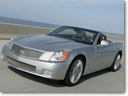
    The Cadillac XLR-V, a recent addition to the luxury nameplate’s growing family of high-performance V-Series vehicles, combines luxury with power, performance, personal amenities and style. The XLR-V is equipped with the Northstar V-8 SC (supercharged) engine, producing 331 kW (448 horsepower). Combined with a rear-mounted, six-speed automatic transmission, the XLR-V’s supercharged engine helps delivers 0-to-100 km/h (0-62 mph) acceleration in less than five seconds.

    Measuring a compact 4.51 meters (14.8 ft.) by 1.84 meters (6 ft.), the XLR is based on the iconic Evoq concept car that redefined the perception of Cadillac around the world. The Cadillac XLR-V shares with the XLR the combination of distinctively bold styling with contemporary luxury, ingenious technologies, rear-wheel-drive performance and near 50/50 weight distribution for enhanced balance and vehicle dynamics – yet it does so on an entirely different performance level.

    As with all members of the V-Series family, exterior and interior appointments clearly set the two-seater apart. These include the signature wire mesh grille, larger, 19-inch wheels at all four corners, and Ebony wood and aluminum accents throughout the interior. Chassis refinements enable equal surefootedness and driver appeal on the street or the track, including larger brakes, stabilizer bars, wheels and tires, and a performance-calibrated Magnetic Ride Control (MR) system.

    Cadillac XLR-V
    Cadillac XLR-V

    Supercharged Northstar engine

    At the heart of the XLR-V is the 4.4L version of the Northstar engine outfitted with an intercooled, positive-displacement supercharger. The dual overhead cam (DOHC) V-8 engine, called the Northstar V-8 SC (supercharged), produces 331 kW (448 hp) at 6,400 rpm and 561 Nm (414 lb.-ft.) of torque at 3,900 rpm – and the engine’s performance is reinforced by its ability to deliver 90 percent of its peak torque between 2,200 and 6,000 rpm.

    The Northstar V-8 SC generates 124 horsepower (91 kW) and 138 Nm (102 lb.-ft.) of torque more than its naturally aspirated counterpart, while its specific output of 100-horsepower-per-liter makes it one of the world’s highest specific output production V-8 engines. However, the Northstar V-8 SC used in the XLR-V is more than just power and torque. The DOHC engine includes variable valve timing that provides outstanding top-end performance while maintaining the expected refinement and quality associated with a luxury marque. The aggressive torque curve enabled by the choice of a supercharged engine gives the XLR-V acceleration capable of placing it firmly in the under-five-second-club for 0-to-100 km/h (0-62 mph) time – a signature capability of V-Series vehicles.

    Air induction and exhaust

    The air induction system on the XLR-V was redesigned to address packaging needs created by the larger engine and addition of the supercharger. These modifications increased the flow of air to the engine by 30 percent, funneling it from the front air intake over the radiator and to the supercharger via two ducts, which converge into one prior to reaching the supercharger, so that only one mass air flow sensor is required.

    The system was designed to be as free-flowing as possible, bringing in the maximum amount of air to the supercharger. Each duct has been carefully tuned to minimize supercharger whine and resonance in order to achieve the most pleasing intake sound quality. The exhaust system features a unique muffler design, which effectively combines the construction of a more conventional muffler with a high-performance flow-through design.

    To keep sound levels at a pleasant, throaty pitch during everyday driving on streets and expressways, the exhaust is routed through a series of internal chambers that muffle sound levels. During more aggressive driving, a vacuum-actuated Pierburg valve in the muffler opens to allow straight exhaust flow-through. There are perforations in the pipe to allow dissipation into the other muffler chambers, but the overall effect is to reduce backpressure and increase power.

    Six-speed automatic transmission

    The Northstar V-8 SC is mated to the Hydra-Matic 6L80 six-speed automatic transmission – the first use of GM’s new six-speed automatic in a rear-mounted configuration. The 6L80 uses clutch-to-clutch operation and an advanced, integrated 32-bit transmission controller to deliver smooth and precise shifts. In addition, a wide 6.04:1 overall ratio spread enhances performance and fuel economy.

    The 6L80 also incorporates a host of advanced driving enhancement features, including advanced Performance Algorithm Shifting (PAS), Performance Algorithm Liftfoot (PAL) and Driver Shift Control (DSC). PAS lets the electronic transmission controller override the automatic gear selection during closed-throttle, high-lateral-acceleration maneuvers, rapidly downshifting with the release of the torque converter clutch for smooth powering up when the throttle is reopened. PAL minimizes transmission upshifts during closed throttle driving and cornering to maintain the correct gear and alleviate “busyness.” Driver Shift Control allows the driver to sequentially shift gears manually via the gearshift lever.

    The refined shift feel is enabled by careful electronic calibration of both the engine and transmission. During shifts, power is instantaneously lowered, then ramped back up carefully to make gear changes virtually unnoticeable.

    Performance-tuned chassis systems

    Chassis modifications on the XLR-V include larger brakes, recalibrated Magnetic Ride Control (MR); larger front stabilizer bar and the addition of a rear stabilizer bar, stiffer rear lower control arm bushings, larger wheels and tires, a power steering fluid cooler and a higher-capacity fuel pump.

    The most noticeable change was made in the braking system to assure strong stopping power and smooth, confident brake operation, given the increased power and handling capabilities of the XLR-V. To achieve this, chassis engineers turned to J55 brakes, essentially the same application used in the Z51 Corvette, with larger cross-drilled rotors and high-performance brake linings. Front rotors are 340 mm (13.4 in.) in diameter; rear rotors are 330 mm (13 in.). The thickness of the rotor cheeks on both the front and rear has been increased for added thermal capacity. The brake system incorporates dual-piston front calipers and single-piston rear calipers.

    Magnetic Ride Control on the XLR-V has been recalibrated to account for the enhanced handling characteristics the roadster’s supercharged performance demands. The system seeks to keep the body on an even plane at all times, giving drivers a comfortable ride by dramatically reducing disturbances to the vehicle body. The MR recalibration – combined with a stiffer front stabilizer bar, the addition of a rear stabilizer bar, and stiffer rear control arm bushings – subtly changes the driving characteristics of the XLR-V when compared to the standard XLR. Another V-Series staple is a four-channel/four-selection mode chassis control system (StabiliTrak), enabling the driver to switch between four stability settings, including a “less-governed” performance mode for the performance enthusiast.

    Wheels and tires have been increased in size for enhanced sure-footedness, to 235/45R19 on the front and 255/40R19 at the rear. The tires are Pirelli run-flats.