 Irmscher presents the Version RC Line by Irmscher. The specialists for automobile tuning from Remshalden in Swabia help the vehicle to a reserved but sportingly noble elegance. (more…)
Category: Auto News
Auto news – automobile industry news. Articles about all the latest car models and concepts. Breaking news, uncovered secrets.
-
Irmscher’s individual touch beautify Peugeot 4007 RC Line
-
TECHART Magnum – Made to perfection
 Technology, quality and design form the cornerstones of over 20 years of history for the renowned car enhancement company TECHART Automobildesign from Leonberg-Hofingen. (more…)
-
Escape The Doom And Gloom At Race Retro, Britain’S Premiere Historic Motorsport Event
 The appetite for nostalgia is booming and what better way to beat the economic blues than to inject your rose-tinted memories with a healthy splash of high octane excitement? Race Retro, the international historic motorsport show held at Stoneleigh Park, Coventry from the 13th to the 15th March, is a fantastic pulse-quickening event which proves that they don’t race or rallying them like they used to! (more…)
-
Volvo Launches ‘Ice White’ C70 Coupe-Convertible
 Volvo’s striking four-seater C70 Coupé-Convertible packs some extra appeal this spring with the introduction of the ‘Ice White’. Priced at an attractive £24,495 OTR and available to order now, the C70 Ice White features £2,350 worth of extra equipment over the standard 2.0D S model on which it is based which retails at £24,995 OTR.
Externally, the Volvo C70 Ice White sports the head-turning Ice White finish. The interior boasts sumptuous Calcite leather upholstery with black interior trim and aluminium inlays. The exterior appeal is also boosted with 18” Midir diamond cut alloy wheels. (more…)
-
Mopar Puts “Muscle” on Display at 57th Detroit Autorama
 Paying homage to its Mopar® brand heritage at this year’s 57th Annual Detroit Autorama trade show, hot rod and muscle car enthusiasts are in for a treat at the Chrysler LLC display, at Cobo Center in Detroit. (more…)
-
The New Ford Fiesta SportVan
 Ford of Europe is extending its SportVan collection in 2009 with the all-new Fiesta SportVan, reprising the model which launched Ford’s popular SportVan range three years ago. (more…)
-
Noble power SUV: Arden Range Rover AR7
 Elegance, discreet sportiness and understatement have always been the characteristics of British cars. The car enhancement specialist and registered automobile manufacturer from Krefeld was unable to resist the attraction of these vehicles over 30 years ago. (more…)
-
Arden Range Rover Sport AR6 Stronger
 Elegance, discreet sportiness and understatement have always been the distinguishing features of English cars. Thirty years ago, the tuning specialist, Arden from Krefeld, couldn’t resist the appeal of these vehicles. For years, he has been the place to go for customers who wish for more emphasis on the typical characteristics, as well as a customisation of their Jaguar or Range Rover. Arden also gives the current Range Rover Sport comprehensive modifications. From the aerodynamic-kit to the performance increase and right up to the enhanced interior, Arden offers an attractive SUV with the “Range Rover AR6 Stronger“, which is classed “over the top” simply through its performance.
Gigantic Performance
Arden draws no less than 520 HP (at 5800 rpm) out of the supercharged V8, whose displacement has been increased to 4.8 litres. Together with the phenomenally increased torque of 700 Nm at 3600 rpm, this provides the superior driving performance of the not particularly light Range Rover Sport. The sheer force catapaults the British SUV from zero to 100 km/h in 6.1 seconds. Its superior tractive power goes without saying. Even if speeds above 200 km/h are rarely achieved due to road conditions, the power of the Arden AR6 makes 240 km/h possible.

Arden Range Rover Sport AR6 Stronger 


Well-balanced appearance
The performance of the AR6 is believable just when it stands in front of you with its bodywork kit manufactured with accustomed Arden quality. The front and rear spoilers fit superbly with the basic design of the Range Rover. Arden designs them so that they will still look modern years from now, making a resale of the vehicle more attractive. They also give the vehicle a massive appearance without losing well-balanced proportions. Even the functionality doesn’t lose out against the looks. To achieve better braking system ventilation, Arden furnishes its front spoilers with air ducts. The car tuner even incorporates these into the hood, in order to guarantee better cooling for the increased performance of engine. The rear spoiler, the component probably most seen by road users, features openings to the left and right for the tailpipes of the Arden stainless steel exhaust system. In addition the rear spoiler gleams with its diffuser look.
Arden widens the front and rear wings by approximately 4.5 cm. A side skirt trim serves as an artistic link between the line which begins at the front and rear spoiler and continues over the widened wings. All parts are manufactured of carbon fiber reinforced composite. The sidebars are illuminated and highlight the lower edge of the entry door. This not only makes it easier for the passengers to enter the car in the dark, but it is also without question a stunning eye-catcher.
What would tuning be without new wheels? Arden banks on his own 10×23 inch creation. Arden fits 315/25R23 tyres to the elegant, 10-spoked, light alloy “ Sportline “ wheels which provide not only a sporty look but also adequate traction.
In addition, the “airy” look allows a glimpse of the powerful brakes. Arden adapts these to the increased performance. The high-performance system features 6-piston fixed calipers at the front and 4-piston fixed calipers at the rear. These emphatically exert their force on the ventilated, perforated brake discs and ensure sustained deceleration of the British Colossus.
Strong sound and a chassis for all events
When it comes to the sound, the Arden Range Rover Sport AR6 Stronger abandons its British reserved nature. Arden informs the public about the increased performance of the modified Range with a full sound. The Arden engineers have created an exhaust system with a sport catalytic converter. Besides the much better sound in comparison to the standard system, the high-performance system also has a “big end”. Or rather four – because two twin tailpipes show observers that even without the motor running something special has been fitted under the Range. The customer receives a high-quality, long-lasting product manufactured completely from corrosion resistant stainless steel.
The Arden AR6 Stronger chassis comes with an electronic air suspension system that provides optimum tuning at all times and in every situation. The electronic module offers two further driver programs in addition to the standard settings. The AR6 Stronger can be lowered by 23 mm to improve the handling and to lower the centre of gravity. The sport tuning endows the heavy SUV with decidedly better road holding. Should the ”show-piece” need to be maneuvered over bad roads or country lanes, then the vehicle can be raised 25 mm using the off-road setting. The gain in ground clearance should mean that there are no more obstacles worth mentioning.
Arden enhances the interior with various elements because customers predominantly see their Arden Range Rover Sport from the inside. All interior work is carried out in Arden’s own saddlery. Customer requests are manufactured with the highest precision and attention to detail. Every request – no matter how extraordinary – is a welcome challenge. The high-quality realisation of this challenge is Arden’s uppermost goal. Leather and Alcantara are custom-tailored in every desired color and various exotic woods are processed. The experienced Arden team also manufactures chrome-, carbon-, aluminum- and piano-paint applications for their customers. With this finish, the Arden Range Rover AR6 Stronger always makes sure that its passengers are comfortable and relaxed at the end of a long journey.
-
Arden Jaguar XF AJ21 Fast Cat
 The latest creation of Arden is the Arden AJ 21, which was developed on Jaguar XF basis. This wildcat will thrill you, with a stronger engine, extensive aerodynamic modifications and elegant interior. It will offer a genuinely Jaguar pleasure with an individual Arden mark. (more…)
-
New Multiair Technology: More Power, Less Fuel, Lower Emissions
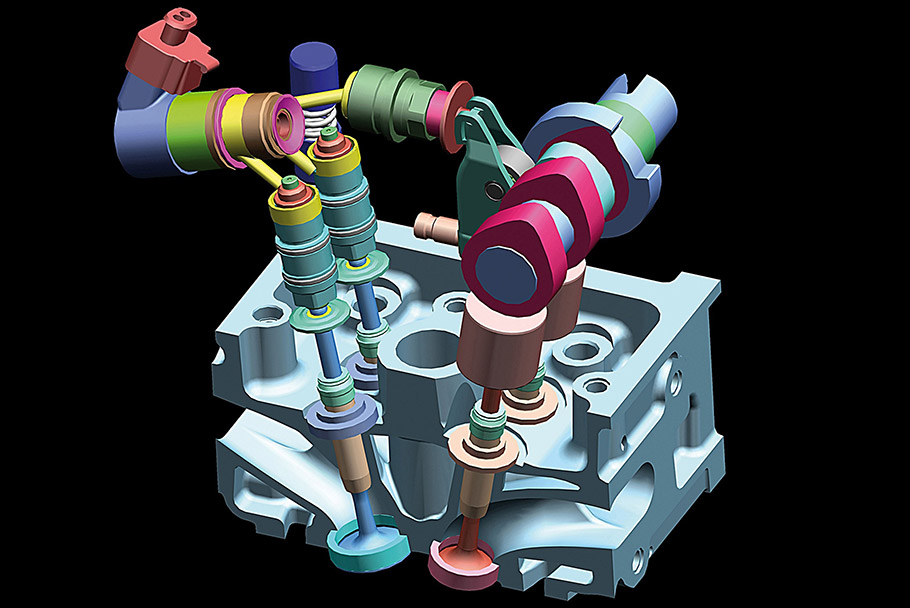
Already a world leader in advanced diesel engine technology, Fiat Group has just launched MultiAir, a fundamental breakthrough in petrol engine design that will dramatically cut fuel consumption, as well as significantly boosting power and torque, cutting carbon dioxide emissions by between 10 and 25 per cent, and up to a 60 per cent reduction in other engine pollutants.
With two generations of common rail direct injection diesel engine technology, UniJet and MultiJet, to its credit, Fiat has dramatically improved diesel engine performance, economy and emissions. Now, with MultiAir, Fiat has brought together the company’s enviable expertise and technology to make one of the single largest leaps forward for petrol engine design in recent times.
In short, an engine equipped with Fiat MultiAir technology is more powerful, more responsive across the entire engine speed range, uses considerably less fuel, and reduces all types of exhaust emissions by a substantial amount. It will also assist in enabling Fiat to maintain its lead in low emissions and low fuel consumption technology, which has seen Fiat crowned for the past two years as the number one car maker for the lowest range-wide CO2 emissions.
The first new engine to be equipped with MultiAir will be the 16-valve 1.4 litre family of naturally aspirated and turbocharged engines, and the first car to go on sale with MultiAir installed will be the Alfa MiTo at the end of 2009. Its second application will be as an integral part of a new two cylinder engine family.
Development of the Fiat MultiAir system
In the last decade, the development of Common Rail technology for diesel engines marked a breakthrough in the passenger car market. To be equally competitive in the field of petrol engines, Fiat Group decided to follow the same approach and focus on breakthrough technologies.
The aim was to provide customers with substantial benefits in terms of fuel economy and driving pleasure, while maintaining the engine’s intrinsic refinement, based on a smooth combustion process and on light structures and components.
The key parameter to control diesel engine combustion and therefore performance, emissions and fuel consumption, is the quantity and characteristics of the fuel injected into the cylinders. That is the reason why the Common Rail electronic diesel fuel injection system was such a fundamental breakthrough in direct injection diesel engine technology.


However, the key to controlling petrol engine combustion, and therefore performance, emissions and fuel consumption, is the quantity and characteristics of the fresh air charge in the cylinders. In conventional petrol engines the air mass trapped in the cylinders is controlled by keeping the intake valve opening constant and adjusting upstream pressure through a throttle valve. One of the drawbacks of this simple conventional mechanical control is that the engine wastes about 10 per cent of the input energy in pumping the air charge from a lower intake pressure to the atmospheric exhaust pressure.
A fundamental breakthrough in air mass control, and therefore in petrol engine technology, is based on direct air charge metering at the cylinder inlet ports by means of advanced electronic actuation and control of the intake valves, while maintaining a constant natural upstream pressure.
Research on this key technology started in the ’80s, when engine electronic control reached the stage of a mature technology.
At the outset, world-wide research efforts were focused on the electromagnetic actuation concept, by which valve opening and closing is obtained by alternatively energising upper and lower magnets with an armature connected to the valve. This actuating principle had the intrinsic appeal of maximum flexibility and dynamic response in valve control, but despite a decade of significant development efforts, the main drawbacks of the concept – it being intrinsically not fail-safe and its high energy absorption – could not be fully overcome.
At this point most automotive companies fell back on the development of the simpler, robust and well-known electromechanical concepts, based on valve lift variation through dedicated mechanisms, usually combined with camshaft phasers to allow control of both valve lift and phase.
The main limitation of these systems is low flexibility in valve opening schedules and a much lower dynamic response; for example, all the cylinders of an engine bank are actuated simultaneously, thereby excluding any cylinder selective actions. Many similar electromechanical valve control systems were subsequently introduced over the past decade.
In the mid ’90s, Fiat Group research efforts switched to electro-hydraulic actuation, leveraging on the know-how gained during its Common Rail development. The goal was to reach the desired flexibility of valve opening schedule air mass control on a cylinder-by-cylinder and stroke-by-stroke basis.
The electro-hydraulic variable valve actuation technology developed by Fiat was selected for its relative simplicity, low power requirements, intrinsic fail-safe nature and low cost potential.
Fiat MultiAir Technology: how it works
The operating principle of the system, applied to intake valves, is the following: a piston, moved by a mechanical intake camshaft, is connected to the intake valve through a hydraulic chamber, which is controlled by a normally open on/off solenoid valve.
When the solenoid valve is closed, the oil in the hydraulic chamber behaves like a solid body and transmits to the intake valves the lift schedule imposed by the mechanical intake camshaft.
When the solenoid valve is open, the hydraulic chamber and the intake valves are de-coupled; the intake valves do not follow the intake camshaft anymore and close under the valve spring action.
The final part of the valve closing stroke is controlled by a dedicated hydraulic brake, to ensure a soft and regular landing phase in any engine operating conditions.
Through solenoid valve opening and closing time control, a wide range of optimum intake valve opening schedules can be easily obtained.
For maximum power, the solenoid valve is always closed and full valve opening is achieved following completely the mechanical camshaft, which is specifically designed to maximise power at high engine speed (long opening time).
For low-rpm torque, the solenoid valve is opened near the end of the camshaft profile, leading to early intake valve closing. This eliminates unwanted backflow into the manifold and maximises the air mass trapped in the cylinders.
In engine part-load, the solenoid valve is opened earlier, causing partial valve openings to control the trapped air mass as a function of the required torque.
Alternatively the intake valves can be partially opened by closing the solenoid valve once the mechanical camshaft action has already started. In this case the air stream into the cylinder is faster and results in higher in-cylinder turbulence.
The last two actuation modes can be combined in the same intake stroke, generating a so-called Multilift mode that enhances turbulence and combustion rate at very low loads.
Further Potential of MultiAir Technology
All breakthrough technologies open a new world of further potential benefits, which are usually not fully exploited in the first generation.
Common Rail technology, a Fiat Group worldwide premiere in 1997, paved the way to more than a decade of further technological evolutions such as MultiJet for multiple injections, small diesel engines, and the recent Modular Injection technology, soon to be launched on the market.
Similarly, MultiAir technology, a Fiat worldwide premiere at this month’s Geneva Motor Show, (March 2009), will pave the way to further technological evolutions for petrol engines:
- Integration of the MultiAir Direct air mass control with Direct petrol Injection to further improve transient response and fuel economy.
- Introduction of more advanced multiple valve opening strategies to further reduce emissions.
- Innovative engine-turbocharger matching to control trapped air mass through a combination of optimum boost pressure and valve opening strategies.
While electronic petrol injection developed in the ’70s and Common Rail developed in the ’90s were fuel-specific breakthrough technologies, MultiAir Electronic Valve Control technology can be applied to all internal combustion engines whatever fuel they burn.
MultiAir, initially developed for spark ignition engines burning light fuel ranging from petrol to natural gas and hydrogen, also has wide potential for diesel engine emission reduction.
Intrinsic NOx reduction of up to 60 per cent can be obtained by internal exhaust gas recirculation (iEGR) realised with intake valves reopening during the exhaust stroke, while optimal valve control strategies during cold start and warm-up bring up to 40 per cent HC and CO reduction of emissions. Further substantial reductions come from the more efficient management and regeneration of the diesel particulate filter and NOx storage catalyst, thanks to the highly dynamic air mass flow control during transient engine operation.
Diesel engine performance improvement is similar to that of the petrol engine and is based on the same physical principles. Instead, fuel consumption benefits are limited to few percentage points because of the low pumping losses of diesel engines, one of the reasons for their superior fuel economy.
In the future, powertrain technical evolution might benefit from a progressive unification of petrol and diesel engine designs.
A MultiAir engine cylinder head can therefore be conceived and developed, where both combustion systems can be fully optimised without compromise. The MultiAir electro-hydraulic actuator is physically the same, with minor machining differences, while internal sub-components are all carried over from Fiat’s FIRE and SGE applications.
-
Supercharged Arden XKR AJ20 Coupe with 480 bhp
 Arden has dedicated itself for over 30 years to the tuning of British cars and is one of the leading addresses for customers looking to emphasise the typical features and customise their Jaguars and Range Rovers. Arden offers an extensive range of modifications for the XKR model from Jaguar. (more…)
-
Tata Pr1ma designed by Pininfarina
 The Tata Motors Limited stand hosts the world première of the Tata Pr1ma (Italian for “First”), a styling model designed and built by Pininfarina for the Indian company, first official project – hence its name – of the Tata-Pininfarina cooperation in the fields of research, design and engineering. (more…)


