The hugely popular Kia Cee’d will make an appearance at the Geneva Motor Show 2012 with a whole new feel – a sporty, five-door hatchback with attention to detail in every aspect.
New stylish features garnish the exterior such as chrome lining around the windows and edgy curves on the bonnet. Striking new headlights now incorporate daytime LED’s. Inside the story is pretty much the same – ergonomic design feature, higher quality materials and driver oriented controls. No news about the oily bits still but we have high hopes for that
Kia Cee’d has always been the prime C-segment choice of customers with its unparalleled 7-year warranty, affordability and reliability. It is also still used as Top Gear’s “reasonably priced car” which has the novel task to take celebrities around the Top Gear test track.
Sales are expected to start around the second quarter of 2012, after the premier at the Geneva Motor Show in early March.
Infiniti intends to pursue the ultimate driving experience delivered from electricity. They have already proven themselves apt in that field with the Infiniti M hybrid but now they are looking towards the Geneva Motor Show 2012. There they will reveal a yet to be named sports concept that will “minimize the traditional compromise between thrilling performance and sustainable mobility”.
Information is scarce really. All we have is Infiniti’s promise that we are talking about an efficient, sharp, low-emission vehicle with an even greater urban mobility. Infiniti say also that, despite an overall truthfulness to the company’s image and spirit, a new mid-ship design will provide better weight distribution. In other words most of the mechanical bits will be placed somewhere where it is least damaging to the performance of the car.
For more information supposedly, we will have to wait for the Geneva Motor Show which kicks off on the 8th of March this year.
Lincoln have revealed their latest concept (the MKZ) on the NAIAS to give voice to their intentions for the future design path they are willing to take. The MKZ Concept showcases “elegant simplicity” and unconventional luxury.
Looking at the pictures we can see what they mean. First impressions come from the brandy-colored exterior which, Lincoln say, consists of a dense base coating and a multitude of clear-coat varnish. The MKZ‘s superstructure comprises of materials such as baron and aluminum. The overlaying, smooth roofline (which houses a panoramic window trough and trough) sort of conceals the fact that this is in fact a sedan which normally consists of three boxes. The seemingly organic profile takes an aerodynamic feel with ease. Recognizable Lincoln features however, do not go unnoticed – the grille, although very conceptual, still retains the image of a split-wing-like entity first seen on the 1938 Lincoln Zephyr.
Lincoln MKZ Concept Detroit (2012)
Inside, a blend of poplar wood, aluminum and leather complements the bold outer design. The beverage themed hues continue as ‘champagne-colored’ seats show off their ‘champagne perforation patterns’ (something about the stitching that makes them look fizzy with bubbles just like a champagne glass). The four-seated saloon is airy and inviting that makes use of some cleverness – push-button transmission gear selection, a 10-inch MyLincoln Touch screen for the driver as well as an 8-inched one in the middle.
For power, the MKZ will most probably utilize the MKS and MKT EcoBoost engines, which come with Drive Control. The suspension will also make use of Lincoln’s Continuously Controlled Damping (CCD) system. Drivetrains setups include both FWD and AWD.
It is rare to hear from Smart (the Daimler AG microcar subsidiary) but today we have big news. Well, small actually but either way – A Smart For-us concept will premiere at the NAIAS at it is a pickup… sort of.
With 3547mm in overall length and 1506mm in width it wont fit much farming equipment, will it? Yes, it does have a cargo bay but even that is crammed with two clever or rather “Smart ebikes” which sit docked at the back and keep their charges up by using the batteries from the For-us.
Did we mention that the For-us is all-electric? Because it is. It has a 55 kW ‘magneto-electric’ motor which delivers a torquey punch of 130 Newton metres. Top speed, Smart say, will be more than 120 km/h which is understandable because as we said it’s not very big really.
Smart For-us Concept (2012)
But one cannot be cross at Smart for this is what they do. The “mobility-concept” is Smart’s answer to congested city districts, impassable trails and general urban havoc. In terms of aesthetics, the For-us is in a category of its own – the two seats, wrapped in their yellow fabric, keep it stylish and simple, the cabin design has aerodynamics in mind and there’s a familiar face smiling at us from the grille.
Aston Martin Racing, jointly with Multimatic Motorsports, intend to continue their winning streak with this year’s Grand-Am Continental Tire Sports Car Challenge (CTSCC). The Toronto-based Multimatic company is no stranger to CTSCC previous titles and so, racing one of the two team Aston Martin V8 Vantage GT4s will be Multimatic’s acclaimed drivers Scott Maxwell and Joe Foster. The other one will be driven by Hollywood film star Patrick Dempsey, a talented racer in his own right, partnered in the opening round of the series by Aston Martin Chief Engineer and greatly experienced Vantage GT4 racer Chris Porritt.
This is not the first time Aston Martin and Multimatic seen in cooperation on a common project. The Canadian firm helped develop the Aston One-77’s carbon fibre chassis and various carbon fibre components for the Aston Martin Zagato. They also have a four-post testing rig based in the UK that has been used on many occasions by road going and racing Astons.
The Vantage GT4 was first seen back in 2006 when, almost in stock condition, forged its name at the Nurburgring 24h race. Up to this day the car has not changed a lot – it still has the standard 4.7l V8, the same road car aluminium chassis with its suspension and a manual transmission. It all sounds very crude but with a reputation of reliability and numerous wins on endurance races, the Aston V8 Vantage is not to be taken lightly. It has been tuned specially to deviate from the FIA standard to meet the regulations of the Grand-Am challenge and with service provided by Multimatic it is ready to go.
Aston Martin Vantage V8 GT4
The CTSCC is run by the Grand American Road Racing Organization. Some of North America’s most iconic circuits will see action this year with over ten races which last for two and a half hours each. The challenge starts on the 27th of January at the Daytona International Speedway where the Aston will be competing in the Grand Sport category that consists of six- and eight-cylinder, production-based cars. Other notable circuits include Watkins Glen International, the Indianapolis Motor Speedway and Laguna Seca, and the Lime Rock Park in Connecticut which will be the conclusive race at the end of September.
The new Peugeot 208 is set to hit the UK markets somewhere in June this year and it will be very green. The range of engines included have the sole purpose of saving the planet. Weight and dimensions have shrunken and “up to 25%” of the polymers used are from recycled products. A variety of 208 choices will meet the needs of picky – the vehicle comes as a 3 or 5-door hatchback, petrol or diesel with automatic transmissions, 5 or 6 speed manuals, stop and start systems for diesels and for an extra 500 quid, one gets a touch screen navigation.
First thing we notice are the looks – it’s a recognizable figure that has taken on modernity and sharpness. The boomerang-style tail lights are bulkier and more amorphous, the grille incorporates a funkier pattern while curves on the side dauntingly suggest – “I am French and don’t let them tell you otherwise”
Top of the range 1.6l THP petrol engine will be available this summer, developing 156 bhp and 240 Nm of torque while returning perfectly respectable 48.7 mpg. For ultimate economy though, the new 3-cylinder 1.0 or 1.2 VTi petrol bees are up for the job with 65.7 and 62.8 mpg respectively. Yet, the 1.4l e-HDI diesel trumps all the others with its economy of 83.1 mpg and 87g/km of carbon dioxide emissions. These minuscule figures are courtesy to Peugeot’s clever micro-hybrid Stop & Start System that comes with almost all diesels and the Electronic Gearbox Control (EGC).
Peugeot 208 (2012)
Weight is down by around 110kg compared to the previous 207 and it is also a bit shorter with 7cm. Obviously the 208 has gone on a diet so that its occupants can let loose a bit as there is more back seat legroom and a significantly larger boot space – “optimized architecture”, say Peugeot. Moving on to the driver’s seat we are overjoyed with pure simplicity – we have a strangely elevated dashboard which houses a rev. counter, a speedometer, a temperature gauge and a fuel gage – classic Peugeot. The central console is tidy enough and the small steering wheel looks like a steering wheel and not like a Playstation controller. It is really as simple as today’s standards allow it to be, which is good for there’s nothing to distract the driver from the act of driving a perfect, nimble and sleek super-mini. The only traces of sophistication can be found on the 7-inch touch screen which controls all the USB/Bluetooth, multimedia bits and pieces.
All there is left to verify now is the handling performance which has the tough job to honour the 208’s predecessors. This Spring someone in mainland Europe will be lucky enough to test it out while in the UK, people will have to wait until June.
The 1954 Mercedes Benz SL 300 is an icon. Back then it was the first street car ever to feature direct fuel injection. Because of that it was also the fastest. It performed with poise and grace and it looked like supermodel. Today AMG have done a good job to commemorate it with the SLS but being Mercedes Benz descendants, one would imagine that the would do so naturally.
However, now Inden Design have dared to intervene and try to improve upon the SLS itself. AMG have already fitted a 6.2-liter V8 which develops 571 hp and 650 Nm of torque but by fine tuning the software and replacing some exhaust modules, Inden have managed to add 52 hp more making a total of 623 hp. Most likely the standard wheels wont be happy about the new found power so they have been replaced as well. Now “The Flyer “ (that is how Inden have named their project) wears four 20 inch wheels dimensioned 265/30 on the front axle and 290/30 at the back
INDEN design is a tuning house for performance cars such as Mercedes and Ferrari and is situated in Rennerod, Germany.
The Chevrolet Sail and the Chevrolet MPV Concept are the products of GM India and SAIC working together. The debut stand was at the eleventh Auto Expo in New Delhi.
The Sail is built by engineers at the GM Technical Center in Bangalore and is targeted at people from the emerging economies.
“The Chevrolet Sail hatchback will be a strong addition to GM’s mini-car portfolio in India,” said GM India President and Managing Director Lowell Paddock. “It will bring a new sense of vitality to the biggest, fastest-growing and most competitive segment in the domestic passenger car market.”
It is a dynamic looking hatchback with typically Chevrolet-ish front split front grille and the golden emblem of the brand in between. The hood has some distinguishing curves and lines that give it a 3D feel while the profile of the car (lower at the front, jumpy at the back) sends some sporty vibes.
2012 Chevrolet Sail Hatchback
Because of the noticeably high roof, there’s plenty of headroom and, with the fuel tank being in the middle, five people can easily seat themselves inside. Boot space is not sacrificed for any of this The center console houses a CD-player with AUX port while chromy motives complete the picture.
As powertrains, both diesel and petrol Smarttech engines will be offered which provide respectable power, efficiency and emissions within the accepted range.
Safety has also been addressed with a steel cage-like body construction and extra protection for the fuel-tank.
The Chevrolet MPV Concept is based on the MPV B segment in India and it is designed to accommodate large families with ease. The seats are up to eight and offer a good degree of flexibility. Best part of all is that chassis experts, Lotus have worked on developing the platform to get the most out of the materials.
Chevrolet MPV Concept
“The Chevrolet MPV Concept is designed for those who want a spacious, comfortable and well-styled vehicle to enjoy life with their loved ones,” said Paddock.
Both cars have great challenges in ahead because India (where they will be tested) has the roughest terrain and climate to offer
After an amazing season last year, Nissan are ready to stun the racing world again, beginning with the Dubai 24h race. They have a new GT-R Nismo GT-3 lined up and ready to take on the A6 category. The team that will be performing there consists of four drivers – Michael Krumm (GER), Tom Kimber-Smith (UK), Franck Mailleux (FRA) and Alex Buncombe (UK). They have many titles behind their backs some of which include the Le Mans Series LMP2 , the Intercontinental Le Mans Cup LMP2 and the Blancpain Endurance Series’ GT4 crown. So this year’s car truly has the task of crossing the finish line with royalty inside and it is rightfully named as the “Champion’s car”
“2011 was a great year for Nissan and I am very much looking forward to racing the new GT3 car in Dubai,” commented Krumm. “The Nissan GT-R took us all the way to the top in 2011 so I hope we can have a good race with the new car. It’s great to celebrate a successful 2011 for Nissan and I’m excited to see how the GT Academy guys get on in the ‘All-Gamer’ car.”
In that last bit he is talking about the first all-gamer team which is also taking place in the Dubai race. Competing in a Nissan 370Z, will be the winners of the Nissan/Playstation GT academy challenge. They have underwent rigorous training to meet the standards of a demanding race such as this one. The team comprises of two new-comers: Jann Mardenborough (UK) and Bryan Heitkotter (USA) along with the previous season One and Two winners: Lucas Ordonez (ESP) and Jordan Tresson (FRA).
Nissan GT-R Nismo GT3
A third Nissan (again a 370Z) will also be participating in next week’s race as Humaid Al Masaood (UAE), Richard Meaden (UK) and Tetsuya Tanaka (JAP) will also be representing RJN motorsport
“I have competed successfully in the previous two Dubai 24hr with my own team so to be invited to race with Nissan and their three car assault is a great honour and a new challenge,” said Al Masaood. “Although I am now racing in the USA there is something very special about racing in my local 24hr as it is this race that has helped me develop as a driver. I am looking forward to working with Nissan and my co-drivers and hopefully delivering a great result. It is really encouraging to see Nissan bringing talented young drivers into motorsport through GT Academy and I am keen to see drivers from the Gulf region be given the opportunity to start racing through such a professional programme.”
Set to start next Friday, the Dubai 24 Hour Race is an endurance race held annually at the Dubai Autodrome. It was first held in 2006 and is considered to be extremely testing for both driver and machine.
The NAIAS in Detroit is now a fact of life. Ford are also aware of this and are there to delight us with a next-generation Ford Fusion (that would be the Mondeo for Europeans later this year). Keeping pace with Ford’s innovative spirit, the Fusion boasts an array of efficient gasoline and hybrid drivetrains, an audacious design and cleverness.
It is no secret that currently Ford is grappling with other car makers for the lead position in global markets when it comes to economic vehicles and the Fusion is the latest example of that. Engine lineup consists of two EcoBoost™ four-cylinder power plants: a 1.6 with a best-in-class, non-hybrid economy returning 26 mpg urban and 37 mpg on the highway. For those that desire a bit more grunt there’s the EcoBoost l4 2.0 mated to a CVT automatic transmission that can send power trough 19 inch alloys and a dynamic all-wheel-drive which can shift torque distribution towards the back end.
The Hybrid division lures economy minded customers with the Fusion Hybrid – a 2.0 liter Atkinson-cycle engine which is not as big as the previous 2.5 one, but performance hasn’t been lost say Ford. In fact, instead of nickel-metal hydride batteries, lithium-ion ones are now used which in turn saves weight and produces more power. The end result is a speed up to 62 mph on electricity alone. The Fusion Energi Plug-in Hybrid however, is the ultimate in efficiency terms with a stunning figure of up to 100 mpg – more efficient than the Volt or Prius. Just like the other big players, Ford is now making use of a stop/start system in its vehicles which really does miracles to fuel-efficiency.
Ford Fusion (2013)
On the outside, the Fusion is not unrecognizable but some visual tweaks do leave an impression: sleeker and smother lines eliminate the “three box design” feel that is commonly present in other mid-sized saloons. The front grille has shrunken and so have the headlights. The wheelbase is longer and the overall height has increased while width is down by 35 mm.
Technological innovation manifests itself within the new multi-link rear suspension, the aerodynamic guards underneath the car which keep the noise down as well. There is also a multitude of handy gizmos that assist newbie drivers and such in every possible aspect – Being vigilant about road lanes will be a thing of the past because of the Fusion’s lane-keeping system which monitors the road ahead and alerts if the car is drifting too close to the lanes and it will even dare to adjust the steering wheel by itself if the driver fails to response. That same system also monitors the traffic ahead and keeps the car at distance from the others. Active park assist quite literally takes parking in its own hands by identifying a suitable parallel parking space, taking measures and doing the steering for you. The BLIS system uses sensors on the rear fenders that can scan otherwise blind spots to drivers and thus prevent a lane-changing disaster.
Inside the cabin distraction is brought down to a minimum with systems like SYNC and MyTouch that allow interaction with the multimedia and control system from a distance (e.x. voice activation). The dashboard has retracted nearer to the windscreen and the seats are thinner so that it is even more roomier than the predecessors.
With a total of 730,000 units sold, Renaultis betting on their affordable and hugely popular Megane when it comes to sales. So keeping up on the quality, refinement and reliability is crucial for the annual revenue. The MY 2012 Megane receives minor changes on the outside and inside and it also debuts three new start/stop engines which return stunning fuel economy figures.
The exterior changes are pretty standard with the LED daytime running lights, a black glossy bumper with chrome lining and a complete revision on wheel selection. Inside new trim levels are available including a two-toned leather pack available for customers in the UK.
Newly F1-engineer-developed engines are now being employed in the fresh lineup of MY 2012 Meganes. We have two downsized diesels – a 1.5 dCi with 260 Nm of torque, 110 hp and a whopping figure of 80.7 mpg (combined). Carbon dioxide emissions are down to 90g/km. Then there’s the 1.6 dCi with 130 hp, 320 Nm of torque and a combined fuel range of 70 mpg. That fuel efficiency is courtesy to the Stop & Start and brake energy recuperation systems that come with the diesels.
Renault Megane Sport Tourer (2012)
Th engine that takes the spotlight however, is the TCe 115 – this is the first petrol engine in a Renault that incorporates direct injection and a turbocharger at the same time. The engine block is 400 cubic centimetres smaller than the previous 1.6 16-valved one but overall power is up by 5 hp making a total of 115 hp. In fact, it is said to be the most powerful 1.2 engine in the world. And as it turns out it may be the most economical as well for it too makes use of the Start & Stop system usually reserved for diesels. Therefore we have 53.3 mpg on the combined cycle and 119 g/km of carbon dioxide emissions.
Worry not because, cleverness goes beyond the engine bay as the Megane has some neat driver aids like the Hill Start Assist function which holds down the brakes for a while on attempting to start off on a steep hill. The decision to let in air from outside or cycle the one inside is left to a computer which measures the air quality of the surrounding air. The Renault Visio System on the other hand is basically a camera attached to the rear-view mirror, scanning the road ahead and alarming for things like lane changing etc. It also analyses the visibility conditions outside and decides alone when to put on high-beams or low-beams.
The R.S. Line also gets an update with new a new leathery interior sewn by red stitching, a sportier steering wheel, branded door sill guards and a distinctive dashboard trim strip – the genetic code of the Renaultsport dynasty. On the outside, the R.S. gets specially designed, curvy LED lights which further assert the MY 2012 Megane’s aggressive stance.
2012 Renault Megane Renaultsport 265
And now there’s an anniversary model called the Renaultsport 265 and as the name suggests it develops 265 hp (15 more than the previous one). Further down the road, for a more complete sporty feel, the engineers at Renault have fiddled with the exhaust system with the result being a more satisfying tone. Distinctive features of the 265 include an F1 styled front blade garnished with rows of LED’s, and fresh 18 inch wheels as well as the 19 inch ones now incorporate R.S branding at their centres. Customers can op for redlining on the diffuser, front blade and the side sills while inside a two tone leather upholstery can be added consisting of light grey and charcoal.
Brace yourselves as Subaru is about to unveil the latest 2013 rear-wheel drive BRZ sports car. Day and place – as soon as the NAIAS in Detroit kicks off. Baring the typical Subaru pedigree, the BRZ spirit will be all about handling. Sales are expected to start late at Spring.
So why not AWD like most Subarus out there? Well, to achieve exceptional handling, Subaru engineers have figured that they need the lowest center of gravity achievable. Therefore an AWD system was deemed too complex and restrictive while with a RWD system the engine can be mounted pretty low. The whole car weights no more than 2,700 lbs and it will be powered by a 2.0 liter, 200 horsepower, 7400 rpm doomsday device. And because it is a compact flat (boxer) engine, technicians have the freedom to put it where they want it to in order to achieve perfect weight distribution and center of gravity.
The slippery looks scream of racing genes all around – 50.6 inches of height, a sloping roof line, miss maxi type fenders and short overhangs. Don’t despair though, because Subaru promise everyday practicality to go along with the lunacy – seating for four, handy boot space and generic passenger safeness.
It’s an ambitious project this but we are definitely ready to fall in love. For we play the waiting game.
 The hugely popular Kia Cee’d will make an appearance at the Geneva Motor Show 2012 with a whole new feel – a sporty, five-door hatchback with attention to detail in every aspect.

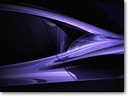 Infiniti intends to pursue the ultimate driving experience delivered from electricity. They have already proven themselves apt in that field with the Infiniti M hybrid but now they are looking towards the Geneva Motor Show 2012. There they will reveal a yet to be named sports concept that will “minimize the traditional compromise between thrilling performance and sustainable mobility”.

 Lincoln have revealed their latest concept (the MKZ) on the NAIAS to give voice to their intentions for the future design path they are willing to take. The MKZ Concept showcases “elegant simplicity” and unconventional luxury.


 It is rare to hear from Smart (the Daimler AG microcar subsidiary) but today we have big news. Well, small actually but either way – A Smart For-us concept will premiere at the NAIAS at it is a pickup… sort of.


 Aston Martin Racing, jointly with Multimatic Motorsports, intend to continue their winning streak with this year’s Grand-Am Continental Tire Sports Car Challenge (CTSCC). The Toronto-based Multimatic company is no stranger to CTSCC previous titles and so, racing one of the two team Aston Martin V8 Vantage GT4s will be Multimatic’s acclaimed drivers Scott Maxwell and Joe Foster. The other one will be driven by Hollywood film star Patrick Dempsey, a talented racer in his own right, partnered in the opening round of the series by Aston Martin Chief Engineer and greatly experienced Vantage GT4 racer Chris Porritt.

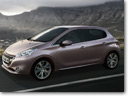 The new Peugeot 208 is set to hit the UK markets somewhere in June this year and it will be very green. The range of engines included have the sole purpose of saving the planet. Weight and dimensions have shrunken and “up to 25%” of the polymers used are from recycled products. A variety of 208 choices will meet the needs of picky – the vehicle comes as a 3 or 5-door hatchback, petrol or diesel with automatic transmissions, 5 or 6 speed manuals, stop and start systems for diesels and for an extra 500 quid, one gets a touch screen navigation.


 The 1954 Mercedes Benz SL 300 is an icon. Back then it was the first street car ever to feature direct fuel injection. Because of that it was also the fastest. It performed with poise and grace and it looked like supermodel. Today AMG have done a good job to commemorate it with the SLS but being Mercedes Benz descendants, one would imagine that the would do so naturally.


 The Chevrolet Sail and the Chevrolet MPV Concept are the products of GM India and SAIC working together. The debut stand was at the eleventh Auto Expo in New Delhi.


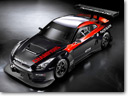 After an amazing season last year, Nissan are ready to stun the racing world again, beginning with the Dubai 24h race. They have a new GT-R Nismo GT-3 lined up and ready to take on the A6 category. The team that will be performing there consists of four drivers – Michael Krumm (GER), Tom Kimber-Smith (UK), Franck Mailleux (FRA) and Alex Buncombe (UK). They have many titles behind their backs some of which include the Le Mans Series LMP2 , the Intercontinental Le Mans Cup LMP2 and the Blancpain Endurance Series’ GT4 crown. So this year’s car truly has the task of crossing the finish line with royalty inside and it is rightfully named as the “Champion’s car”

 The NAIAS in Detroit is now a fact of life. Ford are also aware of this and are there to delight us with a next-generation Ford Fusion (that would be the Mondeo for Europeans later this year). Keeping pace with Ford’s innovative spirit, the Fusion boasts an array of efficient gasoline and hybrid drivetrains, an audacious design and cleverness.


 With a total of 730,000 units sold,


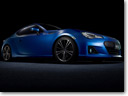 Brace yourselves as Subaru is about to unveil the latest 2013 rear-wheel drive BRZ sports car. Day and place – as soon as the NAIAS in Detroit kicks off. Baring the typical Subaru pedigree, the BRZ spirit will be all about handling. Sales are expected to start late at Spring.


