Author: autoview

  • AC Schnitzer Mini RS6

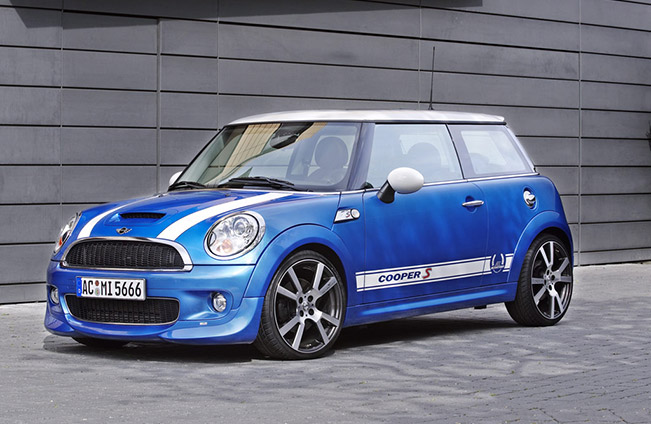
    AC Schnitzer MINI RS6Retro but not old-fashioned – sassy and practical – authentic but no copy: Few cars have mastered the balancing act as well as the new MINI, the latest generation of which is now in the showrooms. In design terms it remains true to its predecessor, but doesn’t stop there technically. In detail no MINI looks like the next, because individuality takes priority amongst its owners.

    Anyone wanting to stand out from the crowd of MINI owners, not just in appearance but also in performance, should turn to AC Schnitzer. The present focus of the tuner’s development activities is the new 170 HP turbo engine in the Cooper S, for which AC Schnitzer develops a performance upgrade. And when the driver puts the power down, the sound track plays loud and clear, thanks to the sonorous twin sports silencer with chromed Racing tailpipe.

    Full gas to the next corner – and through it at full speed! Touring Car legend Manfred Wollgarten set up the AC Schnitzer racing suspension on the North Loop of the Nürburgring – and it runs rings round the already very good standard suspension. You can feel the difference just with the AC Schnitzer suspension spring kit. But back from the track to the city: Out of the reflective glass facades flashes the face of a model athlete. AC Schnitzer achieves this masterpiece with a few tricks. The front bumper has a new front spoiler.

    Painted in body colour, and with its striking prominent corners, it sets a clear visual highlight. The sassy rear has also been subtly lifted. The rear skirt from AC Schnitzer, painted in contrast to standard, has a diffuser which effectively pulls the MINI down to the tarmac.

    Two sporting wheel designs, the brand-new Bicolor wheel Mi2 in 7.5 x18″ and the Mi1 in the classic AC Schnitzer look in 7.5 x 17″, complete the sporting range. And naturally the enthusiastic MINI fan has a wealth of matching accessories for the interior.

    Such as the attractive controls and sports pedals of aluminium – naturally from AC Schnitzer.

  • Porsche 911 GT2

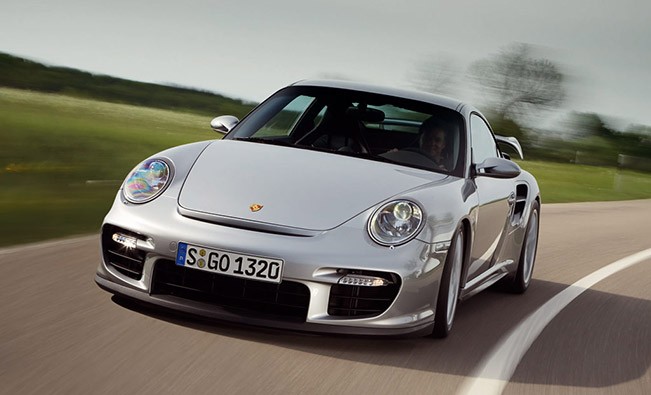
    Porsche 911 GT2Presenting the new 911 GT2 at the Frankfurt Motor Show, Dr. Ing. h.c. F. Porsche AG, Stuttgart, is proudly launching the most powerful 911 so far homologated for road use. Through its striking design with large air intakes at the front and the rear wing so characteristic of this very special model, the new 911 GT2 expresses the power and performance potential of the fastest-ever 911 right from the start even at a standstill.

    Available exclusively with rear-wheel drive and a manual six-speed gearbox, this high-performance athlete accelerates to 100 km/h in just 3.7 seconds and reaches a top speed of 329 km/h (204 mph) on average fuel consumption of just 12.5 litres/100 km (equal to 22.6 mpg imp) in the New European Driving Cycle (NEDC), thus offering a level of fuel economy regarded as quite impossible in this performance class just a few years ago.

    The power unit of the new 911 GT2 is based on the six-cylinder boxer engine of the 911 Turbo, with air supply by two exhaust gas turbochargers featuring variable turbine geometry (VTG). The 3.6-litre boxer engine achieves its maximum output of 530 bhp (390 kW) at 6500 rpm, with maximum torque of 680 Newton-metres maintained consistently between 2,200 and 4,500 rpm. With its unladen weight of 1,440 kg or 3,175 lb, finally, the 911 GT2 offers a power-to-weight ratio of just 2.72 kg/6.00 lb per horsepower.

    The increase in engine power by 50 bhp over the ”regular“ power unit is provided in the new 911 GT2 by two turbochargers with a larger compressor wheel and a flow-optimised turbine housing raising turbocharger pressure to an even higher level. And for the first time Porsche’s engineers have combined the turbocharged engine with an expansion-type intake manifold – a genuine revolution on turbocharged power units.

    The expansion intake manifold uses the principle of oscillating air in the intake manifold during the cooler expansion phase, keeping the temperature of the fuel/air mixture lower than in the 911 Turbo. This, in turn, means a significant increase in all-round efficiency, with fuel consumption down by up to 15 per cent under full load despite the increase in engine output.

    The 911 GT2 offers new achievements also in terms of emission management and control: This is the first Porsche homologated for the road to feature a rear silencer and tailpipes made of titanium as standard equipment. This expensive material reduces weight by approximately 50 per cent versus a comparable component made of stainless steel to just 9 kg.

    The new 911 GT2 comes as standard with PCCB brakes featuring brake discs made of a composite carbon fibre/ceramic compound ensuring maximum stopping power maintained with an extremely high level of consistency. A further advantage is that PCCB brakes reduce the weight of the unsprung masses versus comparable grey cast-iron discs by approximately 20 kg or 44 lb.

    Yet another feature fitted as standard is the electronically controlled PASM Porsche Active Suspension Management. (PASM). The GT2 comes on 19-inch light-alloy wheels running at the front on 235/35 ZR 19, at the rear on 325/30 ZR 19 sports tyres.

    The new 911 GT2 will be at the dealership in November 2007. The base price of the car in Germany is Euro 159,100.-, the market price including 19 per cent value-added tax Euro 189,496.-.

  • STARTECH Jeep Compass

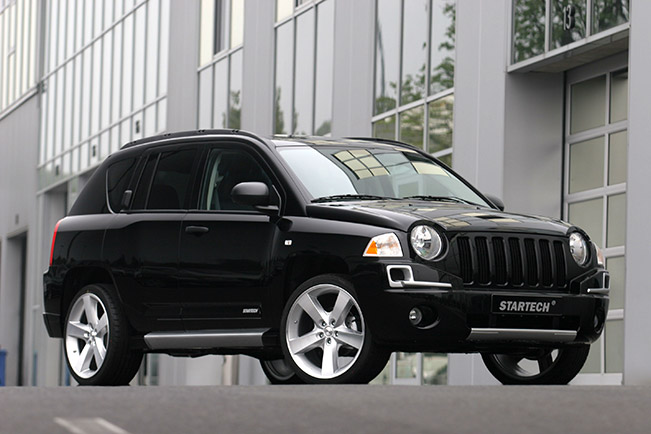
    STARTECH Jeep Compass180 hp (178 bhp) / 132 kW of rated power and a peak torque of 360 Nm (266 ft-lb) for the 2.0 CRD model, as well as a wide range of exclusive accessories: STARTECH offers an exclusive customization program for the Jeep Compass that features numerous innovative detail solutions and leaves nothing to be desired.

    The STARTECH SD3 tuning kit for the Compass turbodiesel model can be installed by any authorized Chrysler–Dodge–Jeep dealer in less than 30 minutes. It unleashes the true power inherent in the two-liter diesel engine. The additional 40 hp (39 bhp) / 29.4 kW and the enormous torque that’s already available between 1,750 and 2,500 rpm, are the result of an auxiliary control module that governs the engine electronics. The engine tuning can be further optimized with the STARTECH stainless-steel sport exhaust. The latter is integrated into the STARTECH individualization concept for this Jeep model based on a brand-new
    idea.

    The two oval tailpipes left and right are seamlessly integrated into the STARTECH rear molding, which is part of the striking designer suit for the Compass. It is styled like an underride guard. The rear molding can also be installed sans sport exhaust.

    The replacement for the front apron is also shaped like a modern underride guard and lends the five-door a more aggressive expression. The front can be further refined with two stylized air dams below the turn signals. Their ‘eyelashes’ give the 4×4 a sharper profile. The STARTECH body conversion is rounded out by rocker panels shaped like running boards.

    The STARTECH look is further dominated by custom-tailored tire/wheel combinations for the Compass, available with diameters of 19 and 20 inches, instead of the stock 18-inch wheels. The STARTECH Monostar IV five-spoke wheels are silver polished and fill out the space below the wheel arches nicely. They are mounted in size 8.5Jx19 all around with tires in size 255/40 R 19 or in size 9Jx20 in front and back with tires in size 245/35 R 20 all around.

    STARTECH also offers progressive-rate springs that lower the ride height of the American SUV by some 30 millimeters. The lowered center of gravity gives the vehicle even sportier and safer handling characteristics.

    STARTECH also adds exclusive and individual highlights in the cockpit. These include stainless-steel scuff plates with illuminated STARTECH logo and high-quality velour floor mats. Exclusive highlights in the Compass cockpit are added with the STARTECH Lifestyle interior upgrade package. It includes leather-covered door trim with embossed Compass logo and color-contrasted ornamental stitching that also adorns the trim piece for the dashboard. The interior is further upgraded with high-gloss silver-coated loudspeaker moldings that are designed to look like a compass.

  • Mitsubishi i MiEV SPORT

    Mitsubishi i MiEV SPORTBased on the i MiEV,*1 the pinnacle of Mitsubishi Motors’s environmental technology, the i MiEV SPORT maximizes the sporty possibilities of the zero-emissions electric vehicle. The high power and environmental performance of its electric motors make it an exhilarating drive that delivers superior environmental performance.

    Design

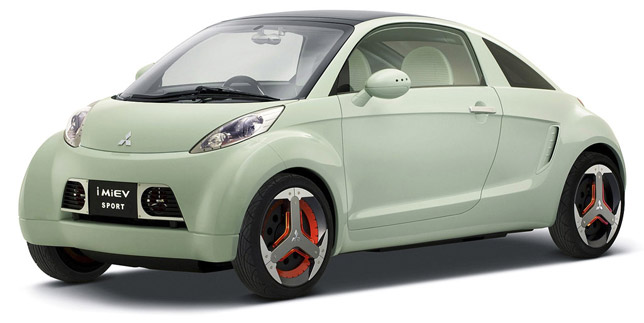
    The “fastback” exterior design expresses the quickness of the car with an appearance that is pleasing and lively. An efficient, environmentally friendly electric vehicle thanks to its compact size, it also possesses exceptionally fluid styling. A simplified interior styling creates a pleasant space, allowing occupants to feel at home. Geometry, metallic materials and body epitomize the futuristic electric vehicle. Interior lighting, too, has been carefully thought out, with the use of many blue LEDs suggestive of nature, creating a sophisticated, cutting-edge atmosphere.

    The light green exterior marks another association with nature. The pearlescent paint, which shines when hit with direct light, brings feelings of advanced, futuristic technology and environmental peace of mind. The interior is sporty and dynamic as a result of the substantial use of mesh materials, while the space, with various natural elements, fosters feelings of both security and comfort.

    Packaging

    Like the i MiEV, i MiEV Sport uses a rear-midship design in its layout. Making use of the relatively long wheelbase of this platform, a high-capacity lithium-ion battery is installed in the lowest area under the floor, and components including a motor and inverter are arranged beneath the luggage compartment. This layout provides optimal distribution of weight, front and rear, and a lower center of gravity for stability, sporty performance, and a spacious interior.

    Body Structure

    An aluminum space frame — a combination of aluminum extrusions and aluminum die casting — is light, rigid and strong; helping to improving performance by minimizing weight.

    The optimum layout of structural members, including front-side and cross members, efficiently absorbs crash energy in the event of front-end or side collision. In a collision from the rear, EV components under the back seat and rear floor serve as a barrier to ensure the integrity of the passenger compartment. By making use of the rear-midship layout and utilizing Mitsubishi’s latest RISE (Reinforced Impact Safety Evolution) body, the concept realizes excellent occupant protection in collisions from any direction, even when colliding with a vehicle of different height or weight.

    Powertrain / S-AWC

    The system employs a structure consisting of three permanent magnetic synchronous motors. One in-wheel motor is placed at each front wheel; a single motor drives the rear wheels, as is used in the “i MiEV” system. An E-4WD system electronically optimizes the output of all motors. In addition, a new E-AYC (Electric Active Yaw Control) system is employed to directly regulate torque at the left and right rear wheels via an electric motor. In addition to the E-4WD and E-AYC, the S-AWC system integrates ABS and ASC (Active Stability Control) systems, thus independently controlling driving force, traction and braking at all four wheels, for total maneuverability and maximum stability.

    Energy Saving Technology/Environmental Technology

    Energy-saving environmental considerations are seen throughout the i MiEV SPORT. Effective use of energy is achieved by installing an auxiliary photovoltaic generator on the roof, a power-generating fan inside the front grill, and regenerative braking functions to recover energy when the car is slowing down. Much of the lighting is by bright, power-saving LEDs, including in the rear combination lamps and vehicle interior, and the efficiency of the air conditioning is enhanced by the use of heat-absorbing window glass. In addition, Green Plastic — Mitsubishi Motors’ unique plant-based resin technology — is used wherever possible for interior components in another nod to the environment.

  • Nothelle TT

    During this year, nothelle looks back on a fourty-year history of vehicle individualization programs. Since 1967, the name nothelle has been affiliated with supreme engineering aesthetics. Nothelle offers an unmatched array of extensive experience far beyond any other company within this field. Hardly any other company has gathered such a wealth of experience. The refinement program for top-range Audi models meets the highest standards and combines experiences acquired from motor sports with the traditional nothelle values of quality and exclusivity. The enthusiasm for motor sports and innovative concepts is the foundation of the individualization programs for vehicles from Audi.

    (more…)

  • Novitec Quattroporte

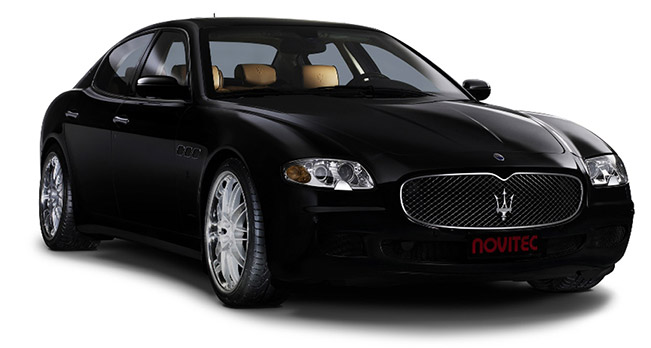
    Novitec Maserati QuattroporteHigher performance through new adjusted engine electronic with modified group of curves as well as higher cutoff speed to 7800 rpm. Power-optimized exhaust system in stainless steel with 2x83mm outlets left and right.

    Stainless steel coil over suspension Sport (dual adjustment) including dual adjustable stainless steel shock absorbers with separated expansion reservoir at damper housing, compression and rebound adjustable in front and rear as well ad CAN-control unit.

    Aluminium spacers made of high-strength aluminium, corrosion-protected by anodize, set of 2 pieces including mounting material
    performance: 304kW (413 hp) / 7.100 rpm
    max. torque: 468 Nm / 4.650 rpm


  • TechArt GT Street

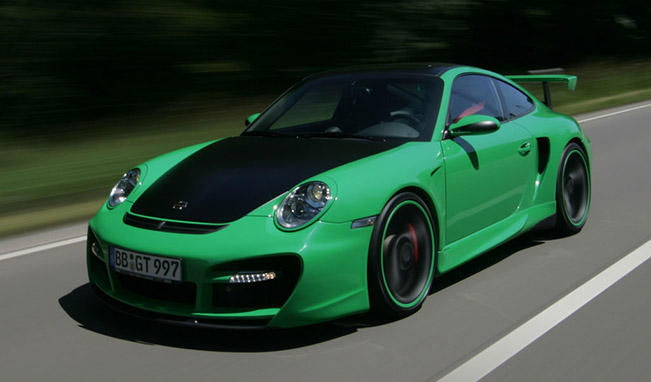
    TechArt Porsche 911 Turbo GT StreetWith its 2001 TechArt GTstreet based on the Porsche 911 Turbo of the 996 model series, TechArt Automobildesign created one of the fastest and most powerful street-legal sports cars of its time. The next evolutionary stage of this fascinating concept celebrates is now available: The new TechArt GTstreet, based on the 911 Turbo of the latest 997 series, starts at 245,000 Euros MSRP.

    Like the predecessor the new GTstreet edition centers on a powerful engine: The 3.6-liter twin-turbo flat engine is modified by the TechArt engine specialists and now develops 630 hp / 463 kW at 6,800 rpm, up from standard 480 hp / 353 kW. Peak torque increases from 620 Nm to 820 Nm at 4,500 rpm.

    The TechArt TA 097/T3 engine conversion comprises two special VTG turbochargers, a new air box with sport air filter, high-performance manifolds, intercoolers and a stainless-steel sport exhaust system with high-performance catalysts. The precise optimal interaction of all modifications is ensured by a newly programmed engine management system.

    Power is transferred to all four wheels via a modified transmission with TechArt gear-throw shortening.

    Thus equipped the TechArt GTstreet delivers performance that firmly places it among the world’s fastest sports cars: 0 – 100 km/h in just 3.2 seconds, 200 km/h after just 10.9 seconds and a top speed of 345 km/h speak volumes.

    The body kit for the TechArt GTstreet was created in the wind tunnel, and offers an optimal symbiosis of aerodynamic downforce, minimized drag and striking design.

    The front fascia of the GTstreet with retractable carbon-fiber splitter produces downforce on the front axle and provides radiator, oil coolers and brakes with more cooling air, thanks to its large, striking air inlets. The auxiliary headlamp units with daytime running lights and fog lamps improve active safety. They also give the car even more passing clout.

    The TechArt GTstreet fender flares on the front axle add 10 mm to the two-door’s width and give it an even more dynamic appearance. But that’s not all: The air outlets behind the front wheel houses optimize brake venting. The larger air ducts in the rear sidewalls provide engine and intercoolers with a larger supply of cooling air. For an optimal transition between front and rear fenders the TechArt designers have developed rocker panels that complement the new contours. TechArt mirror and headlamp moldings provide the finishing touches.

    The TechArt roof spoiler extends the roofline and optimizes airflow to the adjustable rear airfoil of the GTstreet.

    The TechArt GTstreet rear fascia with integrated carbon-fiber diffuser contributes to the strong downforce generated on the rear axle. It also provides the perfect backdrop for the quad exhaust of the TechArt high-performance exhaust system.

    TechArt Automobildesign offers a number of versions of its popular Formula wheel in sizes 8.5Jx20 in front and 12Jx20 on the rear axle. GTstreet buyers can choose from several color combinations and between the one-piece Formula and the multi-piece Formula II designs. The Formula II wheel features an exchangeable wheel lip. For optimal tires TechArt chose ContiSportContact 3 high-performance tires in sizes 245/30 ZR 20 and 325/25 ZR 20.

    The large 20-inch wheels also provide the necessary space for the especially powerful and durable TechArt high-performance brake system. It features six-piston aluminum fixed calipers and 390-millimeter discs on the front axle. The rear axle is fitted with 365-millimeter discs and four-piston fixed calipers.

    The TechArt GTstreet comes with a TechArt VarioPlus coil-over suspension that is based on the electronically adjustable PASM damping system of the 911 Turbo. This chassis allows individual ride-height lowering by up to 25 millimeters and push-button selection of two different damper settings, “Normal” or “Sport.” However, the dampers are not limited to these presets. Sporty driving automatically results in firmer damper settings in both modes, thus combining excellent ride comfort during normal driving with agile and responsive handling during fast cornering.

    The cockpit of the TechArt GTstreet also differs distinctly from the stock 911 Turbo. Among the differences is an exclusive leather interior with color-contrasted stitching and sporty CarboBlack highlights. The coupe is further equipped with an ergonomically shaped TechArt sport steering wheel, aluminum foot pedals, foot rest and shifter, as well as with illuminated door sills sporting the TechArt logo.

  • Edo Lamborghini Murcielago LP640

    Edo Lamborghini Murcielago LP640edo competition hat den Lamborghini Murciélago LP640 optisch, fahrdynamisch und soundtechnisch deutlich modifiziert und somit klare Unterschiede zur Serie ausgemacht.

    Aerodynamik ist für einen Supersportwagen äußerst wichtig, vor allem, wenn man einen ihn am Limit bewegt. Um mehr Abtrieb auf der Hinterachse zu erreichen, bietet edo competition einen Heckflügel mit einstellbarer Lippe an.

    Einen super Sound generieren die edo competition Sportendschalldämpfer aus Edelstahl mit einem Doppelendrohrsatz. Eine neue Klappensteuerung, auf Wunsch mit Fernbedienung ist ebenfalls erhältlich. Die damit noch sportlichere Heckansicht ist ein auffallender Nebeneffekt.

    Mehr Leistung generiert edo competition durch Veränderung der Motorelektronik, einer speziell abgestimmten Abgasanlage und neuen Sportluftfiltern.

    Spezielle Kundenwünsche verleihen jedem Lamborghini Individualität, so sind beispielsweise verschiedene Interieur oder Multimedia-Umbauten möglich.

    Technical data – Lamborghini Murcièlago LP640

    Engine

    • 6.5 ltr. V12 cylinder
    • Output
    • 663HP / (487.5 kW) at 7.800 U/min
    • Max. Torque
    • 675 Nm at 5.600 U/min

    Performance

    • Top speed est. 348 km/h (216 mph)
    • 0 – 100 km/h (0 – 62 mph) est. 3.8 s

    Engine:

    • ECU recalibration
    • Special high-flow air filters
    • Newly designed high-performance catalytic converters
    • New exhaust butterfly valve control (remote-controlled on request)
    • New high-flow muffler
    • New stainless steel exhaust tips

    Body:

    • Specially designed rear wing with adjustable lip

    Wheels:

    • Custom paint on request

    Interior:

    • Rear view camera
    • Tire pressure monitoring syste
  • STARTECH Jeep Wrangler

    Brabus Jeep WranglerLegends are immortal and in the automotive world that is especially true for the Jeep. Wrangler, the ‘mother’ of all off-road vehicles. To customize the latest version of the American 4×4 and to make it even more exclusive STARTECH is developing an innovative and exclusive accessories program – for the short wheelbase and the new long wheelbase version.

    In a first step STARTECH offers custom-tailored light-alloy wheels, some initial exterior modifications and exclusive interior options.

    The polished STARTECH Monostar IV 9Jx20 light-alloy wheels attract attention at first sight. The striking five-spoke wheels lend the new Jeep. Wrangler a more exclusive appearance. But that’s not all: Mounted with sporty on- and off-road tires in size 285/50 R 20 front and back they give the SUV even more agile handling characteristics while at the same time improving driving safety.

    While the STARTECH design program for the new Wrangler is still under development, the first stainless-steel components will be available shortly. Sturdy tubular side guards for short and long wheelbase models protect the rocker panels of the Jeep and partially hide the Jeep’s frame from view. The spare wheel cover with high-gloss stainless-steel ring adds the finishing touch.

    The new Wrangler generation for the first time includes a model with diesel engine. The STARTECH motor engineers are currently developing the STARTECH SD 4T tuning module for the 2.8-liter (171 cu. in.) common-rail turbodiesel engine.

    STARTECH sport exhausts will soon be available for all engine and body variants of the Jeep. The fully stainless-steel exhausts feature one characteristic oval chrome tailpipe each on the right and left, and produce a more sonorous engine sound, while at the same time optimizing power yield.

    The interior of the Jeep can also be upgraded stylishly with STARTECH accessories: Highly polished scuff plates welcome driver and passengers, and the ergonomically shaped STARTECH sport steering wheel adds to the ambiance.

    Additional customization requests can be fulfilled by the company-own STARTECH upholstery shop. Partial and fully leather interiors made from especially soft yet durable Mastik leather satisfy even the most discriminating tastes.

  • Autodelta 147 GTA AM Super

    Autodelta 147 GTA AM SuperThe most powerful high performance bespoke model yet to be introduced by Autodelta, the 147 GTA AM 3.7 Super made its first official public appearance when it was introduced during the SpaItalia weekend (2nd – 3rd June).

    The new Autodelta 147 GTA AM 3.7 Super pushes the engine and chassis dynamics of the Alfa 147 GTA to its most extreme point yet. This new version builds on the impressive upgrades we have already wrought to the Alfa V6 engine: capacity increased to 3,750cc, a remapped management system and a Ferrari-derived throttle body, coupled to the fitting of a Rotrex C38-81 supercharger delivering 0.75 bar of boost; now all taken to a new even higher level – bringing the car’s maximum power up to 422 bhp at 7,000 rpm (standard Alfa 147 GTA power is 250bhp at 6,200 rpm) and torque significantly improved to 520 Nm.

    And although it was perfectly at home on the high-speed famous Grand Prix track at Spa-Francorchamps last weekend this is a highly refined car which is just as suitable for any day-to-day driving scenarios; Autodelta’s engineers having ensured that the Alfa 147’s practicality was been perfectly blended with its sheer performance.

    Autodelta’s presence at Spa-Francorchamps was also the latest step in an on-going Research & Development programme that has seen the London-based aftermarket Alfa Romeo engineering firm testing on major circuits in recent months, including Silverstone, Donington Park and the Nürburgring.

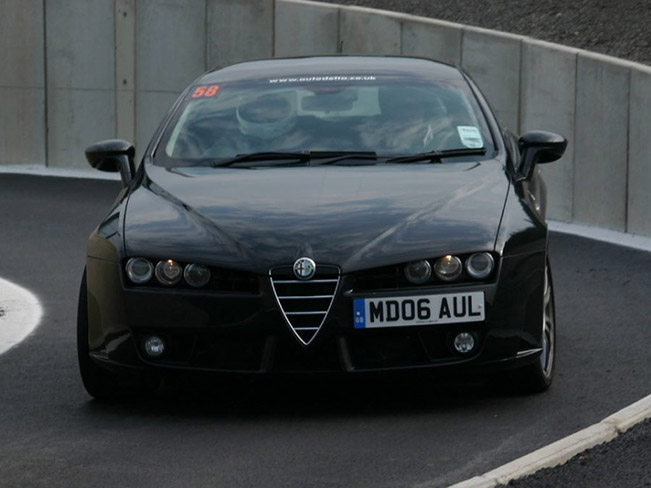
    Also in track action at Spa-Francorchamps was the new 341 bhp Autodelta Brera J5 3.2 C. The programme for this car – which was commercialised in February – centred around our on-going tyre development programme with Dunlop; it also though included testing of several components which are destined for the limited-edition J20 ‘anniversary model’, as well parts which are expected to feature on our forthcoming bespoke Alfa 159 range. As usual the Autodelta team was joined by several of our customers who took the opportunity to get track time with their cars. These included Luciano Capiello’s dramatic Autodelta 156 GTA AM 3.7 Super, Jason Harris’ award-winning Alfa 147 2.0 Supercharged, and Mladen Cvorovic Autodelta SZ Supercharged.

    Jano Djelalian, Autodelta Managing Director said: “We were delighted to introduce the Autodelta 147 GTA AM 3.7 Super at SpaItalia in front of a knowledgeable and interested audience, and the level of support we received was very pleasing. The SpaItalia organisers had done a wonderful job as usual, making it the perfect setting to bring the new car to, and the very sunny weather also helped. The brand new F1 pit garages are excellent; they really raise the standard and made everything more convenient. We were also able to use the Brera J5 ‘mule’ to run some development parts which are scheduled for the forthcoming J20 model, and along with new tyre compounds tried on Sunday morning on the 147 the whole weekend went very well. I would also like to thank Peter Bens, Buga Ital Auto and UpEx for their input.”

    Paul Paggiosi, Autodelta Test Driver said: “The two days went very much to plan. This is the most suited circuit I have ever found for this car, almost as if it had been designed it. It enables you to unleash the full power of the car. The revised suspension settings we have incorporated worked well around what is a very fast and demanding circuit, the car’s handling capability was quite superb. On the Saturday when we were demonstrating the ability of the new car and taking passengers we were running in the full [422 bhp] customer specification, on road tyres and with a heavy fuel load. On the second day we were able to take the opportunity to test some new development parts and, running on track tyres, we were able to post very representative lap times. We’re all delighted with the progress that has been made to this latest extension of the Alfa 147 GTA project.

    Herbert Werner, Manager Car Tyre Development, Dunlop said: “We were particularly pleased with the performance of the Dunlop Sport Maxx tyre, which we have specially developed for the Autodelta Brera J5 3.2 C, on the Spa circuit; as this tyre was designed primarily for road use on several surface requirements. It exceeded our expectations. The Sport Maxx tyre features ‘Multi-Radius Tread’ technology, which increases the contact patch of the tyre to achieve increased handling and traction through all stages of cornering and this was evident at Spa where there are several highly demanding corners, each with individual characteristics. The Sport Maxx has well balanced ground pressure distribution in combination with a high stiffness of the shoulder pattern area, essential for good stability and wear properties of the tyre. This construction features combined with a special tread compound derived from Dunlop’s long lasting racing compound development in the DTM ensures a perfect combination with the J5, even under challenging conditions as here in Spa.”

  • Fiat 500

    2008 Fiat 500Enter the new 500, the manifesto of the ‘new Fiat’, a model that represents to all intents and purposes the materialisation of a new approach, of new brand strategies, and a different approach to the car. Exactly 50 years after the launch of the first edition of the model, which was to become an icon of Italian motoring and of an entire period of history, Fiat is accelerating into the future.

    Anyone could re-edit the 500, because its shape is part of our collective memory. Some industrial objects that were the fruit of Italian creativeness in the period after the war, like the 500 or the Vespa, cannot be judged purely in aesthetic terms, nor do they represent just a good engineering exercise in which form serves a function. On the contrary, they are powerful catalysts, revolutionary in their design and in the concept that defines common reference points and benchmarks. When this happens, the result is a masterpiece that is an essential part of industrial history. The 2008 Fiat 500 is one of them.

    This is a story that has taken place twice. The first is the story of a very large number of owners, fans and enthusiasts who promoted the car’s image as a good, reliable and economical vehicle, which became an expression of a part of their lives, the best part, evoking a carefree spirit and a lack of worries. The 500 is linked to these memories, to strong friendships and first loves, it evokes images of a positive past which many would like to revive.

    Dante Giacosa’s 500 was launched on July 4, 1957, as a cycle of rebirth was closing after the devastation of war, and a period of radical renewal of the company’s product range was also coming to an end, opening the way for a cycle of successes in the coming decade, a period that we can consider one of the brightest in the brand’s one hundred year history. The parallel with the new 500 is clear; it concludes the cycle of extraordinary rebirth of recent years, but thanks to its stylistic and technological features, it also represents the spark of a lasting process of expansion. And this is where history starts again.

    It would be belittling to ‘limit’ the phenomenon of the new 500 to a simple, nostalgic reinterpretation. Fiat’s goal has not been to design a car that ‘looks like’ a 500, but one that ‘could be’ the 500 again. The new 500 opens the way for an innovative process in a number of environments that are very significant for today’s customers, clearly outlining where its ambitions lie in relation to the future positioning of the Fiat brand. The Fiat 500 respects the original concept in its shape and function, as you expect in these cases, so that it can evoke all the emotions and memories that make all ‘icons’ eternal, raising them beyond the limiting dimension of their category.

    But first and foremost it is important to underline the innovations that the new model is able to bring to this class of product for the first time.

    First of all, the widespread involvement in the development of the model and of the marketing plan, with the participation of over 3,000,000 enthusiasts who have submitted their ideas to the project, through the www.500wantsyou.com website. This initiative is a new cultural approach to relations between manufacturer and client, making Fiat one of the most open organisations, close to the expectations of the public. ‘The 500, the car of the people, by the people’: this slogan sums up the philosophy behind the development of a project which, in the best Fiat tradition, ‘democratises’ access to contents and technologies that have never been offered in this segment before.

    It is the first time that a car has been launched with the full range of engines (69 bhp 1.2. 75 bhp 1.3 Multijet with DPF and 100 bhp 1.4 16v) ready to meet the emissions limits set by Euro 5 standards, more than two years before the legislative deadline, a tangible sign of Fiat’s determination to reaffirm its leadership where the environment is concerned.

    It is also the first time that a compact car (3.55 metres) has been built to achieve a 5-star rating in the EuroNCAP impact tests, and it is ready for the 6-star test if and when the new rating is introduced.

    Safety at all costs, with no impact on prices, a bold decision, which confirms Fiat’s intention of extending its strategy of leadership to vehicle protection, totally consistent with decisions taken in recent years as regards the Panda and the Croma, right through to the Grande Punto and the Bravo.

    It is a safe product, not only for its structural sturdiness, but also because of the choices made in the construction of the range of outfits and services: 7 airbags as standard equipment (it is the only compact to offer a kneebag), and an advanced ESP available with all engines (standard on the 100 bhp 1.4 16v), are absolute novelties in this segment.

    It is the first ‘small’ car to offer so much in the way of content: 4 specification levels, 3 engines at the launch, 12 colours, including 6 vintage colours that will bring the 1950s and 1960s to mind, plus tri-coat white produced by a process that is usually only adopted on luxury cars, 15 types of upholstery including luxurious Cordura and Frau Leather, 9 types of wheel rims, and 19 types of stickers, making a total of more than 500,000 variants (549,936 to be precise); the most interesting include the electric fragrance diffuser, with a choice of 3 different fragrances, and coloured key cases, an approach similar to that in the mobile phone market that lets you match the colour of the key to that of the bodywork, or to select another pattern of your own choosing. There has never been such a lavish array of accessories on such an accessible car.

    The 500 is an inclusive not an exclusive concept and Fiat felt that this was the best way to meet the tastes of all its potential customers, without distinction, from the most minimalist to the most eccentric. The idea of creating a product that could adapt to the needs of the individual was also expressed in the decision to surpass all the competition in the process of incorporating electronic technologies into the passenger compartment (Plug In). A second generation Blue&Me is available, and an iPod can be easily incorporated thanks to the socket and the battery charger. A new portable navigator was developed specially for the 500 with Magneti Marelli, which is fitted directly on the dashboard and connects to other vehicle functions.

    The concept of customisation is not limited to the product, but extends to the world of services and forms of payment. For example, with the ‘500 Cents’ and ‘50to500’ formulas from Fiat Group Automobiles Financial Services, the customer will be able to purchase any version of the 500 including customisation, for ¤ 5 a day, and with no down payment, or to pay 50% of the sum immediately and the remainder after 2 years.

    And every time that a customer takes out one of the above loans he will benefit from a 5 year/500,000 km manufacturer’s warranty and other services that Fiat is offering for the first time, and which envisage complete 24-hour roadside service. And when it is time for periodical maintenance, the car will be picked up from the customer’s home, and his mobility will be guaranteed by the reimbursement of any taxi fares.

    Plenty of offers and possibilities, because the 500 must be the car for everyone: it is the car of the people, made by the people, for the people. The 500 is the ‘New Fiat’ and the ‘New Fiat’ belongs to everyone.

    For the company, the birth of the 500 represents the start of a new chapter, a declaration of the role that Fiat aims to interpret in the future on the market and in society. The stimulus to a new model of conscious consumption. A model for the exploitation of experience in the automotive field that focuses on quality and emotions, on uniqueness rather than on mass-production, where simplification does not mean doing without. The 500 is the tangible synthesis of these aspirations.

  • A.R.T. Mercedes-Benz X64

    ART Mercedes-Benz GL X64Among the big and powerful, ART is accompanying the new GL from Mercedes-Benz on its triumphal march. The Nuremberg tuning specialists have developed a comprehensive program of components for upgrading this vehicle. The familiar sports-like elegance of the ART design offers this vehicle a host of customizing options. The ART Aerodynamics set for the front and rear lends a more muscular contour to the series lines. This piece of sculpted masculinity is made to look even mightier with the generously-proportioned air inlets and stretched surface area of the front spoiler.

    The black background of the ART BiXENON Headlamp System NERO adds to the mighty appearance of this tremendous vehicle. A Triple Beam Lamp Set integrated in the front spoiler with additional XENON high beam lamps, DAYTIMELIGHT in LED technology and fog lamps in combination with CORNERLIGHT boosts the charisma of the vehicle’s front while providing the driver with that extra passive safety.

    The rear apron with its integrated diffusor gives the rear of the vehicle a compact and homogeneous appearance. ART tuning GmbH, IGA, 13.03.2007, 10:56, Pressemitteilung Programm X64 The optical interaction of the four highly polished chrome-plated 80mm tailpipes of the ART sports exhaust system is a successful combination. ART logos embossed in the tailpieces provide the seal of quality. Two rear mufflers ensure the sound is right.

    The exclusive ART STEPLIGHTS project light across the running boards whatever the light conditions and clearly mark the point of access to the vehicle even when the doors are closed if the key is activated. Then, parallel light-blue beam segments shine out through the filigree openings in the highly polished stainless steel. The light-blue illuminated Entry Ledges with the ART logo made from finely polished and brushed stainless steel make for a well-groomed appearance and assist entry into the vehicle.

    ART upgrades the interior of the GL with alcantara/leather accessories. The front and back seats together with their headrests are recovered in the customer’s choice of leather and color with accurately worked contrasting seams. The side panels are harmonized with gathered alcantara upholstery.

    The ART sports steering wheels are ergonomically shaped and accentuated with perforated grips. A fine selection of possible combinations: leather/fine wood, leather/leather, leather/alcantara, or leather/carbon fiber offer multiple variations for the interior design of the GL cockpit. Each detail is handcrafted to perfection by master craftsmen. There are no limits to the individualization that is possible.

    To get you ahead: The ART engine performance for CDI versions offers electronic performance optimization of the motor control. It squeezes around another 20% of speed out of those already powerful series engines. Performance optimization will be available soon for the V6 and V8 petrol engines.

    The electronic ART powertrain system for the series Airmatic chassis lowers the vehicle height by 35mm and can be individually adjusted down to 70 mm. All other built-in chassis control functions remain unchanged. Only the speeddependent ride-height control is suppressed

    For quality time in the rear passenger compartment, ART Multimedia offers the ultimate in hightech in-journey entertainment. A roof-suspended monitor 12.1 inches in size can be rotated 360 degrees. The integrated DVD player with SD card reader operates independently of the command system. Two infrared headphones provide top-quality sound in comfort and great freedom of movement.

    The GL clad in the X64 program from ART is all in all a powerful piece of machinery, unadulaterated comfort and compact design in what is a wellproportioned departure from the series culture.