Author: autoview

  • Porsche Cayman S Edition

    Porsche Cayman S EditionPorsche is to expand its mid-engine coupе model range with the launch, in November 2007, of the Cayman S “Porsche Design Edition 1”, a limited-edition special series. Porsche has incorporated various design disciplines into this very special mid-engine coupé: the black exterior emphasizes the purist nature of the 295-bhp sports car and, at the same time, is a nod to Porsche Design and the famous Chronograph 1s designed by Ferdinand Alexander Porsche precisely 35 years previously.

    This look, cultivated by Porsche Design, imparts additional luxury and class on the Cayman S: the black leather and Alcantara upholstery harmonizes with refined details such as the instrument dials, the layout of which reflects that of all Porsche Design chronographs. Even the center console, dashboard, and door trims glisten in black, while the three-spoke sports steering wheel, the gear lever, the handbrake grip, and the roof lining are clothed in non-slip black Alcantara. The Porsche logo (crest) is embossed on the headrests.

    The vehicle’s technical features are equally sophisticated: beneath the ten-millimeter-lower body, standard Porsche Active Suspension Management (PASM) actively controls the hardness of the shock absorbers and it features a special Sport mode that can be activated at the touch of a button for a really dynamic driving feel. Five-millimeter spacers together with 19-inch turbo wheels give the Cayman S “Porsche Design Edition 1” a presence that is reinforced yet further by the 235/35 ZR 19 tires at the front axle and the 265/35 ZR 19 tires at the rear.

    The Porsche Design Studio, created by Ferdinand Alexander Porsche 35 years ago, has rapidly become a top international name for industrial design, luxury items, and consumer goods. Top-class functionality and esthetics glisten in the new “Porsche Design Edition 1” collection – in black or black matt, of course.

    The Cayman S “Porsche Design Edition 1” standard equipment thus includes an elegant briefcase containing the Flat Six Chronograph, a pocket knife, a pair of sunglasses, a pen, and a key ring – all in black, even the knife blade, in keeping with the vehicle’s styling. The number of Cayman S “Porsche Design Edition 1” units is to be as exclusive as this series-production luxury package: only 777 are being built, and each will be identifiable from a badge on the lid of the glove box.

    The market launch of this black Cayman with exclusive Porsche Design equipment, including briefcase, will begin in Germany in November 2007 and in the United States in January 2008. The base price is 58,600 Euros and, factoring in 19 percent value-added tax, the price in Germany will be 69,942 Euros.

  • Hyundai Santa Fe Limited

    Hyundai Santa Fe LimitedThe highly acclaimed Hyundai Santa Fe range is joined in the showroom this August by a limited edition model, Hyundai Santa Fe Limited, offering £900-£1,100 worth of additional equipment over the usual CDX model.

    Diesel powered, the Hyundai Santa Fe Limited is available as either a 5 seater for £23,795 or a 7 seater for £24,895; automatic versions are priced at £25,195 and £26,295 respectively. Metallic and Mica paint are an additional £375.00.

    This strictly limited edition model includes integrated running boards and wheel arch trims, privacy glass, reversing sensors, sports mesh grille, limited badges and a choice of four colours – Ebony Black, Sleek Silver, Gun Metal and Black Pearl. The highly visual special equipment package would usually cost consumers £1200 for the 5 seater and £900 for the 7 seater.

    The Santa Fe range is still receiving plaudits from the media. In July Santa Fe CRTD CDX won a group test in Auto Express beating the newly introduced Chevrolet Captiva and the well established Honda CR-V. In addition What Car? placed the Santa Fe CRTD CDX ahead of the Chevrolet Captiva and Mitsubishi Outlander, praising its spacious cabin, practicality, refinement, comfort and warranty package.

    Specification levels for the Hyundai Santa Fe Limited include high levels of safety equipment such as an Electronic Stability Program, ISOfix child seat fittings, side impact bars, traction control, active head restraints, multiple airbags and adjustable head restraints all round.

    Inside the new highly specified Santa Fe Limited standard fittings include leather seats, seven speaker audio system with MP3 compatibility, air conditioning, electric driver’s seat and much more.

    Fuel consumption is 38.7 mpg on the Combined Cycle, delivering a potential range of over 600 miles.

    The new Santa Fe Limited comes with the famous Hyundai warranty package that includes 5 year unlimited mileage warranty, 6 year anti-perforation warranty as well as 3 year Hyundai RAC assistance.

  • AC Schnitzer Profile BMW Z4 M Coupe

    Take the first ascent of the 8,848 metre high Mount Everest, the expeditions to the poles or the dive into the 11 km deep canyon of the Mariana Trench. There have always been individuals and
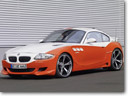
    extreme characters who have pushed our boundaries and discovered new terrain. An extreme region for automotive tuners, where only a few venture, has always been the BMW M-series cars,in particular the uncompromising Z4 M-Coupé, a thoroughbred driving machine.

    But the fact that the limits of this extraordinary car are far from reached is evident from the new concept vehicle by AC Schnitzer – the PROFILE – even at first glance. Classic engine tuning hauls the power of the high-revving six-cylinder in-line plant to a robust 350 HP. Not only is a special “active breathing” airbox used, but the engine control unit has been remapped. But power alone isn’t enough to get the maximum from an athletic heart. So the modified rear axle ratio of 3.91:1 provides better sprint capacity, while the perfectly smooth transmission with the AC Schnitzer Short Shift ensures crisp changes by the driver.

    And as you listen to the sonorous baritone note of  the left/right sports exhaust system with the trapezoid tailpipes, you could be deceived into thinking there are no gear changes, just the playing of an instrument. A feast for all the senses: Visually the stunning colour combination of white-orange casts its spell and perfectly enhances  the exquisite contours of the AC Schnitzer bodykit. From the front skirt with its suggestive cup-wings via the widened wheelarches and flanks with the gill-like vents – as already used on  the legendary BMW 507- the dynamic line is drawn over the bulging side skirts to the rear skirt with carbon diffuser.

    The whole is crowned by a rear spoiler and a fascinatingly styled roof wing. The forged alloy Type V wheels from the standard AC Schnitzer collection are a work of art in themselves. Filigree design yet with an air of solidity, in size 9.0J x 20″ at the front and 10.0J x 20″ at the rear, these wheels are the perfect adornment combined with tyres size 235/30 ZR 20 front and 295/25 ZR 20 rear.

    But traction alone isn’t everything, and the  dynamics are supported by the AC Schnitzer suspension with its racing heritage, set up in the Green Hell of the Nürburgring. An aluminium strut brace in “Racing“ style not only catches  the eye but limits the torsion of the front body. Thanks to the AC Schnitzer racing seats, the driver always holds position. And the carbon interior trim and pedal set, with decor elements of aluminium, radiate pure racing flair. Could there be a better place to experience the limits of potential?

    Performance: 350 HP at 8000 rpm, 370 Nm at 4950 rpm, power upgrade consisting of: special air box, control unit and removal of speed restrictor, engine optics AC Schnitzer rear differential modification, 3,91 :1
    Transmission: AC Schnitzer sports gear change “Short Shift” incl. gear knob
    Exhaust: AC Schnitzer dual sports rear silencer left/right incl. chromed exhaust tailpipes, design “Sports Trim”
    Suspension: AC Schnitzer Racing suspension, height adjustable incl. lowering
    AC Schnitzer aluminium strut brace for front axle, design “Racing”
    Wheels: AC Schnitzer lightweight forged wheel Type V FA: 9,0J x 20″ offset 22 with tyres 235/30 ZR 20 RA: 10,0J x 20″ offset 13 with tyres 295/25 ZR 20
    Bodywork: AC Schnitzer special painting orange – white
    AC Schnitzer front skirt
    AC Schnitzer air outlets for engine bonnet, chromed
    AC Schnitzer fenders incl. air outlets, front
    AC Schnitzer fenders rear
    AC Schnitzer side skirts incl. air intakes for rear brake, set
    AC Schnitzer wing, 3-pieces
    AC Schnitzer carbon rear roof wing
    AC Schnitzer rear skirt incl. wheel house ventilation
    AC Schnitzer carbon rear diffuser
    Interior trim: AC Schnitzer Racing seats
    AC Schnitzer carbon interior orange incl. door handles
    AC Schnitzer carbon cover for centre console
    AC Schnitzer aluminium pedal set
    AC Schnitzer aluminium foot rest
    AC Schnitzer aluminium handbrake handle
    AC Schnitzer floor mats, velours
  • Arden Range Rover Sport Pegasus

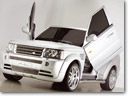
    Elegance, subtle sportiness and understatement have always been the distinguishing features of English cars. For over 30 years now, tuning specialists Arden from Krefeld, Germany, can’t resist the appeal of these vehicles. This is the place where many customers have run to for years now with preferences on either standard features or for individualized customisation on their Jaguar or Range Rover. The most spectacular modification for the Range Rover Sport is immediately available: wing doors!

    (more…)

  • Lumma Design CLR 600 S

    After LUMMA DESIGNed spectacular widening modifications for the BMW M6 tuned as CLR 600 bonding it to racing sports and creating a furore, now the German tuner comes up with a somewhat smaller, but not less imposing version of the body kit.

    This available stylish design intended for all BMW 6-series including M6 and convertibles answers to the name of CLR 600 S. That S stands for street and that’s where all shall be staring from in astonishment as LUMMA DESIGN together with additional modifications succeeds in significantly enhancing the attractiveness of each 6-series BMW.

    (more…)

  • Peugeot 308 RC Z

    Peugeot 308 RCZA new compact hatchback destined for the medium car segment, it has many strengths that will appeal to a broad customer base, not least due to its semi-tall architecture with its promise of greater interior space, its improved visibility and its brighter interior, but also its exemplary road holding, its range of high-performance engines, its high levels of safety and a number of design features which contribute to improving on-board comfort and convenience inside the car. Finally, its aerodynamic shape and “feline” elegance give it a strong and immediately recognisable identity. Naturally the 308’s three and fi ve door body styles are only part of the “T7” programme.

    While some body styles are already confi rmed and in development, some are still yet to be created and are currently only in the imagination of the designers and engineers who are so passionate about cars.

    Nevertheless, their ideas sometimes come together to give life to even the most fantastic ideas. In such cases their dreams fi nally become reality, making way for part-real, part-fantasy automotive designs. The result of such ideas is the 308 RC Z concept car.

    Architecture

    The 308 RC Z concept car is a new Peugeot interpretation of driving pleasure. The car is a 2+2 coupé, with true versatility and at the same time a style that is modern, original and well-balanced. Attention initially focused on making the vehicle as light as possible by the use of numerous aluminium components, for example the two roll over protection bars that separate the passenger compartment and give shape to the exterior styling, and the use of a polycarbonate rear windscreen and a large number of carbon fi bre body parts. Using the 308 as a blueprint offered a number of benefits.

    Its taut lines and streamlined design ensure an effi cient aerodynamic specifi cation (a SCx of just 0.65), improving performance, fuel consumption and therefore helping to protect the environment due to the reduced CO2 emissions. With a length of 4.276 (same as the hatchback), a width of 1.840 (25 mm more than the hatchback) and a height of only 1.320 m, the proportions of the 308 RC Z concept car combines a very dynamic design with a high level of road holding.

    Style

    Exterior styling

    The particularly stylish design of the front of the 308 blends brilliantly with the proportions of this concept car.

    The Peugeot “Lion” badge is mounted to what can truthfully be called the «nose of the bonnet». From here, the style lines fl ow upwards back over the bonnet and into the two polished aluminium roll-over protections bars. This fl owing «V» profi le gives the vehicle its shape and creates an impression of movement in all positions. Visually, the fl uidity of the design is further enhanced by the way the large tinted front windscreen, the carbon fi bre roof panel and the polycarbonate tinted rear window are combined together.

    The “feline-like” front headlights extend along the line of the bonnet. They contain four «cylindrical lights» each which create a bright and piercing beam of light. These “cylindrical lights” are clearly visible due to the clear glass headlamp lenses. The lower front panel differs from that of the 308 hatchback. It has a sharper and sportier shape with a single air intake and integral front fog lamps, while the front grille features chrome detailing.

    From the side, the vehicle displays a strong profi le with its prominent front wings, deeply sculpted sides, and particularly generous rear wings. The doors raise the visual profi le, creating a link between the sloping front design and the curvaceous rear design.

    The end result, fi rmly sitting on 19 inch wheels, suggests power, strength and dynamism, like an animal ready to pounce.

    The specifi c shape of the rear window required the use of polycarbonate instead of glass. The two curved sections emerging from the roof give the vehicle an original appearance and contribute greatly to its aerodynamic effi ciency.

    The design of the tailgate assists the airfl ow over the rear of the vehicle, while the shape of the rear of the vehicle provides suffi cient down force onto the rear suspension to eliminate the need for a rear spoiler, thereby preserving the purity of the vehicle’s lines.

    The Peugeot Lion badge is displayed in a U shaped panel in the centre of the tailgate, and is backlit at night. In addition, simply by pressing the lion badge, opens the tailgate. The rear lights are mounted fl ush with the car’s wide rear wings. Fitted with light emitting diodes (LEDs), they have a ruby red fi nish combined with a stylised translucent section which contains the direction indicator.

    Two centrally mounted exhaust pipes are integrated into the wraparound lower rear panel. To achieve this, the rear exhaust silencer has been located in a transverse position where it also serves as an aerodynamic diffuser, but still allows suffi cient space for the storage of a spare wheel.

    The rich metallic grey exterior body colour is created by a special process using fi nely milled metallic particles. This gives the impression that the vehicle has been formed from a single block of metal, enhancing the purity of the car’s lines and the styling of the bodywork to remarkable effect.

    The interior

    The fascia panel in 308 RC Z concept car has been taken directly from the hatchback. A pure, elegant and fl uid design, it allows a particularly clear view of the outside thanks to its sloping design which complements the vehicle’s large front windscreen. It offers a high level of interior brightness, improved visibility and an overwhelming feeling of space.

    Refl ecting the hatchback, no effort has been spared in terms of the fi nishing touches and meticulous attention to comfort and convenience inside the car. This is evident in the care given to the styling of each component and the quality of materials used, both in terms of visual appearance and tactile appeal.

    The entire fascia panel is trimmed in leather, while the use of chrome, aluminium and black lacquered fi ttings creates a sporty, upmarket impression. With this in mind, a Bell&Ross® clock has been placed in the centre of the fascia panel, between two air vents, its typography perfectly matching the background of the instrument panel located in the driver’s line of sight.

    Another sign of the vehicle’s exclusive nature are the bucket type front seats with polished aluminium eyelets, the style of which is also refl ected in the design of the inner door panels.

    The ergonomically designed driver’s seat ensures the driver is fi rmly in control of the vehicle. At the rear there are two occasional seats trimmed in leather, both of which can be folded. The vehicle therefore offers real modularity and great versatility. For example, enough space can be created behind the front seats to house a set of golf clubs. Similarly, the length and maximum available boot volume can even accommodate a mountain bike!

    The engine

    The 308 RC Z concept car is powered by a 1.6 litre THP engine developed from the EP6DTS engine designed and developed via the collaboration between PSA Peugeot Citroën and the BMW Group, where it is fi tted to the 207 RC, with a power output of 128 kW (˜175 bhp).

    However, the 1.6 litre THP engine, as a result of new engine management software specially developed for the concept car, now produces a maximum power of 160 kW (˜218 bhp).

    It is characterised by incredible fl exibility, thanks to its maximum torque of 280 Nm produced at a low engine speed (300 Nm in overboost). These values ensure remarkable responsiveness under all driving conditions.

    Its innovative Twin-Scroll turbocharger optimally pairs the exhaust gases fl owing from two cylinders to ensure maximum fl ow onto the turbine, while its high-pressure direct petrol injection system improves combustion and overall engine effi ciency.

    The engine is coupled with an entirely new 6 speed manual gearbox.

    This unit helps to give the 308 RC Z a particularly effi cient compromise between performance and fuel consumption. For example, its maximum speed of 235 km/h is attained in sixth gear and it takes only 7.0 seconds to go from 0 to 100 km/h. In gear acceleration is impressive: only 7.5 seconds in 5th gear from 80 to 120 km/h. At the same time, fuel consumption is very reasonable with 6.7 litres/100 km in the combined cycle, or just 160 g/km of CO2 emissions.

    Wheels and suspension

    In the tradition of Peugeot concept cars there is a linked front suspension employing the widespread use of aluminium to reduce the vehicle’s overall weight.

    This set up ensures exceptional road holding, excellent steering accuracy and great feedback intensifying the overall driving sensation.

    The rear suspension, derived from the hatchback, consists of a torsion-beam, two rear suspension arms and an integral anti-roll bar. It has been specially modifi ed to take account of the wider vehicle tracks. Indeed the front and rear tracks have been increased by 59 mm compared to the hatchback, and also the fi tment of wider tyres, ensures maximum body rigidity, precision and vehicle stability.

    Braking relies on large (360 mm) diameter ventilated discs at the front with four piston calipers. Polished split rim 19’’ alloy wheels are fi tted with Michelin Pilot Sport PS2 245/40 R19 tyres.

    Safety

    Even for a unique model, Peugeot’s designers do everything they can to make their dreams become a reality and leave nothing to chance. Safety is also made a top priority.

    While the exceptional road holding of the 308 RC Z concept car forms the basis of its primary safety, it is supplemented by safety equipment borrowed from the 308 hatchback, Lane Departure Warning System (LDWS) and the directional bi-Xenon headlamps. Similarly, in terms of secondary safety, the 308 RC Z uses the same impact protection structures, in particular the three impact absorption structures at the front, designed to provide a rigid structure which can deform in a controlled manner, maximising the absorption of impact forces.

    Finally, tertiary safety is assured by the «Peugeot Emergency» service linked to the vehicle’s RT4 telematics system. This pinpoints the vehicle’s location and triggers the dispatch of appropriate assistance as required.

    Like all concept cars, the 308 RC Z is an amazing laboratory of ideas making it possible to design and test new concepts and pioneer technical and styling ideas free from the constraints of volume production.

    To a greater or lesser extent, these unique cars often serve as the source of inspiration for future production vehicles.

    They are a sort of «guide» to the Peugeots of the future, indicating a chosen path to be followed. Concept cars are like the stars, they serve as a guiding light. Even though they sometimes appear too far away to grasp, it sometimes feels as though all it would take is an outstretched arm…

  • TechArt Magnum

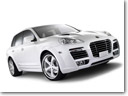
    TechArt Porsche Cayenne MagnumWith more than 500 produced units the Magnum is the most successful model in the 20-year history of TECHART Automobildesign. At the Frankfurt International Auto Show IAA 2007 the new TECHART Magnum based on the latest Porsche Cayenne celebrates its world debut.

    Like its predecessor the new TECHART Magnum sets itself apart with a spectacular aerodynamic-enhancement package that fits all versions of the Porsche SUV. All body components are manufactured from PUR-RIM plastic in OEM quality.

    The curved TECHART fender flares add eight centimeters to the width of the Cayenne. The Magnum rocker panels provide a fluent transition between the wider wheel arches.

    The new aprons for front and rear that replace their production counterparts were designed to correspond visually to the more pronounced contours of the wheel arches. The TECHART Magnum front apron lends the latest Cayenne generation an even more striking appearance. Its large air inlets feature elegantly styled slats and provide ample cooling air for radiators and front brakes. A total of four auxiliary headlights and daytime running lights improve active safety.

    The TECHART Magnum rear apron with integrated diffuser reduces lift on the rear axle and provides the perfect backdrop for the TECHART stainless-steel sport exhaust system with two chrome tailpipes on either side.


    The body conversion can be rounded out with moldings for front and rear lights, as well as with a new hood that features two air outlets that optimize heat balance in the engine bay.

    The Magnum also features custom-tailored wheels and tires. The largest possible version features TECHART Formula II light-alloy wheels in size 10.5Jx22 in front and in size 11,5Jx22 in the rear. For optimal tires TECHART chose ContiCrossContact UHP tires in sizes 295/30 ZR 22 and 335/25 ZR 22, which are approved on the Cayenne for a top speed of 300 km/h.

    These tires also make the Magnum a prime candidate for the engine tuning of the Cayenne Turbo that is currently under development and in its most powerful incarnation will produce up to 620 hp / 456 kW.

    The air suspension of the Cayenne Turbo is modified with the TECHART sport module that lowers the ride height for enthusiastic on-road driving by 30 millimeters. The entire range of adjustment from the lowest ride height (loading level) to the highest (special off-road level) measures some 110 millimeters.

    The TECHART Magnum repertoire also includes countless interior options. The range of products starts with exclusive accessories such as an ergonomically shaped sport steering wheel and carbon-fiber applications for the cockpit, available in a number of different colors.

    Requests for an even higher degree of customization can be fulfilled with exclusive TECHART fully leather interiors in any color and design imaginable.

    The TECHART interior line de Sede of Switzerland, created in cooperation with the Swiss furniture manufacturer, represents an especially exclusive option. The high-quality de Sede leather skins are transformed by the company-own TECHART upholstery shop into meticulously finished upholstery for seats, door and side trim, dashboard, roof pillars and headliner.

  • Mazda Scrum

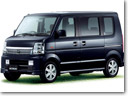
    Mazda ScrumMazda Motor Corporation has upgraded the “Scrum Wagon” and “Scrum Van” micro-mini vehicle lineup for the Japanese market. Both vehicles are available at Mazda Autozam, Mazda, and Mazda Anfini dealers throughout Japan from today.

    The upgraded Scrum Wagon comes with new interior fabric colors designed to match the characteristics of each model grade and front seats with thicker, contoured seat edges that enhance the vehicle’s level of quality and comfort for passengers. The top grade model, PZ Turbo, is now equipped with a redesigned chrome front grille and high intensity discharge headlights which give it a distinctive appearance.

    The revamped Scrum Van, which is renowned for its superb level of practicality, also comes with thicker, contoured seat edges in the front seats which provide added quality and comfort. In addition, the application of fabric seat covers has been extended from the top grade to include the middle grades.

    Manufacturer’s suggested retail prices range from 1,224,250 to 1,711,500 yen for the Scrum Wagon and 879,900 to 1,165,500 yen for the Scrum Van (including consumption tax). The target sales volume for both body types is 800 units a month.

  • Mini Clubman

    Mini ClubmanThe wraps are now off the new MINI Clubman, an all-new addition to the MINI model range. With an anticipated international debut this fall, the MINI Clubman will go on sale in Europe this November in three model configurations: the MINI Cooper Clubman, the MINI Cooper D Clubman and the MINI Cooper S Clubman. In the US market the MINI Cooper Clubman and the MINI Cooper S Clubman will be available early next year. Although US pricing has yet to be announced, the MINI Clubman is expected to be positioned between the MINI hardtops and MINI convertibles.

    The eagerly anticipated MINI Clubman will be like nothing else on the road and defies convention in its concept and style. With its hallmark design elements, the MINI Clubman is clearly a MINI from every angle. Yet it is the MINI Clubman’s unique rear-end design and new proportions that distinguish it from other members of the MINI family.

    The unique character of the MINI Clubman is obvious at first sight. The roofline of the car extends across all three pillars, merging smoothly into the rear section where the innovative, split-rear doors open. The rear doors are further highlighted with the C-pillars painted in a contrasting silver or black finish. Inside, the generous luggage compartment may be further extended in flexible configuration, offering very easy and convenient loading options thanks to the two rear doors.

    In addition, the MINI Clubman incorporates a rather ingenious door configuration on the right side of the car. The “Clubdoor” swings open in the opposing direction relative to the main passenger door to dramatically increase the access to the rear seating area. Behind the front seats, the new MINI Clubman offers remarkable rear seating comfort and flexible use of space. Rear seat passengers now enjoy 3.15 inches more legroom compared to the MINI hardtop.

    The MINI Clubman also stands out, retaining all the handling and performance characteristics that one expects in a MINI. With its design, functionality and performance characteristics, the MINI Clubman is the modern successor to the legendary classics Morris Mini Traveller, Austin Mini Countryman, and Mini Clubman Estate.

    Compelling Design and Five Doors in a Brand-New Configuration

    MINI retains its position as the definitive premium small car offering a combination of successful attributes – a truly unique design; agile driving characteristics; premium quality; a high level of safety; a wide range of customization options, and outstanding efficiency. Now the MINI Clubman offers another compelling attribute, offering 9.45 inches more body length and wheelbase extended by 3.15 inches that helps create more space in the rear legroom area. What makes the MINI Clubman truly unique is its innovative five door configuration with the conventional driver’s and front passenger’s door supplemented by an additional rear-hinged door on the right-hand side of the car and the two split-rear doors in the back.

    The MINI Clubman extends an open welcome to rear-seat passengers with the Clubdoor on the right side of the vehicle. With its large opening, this feature allows comfortable and convenient access to the rear seats. In the US market the MINI Clubman comes in a four passenger configuration, offering the passengers at the rear more spacious accommodations upon entry. For safety, the Clubdoor can only be opened with the adjoining front door open. Without an exterior handle, the Clubdoor integrated unobtrusively into the body design of the MINI Clubman. The split-rear doors at the back of the MINI Clubman open up to offer easy and convenient access for larger parcels and equipment such as sports gear. In addition to increased functionality, the split-rear doors represent a modern interpretation of an authentic detail seen on MINI’s classic forerunners.

    With one or both sections of the split-folding rear seatbacks down, together with the available flat load floor and the generous height provided by the roofline, the MINI Clubman offers more flexibility and practical value for all kinds of transportation requirements. The MINI Clubman has 9.1 cubic feet of storage space with the seats upright and a total of 32.6 cubic feet with the seats folded flat. This compares with the MINI hardtops which offer 5.7 cubic feet, rear seat up and 24 cubic feet with the seats folded flat. Additionally there is an available safety net to separate the luggage area from the passenger compartment. And to ensure clear visibility to the rear at all times, the rear doors come with separate windscreen wipers.

    Modern Interpretation of a Classic Concept

    In its split-door configuration, the MINI Clubman harkens back to its famous predecessors: the Austin Mini Countryman, the Morris Mini Traveller, and the Mini Clubman Estate sold successfully between 1960 and 1982. These classic models were a source of inspiration for today’s MINI Clubman, a thoroughly modern car with state-of-the-art technologies and features. The potential offered by a creating a modern interpretation of this kind of vehicle was shown with the four Clubman concept cars. And now the most important highlights of these concept cars are making their entry into series production in the form of the MINI Clubman.

    The MINI Clubman design is reminiscent of its classic predecessors, with re-interpretations of the unique features of the classic models done in up-to-date design language featuring thoroughly modern function. Where wooden framed doors with exposed hinges characterised the rear end of the classic car, the new MINI Clubman features door surfaces that smoothly and aerodynamically merge into the C-pillars.

    The color scheme also takes its inspiration from the classic rear-doors. The C-pillars together with the bumper finished in contrasting paintwork, form a striking door surround. The color of the rear door surround also matches the colour of the contrast roof, which comes standard on the MINI Clubman in either Silver or Black. As an option the MINI Clubman is also available with the roof finished in body color, in which case only the C-pillars including the upper section of the bumpers are finished in contrasting Silver or Black.

    Enhanced Function With MINI Driving Characteristics

    MINI has developed the new MINI Clubman specifically for the active and passionate individualist wishing to consciously stand out. The MINI Clubman retains its sporting character, while offering new and flexible options in interior use and practical value. Despite its slightly longer proportions the MINI Clubman retains MINI’s typical “wheels at the four corners” stance and the car’s driving characteristics still offer the legendary go-kart feeling unique to MINI.

    The chassis and suspension are engineered specifically to the needs of the MINI Clubman. At the front McPherson struts and springs ensure excellent wheel control, keeping the steering smooth in control and responsive. The suspension is further tuned to expertly manage the dynamic affects of engine power under acceleration or when applying the brakes. The central-arm rear axle, benefits from BMW Group’s state-of-the-art engineering and development and the rear suspension is unique in the MINI segment thanks to its sophisticated design. Lightweight aluminium longitudinal control arms and anti-roll bars offer sporty and stable handling. On the MINI Cooper S Clubman the suspension is tuned to reflect the vehicle’s additional power compared to that on the MINI Cooper Clubman. The new MINI Cooper Clubman comes standard with 15-inch wheels, while the MINI Cooper S Clubman features 16-inch rims with runflat tires allowing the driver to continue even after a complete loss of tire pressure.

    EPAS Electrical Power Assisted Steering, geared to road speed, gives the driver precise feedback and retains the razor-sharp reflexes expected in a MINI. The Electrical Power Assisted Steering system also offers significant weigh reduction over a conventional hydraulic steering system and electrically generates power-assist only as needed. The feature eliminates any unnecessary parasitic loss, further increasing vehicle efficiency.

    The sport-tuned characteristics of the MINI Clubman are supported by an impressive level of braking and traction management technology such as anti-lock control (ABS), Electronic Brake Force Distribution (EBD), Cornering Brake Control (CBC) and Dynamic Stability Control (DSC) including hill start-off assistance all standard. In addition the Brake Assistant on the new MINI Clubman recognizes emergency application of the brakes and immediately builds maximum brake pressure whenever required to minimize stopping distances in panic situations.

    Three Power Units: Maximum Efficiency, Maximum Performance

    The MINI Clubman stands out not only with its unique design, but also with an impressive line of power units. The three engines developed specifically for the new generation of MINI come standard with all new technologies introduced for the 2008 model year and offer impressive performance and efficiency. The US market will offer models with the 1.6 liter gasoline power units, in normally aspirated and turbocharged form. There are currently no plans to offer the Diesel units in the US market.

    Although it will not be available on the US models at the time of launch, the Brake Energy Regeneration feature ensures that the output coming from the engine is converted primarily into drive power, with electricity being generated for the on-board network only when the engine’s drive power is not in demand; for example, when the car is rolling freely in overrun (engine braking) or during application of the brakes. To achieve this effect, the alternator is automatically disengaged from the engine while under power, that is when accelerating and pulling the car. Accordingly, the power that the alternator would consume and take away from the engine in the conventional mode now remains fully available for even more efficient and dynamic acceleration. An adequate supply of electric energy to the on-board system is ensured at all times, since the alternator is activated again as soon as the engine’s drive power is not in demand or the driver applies the brakes.

    The new Auto Start Stop feature on manual gearbox versions of the MINI Clubman also serves to improve efficiency by switching off the engine in idling situations. It is important to note that like MINI’s Brake Energy Regeneration, this option will not be available for US models at the time of launch. Whenever the car comes to a stop at a road junction, for example, Auto Start Stop automatically switches off the engine as soon as the driver shifts to neutral and takes his or her foot off the clutch pedal. Then, to re-start the engine, all the driver has to do is press down the clutch pedal again and the engine restarts automatically without the slightest delay. Auto Start Stop helps to maximize fuel efficiency in city traffic, essentially reducing consumption of energy and generation of exhaust emissions to zero in a very simple way every time the car comes to a stop.

    The gearshift point indicator is another way the MINI Clubman can help the driver achieve efficient motoring: The feature is standard on manually equipped MINI Clubman models and is designed to compute the most efficient style of motoring. The electronic control unit continually analyzes engine speed, driving conditions and the position of the gas pedal, and calculates the most efficient style of motoring relative to the gear selected. The system then alerts the driver when a gearshift is recommended to maintain optimum efficiency. An arrow symbol along with the number of the ideal gear appears in the cockpit display beneath the tachometer.

    In terms of spirited motoring, the MINI Cooper S Clubman boasts a 1.6-litre four-cylinder power unit developing maximum output of 175 hp at 5,500 rpm with the help of a twin-scroll turbocharger and direct gasoline injection, the MINI Cooper S Clubman offers maximum torque of 177 lb-ft all the way from 1,600 to 5,000 rpm, with a further brief increase to an even more significant 192 lb-ft by means of the Overboost function. On the road, this accelerates the MINI Cooper S Clubman to 100 km/h in just 7.6 seconds and gives the car a top speed of 139 mph. The MINI Cooper S Clubman offers not only impressive performance, but also an exceptionally good economy, with average fuel consumption in the EU test cycle of just 6.3 litres/100 kilometres or equal to 44.8 mpg imp. At the same time the MINI Cooper S Clubman also achieves a CO2 emission rating of 150 grams per kilometre.

    The balance of performance and economy is equally impressive on the MINI Cooper Clubman. Its 1.6-liter four-cylinder normally-aspirated power unit features fully variable valve management similar to the BMW Group’s VALVETRONIC system. This improves the engine’s response, refinement, and efficiency of the power unit. Maximum output of this innovative engine is 120 hp at 6,000 rpm, with maximum torque of 118 lb-ft at 4,250 rpm.

    With this power, the MINI Cooper Clubman accelerates to 100 km/h in 9.8 seconds and has a top speed of 125 mph. It also achieves impressive average fuel consumption in the EU cycle of 5.5 litres/100 kilometers or equal to 51.4 mpg imp, and a CO2 emission rating of 132 grams per kilometer making the MINI Cooper Clubman a true class leader.

    The 1.6-litre four-cylinder turbo diesel in the MINI Cooper D Clubman offers outstanding efficiency with a maximum output of 110 hp at 4,000 rpm. The new diesel engine is exceptionally light thanks to its aluminium-alloy construction and offers innovative common-rail direct injection and a turbocharger with variable turbine geometry for optimum power and performance. In addition, an Overboost function in the MINI Cooper D Clubman ensures a particularly powerful and dynamic response under spirited acceleration: Overboost briefly increases maximum torque from 177-192 lb/ft between 1,750 and 2,000 rpm. The new MINI Cooper D Clubman accelerates to 100 km/h in 10.4 seconds and has a top speed of 120 mph. At the same time it exhibits exemplary fuel economy with average fuel consumption in the EU test cycle at just 4.1 litres per kilometre or 68.9 mpg imp. And last but not least, the CO2 emission rating is extremely low at just 109 grams per kilometre.

    The MINI Cooper S Clubman, MINI Cooper Clubman, and MINI Cooper D Clubman are all equipped standard with a six-speed manual gearbox. The six-speed automatic transmission is available as an option featuring a sport-tuned manual mode that allows the driver to select gears by means of paddles on the steering wheel.

    Unique Design With Striking MINI Features

    The three versions of the MINI Clubman are identical to their MINI hardtop brethren in their design and body structure up to the B-pillar. At the front, MINI iconic design elements include the characteristic, large round headlights, round corner lights, and the hexagon radiator grille. In addition, a chrome trim band extends around the entire car at shoulder level.

    The MINI Clubman measures the same in width and hardly any higher than the MINI hardtop. The MINI Clubman design features many new renditions of classical design elements inspired by the classic models from the 60s. The specific design of the rear end is elegant, clear and very graphic, accentuating the compact rear look of the new model. The individual model variants are designated at the rear by their names “Cooper”, “Cooper D” and “Cooper S”, while the additional name “Clubman” is to be seen in the right-hand door cutout strip.

    More than 40 color combinations for driving pleasure in beauty and style.
    Motoring in a MINI is more than just getting from A to B – it is an expression of ones’ lifestyle – a genuine attitude towards life. In particular, it is the focus on the enjoyment and experience of driving combined with an appreciation of powerful, trendsetting design. The MINI Clubman now offers the enthusiast even greater options in personalizing her or her style, with more than 40 combinations of the exterior paintwork alone. This freedom of expression is enhanced by a wide range of accessories, options and special equipment geared specifically to the MINI Clubman. A perfect example of this is “Hot Chocolate”, a unique brown metallic color exclusive to the MINI Clubman. In all, the MINI Clubman is available in no less than 12 body colors – three non-metallic colors Chilli Red, Pepper White and Mellow Yellow, as well as metallic colours in Astro Black, Sparkling Silver, British Racing Green, Pure Silver, Lightning Blue, Nightfire Red, Dark Silver, Laser Blue and of course, Hot Chocolate.

    Freedom in Interior Design

    With the interior, the MINI Clubman customer can choose his or her individual design, combining four interior colors and five Color Line variants with one another as desired. The seats are available not only in standard upholstery, but can also be chosen in a combination of cloth and leather as well as all-leather upholstery in a variety of styles and color schemes. A wide range of interior trim options helps to underline the premium character of the MINI Clubman. In addition to the two standard trim choices, customers can choose optional English Oak, Piano Black, Fluid Silver and Brushed Alloy interior trims.

    Like the new generation of MINI hardtops, the MINI Clubman is the result of a modern interpretation of the classic Mini versions. Yet at the same time, the concept is independent and innovative, taking in account the thoroughly modern demands of today and the unique needs of MINI’s customers. Given its wide range of qualities, the MINI Clubman paves the way into a totally-new market segment, offering new opportunities for the MINI brand and once again underlining MINI’s leadership in the premium small car segment in terms of vehicle concepts, technical innovation and expressive design.
  • Peugeot 308 SW Prologue

    Peugeot 308 SW PrologueWith the SW concept which first appeared in 2002 with the launch of the 307 SW, Peugeot created a new motoring concept, which has since become available in other models in the range.

    Today the “SW” is synonymous with a true life style car within the Peugeot range and offers dynamism both in terms of style and road holding. The abbreviation also symbolises practicality and versatility, with good interior space and carrying capacity and superb modularity, allowing the car to adapt to its user’s wishes.

    This SW body style also marked the arrival of the panoramic glass roof onto production vehicles, offering extraordinary levels of interior brightness and an unprecedented feeling of space and visibility, particularly for the rear passengers. The SW therefore combines several benefits such as driving pleasure, comfort inside the car, and carrying capacity.

    A refined environment

    The interior offers a warm and refined atmosphere with an emphasis on lifestyle. The resulting atmosphere illustrates a high level of craftsmanship thanks to the use of natural materials and high quality finishes. The fascia panel with its very simple and fluid contours, matching those of the hatchback, is fully trimmed with Aniline brown leather creating a pearlescent reflective finish. Leather can also be found on the seats and door interior trim panels. This creates a monochrome effect with the use of other high quality materials such as linen and silk. Sandstone coloured silk can be found on some parts of the seats and door trims.

    Style

    The 308 SW Prologue succeeds in harmonising the now familiar expressive and dynamic front design of the 308 with a very original design of the rear. Making the most of the hatchback’s semi-tall architecture, the finished vehicle takes into account the desired requirements in terms of carrying capacity and interior space for passengers, with the possibility of also installing a 3rd row of seats.

    From the protruding “nose” of the bonnet, two style lines flow back over the bonnet, merging with the front windscreen pillars and then continuing as far as the car’s rear tailgate. The sharp and piercing look created by the bi-Xenon directional headlamps and the aluminium-coloured front grille with its recessed design is also derived from the 308 three and five door hatchback.

    From the side, the vehicle offers a dynamism that is rare in this segment, with a particularly expressive forward-positioned window line. The highly original shape of the rear quarter light windows builds on this dynamic design, particularly since this window provides visibility to the passengers in the 3rd row.

    The sides of the vehicle create a sense of motion that extends to the rear lights, enhancing the contours of the car’s prominent shape. Finally, the metallic aluminium coloured roof bars add fluidity and a dash of elegance.

    The sophisticated and very bold rear lines are based on the idea of a wraparound single piece rear tailgate glass, which tightly fits around the sides of the body. In addition to its very original outline, this rear tailgate glass takes into account the need for rear access and visibility and can be opened independently of the tailgate, thereby easing loading in certain circumstances.

    Combined with ruby coloured lights, the styling gives this concept car a highly distinctive real personality, as well as an overall impression of durability, size and an original modern feel. The tailgate provides a wide access area to the inside of the car and also a particularly low load sill for maximum practicality. Its very exclusive metallic body colour shows off the body contours to remarkable effect.

    Some components are coated with sprayed nickel such as the rims of the air vents, instruments, door handles and the surround of the gear lever knob, adding their own touch of class to this cosy and timeless atmosphere. Growing in character over time, these metallic components will continue to shine like stunning objects of art. To complete the feeling of quality, a bespoke luggage set has been produced using the same materials found in the passenger compartment. This can easily be accommodated between the two 2nd row seats, where it then serves as an armrest.

    Intelligent flexibility

    Careful attention has been paid to modularity to allow the vehicle to adapt to all possible situations that could be encountered by those who will use it. For example, there are individual rear seats,
    which can be folded, removed, and above all are identical in size to allow multiple combinations.

    The 2nd row can therefore accommodate from 0 to 3 seats with different spacing possibilities. Each of these seats can be positioned in the 3rd row. For maximum practicality the 3rd row can also accommodate extra “occasional” seats which have a specific design, enabling the vehicle to seat up to 7 people. In addition, the front passenger seat, which can be folded flat into a “desk” configuration, also allows a maximum load length of more than 3 metres if required.

    Engine

    The 308 SW Prologue concept car is powered by the 2.0 litre HDi DPFS 100 kW (˜136 bhp) engine equipped with an additive-enhanced diesel particulate filter system (DPFS). Its excellent performance offers genuine driving pleasure and complete peace of mind. Its HDi DPFS technology, in accordance with the spirit of the car, ensures it is environmentally-friendly, with reduced CO2 emissions and the complete eradication of particulate emissions.

  • Brabus ForTwo XClusive

    Brabus Fortwo XclusiveThe new smart fortwo BRABUS heralds the second round and sixth year of the successful cooperation between smart and BRABUS, the tuning specialist from Bottrop in Germany. Once again, each partner is bringing a valuable “dowry” into the joint venture: smart the new smart fortwo with its larger body, longer wheelbase, new suspension and further improved safety; BRABUS its expertise as a worldwide renowned specialist for exclusiveness on wheels.

    This congenial partnership has once again resulted in a car that is unsurpassed in terms of performance and exclusiveness in its vehicle class: the new smart fortwo BRABUS:

    In fact, customers can choose between two models with the striking double B logo – the smart fortwo BRABUS or the smart fortwo BRABUS Xclusive. In addition to sportiness and exclusiveness, the BRABUS models boast a third component that is increasing in importance as a buying factor: individuality. Drivers can choose the smart BRABUS model that best suits their personal taste and lifestyle. Whereas the focus of the smart fortwo BRABUS is primarily on sportiness, in the smart fortwo BRABUS Xclusive this is supplemented by a touch of luxury.

    In addition to this, both versions of the smart BRABUS are available as a coupé or a cabrio – giving smart customers even more options and allowing them to choose between the “open air” version with an electrically operated soft top or the coupé with a newly developed polycarbonate panoramic roof.

    smart BRABUS: Sporty down to the last detail

    One look is enough to see and understand the message of the new smart fortwo BRABUS. Wide tyres measuring 175/50 R 16 (front) and 225/35 R 17 (rear), bright-finish “Monoblock IV” alloy wheels and wider rear wheel arches clearly mark the two-seater as a sporty character that is proud to flex its muscles. The BRABUS sports exhaust system with its dual tailpipe and the BRABUS sports suspension with specially configured sports shock absorbers lowering the body by ten millimetres as against the production model, add to this impression.

    The interior also focuses on sportiness. The instruments, pedals and main controls bear the signature of the smart-BRABUS experts. Specifically, the speedometer, rev counter and clock are characterised by specially designed dials, the pedals attract attention with stainless steel and black rubber nubs and the gear knob and hand-brake handle are made of a high quality combination of leather and aluminium. The leather-covered three-spoke sports steering wheel has also been specially developed for the smart fortwo BRABUS.

    BRABUS Xclusive: When only the best is good enough

    The name “Xclusive” says it all for the second model version of the new smart fortwo BRABUS. Here, sportiness is coupled with an unusually exclusive design and equipment for this vehicle class. Distinguishing features of the Xclusive include the striking front apron with an integrated spoiler and larger air inlets, the side skirts and the distinctive rear apron. All styling parts are painted in the colour of the exterior, giving the body a harmonious look in terms of colour and design.

    The front headlights are a further eye-catching feature of the new smart fortwo BRABUS Xclusive. Not just because of their halogen projection technology, but also because of the titanium-coloured inner surrounds that clearly distinguish them from other headlights. Monochrome bulbs are used for the indicators and only appear yellow when the indicator flashes.

    In the interior of the Xclusive passengers can enjoy the feel of the soft leather that covers the seats and the BRABUS sports steering wheel. The Brabus double B logo is embossed at the top of the leather seats. The silver leather seams are a further exclusive highlight. The seats are heated and come with head/thorax side airbags as a standard feature.

    The leather-effect instrument panel and interior door trim harmonise with the leather of the seat surface in style and colour. The fine silver seams of the instrument panel, which take up a design element of the seats, are a special detail. Aluminium-look trim components frame the cockpit instruments, upgrade the tunnel trim and lend highlights to the door trim. Floor mats made of fine velour are a further standard feature.

    Engine: More turbo power coupled with even lower consumption

    Both versions of the new smart fortwo BRABUS are powered by a high-performance athletic heart. The smart-BRABUS engineers have improved the rear-mounted three-cylinder turbo engine in a number of details and have boosted the power by more than 30 percent. The engine develops 72 kW/98 bhp at 5500 rpm and this together with the maximum torque of 140 Newton metres from 3500 rpm enables quick intermediate sprints. The sporty two-seater accelerates from zero to 60 km/h in 4.1 seconds and reaches 100 km/h in 9.9 seconds. The maximum speed is electronically limited to 155 km/h.

    The weight/power ratio of the 780 kilogram smart fortwo BRABUS is just 7.95 kg/bhp – 24 percent lower than that of the predecessor model.

    A look at the consumption and emission figures of the new two-seater BRABUS shows that environmental compatibility and economy on the one hand, and sporty driving fun on the other hand, are not a contradiction in terms. Despite the clear power increase of more than 30 percent as against the predecessor model, the consumption of the smart fortwo BRABUS is still around the five litre mark: The overall consumption in accordance with NEDC is just 5.2 litres per 100 kilometres. The CO2 emissions are equally exemplary at 124 grams per kilometre. The most important engine and performance data of the new smart fortwo BRABUS at a glance:

    Engine capacity 999 cc
    Rated output 72 kW/98 bhp at 5500 rpm
    Maximum torque 140 Nm at 3500 rpm
    0-60 km/h 4.1 s
    0-100 km/h 9.9 s
    Maximum speed 155 km/h (electronically limited)
    Fuel consumption* 5.2 l/100 km
    CO2 emissions 124 g/km

    *NEDC overall consumption

    The new engine controller is largely responsible for the spontaneous power development coupled with low energy consumption. The maps controlling ignition, fuel injection and turbocharger are stored in its electronic memory. This enables the three-cylinder engine to fall back on the most suitable data in every driving situation and to precisely regulate the injection quantity, injection timing and charge pressure. The maximum charge pressure of 443 millibars is reached at 3500 rpm.

    Transmission: Shifting times reduced by up to 20 percent

    As before, the smart fortwo BRABUS features an automated manual transmission that drivers can comfortably operate with shift paddles on the steering wheel. A specially developed transmission controller enables even faster gear shifting than with the other engine versions of the smart fortwo; the shifting times in gears 1 to 4 are reduced by approximately 20 percent – a further important contribution to dynamic driving pleasure.

    The clutch is opened and closed by an electric motor which means that there is no clutch pedal in the new smart fortwo BRABUS. A kick-down function that is activated with the accelerator makes quick intermediate sprints possible. This enables the driver to spontaneously change down by one or two gears and to make even better use of the engine’s low-speed torque.

    The gearbox modified by smart-BRABUS differs from the standard transmission on account of the shorter ratios of the first and fifth gears. This is manifested in better acceleration and elasticity. For reliable transmission of the higher torque the transmission has been strengthened at various points – for example the transmission shafts and the toothed gear root – with complex surface treatment. The clutch has a diameter of 200 millimetres and has a stiffer torsional spring than the smart fortwo with a 62 kW/84 bhp engine. The final drive and gear ratios of the smart fortwo BRABUS at a glance:

    Final drive ratio 4.529
    1st gear 3.308
    2nd gear 1.913
    3rd gear 1.258
    4th gear 0.943
    5th gear 0.763
    Reverse 3.231

    Suspension: Sports shock absorbers for agile handling

    Like the transmission, the suspension has been adjusted to the agile character and higher performance of the new smart fortwo BRABUS. In line with the sporty character, gas-filled sports shock absorbers with special characteristics and coil springs with specially configured spring rates are fitted that lower the body by ten millimetres.

    The wheelbase of 1867 millimetres that is 55 millimetres longer than that of the predecessor model and the wider track of 1270 / 1363 millimetres guarantee high directional stability and safety in conjunction with the stiff suspension setup. The main suspension data of the new smart fortwo BRABUS at a glance:

    Wheelbase 1,867 mm
    Track width front; rear 1,270 mm; 1,363 mm
    Tyres front;rear 175/50 R 16; 225/35 R 17
    Wheels front;rear 5.5 x 16 ET 30; 7.5 x 17 ET 33
    Turning circle 8.75 m

    Like all models of the new smart fortwo, an anti-lock braking system with electronic brake-force distribution, brake assist and an electronic stability programme (ESP®) are included in the standard spec. The dual-circuit brake system with tandem servo assistance is fitted with disc brakes on the front axle and drum brakes on the rear axle.

  • Brabus Mercedes-Benz D3 S

    Brabus Mercedes-Benz C 220 CDIBrand-New for the Latest Mercedes-Benz C 220 CDI: 50 PS (49 hp) / 36.8 kW more Power and an Extra 80 Nm (59 lb-ft) of Torque with BRABUS D3 S POWER XTRA. An increase in maximum power output from standard 170 PS (168 hp) / 125 kW to 220 PS (217 hp) / 162 kW, a jump in torque from 400 Nm to 480 Nm (295 to 354 lb-ft), combined with maximum environmental friendliness in accordance with Euro IV emission limits, and all that backed by the one-of-a-kind BRABUS Tuning Warranty® of three years, up to 100,000 kilometers (see BRABUS warranty conditions): For the new Mercedes-Benz C 220 CDI BRABUS presents the new BRABUS POWER XTRA D3 S power kit.

    The processor-controlled BRABUS auxiliary control unit with integrated injector drive module comes with a ready-to-connect wire harness and detailed installation instructions. It can be installed quickly and easily by any authorized Mercedes-Benz dealer. The BRABUS POWER XTRA D3 S tuning kit works flawlessly in conjunction with the standard particulate filter of the C 220 CDI and increases maximum power output by 50 PS (49 hp) / 36.8 kW and peak torque by 80 Nm (59 lb-ft). Despite the increased performance emissions of the turbodiesel engine remain on the low level of the production car: Even with BRABUS performance tuning the car meets stringent EURO IV emission standards.

    The added powerful of the tuned diesel engine is noticeable in every traffic situation: The increase in torque gives the C 220 CDI superior pulling power even at low engine speeds, making passing maneuvers shorter and safer.

    Vehicle performance speaks for itself: With a sprint time from 0 – 100 km/h (62 mph) of 7.8 seconds the C 220 CDI with BRABUS D3 S performance kit takes almost a full second less than the production car. The top speed of 239 km/h (149 mph) exceeds that of the production model by 10 km/h (6 mph).

    The fully stainless-steel BRABUS quad sport exhaust for the Mercedes C 220 CDI looks great and gives the car a more powerful exhaust note.

    In addition to performance tuning BRABUS offers an extensive customization program for the new Mercedes C-Class. The product range includes a sporty yet elegantly shaped aerodynamic-enhancement kit, sporty suspension modifications from a simple lowering kit to a complete sports suspension, high-performance brake systems as well as exclusive interior accessories including handcrafted fully leather interiors made from only the very best materials with utmost precision and loving attention to detail.