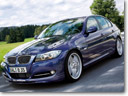
 In ALPINA’s more than 40-year history of manufacturing automobiles, turbo-charged engines have consistently set enduring accents. Launched in 1989, the BMW ALPINA B10 Bi-Turbo is just one example of the cult status some of these automobiles achieved. In fact, ALPINA’s turbo-charging history began in 1978, based on the 5 Series and 6 Series of the day (E12 & E28 and E24). The new BMW ALPINA B3 Bi-Turbo continues this tradition for the first time on the basis of the BMW 3 Series with its world premiere at the 2007 Geneva Salon d’Automobile.
Author: autoview
-
Alpina B3 Biturbo
-
Ruf CTR3
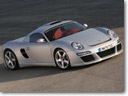
 Exactly 20 years after the legendary CTR “Yellow Bird” and 10 years after the second CTR, RUF announces the all new CTR3. The RUF Porsche CTR3 was presented at the grand opening of the new RUF facility in Bahrain. While the first two CTR generations still had their engines in the rear, the new CTR3 has a mid engine design. However, one thing that the CTR3 has in common with its two predecessors is that it is a pure driving machine. The CTR3 is made to involve the driver in the driving experience.
The mid engine design provides exceptional balance and agile handling, while the longer wheel base provides better driving stability at high speed. The body of the Porsche CTR3 is a completely new development which is not based on any existing mid engine concept. It is aerodynamically designed for high speed. The body is constructed in steel, aluminium and kevlar-carbon. Zinc dipped steel is used for the front structure and the passenger compartment. The engine and transmission are fixed in a space frame and birdcage. The passenger compartment is protected the latest version of the famous RUF Integrated Roll Cage which is integrated into the A pillar and birdcage. The doors, with integrated side impact protection beams, and the front hood are made of aluminum. The body shell is made of kevlar-carbon composite.


Ben Soderberg’s design team created a classic sports car line. They realised an idea, that Alois Ruf had for a long time in mind.
RUF has 30 years of experience with turbo charged boxer engines. The CTR3’s twin turbo charged 3.8 liter flat six cylinder engine has an output of 700hp at 7,000 rpm. The maximum torque is 657 ft/lbs at 4,000 rpm. This engine design combines a compact construction with high performance. Each turbo charger is provided an intercooler which is placed in front of each rear wheel.The sequential shift six speed transmission in the CTR3 is a new design and is transversally mounted. It can manage torque of up to 885 ft/lbs. A shift indicator on the dashboard shows the gear in use. A limited slip differential is provided to maximize performance.
The sport suspension is designed for high level driving dynamics and safety. The front axles use McPherson struts and an anti-roll bar. The rear axles utilize motor sport technology with horizontal coil over shock absorbers fixed over push rods connected to the wheel carriers.
The brake system is designed to match the high performance of the engine and suspension. Both front and rear axles utilize 6 piston fixed light alloy calipers and ventilated, cross drilled ceramic composite discs. Each brake disc is 380mm in diameter. A specially designed Bosch anti-lock braking system is standard.
The CTR3 rolls on forged aluminum wheels with central locking. At the front 255/35 ZR 19” tires are mounted on 8.5” X 19” wheels, while at the rear 335/30 ZR 20” tires are mounted on 12.5” X 20” wheels.The interior can be designed to the customer’s taste, from a functional light weight finish to sporty luxury finish with a leather and alcantera. The aluminum gear shift lever for the sequential shift transmission is a central unit to the interior. In addition, the 260 mph speedometer shows the driver that the CTR3 is made for high performance.
The lightweight construction allows for an empty weight (according to DIN) of 3,086 lbs. The result is a power to weight ratio of only 4.4lbs per hp.
The performance of the CTR3 is incredible. The acceleration from 0-100 kilometers per hour (62 mph) takes only 3.2 seconds. The maximum speed is 375 kph (235mph). The sale price will be Euro 380,000.00 (plus VAT).
-
Mitsubishi Galant
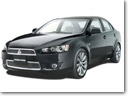
 Mitsubishi Motors Corporation has announced the names of a new model. The U.S.-market Lancer will be renamed “GALANT FORTIS” for the Japan domestic market.
The development concept for the new Galant Fortis1 calls for a “new-generation global sedan with world-class levels of safety, environmental performance and comfort”.
Distinguishing features include: a high-rigidity platform that delivers excellent crashworthiness; a new 2-liter engine with aluminum cylinder block that delivers high power output and returns excellent fuel efficiency; exterior styling that imparts a broad stance and sporty lines; and a spacious, well-appointed cabin.


-
Mitsubishi Lancer Evolution X
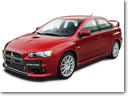
 The development concept for the all-new Lancer Evolution X2 specifies a “new-generation high-performance 4WD global sedan that allows all levels of driver to enjoy the car’s speed and handling with ease and in safety”.
The new model features Mitsubishi‘s S-AWC3 traction and handling system, that integrates the control of drive torque and braking management with the four-wheel drive system to help realize highly responsive and intuitive handling in addition to outstanding vehicle attitude stability.
Other examples of Mitsubishi Motors’ latest automotive technology to be featured in the new model include a new lightweight and high-performance 2.0-liter turbocharged MIVEC4 engine with aluminum cylinder block and a 6-speed automated manual transmission that contributes to exceptional performance with improved fuel economy.
The performance-driven design makes the car’s extreme potential clear, while cockpit design focuses the driver’s attention on operating his machine.


-
Hyundai S3
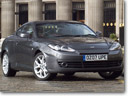
 Hyundai Coupe SIII, so called because it is the third incarnation of the Coupe, has been completely re-designed outside together with significant changes and enhancements inside.
The entirely new front end features elongated headlights and a more aggressive letterbox like grille and new fog lights. New side air vents now incorporate the indicator repeater lights, while the re-shaped rear features a more sculpted look with fully integrated twin tailpipes (2.0 and V6) and restyled rear light clusters.
New Colours
A range of new colours is designed to show off the Coupe’s lines to best effect. Fresh exterior paintwork colours include solid Shine Red (standard colour) and metallic choices of Sky Blue, Steel Grey, Continental Silver and Mica Stone Black (all £350 optional extra cost).


These vibrant new exterior finishes are accompanied by a choice of sumptuous red or black interior trim, with leather a standard feature on all models. Even the entry-level
1.6 litre model comes with half leather trim.Both the Steel Grey and Stone Black variants come with red interior finish, while all other colours feature black interior trim.
Blue Instrumentation Illumination
New to the Hyundai Coupe SIII is blue instrumentation illumination, first introduced on Hyundai’s latest generation and award-winning Santa Fe.
New Centre Console Layout and Look
The centre console layout has been redesigned for a cleaner look and easier usage. It also has a sleeker, sportier look and feel with a new metal-look finish, which has been tied in with metal-look finishes on the steering wheel and air vents helping bring the interior together with added sense of quality.

iPod Audio
For music lovers, the new Hyundai Coupe SIII comes with an iPod compatible CD/Radio stereo. The iPod port, found in the centre armrest, is standard on all models in the range.
High Specification as Standard
Hyundai’s Coupe has always featured a high level of specification and the new Hyundai Coupe SIII model builds on this tradition.
The entry-level 1.6 comes with; half leather trim, air-conditioning, a CD/Radio stereo with iPod port, driver, front passenger and side airbags, engine immobiliser, height adjustable seatbelts, remote central locking, leather steering wheel, electric front windows and door mirrors and new 16 inch alloy wheels.
The 2.0 adds; full leather trim, climate control, metal trimmed pedals and footrest, 17 inch alloy wheels, twin exhausts, cruise control and heated front seats.
Aside from the small point of a smooth and sporty V6 petrol engine, meanwhile, the range-topping V6 adds; Thatcham category 1 alarm, automatic headlights, traction control, 6-speed manual gearbox and an automatic dimming rear view mirror.
-
Porsche Cayenne S Transsyberia
 Porsche is adding yet another highlight to the Company’s wide range of customer sports activities: the Porsche Cayenne S Transsyberia based on the new Porsche Cayenne S and serving as the perfect vehicle especially for long-distance rallies. This ultra-sporting offroader is making its debut in the Transsyberia Rally taking contestants from Moscow all the way though Siberia to Ulaanbaatar in Mongolia from 2-17 August.
The Porsche Cayenne is well-known and admired for its outstanding onroad qualities in the SUV segment. Now the second generation, which is making its debut at Porsche Centers the world over at this very moment, moves up this benchmark to an even higher standard.
The new power units with direct gasoline injection, for example, provide even more power and performance on less fuel, cutting fuel consumption by up to 15 per cent versus the former models. Another highlight is Porsche’s new PDDC Dynamic Chassis Control featuring two active anti-roll bars to almost completely eliminate body sway in bends. Off the beaten track, the new Cayennes are naturally also on home ground, maximum axle articulation ensured by PDDC when driving offroad serving to further improve the already superior traction offered by the electronically controlled all-wheel drive.
Last year two private teams participated in the Transsyberia Rally for the first time with the Porsche Cayenne S, finishing first and second in their very first attempt. Attracted by the successful participation of these two cars, Porsche has obviously become aware of the event and, in response, now offers the dyed-in-the-wool Cayenne driver the option to enter motorsport successfully with this outstanding model.


To ensure such superiority in motorsport, Porsche has enhanced the already very good offroad qualities of the Cayenne to an even higher standard, developing a special model suited particularly for successful participation in long-distance rallies. Precisely this is why the new Cayenne S Transsyberia being built from the beginning in a small series of just 26 units comes, inter alia, with extra-rough special offroad tyres, a safety cage, a shorter final drive ratio, a transverse lock, a reinforced, even larger underfloor cover, as well as beefed-up track control arms on the front axle. At 385 bhp (283 kW), engine output of the eight-cylinder remains unchanged.
Now sporting, ambitious Porsche customers will be participating at the wheel of a Cayenne S Transsyberia in one of the last adventures in the world on four wheels – the Transsyberia Rally. From 2-17 August, they will be following the route of this very demanding orientation rally from Moscow all the way through Siberia to the finish line in Ulaanbaatar in Mongolia.
In all, they will be covering almost 6,200 kilometres or 3,850 miles on public roads, gravel tracks and the toughest trial paths, even crossing rivers and taking special tests in the Gobi Desert. And while navigation is perhaps the biggest challenge on the long stages of the Rally, it is particularly the driver’s personal skill and, of course, the qualities of the car that count in the special trials on tracks closed to the public.
Twenty-Six Porsche Cayenne S Transsyberias for a Start
With its intelligent all-wheel drive, high-performance and efficient V8 direct injection power unit, as well as height-adjustable air suspension including Porsche Active Suspension Management (PASM), the Porsche Cayenne S is perfectly prepared for even the toughest roads and tracks.
Proceeding from the Cayenne S, Porsche’s specialists have built a small series of special models at the Company’s Development Center in Weissach near Stuttgart optimised especially for the demands of even the toughest long-distance rally: the Cayenne S Transsyberia. So following the outstanding success of the two Cayenne Teams last year, no less than 26 customer teams from all over the world are now entering the Rally with this special rallying version of the Cayenne S. Clearly, this will give the Porsche Cayenne the opportunity under extreme conditions to prove its supreme potential in driving dynamics versus the keenest competition.
The Transsyberia Rally is split up into six categories of vehicles, with the Cayenne S Transsyberia featuring a 4.8-litre V8 entering the race in Class 1C for gasoline-powered passenger cars with engine capacity of more than four litres.
Porsche Customer Sport
This long-distance rally racing activity with the Porsche Cayenne S Transsyberia forms an additional highlight in the wide range of customer sport. The broad foundation in this area is provided by Porsche’s Sports Driving Schools, Porsche Clubsport, as well as popular brand racing series such as the Porsche Sports Cup in Germany where various versions of the 911 Carrera, mainly top sports performers such as the 911 GT3 and 911 GT3 RS, prove their sporting qualities.
Moving up a level, Porsche offers ambitious amateurs entering the GT3 Cup Challenges in the USA, Brazil and New Zealand the opportunity to enjoy the thrill of motorsport in a racing car closely related to its production counterpart, the 911 GT3 Cup. The next step is the Carrera Cups in Asia, Australia, Germany, France, Great Britain, Italy, Japan and Scandinavia, where semi-professional and professional teams and drivers show their skills, again driving the 400-bhp Porsche 911 GT3 Cup.
The top series and, at the same time, the fastest brand trophy in the world is the Porsche Mobil1 Supercup, the only Gran Turismo racing series to be held exclusively on the occasion of various races for the FIA Formula 1 World Championship. Again, the exclusive model raced at these events is the Porsche 911 GT3 Cup.
For years, many customers have placed their confidence in the both fast and reliable Porsche 911 GT3 Cup and 911 GT3 RSR when participating in internationally renowned long-distance races such as the 24 Hours of Le Mans or the 24 Hours of the Nürburgring, the various races in the American Le Mans Series, as well as the Le Mans Series or the FIA GT Series.
The RS Spyder sports prototype comes right at the top of Porsche’s customer sports programme, with three teams scheduled to enter the current season in the middle of the year, racing a total of six of these 1.25 million-Euro expensive high-tech prototypes in the LM P2 class of the American Le Mans Series.
The Sporting All-Round Performer
The Porsche Cayenne S Transsyberia is a typical Porsche through and through, tailored precisely to the needs and requirements of the sporting, ambitious customer – which in this case means a car tailored specifically to the requirements of long-distance rally racing. Compared with the “regular” version of the Cayenne S, the Porsche Cayenne S Transsyberia as a special rally version has been modified on a number of points serving first and foremost to enhance safety and the car’s racing performance.
Production Engine, Shorter Transmission Ratio
The power unit of the Porsche Cayenne S Transsyberia has been carried over from the regular road version of the Cayenne S with hardly any changes: Output of this 4.8-litre naturalaspiration V8 with direct gasoline injection remains 385 bhp (283 kW) at 6200 rpm. Maximum torque of 500 Newton-metres or 369 lb-ft, in turn, comes at just 3500 rpm.
VarioCam Plus valve management ensures a smooth and consistent surge of power throughout the entire speed range, with engine management varying valve lift on the intake side between 3.6 and 10 millimetres as a function of engine speed. And with the intake manifold also being variable in length, the engine provides muscular torque right from the start even at low engine speeds. Despite the increase in power over the previous engine, the new 4.8- litre reduces fuel consumption by approximately 15 per cent, giving the Cayenne S a significantly longer cruising range than before – obviously a big advantage particularly in a long-distance rally. Automatically detecting the quality of the fuel it is running on, the engine is also able to run on regular fuel with an octane rating of 91 or more, even though this will reduce both engine output and torque. In fact, the engine is also able to run on a mixture of gasoline and ethanol, with up to 25 per cent of the latter. A sports exhaust system reduced for minimum weight gives the Cayenne S Transsyberia a particularly powerful and muscular sound, while Tiptronic S transmission with a shorter final drive ratio helps to ensure even better acceleration both from the start and in gears. And last but not least, the transmission management has been optimised for offroad use of the vehicle.
Even Better off the Beaten Track
Like all other models in the Cayenne range, the Cayenne S Transsyberia also comes with Porsche Traction Management (PTM) permanent all-wheel drive. In its basic mode, PTM feeds 62 per cent of the engine’s torque to the rear wheels and 38 per cent to the front.
Then a multiple-plate clutch operated by an electric motor and controlled electronically is able to vary the distribution of power as a function of driving conditions, if necessary feeding as much as 100 per cent of the engine’s power completely to the front or rear. The map-controlled longitudinal lock and the differential lock on the rear axle respond not only to lack of traction on the front or rear wheels, but also benefit from sensors measuring the speed of the vehicle, its lateral acceleration, the steering angle and the position of the accelerator pedal. Using this information, PTM is able to consistently calculate the degree of lock required on the two axles and feed precisely the power required to the axle at the front and rear.
A transverse lock fitted additionally in the Cayenne S Transsyberia serves to enhance offroad driving qualities to an even higher standard (and is also available in the regular production model as part of the optional Offroad Technology Package). Particularly in heavy terrain, PDDC Porsche Dynamic Chassis Control, interacting with air suspension and PASM Porsche Active Suspension Management, enhances traction to an even higher standard.
And should the driver activate the low-range mode on the six-speed automatic transmission by means of the control paddle, PDCC will automatically switch over to the offroad mode, the system thus allowing maximum articulation of the axles. In the Special Offroad Mode provided by the air suspension, the maximum depth when crossing rivers and streams, etc, is approximately 75 centimetres or almost 30″. To make such an extreme depth possible, both the body and the doors are sealed off against the penetration of water all the way up to the side windows. And using a flexible air filter snorkel, the air intake has been moved up even further to the roof of the vehicle, ensuring that the front wave typical when crossing water is not able to reach, let alone enter, the intake manifold.
The wheels and suspension of the Cayenne have naturally also been modified for the most extreme, long-term demands of rough tracks and rocky surfaces. As an example, the doublearm front axle comes with reinforced track control arms, with track itself being increased by 34 millimetres or 1.34″ for extra stability.
The usual high-speed tyres fitted on the regular model are replaced by special offroad tyres measuring 255/55 R 18 T and homologated for speeds of up to 190 km/h or 118 mph. The tyres themselves are fitted on 18-inch, 15-spoke Cayenne S II light-alloy wheels and the rim hubs are finished in orange, like on the Porsche GT3RS.
Massive Safety Cell within the Interior
It is already well known that the Porsche Cayenne ranks right at the top in the offroader market also in terms of body stiffness and passive safety – which is no surprise, considering that more than 60 per cent of the body-in-white is made of high-strength steel. Forces generated in an accident are absorbed by three load levels above one another and fed into the stiff longitudinal floor support, the side-sills and tunnel areas. The reinforcements in the A- and B-pillars, in turn, are made of ultra-high-strength steel to improve safety in a rollover.

And to offer both the driver and passenger even better protection from the consequences of a collision or rollover under racing conditions, the Cayenne S Transsyberia comes with a safety cage bolted on to the passenger cell. Indeed, this cage even follows the rules and requirements of the FIA Motorsport Authority, with the driver also being protected by an airbag for extra safety.
Optimised for Minimum Weight All Round
To set off the extra weight of the safety cage and rally equipment, and to further lower the vehicle’s centre of gravity, the rear seat bench, interior body panels and sound-proofing material have all been removed from the car. Central locking, in turn, is replaced by a manual door opening mechanism on the front doors with orange-coloured opening and closing loops.
Both the rear window and the side windows at the rear are made of light polycarbonate, while the side windows at the front, as on all Cayenne models, feature special hydrophobic treatment at the outside to make water run off more quickly and smoothly and ensuring that the glass remains far cleaner for far longer than with conventional windows. As another important advantage, both the driver and front passenger enjoy the benefits of lightweight sports seats with a leatherette/Alcantara cover.
Sporting Exterior
The new models in the Cayenne range are even more sporting and dynamic also in their looks than their predecessors. And so it is no surprise that the Cayenne S Transsyberia comes with the same brand-new front end as well as the dynamic rear-end design of the new model enhanced to an even higher standard, extra-large air intake scoops bearing clear testimony to the car’s superior power and performance. On the tailgate the Cayenne S Transsyberia boasts a roof spoiler with a double-wing profile fitted in position to provide even greater stability at high speeds.
The front and rear air dams, in turn, are finished in stainless steel, and orange-coloured wheels give the Cayenne S Transsyberia a sporting look, making the vehicle easily recognisable at very first sight. At the side this special rally model proudly boasts orange-coloured stripes bearing the name “Cayenne S Transsyberia 2007″ in a look similar to that of the Porsche Carrera GT3 RS.
The Cayenne S Transsyberia is available exclusively in two special colour schemes – either Basalt Black Metallic or Crystal Silver Metallic. And matching the model designation at the sides as well as the wheel rims, contrasting elements such as the exterior mirrors, the rear wing, the additional headlights and crossbars on the cooling air intakes are all finished in orange.
Wide Range of Rally Equipment
All 26 units of the Cayenne S Transsyberia come as standard with a navigation unit enabling the team to plan their routes also off the beaten track, with the navigation system naturally being masterminded by the passenger for optimum efficiency. The glove compartment is replaced on this special model by a Tripmaster computer enabling the co-pilot to exactly scrutinize the route between individual navigation points on the way. Most of the control units are fitted within the interior, and all electric lines and wires have been installed at new points and in new positions. Using a central switch at the right beneath the driver’s seat, the man at the wheel or the co-driver are able to switch the on-board electrics on and off in one quick and convenient operation, thus re-setting the electronic system if necessary even while driving.
Air for the engine is drawn in through a special opening above the engine compartment lid, a snorkel serving to move the air intake up even higher all the way to roof level, thus ensuring that the front wave generated when crossing rivers or streams, etc, is not able to enter the intake manifold. Reinforced and extra-large underfloor protection panels made of aluminium and an additional cover made of stainless steel for the exhaust tailpipes protect the Cayenne S Transsyberia from the particular damage and exposure easily encountered on a rally with its extremely tough conditions.
The regular foot-operated parking brake is replaced by a handbrake enabling the driver to oversteer the vehicle intentionally in a tight bend. Four additional headlights are fitted on the roof, and to successfully master particularly difficult and demanding terrain, as well as to salvage other vehicles, the Cayenne S Transsyberia comes with a winch easy to fit when necessary and stored for convenient use in the luggage compartment.
The luggage compartment also comes with two 20-litre reserve cans, a hydraulic offroad car jack, two fire extinguishers, two sand boards, two full-size spare wheels, and two transport boxes for tools. Further features included as standard are two two-man tents, two heat-insulated mats, four lashing belts, a nine-metre-long salvage belt complete with tackle, a folding spade, a folding saw, an axe, a manually operated and adjustable headlight, four towing bar openings and a complete Hazet toolkit.
-
Edo Ford GT
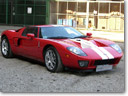
 Increased performance up to 60 HP with: Sport catalyst 200 cell, electronic tuning. All work controlled by dyno running. Sport back box stainless with flap system. Loudness of the exhaust adjustable.
- New taile pipes stainless
- Carbon fibre engine bay panelling, 3-pieces
- Special rear wing
- Wheels in different colours and designs available
- tyre-air-pressure control system shows pressure and temperature per wheel
- Design modification outside for example complete different colour.
- Independently adjustable dumping technology – rebound and compression dumping
- Racing wheels in different designs and available.
Technical data
engine type DOHC, 4 valves per cylinder,
supercharged V-8
horsepower @ rpm approx. 610 HP @ 6.500/min
torque @ rpm approx. 800 Nm @ 4.500/minPower train
top speed > 340 km/hp
0 – 100 km/h approx. 3,7s (3,9 s serial)


-
Zagato Maserati GS

 One year after the presentation of the Ferrari 575GTZ, Zagato returns to Villa d’Este with a world preview for fans of Italian sports sedans: the Maserati GS Zagato.
In the most classic traditions of exclusive collections that inspired the creativity of car designers in the ’50s and ’60s, Paolo Boffi, well-known entrepreneur in the furnishing and luxury design sector, has commissioned from Zagato a customised look for his Maserati GS Spyder.
Zagato proposes a line that evoked the historical Maserati A6 G Zagato of 1954: one of the most beautiful Italian sedans ever built, and nowadays at the top of every collector’s wish list.
The Maserati GS Zagato, like its celebrated ancestor, has all-aluminium bodywork and bears the Trident on the bonnet and the Z on the wing, expressing eternal Italian excellence in its shape and its content. A winning combination that matches powerful and reliable mechanics, with an elegant and and sports style, both rigorously Made in Italy.


For purists of the compact coupé, afficionados of the Milano-based brand, it is a two-volume, two-seater, hatchback with a streamlined profile and a neat tail.
The wheelbase is 180mm shorter, a spin-off from the Spyder, provides excellent handling and stability on curves, with extraordinary torsional rigidity.
In homage to the tradition of the gentlemen drivers who asked Zagato to transform the bodywork of their cars, modern collectors choose mechanics at the top level of technical evolution and ‘dress’ them in tailor-made garments that increase in value as time passes.
This is the mission of a modern automobile atelier: to create timeless objects that celebrate prestigious models and brands and which, unlike mass produced vehicles, are destined to last for ever.
Zagato, born in 1919 as an atelier for automobiles and planes, has put its signature on all the most important mechanics of the last century, earning the opportunity to create, every time, an “instant classic”.
Zagato’s strengths lie in the concept of sports-style elegance, a functional design that does not bow to momentary fashions but seeks out the excitement and pleasure of driving, and in the precious aluminium bodywork, a value recognised everywhere.
The Maserati GS Zagato will be on show at the Concours d’Elegance Villa d’Este, to be held in Cernobbio (Italy) 20 -22 April 2007.
-
Zagato Ferrari 575 GTZ
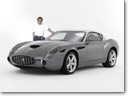 Yushiyuki Hayashi is a famous Japanese car collector, who owns numerous cars of great historical value, including several Ferraris such as the 166MM, the 250 Spider California, two Daytonas – a coupé and a spider – and the Enzo.In the classic tradition of the keen purchaser of exclusive cars who stimulated the creativeness of Italian coachbuilders in the 1950s and 1960s, Yushiyuki Hayashi asked Zagato if it would be possible to create a body for his 575M, in the style of the famous 250GTZ berlinetta.
-
STARTECH Dodge Caliber
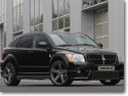
 STARTECH offers a strikingly styled aerodynamic-enhancement program, and engine tuning for the diesel model. To add more sporty emphasis to the characteristic appearance of the Dodge Caliber the STARTECH designers have developed an aerodynamic-enhancement kit that adds to the compact car’s striking design.
The STARTECH front fascia not only visually upgrades the front; it also reduces lift on the front axle. The sides are given a more homogenous appearance with the STARTECH side body cladding that gives the Caliber a lower and sleeker appearance.
The rear of the Dodge can also undergo sporty modifications: The custom-tailored STARTECH lift-gate attachment continues the bullish contour of the rear fascia over the entire width of the rear. The rear fascia with stylized tailpipes left and right gives the Caliber a more powerful look. The fascia can be complemented with the STARTECH sport exhaust system. The rear spoiler is attached to the liftgate and stylishly rounds out the STARTECH designer suit.
For the Dodge Caliber 2.0 CRD with common-rail turbodiesel engine STARTECH offers powerful and reliable power tuning that ups power output by 40 hp / 29.4 kW. The STARTECH SD3 performance kit consists of a plug-and-play control module that can be installed by any authorized Chrysler/Jeep/Dodge dealer in half an hour, thanks to an included custom wire harness. Like the production models the STARTECH-tuned Dodge Caliber 2.0 CRD meets EURO IV emission limits.


With STARTECH SD3 tuning peak power output of the 2.0-liter common-rail four cylinder engine with Diesel particulate filter jumps from standard 140 hp / 103 kW to 180 hp / 132 kW at just 4,000 rpm. Even more important for everyday driving is the increase in peak torque from 310 Nm to 360 Nm between 1,750 and 2,500 rpm. Thus equipped sprint time from 0 – 100 km/h is shortened from 9.3 to 8.6 seconds. Top speed of the tuned Caliber diesel model increases to 201 km/h.
STARTECH offers a stainless-steel rear muffler with one oval tailpipe on either side for all engine variants of the Caliber. There are two versions, one to be combined with the STARTECH rear fascia and one for installation in combination with the stock bumper. The exhaust system lends the Caliber not only a more thrilling rear appearance but also a more powerful exhaust note.
STARTECH offers more driving fun in the form of custom-tailored modifications to the suspension of the Dodge. Progressive-rate springs precision-calibrated to the standard shocks lower the ride height of the vehicle by some 30 millimeters.
Wheels make a car and STARTECH offers various custom-tailored STARTECH Monostar tire/wheel combinations with 19- and 20-inch diameters for the Caliber. The palette of suitable Monostar IV five-spoke wheels ranges from size 8.5Jx19 all around with tires up to 245/40 R 19 in size to an especially exclusive version with size 9Jx20 wheels and 245/35 R 20 tires.

The STARTECH program also offers numerous customization options for the interiors of all Caliber models: The STARTECH Lifestyle interior package will go on sale in the near future.
Extravagant highlights can be added with striking STARTECH accessories: Polished aluminum serves as the material of choice for door-lock pins, shifter and foot pedals. Also available are high-quality floor mats with STARTECH signet.
-
Hyundai Verloster
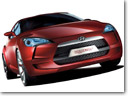
 Styled at Hyundai’s Design and Technical Center at Namyang, the Veloster (codenamed HND-3) coupe is the third in a series of daring concept cars to be developed by the central styling studio in Korea.
The Veloster name, a compound of velocity and roadster evokes the sporty characteristics of a classic two-plus-two. A panoramic glass roof and other futuristic styling cues help project a high-tech image.
Designed to cater to the tastes of the Y-generation, Veloster combines simple, iconic design with good value and robust construction.
“With Veloster, we wanted to try something really different. We’re keenly aware that we need radically new products for the Y-generation, the first-time twenties something buyer,” said Oh Suk-Geun, Hyundai’s vice president of design. “This is really a bold new direction,” he added.


-
VW Jetta Sportwagon
 The Jetta SportWagen, a sporty and dynamic wagon version of Volkswagen’s top-selling model, made its U.S. debut today at the New York Auto Show. The Jetta SportWagen mixes practicality with European style and balances both elegance and sportiness. Its exceptional ride and handling and segment-leading safety features, along with its design are perfect for those with an active lifestyle.
Delivering performance and value, the Jetta SportWagen will be offered with three engine variations. The Jetta SportWagen will launch with an upgraded 2.5-liter, five cylinder engine that now produces 170 horsepower. The 2.5L Jetta SportWagen arrives in dealers this August, and will be followed with the 2.0T, four cylinder engine that produces 200 hp. In early 2008 the Jetta SportWagen will be available with a 2.0L clean diesel engine.
Aside from offering the sporty feel and fun to drive performance of a Jetta, the SportWagen opens up a new world of possibilities in the way of usable cargo room— 32.8 cubic feet to be exact, or an even more impressive 66.9 cubic feet with the rear seat folded down. For those whose active lifestyle requires even more room, there is an optional fold-flat front passenger seat that provides additional cargo space. Fold-flat front passenger seat is available with “V-Tex” leatherette seating.
Like the Jetta, the SportWagen continues the Volkswagen tradition of offering a long list of standard equipment. Some of the many standard features include: air conditioning, anti-theft vehicle alarm, cruise control, CD player, traction control, four-wheel anti-lock disc brakes, eight-way adjustable front seats with height, angle and lumbar support adjustments, and a height-and-telescoping steering wheel. Available as an option on the Jetta SportWagen is a panoramic sunroof. The panoramic sunroof offers its passengers an impressive 12.7 square feet of either daylight or starlight, providing them an open air connection with the outdoors.
The Jetta SportWagen also enjoys a long list of standard safety features such as, driver and front passenger front airbags, driver and front passenger side thorax airbags, Side Curtain Protection®, and rear-impact optimized head restraints on driver and front passenger seat.


