Author: Alev Kochoolu

  • Bentley Bentayga Hybrid

    2021 New Bentley Bentayga Hybrid1

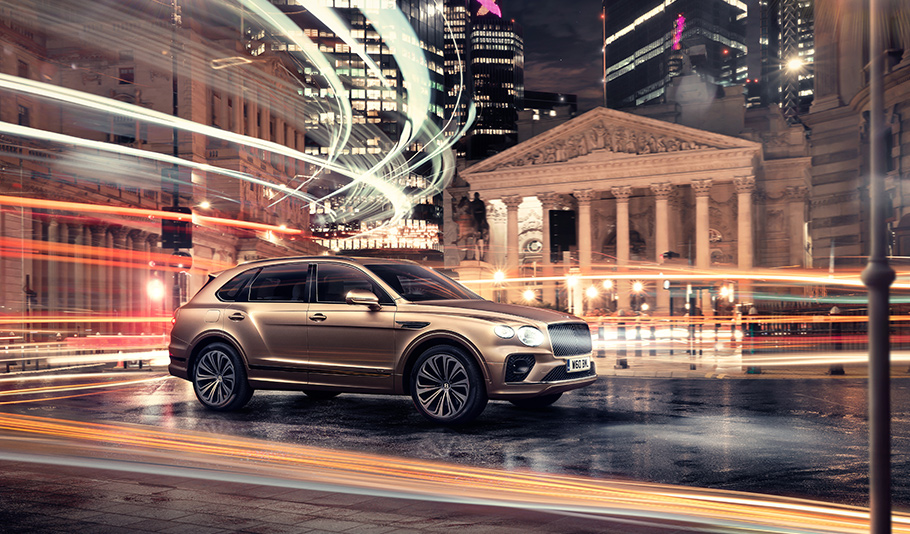
    Bentley is taking the next step on its journey to a sustainable future with the launch of the new Bentayga Hybrid – the only electrified true-luxury SUV in the world, and a model that Bentley predicts will become the best-selling member of the new Bentayga family.

    Following the recent launches of the new Bentayga V8 and Bentayga Speed, the new Bentayga Hybrid becomes the third model in the most successful luxury SUV portfolio the segment has ever seen.

    The new exterior and interior design emphasises Bentley design DNA across the entire model range, giving Bentley the freshest and most modern product family of any luxury car company.

    The new Bentayga Hybrid offers the ultimate in electric luxury, with smooth and silent progress through urban environments, whilst having the grand touring capability to escape the city and explore further. Customers of the Bentayga Hybrid can escape the noise of the city through the refined and acoustically-isolated serenity of the cabin without engine interference, using up to 31 miles of electric-only range (NEDC), before physically leaving the city behind with the comfort of a total combined range of 536 miles (NEDC).

    Delivering the same level of comfort and luxury, yet with a quieter and more refined driving experience, the Bentayga Hybrid brings a selection of new technologies and connected car services, positioning the new product as the most technically advanced Bentayga to date.

    Introducing the very latest on-board technology and an even more cosseting cabin, the new Bentayga is significantly revised both inside and out from the previous generation.

    Subtle exterior badging complements the new Bentayga’s exterior design now prevalent across the entire model range, giving Bentley the freshest and most modern product family of any luxury car company.

    Chairman and Chief Executive of Bentley Motors, Adrian Hallmark, comments:

    “The Bentayga Hybrid is the next step on our journey to becoming the world’s leading sustainable luxury mobility company. Bentley will transform from a 100-year-old luxury car company to a new, sustainable, wholly ethical role model for luxury, and the Bentayga Hybrid is the first model to pioneer our company’s recently announced Beyond100 strategy.”

    Bentley’s research shows over 90 per cent of customers use their first-generation Bentayga Hybrid on a daily basis or several times a week, and nearly 100 per cent of customers use EV mode, with half of them consistently undertaking journeys of less than 30 miles.

    During previous retailer training, 78 per cent zero emissions journeys were achieved regularly over a 500 mile activity. In a more urban environment, one of Bentley’s development drivers achieved 67 per cent zero emissions over 672 miles around San Francisco, and in the UK, Chris Cole – Project Leader for the Bentayga Hybrid achieved 64 per cent zero emissions commuting to and from the factory.

    In real world terms, the majority of journeys can be achieved completely in electric only, with zero emissions, delivering more benefits environmentally and building on Bentley’s new reputation for sustainability for the future.

    Hybrid Powertrain Drives Further Technological Advancements

    The Bentayga Hybrid’s electrified powertrain consists of 12 main components in three key areas. Firstly the distribution of electricity; the charge point is located on the left-hand side of the car, opposite the fuel flap and is specific to the region of the vehicle. An LED provides a visual indicator showing the state of charge of the battery, which can be charged at a rate of 7.2kW/h.

    The 17.3 kWh lithium battery consist of 168 individual cells with an expected life of 100,000 miles or eight years, and can be charged to 100 per cent in as little as two and a half hours (region specific). The power electronics convert the energy stored from the high voltage battery to supply the E Motor or supplement the existing 12v vehicles electrical infrastructure.

    Conversion of stored energy into smooth, effortless performance is via the 94 kW (126 bhp) E Motor which can produce up to 258 lb.ft (350 Nm) of torque. The E Motor is housed within the transmission between the gearbox and internal combustion engine and can deliver full torque instantaneously from stationary, providing silent and rapid vehicle acceleration.

    A 3.0 litre twin turbocharged V6 engine supplements the E Motor when additional torque is required or when speeds above 84 mph are requested. To warn pedestrians of the vehicle’s near silent movement, a dedicated speaker emits an exterior sound at low speeds.

    The Bentayga Hybrid not only has different drive modes but can also use the information stored via the Bentley Hybrid Efficiency Navigation system to achieve the very best efficiency, via feedback through the throttle pedal.

    The Bentley Hybrid Efficiency Accelerator Pedal provides a pressure point when in EV Drive to denote the boundary between pure electric and hybrid power. This encourages the driver to stay in EV Drive for as long as possible but can also be disabled if required.

    Bentley Hybrid Efficiency Braking blends seamless integration of braking between the E Motor and conventional hydraulic braking, to provide a conventional feel to the brake pedal for comfort and the driving experience while maximising recuperation of energy.

    A dedicated button allows control over the three E Modes – EV Drive, Hybrid Mode and Hold Mode. These will enable the driver to manually manage battery usage during a journey – though this can also be managed automatically by the car.

    EV Drive mode is engaged as soon as the car is switched on, and maximises the electric driving experience. This is ideal for city driving and for shorter journeys. The Bentley Hybrid Efficiency Accelerator Pedal provides feedback to the driver using a pressure point to denote the boundary between pure electric and hybrid power. Using predictive data from the Bentley Hybrid Efficiency Navigation database, the pedal will vibrate when approaching a junction or speed limit decrease, advising the driver to lift off the throttle, saving energy whilst also giving the maximum opportunity for regeneration. Haptic feedback through the throttle pedal of the transition between the E Motor disengaging and the internal combustion engine starting encourages the driver to stay in EV Drive for as long as possible, maximising efficiency. In pure electric drive, the E Motor continues to function up to speeds of up to 84mph.

    Hybrid Mode maximises vehicle efficiency and range using data from the intelligent navigation system. This mode is suited for longer journeys and uses predictive E-Mode and engine coasting whilst following directions from the navigation system. Inputting a destination, the car will automatically engage the correct Drive Mode for each part of the journey, constantly calculating the most efficient use of battery charge and storing electrical energy for sections of the journey where it is most useful – such as when arriving in the city. The system will reduce on-board charge to zero just as the vehicle reaches its destination, maximising overall efficiency.

    Hold Mode balances engine and electric power to hold high voltage battery charge for later use. This is the default mode when in Sport is to provide consistent boost and recuperation.

    The new Bentayga Hybrid is delivered with all of the required market specific cables, facilitating charging of the vehicle at the home or via industrial charge points at work or in public car parks. In addition to the standard equipment supplied customers can also choose a Bentley branded wallbox available as a no cost option* providing an attractive solution housing the charge unit and neatly storing the charge cables.

    The latest release of the My Bentley in-car and remote connected car services are available through the new Bentayga Hybrid. In-car services are now delivered through an embedded SIM, meaning they no longer require a data connection from a customer’s mobile device.

    Remote services – subject to regional availability – are accessible through the My Bentley app and are further improved, including the technology levels and range of features. Four specific features for the new Bentayga Hybrid can be found in the convenient features and are as follows:

    MY CAR STATISTICS – which provides an overview of vehicle data. You can view the time and date of recent trips as well as last trip distance, average speed, travel time and average fuel/electric consumption.

    MY BATTERY CHARGE – allows you to remotely initiate vehicle charging as long as your vehicle is plugged in. You can select the time you plan to leave and the charging system will calculate a rate of charging to achieve the highest level of charge in line with your departure.

    MY CABIN COMFORT – lets you remotely heat or cool the cabin to an optimum temperature of 22°C ahead of your journey.

    E-CHARGING – identifies the nearest charging point locations in the area or at a destination of your choice, allowing you to navigate to the most convenient location. You can filter the results by distance, bay availability and charging rate.

    Bentley Research Proves Effectiveness of Bentayga Hybrid

    As part of Bentley’s journey towards electrification and the recently announced Beyond100 strategy (delivering a product range composed entirely of plug-in hybrids or battery electric vehicles by 2026), a research activity has been undertaken to understand customer usage of the Bentayga Hybrid in detail.

    Over 90 per cent of customers use their first generation Bentayga Hybrid on a daily basis or several times a week and nearly 100 per cent of customers use EV mode, with half of them consistently undertaking journeys of less than 30 miles.

    In real world terms, this means that the majority of the journeys, whether office commuting or school runs, can be achieved predominantly whilst producing zero emissions.

    New Bentayga Hybrid – Summary

    The new Bentayga Hybrid builds upon the latest design and feature content offered by the newest iteration of the Bentayga product line.

    Adopting the new Bentley family DNA, the exterior of the new Bentayga has a more modern and purposeful look, and concurrently the interior has been re-imagined and now contains a modernised, unparalleled combination of luxury materials and exquisite, intricate craftsmanship.

    A next generation infotainment system is integrated seamlessly into the handcrafted, Bentley ‘wing’ dashboard design and features a 10.9-inch display screen with edge-to-edge graphics. The all-new digital display includes super high-resolution and dynamic graphics which are configurable to suit driver preferences.

    The latest hardware and software bring all-new navigation with satellite maps, online search and other features. Wireless Apple CarPlay is standard for the first time, alongside the existing wired system, along with Android Auto (market dependant). Rear seat occupants benefit from the introduction of a new, larger touchscreen remote control tablet, similar to that introduced in the all-new Flying Spur.

    Connectivity around the car has been significantly improved, with USB-C data ports and a wireless phone charger now standard. The new Bentayga range is now provided with an embedded SIM, as with the latest Continental GT models, meaning My Bentley connected car features no longer require customers to provide their own data connection. My Bentley in-car and remote services is a continually developing range of services available to customers through a dedicated app, available both on Apple iOS and Android mobile platforms.

    The luxurious interior can be further enhanced with the application of dark tint diamond brushed aluminium trim for the first time in a Bentley, as well as two straight-grained veneers new to Bentayga: Koa and Crown Cut Walnut. Mulliner Driving Specification adds a new quilting design, and micro piping detailing is a new option for the seats.

    Bentayga Adopts Bentleys New Design Language

    The exterior design of the new Bentayga range has been completely refreshed from the previous generation to create an even more stylish and purposeful car. Every panel at the front and rear of the car has been altered to give it a cleaner and more modern look.

    JP Gregory, Head of Exterior Design at Bentley Motors, comments:

    “We spent a long time examining how to improve the proportions and character of the car. New Bentayga is still instantly recognisable as a Bentley but now has a much greater road presence, a more self-confident looking SUV from whatever angle you look at the car. The prouder grill and higher, more focused elliptical headlights give a much more modern expression.”

    At the front, a larger and more upright new matrix grille allows the Bentayga’s elegant bonnet to sweep down to the very edge of the chrome work. This gives the car a more dominant, upright profile and pushes the new elliptical LED matrix headlamps further apart, raising them 30 mm higher leading to a more muscular aesthetic. The new headlamps also include the marque’s now-signature cut crystal design, which makes them appear to sparkle even when not lit.

    Perhaps the most dramatic design changes have been reserved for the rear of the car, where the new Bentayga range is radically different from its predecessor. In line with the Continental GT, it features elliptical tail lamps for the first time.

    The lights feature within an all-new, full-width tailgate, resulting in a cleaner, more contemporary look. The licence plate has moved down into the bumper, allowing for prominent Bentley lettering above.

    The dynamic new looks are further accentuated with a breadth of individualisation possibilities, including the contemporary urban appeal of the Blackline Specification that replaces all exterior chrome with black versions.

    Craftsmanship Redesigned

    The Bentayga’s fine handcrafted cabin has been reimagined for the new model. Already universally acclaimed as the benchmark for luxury SUV interiors, new Bentayga Hybrid now contains a modernised, unparalleled combination of luxury materials and exquisite, intricate craftsmanship.

    Bentley designers have created an even more relaxing environment for passengers, wherever they travel. Among the major changes to Bentayga’s more contemporary interior are new door trims and steering wheel, plus a redesigned centre fascia and digital instrumentation cluster. These are complemented by new seats that further improve on the industry-recognised benchmark for seat comfort.

    Two versatile seating configurations are available in the new Bentayga Hybrid. The standard five-seat benefits from an all-new seat frame, doubling the travel of the rear-seat recline angle, and the optional four-seat layout features two individual rear seats separated by a centre console.

    The ergonomics of the four-seat configuration are further enhanced from a 30 mm increase in knee room in the upright seated position, with an improvement of almost 100 mm in the reclined position, helping to make luxury travel even more comfortable.

    A new quilting design is included in Mulliner Driving Specification cars, while customers can choose from eight sustainably-sourced veneers including two straight grained options new to Bentayga – Koa and Crown Cut Walnut.

    Information At The Press Of A Button

    The new Bentayga range now has a fully digital driver’s information panel similar to the Continental GT and new Flying Spur. The display brings a contemporary look to the cockpit, can be customised to the driver’s requirements and features real-time lighting effects with elegant animations.

    The standard Bentayga tachometer that displays engine speed is replaced with a dial showing when the car is operating in pure EV Drive, or engine speed if the combustion engine is operating for the Hybrid version. A battery status dial replaces the coolant temperature gauge.

    Setting new standards in the sector for customer technology interfaces, the new Bentayga introduced a new, cutting-edge infotainment system. A bigger and brighter, high-resolution 10.9-inch touchscreen, with an anti-reflection and anti-glare coating and much improved touch functionality, now spans the entire width of the centre fascia for a more contemporary look.

    The infotainment screen can display energy flow in each of the three E Modes, showing whether the vehicle is being powered by energy supplied by the battery, or the combustion engine – or whether energy is flowing back to the battery in order to charge it.

    The Bentley Hybrid Efficiency Navigation system features free text, context-specific search entry, including an address or point of interest. Navigation is improved with a three-dimensional building display, satellite maps, content in the driver’s next generation Head-Up Display and several other useful features. The Head-Up Display can now project traffic information, street names and distance to destination too.

    As well as the usual array of media sources, wireless Apple CarPlay is now standard in the new Bentayga range (in addition to the previous standard wired system), along with Android Auto for the first time in a Bentley. With a corresponding phone plugged in to one of the car’s USB-C sockets, the central infotainment screen mirrors the smartphone display.

  • Wheelsandmore Ferrari 812 Superforte

    2019-Ferrari-812-Superforte-by-Wheelsandmore1

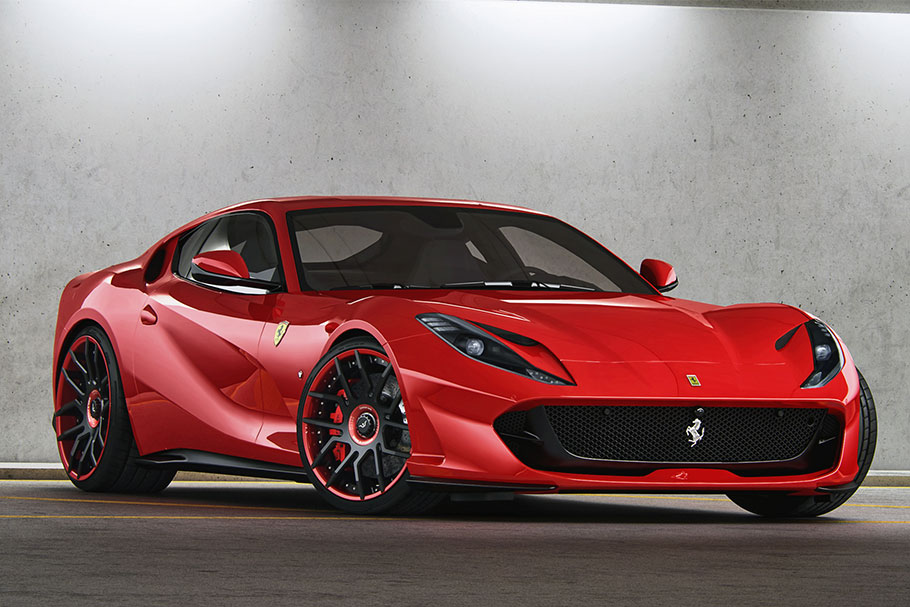
    The crew of Wheelsandmore did not hold back from the currently sharpest weapon born in Maranello, the strongest 12-cylinder engine with 800hp and presents fine upgrades that will be at least as unreasonable for the “average citizens” as the car itself.

    800hp and 718nm are ready from stock to teach the customers fear by accelerating and heading the curves. The state-of-the-art assistance and control systems take the driver unnecessary excitement and tension and make the 812 Superfast amazingly tradable.

    Where many other manufacturers are implementing larger turbochargers in downsizing delusions with less and less capacity, Ferrari remains with the V12 engine and that’s a good thing. Ferrari deliberately designed the 812 Superfast with a restrained exhaust system to create the perfect mix of sporty and everyday usability. Wheelsandmore´s first tuning component to improve sound and power is a handcrafted valve flap exhaustsystem with sport catalysts and x-pipe, which was developed in cooperation with the european exhaust system manufacturer Kline Innovation and comes optionally made of ultralight Inconel 625 or typically made of finest stainless steel. With the exhaust the Ferrari 812 Superfast becomes a hellish roaring formula-1 grenade. Optimized flow and diameter ensures additional 20hp und 15nm of torque.

    The tuner and wheel manufacturer is showing 2 different wheel designs for the 812 Superfast, on the one hand the concave model F.I.W.E with central locking optics which was released last year and on the other hand the world exclusive new wheel design “FORK” which was specially designed for the Ferrari 812 Superfast. The exclusive forged wheel design is coming with some new innovations, such as a real oem style central lock application and with directional wheel centers for left and right installation. As always the wheels are crafted by hand on order and according to customer´s options in color and surface.

    Both wheel models are offered perfectly suitable for the Ferrari 812 Superfast in the following dimensions:
    Front axle: 10,0×21 with 275/30/21 P Zero tires by Pirelli
    Rear axle: 12,0×21 with 325/30/21 Pirelli tires or with 12,5×22 inch rims and 335/25/22 tires

    Wheelsandmore is currently satisfied with the engine power and keeps hands off the remapping of the ecu as the aerodynamically perfect ingenious vehicle concept is completely convincing so far.

  • Nissan Juke ENIGMA

    2021 Nissan Juke ENIGMA1

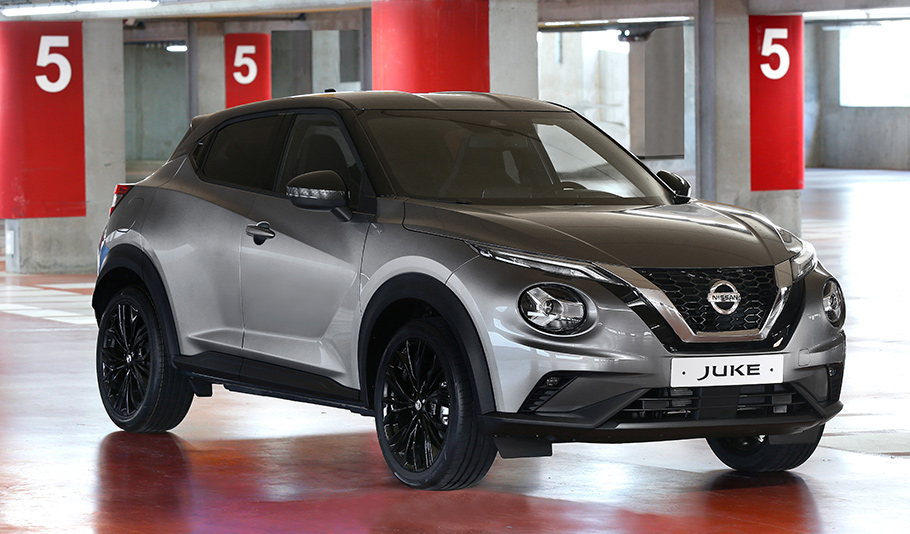
    With the launch of the all-new ENIGMA special version, Nissan Juke continues to push the boundaries of bold design, bringing a new level of style to the iconic compact crossover.

    Expanding Juke’s suite of advanced technologies, ENIGMA also introduces Amazon Alexa voice experience compatibility to the Juke range for the first time (1). Now available with the ENIGMA and all latest generation Jukes equipped with NissanConnect infotainment system, the Nissan Skill allows Juke customers to control some of their vehicle functions remotely from their smartphone or an Alexa-enabled device. Just by asking Alexa, they can remotely find out their Juke’s doors lock/unlock status, how much fuel they have left, send a location to the on-board navigation system, and more—offering convenience and peace of mind right from their home.

    ENIGMA: The bold gets braver
    Juke ENIGMA champions dark, futuristic styling, drawn from Juke’s irresistible personality.

    Designed from wheels-to-roof for an enhanced on-road presence, ENIGMA has been treated to a series of stealth-like aesthetic upgrades. Deep black, 19-inch Akari (Japanese for “light”) alloy wheels enhance Juke’s signature sporty stance, while bespoke, intricate graphic patterns adorn the coupe-style roof line and door mirrors.

    The eye-catching ENIGMA signature graphic on the C-pillar can be complemented by three paint combinations. Style options include; Gun Metallic Grey or Storm White (pearlescent) with a Black roof, or all black; all will enhance the model’s striking appearance.

    ENIGMA offers a command centre-style suite of advanced technologies. Users can deploy a comprehensive array of smart alerts, navigation and connectivity functions via the NissanConnect Services app on their smartphone. The on-board NissanConnect infotainment system provides an in-car hub for these features, whilst also providing seamless smartphone integration for safe use on the road.

    Introducing Amazon Alexa
    For the first time on a Nissan model in Europe, Juke ENIGMA enhances the effortless infotainment experience on-board with the addition of Alexa’s Nissan Skill compatibility.

    Once the Nissan Skill is enabled in the Alexa app and linked to the owner’s NissanConnect Services account, customers can connect their Juke to their Alexa device at home to monitor their Juke and control a selection of vehicle functions through a suite of 13 bespoke utterances. They can ask Alexa to send an address to Juke’s NissanConnect Navigation with TomTom Traffic, turn on the lights, determine the vehicle’s parking location, learn remaining fuel range and check door-lock status.

    “The Nissan Juke offers head-turning design and advanced technology in a truly compelling package. ENIGMA draws on unique styling and intelligent connectivity to enhance the driving experience,” said Marco Fioravanti, Vice President, Product Planning, Nissan Europe.

    The Nissan Juke ENIGMA starts from £23,195, and is available in dealerships from January 2021.

  • Bentley Continental GT

    2020 Bentley Continental GT new1

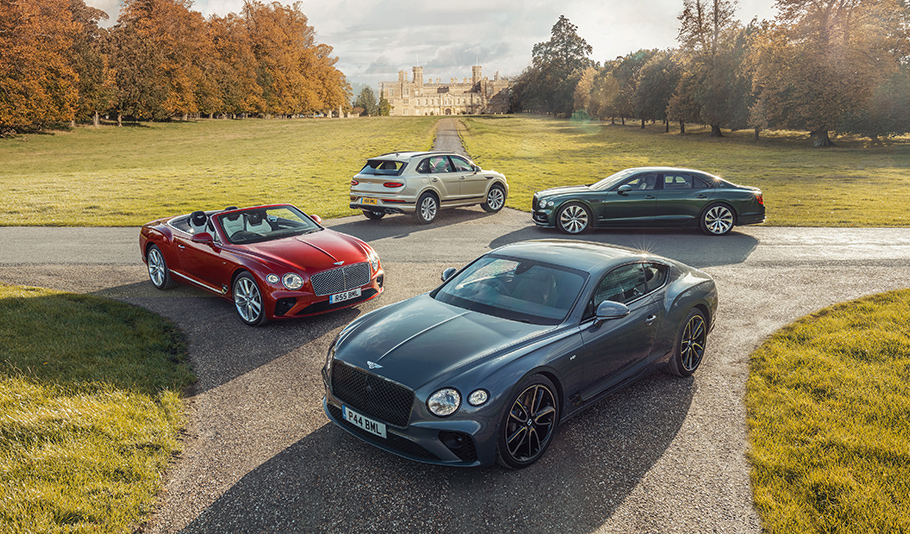
    Bentley Motors today announced total sales of 11,206 in 2020, an increase of two per cent over 2019. Although the pre-COVID sales forecast was much greater, new model introductions fuelled this significant achievement which was the highest sales performance in any of the luxury British marque’s 101 years.

    Bentley’s production was shutdown for seven weeks beginning in March, and running at a 50 per cent output for a further nine weeks thereafter, as social distancing measures were introduced. A resulting comprehensive redesign of the production facility enabled Bentley to meet this global demand while in parallel maintaining these social distancing protocols to the current day and beyond.

    The Americas remained Bentley’s number one region although a strong performance in China, posting an increase of 48 per cent, ran it close.

    Commenting on the global sales results, Adrian Hallmark, Chairman and CEO of Bentley Motors, said:

    “Even though we anticipated greater sales before the pandemic struck, when you consider the level of restrictions around the world for the majority of the year, to achieve a record sales performance is a strong measure of our potential.

    “As we look to the year ahead we remain cautiously optimistic as much remains uncertain. One thing that doesn’t is our commitment to progress, the first step of which is the launch of the Bentayga Hybrid. This is one of nine new models we will launch this year as we continue on our Beyond100 strategic path and our accelerated journey towards becoming a fully electrified car company by 2030.”

    Key to the company’s ongoing success was the introduction of a number of exciting new models, combined with greater global availability of other popular models. In particular the all-new Flying Spur was launched internationally and received a phenomenal reception from customers and media alike.

    This demand was increased further in October with the introduction of a high-performance V8 engine derivative.

    The Bentley Continental GT (24 per cent) and GT Convertible (15 per cent) together accounted for 39 per cent of total sales, finishing the year as Bentley’s number one selling model line. However, in spite of the run out of the previous generation model, and delays to market entry of the all-new Bentayga due to the COVID-19 pandemic, the pioneering, go-anywhere SUV was still the biggest selling single model, accounting for 37 per cent of total sales.

    The Americas region delivered 3,035 cars, an increase of four per cent on the corresponding figure for 2019, 2,913. Placing the region as Bentley’s number one market, this strong performance was boosted by the introduction of the Flying Spur and a full year of sales of the Continental GT and GT Convertible luxury Grand Tourer.

    Bentley’s biggest growth was reserved for China, posting a sales increase of 48 per cent, 2,880 cars, against 1,940, as the traditional sedan market welcomed the introduction of the all-new Flying Spur, with Bentayga sales remaining strong.

    Europe closed the year with the delivery of 2,193 cars, against a figure of 2,670 in 2019, a decrease of 18 per cent with the region impacted because of the market entry delays of the all-new Bentayga.

    Bentley’s home market in the UK continued its consistent strong performance, recording sales of 1,160 cars. This represented a decrease of 22 per cent over the previous year.

    Bentley delivered 735 cars to the Middle East in 2020, against a total of 852 the previous year.

  • Kia Stinger

    2021 New Kia Stinger1

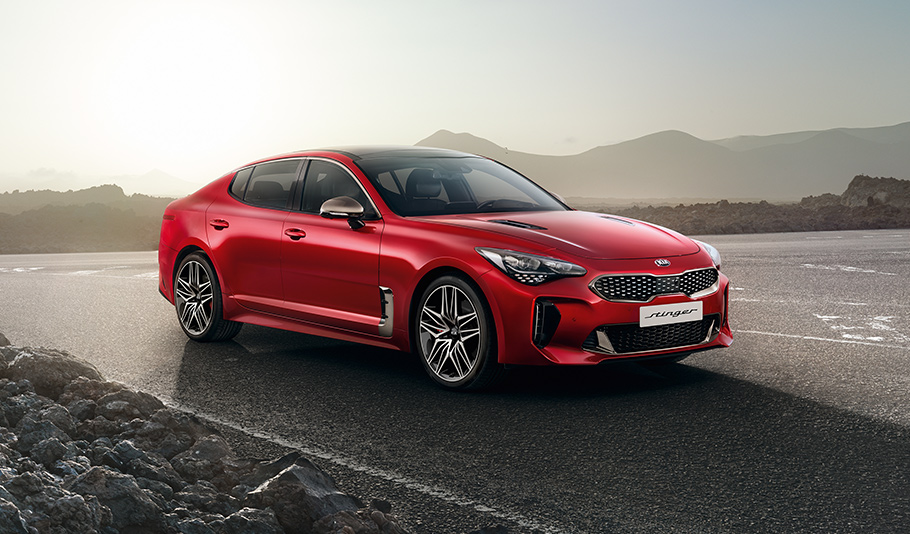
    Kia’s high-performance fastback sports saloon, the Stinger, now boasts a refreshed design to amplify its gran turismo character and features a range of technology and safety upgrades.

    The upgraded Stinger boasts a re-profiled exterior design and has been enhanced to improve cabin appearance and quality. The upgraded cabin, in particular, reaffirms the Stinger’s credentials as the consummate grand tourer and the flagship of Kia’s European line-up.

    The exterior notably gains a more high-tech light signature, with a new rear combination lamp spanning the width of the car. This creates a distinctive new light signature, which mimics the shape of the subtle spoiler integrated into the boot lid. New rear indicators, each comprising of 10 individual LED units, are arranged in a grid pattern – a motorsport-inspired design – which reflects the appearance of a chequered flag.

    A new design for the 19-inch alloy wheels is also introduced, with intricate, geometric designs which enhances the sporty, grand tourer nature of the car. ‘Electric Blue’ exterior paint is also introduced to the ’GT S’ for the first time.

    Inside, the overall architecture of the cabin remains the same, but subtle visual, material, and textural enhancements create a more luxurious ambience. New additions include a metallic finish to sections of the flat-bottomed steering wheel and a chrome bezel around the instrument cluster. The rear-view mirror is now frameless, creating a classy, modern look and also has the benefit of enhancing rearward visibility. The dashboard features Kia’s upgraded 10.25-inch touchscreen infotainment and navigation system and is further accentuated by new gloss black trim. New mood lighting allows the driver to select from one of 64 colours to subtly alter the character of the cabin.

    Available to pre-order now from Kia showrooms, the Stinger ‘GT S’ is priced from £42,595.

    State-of-the art technology with concert hall quality premium audio system

    The upgraded Stinger is fitted as standard with Kia’s 10.25-inch touchscreen display. The infotainment system also allows Bluetooth smartphone pairing for two phones concurrently, enabling separate phones to be used for phone calls and music, for instance. Its advanced split-screen display lets users control or monitor different vehicle features at the same time, customising the screen with a series of different widgets. Apple CarPlay™ and Android Auto™ are standard, with intuitive voice control for many of the car’s features, such as heating and ventilation, audio and navigation. A wireless charger allows smartphones to be topped up without wires trapsing across the cabin.
    The standard touchscreen navigation system has full European mapping and a Traffic Messaging Channel. Stinger also has Kia Connected Services with TomTom™ and UVO Connect, giving access to traffic, speed camera and weather information plus local search details in a number of categories, from the location of Kia dealerships to nearby restaurants.

    A concert hall quality 15-speaker harman/Kardon® premium system with subwoofer, external amplifier and front centre speaker is featured as standard on the latest Stinger. It features Clari-Fi, which restores the sound often lost when digital music files are heavily compressed, and QuantumLogic Surround Sound, which redistributes signals from the original recording to deliver multi-dimensional playback.

    The upgraded model includes a high-resolution 7.0-inch digital display within the instrument cluster. This full-colour display with vivid graphics for different driving modes delivers crystal-clear information to the driver between the speedometer and tachometer. It is also fitted with a customisable head-up display, which projects driving information onto the base of the windscreen in the driver’s line of sight. The system shows alerts from the car’s numerous driver assistance technologies, details of vehicle speed, and turn-by-turn navigation instructions.

    The new Stinger adds features such as a ‘connected car’ Remote Engine Start system, which allows owners to start their car remotely using the Stinger’s smart key. A 360-degree surround view camera system is fitted, as well as front and rear parking sensors, giving the driver a bird’s eye view when manoeuvring in tight spaces. A smart key with button start is standard, and a Smart Power Tailgate takes the effort out of opening and closing the boot when your arms are full with shopping.

    Safety systems are enhanced for 2021

    The upgraded Kia Stinger carries over the same Advanced Driver Assistance Systems (ADAS) that it offered previously, as well as a series of new features and updates to provide even better protection for the driver, their passengers and other road users.

    The latest cutting-edge safety technology has been added to the new Stinger, including a new Blind-Spot View Monitor (BVM) that acts as a ‘second pair of eyes’ for drivers by eliminating a driver’s left- and right-side blind spots. It displays a high-resolution video feed within the instrument cluster’s digital display if the driver indicates to change lane with another vehicle in their blind spot. The video feed comes from discreet wide-angle lenses hidden beneath the door mirror housings, giving drivers a wider viewing angle of their blind spots.

    Lane Following Assist (LFA) helps the vehicle stay in the centre of its lane, while Highway Driving Assist (HDA) maintains a set distance from the vehicle in front on a motorway or A-road, and also keeps the car in the centre of its lane, even on a curved road.

    Safe Exit Warning (SEW) detects vehicles coming up from behind on either side of the Stinger when parked and stopped, alerting occupants with a sound and visual warning if they attempt to open the door into oncoming traffic. Rear Occupant Alert (ROA) provides a warning to the driver if they leave behind any pets or children when they exit the car.

    Forward Collision-Avoidance Assist (FCA) now offers protection when turning across the road into a junction by identifying oncoming traffic on the other side of the road. Furthermore, it offers increased activation range when detecting a vehicle, pedestrian or cyclist. The Lane Keeping Assist (LKA) is now able to detect the edge of a road, as well as the lines in the road, providing steering assistance to prevent the driver leaving their lane without signalling. Blind-Spot Collision-Avoidance Assist (BCA) provides an enhancement over the existing Blind-Spot Collision Warning (BCW). Instead of simply warning drivers of cars in adjacent lanes, BCA helps drivers avoid a potential collision by applying differential braking.

    Intelligent Speed Limit Assist (ISLA) is a new feature for the latest Stinger, with system based on traffic sign recognition. Driver Attention Warning (DAW) now has an increased operating speed of up to 130mph, and also alerts drivers if they fail to notice the car in front move off from a stop. The navigation-based Smart Cruise Control (NSCC) helps drive around curved sections of a motorway or A-road, automatically reducing the vehicle’s speed to an appropriate level before entering the curve. It reverts to the original speed as the vehicle leaves the curve and returns to a straight road.

    The Rear Cross-Traffic-Collision-Avoidance Assist (RCCA) has been upgraded and now helps to prevent collisions with crossing vehicles while reversing by taking emergency action, whereas previously the system only warned the driver with a sound.

    Stinger range focused on one halo ‘GT S’ edition

    There is just one, high-specification version of the Stinger in the UK, powered by the tremendous 3.3-litre V6 T-GDi twin-turbocharged direct-injection petrol engine. Drive is sent to the rear wheels through an eight-speed automatic gearbox.

    The 3.3-litre, 3,342cc twin-turbo V6 T-GDi is a member of the Lambda II range of engines and produces 361bhp at 6,000rpm and a huge 510Nm of torque starting at 1,300rpm and continuing uninterrupted until 4,500rpm.

    The twin-turbo V6 makes Stinger the fastest-accelerating Kia ever. From standstill to 60mph takes just 4.7 seconds, and the top speed is 167mph where permitted. Yet the extensive testing regime to ensure durability and responsiveness has also helped efficiency: combined fuel consumption is 28.0mpg, while CO2 emissions are 229g/km.

    Model Price £ Power bhp Torque Nm 0–60 sec Max speed mph Combined mpg
    (WLTP)
    CO2
    (WLTP)
    ‘GT S’ 3.3 T-GDi 8-speed automatic ISG £42,595 361 510 4.7 167 28.0 229

    Class-leading warranty and aftercare

    Like all Kia models, the new Kia Stinger will be available with the industry-leading seven-year/100,000-mile warranty.


  • Skoda Octavia vRS

    2021 Skoda Octavia vRS1

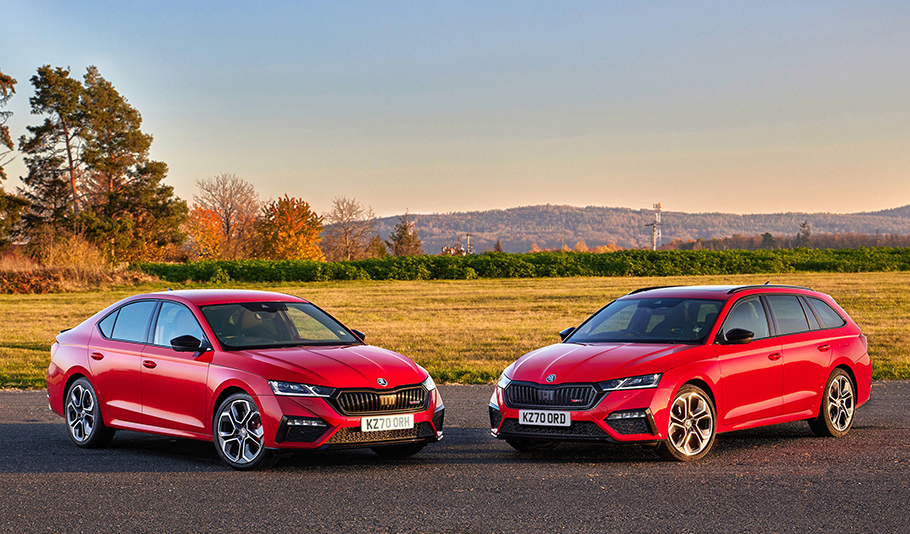
    The Octavia vRS 2.0 TDI features the most powerful diesel engine ever offered in a vRS model with a peak power output of 200PS – a 16PS increase over the outgoing model. The engine is one of the latest generation of ŠKODA EVO power units, and features an aluminium cylinder block with aluminium pistons with low-friction piston rings. The turbocharger is water-cooled for improved temperature regulation, and its compression ratio is higher than on other EVO diesel engines. Power is delivered to the wheels via a seven-speed DSG gearbox.

    The all-wheel-drive system – which is available on the vRS 2.0 TDI 200PS DSG 4×4 model distributes power via a new, electronically controlled sixth-generation multi-plate clutch. This clutch is nearly 0.8 kg lighter than its predecessor and is more efficient thanks to the use of low-friction oil, reduced bearing preload and refined internal lubrication. The new piston pump is driven by a brushless DC electric motor which features an integrated control unit to increase the clutch’s performance as well as its lifespan.

    The control electronics of the all‑wheel‑drive system react to changing driving conditions within fractions of a second and boost the driving dynamics. The system transfers part of the driving torque to the opposite wheel when the load on the inner wheel is reduced, and maintains traction.

    In terms of design, the diesel-powered Octavia vRS models are identical to their petrol and iV plug-in hybrid siblings. Both hatch and estate models feature unique front and rear bumper designs that incorporate a host of black details.

    These include the double-slat radiator grille, lower air diffuser and the distinctive air curtains above the front fog lights. The door mirror housings and window frames are also finished in gloss black, while the estate model is finished with black roof bars as standard.

    At the rear, the hatch model adds gloss black aero flaps, diffuser and a subtle boot lid spoiler, while both models come with chrome exhaust tailpipes and bespoke vRS and iV badging as standard.

    Inside, the new vRS combines sportiness with comfort and a generous quota of technology. The new multifunction three-spoke leather steering wheel is equipped with DSG paddles and new knurled wheels in a chrome design.

    The heated front sports seats feature integrated headrests and are upholstered in black fabric while a black headlining further enhances the sophisticated interior ambience. The new seats, along with the steering wheel, armrests and Alcantara-padded instrument panel all bear the famous vRS logo and distinctive red stitching. Carbon optic decorative strips, LED ambient lighting and aluminium pedals complete the vRS’s interior design package.

    vRS models have always showcased the latest technologies and the fourth-generation model is no exception. ŠKODA’s acclaimed Virtual Cockpit instrument panel is fitted as standard and offers an additional Sport layout.

    Other technologies fitted as standard include full LED Matrix headlights with AFS (adaptive front light system), Adaptive cruise control and front and rear parking sensors with manoeuvre assist.

  • Ford Fiesta and Transit-Tourneo

    2021 Ford Fiesta and Transit-Tourneo1

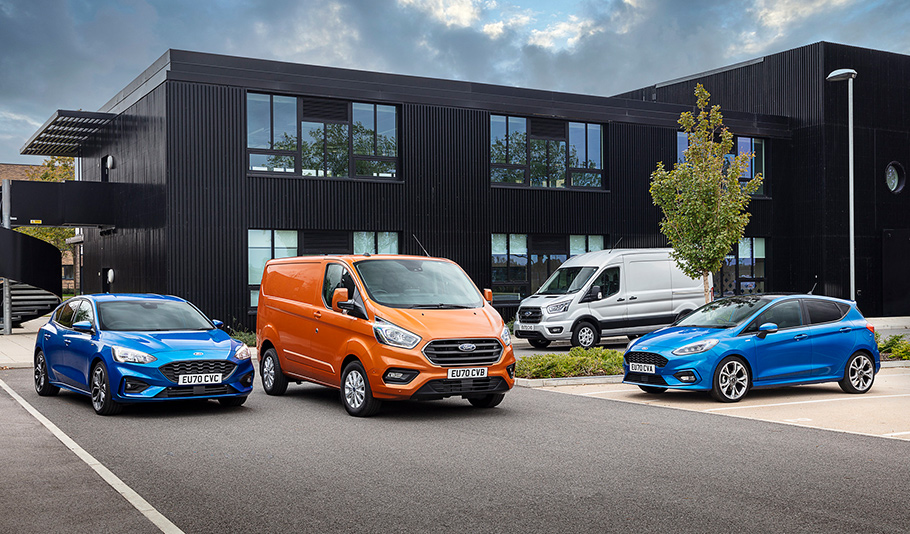
    The Ford Fiesta and the Ford Transit Custom / Tourneo Custom range took the No.1 and No.2 spots respectively in Britain’s best-selling new vehicles chart for 2020.

    “I want to thank our customers for continuing to show their confidence and trust in the Ford brand in what was an unprecedented difficult year,” said Lisa Brankin, managing director, Ford of Britain and Ireland.

    “The new lockdown measures announced earlier this week mean there will be a slow start to the much-needed recovery in the new vehicle sales market as we begin 2021, though thankfully the UK-EU and UK-Turkey trade agreements signed just ahead of the new year have avoided an even worse potential situation. We hope that the current circumstances will have changed enough by the all-important March sales month to help give the industry the kick-start it needs.

    “We will be playing our part by keeping up our new vehicle momentum at Ford, bringing to market exciting new products like the all-electric Mustang Mach-E which we’ll see on our roads in the next few months.”

    For the Ford Fiesta, 2020 marked the 12th successive year it had captured the top spot as Britain’s most loved passenger vehicle with more than 49,000 sold. Since 2009, Ford customers in Britain have purchased close to 1.3 million Fiestas.

    Ford was Britain’s top-selling passenger vehicle brand in 2020, a position it has held for the past 44 consecutive years, and also led retail sales with a 10.9 percent share in this segment. Other passenger vehicle highlights included the Ford Puma which, in its first year on sale, with nearly 26,300 sold, is the best-selling mini utility vehicle in the country and placed No.8 in the best-sellers list overall.

    Ford not only led the medium and light commercial vehicle sales chart for the 55th successive year, but the Transit Custom / Tourneo Custom range were the country’s No.2 top-selling vehicles overall with sales of nearly 47,500 during the year. Transit Custom / Tourneo Custom sales represented an all-time record market share of 44.5 percent of the one tonne medium commercial segment.

    The Ford Ranger also achieved a best-ever market share, accounting for 36.5 percent of total pickup sales in 2020, and making it once again Britain’s favourite pickup.

  • Ford zilla P1

    2021 Ford Fordzilla P11

    A unique co-creation process

    It is the first virtual gaming race car designed in collaboration between gamers themselves and a car brand. Now Ford’s Team Fordzilla esports team is moving the game on again by revealing in a livestream on December 16th a real-life, full-scale model of its extreme Team Fordzilla P1 race car.

    While seeing real cars transferred to computer games is commonplace, this is the first-ever time an auto-manufacturer has brought to life a gamer-collaborated virtual car – yet to be featured in a game – with a physical model.

    The journey of the Team Fordzilla P1 race car started in March this year when gamers were asked to vote on the package and features of the car on Twitter, including seating configuration, engine position and cockpit definition. Nearly a quarter of a million fan votes were submitted throughout the polling process.

    Team Fordzilla P1: enjoyment at its core

    The innovative Team Fordzilla P1 race car features an exterior designed by Arturo Ariño and an interior that was the vision of Robert Engelmann, both Ford designers.

    The race car is built around the monocoque structure partially covered by a large, hyper-transparent jet fighter-style canopy, protecting the driver and co-driver. The transparent canopy not only blurs the boundaries between the exterior and the interior, but it also emphasises the race car’s unique F1-like driving position.

    The exterior of this race car is the combination of a sleek GT-like front end with beautifully sculped front fenders and extremely sculpted bodyside panels, with their highly memorable twist and floating buttresses visually connecting the cockpit with the rear wheels. The rear end is completely exposed and celebrates the aerodynamics and racing circuits rawness.

    In the cockpit, you’ll find LED notification units, keeping the driver and co-driver up-to-date on the track status in their peripheral view. In addition, an integrated screen on the steering wheel enables live data exchange with the team at the pit wall. The whole interior is designed to help the race car driver to minimize any sort of distraction during the race and heighten the enjoyment of racing.

    From CAD to reality in seven weeks

    Team Fordzilla P1 is Ford’s first ever car built digitally without any face-to-face interaction throughout the process. Due to the current pandemic, it was designed by a team who had never met, working remotely, spread across five different countries and built in just seven weeks – that’s less than half of the time it would normally take. The finished build is a full-size, inside-outside model with extreme proportions and truly unmistakable character.

    Co-created by gamers for gamers, the hypercar features a few special touches that speak to the sim-racing community. On the floor in front of the co-pilot’s seat there is an AFK (Away From Keyboard) message, a playful reminder that occupants of that seat are away from keyboard. A #levelup graphic acknowledges that gamers and racing drivers aim to better themselves each time they play or race, while a #liftoff graphic is a nod to the lifting off of this race car from a virtual world and transitioning it to the real one. On the front of the car by the lower spoiler there’s the most important message; a GLHF (Good luck have fun) reminder to every gamer and racing driver to truly have fun and enjoy the ride.

    Dimensions

    The dimensions of the Team Fordzilla P1 race car are as follows:

    • Length: 4731 mm
    • Width: 2000 mm
    • Height: 895 mm
    • Wheels: Front tyres 315 x 30 x r21. Rear tyres 355 x 25 x r21

    Quotes

    “What a stunning vehicle. I love every bit of the car. What was critical to me when we reviewed various designs earlier this year was that it needed to be unmistakably a Ford. And the Team Fordzilla P1 definitely fits that criteria: it looks both gorgeous and purposeful. And it’s innovative in many ways, not least how it was born, as a co-creation between a highly passionate and knowledgeable gaming community and our super talented design team.”
    Stuart Rowley, President, Ford of Europe

    “Enjoyment is at the very core of all human centred design. Is it amazing to look at, to sit in and to drive? Well, in the case of the Team Fordzilla P1, the answer to all these questions is a resounding YES!”
    Amko Leenarts, Design director, Ford of Europe

    “This project had so many firsts. It was the first fully digital project for us. It was the first car to be designed publicly with full transparency and the first we’ve ever designed remotely with designers located in five different countries, some of whom have never met face to face. That we completed it all in less than half of the usual time is a real testament to the team and the passion they had for the project.”
    Boris Ferko, Design Manager, Ford of Europe

    “Since launching Team Fordzilla in 2019 we’ve done things differently, playing to our strengths and our unique approach to gaming. Our innovative P1 race car is the perfect example, using our knowledge of the automotive world to bring to life a merging of the real and virtual worlds.”
    Emmanuel Lubrani, Team Fordzilla

  • Hyundai Kona and Kona N Line

    2021 Kona and Kona N Line1

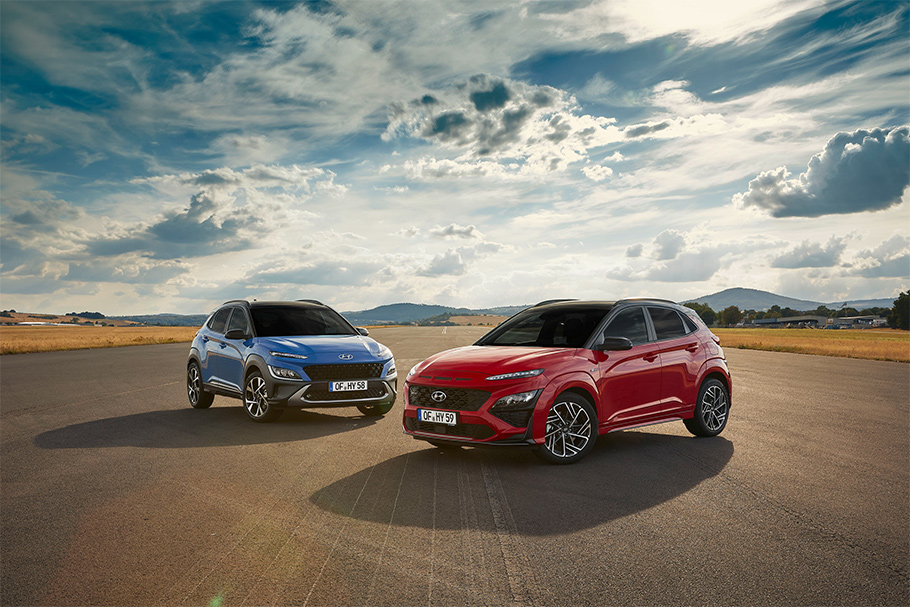
    Hyundai UK has confirmed pricing and specifications for its comprehensively updated Kona sub-compact SUV, which now includes for the first time a sporty N Line trim, as well as a full hybrid option and 48-volt mild hybrid technology on all other variants.

    The Kona’s design has been enhanced inside and out. Revised suspension and new connectivity and in-car convenience features make it even more comfortable and enjoyable for driver and passengers alike.

    With the all-new N Line version the Kona wears its sporty dynamics on its sleeve, thanks to unique design features front and rear, bespoke diamond-cut wheel design, and comprehensive interior styling enhancements.

    The 2021 Kona range starts from £21,060 on-the-road for the Kona SE Connect 1.0 T-GDi 48-volt MHEV. The dynamic new N Line specification is available from £23,590 on-the-road.

    The Kona is equipped with Hyundai’s 1.0-litre T-GDi Smartstream petrol engine with 48-volt mild hybrid technology and six-speed Intelligent Manual Transmission (6iMT).

    Hybrid versions of the Kona are equipped with a Kappa 1.6-litre GDI petrol four-cylinder engine and an electric motor linked to a 1.56 kWh lithium ion polymer battery pack. Transmission is via a six-speed Dual Clutch Transmission (6DCT).

    First seen in the new i30 and the all-new i20, the iMT’s clutch operates electronically, decoupling the engine from the transmission after the driver releases the accelerator, saving fuel by switching off the engine and activating ‘coasting’ mode. The engine restarts in the same gear as soon as the driver presses either the brake or the accelerator pedals, thanks to the power provided by the Mild Hybrid Starter Generator.

    Specification overview

    The Kona range starts with the SE Connect, priced from £21,060 on-the-road, offering a high level of standard equipment. Its exterior is distinguished by its 17-inch alloy wheels, body-coloured door mirrors, LED daytime running lights, roof rails and rear spoiler with integrated LED brake light.

    Inside there is manual air conditioning, 60/40 split-folding rear seats, electric windows front and rear, a 10.25-inch Driver’s Digital Supervision Instrument Cluster, USB port, automatic activation for the headlights, plus an 8-inch touchscreen Display Audio with rear-view camera and Smart Device Integration with Apple CarPlay™ and Android Auto™. New for the model is front passenger-seat height adjustment, allowing occupants to ensure a commanding view out.

    All models in the new Kona range are equipped with a range of new or enhanced safety and driving assist features for added peace of mind. For example, Leading Vehicle Departure Alert (LVDA) alerts the driver if they do not react fast enough when the vehicle ahead of them starts moving. Another is Lane Following Assist (LFA), which automatically adjusts steering to assist the driver to keep in the centre of the lane. Forward Collision-Avoidance Assist with pedestrian detection (FCA) is now standard. Rear Seat Alert (RSA) alerts the driver if someone or something is in the back seat when they go to exit the vehicle. In addition, all new Kona models are now available with eCall, a feature which automatically alerts emergency services if the airbags are deployed or the e-Call button is pushed.

    The sporty new Kona N Line trim starts at £23,590 (on-the-road), and features unique front- and rear-end styling and 18-inch alloy diamond-cut wheels. In contrast to other Kona models, the entire front bumper and the wheel-arch claddings are in body colour. Instead of a rugged front skid plate there is an N-style aerodynamic lip with corner fins to accentuate the car’s road-hugging stance. At the rear there are LED lights, and a large central aerodynamic diffusor in a contrast colour flanked by sharply creased lines and N-style fins that aid airflow.

    For the cabin, the new N Line Kona is equipped with unique detailing including distinctive red stitching, metal pedals, and N logos on the gear shift and on the seats – all contributing to a sportier look and feel.

    Compared to the entry-level SE Connect, the N Line boasts a range of additional comfort and convenience features. For example, in place of air conditioning there is climate control, and comfort is further boosted by an automatic dimming rear-view mirror, automatic windscreen wipers, USB ports for rear-seat occupants, rear parking sensors, and interior ambient lighting. The driver can also fold the door mirrors at the touch of a button.

    The centre console display increases from 8-inch to 10.25-inch and incorporates Touchscreen Satellite Navigation with Mapcare and LIVE Services. Also added is Hyundai’s Bluelink® (free-of-charge for the first five years) – a smartphone app-based connected car service that enables drivers to carry out a number of different functions whilst away from their vehicle, including remote central locking activation and vehicle parked location information. The sound system is upgraded to KRELL Premium Audio with eight speakers, external amplifier and subwoofer.

    The Kona Premium is available from £23,660 (on-the-road) and adds anthracite body garnish to the exterior and distinctive 18-inch alloy wheels. Inside there are heated front seats, electric parking brake and front parking sensors, and the active safety features are augmented with Intelligent Speed Limit Warning (ISLW).

    The top-of-the-range Kona Ultimate starts at £25,960 (on-the-road). In addition to all of the features available with Premium spec, Ultimate adds LED headlights, electric front seat adjustment, and an electric tilt and slide sunroof. Added to the active safety systems are Blind Spot Collision Warning (BCW), Rear Cross Traffic Collision Warning (RCCW), and the new Safe Exit Warning (SEW) system, which prevents passengers from exiting the vehicle if it is not yet safe to do so.

    Prices for the Kona Hybrid start from £23,750 (on-the-road). It is available in SE Connect, Premium or Ultimate trim. The Hybrid is available with two dedicated hybrid-only alloy wheels designs, 16-inch on the SE Connect and 18-inch on the Premium and Ultimate trims.

    Design and chassis upgrades

    Alongside the all-new N Line model which has its own unique styling, all Kona 2021 models benefit from extensive exterior enhancements, with updates front and rear and new wheel designs for an even more sleek, sophisticated appearance.

    The interior gains a rugged yet refined new look, with the console area now appearing to be disconnected from the instrument panel to stress the horizontal layout. The dashboard appears wide and airy to create a generous, spacious atmosphere.

    The new Kona has been subject to a series of tuning updates for a smoother ride compared to its predecessor. The suspension has been retuned in order to improve driving comfort, and the stabilizer bars are modified for better ride comfort and isolation.

    Ashley Andrew, Managing Director, Hyundai Motor UK, commented, “The new Kona has already received positive reviews for both its styling and dynamics, and it offers a range of standard-fit features and technologies to exceed customer expectations in the segment. The efficient hybrid system, as well as the new 48V mild hybrid powertrain, will deliver a strong balance between economy and performance, and the new N Line model creates a sense of added sporting character.”

    All new Kona models come with Hyundai’s industry-leading 5 Year Unlimited Mileage Warranty, Roadside Assistance package, 5 Year Annual Health Check, and 12 Year Anti Corrosion Warranty.

    The comprehensively enhanced Kona range goes on sale in the UK from 18 January 2021.

  • Bentley Bacalar Car Zero

    2021 Bentley Bacalar Car Zero1

    The first member of the Bentley Mulliner Coachbuilt portfolio – the Bacalar – has started its final test, development and durability work ahead of the build of 12 pre-sold customer cars due to start build next year.

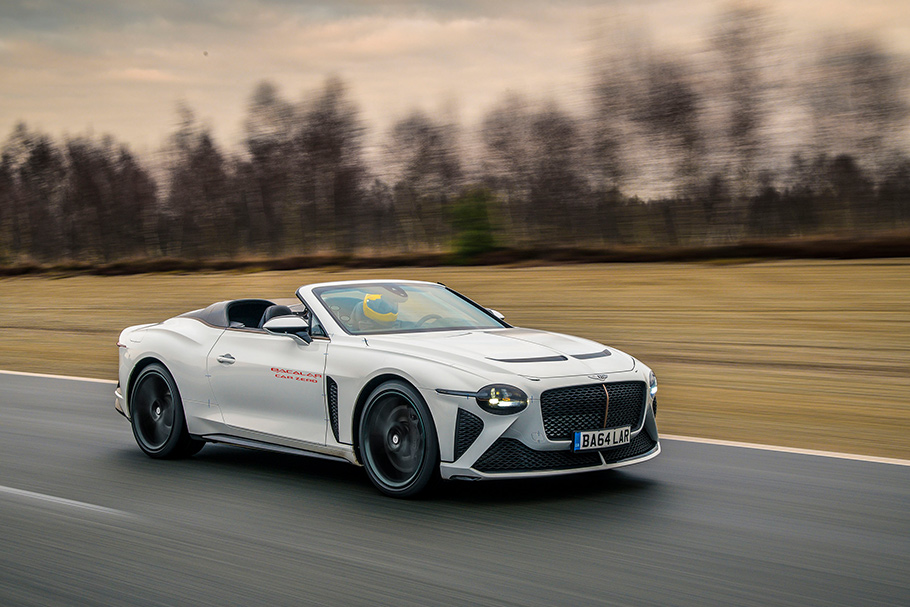
    Bacalar Car Zero, a purpose-built engineering prototype and the first barchetta-style Bentley of the modern era, is already accumulating mileage and passing crucial quality tests at a variety of locations around Europe.

    The on-car validation programmes have been condensed into an extremely busy schedule covering 20 weeks. So far, the car has completed wind tunnel-based aerodynamic assessment, high speed stability and top speed testing, handling and dynamics evaluations, appraisal of noise and vibration, and careful thermal measurements. The car now enters a period of ongoing customer-focused mileage accumulation and durability work, before a phase of climate cycle testing up to 80 °C and an intensive electrical system validation.

    All of this work is vital to sign-off the new and bespoke nature of the Bacalar – the car includes a total of more than 750 new components, all of which have to pass Bentley’s exceptionally stringent quality, functionality and durability standards. More than 40 of those parts are crafted in carbon fibre, while a complement of nearly 100 are produced using rapid additive manufacture techniques.

    Bentley’s Director of Mulliner, Paul Williams, comments:

    “Very much like Blower Car Zero that we unveiled last week, Bacalar Car Zero is the crucial prototype that we’re using to sign-off the design, engineering and craftsmanship of this ground-breaking part of Bentley Mulliner’s future. The Bacalar is a thoroughly modern iteration of the coachbuilt Bentleys of the past – extremely rare, entirely hand-crafted, totally bespoke to each customer and exquisite in its details. The whole team behind the car is thrilled to see the prototype shrugging off every test we throw at it, and we’re really looking forward to starting the build of the 12 customer cars.”

    The Bentley Mulliner Bacalar
    Just 12 examples of this striking, limited edition model are being created, guaranteeing rarity and exclusivity, and offering supreme luxury and breath-taking performance. Bacalar looks to the future of bespoke luxury motoring – each model will be handcrafted in Bentley Mulliner’s workshop in Crewe, according to the individual customer’s personal.

    This exceptionally rare car is appropriately named after Laguna Bacalar in Mexico’s Yucatan peninsula, a lake renowned for its breath-taking natural beauty, continuing Bentley’s strategy of naming cars after remarkable landmarks which started with Bentayga in 2015.

    Bacalar has been brought to life by Bentley Mulliner, reviving its specialism in providing rare coach-built cars to only a few discerning customers. A roofless Barchetta design with all-new and highly muscular coachwork, embracing a myriad of options and materials, each Bacalar will be truly unique, the result of direct interaction between the Bentley Mulliner design team and the individual customer.

    Bentley Mulliner has an illustrious history and can proudly trace its roots back to the 1500s when the company’s original focus was customising luxurious, horse-drawn carriages. The remarkable Bacalar is therefore the culmination of almost 500 years of expertise and heritage in the art of vehicle design.

    A masterpiece of craftsmanship, the Bacalar is a seamless fusion of materials with an intelligent curation of technology. It draws on design DNA and materials inspiration from the beautifully sculpted, award-winning EXP 100 GT which was crowned ‘Most Beautiful Concept Car of the Year’ at the prestigious French Festival Automobile International and ‘Concept Car of the Year’ by GQ magazine. Materials include paint containing ash from rice husks, which provides a sustainable way of delivering a rich metallic finish, natural British wool and 5,000-year-old Riverwood sourced from the ancient Fenlands of East Anglia.

    The Bacalar features an enhanced version of Bentley’s peerless 6.0-litre, W12 TSI engine. The most advanced 12-cylinder engine in the world, it produces 659 PS (650 bhp) and 900 Nm (667 lb.ft) of torque. An advanced Active All-Wheel-Drive System varies the torque split between front and rear wheels. It allows the Bacalar to use rear-wheel drive as much as possible during normal driving for optimum efficiency and dynamic performance. The drivetrain is at the heart of the Bacalar, creating the ultimate open-air, two-seat luxury Grand Tourer available in the world today.

    Bentley Mulliner Returns To Coachbuilding
    With the Bacalar, customers have had the ability to work closely with a team of specialist designers to enhance their vehicle with a selection of unique materials and specially curated options. The Bacalar is the first – but other new bespoke Bentleys will follow as part of the Bentley Mulliner Coachbuilt portfolio – one of three divisions of the Bentley Mulliner organisation, alongside Classic (delivering the Blower Continuation Series) and Collections (responsible for the Continental GT Mulliner coupe and convertible).

    The new Bentley Mulliner Bacalar is a genuine ‘roofless’ Barchetta – a luxury, two-seat, open-air performance car, the likes of which have never been seen before. Handcrafted to the individual customer’s personal tastes, Bacalar is the ultimate expression of an open-top Grand Tourer: a spirited GT combining traditional handcrafted techniques with the latest cutting-edge technology.

    The Bacalar shares no body panel with any other car in the Bentley model line-up and derives inspiration from the dramatic EXP 100 GT concept car conceived to mark the company’s centenary last year. Indeed, it only shares one exterior component with a Continental GT – the door handle, simply because it contains the keyless entry system.

    The rear clamshell, wings and top deck of the Bacalar are crafted from carbon fibre, while the doors are lightweight aluminium. Combined with the use of three-dimensional printing, it has allowed designers to create an even more distinctive car.

    The exterior look of each model is completed in collaboration with individual customers, who have been able to further personalise their car, choosing from rare paint options, exterior treatments and design themes. The Bacalar represents a return to the exciting early years of Bentley, allowing owners to help shape the car of their dreams.

    The Legend Of Mulliner
    The legend of Mulliner is woven into the very fabric of Bentley. The tradition of bespoke craftsmanship has been passed down from generation to generation since the 1500s, when Mulliner was founded as a saddler.

    In the 1760s, the Mulliner family business refocused on coachbuilding and rose to prominence when it was commissioned to build and maintain carriages for the Royal Mail postal service. With the arrival of the motor car, the company stepped away from horse-drawn carriages and focussed on coachbuilding for mechanical propulsion.

    The then independent Mulliner crafted a bespoke, 3-litre, two-seater Bentley for the 1923 Olympia Show in London, creating a bond between the two companies that would last for decades. Mulliner bodied over 240 Bentley chassis in the 1920s alone and became renowned as the very best of the new coachbuilding firms.

    Perhaps the most famous was Mulliner’s design for the 1952 R-Type Continental, still considered one of the most beautiful cars of all time. The fastest, four-seat sports car of the era, the R-Type’s iconic beauty continues to influence design today through the Bentley Continental GT.

    Mulliner cemented its partnership with Bentley in 1959 by becoming part of the business. Today, around 40 employees, ranging from specialists with over 40 years of Mulliner experience to apprentices learning the skills that have been honed over decades of manufacturing, work for Mulliner.

  • Kia Sorento PHEV

    2021 Kia Sorento PHEV1

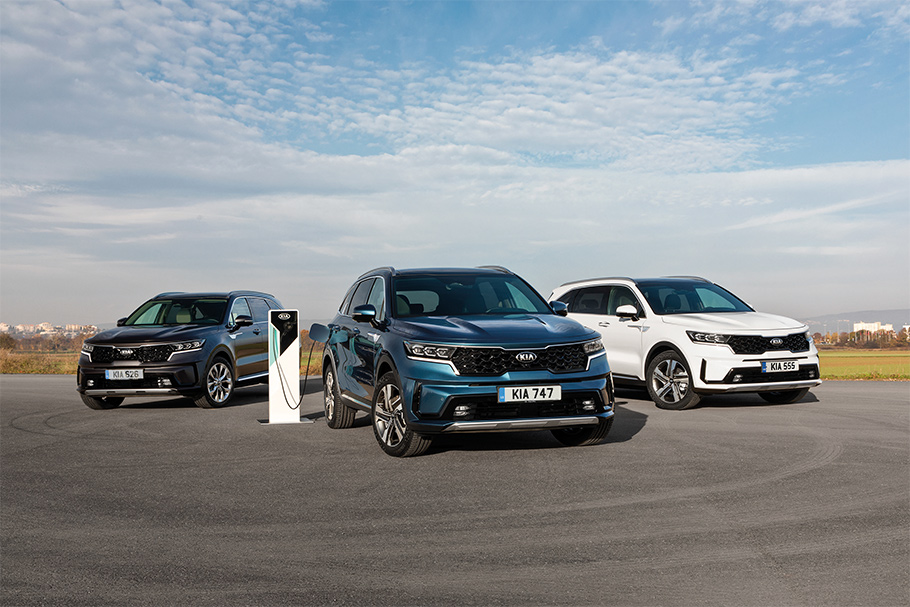
    Following the arrival of the self-charging hybrid and diesel versions of the all-new Sorento earlier in the year, Kia Motors (UK) Limited is pleased to announce prices for the new Plug-in Hybrid variants of its flagship SUV. Available across the Sorento’s entire trio of trim levels, the grade ‘2’ kicks off at £44,995, while the flagship ‘4’ edition is priced at £53,095. Nestling in between is the generously specified ‘3’ variant, which has a price tag of £48,895. All three versions are available to pre-order now from Kia dealers, with the first examples set to reach showrooms early in the New Year.

    The Plug-in Hybrid is the second electrified drivetrain in the Sorento line-up and sits alongside the low-emissions Sorento Hybrid. The latest addition to the range blends a powerful 1.6-litre T-GDi Turbocharged Direct injection petrol engine with a high capacity battery pack and high output electric motor, allowing the driver to complete an average daily commute to work purely on all-electric, zero emissions power. And the low CO2 emissions of the all-new Sorento Plug-in Hybrid makes it attractive for business users, thanks to its super low company car Benefit-in-Kind taxation rates.

    While many plug-in hybrid vehicles result in compromise, the fourth generation Sorento was designed from the beginning to accommodate electrified powertrains and deliver spacious accommodation for up to seven occupants. The larger body and all-new platform ensure that the latest iteration of the Sorento is one of the most spacious, practical and versatile electrified models on the market today.

    With the addition of the Sorento Plug-in Hybrid to the Kia line-up, the company now offers four different plug-in hybrid products, across a variety of different segments. Ceed Sportswagon, XCeed, Niro and now the Sorento seven-seat SUV all offer the capability of zero-emissions driving, with the flexibility of a combined plug-in hybrid and petrol powertrain.

    The most powerful model in the range is also the lowest emitting

    The combination of a high-power output electric motor, high capacity lithium-ion polymer battery pack and a punchy 1.6-litre T-GDi turbocharged petrol engine results in the most powerful Sorento SUV ever. Power is sent to all four wheels via a newly designed six-speed automatic transmission. The gearbox allows the full power of the engine and electric motor to be harnessed and transferred in parallel, with a minimal loss in energy. The result is highly responsive acceleration, and the lowest CO2 emissions of any model in the Sorento line-up.

    The launch of the Sorento Plug-in Hybrid introduces a range of innovations throughout the powertrain that all combine to ensure that it is the most advanced, efficient PHEV to-date from Kia. An independent battery pack water-cooling system makes its debut for the first time in a plug-in hybrid and is designed to ensure optimal heat management and efficiency for the high-voltage battery pack. A new two-stage lamination process for the rotor on the electric motor aims to reduce noise and vibration levels, while the engine itself features Kia’s latest ‘Smartstream’ innovations, including Continuously Variable Valve Duration technology, which regulates the duration that the intake valves open and close, depending on the driving conditions. This innovation allows the powerplant to operate on different combustion cycles, seamlessly optimising both engine performance and fuel efficiency.

    The full-size, seven-seat SUV will deliver an equivalent all-electric range (EAER) of up to 57 kilometres (WLTP*) from a single charge of its 13.8 kWh battery pack. In urban environments it is capable of travelling up to 70 kilometres on a single charge (EAER city) before its turbocharged petrol engine starts up. Drivers are therefore able to complete many journeys, such as their daily commute, on zero-emissions electric power alone.

    Its plug-in hybrid powertrain also promises the lowest CO2 emissions ever offered by the Kia Sorento. With emissions of just 38 g/km (WLTP, weighted combined**), the new model is one of the most efficient vehicles in its class***.

    UK homologated figures will be announced in due course.

    Eye-catching design and room for seven in comfort

    The fourth generation Sorento is the largest SUV in Kia’s European line-up and features an all-new platform with electrification at the forefront of the bold design. The car’s high-capacity 13.8kWh lithium-ion polymer battery pack is located beneath the driver and front passenger seats. The battery pack is sandwiched between the cabin floor and the Sorento’s underfloor, meaning there is no compromise on space. The Sorento PHEV’s 67-litre fuel tank is located beneath the floor underneath the second row of seats, while the 3.3 kW on-board charger is situated beneath the cargo floor.

    Like its self-charging hybrid and diesel stablemates, there’s generous space for seven occupants, as well as offering one of the largest cargo carrying capacities in its class. With all seven seats in use, there’s still 175 litres of space for weekend luggage or shopping, while this expands to an exceptional 809 litres with the rearmost seats folded down flat and the Sorento operating in five-seat mode.

    The cabin of the all-new Sorento is arguably one of its biggest attributes, and this remains largely unchanged in Plug-in Hybrid guise. The 12.3-inch fully digital instrument cluster gets a makeover, however, with new graphics and dials to provide drivers with the powertrain’s status. This enables drivers to keep an eye on the battery’s charge status, as well as the flow of electricity and petrol power through the powertrain. From the ‘3’ grade up, the 10.25-inch touchscreen infotainment system has additional functionality to enable drivers to more easily locate vehicle charging points while on the go.

    Three comprehensively equipped trim levels

    All models in the Sorento Plug-in Hybrid line-up, including the phenomenally specified Sorento ‘2’, feature LED technology for the headlights and rear combination lights, as well as for the daytime running lights, front and rear fog lights and high mounted brake light. 19-inch alloy wheels and a temporary space saver spare wheel are standard equipment, with roof rails not only boosting the all-new Sorento visually, but also adding versatility if there’s ever a need to carry additional loads. A black front radiator grille is married to wheel arch body mouldings and side sills in the same colour, with all versions featuring front and rear skid plates in silver.

    Black cloth upholstery is married with light grey headlining to deliver a smart two-tone appearance in the cabin, and the front seats and leather steering wheel are both heated. Seven seats are standard on all editions of the Sorento, including the PHEV, unlike some rivals, with 60:40 split, remote folding and reclining for the second row and a 50:50 split and fold arrangement for the rearmost chairs. USB charge ports are handily provided for all three rows, ensuring that occupants continue to be entertained while on the move, and don’t run out of juice. Dual-zone automatic air conditioning also includes outlets for seats six and seven.

    Electrically folding, adjustable and heated door mirrors feature integrated LED indicator lights, and there’s an auto-dimming rear-view mirror, rain sensing front wipers and automatic headlight control.

    In car entertainment is looked after thanks to DAB radio with a multi-device Bluetooth® connection and voice recognition and music streaming, Android AutoTM and Apple CarPlayTM smartphone integration. A reversing camera system with dynamic guidelines is integrated into the 8.0-inch touchscreen and includes front and rear parking sensors.

    A suite of safety systems features on the all-new Sorento, with seven airbags that incorporates a front centre airbag, in addition to the usual driver and front passenger, twin curtain and pair of front side airbags. Forward Collision Avoidance Assist (FCA) incorporates city, pedestrian, cyclist and junction detection, the latter warning of an oncoming car from the other side of the road when turning at a junction and, if a

    collision appears likely, applies the brakes to stop the car. The system relies on the front camera and radar and it is dependent upon the indicators being operated, as doing so allows the system to understand the driver’s intent to turn across the traffic.

    Lane Follow Assist (LFA), Intelligent Speed Limit Assist (ISLA), Manual Speed Limit Assist (MSLA), Trailer Stability Assist (TSA) and Driver Attention Warning (DAW) all feature, along with Hill-start Assist Control (HAC), Downhill Brake Control (DAC) and an electronic parking brake (EPB) with Auto Hold functionality. Drive Mode Select allows the driver to tailor the driving experience more to their tastes, with a choice of ‘Smart’, ‘Eco’ and ‘Sport’ modes, while Terrain Mode Select incorporates three settings – ‘mud’, ‘snow’, and ‘sand’. Multi-Collision Brake Assist (MCBA) is a new innovation for all-new Sorento, as is Smart Cruise Control with Stop and Go functionality and E-call, which automatically summons the emergency services in the event of an accident. An advanced anti-theft alarm system is provided with remote central door locking with fold-away key.

    Move up to ‘3’ specification and the radiator grille gains a more striking glossy black appearance, and a satin chrome finish is applied to the exterior door handles. The LED headlights adopt bi-functionality and privacy glass is included as standard. Inside, the centre fascia adopts a premium etching finish that is both striking and classy. The upholstery is upgraded to black leather, there’s eight-way power adjustment to both of the front seats, and heaters are provided for the outer chairs on the second row. The cabin’s Mood Lighting system allows users to tailor the cabin even further, with the interior illuminated in one of seven pre-set ‘core’ colours, or from a wider range of 64 shades.

    The Sorento ‘3’ also includes Kia’s innovative UVO Connect telematics system, connecting drivers by providing invaluable information via the in-car touchscreen and on their smartphone. Featuring Kia Live services and accessible through the uprated 10.25-inch LCD widescreen, the system displays live traffic information, weather forecasts, points of interest, and details of potential on- and off-street parking (including price, location and parking availability). UVO Connect also enables drivers to send route directions to their car before a journey and check the location of their vehicle at any time. A wireless smartphone charger also sits at the base of the centre console

    An engine start/stop button with Smart Entry system adds to convenience, alongside a Smart power tailgate and Highway Driving Assist (HDA), a driving convenience and safety system that reduces driver burden on motorways and A-roads by controlling the vehicle’s steering, acceleration and deceleration functions to maintain the speed set by the driver, keeping a safe distance from the vehicle directly ahead, and positioning the car in the centre of its current lane. Comfort levels are further boosted by the fitment of self-levelling rear suspension.

    At the pinnacle of the all-new Sorento range is grade ‘4’, and this flagship model features fine black Nappa leather upholstery with a contemporary black headlining and 10-way power adjustable driver’s seat with electric lumbar support and integrated memory system. There’s ventilated front seats and a panoramic sunroof with tilt and slide functionality and automatic electric roller blind. A head-up display projects driving information onto the base of the windscreen in the driver’s line of sight, with the system displaying alerts from the car’s numerous driver assistance technologies, details of vehicle speed, and turn-by-turn navigation instructions. A powerful 12-speaker BOSE® surround-sound audio system is also included on the top-of-the-range Sorento ‘4’, delivering a more immersive sound to all three rows.

    Smart metal pedals deliver a dynamic ambience to the cabin and Blind-spot Collision Avoidance Assist (BCA) helps the driver avoid collisions on busy sections of the motorway. A 360-degree Around View Monitor is incorporated into the 10.25-inch touchscreen and works alongside the Parking Collision-Avoidance Assist (PCA) system. PCA works by preventing the vehicle from colliding with pedestrians or nearby obstacles when the driver parks the car or is reversing out of a parking spot. Using its rear-view camera and rear ultrasonic sensors, if it anticipates a collision, the system warns the driver with visual and audible alarms while engaging the vehicle’s brakes automatically to prevent the collision.

    Production begins, with pre-order books open now

    The Kia Sorento Plug-in Hybrid has started production this week at Kia’s Hwasung manufacturing facility in Korea. Like all Kia models, the Sorento PHEV is covered by Kia’s 7-year/100,000 mile warranty. The warranty also covers the car’s electric motor and battery pack.

  • Jaguar Vision Gran Turismo SV

    2021-Jaguar-Vision-Gran-Turismo-SV1

    A maximum speed of 255mph, an aerodynamic design honed to perfection and race-winning powertrain technology define the Jaguar Vision Gran Turismo SV – the latest all-electric virtual race car developed for Gran Turismo, and built in the real-world as full-scale design study.

    The Jaguar Vision Gran Turismo Coupé – the first all-electric Jaguar sports car created for the globally-renowned Gran Turismo series revealed in October 2019 – has already proved highly successful, attracting gamers with its radical, heritage-inspired design, driver-focused interior, and outstanding ride and handling.

    Yet to the team from Jaguar Design, SV and Jaguar Racing, the Vision GT Coupé represented only the starting point for development of the Vision GT SV. It was an opportunity to re-evaluate everything that could improve performance and in doing so, re-think what an electric Jaguar endurance race car could be.

    Fundamental to that process was detailed analysis of gamer feedback from online videos and forums. This ‘virtual world testing’ combined with many hours ‘behind the wheel’ enabled the design and engineering teams to determine exactly how to optimise the Vision GT SV to create the perfect electric gaming endurance race car.

    Julian Thomson, Design Director, Jaguar, said: “Jaguars created for the race track and the road have always shared the same DNA – whether that’s the D-type and XKSS, or the I-PACE and the I-TYPE. So, when the design team behind the Vision GT Coupé were asked to create the ultimate electric gaming endurance racer for Gran Turismo, they worked with engineers from SV and Jaguar Racing to create something really special.

    “The Vision GT SV is a dramatic and visually arresting car which showcases what’s possible when the traditional boundaries governing real-world car design are completely removed. In bringing this car to life with a full-size design study we’ve been able to showcase the most extreme version of an electric Jaguar race car that is inspired by the past but looks fearlessly to the future.”

    Designed as the ultimate virtual endurance racer, the Jaguar Vision GT SV pays homage to its illustrious forebears not only in a host of styling and surfacing references but in its unique circuit board livery which nods to milestones such as the Le Mans debuts of the C-type and D-type in 1951 and 1954 respectively.

    Engineered by experts:

    The streamlined, lightweight composite body structure now houses four Jaguar Racing and SV-designed electric motors to the Coupé’s three, generating a combined output of 1,903PS (1,400kW) and 3,360Nm of instant torque with the traction and dynamics benefits of intelligent all-wheel drive and torque vectoring. Acceleration from 0-60mph takes just 1.65 seconds, on the way to a maximum speed of 255mph.

    The task of harnessing the Gran Turismo SV’s power to deliver an even more exhilarating racing experience for gamers fell to Jaguar’s SV engineering team.

    Jamal Hameedi, Engineering Director, Jaguar SV, said: “We were given one objective: take everything that makes the Jaguar Vision GT Coupé so special – the performance, the handling and the soundtrack – and take it to another level.

    “The team didn’t just achieve that target – they exceeded it, developing a virtual electric car which really could compete successfully in the extremes of 24-hour endurance racing. Not only that, they were able to see their work in the virtual world, turned into reality with the production of the stunning full-scale model which will no doubt excite gamers about what’s to come in Gran Turismo.”

    The Vision GT Coupé’s elegant silhouette is still clearly recognisable in the GT SV, including the curvature of the C-type and D-type-inspired fenders, and – even with the additional motor driving the front axle – the wheelbase remains unchanged at 2,721mm.

    Measuring 5,540mm from nose to tail, the GT SV is 861mm longer overall – a change driven entirely by aerodynamics. To deliver the increased downforce needed for greater traction for faster cornering and increased high speed stability on long straights, the GT SV has a new front splitter and a new deployable rear wing.

    To solve the often conflicting requirements of increasing downforce while also minimising drag, the SV team worked with Jaguar’s designers to develop a full suite of features which work together to improve dynamics, stability, performance and efficiency.

    In addition to the larger, more effective splitter – which produces downforce over the front axle – apertures in the front valance channel air across the face of the front wheels to reduce turbulence and help air to flow cleanly towards the rear of the car. Air passing through the wheel wells is also smoothed towards the rear via exit vents in the fenders.

    The completely enclosed, sculpted underbody – which includes a keel element behind the front axle to aid high-speed stability – accelerates airflow, reducing its pressure and therefore helping to reduce lift, before it exits at the rear via a large venturi.

    The single most effective aero feature developed for the GT SV is its deployable rear wing, inspired by endurance racing cars from Jaguar’s rich lineage, including the XJR-14. Meticulously developed from concept to final design through many iterations, the wing’s main, fixed, section wraps over and around the back of the car, blending smoothly into the rear haunches.

    The wing is designed as an integral element of the sculpted bodywork while also providing the aerodynamic performance required for endurance racing: two moveable sections automatically rise at speed to deliver extra downforce when needed but drop back to their nominal positions to minimise drag.

    As a result, the GT SV has a drag coefficient of Cd 0.398 – remarkably low for a race car – but also generates 483kg of downforce at 200mph.

    Micheal O’Regan, Aerodynamics Senior Engineer, Jaguar SV, said: “All the aerodynamic features have been painstakingly optimised through cutting-edge computational fluid dynamics analysis – in exactly the same way we do with real-world projects such as the Jaguar I-TYPE Formula E race cars.

    “What I’m most proud of is how we’ve developed the GT SV into a credible electric race car with performance on a par with current endurance race cars – and in such a short space of time.”

    Electrifying performance:

    Jaguar Racing engineers developed the GT SV’s extraordinary quad-motor all-electric propulsion system. They also designed the system for the first Jaguar Vision GT car, applying all of their knowledge and experience from developing the Jaguar I-TYPE over six successive seasons.

    The work was split into two main projects: A second 407PS (300kW) motor to the front axle to deliver the higher power and torque ratings required. Then the thermal management system was further improved to cope with the higher loads and to ensure that sustained high speeds and extreme acceleration could be maintained throughout an endurance race.

    With one motor driving each wheel, the GT SV’s propulsion system generates a combined output of 1,903PS (1,400kW) and 3,360Nm torque. Each motor has its own single-speed transmission: these are designed to give the strength and robustness needed for the high torque ratings, together with minimal mass and friction for optimum efficiency, and the capability to deliver the car’s 255mph top speed.

    As well as electric all-wheel drive the one motor per wheel configuration also enables infinite control of lateral and longitudinal torque distribution, delivering a step-change in torque vectoring capability for even greater traction, agility, and control.

    Power comes from a state-of-the-art lithium-ion battery pack which is housed low down in the GT SV’s light, stiff body structure, delivering a low centre of gravity, a low roll centre and near-perfect weight distribution.

    James Barclay, Team Director, Jaguar Racing, said: “Working on the development of Jaguar’s Formula E I-TYPE race cars in parallel with the Vision Gran Turismo SV has given the Jaguar Racing engineers an unprecedented opportunity to apply their expertise to two incredible electric race cars – our most advanced Formula E car yet, and an endurance racer for the virtual world.

    “Both have been designed and developed using state-of-the-art simulation tools to push all-electric powertrain and software technology to the limit, and we can’t wait to see them perform in Season 7 and Gran Turismo.”

    The thermal management system is enhanced by an additional liquid nitrogen circuit which provides extra capacity to enable the battery to provide maximum power for longer while remaining within its ideal temperature range. The nitrogen cooling is also linked to the boost button within the cabin to ensure that even during the most demanding operating conditions the battery will not exceed its upper temperature limit.

    The ultimate virtual driving experience:

    The unique, powertrain soundscape so fundamental to the visceral driving experience of the Jaguar Vision GT Coupé has been further enhanced for the GT SV version. Reflecting the increase in power and torque from the four electric motors to its precursor’s three, the GT SV generates a sound that is even more purposeful and distinctive, and is authentically yet futuristically Jaguar. Building to a crescendo at the 40,000rpm redline, it reflects the GT SV’s true racing DNA and delivers unrivalled driver reward.

    The experience is heightened by an interior designed for racing. The pure, sweeping surfaces within the cockpit truly envelop the driver and position the instruments and perfectly weighted controls exactly where they need to be. Every component is beautifully crafted with absolute precision from advanced lightweight materials, including the new TYPEFIBRE fabrics used to cover the two sculpted composite seats. TYPEFIBRE is an innovative system of performance materials being developed by Jaguar to deliver a lighter alternative to leather with outstanding comfort and durability. TYPEFIBRE fabrics will be tested by Jaguar Racing in the I-TYPE 5 during season 7 of the ABB FIA Formula E World Championship.