2012 Infiniti G37x S is simply a combination of luxury style, dynamic performance and safety of intelligent all-wheel drive. The model is the latest one to be added to the Infiniti G Saloon line-up. What is very peculiar here is that the 2012 Infiniti G37x S is the model from the G range to be available with S grade AWD. Back in the days, only GT was available with AWD.
Being a true G model, the G37x S is propelled by its 3.7-litre V6 engine, which is mated to a 7-speed automatic transmission with paddle shifts. This combination delivers 320 hp (235 kW) and acceleration time from 0-62mph in just 6.0 seconds.
In addition, the car’s top speed is 149mph and the figure of the official combined fuel consumption is 25.7mpg (11.0 l/100km) with CO2 emissions of 255g/km.
The AWD model in the G line-up – the 2012 Infiniti G37x S can be distinguished by its S hallmarks. For instance, such are the red S badges, 18-inch Sport design alloy wheels and smoked lens headlights.
The interior features sports seats, with 14-way electric adjustment for the driver, and aluminium pedals and footrest. This special version also comes with the Multimedia pack of hard disk drive (HDD) navigation and music systems, 10-speaker Bose® Premium Sound System, reversing camera and high resolution touch screen.
2012 Infiniti G37x S
Additionally, 2012 Infiniti G37x S comes as a standard with leather seat facings, Shodo aluminium trim, adaptive bi-Xenon lights, Scratch Shield paint, i-Key smart access, electrically adjustable front seats and steering column, and heated front seats.
Furthermore, the flagship Infiniti G37 S Premium comes with 4-Wheel Active Steer (4WAS), sports suspension, sports brakes and Viscous Limited Slip Differential. In addition, it also is equipped with Intelligent Cruise Control (ICC) and Intelligent Brake Assist (IBA), which are just two of a wide range of electronic safety aids.
The price for the 2012 Infiniti G37x S starts from £38 979.
2013 Cadillac SRX Luxury Crossover comes with improved technology and design. One of the new features included in the 2013 model version is CUE, thein-vehicle user experience which incorporates touch-screen controls.
Furthermore 2013 SRX’s enhanced technology also brings more safety, tank to the Cadillac’s new Driver Awareness and Driver Assist technology packages, which include: Rear Cross Traffic Alert, Cadillac’s Safety Alert Seat technology, Automatic Front and Rear Braking, Adaptive Cruise Control and more, using radar and other technologies to help avoid collisions.
Next, some updates can be seen on the interior and exterior design as well. In details, the 2013 SRX has a refined appearance with a new design for the front upper and lower grilles. Additionally, the front fender vents are new and incorporate LED light pipes.
Moreover, now are available three new exterior colors, namely: Evolution Green Metallic, Glacier Blue Metallic and Silver Coast Metallic.
What adds more to the modification of the exterior is the new range of 20-inch wheel designs, including new chrome and polished aluminum wheels for the Performance and Premium Collections.
To go even further into details, the SRX is offered in FWD and Advanced AWD models. Each one of them is powered by a 3.6L Direct Injection V-6 engine, which delivers 308 horsepower (230 kW) and 265 lb.-ft. of torque (358 Nm).
2013 Cadillac SRX Luxury Crossover
As already mentioned, Cadillac CUE (Cadillac User Experience) is one of the new features included in the 2013 SRX, which now comes as a standard. It is the brand’s new design and technical breakthrough for intuitive in-vehicle control and connectivity.
What it basically does is that it pairs entertainment and information data from up to 10 Bluetooth-enabled mobile devices, USBs, SD cards and MP3 players with a vehicle infotainment system.
The heart of CUE however, is the vibrant, eight-inch LCD multi-touch sensitive integrated in the top of the central instrument panel.
CUE is the foundation for the new 2013 Cadillac SRX. Nevertheless, what is additionally included in the interior are these features and design refinements: Standard HD radio, Bluetooth audio streaming, USB port in the storage bin behind the CUE faceplate, center console now featuring two additional USB ports, SD card slot auxiliary input jack and 12-volt power outlet, new headphone and remote design for the rear-seat entertainment system, new shift knob design, new steering wheel design, new instrument cluster with new driver information center for CUE integration.
What has to be highlighted for the new model is that it is equipped with unique noise cancellation which creates a quieter driving experience. In particular, this system uses microphones to detect ambient noise, the frequencies of which are processed by a computer that directs counteracting sound waves through the audio system to tailor the sound quality and character inside the cabin.
Moreover, a new Light Titanium interior color combination comes to go along with the new Raven Sapele wood color accent.
Additionally, further already well-known interior features are included: keyless access, ambient lighting, power-adjustable pedals, heated front and rear outboard seats, heated steering wheel and the UltraView power sunroof.
2013 Cadillac SRX Luxury Crossover Interior
2013 Cadillac SRX is the latest model from the brand, which incorporates Cadillac’s “control and alert” strategy. The latter incorporates advanced technologies such as radar, cameras and ultrasonic sensors. They are part of the safety features of Cadillac’s new Driver Awareness and Driver Assist technology packages and include: Forward Collision Alert, Lane Departure Warning, Rear Vision Camera with Dynamic Guidelines, Safety Alert Seat.
Safety features which come as a standard are: blind zone alert and rear cross traffic alert, StabiliTrak electronic stability control system with traction control, and four-wheel disc brakes with four-channel ABS, dual-stage frontal and side-impact driver and right-front passenger air bags, head-curtain side-impact air bags, rollover mitigation sensors, front safety belt pretensioners and load limiters.
independent, strut-type, specifically tuned coil springs, direct-acting stabilizer bar (hollow); hydraulic ride bushings
Rear suspension:
linked H-arm, hollow stabilizer bar; real-time damping available
Traction control:
all-speed using engine torque reduction and brake intervention
Steering type:
hydraulic-power-assisted rack-and-pinion
Steering wheel turns, lock-to-lock:
2.84
Turning circle, curb-to-curb
(ft / m):
40.3 / 12.2
Steering ratio:
16.5:1
Brakes
Type:
four-wheel power-assisted disc with ABS (and ESC); vented front and rear rotors; cast iron front calipers (two-piston) and aluminum rear calipers (single-piston)
Brake rotor diameter – front (in / mm):
13.6 / 345 x 1.2 / 30
Brake rotor diameter – rear (in / mm):
12.4 / 315 x 0.9 / 23
Swept area per rotor cheek
(sq in / sq cm):
front: 81.7 / 527.5
rear: 48.7 / 314.7
Wheels/Tires
Wheel size and type:
18-inch aluminum (std. on Base and Luxury)
20-inch aluminum (opt. on Performance and Premium)
2012 Toyota Yaris Hybrid is a breakthrough in the development of technologies. The reasons for this are several, but probably some of the most prominent ones are the low emissions, refined performance and reliability of full hybrid technology.
This hybrid model is available to order now and can be seen on the UK roads, starting from 1st of July this year. Its price starts from £14 995, which makes it Britain’s lowest-priced hybrid car.
What is more important here however is that it is equipped with range of technologies which are significant in terms of improvement on many levels. First, the hybrid system has been made smaller and lighter so that it can be fitted to the Yaris without reducing the space available in both the cabin and the boot.
Secondly, the new development of Toyota’s smooth, quiet and highly efficient Hybrid Synergy Drive system, uses a 1.5-litre VVT-i petrol engine, nickel-metal hydride battery pack and CVT (continuously variable transmission). This results in CO2 emissions of just 79g/km for the T3and T4 models and 85g/km for the T Spirit. The fuel consumption respectively is estimated 80.7mpg and 76mpg.
2012 Toyota Yaris Hybrid
Furthermore, the Yaris Hybrid range offers three grades available: T3, T4 and T Spirit, which all come with five doors.
Key equipment features of each grade:
2012 Toyota Yaris Hybrid T3:
2012 Toyota Yaris Hybrid T4 adds:
2012 Toyota Yaris Hybrid T Spirit adds:
Dual-zone air conditioning
15-inch alloy wheels
16-inch alloy wheels
Front electric windows
Rear privacy glass
Cruise control
ABS with EBD and brake assist
Front fog lams
Smart start system
VSC (switchable) with TRC
Toyota touch audio control
Electric rear windows
Seven airbags, including driver’s knee airbag
Bluetooth
Rain-sensing wipers
Auto dimming rear-view mirror
Dusk-sensing headlights
USB port/Aux-in socket
Ventilated glove box
DAB-ready tuner
Leather parking brake trim
Rear-view camera
Part-leather upholstery
Leather steering wheel and gear knob trim
Passenger seat height adjustment
Color-matched door mirrors and door handles
Front foot-well illumination
Rear spoiler
In addition, four option packs are also at hand for T4 and T Spirit versions of Yaris Hybrid. They give the models more style or enhanced protection. In details, the Protection Pack provides mudflaps, Hybrid-branded floor mats, black side mouldings and a boot liner. Next, the Protection+ Pack provides the same items, plus rear parking sensors and a black rear bumper protector.
On the other hand, the Style Pack offers Hybrid-branded aluminium scuff plates and chrome-finished side sills and tailpipe trim.
Additionally, there can be also added the Toyota Touch system which comes with satellite navigation and advanced Bluetooth features, plus the ability to access Google Local Search and connected services (as live parking and fuel price information and local weather forecasts).
2012 Toyota Yaris Hybrid is available in great range of colours: Cirrus White, Eclipse Black (mica), Glacier Pearl (pearlescent), Tyrol Silver (metallic), Burning Red (metallic), Decuma Grey (metallic), Sintra Blue (metallic) and Deep Aqua (metallic); which can undoubtedly satisfy any customer.
2012 Toyota Yaris Hybrid Interior
On-the-road prices for the range are detailed below. All models are in Band A for Vehicle Excise Duty (road tax), which means a zero annual charge; likewise their sub-100g/km emissions gain exemption from the London congestion charge. For company car drivers the benefit-in-kind tax rate is just 10 per cent. Insurance groups are due to be announced in June.
The styling and performance expert Vorsteiner has just released its latest project. The work was on the exceptional Mercedes-Benz C63 AMG.
The astonishing vehicle comes from the factory with the extra vigor 6.2-liters V8 power unit which renders 451 horsepower (332 kW).
But thank to the amazing work of the professionals from the Vorsteiner, the stellar Mercedes C63 AMG now becomes even sharper and gets aggressive styling due to the great detailing.
The new Vorsteiner’s program for the Mercedes Benz C63 AMG includes front add-on spoiler and front vent louver covers, both of which are Carbon Fiber. More Carbon Fiber can be found on the new front hood grill replacement, front fender grill cover and side skirt panels.
Furthermore, the boot lid replacement with integrated spoiler wing element is again made with the utilization of the same material, as is the new rear vented diffuser element as well.
This brilliant machine rides on new 19 or 20 inch aluminum forged wheels.
Moreover the Vorsteiner team has gifted it with Stainless or Titanium Sport Exhaust system, thank to which it looks more appealing and offers more enjoyable ride.
At last to be mentioned are the Vorsteiner’s custom embroidered floor mats and trunk mats with piping color options, which give the vehicle even more style and unique appearance.
The award winning 2012 Citroën DS5 has just gone on sale in all UK dealerships. Its price ranges from £22 400 to £32 200 for the exceptional DSport Hybrid4 variant.
The new DS5 has all the qualities that a customer would like their car to have. It is bold, and has a modern styling with a luxurious aviation-inspired interior featuring. DS5’s a cockpit roof and pilot-style cabin makes it even more futuristic than ever before.
Moreover, it is a mixture of compactness and agility, spaciousness and versatility. The new 2012 Citroen DS5 has to offer five doors, five full-size seats and up to 465-litres of boot space. In addition, the brand’s designers have included in this model keyless access & start, smart beams, a colour head-up display and a new Lane Departure Warning System (LDWS).
Furthermore, Citroen DS5 will be available with a choice of four refined and efficient Euro V engines. Namely, they are THP 200, e-HDi 110, HDi 160 and the new 200hp diesel electric Hybrid4.
A highlight here is that this is the first production Citroen which is equipped with diesel hybrid technology, and carries the name 2012 Citroen DS5 Hybrid4. They will deliver outstanding performance, low CO2 emissions from just 99g/km and savings of up to 35% during urban driving. Undoubtedly, this will make any customer more than satisfied.
MINI brand is announcing the arrival of very special modifications of the emblematic vehicle, which are perfectly suitable for camping: a sumptuously appointed caravan with two sleeping bays and a roof top tent (also designed for two) in the classic John Cooper Works color scheme.
After the debut of the MINI Clubvan Concept at Geneva Motor Show, now it is time to be offered a very MINI holiday experience as well.
First, the MINI Cowley caravan offers everything that one needs to pitch camp in comfort: two welcoming sleeping berths, a twin gas-stove, a water tank with pump and dish module to charge the on connection to supply the refrigerator, TV/DVD and hi-fi stereo system.
The silhouette of the MINI Cowley model brings to mind the sweeping circular curves of the door trim inside a MINI. Plus, both side doors have sliding windows, and this reminds of how things were back in 1969.
The trailer is only twelve centimetres than MINI Clubman mirror to mirror and weighs just less than 300 kilograms (661 lb). Indeed, with its outstanding agility and fleetness of foot, there’s no danger of the hallmark MINI driving fun being left behind over long journeys.
And if there isn’t any chance for trailer coupling, such as the models of John Cooper Works, then the MINI Swindon roof might be a preferable solution. The tent can be fitted comfortably and with no effort to the roof of a MINI, MINI Clubman or MINI Countryman. The tent also offers a sleeping space for two persons and basically relieves one from the stress to constantly look for accommodation.
MINI Cowley Caravan and MINI Swindon Roof Top Tent
In addition, the roof-top tent works a treat. What is very comfortable here is that the sleeping position is elevated and will keep any passing-by animals away from the tent.
The design of the roof-top tent box allows it to blend in seamlessly with the MINI when closed. Its lower shell is painted Midnight Black, the upper opening section in Chili Red, which is a combination previously reserved for John Cooper Works models.
The exceptional BMW i8 Concept Spyder is an open-top two-seater, which can grab literally any heart! It has the entire necessary characteristic and in addition adds to them with sporting and emotional appearance.
This concept is purposefully built in order to meet the changing needs of customers and transform the understanding of personal mobility. It is equipped with intelligent technologies and definitely has an innovative design, however what is more is that now embraces a philosophy which adopts significant degree by sustainability throughout the value chain.
This is the third BMW i model, which is here to “inform” us what will be the future of cutting-edge and emotionally appealing mobility concepts. It is not only a mixture between sporting design with an open-top two-seater, but is also a combination of lightness, dynamic capability and efficiency with a very special aesthetic value.
What is worth mentioning as well is that it is a blend of intelligent lightweight design and state-of-the-art hybrid technology. This results in exciting sports car performance and driving pleasure combined with exceptional fuel-consumption unmatchable in this segment before.
BMW i8 Concept Spyder has the upward-swivelling, windowless doors and a range of purpose-oriented on-board equipment which features electric kickboards stowed under a transparent tailgate. The concept vehicle is built on the innovative LifeDrive architecture. The latter includes lightweight modular construction and the utilization of high-quality high-tech materials.
BMW i8 Concept Spyder
Furthermore, the BMW i8 Concept Spyder is a plug-in hybrid powered by an eDrive drivetrain. This drivetrain combines the excellent performance of the electric motor and petrol combustion engine, while the lithium-ion battery supplies the motor with power that can be recharged in an extremely short space of time from any domestic power socket. In addition, the car has significantly reduced weight, low centre of gravity and is precisely balance. Everything is combined with a system output of up to 260 kW (354 hp).
Like its Coupe sibling (2+2-seater BMW i8 Concept), the BMW i8 Concept Spyder blends intelligent lightweight design with the leading-edge drivetrain technology eDrive, which delivers extremely low fuel consumption and emissions.
The concept got compact dimensions and specific exterior paintwork. Additionally, it has the upward-swivelling, windowless doors and a transparent glass panel at the rear. How about the interior: a revised material is used and a colour concept provides an extra dose of sportiness.
Moreover BMW i8 Concept Spyder is built around the innovative modular LifeDrive architecture, which comprises of independent functional units. For instance, the carbon-fibre-reinforced plastic (CFRP) Life module gives the car an extremely lightweight passenger cell, while the Drive modules bring together all the car’s operational driving functions, such as the powertrain, chassis and safety structure. And thanks to the intelligent lightweight design and the use of innovative materials, the vehicle delivers great fuel-efficiency. In particular in the LifeDrive architecture the front and rear axle modules are connected by an “energy tunnel”, which houses the hybrid battery, this results in low centre of gravity and ideal balance.
The BMW i8 Concept Spyder’s includes emotion-led design as well which vividly spotlights the car’s qualities, with lightness, dynamic capability and efficiency highlighted to particularly prominent effect. The key elements which contribute for this sporty dynamic stance are the large body panels, a hunkered-down stance and numerous aerodynamic elements such as contact surfaces, spoiler lips, AirCurtains and aeroflaps.
What is more here is that the front end offers a revealing window into the open-top two-seater’s dynamic talent. In addition a spoiler lip on the windscreen frame guides the airflow over the heads of the passengers. Of course there is also featured a two-section folding roof.
Observed from side, the Spyder has short front and rear overhangs and a low-slung silhouette. Additionally, the alluring lines and forms generate a strong forward-surging stance even before the car powers off the line.
Compared to the front end, the rear also is positioned low to the road. Its headline feature is a transparent cover revealing the two folded electric kickboards accommodated below. A rear diffuser, three-dimensional air outlets and the U-shaped rear lights makes the BMW i8 Concept Spyder with extremely wide appearance and further emphasize its sportiness.
Going further, the interior of the BMW i8 Concept Spyder is defined by three levels. Each one has various functions. The interlocking of surfaces and lines for instance, is also one of the stand-out features of the interior design. On the other hand, the outer layer also frames the supporting structure, while the inner “comfort” layer includes seat surfaces and stowage compartments. The third layer is represented by the cockpit, and brings together the instrument panel, steering column and steering wheel with the instrument cluster, central information display and control elements. Of course, the car has a low drivers’ seating position. Moreover, an 8.8-inch (22.4 cm) screen displays the driving information in three-dimensional, high-resolution quality.
BMW i8 Concept Spyder Interior
Furthermore, the Spyder’s interior is a mixture of plastic, carbon and leather, with theoff-white of the outer layer and the bold orange tone of the naturally tanned leather generating a sporting atmosphere.
The BMW i8 Concept Spyder with eDrive means that it is a plug-in hybrid which combines two different power sources: electric motor and combustion engine. First, the electric motor produces 96 kW (131 hp) and it is on the front axle. It works in combination with a turbocharged three-cylinder petrol engine delivering 164 kW (223 hp) through the rear wheels. When combined, both units generate an aggregate system output of 260 kW (354 hp) and peak torque of 550 Nm.
And if you wonder about the acceleration data, well – here’s some: the Spyder accelerates from 0 to 100 km/h (62 mph) in just five seconds. It has a electronically limited top speed of 250 km/h (155 mph). It’s performance in other words is exceptional. However, despite these numbers, the two-seater burns just three litres of petrol per 100 kilometres!
Furthermore, the electric motor gets its energy from a lithium-ion battery which can be fully charged from a domestic power socket in less than two hours. The battery is located in the energy tunnel between the front and rear axle modules.
With its battery fully charged, the BMW i8 Concept Spyder can go up to 30 kilometres (19 miles) only on electric power. And if it is required, a high-voltage alternator hooked up to the combustion engine generates additional power, which is then stored in the hybrid battery.
Additionally, the concept vehicle has as wee the ability to send power through the front, rear or all four wheels at the same time. It has the intelligent control electronics, which ensure that the optimum drive configuration is available for the situation at hand. Next, the electronic systems ensure maximum energy recuperation under braking or when coasting.
BMW i is equipped with new generation of driver assistance systems such as the camera-based proactive Collision Warning system, Parking Assistant and Traffic Jam Assistant. Remote functions accessed via a smartphone are also included, such as the Last Mile Navigation function and the Intermodal Route Planning function.
Two large displays can be found inside the BMW i8 Concept Spyder. They make up the interface between the car, its passengers and the outside world. They are positioned next to the instrument cluster behind the steering wheel. What is innovative here is that all the screens display their information in 3D.
On the other hand the instrument cluster displays important driving and it is positioned alongside the digital speedometer. For example, the efficiency display allows drivers to view how much energy they are currently using, and shows extra navigation details and information on the car’s range as well. If the driver switches to energy-saving ECO PRO mode, the display turns blue in colour to signal the shift in functional emphasis, and the ellipses now also vary in form. By the same token, moving into SPORT mode treats the driver to an emotional orange hue. As well as the changes in colour, the displays also provide information tailored to the driving mode selected and to assisting the driver as effectively as possible.
BMW i8 Concept Spyder Specifications
Length/Height/Width
L 4480 mm, H 1208 mm, W 1922 mm
Wheelbase
2650 mm
No. of seats
2
Kerb weightTop speed
Acceleration
1630 kg250 km/h (155 mph) electr. governed
0-100 km/h (62 mph) 5 s 80-120 km/h (50-75 mph) 4.0 s
System output TwinPower Turbo engineFuel consumption (EU cycle)
Since its production in 1967 Chevrolet Camaro became an emblematic muscle car model which had captured and still enchants many hearts (including mine). With its distinctive exterior and strong stance, combined with an outstanding performance throughout its 45 year s of history, it is no surprise that it has become one of the iconic cars of our society.
Through the years from its first appearance in the automotive world, till 1992, the model underwent three transformational stages, through which it’s exterior, interior and performance were improved and eventually made the car famous.
In 1993 began the production of fourth generation Camaros. Until the year of 2002 they had a strong presence on the market, although after 2002 there was a eight year break in the production of the model.
In this period the car was even lighter in weight. It was made from plastic body panels over a steel space frame. In addition it had several optimizations in terms of suspension, for instance. What was new here was the LT1 V8 engine mated to a six-speed manual transmission. However, the V8 engine didn’t come as a standard but was optional instead and only went standard on Z28 models. As a standard came the 160 hp (118 kW) 3.4 L V6 engine working with a five-speed manual or four-speed automatic transmission.
No matter how much it had change through the years, Chevy Camaro manged to retain its main characteristics, which made its so popular. It still got the same coupe body style with 2+2 seating and was offered in a cabriolet version. There wasn’t any change regarding the rear-wheel drive as well.
An innovation to be highlighted is that now the anti-lock brakes were standard equipment for all models of the vehicle. And in time there were slight transformations of the interior and the exterior as well.
And the year of 2002 was the 35th anniversary of the model: its production in fact didn’t suffer any pauses but remained in continuous manufacture.
Nonetheless, due to sales drop, the Camaro was taken out of production.
The year of 2006 is that one when the model regained power and “got back to life”. This was the time when two concept models were developed – coupe and convertible, thank to which started the beginning of the fifth generation of Camaros. The new models however went on production three years later – in the spring of 2009, and been sold as 2010 model year vehicles.
no images were found
The coupe has been manufactured in LS, LT, and SS trim levels. The first two models are powered by a powerful 3.6 L V6 engine, which produces the exciting 304 hp (227 kW). Here the customers have a choice in terms of gear-shift: it can be either six-speed manual or a six-speed automatic with manual shift. On the other hand the more exuberant SS version is empowered by the 6.2 L LS3 V8 engine. The latter develops the outstanding 426 hp (318 kW) and is mated to a six-speed manual transmission. And if the driver is more keen of automatic gear-shift, than he or she has to be satisfied with the L99 V8 engine, which produces 400 hp (300 kW).
And as I already mentioned in the previous article, 2012 is they year when General Motors marks the 45th anniversary of the Camaro. As a natural consequence, the Chevrolet brand will release a special limited edition model finished in striking Carbon Flash Black with bespoke red and silver anniversary stripes, dark silver 20-inch alloys, a unique 45th anniversary leather interior with red, white and blue stitching and a one-off white-backed instrument panel.
Furthermore, the 2012 Camaro models include all of the characteristics that made the original muscle cars famous. That automatically means that they got great performance and stunning looks. All models come with six-speed manual or a six-speed automatic transmission. The power of the Chevy comes from its 6.2-litre V8 engine, which delivers the 432 hp (317 kW). This makes it possible for the new model to accelerate from 0 to 100 km/h in only 5.2 seconds.
Few, days ago Chevrolet brought Camaro further with the introduction of the 2013 Chevrolet Camaro 1LE. It includes and upgraded package and will be offered as usual in both coupe and convertible versions. The model carries V8 under its bonnet which is mated to a manual transmission as standard. The latter is able to produce the impressive 426 hp (318 kW) at 420 lb-ft of torque (569 Nm).
What is distinct for this model is that it has some new exterior features such as a matte-black hood, a front splitter and a rear spoiler. Regarding the interior, it includes suede micro fiber material, which covers the flat-bottomed steering wheel and the gear shift.
And by going through all the history around this emblematic muscle car, I can only say that it will undoubtedly stay in the automotive world for a long time in the future, due to its strong presence and successful history.
Chevrolet Camaro is a legend among the cars and it has been famous and gathered greater popularity since its launch in 1967. One of the main reasons for its initial popularity was probably that it had a unique characteristic: it combined a sports car driving feeling with an everyday drive. This iconic muscle car was in fact General Motor’s reply to the Mustang developed by Ford.
Till present there are five generations of the Camaro model, with the latest one being developed and released on the market just recently. As a matter of fact, 2012 is the year of 45th anniversary of the model and given that Chevrolet has decided to launch a special limited edition mode, to mark those 45 years of success.
First generation began, when the iconic Chevy was released for the first time in September 1966, preparing it for the model year of 1967. In particular the production of the first generation Camaros lasted for only two years – from 1967 until 1969.
Even back in the 1967, the first model of Camaro was offered in two variants: coupe and convertible. They were equipped with a standard 3.8l I6 engine which delivered 140 hp (104 kW) and was mated to a three-speed or to a four-speed manual transmission, or to their automatic equivalents. Later the same year, the powerful 290 hp (216 kW) 5.7 L (350 in³) V8 engine was introduced to the Chevrolet.
Going further to 1968, there wasn’t much of a change in the model. It got a similar look, although it had undergone slight cosmetic changes such as cloth trims, side marker lights, etc. What made it different was the modified grille and tail lights.
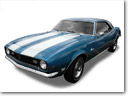
1968 Chevrolet Camaro Z28
Traveling even ahead in time, in 1969 the Camaro was again transformed and carried the name 1969 Chevrolet Camaro Hugger. Now it got a new sheet metal which made it lower and closer to the ground, and attributed to its wider stance. In addition, the model got a vinyl roof which made it distinct. And orange color version of the car eventually became emblematic.
1969 Chevrolet Camaro Hugger Orange
The production of the second generation Camaros lasted longer – from 1970 until the late 1981. The 1970–1/2 Camaro debuted as a 2+2 coupe and included new body style, looked sleeker, as well as optimized suspension. Nevertheless, no cabriolet version was offered, and in fact there wouldn’t be any convertible production of the Camaro until the third generation.
In terms of engines and drivetrain components there was nothing significantly changed. The major differences were made on the exterior and interior, which contributed to the growth in popularity of the car. What was new here in terms of technology was the 4.1 L six cylinder bas engine, which was actually the enhanced version of the previous 3.8 l one. The 4.1 L engive performed far better and produced 155 hp (116 kW). In the second generation the best performance was carried through the 6.5 L V8 engine, which delivered the astonishing 375 hp (280 kW).
It is apparent that the car was thoroughly restyled and now was even larger and with wider stance. However, the unique markers of the previous generation Camaro stayed untouched. For instance, in the second generation Camaros could be still seen the unibody structure, front subframe, theA-arm front suspension and leaf springs.
1972 Chevrolet Camaro Turbo 350
A highlight here is the introduction of the Z28 Special Performance Package in 1977. With it the customers enjoyed not only the amazing driving performance of the vehicle, but had the opportunity to ride on a car which produced 360 horsepower due to its 5.7 L V8 engine. Later in 1980 and 1981 to afore mentioned package was added an air induction hood scoop, with an intake door that opened under full throttle.
1977 Chevrolet Camaro Z28
Through the next ten years – from 1982 till the 1992, Chevrolet brand undertook the introduction campaign of the first Camaro models which were equipped with factory fuel injection and gave the customers the choice between Turbo-Hydramatic 700R4 four-speed automatic transmission and five-speed manual transmission. Furthermore, a new hatchback body style could be recognized in the third generation. Now, 16 inch wheels were standard, and the overall weight of the car was significantly reduced.
The iconic Chevrolet Camaro IROC-Z came for the first time on the world scene in 1985 and its production continued till the end of 1990. A lot of innovations and transformations were added during that period. For instance there was a new brake light added.
Worth mentioning is the new engine added two years later. Namely, it was the 5.7L 350 V8 engine, which eventually turned out to be the standard one for the IROC-Z models. What was specific about those particular Camaro models is that they only came with an automatic transmission.
Nissan 350Z is one of the most famous roadsters all around the globe thank to its sporting qualities and characteristics. 2012 SENNER Nissan 350Z Gold is a modification of the model vehicle, done by the German based auto-tuning company SENNER.
First, what grabs the eye is the incomparable Lemans Sunset Metallic. In addition the 350Z rides on new matt black polished 9 or 10×20 inch Barracuda Tzunamee wheel set, which is combined with supporting discs at front and back axes. The tires are Vredestein Ultrac Sessanta in the following sizes: 245/30 R20 90Y and 275/30 R20 97Y.
The running gear has an adjustable drag out and compression stages as well as the landing gear legs. In addition, for excellent command of the toe-in and camber angles there have been installed adjustable independent arm. The applied wheel-tyre combination can be mounted without any modifications of the car body-shell.
2012 SENNER Nissan 350Z Gold
More importantly, 2012 SENNER Nissan 350Z Gold is originally equipped with the 3,5 liters V6 engine, which delivers 280 hp (206 kW) as a standard at 363 Nm (268 lb-ft) maximal torque at cranked shaft. What has basically the SENNER tuning team done here is to improve the performance of the compressor. Hence, the vehicle now can deliver up 411 hp (302 kW) at 465 Nm (343 lb-ft) of torque.
Moreover, the 350Z is equipped wit the catalyst Invidia Q300 stainless steel exhaust system, where the emissions can be carried out through the double flow system which includes a Y-type pipe and has an EG certificate.
At last, there is a LED Z-symbol on the back lights and the reflectors on the front bumper are grey. Nonetheless, the front WY21W type blinkers are in chrome and the rear blinkers on the bumper are lower to the left and they have no fog lights.
Which is the most technically advanced Volvo model ever created? The answer is the new 2012 Volvo V60 Plug-in Hybrid, which now is available for order. As a matter of fact this is the world’s first diesel plug-in hybrid vehicle.
2012 Volvo V60 Plug-in Hybrid is an innovative car, which represents a big bold step in the evolution of electrification. And in addition it also proves for the brands philosophy, which is not only ahead in time but embodies a lot of environmental issues into practical resolution.
For launch of the first 1000 units of the car, Volvo Car Corporation decided to release today series of witty “unboxing webisodes”, first of which you can watch below.
httpv://youtu.be/J82oWPv4xmo
Basically, for this launch Volvo shows the importance of the car as being a technological booster for the brand. Indeed, it is a technological innovation, worth putting attention on. This is why the series of those entertaining webisodes were created. Their title “Unboxing” stands for the revealing of the revolutionary technical innovations of the world’s first diesel plug-in hybrid.
In particular, 2012 Volvo V60 Plug-in Hybrid can be recharged from a regular power outlet (230V/6A, 10A or 16A), and it drives up to 50 km on Pure mode (battery) with zero tailpipe emissions. When the driver switches to hybrid mode, the diesel engine and electric motor cooperate together, ensuring the optimal balance between driving pleasure and environmental contribution.
What has to be highlighted here is that the CO2 emissions in Hybrid mode are as low as 49g/km, and they are corresponding to diesel consumption of 1.9l/100 km.
The car has a total range of up to 1,000 km. And when the driver selects the Power mode, the V60 develops its maximum power up to 280 horsepower (206 kW). Then the acceleration from 0 to 100km/h can happen in just 6.2 seconds.
What other car can deliver supreme sportiness, style and comfort other than Mercedes-Benz SL Roadster from Mercedes-Benz. In just in a day it is going to be available at all dealerships of the brand.
2013 Mercedes-Benz SLRoadster has a body-in-white, which was produced from all-aluminium constructions as this happens for the first time. The customers can choose between two new powerful 6- and 8-cylinder engines featuring cutting-edge injection technology. In addition the ECO start/stop function comes as standard. What is specific about these newly developed engines is that they are saving up to 29 percent more fuel than their predecessors.
Additional innovations included in the Roadster are the Frontbass system for the ultimate in listening pleasure, and the MAGIC VISION CONTROL wiper/washer system. The altter applies the water to the windscreen directly from the wiper blade.
The new generation of the Mercedes-Benz SL-Class is all about lightness. May be you have no idea what the abbreviation “SL” stands for. Well, to answer thoe who still are wondering – it means “super-light”. Systematic weight reduction is one of the key structural design features of the new SL.
2013 Mercedes-Benz SL 500
Furthermore, 2013 SL includes another debut: an all-aluminium body-in-white. Of course, all is done in the name of “lightness”. Combined with a host of other intelligent improvements to points of detail, this leads to an overall weight reduction of up to 140 kilograms in comparison to the predecessor model. What is more here is that the aluminium structure is also superior to the predecessor’s steel design in terms of rigidity, safety and comfort. Maybe this is one of the safest Roadsters in the world.
Moreover, the new SL-Class has high environmental compatibility: it reveals advantages over the previous model in all impact categories. Primary energy requirements have been reduced by 23% and NOx emissions by 16% over the entire life cycle. In addition, the new SL was built with higher percentage of high-quality recyclates and renewable raw materials. What has to be highlighted here is that for the first time in automotive industry, a secondary alloy has been qualified for aluminium inner panels in the body-in-white, thus minimizing the environmental impact in the manufacturing process.
Prices for the new 2013 Mercedes-Benz SL Roadster start at 93,534 euros.
 2012 Infiniti G37x S is simply a combination of luxury style, dynamic performance and safety of intelligent all-wheel drive. The model is the latest one to be added to the Infiniti G Saloon line-up. What is very peculiar here is that the 2012 Infiniti G37x S is the model from the G range to be available with S grade AWD. Back in the days, only GT was available with AWD.


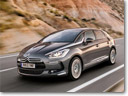 The award winning 2012 Citroën DS5 has just gone on sale in all UK dealerships. Its price ranges from £22 400 to £32 200 for the exceptional DSport Hybrid4 variant.