Author: Lidia Todorova

  • CMC to Build Limited Run of Jaguar Mark 2 by Callum [VIDEO]

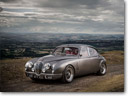
    Jaguar-Mark-2-by-Ian-Callum-THUmBJaguar Mark 2 by Ian Callum has been introduced a few days ago. After the car was launched, an amazing response from car enthusiasts around the world followed. This was the reason Classic Motor Cars Limited (CMC) to announce that they intend too get involved in this amazing project. They will be producing a limited edition run of Mark 2 cars. A little less than a week ago, the car was one-off redesigned Jaguar, who has been working with CMC for more than 18 months on this project. Both parties have retained the integrity of the original Mark 2, whilst making it even more exciting in shape and performance.

    The car has been modified in terms of aesthetics and technology, which results in more practicality and driving excitement. Mark 2 is driven by the refined 4.3 litre XK engine that has been coupled to a five-speed manual gearbox. It also features unique independent rear suspension and improved front brakes. This car runs 17” split rim spoke wheels, while its bumpers are part of the overall form.

    CMC restorers have worked on the suspension: the front now includes a power assisted rack, uprated coil springs, roll bar and wishbone bushes, adjustable dampers and solid subframe mountings. At the back one can find independent rear suspension with refined coil springs, blade control wishbones, outboard disc brakes, an anti-roll bar and adjustable dampers. The interior was also customized.

    Ian Callum himself said that he didn’t believe that this model will get such interest. He made rebuilt and reengineered the vehicle for his personal use and he is delighted with the response, and happy that a few more cars are going to be built.

    Jaguar Mark 2 will have a price tag between £350,000 and £375,000.

    httpv://youtu.be/da6YFvi4R6w 

    Video Source: YouTube

    Source: Jaguar


  • Morgan Unveils Unique SP1 at Salon Privé [VIDEO]

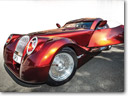
    Morgan SP1 is a one-off vehicle which will be launched at Salon Prive. SP1 stands for Special Project 1 and it is the first creation of the newly formed Morgan Special Projects Division. The car exudes every aspect of the skilled craftsmanship applied at Morgan. SP1 is inspired by the 2009 LifeCar concept vehicle, however, its body has been entirely redesigned and now has enhanced proportions and on-road presence.

    This Morgan car has a rigid steel chassis and is powered by the naturally aspirated 3.7 litre Ford V6 engine. In addition, it also features new suspension setup, bespoke Engine Management System and custom sports exhaust. These elements improve significantly the driving dynamics of the SP1.

    Furthermore, for the wooden frame of the coach-built body, the team utilized Ash Wood, combined with African Bubinga Red Hardwood, which was specifically chosen by the client. Between these two woods there is a tonal contrast, which is most apparent in the joints that hold each part of the frame together.

    SP1 is covered with a striking multi-coat paint finish. The aluminium body has been hand formed over a wooden ‘egg box’ construction, using an English wheel. To ensure structural and aerodynamic excellence, cutting-edge digital design and simulation tools were used to prove surface styling prior to lengthy fabrication.

    After the car has been armed electronically, a sequence of roof mounted toggle switches are flicked to ‘prepare for flight’ before a final toggle switch starts the engine. Inside, the SP1 includes an infotainment system, which is managed via an iPad that has been installed in the fascia. Take a look at the video below to see and hear the exciting stories of the team at Morgan around this project.

    httpv://youtu.be/G6enAtDa9iA

    Video Source: YouTube

    Source: Morgan 

  • Dotz Shift Shows a Sporty Volkswagen Beetle

    Dotz-Shift-Volkswagen-Beetle-THUMBDotz Shift Volkswagen Beetle shines in brand new “shoes” that lend it even more dramatic and sporty appearance than before. Precisely, its new wheels are called “shine” and are delivered by the talented wheels and rims specialists at Dotz Shift. They are the sporty choice for compact and mid-sized cars due to their impressive design. Just take a look at the star pattern, formed by even slender, edgy double spokes. This makes the wheels look lightweight and at the same time aggressive, while the deep lip adds a racing touch.

    There is also a recessed center, which allows for four- and five-hole connections without affecting the design. The newly developed asymmetrical inlay in the rear ring of the deep lip is something typical for Dotz Shift. In addition, the elegant high-gloss paint further emphasizes the spoke edges and underlines the three-dimensional design.

    This Volkswagen Beetle is equipped with direct-injected 1.8T engine. The unit produces a maximum of 170 hp (127 kW) and 249 Nm (184 lb-ft) of torque at 2,750 rpm. The powerplant is also economical and returns 33 mpg on the highway. It is mated to a five-speed manual gearbox. The 5-speed manual gearbox will return an estimated 24 mpg in the city; 33 mpg on the highway and 27 mpg on the combined cycle.

    Source: Dotz Shift


  • Honda Launches 2015 Crosstour

    2015-Honda-Crosstour-THUMB2015 Honda Crosstour has purposeful looks and luxurious styling. It has the visual appeal of a crossover but offers sedan-like driving manners and is fitted with wide range of impressive features. The car is currently going on sale in North America. The Crosstour will be offered with wither of two engines. The EX models come with two-wheel-drive and are powered by 2.4-liter engine. The top of the range unit is the 3.5-liter V-6 engine, and it can be combined with either a two wheel drive or a Real Time Four-Wheel Drive.

    2015 Crosstour provides comfortable seating for five people and also available 51.3 cubic feet of cargo space and a hidden removable utility box. As a standard the car comes equipped with a rearview camera with guidelines, Bluetooth HandsFreeLink, USB/iPod connection, fog lights, one-touch turn signals and an expanded-view driver’s mirror.

    Honda has also prepared a host of available equipment, including LaneWatch display, HondaLink featuring Aha compatibility, Lane Departure Warning (LDW) and Forward Collision Warning (FCW). As mentioned, the two front-wheel-drive Crosstour trim options – EX and EX-L, are powered either by a 2.4-liter four-cylinder engine. It produces 192 horsepower (141 kW) and has an EPA highway rating of 31 mpg.

    The two trims can be also powered by the 3.5-liter V-6 unit, which generates 278 horsepower (204 kW) and comes with Variable Cylinder Management which enhances the fuel efficiency. Crosstour EX-L V-6 model can also be equipped with Real Time 4WD.

    2015 Honda Crosstour Pricing and Fuel Economy Ratings:

    TRIM MSRP1 EPA Fuel Economy Ratings4
    (city/highway/combined)
    Crosstour 2WD EX $27,530 22/31/25
    Crosstour 2WD EX-L $31,215 22/31/25
    Crosstour 2WD EX-L Navi $33,315 22/31/25
    Crosstour 2WD EX V-6 $31,190 20/30/23
    Crosstour 2WD EX-L V-6 $33,840 20/30/23
    Crosstour 2WD EX-L V-6 Navi $35,940 20/30/23
    Crosstour 4WD EX-L V-6 $35,290 19/28/22
    Crosstour 4WD EX-L V-6 Navi $37,390 19/28/22

    Source: Honda 

  • 2016 Mazda MX-5 is Finally Here!

    2016-Mazda-MX-5-THUMB2016 Mazda MX-5 has finally been unveiled. Mazda Motor Corporation celebrated the reveal of its fourth generation MX-5together with fans at events held simultaneously in Japan, USA and Spain. The all-new MX-5, which in Japan is popular as a roadster, adopts both SKYACTIV TECHNOLOGY and Mazda’s KODO—Soul of Motion design language. The car will enter the global markets in 2015 and Mazda is promising to reveal more details near launch.

    No doubt that the MX-5 is an iconic model. It embodies Mazda’s vehicle-engineering philosophy which lies in the pursuit of driving pleasure. The design and engineering of the fourth-gen model stood under the motto “Innovate in order to preserve”. In fact, the development team searched for innovations that go beyond simple evolution.

    Precisely, in this new Mazda model, the engineers have strictly focused on the environmental and safety sides of the car. However, the 2016 MX-5 still stays true to the model’s original aim of offering the pure driving fun of a lightweight sports car. This was achieved via the adoption of SKYACTIV TECHNOLOGY and the refinement of its visual appearance.

    Another interesting fact about the new MX-5 is that it is the most compact one of any previous generations and it is more than 100 kilograms lighter than its predecessor. Unfortunately, Mazda didn’t reveal much more about this beauty but we are eagerly awaiting more details.

    Source: Mazda

  • Vorsteiner’s BMW M3 Shows-Off with new Carbon Fiber Aero Front Spoiler

    Vorsteiner BMW F80 M3Vorsteiner BMW F80 M3 has a brand new carbon fiber aero front spoiler to show-off with. In fact, since the launch of the iconic E30 M3 in 1986, the M3 series have become extremely popular and a favorite among all automotive enthusiasts. Just take for example the 2014 model year M3 and its figures. This BMW is powered by a 3.0 liter TwinPower Turbo Inline six-cylinder.  The unit produces 431 hp (317 kW) at 5,500RPM and 550 Nm (406 lb-ft) at 1,850RPM. The engine is mated to a 6-speed manual gearbox as standard.

    The car can cover the acceleration sprint from 0 to 100 km/h in 4.3 seconds on its way to a top speed of 250 km/h (155 mph). The acceleration becmes even better, when the car is fitted with the optional 7-speed M DCT – it is measured at 4.1 seconds. The new M3 is capable of covering 100 km with just 8.8 liters of fuel in the combined cycle and 8.3 liter with the DCT.

    Over the last 10 years, the advancement in technology has greatly influenced the character of these vehicles. And in this spirit, Vorsteiner is using only the latest equipment to develop and improve its products both in terms of quality and performance. Such is the instance with the latest aero front spoiler for the F8x M3 and M4 models. The company has also announced that next week it will preview a new rear diffuser.

    At last, this Vorsteiner BMW F80 M3 runs on Sport Challenge VSC-101 Forged Monoblock Wheels in matte black finish. They come in size of 20×10 inches at the front and 20×11 inches at the rear, and are also coupled with Michelin Pilot Super Sports in the dimensions of 275/30/20 and 295/30/20 for the front and rear, respectively.

    Source: Vorsteiner


  • The Dodge Viper, Then and Now

    In February 1998, Chrysler Chairman Bob Lutz asked Tom Gale, Chrysler Chief Design Engineer, to make a mockup of “a modern day Cobra performance car”. Gale with years of experience at Chrysler went to work. Later that year, the fleshed out design was presented to Lutz who immediate asked that it go forward as a working concept car. Metalcrafters in Fountain Valley, CA was chosen to product the sheet metal and chassis was Chrysler-based. The car was presented at the 1989 North American International Auto Show and public reaction was so enthusiastic that Chief Engineer Roy Sjoberg was directed to immediately develop it as a production vehicle.

    Sjoberg selected 85 engineers to be on “Team Viper,” with development beginning in March 1989. The team asked the then-Chrysler subsidiary Lamborghini to cast a prototype aluminum block based on Dodge‘s V10 truck engine for sports car use in May. The production body was completed in the fall, with a chassis prototype running in December. Though a V8 engine was first used in the first test vehicle, the V10, which the production car was meant to use, was ready in February 1990. Official approval for the car came in May 1990 from Chrysler chairman Lee Iacocca. One year later, Carroll Shelby piloted a pre-production car as the pace vehicle in the Indianapolis 500 race. In November 1991, the car was released to reviewers with first retail shipments beginning in January 1992.

    Since 1992, the Dodge Viper has had four long generations lasting until 2010. There were actually no 2010 models, only extended 2009 models, and 2011 saw zero production Vipers at all. In 2012, the Viper returned under the SRT brand and arrived with a redesigned body and a slightly larger engine. Enlarged to displace 8.4 liters, the V-10 powerplant delivered 640 horsepower and 600 pound-feet of torque, a figure that remained unchanged until 2014.

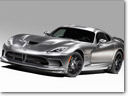
    Heading into 2015, the SRT and Dodge brands have again become one, allowing the Dodge Viper SRT to return. Aside from switching the SRT badge with a Dodge logo, exterior changes for the 2015 model year are mostly about vibrant new colors and new special-edition packages. A GT model that slots between the entry-level Viper and the Viper GTS is also available, but this new model stands out from the regular “snake” by means of chassis settings and interior features.

    Modifications are a bit more obvious on the Viper TA 2.0, which is basically an evolution of last year’s track-prepped, Time Attack model. The updated track-capable model comes with a new aerodynamic package, which includes new front dive planes, carbon-fiber front corner splitters, and a revised, larger rear wing. The latter brings significant improvements in terms of downforce, increasing the 2014 model’s 278 pounds at 150 mph to 400 pounds at the same speed. Also brand-new is the Yorange exterior finish – described as “a vibrant mix of bright orange and yellow tones” – which joins the familiar Competition Blue and Venom Black.

    Moving over to the GTS model, Dodge is now offering a Ceramic Blue Edition Package. The bundle adds an exclusive Ceramic Blue paint color with black stripes and set of five-spoke Rattler wheels finished in Black Vapor Chrome. The package is rounded off by a GTS sill badge, a Satin Black exhaust bezel, orange brake calipers, and carbon-fiber brake ducts and rear applique. Lastly, both the GT and the GTS models can be ordered in Stryker Purple, an all-new “liquid mercury” color for the 2015 model year. The exterior stripe color packages have been enhanced as well, and now include Adrenaline Red.

    Courtesy of: Central Avenue Chrysler Jeep

  • Nissan’s Forward Emergency Braking Technology

    Nissan’s new Forward Emergency Braking technology works like Bats do. Consider that bats fly in the pitch black but rarely, if ever, hit anything. And some types of bats can catch insects while flying in the dark. To do this, bats they emit very high frequency sounds and use sonar, analyzing how the signals bounce off other objects, to give them an accurate grasp on distances and locations. All of this in the pitch dark.

    The latest technology in Nissans uses similar techniques to analyze certain environments and situations. Unfortunately humans do not have sonar so they must use their eyes and ears to check his surroundings. At times this may not be enough to prevent collisions and accidents. Too bad cars aren’t like bats.

    Well, now they can be, sort of. Engineers at Nissan have developed a technology called Forward Emergency Braking. The way it works is that in some situations, the technology calculates whether there is a risk of a collision with an object detected in front of the vehicle and then responds.

    This is how it works. The Forward Emergency Braking system constantly monitors the distance between the vehicle and the one in front of it. This means that if for some reason the distance to the other car suddenly decreases, the system will determine that there is a risk of collision and will sound an audible alert. At this stage, the driver needs to notice this warning and then take action to avoid a collision.

    But if this doesn’t happen and the system judges that the car is still in danger of colliding with something, it will automatically engage the brakes, helping avoid a collision. If a collision is unavoidable, the speed of the vehicle will have been decreased helping to mitigate damage caused by the collision.

    The Forward Emergency Braking system is just one of the many technologies available to help drivers stay aware of their surroundings. Additionally, there is also Blind Spot Warning (BSW), which can detect another car diagonally behind, an area that may be difficult for a driver to see. There is also Lane Departure Warning (LDW), which alerts a driver when they are about to stray from their lane. There is even technology that can read road signs and warn a driver if they are trying to enter a one-way street traveling the wrong direction.

    Think this is advanced, the folks in Nissan Safety Technology Group are working on systems that sense whats going on with a vehicle two cars ahead. How is this possible? When a car is traveling on a highway or a place where multiple cars are moving in a row, the sensor at the front of the car can detect the distance to and also the relative speed of the vehicle two cars ahead. The technology is no longer just watching directly in front; it is now looking even further ahead. For example, if the driver two cars ahead of yours suddenly braked, the technology in the car can detect this and tell the driver so he or she can perform the next appropriate action.

    The technology is called Predictive Forward Collision Warning (PFCW). It examines the movement of the car traveling two vehicles ahead and if it determines that the driver should brake, it will alert him or her both visually and by a warning sound. By warning the driver to brake early on, it can help prevent a pileup.

    Nissan knows that technology that monitors the surroundings can work to reduce accidents or the damage caused by unavoidable collisions. Just like bats in the dark, the latest car technologies are helping drivers keep an eye on certain vehicle surroundings, helping to reduce potential accidents.

    Courtesy of: Team Nissan New Hampshire

  • The Ill-fated Oldsmobile Diesel

    1978-Oldsmobile-98-THUMB1978-Oldsmobile-98-651

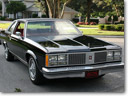
    Sometimes automotive companies do silly things and the story of General Motor’s diesel V8 highlights one of the best (worst?). Here’s the story. During the mid-1970s, meeting new federal EPA emissions regulations was causing many issues for car manufacturers and their dealers. The solution, at least to some executives at General Motors, was to rush a series of diesel engines to the marketplace. This is because diesels were not subject to the same emissions requirements as gasoline engines. Besides Mercedes and Peugeot had both been quite successful selling diesel cars in the U.S. so why wouldn’t General Motors be? Though the new GM-designed diesel engines were destined for all the GM car divisions, the design responsibility fell to GM’s Oldsmobile group. Working at a frantic pace, the first Oldsmobile-built diesels hit the dealer lots in 1978, and there were problems. Oh boy, were there problems.

    To begin with, Oldsmobile powertrain engineers based the design on the division’s existing 350-cubic-inch V8. It is an urban legend that GM engineers simply slapped new diesel heads on the standard 350 block and did little else. This is not the case by any stretch. The new block was reinforced substantially internally and was built of a sturdier cast-iron alloy; the blocks weren’t really the problem. The trouble came from the cylinder heads and the fuel system. In particular, the cylinder heads. They broke an awful lot resulting in massive problems for GMs dealer network.

    To understand the GM diesel debacle it helps to understand a little about diesel technology. Diesel engines operate using a compression-ignition scheme. As gas is compressed, its temperature goes up, and, in the case of a diesel engine, it’s compressed until the diesel fuel in the combustion chamber ignites. This leads to much higher combustion chamber pressures than are present in a gasoline engine. Once again, much higher combustion chamber pressures than in a gasoline engine. Typically, diesel engines have more and stronger head bolts to compensate for the diesel’s higher cylinder pressure. The Oldsmobile diesel, however, maintained the same 10-bolt pattern and head bolts as gasoline engines so that common production tooling could be used for both the gasoline and diesel engines. This was a big mistake. There were also other issues with the engine: a fuel-pump timing chain that stretched and poor dealer service training, to name a few. And, even in good running order they were just plain loud, and belched quite a bit of smoke; all to provide acceleration that can best be described as modest.

    Production of the Oldsmobile diesel lasted from 1978 and 1985 and it caused a class-action lawsuit that saw owners reimbursed for up to 80 percent of the cost of a replacement engine upon failure. The engines were so bad that they spurred legislators in several states to draft early lemon laws. Ultimately, Oldsmobile-built diesels ruined the American consumer’s appetite for diesels for almost 3 decades. Only now are diesels beginning to reenter the U.S. car market in small numbers—and most of those are from non-US manufacturers. This is quite unfortunate because diesel technology is robust, proven and can lead to tremendous fuel economy.

    Courtesy of: Team Kia New Hampshire

  • Mitsubishi Outlander PHEV Concept-S with Premiere in Paris

    mitsubishi-outlander-concept-s-phev-THUMBMitsubishi Outlander PHEV Concept-S is coming to Paris. We have just received this information next to two teaser images, which give a slight idea of what the car would look like. 2014 Mondial de l’Automobile or Paris Motor Show, where the new Mitsubishi model will make its official premiere, will take place between 4th and 19th of October in the French capital. This debut comes exactly two years after the company has unveiled the successful Outlander PHEV plug-in hybrid electric Twin Motor SUV vehicle at the same show.

    Outlander PHEV was world’s first hybrid SUV. It utilizes Plug-in Hybrid EV System powertrain, which brings together the environmental performance and quietness that distinguish electric vehicles. At the same time it delivers great off-road 4WD performance. It is powered by a 2.0-liter four-cylinder petrol engine and two electric motors and has an overall range is up to 880 km and 55 km solely on electricity.

    So far the details around this SUV concept are scarce and we are definitely eager to know more about it.  The Outlander PHEV Concept-S is of course a concept Mitsubishi model, which however is proposed as a special package of the Outlander PHEV production model. It features refined interior and exterior design that improves Outlander PHEV’s unique driving experience.

    The concept model takes “Sporty and Sophisticated” slogan as the theme for its design. Mitsubishi revealed that its refined design expresses the unique combination of spirited 4×4 performance from its twin-motor PHEV system, soothing silent running, and superior on-road performance.

    Source: Mitsubishi 

  • 2015 Toyota Sienna Goes On Sale

    2015 Toyota Sienna minivan debuted in July showing its enhanced appearance and upscale interior, smart technology features and improved driving dynamics. Toyota has just announced the pricing of the new Sienna, which in addition will be arriving in dealerships later this month. The refreshed exterior styling of the new model comes with new headlamps with LED daytime running lamps (DRL) on SE and Limited grades. There is also new taillight and front grille design.

    Sienna will be available in nine exterior colors. There are three new shades, including Attitude Black Metallic, Crème Brule Mica and Sky Blue Pearl. The minivan has been configured for seven- or eight-passenger seating and comes in five grades: L, LE, XLE, Limited and the SE.  AWD is available on LE, XLE and Limited grades.

    The car is powered by the 3.5-liter V6 engine which features Dual Variable Valve Timing with intelligence (VVT-i). The unit produces 266 horsepower (196 kW) at 6,200 rpm and is mated to an electronically controlled six-speed transmission with sequential shift. The expected EPA-estimated mileage ratings are of 18 mpg city/24 mpg highway and 16 mpg city/22 mpg highway on AWD models.

    Inside, the car has been made more luxurious than ever. It features refreshed interior made with materials that are soft to touch and visually appealing. The glove box and driver-side upper dash are hand-wrapped in soft materials and upper door trim areas are padded. There are also metallic accents on air vents, glove box button and the center console stack. There are three new interior colors including the Bisque fabric, Chestnut Leather and Black leather.

    In terms of technology features, the 2015 Sienna comes equipped with available Driver Easy Speak, Dual-View, Blu-ray rear seat entertainment system with a 16.4-inch display and standard backup camera. Drivers will enjoy the standard new 3.5-inch multi-information display (MID) or the available 4.2-inch display.

    All Sienna models will feature 3-zone automatic climate control, EntuneTM audio system, either a 6.1 or 7-inch touchscreen display, USB 2.0 port with iPod connectivity and Bluetooth wireless technology. Sienna Limited and Limited Premium grades come with Entune Premium JBL Audio with Navigation and App Suite that features 10 speakers including a subwoofer.

    The safety features are still the grates priority in the Sienna. The family car comes as a standard with 8 airbags including a new front passenger seat cushion airbag, STAR Safety System with Vehicle Stability Control (VSC), Traction Control (TRAC), Anti-lock Braking System (ABS), Electronic Brake-force Distribution (EBD) and Brake Assist, as well as Smart Stop Technology brake-override system.

    The advanced safety features comprise of Pre-Collision System with Dynamic Radar Cruise Control, Vehicle Dynamics Integrated Management, Hill Start Assist Control and Blind Spot Monitor with Rear Cross Traffic Alert.

    L (base grade):

    • Touchscreen audio system
    • Backup camera
    • Integrated Blind Spot Mirror
    • Auto off headlights
    • Engine immobilizer
    • Class leading 8 airbags

    LE (includes L grade features plus):

    • EntuneTM Audio Plus with 7-inch touchscreen

    SE (includes LE grade features plus):

    • Sport tuned suspension
    • Smoked headlamps with LED
    • LED Rear Combination Lamps
    • 19- inch alloy wheels
    • Sport Mesh Grille
    • Perforated leather- trimmed seats
    • Heated front seats
    • 4.2-inch color MID
    • Sport meter cluster
    • Available Premium Package adds navigation and rear seat entertainment system.

    XLE (includes LE grade features plus):

    • Leather-trimmed seats
    • Heated front seats
    • Smart Key
    • Blind Spot Monitor with Rear Cross Traffic Alert
    • Premium gauge cluster
    • Chrome outside door handles
    • 4.2-inch color MID
    • Available Premium Package adds navigation and rear seat entertainment system.

    Limited (includes XLE grade features plus):

    • LED DRL
    • Heated steering wheel
    • Entune Premium JBL with Navigation and App Suite
    • Available Premium Package adds rear seat entertainment system, HID headlamps and rain sensing wipers

    2015 Toyota Sienna Pricing:

    Model # Grade Engine Transmission MSRP N/G
    5328 L FWD V6 6AT $28,600
    5338 LE FWD V6 6AT $31,330
    5366 LE AWD V6 6AT $33,860
    5342 SE FWD V6 6AT $34,900
    5343 SE PREMIUM V6 6AT $39,680
    5348 XLE FWD V6 6AT $35,100
    5349 XLE PREMIUM FWD V6 6AT $38,355
    5376 XLE AWD V6 6AT $37,300
    5377 XLE PREMIUM AWD V6 6AT $40,555
    5356 LTD FWD V6 6AT $41,650
    5357 LTD PREMIUM  FWD V6 6AT $45,020
    5386 LTD AWD V6 6AT $42,780
    5387 LTD PREMIUM  AWD V6 6AT $46,150

    Source: Toyota

  • 2015 Infiniti Q70 Line-up to Debut at Paris Auto Show

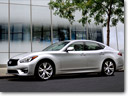
    2015-Infiniti-Q70-THUMB2015 Infiniti Q70 was recently launched in North America but it is still unknown for the European market. The car is set to make its debut there at this year’s Paris Auto Show, where it will show all its upgrades and premium equipment. The exterior has undergone several changes including a redesign of the front and rear bumpers, which now are more chiselled in their appearance.In addition, the headlights maintain the “Infiniti eye” using as a standard LEDs. At the back, the taillights are also getting LEDs. Both the standard grille look and Sport grille are changed.

    Inside, the cabin now features more on-board comfort, while the noise isolation has been further improved. Several points around the body and chassis structure have been modified in order to deliver enhanced noise reduction. Additionally, wind, tyre, and mechanical sound entering the passenger area have also been significantly reduced.

    Other changes have been made to the suspension, which further improves the ride comfort. The telescoping dampers now adopt a new seal design between the sliding tubes which minimises the initial impacts over road imperfections. Infiniti Q70 runs on standard 18-inch wheels.

    Specifically for Europe, this Infiniti model will be powered by the 2.2-litre turbo-diesel four-cylinder engine. It produces 167 horsepower (123 kW) and 400 Newton metres (295 lb-ft) of torque. The 1800-psi solenoid injectors and single variable-geometry turbocharger reduce both turbo-diesel lag time and fuel consumption.

    Q70 Hybrid’s powertrain features Infiniti Direct Response Hybrid system with Intelligent Dual Clutch Control. Both technologies have been improved, from the reduced mechanical friction of the 3.5-litre V6 gas engine to the new software programming managing.

    The range of safety features has been made batter with the addition of the Around View Monitor (AVM). AVM comprises of cameras, sensors, and lasers fore and aft. Q70 now also features a enhanced connectivity interface as well as additional 12V outlets placed in the cabin and cargo area. There are also small stowage spots for the personal devices.

    2015 Infiniti Q70 will go on sale in European in December. Pricing will be announced closer to launch time.  Infiniti US has announced pricing for the Q70, Q70 Hybrid and new Q70L for North America. The models are scheduled to go on sale beginning late September.

    2015 Infiniti Q70 US Pricing:

    Model Engine/Transmission/Drive MSRP
    Infiniti Q70 3.7 3.7-liter V6 / 7AT/ RWD $49,850 USD
    Infiniti Q70 3.7 AWD 3.7-liter V6 / 7AT/ AWD $52,000 USD
    Infiniti Q70 5.6 5.6-liter V8 / 7AT / RWD $62,850 USD
    Infiniti Q70 5.6 AWD 5.6-liter V8 / 7AT / AWD $65,350 USD
    Infiniti Q70 Hybrid 3.5-liter V6 Direct Response
    Hybrid™ System/ 7AT
    $55,900 USD
    Infiniti Q70L 3.7 3.7-liter V6 / 7AT/ RWD $51,350 USD
    Infiniti Q70L 3.7 AWD 3.7-liter V6 / 7AT/ AWD $53,500 USD
    Infiniti Q70L 5.6 5.6-liter V8 / 7AT/ RWD $64,550 USD
    Infiniti Q70L 5.6 AWD 5.6-liter V8 / 7AT/ AWD $67,050 USD

    Source: Infiniti