Volkswagen Caddy Edition 30 boasts a roof painted in brilliant gloss black, roof railing also in high-gloss black and high-end machine-polished 17” alloy wheels.
The vehicle has signatures on the sliding doors, the back of the vehicle and the door sills. There are five bodywork colours available, all going well with the black roof – Candy White, Reflex Silver, Salsa Red, Primavera Green or Sunny Yellow.
The interior features either 5-seat or 7-seat configuration. Caddy Edition 30 boasts Alcantara upholstery, multi-function steering wheel, leather-trimmed gear stick and handbrake lever, semi-automatic (Climatic) climate control and tinted windows combining to create a pleasant ambience.
It is available with four different engine specifications: three diesels from 75 to 125 kW and as a petrol (TSI) version with 77 kW.
At the 2011 IAA in Frankfurt you can see Caddy Edition 30 with the most powerful engine ever installed in a production Caddy: the 170 PS (125 kW) and 350Nm 2.0 TDI with DSG.
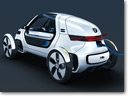
NILS, a single-seat electric concept vehicle that offers a glimpse of a new form of minimalist mobility, has been unveiled ahead of its public debut at the Frankfurt Motor Show later this month. This concept car – which features an aluminium space frame, wing doors and free-standing wheels – has the dynamic performance of a sports car, yet travels silently, and with zero emissions.
The NILS project is supported by the German Federal Ministry of Transport, Building and Urban Development, and is designed to be both technically realistic and economically supportable.
‘NILS anticipates the future. The goal of the NILS project is to research a technically concrete and economically feasible vehicle concept for micromobility which restructures individual transportation to make it more efficient and environmentally compatible based on electric drive technology,’ said Dr Ulrich Hackenberg, member of the Board of Management and Head of Development for the Volkswagen Brand.
With a range of 65 kilometres (40 miles) and a top speed of 130 km/h (80 mph) NILS would be the ideal vehicle for the majority of commuters in Germany. According to the German Bureau of Statistics, 73.9 per cent of all commuters residing between Berlin and Munich cover less than 25 kilometres (15.5 miles) on their way to work.
Volkswagen NILS Concept
Cars have always been mirrors of their times – their design styles and technological standards reflecting a particular era – and NILS is no different. It uses emissions-reducing electric drive technology to fulfil the specific requirements of commuters. In Germany, for example, about 60 per cent of all commuters travel by car, according to the Federal Bureau of Statistics; of these over 90 per cent travel alone. Zero-emissions vehicles like NILS will offer these frequent drivers a new eco-friendly mobility solution.
NILS is a very compact car that requires extremely little space in traffic. It is only 3.04 metres long – making it about 50 cm shorter than the new Volkswagen up! – just 0.39 metres wide from wheel to wheel, and a mere 1.2 metres tall.
NILS has the same basic layout as a Formula 1 race car, with the driver in the middle, the engine in back, and free-standing outboard wheels. The 17-inch alloy wheels are equipped with 115/80 (front) and 125/80 (rear) tyres optimised for low rolling resistance.
Though its inspiration may come from Formula 1, the styling has its origins at the Volkswagen Design Centre in Potsdam, Berlin. Designer Thomas Ingenlath, the centre’s director, said: ‘NILS was designed to make a visual statement and transport a vision of the automotive future to the present. I am especially pleased that we managed to implement the concept of the two glass wing doors. This allowed us to create large transparent surfaces and simultaneously to make entering and exiting the vehicle very comfortable, even in the most cramped of parking spaces.’
Because NILS is so compact and lightweight (460 kg), it is a lot of fun to drive. It has a top speed of 130 km/h, and can accelerate to 100 km/h in less than 11 seconds. This is achieved using an electric motor with a reasonably small 15 kW nominal power and short-term peak power of 25 kW. A lithium-ion battery supplies the electric motor with energy. The battery capacity (5.3 kWh) enables driving ranges of up to 65 km, depending on the style of driving. A battery of this size is relatively inexpensive, and can be charged either via a conventional 230-volt electrical outlet (maximum charging time two hours) or at an electric vehicle charging station. The socket is located at the back underneath the rear lighting module.
The centrepiece of the electric drive system is the lightweight 19 kg electric motor together with its transmission and battery. Energy management is via a high-voltage pulse inverter, which – together with the 12-Volt DC/DC converter for the vehicle electrical system and the charger – forms an integral drive unit. All drive unit components are located compactly in an aluminium housing at the rear of NILS; drive is to the rear wheels.
The motor, battery and all other components are so compact that there is still space for a small but practical bootspace. The body-coloured area above the rear lighting module swings upward, revealing space suitable for items such as a case of drinks and a bag.
Optimal weight distribution helps to ensure that NILS allows drivers not only to commute with zero emissions, but also to have fun while doing so. The lightweight NILS drives like a go-kart. The steering is purely mechanical (the low weight means power assistance is unnecessary), while the electric motor produces its maximum torque of 130 Nm from standstill, via a one-speed transmission. Suspension is by double wishbones front and rear; while ESP (Electronic Stabilisation Programme) helps to tame any over-exuberance on the part of the driver.
Safety is of course even more important than fun, and NILS is fitted with an automatic distance control system. This uses radar sensors to scan the space in front of the vehicle over a distance of about 200 metres and uses brake interventions to ensure that the distance to vehicles in traffic in front of the car does not drop below a specified minimum value. The system can even automatically brake the car to a stop, depending on the situation. Not only are the four disc brakes used to brake; electric traction by electric motor and battery regeneration can be used to brake as well. Last but not least, Front Assist is integrated in the automatic distance control system. This continually active system warns the driver of a potential collision; at speeds below 30 km/h (18 mph), automatic braking can avoid a collision under some circumstances.
The instrument cluster is a seven-inch TFT display. The vehicle’s speed is shown digitally in the middle, while energy flow is represented by bars. Another graphic display offers information on the driving range. The second central instrument is a mobile multifunctional device like the one used in the new up!: the Portable Infotainment Device (PID). It is snapped into theA-pillar to the right of the instrument cluster. Via touchscreen, the driver controls functions related to Navigation, Radio, Media, Telephone, Trip computer and – to preconfigure the driving range – ‘Eco. The PID computes the expected driving range, then it not only displays the route on the map display, but also the radius and thereby the destinations that can be reached using the current battery charge.
To save on weight and costs, certain functional elements and controls do without electrical assistance. The side mirrors, for example, are adjusted manually. The heating and ventilation system has full electronic control, and there is seat heating. Located to the right of the steering column is the motor start-stop switch; this round switch is also used to select D, N or R.
The aluminium space frame body was designed to be a highly effective safety cell. The body in white is produced from extruded aluminium, cast aluminium and sheet aluminium. The roof frame together with the door mounts, a roll bar, the bootspace and the front bulkhead consist of high-strength sheet aluminium. Extruded aluminium is used in the side sills, the transverse profiles and the front and rear car sections. The front and rear side body are aluminium. Parts made of high-strength plastic include the bumpers and the trim panels on the side sills.
The frames of the wing doors consist of three main elements: an inner section, a crash reinforcement section and an exterior part. When closed, they offer optimal crash safety. The door windows are made of lightweight, scratch-resistant, layered polycarbonate, while the front window is made of laminated safety glass.
The headlights are striking bi-xenon modules, while the indicator lights and daytime running lights are white and yellow LEDs. In the acrylic glass of the rear lights – integrated in the rear section like small wings – the light generated by LEDs is routed via transparent semiconductors which (appropriately for an electric vehicle) consume minimal amounts of power.
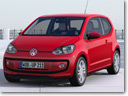
The first photos of the Volkswagen up! have been released, ahead of the new small car making its debut at the Frankfurt motor show in September.
The up! is an entirely new design, offering maximum space on a minimal footprint (3.54 x 1.64 m), making it ideal for driving in the world’s cities. It will be launched in Europe in December. There are three versions for different budgets and needs: take up! is the entry-level car, move up! the comfort-oriented model and high up! the top version. At the car’s market launch, there will also be two models based on the high up!: up! black and up! white.
Making its debut in the up! is a new generation of three-cylinder petrol engines, with outputs of 60 PS and 75 PS. Combined fuel consumption as a BlueMotion Technology version (including a Stop/Start system) is 4.2 l/100 km (60 PS), and CO2 emissions for this version are less than 100 g/km. There are also plans for an up! with electric drive.
2012 Volkswagen Up
An important new safety technology in the up! is the optional City Emergency Braking system. It is automatically active at speeds under 18mph, and uses a laser sensor to detect the risk of an impending collision. Depending on speed and situation, City Emergency Braking can reduce accident severity by initiating automatic brake interventions that can even avoid a crash. So far, the up! is the only vehicle in the segment to be offered with this function.
At 3.54 metres in length and 1.64 metres in width and 1.48 metres in height, the up! is one of the smallest four-seater cars. Its overall length consists of short body overhangs and a long wheelbase of 2.42 metres. Use of space in the car is exceptionally good, because of the wheelbase, which is one of the longest in the segment, combined with an engine that is mounted well forward. The 251-litre boot is also significantly larger than is typical in this class. When the rear seat is fully folded, cargo space is increased to 951 litres.
The interior is as colourful as it is capacious, with either decor paint or body colour (depending on the equipment line) used in the interior, including across the dashboard facia. The clean and well-organised layout of the interior of the up! also offers clever details, fun styling and a level of quality that will enhance the market segment.
2012 Volkswagen Up Interior
For the first time in a Volkswagen, the maps + more system is now being offered, which is a mobile Personal Infotainment Device (PID). In the economically priced up!, this is an equally economical system that was developed to organise navigation, telephone, information and entertainment, and was designed in cooperation with Navigon, one of the world’s leading suppliers of navigation systems. The user simply snaps the PID into place above the centre console. Unlike many other similar systems of this type, maps + more melds with the car’s network of systems more effectively: navigation, telephone and infotainment can be controlled and viewed via the maps + more touchscreen, which can also be used to view vehicle information, such as the display of the parking sensors (where fitted). Apps specially developed for the up! also let users extend maps + more to meet their specific needs.
Abt Sportline now offers full tuning program for the latest Volkswagen Tiguan. Although, the crossover has been on the market for several months, the tuner are ready with a number of modifications, which can make your vehicle unique.
The exterior package includes ABT front grill, ABT door strip attachements, ABT rear skirt set with exhaust system and ABT rear wing. The stance is improved by installing ABT suspension springs, which lower the vehicle. There are also different ABT designer light alloy wheels in 18” to 20” available also as complete set of wheels with sports tyres.
The tuner provides a wide range of engine upgrades for: the 2.0 liter TDI, the 1.4 liter TSI and the 2.0 liter TSI.
The 2.0 liter TDI diesel can be boosted to 170PS and 195PS. The small 1.4 liter turbocharged petrol can develop up to 210PS. The mighty 2.0 liter TSI can produce either 210PS or whopping 250PS. Really an impressive results.
The new Tiguan is part of the SUV family of ABT – and like the Touareg, the Q7 and the Q5, as well as the Q3 which is currently still in the starting blocks, the driver can look forward to the fact that his/her car can do a bit more.
Volkswagen will exhibit several vehicles from the BlueMotion range at the 2011 EcoVelocity held from 8 to 11 September. The visitors will be encouraged by Volkswagen to “Think Blue”, as they get up close and personal with some of the company’s latest BlueMotion products, both on the stand and on the track.
The BlueMotion range includes Touareg Hybrid and Scirocco BlueMotion as well as the small Polo BlueMotion. Golf VI BlueMotion will also be at the event.
2012 Volkswagen Scirocco BlueMotion is powered by a 2.0-litre TDI 140 PS diesel engine. It comes with a Stop/Start system to save fuel when the vehicle is stationary, along with battery regeneration, which recovers energy which would otherwise be lost to recharge the battery.
The Touareg Hybrid combines a 3.0-litre V6 TSI engine and 47PS (34.3 kW) electric motor and can travel on electric drive alone at speeds of up to 50 km/h (31mph).
Golf BlueMotion can return up to 74.3 mpg on the combined cycle and emits just 99 g/km of CO2.
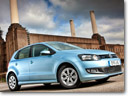
The new Polo BlueMotion comes with an advanced 1.2-litre TDI three-cylinder common rail diesel engine developing 75 PS (55 kW) and 180 Nm (133 lb-ft). 0 to 100 km/h in 13.9 seconds and a top speed of 171 km/h (107 mph). It achieves an impressive 80.7 mpg on the combined cycle. This grants the new Polo BlueMotion a theoretical range of over 800 miles on one tank of diesel.
2011 Volkswagen Polo BlueMotion is priced at £14 445 RRP on the road for the three-door, and £15 045 for the five-door model.
Volkswagen Polo BlueMotion
“We’re delighted to have Volkswagen at EcoVelocity as it is one of the game-changing brands that really started the movement towards no-compromise ultra-low carbon motoring. Its BlueMotion range set the industry benchmark and we look forward to getting a further insight into their ground-breaking technology at EcoVelocity in September.”, commented Giles Brown, EcoVelocity Director.
Most of you have strong memories from your father’s or grandfather’s car. “One day I will have one for myself”– we thought. Unfortunately most cars have no more than 10 years on the production line meaning that whatever it was that you fancied as a kid is now about 30-40 years old and looks like(or actually is) scrap or costs an amount of money with a lot of zeroes. Luckily someone thought of all these enthusiasts. So, who did?
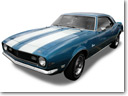
Chevrolet Camaro
The first Camaro was built back in 1966/1967. Very long front end, massive rear tires and wide arches made the Camaro look really inspiring. It also had engines to make the picture even better. Top versions boasted 8 cylinder engine, 7+ litres and more than 400 hp. How about 5.2 seconds for 0-60 and less than 13 seconds for a quarter mile – impressive results for its time and not only. So back to reality, what is available today? In 2009 the fifth generation Camaro was introduced.
1968 Chevrolet Camaro
Having plenty of new gadgets and modern stuff, it has something very important – the spirit of Camaro – 550 hp, V8 and shares a lot of the curves from its predecessor – same large arches, same aggressive and appealing look – you can simply never mistake this car. If you want to celebrate Camaro’s 45th anniversary, wait for the special edition in 2012 – one-of-a-kind badges, unique interior and something more maybe.
Volkswagen Beetle
This model has about 73 years of history and has played a huge role in German car manufacturing as a whole. This car was ordered by Adolf Hitler and its task was to be a car for the people (Volks Wagen – German). Being almost airtight, this car could even stay afloat for a couple of minutes and its aircooled flat-4 engine turned to be very suitable for the conditions in Africa’s deserts. The beetle was not meant to beat records.
1938 Volkswagen Beetle
The 1200 model was capable of 100 km/h in 37 seconds and the diesel model with 1,3 N/A did 100 in 1 minute! What not too many people know is that the last year of manufacturing of the Beetle as we know it from black and white pictures is 2003 – In Mexico. The entirely new Beetle was announced in 1997 and the design was definitely inspired by the original. Apart from this however it does not share too much – Engine is in the front, the car is FWD. What is more, this is no more a car for the people – the top model costs $ 58 000 – not something everyone can afford.
Mini Cooper
The original was introduced in 1959 and was a great hit back then. This was a really small car with wheelbase of just 2 metres and the FWD set up would save a lot of space for passengers and luggage. There is a reason why this car was voted the second most influential car of the 20th century after the Ford Model T.
1959 Mini Cooper
The weight distribution and the size of the car made it also very successful in sports. Not too many cars have won the Monte Carlo rally 4 times in a row. A famous car magazine awarded the Mini “Car of the century” in 1995. More than 5 000 000 were sold on the market making it the most successful UK car for the moment. The main drawback of the Mini Cooper is its safety – it also has some awards about this – in the negative aspect. In 2000 BMW (the new owner) presented the new Mini. Take a magnifying lens, look at the old one and you will see the new one. Exterior is quite similar, yet the new one is really sleek and has modern curves and styling. In terms of power the new generation offers a good range of engines 75-204 hp. Similar to the original, the new Mini Cooper will try to participate in the world rally championship and be just as successful. Good luck!
SIEMONEIT RACING has unveiled a special tuning package for the new Golf VI GTI. The name of the project is black pearl.
The exterior tuning package consists of a carbon-fibre bonnet, in-house sport exhaust system and a set of nice wheels.
The performance package consists of a special air intake which forces cooler air into the combustion chamber for better efficiency. There is also an ECU re-map and the results are more than satisfying – 355 PS and 485 Nm. However, Hardware modifications will transform the R20 Golf into a beast producing about 530HP.
At SIEMONEIT RACING the stainless steel SR20.500.1 exhaust system for the current Golf R20 was developed for performances well above the 500 HP limit. The system starts out at 76mm at the turbocharger with a 100 cpi (or optionally a 200 cpi) metal catalytic converter and from there it goes straight through to the two 90-mm exhaust outlets. The system is made of US405.409 marine quality stainless steel and is indispensable for performance of 330 HP and above. It goes without saying that the system is ready for the TÜV Inspection.
Black Pearl Volkswagen Golf VI GTI
PRICING:
ECU Modification: 698€
DSG Modification: 298€
Exhaust System: 1749€
Intake System: 449€
Center Intercooler: 1199€
High Pressure Fuel Pump: 499€
2011 Volkswagen Polo Match joins the model’s range and offers perfect value for money. The new Match model replaces the existing SE and Moda trim levels and also provides £650 worth of equipment.
2011 Polo Match is priced at £11 300 for the 1.2-litre 60 PS manual
The exterior boasts 15” “Castille” alloy wheels, front fog lights and heat-insulating tinted rear windows. Inside, there are air conditioning, an RCD 310 radio / CD player, multifunction computer and MDI (Multi Device Interface) with iPod connectivity. The model is also fitted with electric windows and a comfort pack, incorporating remote central locking and electrically adjustable exterior mirrors.
The safety is granted by four airbags, ABS and ESP (Electronic Stabilisation Programme).
The engine range includes two petrol units – a 1.2-litre three-cylinder with 60 PS and a 1.4-litre 85 PS. The diesel is a 1.2-litre 75 PS. All engines come with a 5-speed manual transmission as standard. A 7-speed DSG option is also available with the 1.4-litre petrol engine.
ABT has introduced a styling and a performance packages for the latest 2012 Beetle. Still, these are just two renderings, but the car will look exactly the same.
There will be performance mods for the 1.2TSI boosted to 140PS (103 kW), the 1.4TSI will have 210PS (154 kW) and the top-of-range 2.0TFSI will have 240PS (176 kW). The 1.6TDI will gain additional 20PS (15 kW) and the bigger 2.0TDI will have 170PS (125 kW), instead of 140PS (103 kW).
The styling package consists of a new front bumper, a rear diffuser with oval exhaust pipes and a pair of side skirts. There will be also headlight brows and some nice graphics.
The stance is improved by installing a set of lowering springs.
The car stands on Abt DR wheels fitted with low profile tires.
Everything is good, but still we think that the modified Beetle looks rather sad, mainly because of the ridiculous headlight brows. We hope that ABT will reconsider some touches and make the small city car better.
Each car enthusiast has a movie that makes them smile just thinking of it. You will have the opportunity to read a little more about some of the most cherished cars used in movies.
Number 5
AUDI A8 W12- Transporter 2
This car is taking a serious part in the plot of the movie. Jason Statham needs to chase the bad guys all over the place and the Audi is a serious partner in his mission. The movie is abundant with stunts that the A8 has to perform. Thanks to the massive twelve-cylinder 6.0 liter engine and some driving skill of course, it almost looks easy to do.
Audi A8 6.0 Quattro
Number 4
Nissan Skyline R34- The Fast and the Furious
One of the fastest cars in the world, the dream of the PlayStation generation. The Skylines used in the movie are GTRs but not quite – the purpose of these cars was to draw attention and being all wheel drive, the grip was too much for burnouts and fun. That’s why the Skylines used, had their front driveshafts excised and the magic was done. As you already know the GTRs are claimed 280 hp from the factory, which is ridiculous for a 6 cylinder 2.6 twin-turbo engine. Still one of the two fastest skylines used in the movies is claimed 505 hp, which is enough to do 12 seconds in the quarter mile run. The main car used in the movie has been equipped with HKS tuning parts, JIC’s suspension and 3 NOS bottles, neither of which had something to do with the engine. Being so full of “extras”, AWD and AWS removed, the performance is not quite as what is expected from a skyline though.
Nissan Skyline GT-R R34
Number 3
Mini Cooper S John Cooper Works– The Italian Job
Complicated relations, a lot of money, a lot of thrill and a couple of Mini Coopers as a final touch. In the plot several old friends are trying to get to a huge amount of gold. For the purpose they need small, maneuverable and still fast cars. The Mini Cooper turns out to be the best option for the job. The Aero body kit makes the cars look stunning. Did you know that gasoline-powered vehicles were not allowed in the subway system of LA, that’s why a couple of electric cars were built for these scenes? In total 32 Minis were used in the movie, some of them specially customized to make some of the incredible stunts possible.
Mini Cooper S John Cooper Works
Number 2
Volkswagen Beetle – Herbie Fully Loaded
This is a car with a lot of history in the movie world. It has participated in a couple of Disney movies starting in 1968 – The Love Bug. What is strange and interesting about Herbie is that it is almost a human being – has his own thoughts, soul and drives himself. 30 Beetles were used for the footage of the last movie of the series – “Herbie Fully Loaded”. One of the beetles has a 200hp engine that is capable of getting the car to over 135 mph. Unfortunately having all the effects of modern cinema, the car looks normal no more. It moves its bumper, blinks, gives out noises etc. Unlike the first movies from the series, where you could just feel that there was something special about the car, some kind of emotion, without making it look human.
1963 Volkswagen Beetle Herbie
Number 1
Ford Mustang Shelby GT500 ‘Eleanor’ – Gone in Sixty Seconds
The dream machine from “Gone in 60 seconds”. Alike the movie, this car is a true masterpiece and quite a mystery. The car is named Eleanor, but initially the plan was not to use a mustang at all. At first the idea was to have a GT40 grabbing the attention. However, it turned out that building one would cost a fortune even considering what the purpose was. Basically it was all making a car from scratch – literally. The car was first put on paper and then various specialists started creating the separate parts and adapt them to fit the Mustang. What not too many people know is that the side exhausts are not functional and neither are the side air feeds. The car in the movie is shown so fast that the driver was scared of it and would talk to it prior to driving. The car ended up in a private collection, $216 700 were paid for the beauty. Still, there are garages that can build another one for you for some (in) decent amount of money.
Volkswagen will put on sale the new revised Tiguan on 1 July. The prices start from £21 085 and rising to £28 020 for the top-of-range 2.0 TSI 210 PS 4WD DSG 7 Spd model. 2012 Volkswagen Tiguan is available in both two- and four-wheel drive.
There are four trim levels: S, SE, Sport and Escape. The standard equipment includes – 16” alloy wheels, Climatic air conditioning, DAB radio and alarm.
SE adds 17” alloys, 2Zone electronic air conditioning, Park Assist, iPod and Bluetooth preparation plus Fatigue Detection system.
The Sport versions benefit from a multi-function steering wheel and Bluetooth connectivity, plus chrome plated roof rails, heat insulated and tinted glass from the B-pillar back, sport seats, front fog lights and sports suspension.
The new Escape model features comfort and convenience features including Bluetooth and multi-function steering wheel.
The engine range includes: a twin-charged 1.4-litre TSI with 160 PS, a 2.0-litre TSI with 180 PS and a 2.0-litre TSI with 210 PS. The diesel variants are: a 2.0-litre TDI 110 PS and a 2.0-litre common rail TDI with 140 and 170 PS.
Both the 2.0-litre TDI 110 and 140 PS models, as well as the 1.4-litre TSI 160 PS with two-wheel drive are designated BlueMotion Technology models. As such they feature Stop/Start and battery regeneration systems to enhance fuel economy and reduce emissions.
The options list features: Keyless Entry and Start System, the RNS 315 satellite navigation system, Lane Assist and Light Assist. Also available as an option is XDS electronic differential lock.
Volkswagen has introduced the Temporary Auto Pilot (TAP), which includes some semi-automatic functions.
“Above all, what we have achieved today is an important milestone on the path towards accident-free car driving,” commented Leohold at today’s final presentation of the EU research project HAVEit in the Swedish city of Boras.
“Nonetheless, the driver always retains driving responsibility and is always in control,” continues Leohold.
“The driver can override or deactivate the system at any time and must continually monitor it.”, he finished.
TAP always offers the driver an optimal degree of automation as a function of the driving situation, acquisition of the surroundings and driver and system states. It is intended to prevent accidents due to driving errors by an inattentive, distracted driver. In the semi-automatic driving mode – referred to as Pilot Mode, for short – TAP maintains a safe distance to the vehicle ahead, drives at a speed selected by the driver, reduces this speed as necessary before a bend, and maintains the vehicle’s central position with respect to lane markers.
Volkswagen's Temporary Auto Pilot
The system also observes overtaking rules and speed limits, which is kind of stupid, because it can be crucial in some situations, when you need to go really fast to prevent accident.
Stop and start driving manoeuvres in traffic jams are also automated. With TAP, it is possible to drive at speeds of up to 130 kilometres per hour on motorways or similar roads. Drivers must still continually focus their attention on the road, so that they can intervene in safety-critical situations at any time.
In contrast to previous research vehicles such as “Junior” and “Stanley”, TAP is based on a relatively production-like sensor platform, consisting of production-level radar-, camera-, and ultrasonic-based sensors supplemented by a laser scanner and an electronic horizon.
“One conceivable scenario for its initial use might be in monotonous driving situations, e.g. in traffic jams or over sections of a driving route that are exceedingly speed-limited,” said Leohold.
 Volkswagen Caddy Edition 30 boasts a roof painted in brilliant gloss black, roof railing also in high-gloss black and high-end machine-polished 17” alloy wheels.


 NILS, a single-seat electric concept vehicle that offers a glimpse of a new form of minimalist mobility, has been unveiled ahead of its public debut at the Frankfurt Motor Show later this month. This concept car – which features an aluminium space frame, wing doors and free-standing wheels – has the dynamic performance of a sports car, yet travels silently, and with zero emissions.


 The first photos of the Volkswagen up! have been released, ahead of the new small car making its debut at the Frankfurt motor show in September.


 Volkswagen will exhibit several vehicles from the BlueMotion range at the 2011 EcoVelocity held from 8 to 11 September. The visitors will be encouraged by Volkswagen to “Think Blue”, as they get up close and personal with some of the company’s latest BlueMotion products, both on the stand and on the track.

 Most of you have strong memories from your father’s or grandfather’s car. “One day I will have one for myself”– we thought. Unfortunately most cars have no more than 10 years on the production line meaning that whatever it was that you fancied as a kid is now about 30-40 years old and looks like(or actually is) scrap or costs an amount of money with a lot of zeroes. Luckily someone thought of all these enthusiasts. So, who did?


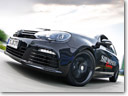 SIEMONEIT RACING has unveiled a special tuning package for the new Golf VI GTI. The name of the project is black pearl.


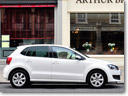 2011 Volkswagen Polo Match joins the model’s range and offers perfect value for money. The new Match model replaces the existing SE and Moda trim levels and also provides £650 worth of equipment.

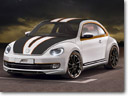 ABT has introduced a styling and a performance packages for the latest 2012 Beetle. Still, these are just two renderings, but the car will look exactly the same.


 Each car enthusiast has a movie that makes them smile just thinking of it. You will have the opportunity to read a little more about some of the most cherished cars used in movies.


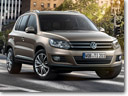 Volkswagen will put on sale the new revised Tiguan on 1 July. The prices start from £21 085 and rising to £28 020 for the top-of-range 2.0 TSI 210 PS 4WD DSG 7 Spd model. 2012 Volkswagen Tiguan is available in both two- and four-wheel drive.


 Volkswagen has introduced the Temporary Auto Pilot (TAP), which includes some semi-automatic functions.

