Tag: Supercar

  • High performance icon comes to Europe for the first time as ford mustang Mach 1 debuts at Goodwood

    2021 Ford Mustang Mach 11

    The limited-edition, high-performance Ford Mustang Mach 1 will be available to customers in Europe for the first time ever.

    Making its European debut at Goodwood SpeedWeek in front of a global virtual audience, the Mustang Mach 1 is the best-handling production Mustang ever offered to customers in Europe.

    Performance is boosted to a level worthy of the iconic Mach 1 moniker with enhanced aerodynamics, a specially-calibrated 460PS 5.0-litre V8 1 engine and uprated cooling for improved track capability.

    The Mach 1 is also the first production Mustang in Europe available with a high-performance TREMEC six-speed manual transmission, featuring rev-matching technology for seamless down-shifts and an upgraded oil-cooler system for high-demand performance driving. Customers can alternatively specify Ford’s 10-speed automatic transmission, featuring an upgraded oil-cooler and recalibrated software for optimised performance in road and track driving conditions.

    A unique suspension setup further enhances road performance and track-readiness. Specially-calibrated MagneRide® 2 dampers and bespoke springs, anti-roll bars and bush specifications deliver improved control and response under high cornering loads. Retuned electric power-assisted steering (EPAS) software enables the Mach 1 to offer the most precise steering of any Mustang in Europe.

    The result is the fastest production Mustang around a track ever offered to customers in Europe.

    In addition to its performance credentials, the Mustang Mach 1 brings exterior design that recalls the iconic Mach 1 Mustangs of the 1960s and 1970s, with bold bonnet and side stripes, performance-derived body-styling and unique 19-inch alloy wheels. The limited-edition model is available in a unique set of eight body colour, stripe and contrast-line combinations, echoing the distinctive design of the original car. Each Mustang Mach 1 is individually numbered with a distinctive plaque according to its build order.

    “The original Mach 1 delivered the ultimate in production Mustang performance and proved itself with success in motorsport,” said Matthias Tonn, Mustang Mach 1 chief programme engineer for Europe. “The new Mach 1 is the most capable Mustang ever to reach Europe, with track-ready ability and a unique style that is more than worthy of wearing such a legendary badge.”

    To celebrate the launch of the Mustang Mach 1, Ford has created a world-first interactive experience through which users can create their own short video using an online app. Users can choose the colour of their Mach 1 and their preferred camera angles to create a unique, short video that they can share on social media. The app also offers users an augmented reality experience, enabling them to “place” a digital Mustang Mach 1 in a real-world environment.

    Iconic V8 muscle

    The Mustang Mach 1 features a 460PS version of Ford’s 5.0-litre V8 all-aluminium petrol engine – specially modified for improved performance both on the road and on track.

    An Open Air Induction System, intake manifold and 87mm throttle bodies are shared with the Mustang Shelby GT350 model available to Ford North America customers, increasing the free flow of air into the engine. The enhanced breathing works alongside recalibrated engine management software and a combination of low-pressure port fuel injection and high-pressure direct fuel injection for a “reward-to-rev” character and 7,500rpm red line. Peak power is delivered at 7,500rpm, with peak torque of 529Nm delivered at 4,600rpm.

    An auxiliary engine oil-cooler, also shared with the Shelby GT350, works in partnership with a new engine oil filter adaptor to ensure optimum oil flow and consistent performance under high loads. The Mach 1’s uniquely tuned Active Valve Performance Exhaust features quad 4.5-inch tips to further enhance the unmistakable Ford V8 sound.

    A choice of transmission options is designed to maximise performance, driveability and track capability. The TREMEC 3160 six-speed manual transmission uses a twin-disc clutch to comfortably manage aggressive, high-rpm gear-changes on track, and provides a short-throw shift action for fast, consistent shifts that maximise performance and fun-to-drive.

    The TREMEC six-speed transmission features rev-matching for smooth, seamless gear-changes that enhance refinement on the road, and performance on the track. The technology uses the engine’s electronic control system to briefly “blip” the throttle as the driver downshifts – matching the engine rotation speed to that of the gear that is being selected. Flat shift capability is also delivered – allowing drivers to can engage the next gear without lifting the throttle pedal. The transmission’s enhanced performance is enabled in part using dedicated oil-cooling system to cope with the increased demand.

    Ford’s advanced 10-speed automatic transmission includes an upgraded torque converter and unique calibration for Mustang Mach 1, optimising torque capability, shift character and overall performance. A second air-to-oil cooler increases cooling capacity by 75 per cent to manage high-load driving situations. Manual and automatic models include an additional rear axle cooling system that further supports track driving, and are also fitted with a limited-slip differential as standard, enhancing traction both in a straight line and when exiting corners.

    Ready to race

    The Mustang Mach 1 benefits from a series of aerodynamic changes that bring performance gains as well as providing a distinctive look that pays homage to the styling of the original models.

    A unique front-end configuration includes a new two-piece upper grille, new lower grille and splitter, and new side grilles: all contributing to the improved aerodynamic and cooling performance.

    The Mustang Mach 1 creates 22 per cent more downforce than the Mustang GT, supported by a rear diffuser design shared with the Mustang Shelby GT500 model available to Ford North America customers, and a longer undertray that incorporates dedicated fins that direct cooling air to the brakes. The shape of the front splitter has been designed to deliver increased downforce for improved grip on track, while the bespoke, single-deck rear spoiler has been matched to the front aerodynamics to ensure the perfect lift balance from front to rear.

    Bespoke suspension tuning is designed to cope with the high demands of track driving. The MagneRide® 2 adjustable suspension system electronically controls the magnetorheological fluid inside the damper to respond in real time to changing road conditions, and has been recalibrated for optimum performance alongside the stiffer front springs and anti-roll bars. In addition to the new EPAS calibration, Mustang Shelby GT350 and GT500 subframes and toe-link components contribute to the sharpest Mustang steering responses in Europe yet.

    The Mustang Mach 1 also gains a higher specification brake booster with a faster response time, ensuring quick and consistent braking performance even under high loads. Unique five-spoke 19-inch alloy wheels that are 0.5 inches wider front and rear, and fitted with track-ready Michelin Pilot Sport 4 tyres.

    Iconic design reborn

    Distinctive, race-derived and aero-influenced styling has been a core component of every generation of Mustang Mach 1, enhanced with charismatic colour and decal combinations.

    Customers of the latest limited-edition model have a choice of eight combinations for body colour and bold bonnet and side stripes, including Fighter Jet Grey with Satin Black/Reflective Orange stripes; Iconic Silver, Shadow Black and Oxford White with Satin Black/Red stripes, or Velocity Blue, Twister Orange, Race Red and Grabber Yellow with Satin Black/White stripes.

    Mustang Mach 1 upper and lower front grilles are finished in gloss black, and the iconic Mach 1 logo appears on the rear deck-lid and on each front wing.

    The interior is distinguished by an Ebony colour scheme and Dark Engine turned aluminium detailing, while the leather sports seats feature Metal Grey stitching. Each Mustang Mach 1 features a unique dashboard badge featuring the Mach 1 logo and build number, complemented by unique sill plates and a new start-up display on the 12-inch digital instrument display cluster.

    Standard comfort and convenience technologies include heated and cooled front seats, Ford’s sophisticated SYNC 3 connectivity system, 3 a premium 12-speaker B&O Sound System, and FordPass Connect 4 modem for enhanced connectivity.

    “The Mach 1 not only looks the part, but has the hardware to deliver on-track thrills and on-road driving pleasure that Mustang enthusiasts demand,” Tonn said. “It’s the most exciting Mustang in Europe to-date, and we are thrilled to be bringing the iconic Mach 1 name to Europe for the first time.”

    First introduced in 1969, the Mustang Mach 1 extended the performance of the Mustang GT model with a number of enhancements including more powerful V8 engines, competition suspension and bespoke styling. The first-generation Mach 1 set 295 speed and endurance records at the Bonneville Salt Flats, and racing teams using the Mach 1 earned back-to-back SCCA Manufacturer’s Rally Championships in 1969 and 1970. New or updated versions were introduced in 1971, 1974, and 2003. More than 300,000 Mustang Mach 1 vehicles have been produced since 1969.

  • A record September for Automobili Lamborghini

    Lamborghini1

    Automobili Lamborghini has achieved a record of September in terms of commercial results with 738 units delivered to customers in one month: its best September ever. A consistently positive trend over the last three months resulted in 2,083 units delivered to customers in the third quarter of 2020, illustrating the energy with which Lamborghini responded to a period of new challenges.

    Despite a difficult year marked by the Covid-19 pandemic, Lamborghini has adopted opportunities to reorganize and manage a business in the context of a new ‘normal’. Although the company was the first in the automotive sector to close production and offices, putting people safety first, a dynamic return to business following the seven weeks’ closure saw a rethinking of its medium-term business strategies.

    The reopening saw the launch of three new models: the Huracan RWD Spyder, the Sián Roadster, and the Essenza SCV12. The Italian super sports car company achieved important production milestones with 10,000 Urus and Aventador produced, as well as continuous growth on social media channels and the launch of a cultural project to support the country: With Italy, For Italy.

  • Latest supercars and new road cars to feature at Goodwood Speedweek

    LotusEvija1

    The latest and most exciting supercars from iconic brands like Ferrari, McLaren, Aston Martin, Porsche, and Koenigsegg will take center stage at this year’s Goodwood SpeedWeek presented by Mastercard.

    The Michelin Supercar Run and First Glance classes at the unique broadcast event will feature everything from the 300mph SSC Tuatara to the brand new Ford Puma ST, giving viewers the chance to see some of the most exotic supercars in action, alongside the very latest road cars.

    The Duke of Richmond said: “It’s wonderful that we can welcome our global automotive partners to SpeedWeek and help them showcase their latest and greatest to an incredibly passionate global audience. SpeedWeek will be the first time many of these vehicles have been seen in action and we’re thrilled that they’re debuting here at Goodwood.”

    One of the most exciting debuts will be Lotus’ new Evija. The Norfolk manufacturer’s first electric hypercar will make its dynamic debut at SpeedWeek. Lotus will also showcase its new Evora 410 Sport and Exige 430.

    McLaren will be embracing the ‘Past, Present, Future’ theme of SpeedWeek with a range of different cars across the three days, in liveries evoking great McLaren color schemes from the past. Stars among them will be the new ELVA and 765LT, both of which will be making their debut in the Supercar Run.

    Four other renowned British brands – Aston Martin, Land Rover, Rolls-Royce, and Jaguar – will showcase their latest and most iconic models. Aston Martin will show its DBX SUV, alongside the DBS Volante, DB11 AMR, and Vantage, Land Rover will bring its new Defender 90 and Defender 110, Rolls-Royce will demonstrate the rakish elegance of the Wraith Black Badge, and Jaguar will run their new F-TYPE R, as well as the much-anticipated debut of the new Jaguar F-PACE PHEV.

    Taking on the British supercars will be the SSC Tuatara from the United States. Powered by a 5.9-liter V8 pumping out 1,750bhp, the Tuatara has a claimed top speed of 300mph. It will take part in both the Supercar Run and SpeedWeek Shootout presented by Mastercard, where it will face stiff competition from, amongst others, the Koenigsegg Regera.

    One of the stand-out cars in the First Glance category will be the all-electric Ford Mustang Mach-e 1400. Developed jointly by Ford and RTR Vehicles (founded by drifter and Goodwood favorite Vaughn Gittin Jr), its 1400bhp and 1000kg of downforce make it one of the wildest vehicles at SpeedWeek. Like all the electric cars at the event, it will be powered by BP Chargemaster. Ford will also bring its 5.0-liter Mustang Mach-1 to add some V8 noise to the event, and the Puma ST, both of which will be making their debuts at Goodwood.

    Fans of Italian exotica will be in for a treat. Ferrari will be at SpeedWeek in force, with the Roma, F8 Tributo, F8 Spider, 812 GTS, and Monza. Lamborghini, meanwhile, will take part in the Michelin Supercar Run with the Aventador SVJ and Huracan EVO RWD, while the Urus SUV will also be on display in First Glance.

    From Germany, Audi will showcase a special edition R8 Green Hell, named after the iconic Nürburgring Nordschleife, while its Group B era Quattro will also be on hand to entertain rally fans. From Stuttgart, Porsche will showcase its all-new Panamera 4S E-Hybrid, the Cayenne GTS Coupe, and 718 Boxster GTS 4.0, alongside the iconic 911 Turbo S and innovative, all-electric Taycan sports car. Meanwhile, BMW will show the all-new M440i xDrive Coupé and the new BMW M5.

    Fans of rallying will also be able to follow WRC stars Kris Meeke and Jari-Matti Latvala as they shakedown the new GR Yaris – Toyota Gazoo Racing’s WRC car for the road, which will make its dynamic debut at Goodwood. Also from the Toyota Gazoo Racing stable will be the GR Supra in First Glance.

  • McLaren’s all-new high-performance hybrid supercar enters final stages of testing

    McLaren1

    The first series-production High-Performance Hybrid (HPH) supercar from McLaren Automotive has entered the final stages of its development and test programmes, which includes running on public roads.  Due to launch in the first half of 2021, the all-new supercar will open a new era of electrification for McLaren following the end of production of its Sports Series range.

    The all-new, supercar will be the first McLaren built on a new carbon fibre structure, christened McLaren Carbon Lightweight Architecture (MCLA). Optimised for High-Performance Hybrid powertrains and latest-generation driver technologies, the architecture elevates McLaren’s pioneering lightweight chassis technologies to new heights, exploiting the company’s advantage in super-lightweight engineering – a benefit that has its roots in the brand’s motorsport origins.

    Designed, developed and produced in the UK at the £50m state-of-the-art McLaren Composites Technology Centre (MCTC) in Sheffield region, the all-new flexible structure will underpin the next generation of McLaren hybrid supercars coming to market over the coming years.


    The High-Performance Hybrid powertrain, which features an all-new V6 internal combustion engine, delivers astonishing levels of performance and a uniquely intense driver experience, as well as providing medium-range EV-only drive capability.

    “This all-new McLaren supercar is the distillation of everything we have done to date; all that we have learned and achieved,” commented Mike Flewitt, CEO, McLaren Automotive. “This is a new kind of McLaren for a new era, an extraordinary drivers’ car that offers blistering performance as well as an all-electric range capable of covering most urban journeys. We see this new McLaren as a true ‘next generation’ supercar and cannot wait to show it to customers.”

    McLaren’s all-new, ‘next-generation’ supercar draws on all of the technological expertise in designing, developing and building the world’s most innovative and desirable, super-lightweight hypercars and supercars.

    “For us, light-weighting and high-performance hybrid technology go hand-in-hand to achieve better performance as well as more efficient vehicles,” explained Flewitt. “Our expertise in lightweight composites and carbon fibre manufacturing, combined with our experience in cutting-edge battery technologies and high-performance hybrid propulsion systems, makes us ideally placed to deliver uncompromised levels of electrified high-performance driving that until now have simply been unattainable.”

    The all-new hybrid supercar will sit between the GT and the 720S in the McLaren range and its introduction will further strengthen the company’s presence in the supercar sector. The Sports Series designation – introduced in 2015 with the launch of the 570S – ceases from the end of this year with the limited-run, GT4-inspired 620R the last model produced.

  • Ferrari Omologata

    2021 Ferrari Omologata1

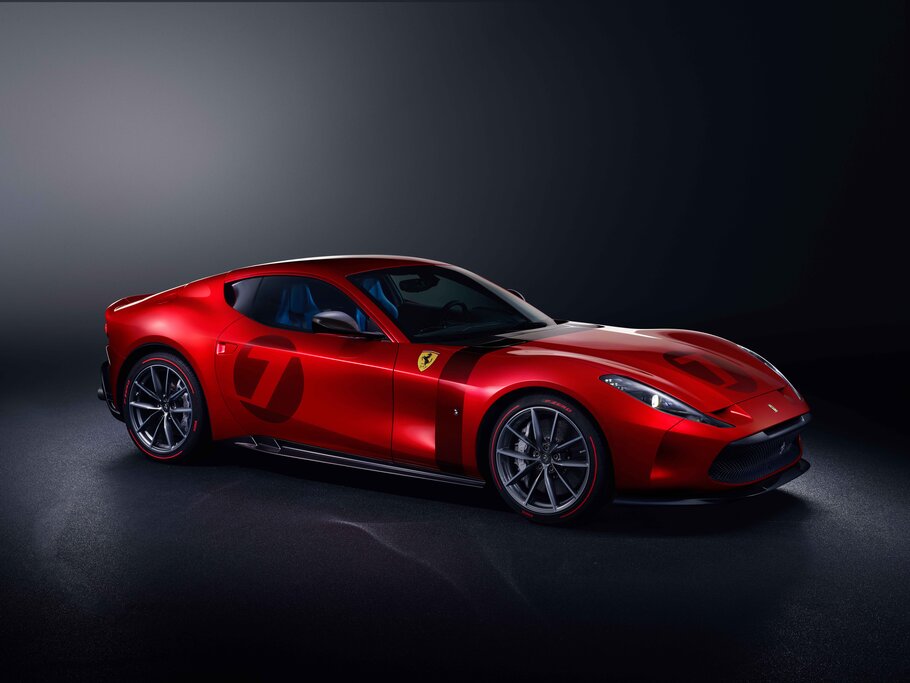
    A unique Ferrari has been seen lapping Fiorano today during a brief yet intense shakedown. While the V12 engine note reverberating around the track may have sounded familiar, the car’s arresting looks are unique although guaranteed to strike a chord with the marque’s aficionados. With its Rosso Magma finish and sophisticated racing livery, the new Ferrari Omologata is a clear descendent of Ferrari’s great GT tradition spanning seven decades of history.

    Commissioned by a discerning European client, the latest offering in Ferrari’s line of unique coachbuilt one-off models is a vibrant evocation of the values that define Ferrari in relation to GT racing: a car that is equally at ease on the road as it is hitting the apex on the track in the hands of a true gentleman driver.

    The Ferrari Omologata project took a little over two years to complete from the initial presentation of sketches, starting with images that covered a variety of inspirations, from racing heritage to sci-fi and references to modern architecture. The idea from the onset was to create a futuristic design with distinctive elements reinterpreted in a fresh manner to provide the potential for a timeless shape that is certain to leave a lasting impression.

    To achieve this, the designers unlocked every possible area of freedom from the underlying package of the 812 Superfast, keeping only the windscreen and headlights as existing bodywork elements. The objective was to exploit the proportions of the potent, mid-front layout to deliver a very sleek design defined by smooth volumes and undulating reflections, uplifted by sharp graphics with sparingly distilled surface breaks wherever dictated by aerodynamic functions. The trickiest aspect was striking the ideal balance between expressiveness and restraint: the Omologata had to ooze street presence whilst maintaining a very pure formal language.

    The designers carefully studied the stance and attitude of the car from all angles, defining a tapering front volume from the flattened oval grille. The rounded section over the front wheel arches, emphasized by a contrasting stripe wrapping across the bonnet, seems to naturally extrude from the grille. The rear of the door, the flank develops into a very potent rear muscle that neatly blends upwards into the three-quarter panel. The entire volume is rendered deliberately imposing through the elimination of the rear quarter light, while three horizontal transversal cuts in the fastback volume visually lower the rear mass. The tail is surmounted by a prominent spoiler which adds not only downforce but a more aggressive, sporty stance. Overall, the car appears to be poised to attack the tarmac even at a standstill, and, seen from the rear, the deeply set single taillights underline the tension.

    Uniqueness in more than name
    Satisfying every safety constraint for road homologation without interfering with any of the usability and tractability of a Ferrari is always a huge challenge for the design team led by Flavio Manzoni, the more so when starting from an existing platform. Omologata was indeed a keyword that resonated throughout the development of this, the 10th front-engined V12 one-off Ferrari has delivered since the 2009 P540 Superfast Aperta. Beyond the clear instructions coming from the client and down to every detail on the car, the designers effectively took into account countless variables to make this a bespoke model through and through, one which could easily find its place in any Ferrari showroom. The quest for the ultimate touch went as far as developing a new shade of red just for the livery, to match the fiery triple-layer Rosso Magma over darkened carbon-fibre finish.

    Inside the car, a plethora of trim details suggests a strong link to Ferrari’s rich racing heritage. The electric blue seats, finished in a tasteful combination of leather and Jeans Aunde® fabric with 4-point racing harnesses, stand out against a full black interior. In the absence of rear quarter lights and screen, the atmosphere in the cabin is purposeful, reminiscent of a bygone era. Metal parts on the dashboard and steering wheel are finished with the crackled paint effect associated with the great GT racers of the 1950s and 1960s as well as with Ferrari’s engine cam covers. A hammered paint effect so often used in cars such as the 250 LM and 250 GTO finds its way on details such as the inner door handles and on the Ferrari F1 bridge.

    A fitting one-off exercise, the Omologata manages to encompass a range of subtle Ferrari signature design cues without falling into nostalgia. Its hand-crafted aluminium bodywork is sprinkled with almost subliminal details, in a way that challenges the enthusiast to identify the various sources of inspiration that played a part into its inception.

  • McLaren 765LT Visual Carbon Fibre

    2021 McLaren 765LT Visual Carbon Fibre1

    The first customer-ordered examples of the new McLaren 765LT are now being hand-assembled at the McLaren Production Centre in Woking, UK. Deliveries of the new McLaren ‘Longtail’ – the most extreme McLaren Super Series model to date – will begin at the end of this month.

    Just 765 individually-numbered cars will be offered globally to customer order with 2020 production fully allocated and expressions of interest far exceeding total production.

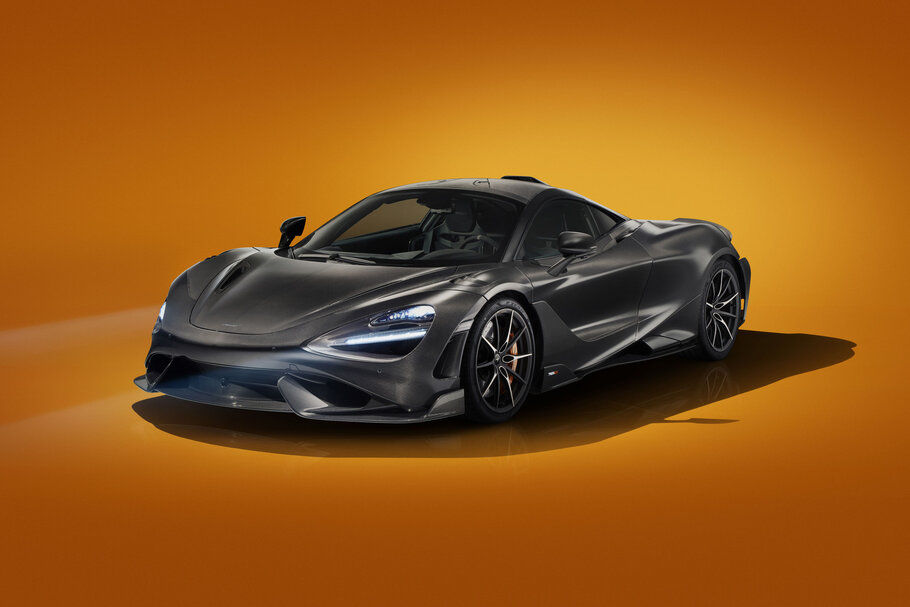
    The McLaren 765LT incorporates all of the renowned McLaren LT attributes, including driver engagement, minimized weight, track-focused dynamics, optimized aerodynamics, and increased power. A comprehensive engineering program of weight reduction has resulted in the superlight 765LT tipping the scales at 80kg* lighter than the already class-leading 720S. The 765LT’s bespoke aerodynamics features carbon fiber panels manufactured for the first time at the McLaren Composites Technology Centre in the Sheffield area, plus a ‘Longtail’ active rear wing.

    The combination of the lightweight (1,229kg at minimum dry weight) and the extreme power and torque of the 4.0-liter, twin-turbocharged V8 McLaren engine – 765PS and 800Nm respectively – underpins the incredible acceleration of the 765LT. As well as the expected sub-three second 0-60mph and 0-100km/h performance, the new LT is capable of reaching 200km/h (124mph) from standstill in just 7.0 seconds – 0.2 seconds ahead of target. Standing quarter-mile (400m) acceleration is similarly impressive at 9.9 seconds – again, better than expectations.

    The first examples of cars specified by McLaren Special Operations (MSO) are being shared with customers. Operating to its established principle of always pushing the art of the possible, MSO has created a number of innovative and complex paint techniques that showcase a whole new level of personalization possibilities.

    The Strata theme unveils a unique, graphical ‘art in motion’ paint scheme, inspired by a city skyline and realized in a three-color design requiring 390 hours of hand painting and finishing. Strata’s Azores orange base color is fused with Memphis Red and Cherry black, the two overlay colors running through the paint scheme in opposite directions to meet and blend on the panels of the 765LT’s dihedral doors. The unique paint scheme is further enhanced by a cohesive design language across the entirety of the car, both inside and out. The brake calipers form part of the color blend, the front calipers being Volcano Red, and the rears Azores Orange, while the interior boasts a host of color-coded features from the MSO Bespoke range, including orange seat perforation and a push-to-drink system in Memphis Red.

    A second theme based around a 3D honeycomb theme, called ‘GEOHEX’, features a striking combination of MSO Bespoke Tarmac Black and Tokyo Cyan paintwork with Visual Carbon Fibre components from the MSO Defined range along with a number of matching interior details. One of the most captivating projects yet is a car with a full Visual Carbon Fibre (VCF) body, a demonstration model of which has already been produced in response to customer enquiries. The demonstration model has been built in Clear Gloss Carbon Fibre to demonstrate the purity and intricacy within the weave alignment. The 765LT MSO Bespoke Carbon Fibre Body is available in a number of bespoke tints which can vary in complexity depending on the intended design.

  • Ferrari Portofino M

    2021 Ferrari Portofino M1

    The Ferrari Portofino M, the evolution of the Prancing Horse’s 2+ GT spider, the Ferrari Portofino, was unveiled today. In a move unprecedented in the Maranello marque’s 70-year-plus history, the new car’s premiere took place entirely online. The build-up to the unveiling included the sending out of a series of newsletters to clients over recent weeks at the end of which they were given access to a platform containing exclusive videos illustrating the concept behind the car, its restyling and main technical contents.

    The Portofino M is the first Ferrari to be presented in the wake of the company’s temporary closure due to the Covid-19 crisis, making it the symbol of a voyage of rediscovery. It is the (re)starting point for Prancing Horse’s pursuit of innovation whilst fully respecting its heritage, passion and constant search for perfection. All of these values are reflected in the new Portofino M. In fact, the ‘M’ in its moniker stands for ‘Modificata’, which in Ferrari nomenclature refers to cars that have undergone an evolution that has significantly boosted their performance.

    There is no shortage of technical innovation in the stunning new evolution of the Ferrari Portofino, the most notable being its redesigned powertrain, a brand-new eight-speed gearbox and the five-position Manettino that includes a Race mode, an absolute first for a Maranello GT spider. As a consequence of these and many other new features, the Portofino M guarantees an unprecedented combination of authentic GT performance, driving pleasure, agility and exceptional versatility in everyday driving contexts.

    This latest design and engineering masterpiece from the Prancing Horse is the perfect evolution of the Ferrari Portofino. Sportier in character than its predecessor, it also delivers superior handling whilst not only maintaining but enhancing on-board comfort, courtesy of specific new optional features, such as ADAS, and ventilated and heated seats. The Ferrari Portofino M thus retains the Ferrari Portofino’s twin soul and is the only car on the market that can rightfully be described as an authentic coupé with its top closed and a genuine spider when it is open. This is thanks, of course, to the Retractable Hard Top (RHT), the signature feature of all the Prancing Horse’s convertibles.

    The Portofino M’s compact dimensions also make it ideal for all occasions. In fact, its unparalleled versatility and on-board comfort turn every trip into a voyage of (re)discovery.

    POWERTRAIN
    The Ferrari Portofino M’s 3855cc engine belongs to the V8 turbo family voted “International Engine of the Year” on four consecutive occasions (2016-2019). The power unit can punch out 620 cv at 7,500 rpm, 20 cv more than the Ferrari Portofino. To achieve these performance levels, the Ferrari engineers used new cam profiles to increase valve lift and optimise combustion chamber filling.

    A speed sensor was also added to the turbocharger assembly to measure the turbine revolutions. This in turn allowed the maximum revolutions per minute of the turbine to be increased by 5,000 rpm.

    Lastly, to comply with the strictest pollution emissions standards, a Gasoline Particulate Filter has been included in the exhaust system. The GPF allows the car to comply with the strictest European anti-pollution standards (Euro-6D) without compromising driving pleasure.

    This result comes thanks to a control logic that continuously regenerates the filter, limiting the amount of accumulated particulate matter. This is achieved by using two dedicated sensors per cylinder bank to accurately measure differential pressure deltas up- and down-stream of the GPF.

    The 8-speed gearbox is a completely new unit compared to the previous 7-speed version and is based on a dual-clutch oil bath architecture. It differs from the SF90 Stradale’s 8-speed transmission in its longer gear ratios and the introduction of a mechanical reverse gear. The new layout and integration of its components have also optimised the gearbox’s size and its installation in the car.

    Like all the other turbo cars in the range and in line with the “zero turbo lag” concept, the Ferrari Portofino M delivers instantaneous throttle response throughout the rev range. The car boasts Variable Boost Management, a control software developed by Ferrari that adjusts torque delivery to suit the gear selected. The result is increasingly powerful pick-up as revs rise, whilst optimising fuel consumption. As the car goes up through the gears (from 3rd to 8th), the amount of torque delivered by the engine increases all the way up to 760 Nm in 7th and 8th gear.

    On the one hand, this has allowed Ferrari to use longer gear ratios in the higher gears, which helps keep fuel consumption and emissions down, while on the other, adopting a steeper torque curve through the rev range in the lower gears for a feeling of smooth and powerful pick-up.

    The introduction of the eighth gear and the improvement in transmission efficiency have resulted in a significant reduction in fuel consumption in urban and motorway contexts in addition to noticeably improving performance even under sportier, more press-on driving.

    The new clutch module is 20% smaller but delivers 35% more torque, with up to a maximum 1,200 Nm of dynamic torque transmitted when gear shifting. The transmission software strategy has also been evolved with a more powerful ECU.

    Lastly, particular attention was focused on gear change strategies aimed at improving the power unit’s fuel consumption and emissions levels. Due to more efficient clutch torque control, the car is now also easier to drive in urban contexts during Start&Stop cycles. This guarantees that the car is smoother to drive at low speeds in traffic, as well as delivering a more intuitive experience and improved responsiveness.

    By tradition, every single Ferrari engine has its own particular soundtrack that makes it unique. The Ferrari Portofino M is no exception. In addition to the flat-plane crankshaft, the geometry of the entire exhaust line is new. The two rear silencers have been eliminated (which in addition to boosting sound also significantly reduces backpressure in the tailpipes) and the by-pass valves are now oval in shape to enhance the exhaust sound. Both solutions significantly reduce exhaust backpressure and improve sound quality. The last notable modification is “proportional” by-pass valve control, which is continuous and progressive depending on the driving situation.

    VEHICLE DYNAMICS
    The Portofino M sports the vehicle dynamics control system known as Side Slip Control (SSC), which incorporates an algorithm that delivers an estimate in real time of the side slip angle to all the various on-board control systems. The SSC coordinates all the vehicle dynamics interventions as the systems are all integrated using shared data.

    Now in its sixth generation, the SSC integrates the E-Diff, F1-TCS, SCM-E Frs and the Ferrari Dynamic Enhancer (FDE) control systems. The FDE is a lateral dynamics control system that uses Ferrari software to adjust the hydraulic brake pressure at the callipers on all four wheels. On the Ferrari Portofino M, it is available only when the Manettino is in Race mode. The FDE is designed to make the car’s lateral dynamics more predictable both through and exiting corners by ensuring the steering wheel and throttle are more intuitive for the driver to use. That said, the FDE is not a stability control system and flanks rather than replaces the traditional VDC and stability control system (ESC).

    Another noteworthy factor is the more modulable brake pedal pressure which, when combined with a reduction in pedal travel of around 10%, delivers more precise, instantaneous responsiveness to inputs during braking.

    The aim of the five-position Manettino, a first on a Prancing Horse GT spider, is to make the Ferrari Portofino M’s handling and grip even more accessible by extending the setting ranges still further with the introduction of the Race position. Supported by the introduction of the Ferrari Dynamic Enhancer, that position focuses on maximising driving pleasure.

    Below are the five positions on the Ferrari Portofino M’s Manettino and their respective performance goals:

    Position Performance goal
    Wet Maximum stability and control
    Comfort Normal use on dry roads
    Sport Sporty driving
    Race Maximises driving pleasure
    ESC-Off VDC and F1-TCS both deactivated


    DESIGN
    The new Ferrari Portofino M’s harmonious styling is the product of a global approach to design in which all the various elements are treated as part of a single whole and builds on the success of the Portofino design. This applies both to the bodywork, where the front, flanks and tail are part of a single seamlessly sculptural design, as it does to the cabin where the general arrangement of the volumes and lines is stylistically consistent. This approach can be seen in the interaction between the car’s exterior and interior.

    EXTERIOR
    The fact that the Portofino M’s performance is more powerful than the Portofino resulted in the Ferrari Styling Centre’s designers making very precise, targeted adjustments to highlight the model’s characteristics and underscore its sportiness.

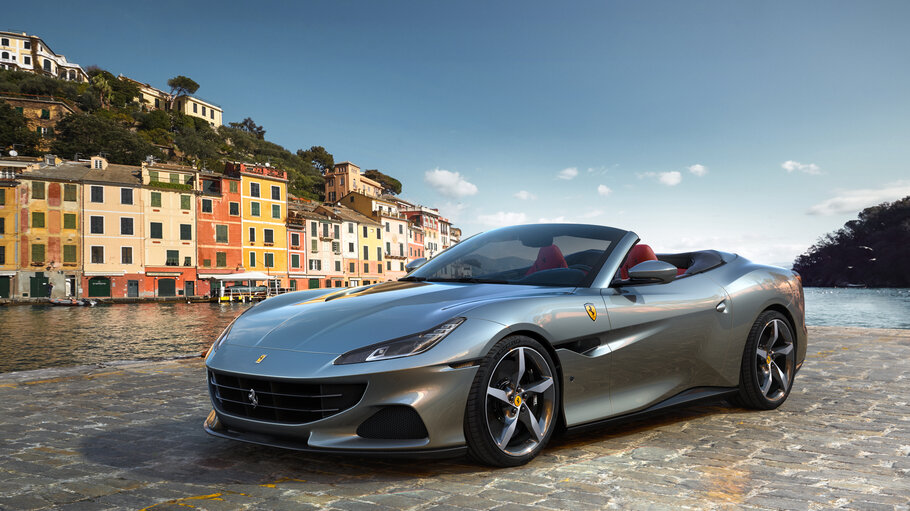
    The wraparound front bumpers incorporate imposing, sculptural air intakes that lend a decisive, aggressive look to the front of the car. They also feature a new air vent at wheelarch height, added because of the need to reduce the car’s overall drag. Part of the air flow coming off the front radiating masses is directed towards the new vents and then accelerated up as it exits, boosting its extraction power. The resulting improvement in aerodynamic performance is underscored by a slash on the front bumper that flows into the design of the flanks, adding visual harmony to the side view of the car. Thus, the signature Portofino side scallop finds its visual counterpart on the Ferrari Portofino M’s front bumper, which has been sculpted to accentuate the car’s dynamic profile.

    The grille features new aluminium slats with contrasting faceted tips that highlight this noble material.

    At the rear, the new exhaust system has allowed the removal of the silencer assembly, making the Ferrari Portofino M’s tail more compact. The result is that the rear bumpers are now more streamlined and sculptural. Visually, their forms are lighter too and their styling more in harmony with the front bumpers, creating a much more coherent overall aesthetic.

    The rear diffuser has been completely redesigned and is now separate to the bumpers. This allows clients to be able to specify it in carbon-fibre, which further underscores the car’s sporty character.

    Specific diamond-finish wheel rims were designed for the Ferrari Portofino M. Their styling references that of the car’s flanks, a perfect marriage of elegance and sportiness. The unusually sculptural design of the spokes and their chiaroscuro look visually lightens the rim.

    INTERIOR
    With the top down the Portofino M reveals its stylish GT soul and occupants will appreciate how compact and organic the whole car feels. There is exceptional design coherency in the development of the cabin, in fact. The Styling Centre team began by pinpointing certain specific prerequisites essential to the success of the design, the foremost of these being formal and functional coherency between the car’s exterior and its interior, weight reduction and more occupant space.

    The crafting of the interior began with a multi-level dashboard structure comprising an upper half and then an intermediate gap designed to lighten the perceived mass of the lower half.

    Obtained by subtracting rather than adding volumes, this breaking up of the dash into different levels allowed the designers to organise the technical elements and in-car devices to very rational effect while simultaneously defining its signature full-width architecture. A central horizontal aluminium blade divides the instrument panel, air conditioning vents and passenger display into separate areas in the upper section. The other control functions are located in the scooped section below, with a 10.25” touchscreen at the centre. This type of layout hints at flawless ergonomics and highlights the construction quality of every single detail through its seamless marriage of ultra-high-tech elements and materials with handcrafted assemblies and trims.

    Seen in plan view, the cockpit’s symmetrical arrangement and the ample rear seat space are clear. From a construction perspective, the interior – and the dashboard architecture in particular – feature two shells incorporating all of the technical components and a bridge that visually connects the instrument panel area with the central tunnel.

    This layout is designed to involve the passenger and is underscored in the styling of the door panels, handles and various controls and devices available, including the central and passenger touchscreens.

    The seats are the product of a special research project and have an innovative magnesium structure. Different density padding and an ultra-compact seatback profile have freed up space for rear occupants too.

    Also available is three-level ventilation for the seat and backrest, and the very popular neck warmer for use in winter months. The latter offers a choice of three heat levels and the system constantly adapts the speed of the warm air flow from the headrest to ensure it is proportional to the car’s speed, outside temperature and the position of the retractable top.

    INFOTAINMENT AND HMI
    The Ferrari Portofino M’s HMI (Human-Machine Interface) centres on a digital cluster with dual TFT displays arranged around the analogue rev counter in a generous circular, anti-glare binnacle. Located on exactly the same axis as the multifunctional steering wheel, this cluster allows the driver to interact more easily and intuitively, both visually and physically, with the car by delivering optimal driving feedback.

    The infotainment system functions are controlled via the touchscreen handily located at the centre of the dash within easy reach of both driver and passenger. Designed to be as quick and accessible as possible in terms of both use and content, it includes a full HD multi-touch capacitive screen with Split View to allow different types of content to be viewed simultaneously. Both Apple Car Play and Android Auto are also available.

    The passenger has an optional dedicated capacitive display on the dashboard. It is directly linked to the main screen providing all information relating to car speed, rpm and gear engaged. This 7” colour full HD and Full Touch display also allows the passenger to interact with the car’s on-board systems. They can, for instance, select music to listen to, view sat nav information or select a new point of interest (POI), such as a restaurant, which is then automatically integrated into the route. So essentially, the passenger becomes a co-driver.

    The advanced driver assistance systems (ADAS) available as optionals for the Ferrari Portofino M are:

    • Adaptive Cruise Control with Stop&Go function for driving in traffic
    • Predictive Emergency Brake System that can alert the driver to potential collision risks readying the car to lessen the consequences of a frontal impact
    • Blind Spot Monitoring to alert driver to vehicles in the blind spot
    • Lane Departure Warning with acoustic and/or visual alert that the car has strayed out of its lane
    • Automatic High Beam, which automatically turns on and off high beams when driving at night
    • Traffic Sign Recognition, which constantly displays the speed limits on the particular road/street vehicle
    • Surround View with 3D display
    • Rear Cross Traffic Alert, which warns driver of moving obstacles hidden in the car’s rear blind spot, when reversing.

    7 YEARS MAINTENANCE
    Ferrari’s unparalleled quality standards and increasing focus on customer service underpin the extended seven-year maintenance programme offered with the Ferrari Portofino M. Available across the entire range, the latter covers all regular maintenance for the first seven years of the car’s life. This scheduled maintenance programme for Ferraris is an exclusive service that allows clients the certainty that their car is being kept at peak performance and safety over the years. This very special service is also available to owners of pre-owned Ferraris.

    Regular maintenance (at intervals of either 20,000 km or once a year with no mileage restrictions), original spares and meticulous checks by staff trained directly at the Ferrari Training Centre in Maranello and using the most modern diagnostic tools are just some of the advantages of the Genuine Maintenance Programme. The service is available on all markets worldwide and from all Dealerships on the Official Dealership Network.

    The Genuine Maintenance programme further extends the vast range of after-sales services offered by Ferrari to meet the needs of clients wishing to preserve the performance and excellence that are the signatures of all cars built in Maranello, itself long synonymous with leading-edge technology and sportiness.

  • Honda reveals details about “the new NSX” [w/video]

    Honda NSXHonda team talks about a holistic approach to the design, technology and manufacturing of the new NSX. The supercar will also feature a thing called “instant response”, which will challenge the conventional beliefs about supercars and will show the future of their development.

    So, what should we expect?

    The advanced design and incredible manufacturing, in Honda’s words. The new NSX is expected to respond ultra quick to all driver demands, whether they are accelerating, braking, turning, or similar. Of course, we will witness some sophisticated engineering solutions and new generation of engine, AWD system, bespoke nine-speed dual-clutch gearbox and rigid chassis. Ultra rigid in Honda’s words.

    Some of the innovations will include Sport Hybrid Super Handling All-Wheel-Drive, Sport Hybrid SH-AWD power unit with zero-delay performance and Twin Motor Unit that provides independent drive force to each front wheel.

    SEE ALSO: Honda Jazz Type R, Ford Ka ST, Volkswagen up! GTi and the BMW M i3 are the craziest vehicles you’ll see this weekend!

    Also, the character of the NSX can be further changed, thanks to the Integrated Dynamics System and its four selectable modes: Quiet, Sport, Sport+ and Track.

    Additional technical data

    Honda engineers also delivered some multi-material body structure in order to provide class-leading structural rigidity and deliver some increased visibility, crash safety performance, durability and reliability.

    This means that the vehicle incorporates aluminum frame nodes for shorter front and rear overhangs and reduced mass. Also, there will be a three-dimensional bent and quenched frame members that create thin and strong A-pillars.

    These and many more additions will be present, many of which will also be announced soon. Meanwhile, tell me what do you think about Honda’s plans about the supercar segment?

    https://www.youtube.com/watch?v=ZNvoqFLDvZ4

    Source: Honda 

    Video source: Youtube 

  • Dodge Viper Documentary


    The people at Dodge have released a great new documentary on the iconic Viper, called “Viper: DNA of a Supercar”. The documentary, which can be seen at driverSRT.com/2015/viper/documentary, looks at the creation and production of the Viper, and the care that goes into creating each component of the vehicle. The film has been created to celebrate the fifth generation Dodge Viper SRT, which was released in late 2012. The new 2015 Viper will add incredible features to the impressive model, including an all-aluminum 8.4-liter V-10 engine which offers an incredible 645 horsepower and 600 lb.-ft of torque, which is the highest level of torque offered by any other naturally aspirated sports cars in the world.

    “The Dodge Viper is a precision-handcrafted machine expressively built to stimulate all the senses of an enthusiast’s soul,” said Tim Kuniskis, President and CEO, Dodge and SRT, FCA North America. “It’s not widely known what it takes to create this supercar, including the 140 to 160 hours to hand paint each Viper, so we produced the film to show what sets the Viper apart from everything else in its segment.”

    The “Viper: DNA of a Supercar” explores the drama and passion that has inspired engineers, designers and craftspeople in the automotive industry. With incredible focus, resolve and expertise, the documentary shows how each component is crafted with incredible care. There are a variety of interesting facts elaborated on in the documentary, including the fact that it takes over 3,700 separate and unique components to put together the Viper, yet remains super light with an incredible 48 percent of the exterior being designed with super light, carbon fiber which leads to an incredible structural integrity.

    To offer incredible drama, the interior of “the Viper has been crafted with over 90 percent of the finest, hand-wrapped leather”, Earnhardt Dodge. The exterior boasts an extraordinary attention to detail, with over 150 man hours taken to achieve the highest quality paint finish.

    The film, which shows every phase of the Viper’s design process from beginning to end, elaborates on the incredible care taken in assembling every component of the assembly process. The Viper is one of the few custom-built vehicles in the world, and is created with exceptional craftsmanship and distinguishes the Viper as one of the highest quality vehicles in the world. The film will be available to Viper and Dodge fans ever, where it will be released across multiple social media channels.

  • Volvo S60 V8 Supercar – 650HP and 660Nm

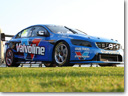
    Volvo Polestar Racing has unveiled the S60 Racecar which will take place in V8 Supercars Championship.

    It is powered by a naturally-aspirated 5.0 liter V8 – 650HP (478 kW) and 660Nm (487 lb-ft) of torque. The redline is at 7,500RPM and runs on E85 fuel. The curb weight is just 1,410 kg (3,108 lbs) thanks to a number of carbon fiber elements as well as completely stripped interior. 0-100 km/h in 3.2 seconds and a top speed of 298 km/h (185 mph). The power is put on the road through a 6-speed sequential transaxle gearbox with a built-in spool differential on the rear wheels.

    Some of the highlights include a double wishbone front and independent rear suspension, 395mm front and 355mm rear ventilated discs with 6- and 4-piston AP Racing calipers. It rolls 18” forged alloy wheels wrapped in Dunlop performance tires. Last, but not least is the super-expensive Öhlins TTX suspension (dampers and springs).

    Volvo S60 V8 Supercar technical information

    Vehicle Volvo S60
    Engine Modified Volvo B8444S (see below)
    Transmission Control Albins ST6 6 speed sequential Transaxle with integrated spool differential
    Front suspension Double wishbone suspension, adjustable damper and cockpit adjustable front anti-roll bar
    Rear suspension Control independent rear suspension, adjustable damper; cockpit adjustable anti-roll bar
    Front brakes AP Racing 6 piston caliper, 395mm ventilated discs
    Rear brakes AP Racing 4 piston caliper, 355mm ventilated discs
    Wheels Control Rimstock 18” x 11” forged aluminium
    Tyres Dunlop control tyre
    Weight 1410KG (includes driver)
    Top speed 298+ km/h
    0-100km/h 3.2 seconds
    Steering Custom rack and pinion power assisted steering
    Shocks Ohlins TTX Dampers
    Electronics MoTec ECU and Data Logging System

    Engine technical information

    Block Modified Volvo B8444S, 60 degree aluminium cylinder block
    Heads Modified Volvo B8444S, aluminium
    Bore x Stroke 95.5 x 87.1
    Capacity 4989cc
    Compression 10:1
    Power 650bhp (estimated)
    Max revs 7500rpm
    Induction Naturally aspirated, eight throttle bodies
    Fuel E85
    Liners Cast in steel liners
    Valve train Double overhead camshafts, direct acting tappets, chain drive
    Ignition Volvo B8444S coil on plug
    Injection Port injection, one injector per cylinder, injection pressure: 5.5 bar

    2014 V8 Supercars Championship

    February 15 sydney.com V8 Supercars Test Day Sydney Motorsport Park
    Feb 27-Mar 2 Clipsal 500 Adelaide Adelaide
    Mar 13-16 2014 Formula 1 Australian GP Albert Park
    March 28-30 Tasmania 400 Symmons Plains Raceway
    April 4-6 Winton 400 Winton Motor Raceway
    April 24-27 ITM 500 Auckland Pukekohe Park Raceway
    May 16-18 Perth 400 Barbagallo Raceway
    June 20-22 Skycity Triple Crown Darwin 500 Hidden Valley Raceway
    July 4-6 Townsville 500 Reid Park
    Aug 1-3 Coates Hire Ipswich 400 Queensland Raceway
    Aug 22-24 Sydney Motorsport Park 400 Sydney Motorsport Park
    Sept 12-14 Wilson Security Sandown 500 Sandown Raceway
    Oct 9-12 Supercheap Auto Bathurst 1000 Mount Panorama
    Oct 24-26 Armor All Gold Coast 600 Surfers Paradise
    Nov 14-16 Phillip Island 400 Phillip Island Circuit
    Dec 5-7 Sydney 500 Sydney Olympic Park

    Source: Volvo

  • Vencer Sarthe – The Dutch Supercar

    The Dutch super car manufacturer Vencer will reveal the Sarthe to the UK for the first time in the stunning grounds of Syon House. The company was established in 2012 by Robert Cobben and is based in Vriezenveen. The first Vencer is the Sarthe, which had its world premiere in Monaco in April and Salon Privé is delighted to host it’s UK reveal.

    The Sarthe is a low volume exclusively handmade mid-engine sports car which utilises a hybrid space frame chassis, made of high grade tubular steel, with chrome-molybdenum safety structure and rear sub-frame with the floor made up of an aluminium honeycomb structure. This combination of materials and techniques results in a lightweight, super strong and rigid chassis.

    The power is coming from a V8 engine behind the driver, which is directly bolted onto the 6-speed MT gearbox. Due to this configuration the car has a very balanced weight distribution of 45% front and 55% at the rear.

    The Vencer “double wishbone” ensures a pure and direct vehicle control without additional electronic interference. Only ABS and EBD are present to properly support the driver in difficult and unsafe situations.

    Among the extras, you will find an efficient climate control system, electric windows, in-car entertainment, central locking, and alarm as standard.


    Source: Vencer

  • Kepler Motion Supercar – 800HP Hybrid [video]

    Kepler Motors has officially announced the Motion Hybrid Super car at the 2009 Dubai Motor Show. The first deliveries of this monster were scheduled for the end of 2011, but that not happened. Still, the manufacturer has released a new promo video of their model.

    Kepler Motion Super car is powered by a modified twin-turbo 3.5 liter V6 EcoBoost engine with 550HP (410 kW) driving the rear wheels and the front wheels are driven by a mighty 250HP (186 kW) electric motor. This means a combined power of 800HP (597 kW), so the performance is exceptional – 0-100 km/h in 2.5 seconds and a top speed of over 322 km/h (200 mph).

    Motion is a real hyper car like Zonda R and Veyron. It features a carbon fiber monocoque chassis, active aerodynamics and active suspension. There are also StopTech Continuous Carbon Ceramic AeroRotors and a programmable track assistant system.

    Check out the video below!

    httpv://www.youtube.com/watch?v=sUNtwqyhu_A

    Source: Kepler via Youtube