Tag: Supercar

  • Ford Mustang GT Gen3 Supercar

    Ford has today revealed the first race-prepared seventh-generation Mustang, with the 2023 Mustang GT ‘Gen3’ Supercar uncovered at Mount Panorama ahead of the famous Bathurst 1000.

    Ford’s challenger for the 2023 Australian Supercars Championship was shown in pit lane this afternoon, in a global first appearance of the seventh-generation Mustang in racing guise.

    The road-going variants of the seventh-generation Mustang were revealed in Detroit last month, with computer-generated images of the race cars shown at the same time.

    “It is fantastic to be able to show, for the very first time globally, the seventh-generation Mustang in racing form,” said Mark Rushbrook, Global Director, Ford Performance Motorsports.

    “The reveal of the Mustang Supercar is the first of many, with Mustang to race in GT3, GT4, NASCAR and NHRA competition globally.

    “Mustang has been an iconic brand on and off the track for 58 years and its legend will continue around the world. We always say Mustang was born to race, and that is more true today than ever. The Mustang GT Supercar is ready to race in 2023.”

    The Mustang Supercar has been built by Ford’s homologation team Dick Johnson Racing, in conjunction with Ford Performance, in preparation for the 2023 season when a new era of Supercars racing begins.

    The Gen3 Mustang GT Supercar more closely resembles its road-going counterpart, with production-based Coyote V8 engine, low roofline and long hood that makes Mustang the world’s favourite sports car.

    Ford supported teams in 2023, who will race the new Mustang, include Dick Johnson Racing, Tickford Racing, Grove Racing, Blanchard Racing Team and new to the Mustang stable, Walkinshaw Andretti United.

    Johnson, the Ford legend whose namesake team is celebrating the incredible milestone of 1000 races this weekend, will drive the car for the first time this afternoon.

    “We’re very proud to be showing the world our new Mustang Supercar, and what better place to do it than at the Great Race here at Mount Panorama,” said Andrew Birkic, president and CEO, Ford Australia and New Zealand.

    “It’s a special moment to be able to uncover this car in front of passionate Ford fans, alongside all of our Supercars drivers. It’s very fitting that Dick will take the car for its first laps this afternoon. He’s a legend of the sport, and an incredible ambassador for Ford.

    “This car looks sensational, it’s loud, it’s fast and we can’t wait to see it hit the track,” said Birkic.

  • Pagani Utopia

    Horacio Pagani’s company is now in its third decade, and here is its third creation. The C8 project, the Zonda, began to establish the legend. The C9 project, the Huayra, built upon this on a global scale, integrating the use of active aerodynamics and Carbo-Titanium. What then, could its third model, codenamed C10, add? More power, increased performance, a better structure and aerodynamics? Absolutely, but what else? Above all, you need a goal.

    AIMS AND AMBITIONS

    The alchemy of pleasure, the equation of beauty … What would be important for the next Pagani hypercar? Horacio Pagani certainly had his own ideas, but he asked his closest clients, those who eagerly await each of his creations, to express their wishes. They already had exceptionally fast and beautiful cars, what were they still missing? Three terms stood out almost each time they replied: simplicity, lightness and the pleasure of driving. In its development, the C10 project therefore went against the main trends of the time. No heavy batteries, no hybrid power, just a wonderful V12; no dual-clutch system, just a pure seven-speed manual or automated transmission. All this to ensure that the car would respond better than ever to its driver’s every action and work with them to be the purest form of driving, a ‘classic’ experience defined in new ways.

    With a brief like this and such high ambitions, what name could be chosen for the car that would embody these principles? Utopia… For the philosopher Thomas More in 1516, Utopia was a place that did not exist, and ever since the name has been given to the idealized places of which we dream. But for those who make their own future, for creators, utopia exists, it is ‘merely’ a case of finding it!

    WHAT WE SEE

    Every Pagani begins with an aesthetic shock. Utopia radiates simplicity. It asserts itself straightaway, affirms and imposes its lines, which are so typical of Pagani but at the same time it is so different from anything they have offered us before. A shape that is more flowing and curvaceous. From the windscreen, with its rounded upper edges, to the details of its wings and bonnet, its softer contours give it a new expression, a new outline. A shape smoothed and refined over a long time, but which sticks in your memory from the first time you see it. The most difficult part of the process for Pagani has been to follow as closely as possible the original intention of creating a timeless design object, instead of one that follows the fashion of the period.

    The new car has very few aerodynamic add-ons yet is more efficient than ever. Where some hypercars have a multitude of spoilers, Utopia incorporates the function of these appendices into its overall shape, achieving greater downforce and reduced drag solely by means of its design.

    The details of its styling are few in number, but each is so carefully executed that it can be admired in its own right: technologically advanced, their shape is inspired by objects from the 1950s like the streamlined headlamps of Vespa scooters or the fittings of Riva speedboats. The forged wheels have a turbine-shaped carbon fiber extractor which draws hot air away from the brakes and reduces turbulence under the body. Mounted on carbon-ceramic discs, the brake calipers have a new, lightened design.

    The role of Pirelli tires is to transfer the exuberant torque to the ground efficiently and bring the finishing touches to the car’s exceptional road feel, thanks to the unusually large 21” wheels in the front and 22” wheels in the rear, which triggered new creativity and distinguishing design freedom on the surrounding bodywork. The silhouette of Utopia can be seen on their sidewalls, demonstrating just how much they have been specially developed for this car.

    The side mirrors, as if suspended in mid-air, thanks to the airfoil-shaped support are set apart from the body for better aerodynamic penetration, showing the meticulous optimization that was carried out on them in the wind tunnel. The rear lights float at the sides of the rear wings, set into the air extractors. Each part of them, so beautifully crafted, could be displayed in the window of a jeweler’s shop.

    The titanium quad exhaust, a personal monument and signature of the brand, is still present. It has a ceramic coating, in order to dissipate the heat efficiently, but still sets the weight just above 6 kilograms for the complete system.

    A GLANCE TO THE FUTURE, A TRIBUTE TO THE PAST

    A car may be compared to a sculpture, but opening the door changes everything; a sculpture, yes, but one you can sit in. The interior of Utopia is even more original, if that is possible, than its exterior shape.

    Neither modern nor retro, it is timeless. There are no screens apart from the minimal display in front of the driver; big screens would have been easier to fit and would have saved a lot of effort in the design, but it would have taken away much of the beauty. All the instruments are purely analog and each of the easy-to-read dials subtly reveals part of its mechanism as if it were revealing the skeleton movement.

    For Pagani, every component needed for the car to function is an opportunity to be creative. Even the steering wheel has been reinvented: it is fashioned from a solid aluminum block, from the spokes and hollow rim to the steering column boss, which contains the airbag. The pedals are also made from a single block of metal, while the gear lever mechanism is still exposed but more sophisticated than ever. All this with proper obsession paid to ergonomics, efficiency and ease of access.

    WHAT MAKES IT WHAT IT IS

    To reach this very simple final shape, the process has never been as complex. For six years, from the first sketches and computer calculations until the definitive shape was frozen for the carbon fiber molds, its internal airflows were perfected through endless hours of research in the wind tunnel and countless changes, one touch at a time. Utopia takes advantage of the mysteries of aerodynamics to maximize sure-footed handling and stability at any speed, however high. Its active aerodynamics, combined with the electronically controlled shock absorbers, ensure the optimum dynamic behavior in all driving conditions. The double-wishbone suspension, made from aerospace aluminum alloy, benefits from the lengthy development work carried out on the R, the track-only version of the Huayra. But Utopia, a car designed for road use, can cope with surfaces for daily use.

    The carbon monocoque used on previous Pagani models sets the standard in terms of its strength, lightness and build quality. Pagani has chosen to consolidate its existing strengths, to improve how its fibers are woven and to constantly invent new composite materials such as Carbo-Titanium and Carbo-Triax. On top of that, a new type of A-class carbon fiber has been developed specifically for aesthetic applications such as the bodywork, providing 38% of additional stiffness with the same density.

    A high-performance car must not only please its buyer, but support them and provide all the safety they require, without their need to ask or worry about it. Many exemptions are granted to very low-volume manufacturers, but Pagani made it a point of honor – once again – to build its cars and meet the most stringent regulations in the world, in every respect, starting with safety. Utopia passed more than 50 severe crash tests, from development to pre-tests and homologation approval, to reach its global certification.

    AT YOUR SERVICE

    The Pagani V12 engine, a 6-liter biturbo specially built by Mercedes-AMG for Pagani, is the result of an enormous development work: it delivers 864 bhp and, above all, a prodigious 1100 Nm of torque. It revs higher and is both more flexible and more powerful while meeting the most stringent emissions regulations, including those in force in California.

    For the transmission the choice was a philosophical one. It would not be a dual-clutch transmission which is efficient, but heavy and robs the driver of the ability to set the pace of the car’s acceleration. Instead, Pagani turned to the most prestigious motorsport and high performance automotive transmission manufacturer, Xtrac, to develop the quickest shifting gearbox with helical gears possible. It is compact, light and transversely mounted for an optimized center of gravity.

    Moreover, in order to best match the wishes expressed by Pagani enthusiasts, its aficionados, a virtual manual would not be acceptable so a real seven-speed manual transmission has been developed. It was not an easy task to design such a gearbox with synchronizer rings and a mechanism able to handle 1100 Nm of torque adequate for a pure manual application, but it was an essential requirement for Utopia.

    However intelligent automatic transmissions may have become, nothing can replace the driver’s own mastery of the gearchanges: the prevailing logic is his alone, each change up or down is totally unique and depends solely on his decision and good judgment, the exact combination of circumstances, the nature of the road and the mood of the moment.

    THE STARTING POINT

    As we discover his latest work, it is the path taken by its creator that fascinates us. Horacio Pagani builds the cars he has dreamt of. And it is to fulfill his highest aspirations, those closest to the impossible, that, as a very conscientious engineer, he seeks to serve the dreamer. In the land of dreams, you need a guide: the great Leonardo da Vinci has always been a crucial figure for Pagani. It is under Leonardo’s aegis that he has always believed that it is possible to combine art and technology.

    Can you think of any more demanding mentor? An artist and an inventor, Leonardo, one of the greatest portrait painters of all time, was also interested in anatomy. It is not the case for Horacio to compare himself to the Florentine genius but of following his path: Leonardo constantly combined technical inspiration with his love of beautiful shapes.

    Horacio Pagani is an artist, the car is his preferred way of expressing himself. When he draws something, however beautiful it is, the shape he creates is the result of the function it will perform. For him, a shape cannot be elegant if it is technically incorrect. And when the technical difficulty has been overcome, its beauty can be found in its solution.

    Horacio has always gone about things in the same way, that is just how he is: the creativity and the act of solving real problems, take the shape in him of an expression of painting or poetic harmony. He has always been a composer, and for a long time as a designer he was a soloist, but now he has become a conductor and has learned to see his ideas carried out by his team – young men and women who will then contribute with their own ideas to the common masterpiece, and on which he can put his signature with pride.

    NEW STRENGTHS

    From its origin, the situation has changed considerably; the firm was self-sufficient in 1999, with just 25 employees in total and so much to be done; but this is no longer appropriate. Pagani, a function-focused company, remains essentially a family-sized business but today employs 180 staff. Engineers specializing in all fields, designers and highly qualified technicians occupy the Art & Science Research Center, where the Zondas originally came into being, whereas the new facility is home to the production process. Turning out 50 cars a year, it is closer to a sartorial atelier than an assembly line.

    Nearly 25 years ago, the Zonda was designed and built by a very small team with few resources. Imagine what an intuition can grow into, nurtured and developed by the new strengths Pagani Automobili now possesses. Whatever the decision, whatever the direction its creative ideas may take, this little company is capable of realizing them, quickly and well, with an unrivaled standard of quality. Its design, prototyping, development and production work is worthy of the top racing teams, but at the service of limited-production cars. The first series of Utopia coupés, which have already been assigned to privileged enthusiasts, will be built in 99 units.

    TECHNICAL SPECIFICATIONS

    DRY WEIGHT 1.280 Kg (2822 lb)
    POWER 864 HP (635 kW) at 6000 RPM at 18 °C
    TORQUE 1100 Nm from 2800 RPM to 5900 RPM
    ENGINE Pagani V12 60° 5980 cc twin turbochargers, developed on a bespoke basis by Mercedes-AMG
    GEARBOX Pagani by Xtrac 7-speed transversal AMT (Automated Manual Transmission) or pure manual, with electro-mechanical differential
    CHASSIS Monocoque in Pagani Carbo-Titanium HP62 G2 and Carbo-Triax HP62 with front and rear tubular subframes in CrMo alloy steel
    SUSPENSIONS Forged aluminum alloy independent double wishbone with helical springs and electronically controlled shock absorbers
    BRAKES Pagani by Brembo 4 ventilated carbon-ceramic discs brake unit, 410×38 mm with 6 pistons monolithic calipers at the front
    and 390×34 mm with 4 pistons monolithic calipers at the rear
    WHEELS APP forged monolithic aluminum alloy, 21” at the front and 22” at the rear
    TYRES Pirelli PZero Corsa 265/35 R21 at the front and 325/30 R22 at the rear; Pirelli SottoZero for driving in low temperatures

    Engine

    • New Pagani V12 60° 5980 cc twin turbochargers, developed on a bespoke basis exclusively for Pagani by Mercedes-AMG
    • 864 HP / 852 BHP (635 kW) at 6000 RPM
    • Max torque of 1100 Nm from 2800 RPM to 5900 RPM
    • New valvetrain system to take the limiter to 6700 RPM
    • Dry weight: 262 kg / 577 lb
    • 3 vehicle prototypes dedicated to the engine development for almost 2 years
    • Compliant to all global emissions regulations

    Trasmission

    • Pagani by Xtrac 7-speed transversal gearbox, to transfer all the power and the exceptional responsiveness of the Pagani V12 to the road
    • Specific gear ratios for the driving dynamics of Utopia
    • New triple plate clutch system with increased diameter for a better torque transfer, an electronically managed differential and a racing derived tripod- axis drive shaft system
    • The transversal architecture contributes both to the overall weight reduction, as well as to the reduction of the polar inertia to significantly limit the unwanted oversteer, a dangerous behavior typical of mid-engine cars
    • Also available in a manual version for a driving experience in the name of mechanical purity

    Aerodynamics

    • Preliminary evaluations, both overall as well as in detail via CFD analysis, getting to analyze hundreds of numerical configurations
    • Wind tunnel model with fully working suspension, consisting of almost 700 individual components
    • Numerous wind tunnel sessions to acquire and validate CFD data, in order to optimize the handling of the car in various set-up conditions
    • Without the need for aerodynamic add-ons, Utopia incorporates the function of these typical appendices into its overall shape for greater downforce and a reduced aerodynamic drag coefficient
    • Aerodynamic balance of 46-54% throughout the entire speed envelope
    • Front splitter developed to generate downforce through a dedicated airfoil profile
    • Aerodynamic ducts perfectly integrated within the bodywork components
    • Cooling solutions for the highly energized flow braking system for discs, calipers and pads, hence allowing repeatability of braking performance for an extended period of time
    • Rear extractor to generate downforce with minimum resistance
    • Active suspended aero on the rear, integrated within the elliptical design of the bonnet and combined with the electronically controlled suspension, to gain maximum stability in every driving condition
    • Goal to achieve a predictive handling, by reducing the sensitivity to the ground clearance in order to increase driving safety

    Chassis

    • Monocoque chassis made with the latest generation of composite materials including Carbo-Titanium HP62 G2 and Carbo-Triax HP62, complete with a perfectly integrated rollover bar imbedded within the roof structure
    • Unique design to provide a spacious environment and integrate the dashboard
    • Torsional rigidity increased by +10,5% compared to previous Pagani road legal vehicles
    • Front and rear tubular subframes in Chromium- Molybdenum alloy steel (CrMo)

    Suspension

    • Developed with optimized elasto-kinematic for the road and intensively tested thanks to the laboratory that is the Huayra R, to ensure the maximum driving stability
    • Made of forged aluminum alloy, with independent double wishbone with helical springs and coaxial shock absorbers
    • Semi-active shock absorbers designed to attack curbs and be rigid under braking conditions on the circuit, but at the same time comfortable when driving on the road thanks to the different driving modes
    • Integrated vehicle dynamic control unit for the simultaneous management of all active controls, including the electro-assisted steering box

    Brakes

    • Braking excellence guaranteed by the newly developed ventilated carbon-ceramic discs system by Brembo
    • Cooling with highly energized air flow for the discs, calipers and pads, so as to allow repeatability of braking for an extended period of time
    • Diameter 410 x 38 mm with 6-piston monolithic caliper at the front
    • Diameter 390 x 34 mm with 4-piston monolithic caliper at the rear
    • Combined with the latest generation ESP 9.3 system developed with Bosch

    Wheels and Tires

    • APP Tech monolithic rims made from forged aluminum alloy, with dimensions 21’’ on the front and 22’’ on the rear
    • Unique dimensions, which triggered a distinguishing design freedom on the surrounding bodywork
    • Exclusive tires developed with Pirelli, through state of the art simulation and construction processes to transfer the exuberant torque output to the ground efficiently
    • Pirelli PZero Corsa 265/35 R21 on the front and 325/30 R22 on the rear, to offer the comfort of a driving on the road and a balanced grip for high performance conditions at the same time
    • Pirelli SottoZero 265/35 R21 on the front and 325/30 R22 on the rear for driving in winter conditions

    Interior

    • Meticulousness of details inversely proportional to the size of the elements; large simple pieces, small pieces full of refinements to be discovered over time
    • A philosophy that goes against the main trends of the time, there are no digital screens apart from the minimal display in front of the driver
    • Instruments purely analog and each of the easy-to- read dials subtly reveals part of its mechanism as if it were revealing the skeleton movement
    • Steering wheel machined from a single block of aluminum: simplification and reduction of components, with a display of construction technologies and uniqueness
    • References to technical and aesthetic solutions of the ‘50s and ‘60s, both from the world of leather goods and horology
    • Integration of a luminous aura that creates a pleasant and relaxing environment, while at the same time, emphasizes the components as works of art
  • Gordon Murray Automotive reveals the all-new T.33 – a timeless Supercar

    2024 Gordon Murray T.33

    Gordon Murray Automotive has unveiled the exciting all-new T.33. It is the second newly developed model from GMA and joins the T.50 and T.50s Niki Lauda in the line-up. The two-seat, mid-engined T.33 has been conceived, designed, and engineered without compromise to offer the ultimate blend of performance, comfort, on-road driving experience and everyday usability.

    The T.33 will be powered by a specially reconfigured version of the T.50 3.9-litre V12, co-designed with Cosworth, and already regarded as the finest-ever twelve-cylinder road car engine. The beautifully proportioned, aerodynamically efficient, timeless design of the T.33 will be built around a newly developed carbon and aluminium superlight architecture. Its overall targeted weight is less than 1100kg.

    Professor Gordon Murray CBE: “With the T.33, our second all-new car, we gave ourselves a very clear brief: to create another timeless design. It has been designed and engineered to the same exacting standards as our T.50, with the same emphasis on driver focus, performance, lightweight and superlative, pure design, but the outcome is a very different motor car. This is a car where comfort, effortless performance and day to day usability are even more front and centre in its character.”

    As with all current and future GMA cars, the T.33 adheres to the seven key principles of the brand.

    Driving perfection The ambition and intent to deliver the very best driving experience.

    Exclusivity GMA will never produce more than 100 of any one model or variant.

    Lightweight At GMA lightweight design is much more than just an engineering goal, it is a state of mind. This approach delivers supercars with unmatched levels of efficiency and vehicle dynamics.

    Premium GMA is a car company like no other. We produce hand-built British cars to the highest possible standards. It is where engineering innovation meets premium quality.

    Engineering art Every single component is a bespoke design and a piece of engineering art, all adhering to the beauty of simplicity.

    A return to beauty Our cars will always be timeless, balanced and perfectly proportioned – every part of our car has a purpose.

    A personalised customer journey With only 100 examples of each model of each variant, when you join the GMA family, you are joining an unrivalled and unique experience. While other manufacturers can offer you a paddock club ticket, we provide an access all areas pit pass.

    Professor Gordon Murray CBE: “Gordon Murray Automotive is a brand that is pushing the boundaries of automotive innovation. We are already developing a global reputation that we are unlike every other car manufacturer. We are not chasing trends. We are not chasing headline performance figures. We are not chasing sales. Nor will we ever be. Which is why now, and in the future, GMA vehicles will always abide by our seven core principles. Principles that represent the cornerstone of our brand, our world-leading vehicles and the legacy that we are creating.”

    Design

    The T.33 has been designed by Gordon Murray and his team with strict adherence to the company’s guiding seven principles. Based upon an entirely new carbon/aluminium superlight architecture, the T.33’s carbon fibre body represents a triumphant return to beauty.

    GMA spared neither time nor resources to pursue a perfectly proportioned, balanced beyond compare shape. Crafted through obsessive attention to detail, the T.33 exudes a spirit of purity and an aura of utterly timeless beauty.

    The T.33 represents the highest expression of automotive art that quite simply, no other company, no other car designer could have created.

    Each owner will be welcome to collaborate with the GMA design team to personalise their T.33 through their choice of colours and liveries, thus ensuring that no two cars will be alike.

    Professor Gordon Murray CBE: “The beauty of simplicity is the key to the design of every GMA model, and the new T.33 is no exception. As with the T.50 and T.50s, each component and every curve and radius is a bespoke design on the T.33 and is there because it has a function to perform. Our slavish adherence to the concept of engineering art extends far beneath the surface of the T.33’s body. Every part, no matter how small and no matter that the owner may never see it, is designed to the same exacting standards as the body.”

    Engine and transmission

    The T.33’s new GMA.2 V12 engine is based upon the exceptional building blocks of the greatest road-going V12 the world has ever seen. The 3.9-litre V12 that powers the GMA T.50 road car has been significantly re-configured to deliver performance that is even more accessible than the extreme T.50 V12.

    Once again, GMA has turned to its Technical Partner, Cosworth, leveraging a relationship that has stood the test of decades and predates Gordon Murray’s first Grand Prix victory with Cosworth in 1974 at Kyalami with Carlos Reutemann in a Brabham BT44. The world-leading engine company’s 60 plus years of experience has been mustered to meet GMA’s brief.

    Derived from the all-aluminium Cosworth GMA V12 and denoted by bespoke T.33 yellow cam covers, the beautifully crafted GMA.2 further embodies GMA’s guiding principles, including Exclusivity, Lightweight, Engineering Art and, of course, Driving Perfection. Every element of the engine has been reassessed, with numerous components and systems re-designed and re-engineered to ensure optimum compatibility with the new T.33’s driving characteristics.

    Weighing a mere 178kg, the 3.9-litre V12 revs to 11,100rpm and produces 615PS @ 10,500rpmand 451Nm @ 9,000rpm. Incredible ultra-rapid engine response combined with 75 per cent torque delivery at just 2,500rpm and an incredible 90% of maximum torque available from 4,500rpm to 10,500rpm, and a power to weight ratio of 564PS per tonne results in superlative performance.

    While GMA and Cosworth chose to retain the V12 cylinder heads, albeit in modified form, completely new camshafts, variable valve timing, and engine mapping have been introduced to ensure perfection in response and power delivery. Along with a new ram induction intake system, a new exhaust system has been developed, which delivers a spine-tingling GMA signature sound unmatched by any other car on the road today. The engine mountings, water cooling, and oil cooling systems are also entirely new and were developed specifically for the GMA.2 V12.

    World-renowned British transmission experts Xtrac have created a totally bespoke six-speed transmission of exceptional quality for the T.33, which will be offered to customers with a manual gearchange or an Instantaneous Gearchange System (IGS) paddle shift actuation. The transmission is combined with a low inertia clutch and a Limited-Slip Differential (LSD).

    As standard, the GMA T.33 has a six-speed manual gearbox with a paddle shift transmission as an option.

    The manual gearbox is derived from the T.50 Xtrac manual unit, weight at 82kg, is the world’s lightest supercar unit.

    The paddle shift gearbox is designed around Xtrac’s instantaneous gearchange system (IGS) which delivers a seamless shift with no torque interrupt making it the world’s fastest supercar gearchange, without resorting to multiple clutches or dog rings. At 78kg it is the world’s lightest supercar paddle shift gearbox.

    In keeping with GMA’s determination to continually push the boundaries of automotive innovation, the powertrain of the T.33 is semi-structural, with the engine and transmission carrying all the traction, braking and cornering forces. GMA’s innovative IASM (Inclined Axis Shear Mounting System) incorporates anti-vibration mountings to ensure that excellent cabin Noise, Vibration and Harshness (NVH) isolation is delivered alongside precise handling.

    Professor Gordon Murray CBE: “The engine is the heart and soul of any supercar. And to ensure driving perfection, it must be bespoke, and it must be normally aspirated. We were fortunate that we had the world’s greatest V12 from the T.50 as a starting point. Yet, nothing was taken for granted, and no part was automatically carried over without due diligence and consideration. When we once again joined forces with our technical partner Cosworth to create a bespoke engine for the T.33, every single detail was pored over in painstaking depth. Numerous systems and components were re-engineered and re-designed to pursue excellence, and we are 100 per cent confident that the GMA.2 V12 provides the perfect match for the T.33’s driving characteristics.”

    Chassis body and suspension

    The T.33 is built around a unique, superlight carbon fibre monocoque and iFrame® featuring cored carbon fibre panels. This solution delivers the perfect balance of torsional rigidity, and lightness, resulting in a car which is 300kg lighter than the average supercar.

    The extremely lightweight nature of the T.33’s construction ensures impressive agility on the road. Its strength and stiffness deliver exceptional occupant safety, with precision-engineered deformable areas. Occupant safety is further bolstered by a Formula One inspired ‘safety cell’.”

    To deliver exemplary handling and ride comfort, GMA’s chassis engineers have developed an entirely new suspension package for the T.33. Lightweight double wishbones are deployed front and rear in conjunction with coil springs over aluminium alloy dampers. The front suspension configuration features an anti-roll bar and aluminium alloy uprights. At the rear of the chassis, aluminium alloy uprights and toe control links are deployed, along with an Inclined Axis Shear Mounting (IASM) system.The IASM system has the rear suspension mounted directly to the transmission casing with the torsional loads supported by the chassis and the entire powertrain mounted on anti-vibration bushes.

    Steering and brakes

    The T.33 features a newly developed, bespoke rack and pinion, hydraulically assisted steering system calibrated to impart class-leading levels of feel and feedback.

    The Brembo Carbon Ceramic Material (CCM) brake discs of the T.33 (370mm x 34mm front/340mm x 34mm rear) feature six-piston aluminium Monobloc alloy front callipers and
    four-piston aluminium Monobloc alloy rear callipers. The braking system and aerodynamics combine to produce incredible deceleration.

    Wheels and tyres

    The T.33 rides on unique and exceptionally light forged aluminium alloy 19-inch front and
    20-inch rear wheels, weighing less than 7kg each. The wheels are wrapped in Michelin Pilot Sport 4 S tyres (235/35 R19 front, 295/30 R20 rear). The Michelin 4 S tyres provide superior
    all-round performance, with significantly lower replacement costs than bespoke tyres. They also offer further weight saving by being much smaller and narrower than those required by a conventional supercar due to the T.33’s low weight.

    Professor Gordon Murray CBE: “Like its T.50 and T.50s predecessors, the T.33 is all about the driving experience. We have engineered the T.33 to provide exceptional levels of highly tactile and deeply immersive involvement to elevate the driver to a higher plane behind the wheel. Of course, safety is equally paramount, as is everyday usability in all weather conditions.
    Our judiciously calibrated, non-invasive traction and stability systems are designed not to detract from the driving experience but are there to provide an additional level of confidence when called upon.”

    Aerodynamics

    When it launched in 2020, the GMA T.50 rewrote the supercar rulebook with the most advanced and effective aerodynamics ever seen on a road car, enabled by its unique rear-mounted fan. Now, it is the turn of the equally innovative T.33 to create a new era of road car ground effect aerodynamics. This time there is no rear fan involved, but nevertheless, deploying numerous lessons learnt with the T.50 project Gordon Murray and his team have once more again raised the bar with the T.33’s Passive Boundary Layer Control (PBLC) system.

    At the front of the car, a ground effect inlet channels air underneath the floor. A diffuser with a boundary layer removal duct activated by the base suction behind the car enables a level of aerodynamic efficiency that is 30 per cent more effective than the conventional ground effect supercar.

    The ground effect dynamics provided by the PBLC system freed Gordon Murray and his design team from the need to equip the T.33 with the wings, skirts and vents that adorn most
    modern-day supercars. The only concession is the active rear spoiler, which deploys automatically, but can also be activated by the driver. The rear spoiler also provides a high downforce mode, increasing downforce and an aero enhanced braking function.

    The boundary layer control ensures the most effective interaction of airflow on top of, and below the car, harmonising drag, downforce, and stability at all speeds and negates the need for aggressive front end aerodynamics devices.

    Uniquely the RAM induction airbox is attached directly to the engine and is separate from the chassis.

    Interior

    To enter the cabin of many modern-day supercars is to enter a world of large touchscreens and endless sub menus that cause confusion and distraction. No touchscreens are found within the exquisitely, yet simply designed cabin of the T.33. As with the exterior, nothing is included unless it serves a purpose and if there was a danger it would dilute the driving experience, then it was simply deleted from the development programme. The car is even devoid of column stalks, and instead, the indicators are operated by thumb-buttons on the carbon fibre steering wheel’s horizontal spokes.

    The T.33’s cabin, as with T.50 is absolutely driver focused and represents a return to beauty. And while all of the main controls are rotary and analogue, Apple CarPlay and Android Auto are included as standard.

    2024 Gordon Murray T.33 Interior

    The beautifully designed, flood-lit, 120mm diameter rev counter is gloriously, defiantly analogue, as are the remaining driver centric controls such as the aero, lights, aircon and HMI.All primary and secondary controls are machined from the highest quality aluminium alloy providing a wonderfully tactile feel. The pedals are crafted from aluminium alloy, providing a perfect combination of strength and lightness that delivers exceptional control and sensitivity to the driver.

    Further confirmation, if needed, of the T.33’s pure driver focus takes the form of a unique carbon steering wheel and the multi-adjustable iStream® carbon seats utilising GMD’s patented cored, honeycomb carbon structure. The provision of a front stowage compartment and twin side luggage lockers offering a combined 280litres of space, large enough for 6 cases, endows the T.33 with the practicality to undertake continent-crossing adventures.

    Professor Gordon Murray CBE: “Our focus from day one of this project has been to deliver absolute driving perfection. And while the engine may be the heart and soul of a supercar, the cabin and its controls provide the conduit through which the driver engages with the engine and the car’s other attributes. The T.33’s driver-focussed cabin enables each journey, no matter how short, to be relished free of distraction and it also provides the practicality for longer trips to be undertaken.”

    Customer experience

    The T.33 is truly a global car which will be homologated worldwide including full federal homologation. With just 100 examples being hand built by Gordon Murray Automotive at the company’s new global headquarters in Windlesham, Surrey, every single part of the car is bespoke, and each car can be personalised to meet the owner’s specific requirements.

    The specification process includes GMA’s unique ergonomic seating buck where each car is tailored to the owner. Beyond this, GMA’s Special Vehicle (SV) department can deliver a unique T.33 supercar to a specification that is only limited by the owner’s imagination.

    Customers can choose between right-hand or left-hand drive and manual or IGS paddle shift transmissions. They can collaborate with the GMA design team to configure their own bespoke ergonomic and interior specification and choice of body colour. A broad range of options, including an SVS sports pack, further expand the potential for personalisation.

    The attention to detail in GMA’s unique customer journey goes beyond the personalisation and delivery process. GMA supercar ownership is an invitation to join the Gordon Murray Automotive family. The company’s ultra-experienced after sales team is set-up to support owners globally wherever they choose to drive their cars.

    GMA cars are designed with sensible servicing costs in mind, through a global network of service centres and authorised workshops.

    Professor Gordon Murray CBE: “I am extremely proud of our team who have relentlessly applied our core principles to deliver this amazing motor car.”

  • 2021 Beaulieu Supercar Weekend attracted numerous enthusiasts and exclusive vehicles

    2021 Beaulieu Supercar WeekendOver 15,000 visitors and more than 600 supercars contributed to making the Beaulieu Supercar Weekend one of the most dynamic and interesting events this year.

    All kinds of awesome vehicles took their places in the grounds of the National Motor Museum for the two-day show and with high-octane displays and impressive action and performances, the event offered something even for the most demanding visitors.

    Some of the must-see highlights included neat demonstration runs with advanced vehicles such as Lamborghini Aventador, Aston Martin DB11, Ferrari 488 GTB, McLaren MP4-12C, and Maserati MC Stradale, to the Dodge Viper, Ultima GTR, V-Storm WR3, Mercedes AMG GT R, and other.

    There were also sound demonstrations. From Ferraris, Lambos and Audis, through Dodges, Hondas, and to Cobras and others, the audience had the chance to enjoy a wide plethora of roars.

    Also, the event was a host of an exclusive exhibition of exclusive supercars from the past. Some of the most notable examples included a pre-war 4.5-litre Bentley, 1960s Iso Grifo, Ferrari 330 GTC, and Lamborghini Miura, a 1970s De Tomaso Pantera, 1980s BMW M1, and 1990s Jaguar XJ220, LaFerrari, Ford GT, and Aston Martin Zagato Shooting Brake.

    SEE ALSO: Automobili Pininfarina showcases new Battista hypercar at the Monterey Car Week festival

    There was also a place for the SUV  machines – Bentley Bentayga, Aston Martin DBX, Lamborghini Urus, Land Rover Defender, Cupra Formentor, Ariel Nomad, and more received applause and praise from enthusiasts.

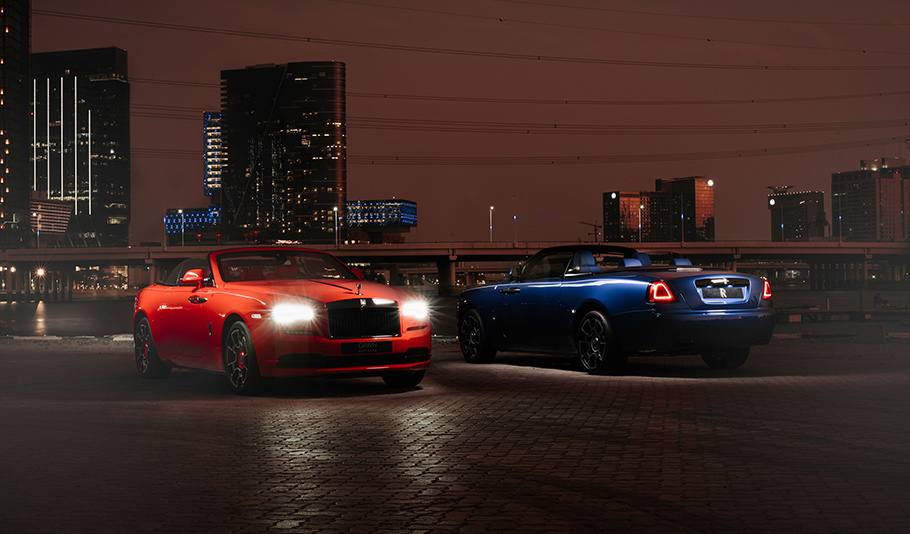
  • Rolls-Royce Sportive Collection

    2020 Rolls-Royce Sportive Collection1

    During 2020, an unprecedented year, the Rolls-Royce Bespoke Collective – a team of engineers, designers and craftspeople based at the Home of Rolls-Royce in Goodwood, England – brought the unique visions of the marque’s global clientele to life with outstanding levels of creativity, craft and imagination. Almost every one of the motor cars created in 2020 was tailored by this Bespoke division, a notable achievement considering the backdrop of challenging and unforeseen headwinds.

    At the onset of the pandemic, Rolls-Royce designers and clients alike found themselves confined to the safety of their homes.  The unique, highly personal relationships that our Bespoke Collective has with our clients did not change, however. This led to a change in source of inspiration from travel and its associated items of luxury grandeur, to rich and textural surroundings of the home, architecture and moments of stillness found in nature.

    Remarkably, Rolls-Royce’s Bespoke division achieved a new record in 2020. Faced with the challenges of the year, clients have harnessed the creative outlet of Rolls-Royce Bespoke to seek solace and invest time, a rediscovered commodity, to introspectively commission legacies that reflect precious items of historical and familial significance. On average, Bespoke commissions saw a robust increase over 2019, with a marked growth of personalised elements woven into the fabric of each motor car, providing further substance and sentimentality.

    What follows is a snapshot of some of the finest examples of Bespoke design and craftsmanship completed by the luxury house throughout 2020.

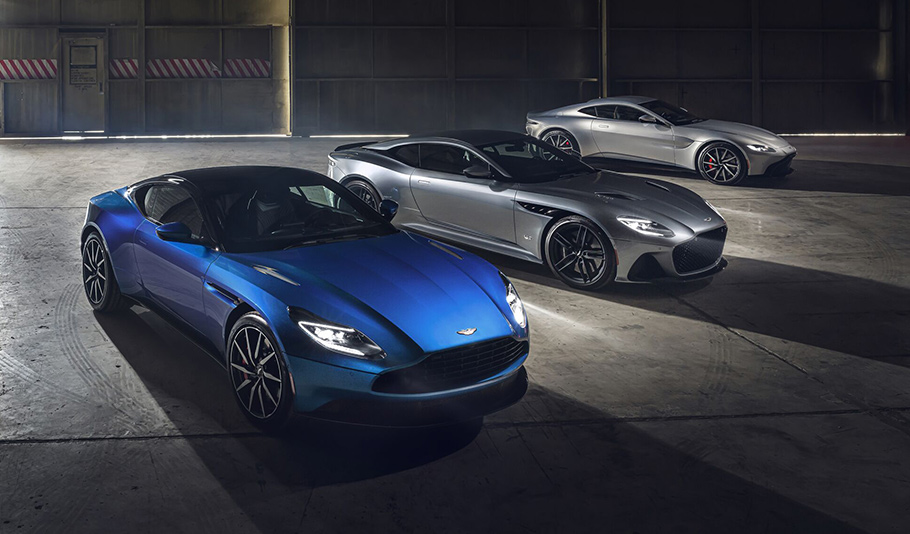
  • Aston Martin DB11


    2021 Aston Martin DB111Aston Martin and Semler Premium Sweden have signed an agreement for Semler Premium to become Aston Martin’s new dealer partner for the Swedish market. With the new Aston Martin dealership officially operating from Q1 2021 onwards, Aston Martin’s first ever SUV, the DBX, will enter the Swedish market alongside the sports car range of Vantage, DB11 and DBS.

    As of 1st of February 2021, Semler Premium, who are highly experienced in the segment will expand its luxury brand portfolio with a new Aston Martin dealership in Stockholm. The dealership will be operational on a temporary location in Convendum Stockholm, until a brand-new facility will open its doors in June 2021. This ambitious project will include a new and used car showroom, alongside a fully equipped Aftersales workshop with fully trained and experienced technicians to create a new inspiring universe for Aston Martin in the Swedish capital.

    “In Sweden, we have noted an increasing interest in Aston Martin together with an increasing demand in the luxury car segment in general. This trend is centered in the major cities, which is why we want to introduce Aston Martin in Stockholm but will reach and cover the entire Swedish market through events and also a collection and delivery service” says Johan Mårtensson, Country Manager at Semler Premium Sweden.

    Through these new activities, Semler Premium will relaunch Aston Martin in Sweden with a renewed focus on customer experience and service.

    Fredric Palmqvist, Brand Manager at Aston Martin Stockholm and Site Manager of the new dealership said: “I’m very much looking forward to welcoming our customers to our brand-new luxury Aston Martin dealership in Stockholm. With this legendary, and highly attractive, sports car brand, we’re well prepared to develop our business in a highly competitive market.”

    Aston Martin Chief Executive Officer, Tobias Moers, commented: “Moving forward with a strong partner like Semler Premium, we are excited to officially announce this vital partnership and I am delighted to have signed the new contract with our new Aston Martin dealer in Sweden. This is a very exciting time for the Aston Martin brand, with new product launches ahead, our strengthened technical partnership with Mercedes-Benz AG and Aston Martin’s return to Formula 1™ in 2021.”

    Oliver Turner, Regional President Aston Martin Europe said: “Sweden is a very important market for Aston Martin and we very much value our Swedish customers. It is our pleasure to be announcing this new exciting partnership with Semler Premium for Stockholm which will ensure world class Sales & After Sales Service. With a partner like Semler Premium and our product portfolio including our first ever SUV entering the Swedish market, the Aston Martin DBX, we are looking forward to a successful 2021.

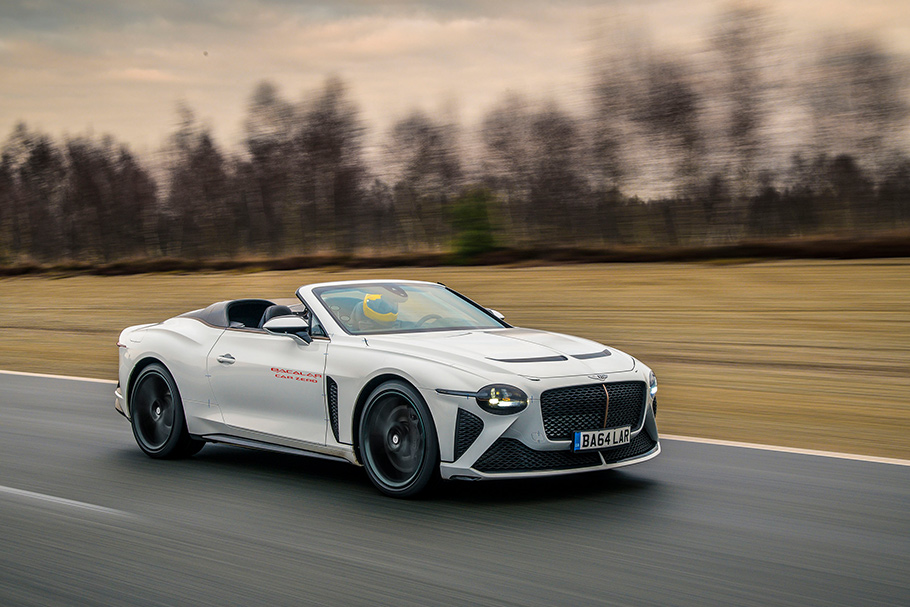
  • Bentley Bacalar Car Zero

    2021 Bentley Bacalar Car Zero1

    The first member of the Bentley Mulliner Coachbuilt portfolio – the Bacalar – has started its final test, development and durability work ahead of the build of 12 pre-sold customer cars due to start build next year.

    Bacalar Car Zero, a purpose-built engineering prototype and the first barchetta-style Bentley of the modern era, is already accumulating mileage and passing crucial quality tests at a variety of locations around Europe.

    The on-car validation programmes have been condensed into an extremely busy schedule covering 20 weeks. So far, the car has completed wind tunnel-based aerodynamic assessment, high speed stability and top speed testing, handling and dynamics evaluations, appraisal of noise and vibration, and careful thermal measurements. The car now enters a period of ongoing customer-focused mileage accumulation and durability work, before a phase of climate cycle testing up to 80 °C and an intensive electrical system validation.

    All of this work is vital to sign-off the new and bespoke nature of the Bacalar – the car includes a total of more than 750 new components, all of which have to pass Bentley’s exceptionally stringent quality, functionality and durability standards. More than 40 of those parts are crafted in carbon fibre, while a complement of nearly 100 are produced using rapid additive manufacture techniques.

    Bentley’s Director of Mulliner, Paul Williams, comments:

    “Very much like Blower Car Zero that we unveiled last week, Bacalar Car Zero is the crucial prototype that we’re using to sign-off the design, engineering and craftsmanship of this ground-breaking part of Bentley Mulliner’s future. The Bacalar is a thoroughly modern iteration of the coachbuilt Bentleys of the past – extremely rare, entirely hand-crafted, totally bespoke to each customer and exquisite in its details. The whole team behind the car is thrilled to see the prototype shrugging off every test we throw at it, and we’re really looking forward to starting the build of the 12 customer cars.”

    The Bentley Mulliner Bacalar
    Just 12 examples of this striking, limited edition model are being created, guaranteeing rarity and exclusivity, and offering supreme luxury and breath-taking performance. Bacalar looks to the future of bespoke luxury motoring – each model will be handcrafted in Bentley Mulliner’s workshop in Crewe, according to the individual customer’s personal.

    This exceptionally rare car is appropriately named after Laguna Bacalar in Mexico’s Yucatan peninsula, a lake renowned for its breath-taking natural beauty, continuing Bentley’s strategy of naming cars after remarkable landmarks which started with Bentayga in 2015.

    Bacalar has been brought to life by Bentley Mulliner, reviving its specialism in providing rare coach-built cars to only a few discerning customers. A roofless Barchetta design with all-new and highly muscular coachwork, embracing a myriad of options and materials, each Bacalar will be truly unique, the result of direct interaction between the Bentley Mulliner design team and the individual customer.

    Bentley Mulliner has an illustrious history and can proudly trace its roots back to the 1500s when the company’s original focus was customising luxurious, horse-drawn carriages. The remarkable Bacalar is therefore the culmination of almost 500 years of expertise and heritage in the art of vehicle design.

    A masterpiece of craftsmanship, the Bacalar is a seamless fusion of materials with an intelligent curation of technology. It draws on design DNA and materials inspiration from the beautifully sculpted, award-winning EXP 100 GT which was crowned ‘Most Beautiful Concept Car of the Year’ at the prestigious French Festival Automobile International and ‘Concept Car of the Year’ by GQ magazine. Materials include paint containing ash from rice husks, which provides a sustainable way of delivering a rich metallic finish, natural British wool and 5,000-year-old Riverwood sourced from the ancient Fenlands of East Anglia.

    The Bacalar features an enhanced version of Bentley’s peerless 6.0-litre, W12 TSI engine. The most advanced 12-cylinder engine in the world, it produces 659 PS (650 bhp) and 900 Nm (667 lb.ft) of torque. An advanced Active All-Wheel-Drive System varies the torque split between front and rear wheels. It allows the Bacalar to use rear-wheel drive as much as possible during normal driving for optimum efficiency and dynamic performance. The drivetrain is at the heart of the Bacalar, creating the ultimate open-air, two-seat luxury Grand Tourer available in the world today.

    Bentley Mulliner Returns To Coachbuilding
    With the Bacalar, customers have had the ability to work closely with a team of specialist designers to enhance their vehicle with a selection of unique materials and specially curated options. The Bacalar is the first – but other new bespoke Bentleys will follow as part of the Bentley Mulliner Coachbuilt portfolio – one of three divisions of the Bentley Mulliner organisation, alongside Classic (delivering the Blower Continuation Series) and Collections (responsible for the Continental GT Mulliner coupe and convertible).

    The new Bentley Mulliner Bacalar is a genuine ‘roofless’ Barchetta – a luxury, two-seat, open-air performance car, the likes of which have never been seen before. Handcrafted to the individual customer’s personal tastes, Bacalar is the ultimate expression of an open-top Grand Tourer: a spirited GT combining traditional handcrafted techniques with the latest cutting-edge technology.

    The Bacalar shares no body panel with any other car in the Bentley model line-up and derives inspiration from the dramatic EXP 100 GT concept car conceived to mark the company’s centenary last year. Indeed, it only shares one exterior component with a Continental GT – the door handle, simply because it contains the keyless entry system.

    The rear clamshell, wings and top deck of the Bacalar are crafted from carbon fibre, while the doors are lightweight aluminium. Combined with the use of three-dimensional printing, it has allowed designers to create an even more distinctive car.

    The exterior look of each model is completed in collaboration with individual customers, who have been able to further personalise their car, choosing from rare paint options, exterior treatments and design themes. The Bacalar represents a return to the exciting early years of Bentley, allowing owners to help shape the car of their dreams.

    The Legend Of Mulliner
    The legend of Mulliner is woven into the very fabric of Bentley. The tradition of bespoke craftsmanship has been passed down from generation to generation since the 1500s, when Mulliner was founded as a saddler.

    In the 1760s, the Mulliner family business refocused on coachbuilding and rose to prominence when it was commissioned to build and maintain carriages for the Royal Mail postal service. With the arrival of the motor car, the company stepped away from horse-drawn carriages and focussed on coachbuilding for mechanical propulsion.

    The then independent Mulliner crafted a bespoke, 3-litre, two-seater Bentley for the 1923 Olympia Show in London, creating a bond between the two companies that would last for decades. Mulliner bodied over 240 Bentley chassis in the 1920s alone and became renowned as the very best of the new coachbuilding firms.

    Perhaps the most famous was Mulliner’s design for the 1952 R-Type Continental, still considered one of the most beautiful cars of all time. The fastest, four-seat sports car of the era, the R-Type’s iconic beauty continues to influence design today through the Bentley Continental GT.

    Mulliner cemented its partnership with Bentley in 1959 by becoming part of the business. Today, around 40 employees, ranging from specialists with over 40 years of Mulliner experience to apprentices learning the skills that have been honed over decades of manufacturing, work for Mulliner.

  • Revealed: Aston Martin Vantage V12 Zagato Heritage TWINS by R-Reforged

    2021 Aston Martin Vantage V121

    R-Reforged has revealed the first brace of cars created to celebrate Zagato’s centenary, the Aston Martin V12 Zagato Heritage TWINS by R-Reforged. Making their debut are the first pair of TWINS, which are prototypes specified by Andrea and Marella Zagato and reserved for the private Zagato collection. Exclusively available as a pair, in Coupé and Speedster form, just 19 customer sets of the desirable Aston Martin V12 Zagato Heritage TWINS by R-Reforged will be sold. Each pair will be hand assembled in R-Reforged’s new 2,800 square metre premises in Warwick, UK.

    Styled at Zagato’s Milan headquarters, the iconic Italian design house has evolved the 2011 Aston Martin Vantage V12 Zagato Coupé form and created a new, pure Speedster twin. Sharper, cleaner and highly collectible – thanks to their limited run and significance in Zagato’s history – both are now fully clothed in carbon fibre. The design changes run from the nose, which incorporates a new splitter and front wings, through to the sleeker tail, now with active aero that transforms the cars’ balance but retains the defined Zagato lines whilst at rest. The TWINS can be specified as matching or individual designs, with owners already benefitting from one-to-one time with the car’s designers and engineers to personalise virtually every element.

    “The essence of this project was to create a perfect ‘garage’, comprising two desirable and collectable cars; Coupé and Roadster,” says Andrea Zagato. “Limited to just 19 pairs, a significant number, recalling the year Zagato was formed, the Aston Martin V12 Zagato Heritage TWINS by R-Reforged mark a remarkable milestone for the Milanese atelier. Despite having created over 450 models since our formation, we chose Aston Martin, which has surely been our most prestigious partner over the last 50 years, to mark this celebration. The cooperation with R-Reforged ensured that we could create an instant classic.”

    The 19 owners of this rare and special series, licenced by Aston Martin, will also experience the significant transformation to vehicle performance delivered through a series of meaningful engine and dynamic improvements. Pure and aggressive, the potent 5.9-litre V12 now packs close to 600bhp, up 80bhp over standard, thanks to R-Reforged’s engineers opting for the performance aluminium air intake and Titanium exhaust, accentuating arguably one of the world’s greatest engine soundtracks. The lean stance of the Aston Martin V12 Zagato Heritage TWINS by R-Reforged is enhanced by the 10 mm ride height reduction and 20 mm stretched track. At each corner sit 19” centre lock wheels forged by Formula One supplier APP Tech, with an increased offset, wrapped in Michelin’s revered Pilot Sport 4S rubber.

    A comprehensive CFD programme led engineers to develop a new front splitter and active aero wing that will significantly improve balance and poise.

    The superior quality of materials and attention to detail are evident in every facet of the car’s build with
    R-Reforged’s team leaving no stone unturned in its ambition to create cars truly worthy of marking Zagato’s centenary. R-Reforged is now able to offer a full body ‘visual carbon’ finish as a further option. The 400-hour process requires extensive and careful preparation so as not to disturb the carbon weave, before the subsequent application of a bespoke lacquer providing UV stability prior to tuning both the colour and density of the tint to any shade requested. Alternatively, the body paint colour can be matched to any sample, whether matt, satin or gloss. Ultimately, each TWIN is truly individual and bespoke for each owner.

    Inside are sensory rich materials, including Bridge of Weir’s finest Grade A leather with an almost infinite range of colours, bespoke patterns and textures. Choices to-date include a mottled surface texture, just like that of a pebble, and gloss leather to complement the exterior body finish.

    A closer look inside reveals further touches that underline R-Reforged’s forensic approach to the build. These include colour matching the horn push button on the steering wheel, the first time in the Vantage’s history that has been done. Other examples include a sleeker, longer windscreen for the Speedster and retooling the entire carpet boot moulding, which required a significant investment, purely because the original material and form did not meet R-Reforged’s stringent standards.

    Assembled with pride in Warwick, UK, at R-Reforged’s newly expanded 2,800 square metre facility, each car takes a team of 12 craftspeople 16 weeks to assemble. All cars are extensively stripped, analysed and thoroughly refreshed before receiving over 500 new components to ensure the finished car is both aesthetically and performance wise pin sharp.

    “Revealing these cars marks an incredibly special moment in both Zagato’s long history and in our own, very short journey of just three years,” says R-Universe’s CEO Thomas Mayer. “We have brought together an incredible team of engineers and craftspeople to develop and produce these beautiful, exquisitely detailed cars that amplify the design, craftsmanship, performance and ownership experience of the original.”

    Underlining that ownership is about more than just buying the cars: owners will also receive a series of incredibly special tailored gifts that starts with a TWINS carbon fibre presentation case, cataloguing specification details using scale models and samples. Customers will continue to receive a stream of themed gifts, invitations and experiences throughout their ownership.

    Ensuring the cars’ performance matches the build quality and finish, the prototype cars will be used to determine final geometry, damper settings and spring settings at Spain’s IDIADA test facility early in 2021. Before then, these TWINS, which are ultimately destined to reside in Zagato’s private collection, will be on display at flagship dealership Aston Martin St. Gallen in Switzerland until early in the New Year before embarking on a global tour including the US and Europe.

  • Mercedes-AMG GT black series is fastest production car on the Nurburgring-Nordschleife

    Mercedes-AMG GT Black Series, 2020

    How close the new Mercedes-AMG GT Black Series (fuel consumption combined: 12.8 l/100 km; CO2 emissions combined: 292 g/km)[1] actually is to motorsport has now been impressively demonstrated by GT3 racer Maro Engel on the Nordschleife of the Nürburgring. With an officially measured and notarized certified time of 6:43,616 min for the 20,6 kilometre-long track (measured without the straight at track section T13) and 6:48,047 min for the 20,832 kilometre-long total track (measured with the straight at track section T13), the new V8 meteor is placed in the top group of the street-legal “sports cars” category and number one among the fully standard, unmodified models.

    Maro Engel made full use of all the possibilities offered by the new Mercedes-AMG GT Black Series as standard: such as the most powerful AMG V8 series engine ever with 537 kW (730 hp), the sophisticated aerodynamics and extensive suspension adjustment options. For example, the front splitter made of visible carbon fibre was extended to the “Race” position, and the lower and upper wing blades of the rear spoiler were each adjusted in the middle position. The adjustable AMG coilover suspension with adaptive adjustment damping was lowered by five millimetres at the front and three millimetres at the rear to further enhance the venturi effect of the front diffuser. The camber was adjusted to the maximum possible values of negative 3.8 degrees at the front axle and negative 3.0 degrees at the rear. In the case of the adjustable anti-roll bars, racing professional Engel opted for the hardest of the three possible settings, and the 35-year-old adjusted the nine-stage AMG traction control between positions six and seven -depending on the section of the track. AMG GT Black Series customers can also take advantage of all these settings and variations.

    This also applies to the MICHELIN Pilot Sport Cup 2 R MO tyres with “soft compound,” which are completely standard equipment and were developed in collaboration with development partner Michelin especially for the top sports car in the AMG GT series. The highest possible level of safety was ensured not only by the standard AMG ceramic high-performance composite brake system, but also by the Track Package with rollover protection system and four-point safety belts offered as standard equipment.

    “That was a really impressive ride,” said Maro Engel after completing the record lap. “With speeds of up to almost
    270 km/h in the Kesselchen section of the track or well over 300 km/h on the long Döttinger Höhe straight, the
    AMG GT Black Series is significantly faster than my GT3 race car. To finally drive around the Nordschleife in 6:48.047 minutes with a production road car in these track conditions is really awesome. Like my GT3 race car, the AMG GT Black Series offers a lot of adjustment possibilities, all of which enabled me to create a setup that was tailor-made for me.”

    Also in terms of aerodynamic efficiency, the Mercedes-AMG GT Black Series takes a great deal from the race car.
    A direct derivation from motorsport, for example, is the carbon-fibre hood with two large exhaust outlets. These specifically guide the warm air that flows from the slanted radiator setup out of the engine compartment. This increases overall downforce, as does the sophisticated rear wing concept and the largely enclosed underbody.

    “It’s really impressive how much downforce the Black Series generates and how confident and reliable it can be driven, even at the absolute limit. My hat is off to the developers from Affalterbach for what they have put on wheels here. And I’m very pleased that I was able to demonstrate these fascinating engineering skills with this great lap time,” said Engel.

    Just as they were for AMG development engineer Demian Schaffert, who set a new lap record with the Mercedes-AMG GT 63 S 4MATIC+ (fuel consumption combined: 12.5 l/100 km; CO2 emissions combined: 286 g/km)1 on the same day, the conditions were not quite ideal for Maro Engel either. Because when the GT3 professional drove through the light gate of the timing system on November 4, 2020 at 5:02 p.m., not only were 20.832 kilometres of Green Hell behind him in the dim light – the GT3 professional also set the fastest time at an outside temperature of seven degrees Celsius and ten degrees Celsius on the asphalt. In addition, some passages of the extremely demanding track were not yet totally dry.

  • Automobili pininfarina and deutsche telekom create the world’s first globally- connected hypercar

    Battista Anniversario1

    A new partnership between luxury carmaker Automobili Pininfarina and integrated communications leader Deutsche Telekom will give owners of the new Battista pure-electric hypercar the chance to easily access online services in more than 50 countries worldwide – a first in the world of hypercars.

    Every Battista will receive an embedded SIM and roaming technology for optimised connectivity worldwide. Using these components, Deutsche Telekom’s roaming partner network and roaming traffic steering logic enables the vehicle to search for the strongest network, ensuring owners don’t find themselves in communication blackspots even as they cross international borders.

    This unrivalled connectivity also delivers heightened convenience for owners through Over-The-Air (OTA) updates, which ensure the vehicle will always be equipped with the most up-to-date software. The system is able to remotely update 26 individual electronic control modules in the Battista across functions covering the pure-electric powertrain, advanced safety and driving dynamics systems, vehicle control, infotainment as well as digital services. These software updates can be delivered via WIFI when parked within range in the garage, or using the embedded SIM on the road. In this way, the Battista is future-proof and owners will continue to benefit from the latest software advances as the years pass.

    Automobili Pininfarina Chief Product and Engineering Officer Paolo Dellacha said: “All of these elements of connectivity contribute to our seamless Life on Board Concept. Everything from the driver-orientated user-experience to the convenience features such as the global roaming and OTA updates have been developed and engineered to bring heightened convenience to our luxury hyper GT.”

    The effortless digital concierge experience includes Smart Diagnostics technology, which monitors the vehicle to spot potential issues before they arise to ensure the pinnacle of electrified performance and safety at all time. If the system detects an issue that cannot be dealt with remotely by a software update, Automobili Pininfarina will dispatch one of its team of highly-skilled engineers to resolve the issue wherever the vehicle is in the world.

    A specially developed smartphone app keeps owners connected to their Battista at all times, enabling customers to remotely lock and unlock the vehicle, view vehicle telemetry, check the state of charge and monitor the location of Battista. On the move, drivers can seamlessly link their smartphone which will mirror key apps and functions within the vehicle for enhanced music streaming and real-time navigation capabilities.

    This wider connected and digital ecosystem is enhanced by the Battista’s advanced infotainment system. The two logically-arranged and intuitive touchscreens and an additional slim display located in the centre, deliver all the key telemetry, dynamic functions and information as well as featuring selected media and navigation elements and controls. All have been designed and positioned in a way to ensure minimum driver distraction while providing all the required information while on the move.

  • SF90 Spider: lifting the roof on Ferrari’s most powerful series-production supercar

    2021 SF90 Spider1

    The spider version of the SF90 Stradale, the SF90 Spider, was unveiled today during a dedicated digital event. This special online event provided Ferraristi from all over the world with an exclusive introduction to the car’s innovative features and in-depth information on its development.

    As the Prancing Horse’s first production plug-in hybrid spider, the SF90 Spider sets new performance and innovation benchmarks not only for the marque’s range, but for the entire sports car sector. The new convertible has the same extreme supercar specification and record-breaking performance as the SF90 Stradale yet also adds further driving pleasure and versatility to the mix, thanks to latest iteration of Ferrari’s signature retractable hard top architecture. This makes the SF90 Spider the ideal car for owners that demand the very pinnacle of Ferrari technology, but still want the thrill of open-top driving.

    The retractable hard top (RHT) was again adopted because it guarantees optimal noise insulation and protection from the elements when raised, does not deform at high speeds and provides exceptional occupant space and comfort. The RHT is so compact, simple and light it can be actioned in just 14 seconds and can be deployed when the car is on the move. The key to the success of the Ferrari RHT, which premiered on the 458 Spider in 2011, and which has been constantly evolved in the intervening years, is that it takes up just 100 litres of space rather than the 150-200 litres required by a traditional system. The use of aluminium in its construction also means that it is around 40 kg lighter than a conventional retractable hard top. An adjustable electric rear window guarantees superb occupant comfort even at high speeds when the RHT is lowered.

    As is the case with the SF90 Stradale, the SF90 Spider is also available with an additional specification option for owners that want to push its track car vocation to the extreme. The Assetto Fiorano pack includes a list of exclusive upgrades that set it apart from the standard car, not least Multimatic shock absorbers derived from the Ferrari’s GT racing experience and optimised for track use. Others include the adoption of high performance materials (such as carbon-fibre and titanium) that have shaved 21 kg off the car’s weight, a carbon-fibre rear spoiler and road-homologated Michelin Pilot Sport Cup 2 tyres designed to improve track performance in the dry, thanks to a softer compound and fewer grooves. Lastly, the Assetto Fiorano offers an optional two-tone livery that further underscores the car’s racing vocation.

    POWERTRAIN
    In a first for a Ferrari production spider, the SF90 Spider has plug-in hybrid architecture in which the internal combustion engine is integrated with two electric motors at the front, which comprise the RAC-e (Cornering Angle Regulator, Electric) system, and one at the rear derived from and named after a Prancing Horse Formula 1 innovation, the MGUK (Motor Generator Unit, Kinetic). The synergy between the internal combustion engine and the electric motors allow the car to unleash a maximum of 1,000 cv and put the SF90 Spider not only at the very top of the Ferrari range of road cars, but also its category, .

    The SF90 Spider’s powertrain architecture features the V8 turbo ICE, an 8-speed DCT with E-diff, the RAC-e electric front axle with two independent electric motors that also provide all-electric propulsion, the MGUK electric motor located at the rear between the engine and the gearbox, the high voltage battery and electric motor control system ((inverter).

    In addition to a massive 780 cv (and 195 cv/l specific power output), the V8 also unleashes 60 cv more than any other V8 turbo ever built by Ferrari. To deliver this extraordinary result, Ferrari’s engineers completely redesigned the intake and exhaust systems. To improve internal fluid dynamics, the ducts are now all horizontally lined up at engine head height, the turbo charger assembly has been lowered, and the exhaust line is higher. This rationalisation also produced both a lower centre of gravity and a reduction in overall weight thanks to the use of Inconel instead of steel for the exhaust manifold.

    The SF90 Spider sports the completely redesigned 8-speed, oil-bath, dual-clutch gearbox launched on the SF90 Stradale. An optimised layout, achieved through the adoption of a dry sump and a significantly more compact clutch assembly with a 20% smaller exterior diameter than the one in the 7-speed gearbox, has shaved 15 mm off the installed height in the car. This, in turn, lowers the centre of gravity of the running gear by the same amount. Despite the addition of an eighth gear and the need to transmit a maximum torque of 900 Nm (an increase of more than 20% on the current 7-speed), the gearbox’s overall weight is actually 10 kg lower than its predecessor. The clutch’s performance is 35% higher than the 7-speed, transmitting up to 1,200 Nm in dynamic torque during gear shifts. Thanks to new-generation actuation hydraulics, clutch fill times are now 30% faster and total gear shift times have been slashed to 200 ms, an improvement of 30% on the previous 7-speed DTC.

    Meticulous attention was lavished on sound quality when redesigning the exhaust system as the soundtrack is one of the pivotal factors in the exhilarating pleasure of driving a Ferrari. The introduction of a “hot tube system”, which transfers sound more directly to the cockpit, has produced fuller, richer harmonics across the entire frequency range, improving both in-car sound quality and intensity as rev rise compared to previous Ferrari V8s.

    The power flow of the SF90 Spider’s hybrid system can be divided into two main areas:

    1. Power delivery, based on driver input via the accelerator pedal, processed by the engine control system and the hybrid control system, and constantly monitored by the electronic control systems. The power delivery modes can be divided up as follows:
    • Electric mode, entrusted to front axle (FWD mode)
    • Hybrid mode, entrusted to the ICE and the MGUK (RWD configuration)
    • 4WD hybrid mode, with electric front axle available on-demand for traction requirements exiting corners and energy recovery in lift-off/ braking
    1. Energy recovery (battery charging), managed entirely by the hybrid system’s control logic using three strategies:
    • Regenerative braking, available on both axles both under standard braking and when ABS is active
    • Overbraking, active on both axles when accelerator pedal is lifted, managed independently on right and left front wheels
    • ICE recharge: battery-charging function achieved by load point shifting between the ICE and the rear MGUK electric motor.

    Under normal braking conditions, energy recovery using the electric motors is the priority: the hydraulic braking system intervenes to support the electric one in all sharp deceleration conditions. At high speeds and in high gears, the combined contribution of the electric motors in high grip conditions helps lower the ICE’s response times, thus significantly improving longitudinal acceleration and thus performance.

    Because of the pivotal role hybrid system power management plays in the SF90 Spider driving experience, the traditional Manettino is now flanked by an additional steering wheel-mounted selector, dubbed the eManettino, which manages the power flows from and to the high voltage battery and the wheels (traction). It offers the driver a choice of four modes:

    • eDrive: the internal combustion engine remains off and traction is entrusted entirely to the electric front axle. Starting with a fully charged battery (with a capacity of 9 kWh), the car can cover up to 25 km in this mode which is ideal for city-centre driving or any other situation in which the driver wishes to eliminate the sound of the Ferrari V8. The 135 km/h speed limit means the car can also be used on out-of-town roads;
    • Hybrid: this setting optimises the system’s overall efficiency. The control logic autonomously decides whether to keep the internal combustion engine running or turn it off. Power flow from the electric motors is limited to conserve battery power;
    • Performance: this mode keeps the ICE running because the priority is more on charging the battery than on efficiency. This guarantees that power is instantly and fully available when required. This mode is best suited to situations in which driving pleasure and fun behind the wheel are the main focus.
    • Qualify: this mode allows the system to achieve maximum power output by letting the electric motors work at their maximum potential (162kW). The control logic prioritises maximum performance over battery charging.

    VEHICLE DYNAMICS
    To make full use of the powertrain unit’s power, the engineers developed vehicle dynamics systems that guarantee improvement not just in terms of pure performance and lap times, but also simultaneously ensure that drivers of all kinds can fully enjoy the car’s potential and have fun behind the wheel. The new hybrid architecture required extensive integration work on the car’s many different control logics, including the high-voltage system controls (battery, RAC-e, MGUK, inverter), the powertrain, and vehicle dynamics controls (traction, braking, Torque Vectoring).

    Integrating these areas with the existing vehicle control logics led to the development of the new eSSC (electronic Side Slip Control) vehicle dynamics control system. Its principle new features are three innovative dynamic regulation and distribution strategies for engine torque to all four wheels:

    – Electronic Traction Control (eTC): optimally manages the availability of the torque – both ICE and electric – distributing it to the individual wheels to suit driving conditions and grip requirements

    – Torque Vectoring: available on the front axle to manage electric traction on outside and inside wheel in cornering to maximise traction exiting the corner and help ensure easy, confident, high-performance driving

    – Brake-by-wire control with ABS/EBD: splits braking torque between the hydraulic system and the electric motors (brake torque blending), allowing regenerative recovery under braking which boosts performance and brake feel.

    The hybrid architecture proved a challenge in terms of weight management: while the extra 270 kg of the hybrid system was amply compensated for by the extra power delivered (220 cv, with a weight/power ratio of the system alone of 1.23 kg/cv), extensive optimisation and weight reduction work was also required on the rest of the car to keep overall weight down to 1,670 kg and thus guarantee a weight/power ratio of 1.67 kg/cv. The RAC-e electric axle also further mitigates the feeling of weight as, by significantly improving stability and traction in cornering, it helps drivers to drive confidently on the limit and delivers an “equivalent weight reduction” of around 200 kg.

    The chassis was completely redesigned to deal with the extra stresses associated with the new power unit and the introduction of AWD. A number of leading-edge technologies and innovations have been introduced, not least an all-carbon-fibre bulkhead between the cabin and the engine. The SF90 Spider chassis also boasts 30% higher torsional rigidity than previous platforms without any increase in weight, a fact that has significantly influences the car’s dynamic prowess.

    AERODYNAMICS
    Just as the SF90 Stradale redefined the aerodynamic performance levels of the Ferrari range, the SF90 Spider is pushing the limits of the results delivered still further. The goals that drove the aerodynamic development of the car from the very earliest stages of the platform design were threefold: maintaining the SF90 Stradale’s performance levels with the RHT deployed, minimising aerodynamic turbulence and noise with the RHT retracted, and optimising flows in the engine bay.

    The synergic relationship between the aerodynamics department and Ferrari Design produced downforce and efficiency figures unmatched by any other car in the category. Once again, they were achieved in typical Ferrari fashion: by sculpting the car’s forms into an effortless embodiment of sportiness. The main features in the SF90 Spider’s aero design include the shut-off Gurney at the rear, an active control system that varies downforce over the rear axle, the front underbody with vortex generator strakes, and forged wheels with wing profiles (blown geometry). The results in terms of performance are impressive indeed: a massive 390 kg of downforce generated in cornering at 250 km/h with the special Assetto Fiorano specification.

    To ensure that SF90 Spider drivers enjoy the massive 1,000 cv available to them, efficiently and uncompromisingly without any negative impacts on aerodynamic drag and downforce coefficients, it was essential to focus on the effective management of hot air flows coming from the engine, gearbox, turbochargers, battery pack, electric motors, inverter, charging system, and, of course, brakes.

    The engine bay, for example, houses both the usual internal combustion engine that generates temperatures of nearly 900°C, and highly temperature-sensitive electronic components. The RHT compartment radically changes the management of the heat flows in the engine bay: it is essential therefore that the hot air channelled upwards is correctly evacuated, and that the route it takes does not interfere with the temperature-sensitive electronic components.

    Given that the RHT compartment would have impeded the functioning of the vents located immediately behind the roof in the SF90 Stradale, transverse louvres have been inserted in the SF90 Spider’s rear screen. These have been very precisely dimensioned to act as an efficient ‘chimney’ without interfering with the car’s aerodynamics at speed.

    The internal combustion engine and the gearbox are cooled by two radiators located ahead of the front wheels. The hot air flow coming off those radiators is channelled into the side areas of the underbody rather than along the car’s flanks. This means that the air flow along the flanks is cooler when it enters the air intakes ahead of the rear wheels, thereby boosting the efficiency of the intercooler radiators. The electric motors and the inverters are cooled by a separate circuit with its own radiator at the front of the car with a central intake on the front bumper.

    Lastly, the cooling circuit for the brakes was completely redesigned to meet the demands of the SF90 Spider’s additional performance. A new brake calliper was developed for the front and has an integrated aerodynamic appendage that more efficiently distributes the highly charged airflow from the special air intake directly under the headlights on the front bumpers, to the brake pads and disc. The rear brakes are cooled by the flow from two air intakes on the underbody near the rear wheels.

    The downforce generated by the SF90 Spider is largely determined by the patented aero device on the car’s tail: the shut-off Gurney. In order to guarantee the same performance as the coupé, the Ferrari team had to work on the volumes and surfaces of the roof to manage the direction of the aerodynamic flow towards the car’s tail. The shut-off Gurney is a suspended element comprising two sections: one fixed and one mobile with a wedge-shaped front area. The system is controlled by a sophisticated logic that controls parameters such as speed, acceleration, steering wheel angle and pressure on the brake pedal, hundreds of times a second in order to identify dynamic conditions requiring more downforce and then promptly activates the system, which can adopt either of two configurations:

    • Low Drag: the two sections are aligned and suspended above the engine cover, with the mobile wedge acting as an efficient fairing to the fixed element, allowing the air to flow both above and beneath the shut-off Gurney which has almost no effect on the flow
    • High Downforce: the mobile element lowers and closes the lower blown area, which in low drag conditions allowed air to pass through. The mobile and fixed elements now create an aerodynamic profile capable of deflecting the flows striking it and generating a significant amount of extra downforce.

    Rear downforce is balanced at the front of the car by a complex and optimised system of vortex generator strakes. The system has been honed to new extremes on the SF90 Spider: the front section of the chassis is 15 mm higher than the central section of the chassis at the point where the vortex generator strakes are located, thus increasing the amount of air channelled towards them and boosting their effect. In fact, the SF90 Spider’s underbody generates more downforce than any other ever made by Ferrari. The two diffusers ahead of the front wheels and the bonnet shape also contribute to generating downforce over the front axle.

    Specific aerodynamic research went into the geometry of the forged wheels that are made using a construction technology that allows greater freedom when it comes to aerodynamic solutions. The wheels incorporate radial elements on the outer channel, which are equally spaced between the spokes and designed to act as wing profiles. The geometry of these profiles mean that the wheel works like a rotor blade, very efficiently boosting air evacuation from the wheelarch, creating suction that also benefits the flow that passes through the front diffusers. Furthermore, the flow exiting the wheel rim is lined up with the longitudinal flow running along the sides, thereby reducing deviations caused by the air mass exiting at an angle to the direction of movement, thus reducing the car’s Cd.

    Specific to the SF90 Spider are two aerodynamic elements in the cockpit to guarantee an excellent level of protection from air flows with the roof down. There is a central trim section between the driver and passenger seats that channels the air flow away from the head and shoulders and into a double layer of trim on the upper part of the tunnel. Both of these solutions are essentially drag neutral and guarantee the same level of comfort as Ferrari’s other mid-rear-engined spiders.

    DESIGN

    EXTERIOR
    The crafting of the SF90 Spider’s exterior forms was inspired by same principle as influenced the development of the SF90 Stradale: to create a futuristic, innovative design that communicates both the car’s racing vocation and the series production supercar concept.

    When the RHT is deployed, the sides, front and tail of the SF90 Spider have the same distinctive styling as the SF90Stradale. This is no small achievement given that the architecture incorporates stowage for the RHT, which is moved by a complex lever system, but also that it was vital to maintain the same chassis rigidity levels. This was achieved by re-sculpting the car’s surfaces so that the tonneau cover seamlessly integrates with the B-pillars of the coupé, preserving the original styling theme. Even the buttresses behind the passengers’ head rests, which are a signature of all Ferrari spiders, integrate harmoniously as if they were emerging from a structure beneath the car’s skin.

    The result is that the proportions of the SF90 Stradale transfer easily to the SF90 Spider even when the RHT is stowed and without any formal concessions. This is even more surprising given that the engine is just as visible through the rear window despite the bulk of the roof. As the jewel in the car’s crown, the V8 is clearly visible both when the RHT is deployed and retracted. Seen from above, it is clear that the buttresses also line up with the seats, which improves rear visibility when the RHT is stowed, in addition to further underscoring the car’s two-seater configuration.

    The greenhouse area and roof feature stylistic solutions from the coupé that reduce drag and underscore its fiery temperament without impacting on on-board comfort. The cockpit has been shifted forwards, the roof is 20 mm lower, the A-posts are more slender and the windscreen is more raked.

    Aside from having the same silhouette as the SF90 Stradale, the SF90 Spider has a unique dynamic allure when its top is down: the absence of the roof seems to visually lower the car’s centre of gravity, an impression further strengthened by the difference in colour of the trim on the roll-hoops that give rise to the buttresses.

    The front of the car is dominated by a very pronounced profile which underscores its extremely aggressive character. The three air intakes in this area cool the electric motors (front) and the internal combustion engine (sides). The SF90 Spider also uses matrix LED headlight technology to improve visibility in all driving conditions thanks to active beam control.

    The rear of the car is dominated by high exhaust pipes, which are the result of optimisation of the exhaust line layout. Their competition car vibe has been cleverly exploited to underscore the SF90 Spider’s track-inspired personality. This effect is further enhanced by the low tail area. More elongated luminous rings create a more horizontal perception of the tail lights, which are a radical break from the iconic round shape normally used on Ferrari’s mid-rear-engined berlinettas.

    INTERIOR
    The look and feel of the cabin was driven in large part by the complete redesign of the HMI, which marked such a major leap forward on the SF90 Stradale. The instrumentation is now predominantly digital with all the screens going completely black when the car is not running, lending the cabin a very minimalist look. However, once the Engine Start button on the steering wheel is pushed, a “ceremony” of sorts begins that sees all the digital components in the driver cockpit gradually springing to life until the whole cockpit is aglow.

    The central instrument cluster comprises a single 16” HD screen, which is curved towards the driver to make it easier to read and emphasise the wraparound cockpit effect. In the default screen, everything is dominated by a large circular rev counter, framed by the battery charge indicator. The navigation screen is on one side of the rev counter with the audio controls on the other. The screen’s large dimensions mean that there is huge flexibility in terms of personalising the displays, which are also very easy to navigate using the steering wheel controls. It is, for example, possible to select a full-screen version of the navigation map.

    Thanks to the introduction of the head-up display, the main information can be projected onto the section of windscreen within the driver’s field of vision. This means less distraction in line with the “Eyes on the road, hands on the wheel” philosophy that has always driven the development of the HMI used on every Ferrari Formula 1 car and that has gradually been transferred to our road-going sports cars.

    The SF90 Spider’s steering wheel completes that transfer process from the competition world and also ushers in a new era by introducing a series of touch commands that allow the driver to control virtually every aspect of the car without ever taking their hands off the wheel. The traditional controls include the now iconic Manettino, steering-wheel mounted headlight control, windscreen wipers, indicators. Of the new touch controls, the pad on the right-hand spoke allows the driver to navigate the central cluster screens, while voice and cruise controls are on the left-hand spoke. In the bottom left section of the central area, there are four buttons the driver uses to select the power unit mode.

    The F1 bridge, a signature on the previous models, has now disappeared from the central tunnel and been replaced by a modern take on the gearshift gate, an iconic feature of Ferrari’s manual gearboxes. In the new gate, however, the gearshift grille is digital as befits an automatic transmission. At the bottom of the tunnel is the compartment for stowing the new ignition key, which is an exact replica of the Ferrari Prancing Horse badge found on the bonnet, adding an authentic finishing touch to the cabin’s styling. The key works in full keyless mode so that the driver can not only start the ignition but also open the doors without taking it out of their pocket.

    7-YEARS MAINTENANCE
    Ferrari’s unparalleled quality standards and increasing focus on client service underpin the extended seven-year maintenance programme offered with the SF90 Spider. Available across the entire range, the programme covers all regular maintenance for the first seven years of the car’s life.

    This scheduled maintenance programme for Ferraris is an exclusive service that allows clients the certainty that their car is being kept at peak performance and safety over the years. This very special service is also available to owners of pre-owned Ferraris.

    Regular maintenance (at intervals of either 20,000 km or once a year with no mileage restrictions), original spares and meticulous checks by staff trained directly at the Ferrari Training Centre in Maranello using the most modern diagnostic tools are just some of the advantages of the Genuine Maintenance Programme. The service is available on all markets worldwide and from all Dealerships on the Official Dealership Network.

    The Genuine Maintenance Programme further extends the wide range of after-sales services offered by Ferrari to meet the needs of clients wishing to preserve the performance and excellence that are the signatures of all cars built in Maranello.

  • The Ferrari Roma wins 2020 car design award

    Ferrari Roma1

    The Ferrari Roma has won the Production Cars category of the prestigious Car Design Award, which ran from 1984 to 1997 before being relaunched in its current form in 2016. The remote 2020 prize-giving ceremony was held today on the Car Design Award’s YouTube channel. The plaudit is an acknowledgement of the work of the design teams responsible for the automotive sector’s finest production designs of the year.

    Launched in 1984 by Auto&Design magazine, the Car Design Award is aimed at projects that have contributed to the evolution of car design. This year’s winners were selected by an expert jury of 12 journalists from the leading international car publications, including Auto&Design itself. In assigning the Production Cars to the Ferrari Roma, the jury stated that “The Ferrari design team, led by Flavio Manzoni, did an incredible job with the Roma. This car reinterprets the classical lines of a Gran Turismo car and projects them into the 21st century thanks to sensual, evocative and cutting-edge design”.

    The Ferrari Roma is Maranello’s new 2+ coupé, a model with sublimely refined, timeless design and all the power and agility required to guarantee a unique driving experience. Its signature Italian styling is a contemporary reinterpretation of the carefree lifestyle of 1950s and ‘60s Rome, from which it takes its evocative name, Roma. Stylistically, the Ferrari Roma is characterised by clean, symbiotic forms. Its beautifully harmonious proportions and elegantly pure, balanced volumes are very much in line with the Ferrari mid-front-engined grand touring tradition of which the 250 GT Berlinetta lusso is the most iconic example, and from which the car takes its inspiration. It embodies an extremely modern design language, which underlines its authentic, refined styling. Equally, however, its sleek lines retain the sporty vocation shared by all Ferraris.