Tag: Sportback

  • Audi A3 Sportback

    The 2025 Audi A3 receives a significant refresh, enhancing its sporty character and technological capabilities.

    Exterior Design:

    A bolder, flatter Singleframe grille and redesigned air intakes project a more dynamic presence. Customers can personalize their A3 with a selection of up to four unique daytime running light signatures. Three new expressive colors, District Green, Ascari Blue, and Progressive Red, join the available palette.

    Interior Refinements:

    The cabin reflects the exterior’s upgrade with a redesigned shifter, air vents, and decorative fabric inlays. Standard equipment expands to include a leather multifunction steering wheel, ambient lighting, and a front center armrest.
    Advanced optional features include a climate control system with thinner vents and a redesigned center console.

    Enhanced Connectivity:

    The A3 seamlessly integrates with your digital life, featuring DAB+ digital radio, a 10.1-inch touch display, and the Audi virtual cockpit as standard. MMI navigation plus with Audi connect services and access to an app store broaden infotainment possibilities. Functions on demand allow for post-purchase customization, enabling features like smartphone interface or adaptive cruise control.
    Advanced Driver Assistance Systems:

    Standard safety features include Audi pre sense front, collision avoidance, and lane departure warning. The available adaptive cruise assist system enhances highway driving with longitudinal and lateral control, including lane change assistance. Park assist with park assist plus simplifies parking maneuvers in tight urban environments.

    Engine Options and Availability:

    The A3 launches in Europe with a 1.5-liter gasoline engine with mild hybrid technology and a 2.0-liter diesel option, both paired with a seven-speed S tronic transmission. Additional gasoline, diesel, and a plug-in hybrid variant will be introduced throughout 2024. Ordering for the A3 Sportback and Sedan commences in March. This revision maintains a professional tone while using strong action verbs and avoiding slang. It also streamlines the information for a more concise and impactful delivery.

  • Audi RS7 Sportback performance

    More powerful and faster than any RS 6 and RS 7 to date: new Audi RS 6 Avant performance and the RS 7 Sportback performance are bursting with extras that sharpen the models’ appearance and make for a more emotive driving experience. The potent 4.0-liter V8 biturbo TFSI engine now has an engine power of 463 kW (630 PS) and a maximum torque of 850 Nm. From December 8, the RS 6 Avant performance and the RS 7 Sportback performance are available for 135,000 euros each.

    At Audi, ‘performance’ means more power. For example, larger turbochargers and an increase in boost pressure from 2.4 to 2.6 bar in the 4.0-liter V8 biturbo TFSI engine that both the RS 6 Avant performance and RS 7 Sportback performance boast, allow an increase of 30 PS in engine power and 50 Nm more torque compared to the base versions. This means a total increase in power from 441 kW (600 PS) to 463 kW (630 PS) and in maximum torque from 800 to 850 Nm. The performance models sprint from 0 to 100 km/h in 3.4 seconds, 0.2 seconds faster than the RS 6 / RS 7 base versions.

    Yet less is sometimes more: reduced insulation between the engine compartment, the interior, and the rear of the vehicle ensures the RS 6 Avant performance and the RS 7 Sportback performance will thrill customers with an exciting, next-level sound experience – the reduction also makes the car eight kilograms lighter. The RS 6 Avant performance has a total unladen weight of 2,090 kg whilst the RS 7 Sportback performance weighs 2,065 kg.

    For heightened driving dynamics: new self-locking center differential

    Power from the 4.0 TFSI engine flows through a standard eight-speed tiptronic with faster shifting times to the permanent all-wheel drive quattro. The strictly mechanical center differential distributes engine power to the rear axle at ratio of 40:60 and if slippage occurs, more drive torque is automatically applied to the axle with better traction – up to 70 percent can flow to the front axle and up to 85 percent to the rear axle. The self-locking center differential is lighter and more compact, improving driving dynamics plus offering noticeably more precise cornering which makes for less understeering at the handling limits. As an added improvement, the self-steering response is more exact with passengers benefitting from a more agile driving experience overall.

    Exclusive and high-performance: 22-inch wheels with high-performance tires

    The new RS 6 Avant performance and RS 7 Sportback performance roll off the line on standard 21-inch aluminum cast wheels in a ten-spoke star design and 273/35 tires. For an even sportier appearance, 22-inch lightweight wheels are also available, alongside the standard 22-inch aluminum cast wheels – in burnished glossy metallic black, matte gray, matte black, or matte neodymium gold. Inspired by motorsport, the airy 5-Y spoke design aids brake cooling and the lighter rims are manufactured in a high-tech forging-milling process. The new lightweight wheel is around five kilograms lighter than the 22-inch aluminum wheel on the current RS 6 Avant or RS 7 Sportback – this 20-kilogram weight reduction in unsprung masses improves the throttle response.

    New high-performance Continental “Sport Contact 7” 285/30 tires, which are part of the new lightweight wheel, play a key role in reducing weight. The tires offer consistently better grip on both dry and wet roads and reduce understeering when cornering at speed, making for overall more precise handling across the entire speed range. Additionally, the brake path is up to two meters shorter with the new wheels when braking from 100 to 0 km/h.

    The Audi drive select dynamic handling system lets the driver control the vehicle’s character. Six profiles are available: efficiency, comfort, auto, dynamic, as well as two customizable RS-specific RS1 and RS2 modes.

    But experience of the driving modes in the performance models is much more unique. For example, the coasting mode now only activates automatically in the efficiency profile, which means in speed ranges up to 160 km/h, it switches off the combustion engine and coasts with no fuel consumption or drag torque from the engine. Additionally, fine-tuning to the engine control unit software makes for tighter load changes in S mode when the “dynamic” drive select mode or driving mode S is active, further increasing the emotionality. The updated software in the transmission control unit makes for faster shifting times and a noticeably increased spread between the various driving modes.

    RS Dynamic Package as standard

    The RS Dynamic Package is standard equipment in the RS 6 Avant performance and RS 7 performance models. This includes the increase in maximum speed to 280 km/h (180 mph), dynamic all-wheel steering (the RS-specific software update helps the driver with active steering corrections on the front and rear axles), and the quattro sport differential on the rear axle.

    The RS Dynamics Package plus is also available as an option, which in addition to the RS Dynamics Package, raises the top speed to 305 km/h and includes an RS ceramic brake system. Customers can order the calipers in gray, red, or blue and discs measure 440 mm (front) and 370 mm (rear). The RS ceramic brake system weights a total of approx. 34 kg less than its steel counterpart for a reduction of the unsprung masses.

    Fresh exterior colors and optics packages

    The new RS 6 Avant performance and RS 7 Sportback performance are available in a total of 16 exterior colors – for the first time, metallic and matte Ascari Blue and matte Dew Silver are included.The performance models stand out with standard RS exterior components in matte gray, including the exterior mirrors, the front spoiler, the front side flaps, the side sill inserts, the roof rails, and the trim on the side windows and rear diffuser. A matte carbon/black optics package is also an option, in which the roof rails and trim on the side windows are black. The Audi rings and model name is available in the customer’s choice of chrome or black.

    Out of the blue: new interior accents and features

    In the interior, the familiar RS design packages in gray and red have been expanded to include the color blue. The steering wheel rim in Alcantra black features contrasting stitching in Mercato blue, whilst the floor mats, the side of the center console, and the selector lever cuff also come with blue contrasting stitching. The seat belts are full-surface ocean blue with the decorative inlays in a carbon twill structure with optional blue accents. The selector lever knob and the side of the center console are made with Dinamica microfiber, which consists of around 45% recycled PET fibers and the sports seats feature high-quality Valcona leather upholstery perforated with honeycomb stitching with contrasting stitching in Mercato blue. Another distinguishing feature is an entrance LED in the front doors that projects the lettering “RS performance” onto the ground next to the car.

    Customers can order RS design packages in the three available color variants with optional additional features: decorative inlays, door armrests and center armrest in Dinamica microfiber. An added benefit of this equipment variant is the seat center panel with a gray, red, or blue inlay, whilst the customer’s chosen color shows through the perforated sports seats and the seat backs feature RS embossing in matching colors.

    Customers can use the new “Audi Exclusive Customizer” visualization tool to design their vehicles in thousands of individual combinations and thus create their own personal special edition. They can choose from a wide range of individual paint finishes as well as leather and stitching colors; the tool uses a 3D model to visualize the customization process. Check out the configurator here.

    The displays of the standard 12.3-inch Audi virtual cockpit plus offer new features including a blinking shift indicator in manual transmission mode which changes the rpm display from green to yellow to red, blinking in a manner identical to that used in motorsport, to indicate the optimal time to change gears. Plus, Launch Control, which fully exploits the acceleration potential of the RS 6 Avant performance and the RS 7 Sportback performance by signaling the ideal moment to accelerate off the line, with new traffic light icons.

    Performance by tradition: from the RS 6 Avant plus to today

    The RS 6 Avant performance and RS 7 Sportback performance in the C8 generation continue Audi’s long-standing sport strategy of plus and performance models. It all began with the RS 6 Avant plus in the C5 generation, shortly before the series was discontinued in 2004, quattro GmbH (now Audi Sport GmbH) launched a special limited series of 999 units with a subtle upgrade in power. The engine power climbed by 30 PS to 480 PS and the model bore the distinction of being the first Audi to officially go faster than 250 km/h. Audi Sport throttled the RS 6 plus to 280 km/h, making it the fastest sport wagon. Without the engine control unit, it reached a top speed of more than 300 km/h.

    The plus variant in the C6 generation hit the market in 2008 and was limited to 500 units. Unlike its predecessor, it did not feature any additional power; the V10 kept its 580 PS. But Audi limited the top speed of the special Avant and Sedan to 303 km/h; the only faster vehicle at the time was the R8.

    In the C7 generation, “plus” became “performance” – the Audi RS 6 Avant and RS 7 Sportback performance rolled off the line in 2016, with a slightly tweaked engine, the power rose to 605 PS, 45 PS more than in the base model. The overboost function increased briefly to 750 Nm in “dynamic” driving mode and depending on equipment, the speed was limited at 250, 280 or 305 km/h.

  • Audi SQ8 Sportback e-tron quattro

    With the Audi e-tron, the premium manufacturer entered the age of electromobility in 2018, marking the start of the electric future for the four rings. Since then, the model has been setting standards in the electric luxury-class SUV segment. The new Audi Q8 e-tron is now building on the success story of this electric pioneer. The top-of-the-line electric SUV and crossover impress with their optimized drive concept, improved aerodynamics, higher charging performance, and battery capacity and increased range of up to 582 kilometers in the SUV version (in accordance with the WLTP) and up to 600 kilometers in the Sportback version (in accordance with the WLTP). Significant changes, especially at the front of the vehicle, lend the new flagship SUV a fresher appearance.

    Since the introduction of the Audi e-tron around four years ago and sales of 150,000 units, Audi has been following a systematic electric roadmap. Its electric portfolio now comprises eight models. By 2026, it will have more than 20. At that point, Audi will only be releasing fully electric models on the global market. “With our corporate strategy ‘Vorsprung 2030’, we’ve set a fixed date for our withdrawal from combustion engines and clearly decided that Audi will be a fully electric brand within 11 years,” said Markus Duesmann, Chairman of the Board of Management of AUDI AG. “The new Audi Q8 e-tron, with its improved efficiency and range and refined design, is another important component in our electric portfolio to get people excited about electromobility with emotional models that are suitable for everyday use.” Audi Board Member for Technical Development Oliver Hoffmann also focused on the customer benefits enhanced by these refinements. “In the new Q8 e-tron, we were able to significantly increase both battery capacity and charging performance. This allowed us to achieve an optimal balance between energy density and charging capacity, as well as to increase efficiency,” Hoffmann said. “On top of that, we improved the motors, progressive steering, and chassis control systems – and thus the dynamic driving characteristics that are typical of Audi in all versions of the Q8 e-tron.”

    New face, new name, new corporate identity

    By calling this model the Q8, Audi is making a clear statement that the Audi Q8 e-tron is the top model among its electric SUVs and crossovers. The Audi Q8 e-tron and Q8 Sportback e-tron are immediately identifiable as fully electric models at first glance. This is thanks to the new front and rear designs with the characteristic Singleframe mask, the inverted grille, and blade above the redesigned rear diffuser, which systematically carry Audi’s electric design language forward. An exclusive highlight on the edition S line package is the Singleframe grille, which is finished in body color.

    As a prestigious electric SUV model from Audi, the Q8 e-tron ushers in the new corporate identity with a two-dimensional design of the four rings on the exterior. In order to elevate the family logo as a central element, Audi highlights the vehicle’s face with the projection light Singleframe. Additionally, the Q8 e-tron is the first model to feature the new model badge with Audi lettering on the B-pillar.

    Maximum amount of space and comfort

    With a vehicle length of 4.915 meters, a width of 1.937 meters, and a height of 1.619 meters for the Sportback and 1.633 meters for the SUV, the Q8 e-tron offers a maximum amount of space and comfort. The SQ8 e-tron and SQ8 Sportback e-tron are each two millimeters lower and 39 millimeters wider. Its wheelbase of 2.928 meters allows for a lot of legroom in the back seats too. It has a generous storage volume of 569 liters for the SUV and 528 liters for the Sportback. There are also 62 liters available in the front storage area, the so called “frunk”.

    Three drivetrain variants

    For both body shapes, three drivetrain variants with electric all-wheel drive can be selected. With their two motors, the base models of the Audi Q8 50 e-tron and the Audi Q8 Sportback 50 e-tron generate 250 kW in boost mode and 664 Nm of torque, and they get a range of up to 491 km (SUV) and up to 505 km (Sportback), in accordance with the WLTP.

    With their two motors, the Audi Q8 55 e-tron and Audi Q8 Sportback 55 e-tron generate 300 kW in boost mode and 664 Nm of torque. Their ranges are up to 582 km for the SUV and up to 600 km for the Sportback, in accordance with the WLTP. Their top speed, and that of the Q8 50 e-tron, is limited to 200 km/h.

    The top-end Audi SQ8 e-tron and Audi SQ8 Sportback e-tron are powered by three motors. Their boost performance amounts to 370 kW and 973 Nm of torque.

    The range of the S models is up to 494 km for the SUV and up to 513 km for the Sportback. Their top speed is limited to 210 km/h.

    More battery capacity and higher charging performance

    Two battery sizes can be selected. The battery of the Q8 50 e-tron has a storage capacity of 89 net kilowatt-hours (95 gross kWh), while the more powerful versions of the Q8 55 e-tron and SQ8 e-tron have 106 net kWh (114 gross kWh). Thanks to an adjustment to the battery management system, the battery capacity usable for customers has increased as well. At a high-powered charging station, the Audi Q8 50 e-tron reaches a maximum charging performance of 150 kW. With the Q8 55 e-tron and SQ8 e-tron, the maximum charging performance increases to up to 170 kW. The big battery can be charged from ten to 80 percent during a roughly 31-minute charging stop – under ideal conditions, this corresponds to a range of up to 420 kilometers (according to WLTP). At an AC charging station or wallbox, the Audi Q8 e-tron charges at up to 11 kW. Audi offers an optional AC charging performance of up to 22 kW.

    Under ideal conditions, the Audi Q8 50 e-tron can completely charge in around nine hours and 15 minutes (22kW: around four hours and 45 minutes) using alternating current. The big battery’s numbers are around 11 hours and 30 minutes at 11 kW and six hours at 22 kW. The Audi Q8 e-tron comes standard with the Plug & Charge function. At compatible charging stations, the vehicle authorizes itself when inserting the charging cable and activates the charging point. Billing happens automatically. The new charging service Audi charging, which is set to launch in 2023 and will in the future replace the existing e-tron Charging Service, will allow for convenient access to around 400,000 public charging points across Europe. The e-tron route planner provides reliable support when searching for charging points along your route.

    Revised rear-axle motor and electric torque vectoring for better dynamics

    For the new Audi Q8 e-tron, the asynchronous motor concept on the rear axle was modified. Instead of 12 coils generating the electromagnetic field, there are now 14. The motor consequently generates a stronger magnetic field with similar electricity input, which in turn allows for more torque. If this isn’t needed, the electric motor requires less energy to generate torque. This lowers consumption and increases range. With the e-tron range’s S model, Audi used a three-motor concept for the first time in large-scale production.

    This was refined for the new SQ8 e-tron. A 124-kW electric motor is at work on the front axle. On the rear axle, there are two electric motors each with 98 kW of output that each separately power a rear wheel. This allows for a boost performance of up to 370 kW. The drive torque can be distributed across both rear electric motors between both wheels within a split second.

    Balancing act between comfort and sportiness

    The new Audi Q8 e-tron comes standard with an air-spring suspension with controlled shock absorption. The height of the car body can be varied by a total of 76 millimeters, depending on the driving situation. To optimize the lateral dynamics of the vehicle, its air-spring tuning was adjusted. Moreover, its electronic stability control (ESC) will allow for even more maneuverability in the future – especially in tight corners. The Audi Q8 e-tron handles these with noticeably more agility thanks to its revised progressive steering. The gear ratio of the steering system was changed so that the steering responds much more quickly, even when making delicate steering movements. The effect of the direct steering ratio is supported by more rigid suspension bearings on the front axle. Steering movements are thus transmitted to the wheels more directly, and feedback from steering reactions is improved as well. All the chassis control systems were adjusted, but they remain balanced and perfectly attuned – true to the Audi DNA.

    Further improved aerodynamics

    With the Audi Q8 e-tron, the topic of aerodynamics was a top priority. This resulted in a reduction of the drag coefficient from 0.26 to 0.24 cw for the Q8 Sportback e-tron and from 0.28 to 0.27 cw for the Q8 e-tron. The wheel spoilers mounted on the underbody help divert airflow around the wheels. The spoilers on the front axle were enlarged, and the Audi Q8 Sportback e-tron now has spoilers on the rear wheels as well. With the SQ8 Sportback e-tron, spoilers are only mounted on the rear axle. In the area around the grille, this is the first time an Audi model has had a self-sealing system in addition to the electric shutters that automatically close the radiator. This system further optimizes the airflow at the front of the car and prevents undesired losses.

    Convenient parking with remote park assist plus

    There are around 40 driver assistance systems available in the Audi Q8 e-tron. Up to five radar sensors, five cameras and 12 ultrasonic sensors provide environmental information that’s then analyzed by the central driver assistance control unit. Something new is remote park assist plus, which will be available to order starting in 2023. With its help, the Audi Q8 e-tron can maneuver into even the tightest parking spaces. Customers can control the parking procedure through the myAudi app on their smartphones. When the car reaches its final position in the parking space, it automatically switches off, puts on the parking brake, and locks the doors. To leave the parking space, the motor is powered on through the myAudi app, then the vehicle maneuvers out enough for comfortable entry.

    Digital Matrix LED headlights

    The Q8 e-tron optionally comes with digital Matrix LED headlights. While driving on the highway, the orientation light marks the car’s position in the lane and helps the driver remain securely in the center in narrow spaces. Three other new features are available as well: enhanced traffic information, the lane light with a direction indicator and the orientation light on country roads.

    Luxury-class interior

    The glass panorama roof makes the interior appear lighter and reinforces the sense of airiness and expansiveness. The glass elements open and close electronically. The blackout sunshades are controlled just as conveniently. When it’s open, the two-part glass roof improves the climate in the interior thanks to efficient ventilation. An integrated wind deflector reduces wind noise as well. As an alternative to the standard two-zone automatic climate control, Audi is also offering four-zone automatic climate control and an air quality package. The three-stage ventilation provides for comfortable seating, even at high outdoor temperatures. This is available for the standard seats, whose leather is intricately perforated. The highly adjustable individual contour seats are the highlight among the interior options. In addition to pneumatic seat and backrest adjustments, they can also be ordered with a massage function. All furnishings come with optional decorative inlays of porous wood veneers such as grainy ash and sycamore, aluminum or, for the S line and edition S line versions, a carbon fiber structure. New additions include light brown walnut wood and a sustainable technical material made partially from recycled PET bottles.

    High-resolution touch displays and voice control

    Like all luxury-class Audi models, the Q8 e-tron uses the MMI touch response operating system. Its two large high-resolution displays – the top one with a 10.1-inch diagonal and the bottom one with an 8.6-inch diagonal – replace nearly all conventional switches and knobs. Beyond operation with the two touch displays, a lot of features can be activated through natural voice control. The digital display and operating concept in the Audi Q8 e-tron is rounded out by the standard Audi virtual cockpit with full HD resolution. Specific graphics depict all the important aspects of electric driving, from charging performance to range. On request, a heads-up display can be added. On the German market, the Audi Q8 e-tron will come standard with MMI Navigation plus. Its media center supports the high-speed data transmission standard LTE Advanced, and it has an integrated WiFi hotspot for the passengers’ mobile devices. The navigation system intelligently recommends destinations based on previously traveled routes. On top of that, the Audi connect Navigation and Infotainment package includes car-to-X services.

    Materials from recycling processes

    The Audi Q8 e-tron will be certified as net-carbon-neutral for customers in Europe and the USA. Audi also uses recycled materials for some components in the Audi Q8 e-tron. These materials, treated through a recycling process, reduce the amount of resources used and ensure a closed, efficient and sustainable material loop.

    In the interior of the Audi Q8 e-tron, Audi uses recycled materials for insulation and damping, as well as for carpeting. The decorative inlay above the display, called the Tech Layer, is available with a new anthracite-colored technical material that’s partially composed of recycled PET bottles. With the S line equipment package, the sport seats are upholstered in synthetic leather and the microfiber material Dinamica. Dinamica is made from up to 45 percent polyester fibers that are manufactured from recycled PET bottles, used textiles and fiber residue. In contrast to previous microfiber quality, the production of Dinamica is also solvent-free – another contribution to environmental protection.

    Furthermore, some safety-related components that partially comprise mixed automotive plastic waste treated through a chemical recycling process are used for the first time – specifically, the plastic covers for the seatbelt buckles. As part of the PlasticLoop project, Audi worked with the plastics manufacturer LyondellBasell to establish a process in which chemical recycling will be used for the first time to reuse mixed automotive plastic waste in the series production of the Audi Q8 e-tron. In this process, jointly implemented with LyondellBasell, plastic components from customer vehicles that can no longer be repaired are dismantled and separated from foreign materials such as metal clips before being shredded and processed into pyrolysis oil through chemical recycling. This pyrolysis oil is then used as a raw material in the production of new plastics in a mass-balance approach.

    Market launch in spring 2023

    The market launch of the new Audi Q8 e-tron and Audi Q8 Sportback e-tron, which will be available to order starting in mid-November, is planned to happen at the end of February 2023 in Germany and the most important European markets. In the USA, the model is expected to come to the market at the end of April. The base price for the Audi Q8 e-tron in Germany will be 74,400 euros.

  • Audi Q8 Sportback e-tron quattro

    With the Audi e-tron, the premium manufacturer entered the age of electromobility in 2018, marking the start of the electric future for the four rings. Since then, the model has been setting standards in the electric luxury-class SUV segment. The new Audi Q8 e-tron is now building on the success story of this electric pioneer. The top-of-the-line electric SUV and crossover impress with their optimized drive concept, improved aerodynamics, higher charging performance, and battery capacity and increased range of up to 582 kilometers in the SUV version (in accordance with the WLTP) and up to 600 kilometers in the Sportback version (in accordance with the WLTP). Significant changes, especially at the front of the vehicle, lend the new flagship SUV a fresher appearance.

    Since the introduction of the Audi e-tron around four years ago and sales of 150,000 units, Audi has been following a systematic electric roadmap. Its electric portfolio now comprises eight models. By 2026, it will have more than 20. At that point, Audi will only be releasing fully electric models on the global market. “With our corporate strategy ‘Vorsprung 2030’, we’ve set a fixed date for our withdrawal from combustion engines and clearly decided that Audi will be a fully electric brand within 11 years,” said Markus Duesmann, Chairman of the Board of Management of AUDI AG. “The new Audi Q8 e-tron, with its improved efficiency and range and refined design, is another important component in our electric portfolio to get people excited about electromobility with emotional models that are suitable for everyday use.” Audi Board Member for Technical Development Oliver Hoffmann also focused on the customer benefits enhanced by these refinements. “In the new Q8 e-tron, we were able to significantly increase both battery capacity and charging performance. This allowed us to achieve an optimal balance between energy density and charging capacity, as well as to increase efficiency,” Hoffmann said. “On top of that, we improved the motors, progressive steering, and chassis control systems – and thus the dynamic driving characteristics that are typical of Audi in all versions of the Q8 e-tron.”

    New face, new name, new corporate identity

    By calling this model the Q8, Audi is making a clear statement that the Audi Q8 e-tron is the top model among its electric SUVs and crossovers. The Audi Q8 e-tron and Q8 Sportback e-tron are immediately identifiable as fully electric models at first glance. This is thanks to the new front and rear designs with the characteristic Singleframe mask, the inverted grille, and blade above the redesigned rear diffuser, which systematically carry Audi’s electric design language forward. An exclusive highlight on the edition S line package is the Singleframe grille, which is finished in body color.

    As a prestigious electric SUV model from Audi, the Q8 e-tron ushers in the new corporate identity with a two-dimensional design of the four rings on the exterior. In order to elevate the family logo as a central element, Audi highlights the vehicle’s face with the projection light Singleframe. Additionally, the Q8 e-tron is the first model to feature the new model badge with Audi lettering on the B-pillar.

    Maximum amount of space and comfort

    With a vehicle length of 4.915 meters, a width of 1.937 meters, and a height of 1.619 meters for the Sportback and 1.633 meters for the SUV, the Q8 e-tron offers a maximum amount of space and comfort. The SQ8 e-tron and SQ8 Sportback e-tron are each two millimeters lower and 39 millimeters wider. Its wheelbase of 2.928 meters allows for a lot of legroom in the back seats too. It has a generous storage volume of 569 liters for the SUV and 528 liters for the Sportback. There are also 62 liters available in the front storage area, the so called “frunk”.

    Three drivetrain variants

    For both body shapes, three drivetrain variants with electric all-wheel drive can be selected. With their two motors, the base models of the Audi Q8 50 e-tron and the Audi Q8 Sportback 50 e-tron generate 250 kW in boost mode and 664 Nm of torque, and they get a range of up to 491 km (SUV) and up to 505 km (Sportback), in accordance with the WLTP.

    With their two motors, the Audi Q8 55 e-tron and Audi Q8 Sportback 55 e-tron generate 300 kW in boost mode and 664 Nm of torque. Their ranges are up to 582 km for the SUV and up to 600 km for the Sportback, in accordance with the WLTP. Their top speed, and that of the Q8 50 e-tron, is limited to 200 km/h.

    The top-end Audi SQ8 e-tron and Audi SQ8 Sportback e-tron are powered by three motors. Their boost performance amounts to 370 kW and 973 Nm of torque.

    The range of the S models is up to 494 km for the SUV and up to 513 km for the Sportback. Their top speed is limited to 210 km/h.

    More battery capacity and higher charging performance

    Two battery sizes can be selected. The battery of the Q8 50 e-tron has a storage capacity of 89 net kilowatt-hours (95 gross kWh), while the more powerful versions of the Q8 55 e-tron and SQ8 e-tron have 106 net kWh (114 gross kWh). Thanks to an adjustment to the battery management system, the battery capacity usable for customers has increased as well. At a high-powered charging station, the Audi Q8 50 e-tron reaches a maximum charging performance of 150 kW. With the Q8 55 e-tron and SQ8 e-tron, the maximum charging performance increases to up to 170 kW. The big battery can be charged from ten to 80 percent during a roughly 31-minute charging stop – under ideal conditions, this corresponds to a range of up to 420 kilometers (according to WLTP). At an AC charging station or wallbox, the Audi Q8 e-tron charges at up to 11 kW. Audi offers an optional AC charging performance of up to 22 kW.

    Under ideal conditions, the Audi Q8 50 e-tron can completely charge in around nine hours and 15 minutes (22kW: around four hours and 45 minutes) using alternating current. The big battery’s numbers are around 11 hours and 30 minutes at 11 kW and six hours at 22 kW. The Audi Q8 e-tron comes standard with the Plug & Charge function. At compatible charging stations, the vehicle authorizes itself when inserting the charging cable and activates the charging point. Billing happens automatically. The new charging service Audi charging, which is set to launch in 2023 and will in the future replace the existing e-tron Charging Service, will allow for convenient access to around 400,000 public charging points across Europe. The e-tron route planner provides reliable support when searching for charging points along your route.

    Revised rear-axle motor and electric torque vectoring for better dynamics

    For the new Audi Q8 e-tron, the asynchronous motor concept on the rear axle was modified. Instead of 12 coils generating the electromagnetic field, there are now 14. The motor consequently generates a stronger magnetic field with similar electricity input, which in turn allows for more torque. If this isn’t needed, the electric motor requires less energy to generate torque. This lowers consumption and increases range. With the e-tron range’s S model, Audi used a three-motor concept for the first time in large-scale production.

    This was refined for the new SQ8 e-tron. A 124-kW electric motor is at work on the front axle. On the rear axle, there are two electric motors each with 98 kW of output that each separately power a rear wheel. This allows for a boost performance of up to 370 kW. The drive torque can be distributed across both rear electric motors between both wheels within a split second.

    Balancing act between comfort and sportiness

    The new Audi Q8 e-tron comes standard with an air-spring suspension with controlled shock absorption. The height of the car body can be varied by a total of 76 millimeters, depending on the driving situation. To optimize the lateral dynamics of the vehicle, its air-spring tuning was adjusted. Moreover, its electronic stability control (ESC) will allow for even more maneuverability in the future – especially in tight corners. The Audi Q8 e-tron handles these with noticeably more agility thanks to its revised progressive steering. The gear ratio of the steering system was changed so that the steering responds much more quickly, even when making delicate steering movements. The effect of the direct steering ratio is supported by more rigid suspension bearings on the front axle. Steering movements are thus transmitted to the wheels more directly, and feedback from steering reactions is improved as well. All the chassis control systems were adjusted, but they remain balanced and perfectly attuned – true to the Audi DNA.

    Further improved aerodynamics

    With the Audi Q8 e-tron, the topic of aerodynamics was a top priority. This resulted in a reduction of the drag coefficient from 0.26 to 0.24 cw for the Q8 Sportback e-tron and from 0.28 to 0.27 cw for the Q8 e-tron. The wheel spoilers mounted on the underbody help divert airflow around the wheels. The spoilers on the front axle were enlarged, and the Audi Q8 Sportback e-tron now has spoilers on the rear wheels as well. With the SQ8 Sportback e-tron, spoilers are only mounted on the rear axle. In the area around the grille, this is the first time an Audi model has had a self-sealing system in addition to the electric shutters that automatically close the radiator. This system further optimizes the airflow at the front of the car and prevents undesired losses.

    Convenient parking with remote park assist plus

    There are around 40 driver assistance systems available in the Audi Q8 e-tron. Up to five radar sensors, five cameras and 12 ultrasonic sensors provide environmental information that’s then analyzed by the central driver assistance control unit. Something new is remote park assist plus, which will be available to order starting in 2023. With its help, the Audi Q8 e-tron can maneuver into even the tightest parking spaces. Customers can control the parking procedure through the myAudi app on their smartphones. When the car reaches its final position in the parking space, it automatically switches off, puts on the parking brake, and locks the doors. To leave the parking space, the motor is powered on through the myAudi app, then the vehicle maneuvers out enough for comfortable entry.

    Digital Matrix LED headlights

    The Q8 e-tron optionally comes with digital Matrix LED headlights. While driving on the highway, the orientation light marks the car’s position in the lane and helps the driver remain securely in the center in narrow spaces. Three other new features are available as well: enhanced traffic information, the lane light with a direction indicator and the orientation light on country roads.

    Luxury-class interior

    The glass panorama roof makes the interior appear lighter and reinforces the sense of airiness and expansiveness. The glass elements open and close electronically. The blackout sunshades are controlled just as conveniently. When it’s open, the two-part glass roof improves the climate in the interior thanks to efficient ventilation. An integrated wind deflector reduces wind noise as well. As an alternative to the standard two-zone automatic climate control, Audi is also offering four-zone automatic climate control and an air quality package. The three-stage ventilation provides for comfortable seating, even at high outdoor temperatures. This is available for the standard seats, whose leather is intricately perforated. The highly adjustable individual contour seats are the highlight among the interior options. In addition to pneumatic seat and backrest adjustments, they can also be ordered with a massage function. All furnishings come with optional decorative inlays of porous wood veneers such as grainy ash and sycamore, aluminum or, for the S line and edition S line versions, a carbon fiber structure. New additions include light brown walnut wood and a sustainable technical material made partially from recycled PET bottles.

    High-resolution touch displays and voice control

    Like all luxury-class Audi models, the Q8 e-tron uses the MMI touch response operating system. Its two large high-resolution displays – the top one with a 10.1-inch diagonal and the bottom one with an 8.6-inch diagonal – replace nearly all conventional switches and knobs. Beyond operation with the two touch displays, a lot of features can be activated through natural voice control. The digital display and operating concept in the Audi Q8 e-tron is rounded out by the standard Audi virtual cockpit with full HD resolution. Specific graphics depict all the important aspects of electric driving, from charging performance to range. On request, a heads-up display can be added. On the German market, the Audi Q8 e-tron will come standard with MMI Navigation plus. Its media center supports the high-speed data transmission standard LTE Advanced, and it has an integrated WiFi hotspot for the passengers’ mobile devices. The navigation system intelligently recommends destinations based on previously traveled routes. On top of that, the Audi connect Navigation and Infotainment package includes car-to-X services.

    Materials from recycling processes

    The Audi Q8 e-tron will be certified as net-carbon-neutral for customers in Europe and the USA. Audi also uses recycled materials for some components in the Audi Q8 e-tron. These materials, treated through a recycling process, reduce the amount of resources used and ensure a closed, efficient and sustainable material loop.

    In the interior of the Audi Q8 e-tron, Audi uses recycled materials for insulation and damping, as well as for carpeting. The decorative inlay above the display, called the Tech Layer, is available with a new anthracite-colored technical material that’s partially composed of recycled PET bottles. With the S line equipment package, the sport seats are upholstered in synthetic leather and the microfiber material Dinamica. Dinamica is made from up to 45 percent polyester fibers that are manufactured from recycled PET bottles, used textiles and fiber residue. In contrast to previous microfiber quality, the production of Dinamica is also solvent-free – another contribution to environmental protection.

    Furthermore, some safety-related components that partially comprise mixed automotive plastic waste treated through a chemical recycling process are used for the first time – specifically, the plastic covers for the seatbelt buckles. As part of the PlasticLoop project, Audi worked with the plastics manufacturer LyondellBasell to establish a process in which chemical recycling will be used for the first time to reuse mixed automotive plastic waste in the series production of the Audi Q8 e-tron. In this process, jointly implemented with LyondellBasell, plastic components from customer vehicles that can no longer be repaired are dismantled and separated from foreign materials such as metal clips before being shredded and processed into pyrolysis oil through chemical recycling. This pyrolysis oil is then used as a raw material in the production of new plastics in a mass-balance approach.

    Market launch in spring 2023

    The market launch of the new Audi Q8 e-tron and Audi Q8 Sportback e-tron, which will be available to order starting in mid-November, is planned to happen at the end of February 2023 in Germany and the most important European markets. In the USA, the model is expected to come to the market at the end of April. The base price for the Audi Q8 e-tron in Germany will be 74,400 euros.

  • Audi RS Q3 Sportback 10 Years Edition

    Audi is celebrating the tenth anniversary of the Audi RS Q32 with a sporty special edition: the RS Q3 edition 10 years2. This car is limited to 555 units worldwide and is available for the RS Q32 and RS Q3 Sportback3 This compact sports car has become well established in the years since its 2013 market launch. Since 2019, the second generation has delivered 294 kW (400 PS) and 480 Nm of torque. The Audi RS Q3 edition 10 years2 is powered by the 2.5-liter five-cylinder turbo engine. It brings its power to the road via a 7-speed S tronic and its permanent all-wheel drive quattro. The anniversary edition has exclusive accents both inside and out. These include the new Chronos Gray metallic paintwork, 21 inch alloy wheels, new RS bucket seats with recycled Dinamica microfiber material, and jet black applications on the instrument panel. The Edition package will be priced starting at €5,990 and will be available to order in Germany from the end of October 2022.

    Strong Character: The Exterior

    among other things, Audi is using two expressive colors to celebrate the RS Q32: Dew Silver matte effect or metallic Chronos Gray. The latter is intended exclusively for the special edition, while the matte silver was added to the color palette of the Audi RS Q32 for the first time this year. Also exclusive to the edition are the black, 21 inch light alloy wheels in a double-spoke design with 225/35 format tires. The 19 inch high-performance braking system with carbon fiber-reinforced ceramic brake discs is available as a front-end option. It comes with polished Anthracite Gray brake calipers as a standard feature or, alternatively, red or blue are available for an additional charge.

    Numerous add-on parts in black or glossy black emphasize the exclusive look of the edition 10 years. These include, for example, the darkened matrix LED headlights with dynamic flashing light and the wing mirror housings. The roof frame, window slot rims, and door trim are available in glossy black. The same applies to the blades on the front spoiler and the diffuser insert. The sporty look is rounded out with the four rings on the Singleframe grille and the rear and the model lettering in glossy black.

    Exclusive and Sporty: The Interior

    Passengers take their seats in new RS bucket seats that are exclusive to this edition. The RS emblems in the neck area of the seat are impressive. The seatback cover in matte Carbon, which is being used for the first time in the RS Q32, is a special highlight. The bucket seats are upholstered in a leather-Dinamica combination in black and jet black – the new, sporty, elegant color. Dinamica is a microfiber and consists of around 45% recycled PET fibers. In addition to the seats, it is also used on the instrument panel application. The copper-colored stitching, which is repeated throughout the entire interior, creates a special contrast. This applies, for example, to the honeycomb stitching in the center of the seat, the center armrest, the door armrest, the steering wheel – which is available either in a round or flat bottom version – and the black floor mats with glossy copper-embroidered RS Q3 lettering. The edition 10 years also boasts exclusive decorative inlays in Carbon – such as the seat back cover in a matte finish. The MMI display has a carbon look – the 10.1 inch touch display features “1 of 555” lettering. The edition-specific illuminated door sill trims project a red 3D diamond onto the ground when the doors are opened.

    Irresistible: The Drive

    The RS Q32 and RS Q3 Sportback3 come with a powerful 2.5 TFSI five-cylinder engine. With 2.5 liters of displacement and 294 kW (400 PS), it now boasts some 17% more power than in the previous generation of the RS Q3, which had augmented its performance to 250 kW (340 PS) in 2015. Compared to the 2013 original version with 228 kW (310 PS), that is a 29% performance increase. The maximum torque of 480 Nm is available between 2,250 and 5,850 rpm. The RS Q32 and RS Q3 Sportback3 reach 100 km/h (62 mph) from a standstill in just 4.5 seconds. Their top speed is limited to 250 km/h (155 mph), but on request the RS Q32 can also drive at speeds of up to 280 km/h (174 mph).

    The special firing order 1-2-4-5-3 and the odd number of cylinders create a unique engine sound. The RS dual exhaust system emphasizes the characteristic sound of the five-cylinder engine, while the optionally available RS sports exhaust system sharpens it even further. The five-cylinder engine was awarded the coveted “International Engine of the Year Award” nine times in a row. The power of the five-cylinder engine runs to the quattro permanent all-wheel drive via a seven-speed S tronic as standard equipment.


    1. Audi RS Q3 Combined fuel consumption in l/100 km (62.1 mi): 10.1–9.5 (23.29–24.76 US mpg); Combined CO2 emissions in g/km: 228–216 (367–347 g/mi) Consumption and emissions values are only available according to WLTP and not according to NEDC for this vehicle. Audi RS Q3 Sportback Combined fuel consumption in l/100 km (62.1 mi): 10.1–9.6 (23.29–24.50 US mpg); Combined CO2 emissions in g/km: 229–218 (369–350 g/mi) Consumption and emissions values are only available according to WLTP and not according to NEDC for this vehicle

    2. Combined fuel consumption in l/100 km (62.1 mi): 10.1–9.5 (23.29–24.76 US mpg); Combined CO2 emissions in g/km: 228–216 (367–347 g/mi) Consumption and emissions values are only available according to WLTP and not according to NEDC for this vehicle

    3. Combined fuel consumption in l/100 km (62.1 mi): 10.1–9.6 (23.29–24.50 US mpg); Combined CO2 emissions in g/km: 229–218 (369–350 g/mi) Consumption and emissions values are only available according to WLTP and not according to NEDC for this vehicle

  • Audi upgrades the A7 Sportback with new engine

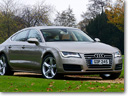
    2018 Audi A7 Sportback 45 TDI QuattroThe already appealing Audi A7 Spotback receives further upgrades – the latest units in the lineup will be geared with new V6 TDI engine that produces a total of 231hp and 500Nm of torque. Expected to deliver even smoother and more pleasurable ride, the new system is also expected to meet WLTP-certified emissions of 147g/km.

    What makes this new engine special is the 48V mild-hybrid engine that is fitted as standard and works in perfect harmony with the rest of the powertrain components. It is as efficient as the main unit and features Belt Alternator Starter and freewheeling mode. There is also a new start-stop function that activates at 13mph and works just fine in combination with the front camera – it restarts the engine predictively while the vehicle ahead begins to move. Imagine the ease of driving through traffic jam!

    2018 Audi A7 Sportback 45 TDI Quattro

    And although this new guy features the lowest power output in the whole A7 lineup, it doesn’t lack some performance and agility capabilities – the vehicle can reach 100km/h in mere 6.5 seconds and features a top speed of 155mph. Not bad at all, right? Furthermore, the power output is channeled through efficient and smooth eight-speed tiptronic transmission and it is contributed to all four wheels.

    SEE ALSO: Vauxhall teases pictures of new Combo van

    Furthermore, as you might well expect, the revised A7 Sportback would not lack utility and safety features. The 45 TDI Quattro machine would be offered with MMI Navigation Plus with MM Touch, Audi Virtual Cockpit and rear-view camera, Audi pre-sense suite with lane departure warning and new revised suspension for the Sport trim level.

    2018 Audi A7 Sportback 45 TDI Quattro

    So, how do you like the new guy? We surely are impressed!

    Source: Audi 

  • 2019 Audi RS 5 Sportback revealed! Details here!

    2019 Audi RS 5 SportbackAudi Sport team launches the latest RS model: Audi RS 5 Sportback. Making its debut at the New York show, the new family member has tons of features to talk about. And given that we live in a time of great competition between rivals, there is a lot to expect from this bad boy. So, let’s check out what is going on here, shall we?

    Exterior design

    2019 Audi RS 5 Sportback

    Pure Audi styling: RS 5 Sportback adopts all distinctive features that the brand is known for and adds a bit more of sporty kick. Resembling Audi 90 quattro IMSA GTO, the RS 5 features wide and flat Singleframe grille, large RS-exclusive honeycomb air intakers, matte front spoiler and matte mirror housings. Of course, as any other sporty Audi, this one also comes with RS-specific diffuser, oval exhaust pipes and glossy black rear-lip spoiler.

    Interior features

    2019 Audi RS 5 Sportback

    The cabin welcomes driver and passengers to a place with impressive design details and driver-focused technology goodies. For example, it features Audi’s latest wing-design wrap-around dashboard with user-friendly controls. Of course, there is Apple CarPlay and Android Auto systems incorporated, along with Audi’s own virtual cockpit and new bright multimedia display. There are also advanced technological systems that aid the driver in times of need: Audi pre sense basic and city assist, rear cross traffic assist and adaptive cruise control. Sweet.

    Drivetrain system

    2019 Audi RS 5 Sportback

    Sportsback comes with an agile 2.9-liter TFSI biturbo power unit that deliver the massive 444hp and 443lb-ft of torque. These numbers also mean that RS 5 sprints from 0 to 60km/h in mere 4 seconds and chases a top speed of 279km/h. In fact, this top speed can be boosted to 313km/h with the optional Dynamic plus package.

    SEE ALSO: Infiniti presents limited models at the New York Show pt.2

    Also, RS 5 is geared with new front five-link suspension that offer better steering precision and improved handling and stability when cornering. It lowers the overall height with a total of 7mm, compared to the standard suspension and features Dynamic Ride Control that uses steering springs and adjustable dampers.

    Source: Audi 

  • A sporty Audi hybrid? Yes, please!

    2017 Audi A3 Sportback e-tronAudi of America refreshes the A3 Sportback e-tron and welcomes the latest member to the electric plug-in family. The compact A3 car offers some neat performance capabilities, blended with good efficiency and tons of technologies. So, let’s see what is going on here.

    The agile 2017 A3 Sportback e-tron

    2017 Audi A3 Sportback e-tron

    Benefitting from both electric and inner-combustion power, the sweetheart offers a total of 204hp (152kW) via a 1.4-liter TFSI power unit and 258lb-ft of torque. Long story short, A3 Sportback sprints from 0 to 100km/h (62mph) in 7.6 seconds. Not bad, not bad at all.

    So, what else makes this car appealing? There are more than 43.5 cubic feet of cargo capability and tons of sweet technologies: panoramic sunroof, rearview camera, LED daytime running lights, optional e-tron signature LED headlights (available with Premium Plus and Prestige trim levels), Audi Pre-Sense Basic and Audi Pre-Sense Front as standard. Sweet.

    SEE ALSO: Audi announces details for the Q2 Edition #1: what’s so special about it?

    Interior comfort is achieved by adding Audi Virtual Cockpit, Android Auto and Apple CarPlay smart phone integration, Audi connect PRIME and PLUS services with 6-month trial subscription, MMI Navigation, MMI touch. Sounds good to me. What do you think?

    What about the sporty features?

    2017 Audi A3 Sportback e-tron

    What is special for this particular one, is the exclusive 3-spoke flat-bottom multifunctional steering wheel with shift paddles, 18-inch 15-spoke Turbine-design wheels, all-season tires, front sporty seats and exclusive S-line roof spoiler. Cool.

    Source: Audi 

  • Audi RS 6 Avant and RS 7 Performance Beasts are Almost Here!

    Audi RS 6 Avant PerformanceAudi RS 6 Avant performance and Audi RS 7 Sportback performance are the two new vehicles which will demonstrate that a vehicle can not only be high-performance-oriented, but also efficient. How you ask? Let’s find out.

    First of all, both vehicles are geared with 4.0 TSI units that provide the stunning 605 hp (445 kW) and up to 750 Nm. But this stunning power doesn’t ultimately mean that the vehicles are not efficient. The fuel consumption remains unchanged at 9,5 and 9,6 per 100 kilometers and the CO2 emissions are estimated 223 and 221 per kilometer. How cool is that?

    2016 Audi RS 7 Sportback Performance

    The RS 6 Avant Performance  and the RS 7 Sportback Performance need just 12.1 seconds to go from 0 to 200 km/h (123 mph) and in addition, the optional Dynamic pack enhances the top speed from 250 to 280 and 305 km/h (155 to 174 and 189 mph).

     SEE ALSO: HplusB Design and the Fulminant Audi R8 V10

    The power units are paired to eight-speed tiptronic gearbox, which is especially designed to enhance the sporty spirit of the vehicles and now the drive can choose between modes D and S that bring further dynamics and pleasure of driving. And let’s not forget that both vehicles are geared with integrated damping control and sporty RS suspension. This combination ensures fast response, stability and reliability on the road.

    2016 Audi RS 7 Sportback Performance  03

    On the other hand, the engineering team has comprehensively restyled the exterior of the cars. Now the design strikes with new sporty bumpers, heavily reshaped diffuser insert, glossy black honeycomb grille and flared side sills. The RS Performance exterior finishes the sporty affair with Ascari Blue Metallic as an optional finish. The RS Performance models also come with stylish 21-inch cast alluminum wheels and 275/30 tires. Furthermore, the four internally ventilated brake disks offer and that sweet weight-saving wave design.

    Audi RS 6 Avant Performance

    This sporty, yet elegant affair continues and into the interior of the RS Performance sport cars. Both models are geared with sport seats with pronounced side bolsters and integrated head restraints. Audi also offers the seats in color combination of black and blue. And along the hi-tech units, the interior proudly presents its stylish and sophisticated details, carbon materials and metal features.

    2016 Audi RS 7 Sportback Performance

    Both RS 6 Avant and RS 7 Sportsback will be available for order in November.

    Source: Audi

  • Audi A1 Sportback Custom, S3 Cabrio, Q3 and SQ5 at Worthersee

    Audi is currently exhibiting several interesting models at the 2014 Worthersee Motor Show in Austria. These include A1 Sportback Custom, S3 Cabrio, Q3 and SQ5.

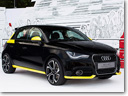
    The customized A1 Sportback boasts a black exterior with Macao Yellow accents on the front bumper, mirror housings and the side skirts. There are also body stripes and five-spoke alloy wheels with matte black accents. The interior also features Macao Yellow trim on the center console and air vents.

    Audi S3 Cabriolet has the typical red paint finish as well as a full aerodynamics package including new front and rear bumpers, carbon mirror housings and a chromed windscreen surround.

    It is powered by a 2.0 liter TFSI – 300HP (221 kW) and 380Nm (280 lb-ft) of torque. It is paired with a 6-speed S-tronic gearbox sending the power to Quattro AWD system. 0-100 km/h in 5.4 seconds and a top speed of 250  km/h (155 mph) – electronically limited. The combined fuel consumption is just 7.1 liters / 100 km (33.1 mpg US or 39.7 mpg UK) with CO2 emissions of 165 g/km. The soft-top can be opened or closed in 18 seconds at speeds of up to 50 km/h (31 mph).

    Source: Audi

  • 2013 Audi A7 Sportback – “Most Searched For” Luxury Car

    2013 Audi A7 Sportback has been named “Most Searched For” Luxury Car by honestjohn. The award is based on the interest of readers who visited honestjohn between April 2013 and April 2014 and scored the highest number of overall website page views in its category, according to data provided by Google Analytics.

    “When it comes to quality and luxury, the A7 Sportback has both in spades. The interior finish is impeccable but there’s more to the A7 than just impressive refinement. It handles superbly well for what is a substantial car while its svelte lines and stylish design mean it can still turns heads.”, commented Dan Harrison, Editor of Honest John.

    “When it was first launched it created plenty of interest among the motoring public and that’s translated to its popularity on honestjohn.co.uk, with it claiming the crown in our new Luxury Car award.”, he added.

    2013 Audi A7 Sportback is available with a number of powerful petrol and diesel engines including the 3.0 liter BiTDI with 313HP (230 kW) and 650Nm (481 lb-ft). 0-100 km/h in 5.3 seconds and a top speed of 250 km/h (155 mph). The combined fuel consumption is 44.8 mpg UK (6.3 liters / 100 km) with emissions equating to 166g/km.

    The standard equipment includes xenon headlamps with LED daytime running lights, the Audi drive select adaptive driving system, DAB digital radio, keyless go and SD card-based based MMI navigation. Above this are SE, S line and particularly lavish Black Edition specification levels, the latter including 21” Rotor design alloy wheels, a BOSE surround sound system and a black exterior styling package including privacy glass.

    2013 Audi A7 Sportback is priced from £41,475 OTR for the 204HP (150 kW) 3.0 V6 TDI.

    Source: Audi

  • 2014 Audi A3 Sportback g-Tron – Price €25,900

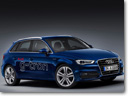
    Audi is now ready with the 2014 A3 Sportback g-Tron, which is already available on the market with pricing starting from €25,900. The super-efficient hatchback was introduced at the 2013 Geneva Motor Show.

    It is powered by a 1.4 liter TFSI with 110HP (81 kW) and 200Nm (147 lb-ft) of torque. It is able to run not only on gasoline, but also on natural gas and Audi-generated e-gas. In e-Gas mode, the A3 Sportback g-Tron is “entirely CO2-neutral”. 0-100 km/h in 11 seconds and a top speed of 190 km/h (118 mph), which is pretty decent dynamics for such low power.

    The car comes equipped with two gas tanks that carry 7 kg (15.3 lbs) of compressed natural gas (CNG) at a maximum pressure of 200 bar. The tanks have been manufactured from CFRP and when at their full capacity they weigh 27 kg (59.5 lbs).

    The average gas consumption is around 3.2-3.3 kg / 100 km, which means running costs of about €3.50 / 100 km.  The maximum range on CNG is 400 km (242 miles) and on gasoline, it can go up to 900 km (559 miles).

    “In addition to our e-mobility developments, the Audi e-gas project is an important pillar of our sustainability strategy – as is the development of other synthetic fuels”, commented Prof. Dr. Ulrich Hackenberg, Board Member for Technical Development at AUDI AG.

    Audi is already operating a research facility for the production of Audi e-ethanol and e-diesel with its partner Joule in Hobbs, New Mexico. Moreover, the company is conducting research into the synthetic manufacture of Audi e-gasoline in cooperation with Global Bioenergies.

    Source: Audi