 Poised to lay down the gauntlet to its lower-medium rivals, including the next-generation VW Golf, one of this year’s most eagerly-awaited new models, New Megane, has arrived. Previewed for the first time in five-door form, in the lead-up to its world premiere at the Paris Motor Show in October, the successor to one of Europe’s best-selling cars ushers in a new era of styling, handling and quality.
Retaining characterful styling, Renault Megane‘s is immediately eye-catching. Its dynamic, elegant styling has been honed to appeal to car enthusiasts, with several cues taken from the world of sport. Renault Megane is robust, too, with the accent very much on the fit and finish of its panels, as well as on that of the materials used in its construction. The new model has also benefited from the progress that has been achieved across the Renault range in reliability and durability.
Renault Megane’s interior is extensively equipped with practical, comfort-enhancing features. These include combined analogue/digital instruments incorporating a new, easier-to-read colour-coded cruise control/speed limiter interface. The list continues with a host of equipment normally associated with a higher segment, such as hands-free entry and ignition, automatic locking as the driver walks away from the car, Carminat Bluetooth® CD navigation system and custom-developed audio system (3D Sound by Arkamys®).
Renault Megane‘s on-road performance lives up to the high standard promised by its looks, with precision, control and efficiency combining to deliver a particularly enjoyable and reassuring ride. A broad, extensively renewed range of dCi and TCe powerplants combining performance and respect for the environment will be available, with four diesel engines that can claim CO2 emissions equal to, or less than, 120g/km.
Renault Megane has been designed to offer best-in-class safety too. Among its features will be double side impact sensors and dual-chamber airbags as seen on Laguna III, aimed at minimising the consequences of a side-on collision.
It is also a socially responsible car which is 95 per cent end-of-life recoverable by weight, while almost 12 per cent of the plastics it contains are sourced from recycling, equivalent to an average of 22kg per car.
Renault Megane marks the beginning of Renault’s renewal of its C-segment range. With market share of more than a third, this segment has long been the biggest in Western Europe and makes a significant contribution to Renault’s performance in terms of both volume and profitability.


By 2010, the Megane family will include six different models, each of which will have its own distinct and assertive personality. These six models have been conceived essentially for customers in European markets and will be manufactured in Palencia (Spain) and Douai (France). Other models will be available in non-European markets equipped with specific technical solutions suited to local conditions.
For almost two years, Renault’s design and engineering teams focused their attention on three main areas of development, namely reinforcing the personality of each member of the Megane line-up, ensuring a balanced offer in terms of performance and equipment, and targeting best-in-class positioning for all key features.
Renault Megane, which goes on sale from November 2008, is the next car in the Renault Commitment 2009 plan and consequently benefits fully from the progress achieved in terms of quality on preceding models.
Designed to seduce
Renault’s Design Department worked closely with the project engineers from a very early stage to incorporate styling cues suggestive of the world of sport into Megane’s genetic make-up. The result is a family hatchback of 4.30m in length with a dynamic stance, thanks particularly to its short front and rear overhangs, a 2.64m wheelbase, steeply-raked roofline and wide track.
Its strong personality is instantly apparent through its racy frontal styling which features crown lines that sweep across the bonnet from the windscreen pillars to converge on the centrally-positioned logo. Meanwhile, the streamlined forms of the headlamps serve to prolong the fluid lines of the air-intakes to reinforce Renault Megane’s determined expression and piercing gaze.
Renault Megane’s strong personality is also apparent at the rear where the two-part light clusters continue the feature line and facilitate access to the boot.
The Latin influence of Renault Megane’s elegantly sensual curves is especially visible when seen from the side. The proportions of its flanks are both harmonious and dynamic, providing an assertive character and the promise of genuine driving enjoyment.
Durability and quality
At first sight, Renault Megane exudes a sense of durability and quality. This impression is heightened by the generous surface area and curvaceous forms of the body panels. Viewed from the side, the feature line extends the crease of the slightly prominent front wings rearward to emphasise the car’s broad, solid shoulders. The wide track dimensions (1.55m) ensure that the car sits squarely on the road, and this sense of stability is underlined by the steeply-raked rear screen and, indeed, by the entire rear end design. Renault Megane’s proportions, the form of the waistline and the large door panels exude a feeling of protection.
This blend of fluid lines coupled with the generous proportions of the bodywork also maximises the visual effect produced by the light reflecting off the body, while the range of metallic paint finishes includes the all-new Spray Blue.
Particular attention has been paid to reducing the cut lines between the different body panels (e.g. windscreen pillars, fuel filler flap) and the front and rear bumpers discreetly incorporate the parking proximity sensors. Renault Megane’s roofline also benefits from specific treatment thanks to the use of laser brazing which eliminates the need for roof trimming.
The interior, meanwhile, features an intuitive driving environment that makes extensive use of fluid forms. The impression that the dashboard is suspended is reinforced by the taut horizontal lines that highlight the curve of the decorative trim. All the controls have been carefully positioned and fall easily to hand both close to the steering wheel and on the centre console, with a view to freeing up as much space as possible for an even roomier cabin.
Great care has also gone into the quality and fit and finish of the materials used. The fully integrated dashboard cowl benefits from a finish which is not only soft to the touch, but also resistant to daily use and the ageing effects of sunlight. The windscreen wipers are aesthetically concealed beneath the bonnet line, a decision which also improves acoustic and aerodynamic performance.
The interior trim has been carefully thought through to produce a range of distinct ambiences depending on equipment level. Customers can accordingly choose between a light, elegant trim that exudes travelling comfort or darker upholstery with a sportier feel.
Last but not least, Renault Megane comes with a comprehensive range of accessories including body kits, comfort-enhancing equipment and stowage solutions.
The focus on an intuitive, comfortable interior
Simplified ergonomics and interfaces mean that Megane customers will have absolutely no trouble familiarising themselves with their vehicle. The first thing they will appreciate as they take the wheel for the first time is its innovative dashboard which features an analogue rev-counter alongside a digital speedometer which is clear and easy to take in, ensuring greater visual control over the vehicle’s speed. The centrally-positioned speedometer also incorporates the cruise control/speed limiter display, fuel and water temperature gauges, and ‘door open’ and tyre pressure warning lights.
One particular Renault innovation is Megane’s cruise control/speed limiter which comes with a interface. When this function is activated, the speed selected by the driver is displayed at the top of the speedometer which is itself ringed by a sequence of lights that take the form of an arc around the central display. In speed limiter mode, the red segment lights up as the speed increases, while the selected speed begins to flash if exceeded. The use of colours is not only intuitive and functional; it also represents a gain in terms of response time and safety.

The design of the seats and materials chosen for them enable long distances to be covered in total comfort. In addition to the height- and reach-adjustable steering wheel, the intuitive seat-adjustment controls fall easily to hand and drivers can quickly modify the seatback angle and headrest, adjust the lumbar support and even raise or lower the seat height through 70mm of travel.
The sensation of travelling comfort is heightened by the carefully engineered acoustics of the exceptionally roomy cabin which boasts best-in-class front elbow room.
The boot volume of 405 litres (372 where spare wheel is fitted) figures amongst the best in the segment. Access is made simple through the low sill height and wide hatch aperture which has been achieved by locating part of each rear light cluster on the hatch itself. The 60/40-split rear seat allows the load capacity to be easily adapted by means of practical, easy-to-reach levers. Renault Megane also carries over the particularly useful under-floor stowage featured on previous generation versions.
A raft of equipment from the next segment up
In response to customer demand, Renault has paid special attention to ensure that Megane’s driving environment is practical, with controls that are both ergonomically positioned and intuitive. The newcomer also comes with a long list of technological equipment and features traditionally associated with the next segment up and aimed at taking the stress out of motoring, as well as enhancing travelling comfort.
Renault Megane is equipped with hands-free entry and ignition (depending on version), while the same card remotely locks the car when the driver walks away from the vehicle. All doors can also be locked automatically by pressing the button situated on each exterior handle. They unlock when the hand of the person carrying the card approaches one of the door handles or activates the boot button. Meanwhile, the remote lighting function enables drivers to locate their vehicle thanks to a specific button on the card which switches on the lights.
Another comfort feature is Renault Megane’s assisted parking brake (depending on country) which is automatically applied when the engine is switched off and released by a simple press on the accelerator pedal with the engine running. The system facilitates hill starts and can be activated manually thanks to a switch situated on the centre console.
Renault Megane can be ordered with one of two GPS navigation systems: Carminat Bluetooth® CD (2D navigation with seven-inch colour display and now featuring central control).
For optimal thermal comfort, Renault Megane is equipped with climate control as standard, while an automatic dual-zone system is available for certain versions. This system enables the driver and front passenger to choose the temperature they prefer independently. It also permits them to select the fan speed thanks to the ‘Soft-Auto-Fast’ function. In ‘Auto’ mode, the system automatically optimizes the temperature, sound level and start-up speed. The ‘Soft’ mode favours a quieter ambience, notably for the driver and front passenger, while the ‘Fast’ mode responds swiftly and efficiently to adjust the temperature of the entire cabin.
Megane benefits from a comprehensive range of audio systems, too, including a first for a Renault model: a tailor-made top-end system developed in association with Arkamys® and known as ‘3D Sound by Arkamys®’. This specialist company in digital audio processing benefits from some 10 years of experience and has developed special onboard software which delivers a high quality three-dimensional sound. The system can even adapt to the number of occupants in the car. Meanwhile, radio reception has been optimised thanks to a dual aerial system comprising a traditional exterior antenna and another screen-printed onto the rear screen.
Connectivity also takes pride of place on Renault Megane thanks to the standard auxiliary socket located on the centre console which enables occupants to enjoy personal music collections stored on a portable player. The Plug & Music option enables the driver to scroll through the functions of portable players (USB key, iPod®, etc.) using the car’s own steering wheel-mounted finger-tip remote controls, with menus and play lists shown remotely on the dashboard display.
Exemplary handling: reassuring, responsive and precise
The response, dynamic performance and driving pleasure delivered by Renault Megane live up every bit to the promise suggested by its looks.
Significant engineering effort went into all the elements that make up the chassis at a very early stage in the project. The MacPherson-type front suspension is coupled with a horned subframe, a configuration which minimises lateral displacement of the subframe to provide impeccable directional precision. At the same time, Megane’s power steering system offers even swifter response to driver input and helps counter the phenomenon of steering wheel inertia. The rear suspension is based on a programmed flexible beam using a closed section beam that combines stiffer torsional performance and light weight. The sum of these features has produced a more responsive, agile ride, as well as improved cornering without detracting from comfort.
In addition to the dynamic qualities of its chassis, Megane can claim class-leading stopping power thanks to its generously dimensioned brakes. The combination of vented 296mm-diameter discs at the front and 260mm-diameter rear discs slows Megane to a standstill after repeated braking from 62 mph in just 37 metres, one of the segment’s best braking distances.
Megane also ensures precise, responsive and reassuring roadholding, while its positive, predictable handling performance is suited to dynamic driving styles.
Respect for the environment and performance: the hallmarks of the dCi and TCe engine ranges
A significantly renewed range of dCi and TCe (Turbo Control efficiency) powerplants that combine fuel efficiency and driving pleasure will be available for Megane from launch. These engines are capable of delivering torque and power from low revs across a broad rev band whatever the demands made on them. Renault Megane has profited from this expertise to feature a comprehensive line-up of engines and transmissions whose technical characteristics bring out the best in the car’s dynamic potential.
The dCi range
The dCi 85 and dCi 105 engines, which have been widely praised for the performance and driving pleasure they deliver, have been joined (depending on country) by the dCi 90 and the particulate filter-equipped dCi 110. Every one of these engines emits less than 120g of CO2/km, while the dCi 130 profits from the dCi range’s most advanced technology in terms of combustion and turbocharging to return CO2 emissions of just 135g/km. Peak power (130hp) arrives sooner too (at 3,750rpm instead of 4,000rpm), and maximum torque (300Nm) is available from 1,750rpm instead of 2,000rpm. The engine line-up will shortly be extended to include the dCi 160 coupled with a manual gearbox and the dCi 150 mated to automatic transmission.
The petrol range
Depending on market, the petrol range will comprise the 1.6 16V 100hp and 110hp engines, as well as the 2.0 16V 140hp and the TCe 180. The 2.0 16V 140 will be available from launch with a six-speed manual gearbox, while continuously variable transmission will be introduced with this powerplant at a later date. Renault’s latest petrol engine, the TCe 130 will be added to the catalogue in the spring of 2009. Developed within the framework of the Renault-Nissan Alliance, the latter is a perfect illustration of the expertise that has been acquired in the realm of downsizing. This new, fuel-efficient 1,397cc block packs the power of a 1.8-litre engine (130hp) and the torque of a 2.0 (190Nm), yet its CO2 emissions are less than those of a 1.6, making it particularly respectful of the environment. Depending on version, these engines can be mated to five- or six-speed manual or automatic transmissions.
Megane range will include biofuel-compatible engines (bioethanol and biodiesel) depending on country.
Despite being bigger and roomier, Megane is an average 8kg lighter than its predecessor. The combination of lower weight and optimised aerodynamics has led to exceptionally low fuel consumption and CO2 emissions, but not to the detriment of either driving pleasure or performance.
Megane is one of the most socially responsible cars in its class. Almost 70 per cent of all sales will concern models that meet the three criteria required to qualify for the Renault eco? signature, namely:
- CO2 emissions less than 140g/km or biofuel-compatible,
- Manufactured in an ISO 14001-certified factory,
- 95 per cent end-of-life recoverable, and at least five per cent of the plastics the car contains must be sourced from recycling.
Renault Megane targets safety excellence
Like its predecessor, Megane has been designed to deliver best-in-class performance. Renault has naturally profited from its own engineering expertise and from the latest research carried out by LAB (1) to develop a full range of safety equipment designed to perform in real-life driving situations. Megane benefits from Renault’s extensive knowledge in the realm of safety and has been developed to be exemplary in this field.
In terms of active safety, Megane, like the rest of the Renault range, features a long list of equipment aimed at helping drivers anticipate risk situations. This equipment includes visual seatbelt reminder warnings for all five seats, a tyre pressure monitoring system and bi-xenon headlamps incorporating dipped beam cornering lights, as well as automatic activation of the headlamps, windscreen wipers and cruise control/speed limiter.
To optimise the driver’s response to difficult or emergency situations, Megane is also equipped with ABS, EBD and Emergency Brake Assist as standard. Depending on version, ESP (Electronic Stability Programme) and CSV understeer control are also available.
On the passive safety front, the programmed deformation of Megane’s structure has been engineered to absorb impact energy with a view to protecting the cabin and therefore occupants. The materials employed – including high, very high and very, very high elastic limit steels – have been selected to absorb and dissipate as much kinetic energy as possible. Controlled deformation ensures that occupants are subjected to lower deceleration forces and this, coupled with the third-generation Renault System for Restraint and Protection (SRP3), guarantees an extremely high level of protection.
The Renault System for Restraint and Protection is unique on the market and takes into account both impact force and the build of occupants. It comprises double pretensioners (which limit forward movement of the body under impact by holding the straps firmly across the thorax and lap), a load limiter (which reduces the pressure applied by the belt on the thorax) and dual-chamber adaptive airbags (which deploy just the right amount of pressure to round off the dampening of the impact). The system also offers optimum protection against submarining, a phenomenon which involves the groin sliding underneath the seatbelt’s lap strap and which can lead to serious abdominal lesions in a collision. The fastening of seatbelts is facilitated by the higher position of the stalks which offers easier access.
Impact from the side is a leading cause of fatal injuries since the flanks of a car traditionally offer less protection. However, specific work into this area has produced positive breakthroughs. Indeed, Megane inherits third generation twin thorax/pelvis airbags with different pressures and a double impact sensor in the doors. The latter adapts the load exerted on the body by delivering three times more pressure to the groin area which is more exposed compared with the thorax.
Meanwhile, the fixation rods of the generation headrests slide within the headrest and no longer within the upper part of the seatback and ensure enhanced protection of the cervical vertebrae in case of impact from the rear. Since the rods no longer form a rigid element in the seatback, the occupant’s back can sink into the seatback until their head comes into contact with the headrest, resulting in less movement of the head and thorax.
Megane: a large family that has forged a lasting name for itself
With total worldwide sales of almost 8.5 million units since its launch in 1995, Megane has become a phenomenal success story. The seven body types that make up the Megane family and which transport millions of motorists and passengers every day are manufactured on three continents (Europe, South America and Asia) in nine factories, and sold in more than 75 countries outside of Western Europe.
In Western Europe, Megane has earned the confidence of a discerning customer base thanks to the ideal balance it strikes between travelling comfort, best level safety, everyday user-friendliness and low running costs. The various Megane models have long figured at the top of the European sales charts and have received numerous leading awards, including Car of the Year titles for Scenic I in 1998 and for Megane II in 2003. Megane was also the first compact segment car to achieve a five-star Euro NCAP rating.
A diverse and highly innovative range
As the first MPV of its class, Scenic created the compact MPV segment, continuing the philosophy pioneered by Renault with the launch of Espace in 1984 and then Twingo in 1993. The Scenic revolution sparked off a chain reaction within the industry, drawing a large number of carmakers in its wake.
Contuining the path of innovation, Megane Coupe-Cabriolet was the first car to feature a folding glass sunroof as standard. It also marked a first in its category by delivering the same standard of safety performance as a saloon, thanks notably to the protection it affords for anti-submarining.
In 2004 and 2005, the addition of two newcomers to the Scenic line-up saw Renault become the first manufacturer to market two body types and three distinct versions of its compact MPV, namely Scenic, five-seat Grand Scenic and seven-seat Grand Scenic.
In 2004 and 2005, Renault Megane emerged as Western Europe’s top selling model, all body types included. And as production has expanded to factories in South America, Turkey and Iran, so its popularity on other continents has grown, too.
In 2007, 13 years after the launch of the original model, the Renault Megane family figured amongst Western Europe’s top-five best-selling passenger cars with a segment share of almost 10 per cent.
The compact segment in Western Europe: a market of more than five million cars
With almost 5.2 million cars registered in 2007 in Western Europe, the medium-sized family car segment accounts for more than one-third of the European market and continues to stand out as Western Europe’s biggest segment in volume terms.
Following the MPV revolution during the early part of this decade, the segment saw a huge influx of compact SUV whose sales increased seven-fold over a period of 10 years. The C-segment increased by 1.4 per cent in 2007 over 2006.
Today’s sector is ultra-competitive, with more than 100 models available in Europe, produced by brands ranging from the world’s major carmakers to European specialists. The offer is extremely varied, too, and includes no fewer than nine distinct body-types: three- and five-door hatchbacks, coupes, saloons, estates, coupe-cabriolets, short and long MPVs, pluls SUVs.
Hatchbacks and saloons continued to account for more than half of all vehicle sales in 2007, and remain the traditional C-segment body-type. They have finally succeeded in resisting the shift away from this type of car noted ten years ago and sales volumes have now stabilised.
The second most frequent body-type is the MPV. More than 30 per cent of the segment’s buyers choose this type of car. In Western Europe, MPV sales volumes are growing slowly but surely, with growth of 1.4 per cent in 2007 over 2006.
Compact SUV have met with considerable success in Western Europe over the past five years, with growth of almost 4 per cent in their segment share and the availability of some 25 different models.
The statistics point to stability within the segment, notably because of legislation aimed at curbing polluting emissions. Compact models stand out as the best qualified cars in this domain thanks to the balance they strike between driving pleasure, cabin space and CO2 emissions.
The proportion of diesel models has also been increasing consistently in Western Europe and they accounted for 60 per cent of the segment in 2007 (compared with 25 per cent in 1995). This growth is buoyed by the performance of diesel engines in terms of CO2 emissions. Diesel cars benefit from favourable fiscal measures across most of the Western European market where diesel-powered versions represent almost 70 per cent of Megane II sales.
Ensuring a sustainable profit context
The capital outlay for Megane amounted to €1.8 billion, a figure which covered the design of six body-types and their production in Palencia (Spain) and Douai (France).
Despite the exacting brief, research and development costs were kept to a minimum thanks to the carry over of certain technologies developed for Laguna.
Like Laguna, Megane has benefited from the Quality Excellence Plan and has capitalised on the progress made following the application of Renault best practices and procedures, as laid out notably in the Renault Design Way (SCR) and Renault Production Way (SPR). This uncompromising cross-functional approach has been profitable to the entire range.
The significant carry over of components from Laguna and other Renault models, as well as from the production set-up deployed for Megane II has resulted in a sharp fall in production-related investment which is 30 per cent less than that required for the previous generation car.
The introduction of the second-generation Megane family led to significant investment in the factories which have consequently already been extensively modernized, with bodyshops in particular. The substructure of Megane is identical to that of Megane II which was already of a high standard. The carry-over from Megane II – which not only concerns platform components, but also the principal mechanical assemblies, parts and technical solutions – proved particularly valuable in curbing production-related investment and ultimately produced few constraints since it gave a free hand to the creativity of the design team.
A rationalised production plan has been put into place to optimise manufacturing capacity. The programme’s profitability is to a great extent ensured by amortisation of the cost of using existing production facilities. To favour optimal use of the capacity of its European production plants (Palencia and Douai), Renault has divided the production of the six models of the Megane family amongst these two sites, with Megane hatchback produced in Spain. This reorganisation, with the different factories specialising in specific body-types, has enabled cost savings to be achieved in the production of the platform which has now been amortized. It has also made it possible to optimise the way by which the investment for the production of each body-type is targeted.
The €810 million production-related investment was divided as follows: €370 million invested with suppliers and €440 million in the factories, chiefly Douai and Palencia.
Work with suppliers on optimising capacity dimensioning and the suppression of doubling up of tooling achieved a saving of €125 million. The sourcing of certain mass-produced parts in Eastern Europe and Asia has resulted in lower component purchasing costs. Quality control procedures are enforced just as strictly as they are in the case of traditional supply chains and the results achieved are the same: just 30 defective parts per million.
Factory-related investment has been halved compared with Megane II and was split relatively evenly between the two plants, with €250 million going to Douai and €190 million to Palencia.
The purchase of tooling for the production of the components and of stamping shop robots represented a total of €180 million across the three plants in question, namely Palencia and Valladolid (which ensures 60 per cent of stamping operations for the three body-types) in Spain, and Douai in France.
The 95 per cent-automated bodyshops were modified at a cost of €215 million, with almost half that of sum going to Palencia. The purchase of some 100 robots has produced gains in both quality and durability over the previous generation Megane. This tooling concludes the fitting out of the bodyshops which were set up five years ago and which figure amongst the world’s very best.
The highly robotised paintshops have benefited from an investment of €7 million with a view to adapting existing equipment. Palencia’s paintshop was extensively updated in 2002.
An investment of €32 million has gone into the assembly lines. This has essentially been spent on adapting existing facilities to the models that make up the Megane family. It also served to improve working conditions in Palencia with the introduction of variable-height skids which are more ergonomically efficient. The introduction of strip and build procedures as used by Nissan during the start-up phase enabled operators to maintain a high level of precision when working on early runs of models. A car is set aside to be repeatedly built and stripped, enabling operators to keep their eye in at start-up production levels.
Start-up costs amounted to €67 million, an improvement made possible through the harmonisation of procedures and methodologies from one factory to another. The experience of previous production start-ups, such as those of Twingo (Novo Mesto) in Slovenia, and of Laguna (Sandouville) and Kangoo (MCA Maubeuge) in France, made it possible to capitalise on the best practices and ensure a swift, controlled start-up of Megane’s assembly lines.
Profitable investment
The production of the different Megane body-types is programmed over a short period of time and Renault is poised to renew its line-up in the segment in Western Europe in the space of less than two years.
Full UK pricing, specification and technical details will be available closer to the launch of the five-door Hatch in November 2008.
(1) LAB: the Accident Analysis, Biomechanics and Human Behaviour Laboratory of PSA Peugeot-Citroen and Renault.


 The Mégane Renaultsport 230 F1 Team R26 was launched in November 2006 and has enjoyed a great success. Using this base, Renaultsport launch an extreme version, the Mégane Renaultsport R26.R. Developed by Renault Sport Technologies, the Mégane R26.R joins the family that also comprises the Clio Renaultsport 197, Mégane Renaultsport 225, Mégane Renaultsport dCi 175 and, from September, the Twingo Renaultsport 133. Since the launch in April 2004, the family of Mégane Renaultsport has sold more than 20,000 units in almost 30 countries.
 The Renault-Nissan Alliance has confirmed the launch of a new manufacturing project in South Africa. Nissan’s manufacturing plant at Rosslyn was identified as having the potential to maximize synergies between Renault and Nissan.
 Renault has unveiled a new electric car prototype that loads Nissan’s fuel cell technology and lithium-ion batteries onto the popular Grand Scenic medium minivan.
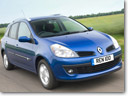 New Clio Sport Tourer has arrived in the UK, offering competitive pricing, impressive standard equipment, innovative features, greater load space and practicality, combined with the all the style and exterior good looks Clio is renowned for. The Sport Tourer version is a compact estate without compromising on interior space.
 For the fourth consecutive year, MotorSport Vision has teamed up with Renault for the French manufacturer and Formula 1 constructor to supply driving experience and race meeting support vehicles to MSV venues.
 Almost two thirds of UK motorists say fuel economy is the number one priority when buying a new car according to a new survey by Motorpoint.

 Renault has chosen the glamorous weekend which sees the Cannes Film Festival coincide with the Monaco Formula 1 Grand Prix to take the wraps off Laguna Coupe. The flowing lines of the newcomer’s elegant, uncluttered design express timeless beauty and the promise of sheer motoring enjoyment. Its performance provides unprecedented pleasure behind the wheel thanks to the combination of its Active Drive chassis equipped with four-wheel steering – which has been acclaimed by the media across Europe on the GT version of Renault Laguna – and the two new V6 powerplants which have been introduced at the same time as this image-forging vehicle.


 Renault has chosen the Geneva Motor Show to take the wraps off its Mégane Coupé Concept show car which foreshadows a compact production coupe to be released at a later date. Like New Laguna, it points to an evolution towards more fluid, sportier styling from Renault. Mégane Coupé Concept targets drivers who are not only drawn by the notion of driving pleasure but who also seek to express their personality through their vehicle. Mégane Coupé Concept symbolizes Renault’s vision of what a genuine compact sports coupe should deliver, namely character and dynamism, two traits epitomized by the show car’s unprecedented door-opening kinematics.
 Renault is pleased to present Koleos, its first ever crossover. Ideal for escaping the everyday routine, Renault Koleos is comfortable, easy to drive and boasts genuine off-road ability. It has been designed to be versatile, too, offering the same reassuring drive when motoring in and about town, on open roads and on motorways as it does when it is taken off the beaten track.