Tag: Porsche 911

  • Porsche 911 Carrera T

    Porsche is adding to the 911 family with the lightweight sports car, the 911 Carrera T. The letter “T” stands for touring and describes models that offer a purist driving experience with exceptionally sporty equipment.

    The standard 911 T features a seven-speed manual gearbox. An eight-speed PDK is also available. The rear seats are omitted. Featuring a PASM sports suspension with 10-mm-lowering and reduced insulation, the new 911 Carrera T is the epitome of purism and exhilarating driving pleasure. You can feel it on winding mountain and country roads – and you can hear it too. The sound of the six-cylinder boxer engine is now an even more striking presence in the interior.

    Standard with PASM sports suspension and Sport Chrono package

    The new 911 Carrera T slots in between the 911 Carrera and the 911 Carrera S. The Carrera T takes its biturbo engine with 283 kW (385 PS; 911 Carrera T models: Fuel consumption* combined (WLTP) 10.9 – 10.3 l/100 km, CO₂ emissions* combined (WLTP) 247 – 233 g/km, Fuel consumption* combined (NEDC) 10.2 – 9.5 l/100 km, CO₂ emissions* combined (NEDC) 232 – 217 g/km) and 450 Newton metres of torque, and which accelerates the sports car from zero to 100 km/h in 4.5 seconds and to a top speed of 291 km/h, from the entry-level 911. The standard equipment from the Carrera S with a manual transmission is augmented by Porsche Torque Vectoring (PTV) with a mechanical rear differential lock.

    The 911 Carrera T also comes standard with the Sport Chrono package and the PASM sports suspension (-10 mm) – features that only the Carrera T offers in combination with the 385-PS engine. This is available as an option in the 911 Carrera S. On request, the Carrera T can also be ordered with the optional rear-axle steering, which is also normally reserved for models from the Carrera S and up.

    T-specific equipment features include 20- and 21-inch Titanium Grey Carrera S wheels in front and back, respectively, with 245/35 (front) and 305/30 (rear) sized tyres. The 911 Carrera T also comes standard with the GT sports steering wheel, sports exhaust system and Sports Seats Plus (four-way, electric). Weighing just 1,470 kg, the 911 Carrera T with a manual transmission is the lightest series 911 with the entry-level engine, coming in 35 kg lighter than the 911 Carrera with a standard eight-speed PDK. In the 911 Carrera, the manual transmission is no longer available. Beyond the omitted back seats and reduced insulation, lightweight glass and a lightweight battery shave off even more weight.

    Touring car concept successful across several model lines

    The “T” in the model designation of the Porsche 911 Carrera T stands for touring and traces its history back to the homologation of the 911 T as a touring car in 1968. This first 911 T was offered until 1973, and in 2017 Porsche revived the purist 911 variant with the 911 Carrera T of the 991 model line. Since then, the concept of the stripped-down, yet exceptionally sporty setup has been successfully brought to other model lines with the 718 Cayman T, the 718 Boxster T and the Macan T.

    Exclusive details inside and out

    On the exterior, the Porsche 911 Carrera T stands out from the rest of the model line with Dark Grey accentuating details. Contrasting elements such as the top and bottom trim on the exterior mirrors, the new door logos and the rear logos, and the trim strips on the rear lid grille feature Agate Grey. The windscreen also features a grey top tint. The tailpipes of the sports exhaust system are in high-gloss black. It all gives the new 911 Carrera T an even more extroverted and dynamic look.

    The car’s sportiness is underscored in the interior by the standard four-way Sports Seats Plus. Decorative trim in matte black and decorative inlays in high-gloss black round off the T interior. Customers seeking even more distinctiveness can choose the optional Carrera T interior package. In this case, they receive additional safety belts in the contrasting colours Slate Grey or Lizard Green.

    The same goes for the decorative stitching, the 911 logo embossed in the headrests and the stripes down the seat centres. The floor mats also offer the logo and stitching in the contrasting colours of Lizard Green and Slate Grey as an option.

    Small but exquisite selection of options and colours

    The 911 Carrera T offers optional Adaptive Sports Seats Plus (18-way, electric) as well as the even sportier and exceptionally lightweight full bucket seats featuring Race Tex seat centres. The Carrera T interior package is offered with an optional extended leather interior. The armrests on the door panels and centre console are also in leather, along with the upper parts of the dashboard and door panel trim.

    The new 911 Carrera T is available in the four solid colours Black, White, Guards Red and Racing Yellow as well as in the four metallic finishes Deep Black, Gentian Blue, Ice Grey and GT Silver. Available special colours are Chalk, Ruby Star Neo, Carmine Red, Shark Blue and Python Green. Buyers of the 911 Carrera T also have the option of using the Paint to Sample programme, which offers paintwork in over 110 available colour tones.
  • Theon Design Porsche 911

    Theon Design has revealed its latest bespoke creation, a fully restored and enhanced Porsche 911 (964)-based commission for its first customer in Chile, featuring a lightweight carbon body paired with semi-active suspension and a 400bhp 4.0-litre flat six.

    Combining ‘OEM+’ design, quality and manufacturing techniques with uncompromising attention to detail CHI001 is, like all Theon creations, an example of the company’s world-class design and engineering expertise, delivering on the company’s objective of distilling and enhancing the essence of the air-cooled 911.

    Theon Design is the brainchild of Adam Hawley, a Porsche obsessive with more than two decades of automotive design experience at prestigious OEMs such as BMW, JLR, Lexus and Lotus, who also helped design Airbus A380 luxury interiors.

    Under Hawley, Theon Design seeks to make each car it creates lighter, more powerful and even more visceral to drive than the original on which it is based, while at the same time paying careful homage to Porsche’s methodology and engineering ethos.

    “Our intent is clear,” explains Hawley. “We apply an OEM-grade approach with Computer-Aided Design (CAD) and manufacture to enhance a classic Porsche, delivering the best possible quality. At the same time, we are careful to honour Porsche’s heritage and engineering ethos; we’re totally focussed on lightweight construction and delivering truly engaging driving dynamics. CHI001 pushes this to new heights and is fantastic example of what Theon Design is capable of.”

    The company is based in the UK’s ‘Motorsport Valley’ in Oxfordshire, home to an array of auto and racing technology companies and technicians – the ideal location in which to assemble a small team of passionate engineers and establish relationships with trusted suppliers.

    High-tech lightweight body

    As with all of Theon Design’s bespoke commissions, CHI001 is based on a 911 (964) that has been stripped back and fully restored, using numerous design cues from Porsche models past and present.

    CHI001 is the first Theon Design creation to feature carbon fibre for the vast majority of the body, with the lightweight composite material used for the roof, bonnet, engine lid, spoiler, bumpers and sill covers, while only the doors are steel – to aid side impact protection. Lightweight black Kevlar is then used for the wheelarch liners.

    For the bespoke body, each component was digitized and modelled in 3D design software to ensure ultimate precision and perfect panel fit – enabling Theon to tailor individual details to the customer’s exact specification.

    While CHI001 is very much cutting-edge in its construction, it also features an evocative nod to the past with its custom Viola Metallic paint, a colour first seen on the 30th Anniversary Porsche 911 (964) of 1993. CHI001’s 17” Fuchs style wheels feature body-coloured centres, with champagne-coloured petals and outer rims, while the special paint is complemented by Noble Chrome brightwork.

    Theon’s unflinching attention to detail is also demonstrated by the Royal Purple Porsche script and strips, which match the brake callipers and interior leather. “At Theon, attention to detail is everything,” explains Hawley. “You can see this not only with the stunning exterior of CHI001, but also wherever you look under the skin. Every single component on the car is treated with the same degree of focus, whether visible or not.”

    Under the skin

    Theon’s determination to elevate the on-road performance of each commission is reflected in the painstaking analysis and optimisation of every element of the car; each component scrutinised with a view to enhancing performance, quality and aesthetics.

    Such an approach is evident all over CHI001, where the driving experience is made even more engaging and capable, thanks to the fitment of Theon’s hydro-electric power-steering, a switchable exhaust and RS-spec semi-active suspension from specialists TracTive, which provides independent damping control and ensures all road surfaces are handled with aplomb. The driver can switch between 5 tailored damper modes, selected via a milled aluminium rotary switch integrated into the centre console – lending CHI001 great breadth of dynamic ability.

    CHI001 uses TracTive’s ‘Active Controlled Electronics’ (ACE) system, which offers completely independent damping – with active roll and pitch control for optimised suspension performance in all driving scenarios. TracTive’s high-tech system ensures CHI001 remains stable and unruffled under braking, with improved composure on corner entry, greater precision through the apex, and transformed traction when accelerating out of a corner. Road undulations are perfectly managed by each individual damper, maximising compliance and grip at all times.

    Inside each TracTive ACE damper is a patented Dynamic Damping Adjustment (DDA) valve controlled by a sensitive multi-axis g-sensor and advanced algorithm, has been developed across decades of on-road and on-track testing. With a dynamic proportional valve operating as a bypass, the TracTive damper units have an especially large range of damping adjustment, and are capable of reacting in an industry-leading 6-10 milliseconds. With such lightning responses, TracTive ACE system’s performance is elevated far above that of conventional damper systems; grip levels in all conditions are vastly improved, maximising each tyre’s contact patch.

    CHI001’s braking system is also heavily uprated with carbon discs and pads delivering tremendous, fade-free stopping power. At the rear of the car, an active wing sits atop the engine cover – ensuring perfect aero balance whatever the speed. Elsewhere, a custom aero grade wiring loom with MoTeC Power Distribution Modules further helps reduce weight, while a modern, lightweight air-conditioning system with dual condensers is fitted at the front of the car – shedding even more kilos and improving weight distribution. With all fluids and a full tank of fuel, CHI001 weighs just 1164kg.

    The famous aircooled flat six – enhanced

    Theon Design offers a wide choice of air-cooled flat-six-cylinder engine options, encompassing naturally-aspirated units that range in capacity from 3.6 to 4.0 litres, with supercharging or turbocharging also possible.

    CHI001 was commissioned with a naturally-aspirated 4.0-litre motor. Producing 400bhp and 350 lb ft of torque, and fitted with a single mass flywheel, it majors on throttle response and aural thrills with bespoke independent throttle bodies developed with Shropshire-based Jenvey Dynamics, paired with Theon-designed trumpets, all of which add to the visceral intake noise. A carbon fibre shroud aids engine cooling and further enhances under bonnet aesthetics.

    While the donor car started life as a 964 Carrera 4, drive is now channelled to the rear wheels only through a lightweight six-speed gearbox, which has been re-engineered from the G50 transmission of the later 993, and a single mass flywheel. A Wavetrac limited slip differential gives improved control and traction, while an RS gear shifter adds to the direct and quick shift feel.

    A customised cabin

    Every element of the interior has been crafted to the customer’s exacting requirements; the result is a cabin that expertly blends traditional 911 elements with modern technology.

    The main interior material is a patinated leather. Recaro Club Sport seats offer exceptional support and are trimmed in a custom design with woven Porsche Royal Purple accented leather panels. These are complemented by Touring seats in the rear, also with woven leather panels.

    Carbon fibre trimmed with leather has been used extensively throughout, including the centre console, which also features exposed carbon panels. Colour-coordinated gauges and quilted door panels add to the sense of occasion.

    “Our dedication to delivering exactly what the customer wants is illustrated perfectly by CHI001’s ultra-bespoke, exquisitely finished cabin,” says Hawley. “It’s a truly unique creation, developed in close collaboration with the client over hundreds if not thousands of hours. The resulting interior blends the warmth and timeless quality of a classic Porsche cockpit with the very best in terms of modern comfort, convenience and neatly integrated technology.”

    CHI001’s technology has been thoughtfully integrated into the cabin, with a magnetic wireless smartphone charger mounted behind a woven leather dashboard panel. A phone can be easily paired via Bluetooth to provide satellite navigation and control of the sound system, which uses high-end Focal amplifiers and speakers in both front doors. Carbon fibre inner and outer threshold covers add a distinctive finishing flourish.

    “We’re extremely excited to reveal CHI001. With this latest commission we are again delivering on a precise client specification, instilling the car with incredible performance, while using our expertise and OEM+ philosophy to refine and enhance the 911’s unique, captivating character.

    “CHI001 pushes the boundaries in terms of its body materials, engine specification and suspension innovation – and reflect what Theon Design is all about. We’re driven by a determination to hone and sympathetically enhance the classic 911 recipe, using a design-led focus and close partnerships with expert suppliers to create the ultimate iteration of the world’s most iconic sports car.”

    Prices for Theon Design commissions start at £380,000. Each car is a totally unique collaboration with the customer and takes 18 months to build. Price excludes donor car, shipping and local taxes.

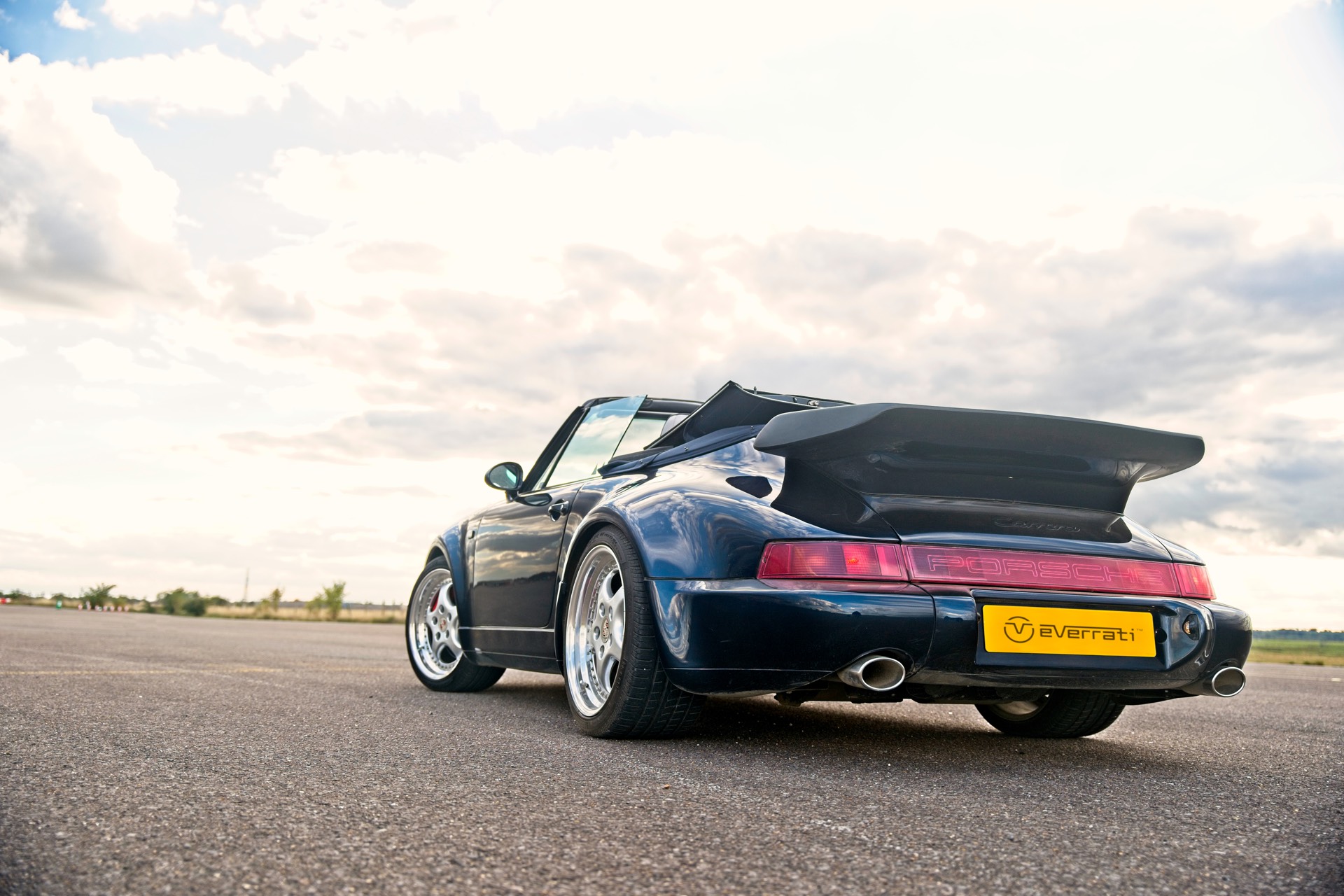
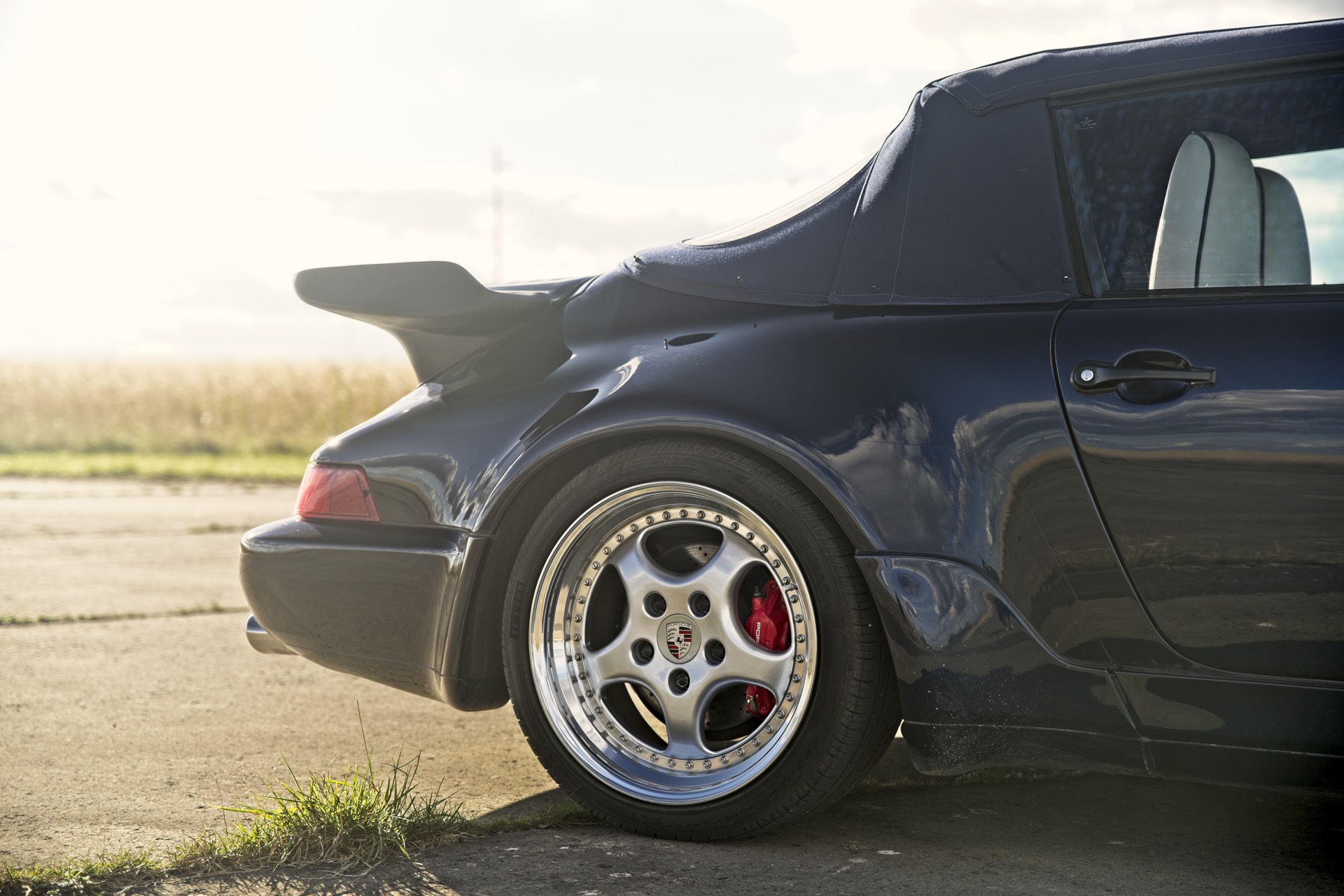
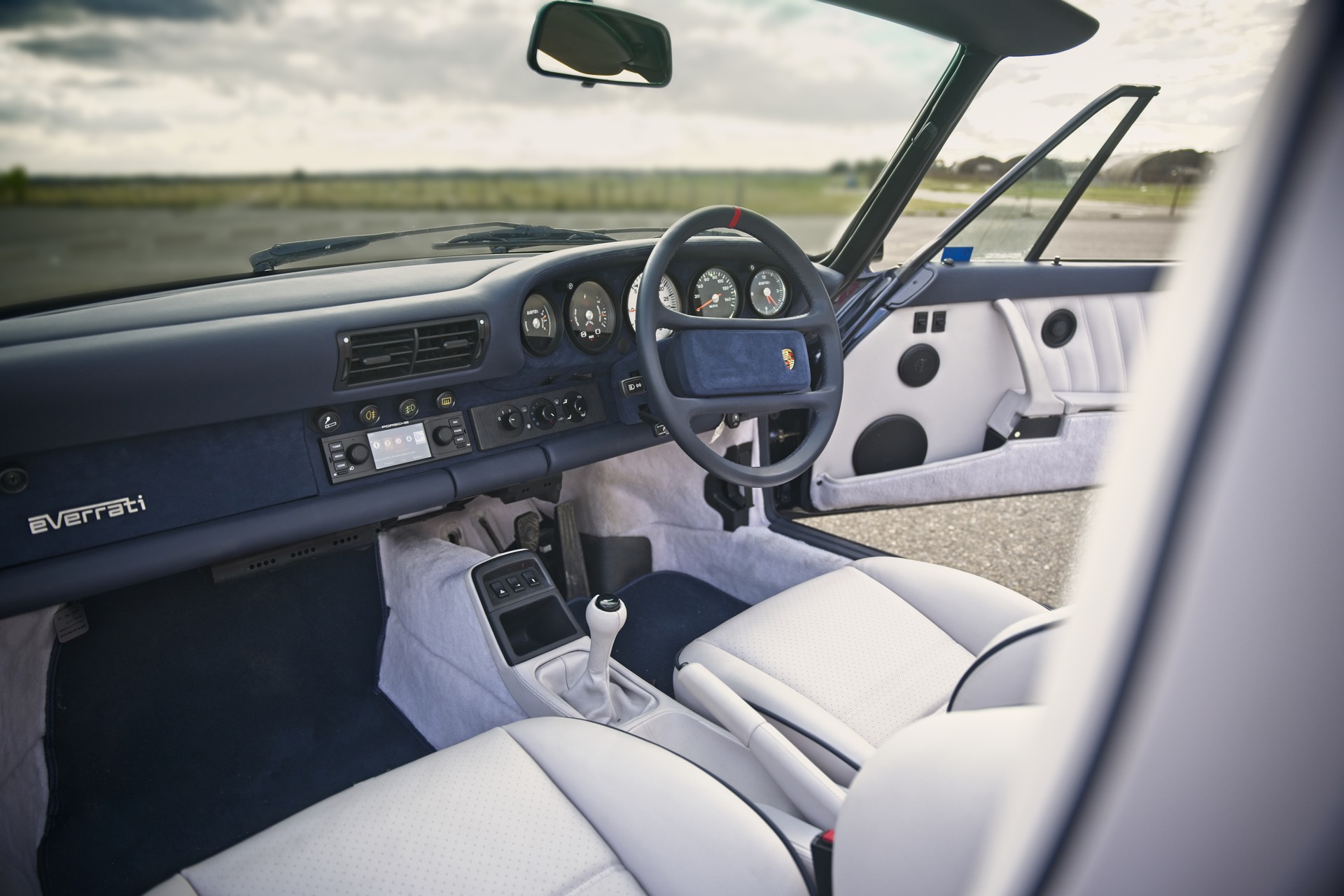
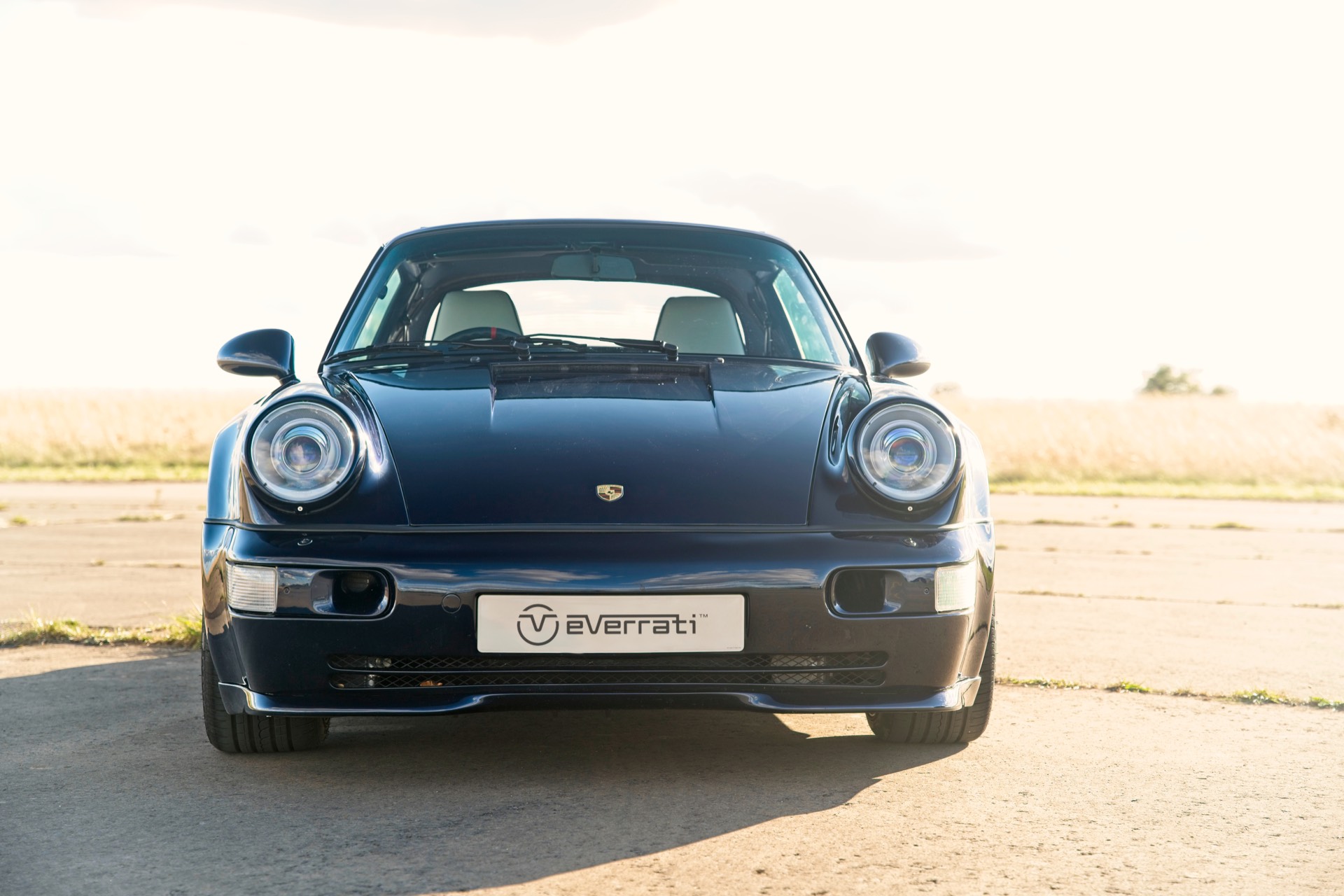
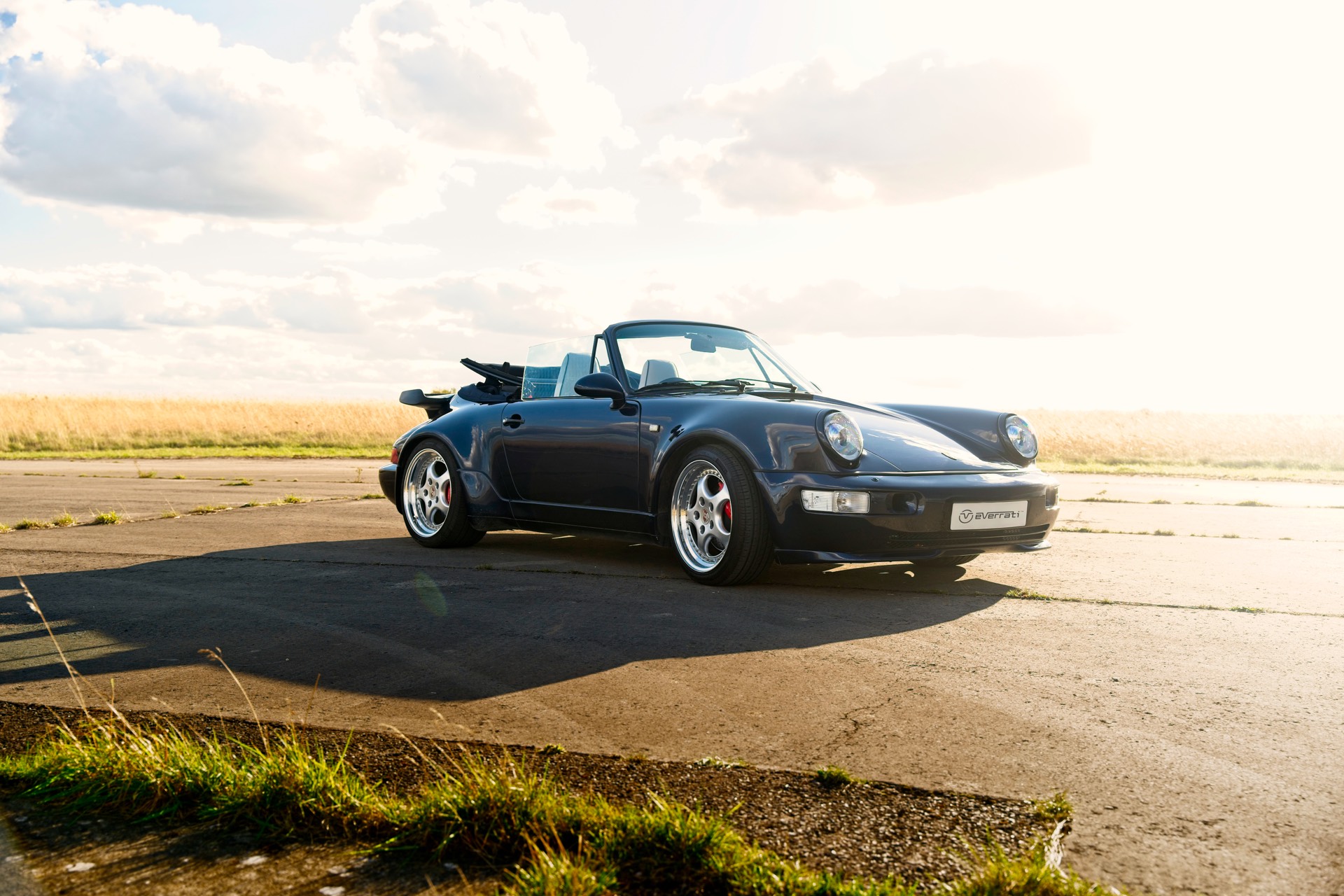
  • Everrati unveils world’s first electrified Porsche 911 (964) Wide Body Cabriolet

    Everrati Porsche 911 (964) Wide Body Cabriolet (2022 ) - Front

    Everrati Automotive Limited (Everrati), the leading global technology company specialising in redefining and futureproofing automotive icons, today reveals its electrified Porsche 911 (964) Wide Body Cabriolet model – the first of its kind in the world.

    Bringing together open-top zero-emission motoring with iconic design, Everrati’s latest model offers a truly unique experience, with thrilling performance thanks to its state-of-the-art OEM-grade EV powertrain, but one that also majors on clean air.

    As large-scale manufacturers focus their resources on the production of hardtop EVs, convertible EV options are scarce. Everrati is preserving the unique hood-down driving experience, offering buyers a choice beyond that of mainstream brands by combining timeless styling with the very latest in EV technology.

    Developed in the UK – the so-named convertible capital of Europe – the 964 Wide Body Cabriolet is capable of delivering supercar levels of roof-down performance year-round. The 964 Wide Body Cabriolet is built upon Everrati’s desire to positively contribute towards reducing air pollution, allowing top-down driving to be enjoyed to the maximum.

    Extensively engineered at Everrati’s global headquarters in Oxfordshire, England, the Wide Body Cabriolet, like all the company’s models, combines a full restoration with the installation of sector-leading IP blended with technology from the best Tier 1 automotive suppliers.

    As well as the UK and Europe, another key market for the new addition is the US, where Everrati has a partnership with Aria Group. Based in Irvine, California, Aria has peerless expertise in low-volume, high-end vehicle engineering and production supporting world-leading OEMs and reimagination specialist. This arrangement enables 964 manufacturing on both sides of the Atlantic.

    With more than double the output of the original Porsche 911 (964) Cabriolet on which it is based, the 964 Wide Body Cabriolet is available in 440bhp or 500bhp forms; the latter can accelerate from 0-60mph in under four seconds with a total driving range of 200 miles thanks to its 62kWh battery.

    Everrati Porsche 911 (964) Wide Body Cabriolet (2022 ) - Front Angle

    Everrati has worked meticulously to preserve the original ‘feel’ and character of the Porsche 911 (964) Cabriolet through the optimisation of weight distribution, chassis response and safety and enhance the performance of the original, reinvigorating its soul. With its optional fully adjustable TracTive suspension system, owners can select a variety of modes to suit their mood.

    The 964 Wide Body Cabriolet uses a donor chassis and body – selected for its provenance and condition – as the basis for restoration and electrification. At the core of Everrati’s engineering philosophy is the ability to fully reverse all modifications, allowing owners to revert the car back to its original specification if desired, and to preserve provenance into the future.

    Founder and CEO of Everrati, Justin Lunny, said: “We are delighted to be expanding our product offering with a world-first in the form of our Porsche 911 (964) Wide Body Cabriolet. Everrati prides itself on enhancing the original ‘feel’ and character of iconic cars, and the pure open-top driving experience of the 964 Cabriolet, now combined with state-of-the-art EV power, means our customers can enjoy convertible thrills in truly sustainable, 21-century style. At present, the options open to buyers in the convertible EV market are extremely scarce, and we are proud to have created a cutting-edge convertible EV above and beyond what mainstream manufacturers are delivering.  

    “Arriving at a time where demand for our electrified classics has never been higher, the 964 Wide Body Cabriolet will form a key part of our product offering as we further ramp up global production in partnership with Aria Group.”

    Everrati’s current model line-up includes:

    • Porsche 911 (964) Coupe, Targa, Cabriolet in Pure, Signature, and officially licenced Gulf Signature Editions
    • Land Rover ‘Series’ IIA
    • GT40 in partnership with Superformance, including officially licenced Gulf Edition
    • Mercedes-Benz SL ‘Pagoda’

    Everrati Porsche 911 (964) Wide Body Cabriolet (2022 ) - Rear Angle Everrati Porsche 911 (964) Wide Body Cabriolet (2022 ) - Wheels / Rims Everrati Porsche 911 (964) Wide Body Cabriolet (2022 ) - Interior Everrati Porsche 911 (964) Wide Body Cabriolet (2022 ) - Speedometer Everrati Porsche 911 (964) Wide Body Cabriolet (2022 ) - Emblem / Logo

  • Carlex Design Porsche 911 Turbo

    The Porsche 911 Turbo in this unique edition, whose lines cannot be mistaken for anything else in the world. A collectable and a real treat for the lovers of sheer beauty and luxury.

    The characteristic feature of all Racing Green conversions is emerald green 100% hand-brushed paint. The subtle and glittering pattern under the coat of paint, carefully mastered by Carlex Design experts, has given the Porsche 911 Turbo a unique touch. The Porsche 911 Turbo in this special version is a real piece of art with an extraordinary character and a totally lavish look. The Carlex Design bespoke forged three-piece rims, painted to match the car’s exterior, as well as copper-hued brake callipers, perfectly mark the car’s outstanding interior.

    Top quality leather, unmatched design and original handcraft. This perfect combination is possible only when creating limited editions, due the availability of materials and the demand for collector cars.

    This is what makes the work on special editions absolutely fascinating.

    The new interior of the Racing Green Edition is all about top quality aged leather that is classic, light chocolate brown, and perfectly corresponds with bottle green hued leather inserts, matching the Racing Green car body. The seat chord seams give it a rough and artisanal look, and the perforation has increased the comfort and aesthetic qualities. These is a lot more to discover: the Alcantara® headlining, the plastic parts painted to match the car body colour, or the subtle embossed motifs in leather headrests with the Carlex Design crest. A stylish holdall and a backpack perfectly match this unique special edition.

  • Porsche 911 GT3 RS Carrera RS 2.7 Tribute

    The 2023 Porsche 911 GT3 RS made its first in-person appearance today at The Quail, A Motorsports Gathering, only two days after its digital world premiere. The show car – customized by the GT Model Line and Style Porsche – is a tribute to the 1972 911 Carrera RS 2.7. Additionally, as announced by Kjell Gruner, President and CEO of Porsche Cars North America Inc. (PCNA), the car will serve as inspiration for a limited-availability Porsche Exclusive Manufaktur offering exclusive to U.S. customers: a Tribute to Carrera RS Package.

    “America is the second home of the 911 and a special tribute exclusive to the U.S. is the perfect way to celebrate the 50th anniversary of the 911 Carrera RS 2.7,” said Gruner. “So many of us idolized the original 1972 car. We want to create a special experience that combines exclusive options on the new GT3 RS with a one-of-a-kind list of accompanying items. Together, it will be an exciting and individual tribute to the RS lineage. This is a live project in its early stages, and is being created by enthusiasts, for enthusiasts as a joint effort between our colleagues in Zuffenhausen, Flacht and our team in America. The ideas and concepts are really exciting and we’re having a lot of fun developing it – all of us are looking forward to sharing more details with you soon.”

    Appropriately for Monterey Car Week, the model on display is extensively personalized. Finished in white with key areas in Python Green, the car is a direct reference to the iconic white and green color configuration offered in 1972 on the first 911 “RS” model as well as a new interpretation of it. In this instance, the body is finished in non-metallic white including side air intakes painted to match with model designation graphics on the sides and rear in Python Green, forged aluminum wheels in Python Green with white pinstripes. Exclusive Design taillights emphasize the green-on-white theme by eliminating the red color from the rear taillights and third brake light. Finally, the side plates on the left and right ends of the large rear wing are painted white with RS logos in Python Green.

    “Porsche Exclusive Manufaktur allows customers to personalize their car to a point where the vehicle is as much a reflection of them as it is of Porsche,” said Karl-Heinz Volz, Director of Exclusive Manufaktur Options. “Personalization is a Porsche tradition dating back to our first production model, the 356, when a customer requested a wiper be added to the rear window of their car. Today it is an incredibly extensive personalization program, offering options ranging from small changes to true one-off creations.”

    The headlights also feature a pinstripe ring in white, something that is not available via the normal list of factory-available options. The color combination continues inside the car with matching stitching, trim panels in white to match the exterior.

    “As a car enthusiast growing up, my walls were plastered with models that I was particularly fond of. One of the most influential was the 911 Carrera RS 2.7. As a young kid it captured me imagination and even today it puts a smile on my face,” said Andreas Preuninger, Director GT Model Lines. “That’s where the styling inspiration of the 996 GT3 RS came from, which was one of my first projects at Porsche. At the time, that car felt totally extreme so colors nodding to the forefather made sense. Today, it’s a very emotional moment for me to pay tribute to the first 911 RS model with our most extreme and capable 911 GT3 RS yet.”

    About the 2023 911 GT3 RS
    The 2023 Porsche 911 GT3 RS is the most extreme street-legal 911 model yet. Its 4.0-liter naturally aspirated boxer six-cylinder engine generates 518 hp, and revs to 9,000 rpm. That power is routed exclusively to the rear wheels via a seven-speed PDK dual-clutch automatic transmission. Making extensive use of motorsport-derived aerodynamics, it generates more than 900 lbs. of downforce at 124 mph and 1,895 lbs of downforce at 177 mph. This is also the first example of a 911 GT3 RS with active aerodynamics, a feature that is used to offer incredible levels of downforce, provide deceleration assistance by creating an air brake, and by offering a Drag Reduction System (DRS) that can reposition aerodynamic elements to cut drag at the driver’s command in certain conditions.

    About the 1972 / 1973 911 Carrera RS 2.7
    Fifty years ago, the world knew the 911 Carrera RS 2.7 as Germany’s fastest sports car. It began as a homologation special and featured many technological innovations. It was the most powerful version of the first-generation 911, generating 210 PS at 6,300 rpm and 188 lb.-ft. of torque at 5,100 rpm from its air-cooled flat-six developed by Hans Mezger and Valentin Schäffer.

    A more potent engine was only part of the success story. Much like the new 911 GT3 RS, wind tunnel testing and aerodynamic science introduced never-before-seen technology to the 911. The ducktail, now as much an icon of style as an element of function, was critical in achieving stability at high speeds. Not only did it unlock the ability to drive faster, but it did so without incurring additional drag. In fact, it reduced the drag coefficient.

  • Porsche 911 GT3 RS

    The 2023 Porsche 911 GT3 RS is clear in its intentions: it is uncompromisingly designed for maximum performance. The 518 hp road-legal high-performance sports car takes full advantage of technology and concepts from motorsport. Even beyond the high-revving naturally aspirated engine with racing DNA and intelligent lightweight construction, it is, above all, the cooling and aerodynamic systems of the 911 GT3 RS that connect it most directly with its motorsport brother, the 911 GT3 R.

    Central-radiator inspired by motorsport – the foundation for active aerodynamics

    The basis for a significant performance boost is the concept of a central radiator – an idea that was first used in the Le Mans class-winning 911 RSR and subsequently in the 911 GT3 R. Instead of the three-radiator layout seen in previous cars, the new 911 GT3 RS relies on a large, angled center radiator in the car’s nose, positioned where the luggage compartment is located on other 911 models. This has made it possible to use the space freed up on the sides to integrate active aerodynamic elements. Continuously adjustable wing elements in the front and on the two-part rear wing, in combination with a number of other aerodynamic measures, provide more than 900 lbs. of downforce at approximately 124 mph, twice that of the 991.2-generation predecessor and three times as much as a current 911 GT3. At 177 mph, total downforce is 1,895 lbs, or the equivalent of a Porsche 356 A.

    A drag reduction system (DRS) is fitted in a production Porsche for the first time. To achieve low drag and higher speeds on straight sections of the track, the DRS allows the wings to be flattened out at the push of a button, within a specific operating range. During hard braking at high speeds, the airbrake function positions the wing elements at the front and rear to support deceleration by maximize aerodynamic drag.

    The purposeful look of the new 911 GT3 RS is characterized by the large number of functional aerodynamic elements. The most prominent feature of the GT sports car is the swan-neck-supported rear wing, which is significantly larger in all dimensions than the wing of its predecessor. The rear wing consists of a fixed main wing and a hydraulically adjustable upper blade. For the first time on a Porsche production vehicle, the upper edge of the rear wing is higher than the roof. A front splitter divides the air flowing over and underneath working in parallel with side blades on the front fascia that deflect air outwards. Front wheel-arch ventilation is provided via distinctive louvered openings in the front quarter panels. Inlets behind the front wheels inspired by the iconic Le Mans-winning 911 GT1 reduce the dynamic pressure in the wheel arches. Air from the centrally positioned radiator flows out of large nostrils on the front lid – further back, fins on the roof direct the air outwards, ensuring cooler intake temperatures in the rear. In the new 911 GT3 RS, the openings in the rear side panel are used exclusively to improve aerodynamics and not to draw in combustion air. The rear wheel arch also features an intake and a side blade for optimized airflow. The rear diffuser is a modified version of that fitted to the 911 GT3.

    Track suspension that can be adjusted from inside the car

    Even the suspension is modified for improved aerodynamics. Because the wheel arches of the new 911 GT3 RS are subject to powerful airflows, the components of the double-wishbone front axle are designed with teardrop-shaped profiles. These aerodynamically efficient links increase downforce on the front axle by around 88 lbs. at top track speed and are otherwise only used in high-end motorsport applications. Front track width increases by 1.14 inches (29 millimeters), necessitating longer double-wishbone front axle links.

    To ensure that the downforce balance between the front and rear axles is maintained even when braking from high speeds, the suspension engineers have significantly reduced pitching under braking. On the new 911 GT3 RS, the front ball joint of the lower trailing arm has been set lower on the front axle. The multi-link rear axle has also been adjusted, with modified spring rates. The driver assistance systems and rear-axle steering also have an even more dynamic set-up here.

    The 911 GT3 RS offers three driving modes: Normal, Sport and Track. In Track mode, the basic settings can be individually adjusted. Among other settings, the rebound and compression damping of the front and rear axles can be adjusted separately and in several stages. The rear differential can also be adjusted via rotary controls on the steering wheel. This is done quickly and intuitively with an operating and display concept also borrowed from endurance racing. Four individual rotary controls and a button for the Drag Reduction System (DRS) are located on the steering wheel. These rotary controls appear in the instrument cluster during the adjustment process. The 911 GT3 RS also features the track screen already familiar from the 911 GT3. At the touch of a button, the driver can reduce the two seven-inch side displays to essential information only. The gearshift indicator lights to the left and right of the analog tachometer have also been taken from the 911 GT3.

    High-revving four liter six-cylinder boxer engine

    The 4.0-liter high-revving naturally aspirated engine has been further optimized compared with the 911 GT3. The increase in power to 518 hp (911 GT3 – 502 hp) is achieved primarily via new camshafts with modified cam profiles. The single-throttle intake system and the rigid valvetrain are derived from motorsport. Like the 911 GT3, this engine also has six individual throttle bodies; one per cylinder. The seven-speed Porsche Doppelkupplung (PDK) has a shorter overall gear ratio than the 911 GT3 and is aided by air intakes on the underbody to ensure that the transmission can withstand even extreme loads during frequent use on track.

    The 911 GT3 RS accelerates from 0 to 60 mph in 3.0 seconds (911 GT3 – 3.2 seconds) and reaches a top speed of 184 mph in seventh gear. Six-piston aluminum monobloc fixed-caliper brakes and brake discs with a diameter of 408 mm are used on the front axle. Compared with the 911 GT3, the piston diameters have been increased from 30 to 32 mm. In addition, the thickness of the discs has been increased from 34 to 36 mm. The rear axle continues to be fitted with 380-mm brake discs and four-piston fixed-caliper brakes. The optionally available Porsche Ceramic Composite Brakes (PCCB) use 410-mm discs on the front axle and 390-mm discs on the rear axle. The new 911 GT3 RS also comes standard with forged light-alloy center-locking wheels. Street-legal Ultra High Performance tires measuring 275/35 R 20 at the front and 335/30 R21 at the rear provide a high level of mechanical grip.

    Lightweight construction all the way

    Intelligent lightweight construction has been a basic principle of all RS models ever since the legendary 911 Carrera RS 2.7. Thanks to an array of lightweight construction measures such as the extensive use of carbon fiber reinforced plastic (CFRP), the 911 GT3 RS weighs in at only 3,268 lbs.. The doors, front quarter panels, roof and hood, for example, are made from CFRP. Lightweight CFRP is also used in the interior, including the standard full bucket seats, trimmed in black leather and Race-Tex joining carbon fiber trim throughout the interior to characterize the pure, sporty ambience.

    Available with Weissach package

    The Weissach package, which is available at extra cost, includes a considerable number of changes to the standard vehicle. The hood, roof, parts of the rear wing and the upper portion of the side mirrors housing feature visible carbon fiber. The front and rear anti-roll bars, the rear coupling rods and the shear panel on the rear axle are made of CFRP and contribute to a further enhancement of the driving dynamics. Another highlight of the Weissach package is the PDK shift paddles with motorsport-derived magnet technology. This makes gear changes feel especially precise thanks to a pressure point and a clearly perceptible click. Forged magnesium wheels are included in the Weissach package and save 17.6 lbs of unspring weight compared to the standard wheels.

    The 2023 911 GT3 RS is expected to arrive at U.S. dealers by Spring, 2023. The starting MSRP is $223,800 excluding $1,450 for processing, delivery and handling.

    Exclusive Porsche Design Chronograph

    Inspired by the motorsport mindset – where maximum precision is paramount – Porsche’s own watchmaking operation in Solothurn, Switzerland, has developed the 911 GT3 RS chronograph. This mechanical watch is available as an option, and is reserved for owners of the car. It is based on a glass-bead blasted case, made from either natural or black titanium, and with a screw-down crown. Inside the watch is the mechanical Porsche Design chronograph caliber WERK 01.200, which has been COSC-certified for its high accuracy. Its flyback function allows the wearer to start, stop and reset the second hand with a single action. The chronograph pushers, which feature ”Start/Stop” and ”Next Lap” laser engravings, reveal that this chronograph is not just about telling the time. In addition to innovations, such as the pulsometer scale on the bezel, many design features and materials from the GT3 RS are also found.

  • Porsche 911 GT3 R

    The new Porsche 911 GT3 R will be unveiled to the public at this year’s 24 Hours of Spa-Francorchamps. From the 2023 season, Porsche customer teams can campaign the new racing vehicle in worldwide motorsport events that adhere to the GT3 regulations. The vehicle is based on the latest 992-generation 911. Compared to its predecessor, the new 911 GT3 R features a larger engine producing up to 416 kW (565 PS), a more constant aerodynamic performance and an optimised vehicle balance.

    With the latest generation of the 911 GT3 R, Porsche unveils a new customer racing car. The new challenger for GT3 series around the world is based on the current 992 generation and will be ready to race at the beginning of the 2023 season. Development began in 2019. Priority was given to further improving the driveability for professionals and so-called gentleman drivers, as well as tapping larger performance reserves for different Balance of Performance (BoP) classifications. Another focus was on streamlining the handling of the race car for the teams and reducing the running costs.

  • Porsche 911 Sport Classic: back to the future

    2023 Porsche 911 Sport Classic - Front Angle View

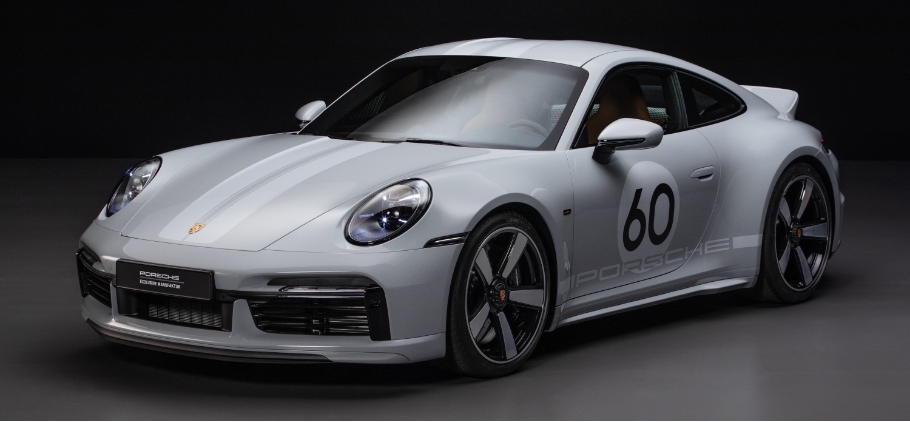
    2023 Porsche 911 Sport Classic is the second of four collector’s items that Porsche has presented from its Heritage Design strategy. A total of 1,250 examples of the limited-edition model by Porsche Exclusive Manufaktur will revive the style of the 1960s and early 1970s. Like its immediate predecessor, the 997-based 911 Sport Classic presented in 2009, the appearance of this model is inspired by the original 911 (1964 – 1973) and in particular the 1972 911 Carrera RS 2.7. The 911 Sport Classic can be ordered now, with prices starting from 272,714 euros.  Delivery will be available from European Porsche Centres from July 2022 onwards and additional markets will follow.

    “The Heritage Design models represent the more emotionally driven concepts of the Porsche product strategy,” says Alexander Fabig, Head of Customisation and Classic. “This unique approach sees the Style Porsche design department working with Porsche Exclusive Manufaktur to reinterpret iconic 911 models and equipment from the 1950s through to the 1980s and to revive design features from those decades.” Porsche is launching four limited-edition models over an extended period. The first of these was presented in 2020: the 911 Targa 4S Heritage Design Edition with design elements from the 1950s and 1960s.

    Porsche Design has also created a high-quality chronograph exclusively available to drivers who purchase the collector’s edition vehicle. The watch seamlessly picks up on numerous details from the new 911 Sport Classic design. As part of the Heritage Design Classic package, selected interior elements of the new 911 Sport Classic will also be available for most current 911 models.

    Reinterpreting historical design elements

    The wide body – otherwise reserved for the 911 Turbo models – a fixed rear spoiler in the style of the legendary ‘ducktail’ Carrera RS 2.7 and the double-bubble roof underscore the distinctiveness of the new 911 Sport Classic.

    As with the first 997-generation 911 Sport Classic launched in 2009, the designers were inspired by the Fashion Grey paintwork of the early Porsche 356 when choosing the exclusive paint finish for the new limited-edition model. “The new 911 Sport Classic is the first vehicle to feature Sport Grey Metallic paintwork,” says Michael Mauer, Vice President Style Porsche. “Grey is never boring, quite often a statement and always cool.” As an alternative to the exclusive Sport Grey Metallic finish, the new 911 Sport Classic is also available in solid Black, Agate Grey Metallic or Gentian Blue Metallic. Twin stripes painted on the bonnet, roof and rear spoiler in light Sports Grey emphasise the car’s sporty design.

    In the interior, the iconic Pepita houndstooth pattern can be found on the door panels and seat centres, while two-tone, semi-aniline leather upholstery in Black/Classic Cognac provides an elegant contrast with the exterior colour.

    550 PS for the most powerful manual 911 available today

    The powertrain concept is equally unique: the 3.7-litre, twin-turbo flat-six engine transmits its 405 kW (550 PS) to the road via the rear wheels only. In combination with the seven-speed manual gearbox, the new 911 Sport Classic is the most powerful manual 911 available today.

    The gearbox has an auto-blip function that compensates for engine-speed differences between the gears with a brief burst of revs when shifting down. The standard sports exhaust system is specially tailored to the model for an even more emotive sound experience.

    The suspension, based on that of the 911 Turbo and 911 GTS models, meets high performance requirements: thanks to the standard Porsche Active Suspension Management (PASM), its shock absorbers respond to dynamic changes at lightning speed. PASM is combined as standard with the sports suspension, which features a 10-millimetre-lower ride height.

    Source: Porsche


  • The Porsche 911 Classic Club Coupe

    2022 Porsche 911 Classic Club Coupe - Front Angle

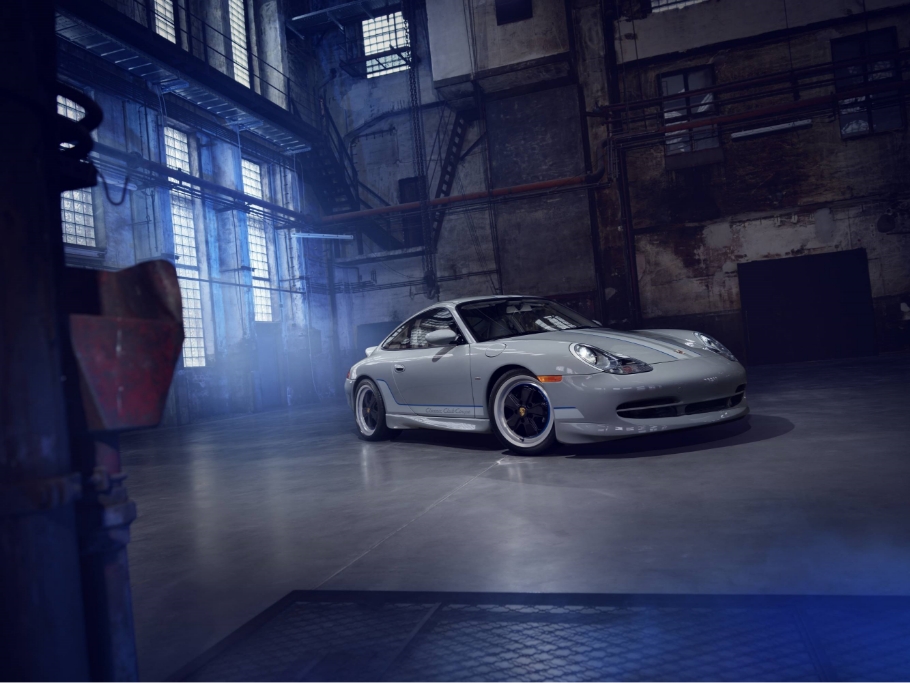
    Introducing the Porsche 911 Classic Club Coupe, a one-of-one restoration project completed by Porsche Classic in collaboration with the Porsche Club of America (PCA). That this is a unique car will not surprise anyone who sees it, but a “No. 001/001” badge on the dashboard underscores its scarcity. A ducktail spoiler reminiscent of the 1972 911 Carrera RS 2.7, a double-bubble roof, 18-inch forged aluminum Fuchs wheels and unique paint combine to create a striking resemblance to the Type 997 911 Sport Classic. Those looks are only part of the story.

    “We wanted to take a different route – to base this unique project on a car less obvious – a modern classic – that would appeal to a slightly different group of enthusiasts,” said Tom Gorsuch, President of the Porsche Club of America (PCA). “The fact that the finished Porsche 911 Classic Club Coupe looks so cohesive, with the changes appearing so natural, is what’s really incredible about this challenging project.”

    Based on a 1998 911 Carrera, the chassis, brakes and engine in this sports car are both taken from the 996.2 911 GT3, the first such model homologated for sale in the U.S. Accordingly, the naturally aspirated 3.6-liter flat-six generates 381 horsepower. The donor car, which PCA Executive Director Vu Nguyen found in a state of neglect in Colombia, Virginia, traveled to the Porsche Classic workshop near the main plant in Stuttgart-Zuffenhausen where it was originally built. There, it went through a complete restoration including total disassembly, and strengthening of the body-in-white using both original and newly developed parts.

    “The Type 996 is unjustly overshadowed by the other 911 ranges. That’s why we were happy to choose it as the basis for demonstrating all the things we can do with Porsche Classic and the recently expanded Sonderwunsch program of Porsche AG,” says Alexander Fabig, Head of Individualization and Classic. “In 2009, the 911 Sport Classic, a limited series of 250, had already generated worldwide interest. However, this special model was not sold in the U.S. With this one-off, we’ve now managed to bring a similarly exciting vehicle concept to the U.S. as well.”

    Exterior

    Styling and design plans were finalized in parallel with the restoration process to keep the project on schedule. Input from the PCA and Porsche Classic in both Germany and the United States gave direction to the final car.

    Experts from Porsche Individualization, Porsche Classic, and Style Porsche drew up proposals and regularly discussed them with the PCA over the course of the project, which took a total of two and a half years to complete.

    The result was given a sneak preview at The Amelia in March. Sport Grey Metallic paint including stripes in light Sport Grey Metallic with Club Blue outlines run the length of the hood, roof and spoiler to reference the Type 997 911 Sport Classic. Accents in light Sport Grey along the sides of the car also feature “Classic Club Coupe” script with an accent line in Club Blue.

    The double-dome roof is also a detail with a motorsport connection. Tall racing drivers used to bulge the roofs to make enough headroom for wearing a helmet – the modern roof design alludes to this. The Style Porsche design concept 911 Panamericana from 1989, the Carrera GT and the 911 Sport Classic also had a roof shaped like this. Today, the double-dome roof is a classic design feature of many limited series from Porsche Exclusive Manufaktur and the 911 GT models. The fixed rear spoiler made of glass-fiber-reinforced plastic takes the shape of the legendary “ducktail” of the 911 RS 2.7 from 1972. The third brake light is built into it. The model designation “Classic Club Coupe” appears in the middle between the tail lights.

    In tandem with the roof design and spoiler – both hand-built for the project – the paint scheme creates a unique appearance rooted in Porsche heritage. In particular, the roof is a reference to the past when race drivers would dome the roof of their car to accommodate additional headroom for helmets.

    Interior

    It might seem difficult to find a more extensive example of what is possible through the Sonderwunsch program until viewing the Classic Club Coupe interior.

    Custom door sill plates call out the model name, while the interior, primarily upholstered in black leather with Slate Grey accents and a perforated Alcantara headliner. Most notably, the seat centers and door panels feature woven black and grey leather in a twill Pepita pattern. Club Blue stitching decorates much of the interior including the steering wheel and “911 Classic Club Coupe” embroidery on the headrests. That logo is also visible in the tachometer, flanked by two grey stripes and lines in Club Blue. Finally, the Classic Club Coupe is equipped with Porsche Classic Communication Management Plus, which offers modern infotainment conveniences including Apple CarPlay and Google® Android Auto as well as preparation for Sirius XM. By special request, the start screen on this model shows “Classic Club Coupe.”

    Bringing such an extensive project to life also required support from many parts of the company. The most intensive adaptation work took place on the special features of the 911 Classic Club Coupe: the double-bubble roof and the fixed rear spoiler. This meant the part of the body between the rear window and ducktail had to be handmade. The biggest challenge in the interior, on the other hand, was to match new materials with the geometry of the Type 996 interior.

    The technical modifications to the 911 Classic Club Coupe were evaluated by a team of experts from Porsche Individualization and Classic, Porsche Cars North America and the Porsche Development Center in Weissach to make sure the vehicle remained in compliance with applicable U.S. regulations.

    Vehicle dynamics validation testing also factored into the process. Standing in for the valuable one-off, a test vehicle went through extensive trial runs at test sites including Weissach in Germany, Nardò in Italy and Idiada in Spain. These included endurance runs at top speed and wind tunnel testing. However, once the verification program was completed, the test vehicle was dismantled – ensuring the final product is truly a one-off. The overall vehicle was approved after a road test by the Porsche Development Centre in Weissach.

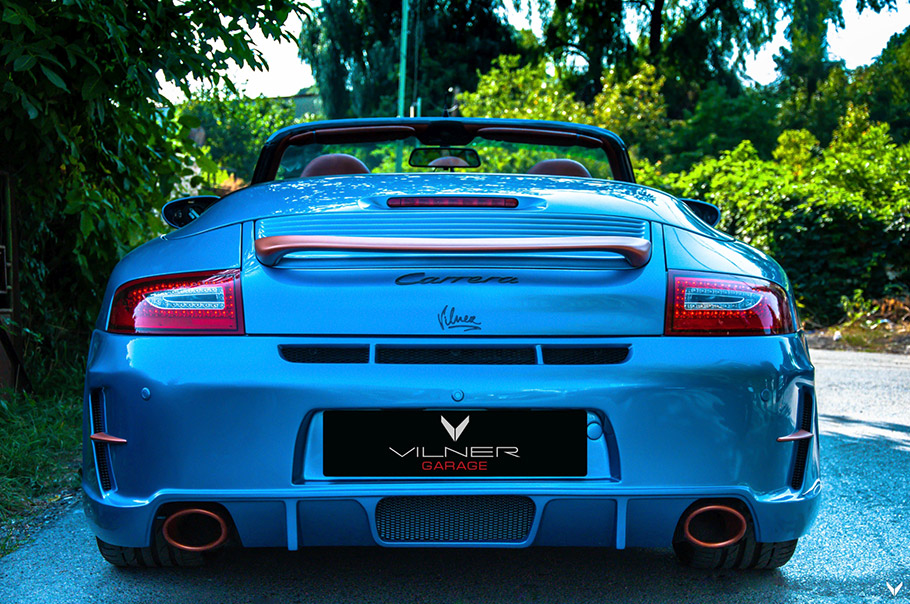
  • Vilner Bulgaria showcases its latest project. Check it out!

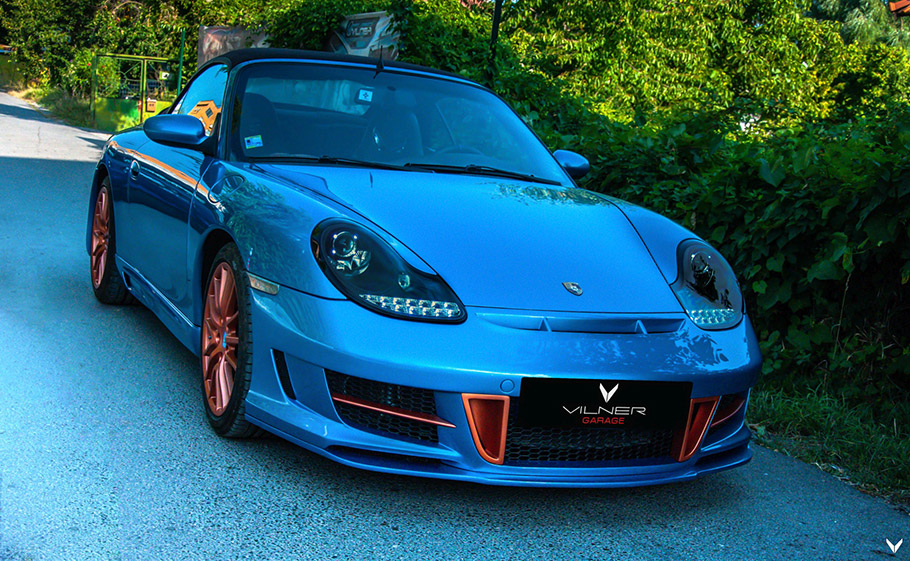
    2020-Vilner-Porsche-911-Carrera-Cabriolet-910Although being roughly 20 years old, the automobile has retained its potential for revisions and upgrade tweaks. And this is indeed what Atanas Vilner and his fellow team of engineers and designers have done to the lucky Porsche 911 Carrera Cabriolet.
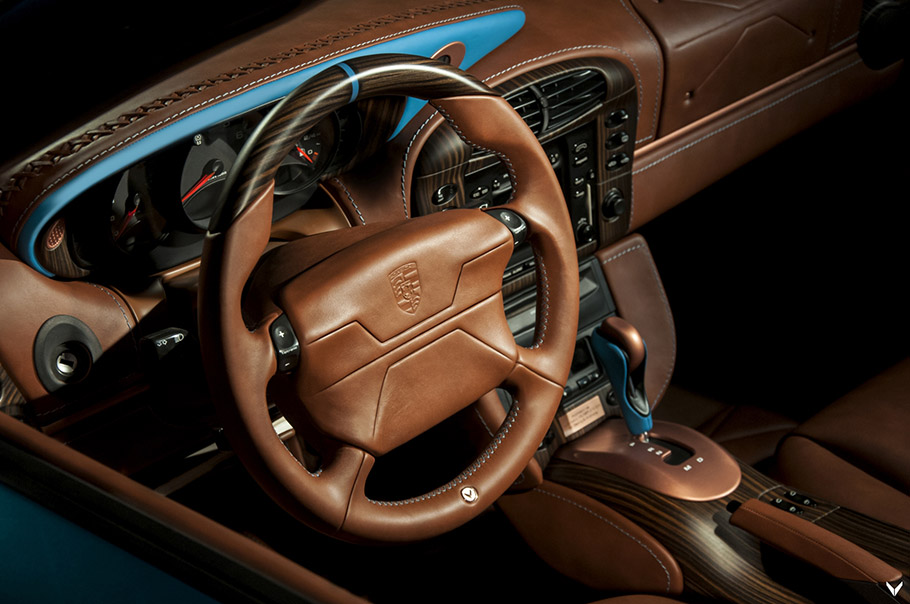
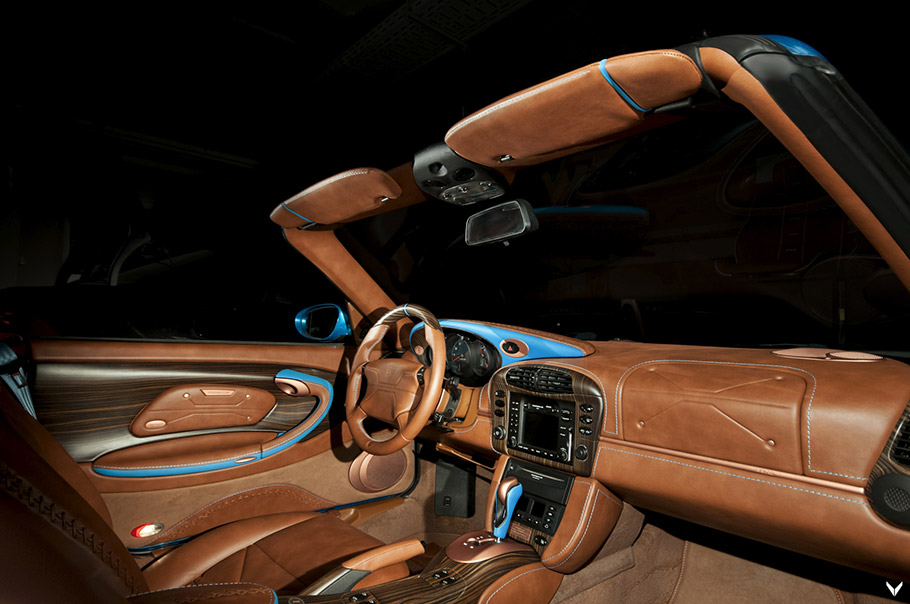
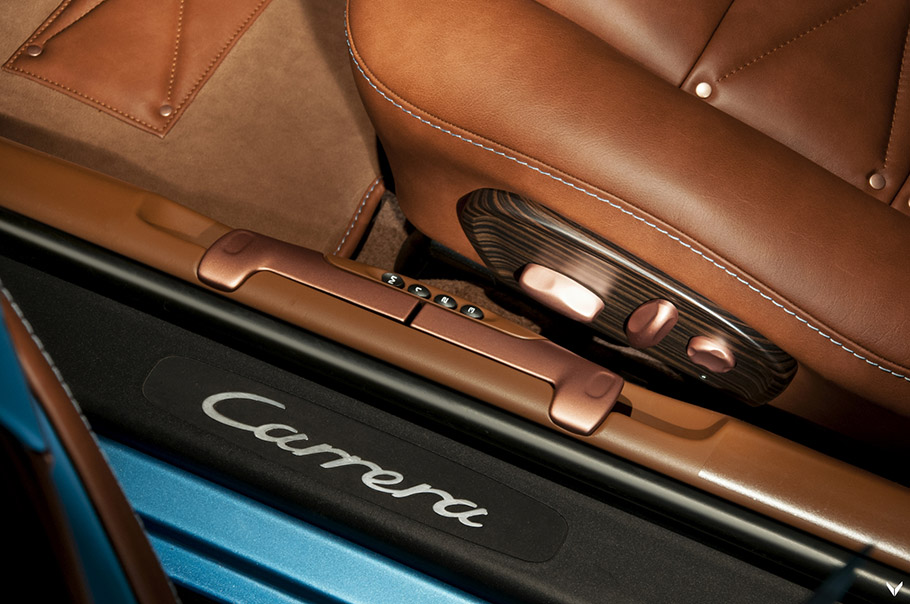
    The revised vehicle features an entirely new upholstery with fine brown leather and white and blue contrast stitching. What catches the eye is the upper part of the interior: there’s an X-shaped piece with leather inserts, just as with a baseball glove. The face of the apron is covered in blue, while the bottom part features wooden inserts. The steering wheel has also received some special attention: it is covered with leather and wooden pieces.

    As Mr. Vilner states, contrast doesn’t mean only blending different types of colors. It also comprises a strategic placement of different types of surfaces, he continues. In fact, as it seems, the entire idea of the project is to create numerous layers of a design concept that are gradually unfolded and relished upon.

    Atanas Vilner drives attention towards doors’ cover – the new design is both appealing and functional. There are large wooden applications and leather covers that contribute to more comfortable elbow placement. There are large wooden inserts at the central console, in the knee area of both the driver and passengers.

    Additionally, all stock grey-covered plastic pieces in the interior are now painted in new and exclusive “Vilner Copper Rose” – a special paint, especially created by Vilner team and based on the R-M The Code BASF program, first used for the Datsun 280Z project. The interior also features newly painted controls of the electric seats. “Vilner Copper Rose” also covers the new sporty seatbelts, speaker grilles, the button of the selector of the gearbox and the details at its base.

    SEE ALSO: BMW introduces new engine systems for X1 and X2 XDRIVE25e models

    There are fine details that add to the complete aesthetic figure to the project – there’s a set of Vilner badges, new floor mats with leather inserts and of course, a metal plate with the name of the project and the name of the owner etched at it.

    Source: Vilner Bulgaria 

  • BlackBox team showcases a Porsche 911 that glows in the dark! How cool is that?

    2017 BlackBox-Ritcher Porsche 911 GT3 RSWe have already seen some neat vinyl wrapping for automobiles. In fact, vinyl wrapping is almost a commonplace now. However, there are designers who do it relatively good and these who do it masterfully. For example, Blackbox-Richter team, located in the Austrian Schardenberg, present us something quite special: the multiple vinyl wrap. This special technique is used on three lucky vehicles: two 991 GT3 RS machines and one Audi R8 V10

    We will be reviewing one of the two Porsche vehicles. This one was renamed “Light Tron 911” and features black matte details with numerous neon-yellow-green phosphor splashes as a part of the second layer, and a third one that adds these neat black matte and glossy overlays. Sounds too-much? In fact, we thought exactly the same. And then we have witnessed the final result and we must say that it looks quite impressive! The overall color scheme and styling looks clean, balanced and contributes to the sporty nature of the vehicle in quite a stylish way.

    2017 BlackBox-Ritcher Porsche 911 GT3 RS

    And the best part of all? It glows in the dark! Ha, my child dream is finally fulfilled! The vehicle gives off this green light and looks even spooky in a way. Just imagine how this 911 drives through you and the one and only thing you see is the dimmed green light. Neat!

    SEE ALSO: The Vulcan gets even mightier: check out this bad boy!

    Unfortunately, there aren’t many more upgrades and changes. The one most notable (after the body finish) is the new exhaust system. Sweet. And most unfortunately far from enough. However, the Audi R8 features a front and rear spoiler, new flaps on the front bumper and numerous carbon-fiber components. We do like these. Definitely we do.

    2017 BlackBox-Ritcher Porsche 911 GT3 RS

    2017 BlackBox-Ritcher Porsche 911 GT3 RS

    2017 BlackBox-Ritcher Porsche 911 GT3 RS

    Source: BlackBox-Richter


  • Classic Porsche vehicle owners have an occasion for celebration! Porsche reveals the Classic Radio Navigation System

    Porsche Classic Radio Navigation System Porsche team responds to the growing demand for a built-in navigation system for old Porsche vehicles. The well-known brand presents the neat Porsche Radio Navigation System, which combines a retro style with benefits of the modern technology trends. Perfectly fitting in the DIN-1 slot, the system has six discreetly integrated buttons, a touch-sensitive 3.5-inch display and two knobs. The Navigation System also integrated the aid of the SiriusXM satellite radio tuner.

    The black surface and the authentic style of the system further enhances the feel of retro and vintage styling. It bears Porsche’s logotype and can be geared in 911 models from the 1960s to the last air-cooled 911 (for example, the 993 series, MY1998), as well as the 912, 914, 924, 928, 944, 968 models. Sweet, right?

    SEE ALSO: TIP-Exclusive creates one-off arty Porsche 911 Turbo Cabriolet

    Some of the key features of the Radio system include smart phone connection with Bluetooth, low-interface radio reception, precise navigation, two USB ports, external music sources and internal microphone and external one. Cool.

    And what about the development?

    Porsche Classic Radio Navigation System has been exclusively developed for Porsche Classic vehicles. And as you might have expected, there are tons of optimizations. For instance, the built-in antenna has undergone some contemporary changes, while the whole device is based on Porsche Communication Management (PCM). There have been some extensive tests and experiments at the Technical University in Munich and countless trials in order to achieve these precise navigation routes.

    Porsche Classic Radio Navigation System

    The Classic Radio Navigation System is already available and can be purchased from any authorized Porsche dealer.

    Source: Porsche