
 A new compact hatchback destined for the medium car segment, it has many strengths that will appeal to a broad customer base, not least due to its semi-tall architecture with its promise of greater interior space, its improved visibility and its brighter interior, but also its exemplary road holding, its range of high-performance engines, its high levels of safety and a number of design features which contribute to improving on-board comfort and convenience inside the car. Finally, its aerodynamic shape and “feline” elegance give it a strong and immediately recognisable identity. Naturally the 308’s three and fi ve door body styles are only part of the “T7” programme.
While some body styles are already confi rmed and in development, some are still yet to be created and are currently only in the imagination of the designers and engineers who are so passionate about cars.
Nevertheless, their ideas sometimes come together to give life to even the most fantastic ideas. In such cases their dreams fi nally become reality, making way for part-real, part-fantasy automotive designs. The result of such ideas is the 308 RC Z concept car.
Architecture
The 308 RC Z concept car is a new Peugeot interpretation of driving pleasure. The car is a 2+2 coupé, with true versatility and at the same time a style that is modern, original and well-balanced. Attention initially focused on making the vehicle as light as possible by the use of numerous aluminium components, for example the two roll over protection bars that separate the passenger compartment and give shape to the exterior styling, and the use of a polycarbonate rear windscreen and a large number of carbon fi bre body parts. Using the 308 as a blueprint offered a number of benefits.
Its taut lines and streamlined design ensure an effi cient aerodynamic specifi cation (a SCx of just 0.65), improving performance, fuel consumption and therefore helping to protect the environment due to the reduced CO2 emissions. With a length of 4.276 (same as the hatchback), a width of 1.840 (25 mm more than the hatchback) and a height of only 1.320 m, the proportions of the 308 RC Z concept car combines a very dynamic design with a high level of road holding.
Style
Exterior styling
The particularly stylish design of the front of the 308 blends brilliantly with the proportions of this concept car.
The Peugeot “Lion” badge is mounted to what can truthfully be called the «nose of the bonnet». From here, the style lines fl ow upwards back over the bonnet and into the two polished aluminium roll-over protections bars. This fl owing «V» profi le gives the vehicle its shape and creates an impression of movement in all positions. Visually, the fl uidity of the design is further enhanced by the way the large tinted front windscreen, the carbon fi bre roof panel and the polycarbonate tinted rear window are combined together.
The “feline-like” front headlights extend along the line of the bonnet. They contain four «cylindrical lights» each which create a bright and piercing beam of light. These “cylindrical lights” are clearly visible due to the clear glass headlamp lenses. The lower front panel differs from that of the 308 hatchback. It has a sharper and sportier shape with a single air intake and integral front fog lamps, while the front grille features chrome detailing.
From the side, the vehicle displays a strong profi le with its prominent front wings, deeply sculpted sides, and particularly generous rear wings. The doors raise the visual profi le, creating a link between the sloping front design and the curvaceous rear design.
The end result, fi rmly sitting on 19 inch wheels, suggests power, strength and dynamism, like an animal ready to pounce.
The specifi c shape of the rear window required the use of polycarbonate instead of glass. The two curved sections emerging from the roof give the vehicle an original appearance and contribute greatly to its aerodynamic effi ciency.
The design of the tailgate assists the airfl ow over the rear of the vehicle, while the shape of the rear of the vehicle provides suffi cient down force onto the rear suspension to eliminate the need for a rear spoiler, thereby preserving the purity of the vehicle’s lines.
The Peugeot Lion badge is displayed in a U shaped panel in the centre of the tailgate, and is backlit at night. In addition, simply by pressing the lion badge, opens the tailgate. The rear lights are mounted fl ush with the car’s wide rear wings. Fitted with light emitting diodes (LEDs), they have a ruby red fi nish combined with a stylised translucent section which contains the direction indicator.
Two centrally mounted exhaust pipes are integrated into the wraparound lower rear panel. To achieve this, the rear exhaust silencer has been located in a transverse position where it also serves as an aerodynamic diffuser, but still allows suffi cient space for the storage of a spare wheel.
The rich metallic grey exterior body colour is created by a special process using fi nely milled metallic particles. This gives the impression that the vehicle has been formed from a single block of metal, enhancing the purity of the car’s lines and the styling of the bodywork to remarkable effect.
The interior
The fascia panel in 308 RC Z concept car has been taken directly from the hatchback. A pure, elegant and fl uid design, it allows a particularly clear view of the outside thanks to its sloping design which complements the vehicle’s large front windscreen. It offers a high level of interior brightness, improved visibility and an overwhelming feeling of space.
Refl ecting the hatchback, no effort has been spared in terms of the fi nishing touches and meticulous attention to comfort and convenience inside the car. This is evident in the care given to the styling of each component and the quality of materials used, both in terms of visual appearance and tactile appeal.
The entire fascia panel is trimmed in leather, while the use of chrome, aluminium and black lacquered fi ttings creates a sporty, upmarket impression. With this in mind, a Bell&Ross® clock has been placed in the centre of the fascia panel, between two air vents, its typography perfectly matching the background of the instrument panel located in the driver’s line of sight.
Another sign of the vehicle’s exclusive nature are the bucket type front seats with polished aluminium eyelets, the style of which is also refl ected in the design of the inner door panels.
The ergonomically designed driver’s seat ensures the driver is fi rmly in control of the vehicle. At the rear there are two occasional seats trimmed in leather, both of which can be folded. The vehicle therefore offers real modularity and great versatility. For example, enough space can be created behind the front seats to house a set of golf clubs. Similarly, the length and maximum available boot volume can even accommodate a mountain bike!
The engine
The 308 RC Z concept car is powered by a 1.6 litre THP engine developed from the EP6DTS engine designed and developed via the collaboration between PSA Peugeot Citroën and the BMW Group, where it is fi tted to the 207 RC, with a power output of 128 kW (˜175 bhp).
However, the 1.6 litre THP engine, as a result of new engine management software specially developed for the concept car, now produces a maximum power of 160 kW (˜218 bhp).
It is characterised by incredible fl exibility, thanks to its maximum torque of 280 Nm produced at a low engine speed (300 Nm in overboost). These values ensure remarkable responsiveness under all driving conditions.
Its innovative Twin-Scroll turbocharger optimally pairs the exhaust gases fl owing from two cylinders to ensure maximum fl ow onto the turbine, while its high-pressure direct petrol injection system improves combustion and overall engine effi ciency.
The engine is coupled with an entirely new 6 speed manual gearbox.
This unit helps to give the 308 RC Z a particularly effi cient compromise between performance and fuel consumption. For example, its maximum speed of 235 km/h is attained in sixth gear and it takes only 7.0 seconds to go from 0 to 100 km/h. In gear acceleration is impressive: only 7.5 seconds in 5th gear from 80 to 120 km/h. At the same time, fuel consumption is very reasonable with 6.7 litres/100 km in the combined cycle, or just 160 g/km of CO2 emissions.
Wheels and suspension
In the tradition of Peugeot concept cars there is a linked front suspension employing the widespread use of aluminium to reduce the vehicle’s overall weight.
This set up ensures exceptional road holding, excellent steering accuracy and great feedback intensifying the overall driving sensation.
The rear suspension, derived from the hatchback, consists of a torsion-beam, two rear suspension arms and an integral anti-roll bar. It has been specially modifi ed to take account of the wider vehicle tracks. Indeed the front and rear tracks have been increased by 59 mm compared to the hatchback, and also the fi tment of wider tyres, ensures maximum body rigidity, precision and vehicle stability.
Braking relies on large (360 mm) diameter ventilated discs at the front with four piston calipers. Polished split rim 19’’ alloy wheels are fi tted with Michelin Pilot Sport PS2 245/40 R19 tyres.
Safety
Even for a unique model, Peugeot’s designers do everything they can to make their dreams become a reality and leave nothing to chance. Safety is also made a top priority.
While the exceptional road holding of the 308 RC Z concept car forms the basis of its primary safety, it is supplemented by safety equipment borrowed from the 308 hatchback, Lane Departure Warning System (LDWS) and the directional bi-Xenon headlamps. Similarly, in terms of secondary safety, the 308 RC Z uses the same impact protection structures, in particular the three impact absorption structures at the front, designed to provide a rigid structure which can deform in a controlled manner, maximising the absorption of impact forces.
Finally, tertiary safety is assured by the «Peugeot Emergency» service linked to the vehicle’s RT4 telematics system. This pinpoints the vehicle’s location and triggers the dispatch of appropriate assistance as required.
Like all concept cars, the 308 RC Z is an amazing laboratory of ideas making it possible to design and test new concepts and pioneer technical and styling ideas free from the constraints of volume production.
To a greater or lesser extent, these unique cars often serve as the source of inspiration for future production vehicles.
They are a sort of «guide» to the Peugeots of the future, indicating a chosen path to be followed. Concept cars are like the stars, they serve as a guiding light. Even though they sometimes appear too far away to grasp, it sometimes feels as though all it would take is an outstretched arm…


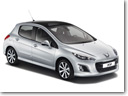 Peugeot is moving forwards in the world’s economy and the latest sign of that is the introduction of the 308 to Brazil which will happen March this year. Brazil will be the second South American country (after Argentina) to acquire the 308 two-box design as a mid-size option. The Brazilian version of the 308 distinguishes itself from the flock of Peugeots with three main characteristics – bald outer lines, abundant equipment trims and a an option of a


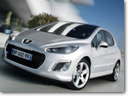
 Peugeot has announced its returning to the world of the hot GTi rides with the presentation of its all-new Peugeot 308 GTi sporty hatchback.
 The Peugeot 308 CC now has extra six appeal with the introduction of a new 1.6 litre 156 bhp Euro 5 THP turbo-charged petrol engine and a new 6-speed automatic gearbox.
 In September 2007, at the Frankfurt Motor Show, Peugeot unveiled a concept car which was the talk of the show: the 308 RCZ. The exceptional levels of interest expressed at the show convinced Peugeot that they had to turn this concept car into a commercial reality.
 There are three trim levels of the stylish new Peugeot 308 CC – Sport, SE and GT.

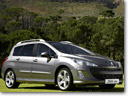 Peugeot introduces the 308 SR business range to the 308 hatchback and SW models, aimed squarely at the Local Business and Contract Hire / Leasing market.


 With the SW


