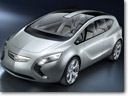
 Opel’s Flextreme concept car, which makes its premiere at the International Motor Show (IAA) in Frankfurt (September 13 – 23, 2007), boasts the body of a dynamic monocab, as well as the completely new environmentally friendly E-Flex electric propulsion concept and a host of innovative details. Flextreme is part of GM’s ongoing commitment to develop vehicles that reduce CO2 emissions and the automobile’s dependency on petroleum. In contrast to conventional vehicles and hybrids, GM’s E-Flex system uses an electric motor, powered by a lithium-ion battery, to propel the Opel Flextreme concept for up to 55 km of electric-drive-only range. A 1.3 turbo-diesel onboard engine generates additional electricity to replenish the battery and extend the vehicle’s driving range fully charged, the Flextreme’s 55-km all-electric driving range is enough for most daily commuters in Europe to travel without using any diesel fuel or emitting any CO2. (more…)
Tag: Opel
-
Opel Flextreme
-
Opel Astra OPC Nürburgring
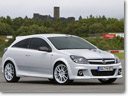 At the start of the fourth round of the OPC Race Camp, Opel unveils the Astra OPC “Nürburgring Edition”, a limited special edition version of the successful three-door model. The “Nürburgring Edition” emphasizes the connection between the racetrack steeped in tradition and the Opel brand. The Nürburgring, and in particular the legendary Nordschleife, are rightfully known as Opel territory, as this is where Opel production cars are extensively tested during their development stage. Manuel Reuter first highlighted the OPC models’ performance power in 2005, when he set a circuit record with the Astra OPC in this vehicle class. With the special Astra OPC “Nürburgring Edition”, Opel now raises the connection to the Nordschleife to a new level.
-
Opel Agila
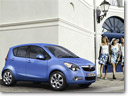
 When it comes to the lifestyle of active women today, the watchword is balance. Job, fitness, shopping, meeting friends and getting around – a car makes everything easier to manage, and preferably one that is as versatile as its owner. This is precisely what designers and engineers had in mind when developing the latest generation Opel Agila. The result is a stylish urban car which is compact and maneuverable for tight parking spaces, yet boasts an interior that is spacious enough even for bulky sport and hobby gear. It also has enough seats to ensure comfort for family and friends.
Even with its compact length of 3.74 meters, the new Agila offers room for five occupants and provides them with easy entry through the four doors. The quality of the materials, a fresh interior and exterior color collection, versatile storage compartments and ample headroom project a feel-good ambience right from the word go. The enjoyable driving experience is enhanced by details such as the separate rev counter on the instrument panel, high placed gear stick and remote controls on the steering wheel for the radio.
The high seating position makes getting into and out of the Agila easier and ensures good visibility even in heavy urban traffic. The rear seat backs can be folded down at a flick of the wrist to create a completely flat load floor, with a compartment beneath providing additional storage space. In total, the Agila has a luggage capacity of more than 1100 liters accessible through its large trunk lid – the top figure in this segment. The new Agila also comes with a safety package comprising four airbags, as well as optional Electronic Stability Program (ESP) and head curtain airbags.


New engines with up to 86 hp (two lively gasoline engines and a top-of-the-line common-rail diesel for high pulling power) combine performance with low emissions. As an alternative to the standard manual transmission, an automatic gearbox is also available – a distinctive feature in this class. The second-generation Opel Agila makes its world premiere at the IAA Frankfurt (September 13 – 23, 2007) and will be available at dealerships as of next spring.
Opinions on new Agila
Hans Demant, Opel Managing Director: “The new Agila cuts a fine figure in all situations. Its agile chassis and lively engines make it fun to drive – with low consumption and CO2 levels.”
Belinda Müller, Designer: “The boring days are over. Who says a nimble urban car can’t also look cool? A wide selection of fresh colors and bold styles create an ambience that’s enhanced even more by the spacious headroom.”
Sara Nicholson, Opel European Marketing Manager: “The Agila, the new Baby-Opel, is a clever package of fun and versatility for the girl about town.”
-
Opel Grand Turismo Coupe Concept
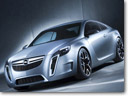 On the eve of the 77th Geneva Motor Show, Opel illuminated the night. Supported by a dramatic light show, the Opel GTC Concept (Gran Turismo Coupé) made its spectacular debut at the “GM Premiere Night.”
Heralding a new design era for the brand, the GTC Concept gives an insight into how Opel’s design language will look in the future. Adding to progressive shapes and surfaces, the four-seat coupé features unique LED lighting concepts in the front and rear, providing a new signature lighting style for the brand. (more…)
-
Opel Astra TwinTop / Sedan
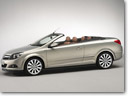 The upcoming Astra sets itself apart from the competition with an even more exciting, sporty look and sends a new signal in its segment. The design team further honed the distinctive face that was presented with the third-generation Astra in 2003 at the IAA and met with a positive response from customers and automotive specialists alike. Thanks to the evolutionary concept, it is still clearly recognizable as a member of the family, and designers were also able to sharpen both model and brand identity. Integrated organic elements such as the sharply drawn “eyebrows” above the imitation air intakes serve as a blueprint for future Opel models. Above these crafted features, the bumper is integrated into the Astra’s dynamic V-shaped front.
The dominant radiator mask also adds to the confident look. This impression is enhanced in the five-door and station wagon models by the widened upper chrome crossbar with integrated Opel logo. The distinctive decorative elements reduce the gap to the hood, as well as taking the characteristic crease and continuing it to the radiator grille vanes, which are also chrome-plated.
“ The gentle downward sloped tapering of the vanes and grille frame give the Astra a muscular appearance, and even when parked it appears raring to go. With its athletic proportions and aerodynamic bodyline, the Astra reminds you of the stance of a sprinter in the starting blocks.”

Opel Astra TwinTop 


The headlamp housings in stylish chrome look also convey an additional sense of quality. The Astra Sport, as well as the versions with xenon or curve and cornering light are recognizable by their dark-tinted headlamp housings.
Other features of the new edition Astra include the front bumper with integrated impact protection bars (five-door and station wagon models) as well as tail lights in 3-D block design (five-door model), which already make the GTC’s rear so eye-catching. The Astra station wagon features flowing, practical roof rails in aluminum look. The Astra GTC now boasts a honeycomb grille that highlights its sporty look even further.
New Equipment
Exclusivity and individuality in series production
The panorama windshield is the best example of an Astra component which remains unrivalled in this class. For the first time in a series production car, the new edition of the Astra Cosmo GTC offers a field of view never seen before. The around 1.8 square meter glass panel extends from the end of the hood, over the front occupants’ heads to the middle of the roof. Unlike contemporary glass roof designs, there is no crossbeam to obstruct the view, enabling driver, front and rear passengers to enjoy an unrestricted view similar to that in the cockpit of a sport airplane. This makes journeys a special experience, be they across country or at night through a brightly-lit city.
The rigid panorama windshield is made from 5.5 mm-thick laminated safety glass. Numerous crash simulations and real tests showed that the passive safety is equal to that of the steel roof model, thanks to the GTC’s strong A and B-pillars and an additional cross-member between the B-pillars. The foil integrated in the panorama windshield prevents it from splintering or penetrating into the passenger compartment in the event of an accident. The same foil as in the lightly green-tinted panorama windshield, called Solar Protect Glass, also plays the role of a warmth-absorbing layer. In addition, a sophisticated shading system helps keep interior temperatures regulated: the steplessly adjustable shade is easy to operate via a knob in the ceiling. It disappears into the rear roof section when not in use. In total, 11 patents were registered for this system.
Interiors in feel-good quality
The new-edition Astra’s interior boasts surfaces with an even more high-quality look for the center console, additional chrome rings for the air conditioning and radio controls, as well as new trim for the instrument panel and doors.
The top Cosmo variant, for example, is enhanced with luxurious piano lacquer surfaces and inlays on the center console and steering wheel. Usually reserved for upper-class vehicles, these applications create additional personalization options. With cashmere beige upholstery designs, or saddle brown leather in the GTC, the Astra interior can be completely customized in exclusive feel-good quality. The CD 30 MP3 infotainment system, the most popular choice among Astra customers, is available from February with steering wheel remote controls and a stereo connection for external audio equipment, such as an iPod.

Opel Astra Interior Other standard equipment enhancements include the IDS sport chassis for the Astra Sport and Board Info Display (BID) for the Astra Sport, Cosmo and OPC variants, new 16-inch design wheels for the Edition equipment line, new 16-inch alloy wheels for Astra Sport and Cosmo, as well as new wheel caps for the 16-inch steel wheels. The Cosmo variant now also features fog lamps as standard.
Step-by-step to dream car
Astra customers who wish to configure their dream car down to the last detail now have even more choice. The range of carefully selected Opel accessories extends from fitted sun blinds for the rear window and rear side windows to the mobile DVD player with seven-inch screen. The robust fiberglass roof box with a volume of 480 liters and the Opel DUO ISOFIX child seat for children weighing between nine and 18 kilograms are also easy to mount. The OPC line package 1 is exclusively available with the Astra GTC and includes a front and rear spoiler, side sills, rear apron and alloy wheels in various designs.
Five-star safety for maximum passenger protection
When it comes to safety equipment the new-edition Astra is at the top level, just like its predecessor. The consumer protection organization Euro NCAP (European New Car Assessment Programme) rated the passive safety of the new-edition Astra at the highest level – just like the predecessor model. The Astra was awarded the top rating of five stars for passenger protection. With a total of 34 points, Euro NCAP classified it as one of the safest sedans in the compact class (small family cars). The Astra also achieved very good results for child protection: the five-door model was awarded four stars and 39 points.
The Astra comes standard with the extensive SAFETEC safety package, including shape-optimized thorax/pelvis side airbags in front. These complement the two front airbags and the head curtain airbags that stretch along the entire length of the interior in the left and right roof pillars. Both outer rear seats come with ISOFIX mountings for child seats as standard.
New chassis electronics
Top marks for agility, safety and comfort
The new edition of the Astra offers driving performance with pronounced agility and precise handling with a high level of driving safety. These qualities helped the Astra win numerous comparison tests by the European specialist press and in customer polls. The basis for this agility is the IDS (Interactive Driving System) chassis with McPherson front axle and patented torsion-beam rear axle. Every Astra comes standard with the Electronic Stability Program ESPPlus, Traction Control TCPlus, front and rear disk brakes, Anti-lock Braking System (ABS), Cornering Brake Control (CBC), Brake Assist and electro-hydraulic power steering.
An exceptional dimension of balance between driving comfort and active safety is once again provided by the optional adaptive IDSPlus chassis with electronic Continuous Damping Control (CDC). This integrated chassis control system, in which the control units and sensors of ESPPlus, ABS and CDC exchange data constantly, was introduced to the compact class for the first time in the Opel Astra. Owners also benefit from IDSPlus when it comes to driving fun: the sport mode is activated at the touch of a button, resulting in more direct suspension, steering and gas pedal response, as well as modified shift points in the automatic and Easytronic transmission variants for greater sportiness.
Enhanced Trailer Stability Assist prevents instability
The Opel Astra’s chassis is already among one of the best in its class, but this was no reason for engineers to rest on their laurels. They found potential for improvement in details such as the control system for the Trailer Stability Assist (TSA). The newest generation of this safety system is available for the first time in this class as an option in the Astra five-door, GTC and station wagon models.
Compared to the earlier generation of TSA, real-time calculations are conducted more accurately and with greater sensitivity. This helps reduce instability in car-trailer combinations earlier and more effectively, as well as eliminating the risk of any abrupt emergency stopping situations in normal driving conditions which might disrupt the traffic behind. The cleverly devised system works together with the standard ESPPlus, recognizing possible trailer yaw movements and actively counteracting them with regulated braking. Be it swinging due to side wind, lane ruts, exaggerated maneuvering or too high speed, the control electronics have an answer for every eventuality. In the initial decisive reaction phase, TSA counters the swinging movements by braking either the left or right front wheel. Should this measure be insufficient, regulated braking is applied at all four wheels and engine output reduced.
“ The new generation of Trailer Stability Assist not only ensures more active safety in Astra-trailer combinations. The traffic behind also benefits, as the system reacts in a regulated and calculated fashion, further reducing the risk of rear-end collisions.”
Jürgen Schöwer, Project Leader, Control Systems in new Astra
Pioneer in curve light continues to lead the way
The Astra also leads the way when it comes to visibility and lighting. Opel was the first automaker in this vehicle class to offer Adaptive Forward Lighting (AFL), a steering-linked headlamp system with bi-xenon headlamps, dynamic curve light function and adaptive highway light. The curve light turns the headlamps into the curve depending on speed and steering angle, increasing street illumination by up to 90 percent compared to fixed headlamps. At higher speeds along a straight path, an automatic beam width regulator prevents the light from blinding oncoming highway traffic, enabling the low beam lights to project further ahead.
-
Opel Corsa OPC
Opel has shifted into top gear with the new Corsa. Following the successful market launch of the bestseller’s fourth generation, Opel now sends the sporty top version on to the road. The OPC model is the quintessential expression of the Corsa’s dynamic character, with top-level agility and vehicle control promising pure driving fun.
Its 1.6-liter turbo engine with 141 kW/192 hp accelerates the compact three-door from zero to 100 km/h in 7.2 seconds and enables a top speed of 225 km/h. The maximum torque of 230 Nm, which can be temporarily increased to over 260 Nm via an ‘overboost’ function, is delivered to the front wheels by the standard six-speed transmission. This level of performance provides the newest member of the sporty OPC family with superb propulsion power in all driving situations. For instance, accelerating from 80 to 120 km/h takes just 6.7 seconds in fifth gear. The Corsa OPC requires 7.9 liters of fuel per 100 kilometers, a moderate figure in this performance class. It makes its world premiere at the Geneva Motor Show in early March, shortly before its market launch.
The top-of-the-line Corsa’s look also reflects pure sportiness. The roof spoiler, as well as the powerful front and rear aprons with distinctive gill-like air intakes and outlets make the OPC a real eye-catcher. Elements such as the darkly contrasting diffuser with integrated, centrally located triangular tailpipe and specially designed exterior mirrors are just a few examples of how much attention to detail was put into further developing the Corsa’s bold, sporty character.


The Corsa OPC’s chassis has a unique, even sportier character thanks to extensive modifications. Through intensive tuning drives on the Nürburgring Nordschleife, engineers were able to achieve a sophisticated balance of agile handling and pronounced vehicle control. Key modifications include a stronger rear axle profile and adjusted torsion beam rear axle weld-in angle, new spring/dampener tuning, lowering of the chassis by 10 mm and a larger stabilizer. The standard ESP system, which can be deactivated, has also been tuned to the car’s sporty character. The new Corsa OPC comes with 17-inch alloy wheels with 215/45 R17 tires ex works, while 18-inch rims and size 225 tires are available as an option. The large 16-inch brake system with blue painted brake calipers ensures powerful deceleration: the Corsa OPC boasts internally ventilated, 308 mm front disk brakes and 264 mm disk brakes at the rear.
Sportiness also dominates the Corsa OPC’s cockpit. In addition to the typical OPC door sills, chrome-ringed instruments with red pointers and blue-ringed air vents (also available in silver), the flat-bottomed leather sports steering wheel is especially eye-catching. Also reminiscent of motor sport vehicles, the steering wheel features a blue (or optionally silver) ring at its crown, while the center console in piano lacquer finish and aluminum pedals underline the sporty, high quality ambience. Particularly striking are the newly developed Recaro sports seats with integrated head restraints. The race-car-like seats protect both the driver and front passenger with integrated side airbags – a world premiere for this type of seat.
The introduction of the Corsa expands Opel’s OPC program to five model lines. The top-of-the-line Vectra OPC with 206 kW/280 hp is available as a sedan or station wagon. The Zafira OPC – the fastest production van in the world with a top speed of 231 km/h – and the Astra OPC both have a 177 kW/240 hp, two-liter turbo engine. The Meriva OPC is powered by an engine similar to that of the Corsa OPC: with 132 kW/180 hp and a top speed of over 220 km/h, the versatile five-seater is unique in the minivan segment.
“The OPC models embody pure sportiness, infusing the brand with emotion and passion. That is why the OPC version fits brilliantly to the new Corsa, which is positioned as a young car offering plenty of fun,” says Alain Visser, Executive Director, European Opel Marketing.
as an option. The large 16-inch brake system with blue painted brake calipers ensures powerful deceleration: the Corsa OPC boasts internally ventilated, 308 mm front disk brakes and 264 mm disk brakes at the rear.
Sportiness also dominates the Corsa OPC’s cockpit. In addition to the typical OPC door sills, chrome-ringed instruments with red pointers and blue-ringed air vents (also available in silver), the flat-bottomed leather sports steering wheel is especially eye-catching. Also reminiscent of motor sport vehicles, the steering wheel features a blue (or optionally silver) ring at its crown, while the center console in piano lacquer finish and aluminum pedals underline the sporty, high quality ambience. Particularly striking are the newly developed Recaro sports seats with integrated head restraints. The race-car-like seats protect both the driver and front passenger with integrated side airbags – a world premiere for this type of seat.
The introduction of the Corsa expands Opel’s OPC program to five model lines. The top-of-the-line Vectra OPC with 206 kW/280 hp is available as a sedan or station wagon. The Zafira OPC – the fastest production van in the world with a top speed of 231 km/h – and the Astra OPC both have a 177 kW/240 hp, two-liter turbo engine. The Meriva OPC is powered by an engine similar to that of the Corsa OPC: with 132 kW/180 hp and a top speed of over 220 km/h, the versatile five-seater is unique in the minivan segment.
“The OPC models embody pure sportiness, infusing the brand with emotion and passion. That is why the OPC version fits brilliantly to the new Corsa, which is positioned as a young car offering plenty of fun,” says Alain Visser, Executive Director, European Opel Marketing.


