 The AMG PERFORMANCE STUDIO has developed a new limited edition vehicle, the exclusive SL 63 AMG Edition IWC. Limited to a total of 200 units, the new roadster features an eye-catching designo magno Kashmir white finish as well as an AMG Exterior Carbon package with a matte surface. In keeping with the exterior appearance, the vehicle’s interior is fitted with Carbon matte trim as well as Tobago Brown nappa leather upholstery that creates additional visual and tactile highlights. In addition, the vehicle features the AMG Performance package to ensure unparalleled handling. All SL 63 AMG Edition IWC vehicles will be delivered to customers along with an exquisite “Grosser Ingenieur” (Great Engineer) watch from the renowned Swiss watchmaker IWC Schaffhausen. (more…)
Tag: Mercedes-Benz
-
SL 63 AMG Edition IWC
-
Mercedes-Benz SL-Class
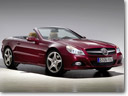 Mercedes-Benz will continue its long tradition of producing legendary sports cars when it launches the new-generation SL-Class in spring 2008. The world’s most successful premium roadster in its class features a new design with the emphasis firmly on sportiness and effortless superiority. These traits are also reflected in the handling qualities of the two-seater model, which now delivers even more athletic performance thanks to the new direct-steer system as well as offering enhanced comfort and safety. (more…)
-
Mercedes-Benz ML-Class
 Mercedes-Benz has meticulously revamped the successful M-Class. The new generation of the dynamic, stylish SUV now has even more distinctive characteristics, and looks even sportier and more powerful.
-
Brabus Widestar Mercedes-Benz ML 63
 Sporty and dynamic, exclusive and powerful: These three attributes best describe the BRABUS WIDESTAR. The special model based on the Mercedes ML 63 celebrates its world debut at the Geneva Motor Show 2007. With the WIDESTAR BRABUS presents not only a new and exciting wide-track version of the SUV but also the new Monoblock E 23-inch forged wheels and BRABUS B63 S performance tuning for the ML 63 with 550 hp / 404.8 kW.
-
Mercedes-Benz CLC-Class

The new Mercedes-Benz CLC: Sports Coupé with fun factorStuttgart – Mercedes-Benz has unveiled a stand-alone model series in the guise of the new CLC, the compelling entry-level model in the Mercedes-Benz coupé family. The Sports Coupé’s design, technology and equipment meet the discerning requirements of young drivers looking for an athletic car that gives an involving drive, while at the same time delivering the hallmark Mercedes quality standards in terms of safety, comfort, environmental compatibility and functionality. Compared with the previous Sports Coupé, the Mercedes engineers have newly developed or enhanced over 1100 components. (more…)
-
BRABUS WIDESTAR Mercedes GL-Class
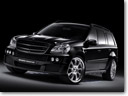 Muscular fender flares front and back, giant 23-inch wheels and a striking face with large air dams and four auxiliary headlights: In a world premiere BRABUS presents the 2007 WIDESTAR wide version for the Mercedes GL-Class at the Frankfurt International Auto Show IAA 2007.
The elegant sweeping lines of the fender flares add five centimeters (two inches) to the width of the large SUV. The corresponding rocker panels have more than just visual effect; they also facilitate entering and exiting of the vehicle in the dark with their integrated entrance lights.
-
Brabus Bullit
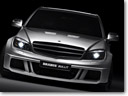 Over the past three decades BRABUS has perfected the art of transplanting large and extremely powerful engines into the bodies of small cars. That path led to numerous world records and entries into the Guinness Book of World Records. The BRABUS BULLIT, built in small-series production based on the new Mercedes C-Class sedan, celebrates its world debut at the IAA 2007 as the ultimate wolf in sheep’s clothing.
-
Mercedes-Benz C 63 AMG Estate

 Following in the Saloon’s footsteps, the Mercedes-Benz C 63 AMG Estate is now also due to be launched. Under the bonnet with its distinctive power domes, the AMG 6.3-litre V8 engine delivers effortless acceleration. The high-revving naturally aspirated engine sets the benchmark in this segment with its maximum output of 336 kW/457 hp at 6800 rpm and maximum torque of 600 Nm at 5000 rpm. The unique high-performance estate accelerates from 0 to 100 km/h in 4.6 seconds; top speed is 250 km/h (electronically limited).
Power is transferred by the AMG SPEEDSHIFT PLUS 7G-TRONIC. Equipped with AMG steering wheel gearshift paddles and the three driving modes “C”, “S” and “M”, the seven-speed automatic transmission delivers a decidedly sporty or comfort-focused ride depending on the driver’s tastes. The automatic throttle-blipping function when downshifting is another innovation. In conjunction with the all-new front axle, the AMG speed-sensitive sports steering and the new 3-stage ESP®, the AMG sports suspension provides maximum driving pleasure and superb driving dynamics.
The AMG high-performance braking system with large internally ventilated and perforated disc brakes all round provides optimum stopping power even during particularly dynamic driving. The standard specification includes 18-inch five-spoke AMG light-alloy wheels with 235/ 40 R 18 (front) and 255/35 R 18 (rear) wide-base tyres. 19-inch AMG multi-spoke light-alloy wheels shod with 235/35 R 19 (front) and 255/30 R 19 (rear) tyres are available as an option.


Design and appointments: more distinctive than ever
The design and appointments on the new Mercedes-Benz C 63 AMG Estate are comfortably on a par with the sophisticated technology. The top-of-the-line AMG eight-cylinder model has been differentiated more clearly than ever from the series-production C-Class: typical hallmarks of the brand come in the shape of AMG bodystyling, the bonnet with power domes, the distinctive AMG radiator grille, the flared front wings, the AMG rear apron with its black diffusor insert and the AMG sports exhaust system with two sets of chromed twin tailpipes. The interior feel is dominated by the distinctive AMG sports seats with integral head restraints, the three-spoke AMG performance steering wheel with its flat underside and small 365-millimetre rim, and the tube-style AMG instrument cluster with its AMG-specific main menu. As an alternative to the standard-fit aluminium trim elements, AMG carbon trim can also be ordered as an option for the Mercedes-Benz C 63 AMG Estate.
Largest load compartment in its class with up to 1500 litres
The load capacity of the Mercedes-Benz C 63 AMG Estate ranges from 485 to 1500 litres (VDA measuring method) depending on the position of the 1/3:2/3-split rear seat backrests which can be folded forwards. No other car in the premium estate segment of this vehicle class can match this capacity. Standard equipment includes bag hooks and four anchoring lugs to secure the load, side stowage compartments with covers, a collapsible shopping crate as well as a combined luggage cover and retaining net. The new EASY-PACK tailgate opens and closes at the push of a button. The market launch of the C 63 AMG Estate is scheduled for the start of 2008; sales price incl. 19% VAT is EUR 69,853.
-
Mercedes-Benz C-Class Estate
 Just a few months following the market debut of the saloon, Mercedes-Benz is now unveilling the estate version of the new C-Class. The estate takes the trademark strengths of the saloon, such as safety, agility and comfort, and combines them with a significant increase in spaciousness and versatility. Quite apart from being able to hold a maximum of 1500 litres, giving it a larger load capacity than any other premium-class estate in this market segment, the new C-Class Estate also offers a host of handy features for easy loading and safe transportation -a tailgate which opens and closes automatically at the push of a button, for example.
Compared to the outgoing model, the new Mercedes estate burns as much as twelve per cent less fuel. With an official NEDC consumption of 6.0 litres/100 km, the new C 200 CDI can make a single tank of fuel (66 litres) last for over 1000 kilometres. Just like the saloon, the estate version of the new C-Class has also been awarded an Environmental Certificate, which attests to the environmentally oriented development process as conforming with the international ISO standard. In terms of safety, the new estate blazes a trail with innovations of the likes of PRE-SAFE® and the Intelligent Light System, and distinguishes itself as the safest car in this vehicle class. Seven airbags, belt tensioners and belt force limiters, as well as crash-responsive NECK-PRO head restraints all make up part of the standard specification.
The new estate adopts the C-Class Saloon’s customer-focused concept for the design and equipment lines. There is a choice of three models – CLASSIC, ELEGANCE and AVANTGARDE – which highlight the vehicle’s comfort or agility to differing degrees. The AVANTGARDE line features a large Mercedes star positioned in the centre of the radiator grille that emphasises its sporty, agile nature. This traditional distinctive mark of sporty models from Mercedes is now being employed in an estate model for the first time by the Stuttgart-based automotive brand. In the ELEGANCE model, a three-dimensional, louvred radiator grille with a high-gloss paint finish accentuates other brand-typical attributes such as comfort and luxury. The CLASSIC model, meanwhile, is deliberately more restrained and traditional.
New benchmark figure: maximum load capacity of 1500 litres
During the concept phase for the new estate, the designers and engineers at Mercedes took the expectations of the brand’s customers as their yardstick. Consequently, spaciousness, versatility and functionality were given top priority. Compared to its predecessor, the rear of the new estate is slanted far more steeply, a crucial factor for enlarging the vehicle’s load volume. This now varies between 485 and 1500 litres (VDA measuring method), depending on the position of the 1/3 : 2/3 split-folding rear seat — more than any of the model’s rivals in this class of premium estate car are able to offer. Measured against the outgoing C-Class Estate, load capacity has been increased by as much as 146 litres.
This makes the estate a thoroughly practical vehicle in every respect. It is able to accommodate, for example, four golf bags including trolleys, nine large packing cases or a total of 44 drinks crates each containing six 1-litre juice bottles. The largest possible cuboid that fits into the load compartment now has a volume of 827 litres – that is an increase of 66 litres compared to the previous model and between 50 and 100 litres more than other premium estate models in this class are able to handle. The maximum utilisable interior length is a whole 2.82 metres, as measured between the tailgate and the front passenger footwell – 17 centimetres more than previously.


Convenient loading: EASY-PACK tailgate and load-securing kit
Thanks to a host of practical details, the new Mercedes estate can be loaded more easily, more conveniently and more safely. For instance, two bag hooks and four rings for anchoring loads are included in the load compartment as standard.
Stowage compartments with net covers and a collapsible shopping crate can likewise be found in all models, as can the combined luggage cover and retaining net. The new EASY-PACK tailgate opens and closes as the push of a button, representing a first in this segment. Finally, the optional EASY-PACK load-securing kit presents drivers with even more possibilities for both partitioning the load compartment — that measures around 1.80 metres long and up to 1.20 metres wide — and for securing the load being carried.
The new C-Class Estate also makes a perfectly good towing vehicle and, indeed, offers a class-beating towing capacity of as much as 1800 kilograms. The self-levelling suspension that is optionally available keeps the vehicle at a constant ride height regardless of the load it is carrying.
Accredited environmental protection: a twelve per cent cut in fuel consumptionEnvironmental considerations played a key role in the development of the Mercedes-Benz C-Class from the very start. This is corroborated by the Environmental Certificate that was awarded by the TÜV Technical Inspection Authority in Germany. Mercedes-Benz is the only automotive brand in the world to have obtained a certificate under the terms of ISO standard 14062 for environmentally acceptable product development.
With brand new or redeveloped engines under the bonnet offering greater power and torque, the C-Class Estate consumes up to twelve per cent less fuel than previously. The four-cylinder power units were the focus of the development work: in the case of the C 180 KOMPRESSOR and C 200 KOMPRESSOR petrol models Mercedes-Benz modified the engine management and fitted a more dynamic supercharger and improved pistons to boost output by 10 kW/13 hp and 15 kW/20 hp respectively. At the same time, the fuel consumption figures for the two models could be cut by as much as 10.3 per cent to 7.7 and 7.8 litres/100 kilometres.
Mercedes-Benz also gave the four-cylinder diesel engines a thorough overhaul too, making improvements not only to the injection system, the turbocharger and the intercooler but to more than 90 other components too. The upshot is engines delivering more power and higher torque, combined with fuel consumption that is around twelve per cent lower. The new C 220 CDI now has an output of 125 kW/170 hp (previously: 110 kW/150 hp) and musters up 400 Newton metres of peak torque (previously: 340 Newton metres) from 2000 rpm. Fuel consumption on the NEDC driving cycle comes in at just 6.1 litres for every 100 kilometres (previously: 6.9 l/100 km).
In the new C 200 CDI, power has been upped by eleven per cent (100 kW/136 hp instead of 90 kW/122 hp before) and fuel consumption is 6.0 litres/100 kilometres (previously 6.8 l/100 km).As for the six-cylinder engine range, there is a choice of three petrol units developing 150 kW/204 hp, 170 kW/231 hp and 200 kW/272 hp, as well as the new C 320 CDI with an output of 165 kW/224 hp. With the exception of the C 350, all engine variants are coupled to a six-speed manual transmission. The C 350 is partnered by the 7G-TRONIC seven-speed automatic transmission.
Sporty agility: shock absorbers that change with the driving situationThe unique blend of agility and comfort that forms one of the exceptional strengths of the new C-Class is basically down to the standard-fit AGILITY CONTROL package. This features shock absorbers which automatically adapt to the current driving situation for a noticeable improvement in ride comfort when driving normally. As soon as a more dynamic driving style is adopted, on the other hand, the maximum damping forces are set to stabilise the estate effectively .
A steering system that is six per cent more direct and a short-throw six-speed manual transmission also form part of the AGILITY CONTROL package.
The dynamic handling package that is available as an option bestows the new C-Class Estate with a degree of agility worthy of out-and-out sports cars. The driver is able to choose from two drive modes which determine the fundamental suspension characteristic: Comfort and Sport.
Within these modes, the shock absorbers at each wheel are regulated by means of an infinitely variable electronic control. What’s more, the body is lowered by 15 millimetres and the suspension equipped with shorter springs and thicker torsion bars. The dynamic handling package also encompasses the new speed-sensitive power steering with a more direct ratio and variable centring.
The body index devised by engineers at Mercedes clearly illustrates just how agilely the new C-Class Estate performs out on the road. This index is calculated from the readings for various driving manoeuvres, thereby forming a new composite formula for a vehicle’s dynamic handling abilities. The larger the body index, the better the suspension is linked to the body and the firmer the suspension’s tuning. The standard AGILITY CONTROL suspension gives the C-Class a body index of 1.91 to 2.01 hertz, while the new model attains sports-car-like values of up to 2.46 hertz with the dynamic handling package fitted.
Kitting out the new estate with the AMG sports package adds a sports suspension with shorter springs and firmer shock absorbers to the specification, along with 17-inch light-alloy wheels. The body is also dropped by 15 millimetres.
Hallmark Mercedes quality: the safest car in its class
The C-Class Estate has come through an exhaustive programme of testing, during which it demonstrated its typical Mercedes-like levels of safety in over 100 crash tests in all. The occupant protection concept is underpinned by an intelligently designed bodyshell, 70 percent of which consists of high-strength and ultra-high-strength grades of steel. The front-end structure comprises four impact levels which act independently of one another and enable forces to be distributed over a wide area while bypassing the passenger cell. The occupants are protected by a total of seven airbags as standard. The driver, front passenger and the passengers on the outer rear seats also benefit from belt tensioners and belt force limiters.
The NECK-PRO head restraints in the front have a crash-responsive design, meaning that they move to cushion the heads of the driver and front passenger at an early stage in a rear-end collision to guard against the risk of whiplash. The integrated child seats, which fold out of the rear bench seat have undergone further development and are now also fitted with a wraparound head restraint.
Standard features such as the flashing brake lights, Brake Assist and Electronic Stability Program make vital contributions to accident prevention. The ESP® system now incorporates additional functions: not only does it monitor the tyre pressure it also helps to enhance safety when towing a trailer with an automatic trailer stabilisation function.
The anticipatory occupant protection system PRE-SAFE® gives the new estate the edge over other models in this segment. This optional system makes use of the time before an imminent accident to prepare the vehicle and its occupants for a collision. The result is a considerable reduction in the loads exerted on the passengers upon impact. The Intelligent Light System is another technical innovation borrowed from the higher-end models in the Mercedes range and is the only system of its kind in this market segment at the current time. The system’s five different lighting functions are each suited to various typical driving and weather conditions.
Inside, the attractively styled dashboard, the high-class materials and appealing colour schemes create a homely atmosphere. For the first time, the colour concept has been extended to the load compartment too. On CLASSIC and ELEGANCE models, the customer’s selected appointments colour is used for both the carpeting and the side trim. On the AVANTGARDE line, the rear compartment is carpeted in black too. Newly developed seats, which can be specified with a multicontour function as an option, as well as a powerful air conditioning system add to the estate’s excellent comfort on long journeys.
The new estate from Mercedes-Benz is the first model in this class to offer the option of individually adjustable three-zone climate control. And the expansive panoramic sliding sunroof can be found on the list of optional extras for an estate car for the first time too.
The colour display in the centre of the dashboard is linked up to the controller on the tunnel console. This is where the driver can operate the audio and navigation systems or the telephone. A clear menu control structure makes it simple to access all of these functions and more besides. Alternatively, there are the direct selection keys in the centre console: the car radio, CD/ DVD player, navigation system or telephone can be switched on at the push of a button. Subsequent operating steps are performed using the controller in unison with the colour display in the dashboard.
State-of-the-art technology: voice-controlled infotainment devices
Mercedes-Benz developed three new infotainment units for the C-Class: Audio 20, Audio 50 APS and COMAND APS. They all feature a keypad for entering telephone numbers and radio frequencies, as well as a Bluetooth interface which allows mobile phones to be connected wirelessly to the hands-free system. The Audio 50 APS system also comprises pan-European DVD navigation using arrow symbols for route guidance. With the COMAND APS multimedia system, the navigation data is stored on a hard disc. A high-resolution map which can be viewed from different perspectives appears on the tilting colour display. The COMAND APS also comprises a DVD player, along with a music server for storing up to 1000 tracks.
The LINGUATRONIC voice control system is automatically included on C-Class Estate models equipped with the Audio 50 APS plus the six-disc DVD changer or with the COMAND APS system. For the first time, the new improved system is now able to recognise whole-word commands when entering a destination, selecting a radio station or calling up a name from the telephone directory. The driver no longer needs to spell out the names of countries, towns or roads, for example, but is able to speak them as whole words instead.
Following its public premiere at the International Motor Show in Frankfurt/Main, motorists will be able to place their orders for the new C-Class Estate with Mercedes-Benz sales and service outlets and dealerships from September 2007.
-
Brabus Mercedes-Benz D3 S
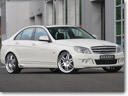
 Brand-New for the Latest Mercedes-Benz C 220 CDI: 50 PS (49 hp) / 36.8 kW more Power and an Extra 80 Nm (59 lb-ft) of Torque with BRABUS D3 S POWER XTRA. An increase in maximum power output from standard 170 PS (168 hp) / 125 kW to 220 PS (217 hp) / 162 kW, a jump in torque from 400 Nm to 480 Nm (295 to 354 lb-ft), combined with maximum environmental friendliness in accordance with Euro IV emission limits, and all that backed by the one-of-a-kind BRABUS Tuning Warranty® of three years, up to 100,000 kilometers (see BRABUS warranty conditions): For the new Mercedes-Benz C 220 CDI BRABUS presents the new BRABUS POWER XTRA D3 S power kit.
The processor-controlled BRABUS auxiliary control unit with integrated injector drive module comes with a ready-to-connect wire harness and detailed installation instructions. It can be installed quickly and easily by any authorized Mercedes-Benz dealer. The BRABUS POWER XTRA D3 S tuning kit works flawlessly in conjunction with the standard particulate filter of the C 220 CDI and increases maximum power output by 50 PS (49 hp) / 36.8 kW and peak torque by 80 Nm (59 lb-ft). Despite the increased performance emissions of the turbodiesel engine remain on the low level of the production car: Even with BRABUS performance tuning the car meets stringent EURO IV emission standards.
The added powerful of the tuned diesel engine is noticeable in every traffic situation: The increase in torque gives the C 220 CDI superior pulling power even at low engine speeds, making passing maneuvers shorter and safer.
Vehicle performance speaks for itself: With a sprint time from 0 – 100 km/h (62 mph) of 7.8 seconds the C 220 CDI with BRABUS D3 S performance kit takes almost a full second less than the production car. The top speed of 239 km/h (149 mph) exceeds that of the production model by 10 km/h (6 mph).
The fully stainless-steel BRABUS quad sport exhaust for the Mercedes C 220 CDI looks great and gives the car a more powerful exhaust note.
In addition to performance tuning BRABUS offers an extensive customization program for the new Mercedes C-Class. The product range includes a sporty yet elegantly shaped aerodynamic-enhancement kit, sporty suspension modifications from a simple lowering kit to a complete sports suspension, high-performance brake systems as well as exclusive interior accessories including handcrafted fully leather interiors made from only the very best materials with utmost precision and loving attention to detail.
-
Mercedes-Benz AMG Performance Package E63

 A special AMG performance package will shortly be available ex factory for the sporty 378 kW/514 hp E 63 AMG Saloon. It comprises various technical components which significantly enhance the handling dynamics, the motorsport potential and the individuality of this model. The performance package was developed at the AMG PERFORMANCE STUDIO in Affalterbach and the vehicles are built at the Daimler Chrysler production plant in Sindelfingen.
The performance package will be available for the E 63 AMG Saloon from March 2007.
Using various higher-performance components, the AMG performance package for the E 63 AMG puts the accent on dynamic handling and performance. The result is a breathtaking driving experience for ambitious sports car enthusiasts who want to have the option of using their AMG performance model on closed-circuit racetracks. Customers benefit from the extensive motorsport know-how gained by Mercedes-AMG GmbH over the course of four decades. The E 63 performance package is priced at 7,140 euros (incl. 19% VAT).
The AMG PERFORMANCE STUDIO in Affalterbach can take the customisation even further, building distinctive – or even unique – vehicles on the basis of individual customer specifications.
-
Mercedes-Benz C63 AMG
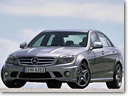
 In the German Touring Car Championships (DTM) the new AMG C-Class ensures exciting motor racing at the highest level, and now its roadgoing sister model is celebrating its debut: the new C 63 AMG. Its AMG 6.3-litre V8 engine develops a peak output of 336 kW/457 hp and a maximum torque of 600 newton metres – unrivalled figures in this segment. Accordingly the C 63 AMG accelerates from zero to 100 km/h in 4.5 seconds, while its top speed is electronically limited to 250 km/h. In conjunction with an all-new front axle, speed-sensitive AMG sports steering and the new, 3-stage ESP Ò, the AMG sports suspension ensures both outstanding driving enjoyment and exemplary handling dynamics. A combination of expressive design, a decidedly sporty interior and a high level of everyday practicality makes the C 63 AMG a unique high-performance car. The market launch will commence in early 2008.
With the new C 63 AMG, Mercedes-AMG GmbH is making a confident statement to mark the 40th birthday of the company. The new V8 flagship model is now the fifth generation of the AMG C-Class, whose family tree goes back to the C 36 AMG of 1993 – the very first vehicle developed as a cooperative venture between Daimler-Benz and AMG.
Merely the appearance of the C 63 AMG is impressive enough, with its wide, road-hugging stance. The new bonnet with its prominent power domes conceals the independently developed AMG 6.3-litre V8 engine, which develops a fulminating 336 kW/457 hp at 6800 rpm from a displacement of 6208 cubic centimetres. In this respect the C 63 AMG comes very close to the 470 or so horsepower delivered by the AMG C-Class racing touring car in the DTM series. This high output also benefits the power-to-weight ratio, which is a very favourable 3.6 kg/hp.


The torque developed by the AMG 6.3-litre V8 engine need fear no comparison either. The maximum of 600 newton metres at 5000 rpm is unrivalled in this class, and the torque curve is equally impressive: from 2000 to 6250 rpm the driver always has more than 500 newton metres on tap – ideal for powerful acceleration in any engine speed range.
V8 with thoroughbred racing technology and a designer exhaust note
Introduced in 2005, the V8 engine is installed in numerous AMG high-performance cars and excels with its thoroughbred motor sports technology.
Perfect cylinder charging is guaranteed by the vertical arrangement of the intake and exhaust ducts, as well as the magnesium variable intake manifold with two integral throttle flaps. Other high-tech features include variable camshaft adjustment, four-valve technology with bucket-type tappets, a particularly rigid aluminium crankcase of closed-deck design and the low-friction TWAS coating on the cylinder contact surfaces.
Among the particular strengths of the AMG V8 engine are outstanding responsiveness and enormous pulling power – by virtue of its large displacement, it develops over 30 percent more torque than comparable engines in this performance class. Electronically controlled fuel delivery is another reason for the outstanding agility and responsiveness to movements of the accelerator. With its sporty AMG sound, which was designed-in during a series of sophisticated trials, this eight-cylinder powerpack from Affalterbach offers the unique excitement of a fast-revving, naturally aspirated engine – an audible and immediate experience whether at low, medium or high engine speeds.
In the interests of optimal reliability, the C 63 AMG has a particularly efficient water cooling system and large engine and transmission oil coolers. Located behind the large apertures in the AMG front apron, these coolers ensure non-critical operating temperatures at all times – even under the extreme stress of the racetrack.
Like all AMG high-performance engines, the AMG 6.3-litre V8 is built in the AMG engine shop on the traditional “one man, one engine” principle. This means that one technician is responsible for hand-assembling a complete V8 engine to the highest quality standards – which is attested to by his signature on the AMG engine plate.
AMG SPEEDSHIFT PLUS 7G-TRONIC with blipping function
This high-performance eight-cylinder engine has the perfect partner in the form of the AMG SPEEDSHIFT PLUS 7G-TRONIC transmission. Equipped with AMG steering wheel shift paddles and three driving modes, the seven-speed automatic transmission allows a decidedly sporty or more comfort-oriented style of driving according to the driver’s preference. The different modes – “S” (Sport), ” C” (Comfort) and “M” (Manual) differ in their shift characteristics and speed: gearshifts in “S” mode are around 30 percent faster than in “C”, and no less than around 50 percent faster in “M” mode. Pressing a button is sufficient to activate the desired driving programme.
The new C 63 AMG is the very first AMG car to feature an automatic throttle-blipping function during downshifts. This not only enhances the driver’s emotional experience – the almost completely jolt-free downshifting process also reduces the load-change responses and has a particularly positive effect when braking before bends on the racetrack.
Redesigned front axle with 35-millimetre wider track
The C 63 AMG owes its outstanding handling dynamics to the AMG sports suspension and an all-new three-link front axle design. The stiff configuration of the springs and gas-pressure shock absorbers ensures optimal road contact and low body movements when negotiating serpentine bends at speed. The new front axle has a 35-millimetre wider track – visible by the more widely flared wheel arches – and therefore ensures lower dynamic wheel loads when cornering. A number of features make for substantially more stability and precision in all driving situations: the redesigned wheel location at the front axle is 100 percent more rigid, leading to a considerable improvement in steering precision. Another benefit makes itself felt when braking, as the new wheel location ensures an immediate response even under high dynamic stresses.
In combination with completely newly configured elasto-kinematics, the new wheel location provides greatly improved lateral dynamics and allows the driver of the C 63 AMG to benefit from significantly higher cornering speeds. A larger torsion bar stabiliser, new head bearings and dampers with rebound buffer springs further enhance this stability and precision. Steering feedback is also improved by the new kinematics. The speed-sensitive AMG sports steering has a ratio of 13.5:1, but feels more direct as a result of moving what is termed the instant centre of motion at the front axle. A more rigid Hardy disc in the steering column, as well as modified steering characteristics, make a further contribution to increased precision.
The multi-link independent rear suspension has also been thoroughly re-engineered, with a twelve-millimetre wider track and more camber leading to improved cornering performance. Reinforced drive shafts and drive joints increase fatigue strength and round off the improvements to the rear suspension of the C 63 AMG.
The completely newly developed AMG sports suspension combines outstanding handling dynamics with the long-distance comfort to be expected of a Mercedes – which also means that the C 63 AMG has the characteristic virtues of a genuine AMG.
18-inch AMG light-alloy wheels, 19-inch wheel/tyre combination on request
The C 63 AMG is appropriately fitted with new, 18-inch AMG light-alloy wheels in a five-spoke design. Painted in titanium grey, these high-sheen wheels in size 8.0 x 18 and 8.5 x 18 are shod with wide-base tyres in size 235/40 R 18 (front) and 255/35 R 18 (rear). Even more dynamic handling is made possible by the optionally available 19-inch AMG light-alloy wheels in a multi-spoke design. The front wheels are in size 8.0 x 19 with 235/35 tyres, with 9.0 x 19 wheels and 255/30 R 19 tyres at the rear.
Generously dimensioned AMG high-performance braking system
Internally ventilated and perforated disc brakes all-round reside behind the spokes of the AMG wheels. The front brakes have size 360 x 36-millimetre discs with six-piston fixed callipers, while deceleration at the rear is by 330 x 26-millimetre discs with four-piston fixed callipers. The AMG high-performance braking system is characterised by great sensitivity and high fade-resistance.
3-stage ESPÒ with Sport function as a new feature in the C 63 AMG
The Electronic Stability Program ESPÒ is specifically configured for the dynamic performance of the C 63 AMG, which is the first AMG model to feature the 3-stage ESPÒ with a Sport function. This system offers three different control settings, and is a logical further development of the AMG ESPÒ philosophy. The ESP key in the centre console enables the driver to choose between three modes – “ESP ON”, “ESP SPORT” and “ESP OFF” – the currently active mode is shown in the central display of the AMG instrument cluster.
In “ESP ON” mode, the onset of handling instability leads to braking intervention at one or more of the wheels, accompanied by a reduction in engine torque. Briefly pressing the ESP key activates “ESP SPORT”. In this mode the braking intervention to counter oversteer or understeer, as well as the accompanying reduction in engine torque, allows a higher dynamic threshold and, for instance, corresponding drift angles – which means that the driver of the C 63 AMG benefits from considerably more active driving pleasure. ESP Ò is restored to its normal function as soon as the brake pedal is operated.
Prolonged pressure on the ESP key activates “ESP OFF”. There is no intervention to control the handling dynamics, and no reduction in engine torque – thus increasing driving enjoyment even further. “ESP OFF” should only be used by experienced drivers on dedicated racetracks. In this mode too, operating the brake pedal restores all the normal functions of ESPÒ.
The system’s traction logic is active in all three ESP Ò modes. If one of the drive wheels threatens to spin, specific brake pressure is applied to create the effect of a mechanical differential lock. This means that the engine power is optimally transferred to the road.
More distinctive exterior design than ever before
It is not only in technological but also in visual terms that the new C 63 AMG is more distinctively different from the standard C-Class than ever before. The front end is dominated by the new bonnet with its two pronounced power domes, as well as the trademark AMG radiator grille with a central star and two louvres with chrome inserts. The honeycomb pattern of the grille is also reflected in the large air dams of the new, athletically contoured front apron which forms part of the AMG-specific bodystyling. The fog lamps with chrome surrounds are spaced well apart, acting together with the flared front wheel arches to accentuate the width of the car – with the striking transition from the front apron to the wings leaving a particularly strong impression. The side air vents in the front apron serve to expel the hot air from the oil coolers. If the C 63 AMG is specified with the optional bi-xenon headlamps or the Intelligent Light System, the headlamps are also dark-tinted.
Eye-catching features when viewed from the side include the 18-inch AMG light-alloy wheels, the harmoniously integrated “6.3 AMG” lettering on the front wing and the AMG side skirts. At the rear the standard LED rear lights, the AMG rear apron with its black diffuser insert and three pronounced diffuser fins, as well as the AMG sports exhaust system with two chrome twin tailpipes, provide further visual highlights that are hallmarks of the brand. The AMG spoiler lip on the boot lid reduces lift and ensures greater handling stability at high speeds.
AMG interior with new sports seats and performance steering wheel
This decidedly sporty theme is continued in the interior of the C 63 AMG, which now has special AMG sports seats with integral head restraints for the first time. The seats not only feature a new design with cross-piping and AMG lettering, but also an adaptive backrest with adjustments for the side bolsters and lumbar support. The standard upholstery in ARTICO man-made leather/AMG fabric is available in a choice of black or reef grey – or as an option the interior can be further enhanced with particularly high-grade leather in black, reef grey or black/sahara beige.Perfect handling control is assured with the new AMG performance steering wheel in a three-spoke design, which has a rim diameter of 365 millimetres and a flattened lower section. The upper section is covered in perforated leather, and two silver AMG shift paddles enable the gears to be shifted manually.

AMG main menu with a wide variety of displays
The trademark AMG instrument cluster in a tubular design features newly styled dials, AMG-specific lettering and a new night-time design. Eye-catching details include the 320 km/h speedometer scale, AMG lettering, red needles and the “6.3 V8” logo in the rev counter. The AMG main menu in the central display allows numerous settings, with “Warm Up”, “Set Up” and “RACE” modes activated via buttons on the AMG performance steering wheel. “Warm Up” displays the engine oil and coolant temperature, “Set Up” the current ESP Ò mode and the transmission mode “S”, “C” or “M”. “RACE” mode makes the RACETIMER available, with which the driver is able to measure lap times on a racetrack.
Development and design of the C 63 AMG
Creating a new car is a complex undertaking, and this certainly applies to the new Mercedes-Benz C 63 AMG whose conceptual phase commenced in 2004. This began with the fundamental feasibility study known as packaging. The new C 63 AMG was first constructed as a digital model, the engine, cooling system, fuel system, drive train and axles being “married” with the bodyshell to examine buildability. In spring 2005 the first 1:4-scale design models were produced on the basis of drawings and computer images, and in addition the first testing & development vehicles were already built on the basis of the preceding C 55 AMG. This made it possible to test major assemblies such as the drive train, brakes and axles. The latest onboard measuring technology provided valuable data such as engine oil, coolant and brake disc temperatures – but other aspects of interest were lap times e.g. on the north loop of the Nürburgring, as well as measurable, precisely defined handling manoeuvres to provide comparisons between different axle configurations. These tests were accompanied by extensive aerodynamic tests on the bodyshell of the C 63 AMG, and it was only then that the final design was approved.
Following approval of the concept in the autumn of 2005, the first fully-fledged prototypes of the C 63 AMG were built. At the same time the high-performance saloon was also produced as a digital prototype. Computer simulations made it possible for the “real” development prototypes to exhibit a very high level of maturity during the first rollout. These simulations included the most important vehicle functions, such as handling dynamics, the engine and drive train, bodyshell durability, suspension performance, passive safety, the engine’s thermal characteristics and performance/fuel consumption.
From Affalterbach to every climatic zone on earth
The standardised and highly sophisticated AMG development and test programme for the C 63 AMG began in summer 2005. Over the next couple of years around 20 vehicles were dispatched all over the world from Mercedes-AMG GmbH in Affalterbach, to be subjected to strenuous tests in every climatic zone.
Test, analyse and optimise – that is the creed of the specialists at AMG to achieve the objectives laid down in the book of specifications. Another decisive aspect was an ongoing dialogue between Design and Development, so that any necessary technical modifications were also implemented in design terms.


