Mercedes-Benz A-Class Concept is really a staggering vehicle. It boasts dynamic and sporty styling in the compact class. It is powered by a 2.0-liter engine with 210PS. Concept A-CLASS is going on view for the first time in the UK as part of an exciting and interactive display that is set to capture the imagination and interest of the public.
The Concept A-CLASS National Tour will visit the Bullring Shopping Centre, Birmingham – Saturday 24th and Sunday 25th September; Westfield London – Saturday 1st and Sunday 2nd October; Arndale Shopping Centre, Manchester – Saturday 8th and Sunday 9th October and Braehead Shopping Centre, Glasgow – Friday 14th and Saturday 15th October.
“Both visually and technologically, Concept A-CLASS provides an exciting insight into the potential future of the Mercedes-Benz compact car range, and a tantalising glimpse of some of the features that we’re confident would influence future customers in this highly-competitive sector,” said Gary Savage, Managing Director, Mercedes-Benz Cars.
“The Concept A-CLASS National Tour creates a unique experience for engaging with our potential customers ahead of some significant model launches next year, and it showcases the future direction of Mercedes-Benz in a truly eye-catching and enthralling way.”, he finished.
Kubatech has announced their tuning program for the astonishing Mercedes-Benz SLS AMG.
The most powerful naturally aspirated V8 in the world is further optimized by installing an ECU re-map giving additional 54PS (40 kW) and 30Nm (22 lb-ft) of torque. The overall figures are 625PS (460 kW) and 650Nm (479 lb-ft).
Obviously, the 6.2 liter engine has a lot of resources for optimization.
Kubatech didn’t release any information about aerodynamics package or any interior upgrades. Still, we think that SLS AMG is already perfect and it doesn’t need any styling improvements. Power upgrades are just fine!
The cost of these 54PS and 30Nm is really high – more than €8000.
In matters of individualisation the traditional tuning house Kicherer has taken on the new AMG Mercedes SLS Roadster.
True to the company‘s philosophy to consistently only supplement the AMG‘s basic shape and to retain its basic lines, a new, more sporty version of the Roadster was in essence created. Especially the aerodynamics benefited from the high quality final touch. For this the developers created and mounted a sporty front spoiler, side skirts and a specially hand-made GT front grill. More accents are provided by the small aerodynamic fins that can be mounted on the bonnet and on the wings. All the new add-on components created by KICHERER are, of course, made of high quality carbon.
A further highlight on the sports car is provided by the three-part 20 inch RS-1 lightweight complete wheels.The classic double-spoke design harmonises perfectly with the equally classic sports car silhouette of this retro-sports car.
KICHERER SLS Roadster Supersport GT/R
In addition, a coilover suspension with a socalled „Front Up“ system is mounted on the car. This not only makes driving more sporty but also suits the vehicle perfectly. Moreover, it also makes it possible to raise the front of the car by just pressing on a button, so that obstacles such underground carpark entry ramps and speed bumps can be more easily overcome.
On the rear of the car a stainless steel exhaust with four oval endpipes controlled by dynamic pressure sonorously allows the exhaust fumes out into the open. An integrated valve control gives the driver – depending on the occasion – the opportunity of choosing between a sonorous and discrete tone.
The KICHERER developers have also tightened the performance screw a little and , thanks to the sports air filter exclusive to KICHERER, managed to achieve an actual every day performance of 630 PS – instead of the standard 571 PS. Those who like it even more sporty can order the second performance level. This possesses in addition an exhaust manifold system and a sports catalysor that combined with the modification from the first level guarantee a top performance of 650 PS at 720 Nm torque.
This means the open air SLS sprints to 100 km/h in just 3.5 seconds and reaches a sealed-off top speed of 320 km/h.
To continue the epic battle between the two of the most brutal tuning companies on the market -G-Power and Brabus, now we will compare BMW M3 E92 SK II and BULLIT. Both cars are extremely powerful and expensive, of course, especially the Mercedes.
Let’s start with the less powerful G-Power BMW M3 E92 SK II, which is based on the sports compact executive M3 Coupe. It is powered by the well-known high-revving 4.0 liter V8, which is now boosted to the exquisite 570PS (419 kW) and 565Nm (417 lb-ft) of torque.
The performance is awesome – 4.4 seconds to 100 km/h and just 12.9 seconds to 200 km/h. The top speed is somewhere around 333 km/h. Actually, you can check the tuned M3 doing that in the video below.
httpv://www.youtube.com/watch?v=8pXrWx2CV3g
Besides the incredible acceleration, G-Power SK II also has incredible deceleration system consisting of 396 mm diameter discs on the front axle with 6-piston calipers and 380mm discs at the rear axle with 4-piston calipers. The high-performance brake system alloys decellerations beyond 1.0g.
Other upgrade is the GM3 RS coilover suspension and Silverstone alloy wheels fitted with Michelin Pilot Super Sport road tires.
The overall price is not calculated, but BMW M3 E92 starts at €68 750 and the “Sporty Drive” supercharger kit is priced at €11 500.
Continuing with Brabus Bullit based on the mighty Mercedes AMG C 63 AMG originally producing 457PS and 600Nm of torque from the most powerful naturally aspirated 6.2 liter V8 in the world. However, Brabus decided that this engine is not good enough and they fitted the small C-Class with enormous bi-turbo V12. It develops 730PS (540 kW) at 5100RPM and 1320Nm (970 lb-ft) of torque from 2100RPM.
The performance – 0 to 100 km/h in 3.9 seconds, to 200 km/h in 10.5 seconds and top speed of more than 362 km/h (225 mph). The car is way more powerful and faster than the G-Power SK II and still it is street-legal.
Brabus Bullit also features a modified 5-speed transmission, a LSD, full aerodynamic body kit, huge brakes and an adjustable rear suspension. The car also has an aluminum hood with ventilation slots and Brabus wheels fitted with high-performance tires.
The interior boasts custom sports seats with carbon fiber covers and carbon fiber elements.
The price for this pleasure is no less than €348 000.
BRABUS has been building the world’s fastest street-legal sedans for many years. This tradition started in 1996 with the BRABUS E V12 that had a top speed of 330 km/h (205 mph), and continued in 2003 with the E V12 Biturbo that reached 350.2 km/h (217.6 mph). In 2006 the BRABUS ROCKET, built in small-series production based on the first edition of the Mercedes CLS, improved the world record to 365.7 km/h (222.7 mph). The BRABUS E V12 “one of ten” based on the latest E-Class, pushed the record to 370 km/h (230 mph).
The world debut of the new BRABUS ROCKET 800 from BRABUS at the 2011 IAA in Frankfurt/Main now continues this unique success story. The high-performance automobile based on the new Mercedes CLS generation is powered by a BRABUS 800 V12 Biturbo engine that produces 800 hp (788 bhp) / 588 kW of power and a peak torque of 1,420 Nm (1,047 lb-ft), which in the car is limited to 1,100 Nm (811 lb-ft). The exclusively appointed BRABUS ROCKET 800, built to order starting at EUR 429,000, reaches a top speed in excess of 370 km/h (230 mph) and accelerates from 0 to 300 km/h (186 mph) in just 23.8 seconds.
Like its predecessors the new BRABUS ROCKET 800 is also powered by a 12-cylinder high-capacity engine that was converted to 800 V12 Biturbo specifications in the BRABUS engine-building shop. Using state-of-the-art machining processes and with utmost precision in every last detail the engine, based on the latest Mercedes 600 engines, underwent a displacement increase from 5.5 to 6.3 liters (336 to 384 cu. in.).
The displacement increase comprises a special crankshaft with longer stroke, larger, forged pistons and an increase in cylinder bore across the board. Intake and outlet ports of both cylinder heads are optimized for mixture flow, and fitted with sports camshafts.
BRABUS ROCKET 800
The intake side was also completely reworked: the hood of the ROCKET 800 features a carbon-fiber ram-air intake system that gets its combustion air through slits in the BRABUS front element.
Another custom development is the BRABUS 800 Biturbo system. It comprises two special exhaust manifolds with integrated high-performance turbochargers, and four water-to-air intercoolers. The stainless-steel high-performance exhaust system with free-flow metal catalysts and butterfly valve was also created specifically for the CLS floorpan.
Just as elaborate was the implantation of the V12 engine and all its peripherals into the modified engine bay of the sedan. Numerous components such as the engine mounts had to be custom designed.
Another engineering masterpiece of the BRABUS engineers is the newly configured on-board electronics system. It includes newly programmed engine mapping that contributes equally to achieving maximum power yield and to meeting the current EURO V emission standards. Just as important is the adaption to the driving dynamics systems such as traction control, ESP, ABS and Brake Assist.
The BRABUS 800 V12 Biturbo engine is lubricated with high-tech motor oil from technology partner ARAL and produces 800 hp (788 bhp) / 588 kW at 5,500 rpm. The even more enormous peak torque of 1,420 Nm (1,047 lb-ft), available from a low 2,100 rpm, is limited electronically in the car to 1,100 Nm (811 lb-ft).
For the first time the BRABUS engine specialists combine this high-end engine with a seven-speed quick-shift gearbox. Gears are shifted by means of shift paddles on the steering wheel or automatically. The BRABUS limited-slip differential, available with various final drive ratios, optimizes traction of the rear-wheel-drive car.
The BRABUS 800 V12 Biturbo engine and the entire powertrain are operated with high-performance lubricants from technology partner ARAL.
With the longest available final-drive ratio the BRABUS ROCKET 800 reaches a top speed of more than 370 km/h (230 mph), making it the world’s fastest street-legal sedan. But this exclusive high-performance automobile is tops in other areas as well: 0 – 100 km/h (62 mph) in 3.7 seconds, 0 – 200 km/h (124 mph) in 9.8 seconds and 0 – 300 km/h (186 mph) in 23.8 seconds are figures that are as unique as this BRABUS automobile itself.
To keep the enormous performance of the world’s fastest sedan safely in check at all times, the vehicle’s aerodynamic properties, suspension and brakes were modified extensively.
Like all other BRABUS body components for the new CLS, the ROCKET 800 front element that includes the front spoiler and the radiator frame was developed in the wind tunnel. The aerodynamic-enhancement components for the ROCKET 800 are manufactured form ultra-light yet high-strength carbon fiber.
The front spoiler features large air inlets and side air vents to ensure optimal air supply of radiators, oil coolers and front brakes. Just as important is that it also minimizes lift on the front axle while improving drag. The air inlets above the radiator cutout provide the ram-air intake system of the 12-cylinder engine with ample combustion air.
The air vents in the front fenders are part of the sporty-elegant yet understated appearance of the four-door car. BRABUS side skirts with integrated LED entrance lights calm the airstream along the vehicle’s sides. They also form a transition to the carbon-fiber fender flares on the rear axle, which add 40 millimeters (1.6 in.) to the width of the ROCKET 800 compared to a stock CLS.
To achieve an optimal aerodynamic balance, the BRABUS design studio has developed a rear wing and a rear diffuser for the CLS body. Side air vents in the rear bumper round out the sporty appearance.
A high-performance vehicle such as the BRABUS ROCKET 800 naturally also has a precisely calibrated high-end suspension. A height-adjustable coilover suspension was developed in cooperation with technology partner BILSTEIN. In addition to an adjustable ride height the gas-pressure shocks on front and rear axle feature ten selectable settings each for bound and rebound. Sport sway bars give the car even more agile turn-in and reduce body roll during fast cornering.
Maximum stopping power and absolutely fade-resistant brakes are further active safety features of the ROCKET 800. The BRABUS high-performance brake system was adapted to work with the Brake Assist system of the CLS. On the front axle it consists of vented and grooved steel brake discs that measure 380 x 37 millimeters (15.0 x 1.45 in.) and 12-piston aluminum fixed calipers. Vented and grooved steel discs measuring 360 x 28 millimeters (14.2 x 1.1 in.) and six-piston fixed aluminum calipers on the rear axle complete the extremely efficient and durable brake system.
The immense top speed of the BRABUS ROCKET 800, for street operations limited electronically to 350 km/h (217 mph), necessitates special high-performance tires. Technology partners Continental, Pirelli and YOKOHAMA mount the 19-inch one-piece BRABUS Monoblock F wheels with high-speed-capable tires. The front axle features size 9.5Jx19 wheels and tires in size 255/35 ZR 19. Tires in size 285/30 ZR 19 mounted on identically sized wheels on the rear axle provide excellent traction.
The ergonomically shaped BRABUS sport steering wheel with aluminum shift paddles always guarantees perfect, close contact with the suspension. Aluminum pedals, footrest and shifter add further sporty highlights. The BRABUS speedometer with 400-km/h (250-mph) dial is also part of the custom-tailored interior as are stainless-steel scuff plates with backlit ROCKET 800 logo.
They welcome driver and passengers to the exclusive atmosphere of a BRABUS fine leather interior. The company upholstery shop has created an all-leather gray interior crafted with utmost precision from the finest supple leather. The leather is combined with high-gloss-polished black piano wood and a headliner made from black Alcantara. The headrests are embroidered with a BRABUS and a ROCKET 800 logo. BRABUS ROCKET 800 – Technical Data
Body
Four-door sedan based on C 218-series Mercedes-Benz CLS-Class.
Steel unibody welded to floorpan, widened by 40 millimeters with BRABUS carbon-fiber fender flares.
BRABUS ROCKET 800 aerodynamic-enhancement kit for reduced lift on front and rear axle and reduced drag. Consists of front element with integrated front spoiler and air inlets for the ram-air intake, air vents in the front fenders, side skirts with integrated entrance lights, rear wing and rear diffuser, rear fascia with side air vents.
BRABUS hood with integrated ram-air intake system.
Dimensions:
Length 4.996 mm (196.7 in.)
Width 1.881 mm (74.1 in.)
Height 1.371 mm (54.0 in.)
Curb weight 1.980 kg (4,365 lbs.)
Gross vehicle weight 2.415 kg (5,324 lbs.)
Tank capacity/reserve 66 l / 14.0 l (17.4 / 3.7 gal.)
Engine
BRABUS 800 V12 Biturbo high-capacity engine based on Mercedes 600.
BRABUS 800 V12 Biturbo engine conversion consisting of:
Displacement increase to 6.3 liters (384 cu. in.) by means of a special crankshaft with longer stroke, larger cylinder bore and corresponding larger pistons. Mixture-flow-optimized intake and outlet ports of both cylinder heads, including installation of high-performance camshafts.
BRABUS 800 V12 Biturbo system with two high-performance turbochargers with optimized exhaust manifolds and integrated turbine housings, more efficient intercooling system with four water-to-air intercoolers and ram-air intake integrated into hood.
BRABUS stainless-steel twin exhaust system with free-flow metal catalysts and butterfly valve. Newly programmed mapping for engine and on-board diagnostics.
V12-cylinder three-valve alloy engine with two turbochargers
Displacement 6.233 cc (380.4 cu. in)
Compression ratio 9.0 : 1
Rated power output 800 hp (788 bhp) / 588 kW at 5,500 rpm
Peak torque 1,420 Nm (1,047 lb-ft) from 2,100 rpm (electronically limited to 1,100 Nm / 811 lb-ft)
max. CO2 emissions 372 g/km (595 g/mile)
Fuel type: Super plus (98 ROZ)
Motor oil: ARAL
Power Transfer
Rear-wheel drive with limited-slip differential and ESP
BRABUS limited-slip differential with a locking rate of 40 percent
Final drive ratio 2.65 : 1
Suspension
Independent front and rear suspension with height-adjustable BRABUS coilover sport suspension developed in cooperation with BILSTEIN.
Front axle:
Three-link suspension, anti-dive geometry, Height-adjustable BRABUS struts with gas-pressure shocks with 10-way adjustable bound and rebound, coil springs, BRABUS sport sway bar.
Rear axle:
Multi-link suspension, anti-dive and anti-squat geometry. Height-adjustable BRABUS struts with gas-pressure shocks with 10-way adjustable bound and rebound, coil springs, BRABUS sport sway bar.
Wheels:
One-piece BRABUS Monoblock F alloy wheels with YOKOHAMA ADVAN Sport high-performance tires.
Front: 9.5J x 19 H2 with size 255/35 ZR 19 tires
Rear: 9.5J x 19 H2 with size 285/30 ZR 19 tires
Brake System
Dual circuit brake system with Brake Assist and BRABUS high-performance brake system.
Front: BRABUS 12-piston fixed aluminum calipers with vented and grooved steel discs measuring 380 x 37 mm (15.0 x 1.45 in.)
Rear: BRABUS six-piston fixed aluminum calipers with vented and grooved steel discs measuring 360 x 28 mm (14.2 x 1.1 in.)
Performance
0 – 100 km/h (62 mph): 3.7 sec.
0 – 200 km/h (124 mph): 9.8 sec.
0 – 300 km/h (186 mph): 23.8 sec.
Top speed: more than 370 km/h / 230 mph (for on-road operations electronically limited to 350 km/h / 217 mph due to tires)
Fuel Economy
Max. city 23.8 l / 100 km (9.9 mpg)
Max. highway 11.1 l / 100 km (21.2 mpg)
Max. combined 15.7 l / 100 km (15 mpg)
The automobile manufacturer Carlsson uses the stylish shapes of the new generation of Mercedes-Benz CLS models (type C 218) to underline the vehicle’s elegance and sportiness. At the top of the line is the Carlsson CK63 RS based on the Mercedes-Benz CLS 63 AMG with Performance Package which will have its world premiere at the Frankfurt Motor Show 2011.
Carlsson incorporates coupé-style contours and lends the vehicle’s exterior a touch of sophistication with the comprehensive aerodynamic package. The new front spoiler and the front spoiler lip RS made of carbon fibre ensure an athletic look for the luxurious saloon, a look which is underscored further by the black painted stainless steel grille inserts.
The discreet spoiler on the trunk lid and the rear skirt insert with its rear diffuser RS made of carbon fibre ensure extra downforce and more stable road holding even at high speeds. The performance figures are also impressive: Optimized by Carlsson, the engine of the CLS 63 AMG with Performance Package under the long bonnet now produces 649 hp (477 kW) and 900 Nm of torque, compared to the original 557 hp (410 kW) and 800 Nm. This allows the Carlsson CK63 RS to reduce the time for the sprint from 0 to 100 kph from 4,3 to 4,1 seconds.
Carlsson CK63 RS
Finally, the Carlsson stainless steel sport exhaust system with 4 oval end pipes gives the CK63 RS a distinctive sound. Also for smaller diesel and gasoline engines, Carlsson offers technically sophisticated performance kits with the general Carlsson 3 year guarantee. The performance kit CK50 for the CLS 500 for instance raises the output of the engine from 408 hp (300 kW) and 600 Nm of torque to 475 hp (349 kW) and 687 Nm.
The vehicle’s light alloy wheels 1/10 which are available in up to 20 inch also emphasise the sporty yet stylish contours of the new aerodynamics package. By combining five single and five double spokes, the automobile manufacturer from Merzig in Germany is setting a design trend. Thanks to an elaborate manufacturing process, the forged wheel 1/10 Ultra Light generates a weight advantage of 40 percent compared to the original wheels. This allows Carlsson to attain more strength and a distinctly improved rolling quality at the same time. The 1/10 design is also available as casted wheels in three different colour variants: Brilliant Edition, Graphite Edition and Titanium Edition.
The Carlsson suspension with two sport springs lowers the CLS by 30mm at the front axle and thus allows an even more agile drivability. Carlsson’s patented C-Tronic® SUSPENSION is responsible for delivering excellent road holding for vehicles with the standard AIRMATIC suspension. This intelligent suspension lowering system drops the vehicle by up to 30 millimetres and continuously monitors the situation of the road. Depending on the road conditions, the controlling device adapts the residual spring travel every 150 milliseconds, thus ensuring optimum comfort and excellent driving dynamics with an appealing look. The C-Tronic® SUSPENSION switches to serial conditions when the speed drops under 20 kph as the original suspension adjustment will already lower the vehicle.
The vehicle’s refinement reaches its peak in the interior. The automobile manufacturer cultivates traditional craftsmanship by using finest materials such as leather, exclusive Alcantara, carbon fibre, best root wood and several other exclusive natural materials. The selections of the materials and the excellent workmanship attest the uncompromising quality requirements of Carlsson’s own upholstery. The CK63 RS experienced a Carlsson interior refinement at the top of the line. The seats and door panels as well as the rear seat bench have been covered in Mokka brown Carlsson NAPPA EXCLUSIVE leather. Thanks to its thickness of 1 to 1,4 millimetres, this pigmented leather is particularly resistant while still providing the feel of a soft leather glove. The extensive tanning process guarantees that the leather skins’ pores remain intact and thus prevent heat accumulation. In the winter, too, this particular natural material immediately adapts to the individual body temperature.
The same high quality and attention to detail is reflected by the carbon inlays in dark brown/matte which can be found among others in the dashboard, the door panels and the centre console. Other high quality parts like the illuminated door sill panels, soft velour floor mats featuring the Carlsson logo and door pins made of brushed aluminium further contribute to the stylish appearance of the CLS’ interior.
The number of variants is unlimited: The saddlery’s applications range from different forms and kinds of perforation over individual colours of desired leather skins to the combination of various materials like leather and Alcantara with corresponding stitching and piping.
Exclusively Central European raw materials of German production are used for all Carlsson NAPPA products. Carlsson also assumes responsibility in matters of environmental protection: the water used during the manufacturing process leaves the German tannery in drinking water quality.
With its comprehensive finishing package for the CLS model, Carlsson has once more proven its refined sense of taste when it comes to Mercedes design. Thanks to its efforts, the already stylish standard CLS63 AMG has turned into a unique individualist.
320 kW of power and a peak torque of 3,200 Nm (2,360 lb-ft) from four electric wheel hub motors point the way to the powerful, efficient and ecofriendly luxury sedan of the future. Based on the latest Mercedes E-Class, BRABUS ZERO EMISSION, a business division of BRABUS, has developed the fully operational BRABUS High Performance 4WD Full Electric concept car. The all-wheel-drive vehicle, which celebrates its world debut at the 2011 IAA, accelerates from 0 – 100 km/h (62 mph) in just 6.9 seconds and reaches a top speed of 220 km/h (137 mph) – and all without emitting as much as a single gram of CO2. A powerful 56-kWh lithium-ion battery pack provides an operating range of up to 350 kilometers (217 miles). There are plans for a small-series production run of this unique automobile.
For more than three decades BRABUS has ranked as one the top addresses worldwide for exclusive high-performance automobiles. Since 2008 the BRABUS ZERO EMISSION business division of BRABUS, recognized by the German Federal Motor Vehicle Department as an automobile manufacturer, deals with the development of vehicle concepts for alternative-drive cars.
For the electric drive of the BRABUS High Performance 4WD Full Electric the BRABUS vehicle and electrical engineers decided on four wheel hub motors from English manufacturer Protean ELECTRIC.
A low weight of just 31 kilograms (68 pounds), a compact diameter of only 42 centimeters (16.5 inches) and a thickness of merely 11.5 centimeters (4.5 in.) make these motors perfectly suited for this project. They are positioned in the BRABUS Monoblock Q wheels in size 8.5Jx19 front and back.
BRABUS Technologie Projekt HYBRID
With a peak power of 80 kW and a peak torque of 800 Nm (590 lb-ft) in Sport mode these motors are ideal for meeting the high-performance requirements that BRABUS is renowned for. In recuperation mode under braking each of the motors contributes up to 70 kW to the energy recovery system and therefore to recharging the batteries.
The concept car is equipped with an electro-hydraulic BRABUS brake system that was custom developed for this type of drive layout. The four vented bake discs are attached to the rear of the wheel hub motors, and gripped by two internal brake calipers each.
Controlling the four wheel hub motors presented a special challenge. They are coordinated by a high-tech electronic control unit and give the E-Class sedan an innovative all-wheel-drive system that defies any kind of weather and all road surface conditions. But that’s not all: the independent drive of each wheel provides the vehicle with torque vectoring capabilities, the active controlling of the yaw angle, for impressive driving dynamics and particularly safe handling.
The power output of the four electric motors adds up to a peak output of 320 kW and a whopping peak torque of 3,200 Nm (2360 lb-ft). In comparison: the 6.3-liter V12 Biturbo engine of the new 370-km/h plus (230-mph) BRABUS ROCKET 800, one of the most powerful gasoline car engines in the world, produces a peak torque of “just” 1,420 Nm (1,047 lb-ft).
Despite its enormous performance potential the wheel hub drive is particularly ecofriendly because of its carbon neutrality. Based on the NEDC (New European Driving Cycle), energy consumption of all four motors combined is a low 0.24 kWh/km (0.38 kWh/mile), giving the car an NEDC operating range of some 240 kilometers (150 miles). In Eco mode, which is more than sufficient for normal operations, a continuous output of 200 kW allows operating ranges of up to 350 kilometers (217 miles) without recharging.
This substantial operating range is the credit of the powerful 56-kWh lithium-ion battery pack. The individual cells, connected via state-of-the-art power electronics, were placed in various locations throughout the entire Mercedes E-Class body to achieve optimal weight distribution. The space gained under the hood by eliminating the conventional engine is utilized for the cells as is the now superfluous driveshaft tunnel and the areas that normally house the fuel tank and the spare wheel.
External charging of the battery pack is handled by two separate systems. For the garage at home there is a quick charger for ecofriendly eco electricity from German energy company RWE. After one-and-a-half hours of being plugged into the 380 V three-phase grid with a charging capacity of 50 kW the eco sedan again has an operating range of 350 km (217 miles). For charging on the road at any normal 220 V AC outlet or on a 380 V three-phase outlet the car is equipped with an integrated charger that recharges the batteries fully in five hours.
On the road the BRABUS High Performance 4WD Full Electric exhibits the dynamic performance one can rightfully expect from a BRABUS high-performance automobile and one that has been unheard of in an electrically powered sedan of this size until now.
The electrically powered sedan delivers excellent performance: the four-door car weighing 2,190 kilograms (4,828 pounds) accelerates from 0 to 100 km/h (62 mph) in just 6.9 seconds. The BRABUS High Performance 4WD Full Electric also delivers superior pulling power: the intermediate sprint from 60 to 120 km/h (37 to 74 mph) takes just 5.0 seconds. In comparison: a Mercedes E 500 4MATIC takes 5.2 seconds.
The wheel hub motors’ redline speed of 2,000 rpm effectively limits the car’s top speed to 220 km/h (137 mph).
The strong performance and low energy consumption also benefit from the aerodynamic efficiency of the BRABUS aerodynamic-enhancement components, which were fine-tuned in the wind tunnel. The BRABUS front fascia lends the E-Class sedan a more slipstreamed nose and reduces lift on the front axle, contributing to outstanding directional stability. The integrated LED daytime running lights are extremely economical but ensure that the BRABUS High Performance 4WD Full Electric is recognizable from afar.
BRABUS aluminum front sport fenders with integrated clear-coated carbon-fiber inserts create a distinctly sporty look. The BRABUS side skirts calm the airflow between the wheel wells and feature highly convenient, visually striking LED entrance lights.
Another custom development is the suspension of BRABUS High Performance 4WD Full Electric. A height-adjustable coilover suspension calibrated to the higher vehicle weight was developed in cooperation with technology partner BILSTEIN. It offers individual ride-height settings and a sporty yet comfortable ride.
The BRABUS Monoblock Q 19-inch wheels are mounted with high-performance tires from technology partners Continental, Pirelli or YOKOHAMA in size 245/35 ZR 19 front and back.
The interior of the concept car is supplemented by a special instrument cluster, which provides the driver with the most essential information about the battery, the electric motors and other driving parameters such as speed etc. A new center console housing the controls an electric vehicle requires was manufactured as well.
The ergonomically shaped BRABUS sport steering wheel and aluminum pedals and footrest add sporty highlights. Stainless-steel scuff plates with backlit BRABUS High Performance 4WD Full Electric logo and velour floor mats sporting the identical marks are further exclusive accessories.
BRABUS High Performance 4WD Full Electric
Technical Data
Body
Four-door sedan based on the Mercedes-Benz W 212 series E-Class.
Steel unibody with mounts for lithium-ion batteries in engine bay, trunk and driveshaft tunnel. BRABUS aerodynamic-enhancement kit with front fascia, air vents in the front fenders, side skirts, rear spoiler lip and rear diffuser.
Dimensions:
Length 4.868 mm (191.6 in)
Width 1.841 mm (72.4 in)
Height 1.464 mm (57.6 in)
Curb weight 2,190 kg (4,828 lbs.)
Electric Drive
Four electronically controlled Protean ELECTRIC wheel hub motors and 56 kWh lithium-ion battery pack. Charging by external or on-board charger.
Peak power in Sport mode 4 x 80 kW = 320 kW system power
Continuous power in Eco mode 4 x 50 kW = 200 kW system power
Maximum recuperation power 4 x 70 kW = 280 kW total recuperation power
Peak torque 4 x 800 Nm (590 lb-ft) = 3,200 Nm (2,360 lb-ft) system torque
Maximum rpm 2,000
CO2 emissions 0 g/km
Power supply Lithium-ion (LiCoMn) battery pack
Nominal voltage 355 V
Capacity 56 kWh
External charger RWE Combi Station, 380 V three-phase current
Charging capacity: 50 kW (limited)
Charging time: 1.5 hours (limited)
Internal charger Delta ES three-phase on-board charger, 220 V AC or 380 V three-phase current
Charging capacity 12.4 kW (limited)
Charging time: 5 hours
Suspension
Independent front and rear suspension with height-adjustable BRABUS coilover sport suspension.
Front axle:
Three-link suspension, anti-dive geometry. Height-adjustable BRABUS struts with gas-pressure shocks with 10-way adjustable bound and rebound, and coil springs.
Rear axle:
Multi-link suspension, anti-dive and anti-squat geometry. Height-adjustable BRABUS struts with gas-pressure shocks with 10-way adjustable bound and rebound, and coil springs.
Wheels:
BRABUS Monoblock Q 8.5J x 19 H2 alloy wheels with Continental, Pirelli or YOKOHAMA high-performance brake system.
Front: 8.5J x 19 H2 with 245/35 ZR 19
Rear: 8.5J x 19 H2 with 245/35 ZR 19
Brake System
Dual-circuit brake system with BRABUS high-performance brake system assisted by the wheel hub motors in each wheel.
Performance
0 – 100 km/h (62 mph): 6.9 sec.
60 – 120 km/h (37 – 74 mph): 5.0 sec.
Top speed Eco mode: 190 km/h (118 mph)
Top speed Sport mode: 220 km/h (137 mph)
Energy Consumption and Operating Range
Energy consumption based on NEDC incl. recuperation: 0.24 kWh/km (0.38 kWh/mile)
Operating range based on NEDC: 240 km (150 miles)
Operating range at a constant 100 km/h (62 mph): 350 km (217 miles)
We have all heard the idiom “This … has the aerodynamics of a brick” at one time or another and it is not by accident that the expression has become universally popular among automotive enthusiasts. It turns out, in fact, that when it comes to aerodynamics (which in a car determines a number of characteristics, including but not limited to top speed, fuel consumption, and noise inside) you pretty much cannot do any worse. How do we know? Well, some really smart people invented the ‘drag coefficient’, which is a useful number to measure the frontal area resistance of a solid object in air or liquid. When this solid object is a brick, the number equals 2.
Back to cars, ever since people recognized that cars and carriages are not the same thing, car manufacturers started to pay more attention to aerodynamics as part of their efforts to make their cars go faster, be more stable, and look better (although the latter turned out to be way more than a function of wind resistance). All in all, in the last half a century aerodynamics has had a crucial role in shaping our concept about the attributes of a car’s exterior.
So what are the 5 cars of today, which are most brick-un-like in terms of their Cd (the accepted designation of drag coefficient)?
5. Opel Insignia
So it is not only beautiful but also efficient in the way it slips through the air. The 2009 European ‘Car of the Year’ award winner has been a total hit so far with its sales in Europe and is well-received on the US market, as well, where it appears with a Buick badge. Of course, the Insignia has its faults – the scarce rear passenger leg room is something the vast majority of automotive journalists who have tested the car agree on. Another thing they agree on, however, is its successful design, which is not only pleasing to the eye but also responsible for a Cd of only 0.27.
4. BMW E90 3 Series
In our minds, BMW’s have never won people over through their aerodynamic design – something which has been the reserved territory of brands, such as Citroen for example. Still, despite the fact that the little bimmer is quite different to look at when compared to the renaissance-like shapes of the Insignia, it has the same Cd value of 0.27 as the Opel. That is, only if it bears a 318i/320i badge – the reason is that larger wheels and fatter tires, as well as a few other exterior tweaks, increase the Cd number slightly in the name of better stability and driving security.
1-3. Japanese Wedges versus the Three-Pointed Star: A Three-Way Tie!
There are three cars, which occupy the top of this ranking: the Mercedes-Benz E-Class, the Toyota Prius, and the Honda Insight. They all share a drag coefficient of just 0.25 and two of them – the Prius and the Insight – also share a largely similar design concept. In fact, to use the word ‘share’ would not be entirely correct because the Insight came in 2008 in response to the Prius’ considerable market success and stole its silhouette in an attempt to steal its sales. Nowadays, however, we are all quite used to automotive anonymity and other such examples abound, so it is hardly scandalous. While the two cars have the same Cd value, the Honda needs it a bit more to compensate for the smaller gasoline engine it packs (1.5 vs. 1.8 liters).
Unlike the above two cars, whose hybrid nature and green marketing obligations force them to be as aerodynamic as possible, the E-Class Mercedes is built around the idea of comfort and luxury. It is the most prestigious and expensive car in this ranking and has the most conventional visual profile of the lot. Therefore, we consider it a small miracle that it manages to equal the achievement of the Japanese ‘eco-wedges’. Hat tip to Mercedes, therefore, as they have found a way to win in one more category without giving up any of their traditional qualities!
Substantially more agile and efficient, but as comfortable and spacious as ever – the new B-Class from Mercedes-Benz is a winner on all fronts. The vehicle’s lower height and more upright seat position provide for a first impression that hints at the compact sports tourer’s dynamic credentials.
With a new four-cylinder petrol engine featuring direct injection and turbocharging, a new diesel engine, a new dual clutch transmission, a new manual transmission and new assistance systems, the front-wheel-drive car also rings in a new technological era for compact cars from Mercedes-Benz. “No model change in the history of Mercedes-Benz has ever seen so many new developments introduced in one fell swoop,” stresses Dr. Thomas Weber, Member of the Board of Management responsible for Group Research and Head of Development, Mercedes-Benz Cars. “Future B-Class customers will benefit from this quantum leap in terms of higher fuel consumption and lower CO2 emissions combined with driving pleasure, plenty of space and the highest standard of safety that has ever been available in this class.”
The world premiere of the new B-Class (length/width/height: 4359/1786/1557 millimetres) will take place at the Frankfurt International Motor Show (13 to 25 September 2011). It will be making its way to the UK in March 2012 .
The exterior design: perfect space in a most attractive guise
The new B-Class is a typical Mercedes sports tourer, offering plenty of space combined with impressive dynamic performance as a hatchback saloon. The character lines of the exterior design indicate both of these attributes: the front and rear feature width-emphasizing design, with a wide, prominent grille and headlamps extending along the sides at the front while the rear end features a wide rear window, two-piece tail lights and a large tailgate with low loading sill.
The new sporty lines and the outstanding aerodynamics are particularly evident in the side line: the bonnet flows seamlessly into the A-pillar and the roof line descends sleekly to the striking roof spoiler. The roof features a contoured line which lends the vehicle a longer appearance. The pronounced wheel arches offset by dynamic feature lines under the beltline are a sporty interpretation of the current design line from Mercedes-Benz. The bottom edge of the body features dynamic side skirts which add a light touch to the vehicle’s appearance. Refined details such as the exquisitely designed headlamps with the new spotlight element confirm the brand’s unmistakable premium credentials which shine through in the compact segment, too.
2012 Mercedes-Benz B-Class
Outstanding aerodynamics: astounding cd value
An outstanding drag coefficient of cd = 0.26 places the new B-Class at the forefront of its market segment. As well as the aerodynamic exterior design, numerous optimisation measures on points of detail such as the air flow around the front wheels, the underbody design and the cooling air flow are also crucial contributory factors to this excellent aerodynamic performance. Patents are pending for innovative details such as the serrated wheel arch spoiler.
New concept: lower overall height but more space inside
The new vehicle concept underscores the dynamic aspirations of the new B-Class. The most striking aspect is the reduced height: at 1557 millimetres, the new model crouches almost five centimetres lower on the road than its predecessor. The seat height in relation to the road has also been reduced (minus 86 mm) in order to facilitate getting in and out of the car easily, while maintaining a clear overview of the vehicle’s contours when driving.
In response to requests from many customers, the sitting position is more upright, however. At the same time, the headroom has been further improved. With maximum headroom of 1047 mm at the front (without sliding roof), the B-Class is among the most spacious cars in its segment in this discipline, too. The ergonomically expedient more upright sitting position in combination with a lowering of the vehicle’s floor at the rear leads to a segment-leading degree of legroom (976 mm) which even surpasses that of the S- and E-Class.
The B-Class is optionally available with the EASY-VARIO-PLUS system. This enables simple reorganisation of the interior so as to enable the transportation of bulky items. Features of the EASY-VARIO-PLUS system include fore/aft adjustment of the rear seats by up to 140 millimetres (thereby increasing the luggage compartment volume from 488 to 666 litres) and a front passenger seat whose backrest can be folded forward onto the seat cushion.
The interior design: superior quality in a new dimension
High-quality materials and finely structured surfaces, stylish details, precision workmanship and a new spaciousness – the interior of the B-Class defines a whole new benchmark in the compact segment.
Many features have been the reserve of higher classes of vehicle to date and embody Mercedes-Benz‘s special definition of quality and aesthetics. The dashboard is optionally available in ARTICO man-made leather finish and features stitching, for example. Four equipment packages (Chrome, Sports, Exclusive and Night package) enable individualisation according to personal tastes.
On the inside the large, three-dimensional trim covering the entire dashboard first strikes the eye. It is available in four variants, covering a broad spectrum from modern through sporty to classic. Common to all versions is a high-class appeal combining an attractive look and feel with easy care and durability.
2012 Mercedes-Benz B-Class Interior
The three large round vents in the middle and their uniquely designed cruciform nozzles add a sporty attribute to the interior’s emotional design idiom. The display, which is available in two sizes (5.8- and 7-inch) appears to hover over the vents. With its stylish design – the trim frame with galvanised finish contrasting with the piano black of the front panel – and slender lines, the colour display (TFT) is a highly attractive feature in the cockpit.
The 3-spoke leather trimmed steering wheel, which always incorporates a silver chrome insert in the middle spoke, the instrument cluster with four analogue round dials and suspended pointers in the 6 o’clock position and the seats with contrasting stitching underscore the sporty character.
The drive: designed for maximum efficiency
The new B-Class features new petrol and diesel engines as well as new manual and automatic transmissions. All transmissions and engines have been developed in-house, with production taking place at the plants in Stuttgart-Unterturkheim and -Hedelfingen, Rastatt/Baden, Gaggenau/Baden and Kolleda/Thuringia. The simultaneous development process enabled perfect coordination of engines and transmissions, e.g. with regard to implementation of the ECO start/stop function which features as standard on all B-Class models.
Common features of the new drive systems are the use of state-of-the-art technologies for maximum efficiency, very smooth running, high tractive power right from low revs, sustainability in terms of impending emissions standards and low weight. For the purposes of transverse installation the engines, all of which are turbocharged, and the two transmissions are very compactly designed, providing the B-Class with an exemplary small turning circle for a front-wheel drive vehicle of eleven metres. The engine and transmission suspension consists of a four-point mounting system comprising engine mount, transmission mount and two self-aligning supports. This suspension system has been designed specifically to meet the requirements of the high-torque engines with regard to minimum noise levels. The hydraulic damping integrated in the transmission mount is a key contributory factor to the exceptionally high ride comfort.
The new four-cylinder petrol engines (internal designation M270) mark the launch of a completely new engine series. The combustion process is based on the third-generation Mercedes-Benz direct injection system which was introduced last year with the BlueDIRECT V6 and V8 engines. Its use in the B-Class marks this technology’s debut in the compact segment. The new four-cylinder engines have been designed for both transverse and longitudinal installation. In the new B-Class they are initially available with a displacement of 1.6 litres, as the B 180 rated at 122 hp and the B 200 with an output of 156 hp. Their maximum torque of 200 and 250 Nm respectively is available from an engine speed of 1250 rpm.
The new four-cylinder diesel engine is a further development of the OM651 deployed in the C- to the S-Class, a common rail direct-injection engine of the third generation. With its displacement scaled down to 1.8 litres and numerous optimised points of detail, this is the first time that the compression-ignition engine has been mounted transversely in a Mercedes-Benz car. The B 180 CDI generates 109 hp of power, while the B 200 CDI has an output of 136 hp. The maximum torque stands at 250 Nm from 1400 rpm for the 80 kW variant and 300 Nm from 1600 rpm for the 100 kW variant.
Another Mercedes-Benz premiere is the new 7G-DCT dual clutch transmission in the B-Class. This transmission is extremely compact, extremely variable with regard to adaptation of the engine speed thanks to seven gears, features an electric oil pump for start/stop capability, shifts gear without any interruptions in tractive power and combines the comfort of an automatic with the efficiency of a manual transmission.
The new 6-speed manual transmission designed along similarly compact lines as a three-shaft transmission is a close relative of the DCT. Extremely easy gear shifting, low shift forces, low internal friction and a low weight are among its most important characteristics.
The chassis and suspension: refined sportiness now for the sports tourer, too
“Fantastically agile” is the assessment of all test drivers who have put the new B-Class through its paces to date. Three factors are instrumental to the substantially enhanced dynamic performance in comparison to its predecessor, which does not come at the cost of any compromises on comfort: the lowered centre of gravity, the new four-link rear axle and the upgraded ESP®Electronic Stability Programme. A sports suspension is optionally available for further enhanced agility. The centre of gravity has been lowered by a further 20 mm and the suspension additionally features sports dampers with amplitude-selective damping and a Direct-Steer system will be standard on the Sport model line.
Steering: mechanical with electric assistance
The electromechanical steering of the B-Class has been redesigned. The electric motor of the servo assistance system is now located directly on the steering gear as a dual pinion EPS system, thereby optimising the package as a whole. The steering ratio becomes noticeably more direct at greater steering angles, enhancing the vehicle’s handling and agility substantially. The electromechanical steering system makes an important contribution to the vehicle’s overall efficiency, as the steering assist function only requires energy when steering actually takes place.
New assistance and braking system reduces the risk of rear-end collisions
As a world first in the compact segment, the B-Class features a radar-based collision warning system with adaptive Brake Assist as standard, which lowers the risk of rear-end collisions. The COLLISION PREVENTION ASSIST system outputs a visual and acoustic warning to alert a possibly distracted driver to identified obstacles, and prepares Brake Assist for the most precise possible braking response. This is initiated as soon as the driver emphatically operates the brake pedal.
In contrast to systems currently on the market in the compact class, the new COLLISION PREVENTION ASSIST brake assist feature is not merely a system intended to minimise minor damage in urban traffic. Rather, this innovative solution is aimed at protecting motorists from typical rear-end collisions in dangerous traffic situations. Mercedes-Benz expects the new safety system to have a significant positive effect on accident statistics.
The area of safety also encompasses an array of other assistance systems which have been adopted into the B-Class from the larger model series. These include:
Adaptive Headlamp Assist
Blind Spot Assist and Lane Keeping Assist
ATTENTION ASSIST (standard)
Speed Limit Assist (speed limit sign recognition)
Active Parking Assist(standard)
Brake HOLD function (standard with 7G-DCT)
Hill Hold function (standard)
LINGUATRONIC
Reversing camera
DISTRONIC PLUS
Premiere in the compact class: PRE-SAFE® available for the first time
The PRE-SAFE® preventive occupant protection system which features in the B-Class is available for the first time in this vehicle category. This represents a further step in the ongoing implementation of this innovation, which was premiered in the S-Class in 2002. Core features of PRE-SAFE® are reversible belt tensioning, the closing of side windows and sliding sunroof in case of critical lateral dynamics and adjustment of the fully electric front passenger seat with memory function to an ideal position for maximum effectiveness of the restraint systems. PRE-SAFE® is always activated in response to critical longitudinal and lateral dynamics and may also be triggered upon intervention by certain assistance functions.
he scope of restraint facilities takes special account of the B-Class’ use as a family car. Great importance has been attached to the safety of the rear occupants. Belt tensioners, belt-force limiters and belt height adjusters come as standard on the outer seats. Rear sidebags are optionally available. Integrated child seats and automatic child seat recognition are available as in the predecessor. Driver and co-driver are provided with new pelvis bags which are able to cover the pelvis and the entire upper part of the body. For head protection, a windowbag is fitted as standard.
COMAND Online multimedia system with internet access
Internet access, the convenient LINGUATRONIC voice control system, two navigation solutions tailored to different budgets, connection for mobile audio devices and an intuitive operating concept – the information and communication systems in the B-Class offers excellent user-friendliness and a superior level of functionality which has been the reserve of higher categories of vehicle to date. It is the new multimedia generation from Mercedes-Benz which delivers these standards. The operating concept featuring the turn/push control in front of the armrest and the control knob on the head unit is also familiar from other Mercedes model series.
The COMAND Online multimedia system offers internet access. Customers can either surf the web as they wish while the car is stationary or call up a Mercedes-Benz app whose particularly fast page loading and simple operation make it suitable for use while driving. Integrated apps include Google™ Local Search and Weather, and the facility for downloading a route which has previously been configured on a PC using Google Maps and transmitted to the car.
All set for the future: modular “Energy Space” concept
The modular “Energy Space” concept means that the new B-Class is already designed to accommodate versions with an alternative drive: appropriate interfaces in the body shell enable the main floor panel to be modified and a step to be produced for the versions with alternative drive. An underfloor compartment covering part of the area under the rear bench seat offers space for alternative energy accumulators.
The Mercedes-Benz SLK 55 AMG is the most powerful SLK of all time. Its newly developed AMG 5.5-litre V8 engine featuring cylinder shut-off combines the ultimate in performance with the best possible fuel consumption. With a peak output of 422 hp and maximum torque of 540 Nm, the SLK 55 AMG outperforms all of its direct competitors. Its fuel consumption of 33.6 mpg on the combined cycle and CO2 emissions of 195 grams per kilometre are around a 30 percent improvement of that of its predecessor. High levels of driving dynamics are ensured thanks to the AMG sports suspension with Direct-Steer system, Torque Vectoring Brakes and 3-stage ESP®, as well as the AMG high-performance braking system.
Forming part of the third-generation of the SLK launched in March, the new top-of-the range AMG model already demonstrates its individuality even at first glance: distinctive AMG light-alloy wheels, specific AMG bodystyling with AMG spoiler lip and two chrome-plated twin tailpipes at the rear complement the classic roadster proportions, while adding a markedly athletic touch. The expressive design of the SLK 55 AMG is both eye-catching and unmistakable.
2012 Mercedes Benz SLK 55 AMG
The SLK 55 AMG is the perfect embodiment of the new AMG brand claim of “Driving Performance”: in the compact high-performance roadster segment there is nothing to compare to its combination of tangible driving dynamics, superior sportiness, unique high-technology and low fuel consumption. The SLK 55 AMG accelerates from 0-62 mph in 4.6 seconds, and reaches
a top speed of 155 mph (electronically limited).
SLK 55 AMG
Displacement
5461 cc
Bore x stroke
98.0 x 90.5 mm
Compression ratio
12.6 : 1
Output
422 hp at 6800 rpm
Max. torque
540 Nm at 4500 rpm
Engine weight (dry)
187 kg
Fuel consumption,
NEDC combined
33.6 mpg
CO2 emissions
195 g/km
Acceleration 0 – 62 mph
4.6 s
Top speed
155 mph**
* provisional figures; ** electronically limited
The world’s most fuel-efficient V8 engine combines the lowest consumption figures with the superior power delivery and the typical sound experience which only a large-displacement eight-cylinder engine can provide.
In line with its “AMG Performance 2015” strategy, with the new V8 unit Mercedes-AMG is meeting its promise to continue to reduce both the fuel consumption and emissions of new models over the next few years – while reaching new heights with the central brand claim of “Driving Performance”. At the same time, AMG is also demonstrating its social responsibility with the M152.
New naturally aspirated eight-cylinder closely related to the V8 biturbo
The new M152 is based on the AMG M157 5.5-litre V8 biturbo engine presented in 2010, which powers the E 63 AMG, CLS 63 AMG, S 63 AMG and CL 63 AMG. Numerous design features are identical, such as the displacement, bore/stroke, distance between cylinders, start/stop system and direct petrol injection technology. Distinguishing features versus the M157 include the new intake air ducting, new cylinder heads, the modified valve drive, an adapted oil supply system and an optimised crankcase.
Exclusive combination of advanced technologies
The high-tech M152 powerpack enthrals with a combination of advanced technologies which is unequalled anywhere in the world. No other petrol engine features direct injection at a pressure of 200 bar, spray-guided combustion and piezo injectors, all in conjunction with map-controlled cylinder shut-off, an all-aluminium crankcase with “spectacle” honing, four-valve technology with continuous camshaft adjustment, a high compression ratio of 12.6 : 1, a start/stop system and generator management – while revving to a maximum speed of over 7000 rpm. All of these measures lead to high thermodynamic efficiency, which is a precondition for high fuel efficiency and low exhaust emissions. Moreover, deciding in favour of a large-displacement, naturally-aspirated eight-cylinder unit with cylinder shut-off resolves the conflict of aims between high output/torque delivery and improved fuel consumption figures.
AMG Cylinder Management
It is the AMG Cylinder Management cylinder shut-off system in particular – completely newly developed by Mercedes-AMG – that significantly improves efficiency: cylinders two, three, five and eight are cut off under partial load, which lowers fuel consumption considerably. In similar form this technology is also used in the approx. 750 hp V8 engines used in Formula 1. As efficiency also plays a major role at the pinnacle of motor racing, two or four of the eight cylinders are cut off e.g. when cornering at slow speed, in the Safety Car phases or for pit stops. With a fuel consumption of 33.6 mpg and CO2 emissions of 195 grams per kilometre (NEDC combined), the naturally-aspirated AMG V8 engine comes in at or below the level of its competitors, however these are unable to match either the output or torque of the SLK 55 AMG – and above all, they do not use large-displacement eight-cylinder engines.
The cylinder shut-off function is available over a wide engine speed range from 800 to 3600 rpm if the driver has selected transmission mode “C” – Controlled Efficiency. The AMG main menu in the instrument cluster informs the driver whether cylinder shut-off is active, and whether the engine is currently running in four or eight-cylinder mode. No less than 230 Nm of torque is still available in four-cylinder mode – enough power to ensure plenty of acceleration in most driving situations. As soon as the driver has a need for more power and leaves the partial load range, cylinders two, three, five and eight are activated. The switch from four to eight-cylinder operation
is immediate and imperceptible, leading to no loss of occupant comfort whatsoever. At an engine speed of 3600 rpm the activation process takes
no more than 30 milliseconds.
Valves closed, fuel delivery and ignition deactivated
This is made possible by intelligent interaction within the highly effective engine management system, with 16 hydraulically compensating elements and a complex oil supply system in the cylinder head. The compensating elements are integrated into the cylinder head, and keep the intake and exhaust valves of cylinders two, three, five and eight closed when cylinder shut-off is active. At the same time their fuel supply and ignition are deactivated. This not only enables the load-change losses of the four deactivated cylinders to be reduced, but also increases the efficiency of the four remaining cylinders. This is because the operating point is transferred to the higher load range. The compensating elements are compact and lightweight, allowing taut valve train operation and engine speeds up to 7,200 rpm.
All-aluminium crankcase with Silitec cylinder liners
The crankcase of the new AMG 5.5-litre V8 engine features a diecast all-aluminium construction. The low (dry) engine weight of just 187 kilograms is the result of uncompromising lightweight construction methods. The bearing covers for the main crankshaft bearings are of grey cast iron, and are bolted
to the crankcase, as well as on the sides, for high rigidity.
The piston rings are carbon-coated to minimise internal friction and optimise the wearing characteristics. Cast-in Silitec cylinder liners ensure low friction for the eight pistons. So-called “spectacle” honing is another measure to reduce friction and therefore fuel consumption: in this sophisticated and complex process, the cylinder liners receive their mechanical surface treatment when already bolted in place. As honing would no longer be possible with the cylinder head installed, a jig resembling spectacles is bolted to the crankcase. The cylinder liners distort as if the cylinder head were in place, and are only then given their mechanical surface treatment. As a result, any static distortion of the cylinder liners caused by tightening the cylinder head bolts can be completely eliminated.
Other measures to optimise efficiency:
weight-optimised cast aluminium pistons with special piston skirt coating
special ventilation holes in the crankcase
oil pump with electrically controlled pressure stage
separate oil pump for cylinder shut-off as a controllable, low-friction vane cell pump
engine cooling on the particularly efficient cross-flow principle
electronically controlled fuel pressure, fully variable and demand-related between 100 and 200 bar
The forged crankshaft of high-grade 38MnS6BY steel alloy rotates in five main bearings, has eight counterweights and has been optimised with respect to torsional rigidity, inertia, low rotating masses and a long operating life. A two-mass viscous damper mounted at the front reliably eliminates vibrations. Each connecting rod journal on the crankshaft carries two forged, cracked connecting rods.
Four-valve technology with variable camshaft adjustment
Perfect charging of the combustion chambers is ensured by large intake and exhaust valves, of which there are four per cylinder. The exhaust valves, which are subject to high thermal loads, are hollow and sodium-cooled. Four overhead camshafts operate the 32 valves via low-maintenance, low-friction cam followers. The infinitely variable camshaft adjustment within a range of 40 degrees on the intake and exhaust sides depends on the engine load and engine speed, leading to high output and torque values. This also results in consistent idling at a low speed. Depending on the engine speed, valve overlap can be varied for the best possible fuel/air supply to the combustion chambers and efficient removal of the exhaust gases. The variable camshaft adjustment is carried out hydraulically via four pivoting actuators. These are electromagnetically actuated and controlled by the engine control unit. The camshafts are driven by three high-performance silent chains, which have considerable advantages in terms of noise comfort compared with cylinder roller chains.
Controlled Efficiency start/stop function as standard
The Controlled Efficiency start/stop function further contributes to the low fuel consumption. This system is standard equipment on the SLK 55 AMG, and active in the fuel economy transmission mode “C”. Once the driver comes to a halt e.g. at a red traffic light, the V8 engine is automatically switched off. Once the brake pedal is released or the accelerator is depressed, the engine is immediately restarted and the car is able to move off quickly. Intelligent technology guarantees a comfortable and immediate starting procedure: a crankshaft sensor which recognises the direction of rotation registers the resting position of all eight pistons. For an automatic engine start, the cylinder with the most favourable piston position receives an injection of fuel into its combustion chamber. The precise piezo-electric injectors greatly assist this process, as they make particularly fast starts possible. The M152 always starts in eight-cylinder operation.
A framed “ECO” symbol in the AMG main menu shows the driver that the Controlled Efficiency start/stop function is active. When cylinder shut-off is active, the driver is informed by the symbol “ECO4”, while “ECO8” stands for eight-cylinder operation. In the two more performance-oriented driving modes “S” (Sport) and “M” (Manual), the start/stop function is always deactivated. If required, the driver can also switch it off while in “C” mode as well. In this case neither a “start/stop” nor an “ECO” symbol appears.
Generator management helps to save fuel
A generator management system makes a further contribution to fuel economy: whenever the V8 engine is on the overrun or when braking, kinetic energy is used to charge the battery rather than being wasted as heat in the usual way. In all other operating modes a combination of onboard network and generator management enables the generator to be kept at a low voltage. This reduces the load on the engine and enhances fuel efficiency in city traffic with its frequent overrun and braking phases.
New AMG sports exhaust system with integrated exhaust flaps
For the first time AMG is using a sports exhaust system featuring an exhaust flap on each side. This technology resolves the conflict of aims between an emotional sound when driving in a sporty manner and a more discreet engine note in the partial load range. The main focus of the sound design was on achieving a perfect synthesis of perceptible dynamism and the long-distance comfort that is a hallmark of Mercedes.
Each of the two rear silencers has a flap which is variably activated on a logic-controlled basis depending on the driver’s power requirement and the engine speed. At low loads and engine speeds below 2000 rpm the flaps remain closed. This causes the exhaust gases to cover a longer distance and flow through an additional damping element, so that the engine sound is pleasantly subdued and irritating frequencies are effectively suppressed – resulting in a harmonious sound impression especially in four-cylinder operation when cylinder shut-off is active.
When the driver accelerates, the flaps open at an angle of 15, then 30 and up to 50 degrees so that some of the exhaust gases cover the longer, acoustically dampened distance and some the shorter distance. This produces a sonorous engine note. Under full load at higher engine speeds in eight-cylinder mode, both flaps are fully opened so that the occupants are able to enjoy the decidedly muscular sound typical of an AMG V8. In short, they are left in no doubt about the performance potential of the 422 hp naturally aspirated AMG eight-cylinder engine.
The two-pipe AMG sports exhaust system with two chromed twin tailpipes has a pipe diameter of 65 millimetres from the manifolds to the pre-silencer. The diameter is reduced to 60 millimetres from the pre-silencer to the rear silencers.
Effective emissions technology with new catalytic converter boxes
Low exhaust emissions, compliant with country-specific standards and a characteristic engine sound – the requirements for the exhaust system of the new, naturally aspirated AMG 5.5-litre V8 engine were complex. The SLK 55 AMG complies with the current Euro-5 emission standard, as well as meeting all the requirements of the US market (LEV-III standard, On-Board Diagnosis II).
Air gap-insulated manifolds ensure a rapid catalytic converter response. For efficiency and to save space, this concept has a tandem catalytic converter housing on each side of the vehicle: adjacent to the firewall, two thin-walled ceramic substrates are grouped into each housing. This solution makes the previous, additional underbody catalytic converters unnecessary. The two ceramic substrates differ to ensure rapid and efficient emissions control: the front one is coated with palladium, while the rear one has a bimetal coating of palladium and rhodium. One lambda sensor per row of cylinders is located in front of each catalytic converter housing, and there is a lambda diagnostic sensor between each of the two thin-walled substrates.
Highly variable: the AMG SPEEDSHIFT PLUS 7G-TRONIC
Power is transferred to the rear wheels by means of the AMG SPEEDSHIFT PLUS 7G-TRONIC automatic transmission which features three transmission modes: “Controlled Efficiency” (C), Sport (S) and Manual (M). The automatic double-declutching function when downshifting as well as the brief, precisely defined interruption of ignition and injection when upshifting under full load shorten shifting times and increase emotional appeal when adopting a sporty driving style. A double turbine torsional damper with centrifugal pendulum which adapts to engine speed helps to minimise vibrations in four-cylinder operation and enhances the impression of comfort experienced by the vehicle occupants.
Perfect combination: highly dynamic driving style and comfortable cruising
The AMG sports suspension with Torque Vectoring Brakes and AMG Direct-Steer system provides both impressive lateral dynamics as well as agile handling. Looking for a highly dynamic driving style or comfortable cruising? The new SLK 55 AMG is able to offer both. Independent suspension struts with stiffer spring/damper tuning, torque strut bearings on the front axle featuring higher rigidity, stiffer stabilisers all round as well as a more negative camber on the rear axle result in high cornering speeds and a low body roll in fast S-shaped bends.
In critical cornering conditions, the Torque Vectoring Brakes produce a defined rotational movement of the vehicle about the vertical axis in fractions of seconds, through selective brake actuation at the rear wheel on the inside of the bend. This results in the SLK 55 AMG steering into the bend precisely and under full control, without any compromises where dynamism is concerned. Complementing this feature perfectly is the AMG Direct-Steer system: it enhances handling and agility compared with the standard steering, whilst also reducing the amount of physical effort required when parking. A new power steering pump helps to improve fuel consumption. The reason behind this: the power assistance for the steering only requires energy when the driver is actually steering. In addition, the AMG Direct-Steer system has a parameter function adapted to match the AMG sports suspension. This results in optimum response from the central position, outstanding road feel and dynamic handling in all driving situations.
The AMG-exclusive 3-stage ESP® gives individual control strategies at the touch of a button: the ESP® button in the centre console allows the driver to choose between “ESP ON”, “SPORT Handling Mode” and “ESP OFF”. The AMG high-performance brake system has internally ventilated and perforated brake discs on all wheels, measuring 360 x 36 mm at the front and 330 x 22 mm at the rear. The system is characterised by outstanding responsiveness, short stopping distances and excellent fatigue strength.
Optional AMG Handling package for even greater driving dynamics
The optionally available AMG Handling package enhances the vehicle’s sportiness even further. It comprises an AMG Performance suspension with stiffer tuning, an AMG rear axle differential lock, composite brake discs at the front and a three-spoke AMG Performance steering wheel finished in nappa leather with Alcantara® inserts in the grip areas.
Unmistakable: uniquely styled design and appointments
Classic roadster proportions with typical AMG design characteristics as well as a hint of the SLS AMG – these are the striking visual highlights of the new SLK 55 AMG. The AMG designers have complemented the exciting basic forms of the long bonnet, the greenhouse positioned well to the rear and crisp rear section with typical AMG styling at the front, sides and rear. The new AMG front apron has large air inlets and AMG-specific LED daytime driving lights. Inspired by the SLS AMG super sports car, the wide radiator grille features a large, centrally-positioned Mercedes star. In the case of the SLK 55 AMG, the slats in the radiator grille and the lower cross strut on the front apron are painted in a high-gloss black finish. Darkened clear-lens headlamps and darkened bicolour tail lamps also come as standard exclusively on the top-of-the-range V8 model. The Intelligent Light System (ILS) is also available as an optional extra.
The vent grilles with chrome-plated fins in the front wings are not only reminiscent of the SLS AMG, but also evoke memories of the famous Mercedes-Benz 300 SL Roadster from the 1950s. The “V8 AMG” lettering beneath the grilles points to the top-of-the-range eight-cylinder model from the SLK model series. AMG-specific, distinctively styled side sill panels continue the design of the front apron through to the new rear apron. With its own unique shape, black diffuser insert with three fins as well as the two chrome-plated twin tailpipes of the AMG sports exhaust system, it gives a distinctive finishing touch to the vehicle. The spoiler lip on the boot lid, painted in the vehicle body colour, reduces lift at the rear axle and thereby increases driving stability at high speeds.
Inspired by the SLS AMG: high-quality, stylish interior
Functional, stylish, high-quality: the interior design of the SLK 55 AMG is also reminiscent of its bigger brother, the SLS AMG Roadster. Associations with the super sports car are evoked courtesy of the four air vents in the style of jet engines, as well as the centre console finished in brushed aluminium. An optional addition to the centre of the dashboard is an AMG-specific analogue watch featuring an IWC design. The AMG Performance steering wheel, with its flattened top and bottom sections, also boasts metal trim, aluminium shift paddles and grip areas finished in perforated leather. The clearly-arranged AMG instrument cluster is positioned perfectly in the driver’s field of vision and features four circular instruments, distinctive dials and the AMG main menu. The switch for the transmission modes C, S and M is also located in the centre console.
The AMG sports seats with individual seat upholstery layout and optimised lateral support come as standard with the upholstery combination ARTICO man-made leather/black fabric and high-quality AMG badges in the backrests. Nappa leather and Exclusive nappa leather are both available as optional extras. As in the previous model, the AIRSCARF neck-level heating system is also available as an optional extra. This creates a flow of warm air around the neck and shoulder areas of the occupants from a vent in the front of each head restraint.
Magical: the panoramic vario-roof with MAGIC SKY CONTROL
The standard vario-roof opens and closes in less than 20 seconds, transforming the open-top Roadster into a closed-top Coupe with rigid roof at the touch of a button. Alternatively, a panoramic vario-roof in tinted polycarbonate can also be chosen. The third variant is a world premiere – the panoramic vario-roof with MAGIC SKY CONTROL. This glass roof switches to light or dark as required at the press of a button. When light it is virtually transparent, offering an open-air experience even in cold weather. In its dark state the roof provides welcome shade and prevents the interior from heating up when the sun’s rays are very intense. In other words: a feel-good atmosphere at the touch of a button
The frames of the three roof variants are made of magnesium. This makes each roof around six kilograms lighter than in the previous model, giving the car a lower centre of gravity – which benefits its agility. A comfortable alternative to the standard draught-stop is the new AIRGUIDE pivoting draught-stop. It consists of pivoting transparent plastic layers which are attached to the reverse of the roll-over bars. This is the world’s first draught-stop system that enables different comfort levels to be selected for two occupants, as the driver and passenger can individually pivot the units to the centre of the vehicle in a flash, thus taming turbulent air flow from the rear. The advantage: no installation or removal effort required.
More individuality: designo and the AMG Performance Studio
Designed to meet the needs of those with even more individual tastes are the optional appointments “designo leather” and “designo Exclusive leather”, offering eleven single-tone and ten two-tone upholstery variants. With designo the AMG sports seats feature a specific design which distinguishes them from the standard sports seats. Available matching elements include “AMG carbon-fibre trim” and “designo trim in black piano lacquer” for the centre console. The designo Alcantara® windscreen frame, seat belts in silver or red and also five attractive paint finishes – including two matt paint finishes – round off the stylish appearance perfectly.
Other attractive optional appointments are also exclusively available for the SLK 55 AMG from the AMG Performance Studio:
AMGmulti-spoke light-alloy wheels, painted in titanium grey with a
high-gloss finish, with 235/40 R 18 (front) and 255/35 R 18 (rear) tyres
AMGmulti-spoke light-alloy wheels, painted in matt black with a
high-gloss finish on the rim flange, with 235/40 R 18 (front) and
255/35 R 18 (rear) tyres
AMGHandling package (AMG Performance suspension, AMG rear axle differential lock, composite brake discs on the front axle, AMG Performance steering wheel with Alcantara® inserts in the grip areas).
AMGdoor sill panels, illuminated in white using LED technology
AMGfloor mats
AMGPerformance steering wheel with Alcantara® inserts in the grip areas
Exceptional position: modern assistance systems on board
The SLK 55 AMG sets new standards when it comes to safety: a whole host of the latest assistance systems support the driver and have helped to secure the new AMG Roadster’s exceptional position in its segment. Standard equipment includes new, fibre-reinforced roll-over bar, two-stage driver and front passenger airbags, headbags, thorax airbags, seat belt tensioner with degressive belt force limiters, NECK-PRO crash-active head restraints, automatic child seat recognition, three-stage ESP®and also ATTENTION ASSIST drowsiness detection.
Further assistance systems are available on request:
DISTRONIC PLUS: this proximity control system automatically maintains a set distance from the vehicle ahead, braking the SLK 55 AMG to a standstill if necessary and also accelerating the Roadster again.
The Intelligent Light System (ILS) provides five lighting functions (cornering light function, country mode, motorway mode, active light function and enhanced fog lamps), which are activated depending on the driving conditions
Speed Limit Assist is able to detect speed limit signs using a camera on
the inside of the windscreen, and indicate the detected speed limit in the instrument cluster or central display.
The anticipatory and reversible PRE-SAFE® occupant protection system is able to activate protective measures for the car’s passengers as a precaution. The aim is to prepare the occupants and the vehicle for an imminent collision so that the seat belts and airbags are able to fulfil their protective function to the full during an impact.
The PRE-SAFE® Brake detects the acute danger of a rear-end collision and prepares for autonomous braking. The system is active at speeds of between 30 and 200 km/h when moving vehicles are detected in front
of the car.
Three generations: the SLK made by AMG
The new SLK 55 AMG is already the third generation of the exclusively dynamic Roadster model made by AMG. It all started in 2001 with the SLK 32 AMG. Its AMG V6 supercharged engine with a displacement of 3.2 litres produced 354 hp and maximum torque 450 Nm – as such, the SLK 32 AMG
was the most powerful vehicle among the competition.
At the end of 2004 this was followed by the SLK 55 AMG. With its AMG 5.5-litre V8 engine, which developed 360 hp and 510 Nm of torque, it also assumed the leading position in its segment. No other vehicle in this class offers a large-displacement eight-cylinder engine – and Mercedes-AMG has remained consistently true to this philosophy with the successor model. The new SLK 55 AMG will launch in the UK in January 2012, specification and pricing are still to be confirmed.
Piecha Design has unveiled their tuning package for the famous Mercedes-Benz SL R230. The roadster is in its eleventh year of production, which means a lot. However, it need a little more style and the tuner specialists offer it.
The exterior package includes a new front bumper, LED daytime running lights, a restyled rear bumper with diffuser housing a four-tailpipe stainless steel sport exhaust system.
The ride is lowered by 30mm and sits on enormous 20” alloy wheels fitted with 255/30 R20 for the front, and 305/25 R20 for the rear.
Piecha also installed a power converter and a revised roof module. It allows the driver to open or close the roof at speeds up to 60 km/h.
PIECHA MP1 monoblock wheel rims:
9.5J x 20″ – 420 Euro (per piece)
11.0J x 20″ – 520 Euro (per piece)
The result: Good can still be improved! As usual, PIECHA Design presents a plethora of interesting tuning components for the R230-series SL, every single one of them matching the car body lines of the cult roadsters in unparalleled perfection.
Mercedes-Benz has announced the new 2012 SLK 250 CDI offering unique feelings at decent price and don’t mean the car. The roadster combines good performance and low fuel consumption.
The new SLK 250 CDI is powered by a 2.2 liter turbo-diesel with 204PS (150 kW) and 500Nm (369 lb-ft), which are enough to catapult the car to 100 km/h in 6.7 seconds and another important discipline – 80 to 120 km/h is covered in 4.3 seconds. The top speed is 243 km/h. Great!
Still, the engine is not thirsty at all – 4.9 liters per 100 km on combined cycle and emissions as low as 128 g/km of CO2.
2012 SLK 250 CDI comes with 7G-TRONIC PLUS automatic transmission as standard.
The diesel SLK combines thoroughbred sports car performance with the fuel economy of a sub-compact. This guarantees great driving pleasure with great fuel efficiency.
It is available with a choice of three versions of the famous vario-roof. One of them is the panoramic vario-roof with MAGIC SKY CONTROL. This glass roof can be changed from dark to transparent at the touch of a button.
There are also three suspension versions available: a conventional steel suspension, a sports suspension with a stiffer spring and damper setup or a suspension with an electronically controlled, fully automatic damping system.
The latter is part of the Dynamic Handling package, which also includes the Direct-Steer system and the Torque Vectoring Brake developed by Mercedes-Benz for particularly agile and predictable handling characteristics.
Of course, all this style has a price and it is not low at all – €41 828. 2012 Mercedes-Benz SLK 250 CDI hits the market from September 13.
 Mercedes-Benz A-Class Concept is really a staggering vehicle. It boasts dynamic and sporty styling in the compact class. It is powered by a 2.0-liter engine with 210PS. Concept A-CLASS is going on view for the first time in the UK as part of an exciting and interactive display that is set to capture the imagination and interest of the public.


 Kubatech has announced their tuning program for the astonishing Mercedes-Benz SLS AMG.


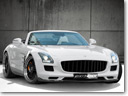 In matters of individualisation the traditional tuning house Kicherer has taken on the new AMG Mercedes SLS Roadster.


 To continue the epic battle between the two of the most brutal tuning companies on the market -G-Power and Brabus, now we will compare BMW M3 E92 SK II and BULLIT. Both cars are extremely powerful and expensive, of course, especially the Mercedes.


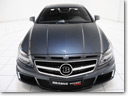 BRABUS has been building the world’s fastest street-legal sedans for many years. This tradition started in 1996 with the BRABUS E V12 that had a top speed of 330 km/h (205 mph), and continued in 2003 with the E V12 Biturbo that reached 350.2 km/h (217.6 mph). In 2006 the BRABUS ROCKET, built in small-series production based on the first edition of the Mercedes CLS, improved the world record to 365.7 km/h (222.7 mph). The BRABUS E V12 “one of ten” based on the latest E-Class, pushed the record to 370 km/h (230 mph).


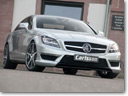 The automobile manufacturer Carlsson uses the stylish shapes of the new generation of Mercedes-Benz CLS models (type C 218) to underline the vehicle’s elegance and sportiness. At the top of the line is the Carlsson CK63 RS based on the Mercedes-Benz CLS 63 AMG with Performance Package which will have its world premiere at the Frankfurt Motor Show 2011.


 320 kW of power and a peak torque of 3,200 Nm (2,360 lb-ft) from four electric wheel hub motors point the way to the powerful, efficient and ecofriendly luxury sedan of the future. Based on the latest Mercedes E-Class, BRABUS ZERO EMISSION, a business division of BRABUS, has developed the fully operational BRABUS High Performance 4WD Full Electric concept car. The all-wheel-drive vehicle, which celebrates its world debut at the 2011 IAA, accelerates from 0 – 100 km/h (62 mph) in just 6.9 seconds and reaches a top speed of 220 km/h (137 mph) – and all without emitting as much as a single gram of CO2. A powerful 56-kWh lithium-ion battery pack provides an operating range of up to 350 kilometers (217 miles). There are plans for a small-series production run of this unique automobile.


 Substantially more agile and efficient, but as comfortable and spacious as ever – the new B-Class from Mercedes-Benz is a winner on all fronts. The vehicle’s lower height and more upright seat position provide for a first impression that hints at the compact sports tourer’s dynamic credentials.


 The Mercedes-Benz SLK 55 AMG is the most powerful SLK of all time. Its newly developed AMG 5.5-litre V8 engine featuring cylinder shut-off combines the ultimate in performance with the best possible fuel consumption. With a peak output of 422 hp and maximum torque of 540 Nm, the SLK 55 AMG outperforms all of its direct competitors. Its fuel consumption of 33.6 mpg on the combined cycle and CO2 emissions of 195 grams per kilometre are around a 30 percent improvement of that of its predecessor. High levels of driving dynamics are ensured thanks to the AMG sports suspension with Direct-Steer system, Torque Vectoring Brakes and 3-stage ESP®, as well as the AMG high-performance braking system.


 Piecha Design has unveiled their tuning package for the famous Mercedes-Benz SL R230. The roadster is in its eleventh year of production, which means a lot. However, it need a little more style and the tuner specialists offer it.


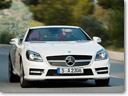 Mercedes-Benz has announced the new 2012 SLK 250 CDI offering unique feelings at decent price and don’t mean the car. The roadster combines good performance and low fuel consumption.


