Here is a nice video of Mercedes-Benz SLS AMG Roadster tested by Sport Auto.
It is powered by a 6.2 liter naturally aspirated V8 with 571PS (420 kW) and 650Nm (479 lb-ft) of torque. It is mated to the AMG SPEEDSHIFT DCT 7-speed sports gearbox, which shifts in as little as 100 milliseconds. There are also four different driving modes: “C” (Controlled Efficiency), ”S” (Sport), “S+” (Sport plus) or “M” (Manual).
0-100 km/h in 3.7 seconds and a top speed of 317 km/h (197 mph). The kerb weight is 1661 kg (3661 lbs).
The exterior boasts full AMG performance package as well as the interior. There is also – leather upholstery, mettalic accents and nice AMG sports seats with AIRSCARF. The options list includes a Bang & Olufsen audio system and an AMG Performance Media system.
It stands on 19” rims at the front fitted with 265/35 ZR19 ultra-performance tires and 20” rims at the rear wrapped in 295/30 ZR20.
Check out the acceleration from 0 to 327 km/h and some other interesting moments in the video below.
The Mercedes-Benz SLK is a roadster which was one of the firsts to have a foldable metal roof. Since then, the newest model R172 is the third generation of this exquisite vehicle. What LSD tuning company has done on it is basically to develop tailor-made door hinges for retrofitting, for more safety and precision when opening and closing the doors. In addition to that the LSD door hinges are equipped with the new Guided Roller System (GRS). Furthermore, in order to provide even more stability while the doors are being open, the swing arm is fixed with an additional locking mechanism. And this is why the LSD doors are so popular. Another highlight is that they come with a TÜV certificate, which proofs that they meet all safety standards.
What is more, the LSD doors come with advanced technology and highest quality standards. In fact, “Federal Motor Transport Authority” has approved that the LSD solution patented in Germany is as secure as an original fitted door. But what does this mean: in general, it means that during side impact, the passenger’s safety is ensured through the LSD system. In addition, the door hinges are a perfect fit due to the three-dimensional adjustments and the fact that the LSD doors are installed at the original fixing points. And what happens when the doors begin to open: well, the original doors open with the LSD hinges first outwards and then gently glide upwards. The LSD hinges for the SLK come as a kit including complete set of cables, fitting components and accessories for 1799 Euro.
Mercedes-AMG is going to include in the 2012 Formula 1 season Official F1™ Safety Car and the Official F1™ Medical Car based on SLS AMG and C 63 AMG Estate, respectively, thus ensurring maximum safety in extreme conditions. The gullwing model with its one-of-a-kind roof lights and distinctive FIA (Fédération Internationale de l’Automobile) and F1 logos on its aluminium body, has been official Safety Car for Formula 1 for two years already. The SLS AMG is sent out on the track, as soon as the Race Control considers that the safe progress of the race may be impeded. In fact, FIA has entrusted the task of driving the Safety Car to the racer Bernd Mayländer since 2000. In addition, the SLS AMG Official F1™ Safety Car is also on call throughout the race weekend accompanying race series, such as the GP2 and GP3 Series and the Porsche Supercup. In details, during the last years Formula 1, the SLS AMG Official F1™ Safety Car was deployed twelve times. In addition, at the Monaco Grand Prix there were two Safety Car phases, while the Grands Prix in Belgium, Italy, Singapore, Japan and Korea each had just one Safety Car phase. But there was no other year like 2010, when the Safety Car was deployed 21 times, a figure which is an absolute record.
What makes the SLS AMG the perect Safety Car? First, it is low kerb weight, has low centre of gravity and balanced weight distribution, which in addition both are combined with a powerful AMG V8 engine and dual clutch transmission in a transaxle arrangement. Furthermore, the engine, power train, suspension and braking system of the Safety Car are the same as those found in the standard production SLS AMG, with the exception of the newly developed exhaust, which was specifically designed to provide even more emotionally-charged sound experience. In detials, the AMG 6.3-litre V8 engine achieves a peak output of 420 kW (571 hp) at 6800 rpm and a maximum torque of 650 Nm (480 lb-ft) at 4750 rpm. This enables the vehicle to accelerate from 0 to 100 km/h in just 3.8 seconds. In addition, the outstanding SLS AMG’s driving dynamics deliver great performance thanks to the aluminium spaceframe body (it weighs only 1620 kg). The low center of gravity has been achieved thank to the dry-sump lubrication system. The installed position of the engine behind the front axle, and the transaxle arrangement of the transmission on the rear axle, have a positive effect on the weight distribution, which is 47/53 percent (front/rear). The AMG SPEEDSHIFT DCT 7-speed sports transmission with dual-clutch technology enables short shifting times. At the same time the integrated mechanical multi-disc differential lock, together with the 3-stage ESP® deliver nothing else but outstanding traction. The suspension of the AMG is with aluminium double-wishbone arrangement, which is usually found in racing cars. In fact, this technology offers a number of benefits like high cornering limits, precise turn-in ability, first-class agility and low mass inertia during fast changes in direction. Additionally, the braking distances are minimised and resistance to fading is maximised due to the high-performance AMG ceramic composite braking system. The SLS AMG also features weight-optimised 10-spoke forged wheels fitted with size 265/35 R 19 (front) and 295/30 R 20 (rear) tyres.
2012 Mercedes Benz SLS AMG Official F1 Safety Car
What makes the Official F1™ Safety Car different from a standart production SLS AMG is the roof light bar. It boasts an aerodynamically efficient profile and sits on a carbon-fibre hood. All of the bar’s light functions are handled by LEDs; they offer a fast response time and low power consumption. In particular, the two centrally positioned green lights on the front and rear are lit up when the gullwing model joins the field at the start of a Safety Car phase. Permanent green is the signal for all Formula 1 drivers to overtake the Safety Car. On the other hand, the orange light are switched on, as soon as the Safety Car has positioned itself in front of all of the Formula 1 racing cars. The flashing orange lights on the outer ends of the bar indicate that no overtaking whatsoever is allowed. In additiom the roof light bar also incorporates a camera, and a second one is located next to the rear number plate, which allows the driver and co-driver to monitor the Formula 1 cars behind via a screen in the cockpit. There is also special number plate on the rear and 700 green LEDs. They provide additional safety in darkness or wet weather. Another important feature is the stroboscopic lights in the headlamps and tail lights, which are activated permanently and provide a signalling function.
How about the interior of the Safety Car? Well, it is not much different from a standard production model: it includes sport bucket seats with black leather upholstery. On the right side of the AMG DRIVE UNIT there are four coloured buttons which are used for controlling the various light functions and the signal horn. The centre console is also finished in carbon-fibre. The steering wheel in wrapped leather/Alcantara and has a specially contoured grip area, a high-grade metal insert and a 370 mm-diameter rim with a flattened lower section. The seven gears of the dual-clutch transmission are changed using the two high-grade metal shift paddles. Furthermore, two central monitors in the cockpit are used to monitor the progress of the race.
2012 Mercedes Benz C63 AMG Estate Official F1 Medical Car
To accompany the SLS AMG Official F1™ Safety Car in the 2012 season, Mercedes-AMG has provided the Official F1™ Medical Car, which will be responsible for ensuring a rapid emergency response if an event of accident occurs. The C 63 AMG Estate is perfectly equipped and provides outstanding driving dynamics: it includes the AMG 6.3-litre V8 engine with the AMG Performance package, which produces 358 kW (487 hp). In addition, the forged pistons, connecting rods and lightweight crankshaft have been adopted from the drive system of the gullwing model. The lower inertia of the components, allows the naturally aspirated eight-cylinder engine to rev freely and respond with even more agility. What makes the car different from a standart C63 AMG, is the variable intake manifold, which lurks beneath the bonnet in a titanium grey paint finish. It helps to accelerate the vehicle from 0 to 100 km/h in only 4.4 seconds. The engine is mated to the standard AMG SPEEDSHIFT MCT 7-speed sports transmission, with wet start-up clutch, four driving modes, a double-declutch and a RACE START function. The excellent driving dynamics are also ensured by the adjustable coil-over suspension. The car sits on the AMG light-alloy wheels, painted in matt black with high-sheen rims and fitted with size 235/35 R 19 (front) and 255/30 R 19 (rear) tyres. The vehicle also has a differential lock and the 3-stage ESP®. Maximum durability is provided by the optimised coolant, engine oil, transmission fluid and power steering fluid cooling. Visually, the Medical Car resembles the Safety Car, and the main reason for this are the light bar on the roof, the FIA and F1‑logos, the stroboscopic LED lights at the front and rear, and the rear number plate illuminated with LEDs and with “Medical Car” lettering. Furthermore, four AMG sports bucket seats with six-point seat belts, two monitors integrated into the centre console for monitoring the race and a radio set for communicating with Race Control distinguish the interior of the Official F1™ Medical Car from that of the standard production C 63 AMG Estate. Of course, there is plenty of space for all of the emergency equipment.
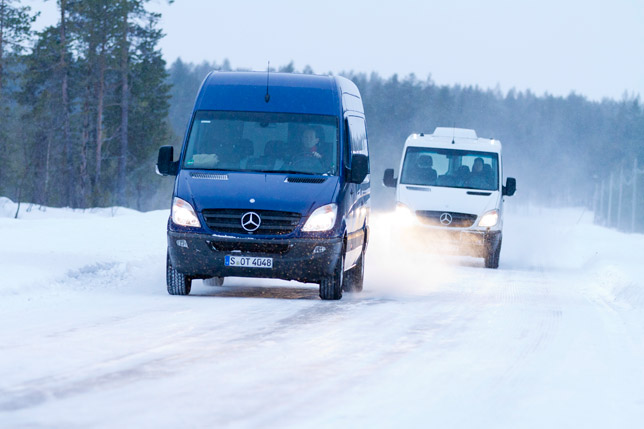
The new 2012 Mercedes-Benz Sprinter is ready to hit the market. The vehicle is put on tough, practical testing, which focuses on the key customer requirements of safety, economy and comfort.
Some of the innovations include a 7-speed torque-converter automatic transmission. So, the new Sprinter is the first van in the world to be available with it. The fuel consumption is reduced even further by the BlueEFFICIENCY package and a higher axle ratio. Other very important technology is the standard fitted ESP – stability control program.
Like all new components of Mercedes-Benz vehicles, these new features have to demonstrate their ability to withstand extreme testing in unforgiving conditions near the Arctic Circle.
The testing program includes starting and running at minus 30 degrees Celsius and even lower. Everything is tested, from the cold-start of the engine equipped with the BlueEFFICIENCY package through the new 7-speed automatic gearbox and other control systems. Their sensors have to be tuned with absolute precision to ensure that the systems are always ready to intervene with corrective measures – regardless of how hostile the operating conditions may be.
The fuel consumption is one of the most important features for the working vehicles. So the new Sprinter can be equipped with BlueEFFICIENCY package, which cuts it with 0.5 liters per 100 km. It comprises of the ECO start/stop function, tyres with reduced rolling resistance, the ECO power steering pump, alternator management and an electrically controlled fuel pump. The result is excellent – 7.4 liters per 100 km.
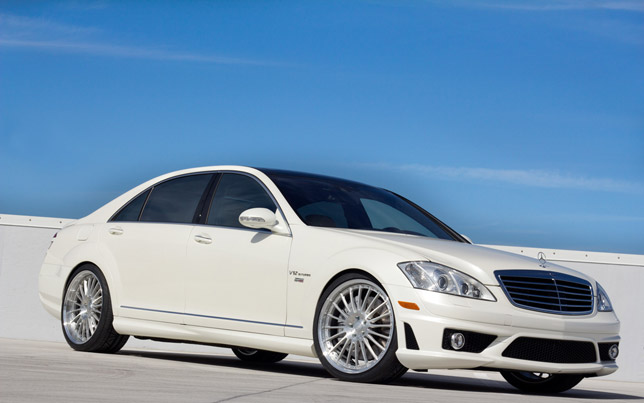
RENNtech featured 21″ Forged Wheels on the absolutely astonishing Mercedes-Benz S 65 model. The wheels have a brushed finish and in addition are combined with the RENNtech digital lowering module (DLM). Thus the S Class now has even more aggressive stance and sporty look. RENNtech Signature wheels include a single barrel design. They have been manufactured with some unique state-of-the-art processes. As you can see they are elegant and refined thank to the forged design, which includes much tighter tolerances than spun multi-piece wheels. Of course, only highest quality materials were used to ensure that the wheels are superior overall to any 3-piece design. Moreover, this multi-spoke forged wheel offers an ultra lightweight wheel with unmatched strength for the most demanding of performance driven enthusiasts.
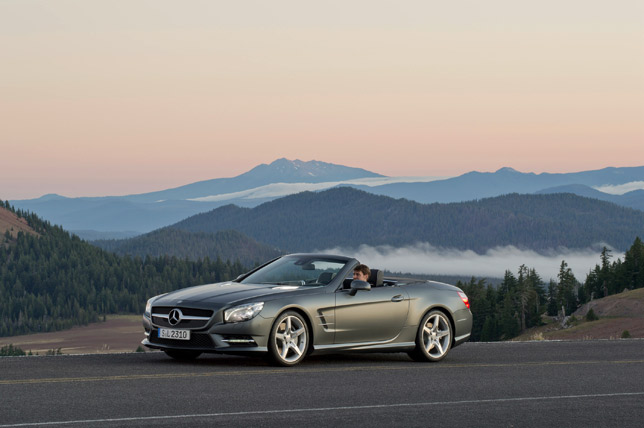
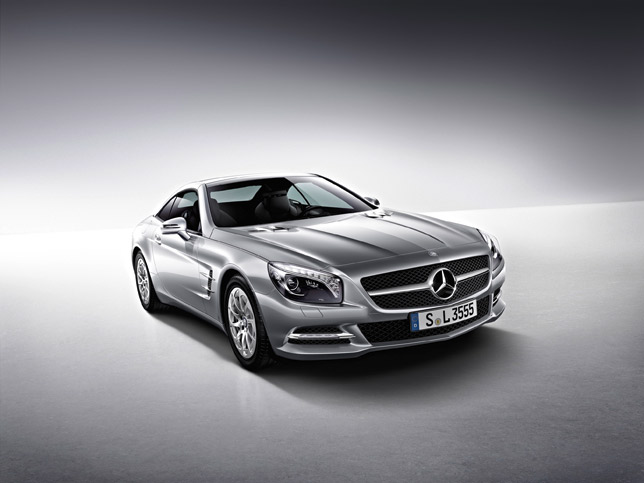
The Mercedes SL. “Open top” immediately springs to mind. We tend to think of cabriolets as slow, wobbly and impracticable – a direct contradiction to what SL stands for. “Super Leicht“ or “Super Light” is the exact way where Mercedes are going with the new SL in town. Its more powerful, more economical, lighter and smarter.
The body is almost entirely made up of aluminum. The A pillars have some heavy duty steel in them but that’s understandable. The cover behind the fuel tank is from magnesium which is even lighter than aluminum. Compared to it’s predecessor, the new, longer and wider SL 350 weighs 140 kg less. That means more agility, better handling, better delivery of power and better economy. Most importantly, that diet does not compromise on rigidity, safety and comfort.
The all-new suspension set, which also has some bits and pieces in aluminum, is supposed to be comfortable yet up for occasional thrashing around the bends. Semi-adjusting damping control comes as standard but those who want even more flexibility can opt for the active suspension system ABC (Active Body Control). Either way, you are going to get some great feedback from the steering wheel as it uses an electromechanical Direct-Steer system which adjusts the firmness of the power steer in accordance with the current speed.
Mercedes-Benz SL (2013)
For power, the SL 500 uses a 4663 cc V8 that is 0.8 liters smaller than the one in the fifth generation SL. Despite that, it develops 435 hp – 12 percent more power. It’s more economical as well. 22 percent more economical to be exact. In the mean time torque now, is not 530Nm but the staggering 700Nm. The engine in the SL 350 is still a 3499 cc V6 but it too is more powerful than before. 306 hp and 370Nm of torque drink up only 6.8 litres of fuel per 100km – 30 percent less than before. All those percentages seem overblown but when we inspect the tech under the bonnet, all seems plausible. The engines are from a line called BlueDIRECT and as we all know, blue is the new green. ECO start/stop systems come strictly with both engines. The 7G-TRONIC PLUS automatic transmission that crunches all that power is fully optimized with comfort and frugality in mind. That however, does not mean, in any way, power compromising: The SL 350 accelerates from 0 to 100 km/h in 5.9 seconds, making it three tenths of a second faster than its predecessor. The SL 500 takes just 4.6 seconds – eight tenths less than the previous SL 500.
The options list is admirably lengthy. Among the many extras, there’s this Magic Vision Control and Magic Sky Control. One makes your wipers sprinkle water and the other is basically a panoramic vario-roof that can go from opaque to transparent with the push of a button. Pretty neat stuff but people wont be piling up to see you in the car. They’ll want to see the car itself because its too damn pretty.
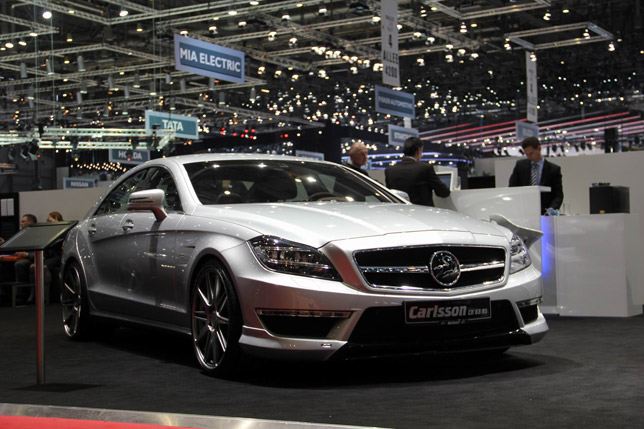
2012 Carlsson Mercedes-Benz CK63 RS is based on the Mercedes-Benz CLS 63 AMG and carries the powerful V8-Biturbo with added performance package by Carlsson Autotechnik. First, the AMG eight-cylinder engine with a cylinder capacity of 5.461 cm already produces 557 hp (410 kW) at 5,500 rpm and a maximum torque of 800 Nm (588 lb-ft) at 2,000 rpm. However, Carlsson engineers additionally improved the engine and increasedits power to the significant 652 hp (480 kW) with a maximum trque of 1000 Nm of 2,000 – 4,500 rpm, the maximum torque lies at 1,000 Nm (735 lb-ft). This power increase allows the Carlsson CK63 RS to accelerate from 0 to 60 mph in only 4.1 seconds. In addtion, a tailor-made, multi-flow, complete stainless steel exhaust system with downpipes, metal catalysts and front and rear silencers supports the power enhancement and is also fitted with an exhaust damper system.
2012 Mercedes-Benz Carlsson CK63 RS
Furthermore, Carlsson has modified the vehicle at the front axle thus making it more agile. The AMG Ride Control sports suspension springs at the front axle have been replaced with Carlsson springs with more progressive spring characteristics. They lower the CLS by 30 millimeters. In addition 1/10-type Carlsson wheels in a stylish star design with single and double spokes embellish the wheel housing of the Carlsson sports sedan. They are with 9 x 20” rims at the front and 10.5 x 20” at the drive axle. More aerodynamic components were featured in the tuning: front spoiler and the RS front spoiler lip, black stainless steel grille inserts, rear spoiler, together with the rear apron insert, integrated Carlsson RS rear diffuser made from real carbon.
The interior of this Carlsson vehicle was made by master-saddlers applying thier traditional hand-craftsmanship. Of course, they have used the finest materials: leather, the finest Alcantara, carbon fiber, natural woods and other exclusive natural materials. A combination of brown Alcantara and mocha-brown Carlsson NAPPA EXCLUSIVE leather wrappes the interior. Moreover, thee interior modification for the Carlsson CK63 RS is eventually finished with details, such as Carlsson foot mats, door sill panels with blue, illuminated Carlsson lettering and door-locking pins made from polished aluminum.
2012 Carlsson Mercedes-Benz CK63 RS has jus been presented in 2012 Geneva Motor Show.
Here are two videos that promote an event called the Houston Half Mile Shootout. A familiar figure is in both of them – John Hennessey from Hennessey Performance which are organizing the event. We get a little intro at the beginning of both videos and we witness a half mile run at Ellington Field.
The cars – A Lamborghini Aventador 700-4, ownership to the Houston Texan linebacker Mario Williams. Hennessey is not driving this one but nevertheless, let us enjoy a bit of drama and thunder as we hear the sounds comingout of the6.5-liter 700bhp V12engine behind them. That majestic roar might be roughly translated into “Do not leave me behind, I am still mean, bad, serious and extremely cool” – a clear reference to the Aventador J hype that has been going on these days. Or maybe that’s just me talking.
On the second video, Hennessey himself has a go in an AMG SLS Roadster – even more noise and hair shuffling as a bonus. Small wonder. The Roadster has 571bhp 6.2-liter V8 engine that slams your face against the elements.
Everything revolves around the preparation for the Houston Half Mile Shootout event that will take place, along with the 4th annual Aeros & Autos event, at the Ellington Airport, Houston TX on the 12th of May. Registration is now open with as many as 115 vacancies still open. Let the challenge begin!
Hamann, have a few treats for us awaiting at the Geneva Auto Show. There, we’ll see their idea of a BMW M5 and also this – the Hamann Hawk AMG SLS Roadster. It’s a hardcore matte-red lacquered open top SLS. Their recipe for it rather common – add some aerodynamic bits, squeeze the engine for more power, make it sound better, big wheels and an interior, more luxurious than a honeymoon suite. The end result is brilliant.
Straight to the point, power is now 636 BHP with maximum torque being 680 Nm at 4,850 rpm. A new, sports exhaust system, an air filter and some fiddling with the electronics are all to blame for that. Set the launch control right and you’ll the 100 km/h threshold in no more than 3.6 seconds. Keep your foot on the throttle and eventually the needle will reach 320 km/h.
The outside additives have been designed in a wind tunnel to get the maximum down force potential from them. The front bumper is new and supposed to reduce lift while the aggressive air inlets and new LED modules on it, give the SLS‘s face some spunk. And while we are at the front, it’s worth mentioning the carbon fiber checkered hood that has equally menacing air outlets. The wheel arches are so flared up, that they’ll even make a hippopotamus green with envy. Side skirts sort of connect the both ends and complement the wheels while the back bumper has a diffuser and housing for four 90mm wide exhaust pipes.
Hamann Hawk AMG SLS Roadster
For some exceptional handling, the Hawk has been fitted with four height-adjustable dampers which can lower the whole thing by 30 mm in total. Also, four sticky tires – 245/30 ZR 21 at the front and 345/25 ZR 21 at the rear – are wrapped around single piece, super light “Unique Forged Anodized” 21 inch wheels.
Inside, attention to detail is what it counts. Leather and suede patterns are seen all around while red carbon patches adorn the center console, instruments, door sill protectors and air vents. As an overall product, the Hamann Hawk SLS Roadster does really do honor to its potential owner.
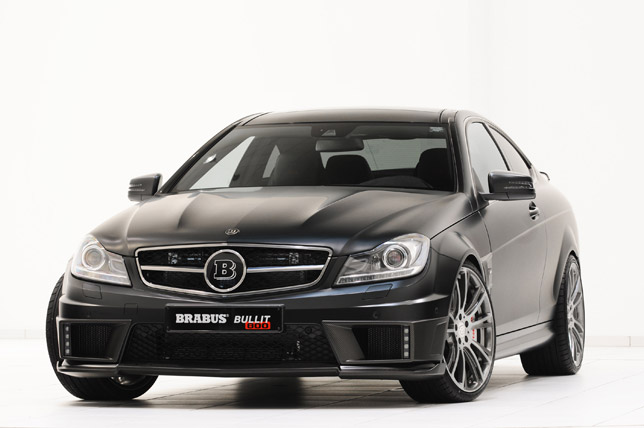
The exceptional Brabus Bullit Coupe 800 is a powerful and ultrafast vehicle based on the two-door Mercedes-Benz C 63 AMG model. It will make its’ first appearance at the 2012 Geneva Motor Show, where the public will have the opportunity to take a close look at it. Instead of the 6.3-liter V8 engine, which powers the production car, a twelve-cylinder engine in BRABUS 800 V12 Biturbo specification dwells beneath the matte-black exterior. It delivers the breathtaking 800 hp (788 bhp) / 588 kW and has a peak torque of 1,420 Nm (1,047 lb-ft). This makes possible for the 2012 Brabus Mercedes-Benz C 63 AMG Bullit Coupe 800 to accelerate in 3.7 seconds to 100 km/h (62 mph), and in 23.8 seconds from 0 – 300 km/h (186 mph). The top speed is 370 km/h (230 mph). The supercar is also equipped with 20-inch BRABUS Monoblock R wheels, a sport suspension with customer-selectable ride height and damper rates, a high-performance brake system and exclusive cockpit design.
Numerous modifications to the reinforced C-Class body of the Mercedes-Benz C 63 AMG were necessary to implant the turbocharged V12 into the engine bay. The BRABUS 800 V12 Biturbo engine is derived directly from the BRABUS E V12 one of ten. For this purpose an up-to-date Mercedes S 600 engine Motor is completely reengineered in the company engine building shop. The three-valve engine is increased from 5.5 to 6.3 liters (336 to 384 cu. in.) with the help of a special crankshaft with longer stroke, larger, forged pistons and an increase in cylinder bore. Intake and outlet ports of both cylinder heads are optimized for mixture flow, and fitted with sports camshafts. The increase of the horsepower was achieved thank to the newly configured exhaust side. In addition, the BRABUS 800 Biturbo system includes two special exhaust manifolds with integrated high-performance turbochargers, and four water-to-air intercoolers. Furthermore, especially for this version was created the stainless-steel high-performance exhaust system with free-flow metal catalysts and driver-controlled butterfly valve. The end result is that the engine now produces 800 PS (788 bhp) / 588 kW at 5,500 rpm and has a peak torque of 1,420 Nm (1,047 lb-ft), which of course is electronically limited in the car to 1,100 Nm (811 lb-ft). In the car is also mounted a seven-speed automatic transmission, which is shifted either automatically or manually via shift paddles on the steering wheel. Therefore, it is no surprise that the acceleration time of the car from 0-100 km/h (62 mph) is just in 3.7 seconds. The top speed is more than 370 km/h (230 mph).
2012 Brabus Mercedes-Benz C 63 AMG Bullit Coupe 800
The extraordinary looks of the BRABUS BULLIT Coupe 800 is accompanied by the new BRABUS Monoblock R wheels. Their design includes two times five double spokes arranged on two different plains. While the posterior plain has a titanium paint finish, the anterior surfaces are polished and coated with a smoke-colored clear lacquer, which lends the wheel a highly individual character. They come in sizes of 8.5Jx20 in front and 9.5Jx20. In addition, the high-performance tires are in sizes 235/30 ZR 20 and 275/25 ZR 20 and are supplied Pirelli.
Furthermore, the BRABUS high-performance brake system comprises of vented and grooved steel brake discs that measure 380 x 37 millimeters (15.0 x 1.45 in.) and 12-piston aluminum fixed calipers in the front. They are combined with vented and grooved steel discs (360 x 28 millimeters (14.2 x 1.1 in.)) and six-piston fixed aluminum calipers on the rear axle.
The interior in the cockpit of the Brabus Bullit Coupe 800 is sporty and exquisite. The upholstery is a combination of black leather and Alcantara, which of course matches the outer skin. Red contrasting seams add discrete sporty highlights. The final look is made by the genuine carbon-fiber components on the dashboard, center console and door trim. The steering wheel as well as aluminum pedals and shifter also add to the sporty look of the car.
2012 Brabus Mercedes-Benz C 63 AMG Bullit Coupe 800
Technical Data:
Body:
2-door coupe based on the Mercedes-Benz C 63 AMG Coupe; steel unibody welded to floorpan;
BRABUS BULLIT Coupe 800 aerodynamic-enhancement kit for reduced lift on front and rear axle and reduced drag, consists of:
front spoiler, air routers for the lateral air inlets and outlets, air vents in the front fenders, rear wing and rear diffuser;
BRABUS hood with integrated ram-air intake system.
Dimensions:
Length
4,707 mm (185.3 in.)
Width
1,795 mm (70.7 in.)
Height
1,361 mm (53.6 in.)
Curb weight
1,820 kg (4,012 lbs.)
Gross vehicle weight
2,160 kg (4,762 lbs.)
Tank capacity/reserve
66 l / 14.0 l (17.4 / 3.7 gal.)
Engine:
BRABUS 800 V12 Biturbo high-capacity engine based on Mercedes 600;
displacement increase to 6.3 liters (384 cu. in.) by means of a special crankshaft with longer stroke, larger cylinder bore and corresponding larger pistons;
mixture-flow-optimized intake and outlet ports of both cylinder heads, including installation of high-performance camshafts;
BRABUS 800 V12 Biturbo system with two high-performance turbochargers with optimized exhaust manifolds and integrated turbine housings;
more efficient intercooling system with four water-to-air intercoolers;
ram-air intake integrated into hood;
BRABUS stainless-steel twin exhaust system with free-flow metal catalysts and butterfly valve;
newly programmed mapping for engine and on-board diagnostics.
V12-cylinder three-valve alloy engine with two turbochargers:
Displacement
6.233 cc (380.4 cu. in)
Compression ratio
9.0 : 1
Rated power output
800 hp (788 bhp) / 588 kW at 5,500 rpm
Peak torque
1,420 Nm (1,047 lb-ft) from 2,100 rpm (electronically limited to 1,100 Nm / 811 lb- ft)
max. CO2 emissions
372 g/km (595 g/mile)
Fuel type:
Super plus (98 ROZ)
Motor oil:
MOTUL
Power Transfer:
Rear-wheel drive with limited-slip differential and ESP; Reinforced seven-speed quick-shift automatic gearbox
Gear ratios:
1st gear
4.38
2nd gear
2.86
3rd gear
1.92
4th gear
1.37
5th gear
1.00
6th gear
0.82
7th gear
0.73
1st reverse gear
3.42
2nd reverse gear
2.2
Suspension:
independent front and rear suspension with height-adjustable BRABUS coilover sport suspension developed in cooperation with BILSTEIN;|
Front axle:
three-link suspension, anti-dive geometry, Height-adjustable BRABUS struts with gas-pressure shocks with 10-way adjustable bound and rebound, coil springs, BRABUS sport sway bar;
Rear axle:
multi-link suspension, anti-dive and anti-squat geometry. Height-adjustable BRABUS struts with gas-pressure shocks with 10-way adjustable bound and rebound, coil springs, BRABUS sport sway bar;
Wheels:
one-piece BRABUS Monoblock R alloy wheels with Continental, Pirelli or YOKOHAMA high-performance tires.
Front: 8.5J x 20 H2 with 235/30 ZR 20
Rear: 9.5J x 20 H2 with 275/25 ZR 20
Brake System:
dual circuit brake system with Brake Assist and BRABUS high-performance brake system:
Front: BRABUS 12-piston fixed aluminum calipers with vented and grooved steel discs measuring 380 x 37 mm (15.0 x 1.45 in.)
Rear: BRABUS six-piston fixed aluminum calipers with vented and grooved steel discs measuring 360 x 28 mm (14.2 x 1.1 in.)
Performance
0 – 100 km/h (62 mph)
3.7 sec.
0 – 200 km/h (124 mph)
9.8 sec.
0 – 300 km/h (186 mph)
23.8 sec.
Top speed
more than 370 km/h / 230 mph
Fuel Economy
Max. city
23.4 l / 100 km (10.0 mpg)
Max. highway
10.4 l / 100 km (22.6 mpg)
Max. combined
15.1 l / 100 km (15.6 mpg)
2012 Brabus Mercedes-Benz C 63 AMG Bullit Coupe 800 has an MSRP starting at EUR 378 000.
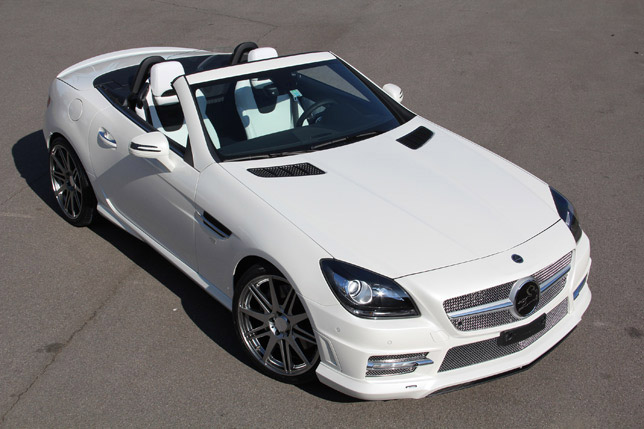
Another Carlsson gem at the 2012 Geneva Motor Show – the Carlsson Mercedes-Benz SLK will showcase all there is to showcase in exclusive accessories. The interior has been adorned with some Nappa leather, the exterior with some aerodynamic bits and pieces along with some wheels and there’s a performance upgrade for that extra punch.
Additional power comes from something called CB25 S. It’s a package for the SLK engine. Alongside a C-Tronic additional control unit from Carlsson’s Plug-and-Drive series, the kit also sees a new, larger intercooler. At the end of the day we have 176 kW (239 BHP) rushing out as apocalyptic thunder from the flow-optimized, stainless steel rear muffler.
Visually, the Carlsson SLK harbors an aerodynamic package similar to the one found in the AMG sports package. At the front there’s a Carlsson bumper with an RS lip spoiler made from carbon. Grille inserts made from electro-polished stainless steel replace the plastic honeycomb grille found in the front skirt of the series model. At the back we also have a new skirt insert along with the diffuser and a trunk lip spoiler. Thanks to a suspension tweak, the SLK sits lower by 30 mm on a set of Carlsson light metal alloy wheels measuring 8.5 x 19 inches at the front axle and 9.5 x 19 inches on the rear.
Inside a hand-stitched Nappa leather festival opens up as you step in. It’s called the Carlsson Signature Line and no matter what the temperature, the natural and exclusive material on the seats constantly assimilates to the temperature of your own body. In case you forget, Carlsson have scattered numerous reminders that this car is their child – Carlsson pedal overlays, Carlsson footrests, Carlsson door locking pins made from brushed aluminum, door sill panels and the glass wind deflector with the laser-printed Carlsson logo.
Mercedes-Benz is going to mark the 60th anniversary of “S-Class Coupé” with the launch of the 2012 Mercedes-Benz CL Grand Edition model. Since the start of the production of the sensational 300 S in 1952, the brand has established the lineage of today’s CL-Class. Hence, ever since then, the large S-Class Coupés have been considered the epitome of automotive refinement. These exceptional two-door luxury-class coupés deliver premium comfort of a prestige luxury saloon, in combination with the dynamics of a sports car. All this: in the form of an exceptionally elegant tourer. For the new “Grand Edition”, Mercedes-Benz has further enhanced the sophistication of the design of the iconic vehicle.
In details, to emphasise further the exceptional, hand-finished character of the limited edtion CL‑Class, the designer has furnished the “Grand Edition” with some of the finest ingredients from the exquisite designo range. Therefore, this makes possible for customers to choose between the three designo paint finishes: platinum black metallic, mocha black metallic and magno cashmere white. And to maket with even sportier appeal, there has been also added the AMG Sports package, with powerful front and rear aprons and distinctive side sill panels. This exclusive version sits on 20-inch light-alloy wheels in a choice of five-spoke or filigree 10-spoke designs. A “Grand Edition” badge provides a discreet indication of the CL Coupé’s exclusive-edition status.
2012 Mercedes-Benz CL Grand Edition
Next, the interior of the Mercedes was exquisitely handcrafted and comes with high-quality aniline leather. Three leather colours are available: designo aniline leather armagnac, designo aniline leather deep black and the lighter designo aniline leather porcelain. The full range of CL trim finishes is available, including black ash and high-gloss burr walnut.
2012 Mercedes-Benz CL Grand Edition (Interior)
Speaking in technical terms, the CL Grand Edition is no less exceptional than any other CL model. For instance, the active suspension system Active Body Control (ABC) with crosswind stabilisation sets the benchmark for driving dynamics and comfort on all rear-wheel drive CL models. In addition, exclusive safety systems are also included: drowsiness detection system ATTENTION ASSIST, PRE-SAFE® automatic emergency braking, Active Blind Spot Assist, Active Lane Keeping Assist, and Adaptive Highbeam Assist systems. To go even further into details, let’s review the engline range. The current V8 biturbo with a displacement of 4.6 litres and sophisticated spray-guided direct petrol injection system in the CL 500 BlueEFFICIENCY delivers 320 kW (435 hp), provides torque of 700 Nm. More importantly, it offers great fuel efficiency of only 9.5 l/100 km combined; and Co2 emissions of just 224 g/km. The same engine is also used in the CL 500 BlueEFFICIENCY with 4MATIC all-wheel drive. The pinnacle of the engine range is provided by the CL 600 with its astonishing 380 kW (517 hp) 12-cylinder biturbo engine.
 Here is a nice video of Mercedes-Benz SLS AMG Roadster tested by Sport Auto.


 The new 2012 Mercedes-Benz Sprinter is ready to hit the market. The vehicle is put on tough, practical testing, which focuses on the key customer requirements of safety, economy and comfort.



 The Mercedes SL. “Open top” immediately springs to mind. We tend to think of cabriolets as slow, wobbly and impracticable – a direct contradiction to what SL stands for. “


 Here are two videos that promote an event called the
 Hamann, have a few treats for us awaiting at the Geneva Auto Show. There, we’ll see their idea of a




 Another Carlsson gem at the 2012 Geneva Motor Show – the Carlsson Mercedes-Benz SLK will showcase all there is to showcase in exclusive accessories. The interior has been adorned with some Nappa leather, the exterior with some aerodynamic bits and pieces along with some wheels and there’s a performance upgrade for that extra punch.