Tag: Lotus

  • Lotus Evija Fittipaldi

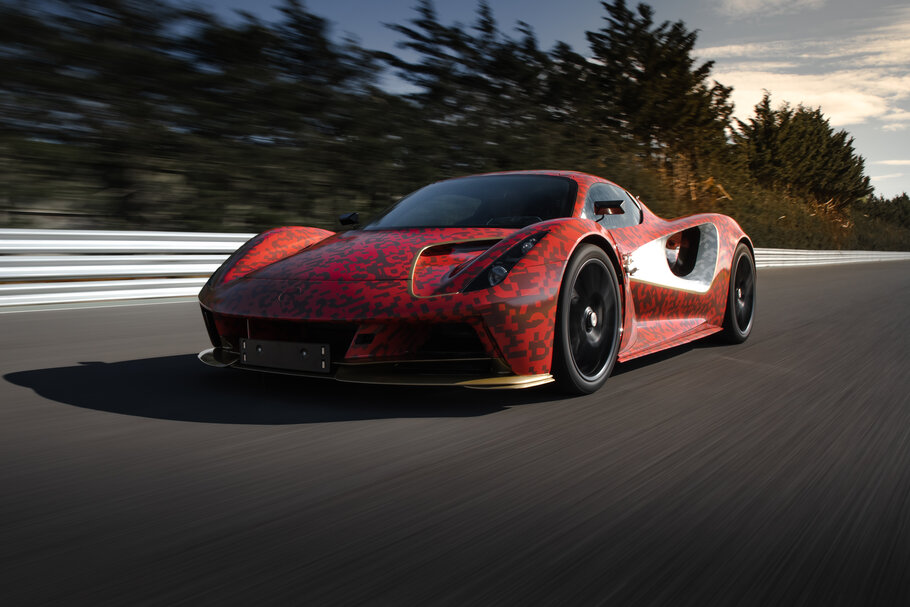
    The world’s most powerful production car – the stunning Lotus Evija hypercar – now delivers even more exclusivity and desirability. Inspired by the past to enhance the future, Lotus has unveiled the Evija Fittipaldi, a tribute to one of the greatest car-and-driver pairings that Formula 1 has ever seen.

    That driver is, of course, Emerson Fittipaldi, the young Brazilian racer who joined Lotus and became a legend, cementing his place in F1 history in 1972. Behind the wheel of the now-iconic Lotus Type 72 and winning five of that season’s 11 races, Fittipaldi secured the Drivers’ Championship for himself and the Constructors’ Championship for Team Lotus.

    Exactly 50 years on, the Lotus Evija Fittipaldi is a fitting celebration of that partnership. Just eight examples of the all-electric two-seater are being hand-built at Hethel in Norfolk, UK – the global HQ of Lotus sports car design and manufacturing – and all are sold. Customer deliveries will begin early next year. It is the latest project from Lotus Advanced Performance, the bespoke design and experiential division of the business launched earlier this year.

    Showcasing the world-famous black and gold colour scheme – also 50 years old in 2022 – the hand-painted exterior and numerous other unique design features have been created to commemorate this amazing collaboration. They include a hand-tinted plan view of the Type 72 etched into the exposed carbon fibre roof, and Fittipaldi’s signature hand-stitched into the dashboard.

    And perhaps the most emotive detail of all is the rotary dial on the floating central instrument panel. It has been hand-crafted from recycled original Type 72 aluminium, ensuring a genuine piece of the iconic F1 racer is part of each Evija Fittipaldi.

    Such a special car deserved a special world premiere; customers, their families and other VIP guests have taken part in an exclusive, once-in-a-lifetime experience day at Hethel to celebrate the launch of the new car and the iconic Type 72.

    Guest of honour was Emerson Fittipaldi himself, who said: “It’s fantastic to be back at Hethel for such a special occasion. I’ve really enjoyed being a part of this project and it’s been a wonderful experience revealing the car to some of the new owners. Having the opportunity to drive both the Evija Fittipaldi and my championship-winning Type 72 Formula 1 car on the test track at Hethel has been an incredible experience.”

    Other highlights of the day included the first time in history that all eight surviving examples of the Type 72 – hence the number of Evija cars being built – were brought together in one place and run on the Hethel test track.

    Simon Lane, Director, Lotus Advanced Performance, commented: “The word ‘legend’ is often overused, but this project has brought together the Lotus Evija hypercar, Emerson Fittipaldi, the Type 72 race car and our brand’s celebrated Formula 1 heritage. No argument, that is four legitimate legends, all collaborating to deliver a truly unique hypercar and a world premiere that was a real ‘pinch yourself’ moment.”

    He added: “Production of the Evija has commenced at Hethel, and these eight cars are a very special celebration of this important moment in our history.”

    The bespoke specification of the Lotus Evija Fittipaldi starts with its unique paint finish, which includes its designation written on the body work in gold lettering to the side of the rear window. Complementing it are black and gold ‘Type 72’ wheels complete with anodized centre lock surrounds – red on the left side of the car and green on the right – as well as black and gold brake calipers.

    Decals that celebrate the Type 72’s race victories from the 1972 season are presented on the active rear wing, while a number 8 has been applied to the B-pillar. Fittipaldi raced with that number on his car during the 1972 season, including for his win at the British Grand Prix. A carbon and gold Lotus nose badge completes the exterior styling.

    Inside, the theme of luxury and bespoke design continues. Black leather interior with gold contrast stitching can be found throughout the cabin, along with exclusive roof liner stitching, plus gold finishes to the air vent surrounds, centre rotary dial, start/stop button and pedals.

    The car has been developed with the generous support of Classic Team Lotus, the historic motorsport business run today by the family of Lotus founder Colin Chapman to maintain and operate Lotus F1 cars. Also based in Hethel just across the road from Lotus, it hosted the gala dinner at the launch event.

    Clive Chapman, Managing Director, commented: “Emerson Fittipaldi and my father enjoyed a very special relationship, and their spectacular success was a brilliant team effort by the dedicated designers and mechanics at Team Lotus. One of motorsport’s most admired drivers, it is always emotional whenever Emerson is reunited with the Lotus Type 72, which he describes as the greatest car he ever raced.”

    He added: “Bringing together the Lotus Evija, the Lotus Type 72, the black and gold livery and Emerson Fittipaldi, all in celebration of his World Championship victory 50 years on – need I say more?”

    Despite its incredible power and performance, the driver remains at the centre of the Lotus Evija experience, just as it was for the Emerson Fittipaldi and the Type 72. The technical specification and performance figures of the Lotus Evija Fittipaldi are truly astonishing; more than 2,000 PS makes it the most powerful series production car in the world, creating more than 1,700Nm of torque. The 0-62 mph (0-100 km/h) is completed in under three seconds, and 0-186 mph (0-300 km/h) takes nine seconds from a standing start. The limited maximum speed is 217 mph (350 km/h). The full technical specification is detailed in the table below.

    From one world champion to another, earlier in the week Jenson Button visited Lotus to test drive the Evija and Emerson’s Type 72 on the famous Hethel test track. It was the first time Jenson had seen the Evija in production and took one out on track to give it a shake down before the launch of Evija Fittipaldi. Quickly getting up to speed Jenson drove the car around the 2.2-mile test track, testing the car’s ride, handling and performance. He was also seen unleashing the power in several standing starts. Full of praise when he jumped out of the driver’s seat of the world’s most powerful production car. Jenson commented: “It sounds like a jet engine! You think of an EV as quiet but it’s not. The torque is astronomical. It’s amazing, it puts a big smile on your face. It feels like a spaceship, the drivability and direction in the steering certainly lets you know you are driving a Lotus; I am amazed by the agility of it. Itt is a Lotus of the future and I can’t wait to drive my own Evija.”

    Jenson also got the chance to turn back the clock and drive Emerson’s 1972 Lotus Type 72. The car that helped Emerson clinch his first driver’s championship. Jenson Button added: “It’s lovely to get into a bit of racing history. There isn’t a lot of space, but everything is in the right position. It was easy to heel and toe. It’s a real privilege to drive such a special car.”

    A stunning piece of contemporary automotive design – the work of a team led by Lotus Design Director Russell Carr – the Evija features a dramatic Venturi tunnel through each rear quarter, giving it a truly breath-taking presence. This ‘porosity’ means optimised airflow, with air channelled not just over, under and around the Evija but through it, maximising downforce while minimising drag. Its front splitter aids grip while channelling cooling air to the battery pack, E-motors and brakes, and active aero features such as a Formula 1-style DRS (Drag Reduction System) bestow the Evija with cutting-edge performance. With driving dynamics overseen by the team of Gavan Kershaw, the world-renowned Vehicle Attributes Director for Lotus, the Evija is a car like no other.

    The first Lotus road car to feature a one-piece carbon fibre monocoque chassis, the cabin – from the fully adjustable race-style seats to the multi-function steering wheel – is the very pinnacle of motorsport-inspired road car design and technology.

    Just as the Lotus Evija is defining a new era of pure electric performance, so the Lotus Type 72 remains the most successful racing car not just of its day, but in F1 history. In 2019 Autosport magazine named it the greatest ever F1 car. A revelation both on the drawing board and on the track, the Type 72 was the first racing car to incorporate aerodynamics as part of its initial design. The integrated rear wing and front splitter were designed specifically to allow the car to slice through the air while also creating vital downforce.

    The Type 72’s air intake was relocated above the driver’s head, ensuring undisturbed and clean air could be sucked straight into the engine, while its radiators were placed in the sidepods of the car rather than the nose. This not only increased cooling efficiency but improved weight distribution – and therefore performance – in the process.

    The same approach was also taken for the brakes, mounting them inboard rather than on each wheel to aid cooling as the tops of the discs protruded through the bodywork. The Type 72 was the first of what became the traditional “wedge on wheels” designs that soon inspired every other competitor on the grid.

    Lotus Evija Fittipaldi technical specification

    Powertrain Pure electric, 4WD
    Power 1500kw (4 x 375kw) / 2,039 PS
    Battery power 93 kW
    Torque 1,704 Nm with torque vectoring
    0-100 km/h (0-62 mph) Under three seconds
    0-300 km/h (0-186 mph) Under nine seconds
    Max speed Electronically limited to 350 km/h / 217 mph
    All-electric range (WLTP Combined) 250 miles (402 km) *
    Charging time (350kWh charger) 18 mins
    Weight 1,887 kg *
    Production run Maximum of 130 cars
    Overall dimensions (L/W/H) 4,459 / 2,000 / 1,122 mm
    Start of Production 2022

    * Target figure

  • Lotus launches Emira GT4 race car with hot laps at Hethel

    2023 Lotu Emira GT4 - Front View

    Lotus has unveiled the all-new Emira GT4 race car on the iconic Hethel test track, with a dynamic demonstration of its thrilling performance.

    At an exclusive event earlier this week VIP guests were treated to passenger laps of the legendary 2.2-mile circuit with Gavan Kershaw, Director of Vehicle Attributes at Lotus and a former British GT Championship winner, at the wheel.

    The culmination of more than 70 years of innovation on the road and track, the Emira GT4 marks the start of an exciting new era in performance GT racing for Lotus. It is the first new model from Lotus Advanced Performance, the bespoke vehicle and experiential division of the business launched earlier this year.

    The return to world motorsport is a key pillar of the company’s transformation from a UK sports car company to a global performance car business and brand.

    This week’s event follows last September’s announcement that Lotus would create a GT version of the critically acclaimed Emira road car. Order books for the Emira GT4 opened at the time and the car has sold out for the first year of production.

    Gavan Kershaw, who has been heavily involved in the development, commented: “We knew we had an excellent starting point for the Emira GT4 because of all the work done to make the road car such a great performer. Showing off the GT4’s dynamic capabilities on the Hethel test track – which has shaped countless race cars and their drivers since Lotus moved to the site in 1966 – is a very special moment for me and all the team involved.”

    Almost all modern Lotus road cars have had race-ready siblings and the Emira is no exception. Each Emira GT4 customer will receive a homologated performance machine, hand-built with lightweight motorsport components and equipment to meet the latest safety regulations. The project has been a collaboration with Lotus and RML Group.

    The advanced composite bodywork makes the car exceptionally lightweight, and is coupled with Toyota’s race-proven 3.5-litre V6 engine and optimised GT4 aerodynamics derived from the road-going Emira’s advanced exterior design.

    Since last September’s announcement, the Hethel-based development team has focused on precision engineering to deliver outstanding dynamics and high-speed stability. Many hundreds of hours of validation work have taken place on the test track, and over the winter the Emira GT4 also headed to Portimão in Portugal for a week. In addition to the better weather, it’s one of the most challenging circuits in Europe, making it the perfect destination to validate aero performance and component reliability.

    Richard Selwin, Race Programme Manager, Lotus, commented: “We’re delighted with how the Emira GT4 programme has progressed. We have an appealing spec and a level of performance that’s going to thrill both customers and spectators around the world. I believe in the Emira GT4 we have a car that promises to be more than competitive.”

    Simon Lane, Director, Lotus Advanced Performance, added: “Lotus’ commitment to motorsport is world-renowned and is one of the key elements of enhanced customer engagement within this recently launched division of the business. We have exciting plans for Lotus Advanced Performance – there is much more to come.”

    Also at Hethel for the Emira GT4 launch event was a Lotus Type 30 sports racer. This white 1965 GT is powered by a Ford 4.7-litre V8, is privately owned and won the Whitsun Trophy at last year’s Goodwood Revival. Only 33 examples of the Type 30 were built and achieved numerous wins in the hands of Lotus legend Jim Clark and others.

    Lotus has been synonymous with racing success ever since the Mark I, a trials car hand-built by founder Colin Chapman in 1948, and the company has pioneered many of the technical innovations which make racing the thrilling sport it is today. Lotus’ impressive roll-call of honours includes seven Formula 1 Constructors’ titles, six Drivers’ Championships and victory in the legendary Indianapolis 500.

    Most recently Lotus has been racing with the Evora GT4, which won prestigious races and championships including in British GT, Dubai 24hrs, Barcelona 24hrs, European GT, Sepang 12hrs and the Pirelli World Challenge.

    Lotus Emira GT4 tech spec and target performance data

    Engine Toyota V6 2GR-FE, dry sump, Motec engine management
    Cubic capacity 3,456 cc
    Power 400bhp*
    RPM 7,200rpm*
    Supercharger Harrop TVS 1900
    Transmission Xtrac six-speed sequential with paddleshift actuation and LSD
    Fuel tank capacity 96-litre FIA FT3-approved, with dry brake filler
    Electronics Motec dashboard with data-logging. Motorsport wiring harness
    Suspension Double wishbone front & rear. Two-way adjustable Ohlins TTx dampers. Front and rear anti-roll bars.
    Brakes Competition specification brake system. Bosch adjustable Motorsport ABS
    Tyres Pirelli GT4 265/645×18 (front) and 305/680×18 (rear)
    Safety equipment FIA-homologated six-point roll cage, FIA-compliant HANS-approved seat with six-point harness. Electronic fire extinguisher system / isolator switches
    Dimensions Length 4,410mm / height 1,290mm / track 1,636mm
    Weight/Mass 1,300kg* without fluids
    Body Extruded and bonded aluminium chassis with composite panels
    Wheels Forged aluminium
    Price From £165,000 (excluding taxes & delivery)
  • Lotus Eletre

    2023 lotus eletre

    The ongoing transformation of Lotus to a truly global performance car brand has reached its most significant milestone yet.

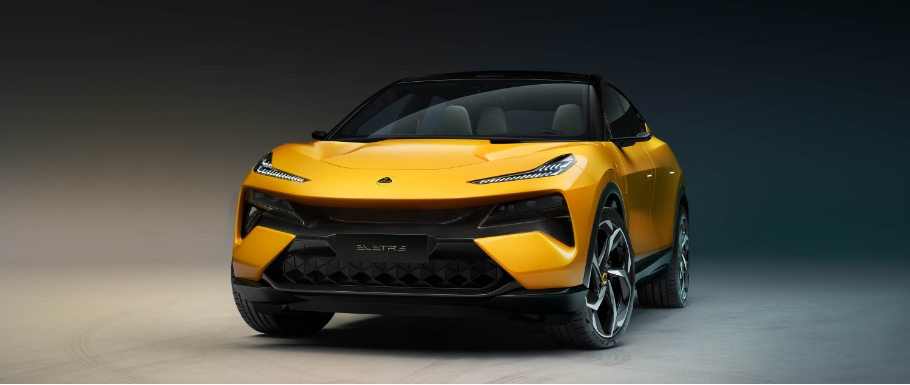
    The all-new and all-electric Lotus Eletre is a striking and progressive Hyper-SUV – the first of a new breed of pure electric SUVs. It takes the core principles and Lotus DNA from more than 70 years of sports car design and engineering, evolving them into a desirable all-new lifestyle car for the next generation of Lotus customers.

    The company’s famed expertise in the fields of ride and handling, steering and optimised aerodynamics have been carefully and respectfully evolved. The Eletre takes the heart and soul of the latest Lotus sports car – the Emira – and the revolutionary aero performance of the all-electric Evija hypercar, and reinterprets them as a Hyper-SUV.

    Known until two days ago only by its Lotus codename, Type 132, the Eletre is a globally relevant product, a shining halo of sustainable mobility for a worldwide audience. Embodying emotion, intelligence and prestige, it extends the reach of the Lotus name, badge and renowned driver engagement to a new audience.

    A bold new dimension to the Lotus performance car portfolio, the Eletre delivers a significant number of firsts for Lotus – the first five-door production car, the first model outside sports car segments, the first lifestyle EV, the most ‘connected’ Lotus ever. And yet it remains a true Lotus, a beautiful car ‘carved by air’, packed with pioneering technology, genuine sporting performance and simplicity of purpose, designed and developed by a passionate and global team. The Lotus Eletre is alive with character and personality.

    The Eletre is 4WD, has a battery capacity that’s over 100kWh and with power from 600hp. A 350kW charger will deliver a 400km (248 miles) range in just 20 minutes. The car’s target maximum WLTP driving range is c.600km (c.373 miles). It also comes with the ability as standard to accept 22kW AC charging which, where available, reduces the time plugged in.

    Technology includes the most advanced active aerodynamics package on any production SUV, and intelligent driving technologies such as the world’s first deployable Light Detection and Ranging (LIDAR) system in a production car. Add in a dynamic walk-up sequence that delivers a moment of theatre every time the driver approaches the car, and it’s clear the Eletre is making a simple statement – this is Lotus reinvented, the birth of a new icon into the Lotus stable.

    Matt Windle, Managing Director, Lotus Cars, commented: “The Eletre is a bold and revolutionary new car, delivering on our commitment to move Lotus into completely new automotive segments as we widen our global appeal and accessibility. This is a momentous point in our history and a clear signal of our ongoing desire to transform our business. It is a true Lotus, and we’re confident it will delight performance car customers and offer a distinct alternative to the segment’s established players. The Eletre has the soul of a Lotus and the usability of an SUV. Alongside the Emira sports car, this is the perfect two-car garage from Lotus.”

    Qingfeng Feng, CEO, Group Lotus, added: “The Eletre, our Hyper-SUV, is a new performance car from an iconic performance car brand and it will appeal to independent-minded and adventurous driving enthusiasts – those who love the thrill of driving. It is a unique combination of beautiful design, exceptional dynamic performance and everyday usability, for those who dare to look beyond the conventional, and marks a turning point for our business and brand.”

    He added: “While the worldwide critical acclaim for the Emira has reaffirmed Lotus’ position as a respected sports car marque, the Eletre will make Lotus accessible to a whole new audience. It is a compelling alternative for those who desire a true driver’s car but whose lifestyle demands something more practical than a traditional sports car. And it is only the start for Lotus – there is much more to come.”

    The Eletre is the first in a new range of premium lifestyle performance electric vehicles to be built at an all-new state-of-the-art production facility in Wuhan, China. The car has been ‘Born British, Raised Globally’, with design led by the UK, supported by collaborative work with teams in China, Sweden and Germany. The overall exterior and interior design has been led by an international team based at the Lotus Tech Creative Centre (LTCC) in Warwickshire, UK.

    Peter Horbury, Senior Vice President, Executive Advisor, Design, Lotus, commented: “The Eletre is a rare creative opportunity in performance car design – the chance to start with a blank sheet of paper and develop an all-new vehicle that takes a brand in a completely fresh direction. There has been a close working relationship and much collaboration between the Lotus design studios in Warwickshire and Hethel. The result is a ‘Hyper-SUV’ that is genuinely different to what’s on the market; the electric powertrain has inspired a ‘cab-forward’ design that echoes the iconic mid-engined layout of Lotus sports cars, creating a unique look and position in the SUV segment. The arrival of the Eletre signals the start of a new era of pure electric SUVs.”

    The Eletre is built on Lotus’ all-new and highly versatile Electric Premium Architecture (EPA). The low-to-the-ground design means outstanding handling, and the EPA can easily adapt to accommodate C+ to E+ vehicle class battery sizes, motors, component layouts and intelligent driving technologies.

    The platform will be the basis for an all-new range of premium lifestyle performance electric vehicles from Lotus. Led by the Eletre, these cars will catapult Lotus into a new era of higher retail volumes and significant revenues.

    The Lotus Eletre is on sale now across global markets, with first customer deliveries in 2023 starting in China, the UK and Europe. For more information and to reserve your Lotus Eletre please visit www.lotuscars.com.

    The Lotus Eletre in detail

    The Eletre is a new icon from Lotus. It is the latest in a long line of Lotus road cars whose name begins with the letter E, and means ‘Coming to Life’ in some Eastern European languages. It’s an appropriate link as the Eletre marks the start of a new chapter in the history of Lotus – the first accessible EV and the first SUV.

    The immersive experience with the Lotus Eletre begins before the driver has reached the car. Pressing the button on the key or smartphone app activates a moment of theatre that’s unique in the automotive world. The car’s exterior lights run through a short sequence, the active front grille ‘breathes’ and the illuminated flush door handles deploy. The experience is repeated inside the car as the door closes behind the occupant.

    Ben Payne, Head of Studio at LTCC, said: “This walk-up sequence is a ‘peacock moment’ – a little ‘showing-off’ that highlights the Eletre’s engaging personality. It’s a visual expression of a car coming to life, and a metaphor for the reinvention of the Lotus business and brand which begins with the Eletre.”

    From the very earliest discussions about the car and its position at the heart of the Vision80-led transformation of Lotus, the Eletre was to be a showcase for how a Lotus can deliver performance-oriented driving thrills and refinement outside of the traditional sports car segments.

    It is ‘Born British Raised Globally’ and that is more than a slogan. It has defined a rewarding collaborative process which has set the standard for the development and quality of the next generation of Lotus performance cars.

    The fundamentals of what makes the Eletre a Lotus were established in Hethel, UK – the iconic home of Lotus since 1966. The global Lotus team worked together to deliver the strategic direction for the forthcoming range of Lotus lifestyle vehicles, plus the dynamic development, systems integration, aerodynamic optimisation and overall driver satisfaction of the Eletre.

    A new Lotus research and development facility, established in China in 2020, utilises the market’s leading intelligent technologies and digital competencies to build the Eletre at an all-new state-of-the-art manufacturing centre. Teams at Lotus Tech Innovation Centre (LTIC) in Raunheim, Germany, have assisted with component integration, durability testing, certification and homologation, with experts from the engineering team in Gothenburg, Sweden, working on the car’s EV management systems.

    Exterior design: daring and dramatic

    Design of the Lotus Eletre has been led by Ben Payne. His team has created a daring and dramatic new model with a cab-forward stance, long wheelbase and very short overhangs front and rear. Creative freedom comes from the absence of a petrol engine under the bonnet, while the short bonnet echoes the styling cues of Lotus’ iconic mid-engined layout. Overall, there’s a visual lightness to the car, creating the impression of a high-riding sports car rather than an SUV. The ‘carved by air’ design ethos which inspired the Evija and Emira is immediately obvious.

    Ben commented: “The Eletre is a progressive all-electric performance vehicle embodying emotion, intelligence and prestige and, as the first of the brand’s lifestyle cars, it sets the standard for what will follow. We have taken the iconic design language of the Lotus sports car and successfully evolved it into an elegant and exotic Hyper-SUV.”

    A signature element of the design is its ‘porosity’ – the aerodynamic principle of air flowing through the car as well as under, over and around it. Porosity was at the heart of the Evija’s design, is integral to the Emira, and has provided clear inspiration for the Eletre. It is most obvious where air is channelled under the leading edge of the car, emerging through two exit vents in the bonnet above. There are other examples of porosity ahead of and behind the front wheel arches, behind the rear wheels, and even at the top of the D-pillar. For the driver there are clear benefits to porosity – less resistance in cutting through the air, delivering a more efficient journey in terms of improved vehicle range, speed and performance.

    At the front of the Eletre, the very sharp and crisp leading edge reveals a clear lineage with the Emira and Evija. It draws a distinct line across the very striking and contemporary design treatment below. There are further echoes of Evija in the layering of the surfaces, the creation of space and the optimised aerodynamic performance.

    Just above the leading edge are the very slim and technical light clusters which house the Daytime Running Lights and scrolling directional indicators. The main lamps, which are available with matrix technology to permit constant high beam use without affecting oncoming traffic, are housed below, recessed and partially hidden.

    Lower down is the Eletre’s active front grille, a network of interconnecting triangular petals that dominate the central section. Intricately designed, they remain closed when the car is at rest or when there’s a need to reduce drag during driving. They open in a distinctive pattern to feed air into the radiator, allowing the Eletre to ‘breathe’ when cooling of the electric motors, battery pack and front brakes is required. It’s a further example of the car’s porosity and also offers aerodynamic benefits.

    Overall there is a unique sense of flow and a kinetic quality to the Eletre’s front end, which also includes a deployable LIDAR sensor mounted at the top of the windscreen. All the black components are finished in carbon fibre while the body panels are aluminium. It is the bold leading edge of the Eletre’s bonnet which continues round into the front wing, wheel arch and ultimately the length of the vehicle as a feature line. The car’s taut and muscular lines are dominant above it, while the aerodynamic elements are below.

    Moving round the car, its muscular haunches dominate the profile view. The air outlet immediately behind the front wheels defines the sculpted shape of the doors, each of which has a flush handle. The electrically opening cover for the charging port is fitted in the front wing, as are the deployable LIDAR sensors, one on each side and a world-first technology for the Eletre.

    The aggressive rake of the windscreen is clearly visible in profile, with a relatively narrow, glass area – and black cantrail above – which tapers away dramatically at the rear. That leads into a unique floating D-pillar, engraved with the Eletre wordmark and featuring an innovative ‘air blade’ which aids drag reduction. Another example of porosity, it’s an aerodynamic performance enhancement taken directly from the front bumper of the Emira.

    Each door mirror is replaced by an Electric Reverse Mirror Display (ERMD), which houses three different cameras1 – one for the rear-view mirror, a second to help create a 360-degree view of the car from above to aid parking, and a third that’s part of the intelligent driving technologies. It works in tandem with the Eletre’s LIDAR system to deliver autonomous driving capability. The car rides on 23-inch machine-cut split-finish five-spoke alloys with carbon fibre inserts to aid air flow and ceramic composite 10-piston caliper brakes2.

    Moving to the rear, the full-width ribbon light strip picks up the feature line from the profile. Situated just above the Lotus wordmark, it is red when the car is moving and includes a scrolling directional indicator at each end, where it curves gently into the air outlets from the wheel arches – another design cue which echoes both the Emira and Evija. The light can appear in four colours, playing a role in the car’s theatrical unlocking sequence and indicating battery charge status.

    The rear is dominated by the unique cantilevered carbon fibre ‘floating’ split roof spoiler, a motorsport-inspired design feature that evokes race car winglets. With the central section removed weight is saved – a very Lotus concept – and allows the LIDAR sensor to be integrated at the top of the glass. Optimised for exceptional aerodynamics, the roof spoiler channels airflow down the glass and into the active tailgate spoiler which is deployed automatically at speed. It has three distinct deployment angles, depending on the drive mode selected.

    Interior design: a new level of premium for Lotus

    The Eletre takes Lotus interiors to an unprecedented new level. The performance-oriented and technical design is visually lightweight, using ultra-premium materials to deliver an exceptional customer experience. Shown with four individual seats, this is available to customers alongside the more traditional five-seat layout. Above, a fixed panoramic glass sunroof3 adds to the bright and spacious feeling inside.

    Sustainability has been a core focus of the design team, which has worked with leading supplier Kvadrat on material choices. The interior uses premium feel and highly durable man-made microfibres on the primary touchpoints, and an advanced wool-blend fabric on the seats. It is 50% lighter than traditional leather, allowing for further weight savings. The hard materials are carbon fibre, though rather than use the traditional ‘weave’ most often associated with automotive design, Lotus has recycled the fibres trimmed from the edge of the weave. These have been reconstructed into a new matting, then compressed in a resin to create the car’s premium marble-like finish.

    The driver-focused cockpit and high centre console are inspired by the Lotus Emira and Evija, creating a cossetted feeling. The layering of materials and textures creates a truly premium feel, augmented by a triangular theme – seen externally on the car’s active front grille – replicated in multiple locations around the cabin.

    The Lotus philosophy of light-weighting – removing material if it’s not needed – is clearly illustrated in the instrument panel. The floating wing’s central section has been taken out, echoing the design of the rear spoiler.

    There is a wealth of practical storage space in the Eletre’s cabin. The centre console includes a storage tray with wireless charging for mobile phones, as well as twin cupholders of different sizes which sit flush to the surface until they’re needed. The beautifully sculpted door design includes storage that will take a litre bottle.

    The smart design is continued in the rear of the car, with space in the doors and between the two chairs. There is a central draw at knee height and the armrest splits behind the two cupholders. It ends in an angled nine-inch touch-screen for infotainment, with a wireless charging tray beneath.

    Infotainment and technology: a world-class digital experience

    The infotainment experience in the Eletre sets new standards in the automotive world, with pioneering and innovative use of intelligent technologies. The result is an intuitive and seamless connected experience. It is a collaboration between the design team in Warwickshire and the Lotus team in China, who have huge experience in the fields of User Interface (UI) and User Experience (UX).

    Below the instrument panel a blade of light runs across the cabin, sitting in a ribbed channel that widens at each end to create the air vents. While it appears to be floating, the light is more than decorative and forms part of the human machine interface (HMI). It changes colour to communicate with occupants, for example, if a phone call is received, if the cabin temperature is changed, or to reflect the vehicle’s battery charge status.

    Below the light is a ‘ribbon of technology’ which provides the front seat occupants with information. Ahead of the driver the traditional instrument cluster binnacle has been reduced to a slim strip less than 30mm high to communicate key vehicle and journey information. It’s repeated on the passenger side, where different information can be displayed, for example, music selection or nearby points of interest. Between the two is the latest in OLED touch-screen technology, a 15.1-inch landscape interface which provides access to the car’s advanced infotainment system. It automatically folds flat when not required. Information can also be displayed to the driver via a head-up display featuring augmented reality (AR) technology, which is standard equipment on the car.

    While every element of the Eletre can be controlled digitally, certain key controls are duplicated with analogue switches – another nod to the simplicity for which Lotus is famed. Voice control through advanced speech recognition technology is also available.

    The technical look, compact size and premium feel of the steering wheel delivers maximum comfort, performance and usability. Visually lightweight, it houses switchgear for the adaptive cruise control and infotainment system. Both it and the driver’s seat move back to create more space for ingress and egress, returning to the pre-set position as the door is closed.

    The standard audio system on the car is provided by renowned British brand KEF. Called KEF Premium, it is a 1,380-watt 15-speaker set-up with Uni-QTM and surround sound technology. Uni-Q dispenses with separated tweeter and mid-range speakers, instead combining both into an acoustically idealised single unit. It covers the entire mid and high-frequency sound spectrum from a single point in space, delivering a more coherent, hyper-realistic sound experience.

    Customers can upgrade to KEF Reference, a 2,160-watt 23-speaker system with Uni-Q and 3D surround sound technology. KEF Reference also features Uni-CoreTM, a pioneering new approach to speaker and subwoofer design, and the Eletre marks its debut in the automotive world. It uses two dual force-cancelling drivers with concentrically arranged and overlapping voice coils, driven by a single motor. This enables high-level performance while reducing the subwoofer or speaker volume significantly. Both KEF Premium and KEF Reference feature partially exposed speakers in the doors, a very technical execution and beautiful design feature.

    At the core of the Eletre’s UI/UX is the Lotus attribute of simplicity, which is realised through three pillars. The first is ‘lightweight’, a name given to both the system components and the experience. For example, with three touches of the main screen users can access 95% of the car’s functionality. The second pillar of ‘intelligence’ means the system is versatile, creating a vehicle which is fully customisable through the settings menu. The final pillar is ‘immersive’, with carefully crafted and curated content and interactions that excite and engage occupants – a very Lotus attribute. This includes the on-screen three-dimensional world in which the car is viewed, showcasing the Eletre as the hero and adopting user experiences from the worlds of gaming and mobile technology.

    Technology is used for much more than infotainment on the Eletre. It is also at the heart of the car’s comprehensive suite of intelligent Advanced Driver Assistance Systems (ADAS), many of which are designed to be futureproof so new features can be enabled via Over The Air (OTA) updates. Several utilise the LIDAR system; its deployable sensors are hidden when not required, ensuring the car’s striking design shines through and only emerging from the top of the windscreen, the top of the rear glass, and from the front wheel arches as required.

    The LIDAR system means the Eletre supports end-to-end autonomous driving technology and is future-proofed for further development, achievable because of the hardware that’s already integrated. Further capability can be added via OTA software updates, as and when it is allowed by local market regulation.

    Maximilian Szwaj, Vice President of Lotus Technology and Managing Director, LTIC, commented: “The Eletre is packed with relevant technologies which take Lotus to a new level in the premium lifestyle segment, and also sets new standards across the global automotive landscape. ADAS technologies such as LIDAR sensors and cameras will become increasingly common on new cars as we move into a more autonomous era, and to have the world’s first deployable LIDAR system on the Eletre is a signal of the technology vision we have for Lotus. This car has tech for today, and also for tomorrow, as it’s been developed to accept OTA updates as standard. I’m hugely proud of what the LTIC team, working in close collaboration with colleagues in China, has achieved.”

    The Eletre is available with Intelligent Adaptive Cruise Control (ACC); Collision Mitigation Support Front (CMSF); Traffic Sign Information (TSI); Door Open Warning (DOW); Rear Cross Traffic Alert (RCTA); Front Cross Traffic Alert (FCTA); Lane Change Assist (LCA); Children Presence Detection (CPD); Lane Keep Aid with Lane Departure Warning / Prevention (LKA+); Parking Emergency Brake (PEB); Collision Mitigation Support Rear (CMSR); and Emergency Rescue Call (E-Call). There are i-Size child seat anchor points on the outboard rear seats.

    The latest connectivity technology, including 5G compatibility, is part of the Eletre package. This enables continuous connection to the car via smartphone app, OTA software updates and the ability for customers to purchase new features enabled via software as they become available. A smartphone app for Eletre owners will include access to driving logs, vehicle and charge status, remote features, location services and a host of other functionality.

    A dedicated all-new EV platform delivering outstanding performance

    Gavan Kershaw, Director, Attributes and Product Integrity, Lotus, has been involved in defining the attributes of the Eletre from the very start, and continues to lead the Hethel-based dynamics team in their collaborative work with colleagues in China, Sweden and Germany.

    He said: “Dynamically, the Eletre has been developed to deliver everything you would expect from a Lotus – outstanding ride and handling, highly communicative steering and exceptional driver engagement. From a performance perspective, we know the world is watching so there has been an obsession with getting everything just right. Everyone is delighted with it – it’s a world-class product and a true Lotus.”

    The Eletre is built on an all-new 800v dedicated electric vehicle architecture with integrated, high-voltage power distribution system. This architecture uses aluminium and high tensile steel for optimum structural rigidity. The flat ‘skateboard-style’ battery pack and electric motors are close to the ground to create a low centre of gravity and deliver on the core Lotus commitment of outstanding dynamic performance. The high energy density of the battery pack provides the best possible balance of performance and driving range. There are two electric motors, one driving the front wheels and another driving the rear wheels. A three-in-one electric drive system integrates each motor with a controller and reducer, an efficient design which makes the unit smaller and lighter – a very Lotus solution.

    Every Eletre comes with exceptional dynamics, outstanding comfort and true Lotus performance. The car has five-link suspension at the rear for optimised ride and handling, while standard equipment includes air suspension and Continuous Damping Control (CDC). Active ride height, active rear axle steering, an active anti-roll bar and torque vectoring via braking are all available.

    The car comes with four drive modes, which adjust the steering, damper settings, powertrain and accelerator pedal response. The modes are Range, Tour, Sport, Off-Road and Individual, and are standard on all versions of the car.

    Lotus Eletre: Technical Specification

    Power and performance:

    Eletre Eletre S Eletre R
    Max power (kW / hp) 450 / 603 450 / 603 675 / 905
    Max torque (Nm) 710 710 985
    Top speed (mph / km/h) 160 / 258 160 / 258 165 / 265
    0-62 mph / 0-100 km/h (secs) 4.5 4.5 2.95
    80-120 km/h (secs) < 2.2 < 2.2 < 1.9
    Battery capacity (kWh) 112 112 112
    Charging time 10%-80% (mins) via rapid charger 20 20 20
    WLTP maximum range (km / miles) 600 / 373 * 600 / 373 * 490 / 304

    * Using 20-inch wheel, available as a no-cost option in the UK

    Dimensions (mm):

    Length 5,103
    Width with Electric Reverse Mirror Displays 2,135
    Width with door mirrors 2,231
    Height 1,630 (20-inch wheel)
    1,636 (22/23-inch wheel)
    Wheelbase 3,019
    Ground clearance 187 (20-inch wheel)
    194 (22/23-inch wheel)
    Rear boot capacity 611 litres (four seats)
    688 litres (five seats)
    Rear boot capacity (five-seater, rear seats folded) 1,532 litres

    Lotus Eletre: UK and European Pricing

    Market Currency Eletre Eletre S Eletre R
    UK GBP 89,500 104,500 120,000
    Germany EUR 95,990 120,990 150,990
    Netherlands EUR 97,690 123,090 153,090
    Belgium EUR 97,690 123,090 153,090
    France EUR 96,890 122,090 152,090
    Italy EUR 98,490 124,090 154,890
    Norway NOK 887,990 1,114,990 1,390,990
    Sweden SEK 1,119,990 1,409,990 1,739,990
    Switzerland CHF 115,090 143,890 179,890
  • Lotus announces a new project with a supercar evolved in

    2021 Lotus Emira GT4Lotus, the famous motorsport brand, has revealed an all-new competition-spec GT4 vehicle, based on the famous Emira sports car model.

    This new Lotus entry marks the culmination of the brand’s 70 years of experience and also the mark of an exciting new era for the world of performance vehicles.

    The vehicle is developed in collaboration with GML Group, and both teams are committed to writing a new and meaningful chapter in the legacy of the two brands.

    At the moment, the Hethel-based development team is focused on delivering advanced dynamics and high-speed stability. The idea is to modify the lightweight and advanced Toyota 3.5-liter V6 engine and optimize the GT4 handling and stability in such a way that the vehicle promises more than a successful competition.

    SEE ALSO: New Ducato becomes the first light commercial vehicle to have level 2 autonomous driving

    Richard Selwin, Race Programme Manager, Lotus, commented: The all-new Emira GT4 is an exciting next step following the hugely successful launch of the Emira road car. We have worked hard with the team at RML Group to ensure this next-generation of Lotus GT car will deliver race-winning performance.


    Simon Holloway, Commercial Director, RML Group, commented: We are delighted to be collaborating with Lotus on the all-new Emira GT4 Concept. Both companies have a long and successful motorsport pedigree, and to bring that together at such an exciting time for Lotus is a welcome validation of our vision and values.

  • Lotus showcases new Emira at the Monterey Car Week

    2021 Lotus EvijaThe new Lotus Emira, the latest petrol-powered vehicle from the premium brand, makes its US debut at the Monterey Car Week. The flagship machine will also make a debut at the legendary Laguna Seca Raceway.

    Also, the audience at the show will see the Evija, the brand’s pure-electric hypercar that takes the central stage in California with an eye-catching new livery that resonates with the US motorsport fans. Indeed, the vehicle is covered with yellow and blue accents, all inspired by the Type 99T from 1987 – the vehicle in which F1 legend Ayrton Senna won that year’s Detroit Grand Prix.

    The 99T also featured advanced computer-controlled suspension, which allowed the vehicle to ride the bumpy and technically demanding street circuit. This particular vehicle and the win it achieved became legendary among F1 fans and showed that the Lotus team has this innovative and very effective approach towards technical matters.

    SEE ALSO: Mercedes-Benz presents exclusive SL models at the Concours d’Elegance

    This is the second time the Evija has appeared at the Monterey Car Week. Just weeks after it was revealed in July 2019 in California, the vehicle is now ready for its display at the event, and then heads towards Japan, China and the Middle East.

  • Lotus is this year’s Central Feature at the Goodwood Festival of Speed

    2021 Lotus EvijaGoodwood announced that the Central Feature at the 2021 Festival of Speed will be Lotus. The iconic brand, best known for its advanced road and race cars will be the main focus at this year’s event and will showcase some neat features included in the vehicle lineup.

    Since its foundation back in 1997 to this present day, GoodWood Festival of Speed has showcased the most interesting and greatest achievements in the world of motorsport.

    As it comes to Lotus, the brand was last selected as the Central Feature back in 2012, with a 3D infinity loop sculpture that celebrated the singularity of purpose of a Lotus race car. Among the many records broken by Lotus, the Type 25 still holds Goodwood Motor Circuit’s period lap record. In the course of winning the last ever Formula 1 race at Goodwood, on Easter Monday 1965, Jim Clark in a Lotus 25 tied for fastest lap with Jackie Stewart, in a time of 1m 20.4. The record stands as a tribute to the skill and bravery of the drivers and to the passion for lightweight engineering and innovation that thrives at Lotus to this day.

    SEE ALSO: Renault expands the Captur lineup and presents R.S. Line and SE Limited trim levels

    At this year’s event, Lotus will also unveil to the Emira, brand’s all-new and anticipated sports car. Developed as part of the ongoing transformation of Lotus which has captured the imagination of car enthusiasts worldwide, the Emira will set new standards of technology, comfort, functionality and everyday useability for Lotus.

    Commenting on the announcement, the Duke of Richmond said: We are delighted that Lotus will star as the Central Feature at this year’s Festival of Speed presented by Mastercard. Lotus cars raced with great success at Goodwood throughout the 1950s and ‘60s, including setting the ultimate lap record in 1965, and this year’s Central Feature will serve as a fitting landmark to their past, present and future achievements. The sculpture looks set to be one of the most dramatic and futuristic yet, bringing in elements of interactivity for modern audiences that align with Lotus’ future-facing attitude and outlook.

  • Lotus partners with the UK’s most creative photographers to celebrate muse global design award for Evija

    Processed with VSCO with l9 preset

    Lotus is celebrating the all-electric Evija hypercar’s latest award win with a gallery of new images taken during a unique and inspiring collaboration with some of the UK’s most creative photographic talent.

    The celebrations mark the results of the prestigious 2020 MUSE Global Design Awards, where the Lotus Evija took overall victory in the Automotive Transportation category.

    The eight exclusive photoshoots took place in and around Duke of London, a former 1930s soap factory in West London transformed into a stunning motoring venue and tribute to all things automotive. Lotus invited each photographer to attend for one-on-one private access to the Evija, allowing them to choose how and where to shoot the hypercar – in their own style – in any location around the site. The results are now available at their respective Instagram feeds.


  • Lotus stuns Goodwood Speedweek with Evija dynamic public debut

    2020 Lotus Evija1

    The all-electric Lotus Evija hypercar makes its dynamic public debut at Goodwood SpeedWeek this weekend.  The Evija will be in action on the historic race track and will be taking part in a variety of high-octane activities, including the Supercar Run.

    Three pre-production examples of the Evija are supporting SpeedWeek, one complete in a vibrant Lotus ‘Solaris Yellow’ finish and two prototypes wrapped in stunning black and gold, recalling iconic Lotus liveries of the past.  The prototypes also feature a stylised image of the famous West Sussex circuit, accompanied by the words ‘Lotus x Goodwood: Creating History since 1948’ – acknowledging the year of the very first Lotus car and the first motorsport event at Goodwood.

    Among the first outside of the engineering team to experience Evija is Lord March (Charlie, 25, son of the event host, the Duke of Richmond), who commented: “The Evija is unbelievable – the power, the speed, I’ve never experienced anything like it – it was exceptional. This new dawn of electric hypercars brings ultimate motoring to life for a new generation and a younger audience. The advancement in electric cars over the last 10 years is astonishing.  There is a huge amount of growth potential for these machines to continue allowing us to keep enjoying and driving high performance cars.  Lotus continues to appeal to both the inner driver and the inner child in all of us – so much fun, and ultimately for the driver to control and enjoy.”

    Gavan Kershaw, Director of Vehicle Attributes, Lotus, added: “We’re having a great time demonstrating the Evija here at Goodwood.  Bringing the cars to an event like this is a welcome break from the hundreds of hours spent on proving grounds, where there’s a huge amount of open space and long straights to test the car’s performance limits. Goodwood is a fast and flowing circuit with numerous undulations in the surface, and so is a fantastic test and demonstration for the Evija as it’s the type of environment where many owners will use the car.”

    He added: “We hope the TV coverage of the event will show people what an amazing vehicle it is, and we can’t wait to be back next year.”

    Car fans can see the Lotus Evija on the ITV network, with multiple programmes on different channels across the weekend. See local TV listings for full details.

    Lotus has also published a new US LOT Blog on the Evija, hosted on the Lotus media website here. It details how elements of the Evija have been consciously designed to meet the exacting standards of company founder Colin Chapman, and how that helps make the car a true Lotus.

    More than 50 historic Lotus cars are scheduled to take part in Goodwood SpeedWeek. They include:

    • Lotus 25 – the car driven by Jim Clark car during the 1963 F1 season when he won the Drivers’ Championship
    • Lotus 18 – the car in which Sir Stirling Moss won the 1961 Monaco Grand Prix
    • Lotus 49 – the car in which Graham Hill won the Monaco Grands Prix in 1968 and 1969
    • Lotus 72-5 – Emerson Fittipaldi’s car from the 1970 season
    • Lotus 72-7 – Emerson Fittipaldi’s main car from the 1972-73 seasons, and the car in which he won the most F1 races – five in total
    • Lotus 79 – Mario Andretti’s main car from the 1978 season
  • JMS meets JM Cardesign: Lotus Esprit sports car as a joint project

    2020 Lotus JM

    A true mid-engine classic from Great Britain, which has been manufactured over a truly long period of 28 years and continuously developed during this time, is the Lotus Esprit with up to 354 hp. The team from JM Car design from Bergheim near Cologne, in cooperation with JMS Fahrzeugteile, has given a copy of this unforgettable sports car a refinement in the form of a new wheelset.

    This presents itself absolutely stylish and contemporary: It is a three-part Kerscher CS rims in a filigree Y-spoke design with silver stars and polished and stepped outer beds. The dimensions are 8×17 inches at the front and an impressive 10×18 inches at the rear, which means that the wheel arches are really perfectly filled. The mounted tires measure 225/25ZR17 and 285/35ZR18.

    The implementation of the conversion, which, thanks to a special registration with JM Car design, is of course duly approved for road use, was quite demanding: The rims are specially tailored for this use, for which the brake contour and the available space in the wheel arches were measured in advance.

  • Lotus Evija development car

    2021 Lotus Evija development car1

    Lotus today reveals further details on the Evija all-electric hypercar in a stunning new film featuring an engineering development vehicle testing on the 2.2-mile track at Hethel.

    At the wheel is Gavan Kershaw, Director of Vehicle Attributes for Lotus, who provides extensive new commentary on key elements of the Evija project. At almost five minutes long and using on-board cameras to reveal new views of the car, it’s the most detailed insight yet into the dynamic excellence of Britain’s first all-electric hypercar.

    The film has been launched as the Evija takes center stage at this week’s Salon Prive Concours d’Elegance, the UK’s most exclusive motor show. It’s staged in the beautiful gardens of Blenheim Palace, a UNESCO World Heritage site in heart of the Oxfordshire countryside.

    In the film, Kershaw reveals how from the earliest discussions about what the Evija should be, the goal was to create a hypercar with genuine everyday usability. He reveals new details on the progressive deployment of power and torque through the car’s five drive modes:

    • Range mode is limited to 1,000PS of power and 800Nm of torque and intelligently switches the Evija from four-wheel drive to rear-wheel drive to maximize the distance available from the battery and its intelligent power management system.
    • City provides greater power control and decreases the level of regenerative braking for urban environments.
    • Tour provides automatically switchable four-wheel or rear-wheel drive, delivering over 1,400PS of power with torque-vectoring.
    • Sport delivers performance figures of 1,700PS and 1,700Nm linked to stability control systems to increase traction levels.
    • Track mode is the most extreme, boosting power delivery to the maximum 2,000PS. It delivers the highest level of torque-vectoring with the Evija’s Drag Reduction System (DRS) available on request. The chassis setting is automatically switched to Track.

    Also included in the film are exclusive dynamic views of the battery pack located immediately behind the two seats, echoing the classic mid-mounted powertrain layout of so many Lotus cars. As Kershaw explains, this creates an optimum weight distribution and makes the Evija exceptionally maneuverable as it races towards its top speed of more than 200mph.

    As with all Lotus cars past, present, and in the future, agile handling and exceptional steering are embedded in the brand’s DNA. Kershaw explains they were among the top priorities in setting the performance characteristics of the Evija: “Lotus cars are very nimble, inspiring great confidence when being driven, and the Evija is no different to that,” he states.

    The Lotus Evija marks the start of an exciting new chapter in the history of an iconic and much-loved British sports car brand. With class-leading in-gear acceleration and an output of 2,000 PS – making it the most powerful series-production road car ever built – it sets new standards in the global hypercar market.

    Satisfying a brief to be the most powerful and dynamically accomplished road car in the history of the company, the Evija represents a thrilling new high watermark for Lotus driving performance. As well as signaling the beginning of a contemporary new Lotus design language, the Evija is a bold statement of intent about the brand’s future ambition to be a truly global performance car company.

  • Lotus and Centrica will reshape the automobile world. Here’s how!

    2020-Lotus-Evija-910Centrica plc, the parent company of British Gas, and the Lotus team are working together to develop a new model of electric vehicle ownership which will fully integrate the future mobility capabilities and the green energy benefits.

    The teams will try to make the vehicle an extension to the home – the car will be capable of storing electricity, minimizing emissions, and generating new income by providing services to the energy market. Furthermore, the energy company will also facilitate a sustainability program that leverages the innovative low carbon technologies and helps mitigate the environmental impact of everything from manufacturing through sales and the day-to-day activities of Lotus employees, heling achieve brand’s carbon reduction goals.

    The new partnership aids towards establishing a new global charging and energy infrastructure for new products as part of Lotus’ path towards the zero-emission driving experience.
    Centrica Group CEO Chris O’Shea said: “We are committed to helping our customers and communities achieve net-zero and to do so, we must enable the change to electric vehicles. We have the technology, the skills and the scale to do this and our partnership with Lotus is another step in bringing our commitment to life.”

    Lotus Cars CEO Phil Popham said: “Our journey to net-zero carbon is absolutely lock-in-step with the Vision80 strategy for Lotus – taking us to eighty years of the business in 2028.  By then we will have transformed Lotus into a truly global player in the high-performance high-technology sector with a new range of cars that remain true to our fundamental promise of always being ‘For The Drivers’.  The difference is the energy and infrastructure that will power and support these products in the future – this new partnership demonstrates the progress being made and the ambition of our vision.”

    Carl Bayliss, Vice President of Centrica Innovations, said: “Owning an electric vehicle isn’t the same as owning an internal combustion engine car. We see a future where the customer, car and home are connected, enabling new services beyond charging the car, and new products and experiences replacing the unremarkable standard relationship with energy and the ownership of a car today.

    SEE ALSO: Jeep makes further approaches to become a greener brand

  • Lotus reveals the limited-run of Elise Classic Heritage Editions

    2020 Lotus Elise Classic Heritage EditionsLotus has launched four new limited-edition vehicles of the Elise lineup, every single one with a distinctive and exclusive exterior color, which pays tribute to the brand’s pioneering and highly successful racing history.

    These exterior color blends are indeed black and gold, white and gold, blue red and silver, and blue and white.

    • The black and gold color scheme is a reference to the legendary Lotus Type 72D which Emerson Fittipaldi drove to five victories over the course of the 1972 Formula 1 season.
    • The red, white, and gold colors resemble the Type 49B that Graham Hill used back in 1968, while the blue, red, and silver blend is inspired by the Lotus Type 81 1980 driven by Nigel Mansell, Elio de Angelis, and Mario Andretti.
    • The last Elise in the super exclusive lineup, indeed the blue- and white-covered one pays tribute to the Lotus Type 18 from 1960 – exactly 60 years ago, this was the first Lotus vehicle to achieve a Formula 1 pole position and victory, courtesy of the late Sir Stirling moss, at the Monaco Grand Prix.

    2020 Lotus Elise Classic Heritage Editions

    Officially named the Elise Classic Heritage Editions, all four machines feature numerous exclusive exterior and inter facets over the Elise Sport 220 on which these beauties are based. The vehicles are already on sale and can be purchased from Lotus dealers worldwide.

    Along with the unique color schemes, each vehicle comes with an exclusive numbered “build plaque” on the dashboard referencing the limited production run. There are a total of 100 units made, with the final numbers of each model dictated by customer demand.

    SEE ALSO: Hyundai revels new i20 N Prototype – check out the test results! [VIDEO]

    Furthermore, each vehicle from the lineup comes with an extended list of technical features that were previously part of an optional and premium list. Such include DAB digital radio with four speakers, air-conditioning, cruise control, ultra-lightweight forged alloy wheels with a racing livery finish, two-piece disc brakes, and black carpet with floor mats. Sweet!

    2020 Lotus Elise Classic Heritage Editions

    Additionally, along with the exterior changes and added technical features, the Lotus team has also included some interior changes. These include upper door trim and central seat insert finished to match the exterior color scheme with details on the door, gear selector, and dashboard picking out key colors of the entire body design. Neat!

    2020 Lotus Elise Classic Heritage Editions

    Prices for new Elise Heritage Editions start from $57,150USD.

    Source: Lotus