Tag: Lamborghini

  • 2023 Ducati Streetfighter V4 Lamborghini

    2023 Ducati Streetfighter V4 Lamborghini

    The new Ducati Streetfighter V4 Lamborghini, inspired by the Huracán STO1 super sports car, was unveiled to the public at the San Marino Grand Prix at the Misano World Circuit Marco Simoncelli. The bike is the result of the second collaborative project between the two brands, ambassadors of Made in Italy, which in 2020 gave birth to the Ducati Diavel 1260 Lamborghini, inspired by the Sián.

    The most stunning Ducati Streetfighter V4 produced is a motorcycle that perfectly embodies the values of style, sportiness, and exclusivity shared by Ducati and Lamborghini, the two brands of excellence that have helped write the history of Italy’s “Motor Valley” and that have renewed and expanded their collaboration with this project. The result is a combination of technology, performance and beauty to deeply inspire enthusiasts from the very first look.

    Applying the well-known “Fight Formula” to the technical base of the Panigale V4 S 2023 and integrating elements and stylistic features that are unmistakably Lamborghini, Ducati has created an exclusive all-new model within its range. The bike is produced in a numbered limited series of 630 units and reinterprets in a Ducati key the concepts that led to the creation of the Lamborghini Huracán STO, integrating technical and stylistic elements typical of Lamborghini  DNA, including the exclusive livery in green and orange.

    The Ducati Style Center, in collaboration with Lamborghini’s Centro Stile, redesigned the superstructures of this special bike, drawing inspiration from the Huracán STO. It features specially-made forged wheels enhanced by the titanium clamping nut on the rear; the front fender design is inspired by the air ducts integrated in the Huracán STO’s “cofango”; the toe cap, radiator cover, wings, tank cover and tail are all made of carbon fiber, the same used for the super sports cars from Sant’Agata Bolognese.

    The livery features the STO logo and the number 63, which refers to the year in which Lamborghini was founded. This number, multiplied by ten, gives the 630 units to be produced by Ducati, each accompanied by a certificate of authenticity. The colors used for the bike are exactly the same as those used for the Huracán STO, with a base in “Verde Citrea” (green) and contrasting parts in “Arancio Dac” (orange). The model name and the progressive number are shown on a metal plate inserted in the central tank cover and an aluminum insert on the ignition key.

    There are also grille extractors and air intakes on the tank cover, toe cap and tail piece that explicitly echo the Huracán STO’s rear brake cooling ducts; the vents on the car’s front fenders; and the hood extraction vents. The bike’s seat is also inspired by the Huracán STO’s  seat finish with accents matching the superstructure. At the heart of the Ducati Streetfighter V4 Lamborghini is the 1103 cc Desmosedici Stradale engine with power of 208 hp with a dry clutch, as on the Ducati MotoGP™ and Superbike models.

    In addition to the 630 examples of Ducati Streetfighter V4 Lamborghini, Ducati will offer an even more exclusive series dedicated to 63 Lamborghini customers who, thanks to the Ducati Style Center, will be able to create unique examples by customizing their Ducati Streetfighter V4 Lamborghini with livery and rims in the same color as their car, completing the bike through Ducati’s Speciale Clienti program. It will then be possible to choose the brake caliper colors and seat details from those included in the Huracán STO palettes: yellow, red, black and California orange, in addition to the standard color scheme.

    Finally, owners of the Ducati Streetfighter V4 Lamborghini will be able to complete their look with a helmet, jacket and limited-edition bike leathers, in colorways reflecting their Ducati bike’s specification.

    1Huracán STO – Combined fuel consumption: 13.9 l/100km; Combined CO2 emissions: 331 g/km (WLTP)

     Ducati Streetfighter V4 Lamborghini - FrontDucati Streetfighter V4 Lamborghini (2023) - Side2023 Ducati Streetfighter V4 Lamborghini - Rear Angle2023 Ducati Streetfighter V4 Lamborghini - Exterior Details2023 Ducati Streetfighter V4 Lamborghini - Wheels / Rims

  • Lamborghini Diablo VT

    In 2022 Lamborghini is celebrating the V12, the legendary 12-cylinder engine that has powered its most iconic models for almost 60 years. The Diablo is one model: the first-ever Lamborghini super sports car offered in a four-wheel drive version. When it made its debut, the Diablo was so ahead of its time that it was identified as a series production hypercar. Officially presented on 21 January 1990 during Lamborghini Day at the Sporting in Monte Carlo, the 12-cylinder engine initially delivered a displacement of 5.7 liters and later 6.0 liters, producing a maximum power output of nearly 600 HP in the road versions and 655 HP in the GT1 Stradale model for the racetrack, of which only two units were made.

    The “pure” V12 combustion engine in its final form will go out of production before the end of 2022, when the last Aventador Ultimae1 is made. From next year, the heir to the Aventador will be fitted with a new plug-in hybrid version of the V12 engine.

    A commercial success that lasted 11 years

    The Diablo holds a special place in the history of Automobili Lamborghini and in the hearts of enthusiasts, and not just because of its amazing performance and the driving experience. This was the model that propelled the automaker into the modern era. Project 132 – as it was called inside the company – came into being in 1985 to replace the Countach, so it had to convey the full power of the Sant’Agata-based automaker: appear sporty and muscular yet always appealing; deliver the aesthetics Lamborghini has always been renowned for; and be future-proof, to remain the world’s fastest production car for years to come. The way it handled the road during the initial tests was astounding, a success achieved through the intense development work that involved former Rally World Champion Sandro Munari. During the course of its commercial life, which lasted until 2001, the Diablo also demonstrated its ability to transform itself and adapt to market demands and the expectation of its customers. With 2,903 units made during the 11 years it was in production, the Diablo was a huge success.

    Development of the V12 engine

    The technical cornerstone of the Diablo remains the 60° V12 engine, which was directly derived from the 1963 3.5-liter engine, increased to 5.7 liters over the years. The latter, in fact, was the engine size when the Diablo made its debut. In this configuration, the rear longitudinal position with catalytic converter generated a maximum power of 492 HP at 6800 rpm and a torque value of 580 Nm at 5200 rpm. It also boasted a Lamborghini-Weber Marelli LIE electronic fuel injection. In 1999, first with the Diablo GT and later with the Diablo 6.0 SE, the engine size was increased to 6.0 liters and thanks to improved fuel injection calibration, it reached 525 HP and 605 Nm of torque.

    Diablo second series: faster and more powerful

    The turning point for Lamborghini came in 1998, when Audi bought the company. The automaker finally had enough resources to develop a more refined industrial plan and gained access to components and technology once never dreamed of. The new owners also saw the Diablo as a product worth keeping and further developed. This led to the birth of the second series of the Diablo, designed in the brand new internal Centro Stile. Even faster and more powerful than ever thanks to the bigger V12 6-liter engine, it also boasted more luxurious finishes and increased reliability during daily driving, resulting from rigorous quality control during design, testing and production.

    1993: The year of the Diablo VT, the first four-wheel drive Lamborghini

    Originally the mechanics of the Diablo, though refined, were still traditional, consisting of rear longitudinal engine with four chain-driven camshafts, electronic fuel injection, rear-wheel drive and mechanical transmission. Power steering arrived only in 1993 and the electronics were there only to manage the engine. The Diablo VT, Lamborghini’s first four-wheel drive super sports car was presented in 1993, becoming the benchmark in terms of roadholding and driving safety in any condition.

    “VT” stands for “Viscous Traction”, because the torque transfer from the rear axle to the forecarriage is via a viscous coupling. With this system, the VT is normally a rear-wheel drive vehicle with up to 20% transfer to the front wheels only if the rear wheels slip via a viscous coupling and a propeller shaft connected to the front differential. The VT also introduced another innovation for Lamborghini: electronically-controlled suspension, with five preset operation programs to choose from.

    1995: The Diablo Roadster makes its debut, the first 12-cylinder open-top Lamborghini

    With the V12 Diablo also produced in an open top version, the Diablo started another new tradition. Actually, a few timid attempts had been made in prior years, but these remained one-off versions. In December 1995, the Diablo Roadster made its debut, sporting a carbon fiber Targa top housed over the engine cover when down.

    Racing

    Lamborghini returned to racing with the Diablo, thanks to the Super Sport Trophy – later the Super Trofeo – racing championship, where it made its debut in a side race during the 24 Hours of Le Mans in 1996. Thirty-four 550 HP Diablo SV-Rs were made for gentlemen drivers competing in one-hour races.

    Diablo featured in films

    The Diablo was featured in numerous films. One of the most memorable scenes was from the American film “Dumb & Dumber” starring Jim Carrey, Jeff Daniels and the red Diablo in which they arrive to the hotel.

    It also appeared in the 2001 film “Exit Wounds,” directed by Andrzej Bartkowiak, with “DMX” Earl Simmons and Anthony Anderson. Here a 1999 Diablo VT Roadster steals the show in the car showroom scene, bought in cash after an exhilarating engine “rev up”.

    Finally, in the video game “Need for Speed III: Hot Pursuit,” the featured car is a Diablo SV.

    1Fuel economy and emissions figures for Aventador LP 780-4 Ultimae – Combined fuel consumption: 18.0 l/100km; Combined CO2 emissions: 442 g/km (WLTP)

  • Lamborghini Urus Performante

    Automobili Lamborghini announces the Urus Performante, raising the bar on Super SUV sportiness and performance with design emphases that reflect the new Urus’ prowess on street, track and loose surfaces. The Urus Performante establishes itself on first sight with a new level of powerful styling that asserts the super sports engineering within.

    Ahead of its premiere the Urus Performante set a new record in the production SUV category on the Pikes Peak International Hill Climb Road, crossing the finish line at 4302 meters (14,115 ft) in 10:32.064 and beating the previous 2018 record of 10:49.902.

    “The Urus Performante takes the supreme performance and distinctive looks of Lamborghini’s ground-breaking Super SUV to the next level, retaining its luxurious versatility and delivering the most engaging driving experience: not only on road but in every environment, distinguished through an alluring design that denotes new benchmarks for driving dynamism in what is already a remarkable car,” says Stephan Winkelmann, Lamborghini Chairman and CEO. “The Urus set a new standard at its launch, taking Lamborghini’s design DNA and technological talent and delivering the world’s first Super SUV for a new era: the Urus Performante sets the bar even higher for the SUV segment.”

    Designed for performance

    The Urus Performante resounds with bold, aeronautical dynamism, from first glance, at every angle: it’s not just from the front that the Performante commands the road. A pure, sharper, more prominent bonnet and bumper design immediately highlights the Performante’s super sports genetics yet retains the Urus’ innate elegance. The Urus Performante’s extensive use of composite materials makes it the car with the highest number of carbon fiber parts in its segment.

    “The Urus Performante’s very bold and characterful design perfectly integrates the improved aerodynamics incorporating the front bumper’s air curtain, with significant visual differentiation including the new lightweight carbon fiber engine bonnet and extensive use of carbon fiber throughout reminding of its ‘Performante’ heritage. This benchmarking Urus is designed as a unique driver-oriented Super SUV,” says Mitja Borkert, Head of Design.

    With deep cuts in the hood lines down to the new front bumper, the bonnet including air outlet is forged from lightweight carbon fiber in body colour or partially visible carbon fiber as an option. A roof in optional carbon fiber references Lamborghini super sports models such as Huracán Performante and Super Trofeo.

    The front bumper and splitter in carbon fiber sport assertive new lines: new black front air-intakes deliver increased engine cooling and maximum expression of the SUV’s super sports heritage. A new air curtain draws airflow over the front wheels, within an aerodynamic design theme that decreases drag the new bonnet’s air outlet contribute to the overall aerodynamics efficiency and helps the engine cooling. The newly-designed rear spoiler, increases rear downforce of the Urus Performante by 38%.

    New steel springs lower the Performante’s chassis by 20 mm, with a wheel track that is broader by 16 millimeters, over which wider carbon fiber wheel arches embrace new optional 23” or forged 22” lightweight wheels with titanium bolts and specially developed Pirelli tires.

    In profile, the Urus Performante’s lowered stance is accented by its prominent front, and rear wing and bumper, increasing its overall length by 25 mm. The rear of the Urus Performante is equally distinctive by its purposeful high-performance design. A rear spoiler with carbon fiber fins takes design inspiration from the Aventador SVJ and contributes to the increased downforce.

    The lower rear bumper and diffuser is also in carbon fiber with a lightweight titanium Akrapovič sports exhaust as standard, developing its characteristic Lamborghini resonance depending on the drive mode selected. The bi-color livery scheme accentuates the dynamism of this Performante model: against the body color, features such as black painted door handles, CFK air outlets over the bonnet and CFK spoiler lip.

    Inside, the cockpit features Nero Cosmus black Alcantara as standard with a new hexagonal seat stitching design, the “Performante trim”, and further options including a leather interior. Dedicated color and trim options include extension of the Performante trim on doors, roof-lining, seat backrest and rear wall, with further Ad Personam customization including interior matt carbon fiber details, red door handles, and a customized kickplate with Ad Personam logo. The black Alcantara/leather steering wheel is trimmed in matt black as well as the Aluminum interior trim in black anodized. With the optional “Dark Package”, the matt black treatment can be extended to other interior details including the lever of the Urus’ central ‘TAMBURO’, hosting controls such as the start/stop button and drive mode selector. A new HMI graphic, with a dedicated design for the Urus Performante, features on both the center console screen and in a large arc across the main display.

    Engineered for driving

    “The Urus Performante takes to the road as a lightweight, honed athlete. Its muscular stance, distinctive design, V8 twin turbo powerplant and lightweight sports exhaust establish it through sight, sound and experience as the most exciting contender on every road, track and loose surface. This is a super sports car driver’s SUV,” says Rouven Mohr, Chief Technical Officer.

    The Performante’s power is increased by 16 CV to 666 CV, and its weight reduced by 47 kg, giving it a best-in-class weight-to-power ratio of 3,2. Accelerating from 0-100 km/h in just 3.3 seconds, and braking from 100 km to standstill in 32.9 m, the Urus Performante produces 850 Nm of torque at 2,300 to 4,500 rpm, with its benchmarking longitudinal abilities including a top speed of 306 km/h matched by its responsiveness, handling and stability. Aerodynamic efficiency is improved, and overall downforce increases by 8%. Torque distribution is optimized thanks to a new differential, delivering a ratio increase from 3.16 to 3.4 in drive conditions and from 3.02 to 3.33 when coasting.

    The tires Pirelli P Zero (sizes 285/40 R22 and 325/35 R22) come alongside with an evolution of the Urus Pirelli P Zero Trofeo R: for the first time, the Pirelli semi-slick tire has been developed to meet the characteristics of an SUV, with this particular variant developed in co-operation with Lamborghini. The result of the collaboration is a tire with increased versatility, returning high performance both on dry asphalt with high ambient temperatures and on wet surfaces with colder temperatures.

    At the wheel, the Urus Performante allows the driver a new intimacy with the road beneath him, with enhanced agility, feedback and sports orientation. A recalibration of the front wheel steering enhances connection with the road with precise inputs and direct feedback. The rear-wheel steering’s faster intervention increases turn-in agility complemented by torque vectoring of the rear differential both on-road and in off-road mode.

    The re-engineered drive modes allow the Urus Performante pilot to select the perfect set-up for every environment: in STRADA, the Urus provides a comfortable and luxurious ride with smooth damping. In SPORT mode the driver enjoys enhanced throttle response, with the rear-wheel steering more agile at low speeds and stable at high speed, with oversteer fun-to-drive characteristics and a faster gear-shift: the sportier chassis set-up including new stiffer steel springs and specific dampers’ tuning, maximizes feedback to engage the pilot in serious driving fun.

    In CORSA, the Urus Performante’s race car persona is let loose with supreme handling: high-speed stability, flat cornering supported by the active anti-roll bars and maximum damping, while the sports exhaust reminds those inside and out that this is a Lamborghini built on super sports heritage.

    Alongside the standard drive modes, the Urus Performante introduces a new RALLY selection, elevating the Super SUV’s fun-to-drive sportiness to a thrilling new level on dirt tracks. Its oversteer character is amplified with anti-roll and damping systems optimized for steel springs on rough and more extreme surfaces, raising the bar for a new level of Super SUV performance.

    The Chinese market will enjoy the technical upgrades delivered by the new Urus Performante, with engine power set at 640 CV for homologation reasons.

    Prices without taxes and delivery

    First delivery to customer within end of 2022

    Italy 215,261 €
    UK 170.260 GBP
    Europe 218,487 €
    USA 260,676 $
    China 3,297,290 RMB (including VAT)


    Technical Data

    CHASSIS AND BODY
    Chassis Integral lightweight body in aluminum composite design
    Body shell Outer skin made from aluminium and composite material
    Suspension Multi-link front and rear
    Springs and dampers Steel springs and dampers, electromechanical active roll stabilization, electronic damper control
    Electronic Stability Control (ESC) ESC/ABS characteristics can be adjusted via TAMBURO, ESC can be deactivated
    Steering Electromechanical power steering, steering gear with different servotronic characteristics and Lamborghini Rear-wheel Steering (LRS), managed by the Tamburo drive modes
    Steering wheel ratio 13.3:1
    Brakes Front and Rear carbon-ceramic brakes discs with front monoblock aluminum 10 piston brake calipers and rear cast iron floating 1 piston brake calipers with integrated electric parking brake
    Brake discs Carbon ceramic discs, ventilated Ø 440 x 40 mm front Ø 370 x 30 mm rear
    Tires (standard) PIRELLI PZERO 285/40 ZR22 (front) – 325/35 ZR22 (rear)
    Wheels (standard) 10Jx22″ ET20 (front) 11,5Jx22″ ET14 (rear)
    Mirrors Electrically controlled exterior mirrors
    Airbags Up to 8 Airbags: front driver and passengers airbag, front and rear side airbags, curtain airbag for head protection
    Type Eight -cylinder V, 90°
    Displacement 3.996 cm3
    Bore / stroke Ø 86 mm x 86 mm
    Valve control Intake and exhaust camshafts with continually variable adjustment
    Turbocharger Bi-turbo twin-scroll
    Compression 9.7: 1
    Max. power 490 kW / 666 CV at 6,000 rpm
    Max. torque 850 Nm at 2,300-4,500 rpm
    Emissions class EURO 6
    Exhaust treatment 4 catalyst with lambda regulation
    Cooling system Water cross flow cooling
    Engine Management Bosch
    DRIVETRAIN
    Type 4WD with integrated front differential, central differential (Torsen) and active torque vectoring rear differential
    Transmission 8-speed automatic gearbox, characteristic depending on TAMBURO drive mode
    PERFORMANCE
    Top Speed 306 km/h
    0–100 km/h 3.3 s
    0–200 km/h 11.5 s
    Braking (100-0 km/h) 32.9 m
    DIMENSIONS
    Wheelbase 3,006 mm
    Length 5,137 mm
    Width 2,026 mm
    Width
    (incl. ext. mirrors)
    2,181 mm
    Height 1,618 mm
    Track front 1,711 mm
    Track rear 1,718 mm
    Kerb-to-kerb turning circle 11.8 m – average value, variable due to dynamic condition, thanks to Lamborghini Rear-wheel Steering (LRS)
    Weight (DIN) 2,150 kg
    Weight/power 3.23 kg/CV
    Weight Distribution 58% (front) – 42% (rear)
    CAPACITIES
    Fuel 85 liters
    Trunk 616 liters
    CONSUMPTION The vehicle is not yet offered for sale and is therefore not subject to Directive 1999/94/EC. The fuel consumption and emissions data are in the type of approval stage
  • NOVITEC Lamborghini Huracan STO

    Already in standard specification, the Lamborghini Huracán STO is the most radical and sportiest street-legal version of this model series ever. In order to make the “Super Trofeo Omologato,” which is what the acronym STO stands for, even more dynamic and thrilling, the world’s leading refinement specialist for super sports cars NOVITEC has developed tailor-made tuning components.

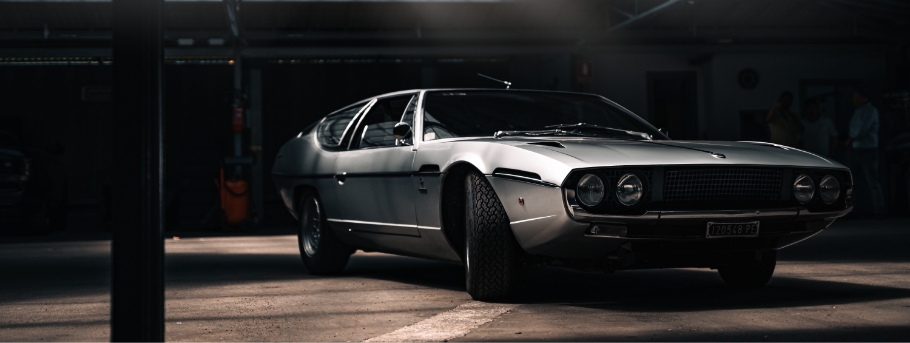
  • Lamborghini Espada

    1968 Lamborghini Espada

    In 2022 Lamborghini is celebrating the V12: the legendary 12-cylinder engine that has powered its most iconic cars for almost 60 years. They include the Espada 400 GT, which was the first four-seat vehicle by Lamborghini and was its biggest selling model for years. Encapsulating an exceptional approach to technical innovation, thanks to the front-mounted 4-liter Lamborghini V12 engine it was always an extremely fast grand tourer despite the step up in size.

    The “pure” V12 combustion engine in its final form will go out of production before the end of 2022, when the last Aventador Ultimae is made. From next year, the heir to the Aventador will be fitted with a new plug-in hybrid version of the V12 engine.

    Ferruccio Lamborghini aimed to produce the fastest, most luxurious and comfortable grand tourer

    Ever since the start of his venture into automobile manufacturing, company founder Ferruccio Lamborghini stated his objective very clearly. He wanted to make the best grand tourer around: a sports car that was not only fast but also comfortable and luxuriously finished. Presented at the Geneva Motor Show in March 1968, the Espada 400 GT perfectly embodied this idea for over a decade. The Espada could comfortably seat four adults and had more space for both luggage and passengers than the 400 GT 2+2 (its predecessor) and the Islero 400 GT 2+2. In addition, the Espada featured truly outstanding finishing, with generous amounts of leather and other refined materials, as well as the option of fitting air conditioning. Power steering was introduced as an option in 1969 and it was included as standard from 1972 onwards. A version with automatic transmission was available from 1974.

    Taking the V12 engine to 4 liters

    The technical cornerstone of the Espada was the 60° V12 engine that was first produced in 1963 with a displacement of 3.5 liters, which had already been increased to 4 liters (3929 cc) in 1964. It is a remarkable example of engine development technologies, and it was capable of delivering 325 hp at 7200 rpm when it was first fitted in the Espada. This increased to 350 hp at 7500 rpm in the Espada Series II, which was presented in 1970.

    Fed by six Weber 40 DCOE side-draft carburetors, the V12 had a compression ratio of 9.5:1 (which increased to 10.7:1 from the Series II onwards) and two chain-driven overhead camshafts per bank. It weighed just 232 kg thanks to substantial use of aluminum to make not only the cylinder head but also the crankcase and the pistons. It was front-mounted in a position that was slightly further forward compared to the previous Lamborghini 350/400 GT engines, in order to make the interior roomier. Thanks to the large opening below the aluminum hood, it was easily accessible.

    The chassis was based on that of the 400 GT but it was lengthened so that the wheelbase reached 2650 mm and it was also widened, with the wheel track increasing to 149 cm. It had four-wheel independent suspension, with double wishbones and coil springs. In November 1968, an Espada “Lancomat” with hydropneumatic suspension went on display at the Turin Motor Show. The system was made available on demand, but in the end it was chosen by very few owners.

    The Espada was an extremely fast grand tourer that was capable of reaching a top speed of between 245 and 260 km/h and keeping up with the sportier Miura in most conditions.

    The Espada’s commercial success

    When it was first unveiled, the Espada was the fastest four-seat car in the world.  Featuring boxy shapes as part of a highly innovative design by Carrozzeria Bertone, it proved to be a long-lasting commercial success. Its versatility and roomy interiors – despite a height of just 119 cm – meant that it was suitable for much more frequent use, thus significantly expanding the customer base. A total of 1226 cars were produced across the three series: 176 of the Espada 400 GT Series 1 between 1968 and 1969, 578 of the Espada 400 GTE Series II between 1970 and 1972, and 472 of the Espada 400 GTS Series III between 1972 and 1978.

    The Espada VIP with a mini-bar and a Brionvega television

    The Espada VIP was presented in 1971. It was based on the Espada 400 GTE Series II and just 12 of the vehicles were made. The first models in this special series of cars came in a special orange hue and had orange and black leather upholstery. Later vehicles were made in other color combinations. Inside, the Espada VIP had a mini-bar and a refrigerator in the rear side panels and a Brionvega Algol 11 television on top of the transmission tunnel to keep the passengers in the rear seats entertained. The VIP is one of the most sought-after models among Espada collectors today.          

    Paul McCartney’s Espada made a splash

    One of the most famous Lamborghini Espada owners is Sir Paul McCartney. The former Beatle was a Lamborghini enthusiast and he bought a right-hand-drive 1972 Espada Series III with manual transmission, red paintwork and a red leather interior. His wife Linda often drove the car, but one time it rolled into a nearby pond after she left it in neutral and forgot to put on the handbrake. It was hauled out of the water after three days and later sold to new owners, who went on to use it for a number of years. Subsequently, it ended up being part of the “decor” in an English pub. It was sold to an unknown enthusiast in 2005 and it is thought that it may now be in Austria.

    From VIP owners to the silver screen

    Many celebrities have expressed their fondness for the Espada over the years. For example, since 1986 the famous American television host Jay Leno – who has always been a car enthusiast – has owned one of the very first Espada Series 2 models, which was made in 1969. EVO magazine founder Harry Metcalfe has also owned an Espada for many years. It is a right-hand-drive 1970 Series II and he took part with it in the Espada and Islero 50th Anniversary initiative organized by Automobili Lamborghini Polo Storico in 2018.

    There have been numerous films featuring an Espada, including around 50 significant titles. The most famous among fans of the model is the 1973 Italian movie “Flatfoot” starring Carlo Pedersoli, who was better known as Bud Spencer. Largely filmed in Naples and the surrounding area, it sees the protagonist pursuing an Espada uphill around a series of hairpin bends in a long chase sequence that ends outside the Church of Sant’Antonio a Posillipo.

  • Miura: the world’s first production car equipped with a transverse central – rear mounted V12 engine

    1969 Lamborghini Miura P400 S

    In 1966, the Lamborghini V12 engine firmly established itself as an all-time legend when it was mounted transversally in a rear-mid position on the P400 Miura: the vehicle for which the term “supercar” was coined.

    Everything revolves around the Miura in the latest chapter of the V12 engine’s story, which has powered iconic cars for almost 60 years and come to epitomize the cornerstones of Lamborghini’s DNA: technological innovation, vision and engineering expertise. 2022 is the year of the last pure Lamborghini V12 combustion engine. Mounted in the Aventador Ultimae[1], it brings the curtain down on a glorious era ahead of the first hybrid production model in 2023, which will mark the start of the hybridization process at Lamborghini.

    Ferruccio Lamborghini: “I like this one: it’ll earn us legendary status”

    Less than two years after Lamborghini was founded in 1963, the Sant’Agata Bolognese company was still small but had managed to establish itself solidly at the top end of the tricky grand tourer market, and the 350 GT was being manufactured on a steady basis. Ferruccio Lamborghini was satisfied because he had triumphed in his own personal technical challenge despite rather widespread initial skepticism. Nonetheless, he was dreaming of making an even more stunning car that would take everyone’s breath away. And that is just what happened.

    Taking care of the technical side of things were the young engineers Giampaolo Dallara and Paolo Stanzani, who were responsible for development and production at Automobili Lamborghini at the time. A big part in the Miura’s success was – and continues to be – down to its exceptional engine: a 4 liter 60° V12 with 4 Weber 40 IDL 3L carburetors that generated maximum power of 350 CV, 370 CV and 385 CV in the P400, P400S and P400SV models respectively. That was enough to make it the fastest production road car in the world at the time. The outstanding design by Carrozzeria Bertone did the rest and the Miura enjoyed unprecedented sales for a Lamborghini vehicle. The original forecast was for 50 cars to be sold in three years, but in the end the total number reached 763 in seven years, between 1966 and 1973.

    Engineer Paolo Stanzani: a linchpin of the Lamborghini V12 engine

    The engineer Paolo Stanzani (1936-2017) was one of the first people to be hired by Ferruccio Lamborghini. Appointed straight after he graduated from the University of Modena, he went on to become one of the most important players in the story of the V12 engine and the Miura. Stanzani was the one who took the V12 engine designed by the engineer Giotto Bizzarrini and made it suitable for serial production and use on the road. In addition, Stanzani was part of the small group of young talents who developed and created the Miura and its cutting-edge technical features. He held various roles at Lamborghini, ranging from Technical Director to Production Manager and General Manager. As well as the Miura, he made crucial contributions to the production of the Countach, Espada and Urraco, the latter of which was his personal favorite.

    The Miura was a real star whose iconic appeal lay not only in its looks but also in its “voice”

    As soon as it was presented, the Miura became the most sought-after car among film directors. It has appeared in no fewer than 43 movies, often in a starring role. One of the most famous is unquestionably “The Italian Job” in 1969. Lasting more than three minutes, the entire opening sequence is dedicated to Rossano Brazzi driving a P400 Miura as Matt Monro sings “On Days Like These”. The accelerating V12 engine can be heard in the background of the sequence, which has gained cult status in the world of car movies.

    The Miura has starred on the covers of dozens of car magazines and other publications. Its first appearance in an international article came in November 1966. The piece in question was in the weekly magazine Autocar and it was by Paul Frère, the Belgian racing driver turned journalist. There is no doubt that the most renowned article was the one written by the English journalist Leonard “LJK” Setright for the British monthly magazine CAR. Divided into two parts, it described the delights of a journey from Sant’Agata Bolognese to London in a P400 Miura.

    Putting together a comprehensive list of personalities who have owned a Miura over the years is a tough task. For instance, Little Tony and Rod Stewart both owned more than one; Eddie Van Halen kept his for more than 30 years; and Jay Kay of Jamiroquai still has his today. Other examples of notable Miura owners are the actor Peter Sellers; the model Twiggy; the singers Johnny Hallyday (who made headlines when he crashed his P400 into a tree) and Elton John; the opera singer Grace Bumbry; the jazz musician Miles Davis; the racing driver Jean-Pierre Beltoise; and finally the Shah of Iran, who owned a number of Miuras including one of only four SVJs that were ever made.

    [1] Aventador LP780 Ultimae Coupé and Ultimae Roadster Fuel consumption combined: 18.0 l/100km ; CO2-emissions combined: 442 g/km (WLTP)

  • 350 GT: the V12 that laid the foundations for Lamborghini’s DNA

    1964 Lamborghini 350 GT

    For Lamborghini, 2022 is the year of the V12, its legendary 12-cylinder engine that has powered iconic models for almost 60 years of history and became a symbol of technological innovation, vision, and engineering expertise: the foundations of Lamborghini’s DNA.

    Before entering the hybridization phase in 2023 with the advent of the first series-production model, Lamborghini is paying tribute to its most memorable engine in a retrospective account of the cars that have featured it. The first ever Lamborghini to leave the Sant’Agata Bolognese factory in 1964 was the 350 GT, more recently taken to the historic center of Bologna for an epic encounter with the latest V12 in the brand’s history, the Aventador Ultimae.

    The genius Giotto Bizzarrini and the story of a contract ‘with a bonus for every 10 extra horsepower’

    To design the engine, Ferruccio Lamborghini chose an exceptional external consultant, the engineer Giotto Bizzarrini, born in Quercianella (province of Livorno) in 1926, still today considered one of the best engine designers who ever lived. Bizzarrini was a huge fan of racing and dreamed of building an engine for Formula One.

    The agreement with Lamborghini was simple and created the basis for something absolutely extraordinary: 12 V-cylinders, displacement of 3.5 liters, and lots and lots of horsepower: at least 350.

    As an incentive for Bizzarrini, Lamborghini included in the contract a bonus for every additional 10 horsepower. When the engine ran on the test bench for the first time in July 1963, the readings were spectacular, with 360 HP at 9000 rpm. Ferruccio Lamborghini paid what he owed, including the bonus for the extra horsepower, but he realized he was in trouble. In fact, Bizzarrini had designed a Formula One engine that was unsuitable for road use and mass production.

    The arrival of Paolo Stanzani: the engine was rationalized and reached over 250 km/h

    It was then Paolo Stanzani, one of the most highly regarded engineers in the history of Lamborghini, who was entrusted with the job of “civilizing” this engine. His work, though capable of maintaining the engine’s exceptional performance and making it pleasantly drivable even at medium and low revs, did not alter the basic technical specs, which in many points would become a first for a series-produced car.

    Its maximum power output of 280 HP at 6500 rpm was enough to propel the 350 GT, the first production Lamborghini model debuting in 1964, to a top speed of over 250 km/h.

    The first customer launches the brand’s popularity in the entertainment world

    The first 350 GT was delivered to Livorno-native drummer Giampiero Giusti, who was at the height of his success with the band “I 5 di Lucca”, which later became the “Quartetto di Lucca”, considered one of the most important jazz ensembles in Italy. Formed in the late 1950s, the group stood out not only for its jazz credentials but also for its pop music spirit, which led to its participation in the Sanremo Music Festival; to record covers of songs by the Beach Boys and Bruno Martino; and to collaborate with Enzo Jannacci.

    This marked the beginning of a close relationship between Lamborghini and the entertainment world in which many actors and musical performers became passionate customers of the company.

    The same car, now the oldest production Lamborghini in existence, perfectly restored and certified by Polo Storico, won Best in Show at the Lamborghini & Design competition held in Trieste and organized in 2019 by Lamborghini Polo Storico.

    Paul McCartney and his red 400 GT

    Paul McCartney, a true living legend both as bass player and vocalist for the Beatles and as a solo artist, has been a loyal Lamborghini customer for many years, with several cars of different models in his collection. His red 1968 400 GT, chassis #1141 was the car that appeared in the video filmed on 30 January 1969 on the occasion of the band’s famous last concert on the roof of their building at 3 Savile Row in London, as well as in numerous Beatles documentaries. McCartney kept the 400 GT for ten years.

    From music to movies

    The starring cinematic role for a 350 GT was in the 1967 Columbia Pictures film Kill Me Quick, I’m Cold directed by Francesco Maselli, where it was used as a means of transport for the leading couple, the celebrated Monica Vitti and Jean Sorel.

    A benchmark up to the 1990s

    From its debut in 1964, the Lamborghini V12 became a benchmark for its torque, elasticity, reliability and durability. The same unit, with only minimal modifications, would remain in production until the 1990s, growing to 7 liters of displacement with power over 500 HP before subsequently receiving more substantial structural modifications.

  • Lamborghini Squadra Corse presents the new Huracan GT3 EVO2, the racing version of Huracan STO

    2023 Lamborghini Huracan GT3 EVO2 - Front View

    Lamborghini presents the new Huracán GT3 EVO2, designed and developed by Squadra Corse of Sant’Agata Bolognese based on the Huracán STO, with which it shares important design elements, rear-wheel drive only, and a naturally aspirated V10 engine, which in the road version delivers 640 horsepower.

    Compared to the Huracán GT3 EVO, which was homologated in 2019 and based on the Huracán EVO road car, the GT3 EVO2 fully complies with the new FIA 2022 technical regulations and features all-new aerodynamic solutions and intake system. The unmistakable hexagonal airscoop design and the rear fin are derived from Huracán STO, contributing to a more efficient intake system and better car balance. The airscoop is connected to a snorkel, replacing the side air intakes, which optimally channels the airflow directly into the engine, resulting in greater responsiveness to the driver’s demands. The introduction of 10 electronically actuated throttle bodies increases the efficiency of the V10 with titanium valves; the entire system, designed by Lamborghini Squadra Corse, is fixed to the engine by just four screws, a solution introduced for the first time on the Essenza SCV12, to facilitate maintenance work.

    The fully carbon fiber bodywork features a muscular design created in collaboration with Lamborghini’s Centro Stile. The new splitters, diffuser and underbody enhance aerodynamic efficiency. The carbon fiber floor, coated with high-strength Zylon fiber, together with the new diffuser, provides greater downforce than the current generation GT3 EVO. Other innovations include the rear wing, which is mounted on aluminum alloy pillars (Ergal 7075 T6) inspired by those of the STO. The new supports allow for greater precision in adjusting the wing compared to those of the EVO model.

    The redesigned roll cage, with the introduction of two rear pillars, and the new carbon-Kevlar honeycomb side panels, already tested on the Essenza SCV12, increases safety in the event of impact on the doors in compliance with the FIA 2022 regulations. The plexiglas side windows are now fixed to the carbon fiber door panel by means of a ring of screws for greater structural rigidity and reliability.

    The braking system has also been updated with new calipers and pads designed by Squadra Corse to optimize performance in both endurance and sprint races. These solutions, combined with dedicated traction control (TCS) and anti-lock braking systems (ABS), have been developed to make the car easy to control in low-grip conditions, even by gentlemen drivers. The car is delivered to customers equipped with PZero tyres (325.680-18 at the front; 325/705-18 at the rear) from long-time Squadra Corse partner Pirelli.

    Giorgio Sanna, Lamborghini Head of Motorsport, commented: “The new Huracán GT3 EVO2 is not simply an evolution of the current car. It’s a new project that reinforces the technological transfer between Lamborghini’s motorsport division and the company and inherits two difficult tasks: to prove as successful as the previous generations of Huracán GT3, which have won more than 40 international titles in six seasons, and to match its commercial success by helping to reach the target of 500 Huracán racing cars since 2015.”

    The car will be delivered to customers from the second half of 2022, and previous Huracán GT3 EVO model can be upgraded to the GT3 EVO2 specifications via an evolution kit. Its track debut is slated for the 2023 Daytona 24 Hours.

  • The Lamborghini Aventador LP 780-4 Ultimae – It takes time to become timeless

    2022 Lamborghini Aventador LP780-4 Ultimae Roadster

    Automobili Lamborghini announces the Aventador LP 780-4 Ultimae: a celebration of the iconic V12 super sports car and combustion engine in a final production model, concentrating the purest features of all Aventador editions into a perfect finale. The Aventador LP 780-4 harnesses the performance of the SVJ and intensifies the sophisticated elegance of the Aventador S, converging design and dynamism into a decisive collector’s piece in both coupé and roadster forms.

    “The Aventador LP 780-4 denotes the final, purest, timeless naturally-aspirated production V12 Lamborghini,” says Stephan Winkelmann, President and CEO of Automobili Lamborghini. “It delivers the essential twelve-cylinder experience in terms of inimitable design, engineering solutions and the most emotive driving experience, and is the definitive Aventador concluding an extraordinary era. It is the last of its kind: it delivers the maximum power and conclusive performance expected from Lamborghini’s current V12 engine, combined with our inimitable flagship’s design DNA. The Aventador was destined to become a classic from launch, and the Aventador LP 780-4 is the most beautiful expression of timeless design and technical solutions in a final edition: Ultimae.”

    After more than a year where events worldwide were cancelled due to the pandemic, the Aventador LP 780-4 Ultimae coupe and roadster will be displayed at the UK’s 2021 Goodwood Festival of Speed in front of automotive enthusiasts and owners.

    Power and performance

    The Aventador LP 780-4 Ultimae’s elegant lines belie the performance of this final edition. The twelve-cylinder, 6.5-liter ‘Longitudinale Posteriore’ (LP) engine delivers 780 CV: 40 CV more than the Aventador S and 10 CV over the SVJ to its permanent four-wheel drive. The LP 780-4 Ultimae celebrates the visceral character, power and performance of the Lamborghini’s Aventador’s ten-year evolution, including the know-how of the Nürburgring-Nordschleife record SVJ powertrain set in July 2018; the super sports technical advances and luxury of the S mode; and the purity of the original Aventador concept. It is the grand finale of the traditional V12 combustion engine, and the ultimate Aventador in every sense.

    The Aventador LP 780-4’s unique, extremely rigid and lightweight carbon fiber monocoque, and extensive use of carbon fiber throughout the body, contributes to its dry weight of just 1,550 kg. The coupé version, weighing 25 kg less than the Aventador S, delivers the same weight-to-power ratio as the SVJ at 1.98 kg/CV accelerating from 0-100 km/h in 2.8 seconds and a top speed of 355 km/h, with 720 Nm of torque at maximum 6750 rpm, and optimized VVT (Variable Valve Timing) and VIS (Variable Intake System) for an optimised torque curve. Its CCB braking system delivers 100 km/h to standstill in just 30 m.

    Lateral control is optimized through four-wheel steering, introduced on the Aventador S, ensuring agility at low and medium speeds and enhanced stability at high speed. Lamborghini Dynamic Steering (LDS) on the front axle is calibrated for responsive feedback with sharp turn-in while adapted to integrate with the active rear-wheel steering on the rear axle: separate actuators respond in five milliseconds to drivers’ steering movements, allowing a real-time adjustment to steering angles enhancing cornering properties.

    The LP 780-4 Ultimae’s design adopts a specific front bumper concept for increased aero load on the front, with longitudinal performance similar to the SVJ. The ESC is calibrated for fast, precise traction control and vehicle dynamics, recognizing and adapting to differences in grip, including on low-grip surfaces such as snow and ice. The permanent four-wheel drive, due to the rear-wheel steering, is calibrated to allow more torque to the rear axle so that when powering off, less torque is shifted to the front axle to allow sporty but safe over-steer behavior. The systems are managed by Lamborghini Dinamica Veicolo Attiva (LDVA) that processes precise, real-time information on body motion via sensors, thus defining the best response of all active systems to deliver the best vehicle dynamics in every condition.

    Delivering the state of the art aerodynamic performance, the front splitter and open ‘mouth’ of the LP 780-4 directs additional airflow to optimize aerodynamic efficiency, engine and radiator cooling. The front bumper’s airducts and side cooling inlet reduce aerodynamic interference from the front tires and optimize wake flow to the rear radiator, with the Ultimae’s lightweight rear bumper completing the dynamic exterior and celebrating the SVJ’s track-oriented heritage.

    The active aero system’s rear wing moves into three positions – closed, ‘maximum performance’ and ‘maximum handling’ – dependent on speed and the drive mode selected, optimizing the car’s overall balance and working with vortex generators created in the front and rear of the chassis’ underside to maximize air flow and assist with brake cooling. Transmission is via Lamborghini’s lightweight Independent Shifting Rod (ISR) 7-speed shifting system, providing robotized gearshifts in up to 50 milliseconds.

    The Aventador LP 780-4 Ultimae’s drive modes allow the pilot to select not only STRADA, SPORT and CORSA dynamic options, but in EGO mode choose their own parameters for optimum set-up 2 of the Lamborghini active suspension (LMS), traction controls (engine, gearbox and four-wheel drive) as well as steering.

    A final production masterpiece – Ultimae

    The Aventador LP 780-4 Ultimae celebrates the Lamborghini Aventador’s complex yet elegant lines and surfaces: the culmination of Lamborghini’s aspirated-V12 design legacy. Paying homage to the benchmark performance of the SVJ and the ageless super sports elegance of the S model, it takes the best components of both to create a perfect balance between performance and dynamism with an enduring sophistication.

    A new palette of options for exterior and interior is created for owners of the 350 coupés and 250 roadsters numbered editions of the Ultimae, offering a refined yet dynamic, elegant yet distinctive representation of the last Aventador. Its silhouette, clean and unfettered, is as recognizable and timeless an outline as other V12 Lamborghini classics such as Countach, Diablo and Murciélago. The new collection of tone-on-tone colors are elegant while recalling the Aventador’s powerful original design cues taken from the world of aeronautics. Offered as standard are 18 colors, with an unprecedented range of options and more than 300 colors available through Lamborghini Ad Personam, allowing owners to create their own, unique piece of Lamborghini V12 motoring history.

    The Aventador LP 780-4 Ultimae coupé is launched in a two-tone, grey-on-grey configuration, with lines and details such as the front splitter’s outline and ‘teeth’ picked out in matt red Rosso Mimir, with the accent line continuing along the car with matching accents on the rear fins of the visible carbon fiber rear diffuser: elite performance and design purity in perfect harmony. On the Aventador LP 780-4 Ultimae Roadster, the roof is also offered in visible carbon fiber.

    The matt Grigio Acheso and Grigio Teca external colors’ elegant yet sporty two-tone is echoed in the interior: black leather and Alcantara base materials feature stitching and trim in a complementary grey to the exterior, with ‘Y’ seat inserts in black Alcantara. An optional laser cut ‘Y’ repeat motif with contrast backing color on seats and dashboard, distinguishes the Ultimae model: a dynamic, stylistic feature offered for the first time. The LP 780-4’s comfort seat is taken from the Aventador S, with the ‘Ultimae’ name embroidered into the seat bolster, while the A-pillar driver dashboard area carries the 001 of 350/250 reference to the limited edition.

    The client can play with the ‘S’ line highlights in seat, door and dash trims with three standard colors, (silver, bronze and white), a further five foptional colors and, of course, the almost infinite spectrum of options through Lamborghini Ad Personam. A standard carbon fiber package CFK highlights exterior and interior features, and the exterior is available in a matt finish to match the exterior colors with low gloss.

    Silver Dianthus 20” and 21” forged alloys come as standard together with further 20” and 21” options in Dianthus, Leiron and Nireo in bronze, black and titanium, fitted with Pirelli PZero Corsa tires. The exterior features the extension of the color accent livery in three colors: white, silver and bronze matching the accent on the front bumpers and the rear diffuser fins. Silver calipers as standard are joined by a range of further optional caliper colors that are echoed in the wheel monolock.

    The Aventador LP 780-4 Ultimae Roadster is launched in Blu Tawaret and Blu Nethuns with the roof panels in high gloss black carbon fiber. The driver and passenger environment is just as refined: the customizable TFT digital dashboard displays driver modes as well as controlling in-car connectivity. Apple CarPlay manages voice activated communications and entertainment, with the Lamborghini telemetry system available as an option for those wanting to celebrate the last Aventador on track. From launch, the Aventador LP 780-4 Ultimae will be available in both coupe and roadster configurations in the Lamborghini network with the exception of the markets: Mainland China, South Korea, Vietnam, Brazil and Chile.

    Technical Data

    Lamborghini Aventador LP 780-4 Ultimae

    CHASSIS AND BODY
    Chassis Carbon fiber monocoque with aluminum front and rear frames
    Body Engine bonnet, rear air inlets and spoiler in carbon fiber; other panels in aluminum and synthetic material
    Suspension type Push rod magnetorheological active front and rear suspension with horizontal dampers and springs
    Suspension geometry Aluminum double wishbone fully independent front and rear suspension.
    ESP ESC integrating ABS and TCS with different characteristics according to the driving mode selected
    Brakes Carbon-ceramic brakes with fixed monoblock calipers in aluminum with 6 pistons (front) and 4 pistons (rear)
    Ventilated discs (front – rear) Carbon ceramic brake discs
    (Ø 400 x 38 mm – Ø 380 x 38 mm)
    Steering Hydraulic assisted power steering, with 3 different servotronic characteristics coupled with Lamborghini Dynamic Steering (LDS) and Rear Wheel Steering (RWS), managed by drive select mode
    Steering wheel ratio 10:1 – 18:1
    Steering wheel turns lock to lock 2.1 – 2.4
    Steering wheel diameter 358 mm
    Tires (front – rear) New Pirelli P Zero Corsa 255/30 ZR20 – 355/25 ZR21
    Rims (front – rear) 9”JX20” H2 ET 32.2 – 13” JX21”H2 ET 66.7
    Kerb-to-kerb turning circle 11.5 m (37.73 ft.) – average value, variable due to dynamic condition, thanks to LRS
    Mirrors External mirrors heated, electrically adjustable and foldable
    Rear spoiler Rear electronically operated spoiler with 3 positions; completely panelled underbody
    Airbags Driver, passenger, side airbags. Knee airbags only for specific markets
    ENGINE
    Type V12, 60°, MPI
    Displacement 6,498 cc (396.5 cu. in)
    Bore and stroke Ø 95 mm x 76.4 mm (3.74 in. x 3 in.)
    Valve per cylinder 4
    Valve gear Variable valve timing electronically controlled
    Compression ratio 11.8 ± 0.2
    Maximum power 780 CV(574 kW) at 8,500 rpm
    Specific Power output 120 CV/l (88.3 kW/l)
    Maximum torque 720 Nm (531 lb.-ft.) @ 6,750 rpm
    Engine speed, maximum 8,700 rpm
    Power to weight ratio 1.99 kg/CV
    Emission class EURO 6 – LEV 3
    Emission control system Catalytic converters with lambda sensors
    Cooling system Water and oil cross flow cooling system with variable air inlets
    Engine management system Lamborghini Iniezione Elettronica (LIE) with Ion current analysis
    Lubrication system Dry sump
    DRIVETRAIN
    Type of transmission 4WD with Haldex generation IV
    Gearbox 7 speed ISR, shifting characteristic depending on drive select mode
    Standard AMT
    1st gear ratio2nd gear ratio3rd gear ratio4th gear ratio

    5th gear ratio

    6th gear ratio

    7th gear ratio

    Reverse ratio

    Final drive ratio (rear – front)

    3.9092.4381.8101.458

    1.185

    0.967

    0.844

    2.929

    2.867 – 3.273

    Clutch Dry double plate clutch, Ø 235 mm (9.25 in.)
    PERFORMANCE
    Top speed 355 km/h (xxx mph)
    Acceleration 0-100 km/h
    [0-62 mph]
    2.8 sec.
    Acceleration 0-200 km/h
    [0-124 mph]
    8.7 sec.
    Braking 100-0 km/h
    [62-0 mph]
    30 m

    Lamborghini Aventador LP780-4 Ultimae Roadster

    CHASSIS AND BODY
    Chassis Carbon fiber monocoque with aluminum front and rear frames
    Body Engine bonnet, rear air inlets and spoiler in carbon fiber; other panels in aluminum and synthetic material
    High pressure RTM carbon fiber Hard Top painted
    Suspension type Push rod magnetorheological active front and rear suspension with horizontal dampers and springs
    Suspension geometry Aluminum double wishbone fully independent front and rear suspension.
    ESP ESC integrating ABS and TCS with different characteristics according to the driving mode selected
    Brakes Carbon-ceramic brakes with fixed monoblock calipers in aluminum with 6 pistons (front) and 4 pistons (rear)
    Ventilated discs (front – rear) Carbon ceramic brake discs
    (Ø 400 x 38 mm – Ø 380 x 38 mm)
    Steering Hydraulic assisted power steering, with 3 different servotronic characteristics coupled with Lamborghini Dynamic Steering (LDS) and Rear Wheel Steering (RWS), managed by drive select mode
    Steering wheel ratio 10:1 – 18:1
    Steering wheel turns lock to lock 2.1 – 2.4
    Steering wheel diameter 358 mm
    Tires (front – rear) New Pirelli P Zero Corsa 255/30 ZR20 – 355/25 ZR21
    Rims (front – rear) 9”JX20” H2 ET 32.2 – 13” JX21”H2 ET 66.7
    Kerb-to-kerb turning circle 11.5 m (37.73 ft.) – average value, variable due to dynamic condition, thanks to LRS
    Mirrors External mirrors heated, electrically adjustable and foldable
    Rear spoiler Rear electronically operated spoiler with 3 positions; completely panelled underbody
    Airbags Driver, passenger, side airbags. Knee airbags only for specific markets
    ENGINE
    Type V12, 60°, MPI
    Displacement 6,498 cc (396.5 cu. in)
    Bore and stroke Ø 95 mm x 76.4 mm (3.74 in. x 3 in.)
    Valve per cylinder 4
    Valve gear Variable valve timing electronically controlled
    Compression ratio 11.8 ± 0.2
    Maximum power 780 CV(574 kW) at 8,500 rpm
    Specific Power output 120 CV/l (88.3 kW/l)
    Maximum torque 720 Nm (531 lb.-ft.) @ 6,750 rpm
    Engine speed, maximum 8,700 rpm
    Power to weight ratio 1.99 kg/CV
    Emission class EURO 6 – LEV 3
    Emission control system Catalytic converters with lambda sensors
    Cooling system Water and oil cross flow cooling system with variable air inlets
    Engine management system Lamborghini Iniezione Elettronica (LIE) with Ion current analysis
    Lubrication system Dry sump
    DRIVETRAIN
    Type of transmission 4WD with Haldex generation IV
    Gearbox 7 speed ISR, shifting characteristic depending on drive select mode
    Standard AMT
    1st gear ratio2nd gear ratio3rd gear ratio4th gear ratio

    5th gear ratio

    6th gear ratio

    7th gear ratio

    Reverse ratio

    Final drive ratio (rear – front)

    3.9092.4381.8101.458

    1.185

    0.967

    0.844

    2.929

    2.867 – 3.273

    Clutch Dry double plate clutch, Ø 235 mm (9.25 in.)
    PERFORMANCE
    Top speed 355 km/h (xxx mph)
    Acceleration 0-100 km/h
    [0-62 mph]
    2.9 sec.
    Acceleration 0-200 km/h
    [0-124 mph]
    8.8 sec.
    Braking 100-0 km/h
    [62-0 mph]
    31 m
  • Huracan Tecnica: designed and engineered for the best of both worlds

    2023 Lamborghini Huracan Tecnica - Front Angle

    Automobili Lamborghini presents the Huracán Tecnica: the next-generation rear-wheel drive V10, developed for pilots seeking driving fun and lifestyle perfection on both road and track. The Tecnica’s moniker embodies the advanced evolution of the Huracan’s technical prowess and, instantly distinguishable, is as much a Huracán innovation externally as it is under the hood, with its new looks accenting improved aerodynamics for heightened performance, stability and ease of use, particularly on a circuit.  Taking its engine from the Huracán STO, with an increase of 30 CV over the Huracán EVO rear-wheel drive (RWD), the powertrain delivers 565 Nm of torque at maximum 6,500 rpm and improved acceleration of 0-100 km/h in 3.2 seconds. The lightweight Tecnica’s recalibrated LDVI system and distinctly tuned driving modes with specific suspension set-up, rear-wheel direct steering, and innovative brake cooling improvements allow the driver to experience the perfect Huracán for every occasion: the Huracán Tecnica exploits its talents to deliver the best of both worlds – a poignantly versatile super sports for road and track.

    “The Huracán Tecnica condenses Lamborghini’s design and engineering expertise to create the perfect fun-to-drive Huracán, as compelling when driving to the race circuit as it is on the street itself,” says Automobili Lamborghini Chairman and CEO Stephan Winkelmann. “The Tecnica ensures that the pilot enjoys the strongest connection to the car and asphalt, with the car’s potential always at his fingertips for ease of use in every driving mode and environment: in an era of virtual experiences it pays homage to technical purity and physical sensation. The Tecnica completes the Huracán line-up, sitting perfectly between the RWD and the track-focused STO, flawlessly presenting technology, performance and the Huracán’s V10 aspirated engine in a dramatically evolved design.”  

    Tecnica – engineering in its soul

    The Huracán Tecnica takes the 5.2 l powerplant outputting the same 640 CV power as its STO stablemate, producing 565 Nm of torque at 6,500 rpm for exhilarating yet comfortable everyday driving with highly responsive maximum power and torque when demanded.

    With a dry weight of 1,379 kg, the Tecnica delivers a weight-to-power ratio of 2.15 kg/CV. The uprated power is matched by an enhanced, sharper engine sound at higher revs while inside the cockpit the Tecnica provides improved acoustic comfort.

    This Huracán has at its heart the LDVI (Lamborghini Dinamica Veicolo Integrata) system, which controls every aspect of the car’s dynamic behaviour by integrating vehicle systems and set-up to deliver feed-forward pre-control in virtual real-time, for perfect driving dynamics.

    The rear-wheel drive Tecnica incorporates rear-wheel steering with direct steering ratio and torque vectoring, together with a modified Performance Traction Control System (P-TCS) and specific suspension set-up for the Tecnica. Depending on the drive mode selected – STRADA, SPORT or CORSA – every dynamic system is calibrated on the Tecnica to provide a highly differentiated response to each environment.

    In STRADA, the rear-wheel-steering provides stability and manoeuvrability, complemented by the torque vectoring and P-TCS. The engine and gearbox are both tuned for comfortable everyday driving in every setting.

    When SPORT mode is selected, maximum driving fun comes from the rear-wheel steering’s enhanced oversteer and the enhanced slip threshold of the P-TCS, while torque vectoring ensures the Tecnica’s agility and responsiveness in the hands of the driver.  The highly responsive powertrain sparks at the touch of the accelerator and the seven-speed gearbox provides a tactile and emotive shift.

    In CORSA mode, the car’s and driver’s race spirit is awoken: the Tecnica responds to the pilot’s every input with extreme precision, with the naturally aspirated Lamborghini engine’s roar an impassioned reminder of the car’s track talents.  The powertrain is calibrated to provide optimized track-oriented throttle response and the fastest gearshifts, with the Tecnica demonstrating maximum precision and agility from all systems via the LDVI, including maximum lateral and longitudinal grip from the torque vectoring and P-TCS respectively.

    Extraordinary performance comes with new brake cooling management, inspired by track-based Lamborghini experience, delivering consistently better braking performance on both road and track. The Tecnica’s carbon ceramic brakes adopt specifically designed cooling deflectors and calliper ducts, directing the airflow into the discs to maximise heat dissipation and reduce brake fluid temperatures and brake pedal elongation: the reduction in disc temperatures also supports brake pad consumption.

    Aerodynamic inspired design

    The Huracán Tecnica sports a significant and sophisticated design revision, impressing its dual personality of an iconic super sports lifestyle and track-oriented car from every angle. Aerodynamic efficiency and lightweight engineering energize every element while retaining a distinct elegance, with the Tecnica clearly distinguishable from its Huracán stablemates.

    A revised design lends the Tecnica a stronger, predatory stance: a powerful, inward-facing front with muscular shoulders meets a lightweight, fully carbon fiber hood. A new bumper featuring the Terzo Millennio’s black Ypsilon design, incorporates an air curtain for the first time in a Huracán. A new front splitter, with lower, open slats directing air through the wheels, contributes to improved downforce and cooling. Black at the base of the windscreen increases the lightweight impression.

    The profile of the car also sets it apart from the Huracán family: at 6.1 cm longer than the Huracán EVO it is the same height and width but appears lower and broader, with a silhouette inspired by the daylight opening line from the Essenza SCV12.  The black of the front Ypsilon feature continues along the flank of the car to the side air intakes, emphasizing the car’s dynamic vitality, while the body-color roof can also be painted black as an option.

    The clear, sculptural architecture that defines a Lamborghini is as evident in the revised rear.  The reshape of the rear, including a new vertical rear glass window gives improved visibility, while a redesigned engine hood in lightweight carbon fiber celebrates the V10 heart of the Tecnica. The powerful rear incorporates a new bumper with optimized air inlet; diffuser painted in body color or optional black; and combines new hexagonal exhaust pipes that deliver the enhanced fanfare from the Tecnica’s powertrain.

    While aesthetically the fixed rear wing completes the unique lines of the Tecnica, its aero design essentially contributes to the 35% improvement in rear downforce compared to the Huracán EVO RWD, as well as ensuring no increase in drag: in fact, drag is reduced by 20%, improving aero balance and supporting stability during braking and turning speed.  The Tecnica’s underbody is also optimized with new aero deflectors for improved aerodynamic efficiency.

    New Damiso 20” diamond cut wheels, taking inspiration from the Lamborghini Vision GT, sport a hexagonal design and are fitted with Bridgestone Potenza Sport tires.

    Created for the driver

    The versatility of the Huracán Tecnica continues in its interior as well as in the extensive customization options available: the Huracán Tecnica delivers what the driver wants, in the way it looks, in its dynamic set-up and driver feed-back, in its connectivity but most importantly in its capabilities on both road and track.

    Inside, the height-adjustable sports seats immerse the pilot in his cockpit. Further options include a lightweight door design; a rear arch and wheel bolts in lightweight titanium; and harness seat belts for those heading more regularly to the circuit.

    A redesigned, sophisticated HMI interface is exclusive to the Tecnica.  The driver’s instrument panel reduces colors and emphasizes readability in a large new ‘arc’ in front of the pilot. The central console screen puts the fun-to-drive elements at the disposal of the cockpit’s occupants, including the LDVI functions in real-time display, as well as all connectivity functions including Apple CarPlay, Android Auto and Amazon Alexa. Inspired by the STO, the HMI includes connected telemetry and on-board diaries of destinations and track times, connected to the UNICA app.

    Standard and optional colour and trim choices lend themselves to both luxury-oriented and more sporty specifications. Together with eight standard exterior colours, more than 200 additional paint options are available through the Ad Personam program, as well as a new interior trim in Alcantara specifically for Tecnica, and further exclusive options such as stitching designs and colors and the ‘Tecnica’ motif embroidered into seat bolsters.

    Beyond the Tecnica’s exclusive options, Lamborghini’s Ad Personam department offers the potential for clients to customize their Huracán Tecnica with virtually unlimited color and trim possibilities.

  • 1982 Lamborghini Jalpa

    1982 Lamborghini Jalpa

    This year, Lamborghini celebrates the 40th anniversary of the Jalpa, presented for the first time at the Geneva Motor Show in March 1981.

    In keeping with Lamborghini tradition, the Jalpa takes its name from a breed of fighting bulls, the Jalpa Kandachia, and is the Sant’Agata Bolognese carmaker’s last evolution of the grand touring sedan concept with 8-cylinder engine mounted in a rear-mid position. The Jalpa is the final development of the Urraco and Silhouette project, retaining the general architecture, but equipped with a larger engine, increased to 3.5 liters. The line, with the Targa opening roof, was designed by Frenchman Marc Deschamps of Carrozzeria Bertone, where he was style director from 1980, and directly influenced and partially designed by Giulio Alfieri, who was General Manager and Technical Director of Lamborghini at the time.

    The most significant technical innovation on the Jalpa is the final evolution of the 90° V8 engine, made completely of aluminum, with four chain-controlled overhead camshafts, originally installed on the Urraco and Silhouette. Thanks to the increased bore, the 3.5-liter displacement (3485 cc), powered by 4 Weber 42 DCNF twin carburetors, and a compression ratio of 9.2:1, this engine delivers a maximum power of 255 HP at 7000 rpm and a maximum torque of 32 kgm at 3500 rpm, enabling the Jalpa to reach a maximum speed of 248 km/h (155 mph).

    The Jalpa prototype, the car presented in Geneva, has a special story. It is based on a Silhouette which, once produced, was never sold. It went back to the factory and was used as the basis for the new model. The Jalpa presented in Geneva in 1981 is easily recognizable by its special metallic bronze color and has some unique aesthetic features that were not used on the production car. The Jalpa, which entered into production in 1982, has a semi-supporting steel body, and black bumpers and engine air intakes, as well as horizontal rear lamps and 16” alloy wheels, taken directly from the Athon prototype, with Pirelli P7 low-profile tires. The interior of the Jalpa is luxuriously finished, with the extensive use of leather and carpeting. The opening roof, designed to facilitate removal and reassembly, can be stored in a special space behind the rear seats.In the numerous road tests that appeared in specialist magazines at the time, experts enthusiastically described its straightforward, engaging, and uncompromising road handling.

    At the 1984 Geneva Motor Show, the “second series” Jalpa was presented, featuring some aesthetic modifications, such as the bumpers and air intakes in the same color as the bodywork, rounded rear lamps, and revamped interior. The commercial life of the Jalpa ended in 1988 after the production of 420 cars. It was the last Lamborghini sedan produced with a V8 engine and historically it is the last sports car of this class to feature this particular engine displacement and positioning. Conceptually, the Jalpa is the direct predecessor of the 2003 Gallardo, which was to become one of the most sold Lamborghini cars in history.

    Units produced

    Lamborghini Jalpa: 1981-1987, 420

    Lamborghini , inaugurated in 2015, is the division of Automobili Lamborghini responsible for preserving the historic identity of the company from Sant’Agata Bolognese. The main services provided by Polo Storico include the certification and restoration of all Lamborghini cars produced up to 2001. In addition, it is responsible for the preservation and acquisition of new sources for the company archives, which makes it possible to establish and preserve the value of all classic Lamborghinis. Finally, because of the requests made by classic Lamborghini enthusiasts, particular attention is given to reconstructing spare parts that are no longer available on the market.

  • Lamborghini Huracan Evo by Paolo Troilo

    Lamborghini Huracan Evo by Paolo Troilo

    Yesterday evening, at La Bullona in Milan, the artwork known as “Minotauro” (Minotaur) was unveiled: myth, body of a man and bull, expressed in painting on the bodywork of a Huracán EVO.

    The work is an expression of the dynamism, power, and innermost emotions that the artist experienced while driving the Huracán EVO, portrayed through the powerful features of a man’s body created by Paolo Troilo’s fingertips.

    Paolo Troilo’s constantly-evolving painting uses the representation of the male body as its defining element and a means of communication. The work, entitled “Minotauro”, owes its name to the mix of emotion and meaning that the artist experienced when he encountered Lamborghini.

    “It was inspiring to meet Paolo Troilo and his artistic expressiveness. In our company we are accustomed to art and the way it has always influenced our cars,” commented Christian Mastro, Marketing Director at Automobili Lamborghini. “However, when our product and the emotions it brings come together with the sensibilities of an artist like Troilo, something different and exceptionally unique like ‘Minotauro’ is created, and we are very proud of this.”

    The artist pays homage to the Huracán EVO by depicting a fusion between man, the bull symbol of Automobili Lamborghini, and the concept of myth expressed in the indomitable – supernatural and almost animalistic – force exuded by the man’s figure painted on the sides of the car. The strength communicated by the forearms and the clenched fists on the front hood are reminiscent of a bull’s horns.

    “Time. I am enamoured with the idea of slowness, and I have always championed it as a key to pleasure, culture, beauty and success. But there are some encounters that change you,” explained Paolo Troilo, creator of the work. “Seeing the Lamborghini Huracán EVO and trying it out suggested to me that there are also things capable of releasing the same energy with acceleration, with speed, with momentum. I heard the sound of the wind picking up as the space narrowed and time distorted: I felt a flowing wind and used it to paint on the muse itself, the inspiration of these emotions: the Huracán, my Minotauro.”