Tag: Lamborghini

  • 2023 DMC Lamborghini Huracan STO

    German automotive tuner DMC has once again pushed the boundaries of automotive design and performance with its latest creation – a remarkable facelift for the previous generations of the Lamborghini Huracan (LP610, EVO, and Performante), transforming them into the striking new Huracan STO. But DMC’s intention was not to create a mere replica; it was to provide an enhanced driving experience.

    THE VISION

    While the actual Huracan STO is a track-focused beast that can be challenging to handle on regular city streets or highways, DMC has taken the comfort of the standard Huracan and amplified it. The transformation begins with the bespoke aesthetics of the STO but goes even further by incorporating a range of performance enhancements.

    THE PACKAGE

    DMC has equipped the Huracan with a ZESAD Exhaust system, delivering an exhilarating and thunderous soundtrack. HRE Wheels has contributed a set of newly forged wheels, adding a touch of uniqueness. An ECU upgrade provides a significant power boost of 60HP and 30TW, elevating the Huracan’s performance capabilities to a mind-blowing 700 HP. To ensure optimal handling, DMC has also introduced a new suspension setup.

    These upgrades are beautifully integrated with a meticulously crafted leather interior, using exquisite Italian materials, providing both comfort and luxury.

    AERO-ACTIVE BODY KIT

    The highlight of DMC’s transformation is the STO Body kit, meticulously crafted from Prepreg Carbon Fiber. But this kit is not just about aesthetics; it combines form and function seamlessly. The front fascia features a fully aero-active design, incorporating the STO front bumper and a new trunk with added air channels that transport the airflow out through the front hood, mirroring the original STO’s aerodynamic principles. Additional enhancements include vented front fenders, side skirts, a rear engine bonnet with an aero-scoop for improved cooling, and the imposing STO wing.

    However, the rear fascia holds a surprise. While the rear bumper and diffuser exude the aggressive STO style, the center grill reveals a special touch. Instead of the usual S-T-O letters, the skilled engineers at DMC have laser-etched D-M-C into the metalwork, adding an exclusive easter-egg to this extraordinary transformation.

    THE MINDSET

    DMC’s Huracan STO conversion is a testament to the brand’s unwavering commitment to innovation, craftsmanship, and delivering unparalleled driving experiences. With its striking appearance, exhilarating performance enhancements, and attention to detail, the DMC Huracan STO sets a new benchmark for automotive customization.

  • Lamborghini Urus Performante Essenza SCV12 Edition

    Lamborghini has recently launched a new edition of the Urus Performante, exclusively available for the owners of the track-only Essenza SCV12. With only 40 units produced, this Special Edition SUV has been tailored by the Lamborghini Ad Personam team, ensuring each customer can customize their Urus Performante to their unique preferences with racing-inspired features and designs.

    To enhance the exclusivity of this Urus Special Edition, the extensive use of exposed carbon fiber elements with a glossy or matte finish is prominent throughout the vehicle, including the engine hood, roof, mirrors, and rocker covers, among others. The in-house paint shop offers a tailored Ad Personam livery with color combinations and paintwork for each unit based on specific customer requests, echoing those of their Essenza SCV12 cars, even down to the distinctive numbers painted on the doors.

    The Centro Stile designers at Lamborghini have created a dedicated two-tone color scheme for the Urus Performante, with a black lower part embellished with a contrasting color line repeated on the roof arch, enhancing the car’s silhouette. The car comes with 23” high gloss black wheels and black calipers by default, but customers have the option to select the type and colors of wheels and calipers that best suit their preferences.

    Overall, the Urus Performante Special Edition offers an exclusive, personalized, and sporty driving experience that caters to the needs and desires of the most demanding customers.

    “The Lamborghini Urus SC-V12 Edition is the most expressive and detailed livery we have ever created” commented Mitja Borkert, Lamborghini Head of Design. “It is exclusively linked and designed personally for each of the 40 customers of the Lamborghini Essenza SCV12. The livery of the Urus SCV12 is painted black in the lower part to deliver even sportier proportions on the Urus, and the exterior color is directly linked with the exclusive color of the Essenza SC-V12, with a colored pinstripe connecting the front, side and rear graphically. The result is a stormy, unique and colorful limited series of Urus.”

    The cabin of the Urus Performante Special Edition boasts exclusive Nero Cosmus Alcantara upholstery with leather details, carbon fiber decorations with a choice of glossy or matte finish, and black anodized aluminum elements. A Dark Package enhances the trim, with the exception of contrasting red door handles. The passenger side of the dashboard features a decorative carbon fiber element, while the kick plates showcase the Essenza SCV12 logo and silhouette. The passenger compartment includes two celebratory carbon fiber plaques, one with the Lamborghini 60th Anniversary logo and the other with the vehicle number or customer’s name, making the interior even more unique.

    The Urus Performante is the most high-performance version of Lamborghini’s Super SUV range, boasting a twin-turbo V8 engine with 666 CV of power and 850 Nm of maximum torque. With its optimized aerodynamics and excellent weight-to-power ratio, the Performante can accelerate from 0 to 100 km/h in just 3.3 seconds and achieve a top speed of 306 km/h. In fact, the vehicle set a record in the production SUV category on the Pikes Peak International Hill Climb course, finishing at an altitude of 4,302 meters in 10:32.064, beating the previous record by over 17 seconds.

    The Essenza SCV12, which was unveiled in July 2020, was designed for track-only use, with engineering solutions derived from racing. Equipped with the naturally aspirated V12 engine used in the Aventador, it can deliver more than 830 CV, partly due to the dynamic supercharging at high speeds. The power is handled by a six-speed load-bearing gearbox placed transversely on the rear axle and combined with rear-wheel drive, ensuring compactness, structural continuity, and greater torsional stiffness. The new-generation carbon fiber monocoque chassis of the Essenza SCV12 also provides exceptional weight-to-power ratio of 1.66 kg/CV, combining lightness with the safety standards of FIA regulations for prototypes.

  • NOVITEC Lamborghini Aventador LP 780-4 Ultimae

    NOVITEC upgraded the Lamborghini Aventador LP 780-4 Ultimae with custom carbon aerodynamic-enhancement components that were designed to match the car’s active aerodynamics in the wind tunnel. The car also received 20-inch and 21-inch NL4 centerlock forged wheels made by Vossen, NOVITEC sports springs for improved handling, and NOVITEC sports exhaust systems that optimize the car’s sound and performance while reducing weight by up to 19 kilograms. Finally, owners can have NOVITEC customize the interior of their coupe or roadster to their liking.

    NOVITEC created naked-carbon components to give the Aventador LP 780-4 Ultimae a sportier appearance, while also conducting wind tunnel testing to ensure optimal aerodynamic functionality. The front fascia now features additional spoilers above and below the air intakes, and tailor-made surrounds for the side intakes to improve airflow to the front brakes. The NOVITEC trunk lid includes integral air ducts that reduce front-axle lift for improved handling stability at high speeds. The NOVITEC face also includes longer air vents at the top of the front hood.

    NOVITEC created a sportier side view for the Aventador LP 780-4 Ultimae by adding rocker panel trim in front of the rear wheel arches, extending the air intakes at the side windows forward, and adding air intakes on the rear quarter panels for improved engine airflow. Owners can also opt for a NOVITEC rear wing in two different versions for a more extravagant look. NOVITEC partnered with Vossen, a Miami-based company specializing in exclusive wheel production, to create tailor-made alloys that maximize space under the wheel arches.

    For the LP 780-4 Ultimae, NOVITEC chose the NL4 design wheel with centerlock fastening and six delicate spokes that taper off into the edge of the rim in the shape of a broad Y. This style complements the bodywork and taillights of the Aventador. Despite their strength and large size (9Jx20 at the front and 13Jx21 on the rear axle), the wheels are lightweight. They come in a choice of 72 colors and can be combined with a brushed or polished surface finish for individuality. The wheels feature high-performance tires of sizes 255/30 ZR 20 and 355/25 ZR 21.

    NOVITEC’s sports springs improve the handling and appearance of the Aventador LP 780-4 Ultimae. By lowering the ride height, the car’s handling is optimized, and it looks more exciting. The drop is approximately 35 millimeters.

    The Aventador LP 780-4 Ultimae’s 6.5-liter twelve-cylinder engine with 574 kW / 780 hp and 720 Nm of torque is not modified by NOVITEC. However, the NOVITEC sports exhaust systems give the engine a more thrilling exhaust note, which can be controlled using electronically controlled butterfly valves. Made of stainless steel and insulated against heat loss, the exhaust systems allow the V12 engine to breathe better and optimize its performance. They can also save up to 19 kilograms in weight compared to the standard system.

    In addition, NOVITEC provides a wide range of exclusive interior appointments for all Lamborghini Aventador models, available in various colors with excellent craftsmanship.

  • Lamborghini Revuelto

    Automobili Lamborghini has introduced Revuelto, the first-ever V12 hybrid plug-in HPEV, during its 60th-anniversary celebration. This vehicle presents a new performance, sportiness, and driving pleasure paradigm with its innovative design, maximum-efficiency aerodynamics, and new carbon frame concept.

    The combined power of an entirely new combustion engine and three electric motors, along with a double-clutch gearbox, delivers an output of 1015 CV. The powertrain comprises high specific power elements, with the new 128 CV/liter combustion engine working in synergy with two front axial flux motors and a radial flux electric motor positioned above the first eight-speed double-clutch gearbox on a 12-cylinder Lamborghini.

    Additionally, a lithium-ion high specific power battery pack powers the three electric motors and supports a fully-electric drive mode.

    “The new Revuelto is a milestone in the history of Lamborghini, and an important pillar in our Direzione Cor Tauri electrification strategy,” said Stephan Winkelmann, Lamborghini Chairman and CEO. It is a unique and innovative car but at the same time faithful to our DNA: the V12 is an iconic symbol of our super sports heritage and history. Revuelto was born to break the mold, combining a new 12-cylinder engine with hybrid technology, creating the perfect balance between delivering the emotion that our clients want with the necessity to reduce emissions.”

    The Sant’Agata Bolognese factory uses artisan craftsmanship to produce carbon fiber, which serves as the principal structural element in the new Revuelto car. Carbon fiber is used not only in the monofuselage and frame but also in all bodywork components except for the doors and bumpers. The combination of lightweight materials and powerful engine helps achieve the best weight-to-power ratio in Lamborghini’s history at 1.75 kg/CV.

    Revuelto boasts top-notch performance figures in its segment, including a 0-100 km/h acceleration time of just 2.5 seconds, 0-200 km/h in under 7 seconds, and a top speed exceeding 350 km/h. The car’s exceptional dynamism is thanks to the introduction of electric torque vectoring and four-wheel drive, which is available in fully-electric drive mode. The result is a super sports car that excels on the track and in daily driving.

    “With Revuelto we take the experience of driving a Lamborghini to a superior level,” said Rouven Mohr, Lamborghini Chief Technical Officer. “Revuelto takes a significant step forward in terms of reactivity and responsiveness to ensure the most emotive and natural driving in every environment. Revuelto is a car delivering the highest performance but our objective right from the start was to confirm it at the very summit of driving emotions.”

    Design

    Revuelto introduces the future of Lamborghini design to the present day while remaining true to the brand’s exclusive design DNA. It presents an entirely new stylistic language that pays homage to the iconic V12 cars of the past and creates a bridge between them and the future.

    The car’s external and internal design represents a significant leap forward, while still being inspired by previous V12 legends. The Countach prototype of 1971, with its perfect proportions developed on a single longitudinal line, created a pure and essential style that defined the Lamborghini V12 super sports car DNA. This car introduced the distinctively Lamborghini V12 element of vertically-opening scissor doors, which are also featured in Revuelto and add to its character.

    Revuelto also draws inspiration from the inimitable proportions of the Diablo and the floating blade on the rear fender, as well as the muscularity and inclined front of the Murciélago.

    “The Revuelto is adrenaline made visible,” says Mitja Borkert, Lamborghini Head of Design. “The design of the new Lamborghini Revuelto opens a fascinating door towards the future of our unique design language. From first sight, Revuelto is an intriguing next-generation Lamborghini V12, with all lines embracing the monocoque and celebrating a free view towards the V12 HPEV powertrain.

    “The unique and recognizable Y-shape light signature is significant in this new era of our most iconic flagship car, and the interior is a dramatic leap forward in defining the new design direction of Lamborghini. Our philosophy of “feel like a pilot” is vivid and visible in every detail: the driver and passenger are deeply integrated in the very lightweight Y-shape design of dashboard and center console, replicating the sensations of being in a race car but with a perfect intuitive balance between digital and physical controls.”

    Lamborghini introduces the Revuelto, a new vehicle that leads the way in the Space Race and adapts to challenges posed by electrification. It features a design language that hints at the shapes and proportions of future super sports cars.

    The design is inspired by aerospace elements, showcasing sculpted surfaces between two lines that start from the front and embrace the cabin and engine, narrowing down to the hexagonal exhausts. The front of the car features a shark-nose section with a broad monolithic carbon-fiber hood that conveys power and speed.

    The headlamp clusters with Y-shaped daytime running lights, framed by aerodynamic blades that connect the splitter to the hood, are a distinctive stylistic feature of contemporary Lamborghini design. Side fins behind the front wheel arches channel airflow along the sides, leading to the side air intakes that feature sharp edges echoing the arrows on the front.

    The roof provides more headroom and specific aerodynamic functions. The recessed profile channels air to the rear wing and allows more headroom in the cabin for the driver and passenger. The rear is a tribute to the hybrid V12, with a fully-exposed longitudinal engine highlighting the mechanical heart of the Revuelto. The engine is visually connected to the double hexagonal exhausts surmounted by the geometrically profiled wing, framed by headlamp clusters with Y-shape light signatures.

    Lamborghini’s driver-focused interior design is influenced by the “feel like a pilot” philosophy, which is embodied by the “Y” hallmark. The cockpit is a perfect blend of digital and physical experiences for both everyday driving and track use. The central air vents and 8.4″ vertical touchscreen are enclosed in a “space-ship” carbon-fiber profile at the visual center of the cabin. Revuelto also introduces a new immersive driving experience, allowing both pilot and co-pilot to view the same information on displays located on both sides of the car. The steering wheel is inspired by racing, with four rotors for selecting driving modes and car lifting systems. Buttons are used for turn signals and launch control, while maintaining an optimal grip on the wheel. The three digital screens offer new features that allow the driver to focus solely on driving, just like in a race car.

    The Revuelto is designed to serve as both a race-inspired super sports car and a practical vehicle for daily use. During the design process, great emphasis was placed on ensuring that the cabin is spacious, functional, and well-equipped for both track-day outings and daily driving. The roof design provides more headroom than the Aventador Ultimae, while the monofuselage offers additional legroom and space behind the seats for luggage up to the size of a golf bag. There are also storage compartments located under the center dashboard and between the seats, as well as a cup holder built into the passenger-side dashboard to make life on board more comfortable. Furthermore, the compartment under the front hood can hold two cabin trolleys.

    Personalization

    Revuelto provides the highest level of personalization for any Lamborghini production model, with over 400 colors available for the bodywork, as well as other customization options for creating a unique super sports car. The car is designed with sustainability in mind, including the use of water-based paints and limiting waste during the production of the upholstery materials. The cabin features visible carbon fiber and a mix of fine leathers and recycled Corsa-Tex fabric in Dinamica® microfiber, with up to 70 color options available for the customer to choose from. The customer can opt for a balance of both materials or choose one according to preference.

    Aerodinamica

    On the Lamborghini Revuelto, style and function have one purpose: to enhance aerodynamic efficiency. The car’s design requirements for aerodynamic development are different than those of the Aventador. The development was based on four pillars: efficiency, synergy between components, integration between components, and design.

    The active rear wing is a key element of the strategy to combine high downforce and minimized drag, ensuring the best aerodynamic performance in all driving conditions. New actuators have been developed to manage the load optimally in every situation. The wing changes position according to the driving mode and dynamics, or it can be changed manually by the driver using the dedicated rotor on the steering wheel.

    The front section of the Revuelto has a carbon fiber splitter with a radial leading edge in the central part and slanted in the lateral part, generating vortices that increase frontal load and deflect the air, avoiding the wheels. The central area channels the flow to four rear vortex generators, consisting of narrow curved blades positioned in the underbody that are essential for increasing the energy of the airflow that strikes the car at the bottom. This generates additional downforce and directs the airflow toward the diffuser.

    The diffuser is extreme in a V12 and performs aerodynamic functions by extracting the incoming flow from the underbody via a differentiated channeling system between the central part with low slant and the lateral part with high slant. The diffuser also performs a structural and cooling function for the engine compartment.

    The new design approach increased the Revuelto’s front aerodynamic load by 33% and the rear load by 74% under maximum load conditions compared to the Aventador Ultimae.

    The focus on the cooling pattern is evident in the Revuelto’s design approach. The front radiator generates hot air that must be managed correctly, so it doesn’t impact the performance of the side radiators. The front radiator outlet grille has outward-facing louvers to direct the flow of hot air away from the wheel and side radiators, while the front bumper has fins to reduce drag.

    All elements of the Revuelto have been designed to optimize airflow, including the door handles, which have a Y-section wing profile to divert airflow to one of the horizontal fins located along the side, directing it towards the radiator.

    The brake system’s cooling pattern integrates aerodynamics, with the front suspension deflectors and grille inside the wheel arches designed to improve front brake cooling and reduce resistance inside the wheel well, increasing front load.

    At the rear, two NACA ducts in front of the rear wheels collect flow from the underbody and direct it to the rear brake cooling duct.

    The carbon fiber roof improves interior roominess and plays an important aerodynamic role with a wing profile design that directs air to the rear air intakes and inverter and electric motor on the gearbox.

    Monofusolage

    Lamborghini’s Revuelto utilizes a new aeronautics-inspired chassis called the ‘monofuselage’. This monocoque is made entirely of multi-technology carbon fiber and features a front structure in Forged Composites, which is a special material made of short carbon fibers soaked in resin. This results in a lighter and more torsionally stiff structure than the Aventador, with 25% more torsional stiffness and a 10% reduction in weight.

    The monofuselage is designed for maximum integration between components, optimizing the use of Forged Composites technology and a monolithic rocker ring made of CFRP. This rocker ring encloses and connects the Forged Composite elements of the car.

    The Revuelto is also the first super sports car to have a 100% carbon fiber front structure, with the front cone structures also made of carbon fiber for improved energy absorption and weight reduction.

    While autoclave composite production was used for the roof construction, the Revuelto’s unique single-element ring-shaped component made of CFRP forms the supporting structure of the car. This manufacturing decision also allows for maximum customization of the roof.

    The rear chassis of the Revuelto is made of strong aluminum alloys and incorporates two important hollow castings in the rear dome area. These castings combine the shock towers of the rear suspension and powertrain suspension into a single component with a closed inertia profile. This results in a significant reduction in weight, increased rigidity, and fewer welding lines.

    The Revuelto represents a new approach to car production using carbon fiber called AIM (Automation, Integration, Modularity). ‘Automation’ involves introducing automated and digitalized processes while still maintaining traditional Lamborghini manufacturing methods. ‘Integration’ involves combining several functions into a single component using compression molding to ensure optimal integration between components and high torsional stiffness. ‘Modularity’ refers to making the applied technologies modular and flexible to meet all product requirements and characteristics.

    Powertrain and Layout

    The Revuelto has a unique design and powertrain, featuring a mid-mounted naturally-aspirated 6.5-liter V12 engine and three electric motors. One electric motor is integrated into the new double-clutch eight-speed gearbox, which is placed behind the combustion engine for the first time. The transmission tunnel, which used to house the gearbox, now contains a lithium-ion battery that powers the electric motors. The electric motors enhance power delivery at low revs and allow the Revuelto to function as a purely electric car, reducing CO2 emissions by 30% compared to the Aventador Ultimae.

    A unique architecture

    Since its inception, Lamborghini has been synonymous with V12 engines, and the first car to boast this engine was the iconic 350GT launched in 1963. Lamborghini first paired an electric motor with a 12-cylinder internal combustion engine in 2019 with the Sián, which had a 25 kW electric engine that supported the previous generation of V12, storing electrical energy in a supercapacitor.

    The Revuelto, on the other hand, introduces an unprecedented hybrid architecture and a new generation of V12. It is launched as the very first High Performance Electrified Vehicle – HPEV: a plug-in hybrid super sports car equipped with a lightweight high-power lithium ion battery, which is placed in the transmission tunnel in the central section of the chassis. This innovative solution is designed to reduce emissions compared to the previous V12, while maximizing performance.

    The Revuelto features a super powerful and lightweight V12 engine, known as the L545, with a capacity of 6.5 liters. It is the lightest and most powerful 12-cylinder engine ever produced by Lamborghini, weighing only 218 kilograms – 17 kilograms lighter than the Aventador. The engine is rotated 180 degrees compared to the Aventador layout, and it produces 825 CV at 9250 revs per minute thanks to the redesigned distribution system that supports a maximum rev range of 9500 rpm. This V12 engine has a specific power output of 128 CV per liter, which is the highest output in the history of Lamborghini’s 12-cylinder engines. The maximum torque produced is 725 Nm at 6750 rpm.

    Lamborghini has redesigned the air intake ducts to increase air supply and ensure optimal airflow in the combustion chamber. The new engine’s combustion has been optimized by regulating ionization in the chamber with two control units, which is already being used in the Aventador and now transferred to the new model. Additionally, the new combustion system has an increased compression ratio (12.6:1 compared to 11.8:1 for the Aventador Ultimae). The exhaust fluid dynamics have been improved to reduce counter-pressure at high revs, boosting the specific power output.

    Lamborghini cars are well-known for their emotional and distinct sound. The new L545 engine has received particular attention to enhance its “soundtrack,” which starts with a melodious tone at low revs and gradually rises to a harmonious crescendo.

    Electric four-wheel drive

    The Revuelto keeps the tradition of four-wheel drive of Lamborghini. Besides the internal combustion engine powering the rear wheels, two electric motors appear for the first time on the front axle, each providing traction to one of the front wheels. There’s also a third electric motor above the eight-speed double-clutch gearbox, which supplies power to the rear wheels when required or according to the driving mode.

    The total torque produced by the combustion engine and the three electric motors is unique, reaching 725 Nm from the internal combustion engine and 350 Nm from each of the front electric motors. The power unit delivers a maximum combined output of 1015 CV.

    The front electric motors are axial flux units, oil-cooled, and weigh only 18.5 kilograms each, providing power to the front wheels and also enhancing driving dynamics by vectoring torque while recovering energy under braking. The Revuelto works in front-wheel drive mode when using electric power only, optimizing energy consumption, and engaging rear-wheel drive on demand.

    The central tunnel of the Lamborghini Revuelto houses a lithium-ion battery pack with a high specific power of 4500 W/kg. This placement ensures optimal weight distribution and a low center of gravity. The battery, protected by a lower structural layer, is connected to the front and rear electric motors, as well as an integrated recharging unit.

    Measuring 1550mm in length, 301mm in height, and 240mm in width, the battery contains pouch cells with a total capacity of 3.8 kWh. It can be recharged using regular domestic alternating and charging column current up to 7 kW in power, and takes only 30 minutes to fully recharge when it reaches zero charge. Additionally, it can be recharged under regenerative braking from the front wheels or directly from the V12 engine in only six minutes.

    Getting into gear

    Lamborghini made innovative technical decisions involving the gearbox in the Revuelto, which is the nerve center of the hybrid plug-in unit, due to the adoption of a new platform. They developed a new compact transmission unit that can meet the needs of a potent electric power unit, and it will be used in the next generation of super sports cars. The gearbox incorporates a wet double clutch as the most efficient and performance-oriented solution to manage the Revuelto’s 725 Nm of torque at 6750 rpm from its internal combustion engine.

    The new eight-speed gearbox is positioned transversally behind the longitudinal V12 engine, creating space in the tunnel for the lithium-ion battery that feeds the electric motors. This technical solution is unique in the high-performance car world and puts Lamborghini at the forefront of automotive engineering. It also helps to keep the car’s wheelbase contained and ensures effective weight distribution for optimal driving dynamics.

    Only two other V12 Lamborghini cars have had a transverse rear gearbox, the Miura and the Essenza SCV12. The new gearbox has two shafts, one for even-numbered gears and the other for odd, saving weight and space. The eight-speed Double Clutch Transmission (DCT) was developed for sporty driving, with an eighth ratio added for fuel efficiency. ‘Continuous downshifting’ allows for multiple gears to drop down during braking with a single paddle press. The transverse layout creates more cabin space and the DCT is lighter and faster than the one in the Huracán range. The compact DCT weighs just 193 kg and includes a new component for the car’s hybrid architecture: the rear electric motor with maximum power of 110kW and peak torque of 150Nm.

    The electric motor sits above the gearbox and serves multiple purposes, acting as the starter motor and generator while also providing energy to the front electric motors through the transmission tunnel battery. The electric motor can also provide power to the rear wheels, enabling electric four-wheel drive, depending on the selected driving mode.

    An uncoupling mechanism with a dedicated synchronizer allows the connection to the double-clutch gearbox, determining how the system functions. In the P3 position, the electric motor is separated from the gearbox and can provide additional power to the V12 engine. In the P2 position, it can recharge the battery at low speeds and when parked, as well as serving as a starter motor.

    By selecting the appropriate driving mode, the Revuelto can become an electric four-wheel drive car, continuing Lamborghini’s four-wheel drive tradition. The two front electric motors provide reverse gear, but the rear electric motor can also activate the rear axle and wheels for extra momentum, allowing the Revuelto to drive all four wheels in electric mode, even when reversing in low-grip conditions.

    Absolute driving experience

    The Revuelto was created to offer drivers unparalleled control and excitement in all driving conditions, with a focus on a high level of confidence and connection with the car.

    Revuelto is designed with an innovative layout, featuring a mid-mounted 6.5-liter V12 engine, three electric motors, and a new 8-speed dual-clutch transmission that is arranged transversely to the V12 behind the combustion engine. The car’s lithium-ion battery is located in the tunnel, which traditionally houses the gearbox, and drives the electric motors.

    This unique architecture provides the Revuelto with optimal weight distribution, allowing for a balance that makes it extremely agile and effective on the road and the circuit. The car’s capabilities are enhanced by various features such as the four-wheel steering system, increased stiffness of the anti-roll bars, and reduced steering ratio.

    The Revuelto offers 13 different driving modes, including electric 4WD, thanks to the new hybrid powertrain that maximizes electric motor support. The car’s aerodynamic design and chassis also contribute to its top-of-the-line performance, making it a leader in its category.

    Lamborghini’s Dinamica Veicolo 2.0 system is introduced with the Revuelto, along with electric torque vectoring that optimally distributes torque to each wheel for better agility and stability during cornering, working alongside the four-wheel steering system. The new torque vectoring system intervenes on brakes only when necessary, to improve efficiency and performance. Additionally, the e-axle and rear electric motor help in deceleration, reducing brake stress and recharging the battery. The Revuelto’s monofuselage is an ultra-lightweight carbon fiber structure that provides increased torsional stiffness, making it stable and contributing to its compact and responsive feel.

    The Revuelto’s active aerodynamics significantly increase efficiency and downforce, achieving a +61% and +66% improvement, respectively, in high-load situations compared to the Aventador Ultimae. This is due to the front splitter and roof design that directs air to the high-efficiency rear wing. The aerodynamics work together with the semi-active wishbone suspension, which is controlled by the Lamborghini Vertical Control system designed specifically for the Revuelto. The system manages sudden load transfers during track driving, adapting the suspension and rear wing behavior in real-time.

    The car’s braking system and brake cooling system have been revamped to handle the most demanding performance situations. The latest CCB Plus (Carbon Ceramic Brakes Plus) technology is used. The front calipers now have ten pistons instead of six, and are paired with larger 410x38mm discs, while the rear calipers have 4 pistons and 390x32mm discs. The discs are coated with a friction layer to improve performance, thermal management, and reduce noise during braking.

    The aerodynamics of the car are designed to enhance the system’s efficiency. The front suspension strips and wheel arch grille improve front brake cooling by channeling air from the front diffuser to the brake. They also reduce resistance inside the wheel well, increasing the front load and limiting compression phenomena. The two NACA ducts in front of the rear wheels collect underbody flow and direct it to the rear brake cooling duct.

    The Revuelto has three new driving modes that work with the existing City, Road, Sport, and Race modes for a total of 13 dynamic settings. The City mode is designed for everyday driving in urban areas with zero emissions. The V12 can recharge the battery in a few minutes if necessary, making it possible to drive in electric mode and access historic city centers with emission restrictions. The suspension system, traction control, and gearbox provide maximum comfort, while reduced aerodynamic drag makes City mode the most fuel-efficient with a maximum power of 180 hp.

    Strada mode is perfect for everyday and long trips, with a combination of comfort and sportiness and up to 886 CV power. The V12 engine is always on and recharges the battery in Recharge mode. Active aerodynamics enhance stability at high speeds.

    Sport mode offers an exciting driving experience with responsive orientation in Recharge, Hybrid and Performance modes. The hybrid system and combustion engine deliver up to 907 CV power, with a responsive gearbox, agile suspension and aerodynamics for cornering pleasure.

    Corsa mode is designed for the track, with the highest level of performance and sound. In Performance mode, the car delivers up to 1015 CV power with control of the hybrid system to optimize torque vectoring and all-wheel drive. Corsa Recharge mode prioritizes battery recharge. Expert drivers can disable ESC and use “launch control” for a full-powered start.

    Tyres

    Bridgestone has partnered with Lamborghini to develop bespoke Potenza Sport tyres for the Revuelto, which enhance the car’s sporty and high-speed capabilities. The Potenza Sport tyres are available in two different mixed fitments, as well as run-flat and tubeless versions. They provide excellent grip and steering precision on dry and wet surfaces, and run-flat technology ensures drivers can continue driving safely even after a puncture. Bespoke Bridgestone Potenza Race tyres are also available for track use, while Bridgestone Blizzak LM005 tyres are an option for winter driving. These tyres were designed using Bridgestone’s innovative Virtual Tyre Development technology, which reduces raw materials and emissions during development.

    HMI, Infotainment, Connectivity and ADAS

    The Revuelto features a new Human Machine Interface (HMI) system with three displays: a 12.3′ instrument cluster, 8.4′ central display, and a 9.1′ display. The system has a modern design, with 3D graphics, animations, widgets and styling, and is managed by one technological ‘brain’ to ensure a consistent user interface and interaction across all displays.

    The new Revuelto infotainment system offers customization functions for a personalized Lamborghini experience. Using a two-finger swipe, owners can move infotainment content to the instrument cluster or passenger display, and memorize favorite features for easy access.

    The new steering wheel design is inspired by Squadra Corse race cars and includes added controls for easy access to vehicle dynamics and multimedia commands. Passengers can also enjoy dynamic driving information on the dedicated display.

    The navigation system is redesigned and developed with real-time maps, route calculation, and search mechanism for faster and updated information. It also includes real-time traffic, weather, and point-of-interest information such as parking, petrol stations, and charging points with prices and usage details.

    Amazon Alexa enables voice commands for vehicle control functions like climate, navigation, and media, alongside standard Alexa functions for entertainment and smart home devices. The Lamborghini Revuelto also integrates What3Words, allowing navigation to any place worldwide without a specific address.

    The Lamborghini Revuelto’s entertainment system has a new design, with online radio featuring thousands of stations searchable by popularity, genre, and country. SiriusXM 360L offers an extensive range of connected content, including shows, sports, podcasts, Pandora, and Xtra.

    The Lamborghini Revuelto’s connected infotainment system supports Over-the-Air software updates for the infotainment display, instrument panel, and passenger display. The system also integrates emergency call and roadside assistance, detecting unauthorized use and communicating with a security operation center for vehicle recovery.

    The Lamborghini Unica mobile app allows remote monitoring of the car’s status, fuel level, battery charge, and location, as well as remote operations like locking and unlocking doors and activating lights or horn. Maximum speed parameters and usage limits can be set, with warnings via the app if exceeded.

    The Lamborghini Revuelto prioritizes customer security, with advanced cybersecurity standards protecting data exchanged between the car and the Cloud. Customers have control over what data is shared through a six-level privacy principle.

    The Revuelto features a complete Advanced Driver Assistance System (ADAS), with cameras, radar, and sensors improving safety and daily driving. The system includes Active Lane Departure Warning (ALDW) to monitor and correct steering if the driver accidentally crosses a lane line. Lane Change Warning (LCW) alerts drivers to blind spots before changing lanes, and Adaptive Cruise Control (ACC) regulates speed and distance from the vehicle in front.

    The Revuelto also includes Rear Cross Traffic Alert (RCTA), which warns drivers of obstacles when reversing and automatically brakes to prevent collision. A camera system provides rear and top views on the dashboard, while Auto Adaptive low beam headlamps improve visibility and offer a boost function to reach a light depth of around 400m.

    Technical Data

    ENGINE
    Internal Combustion Engine V12 NA 6,5 l
    Displacement 6498,5 cm3 (396,6 cu in)
    Bore/stroke Ø 95 mm x 76,4 mm (3,74 x 3,01 in)
    Compression ratio 1 : 12.6
    Max power @ rpm (ICE) 825 CV @ 9250 rpm
    Max power (combined ICE+EE) 1015 CV
    Max torque @ rpm (ICE) 725 Nm @ 6750 rpm
    Emission Class EU6; LEV III; CN6b
    Emission Control System 4 pre-cats close to engine, 4 lambda sonds
    Cooling System Liquid cooled – dedicated circuit for HV components
    Engine Management System PFI – Bosch
    Lubrication Dry sump
    TRANSMISSION
    Transmission type AMT
    Gearbox 8 gears
    Clutch Dual clutch
    HYBRID SYSTEM
    Battery Lithium-ion high specific power battery with pouch cells
    Generator Rear P2-P3 eMotor (110kW @10000rpm)
    Electric engines Front e-axle (220kW @3500rpm)
     PERFORMANCE
    Top speed >350 km/h
    Acceleration 0-100 km/h 2.5 s
    BODY AND CHASSIS
    Frame Multi-technology carbon fiber monocoque, front structure in Forged Composites
    Body Carbon fiber body, aluminium doors, thermoplastic front and rear bumpers
    Aerodynamics Active rear wing featuring 3 positions according to the different driving modes and driving dynamics
    SUSPENSION
    Suspension Front and rear double wishbone with LMR dampers – Lamborghini MagneRide
    BRAKING SYSTEM
    Brakes CCB Plus (Carbon Ceramic Brakes Plus) brakes with fixed monoblock calipers in aluminum with 10 pistons (front) and 4 pistons (rear)
    Front brakes 410x38mm discs
    Rear brakes 390x32mm discs
    SAFETY
    Airbag Driver, passenger, side airbags. Knee airbags only for specific markets
    WHEELS
    Electronic Stability Control (ESC) ESC integrating ABS and TCS with different characteristics according to the driving mode selected
    Steering EPS – Electric Power Steering
    Tyres – front 265/35 ZR20 – Potenza Sport Runflat (265/30 ZR21 – Runflat optional)
    Tyres – rear 345/30 ZR21 – Potenza Sport Runflat (355/25 ZR22 – Runflat optional)
    Front rims 20 x 9,5j (21 x 9,5j optional)
    Rear rims 21 x 12j (22 x 12,5j optional)
    DIMENSION
    Wheelbase 2779 mm
    Overall length 4947 mm
    Overall width (excluding mirrors) 2033 mm
    Overall width (including mirrors) 2266 mm
    Overall height 1160 mm
    Front track 1720 mm
    Rear track 1701 mm
    Dry weight 1772 kg
    Weight-to-power ratio 1,75 kg/CV
    Weight distribution (front-rear) % 44/56
    CONSUMPTION This vehicle is still not for sale and therefore not subject to Directive 1999/94/EC. Fuel consumption and emissions data are still undergoing type testing.
  • NOVITEC Lamborghini Huracan Tecnica

    The body of the Lamborghini Huracán Tecnica is designed for high downforce already ex-factory. The NOVITEC designers round out this concept with tailor-made aerodynamic-enhancement components.

    While the front fascia remains stock, the production trunk lid is replaced with a special component from NOVITEC, which is also available in a naked carbon variant. The slits on the left and right direct the air through the hood via integrated ducts, which helps to further optimize the handling stability at high speeds.

    The NOVITEC rocker panels, which of course are likewise available in a naked carbon variant, add some sporty highlights to the sides of the vehicle. They give the two-seater an even lower visual stance and thanks to their integrated air intakes also improve cooling of the rear brakes. The NOVITEC carbon covers for the side mirrors complete the racing looks.

    In order to make the wedge shape of the Tecnica stand out even more prominently, NOVITEC swaps the standard 20-inch rims for NOVITEC NL4 wheels with diameters of 20 inches at the front and 21 inches on the rear axle. These wheels were tailored precisely to the available space under the wheel arches. And because this sports car can be ordered with a choice of centerlock or conventional five-bolt pattern, the tuning specialist’s rims are naturally also available in both variants.

    Vossen produces these wheels with their particularly spectacular design using state-of-the-art forging and machining technology. Their six spokes taper off into the shape of a Y at the rim flange and thereby make these wheels look even larger than they already are. The front axle features size 9Jx20 wheels with 245/30 ZR 20 high-performance tires. Tires of size 325/25/ZR 21 mounted on 12.5Jx21 rims on the rear axle provide outstanding traction.

    However, these NOVITEC wheels offer yet another advantage: With a palette of 72 colors plus a choice of brushed or polished surface finishes, Vossen fulfills even unusual customer requests.

    The rear tires, which are wider than those of the production car, are not the only thing to make the handling of the rear-wheel drive Huracán even sportier and more direct. To this end, NOVITEC also offers professional suspension tuning for the Tecnica models with MAGNETO suspension.

    The NOVITEC sports springs lower the ride height of the Lamborghini by about 35 millimeters. As an alternative, there is the NOVITEC aluminum coilover suspension, which was developed in cooperation with KW. It features 14 selectable settings for the damping behavior both in the low-speed and in the high-speed range. In addition, it allows lowering the ride height of the Lamborghini seamlessly by up to 35 millimeters.

    NOVITEC also offers precision-tuned high-performance exhaust systems for optimizing the performance of the ten-cylinder engine that ex-factory produces 470 kW / 640 hp. They are available with or without active sound management by means of butterfly valves in the exhaust system. Both systems can be ordered either made from stainless steel or from even lighter INCONEL, a material also used in Formula 1 racing.

    NOVITEC exhaust systems always feature thermal insulation to reduce the temperatures in the engine bay and thus optimize the performance and durability. The INCONEL version is optionally available with 999 fine gold plating, which has even more of a positive impact on the temperatures under the hood. All NOVITEC systems are designed so that they can be combined with the hallmark hexagonal tailpipes of the Tecnica.

    Huracán owners wishing for a particularly exclusive interior find a huge variety of leather and Alcantara colors at NOVITEC, which the company masterfully transforms into a myriad of perfectly finished designs.

  • Lamborghini Huracan STO Time Chaser_111100

    Automobili Lamborghini celebrates its 60th anniversary in 2023 and to commemorate this significant year, Lamborghini and Japan’s most disruptive contemporary artist IKEUCHI have come together in an avant-garde artistic collaboration.

    Inspired by the 60th anniversary motto “The future began in 1963”, this joint project was named “Chasing the Future” and it encompasses the “Time Gazer” and the “Huracán STOTime Chaser_111100”.

    Automobili Lamborghini, together with its strong network of 180 dealers in 53 different countries, have decided to organize a cross-sectional projects for which different markets will cooperate with internationally renowned artists to celebrate its 60th anniversary. The company has created the artistic platform to explore, in all forms, Lamborghini’s core values that have always distinguished it in the past, present and as a future reference also. This first Japanese collaboration will be presented In Tokyo together with IKEUCHI.

    Stephan Winkelmann, Automobili Lamborghini Chairman and CEO said “We are very proud to present this piece of art together with IKEUCHI in this memorable 60th anniversary year. Lamborghini Huracán STO Time Chaser_111100 truly blends tradition and innovation, the past and the future while perfectly embodying Lamborghini’s values. On this milestone of our 60th year, Lamborghini promises to continue to grow as a bold and unconventional brand, never ceasing to challenge itself.”

    Since emerging on the art scene in the early 2010s, IKEUCHI’s unparalleled talent quickly attracted worldwide attention and led to collaborations with globally renowned brands and influential artists.

    Inspired by cyberpunk and robot anime, he combines plastic models with industrial product parts to create a vision of the future complete with conventional functionality.

    IKEUCHI, who created the collaborative model, said “I am very honored to collaborate with a brand like Automobili Lamborghini especially for its 60th Anniversary. It’s a Brand that is constantly striving to shape the future and challenging the status quo as I do with my art. The Time Gazer and the Time Chaser were created by incorporating original parts from past anniversary models and are meant to be a celebration of Lamborghini’s history from the very past with the aim of living longer also in the future. I hope that Lamborghini owners and many others could enjoy this collaboration as a piece of art that commemorates the next chapter of the ever-evolving brand.”.

    These projects maximally explore the common themes shared by Lamborghini and IKEUCHI, namely the concepts of “time” and “timelessness”: the Time Gazer has been built using original Lamborghini parts and it represents a large-scale art piece meant to encapsulate IKEUCHI’s vision of past, present and future through the lens of Lamborghini’s evolution.

    The Lamborghini Huracán STO Time Chaser_111100 on the other hand, is an “Opera Unica”, a one-of-a-kind limited edition that brilliantly expresses IKEUCHI’s theme of cybernetics and Lamborghini’s historic 60 years encompassing the shared values of always being at the forefront of the times and breaking the rules of the past through creative and authentic expression. The influence of Lamborghini’s heritage on this Opera Unica is remarked by the clear references to the launch colors of the previous anniversary models and by using 111100, the binary code for the number 60, in the naming itself.

    Taking inspiration from the rich legacy of Lamborghini, for these creations IKEUCHI utilized original parts from previous anniversary models such as Lamborghini Countach 25th Anniversary, Lamborghini Diablo SE30, Lamborghini Murciélago 40th Anniversary, and Lamborghini Aventador LP-720-4 50th Anniversary. Combining these parts and other elements, IKEUCHI interpreted the Huracan STO in his signature futuristic cyber-industrial style.

    Davide Sfrecola, Head of Japan Automobili Lamborghini, added “We are very pleased to enshrine such a valuable collaboration with IKEUCHI who represents the future of Japan.
    From broken motherboards, plastic to electrical wiring intricately molded together to establish a cyberpunk apocalyptic aesthetic, he amplifies and investigates the connection and relationship between humans and technology in a country so rich in millennia-old traditions and contemporary culture. There is a great passion for art in all its forms that inevitably merges even into aspects of the everyday life. To a brand that has enriched a country of colors, this collaboration will contribute to add extra shades of recognizability to Japan and Automobili Lamborghini.”

  • Lamborghini Miura Roadster

    The Miura P400 Roadster that has inspired the very last V12 Aventador, was a one-off show car unveiled at the Carrozzeria Bertone stand at Brussels Motor Show in April 1968.  More than simply the coupé with the roof removed, the Roadster sports several differences to deliver the most aesthetic solution and ensure the necessary torsional rigidity of the chassis.

    It was painted in a spectacular, and very shiny, Lamè Sky Blue Acrilico paint, on Pelle Bianco interior paired with red carpet. With a low roofline, large side air intakes and a sharply-raked windscreen and all other glass removed, the Roadster was well-received but never entered production.

    After also being shown at the 1968 Geneva Motor Show the show car, after being test-driven in Sant’Agata Bolognese, returned to Bertone and was sold to the International Lead and Zinc Research Organization (ILZRO) who replaced every possible component with zinc or lead and repainted in olive green with green interior. It was used as a demonstration show car and renamed ZN 75. It travelled the world promoting the lead and zinc materials, and was shown to several car design centers.

    The rust protective zinc treatment, still now considered mandatory on every new car, can be directly related to the work of the ZN 75. After different owners all over the world, the ZN 75 was returned to its original Roadster configuration in 2008. Fully restored to its original Brussels motor show condition, it was shown at the Pebble Beach concours d’élegance in 2008 where finished second in the Lamborghini class.

  • Lamborghini 400 GT 2+2

    The Lamborghini 400 GT 2+2 was launched in 1966, a mere three years after the founding of Automobili Lamborghini. Despite the company’s early days, the 400 GT 2+2 was already credited as one of the best grand tourers available on the market. It was the perfect expression of Ferruccio Lamborghini’s original concept of creating the fastest, most comfortable and beautiful GT, and its 2+2 configuration also made it quite practical. It was designed by Carrozzeria Touring, then one of the leading firms in terms of style and high quality craftsmanship, and equipped with a 4-liter DOHC V-12 engine, the architecture of which is still today a trademark of Automobili Lamborghini.

  • Lamborghini Urus S

    Automobili Lamborghini announces the Urus S[1]: the successor to the original Urus that established a new Super SUV niche in the luxury segment. The Urus S delivers increased power combined with luxurious versatility and presence to confirm its status as the ultimate lifestyle Lamborghini Super SUV, alongside the new Urus Performante[2] for those seeking maximum sports performance.

    “The Urus has proven its appeal for those seeking the decisive combination of the sportiest SUV and a Lamborghini to drive every day: the Urus S sits perfectly alongside the new Urus Performante, for those choosing the purest sublimation of performance, luxury and versatility,” said Stephan Winkelmann, Chairman and CEO of Automobili Lamborghini. “The Urus’ commercial success, with more than 20,000 vehicles produced, is testament to its credentials as the first and enduring Super SUV: the Urus S elevates that reputation.”

    Luxurious and versatile performance

    The twin-turbo V8 engine with increased power to 666 CV[3] matches that of the Urus S’ Performante stablemate, delivering an improved weight-to-power ratio of 3.3 kg/CV. Acceleration is improved, with the Urus S propelling from 0-100 km/h in 3.5 seconds and 0-200 km/h in 12.5 seconds. With a top speed of 305 km/h, the Urus S brakes from 100 km/h back to zero in just 33.7m. Its twin-turbo engine delivers 850 Nm of maximum torque already at 2,300 rpm up to a maximum 6,000 rpm. A retuned exhaust system reminds that the Super SUV is a true Lamborghini, with a more distinct sound at start-up and a sharper note in each drive mode.

    The Urus’ chassis with adaptive air suspension ensures super sports driving enjoyment but smooth handling on road surfaces in STRADA, SPORT, CORSA and EGO drive modes, with immediately-available torque response and body balancing according to the particular requirements of its off-road drive selectors: TERRA, NEVE and SABBIA. With the same powertrain calibration as the Urus Performante, the Urus S delivers optimum responsiveness and performance when required, alongside luxurious everyday driving pleasure from the Urus’ finely-tuned chassis settings. With formidable versatility in its driving personalities over any road in any condition, the Urus S is the ultimate lifestyle Super SUV.

    Design presence and poise

    The Urus S introduces specific and sophisticated design enhancements advocating its sporty but luxury lifestyle persona, distinguishing the Super SUV’s presence in every environment. A significant increase in options in terms of colors, trim, wheels, style packages and special details allows customization across the spectrum, from understated style to maximum sportiness.

    A new front bumper design adopts more refined lines and incorporates a new matt black-painted stainless steel skidplate as standard, complemented by the black lines of the front grille. Five further style configuration options combine body color, shiny black, and carbon fiber components in shiny and matt finish, allowing markedly individual configurations for the Urus S. A new lightweight carbon fiber painted bonnet comes with matt black air vents, with optional finishes to the vents in gloss black, body color or carbon fiber in shiny or matt finish. An optional visible carbon fiber roof lends an athletic elegance to the new Urus S.

    New rear bumper styling affords the Urus S a more streamlined and elegant appearance. A matt black-painted lower part features a new twin-pipe exhaust design in brushed steel as standard, with optional matt or shiny black, or Ad Personam option in bright chrome. New rim options are offered alongside the standard 21” wheel, including 22” Nath rims with titanium matt and diamond polish finish, while 23” Taigete wheels can be selected in bronze and diamond polish alternatives.

    The interior of the Urus S is presented with a fully-revised color and trim offer. Both the new Bi-color Sportivo, and a new Bi-color Sophisticated option feature the new Urus Performante stitching pattern. The Bi-color Sportivo delivers a more discreet and stylish use of the complementary color; the Sophisticated black leather trim comes with new contrast color options in conjunction with refined new Blu Leandro and Verde Aura alongside tan, cream and brown. Providing optimum opportunities for owners to specify their Urus S according to their lifestyle, the new color and trim options underline the high-performance credentials of the Urus S while delivering understated and timeless luxury.

    Connectivity in the Urus S includes connected navigation, security features and several in-car control services. Services such as Remote Park via the Lamborghini Unica App can also be managed via smartphone integration, with the enhancement of smartwatch controls including the virtual car key function.

    Prices for EU starting at 195.538 Euros without tax.
    TECHNICAL DATA 

    CHASSIS AND BODY
    Chassis Integral lightweight body in aluminum composite design
    Body shell Outer skin made from aluminium and composite material
    Suspension Multi-link front and rear
    Springs and dampers Adaptive air suspension, electromechanical active roll stabilization, electronically controlled semi-active dampers
    Electronic Stability Control (ESC) ESC/ABS characteristics can be adjusted via TAMBURO, ESC can be deactivated
    Steering Electromechanical power steering, steering gear with different servotronic characteristics and Lamborghini Rear-wheel Steering (LRS), managed by the Tamburo drive modes
    Steering wheel ratio 13.3:1
    Brakes Front and Rear carbon-ceramic brakes discs with front monoblock aluminum 10 piston brake calipers and rear cast iron floating 1 piston brake calipers with integrated electric parking brake
    Brake discs Carbon ceramic discs, ventilated 0 440 x 40 mm front 0 370 x 30 mm rear
    Tires (standard) PIRELLI PZERO 285/45 ZR21 (front) – 315/40 ZR21 (rear)
    Wheels (standard) 9,5Jx21″ ET28 (front) 10,5Jx21″ ET18 (rear)
    Mirrors Electrically controlled exterior mirrors
    Airbags Up to 8 Airbags: front driver and passengers airbag, front and rear side airbags, curtain airbag for head protection
    ENGINE
    Type Eight -cylinder V, 90°
    Displacement 3.996 cm’
    Bore / stroke © 86 mm x 86 mm
    Valve control Intake and exhaust camshafts with continually variable adjustment
    Turbocharger Bi-turbo twin-scroll
    Compression 9.7:1
    Max. power 490 kW / 666CV at 6,000 rpm
    Max. torque 850 Nm at 2.300-4,500 rpm
    Emissions class EURO6
    Exhaust treatment 4 catalyst with lambda regulation
    Cooling system Water cross flow cooling
    Engine Management Bosch
    DRIVETRAIN
    Type 4WD with integrated front differential, central differential (Torsen) and active torque vectoring rear differential
    Transmission 8-speed automatic gearbox, characteristic depending on TAMBURO drive mode
    PERFORMANCE
    Top Speed 305 km/h
    0-100 km/h 3.5 s
    0-200 km/h 12.5 s
    Braking (100-0 km/h)  33.7 m
    DIMENSIONS
    Wheelbase 3.003 mm
    Length 5.112 mm
    Width 2,018 mm
    Width
    (incl. ext. mirrors)
    2,181 mm
    Height 1,638 mm
    Track front 1.695 mm
    Track rear 1.710 mm
    Kerb-to-kerb turning circle 11.8 m – average value, variable due to dynamic condition, thanks to Lamborghini Rear-wheel Steering (LRS)
    Weight (DIN/Curb) 2,197 kg
    Weight/power 3.3 kg/CV
    Weight Distribution 58% (front) – 42% (rear)
    CAPACITIES
    Fuel 85 liters
    Trunk 616 liters
    CONSUMPTION (WLTP) Combined fuel consumption 14.1 1/100km CO2 emission 320 g/km

    [1] Fuel consumption and emission values of Urus S; Fuel consumption combined: 14,1 l/100km (WLTP); CO2-emissions combined: 320 g/km (WLTP).
    [2] Fuel consumption and emission values of Urus Performante; Fuel consumption combined: 14,1 l/100km (WLTP); CO2-emissions combined: 320 g/km (WLTP).
    [3] The Urus S will be delivered in the Chinese market with power homologated at 640 CV.

  • Lamborghini Murcielago LP640 Versace

    In 2022 Lamborghini is celebrating the V12: the legendary 12-cylinder engine that has powered its most iconic models for almost 60 years. Among these is the Murciélago, the Lamborghini model which, making its first appearance at the Frankfurt Motor Show in September 2001, had the task of taking the historical V12 engine into the 21st century. And it did this in the most extraordinary way, given that when this model made its debut, the 6.2-liter engine had a maximum power output of 580 HP. This was extremely high, considering the use of the large catalytic converters required for the car to be approved in all world markets, including the most stringent ones in terms of emissions.

    The Murciélago was the first Lamborghini to be entirely designed using the CAD-CAM system, which guarantees design precision of the highest level and allows a significantly higher quality of assembly and finish. In terms of look, the Murciélago took shape in its entirety within the new design department, the Lamborghini Centro Stile, under the direction of Luc Donckerwolke who had already redesigned the Diablo but who, with the Murciélago, had the rare privilege of starting with a clean sheet for the design of both the bodywork and the interiors. The total height was just 120 centimeters and the distinctive hallmark “scissor doors” were retained.

    The evolution of the 12-cylinder engine

    When it was first created, the Murciélago came in just one hard-top version with a 6.2-liter engine delivering 580 HP at 7200 rpm. Thanks to the dry-sump lubrication, the Murciélago engine was positioned five centimeters lower than that of the Diablo, with clear benefits in terms of drivability. It could reach a maximum speed of 330 km/h and went from 0 to 100 in 3.8 seconds.

    The Murciélago coupé was then joined by the roadster version in 2004. The second-generation Murciélago models, formally the Murciélago LP 640-4 (both closed and roadster), made their debut in 2007 and remained in production with the V12 delivering an increased 640 HP at 8000 rpm until 2010. In 2010, the Murciélago LP 650-4 Roadster arrived on the scene, with manually attached soft top and 6.5-liter engine delivering 650 HP at 8000 rpm, and in 2009-2010 came the 670-4 SV (Super Veloce). With 670 HP output and a maximum speed of 341 km/h, it was 100 kg lighter thanks to the use of carbon fiber for a number of components.

    All Murciélago models are all-wheel drive, with the system borrowed directly from that of the Diablo, with the Ferguson viscous coupling differential capable of distributing torque up to a maximum of 70% at the rear and 30% at the front.  The carbon fiber undercarriage with mixed-structure floor panel with aluminum was, at the time, the most rigid supporting structure ever produced by Lamborghini. The chassis was completely revised, with new suspension and geometry.

    Mechanical transmission

    The Murciélago was the last Lamborghini V12 to come with a mechanical transmission, in this case, six-speed with reverse. Later, the manual transmission was complemented by an electronic automated transmission with gear sequence via levers located behind the steering wheel.

    Racing

    In 2004, the Murciélago debuted on the racing track with the R-GT, developed for the GT World Championship, held under the banner of the FIA and the ACO for the Japanese championship. Nine cars were assembled, all rear-wheel drive, significantly lighter due to the almost-total use of carbon fiber materials, and equipped with larger tires and brakes.

    The legend of the name

    As is tradition, Lamborghini chooses the names of its models from the world of bullfighting. In the case of the Murciélago, Spanish for “bat”, legend has it that a bull with this name who survived the bullring was gifted to Don Antonio Miura, and that it was from this animal that the famous breeder bred his Miura bulls. In reality, there is no evidence supporting this legend, and there are some discrepancies in the timeline.

    Limited series

    The Murciélago was also produced in some limited series, starting from 2003 with the celebrations for the 40th Anniversary of Automobili Lamborghini, with 50 units. The 40th Anniversary model is recognizable by the special “Verde Artemis” color, some external carbon fiber details and revamped wheel rims, an upgraded exhaust and numbered plate mounted inside the specially designed leather upholstered cockpit.

    The Murciélago LP 640 Versace, available in only two colors, black and white, made its debut in 2006. Lamborghini Ad Personam and Versace designers created a special design, with a two-interior and a matching set of luggage, also produced by Versace. Special accessories, including a scarf and driving shoes, both with Versace branding, were designed to complement the model.

    Dedicated exclusively to the Chinese market, just ten units of the 670-4 SV “China Limited Edition” were produced. It is recognizable by the stripe running along the hood and roof.

    Speed record at Nardò

    In February 2002, Lamborghini took a Murciélago to the test track in Nardò, Puglia, in an attempt to set a new world speed record for a standard production car. At the wheel was test driver Giorgio Sanna, today the Head of Lamborghini Squadra Corse. The goal was accomplished, despite the unexpected tire change during the fuel stop, with 305.048 km (189.55 miles) traveled in one hour and with an average speed on the fastest lap of 325.98 km/h (202.55 mph). The records over 100 km and 100 miles were also broken.

    Murciélago on film

    Scores of films and music videos have featured the Murciélago in a variety of roles. Without doubt, the most famous is Batman Begins in 2005, where it was used as Bruce Wayne/Batman’s personal car, with actor Christian Bale in the leading role. The Murciélago’s career in video games is extraordinary, where it has been used in Gran Turismo 7, Forza Horizon (versions 1-2-3-4), Asphalt 7, Drive Club, and Horizon Chase.

    The “pure” Lamborghini V12 combustion engine in its final form will go out of production before the end of 2022, when the last Aventador Ultimae[1] is made. From next year, the successor to the Aventador will be fitted with a new plug-in hybrid version of the V12 engine.

    Murciélago cars produced (2001-2011): 4,099 (entire series).

    [1] Fuel economy and emissions figures for Aventador LP 780-4 Ultimae – Combined fuel consumption: 18.0 l/100km; Combined CO2 emissions: 442 g/km (WLTP)

  • Lamborghini LMDh prototype car will fit a V8 twin-turbo hybrid engine

    Lamborghini-LMDh-prototype-car

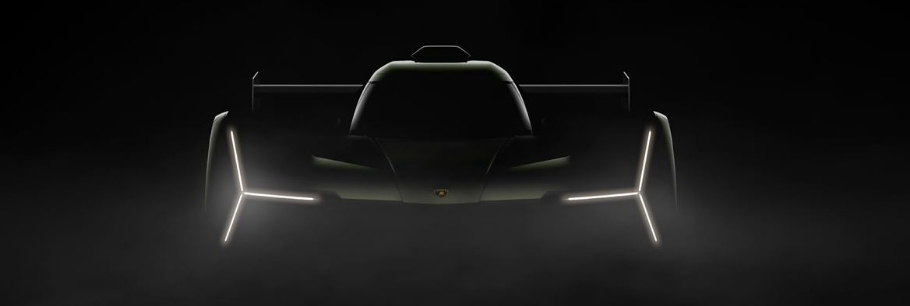
    Lamborghini Squadra Corse has unveiled the first technical specifications of its LMDh project for its upcoming venture into the Hypercar class of the FIA World Endurance Championship and the GTP class of the IMSA WeatherTech SportsCar Championship.

    In accordance with the LMDh regulations as issued by the Automobile Club de l’Ouest (ACO), the International Motor Sports Association (IMSA) and the Fédération Internationale de l’Automobile (FIA), the car will feature a hybrid power unit consisting of an internal combustion engine and an Energy Recovery System with a combined output of max 500 kw (681 hp). Alongside the single source ERS kit, Lamborghini has elected to use an 8-cylinder, 90-degree V-angle twin-turbo internal combustion engine developed by company’s motorsport department, Squadra Corse.

    With Automobili Lamborghini embarking on a future of hybridisation in its road car production, the LMDh represents a specific energy/performance project based on the experiences of the upcoming generations of its sports cars, fully aligning with the Cor Tauri company strategy. Squadra Corse, therefore, by making the step into a motorsport landscape driven by hybrid propulsion and is the perfect fit with Lamborghini’s transition to hybrid technologies.

    Major ERS components included in the LMDh homologated standard Kit cover several areas, with the electric motor (MGU) developed by Bosch Motorsport. Power Management and energy storage is supplied by Williams Advanced Engineering while the seven-speed P1359 hybrid gearbox is developed by Xtrac.

    The car, which will make its competitive debut in 2024 in both the IMSA Endurance Cup and the FIA World Endurance Championship, can produce a top speed of 340 km/h and weighs 1030kg without fuel and driver as per the regulations. As for the car’s dimensions, it will have a maximum width of 2,000mm, and a length of 5,100mm. The wheelbase will be 3,148mm with an engine weight of 180kg minimum.

    The base car (spine) is engineered together with Ligier Automotive and carbon fiber elements are produced in Italy by HP Composites, Squadra Corse long-term partner in GT3 and Super Trofeo platforms. The decision to team up with Ligier Automotive enables Lamborghini Squadra Corse to enter the top class of endurance racing with an established chassis provider. Additionally, the competent and flexible structure of Ligier Automotive (with specific touch points between Squadra Corse) made the partnership a logical choice for the LMDh project.

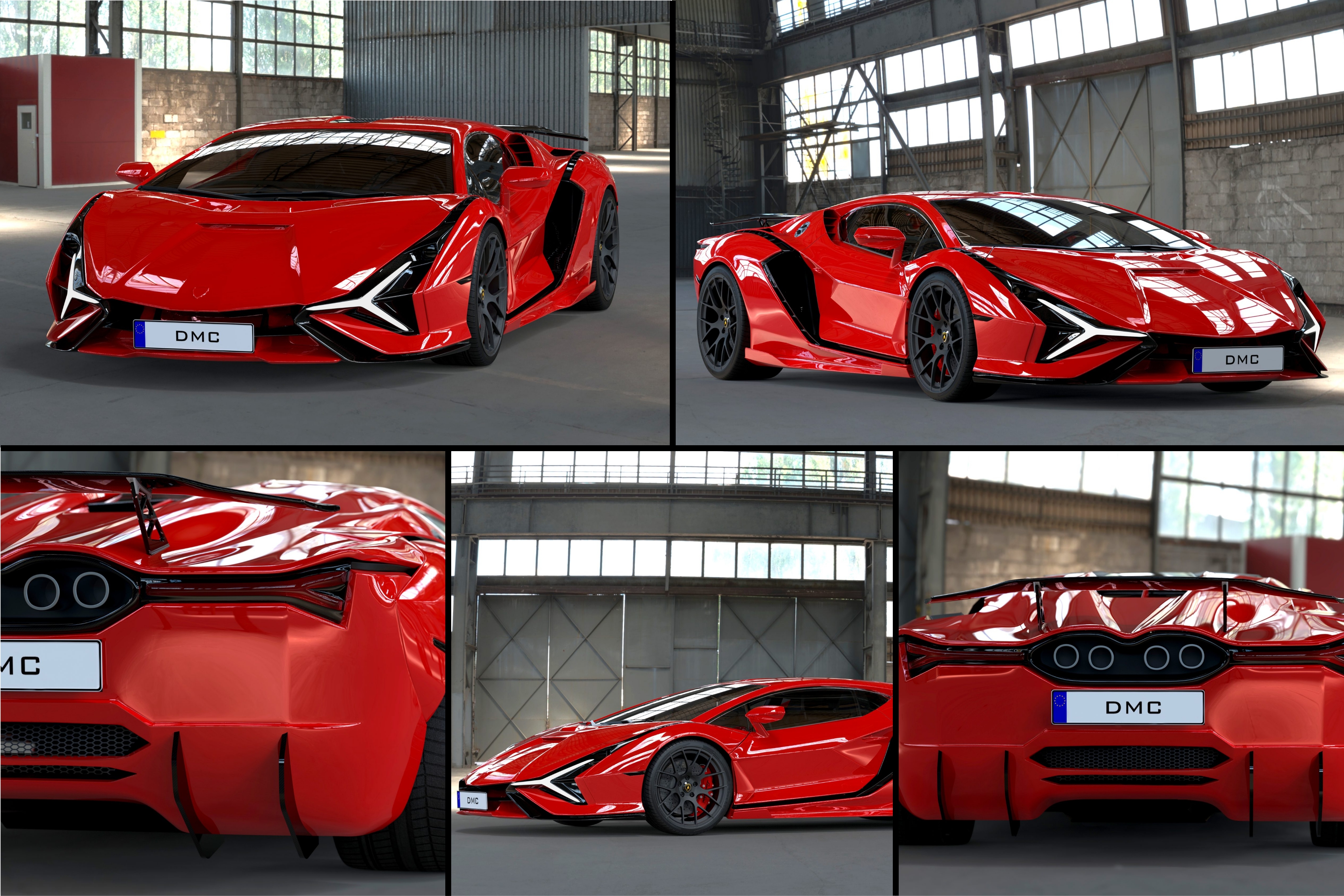
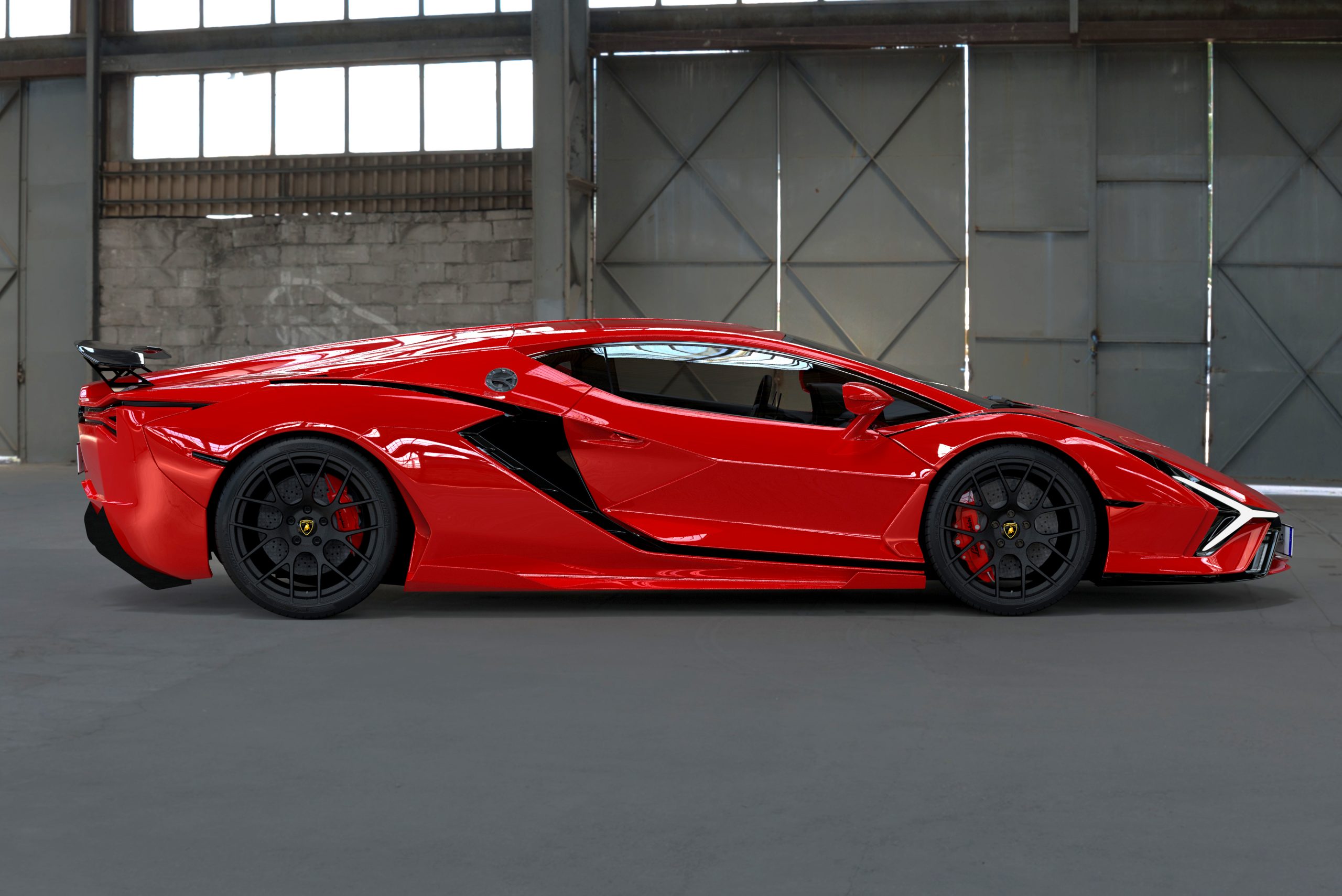
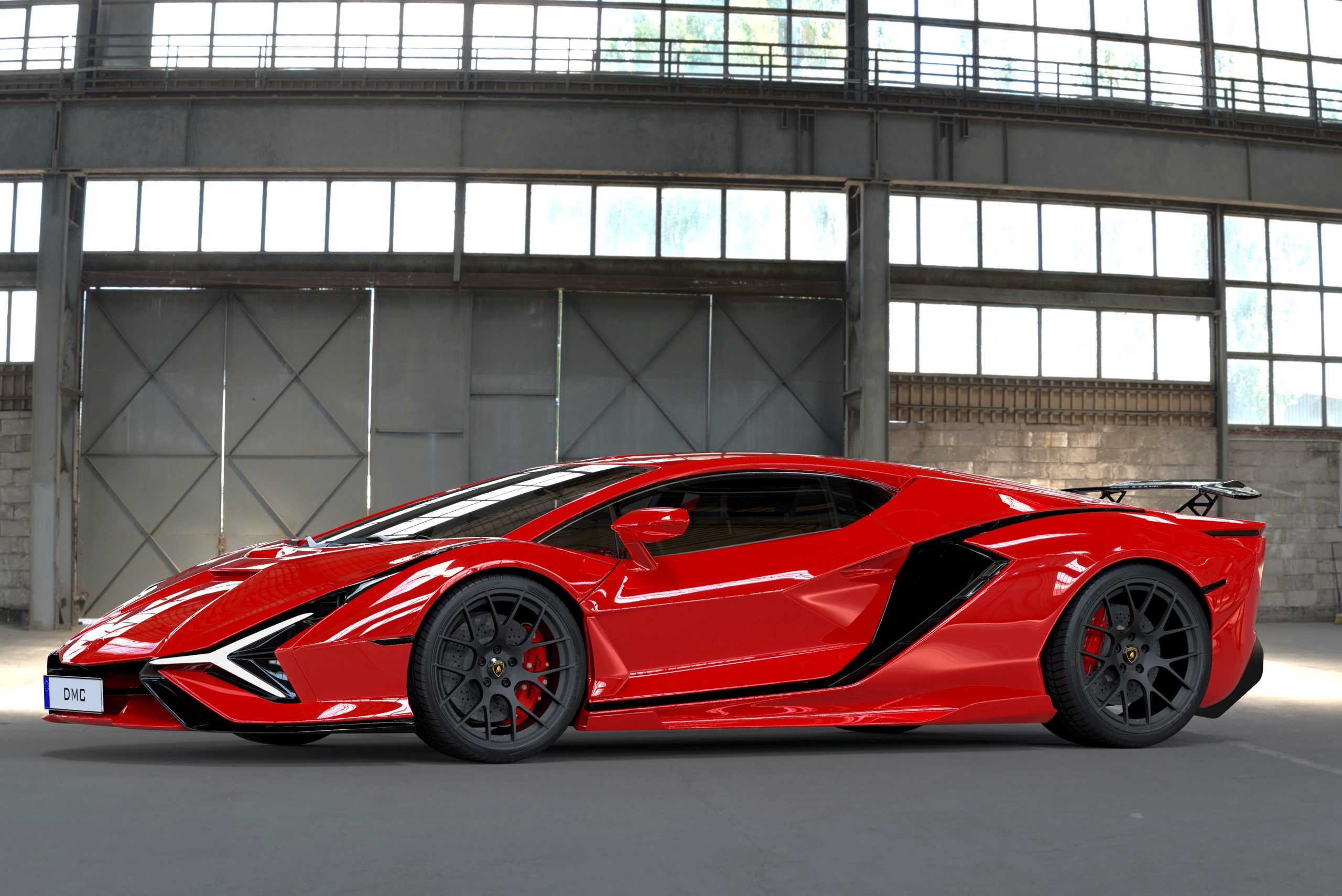
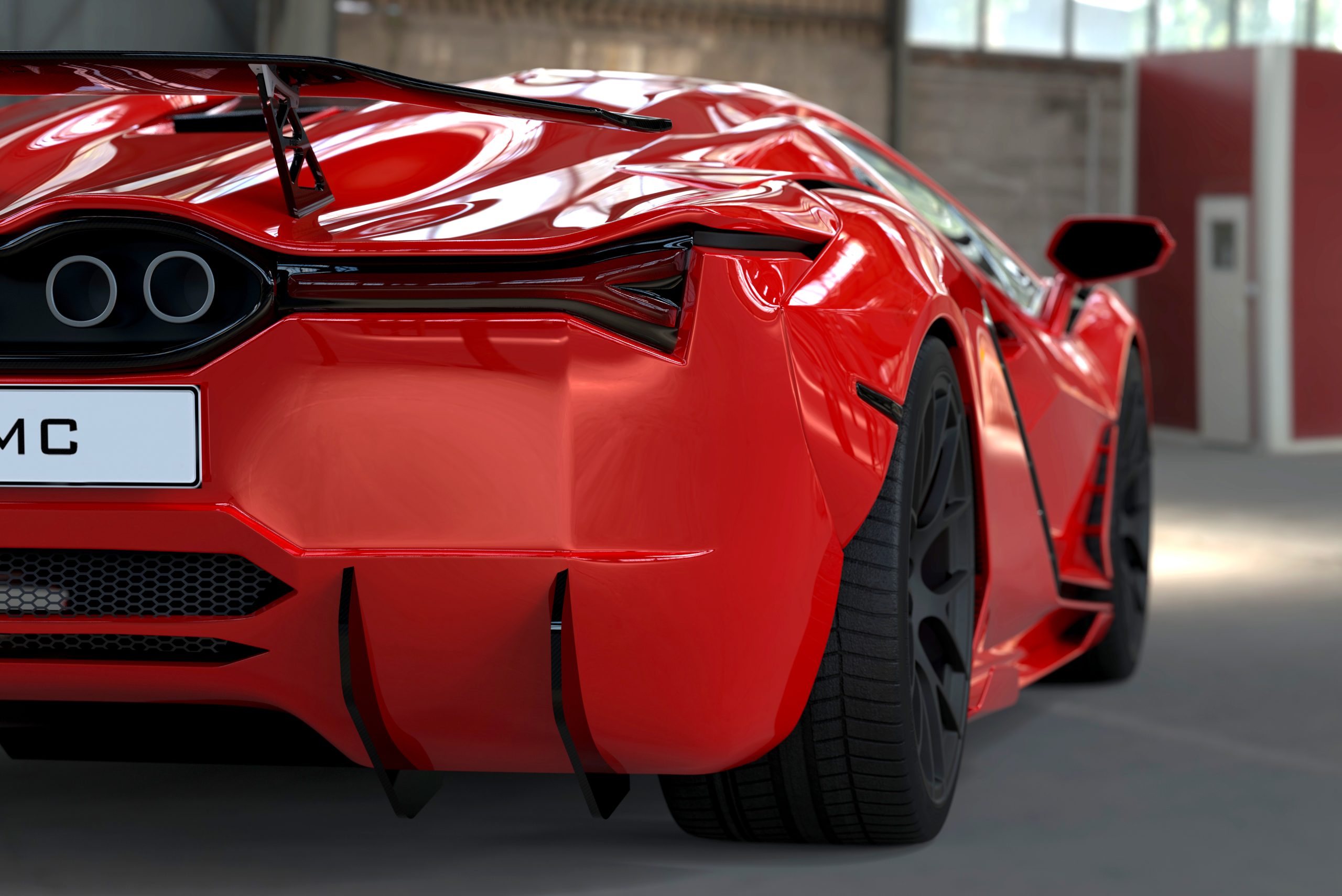
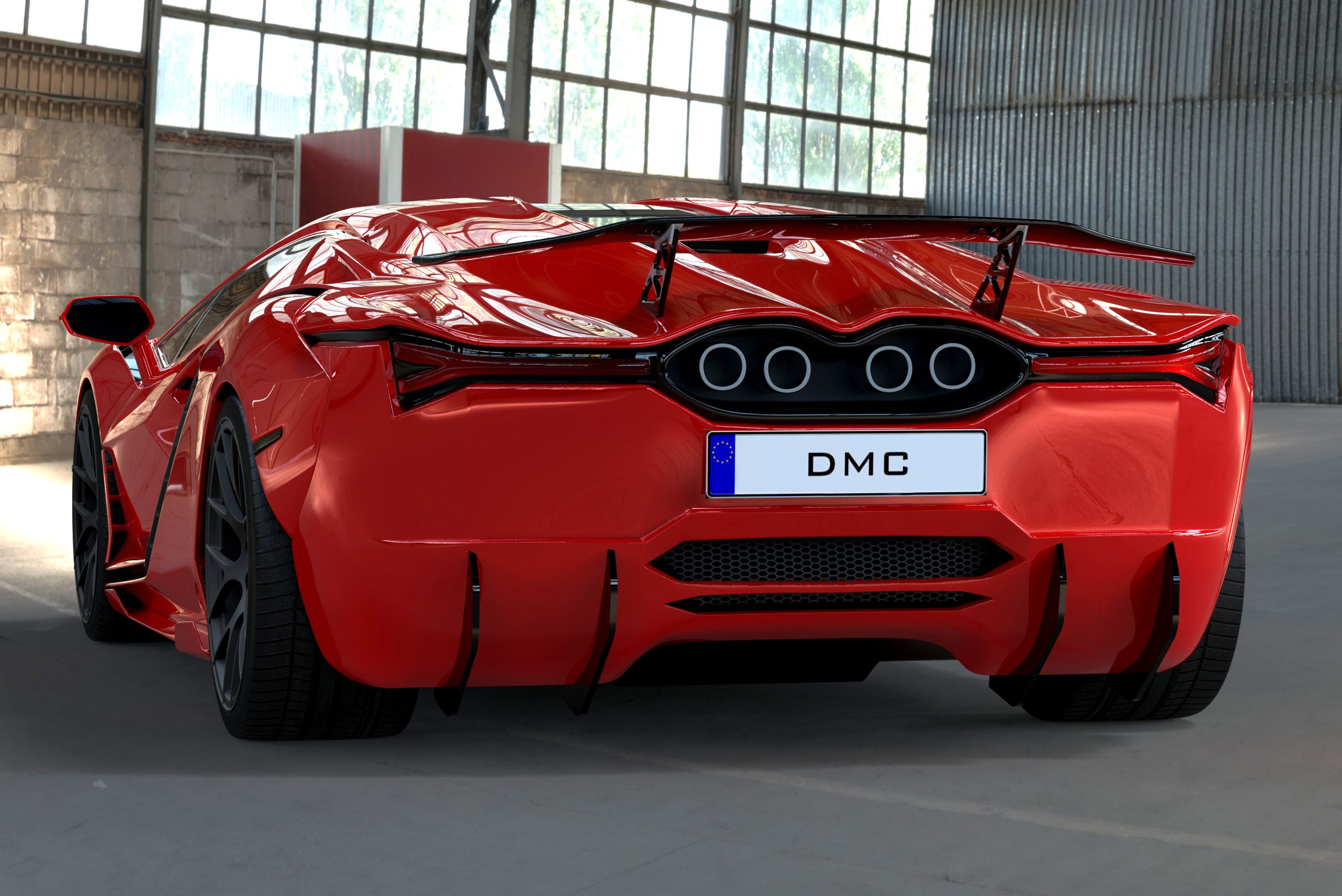
  • Lamborghini Revuelto imagined by DMC


    DMC Lamborghini Revuelto (2022)

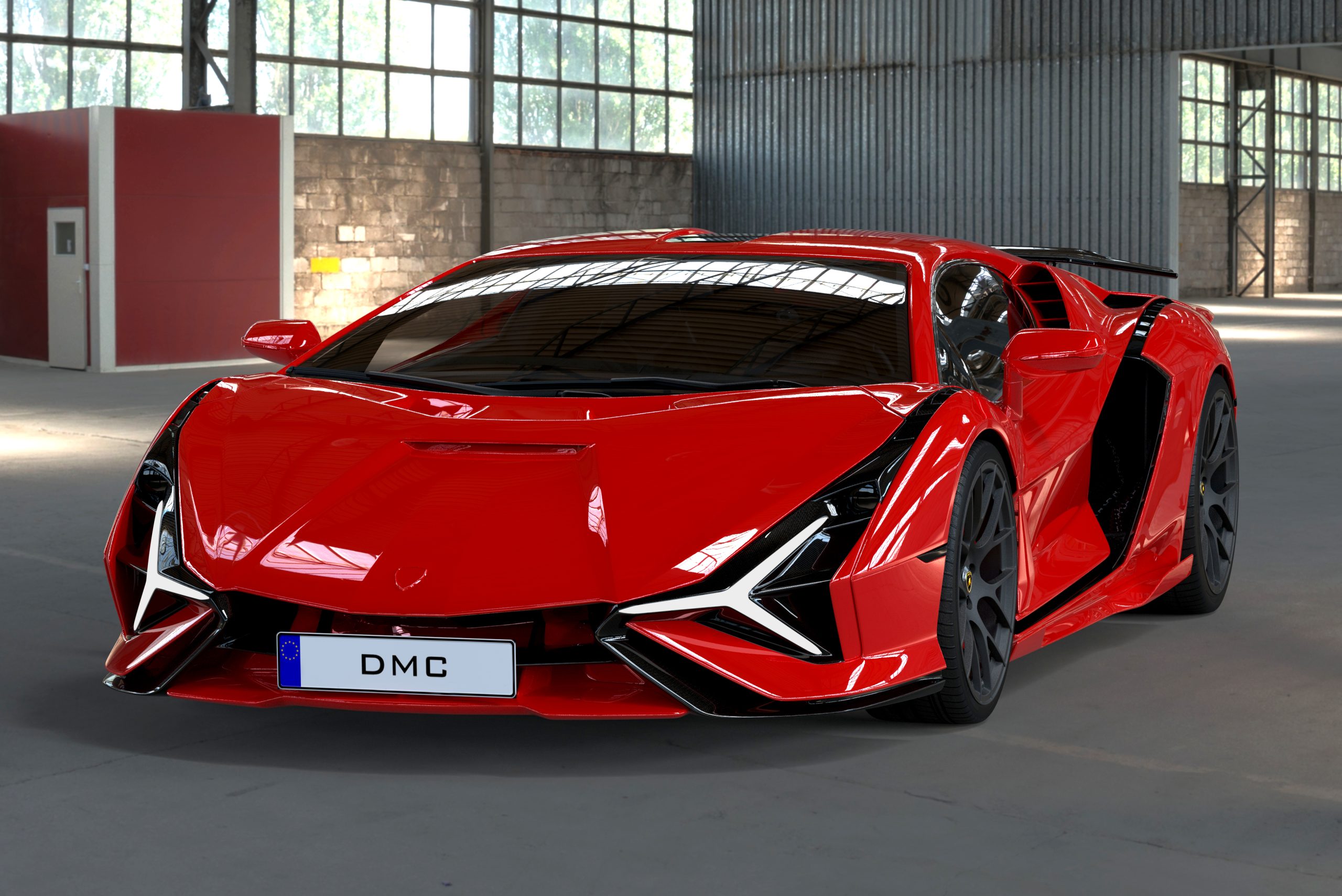
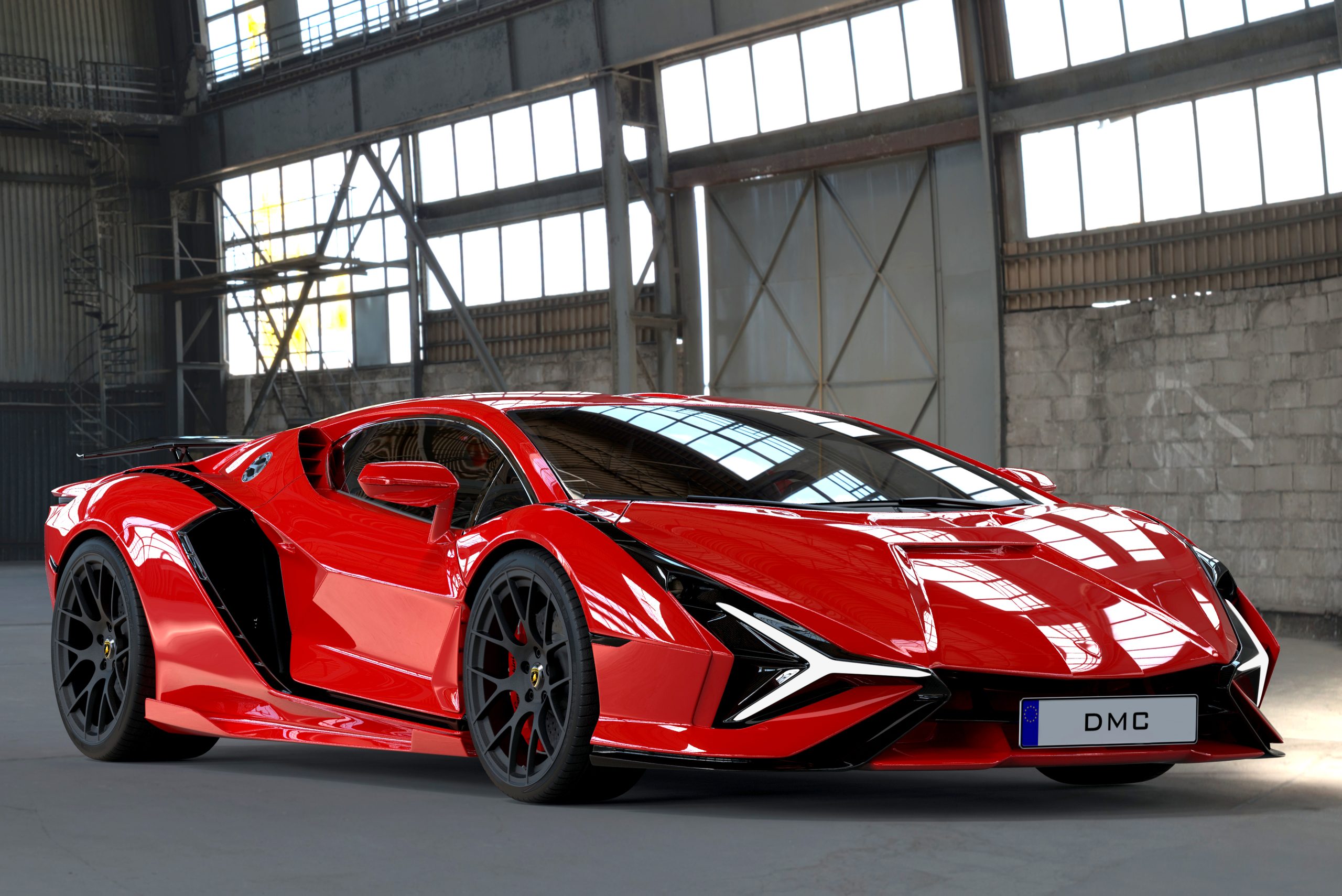
    2022 DMC Lamborghini Revuelto

    The Lamborghini Aventador will soon become obsolete, and its successor is rumoured to be called Revuelto. German Tuner DMC has made itself a name in the Lambo World, so it comes as no surprise that their designers are already working on how the new car could potentially look like – including some of their own DNA touches.

    But let’s first recap what we know about the car that is supposed to replace the Aventador:

    Lamborghini is readying a radical super-hybrid to follow up the Aventador, and recent spy shots gave us a fresh look ahead of its anticipated reveal later this year. It will become Sant’Agata’s first plug-in hybrid, setting the tone for an electric push, as Lamborghini prepares to end production of the V12-engined flagship, more than ten years since it launched. The brand stopped taking orders for the commemorative ULTIMAE EDITION in October last year.

    Importantly, however, while its replacement will use an electrified drivetrain, it will take the bulk of its power from a large-capacity V12, in line with company boss Stephan Winkelmann’s commitment to the emotional value of its supercars.

    He said last year that there is “a lot of emotion attached” to the twelve-cylinder engine, which he is particularly aware of, having been involved in the launch of the Aventador in his first stint as the boss of Lamborghini in 2011.

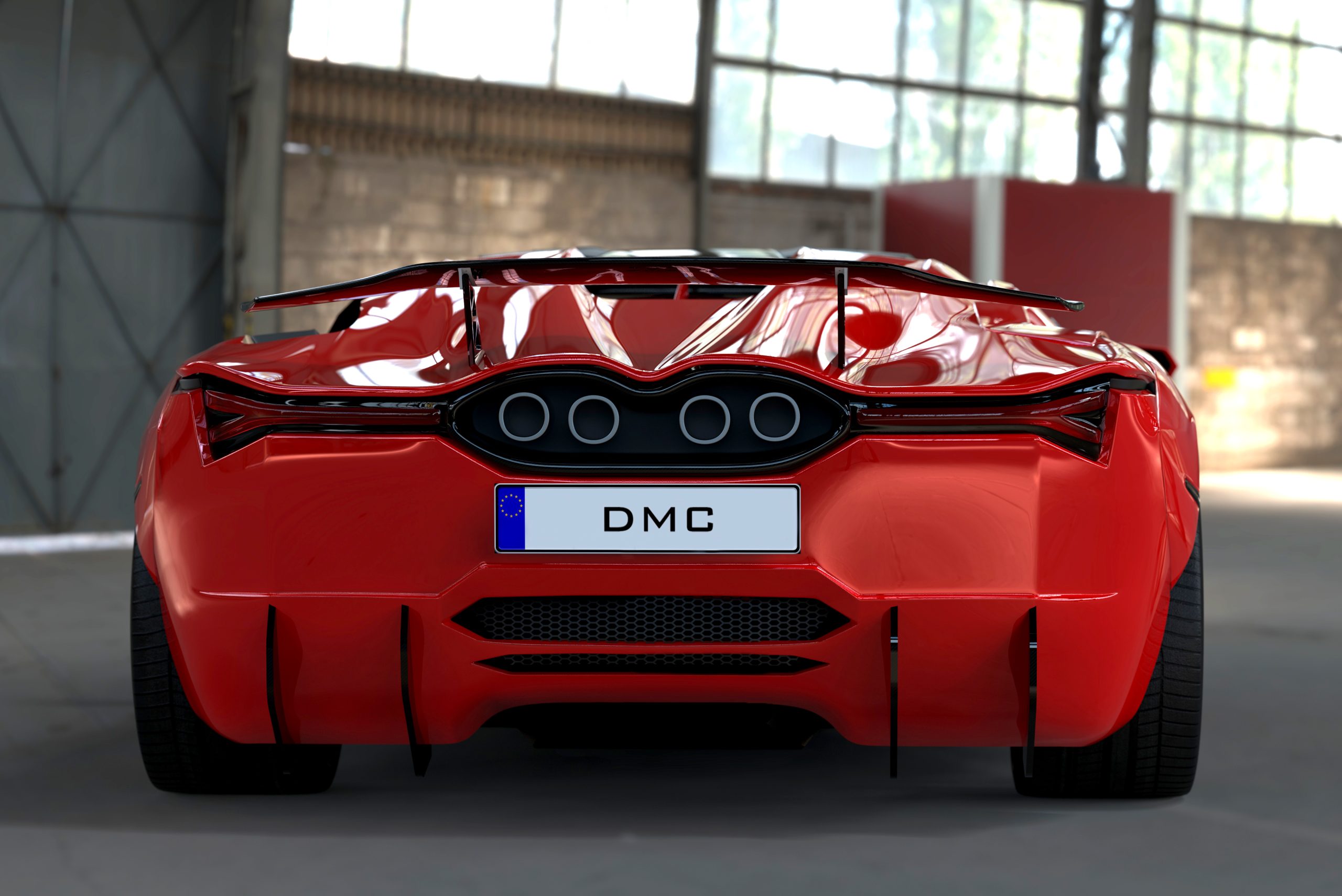
    After the spy shots started making their rounds on the internet, DMC didn’t wait a second and started imagining what the actual car could look like. While there are plenty of elements from the recent Sian,  especially on the front end, the rear seems to be a completely new design.

    We are proud to share the German tuner’s visualisation with you here today, which sticks mostly to the design elements that we discussed above. But there is one more thing they say, and so DMC couldn’t resist to add their iconic Rear Wing Spoiler onto the concept design.

    Not many people have seen the actual car, some owners have confirmed that a demo car will be shown at selected dealers as early as December 2022. Until then, let’s use DMC’s design to imagine what soon might become a reality.

    DMC Lamborghini Revuelto - Front Angle DMC Lamborghini Revuelto - Front Angle DMC Lamborghini Revuelto - Side DMC Lamborghini Revuelto - Side DMC Lamborghini Revuelto - Rear Angle DMC Lamborghini Revuelto - Head / Tail Lamps DMC Lamborghini Revuelto - Rear Angle DMC Lamborghini Revuelto - Rear