Launched in 2010 Honda’s CR-Z was widely considered a ground-breaking sporting hybrid from one of the world’s leading car manufacturers. “Hybrid” and “sporting” are problematic concepts when put together: in nature a hybrid car is usually heavy due to the presence of two separate motors and a hefty battery pack. Sports cars, on the other hand, need to be light in order to be fast, and their need for speed often compromises on the ecological economy required in a hybrid. Honda’s CR-Z however, married the two in a successful vehicle.
Weighing 132lb the honda crz’s electric motor, measuring just two inches across, fits snugly between the car’s engine and its six-speed manual transmission. Beneath the floor of the boot is concealed its nick-metal hydride battery and power electronics provided by Panasonic. The electric motor adds a bit of oomph to the wheels when the driver accelerates rapidly, and can even act as a generator during overrun or when the car brakes. The results? The sporty coupe goes from 0 to 62 in 9.9 seconds, hits a top speed of 124mph and delivers 56.6mpg in its Combined cycle.
Since its launch two years ago the CR-Z has been a big success for Honda and a major step in their journey towards total fuel economy. Although it was met with steep competition at the time from the likes of Renault’s Megane Coupe 1.5 dCi 86 and the BMW 118d Couple the CR-Z continued to attract drivers and now it looks set for an overhaul as Honda have recently revealed tantalising images suggesting an update to their hybrid success story.
Exactly what this reissue will entail is not yet clear, but Honda have been known to continually improve on their most popular vehicles by responding to the feedback and criticisms of their customers.
Honda has just released the first video in a series of short films. The goal is to highlight environmental initiatives undertaken by the brand. Honda’s ultimate aim is to reduce the company’s environmental impact and create a sustainable future.
The film series will focus on Honda’s efforts at creating more fuel-efficient, low emissions vehicles. In addition, they will also show the efforts to lessen the impact of the company’s manufacturing and logistics operations.
Below you can view the first film in the series, named “Paint by Numbers”. You will understand the story of how a Honda senior staff engineer, Shubho Bhattacharya, developed the technology which reduces energy consumption in the automobile body painting process.
“The largest amount of energy that’s consumed in a car factory is in the painting process. In fact, the painting process consumes about 60 percent of a typical car factory’s energy consumption”, says Bhattacharya.
The engineer created the Intelligent Paint Technology. As a result there is now decrease of CO2 emissions from painting operations by approximately 25 percent. This represents the reduction of approximately 10 000 metric tons of CO2 emissions per year at Honda’s seven auto plants in North America.
2013 Acura ILX Sedan is one of the most advanced cars in terms of technological innovation and now it is playing an important role in a video. Metric’s new album “Synthetica” is a blend between technology and nature.
They have collaborated with Acura and took the ILX on the road, visiting several cities in the United States. What was so elaborate in this communion is that the vehicle underwent special installation.
State of the art projection mapping and LED display lights worked together to give a 3D experience outside and inside the car. Take a look at the video below and you’ll get the impression of how awesome this project was!
This one is worth the attention. Not becauseSR Auto have outdone themselves with it or something like that but because we are talking about an Acura TL – a relatively rare aftermarket favorite. Yes, it is one of the best selling cars in the US as a model, but it is essentially an overpriced Honda.
So SR Auto bought one, and then had enough money to do just a black paint job and to add PUR 4OUR DEPTH 20-inch rims in a “Gunmetal” gray finish, complemented by a gray again touch on the edges. Add a “Shadow Black” grille and some badges… oh, and suspension-lowering springs from H&R and there you go. A plain job which is actually appealing to the eye. In essence, the TL is cool and sleek, and mean and even more so with those delicate touches.
The base stock Acura TL is front-wheel driven with a power of 280 hp that comes from a 3.5-liter V6 in the engine bay. A 3.7-liter version offers 305 hp. Either way, the SH-AWD layout would be much more appreciated for the sake of handling and safety even (280 hp to the front wheels is dangerous enough already).
Introducing the 2013 Honda Accord and Accord Sedan which now boast a revised exterior that’s been “designed to stand the test of time”. More space inside is also promised. No word about the oily bits so for now we’ll just have to make do with the design ques
Starting off with a redesigned grille,Honda accent on the sporty DNA of the family. That way the hood with its many lines and curves is also being complemented. Further back to the sides, a sense of emotion comes largely from the distinctive line that goes through the door handles and flares upward toward the rear. Another line defines the rocker panel and makes a clever little swoosh towards the end. At the back, an inward slope at the top of the fenders, leaves a curvy and purposeful stance.
Inside, through the use of some Feng shui, more passenger and luggage space has been created. At the same time, both the 2013 Coupe and Sedan are actually shorter than previous models. “This car is the most sculpted and the most dynamic Accord yet,” said Vicki Poponi, assistant vice president of product planning for American Honda. “Following Honda’s long-held philosophy of ‘man maximum, machine minimum,’ the beautiful exterior evolved from a focus on interior space and the needs of the people inside it.”
More information about the new Accord will be brought this fall right before the official release.
The facelifted 2012 Honda CR-V is the fourth generation of the emblematic model, which has appeared for the first time in 1995. The facelift include modifications on every level of this Honda model.
First of all, the length and height of the car have been reduced by 5mm and 30mm respectively compared with the current model. However, the interior space of the SUV is not reduced.
The new CR-V has more aggressive and aerodynamic stance with deeper sculpting of the bodylines and a bolder nose section. The front bumper’s smooth, flowing lines are joined by a horizontal three-bar grille and deep-set headlights.
Furthermore, the CR-V’s signature vertical rear brake lights are now more three-dimensional style. In addition, the front LED daytime running lights and rear LED lights are other stylish enhancements.
This means that now the vehicle has sleeker proportions. Moreover, the rear seats fold flat, so the boot capacity of the CR-V has grown by 148 litres to 164 litres. This means that the boot of the CR-V can now accommodate two mountain bikes or four sets of golf clubs.
2012 Honda CR-V Facelift
What about the interior of the Honda? Of course, there were made several important modifications.
For instance, the major controls have been further grouped according to their function. Here is the “driver interface zone” which is positioned behind the steering wheel as well as the “information interface zone” in the centre of the cabin.
The materials used of course are only high quality ones and have been carefully chosen for the European market. A lot of attention has been put on the details as well.
The interior enhancements include impressive range of equipment that has been added. It features 5 inch “intelligent” Multi-Information Display (i-MID), which controls the audio, telephone and navigation systems.
Next, the front seats incorporate the new whiplash mitigation system. These seats work in conjunction with the CRV’s Advanced Compatibility Engineering (ACETM) body structure.
The passengers’ seats on the other hand have transformed hip point. They have now been lowered by 38mm compared to the current model, resulting in a more comfortable seating position and increased headroom.
Here is also included for the first time a new design which allows the introduction of Easy Fold-Down 60/40 Split Rear Seats. They now can be folded flat in one movement. Hence, the CR-V can be transformed from a five-seater passenger car into a versatile load-lugger.
More importantly, the aerodynamics is another key area of the new CR-V design. The drag coefficient has been reduced by 6.5% compared with the current model and now benefits from performance, fuel consumption and exhaust emissions.
httpv://youtu.be/lB_sfD3fj5c
Under the bonnet can be seen either a 2.0-litre i-VTEC petrol engine or a 2.2-litre i-DTEC diesel engine, both fitted as a standard with a six-speed manual gearbox.
The power and torque outputs of the i-DTEC engine remain at 150 hp (110 kW) and 350Nm (258 lb-ft) respectively. However, the CO2 emissions fall from 171g/km to 149g/km for the manual version and from 195g/km to 174g/km for models equipped with the five-speed automatic transmission.
On the other hand, the power output of the 2.0-litre i-VTEC engine has risen from 150 hp to 155 hp (114 kW), while the torque has been increased to 192Nm (142 lb-ft). Although there has been increase of the performance, the CO2 emissions have fallen here as well from 192g/km to 173g/km for the manual version, and from 195g/km to 175g/km for the automatic one.
At last, the new CR-V now includes upgrades to the car’s suspension, steering and four-wheel drive system. Here the next generation Motion Adaptive electric power steering system now combines maneuverability with increased feedback and response at higher velocity.
In addition, this sophisticated system includes Advanced Vehicle Stability Assist system, which detects instability in slippery road conditions and automatically initiates steering inputs that prompt the driver to steer in the correct direction.
A wide range of electronic systems are also included: Hill Start Assist, Hill Descent Control, Honda’s Advanced Driver Assist System, Lane Keeping Assist System, Adaptive Cruise Control, Collision Mitigation Braking System, and Emergency Stop System.
In short, the new improved model of 2012 Honda CR-V is now more confident, efficient and functional and successfully builds on the fame of its predecessors.
2013 Honda Fit is going on sale today and will deliver the lucky customers unmatched efficiency and fun-driving. In addition to that Honda has included to the Fit exterior color trim range the new Midnight Plum Pearl paint. The starting price still remains unchanged: $15 325.
Important fact about the Fit is that it has multiple achievements because of its class-leading safety scores, fuel economy, value and overall excellence. Some of the prestigious awards are “$16,000 Subcompact Shootout” competition (by Cars.com, USA Today and MotorWeek ), Tope safety pick (from the Insurance Institute for Highway Safety), 2012 Residual Value Award from ALG, “10Best Cars” award winner.
This Honda model is powered by 1.5-liter, i-VTEC® four-cylinder engine. It is able to generate 117 horsepower (86 kW) at 6,600 rpm and 106 lb-ft (144 Nm) of torque at 4,800 rpm. This engine is mated to a five-speed manual transmission as a standard and. Nevertheless, a five-speed automatic one is also available.
2013 Honda Fit Sport
The economy numbers for the vehicle, when equipped with the available automatic transmission, are city/highway/combined fuel economy rating of 28/35/31 miles per gallon. The Fit Sport with the available automatic transmission has city/highway/combined fuel economy rating of 27/33/30 miles per gallon. All manual transmission-equipped models have city/highway/combined fuel economy rating of 27/33/29 miles per gallon2.
Furthermore the compact size of the 2013 Honda Fit makes it perfect for the urban environment. In addition it has intriguing design which is emphasized by the body-color exterior mirrors and racy five-spoke wheel covers or 16-inch alloy wheels.
Moreover, the car will deliver a sporty and dynamic driving experience to its driver, because of its front MacPherson strut suspension and an H-shaped torsion beam rear suspension. Fifteen- and 16-inch wheels (Fit and Fit Sport, respectively) include 175/65 R15 84S (Fit) and 185/55 R16 83H (Fit Sport) tires.
Although the overall exterior length is just 161.6 inches, the car is surprisingly roomy inside. This makes it possible for five passengers to have a comfortable ride. The standard comfort and convenience features include air conditioning, cruise control, remote entry, a 160-watt AM/FM/CD audio system with four speakers, a USB audio interface3, an auxiliary audio input jack, MP3/WMA playback capability, Radio Data System (RDS), power windows, power mirrors, power door locks, and a security system.
As it is typical for Honda, all Fit models are equipped with a wide range of standard safety equipment: Vehicle Stability Assist™ (VSA®), the Advanced Compatibility Engineering™ (ACE™) body structure, anti-lock brakes, dual-stage, multiple-threshold front airbags, front-side airbags with passenger-side Occupant Position Detection System (OPDS), and side-curtain airbag.
2013 Honda Fit Sport
The top-of-the-line in this model range is the Fit Sport. The vehicle includes host of useful features: fog lights, “machined surface” 16-inch alloy wheels, a body-colored underbody kit and rear roofline spoiler, chromed exhaust finisher, rear stabilizer bar and steering wheel-mounted paddle shifters,160-watt AM/FM/CD audio system with six speakers, illuminated steering wheel-mounted audio controls get the tunes pumping.
Other Fit Sport interior improvements are upgraded seat fabric, dark metallic dashboard components, chrome accents around the instrument displays, console ambient lighting and floor mats.
Furthermore, the model is also available with the Honda Satellite-Linked Navigation System™ with Voice Recognition4, which features a 6.5-inch screen, Bluetooth®5 HandsFreeLink®, Bluetooth® Audio capability with compatible phones and devices.
Honda Motor Co., Ltd. has announced its intent to provide technical support to Team Mugen, operated by M-TEC Co., Ltd., for its competition with the MUGEN CR-Z GT in the GT300 class of SUPER GT Series.
Honda will supply a 2.8-liter V6 twin-turbo engine and the racing hybrid system developed exclusively for this Team Mugen racing machine and will start actual test runs.
Team Mugen’s first race with the MUGEN CR-Z GT featuring the Honda racing hybrid system will be the 2012 SUPER GT Series Round 4 SUGO GT 300km Race, which will be held on July 28 and 29, 2012.
Stay tuned for more information about this project!
2013 Honda Fit EV has just received the highest fuel-efficiency rating ever given by the Environmental Protection Agency (EPA). In particular, the number it has shown is exactly of 118 MPGe.
Furthermore this Honda electric vehicle has an unprecedented low consumption rating of just 29 kilowatt hours (kWh) per 100 miles. This makes its EPA rated yearly fuel cost of only $500.
The reason for this efficient drive is that the Fit is equipped with a 20-kWh lithium-ion (Li-ion) battery, which provides the capacity to earn an EPA combined city/highway estimated driving range rating of 82-miles. Compared to the other electric vehicles, the Fit EV has the best fuel economy. For example, the EPA efficiency and range ratings of the Ford Focus Electric are 105 MPGe, 76-mile range; of Nissan Leaf – 99 MPGe, 73-mile range; and Mitsubishi i-MiEV – 112 MPGe, 62-mile range.
What contributes additionally for the fuel economy is the Fit EV’s efficient design. This includes the powertrain design, the weight-conscious engineering and the effective aerodynamics. In addition, the battery of the EV is the smallest one in its class and can be recharged in less than 3 hours from a low charge indicator illumination point (utilizing 240-volt circuit).
Important to mention is that the Fit EV’s 92 kilowatt (123 horsepower) coaxial electric motor produces 189 ft-lb (256 Nm) of torque. In addition, it works in team with a chassis with a fully-independent suspension and a driver-selectable 3-mode electric drive system. The latter one was adapted from the CR-Z Sport Hybrid.
In fact, this takes the Fit one step further, to the accomplishment of Honda’s goal to bring more environmental awareness to thee world. Furthermore, the brand aims to continue developing battery- electric, hydrogen, natural gas, and gasoline-electric powered vehicles, which are to show improved fuel-efficiency and reduced CO2 emissions.
Moreover, Honda Fit has topped the list of America’s greenest vehicles, from the America Council for an Energy-Efficient Economy (ACEEE), for eleven consecutive years. Today, the company is striving for even greater reductions in CO2 emissions.
2013 Acura ILX has just been released for sale at Acura dealerships with a starting price of $25 900. The all-new ILX will come to offer more luxury, wide array of premium features and premium appeal.
The new Acura ILX can offer its customers a choice of three powertrain options. One of them is Acura’s first-ever gasoline-electric hybrid. The latter has spacious interior and deliver sporty driving experience.
In addition, the ILX will offer a number of new, premium features included as a standard: Keyless Access System with smart entry and pushbutton start, Pandora® internet radio interface and SMS text message function, power moonroof, aluminium wheels and Bluetooth® HandsFreeLink®.
2013 Acura ILX
The entry-level of the model ILX is powered by a 2.0-liter inline 4-cylinder engine producing 150 horsepower (110 kW) mated to a Sequential SportShift 5-speed automatic transmission.
For the customers who want dynamic driving experience, the ILX engine range includes the 2.4-liter engine ($29 200, includes the Premium Package). It has an output of 201 horsepower (154 kW) and includes a close-ratio, six-speed manual transmission.
Next, the ILX Hybrid (with a price starting at $28,900) utilizes 1.5-liter inline engine and an Integrated Motor Assist® electric motor. They are mated to a Continuously Variable Transmission (CVT). More importantly, the ILX 1.5L Hybrid has an EPA estimated city/highway/combined fuel economy rating of 39/38/38 mpg.
In details, the Premium Package includes: leather seating surfaces, heated front seats, a power driver’s seat, an upgraded 360 watt stereo system with XM® radio, HID headlights, foglights, 17-inch aluminium wheels, a multi-view rearview camera and an Active Sound Cancellation system to make for a quieter cabin.
The Technology Package adds further to the Premium one the following: ELS Surround® audio system and a full complement of relevant technologies, including AcuraLink® Satellite Communication System, Acura Navigation System with Voice Recognition™, AcuraLink Real-Time Traffic with Traffic Rerouting™, AcuraLink Real-Time Weather™ with radar image maps and HomeLink®.
2013 Honda Fit EV and Accord Plug-In Hybrid Sedan are going literally to take charge from Leviton Manufacturing Company. Leviton is a global leader in connectivity solutions and recently was selected as Honda’s preferred Electric Vehicle Supply Equipment provider for customer and dealer EV charging.
In fact, the company is leader in the fields of advanced technology for mobility and energy solutions. In addition to this it is important to mention that this is the largest privately held global provider of electrical wiring devices, data center connectivity solutions and lighting energy management systems. Combined with any Honda vehicle, the result will be oriented towards more sustainable future.
Furthermore, Honda will be introducing these two battery-electric vehicles: starting with 2013 Honda Fit EV this summer, and the Honda Accord Plug-In Hybrid Sedan next winter.
The first Honda vehicle is a battery-electric commuter car. And as you can guess yourself, it is based on the famous Fit model. The car is able to deliver an estimated 123 city-mile range per charge (76 mile range combined adjusted city/highway) and can fully recharge its battery in just three hours when connected to a 240-volt circuit.
On the other hand Honda Plug-In Hybrid Sedan utilizes two-motor hybrid system. The latter continuously moves through three different modes: all-electric, with up to a 15 mile per charge range; gasoline-electric; and direct-drive. Thanks to these modes is further possible an optimization of driving and fuel efficiency, especially during city driving.
Apparently Honda have figured out a way to keep us out of traffic jams. Actually, they want to prevent jams from happening in the first place. The plan is to introduce an already developed system, first of it’s kind according to Honda, which can “determine whether the driving pattern of the vehicle is likely to create traffic jams”. Well that’s easy – if the car is moving, you’re okay. If not, you’re stuck. After figuring out that the acceleration and deceleration of a single vehicle may influence the whole traffic stream, Honda and the Research Center for Advanced Science and Technology at the University of Tokyo started conducting tests. The initial results showed that with the system the voyaging vehicle’s average speed was increased by around 23% while the fuel efficiency was up by 8% when trailing. Public road testing is to be commenced next month in Italy and Indonesia.
So how does it work? Well, the system monitors the acceleration and deceleration patterns of the vehicle to determine whether the driver’s driving pattern is likely to create traffic congestion. If the car knows what’s going to happen next, maybe the driver can do something about it to prevent it. Information is being fed trough a color-coded display on the on-board terminal.
Even further than that, by connecting the on-board terminals to Honda’s cloud servers, the drive can be aware of and in sync with the driving patterns of vehicles by activating the ACC (Adaptive Cruise Control at the right time to maintain a constant distance from the other back ends.
Honda congestion prevenetion principle
If this turns out to be a successful endeavor, finally we will see the fuel efficiency battle on two fronts – one is the stop/start function which is designed to relief the effects of congestion while this would be a preventative measure. The traffic does affect CO2 emissions, time and mileage. It also creates possible bumper-to-bumper accident risks.

 Launched in 2010 Honda’s CR-Z was widely considered a ground-breaking sporting hybrid from one of the world’s leading car manufacturers. “Hybrid” and “sporting” are problematic concepts when put together: in nature a hybrid car is usually heavy due to the presence of two separate motors and a hefty battery pack. Sports cars, on the other hand, need to be light in order to be fast, and their need for speed often compromises on the ecological economy required in a hybrid. Honda’s CR-Z however, married the two in a successful vehicle.


 2013 Acura ILX Sedan is one of the most advanced cars in terms of technological innovation and now it is playing an important role in a video. Metric’s new album “Synthetica” is a blend between technology and nature.


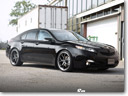
 This one is worth the attention. Not because


 Introducing the 2013 Honda Accord and Accord Sedan which now boast a revised exterior that’s been “designed to stand the test of time”. More space inside is also promised. No word about the oily bits so for now we’ll just have to make do with the design ques


 The facelifted 2012 Honda CR-V is the fourth generation of the emblematic model, which has appeared for the first time in 1995. The facelift include modifications on every level of this


 2013 Honda Fit is going on sale today and will deliver the lucky customers unmatched efficiency and fun-driving. In addition to that


 Honda Motor Co., Ltd. has announced its intent to provide technical support to Team Mugen, operated by M-TEC Co., Ltd., for its competition with the MUGEN CR-Z GT in the GT300 class of SUPER GT Series.


 2013 Honda Fit EV has just received the highest fuel-efficiency rating ever given by the Environmental Protection Agency (EPA). In particular, the number it has shown is exactly of 118 MPGe.


 2013 Honda Fit EV and Accord Plug-In Hybrid Sedan are going literally to take charge from Leviton Manufacturing Company. Leviton is a global leader in connectivity solutions and recently was selected as Honda’s preferred Electric Vehicle Supply Equipment provider for customer and dealer EV charging.

 Apparently
