 The 2009 Lacetti hatchback offers body kits as standard equipment in most trim levels, along with newly designed 15-inch alloy wheels, adding a more dynamic and sportier look. Rear parking assist also comes standard in the SX and Diamond models. (more…)
Tag: GM
-
GM Daewoo Launches 2009 Lacetti Hatchback
-
GM Daewoo Launches Winstorm MAXX Premium Compact SUV
 GM Daewoo Auto & Technology (GM Daewoo) launched its new premium compact SUV, the Winstorm MAXX, today.
The Winstorm MAXX is a five-seat SUV that integrates a dynamic exterior with an elegant interior. Its sporty driving characteristics set it apart from “city commuter” SUVs.Its balanced handling is sustained by a stiff steel body-frame integral structure and a responsive suspension setting. (more…) -
California EPA and General Motors Team up to Help Drivers Reduce Motor Oil Consumption
 General Motors, the California Environmental Protection Agency (Cal/EPA) and the California Integrated Waste Management Board (CIWMB) announced today that they are joining forces to encourage drivers to follow their vehicle manufacturer’s recommendations on oil changes, which for millions of GM vehicles could be much longer than the decades-old standard of 3,000 miles between changes. (more…)
-
Cadillac Escalade Adds FlexFuel Capability for 2009
 All models of the 2009 Cadillac Escalade will be able to run on either ordinary gasoline or E85 ethanol, or any combination of the two, General Motors announced Friday.
And customers will have the fueling choice at no additional cost. (more…)
-
GM Daewoo Appoints Kim Tae-wan New Vice President for Design
 Seoul – GM Daewoo Auto & Technology (GM Daewoo) announced today that Kim Tae-wan, Managing Director for Design Operations, has been promoted to Vice President for Design, effective June 1.
Kim was appointed to his previous post in February 2007. He joined GM Daewoo in January 2006 as Director of Advanced Design.In November 2006, he was appointed Director of Exterior Design. (more…) -
GM Daewoo Reports Record May Domestic Sales
 GM Daewoo Auto & Technology (GM Daewoo) announced today that it sold 14,239 vehicles in Korea in May.This was a record for the month and the second-highest monthly domestic sales in the company’s history.
-
Chevrolet Corvette

 Get comfortable. There’s so much new and exciting with the 2008 Corvette that you’ll want to grab a hot drink, sidle up to your computer screen and absorb all the details.
The changes involve everything from an all-new, larger and more powerful V-8 engine to refinements in driving characteristics that solidify the Corvette’s position as the preeminent American sports car – and further the argument that it is one of the world’s best. There are also a host of exterior and interior refinements that raise the Corvette’s luxury status and enhance the feeling of craftsmanship.
“Corvette is an uncompromising sports car that rewards its owners with impeccable performance and great comfort,” said Ed Peper, Chevrolet general manager. “The changes and enhancements to the 2008 Chevrolet Corvette reflect continual improvements that speak to Chevrolet’s unflagging commitment to building the best sports car – and with nearly 55 years of experience, the Corvette just keeps getting better and better.”
Also back again for ’08 is the 505-horsepower Corvette Z06, an American super car that has won over enthusiasts, journalists and racers around the world for its balance of racetrack-bred performance, daily-driving civility and value.


Engine
A new, 6.2L LS3 small-block V-8 is the standard engine in Coupe and Convertible models. It is rated at 430 horsepower (321 kW)* and 424 lb.-ft. of torque (586 Nm)* with the standard exhaust system; with the new, optional two-mode exhaust system, power ratings increase to 436 horses / 325 kW and 428 lb.-ft. / 592 Nm. As a result, the standard Corvette is true supercar, capable of 190 mph. The LS3 with the six-speed paddle-shift automatic is the fastest automatic-equipped Corvette ever, with 0-60 mph capability of 4.3 seconds.
This new iteration of the storied small-block family features a revised, larger-bore cylinder block – 4.06-inch / 103.25 mm vs. the previous 6.0L’s 4.00-inch / 101.62 mm bores – high-flow, LS7/L92-style cylinder heads; larger-diameter pistons; revised camshaft and camshaft timing; revised valvetrain with offset intake rocker arms; high-flow intake manifold; high-flow fuel injectors from the Z06’s LS7 engine; and a new engine beauty cover.
The LS3 features an aluminum cylinder block with cast iron cylinder liners. In addition to its larger bores, which help create a 376-cubic-inch displacement, the block casting also features revisions and machining in the bulkheads that enhance its strength and improved bay to bay breathing. But while the bore of the 6.2L engine is increased when compared with the previous 6.0L engine, the engine’s stroke remains at 3.62 inches (92 mm). The pistons for the larger 6.2L engine also are new and are designed for its high-rpm performance capability.
Breathing for the new 6.2L engine is accomplished via new, high-flow cylinder heads. They’re based on the large port/large valve design found on the LS7 engine and other GM L92 engines, with larger-capacity, straighter intake ports. The design optimizes intake flow to the combustion chamber and the exhaust ports are also designed for better flow.
Complementing the larger-port design of the heads are commensurately sized valves. The intake valve size alone increases from 2.00 inches (50.8 mm) to 2.16 inches (55 mm) – an increase of nearly 9 percent. The intake valves feature lightweight hollow stems, which enable the engine’s 6,600-rpm capability. The exhaust valves also are large, measuring 1.60 inches (40.4 mm) in diameter.
To accommodate the engine’s large valves and enable more direct intake port flow, the intake-side rocker arms are offset 6 mm between the valve tip and the push rod. Actuating the valves is a new camshaft, with intake-side lobes providing more than a 5-percent percent in increase in lift, from 0.521-inch to 0.551-inch (13.25 mm to 14 mm). Exhaust-valve lift remains unchanged from the LS2. The camshaft timing was revised to optimize performance with the higher-lift intake cam profile.
Ensuring the cylinder heads receive all the air they can handles falls to a new, acoustically tuned intake manifold. The composite design is manufactured with a “lost core” process that improves runner to runner variation and reduces airflow losses. An acoustic foam material is used to reduce radiated engine noise; it is sandwiched between the outer top of the manifold and an additional “skull cap” acoustic shell. Also new beauty covers atop the engine shield the rocker covers and also feature a noise-reducing, acoustically tuned insert to provide a more refined engine sound.
Exhaust system
Optional on ’08 Coupe and Convertible models is a new, two-mode performance exhaust system. Similar in design and function to the system used on the Z06, the dual-mode exhaust uses vacuum-actuated outlet valves, which control engine noise during low-load operation, but open for maximum performance during high-load operation. It is not identical to the Z06 system; the Coupe/Convertible uses a 2.5-inch-diameter exhaust, while the Z06 uses a three-inch system.
With the new, dual-mode performance exhaust, power output for Coupe/Convertible rises from 430 horsepower (321 kW) and 424 lb.-ft. of torque (575 Nm) to 436 horses (325 kW) and 428 lb.-ft. (580 Nm). This system gives the Corvette a more aggressive exhaust sound character that will appeal to performance enthusiasts.
Transmissions and axle ratios
The shifting efforts for both the six-speed manual transmission and paddle-shift six-speed automatic transmissions have been improved in ’08 Corvette models. The manual transmission shifting improvements include a more positive and direct feel during gear changes, with better gate-to-gate location.
The six-speed paddle-shift automatic transmission on Coupe and Convertible is improved with new hardware and a new controller calibration that deliver quicker shifts. This change bolsters the feeling of performance and driver control when using the shifting paddles.
Also new for ’08 models is the availability of the 2.73 performance axle ratio with the automatic transmission. It is included with the Z51 package.
Steering system – The Corvette’s precise rack-and-pinion steering system is revised to provide improved feel at all speeds. The revisions are due to a new, premium machining process of the system’s internal components, a new, stiffer intermediate shaft and controller calibration changes.
Wheels – Corvette Coupe and Convertible models come with a new split-spoke wheel design for ’08. The design was introduced on the limited-edition ’07 Indianapolis 500 Pace Car replicas with a Sterling Silver finish. The standard 18-inch front wheels and 19-inch rear wheels feature a Sparkle Silver finish, with a Competition Gray version optional.
Also new is a distinctive, performance-oriented forged aluminum wheel for Coupe and Convertible. It comes in a polished finish.
Exterior colors – There are two new premium exterior colors available with 2008 Corvette models: Jetstream Blue Metallic Tintcoat and Crystal Red Metallic Tintcoat; they replace Le Mans Blue Metallic and Monterey Red Metallic Tintcoat.
Custom Leather-Wrapped Interior Package – Available on Coupe, Convertible and Z06 models, the new Custom Leather-Wrapped Interior Package offers a stylish, two-tone leather-appointed cabin with details that enhance the feeling of Corvette’s craftsmanship.
Feature changes and enhancements – All Corvette models now come standard with features that were previously optional or part of equipment packages.
Dramatic fender forms and exposed headlamps combine with the grille to create a strong visual identity for the Corvette, while the tapered rear deck and fascia improve high-speed performance. The lean rear design sports round taillamps and center-exit exhaust. The fixed Xenon high-intensity discharge headlamps provide superior lighting performance. With a 0.286 coefficient of drag, the Coupe models are the most aerodynamic Corvettes ever.
The 2008 Corvette Convertible features a power-operated soft top with the 3LT package; an easy-to-operate manual top is standard. Both configurations use a five-layer fabric that conceals the underlying structure for a good top-up appearance, plus it helps preserve the car’s excellent aerodynamics and reduces road noise.
Corvette’s interior is inspired by the car’s dual-cockpit heritage. High-quality materials, craftsmanship and functionality help deliver premium quality meant to enhance performance driving. The instrument panel and doors are covered with cast-skin foam-in-place trim that looks like a leather-wrapped, padded panel. It is warm and inviting and has double the life of conventional trim materials.
An AM/FM/XM radio with CD player and audio input jack is standard. An optional Bose audio system with an in-dash six-disc changer adds to the choices available to the audiophile owner. Steering-wheel mounted audio controls – introduced in ’07 – are included with the Bose premium system.
A full-function OnStar system is standard and an onboard navigation system with voice recognition is available. Using a 6.5-inch (165 mm) color touch-screen display, the DVD-based system contains all the map data for the 48 contiguous states and most of Canada on one disc.
Driving dynamics
Corvette Coupe and Convertible have a hydroformed steel rail backbone structure, which features cored composite floors, an enclosed center tunnel, rear-mounted transmission and aluminum cockpit structure. Suspension cradles, control arms, knuckles, springs, dampers, bushings, stabilizer bars and steering gear have all been redesigned. New Goodyear Extended Mobility Tires (EMT) take advantage of the latest sidewall design and compound technology for run-flat capabilities.
Three suspension choices allow drivers to choose the setup that best suits their driving style. The standard suspension is tuned for a balance of ride comfort and precise handling. Corvette is now more poised at even higher handling levels, yet easier to drive.
The optional Magnetic Selective Ride Control suspension features magneto-rheological dampers able to detect road surfaces and adjust the damping rates to those surfaces almost instantly for optimal ride control. Cross-dilled brake rotors are included when this feature is selected, allowing customers to combine the larger brakes from the Z51 performance package with the comfort of Magnetic Selective Ride Control.
The Z51 Performance Package brings Coupe and Convertible performance very close to the widely admired previous generation Z06. The Z51 offers more aggressive dampers and springs, larger stabilizer bars, Goodyear Eagle F1 Supercar EMT tires, enhanced cooling and larger cross-drilled brake rotors (13.4 inches / 340 mm in front and 13 inches / 330 mm in rear) for optimum track performance while still providing a comfortable ride.
With each suspension, three standard dynamic chassis control systems – anti-lock braking, traction control and Active Handling – operate in concert. In all, the dynamic chassis control systems are smarter, less intrusive and more adept at making the total driving experience precisely what drivers have come to expect from their Corvette.
As the fastest, most powerful and most technologically advanced production model in Corvette’s history, t he Corvette Z06 offers an unprecedented level of capability and technology, making it one of the best performance values on the market.
Design
The Z06 has an unmistakable and aggressive appearance, with design cues that include. A wide front fascia with a large, forward-facing grille opening, a splitter along the bottom and wheel opening extensions along the sides to provide aerodynamic downforce. The trailing edge of the front wheel opening is radiused to achieve improved drag, but protects the body finish with a tough molding, and a large air extractor is located behind the wheel.
The aerodynamics of the Z06’s exterior were shaped by the experiences of the Corvette racing program, where high-speed stability and cornering capability are paramount. And while the race cars use large rear wings, the Z06’s elevated spoiler provides sufficient downforce to balance the road-worthy front splitter without adversely affecting aerodynamic drag. The Z06’s Cd is 0.34.
For all its race-inspired functionality, the Z06 is designed to be a daily-driveable high-performance vehicle. To that end, comfort and convenience are held to a very high standard. High-Intensity Discharge lighting, fog lamps, leather seating, dual-zone air conditioning, cabin air filtration and head-up display (HUD) with track mode and g-meter are standard.
The Z06 gauge cluster displays the Z06 logo on the 7000-redline tachometer and has a readout on the oil pressure gauge to reflect the higher standard pressure of the dry-sump oiling system. The seats feature two-tone leather surfaces, with Z06-logo embroidery and contrasting stitching.
Z06 options include a Bose audio system with an in-dash six-CD changer, polished, Competition Gray or chrome wheels, a telescoping steering wheel, heated seats, side-impact air bags, a navigation system with GPS and universal home remote.
LS7 engine
The Z06’s LS7 7.0L engine delivers 505 horsepower (377 kW) in a 3,132-pound (1,421 kg) package – a combination that delivers 0-60 performance of 3.7 seconds in first gear, quarter-mile times of 11.7 seconds at 125 mph and a top speed of 198 mph (as recorded on Germany’s Autobahn). It also provides maximum lateral acceleration of 1.04 g and 60-0 braking in 111.3 feet; it also circuited Germany ’s famed N ü rburgring in a time of 7:43 .
The LS7 reintroduced the 427-cubic-inch engine to the Corvette lineup. It is easily identified under the hood by red engine covers with black lettering. The LS7 shares the same basic Gen IV V-8 architecture as the Corvette’s 6.0-liter LS2, but it uses a different cylinder block casting with pressed-in steel cylinder liners to accommodate the engine’s larger diameter, 4.125-inch (104.8 mm) cylinder bores.
Internally, the LS7’s reciprocating components make use of racing-derived lightweight technology, including titanium connecting rods and intake valves, to help boost horsepower and rpm capability. The rpm fuel shut-off limit is 7,100 rpm.
One of the clearest examples of the LS7’s race-bred technology is its use of titanium connecting rods. They weigh just 464 grams apiece and besides being lightweight, which enhances high-rpm performance and rpm range, titanium makes the rods extremely durable.
The LS7’s CNC-ported aluminum cylinder heads are designed to meet the high airflow demands of the engine’s 7.0-liter displacement. A hydraulic roller camshaft with 0.588/0.593-inch valve lift is used to allow plenty of air to circulate in and out of the engine. To ensure optimal, uninterrupted airflow, the LS7’s heads have straight, tunnel-like intake runners. Very large by production-vehicle standards – even racing standards – they are designed to maintain fast airflow velocity, providing excellent torque at low rpm and exhilarating horsepower at high rpm. The heads feature 70-cc combustion chambers that are fed by huge, 56-mm-diameter titanium intake valves. They are complemented by 41-mm sodium-filled exhaust valves.
To accommodate the large valve face diameters, the heads’ valve seats are siamesed; and, taken from experience with the engines of C6.R racecars, the LS7’s valve angles are held at 12 degrees – vs. 15 degrees for the LS2 – to enhance airflow through the ports.
The LS7 has a dry-sump oiling system designed to keep the engine fully lubricated during the high cornering loads the Corvette Z06 is capable of producing. An engine compartment-mounted 8-quart reservoir delivers oil at a constant pressure to a conventional-style oil pump pick-up at the bottom of the engine. The pressurized oil feed keeps the oil pick-up continually immersed in oil at cornering loads exceeding 1 g.
Oil circulates through the engine and down to the oil pan, where it is sent back to the reservoir via a scavenge pump. The large-capacity reservoir, combined with a high efficiency air-to-oil cooler, provides necessary engine oil cooling under the demands of the engine’s power output. With the dry-sump system, oil is added to the engine via the reservoir tank – which includes the oil level dipstick.
Drivetrain
The Corvette Z06’s powertrain and drivetrain systems are matched to the LS7’s performance capability. The light, four-into-one headers discharge into close-coupled catalytic converters and through two-mode mufflers. The mufflers each feature a vacuum-actuated outlet valve, which controls exhaust noise during low-load operation but opens for maximum power.
At the rear of the LS7 engine, a single-mass flywheel and lightweight, high-capacity clutch channel torque to the rear transaxle. The six-speed manual transmission has been strengthened to handle the LS7’s increased torque load. The transmission includes a pump that sends transmission fluid to the front radiator for cooling. Upon its return, the fluid removes additional heat from the differential lube before returning to the transmission. The six-speed transmission connects to a limited-slip differential, with enlarged ring and pinion gears. Stronger axle half-shafts with tougher universal joints transmit power to the rear wheels.
Structure
The Z06 has a unique aluminum body structure for optimum stiffness and light weight for the fixed-roof bodystyle. Perimeter rails are one-piece hydroformed aluminum members featuring cast suspension nodes, which replace many welded steel components on other Corvette models. Other castings, stampings and extrusions are combined into the innovative structure with state-of-the-art manufacturing technologies.
Advanced structural composites featuring carbon fiber are bonded to the aluminum structure. The wider front wheelhouses, for example, are carbon composites and the passenger compartment floors combine carbon-fiber skins with an ultra-lightweight balsa wood core.
The Z06 has a new magnesium cradle that serves as the attachment point for the engine and some front suspension components. Magnesium is lighter than aluminum yet incredibly strong. The magnesium cradle helps improve the front-to-rear weight distribution, as do carbon-fiber front fenders and wheelhouses. Engineers also moved the battery from underhood to a position in the rear cargo area, behind one of the rear wheels.
The mass reductions are offset by some added performance enablers, including dry-sump lubrication, exhaust system with outlet valves, larger wheels and tires, larger brakes and larger roll stabilizers.
Suspension and brakes – The Z06 retains the 105.7-inch (2686-mm) wheelbase of other Corvette models, as well as the short-long arm suspension and transverse leaf spring design, but it rides on all-new wheels, tires, brakes, as well as its own rear spring and roll stabilizer.
The firmer suspension works harmoniously with large 18 x 9.5-inch cast-spun aluminum wheels and 275/35ZR18 tires in the front, and 19 x 12-inch cast-spun aluminum wheels with 325/30ZR19 tires in the rear – the largest wheel-and-tire combination ever offered on a Corvette. The tires use the latest extended-mobility technology from Goodyear to provide a satisfactory ride, but still allow the vehicle to achieve lateral acceleration of more than 1 g. The extended-mobility tires eliminate the need – and weight – for a spare tire and jack or inflator kit, while also reducing the chance of a sudden loss of handling capability.
Complementing the suspension system and large rolling stock is an equally capable four-wheel disc brake system, consisting of 14-inch (355 mm) vented and cross-drilled front rotors and 13.4-inch (340 mm) vented and cross-drilled rear rotors.
The front rotors are acted upon by large, red-painted six-piston calipers that use six individual brake pads. Individual brake pads are used because they deliver more equalized wear compared to what would otherwise be a pair of very long single-piece pads. For the rear brakes, four-piston calipers with four individual brake pads are used. A Delphi four-channel ABS system is standard, as is a very competent active handling system – complete with a Competitive Driving mode.
-
Buick Riviera Coupe Concept
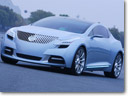
 The Buick Riviera, a stunning concept car designed to showcase Buick’s new global design direction, made its global debut today at Auto Shanghai 2007.
The gullwing Riviera concept coupe was developed with global design input by the Pan Asia Technical Automotive Center (PATAC) in China, a design and engineering joint venture between General Motors and Shanghai Automotive Industry Corporation (SAIC). The Riviera was introduced today by Rick Wagoner, GM Chairman and CEO, and Hu Maoyuan, SAIC Chairman.
The Riviera has been engineered to accommodate a new hybrid system that will go into production at Shanghai GM, GM’s flagship joint venture with SAIC, in 2008. The fuel-efficient car, which will feature several technological and manufacturing advances, represents the latest achievement of GM and its partners in the promotion and development of alternative propulsion technologies in China.
According to Ed Welburn, vice president, GM Global Design, “Developing and launching the Riviera in China underscores the diversity, strength and depth of the GM global design network. It also reflects PATAC’s growing role within the GM Design family and China’s significance as the world’s largest Buick market.”


The Riviera also marks the return of a renowned Buick nameplate after an eight-year hiatus, having sold more than 1.1 million units in the United States between 1963 and 1999.
The Buick Riviera, with its tightly stretched carbon fiber body panels, combination of positive and negative curves, strong front and rear identities and gullwing doors, captures the essence of Buick classics, Welburn said, while presenting a thoroughly 21st century design.”The Riviera concept certainly lived up to the nameplate’s reputation,” Welburn said.”We developed the Riviera to communicate the global design vocabulary of the Buick brand and set the stage for General Motors’ design, engineering and manufacturing centers to work together on the next generation of Buick mid-size luxury cars.”
According to James Shyr, PATAC Design Director, the Riviera’s enticing curves and ‘earth and water’ interior tones are drawn from diverse inspirations including classic Buicks, ancient Chinese artifacts and modern electronic icons. The car, inside and out, communicates universal beauty – a look that transcends cultural or national boundaries.
“Designing this car made us realize how small the world could be. It’s not East. It’s not West. It’s not the United States or China. It’s Buick,” Shyr said.
Exterior Design – A Sense Of Existence, Not Anonymity
To establish their design direction, PATAC designers looked in part to Buick icons such as the original Y-Job Concept of 1938, the 1960s Le Sabre, Electra 225 and the Riviera coupes of the 1960s and ’70s.
The Riviera design is structured around the Buick tri-shield logo, sitting proudly on a trihedral waterfall grille which is formed by three meeting planes. This takes the traditional Buick treatment to a new level of sophisticated boldness.
The Buick logo leads into a reflective strip through the hood, a mark of respect to the distinctive mid-hood crease prevalent in classic Buicks. Elongated LED headlamps flow up the hood sides to three-section, top-mounted chrome portholes as a single piece of jewelry.
The logo, hood strip, headlamps, side mirrors and rocker covers all have ‘icy green’ backlighting available at night, matched by backlit logo and exhausts at the rear. Designers have cleverly incorporated several other design signatures from the original Riviera generation. They include the “double sweep spear” line along the bodyside and the flared tail design.
“This car was inspired by great Buicks – their grace, their gesture. This car was designed to achieve a sense of existence. It’s not an anonymous car when it drives past you but it’s not completely in your face either. We wanted to create something which would make you want to run your hand across it rather than just look at it,” Shyr said.In this theme, the ‘Shell Blue’ exterior color was chosen to elicit the right level of attention. The color is a metallic silver with light blue accents, perfectly highlighting the coupe’s exterior curves.
The gullwing doors, selected for their exotic appeal, achieve an expansive entrance to the two-plus-two seating configuration. Measuring 1938 millimeters at their widest point, they add to the coupe’s sleek sideline. At night, fully opened doors gently shine the “Buick” name on the ground.
The use of carbon fiber in all body panels allowed the designers greater flexibility through reduced mass and added strength. This made the gullwing engineering demands easier to realize and sharp, tight radius curves possible across the body surface.
The Riviera sits on 21-inch 10-spoke forged aluminum wheels, combining polished and satin finishes, with low-profile tires. Taking their cue from Formula One cars, the side mirrors are sweeping yet unobtrusive.
PATAC designed the Buick Riviera to accommodate the new hybrid system, which will be introduced in China in 2008 prior to the Beijing Olympics. The new hybrid system fits naturally with the Riviera’s ‘earth and water’ design theme.
Interior Design – All About Relaxation
In a word – sanctuary. The use of rich blue and subtle creams, representing earth and water themes, are conveyed through high-quality leather bucket seats, plush carpet and a luxurious padded steering wheel. Completing the organic feel, the roof comprises two shaded glass windows offering increased headroom and a celestial connection for occupants. “We had to have the driver feel relaxed and tranquil inside the car. We used earth and water tones and avoided hard, aggressive edges,” Shyr said.
The interior has no discernable start and finish point for the front and sides, creating a comfortable lounge feel. It is immediately futuristic yet somehow familiar.The three-dimensional speedometer, inspired by past classics but utterly modern in design, compliments the touchpad styled central console loosely modeled on a computer mouse. An LCD display screen crowns the central console.
Interior designers were encouraged to consider people’s personal belongings to enhance their feeling of familiarity and comfort in the vehicle. Continuing the theme of calm simplicity, electronic shifter pads replace the traditional transmission shifter. Controls are kept to a minimum to avoid driver distraction.

Ambient light strips are applied from across the console and inserted on the door liner, stretching to the front seats. Deliberately imitating precious Chinese jade stone, the lights are tinted a subtle icy green, which also offers tribute to a favored color of Buicks in days gone by.
Interior trim treatments befitting the Buick prestige abound – miniature aluminum tri-shields in the front seat headrests, a wooden floor mat in the rear and a rear central armrest which can move sideways left and right to accommodate passengers of different sizes.
Royal blue Alcantara, a soft plush covering, was chosen for the door, console and roof while sandy white leather covers the lower door, lower console and seats.
Ancient Influences In Modern Design
The design team set out to create a modern global design – not something which could be superficially described as a Chinese car. At the same time, they sought to draw from their heritage outside the automotive industry from classic shapes, concepts and artifacts. They wanted to include a subtle Chinese essence and influence if one looked deeply enough.
A strong influence was the yuanbao, a small curvaceous gold or silver ingot used in ancient China as currency and popular today as a symbol of ancient Chinese prosperity. “This design was about the East and the West co-existing in harmony. We always wanted to make a global car, to take a sense of the Buick DNA and create something for the world,” Shyr said.
“It is so wonderful that our designers can take some of the rich culture behind them and make it international. East, West, Buick, China – there’s no missing piece in the puzzle in here. Riviera has captured the essence of Buick – grace, gesture, form and emotion.”
-
Buick Lacrosse CXS

 Buick will freshen its 2008 LaCrosse line with the new face of Buick – a front-end design inspired by the Velite convertible concept – and an elevated list of standard equipment across all LaCrosse models.
Like the recently introduced Buick Enclave luxury crossover and Super models, the 2008 LaCrosse features a more distinctive front end. The new design brings the 2008 LaCrosse sedan in line with a common Buick family appearance. The fascia, hood and chrome waterfall grille are new. The 2008 model will also offer four new exterior colors, including Scarlett Red, Gold Mist Metallic, Dark Mocha Metallic and Dark Slate Metallic.
Inside, the ’08 LaCrosse continues to offer a well-equipped, comfortable and quiet interior. More comfort and convenience features are now standard for CX, CXL and CXS models for 2008. The LaCrosse CX, for example, is a richer entry-level car, adding a leather-wrapped steering wheel, theft deterrent system, illuminated vanity mirrors, driver information center personalization and more. All trim levels now have a chrome exterior appearance package, factory remote start feature, XM Satellite Radio, telescoping steering wheel column, redundant steering wheel controls and dual-zone climate control as added standard equipment.


“LaCrosse really started the evolution to the new Buick you see today,” said Buick General Manager Steve Shannon. “It introduced a new direction for Buick cars, with great design, performance and fuel economy with a premium and quiet interior. Indeed, LaCrosse set the foundation for the new Buick.”
The LaCrosse line now offers three powertrains. The CX and CXL trims are powered by the 3.8L V-6, now in Series III form. With more than 25 million sold, it is one of the most proven and reliable engines in the industry. Rated at 200 horsepower (149 kW), the 3.8L features electronic throttle control to improve engine response and optimize fuel efficiency, along with upgrades for quiet operation.
The performance-oriented LaCrosse CXS has a standard 3.6L V-6 with variable valve timing that delivers 240 horsepower (179 kW). The premium, all-aluminum engine features dual overhead camshafts and four valves per cylinder. Its fully variable intake and exhaust valve timing achieves outstanding flexibility, delivering 90 percent of the engine’s peak torque where it is most useful, between 1,500 rpm and 6,000 rpm. The 3.6L VVT delivers a market-leading balance of good specific output, high torque over a broad rpm band, fuel economy and first-rate noise vibration and harshness control.
The recently announced 2008 LaCrosse Super introduces a V-8 engine and portholes to the LaCrosse lineup. With the fuel efficiency of a V-6, the new 300-horsepower (224 kW)* 5.3L small-block V-8 with Active Fuel Management (AFM) technology can propel LaCrosse Super from 0-60 mph in 5.7 seconds. GM’s AFM engine technology seamlessly switches between four- and eight-cylinder power to save fuel.
-
Buick Lacrosse Super
 Buick LaCrosse Super is distinguished from its sibling models with a new exterior appearance that is highlighted by a new waterfall grille, new hood and a new front fascia that incorporates a lower grille opening with chrome trim and chrome fog lamp bezels.
New portholes, rocker moldings, rear fascia with integrated park assist sensors, 3.5-inch-diameter dual chrome exhaust tips, rear decklid spoiler and a Super badge also make the LaCrosse Super instantly identifiable from any angle. LaCrosse Super is offered in four exterior colors: Black Onyx, Platinum Metallic, Dark Mocha Metallic and Red Jewel tint coat.
Inside, the LaCrosse Super exudes comfort and style, including front seats with increased seatback bolstering. All of the seats feature new, woven-embossed leather inserts. A unique wood grain appearance accents the instrument panel, center console, doors and gear shift knob. There are also exclusive instrument cluster graphics – including Super identification – new front sill plates, a silver finish on the instrument panel center stack and Super-specific floor mats.
The LaCrosse Super introduces a V-8 engine that has the fuel efficiency of a V-6. Rated at 300 horsepower (224 kW)* and 323-lb.ft (438 Nm)* of torque, Buick’s new V-8 can propel the LaCrosse Super from 0-60 mph in 5.7 seconds. The 5.3L small-block V-8 uses GM’s Active Fuel Management (AFM), an engine technology that seamlessly switches between four- and eight-cylinder power to save fuel.
To support the performance capabilities enabled by the V-8 engine, the LaCrosse Super features a specially tuned suspension system for steering precision, improved ride control and feel, and increased braking performance. Bilstein monotube struts, larger front and rear rotors, high-precision steering gear, StabiliTrak, and recalibrated chassis controls help the Buick LaCrosse Super deliver confident handling and road manners, while also maintaining overall ride comfort.
The Super version comes standard with the largest wheels and tires available on the LaCrosse – 18-inch by 7-inch aluminum wheels wrapped by P235/50R18 all-season tires. Chrome-finish wheels are available.


-
Chevrolet Groove
 A “funkastalgia”-themed vehicle too tough-looking to be “cute,” the Groove concept is a retro-inspired vehicle with bodacious fender flares and an upright windshield. It looks much longer than it is, thanks to its short hood and long cabin. The front-drive Groove is powered by a small, efficient 1-liter diesel engine.
Three Chevrolet minicar global concepts designed to appeal to young car buyers in urban markets prove that art needn’t take a back seat just because the canvas is small. Revealed today at the NY Motor Show, the highly creative Chevrolet Beat, Chevrolet Groove and Chevrolet Trax concepts drive the energy, diversity and excitement of urban life into cars that deliver good-looking fun, fuel economy and value.


All three concepts were designed at GM’s Design Studio in Inchon , South Korea . One of GM’s 11 Global Design Studios, the designers in the Korean center are experts in small car product development.
Built on GM’s global mini architecture, these concepts demonstrate the flexibility, creativity and innovative focus of design in GM’s Asia Pacific region. The Chevrolet Beat concept, a running prototype of a micro import tuner, was built in India ; while the Chevrolet Groove and Trax micro urban crossover concepts were built at the GM Tech Center in Warren , Mich.
“The Chevrolet Beat, Groove and Trax concepts highlight the strength and diversity of GM’s Global Design capabilities, as well as the ability of our Global Product Development team to anticipate and quickly meet the evolving needs of our diverse markets around the world,” said Ed Welburn, vice president, GM Global Design.
“The design team was so enthused about being given the assignment to develop the perfect small car for urban commuters that they created not one, but three interpretations of how this car may be developed for Chevrolet customers around the world.”
Chevrolet is one of four GM global brands, meeting diverse customer needs in 120 countries with vehicles that range from subcompacts and family sedans to full-size pickups and SUVs and iconic sports cars such as the Corvette. The concepts revealed in New York , for example, offer three different fuel-efficient engines, including a diesel.
“The Chevrolet Beat, Groove and Trax concepts have the potential to expand the reach of Chevrolet – already a beloved brand around the world – even further, connecting with young buyers on multiple continents who desire fun-yet-efficient transportation,” said Chevrolet General Manager Ed Peper. “These are the same brand attributes that made Chevrolet a household name in the U.S. “
-
Chevrolet Beat
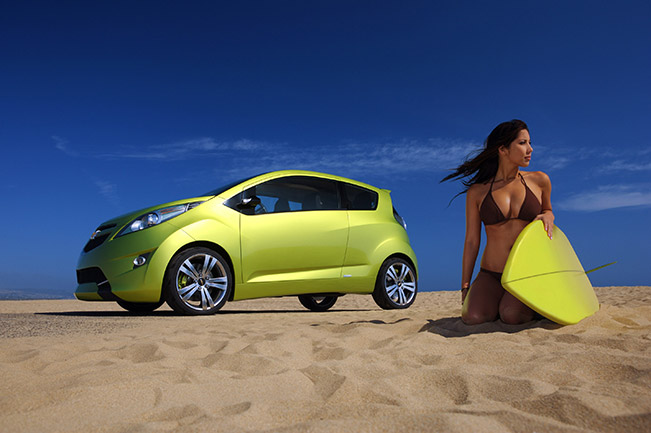 Designed to evoke the mood of a speedy micro import tuner, the Beat is a front-wheel-drive, three-door hatchback concept built to be personalized, and powered by a 1.2-liter turbocharged gasoline engine mated to an automatic transmission. It’s loaded with technology, including a navigation system and premium stereo.
Three Chevrolet minicar global concepts designed to appeal to young car buyers in urban markets prove that art needn’t take a back seat just because the canvas is small. Revealed today at the New York Auto Show, the highly creative Chevrolet Beat, Chevrolet Groove and Chevrolet Trax concepts drive the energy, diversity and excitement of urban life into cars that deliver good-looking fun, fuel economy and value.


All three concepts were designed at GM’s Design Studio in Inchon , South Korea . One of GM’s 11 Global Design Studios, the designers in the Korean center are experts in small car product development.
Built on GM’s global mini architecture, these concepts demonstrate the flexibility, creativity and innovative focus of design in GM’s Asia Pacific region. The Chevrolet Beat concept, a running prototype of a micro import tuner, was built in India ; while the Chevrolet Groove and Trax micro urban crossover concepts were built at the GM Tech Center in Warren , Mich.
“The Chevrolet Beat, Groove and Trax concepts highlight the strength and diversity of GM’s Global Design capabilities, as well as the ability of our Global Product Development team to anticipate and quickly meet the evolving needs of our diverse markets around the world,” said Ed Welburn, vice president, GM Global Design.

2007 Chevrolet Beat Concept
“The design team was so enthused about being given the assignment to develop the perfect small car for urban commuters that they created not one, but three interpretations of how this car may be developed for Chevrolet customers around the world.”
Chevrolet is one of four GM global brands, meeting diverse customer needs in 120 countries with vehicles that range from subcompacts and family sedans to full-size pickups and SUVs and iconic sports cars such as the Corvette. The concepts revealed in New York , for example, offer three different fuel-efficient engines, including a diesel.
“The Chevrolet Beat, Groove and Trax concepts have the potential to expand the reach of Chevrolet – already a beloved brand around the world – even further, connecting with young buyers on multiple continents who desire fun-yet-efficient transportation,” said Chevrolet General Manager Ed Peper. “These are the same brand attributes that made Chevrolet a household name in the U.S. ”


