
Highly exclusive hypercar with E PERFORMANCE hybrid drive and system performance of more than 1000 hp
Affalterbach. AMG’s foundation stone was laid back on 1st of June 1967. To mark the 55th anniversary of the performance and sports car brand, the production version of the Mercedes-AMG ONE (combined weighted fuel consumption: 8.7 l/100 km; combined weighted CO2 emissions: 198 g/km; combined weighted electrical consumption: 32 kWh/100 km)[1] is celebrating its world premiere. The two-seater super sports car brings the world’s most modern and efficient Formula 1 hybrid drive technology from the race track to the road for the first time. The performance hybrid produces a total output of 782 kW (1063 hp) from one combustion engine and four electric motors, with a top speed capped at 352 km/h. The extremely complex development was carried out in close cooperation with the Formula 1 experts at Mercedes-AMG High Performance Powertrains in Brixworth. The Mercedes-AMG ONE will also officially be seen in action for the first time in the UK, as part of the Festival of Speed at Goodwood (23 to 26 June 2022).
The unique hypercar inspires not only with its E PERFORMANCE Formula 1 hybrid drive, but also with further motorsport technology. This ranges from the carbon-fibre monocoque and carbon-fibre body to the load‑bearing engine/transmission unit, active aerodynamics and the push-rod suspension. With its complex technology, the two-seater Mercedes-AMG ONE offers even more than a Formula 1 racing car in some cases. It features the AMG Performance 4MATIC+ fully variable all-wheel drive with hybrid-driven rear axle and electrically driven front axle with torque vectoring. It can also drive purely electrically.
“With the Mercedes-AMG ONE, we have more than pushed the envelope. The immense technical challenges of making a modern Formula 1 powertrain suitable for everyday road use have undoubtedly pushed us to our limits. Over the duration of the development period, many may have thought that the project would be impossible to implement. Nevertheless, the teams in Affalterbach and the UK never gave up and believed in themselves. I have the highest respect for all those involved and am proud of this team achievement. To put such a hypercar on wheels is certainly unique. This applies to us as Mercedes-AMG not only from a technical point of view, but also in terms of the close exchange with our loyal customers. Together with us, they have gone through ups but also downs in the course of development. They were an integral part of Project One from the very beginning and can now look forward to the highly exclusive and unique Mercedes-AMG ONE, which has now also been able to clear the next hurdle and passed all ECE certification tests”, says Philipp Schiemer, Chairman of the Board of Management of Mercedes-AMG GmbH.
“The performance data of the Mercedes-AMG ONE are ultimately only a small excerpt of what technology is in this vehicle. Apart from a Formula 1 powertrain that generates 1063 hp from a relatively small, highly efficient internal combustion engine in combination with four electric motors, the monumental task was above all the exhaust gas aftertreatment. The Mercedes-AMG and Mercedes-AMG High Performance Powertrains teams have really done a great job here. This project was partly a curse and a blessing at the same time. But we have walked the stony path, and as a technician you naturally get carried away with all the details. From the materials used, the exceptional chassis components to the aerodynamic refinements – in terms of complexity, the Mercedes-AMG ONE is hard to beat. In a Formula 1 car, a team of engineers with laptops makes sure that the powertrain starts. With our hypercar, all it takes is the push of a button. This also illustrates the immense software know-how that has gone into this vehicle”, says Jochen Hermann, Technical Managing Director of Mercedes-AMG GmbH.
Exceptional E PERFORMANCE hybrid drive with 1.6-litre V6 engine and four electric motors
The E PERFORMANCE hybrid drive of the Mercedes-AMG ONE comes directly from Formula 1 and has been realised in close cooperation with the experts at Mercedes-AMG High Performance Powertrains in Brixworth. It consists of a highly integrated and intelligently networked unit comprising one hybrid, turbocharged combustion engine with a total of four electric motors. One has been integrated into the turbocharger, another has been installed directly on the combustion engine with a link to the crankcase and the two remaining motors drive the front wheels.
The 1.6-litre V6 hybrid petrol engine with electrically assisted single-turbocharging corresponds in its technology to the current Formula 1 power unit. The four overhead camshafts are driven by spur gears. To achieve high engine speeds, the mechanical valve springs have been replaced by pneumatic valve springs. The engine, mounted in mid-engine position in front of the rear axle, revs up to 11,000 rpm. However, for longer durability and the use of commercial super plus petrol, it deliberately stays below the F1 rev limit.
The high-revving power unit is boosted by a high-tech turbocharger. The exhaust gas turbine and compressor turbine are positioned at a distance from each other and connected by a shaft. This allows a lower installation position for the turbocharger. On the shaft is an approx. 90 kW electric motor. Electronically controlled, this drives the turbocharger shaft directly, accelerating the compressor wheel up to 100,000 rpm before the exhaust gas flow takes over. The Formula 1 designation for this unit is MGU-H (Motor Generator Unit Heat).
Lightning-quick response, faster than a naturally aspirated V8 engine
The major advantage: the response improves significantly, immediately from idle speed (when the exhaust flow is still weak) across the entire rev range. The 1.6-litre V6 engine responds even more spontaneously to accelerator pedal commands, while the overall driving experience is highly dynamic. In addition, the electrification of the exhaust gas turbocharger enables higher torque at low engine speeds. This also increases agility and optimises acceleration. Even when the driver takes their foot off the accelerator or brakes, the technology is able to maintain boost pressure at all times. This ensures a continuously direct response.
The electric exhaust gas turbocharger in the Mercedes-AMG ONE has yet another advantage: it uses part of the surplus energy from the exhaust gas flow to generate electrical energy as a generator. This is either stored in the high-voltage lithium-ion battery or fed to the electric front axle or the electric motor (MGU-K = Motor Generator Unit Kinetic) on the combustion engine. The MGU-K has an output of 120 kW, is positioned directly on the combustion engine and is connected to the crankshaft via a spur gear system – another technology that ensures maximum efficiency and performance in Formula 1.
Turbocharging and direct injection with spray-guided combustion not only enable high power output, but also increase thermodynamic efficiency, thus reducing fuel consumption and exhaust emissions. The high‑performance six-cylinder engine has two injection systems. Direct injection delivers the fuel into the combustion chambers at up to 270 bar pressure. This is a multiple process at times, and is controlled by the engine management system as required. The additional port injection is needed to achieve the high specific power of the engine and at the same time comply with the exhaust emission limits.
Added to this is the very complex and effective exhaust gas cleaning system with four preheated metal catalytic converters, two ceramic catalytic converters and two petrol particulate filters. The four heating elements with a combined output of 16 kW make it possible to comply with the EU6 exhaust emission limits under real driving conditions (RDE). The exhaust gas cleaning system is also backpressure-optimised to avoid power losses. This also applies to the large rear silencer made of lightweight titanium.
Technical data – powertrain
| Bore x stroke |
80.0 x 53.03 mm |
| Displacement |
1599 cc |
| Max. system output |
782 kW (1063 hp) |
| Max. speed, combustion engine |
11,000 rpm |
| Max. output, combustion engine |
422 kW (574 hp) at 9000 rpm |
| Specific output, combustion engine |
359 hp/l |
| MGU-K (electric motor on the crankshaft) |
120 kW (163 hp) |
| MGU-FL/MGU-FR (electric motors on the front axle) |
2 x 120 kW = 240 kW (326 hp) |
| MGU-H (electric motor of the electric exhaust gas turbocharger) |
90 kW (122 hp) |
| Max. turbocharger boost pressure |
3.5 bar |
New all-wheel drive with purely electrically driven front axle
The two 120 kW electric motors on the front axle reach rotor speeds of up to 50,000 rpm. They are each connected to the front wheels via a reduction gear. The front axle, which is thus driven purely electrically, operates wheel-selectively in each case and thus enables individual torque distribution for particularly high driving dynamics (“torque vectoring”). In addition, the two electric motors also allow the braking energy to be optimally used for recuperation – up to 80 percent under everyday driving conditions. This energy is stored in the battery and is available for a longer electric range or for more drive performance. Each electric motor is controlled by its own power electronics located in close proximity to the electric motors in the floor assembly.
High Performance Battery with Formula 1 technology
The lithium-ion energy storage system is also a special Mercedes-AMG development. Its technology has already proven itself in the Mercedes-AMG Petronas F1 Team’s Formula 1 hybrid racing cars under the toughest conditions and can also be found in the battery of the Mercedes-AMG GT 63 S E PERFORMANCE. The AMG High Performance Battery combines high power that can be called up frequently in succession with low weight to increase overall performance. Added to this are the fast energy draw and the high power density. This means that during a brisk drive in hilly terrain, for example, drivers can immediately call on the full power potential on uphill stretches, while recuperation is strong when driving downhill.
The arrangement of the battery cells and the cell cooling mirror the Mercedes-AMG Formula 1 racing car. For everyday use, however, their number is many times greater in the Mercedes-AMG ONE. The capacity of 8.4 kWh is sufficient for a purely electric range of 18.1 kilometres. Charging is via alternating current and the integrated 3.7 kW on-board charger. In addition, the battery can be supplied with fresh energy via recuperation or from the combustion engine. The lithium-ion, high-voltage battery and the DC/DC converter supporting and charging the 12 V onboard electrical system are accommodated in space-saving configuration in the vehicle floor behind the front axle.
Innovative direct cooling of the high-voltage battery
The basis for the high performance of the battery is the innovative direct cooling: A high-tech coolant flows around all the cells and cools them individually. Background: Every battery needs a defined temperature for optimum power delivery. If the battery becomes too cold or too hot, it noticeably loses power at times, or has to be regulated to avoid damage if the heat becomes excessive. The even temperature of the battery therefore has a decisive influence on its performance, service life and safety.
The coolant circulates from top to bottom through the entire battery past each cell with the help of a high‑performance electric pump and also flows through a heat exchanger attached directly to the battery. The system is designed to ensure even heat distribution in the battery. The result is that the battery is always in a consistent, optimal operating temperature window of 45 degrees Celsius on average – no matter how often it is charged or discharged. It may well be that the average temperature is exceeded when driving at high speeds. The protection mechanisms are therefore configured so that the maximum performance can be obtained from the battery, with the temperature level subsequently lowered by direct cooling.
Only direct cooling makes it possible to use cells with very high power density. Thanks to this individual solution, the battery system is particularly light and compact. The low weight is also due to the material‑saving busbar concept, and the lightweight yet strong crash structure of the aluminium housing. It ensures the highest level of safety. Another feature is the high voltage of the drive system, which operates at 800 volts instead of the usual 400 volts. Thanks to the higher voltage levels it is possible to significantly reducing the cable diameters, for example, thereby saving design space and weight.
Intelligent operating strategies for optimum output and efficiency
All in all, the High Performance Plug-in Hybrid Drive System offers numerous intelligent operating strategies that are optimally adapted to different application scenarios. The drive programs range from purely electric operation to a highly dynamic mode (Strat 2), which corresponds to a setting used in Formula 1 qualifying for the best possible lap times. Despite the high system complexity, the driver will always receive the optimal combination of performance and efficiency – depending on the current requirement.
Six drive programs – from purely electric driving to race track mode
The Mercedes-AMG ONE starts silently at first by switching on the electric motors on the front axle. In parallel, the catalytic converters are preheated. The combustion engine will not start until the correct catalytic converter temperature is reached.
- Race Safe: standard program with on-demand hybrid driving mode and all-electric start-up. Only when higher power is required does the combustion engine switch on.
- Race: hybrid driving mode with special charging strategy. The combustion engine runs continuously and can charge the high-voltage battery more so that full electric power is always available.
- EV: all-electric driving.
- Race Plus (race track only): active aerodynamics, chassis lowering by 37 mm (front)/30 mm (rear), firmer chassis tuning, special performance management.
- Strat 2 (race track only): active aerodynamics, even firmer suspension tuning and vehicle lowering by 37 mm (front)/30 mm (rear). Full power from all motors as in Formula 1 qualifying.
- Individual: settings according to personal preferences for the road modes.
Impressive acceleration values are possible with the RACE START function in the Race, Race Plus and Strat 2 drive programs: the sprint from a standstill to 200 km/h is completed in just 7.0 seconds.
Completely new, automated 7-speed manual transmission
Power is transmitted to the rear wheels by means of a 7-speed manual transmission completely newly developed for the Mercedes-AMG ONE. The lightweight transmission design saves weight, while integration into the body-in-white enhances rigidity and takes up little space. It is specifically designed for the high torque and speed capacity of the powerful Formula 1 hybrid powertrain. Shift rods and the 4-disc carbon‑fibre clutch are hydraulically controlled. The gear ratios are designed to minimise the power difference after upshifting and keep the combustion engine at high revs. The locking differential is integrated into the transmission.
Multi-link suspension with innovative push-rod suspension
The basis for the outstanding driving characteristics of the Mercedes-AMG ONE is the lightweight and high‑strength carbon-fibre monocoque, the technology of which also originates from Formula 1. The same applies to integration of the engine and transmission: both fulfil load-bearing functions and completely support the rear suspension.
The chassis is an aluminium construction at the front and rear, each with five links and two adjustable suspension struts. The coil-over suspension has several special features: both push-rod spring struts have been installed across the direction of travel. The innovative arrangement of the spring and damper unit replaces the function and use of a conventional tubular cross stabiliser. This solution reliably prevents rolling movements, even during very rapid directional changes, without being uncomfortable. Roll stiffness and roll damping are completely independent of lift stiffness and lift damping. Wheel bearings with ceramic ball bearings for less friction reflect the attention to technical detail.
The adaptive damping adjustment can be adapted via the drive program: the C (Comfort) and S (Sport) suspension settings are available in the EV, Race Safe, Race and Individual drive programs; the S (Sport) and S+ (Sport+) suspension settings are available in the Race Plus and Strat 2 drive programs. As part of the active aerodynamics, the chassis can be lowered hydraulically: by 37 millimetres on the front axle and by 30 millimetres on the rear axle. In addition, a lifter for the front axle (can only be activated in the road drive programs) prevents the Mercedes-AMG ONE from touching down on underground parking ramps, for example.
The overall tuning of springs and dampers has been designed for perfectly balanced, easily controllable and highly dynamic handling. This is also assisted by the all-wheel drive and torque vectoring. Unlike in Formula 1, ABS is on board as standard, while ESP® can be regulated in three stages, as is customary at Mercedes-AMG. ESP® ON stands for high safety and is always activated in “Highway” mode. ESP® SPORT HANDLING MODE allows higher yaw angles before system intervention for sporty driving. ESP® OFF switches the system off for extremely dynamic driving on closed-off circuits. All three settings are possible in “Track” mode.
Exclusive forged wheel with carbon-fibre partial cover
A new development is the 10-spoke forged aluminium wheel with centre lock, which is exclusive to the Mercedes-AMG ONE. This has a radial carbon-fibre partial cover with an aerodynamically sophisticated shape: it improves the aerodynamic efficiency of the vehicle by enhancing the flow around the wheel. This is another example of how the AMG development team has paid the utmost attention to even the smallest aspects, so as to improve the efficiency of the hypercar.
Newly developed 9-spoke magnesium forged wheels designed exclusively for the Mercedes-AMG ONE are also available as an option. In addition to the centre-lock technology, they feature a patented bionic design to maximise lightweight construction and rigidity. The aerodynamically designed carbon-fibre partial cover is a good example of the combination of low weight, optimised brake cooling and aerodynamic efficiency. At the same time, nine air vanes per wheel ensure active ventilation of the wheel arch and thus improved heat dissipation from the brakes.
At the front, the Mercedes-AMG ONE runs on 10.0 J x 19 wheels with 285/35 ZR 19 Michelin Pilot Sport Cup 2R M01 tyres, which were developed exclusively for the hypercar, and at the rear on 12.0 J x 20 wheels, with Michelin Pilot Sport Cup 2R M01 tyres in size 335/30 ZR 20. The exclusivity of the tyres is reflected in the design of the sidewall, which incorporates the vehicle silhouette and the number 1.
A special, weight-optimised AMG carbon-fibre ceramic high-performance composite brake system is used for deceleration. The front axle sports 6-piston fixed callipers and also internally ventilated and perforated brake discs measuring 398 x 38 millimetres. The rear axle is fitted with 4-piston fixed callipers. In addition, it has internally ventilated and perforated brake discs measuring 380 x 34 millimetres. The low weight of the system reduces the unsprung masses and thus increases driving dynamics and agility. Furthermore, the ceramic brake features a longer service life, higher corrosion resistance and higher thermal stability. The “AMG Carbon Ceramic” lettering and the specially painted brake callipers visually distinguish this unique brake system.
Exterior design: fascination and function
The design of the carbon-fibre body is inspired by the top class of motorsport. But above all, it embodies the Mercedes-AMG principle that fascination is always linked with function. Each component fulfils a task. The mid-engine concept based on a carbon-fibre monocoque plus a load-bearing engine/transmission unit provides the extremely muscular proportions: the cockpit is positioned far forward, as is typical for racing, combined with voluminous wheel arches, a wasp waist and a wide tail.
Designers and aerodynamics experts worked closely together on the design. Even the basic body has been aerodynamically designed for maximum downforce and balance. And this move has been a successful one: the Mercedes-AMG ONE generates downforce from as low as 50 km/h, which becomes increasingly stronger as the speed increases.
Front view: powerful and functional
The front view is characterised by the large front apron, the various air intakes of which extend across the entire vehicle width. The trapezoidal centre section bears a large, white AMG logo. Above it, on the vehicle body, is the Mercedes star. It is designed in the form of an artistically and technically perfect airbrush motif – by a specialist in the UK. The AMG-typical A-wing under the centre section adds another characteristic highlight and merges seamlessly into the wings.
Large air intakes dominate on the left and right, framed by U-shaped air deflectors and each divided by two black transverse fins. Flat LED headlamps blend seamlessly into the body contours. The black air outlets in the bonnet guide the hot airflow around the sides of the driver compartment. This allows the flow of fresh air to pass unhindered across the driver compartment and into the intake tract on the roof. The active flaps on the front diffuser influence the aerodynamic performance at the front axle and ensure excellent aerodynamic balance. The active air vents (so-called louvres) in the front wheel arches also increase the downforce on the front axle.
Taut flanks, voluminous wheel arches
The low, dynamic greenhouse has an unmistakable, spherical architecture with a distinctive window pattern. The large, dark area stands for important technical functions. These technical components form a visual contrast to the clean overall lines of the vehicle.
The roof is dominated by the air intake derived from Formula 1, through which the engine draws in fresh air as needed. The black intake transitions elegantly into the black, vertical shark fin: it prevents cross-flow and/or a breakaway of airflow at the rear and thus improves cornering stability. Overall, this also means more performance and safety at high speeds. The power unit is hidden under two removable carbon-fibre covers. Large NACA air intakes are integrated into each of these, guaranteeing optimum guidance of the airflow for the radiators placed below.
The side view shows a sensual and clear surface design, equally combined with functional features. The vehicle flanks are tautly recessed, with black carbon-fibre surfaces redirecting the airflow around the vehicle body as in motorsport. The airbrush design on the flanks was created by the same artist who designed the paintwork for the Formula 1 racing cars. Tight-fitting wheel arches stretch over all four wheels like muscles, ready to leap into action.
The doors open diagonally forwards and upwards. The fuel filler flap is at the rear right, and the charging socket for the plug-in hybrid battery is at the rear left.
Rear end: fascination and function
The sharp spoiler lip and the two-part rear diffuser bring aerodynamic efficiency and performance advantages at high speeds. This also applies to the specially shaped underbody with longitudinal fins and openings for cooling ducts. The rear wing is a two-piece retractable blade plus integrated adjustable flap. The design of the exhaust tailpipe with its large, round outlet and two further small, round apertures has been adopted directly from the Formula 1 cars. The muscular appearance is further enhanced by the rear apron with its large, black mesh and carbon-fibre components. The tail lights each feature three diamond-shaped lighting elements to echo the graphic design of the AMG brand logo, and therefore also the design of the headlamps.
The high-tech materials and colour combinations of the outer skin are transferred directly from racing. Functional exterior components are presented in exposed carbon fibre and contrasted with sculpturally sensual paint surfaces.
Active aerodynamics: three interpretations to choose from
The active, hydraulically controlled aerodynamics increase downforce on the front and rear axles and also improve aerodynamic efficiency. Depending on the driver’s preference and the selected drive program, three different aerodynamic setups are available:
- “Highway” in the “Race Safe”, “Race”, “EV” and “Individual” drive programs:
the louvres are closed, the active flaps on the front diffuser are extended and the rear wing including flap is retracted.
- “Track” in the drive programs “Race Plus” and “Strat 2” (both only allowed on the race track):
the front diffuser flaps fold up to shape the front diffuser contour to maximum efficiency. The rear wing extends fully, as does the rear wing flap. The louvres are opened to increase the downforce on the front axle and to increase the negative pressure in the wheel arches. The vehicle is lowered by 37 millimetres at the front axle and 30 millimetres at the rear axle. The consequence of all these measures: the total downforce increases up to five times compared with the road drive programs, depending on the speed.
- “Race DRS” (Drag Reduction System), can be activated at the touch of a button as in Formula 1, in the race track drive programs:
the rear wing flap retracts completely and the louvres are closed. Although this reduces downforce by around 20 percent, the Mercedes-AMG ONE reaches high speeds even faster. DRS can be deactivated manually or is automatically deactivated as soon as the driver brakes or lateral acceleration is measured.
Interior: Formula 1 for two
The interior design concept follows function on the racetrack and is expressed in the radical design idiom. In this way, Formula 1 technology can be experienced authentically on the race track and on the road. Here, too, every detail has a function. “No styling” is the design consequence resulting from the requirements for this driving machine. The design is a synthesis of sculptural form language and uncompromising racing design. In the bold minimalism of the monocoque interior, the reduced components are emphasised and showcased in terms of design and function.
The ergonomically contoured interior has room for two occupants. The firmly fixed racing seat-pan sculpture combines aesthetically with the footwell to form a single unit. It also merges smoothly into the sill area at the side and becomes an integral part of the highly sculptural monocoque landscape. The backrests of the AMG Motorsport seat pans can be adjusted to two positions: 25o and 30o. The steering wheel is electrically adjustable and the pedal box mechanically adjustable (in eleven steps) so that the driver can adopt an optimal driving position. The passenger footrest is also individually adjustable.
The centre tunnel is also a functional part of the carbon-fibre support structure. It blends fully into the seat sculpture and follows the principle of minimalism with its gently rising contour. A high-quality stowage compartment, a reduced switch panel and the Engine Start button form a single unit. The compartment is designed with a transparent lid. Two mini-USB ports for external audio devices enhance everyday usability. The Start/Stop button is prominently positioned on the tunnel and forms the end of the controls towards the front. The cylindrical housing body, made of real metal, is held laterally by two lugs that protrude organically from the basic volume of the tunnel.
Interior with functional structural parts
The slim wing profile of the instrument panel appears light as if floating. As a functional structural component, it also stiffens the monocoque of the hypercar. The two high-resolution, free-standing 10-inch displays with individual Mercedes-AMG ONE graphics are finished with high-quality real-metal parts and adapted to the instrument panel. The instrument cluster display is in a slightly raised position in front of the driver. The multimedia monitor on the right of the centre console is tilted towards the driver. The double-nozzle ventilation unit is suspended under the centre screen like a gondola. Screen and nozzles merge into one unit and underline the purist design concept. The ventilation nozzles repeat the basic rectangular shape of the displays.
The door panels are in functional, high-grade carbon fibre, and integrate smoothly into the sporty interior. A cassette of solid metal combines the air vents and power window switches, which are integrated as deeply recessed rectangles. Like a muscle, a contour drawn far forward in the door runs out to the rear and creates space for the characteristic course of the exterior window line.
Formula 1-style steering wheel
In the radically designed and high-quality race steering wheel, operating and functional elements are combined with original race car components to ensure safe operation in extreme driving situations. The “shift light” is displayed at the top of the steering wheel rim, as is usual in racing cars. The steering wheel, which is flattened at the top and bottom and has an integrated airbag, offers further motorsport trim elements: the two integrated AMG steering wheel buttons can be used to activate various functions without having to take your hands off the wheel. For example, the drive programs, the nine-stage AMG Traction Control, the activation of the DRS or the suspension settings.
Screen instead of interior mirror, colours and materials from the racing car
The Mercedes-AMG developers have also thought about suitability for everyday use and further ease of operation: air conditioning and electric windows are on board as standard, and the infotainment system ensures seamless connectivity. The user interface is integrated as an autonomous concept. The most important information is displayed on the road in the line of vision above the steering wheel, so that the driver is not distracted. To ensure optimal rearward visibility despite the vertical wing on the rear, the interior mirror is replaced by a screen. It shows real-time footage from a MirrorCam integrated into the rear. The screen housing is fully integrated into the roof and accommodates further controls.
Inspired by the Formula 1 racing car, the material contrasts are also consistently and authentically continued in the interior. Here, too, the exposed carbon fibre of the monocoque forms a delightful contrast with the material/colour combination of the seat pans in magma grey nappa leather and black DINAMICA microfibre. With their special design, the seat inlays support air circulation at the driver’s back. Yellow contrasting topstitching adds further highlights as standard, but other colours are also available.
Material-appropriate and high-quality details, such as the ventilation nozzles in silver shadow and dark chrome, create further individual highlights. The seat belt straps and contrasting topstitching in the typical AMG yellow underscore the performance claim. Customers also have extensive options for very personal individualisation, which can be specified in close consultation with the experts at Mercedes-AMG.
Technical data
Mercedes-AMG ONE.
| Engine |
| Number of cylinders/arrangement |
|
6/V |
| Displacement |
cc |
1599 |
| Max. system output |
kW/hp |
782/1063 |
| Max system torque |
Nm |
Specification not possible due to complex drive train |
| Max. output, combustion engine |
kW/hp |
422/574 at 9000 rpm |
| Max. speed, combustion engine |
rpm |
11,000 |
| Mixture formation |
|
Microprocessor-controlled petrol injection, combination of direct and intake manifold injection |
| Combined output, electric motors |
kW/hp |
450/611 |
| Power transmission |
| Drive system |
|
AMG Performance 4MATIC+ fully variable all-wheel drive with hybrid-driven rear axle, electrically driven front axle and torque vectoring |
| Transmission |
|
7-speed automated manual gearbox |
| Gear ratios |
| 1st/2nd/3rd/4th/5th/6th/7th gear |
|
12.803 / 9.267 / 7.058 / 5.581 / 4.562 / 3.878 / 3.435 |
| Reverse |
|
14.599 |
| Suspension |
| Front axle |
Five-link aluminium coil-over suspension with two transverse adjustable push-rod spring struts and adaptive damping adjustment |
| Rear axle |
Five-link aluminium coil-over suspension with two transverse adjustable push-rod spring struts and adaptive damping adjustment Aerodynamically shaped lower links |
| Brake system |
Hydraulic AMG carbon-fibre ceramic high-performance composite brake system, front 398 x 38 mm composite brake discs, internally ventilated and perforated, 6-piston aluminium fixed callipers; rear 380 x 34 mm composite brake discs, internally ventilated and perforated, 4-piston aluminium fixed callipers; electric parking brake, ABS, Brake Assist, 3-stage ESP® |
| Steering |
not specified |
| Wheels |
front: 10 J x 19 H2; rear: 12 J x 20 H2 |
| Tyres |
front: 285/35 ZR 19; rear: 335/30 ZR 20 |
| Dimensions and weights |
| Wheelbase |
mm |
2720 |
| Front/rear track |
mm |
1721/1669 |
| Length/height/width |
mm |
4756/1261/2010 |
| Turning circle |
m |
not specified |
| Boot capacity |
l |
not specified |
| Kerb weight according to DIN |
kg |
1695 |
| Payload |
kg |
not specified |
| Tank capacity |
l |
55 |
| Performance, consumption, emissions |
| Acceleration 0-100 km/h |
s |
2.9 |
| Acceleration 0-200 km/h |
s |
7.0 |
| Acceleration 0-300 km/h |
s |
15.6 |
| Top speed |
km/h |
352 |
| Fuel consumption, weighted,comb.1 |
l/100 km |
8.7 |
| CO2 emissions, weighted, comb.1 |
g/km |
198 |
| Electrical consumption, weighted, comb. 1 |
kWh |
32 |
| Electrical range |
km |
18.1 |
[1] The figures for fuel consumption and CO2 emissions are provisional and were determined internally in accordance with the “WLTP test procedure” certification method. Confirmed values from the technical service or an EC type approval or certificate of conformity with official values are not yet available. Differences between the stated figures and the official figures are possible.


 New Honda Jazz will be launched later this year and according to the Japanese manufacturer, the latest family member will feature tons of advanced technologies and systems. Let’s find out more, shall we?

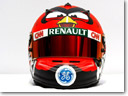 Do you know that funny little wingless cartoon birds. Well if you do, you are probably fan of the popular game “Angry Birds”. And more importantly we have some really good news for you. If you are looking forward to this year’s Formula 1 and are addicted to this particular game, then you will see some characters from the game onto the racing track. Till the present, maybe Formula 1 was one of those few areas where we couldn’t see our favourite characters. Nevertheless, recently the Finish company Rovio announced their newly signed contract with the Formula 1 racer Heikki Kovalainen. The Finnish god of the racing-track will wear a helmet, which was especially ornated with the logo of “Angry Birds” and in addition is designed to look just as the red wingless bird from the game. Actually, the Finnish F1 star has already debuted wearing this helmet on this weekend’s inaugural Formula 1 race in Melbourne, Australia. Furthermore Kovalainen seems to be a big fan of the game, and shares that given this fact and since he is Finn (as the funny characters are) he would be proud to wear the helmet.


 Vodafone McLaren Mercedes has unveiled the new Mp4-27 ahead of the 2012 FIA Formula 1 World Championship. The Formula 1 car was presented at the McLaren Technology Centre.


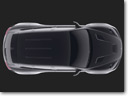 Eterniti is an independent, boutique British luxury carmaker, uniquely based in London. The company aims to satisfy a growing demand for additional luxury, personalised specifications and exclusivity among car buyers, particularly in major cities and global wealth centres.


 Sebastian Vettel won the 2011 Australian Grand Prix. He had huge battle with Lewis Hamilton, but he managed to create a 2.4 second lead at the end of the opening lap.

 Sebastian Vettel won in Sunday’s Japanese Grand Prix at Suzuka. His teammate – Mark Webber finished second and third is Fernando Alonso.
 Heikki Kovalainen, the famous F1 driver has tested the award-winning sport coupe Lotus Evora at the Lotus Cars’ own test track.


