Avoiding minor city incidents and bumps one Ford B-Max at a time. It’s a collision prevention system first in a compact Ford vehicle. Whether you are trailing behind someone in traffic while being rather absent minded or you are about to have an unavoidable crash, the company’s Active City Stop will be there for you to help out.
Each year more than half-a-million people are injured in car crashes in cities in the UK, France, Germany, Italy and Spain alone. Supposedly, the Active City Stop can be useful in one out of eight of these incidents thus reducing the number significantly.
“Low speed front to rear end collisions are one of the most common accidents in urban traffic,” said Roland Schaefer, safety analyst, Ford of Europe. “They can happen at traffic lights, intersections, roundabouts and other stop-start driving situations. You don’t have to be travelling fast to get injured. Even at speeds of just 15 km/h you can suffer soft tissue neck injury.”
We saw the system first last year in the Ford Focus. It constantly scans the road ahead for obstacles and decides whether or not to apply the breaks when needed. The B-Max can go from 15 km/h to a full stop on its own. At the same time, collisions happening within the 30 km/h range will be greatly relieved.
The subcompact MPV is also equipped with Ford’s Hill Launch Assist that prevents you from rolling back upon departure up a slope. A rear view camera and an overall compact structure with a great turning circle make it easy for parking as well. So, car for novice drivers or is that the future? According to Joerg Beyer, Ford Vehicle Line Director, this is the 21 century way.
“Features such as Active City Stop are new to this sector. These technologies, coupled with “B-Max‘s compact chassis, and tight turning circle supported by carefully tuned electronic power-assisted steering, enable B-Max to be far greater prepared for the demands of even the most congested city.” he comments.
The latest version of Ford Ranger has cemented its position as the Europe’s safest pickup. It did that by passing Euro NCAP’s toughest-ever safety assessment. There has been introduced a new scoring system for 2012 and the pickup achieved the maximum possible five-star rating! This means that the vehicle remains the only one which got the whole five stars rating. In addition, the best-selling Ford Focus also got its five stars after being reassessed. The 2012 Euro NCAP ratings are the safety barometer. Obviously, safety is a core value for Ford Motor Company Ranger and Focus proves this philosophy, by meeting the highest standards demanded by Euro NCAP. Ranger has unique features designed to improve pedestrian protection performance including an under-bonnet structure which reduces the potential for pedestrian head injuries. The front bumper incorporates energy-absorbing materials designed to further enhance safety. The new Ford Ranger is the only vehicle in its class, which has achieved the highest possible rating.
The 2012 Ford Focus 1.0-litre EcoBoost is Ford’s most fuel efficient petrol-engine production vehicle ever created! The good news around it is that it is now available to order from dealerships in Europe. The first vehicles have been produced in the plant in Saarlouis, Germany and they are both 100 PS (74 kW) and 125 PS (92 kW) models. More importantly, it offers leading fuel economy of 4.8l/100km and CO2 emissions of 109g/km and 5.0l/100km (56.5mpg) with CO2 of 114g/km, respectively.
In details, the 1.0-litre EcoBoost uses turbocharging and direct fuel injection to extract impressive levels of power and fuel efficiencies from a three-cylinder engine block. Hence, this combination of power and low CO2 emissions makes it the best of all other competing engines. Moreover, the engine has a torque of 170Nm between 1,400rpm and 4,500rpm. The new 1.0-litre EcoBoost engine will be offered in the C-MAX, the all-new B-MAX, as well as other models, later this year. Furthermore the Focus 1.0-litre EcoBoost will join the 1.6-litre EcoBoost petrol and 1.6-litre TDCi diesel engines in wearing the ECOnetic Technology badge. This is a recognition given by Ford, only to those models which are class-leaders among the very best in their segment – of course, speaking in terms of fuel economy.
The Ford Focus with the 1.0-liter EcoBoost engine production is already being launched. The highlight here is that this model is Ford’s most fuel efficient petrol-powered vehicle. In details, the Focus 1.0-liter EcoBoost 100PS (74 kW) has the unique fuel economy of 4.8l/100km (58.9mpg); and more importantly the CO2 emissions it releases are 109g/km. In addition there is also a turbocharged direct injection engine available for the Focus in a 125PS (92 kW) version that has in turn 5l/100km (56.5mpg) with CO2 of 114g/km.
The Focus 1.0-liter EcoBoost achieves diesel engine standards of performance thanks to the engine torque of 170Nm between (125 lb-ft) 1,400rpm and 4,500rpm. The new 1.0-liter EcoBoost engine is produced at Ford’s engine plant in Cologne, Germany. More importantly, Ford invested €134 million ($200 million) in the development of this special high-tech line at the Cologne Engine Plant to build the engine.
This engine is a true example of the demands of the market for improved internal combustion engine, which delivers low consumption and has low Co2 emissions. For the development of the 1.0-liter EcoBoost engine, Ford gathered experts from Europe, including engineers at
Ford’s European Research and Advanced Engineering Centre in Aachen, Germany, and the Dunton Technical Centre, UK.
Production of Ford Focus 1.0-liter EcoBoost Engine
21st century tech thinking seems to be something along these lines: “smaller is better”. Just thing about the many product advertisement campaigns that use the words “slim” or “nano” or even just putting “lighter” as a quality. Ford are aware of that and have developed a new engine within the consumer-friendly EcoBoost range – a 1.0 Litre, 3-cylinder, turbocharged petrol unit that, on paper, is just as powerful as a standard 1.6 litre one. Yet the economy figures that go with the engine (that is to be placed in a Focus) are worthy enough to make any diesel engine in the world green with envy.
Around 200 engineers in the UK (At Dunton and Dagenham) were tasked to work on an engine that is remarkably frugal while delivering sharp and refined performance seen in all Fords so far. The end result is a small (“A4 sheet of paper” small) powertrain that goes into the 5-door Focus and delivers either 100PS or 125PS, depending on customer choice – the first one has a combined economy cycle of 58.9mpg and 109g/km of CO2 emissions. The 125PS however is the one to go for as it has a barely noticeable drop in the economy performance (56.5mpg) and yet it has more power to move around in the not-so-light Focus shell. Carbon emissions on that one are 114g/km. Peak toeque is170Nm (200Nm with overboost) and is available between 1,400 and 4,500rpm.
Ford EcoBoost 1.0 litre engine
Graham Hoare, European executive powertrain director based at Dunton, said: “This is the third addition to our acclaimed EcoBoost engine family. Joining the 1.6-litre and 2.0-litreEcoBoost engines which span 150PS to 240PS, this 1.0-litre EcoBoost signals a new era of downsized, super frugal engines for the sub-130PS segment. During development our UK engineers focused on improving thermal efficiency and reducing friction of the engine’s internal moving parts, especially during warm-up.”
The new Ford Focus array consists of vehicles priced from £13,995 on the road. The EcoBoost engine is priced £250 (on the road) more than the 1.6-litre 125PS engine. The freshmen, single litre is also expected to feature in Ford C-MAX, Grand C-MAX and all-new Ford B-MAX later this year.
Ford EcoBoost 1.0 litre engineFord Focus will carry the 1.0 EcoBoost
Ford are ready to tackle this year’s Grand-Am 200 Continental Tire Sports Car Challenge within the ST class. Their contender will be the Daytona International Speedway debutant Focus ST-R. Ford Racing already has a substantial portfolio of production-based race cars if we count the FR500 and Boss302R. The ST-R clearly has its roots embedded in the standard Focus and the ST:
“The road-going Focus features best-in-class brakes, handling and powertrains and the design and functionality of the various vehicle systems have helped us to develop a global technical specification for teams wanting to race the new Focus cost effectively. Ford Racing in North America has taken this effort and developed the new Focus ST-R. It is a perfect example of how a great production car inspires a competitive race car for enthusiasts.” comments Jost Capito, director of Global Performance Vehicles and Motorsport Business Development
Thanks to Ford’s Global Performance Vehicles group, Ford Racing have managed to “optimize” the ST-R so that it can go not only to the Grand-Am 200 but also take part in the World Challenge TC and Canadian Touring Car Series. Hopes are also high for the 24h race at the Nürburgring.
Ford Focus ST-R (2012)
But know all eyes are on the Daytona Speedway. What can we expect there? Well, despite the striking similarity to a standard Focus ST, the ST-R has an all-aluminum 2.0 EcoBoost power plant that has been tweaked and tinkered with as far as technology these days would allow it. High-pressure direct injection, low-inertia turbocharging, revised intake/exhaust systems and twin independent variable camshaft timing (Ti-VCT) all benefit the 250 horsepower figure that comes out of the engine. Torque peaks at 265 lb.-ft and yet it is consistently available throughout the rev counter. A six-speed manual tames the mad horses spewing out from under the hood and delivers unmatched efficiency and power – Props to the guys at Global Performance Vehicles.
Initially the ST-R will be available for ordering only within the US by seasoned hardcore professional drivers, amateur racers and track-day goers. Ford’s plan however, is to broaden the ST-R‘s availability in other markets as well. Other turnkey race cars by Ford managed to enchant the public so why not the beast in the compact Focus body?
Here is a nice offer – 2012 Ford Focus for $98 995. Is it impossible to spend all that money to tune a 2012 Ford Focus ST? Actually, the answer is yes, you can. If you check the full specifications below, you’ll get the idea, why the new Ford Focus ST-R Race Car is so expensive.
The vehicle is specially developed to comply with FIA regulations and it will take place at the Grand-Am ST, World Challenge TC and Canadian Touring Car Series.
The Focus ST-R is currently available for order and deliveries are scheduled to begin late next year.
There is no performance data, but the 2.0 liter turbocharged EcoBoost petrol engine will deliver a serious amount of power. The factory power is 250PS (184 kW) and 360Nm (265 lb-ft) of torque. The engine is mated to a 6-speed manual gearbox.
Ford Focus ST-R features a FIA-compliant roll cage, an LSD (limited slip differential), stripped interior with one Recaro front seat, racing steering wheel, racing instrument panel, start console and 18” BBS light alloy wheels fitted with Hoosier racing tires.
2012 Ford Focus ST-R Race Car
Powertrain
Ford Racing custom exhaust
Ford Racing engine calibration
Ford Racing high capacity radiator
Ford Racing clutch
Ford Racing oil to air oil cooler
Remote oil filter
6-speed manual transmission with Ford Racing limited-slip differential
Chassis
Seam-welded steel unibody with integrated FIA certified safety cage.
Structural perofrmance: over 20,000 lb.-ft/degree (torsional)
Front Suspension
AST performance coilover adjustable dampers
Adjustable camber plates
Ford Racing upgraded sway bar with adjustable end links
Upgraded bushings
Rear Suspension
AST performance adjustable dampers
Control-blade multilink rear suspension
Ford Racing upgraded sway bars with adjustable end links
Upgraded bushings
Brakes
Front brakes 320 mm with 2-piece rotors and race pads
Production rear brakes with race pads
Ford ABS with unique Ford Racing calibration
Wheels & Tires
18″ BBS CF 1 piece cast alloy wheel (Anthracite)
Hoosier 225/40-18 R6 race tires
Fuel System
ATL 18 gallon fuel cell with custom single dry break system
Another huge manufacturer to go “green” is no surprise – FORD. The all-new, gasoline-free Ford Focus Electric is the first Ford model which is all-electric passenger car with zero-CO2-emissions. This version of Ford’s popular small car has the ability to achieve the equivalent of 100 miles per gallon fuel efficiency rating with seating for five persons. In addition the vehicle is also a pioneer in the class of all-electric cars which is going to feature a faster charging technology, allowing it to fully recharge in three to four hours. In comparison the Nissan Leaf charges for a double time! Hence, this technology can help double the car’s range during a busy day of driving and recharging numerous times. Another advantage of the above mentioned improvement is that it can help clients save money! A benefit to be seriously considered, isn’t it?
For the 2012 Ford Focus Electric orders have already being taken. They have started in November through Certified Electric Vehicle Dealers in California and New York/New Jersey markets. But don’t worry if you want to purchase it, because in the forthcoming 2012 the availability of the vehicle will expand to another 15 markets.
Ford had put 20 years of research of the innovations in electrified cars, some of which can be seen in the presented one. The aim of the manufacturers however, is to bring the customers fuel-efficient vehicles without sacrificing performance, capability or dynamic driving experience. Moreover Ford Focus Electric is expected to be competitive with other comparable all-electric vehicles.
First to be highlighted here is Focus Electric’s advanced lithium-ion (li-ion) battery system with an advanced active liquid cooling and heating system to precondition and regulate the temperature in its larger, more complex battery system. To be more precise the active liquid system heats or chills a coolant before pumping it through the battery cooling system. What this loop does is to regulate the temperature throughout the system against the external conditions. For instance on hot days, chilled liquid absorbs heat from the batteries, dispersing it through a radiator before pumping it through the chiller again. On the other hand, on cold days, heated liquid warms the batteries, gradually bringing the system’s temperature number, which allows it to efficiently accept charge energy and provide enough discharge power for the car’s performance. Another innovation that is to be mentioned is the endurance and the long life of the batteries. Interesting is that exactly around this feature Ford has made numerous tests and developments since 1980s. Up to nowadays, among the nearly 43 million battery cells Ford has tested or seen put to work in customer vehicles, only five issues have been documented.
2012 Ford Focus Electric
To keep up with the trend, which is to go green and be more fuel efficient, Ford has developed Focus Electric. Moreover it has a unique option “set it and forget it”, which concerns the value charging and is powered by Microsoft. What it does is to notify owners to charge their cars when the utility rates are lower. The goal here is to help customers avoid unnecessary expenses by providing an improved charging solution. The highlight here is that Ford Focus Electric is the first all-electric vehicle which offers a faster charging technology, allowing a full recharge in three to four hours with the 240-volt charge station! Next innovation that has been included in the vehicle is a result of the collaboration between Ford and SunPowerCorp. They offer customers a rooftop solar system that can provide enough clean, renewable energy to offset the electricity used to charge the car. No doubt that this brand new technology is going to be very appealing to all concerned about the environment! Furthermore the car’s charge port, which is located on the left front fender, activates a light ring that illuminates the port twice when plugged in. Then the light ring illuminates in quadrants as the car charges, where each quadrant represents 25 percent of the maximum battery charge. You can plug off the car when the entire ring is solidly lit, then the car is fully charged and ready to be driven.
Another benefit comes from Focus Electric’s SYNC®with MyFord Touch® driver connect technology, which was specifically developed for electric car owners and shows important information. Next, the system’s MyView feature allows the accessibility of more vehicle data. Drivers can also enter destinations, including their next charge point, into the car’s MyFord Touch map-based navigation system. In this way the car will instruct drivers on the perfect way to access the desired range, or will give an advice if travel plans need to be changed. Furthermore the on-board navigation system provides an EcoRoute option based on characteristics of efficient electric vehicle driving. Going further into the innovations, we have to mention the Focus Electric’s next-generation SmartGauge® with EcoGuide fuel economy coaching system. It features a cluster display that uses blue butterflies to represent the surplus range beyond the driver’s charge point destination. For example, the more butterflies there are, the more surplus you have to get to your final destination. An easy and fun way to be reminded, isn’t it? And at the end of each trip, a display screen provides the distance driven, miles gained through regenerative braking, energy consumed and a comparative gasoline savings.
As every up-to-date car, Ford Focus Electric has a remote control with which the owners will have constant contact with the car anywhere they have a mobile phone signal. This is going to be possible through the use Ford-developed MyFord® Mobile application, which enables access via a smartphone or Web-based interface. For example, with this feature you can receive instant vehicle status information or perform key functions remotely, monitor the car’s state of charge and current range or get alerts when the car requires charging or has finished charging. You can even locate charge stations and plan routes to find them! Furthermore the feature also allows the owner to program the car to use electricity from the grid to heat or cool the cabin while plugged in. As an instance, during hot days, the car can be programmed the evening before to be fully charged and fully cooled to a particular temperature by a specific time the next morning. Using the MapQuest®, MyFord Mobile can access charge station information and other points of interest to Focus Electric.
And if you wonder about the driving experience here are some details you need to know. First of all, the all-electric powertrain and single-speed transmission provide immediate responsiveness and smooth acceleration. The maximum speed you can achieve is 84 mph (136 kmh). Furthermore the steering, handling and braking feel is shared with the agile, sporty, fuel-powered five-door hatchback Focus model upon which it’s based. Having all this in mind and along with it, the vehicle’s absence of gasoline or diesel engine and its outstanding aerodynamics result to a quiet, comfortable driving experience. Ford of course have thought about the safety, and has featured in the vehicle six airbags, electronic traction control and MyKey® for North America. Moreover the vehicle is a pioneer in the100 percent sustainable clean technologies, used in interior materials. They include seat fabrics with REPREVE®–branded fiber made from recycled plastic bottles in the seat fabric. Another feature that comes as a standard are the 15-spoke 17-inch aluminum wheels, a 60/40 split rear bench seat, push-button start, AM/FM/CD/MP3 Sony® Audio with nine speakers, SiriusXM Satellite Radio and HD Radio™. There is a free, three-year subscription to SYNC Services as well. They will provide every driver with the access to information about traffic, news, sports, weather, horoscopes, stock quotes and movie listings, along with business searches and turn-by-turn directions.
Ford has announced the new 2012 Focus Electric, which now can be ordered for $39 200 not including deliver charge of $795 and a federal income tax credit of $7 500.
“Today is an historic day, as Ford opens up the order banks for the company’s first full production, all-electric passenger vehicle – the Focus Electric,” said Chad D’Arcy, Focus Electric Marketing Manager, Ford Motor Company.
“The all-new Focus Electric is an important part of Ford’s overall strategy, bringing still another option to customers who want a car that is fun-to-drive, easy to own and fully electric.”, he added.
Focus Electric comes standard with: MyFord Touch with 8” touchscreen; two driver-configurable 4.2” color LCD displays in cluster for unique EV driving screens; MyFordTM Mobile App – for remotely monitoring and scheduling battery charging with owners’ smartphone as well as remote start; HID Headlamps; 17” aluminum wheels, ambient lighting, seats made from 100-percent recycled material; Rear Camera with Rear Parking Sensor; Intelligent Access with Push-Button Start; MyKey®; voice-activated Navigation System; Particulate Air Filter; hands-free SYNC® Bluetooth telephone connectivity with Traffic, Direction and Information Services; electronic traction control; Sony®-Branded audio with nine speakers; SIRIUS® Satellite Radio and HD RadioTM.
The only options on well-equipped Focus Electrics are leather seats and two paint colors.
A limited number of Focus Electrics will first be available in California and the New York/New Jersey regions. Availability of the Focus Electric will expand next year to the remaining 15 launch markets as production ramps up.
The 19 launch markets include: Atlanta, Austin and Houston, Texas; Boston, Chicago, Denver, Detroit, Los Angeles, San Francisco, San Diego, New York, Orlando, Fla., Phoenix and Tucson, Ariz.; Portland, Ore.; Raleigh Durham, N.C.; Richmond, Va., Seattle, and Washington, D.C.
Another tuned 2012 Ford Focus will be exhibited at the 2011 SEMA Show. Roush Performance Products will introduce the vehicle to the audience between November 1st and 4th in Las Vegas.
Roush Ford Focus Performance comes with complete body kit and some engine modifications, which will boost the 2.0 liter petrol engine under the hood.
The body kit includes a new front bumper with enormous air intake, new front grille and new front hood. There are also a chin splitter, new side skirts and exterior graphics.
To complete the exterior look, Rousch added new alloy wheels finished in black paint.
The performance mods include a new Roush R900 TVS supercharger, modified high-flow air induction system and dual high performance exhaust system. All these upgrades will power the 2.0 liter Ti-VCT four-cylinder petrol engine, which originally produces 160PS (118 kW) at 6500RPM and 190Nm (140 lb-ft) of torque at 4450RPM. There are no further data, but we expect more than 250PS from the tuned engine.
3dCarbon will exhibit a specially prepared 2012 Ford Focus at this year’s SEMA.
The car will feature a complete body kit consisting of a new front spoiler, a pair of side skirts, a new roof spoiler and lowered suspension by Eibach spring set. The car stands on nice BBS wheels fitted with performance tires by Pirelli. The alloy wheels are finished in red to match the other accents. There will be also a 3M wrap and tinted windows.
The top-of-range 2012 Focus ST is powered by a 2.0-litre EcoBoost engine with 250PS (184 kW) and 360Nm (267 lb-ft) of torque. It is definitely a nice match to 3dCarbon look.
However, a base version of 2012 Focus is priced from $18 200, which is not bad at all and, if you need more styling, 3dCarbon will provide it.
After the Scirocco, the Beetle and the Mini, it is time for another legend to comeback on stage. Ford has announced that for the 40th anniversary of the Capri, a new model will be launched on the market both to revive the legend and to compete the Megane coupe and the Scirocco.
The design of the car is expected to follow the lines of Iosis Max, a concept first revealed in 2009. Many people will wonder, if we have a sporty Focus, what’s the use of another Capri? The answer is simple: This will not be a hot hatch, but more a coupe, what is more it will be the new face of Ford and will have the responsibility to show the world Ford’s new vision and design concepts.
Of course sooner or later it will come down to power – and Ford has definitely something to offer – up-to-date with modern tendencies, the engines used will be turbocharged. Unlike the ancestors the new Capri will also be offered with diesel engines 130HP-197HP (expected). The petrol engines will be a 1.6 liter with either 148HP or 178HP and a 2.0 liter with about 200HP. The set up is expected to propel the coupe to 100 km/h (62mph) in about 6 seconds and reach 250 km/h (155 mph).
Ford Capri 1973
To be honest this is a pity. Remember, the top versions back then were 6 cylinders, I do not think anyone needs to be reminded what is the sound of a well balanced 6 cylinder engine. At least in terms of power, things seem to be on the right track. I don’t know if you have ever driven a Capri, but let me tell you something, being too hard on the throttle would make the car drift and smoke would come out of the rear tires. If you are too hard on the new Capri, well, you will definitely feel the G force violently pushing you to the seat, but, there is always a “but”, the plans for the new Capri is to make it FWD. On the one hand this is what car manufacturers tend to do nowadays, but on the other, can you imagine a FWD Mustang or Camaro? This is not how a legend is brought back to life.
So this car is expected to cost some $30 000. Is it worth it? Yes and no to be honest. It is indeed a well shaped car with a lot of sports elements on the body, turbocharged engine and the Capri badge in the back. Which is in my opinion its greatest drawback? No 6 cylinders, no RWD fun, no Capri. You cannot put a “chocolate” badge on cereal and convince your kid it’s made of cocoa, can you?
 Avoiding minor city incidents and bumps one Ford B-Max at a time. It’s a collision prevention system first in a compact Ford vehicle. Whether you are trailing behind someone in traffic while being rather absent minded or you are about to have an unavoidable crash, the company’s Active City Stop will be there for you to help out.


 21st century tech thinking seems to be something along these lines: “smaller is better”. Just thing about the many product advertisement campaigns that use the words “slim” or “nano” or even just putting “lighter” as a quality. Ford are aware of that and have developed a new engine within the consumer-friendly EcoBoost range – a 1.0 Litre, 3-cylinder, turbocharged petrol unit that, on paper, is just as powerful as a standard 1.6 litre one. Yet the economy figures that go with the engine (that is to be placed in a Focus) are worthy enough to make any diesel engine in the world green with envy.


 Ford are ready to tackle this year’s Grand-Am 200 Continental Tire Sports Car Challenge within the ST class. Their contender will be the Daytona International Speedway debutant Focus ST-R. Ford Racing already has a substantial portfolio of production-based race cars if we count the FR500 and Boss 302R. The ST-R clearly has its roots embedded in the standard Focus and the ST:


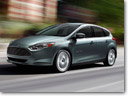 Ford has announced the new 2012 Focus Electric, which now can be ordered for $39 200 not including deliver charge of $795 and a federal income tax credit of $7 500.

 Another tuned 2012 Ford Focus will be exhibited at the 2011 SEMA Show. Roush Performance Products will introduce the vehicle to the audience between November 1st and 4th in Las Vegas.

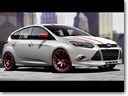 3dCarbon will exhibit a specially prepared 2012 Ford Focus at this year’s SEMA.

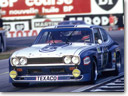 After the Scirocco, the Beetle and the Mini, it is time for another legend to comeback on stage. Ford has announced that for the 40th anniversary of the Capri, a new model will be launched on the market both to revive the legend and to compete the Megane coupe and the Scirocco.

