Tag: Engine

  • New-Generation Toyota Land Cruiser Combines Legendary Capability With Welcome Luxury, Quality And Reliability

    Toyota Land Cruiser 2009Toyota Land Cruiser 2009The all-new seventh-generation Toyota Land Cruiser, introduced for the 2008 model year, gains new privacy glass on side and rear-quarter windows for 2009.

    Performance

    The Land Cruiser is powered by a new-generation 5.7-liter DOHC V8 engine. The engine uses electronic fuel injection, direct Ignition, four valves per cylinder, and a variable-length intake tract to produce 381 horsepower at 5,600 rpm and 401 lb-ft of torque at 3,600 rpm. Ninety percent of peak torque is available at just 2,200 rpm. The Land Cruiser uses regular 87-octane gasoline and is ULEV-II certified.

    The V8’s advanced Dual Variable Valve Timing with intelligence (VVT-i) system controls valve timing and overlap on both the intake and exhaust valves, which helps to optimize power, fuel efficiency and emissions. The Acoustic Control Induction System (ACIS) switches the length of the intake tract in two stages, based on RPM and throttle angle, to improve torque across the engine speed range. Stainless steel exhaust manifolds flow into a full stainless steel exhaust system. A water-cooled oil cooler helps control oil temperature while towing.

    The Land Cruiser’s six-speed automatic transmission is designed to handle high torque while performing with luxurious smoothness. Fourth gear is direct drive, and both fifth and sixth gears are overdrive gears. The transmission’s control unit estimates road conditions to select the appropriate gear ratio for the vehicle’s speed and driving conditions. A sequential shift mode allows the driver to select gears manually.

    Capability, Handling and Ride

    The Land Cruiser’s body-on-frame construction provides ruggedness and durability in extreme driving conditions, plus impressive towing capability and ride isolation characteristics. The front of the frame features a three-stage crush structure so frame damage to other areas of the vehicle is minimized in the case of frontal impact.

    The Land Cruiser employs a high-mount double-wishbone front suspension system with gas-pressure shock absorbers, a hollow stabilizer bar, and coil springs. The system is designed to suppress alignment change while the suspension travels through its stroke, and maintain an optimal stroke length. This system provides a high level of off-road driving capability and suspension control while maintaining a high level of on-road driving comfort. Approach and departure angles are 30 degrees and 20 degrees, respectively.

    At the rear, the reliable and proven four-link, coil-spring with lateral rod format was redesigned to provide a longer suspension stroke for improved on-and off-road performance. The Land Cruiser’s rear suspension also features gas-pressure shock absorbers and a hollow stabilizer bar.

    The Kinetic Dynamic Suspension System (KDSS) adjusts the sway resistance provided by the front and rear stabilizer bars. KDSS may reduce maximum body-sway angle by as much as 50 percent to help enhance both on-road handling response and off-highway capability. By using hydraulic cylinders acting on each stabilizer bar and linked by a pressure-sensing valve, KDSS reduces the degree of sway stiffness provided by the stabilizer bars in response to changing road conditions and driver inputs.

    In off-road driving situations, the KDSS allows the wheels on each axle to move with a larger degree of side-to-side independence, helping to minimize any tendency for wheel lift. During cornering, when both front and rear cylinders are compressed, no fluid is flowing in the system and the stabilizer bars work conventionally to help reduce body roll. When an uneven surface is encountered, one compressed cylinder causes fluid to flow between the front and rear cylinders, allowing the stabilizer bars to move freely. This action increases wheel articulation and travel, as well as helps to equalize wheel loading. By allowing the stabilizer bars to disengage in certain situations, the nominal stiffness of the bars can be notably increased, thereby reducing body roll and improving handling without negatively affecting ride comfort or off-road performance.

    Land Cruiser rolls on P285/60 R18 mud-and-snow steel-belted radial tires mounted on 18 x 8.0-inch aluminum alloy wheels with a high-gloss finish and include a full-size spare tire. The Land Cruiser has a maximum payload of 1,585 pounds and maximum towing capacity of 8,500 pounds.

    The brake system employs 13.4-inch ventilated discs with four-piston calipers up front and 13.6-inch ventilated discs at the rear. Variable gear ratio power-assisted rack-and-pinion steering requires just 3.1 turns lock-to-lock. Gear ratio is set larger around the steering center and smaller around the end position.

    The newly-developed JF2A transfer case provides full-time four-wheel drive. This lightweight, compact, chain-driven unit offers a standard 1:1 high ratio for road travel and a low-range 2.618:1 ratio for traversing challenging driving surfaces, such as steep inclines. The system uses a TORSEN® limited-slip locking center differential to distribute power 40:60 front-to-rear, directing more power to the wheels with the best grip should slippage occur. Traction control (TRAC) employs both brake and throttle intervention to help control wheel spin. Vehicle Stability Control (VSC), with a cut-off switch, helps maintain directional control during cornering.

    The Crawl Control feature helps make traversing difficult terrain easier and safer. With the transfer case shifted into low range, Crawl Control regulates engine speed and output (along with braking force), to propel the vehicle forward or in reverse at one of three low-speed settings. This allows the driver to maintain focus while steering over very rough level ground or steep grades, without having to also modulate the throttle or brake pedals. Crawl Control includes Downhill Assist Control (DAC), which is designed to augment the low-speed ascending ability of low-range by holding the vehicle to a target speed with no driver intervention. Hill-start Assist Control (HAC) provides additional control for off-road driving by helping to keep the vehicle stationary while starting on a steep incline or slippery surface.

    Safety

    The Land Cruiser utilizes welded high-strength sheet steel, especially in the A-, B-, C- and D-pillars, and in the rocker area to increase rigidity and reduce weight. The B-pillars are designed to help absorb side impacts and transfer them into the rest of the body structure where they can more safely dissipate.

    Like all Toyota SUVS, the Land Cruiser comes standard with the STAR Safety System. A new, four-wheel multi-terrain anti-lock braking system (ABS) automatically selects the optimal ABS profile to provide the most suitable brake force for on- and off-road driving surfaces. Electronic Brake-force Distribution (EBD) employs the multi-terrain ABS to properly balance braking forces between the front and rear brakes, while Brake Assist (BA) provides auxiliary force to assist the driver during emergency braking. Active Traction Control (A-TRAC) helps maintain traction during acceleration by controlling engine output and braking forces to the wheel, distributing the drive force that might have been lost to the wheels and tires that have traction. VSC with a cut-off switch, helps maintain directional control during cornering by manipulating engine torque and individual wheel-braking influence if it detects tire slippage.

    The new-generation Land Cruiser features 10 standards airbags. These include driver and front passenger dual-stage advanced airbags; driver and front passenger knee airbags; front- and second-row seat-mounted side airbags; and three-row roll-sensing side curtain airbags with a roll-sensing cutoff switch. -more2009

    A direct tire pressure monitor system (TPMS) helps to alert the driver to pressure drops in any of the tires, including the spare. An intuitive parking assist system uses ultrasonic sensors on the front and rear bumpers to sense obstacles.

    All eight seating positions feature three-point seatbelts. Active headrests on the driver and front passenger seats move up and forward almost instantly in the event of certain rear-end collisions to help reduce the distance between the occupant’s head and the headrest. An available advanced seatbelt system is designed to retract the front seatbelts when the brakes are suddenly applied or when tire slippage is detected by the VSC system.

    Comfort and Convenience

    With 28 total air vents, the climate control system is designed to bathe occupants in comfortable air, even during extreme heat, rather than simply projecting streams of cool air at them. For extreme cold situations, the Land Cruiser is equipped with an auxiliary positive temperature coefficient (PTC) heater.
    The PTC heater warms air instantly by passing it over an electrically heated ceramic element. Finally, the system also includes a micro-dust and pollen filter, and seven-level blower control.

    The Land Cruiser comes luxuriously equipped, with standard features that include a JBL premium audio system with in-dash six-CD/DVD changer and 14 speakers; Smart Key keyless entry with push-button start that allows the driver to unlock or start the vehicle by carrying the key; anti-theft security system; engine immobilizer; cruise control; power moonroof; auto-dimming rearview and side mirrors; HomeLink®; steering wheel-mounted audio; heated, power front seats with driver’s memory; and power tilt and telescopic steering column with memory.

    Options

    The Land Cruiser offers a variety of options as part of upgrade packages: a DVD rear-seat entertainment system with a nine-inch LCD screen; Bluetooth® technology; back-up camera; second-row heated seats; a touch-screen DVD-based navigation system with an eight-inch display that includes navigation, audio, HVAC, back-up monitor, headlamp washers, and Bluetooth® controls. For towing convenience, the Land
    Cruiser has a towing connector and sub wiring harness to connect a commercial trailer brake controller.

    Exterior Design

    The new-generation is designed to convey an “Advanced and Rugged” theme with enlarged front and rear fenders. The thick, rectangular grille and headlamps maintain Land Cruiser’s steady and confident appearance, while the hood flows gracefully into the grille and beltlines.

    Character lines in the front, the area around the rear door handles, and the back door panels suggest strength. Though new and fresh, the design is instantly recognizable as a Land Cruiser. Even with the roomier body, the new-generation Land Cruiser is just 2.3 inches longer and 1.2 inches wider than the previous model. Foam-filled A-pillars help reduce wind noise, and a “bifacial” molding between the windshield and the body helps reduce aerodynamic turbulence, and therefore noise.

    Underbody panels behind the front bumper and extending under the engine and behind the rear wheels are designed to protect the engine and transmission and to help the vehicle traverse rocky terrain smoothly. These underbody panels in addition smooth the airflow under the vehicle to help minimize drag and turbulence.

    Interior Design

    The interior is optimized for the comfort, security and safety of its driver and up to seven passengers – two in the front, and three each in the second and third seating rows. The instrument panel features a set of bright Optitron gauges with clear turquoise illumination. Beneath these gauges, a multi-informational display shows gear selection, odometer, tripmeter, fuel consumption, individual tire pressures and cruising range.

    The vehicle’s center console features a gate-type shifter with sequential shift mode operation, the parking brake, a storage box with several compartments and a removable tray, auxiliary audio jack and cup holders.
    The passenger-side second-row seat features a one-touch tumble mechanism for easier third-row ingress and egress. The second-row seats slide forward and aft 4.1 inches for more passenger comfort and cargo storage versatility. The second row also provides the Lower Anchors and Tethers for Children (LATCH) child seat attachment system.

  • Engine Specialist Opts for Toyota Reliability

    As one of the UK’s leading engine manufacturers and importers, E. P. Barrus Ltd knows all about power plants. Now its awareness of the reliability of Toyota engineering has encouraged the company to switch its car and van fleet to that badge. Over 20 units have already been delivered to the company’s headquarters in Bicester, Oxfordshire. The vehicles have replaced some of the existing Barrus fleet, which consisted largely of Vauxhalls and Jaguars. (more…)

  • BMW 6 Series

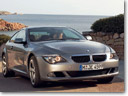
    BMW 6 SeriesTwo dream cars are setting out on the next lap. Featuring highly attractive modifications to their characteristic design, an interior further refined in many details and boasting colour highlights as well as innovations in drive technology and on the driver assistance and safety systems, the BMW 6 Series Coupé and the BMW 6 Series Convertible offer an even greater thrill and more style than ever before.

    Indeed, through their looks and style, combined with cutting-edge technology, both models are an authentic representation of the classic Gran Turismo featuring modern highlights together with classic qualities.

    The most important innovation within the engine compartment is the diesel engine providing superior torque and economy for the first time in a car of this class, the most powerful 3.0-litre straight-six diesel in the world giving the BMW 6 Series EfficientDynamics of a particularly impressive standard.

    The petrol engines also feature a wide range of modern improvements optimising both fuel consumption and exhaust emissions, among them High Precision Injection on the straight-six, that is the most advanced system of direct fuel injection, Brake Energy Regeneration, and on-demand control and management of the car’s ancillaries.

    Six-speed automatic sports transmission is tailored perfectly to the character of the BMW 6 Series, combining comfortable cruising with the option at any time to use the full power and muscle of the engine for all-out acceleration and driving dynamics.

    Style and sport are indeed the strongholds of the BMW 6 Series: Either as an elegant Sports Coupé in the proud tradition of a genuine Gran Turismo or as a dynamic Luxury Convertible enabling the driver and passengers to enjoy the wind rushing by in an incomparable manner. Both models combine their strengths with the convincing everyday driving qualities of a large and spacious 2+2-seater.

    The BMW 6 Series Coupé and Convertible stand for a heritage of no less than 70 years dedicated to the thrill of mobility and success in motorsport.

    Cars such as the BMW 327/328 Coupé, the BMW 3200 CS, the BMW 3.0 CSi or the first generation of the BMW 6 Series to this day still represent the unique combination of elegance and competition-oriented sportiness so characteristic of BMW.

    The history of exclusive and dynamic driving pleasure with nothing but the sky above was originally introduced in the BMW 327 Convertible, the BMW 335 Convertible, and the BMW 503 Convertible, all of them milestones in technology and design, with a strong and lasting impact on the ongoing development of the brand and its products.

    The BMW 6 Series today also plays a significant role within the brand’s model portfolio. It is indeed the benchmark for innovation, a powerful expression of progress in technology and, at the same time, the strong performer interacting with a particularly demanding target group. Cars of this kind establish a particularly active relationship between the manufacturer and the customer, the dedicated driver opting for a BMW 6 Series Coupé or, respectively, a BMW 6 Series Convertible showing a clear preference for the BMW brand and, at the same time, a strong affinity to innovations in technology, premium quality, and individual style.

    An attitude of this kind creates a particularly close relationship with the product and its features not only prior to, but also after purchasing the car.

    Innovations of this standard endorsed and acknowledged by the critical customer of this calibre have the potential to define the progress of the entire brand. This, in turn, makes the BMW 6 Series a role model not only in design, but also in its control and operating concept, its comfort functions, chassis and suspension technology, and driver assistance systems.

    More than 75,500 cars built within just over three years are impressive proof of the close link between the BMW brand and the tradition of the sophisticated, top-quality Gran Turismo. In this segment, facing keen competition from a number of high-ranking competitors, the BMW 6 Series, measured in terms of registration figures, ranks a proud second among all luxury sports cars the world over. In other words, right from the start it immediately left all competitors with comparable all-round qualities far behind.

    Clearly dynamic: highlights in exterior design.

    The BMW 6 Series boasts powerful innovations characteristic of the brand and its leadership over the competition not only through the cars’ power units. For in their design and style, both the 6 Series Coupè and the 6 Series Convertible offer a level of quality only the development process applied by the BMW Group is able to achieve.

    While the engineers responsible for developing the drivetrain benefit from skills and the art of engineering going back decades in enhancing the level of perfection to an ever-increasing standard through technologies such as EfficientDynamics, the success of BMW design lies in the ability to interpret the traditional values of the brand with supreme creativity in looking into the future. Hence, the design and styling of the BMW 6 Series clearly reflect the highly dynamic, refined, top-quality and progressive technical standard of the car as a truly authentic rendition of this supreme standard.

    The overall design and look of both models, offering perfect harmony and balance to the last detail, is borne out in particular by the sculptural look of both cars, the Coupé and Convertible providing a perfect match of all lines and design features. Indeed, the smooth, uninterrupted flow of all characteristic lines on the BMW 6 Series ensures harmonious interplay of the front section, the sides and rear sections of the car, the generous and powerfully curved surfaces all coming together to provide a harmonious picture to be admired in its sporting elegance and dynamic class from every angle and every perspective.

    Offering this unique design language, the BMW 6 Series Coupé stands out as a modern and innovative interpretation of the classic Gran Turismo. And in the same way the BMW 6 Series Convertible, through its design, is a proud symbol of sporting and elegant driving pleasure with nothing but the sky above.

    Powerful and full of presence from every perspective.

    Detailed highlights and special features give the BMW 6 Series even greater presence in and through the elementary messages of the car’s design. Appropriate refinements offer an even clearer and more convincing expression of the car’s sculptural character both at the front, from the sides, and at the rear, focusing in particular on the sporting characteristics and strengths of the BMW 6 Series.

    Both the Coupé and Convertible now have an even more powerful and striking stance on the road, the strong lines extending all the way from the A-pillars along the entire engine compartment lid to the BMW kidney grille and forming a dynamic arrow further emphasised by the powerfully chiselled bars in the lower air intake.

    The air intake itself is even wider than on the former model and borders at the bottom on a contour edge significantly highlighting the wide track of the car. The newly designed direction indicators, in turn, featuring LED light units with a crystalline effect, provide an even more distinctive signal than before.

    Through their striking contours, the headlights give the front end of the BMW 6 Series a clear, focused look, light technology adding further brilliance. Featured as standard, the bi-xenon dual round headlights are covered by a layer of clear glass at the surface, their corona rings now offering BMW’s typical daytime lights function.

    With its long wheelbase, the long and sleek engine compartment lid, the greenhouse moved far to the back and the low roofline tapering out gently to the rear of the car, the BMW 6 Series has all the proportions of a classic coupé. And thanks to its unique Finn roof, the BMW 6 Series Convertible also offers the same, dynamically stretched silhouette.

    The light edge on the side-sills is even more pronounced and distinctive than before on the BMW 6 Series, offering extra volume and contours to highlight the sporting character of the car. The metallic paint colours Deep Sea Blue and Space Grey, as well as three light-alloy rims, offer further options in rounding off the sporting elegance of the BMW 6 Series according to the customer’s individual preferences.

    In the process of modifying the rear end of the car, BMW’s designers have harmoniously continued and enhanced the concept of ongoing lines extending around the entire vehicle. The section of the luggage compartment lid beneath the spoiler lip is even more concave in design than before, rising up less steeply to provide not only an even more dynamic look, but also even more distinctive light/shade contrasts, making the entire rear end of the car look even lower and more dynamic.

    On both the Coupé and Convertible, the additional brake light is now integrated in the spoiler lip. The inner structure of the rear lights has also been modified to reflect the lines of the car, with all light sources now being LED units.

    The harmony of lines on the luggage compartment lid, the rear lights and reflectors is likewise more intense and striking than before, the line formed by the lower edge of the rear spoiler sweeping gently downwards, where it is taken up by the outer contour of the rear lights. Then, following the design of the lights, the spoiler line, while still moving down, sweeps to the inside, where it is taken up by the contour of the low, even more stretched-out and sleeker reflectors.

    BMW 6 Series all the way: harmony of design outside and inside.

    The stylish and elegant dynamism of the car’s exterior design continues smoothly and harmoniously within the interior of the BMW 6 Series. Bearing a clear analogy to the exterior design of the car, the concept of dynamic harmony forms clear, flowing lines and tense, muscular surfaces.

    As an example, the sweeping cover above the dashboard starting beneath the windscreen extends back on both sides in an ongoing, dynamic line leading into the door panels and surrounding the armrests. Both the driver and front passenger are therefore cocooned by tense, even exciting design elements continuing all the way to the centre console between the rear seats, thus emphasizing both the sophisticated style and elegance of the interior in a genuine visual and tangible experience.

    The exclusivity of the BMW 6 Series is enhanced to an even higher standard by appropriate refinements in the quality of materials on specific controls and instruments finished in Chrome Pearl Grey Design as well as colours for the interior trim and upholstery. As an alternative to the “standard” version, optional interior trim strips made of grained maplewood, dark birchwood, or aluminium with a longitudinal grain pattern give the interior either an even more sophisticated, stylish and elegant, or a more technical and progressive touch.

    Optional finish in Pearl exclusive leather, with additional leather on the armrests, the door grab handles and the centre console, is now also available in Chateau Red and in a upholstery colour, Saddle Brown.

    Featuring a combination of leather and Pearl Grey chrome, the iDrive Controller matches the look of the rotary buttons, thus additionally enhancing the overall harmony of the car’s design.

    Precise control of the system is further facilitated by a ring around the Controller made of extra-hard rubber, and to ensure even more intuitive use, the iDrive control system in the BMW 6 Series comes complete with eight programmable favourite buttons allowing direct access to selected functions.

    The engines: even more dynamic, even more efficient – and for the first time also a diesel.

    To show a clear sign of supremacy, a car – just like a human being – has to be a leader. And the BMW 6 Series expresses this leadership once again also in its engine technology, the progressive character of the car being borne out not least by the unique implementation of BMW EfficientDynamics also
    in this segment.

    Forming an major highlight in BMW engine development, the technologies introduced in and through BMW EfficientDynamics to reduce both fuel consumption and exhaust emissions are featured consistently also in the eight- and six-cylinder power units of the BMW 6 Series.

    A particular highlight is the availability of a diesel engine for the first time in this segment, on both the Coupé and Convertible. Indeed, this is the world’s most powerful and dynamic three-litre straight-six diesel now offering its supreme power and efficiency in two particularly desirable cars. Displacing 3.0 litres, the power unit featuring an all-aluminium crankcase, Variable Twin Turbo (VTT) technology and third-generation common rail fuel injection develops maximum output in the BMW 635d Coupé and the BMW 635d Convertible of 210 kW/286 hp, plus maximum torque of 580 Newton-metres/427 lb-ft.

    And through its low weight quite outstanding for a diesel of this calibre, the engine enhances both the efficiency and agility of the BMW 6 Series.

    Referred to also as two-stage turbocharging, the VTT System is made up of two turbochargers varying in size. First, the small turbocharger cuts in at low engine speeds, developing superior power and torque spontaneously and without the slightest delay in response to even the smallest movement of the accelerator pedal thanks to its low level of inertia. Then, with engine speed increasing, the second, larger turbocharger also cuts in, giving the engine its maximum torque at just 1,750 rpm, with maximum engine power at 4,400 rpm.

    The high-performance diesel clearly expresses its sporting character in accelerating to 100 km/h, an exercise completed by the BMW 635d Coupé in 6.3 and by the BMW 635d Convertible in 6.6 seconds. Top speed of both models, in turn, is limited electronically to 250 km/h or 155 mph.

    Returning average fuel consumption in the EU test cycle of 6.9 litres on the Coupé (equal to 40.9 mpg imp) and 7.2 litres on the Convertible (equal to 39.2 mpg imp), the BMW 635d sets the benchmark for efficiency in its segment. The increase in the car’s cruising range all the way to 1,015 kilometres or 629 miles on the Coupé and up to 970 kilometres or 601 miles on the Convertible clearly benefits the long-distance motoring qualities of the car as a traditional symbol of a genuine Gran Turismo.

    Unparalleled supremacy: the eight-cylinder in the BMW 6 Series.

    Offering the pinnacle of supreme power and performance, the BMW 6 Series again comes with an eight-cylinder right at the top of its range: Developing maximum output of 270 kW/367 hp at an engine speed of 6,300 rpm and maximum torque of 490 Newton-metres/361 lb-ft at 3,400 rpm, the 4.8-litre in the BMW 650i Coupé and the BMW 650i Convertible ensures the highest standard of motoring in style.

    This ultra-modern aluminium power unit comes complete with BMW’s throttle-free VALVETRONIC valve management, double-VANOS variable camshaft control on both the intake and exhaust side, as well an intake manifold switching to two different positions.

    Benefiting from these highlights in technology, newly tuned engine management, and a wide range of high-tech features serving to reduce fuel consumption, the eight-cylinder offers not only supreme smoothness and refinement, an immediate response and a “beefy” torque curve, but also a high standard of economy with fuel-efficient lean-burn operation throughout a wide load range including higher engine speeds, thus ensuring a significant reduction of fuel consumption also in everyday traffic.

    BMW 650i Coupé accelerates to 100 km/h in 5.1 seconds, and completing the same exercise in 5.5 seconds, the Convertible also offers the dynamic performance of a thoroughbred sports car. Electronic engine management limits the top speed of both models to 250 km/h or 155 mph.

    Average fuel consumption in the EU test cycle is 11.7 litres/100 kilometres on the Coupé and 12.6 litres/100 km on the Convertible (equal to 24.1 and, respectively, 22.4 mpg imp). On the road, this means a reduction in fuel consumption versus the former models by up to 5 per cent, a clear sign of further progress in the spirit of BMW EfficientDynamics also in this performance class.

    Innovative: straight-six power unit with High Precision Injection.

    The 3.0-litre power unit with its composite magnesium/aluminium crankcase in the BMW 630i represents the latest state of the art in six-cylinder engine technology. The most important innovation in this context is BMW’s High Precision Injection, second-generation direct gasoline injection allowing fuel-efficient lean-burn operation throughout a wide load range including high engine speeds and therefore reducing fuel consumption significantly also in everyday traffic.

    This progress is provided by innovative piezo-injectors arranged between the valves and injecting fuel directly to the area around the spark plug. Together with numerous other technologies serving to reduce fuel consumption, direct fuel injection in the lean-burn mode is part of BMW EfficientDynamics, BMW’s cutting-edge development strategy offering results and improvements now being implemented step-by-step in all of BMW’s model series.

    Standing out as the currently most advanced six-cylinder, this superior power unit develops maximum output of 200 kW/272 hp in the BMW 630i Coupé and the BMW 630i Convertible, that is 10 kW/14hp more than in the former engine with conventional fuel supply and engine management. Maximum torque, in turn, is 320 Newton-metres or 236 lb-ft. On the road, this means acceleration to 100 km/h in the Coupé within 6.2 seconds, and acceleration to 100 km/h in the BMW 630i Convertible in 6.7 seconds. Again, top speed on both models is limited electronically to 250 km/h or 155 mph.

    Average fuel consumption of the BMW 630i in the EU test cycle is just 7.9 litres/100 kilometres on the Coupé and 8.3 litres/100 km on the Convertible, equal to 35.8 and, respectively, 34.0 mpg imp. This is an improvement of up to 15 per cent over the former models, which already boasted a very high standard of fuel efficiency.

    Fuel economy and emissions optimised on all models.

    A wide range of fuel-saving features in and around the engine also serve to make all of the power units in the BMW 6 Series even more efficient.

    One example is Brake Energy Regeneration on all variants of the BMW 6 Series, an intelligent energy flow management concept concentrating the generation of electricity for the car’s on-board network on the overrun and brake phases. And to further promote an economic style of motoring, the manual gearbox versions of the BMW 6 Series also come with a gearshift point indicator.

    Further technologies serving to save fuel provide their superior effect without any intervention by the driver. The belt drive for the a/c compressor, for example, comes with its own clutch automatically disconnecting the compressor as soon as the driver switches off the air conditioning. Cooling air flaps either opened or closed as a function of driving conditions serve likewise to optimise not only noise comfort, but also the car’s streamlining on both the BMW 635d Coupé and the BMW 635d Convertible.

    Incorporating an electrical coolant pump, thermal management on the straight-six power unit in the BMW 630i, in turn, varies the car’s cooling efficiency as a function of actual requirements, regardless of engine speed. And last but certainly not least in this context, the Varioserv steering assistance pump featured on all variants of the BMW 6 Series ensures particularly efficient steering support and assistance according to the driver’s current requirements.

    Automatic sports transmission with paddles on the
    steering wheel.

    On the BMW 630i and the BMW 650i, engine power is delivered to the rear wheels as standard via a six-speed manual gearbox. An alternative also available to the discerning customer is the newly developed six-speed automatic sports transmission featured as standard on the BMW 635d and combining supreme comfort with unusually short reaction and gearshift times in true Gran Turismo style, direct connection to the engine also offering dynamic power and performance for sheer driving pleasure at all times.

    The driver controls the automatic sports transmission by means of an electronic gear selector lever, moving the lever briefly to the left from position D in order to activate the manual gearshift mode. This allows the driver to shift gears either via the gear selector lever or manually in a sequential mode by means of paddles on the steering wheel. Yet a further option is to shift gears manually directly from the paddles, while pressing the Sports button positioned behind the gear selector lever, the driver is able to enjoy an even faster and dynamic gearshift. A further benefit is that the Sports button also modifies the progressive action of the gas pedal and, in conjunction with the car’s standard steering, the Servotronic control map, providing optimum conditions for dynamic acceleration.

    Important innovations for even greater driving pleasure, safety and comfort.

    Greater dynamism, enhanced safety, extra comfort – with its wide range of standard features and numerous other, optionally available high-tech improvements, the BMW 6 Series offers sheer driving pleasure of a truly incomparable, exclusive and fascinating kind. So like the BMW 7 Series, the BMW 6 Series is a particularly impressive demonstration of leadership in technology in terms of its comfort functions, chassis and driver assistance, both the Coupé and Convertible perfectly reflecting the innovative power of the BMW brand.

    All-aluminium suspension for enhanced agility, safety and comfort.

    Both the BMW 6 Series Coupé and the Convertible are characterised by fascinating, sporting and superior driving characteristics at all times and under all conditions. Featuring high-performance power units, rear-wheel drive, excellent axle load distribution, and an ultra-modern all-aluminium suspension, the BMW 6 Series offers a supreme driving experience under all conditions. The principle of lightweight construction on the chassis and suspension, in turn, guarantees supreme stability on low weight and minimises the car’s unsprung masses.

    The high-performance swing-calliper brakes with inner-vented brake discs are controlled hydraulically on the BMW 6 Series, now acting even faster and more precisely than before in guaranteeing maximum stability and full brake power at all times.

    A further important feature of the premium brake system on the BMW 6 Series is its low weight, the high-performance brakes on the BMW 650i being specially adapted to the supreme power of this outstanding eight-cylinder. And last but not least, all models in the BMW 6 Series come with a continuous brake pad wear indicator.

    DSC Dynamic Stability Control with optimised control action.

    Offering a wide range of functions, DSC Dynamic Stability Control supports the driver in the process of handling his BMW safely and with superior style. The first and foremost DSC function is to apply the brakes individually on the car’s various wheels as required, or to intervene in engine management in order to counteract any over- or understeer in bends.

    DSC also comprises the ABS anti-lock brake control system as well as ASC Automatic Stability Control preventing the drive wheels from spinning on loose or slippery ground, a Brake Assistant, and CBC Cornering Brake Control to avoid under- or oversteer in bends.

    Further functions are Fading Compensation whenever the brakes become particularly hot, regular Dry Braking to optimise the car’s stopping power in wet weather, and a Start-Off Assistant enabling the driver to set off smoothly and without the car rolling back on an uphill gradient, without having to use the handbrake.

    The Brake Assistant in the new BMW 6 Series forming part of the DSC control system is networked with the car’s other driver assistance systems, interacting with Active Cruise Control with its Stop & Go function available as an option in order to detect the need for extra stopping power in good time. This is done by radar sensors incorporated in the system, with the brakes being pre-loaded by reducing the normal activation thresholds on the hydraulic Brake Assistant.

    Yet a further innovation is the pre-loading brake function moving the brake pads closer to the discs for immediate build-up of brake pressure, thus avoiding the slightest delay in the process of applying the brakes. In the event of an emergency braking manoeuvre, this precaution enables the brakes to build up their maximum stopping power much faster than usual, making stopping distances a lot shorter and offering valuable safety reserves.

    Activated at the touch of a button, DTC Dynamic Traction Control serves to move up the DSC response thresholds for even more dynamic performance. Specially optimised in the BMW 6 Series, this DTC mode enhances traction on slippery surfaces and ensures an even higher standard of sporting performance under dynamic driving conditions.

    Safety built-in from the start: runflat tyres and tyre defect indicator.

    Both the BMW 630i and the BMW 635d come as standard on 17-inch light-alloy rims. The BMW 650i, in turn, boasts 18-inch light-alloy rims as standard.

    The tyres on all models feature the most advanced runflat technology enabling the driver to continue to the nearest workshop even after a complete loss of pressure. And as a further safety feature, the tyre defect indicator permanently supervises air pressure in the tyres and warns the driver as soon as tyre pressure drops more than 30 per cent below the ideal level by activating an optical signal in the instrument cluster.

    Unique: Active Steering and Dynamic Drive.

    Feature as standard on the BMW 6 Series, Servotronic power steering provides appropriate assistance on the hydraulic rack-and-pinion steering as a function of road speed. Further enhancement of steering comfort is provided by optionally available Active Steering absolutely unique in the BMW 6 Series segment, varying the steering transmission ratio appropriately to provide a larger steering angle at low speeds with the same movement of the steering wheel than at higher speeds. In practice, this allows the driver to manoeuvre his car with less effort and with an even smoother steering effect.

    At higher speeds, on the other hand, Active Steering makes it easier for the driver to remain steadily on course, harmonising the feeling of the steering.

    By way of yaw rate control, Active Steering stabilises the car in brake manoeuvres on varying surfaces (when applying the brakes with a modal split), counter-steering as required for superior safety and balance.

    Yet another innovation ideally reflecting the character of the BMW 6 Series is optionally available Dynamic Drive. This suspension control system features active anti-roll bars with hydraulic swivel motors on the front and rear axle, enabling the car to almost completely set off roll movements in bends and in a sudden change of direction. A further benefit is appropriate control of the car’s steering behaviour in a lane change or in hard manoeuvres serving to avoid an obstacle on the road.

    Active Cruise Control with Stop & Go.

    Active Cruise Control with its Stop & Go function offers the driver better support and greater assistance at the wheel than ever before.

    This innovative system now available as an option in the BMW 6 Series – on cars with automatic transmission – features automatic distance control allowing the driver to comfortably cruise along the motorway or on a country road, while constantly maintaining an appropriate distance to the vehicle ahead also in stop-and-go traffic at very low speeds.

    As soon as the distance pre-set by the driver is no longer maintained, the system adjusts the speed of the car by intervening in drive management and building up brake pressure, thus taking current traffic conditions into account. Then, as soon as the road ahead is free again, Active Cruise Control increases the speed of the car to the limit set by the driver in advance.

    The system even reduces the speed of the car to a standstill whenever necessary on account of current traffic conditions, bringing the car to a halt and holding it in that position.

    The maximum deceleration generated by Active Cruise Control with Stop & Go is 4 metres/sec². And should the driver be required to intervene because the driver ahead is applying the brakes extremely hard, he will be informed to do so by appropriate visual and acoustic signals.

    Lane Departure Warning with vibration signal on the steering wheel.

    To support driver awareness, both the BMW 6 Series Coupé and the BMW 6 Series Convertible come with a newly developed assistance system helping to prevent the driver from inadvertently departing from the right lane on the road. Referred to as Lane Departure Warning, this sophisticated system identifies departure of the car from the right track and gives the driver a discreet but noticeable signal at the most important point in steering the car – on the steering wheel itself.

    The Lane Departure Warning System is made up of a camera fitted near the interior mirror on the windscreen, a control unit for comparing data, and a signal transmitter generating a vibration signal on the steering wheel.

    Even better visibility thanks to variable light distribution.

    Innovative driver assistance systems provide the opportunity to mastermind the bi-xenon headlights of the BMW 6 Series in a particularly intelligent fashion. The optionally available Adaptive Headlights, for example, guarantee appropriate illumination of the road ahead, following the road in bends and on winding passes.

    A further improvement is variable light distribution introduced for the first time on the BMW 6 Series to optimise the headlight beam and illumination also on a straight stretch of road: Operating as a function of road speed, this innovative control system automatically enlarges the driver’s field of visibility by broadening the light beam, the “footprint” of light, as it were. In a typical city light situation at speeds below 50 km/h or 31 mph, this ensures broader distribution of light making it easier to recognise objects on the opposite, oncoming side of the road. In the motorway mode, on the other hand, the driver’s field of vision is extended by giving the light beam a longer range and again offering greater illumination on the left-hand side with oncoming traffic.

    Activation of the foglamps at speeds of up to 70 km/h or 50 mph, in turn, generates broader light distribution and brightens up the area close to the car. And at higher speeds, finally, the headlight range is also extended over and above the broader distribution of light.

    Automatic headlight control featured as standard activates the low-beam headlights without requiring any intervention by the driver whenever this is necessary – for example when driving through a tunnel or with conditions becoming darker at dusk. The rain sensor also featured as standard is an ideal supplement to the headlight control function, conducting optical measurements to automatically determine the onset and degree of precipitation, and thus activating the windscreen wipers accordingly.

    The BMW 6 Series is the only car in its segment available with a High Beam Assistant. This intelligent unit switches off the high beam automatically as soon as the car encounters oncoming traffic or another vehicle ahead comes into sight or if the road ahead – for example in town or a built-up area – is adequately illuminated.

    BMW Night Vision available as an option offers an even higher standard of safety when driving at night. The “heart” of this unique system is a thermal imaging camera able to detect people, animals and objects emitting heat at a distance of up to 300 metres or almost 1,000 feet also next to the road, then transmitting a high-contrast image to the central Control Display also used by the navigation system.

    As an option both the BMW 6 Series Coupé and the BMW 6 Series Convertible are available with a Head-Up Display projecting information relevant to the driver such as the road speed of the car or navigation data to the windscreen directly in front of the driver.

    Comfort and safety on all four seats.

    High-strength load-bearing structures, generous and clearly defined deformation zones front and rear, side impact protection integrated in the doors and rear side panels, and an extremely stiff passenger cell allowing the entire structure around the driver to maintain its function as a survival area also in a severe collision – all these features provide the prerequisites for the exemplary standard of passive safety offered by the BMW 6 Series.

    Other standard features are three-point belt inertia-reel seat belts on all seats as well as frontal and side airbags. The BMW 6 Series Coupé also comes with head airbags, while the BMW 6 Series Convertible features rollbars moving up automatically in the event of a possible rollover within fractions of a second from a module behind the rear headrests.

    Active headrests for an even higher standard of occupant protection.

    Both the BMW 6 Series Coupé and the BMW 6 Series Convertible come as standard with electrically adjustable seats for the driver and front passenger as well as a triple memory function on the driver’s seat. The front seats on the BMW 6 Series Convertible feature an integrated belt system, while on the BMW 6 Series Coupé the belt anchor points allow comfortable and convenient use of the car’s restraint systems.

    Newly developed active headrests on the front seats once again enhance the standard of passive safety in both models, the headrests developing their protective effect in the event of a rear-end collision by automatically moving closer to the occupant’s head, thus preventing any rapid spinning or turning motion of the head, in the process significantly reducing the risk of upper spinal injury for the driver and front passenger.

    To ensure this effect, the headrests are moved forward by 60 millimetres or 2.36´´ and upward by 40 millimetres or 1.57´´ as soon as the airbag control unit registers an impact at the rear of the BMW 6 Series and sends out a signal for pyrotechnical activation of the system. This, in turn, releases two springs moving the upholstered sections of the headrests into position to immediately cushion the heads of the occupants, preventing any spinning or jerking movement resulting from impact energy.

    Top-end navigation and audio systems.

    As a particular highlight in the interest of motoring comfort, both the BMW 6 Series Coupé and the BMW 6 Series Convertible are available as an option with the BMW Professional navigation system now optimised to an even higher level. Among other features, the BMW Professional navigation system features refined graphic presentation on an 8.8-inch Control Display as well as new, particularly reliable voice entry exclusive to BMW cars.

    High-quality audio systems and telematics functions serve to enhance touring comfort and driving pleasure in the BMW 6 Series to an even higher standard. Particularly the newly developed BMW Individual High-End Audio System guarantees exceptional quality of sound ensured above all by the “heart” of the system, trendsetting Dirac Live signal processing. The digital nine-channel amplifier with DSP Digital Signal Processing develops
    maximum output of 825 watt and, together with the particularly sophisticated loudspeakers, sets a benchmark in the quality and reproduction of sound.

    Over and above the AUX-IN bush featured as standard, a USB interface is also available as an option for linking up external audio sources. This allows the user to integrate MP3 players such as an Apple iPod into the audio system and to control the various functions by means of the iDrive Controller or, respectively, the multifunction buttons on the steering wheel.

    The range of multi-media features and options is rounded off by the mobile BMW Online internet portal and BMW Assist telematics services. The BMW Online news menu comprises not only the latest reports provided directly by the German Press Agency (dpa), but also weather reports and forecasts tailored to the driver’s personal needs.

    The BMW Convertible Weather Service, for example, tells the driver whether he can expect to drive his BMW 6 Series Convertible with the roof down on the next day or whether to expect precipitation at his current location. And last but not least, the BMW 6 Series is also available with BMW TeleServices through which the BMW Group offers its customers a universal range of service features serving for example, to make appointments and set the appropriate time for a meeting.

    Leather upholstery with SunReflective Technology on the Convertible.

    One of the particular highlights offered by the BMW 6 Series Convertible is the use of a newly developed type of leather for the seat upholstery and interior panels. In this case so-called “cool pigments” are integrated into the material in a process referred to as SunReflective Technology, reflecting infra-red radiation in the sunlight. This very effectively reduces any undue overheating of the seat surfaces when the car is open, providing a difference in temperatures compared with conventional leather of up to 20 °C or 68 °F in the case of dark colours.

    Together with the characteristic design of both models and their impressive standard of driving dynamics, the comprehensive range of multi-faceted features helps to give the BMW 6 Series its truly authentic and unique identity. Indeed, the BMW 6 Series Coupé and the BMW 6 Series Convertible belong to the small and highly exclusive group of cars fulfilling the greatest demands in every respect and setting benchmarks everywhere. Given the sheer magnitude of their qualities, both models stand out clearly in their respective segments, reflecting the ideals of the discerning motorist dedicated either to the refined dynamics of a four-seater Gran Turismo coupé or the exclusive driving pleasure only a luxury convertible likewise conceived for four occupants is able to offer.

    Through its convincing representation of the latest values including not only uncompromising quality, unpretentious elegance, superior everyday reliability and now also the superior economy of the BMW 635d, the BMW 6 Series is a highly attractive proposition also to the connoisseur outside of the car’s classic target group. So the positive impression the BMW 6 Series leaves behind on the road gives the driver even greater pleasure in identifying with his car.

    The outstanding success of the BMW 6 Series so far clearly proves
    how the car reaches the objectives set not only by BMW, but also by the most demanding customers, of a luxury performance coupé and convertible:

    By the end of February 2007 no less than 75, 352 units of the BMW 6 Series had come off the assembly line, to be precise 41, 446 Coupés and 33, 906 Convertibles. So within just three years, the BMW 6 Series already accounts for more than 85 per cent of its predecessor’s sales volume throughout its entire lifecycle. And now, with both models boasting an even more distinctive profile, everything is in place for continuing the great success of the BMW 6 Series.

  • Mercedes-Benz SLR McLaren Roadster

    Mercedes-Benz SLR Mclaren RoadsterMercedes-Benz will in future also market its SLR McLaren super sports car in the form of a roadster with a top. In common with Formula 1 vehicles of today, it, too, will be made of carbon fibre, a material that will endow the vehicle with a very high degree of safety as well as extreme torsional stiffness at the same high level as the coupé version.

    This gives rise, in combination with the racing-type chassis, to outstanding ride characteristics. The maximum speed of the new high-performance sports car, which is powered by an AMG V8 compressor engine delivering 460 kW/626 hp, is 332 km/h, therefore at the same high level as the coupe. Although, thanks to its fully retractable top, the Roadster offers undiluted open-air driving pleasure in the highest performance class, its occupants in no way lose out in terms of comfort or the vehicle’s suitability for everyday use. Consequently, the new Roadster opens up a new dimension in refinement for open-top super sports cars.

    Like the coupe version, the new Mercedes-Benz SLR McLaren Roadster once again unites the legend of the successful SLR racing models from the 1950s with the innovative technology of modern Formula 1 vehicles from the Vodafone-McLaren-Mercedes team. Typical stylistic elements, such as the arrow-shaped tip of the Formula 1 Silver Arrow, establish a visual link with the racing cars. The SLR leg-end of the 50s lives on stylistically in the distinctive lateral louvers, side pipes behind the front wheels and the wide-opening gullwing doors.

    The new Roadster benefits technically from the many years of experience of Mercedes-Benz and its Formula 1 partner McLaren. Apart from two aluminium engine frames, its body is made entirely of carbon-fibre reinforced plastic (CFRP) materials, making the vehicle an exception among high-performance sports cars. Especially for the Roadster, complex carbon-fibre technology has been intelligently further developed for the monocoque chassis. The result is low weight, exemplary energy absorption and, therefore, extremely high occupant safety as well as a degree of torsional stiffness hitherto unattained in open-top vehicles. This leads to outstanding ride characteristics of the kind otherwise found only in closed-top super sports cars.

    The puristic top is suitable for high speeds

    The exceptional qualities of the Roadster are attributable also to the fully retractable top, which blends harmoniously into the flowing lines of the SLR McLaren. Its newly developed roof material, which is available in three different colours, not only guarantees complete suitability for everyday use in all weathers, but also endows the high-performance sports car with characteristics that are exception-ally unusual in a roadster. For example, at 332 km/h, the maximum speed is at the high level of the coupé version. Conversation is still possible at well over 200 km/h on open-air journeys thanks to the favourable aeroacoustics.

    The roof opens and closes semi-automatically in less than ten seconds, thereby combining the desire for convenience with the puristic character of the roadster. To open, the roof merely needs to be unlocked from the windscreen frame and be briefly raised, after which it folds away electrically. Since an aluminium cover is integrated into its front section, the roof elegantly closes off the top when re-tracted.

    Sophisticated aerodynamics and racing-type chassis

    In the wind tunnel, the Roadster has been optimised for high speeds with regard to handling, aeroacoustics and aerodynamics. It likewise employs the aerodynamic concept already known from the coupé version, featuring an airbrake integrated into the access lid and a diffusor in the rear bumper to provide increased downforce on the rear axle.

    The open two-seater is equipped with a racing-type chassis featuring high-performance carbon-ceramic brake discs, thereby setting extremely high stan-dards. Its front-mid-engine provides for optimum weight distribution. With 460 kW/626 hp and a maximum torque of 780 Nm, the AMG V8 compressor engine, which is coupled to an AMG Speedshift R five-speed automatic transmission, accelerates the Roadster from zero to 100 km/h in 3.8 seconds.

    Unique safety and exclusive fittings

    A high degree of safety is ensured by unique carbon-fibre crash elements, steel-reinforced A-pillars and two fixed roll-over bars. The comprehensive specification also features adaptive airbags, knee and side airbags as well as seat belt tensioners and a tyre-pressure monitoring system.

    The exclusive standard equipment includes semi-aniline-leather-upholstered carbon-fibre bucket seats which can be individually adapted to the driver and front passenger by means of differently sized seat pads; dual-zone automatic air-conditioning; a high-quality BOSE premium sound system; a multifunction sport steering wheel with gear-change paddles, and a navigation system with integral radio and CD player.

    The new Mercedes-Benz SLR Roadster, like the coupé, is produced at McLaren’s Formula 1 factory in Woking, England, in accordance with stringent Mercedes-Benz quality criteria and will be available as from September 2007.

  • Chevrolet Corvette

    2008 Chevrolet CorvetteGet comfortable. There’s so much new and exciting with the 2008 Corvette that you’ll want to grab a hot drink, sidle up to your computer screen and absorb all the details.

    The changes involve everything from an all-new, larger and more powerful V-8 engine to refinements in driving characteristics that solidify the Corvette’s position as the preeminent American sports car – and further the argument that it is one of the world’s best. There are also a host of exterior and interior refinements that raise the Corvette’s luxury status and enhance the feeling of craftsmanship.

    “Corvette is an uncompromising sports car that rewards its owners with impeccable performance and great comfort,” said Ed Peper, Chevrolet general manager. “The changes and enhancements to the 2008 Chevrolet Corvette reflect continual improvements that speak to Chevrolet’s unflagging commitment to building the best sports car – and with nearly 55 years of experience, the Corvette just keeps getting better and better.”

    Also back again for ’08 is the 505-horsepower Corvette Z06, an American super car that has won over enthusiasts, journalists and racers around the world for its balance of racetrack-bred performance, daily-driving civility and value.

    Engine

    A new, 6.2L LS3 small-block V-8 is the standard engine in Coupe and Convertible models. It is rated at 430 horsepower (321 kW)* and 424 lb.-ft. of torque (586 Nm)* with the standard exhaust system; with the new, optional two-mode exhaust system, power ratings increase to 436 horses / 325 kW and 428 lb.-ft. / 592 Nm. As a result, the standard Corvette is true supercar, capable of 190 mph. The LS3 with the six-speed paddle-shift automatic is the fastest automatic-equipped Corvette ever, with 0-60 mph capability of 4.3 seconds.

    This new iteration of the storied small-block family features a revised, larger-bore cylinder block – 4.06-inch / 103.25 mm vs. the previous 6.0L’s 4.00-inch / 101.62 mm bores – high-flow, LS7/L92-style cylinder heads; larger-diameter pistons; revised camshaft and camshaft timing; revised valvetrain with offset intake rocker arms; high-flow intake manifold; high-flow fuel injectors from the Z06’s LS7 engine; and a new engine beauty cover.

    The LS3 features an aluminum cylinder block with cast iron cylinder liners. In addition to its larger bores, which help create a 376-cubic-inch displacement, the block casting also features revisions and machining in the bulkheads that enhance its strength and improved bay to bay breathing. But while the bore of the 6.2L engine is increased when compared with the previous 6.0L engine, the engine’s stroke remains at 3.62 inches (92 mm). The pistons for the larger 6.2L engine also are new and are designed for its high-rpm performance capability.

    Breathing for the new 6.2L engine is accomplished via new, high-flow cylinder heads. They’re based on the large port/large valve design found on the LS7 engine and other GM L92 engines, with larger-capacity, straighter intake ports. The design optimizes intake flow to the combustion chamber and the exhaust ports are also designed for better flow.

    Complementing the larger-port design of the heads are commensurately sized valves. The intake valve size alone increases from 2.00 inches (50.8 mm) to 2.16 inches (55 mm) – an increase of nearly 9 percent. The intake valves feature lightweight hollow stems, which enable the engine’s 6,600-rpm capability. The exhaust valves also are large, measuring 1.60 inches (40.4 mm) in diameter.

    To accommodate the engine’s large valves and enable more direct intake port flow, the intake-side rocker arms are offset 6 mm between the valve tip and the push rod. Actuating the valves is a new camshaft, with intake-side lobes providing more than a 5-percent percent in increase in lift, from 0.521-inch to 0.551-inch (13.25 mm to 14 mm). Exhaust-valve lift remains unchanged from the LS2. The camshaft timing was revised to optimize performance with the higher-lift intake cam profile.

    Ensuring the cylinder heads receive all the air they can handles falls to a new, acoustically tuned intake manifold. The composite design is manufactured with a “lost core” process that improves runner to runner variation and reduces airflow losses. An acoustic foam material is used to reduce radiated engine noise; it is sandwiched between the outer top of the manifold and an additional “skull cap” acoustic shell. Also new beauty covers atop the engine shield the rocker covers and also feature a noise-reducing, acoustically tuned insert to provide a more refined engine sound.

    Exhaust system

    Optional on ’08 Coupe and Convertible models is a new, two-mode performance exhaust system. Similar in design and function to the system used on the Z06, the dual-mode exhaust uses vacuum-actuated outlet valves, which control engine noise during low-load operation, but open for maximum performance during high-load operation. It is not identical to the Z06 system; the Coupe/Convertible uses a 2.5-inch-diameter exhaust, while the Z06 uses a three-inch system.

    With the new, dual-mode performance exhaust, power output for Coupe/Convertible rises from 430 horsepower (321 kW) and 424 lb.-ft. of torque (575 Nm) to 436 horses (325 kW) and 428 lb.-ft. (580 Nm). This system gives the Corvette a more aggressive exhaust sound character that will appeal to performance enthusiasts.

    Transmissions and axle ratios

    The shifting efforts for both the six-speed manual transmission and paddle-shift six-speed automatic transmissions have been improved in ’08 Corvette models. The manual transmission shifting improvements include a more positive and direct feel during gear changes, with better gate-to-gate location.

    The six-speed paddle-shift automatic transmission on Coupe and Convertible is improved with new hardware and a new controller calibration that deliver quicker shifts. This change bolsters the feeling of performance and driver control when using the shifting paddles.

    Also new for ’08 models is the availability of the 2.73 performance axle ratio with the automatic transmission. It is included with the Z51 package.

    Steering system – The Corvette’s precise rack-and-pinion steering system is revised to provide improved feel at all speeds. The revisions are due to a new, premium machining process of the system’s internal components, a new, stiffer intermediate shaft and controller calibration changes.

    Wheels – Corvette Coupe and Convertible models come with a new split-spoke wheel design for ’08. The design was introduced on the limited-edition ’07 Indianapolis 500 Pace Car replicas with a Sterling Silver finish. The standard 18-inch front wheels and 19-inch rear wheels feature a Sparkle Silver finish, with a Competition Gray version optional.

    Also new is a distinctive, performance-oriented forged aluminum wheel for Coupe and Convertible. It comes in a polished finish.

    Exterior colors – There are two new premium exterior colors available with 2008 Corvette models: Jetstream Blue Metallic Tintcoat and Crystal Red Metallic Tintcoat; they replace Le Mans Blue Metallic and Monterey Red Metallic Tintcoat.

    Custom Leather-Wrapped Interior Package – Available on Coupe, Convertible and Z06 models, the new Custom Leather-Wrapped Interior Package offers a stylish, two-tone leather-appointed cabin with details that enhance the feeling of Corvette’s craftsmanship.

    Feature changes and enhancements – All Corvette models now come standard with features that were previously optional or part of equipment packages.

    Dramatic fender forms and exposed headlamps combine with the grille to create a strong visual identity for the Corvette, while the tapered rear deck and fascia improve high-speed performance. The lean rear design sports round taillamps and center-exit exhaust. The fixed Xenon high-intensity discharge headlamps provide superior lighting performance. With a 0.286 coefficient of drag, the Coupe models are the most aerodynamic Corvettes ever.

    The 2008 Corvette Convertible features a power-operated soft top with the 3LT package; an easy-to-operate manual top is standard. Both configurations use a five-layer fabric that conceals the underlying structure for a good top-up appearance, plus it helps preserve the car’s excellent aerodynamics and reduces road noise.

    Corvette’s interior is inspired by the car’s dual-cockpit heritage. High-quality materials, craftsmanship and functionality help deliver premium quality meant to enhance performance driving. The instrument panel and doors are covered with cast-skin foam-in-place trim that looks like a leather-wrapped, padded panel. It is warm and inviting and has double the life of conventional trim materials.

    An AM/FM/XM radio with CD player and audio input jack is standard. An optional Bose audio system with an in-dash six-disc changer adds to the choices available to the audiophile owner. Steering-wheel mounted audio controls – introduced in ’07 – are included with the Bose premium system.

    A full-function OnStar system is standard and an onboard navigation system with voice recognition is available. Using a 6.5-inch (165 mm) color touch-screen display, the DVD-based system contains all the map data for the 48 contiguous states and most of Canada on one disc.

    Driving dynamics

    Corvette Coupe and Convertible have a hydroformed steel rail backbone structure, which features cored composite floors, an enclosed center tunnel, rear-mounted transmission and aluminum cockpit structure. Suspension cradles, control arms, knuckles, springs, dampers, bushings, stabilizer bars and steering gear have all been redesigned. New Goodyear Extended Mobility Tires (EMT) take advantage of the latest sidewall design and compound technology for run-flat capabilities.

    Three suspension choices allow drivers to choose the setup that best suits their driving style. The standard suspension is tuned for a balance of ride comfort and precise handling. Corvette is now more poised at even higher handling levels, yet easier to drive.

    The optional Magnetic Selective Ride Control suspension features magneto-rheological dampers able to detect road surfaces and adjust the damping rates to those surfaces almost instantly for optimal ride control. Cross-dilled brake rotors are included when this feature is selected, allowing customers to combine the larger brakes from the Z51 performance package with the comfort of Magnetic Selective Ride Control.

    The Z51 Performance Package brings Coupe and Convertible performance very close to the widely admired previous generation Z06. The Z51 offers more aggressive dampers and springs, larger stabilizer bars, Goodyear Eagle F1 Supercar EMT tires, enhanced cooling and larger cross-drilled brake rotors (13.4 inches / 340 mm in front and 13 inches / 330 mm in rear) for optimum track performance while still providing a comfortable ride.

    With each suspension, three standard dynamic chassis control systems – anti-lock braking, traction control and Active Handling – operate in concert. In all, the dynamic chassis control systems are smarter, less intrusive and more adept at making the total driving experience precisely what drivers have come to expect from their Corvette.

    As the fastest, most powerful and most technologically advanced production model in Corvette’s history, t he Corvette Z06 offers an unprecedented level of capability and technology, making it one of the best performance values on the market.

    Design

    The Z06 has an unmistakable and aggressive appearance, with design cues that include. A wide front fascia with a large, forward-facing grille opening, a splitter along the bottom and wheel opening extensions along the sides to provide aerodynamic downforce. The trailing edge of the front wheel opening is radiused to achieve improved drag, but protects the body finish with a tough molding, and a large air extractor is located behind the wheel.

    The aerodynamics of the Z06’s exterior were shaped by the experiences of the Corvette racing program, where high-speed stability and cornering capability are paramount. And while the race cars use large rear wings, the Z06’s elevated spoiler provides sufficient downforce to balance the road-worthy front splitter without adversely affecting aerodynamic drag. The Z06’s Cd is 0.34.

    For all its race-inspired functionality, the Z06 is designed to be a daily-driveable high-performance vehicle. To that end, comfort and convenience are held to a very high standard. High-Intensity Discharge lighting, fog lamps, leather seating, dual-zone air conditioning, cabin air filtration and head-up display (HUD) with track mode and g-meter are standard.

    The Z06 gauge cluster displays the Z06 logo on the 7000-redline tachometer and has a readout on the oil pressure gauge to reflect the higher standard pressure of the dry-sump oiling system. The seats feature two-tone leather surfaces, with Z06-logo embroidery and contrasting stitching.

    Z06 options include a Bose audio system with an in-dash six-CD changer, polished, Competition Gray or chrome wheels, a telescoping steering wheel, heated seats, side-impact air bags, a navigation system with GPS and universal home remote.

    LS7 engine

    The Z06’s LS7 7.0L engine delivers 505 horsepower (377 kW) in a 3,132-pound (1,421 kg) package – a combination that delivers 0-60 performance of 3.7 seconds in first gear, quarter-mile times of 11.7 seconds at 125 mph and a top speed of 198 mph (as recorded on Germany’s Autobahn). It also provides maximum lateral acceleration of 1.04 g and 60-0 braking in 111.3 feet; it also circuited Germany ’s famed N ü rburgring in a time of 7:43 .

    The LS7 reintroduced the 427-cubic-inch engine to the Corvette lineup. It is easily identified under the hood by red engine covers with black lettering. The LS7 shares the same basic Gen IV V-8 architecture as the Corvette’s 6.0-liter LS2, but it uses a different cylinder block casting with pressed-in steel cylinder liners to accommodate the engine’s larger diameter, 4.125-inch (104.8 mm) cylinder bores.

    Internally, the LS7’s reciprocating components make use of racing-derived lightweight technology, including titanium connecting rods and intake valves, to help boost horsepower and rpm capability. The rpm fuel shut-off limit is 7,100 rpm.

    One of the clearest examples of the LS7’s race-bred technology is its use of titanium connecting rods. They weigh just 464 grams apiece and besides being lightweight, which enhances high-rpm performance and rpm range, titanium makes the rods extremely durable.

    The LS7’s CNC-ported aluminum cylinder heads are designed to meet the high airflow demands of the engine’s 7.0-liter displacement. A hydraulic roller camshaft with 0.588/0.593-inch valve lift is used to allow plenty of air to circulate in and out of the engine. To ensure optimal, uninterrupted airflow, the LS7’s heads have straight, tunnel-like intake runners. Very large by production-vehicle standards – even racing standards – they are designed to maintain fast airflow velocity, providing excellent torque at low rpm and exhilarating horsepower at high rpm. The heads feature 70-cc combustion chambers that are fed by huge, 56-mm-diameter titanium intake valves. They are complemented by 41-mm sodium-filled exhaust valves.

    To accommodate the large valve face diameters, the heads’ valve seats are siamesed; and, taken from experience with the engines of C6.R racecars, the LS7’s valve angles are held at 12 degrees – vs. 15 degrees for the LS2 – to enhance airflow through the ports.

    The LS7 has a dry-sump oiling system designed to keep the engine fully lubricated during the high cornering loads the Corvette Z06 is capable of producing. An engine compartment-mounted 8-quart reservoir delivers oil at a constant pressure to a conventional-style oil pump pick-up at the bottom of the engine. The pressurized oil feed keeps the oil pick-up continually immersed in oil at cornering loads exceeding 1 g.

    Oil circulates through the engine and down to the oil pan, where it is sent back to the reservoir via a scavenge pump. The large-capacity reservoir, combined with a high efficiency air-to-oil cooler, provides necessary engine oil cooling under the demands of the engine’s power output. With the dry-sump system, oil is added to the engine via the reservoir tank – which includes the oil level dipstick.

    Drivetrain

    The Corvette Z06’s powertrain and drivetrain systems are matched to the LS7’s performance capability. The light, four-into-one headers discharge into close-coupled catalytic converters and through two-mode mufflers. The mufflers each feature a vacuum-actuated outlet valve, which controls exhaust noise during low-load operation but opens for maximum power.

    At the rear of the LS7 engine, a single-mass flywheel and lightweight, high-capacity clutch channel torque to the rear transaxle. The six-speed manual transmission has been strengthened to handle the LS7’s increased torque load. The transmission includes a pump that sends transmission fluid to the front radiator for cooling. Upon its return, the fluid removes additional heat from the differential lube before returning to the transmission. The six-speed transmission connects to a limited-slip differential, with enlarged ring and pinion gears. Stronger axle half-shafts with tougher universal joints transmit power to the rear wheels.

    Structure

    The Z06 has a unique aluminum body structure for optimum stiffness and light weight for the fixed-roof bodystyle. Perimeter rails are one-piece hydroformed aluminum members featuring cast suspension nodes, which replace many welded steel components on other Corvette models. Other castings, stampings and extrusions are combined into the innovative structure with state-of-the-art manufacturing technologies.

    Advanced structural composites featuring carbon fiber are bonded to the aluminum structure. The wider front wheelhouses, for example, are carbon composites and the passenger compartment floors combine carbon-fiber skins with an ultra-lightweight balsa wood core.

    The Z06 has a new magnesium cradle that serves as the attachment point for the engine and some front suspension components. Magnesium is lighter than aluminum yet incredibly strong. The magnesium cradle helps improve the front-to-rear weight distribution, as do carbon-fiber front fenders and wheelhouses. Engineers also moved the battery from underhood to a position in the rear cargo area, behind one of the rear wheels.

    The mass reductions are offset by some added performance enablers, including dry-sump lubrication, exhaust system with outlet valves, larger wheels and tires, larger brakes and larger roll stabilizers.

    Suspension and brakes – The Z06 retains the 105.7-inch (2686-mm) wheelbase of other Corvette models, as well as the short-long arm suspension and transverse leaf spring design, but it rides on all-new wheels, tires, brakes, as well as its own rear spring and roll stabilizer.

    The firmer suspension works harmoniously with large 18 x 9.5-inch cast-spun aluminum wheels and 275/35ZR18 tires in the front, and 19 x 12-inch cast-spun aluminum wheels with 325/30ZR19 tires in the rear – the largest wheel-and-tire combination ever offered on a Corvette. The tires use the latest extended-mobility technology from Goodyear to provide a satisfactory ride, but still allow the vehicle to achieve lateral acceleration of more than 1 g. The extended-mobility tires eliminate the need – and weight – for a spare tire and jack or inflator kit, while also reducing the chance of a sudden loss of handling capability.

    Complementing the suspension system and large rolling stock is an equally capable four-wheel disc brake system, consisting of 14-inch (355 mm) vented and cross-drilled front rotors and 13.4-inch (340 mm) vented and cross-drilled rear rotors.

    The front rotors are acted upon by large, red-painted six-piston calipers that use six individual brake pads. Individual brake pads are used because they deliver more equalized wear compared to what would otherwise be a pair of very long single-piece pads. For the rear brakes, four-piston calipers with four individual brake pads are used. A Delphi four-channel ABS system is standard, as is a very competent active handling system – complete with a Competitive Driving mode.

  • Hyundai S3

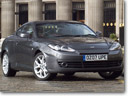
    Hyundai S3Hyundai Coupe SIII, so called because it is the third incarnation of the Coupe, has been completely re-designed outside together with significant changes and enhancements inside.

    The entirely new front end features elongated headlights and a more aggressive letterbox like grille and new fog lights. New side air vents now incorporate the indicator repeater lights, while the re-shaped rear features a more sculpted look with fully integrated twin tailpipes (2.0 and V6) and restyled rear light clusters.

    New Colours

    A range of new colours is designed to show off the Coupe’s lines to best effect. Fresh exterior paintwork colours include solid Shine Red (standard colour) and metallic choices of Sky Blue, Steel Grey, Continental Silver and Mica Stone Black (all £350 optional extra cost).

    These vibrant new exterior finishes are accompanied by a choice of sumptuous red or black interior trim, with leather a standard feature on all models. Even the entry-level
    1.6 litre model comes with half leather trim.

    Both the Steel Grey and Stone Black variants come with red interior finish, while all other colours feature black interior trim.

    Blue Instrumentation Illumination

    New to the Hyundai Coupe SIII is blue instrumentation illumination, first introduced on Hyundai’s latest generation and award-winning Santa Fe.

    New Centre Console Layout and Look

    The centre console layout has been redesigned for a cleaner look and easier usage. It also has a sleeker, sportier look and feel with a new metal-look finish, which has been tied in with metal-look finishes on the steering wheel and air vents helping bring the interior together with added sense of quality.

    Hyundai S3 Interior

    iPod Audio

    For music lovers, the new Hyundai Coupe SIII comes with an iPod compatible CD/Radio stereo. The iPod port, found in the centre armrest, is standard on all models in the range.

    High Specification as Standard

    Hyundai’s Coupe has always featured a high level of specification and the new Hyundai Coupe SIII model builds on this tradition.

    The entry-level 1.6 comes with; half leather trim, air-conditioning, a CD/Radio stereo with iPod port, driver, front passenger and side airbags, engine immobiliser, height adjustable seatbelts, remote central locking, leather steering wheel, electric front windows and door mirrors and new 16 inch alloy wheels.

    The 2.0 adds; full leather trim, climate control, metal trimmed pedals and footrest, 17 inch alloy wheels, twin exhausts, cruise control and heated front seats.

    Aside from the small point of a smooth and sporty V6 petrol engine, meanwhile, the range-topping V6 adds; Thatcham category 1 alarm, automatic headlights, traction control, 6-speed manual gearbox and an automatic dimming rear view mirror.

  • Je Design Seat Altea XL

    Je Design Seat Altea XLWhoever admires minivan look would do well deciding on a Seat Altea XL. JE DESIGN provides a clearly sportier version for its mid-size family car through its Spanish alterations. A car body kit completes the aesthetically pleasing form. In addition, JE DESIGN offers amongst other options a lowering, a sports exhaust and new rims.

    Facelift by JE DESIGN

    A complete facelift procedure is performed by JE DESIGN on the front of the SEAT Altea. A new grill with grid inset – in contrast to the original version minus brand labelling – is available in Matt Black or by request in matching vehicle finish and is just the first step offered. Next are headlight eye brows providing the Altea series-produced headlights with a much more serious look. The third step is a new front spoiler available to optimise aerodynamics. Naturally, JE DESIGN dedicates its attention as well to the other side of the Seat Altea. Side skirts set provide this and thanks to the new rear apron fitting, an optical lowering of this vehicle ensures a rear sporty look. The single parts for the Seat Altea XL are also available as a complete kit.

    Further optical measures pertain to the doors as JE DESIGN provides an 8-component highly polished door handle set in chrome. Matching to this the Leingarten, Germany, based tuner offers the B-pillar in “3D Chrome”.

    More power

    Even a mid-sized family van can have the liberty of a power boost. JE DESIGN increases the 2.0 TDI engine from series-produced 103 kW/166 PS to 130 kW/176 PS with 4000 U/min. Improved elasticity values follow this procedure maximizing the torque to 405 Nm compared to the series-produced 320 Nm. The power surge effects high-speed as well. With 210 km/h the Altea runs a quick 9km/h faster than the series-produced version. The sprint from 0-100 km/h is performed in just 8,9 seconds versus 9,9 seconds. As required for any serious tuner, JE DESIGN supplies the power enhancement with TÜV parts approval.

    Better vehicle handling, improved brakes

    More agility is promised through a lowering set lowering the „Altea XL“ by approximately 35 mm. Optionally offered by JE DESIGN is an adjustable coilover suspension with preset damper setting.

    For those who prefer sustained deceleration, JE DESIGN installs a 330x28mm 4-piston sports brake system on the front axle providing more safety.

    19-inch und more sound

    Absolute mandatory are new rims. For example, offered within the complete wheel sets is the design „Multispoke“in 8.0 x 19 ET 45 with tires 225/35 R19 This wheel also comes in Chrome-look in sizes 17 und 18-inch. Alternatively JE DESIGN offers the design „Masterline“ in 17-inch.

    Tuning of sound is modified by JE DESIGN for the Seat Altea in way of powerful sound equipped through a rear silencer. It is composed of four anti-corrosion stainless steel 90mm tailpipes two on the left and two on the right providing an even more sporty look.

  • Chevrolet Groove

    2007 Chevrolet Groove ConceptA “funkastalgia”-themed vehicle too tough-looking to be “cute,” the Groove concept is a retro-inspired vehicle with bodacious fender flares and an upright windshield. It looks much longer than it is, thanks to its short hood and long cabin. The front-drive Groove is powered by a small, efficient 1-liter diesel engine.

    Three Chevrolet minicar global concepts designed to appeal to young car buyers in urban markets prove that art needn’t take a back seat just because the canvas is small. Revealed today at the NY Motor Show, the highly creative Chevrolet Beat, Chevrolet Groove and Chevrolet Trax concepts drive the energy, diversity and excitement of urban life into cars that deliver good-looking fun, fuel economy and value.

    All three concepts were designed at GM’s Design Studio in Inchon , South Korea . One of GM’s 11 Global Design Studios, the designers in the Korean center are experts in small car product development.

    Built on GM’s global mini architecture, these concepts demonstrate the flexibility, creativity and innovative focus of design in GM’s Asia Pacific region. The Chevrolet Beat concept, a running prototype of a micro import tuner, was built in India ; while the Chevrolet Groove and Trax micro urban crossover concepts were built at the GM Tech Center in Warren , Mich.

    “The Chevrolet Beat, Groove and Trax concepts highlight the strength and diversity of GM’s Global Design capabilities, as well as the ability of our Global Product Development team to anticipate and quickly meet the evolving needs of our diverse markets around the world,” said Ed Welburn, vice president, GM Global Design.

    “The design team was so enthused about being given the assignment to develop the perfect small car for urban commuters that they created not one, but three interpretations of how this car may be developed for Chevrolet customers around the world.”

    Chevrolet is one of four GM global brands, meeting diverse customer needs in 120 countries with vehicles that range from subcompacts and family sedans to full-size pickups and SUVs and iconic sports cars such as the Corvette. The concepts revealed in New York , for example, offer three different fuel-efficient engines, including a diesel.

    “The Chevrolet Beat, Groove and Trax concepts have the potential to expand the reach of Chevrolet – already a beloved brand around the world – even further, connecting with young buyers on multiple continents who desire fun-yet-efficient transportation,” said Chevrolet General Manager Ed Peper. “These are the same brand attributes that made Chevrolet a household name in the U.S. “

  • VW Jetta Sportwagon

    Volkswagen Jetta SportwagonThe Jetta SportWagen, a sporty and dynamic wagon version of Volkswagen’s top-selling model, made its U.S. debut today at the New York Auto Show. The Jetta SportWagen mixes practicality with European style and balances both elegance and sportiness. Its exceptional ride and handling and segment-leading safety features, along with its design are perfect for those with an active lifestyle.

    Delivering performance and value, the Jetta SportWagen will be offered with three engine variations. The Jetta SportWagen will launch with an upgraded 2.5-liter, five cylinder engine that now produces 170 horsepower. The 2.5L Jetta SportWagen arrives in dealers this August, and will be followed with the 2.0T, four cylinder engine that produces 200 hp. In early 2008 the Jetta SportWagen will be available with a 2.0L clean diesel engine.

    Aside from offering the sporty feel and fun to drive performance of a Jetta, the SportWagen opens up a new world of possibilities in the way of usable cargo room— 32.8 cubic feet to be exact, or an even more impressive 66.9 cubic feet with the rear seat folded down. For those whose active lifestyle requires even more room, there is an optional fold-flat front passenger seat that provides additional cargo space. Fold-flat front passenger seat is available with “V-Tex” leatherette seating.

    Like the Jetta, the SportWagen continues the Volkswagen tradition of offering a long list of standard equipment. Some of the many standard features include: air conditioning, anti-theft vehicle alarm, cruise control, CD player, traction control, four-wheel anti-lock disc brakes, eight-way adjustable front seats with height, angle and lumbar support adjustments, and a height-and-telescoping steering wheel. Available as an option on the Jetta SportWagen is a panoramic sunroof. The panoramic sunroof offers its passengers an impressive 12.7 square feet of either daylight or starlight, providing them an open air connection with the outdoors.

    The Jetta SportWagen also enjoys a long list of standard safety features such as, driver and front passenger front airbags, driver and front passenger side thorax airbags, Side Curtain Protection®, and rear-impact optimized head restraints on driver and front passenger seat.

  • Lexus IS-F

    Much of the development of the new Lexus IS-F took place at Fuji Speedway and the Higashi-Fuji Technical Center in Japan. The Lexus IS-F is based on the proven rear-wheel-drive Lexus IS, which is equipped with a double-wishbone front and multi-link rear suspension. As well as the IS performs, Lexus engineers demanded much more of the all-new IS-F. The result is a performance tuned 5.0-liter V8 engine, topped with specially engineered heads fed by a two-stage intake system, that produces 400-plus horsepower and more than 350 ft.-lbs. of torque. The all-new IS-F is equipped with engine-oil and transmission-fluid coolers for high-speed performance and a cylinder head-scavenging oil pump for high g-force driving.

    The IS-F engine is mated to the world’s first eight-speed direct sport-shift transmission. A new torque-converter lock-up control was developed that allows for a direct, crisp gear change through the constant lock-up of the torque converter in second through eighth gears. In Drive mode, the IS-F transmission performs with great smoothness, and the torque converter allows for great launch ability for fast standing-start acceleration that will register a zero-to-60 time in less than 4.9 seconds.

    This unique transmission also features an advanced Manual mode. A pair of paddles located within a fingertip’s reach behind the steering wheel enables the driver to make ultra-fast up-shift gear changes within a tenth of a second. Downshifts are accompanied by automated and incredibly precise throttle blips to match engine RPM to vehicle speed.

    Lexus IS-F
    Lexus IS-F

    The impressive acceleration achieved by the IS-F requires it be equipped with heavy-duty Brembo brakes designed to the specifications of the Lexus engineering team. Huge, 14.2-inch cross-drilled front discs are gripped by rigid, powerful six-piston aluminum calipers, while 13.6-inch rear cross-drilled discs feature two-piston calipers. High-friction brake pads are equipped on all four wheels. The brakes are finished with the Lexus name displayed on the calipers, a first for a Lexus production vehicle.

    The IS-F features custom-designed 19-inch forged alloy wheels as standard. The wheels were built to Lexus specifications by BBS and are surrounded by high-performance sport tires.

    The attention to performance also extends to a modified suspension that lowers the entire car by more than a half-inch when compared to the base IS, and one full inch when compared to IS models equipped with 18-inch wheels. This specially modified suspension allows for an exciting and energetic drive, whether on a race track or the streets.

    The IS-F features an all-new three-mode version of Lexus’ Vehicle Dynamics Integrated Management (VDIM) system. In addition to the Normal mode, the new VDIM features a Sport mode that allows the driver to push the car even further before its braking-, throttle- and steering-control systems kick in. The third VDIM system mode is Off, which allows the driver to push the IS-F to its ultimate level of handling performance.

    The attention to performance is complemented by modified styling cues that differentiate the IS-F from the standard IS. Lexus engineers provided the IS-F with a dual-exhaust system and quad-tail pipes, wider front fenders, and a larger grille and rear spoiler. Both the hood and lower intake were enlarged to accommodate and cool the V8 engine.

    Like the exterior, the interior of the IS-F receives unique styling with aluminized composite trim and special surface treatments. The instrument panel includes an oil-temperature gauge and shift indicator-lights, while the “F” logo is showcased on the steering wheel and rear-center console.

    In addition to the usual Lexus standards of comfort and convenience, the interior of the IS-F features specially shaped and trimmed seats, which hold the driver comfortably and securely in place. The special sport seats are available in black or a unique high-contrast white and black trim.

    “The intent of creating the IS-F was not to be a competitor to other performance-sport sedans,” said Carter. “Rather, the goal was to create a true performance sedan in a uniquely Lexus way-one that is totally authentic with a unique interpretation of raw driving thrill at all speeds and provides a whole new definition of ‘usable power.’”