Tag: Engine

  • Miura: the world’s first production car equipped with a transverse central – rear mounted V12 engine

    1969 Lamborghini Miura P400 S

    In 1966, the Lamborghini V12 engine firmly established itself as an all-time legend when it was mounted transversally in a rear-mid position on the P400 Miura: the vehicle for which the term “supercar” was coined.

    Everything revolves around the Miura in the latest chapter of the V12 engine’s story, which has powered iconic cars for almost 60 years and come to epitomize the cornerstones of Lamborghini’s DNA: technological innovation, vision and engineering expertise. 2022 is the year of the last pure Lamborghini V12 combustion engine. Mounted in the Aventador Ultimae[1], it brings the curtain down on a glorious era ahead of the first hybrid production model in 2023, which will mark the start of the hybridization process at Lamborghini.

    Ferruccio Lamborghini: “I like this one: it’ll earn us legendary status”

    Less than two years after Lamborghini was founded in 1963, the Sant’Agata Bolognese company was still small but had managed to establish itself solidly at the top end of the tricky grand tourer market, and the 350 GT was being manufactured on a steady basis. Ferruccio Lamborghini was satisfied because he had triumphed in his own personal technical challenge despite rather widespread initial skepticism. Nonetheless, he was dreaming of making an even more stunning car that would take everyone’s breath away. And that is just what happened.

    Taking care of the technical side of things were the young engineers Giampaolo Dallara and Paolo Stanzani, who were responsible for development and production at Automobili Lamborghini at the time. A big part in the Miura’s success was – and continues to be – down to its exceptional engine: a 4 liter 60° V12 with 4 Weber 40 IDL 3L carburetors that generated maximum power of 350 CV, 370 CV and 385 CV in the P400, P400S and P400SV models respectively. That was enough to make it the fastest production road car in the world at the time. The outstanding design by Carrozzeria Bertone did the rest and the Miura enjoyed unprecedented sales for a Lamborghini vehicle. The original forecast was for 50 cars to be sold in three years, but in the end the total number reached 763 in seven years, between 1966 and 1973.

    Engineer Paolo Stanzani: a linchpin of the Lamborghini V12 engine

    The engineer Paolo Stanzani (1936-2017) was one of the first people to be hired by Ferruccio Lamborghini. Appointed straight after he graduated from the University of Modena, he went on to become one of the most important players in the story of the V12 engine and the Miura. Stanzani was the one who took the V12 engine designed by the engineer Giotto Bizzarrini and made it suitable for serial production and use on the road. In addition, Stanzani was part of the small group of young talents who developed and created the Miura and its cutting-edge technical features. He held various roles at Lamborghini, ranging from Technical Director to Production Manager and General Manager. As well as the Miura, he made crucial contributions to the production of the Countach, Espada and Urraco, the latter of which was his personal favorite.

    The Miura was a real star whose iconic appeal lay not only in its looks but also in its “voice”

    As soon as it was presented, the Miura became the most sought-after car among film directors. It has appeared in no fewer than 43 movies, often in a starring role. One of the most famous is unquestionably “The Italian Job” in 1969. Lasting more than three minutes, the entire opening sequence is dedicated to Rossano Brazzi driving a P400 Miura as Matt Monro sings “On Days Like These”. The accelerating V12 engine can be heard in the background of the sequence, which has gained cult status in the world of car movies.

    The Miura has starred on the covers of dozens of car magazines and other publications. Its first appearance in an international article came in November 1966. The piece in question was in the weekly magazine Autocar and it was by Paul Frère, the Belgian racing driver turned journalist. There is no doubt that the most renowned article was the one written by the English journalist Leonard “LJK” Setright for the British monthly magazine CAR. Divided into two parts, it described the delights of a journey from Sant’Agata Bolognese to London in a P400 Miura.

    Putting together a comprehensive list of personalities who have owned a Miura over the years is a tough task. For instance, Little Tony and Rod Stewart both owned more than one; Eddie Van Halen kept his for more than 30 years; and Jay Kay of Jamiroquai still has his today. Other examples of notable Miura owners are the actor Peter Sellers; the model Twiggy; the singers Johnny Hallyday (who made headlines when he crashed his P400 into a tree) and Elton John; the opera singer Grace Bumbry; the jazz musician Miles Davis; the racing driver Jean-Pierre Beltoise; and finally the Shah of Iran, who owned a number of Miuras including one of only four SVJs that were ever made.

    [1] Aventador LP780 Ultimae Coupé and Ultimae Roadster Fuel consumption combined: 18.0 l/100km ; CO2-emissions combined: 442 g/km (WLTP)

  • INFINITI takes honorable prize home. Details here!

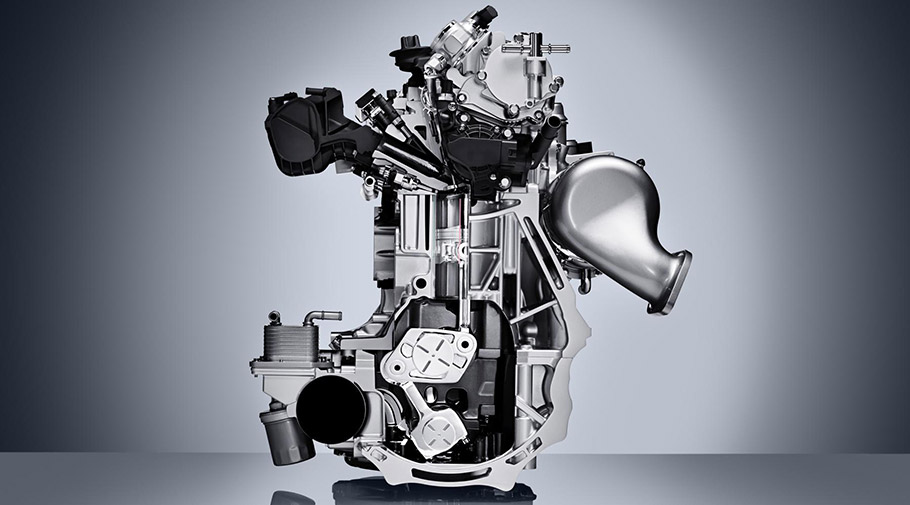
    INFINITI’s VC-Turbo variable compression power unit gets Grand Austrian Automobile Award in the category “Environment” given by Automobile, Motor and Bicycle Association of Austria (ARBÖ). Honored for setting new standards and new benchmark in the field of efficiency and technology, INFINITI was also recognized as the star of the show.

    The experts of the automobile club have also honored the premium automobile brand for introducing the world the first production-ready engine with variable compression. This time the organization decided to undertake a different approach towards awards and showcased INFINITI’s latest project as one of the boldest at the moment.

    SEE ALSO: LARTE Design presents a new hot hatch! Check this Infiniti QX30 out!

    As it comes to the system itself, INFINITI’s specialists have worked about 20 years in order to deliver us the VC-Turbo unit. There were more than one hundred prototypes, but thanks to the recently discovered multi-link system the engine really shined. It is able to adapt the travel of the piston’s stroke and delivers a compression ratio between 8:1 and 14:1.

    These numbers result on something else: the power output of this V6 and its efficiency are much closer to a diesel engine, rather to a petrol one. In fact, the 2.0-liter unit delivers a total of 268hp (200kW) and 390Nm of torque. Massive, isn’t it? But the best part is that it consumption and efficiency rates are super close to the V6 gasoline power units. How cool is that?

    Source: INFINITI

  • The Advantages of Boxer Engine Design

    The-Advantages-of-Boxer-Engine-Design-SubaruIt is said that “boxer engines” get their name from the way that the pistons move. The pistons move horizontally, in an opposing, side-to-side manner sort of like two boxers punching at each other. Over the years, this unique design has been used from everything from Volkswagons, Porsches to Subarus and BMW motorcycles.  Boxer engines are an elegant engine design and offer natural advantages for automotive design engineers.  Let’s take a closer look at these unique engines.

    Engine balance

    It’s all a matter of physics.  When you get pistons, rods and crankshafts spinning away in an internal combustion engine, you get a lot of vibration.  With standard V-shaped engines, these vibrations can be difficult to remove because there is no natural way to cancel them out.  What design engineers do with V-engines is build opposing “counterbalances” on the crankshaft and other parts. It’s a less than optimum design technique but it does work.

    With boxer-type engines, however, it’s easier.  The opposing pistons balance the internal engine motions out due to the opposing movements of the pistons and crankshaft.  When one piston is heading toward Top Dead Center (TDC), an opposing piston is rushing to the Bottom Dead Center (BDC) of its stroke and the result is that the two forces cancel out each other out and the engine essentially runs vibration free.

    Just for the record, it should be noted that there are other engine designs that naturally cancel out internal vibrations. The straight six, the straight eight, the V12 and the V16 engine types all can be designed for natural counterbalance. None of them, however, lie down flat like a boxer engine does.

    It started long ago

    The commercialization of the boxer design started in 1896 when Karl Benz developed the first internal combustion engine with horizontally opposed pistons. He called it the Kontra engine because the action of the opposing sides of pistons cancelled out engine vibrations. (Kontra in German means “against”). Various cars have used boxer-type engines over the years. Perhaps one of the earliest and most prolific uses was on the VW air cooled flat four, which became the standard engine of the Volkswagen Beetle and remained in production for almost 70 years before being discontinued.  Porsche has long utilized boxer-style engines in their 911 and succeeding model variants.

    Today the largest manufacturer using a boxer engine design is Subaru.  Subaru has been using boxers for over 45 years now and uses them in all their models today.  You could say that the boxer engine is part of the Subaru DNA.

    Ultra-low center of gravity

    A horizontally-designed engine can sit low in the engine bay because it simply isn’t as tall as other upright engines.  This directly contributes to a vehicle’s low center of gravity since the center of gravity on an opposed engine is much lower to the ground compared to an in-line or V design. This allows for far better lateral acceleration when driving. In addition, the benefits to handling are enormous. Better turning/cornering capability, decreased roll, and better grip of the roadway all come natural to the flat engine.

    Engine accident dismount

    In the unfortunate event of a front end collision, a boxer engine can easily be designed to “dive” under the passenger compartment.  Consider how safe that scenario is compared to a bulkier, V-type engine design that cannot be easily designed to dive under a vehicle.  In a bad collision with a large V-6 or V-8, the engine will be pushed into the engine compartment causing considerable injury.

  • Vauxhall’s New Large Diesel Engine

    2015-vauxhall-engine-t2015-vauxhall-engine-651

    A new Vauxhall master piece power train will be unveiled in the “Insignia” and “Zafria Tourer” series at the 2014 Paris Motor Show, which will be live from 4-th to the 19th of October.

    A brilliant 2.0 litre diesel engine that is great to drive in long distance travel. Very smooth and quiet, you soon start forget it is even a diesel one. Impressive torque of 400Nm (295 lb-ft) is available from 1,750 to 2,500rpm, and maximum power of 170PS is accessed at just 3,750rpm with 14 per cent more torque while reducing fuel consumption and CO2 emissions.The new engine’s power is 85PS/ litre. Available next year, the new 2.0 CDTi is the first in a new large range of diesel engines developed by a global team of engineers. Vauxhall’s never ending focus on “sound engineering” results engine noise reduction by 5 decibels as well in minimizing noise, vibration and harshness.

    Vauxhall’s newly developed “BlueInjection Selective Catalytic Reduction” system allows the engine to run as smooth as a petrol one. This 2.0-litre CDTi unit is the latest step in Vauxhall’s power train engineering , following the establishment of the all-new 1.6-litre petrol and diesel engines and a 1.0-litre three cylinder petrol power train.

    The all-new 2.0-litre CDTi diesel engine will debut at next month’s 2014 Paris Motor Show.

    Source: Vauxhall

  • 2014 Engine of the Year – Results [images]

    Ford managed to scoop the International Engine of the Year Award for third consecutive time. The “star” is again the three-cylinder 1.0 liter EcoBoost engine which was recently updated. It now produces 140HP (103 kW) and is able to accelerate the new Fiesta from 0 to 100 km/h in 9.0 seconds. The engine is also super-economical – 4.5 liters / 100 km (52.3 mpg US or 62.8 mpg UK) on combined cycle with CO2 emissions of 104 g/km.

    The engine managed to gather 351 points from the jury putting it on 1st place. The 2nd place is for Ferrari’s 4.5 liter V8 with 281 points and 3rd for Volkswagen’s 1.4 liter TSI – 254 points. Of course, the 1.0 liter EcoBoost won the sub 1.0 liter category with 505 points.

    Here are all the winners:

    • Sub 1-liter: Ford 999cc three-cylinder turbo
    • 1.0-liter to 1.4-liter: Volkswagen 1.4-liter TSI Twincharger
    • 1.4-liter to 1.8-liter: BMW / PSA Peugeot Citroen 1.6-liter turbo petrol
    • 1.8-liter to 2.0-liter: Mercedes-AMG 2-liter turbo
    • 2.0-liter to 2.5-liter: Audi 2.5-liter five-cylinder turbo
    • 2.5-liter to 3.0-liter: BMW 3.0-liter twin-power turbo six-cylinder gasoline
    • 3.0-liter to 4.0-liter: McLaren 3.8-liter V8
    • Above 4.0-liter: Ferrari 4.5-liter V8
    • New Engine: Mercedes-AMG 2.0-liter turbo
    • Green Engine: Tesla Full-electric powertrain
    • Performance Engine: Ferrari 4.5-liter V8
    • International Engine of the Year: Ford 999cc three-cylinder turbo

      Source: Engine of the Year Awards

    • Seat Leon Cupra by JE DESIGN

      JE Design introduce the new renovated Seat Leon Cupra.

      The entire new body kit consists – from spoiler, side skirts, rear skirt, centre diffuser and rear wing. The price of the body kit is 1554 Euro, but it worth every single cent.
      The car is also equipped with LED-daytime running lights (additional 299 Euro), which complete the aggressive sporty look of the vehicle. (more…)

    • A New Model Year – A New Range Of Additions And Enhancements From Volvo

      A new model, new engines and new engine technologies are the key additions to the Volvo range for the 2010 model year, all of which offer enhanced drivability, lower CO2 emissions and improved fuel consumption.

      Volvo C30, S40 and V50
      The Volvo C30 SportsCoupe, S40 saloon and V50 Sportswagon DRIVe models now all feature the intelligent new Start/Stop function which brings CO2 emissions down to 104 g/km and improves fuel consumption up to 72.4 mpg. The sports-inspired R-DESIGN specification and body styling has also been introduced to the DRIVe range offering CO2 emissions of up to 119 g/km and 62.8 mpg in all three models1.

      Prices for the C30 range start at £14,995 OTR for the entry level 1.6 S. The 1.6D DRIVe with Start/Stop variants start at £15,745. The S40 and V50 ranges start at £14,745 and £16,495 OTR for the 1.6 S models with the DRIVe with Start/Stop range commencing at £17,495 for the S40 and £18,845 for the V50.

      Volvo XC60
      A new front-wheel-drive variant of the Volvo XC60 is now available with the upgraded 2.4D 175 PS engine. This combination with a manual transmission reduces CO2 emissions to 159 g/km and is badged DRIVe. In addition to the lower CO2 emissions, fuel economy is also dramatically improved; from 37.7 mpg (combined) to 47.1 mpg, a 25% improvement. The new D5 engine is also now available in the XC60 offering up to an 11% increase in performance and an 8% reduction in CO2 emissions to 183 g/km.

      Prices for the XC60 range start at £24,995 for the 2.4D DRIVe S model, with the new D5 engine joining the range at £26,745.

      Volvo XC70

      The Volvo XC70 benefits from the two new diesel engines – 2.4D and D5 – which join the range in SE specification and cost £27,995 and £31,495 OTR respectively. The 2.4D engine will only be available with front-wheel-drive and models with manual transmission feature CO2 emissions of just 159 g/km and will be badged DRIVe. It will also benefit from improved fuel consumption of up to 47.1 mpg.

      Other changes to the XC70 range include a new front grille displaying the large iron mark and new steering wheel chrome highlights and chrome trim around the ignition area. Cars with the D5 and T6 AWD engines will also have visible twin rear exhaust pipes as standard.

      The new Volvo S80

      As announced on 26 February 2009, the Volvo S80 has benefitted from a full re-fresh this model year, both externally and internally.2

      The driving dynamics and ride of the new Volvo S80 have also been updated and improved by the introduction of two new chassis – the Lowered Dynamic Chassis and the Comfort Chassis. The Lowered Dynamic Chassis has been developed to offer drivers enhanced sporting driving characteristics and more responsive handling, while the Comfort Chassis offers a compliant and un-interrupted smooth ride. The introduction of these new chassis’ gives customers the opportunity to tailor their S80 to suit their driving style – for inspired, enthusiastic driving or relaxed comfort.

      The Lowered Dynamic Chassis will be offered as standard on the SE and SE Lux models. The Comfort Chassis will be the only chassis available on the Executive trim level.

      The new Volvo S80 will also feature three new diesel engines, the 2.4D, D5 and the low CO2-emitting DRIVe. As well as providing the Volvo S80 with a different driving experience, the car will also benefit from lower fuel consumption and fewer emissions. An upgraded 2.5T is available, offering a 31 PS performance boost to provide 231 PS and 340 Nm of torque. Despite this 13% increase in power, CO2 emissions have been reduced to 206 g/km and fuel consumption improved to 32.8 mpg with the manual transmission.

      A new R-DESIGN Interior Pack has been introduced which includes Dynamic Sports leather faced front seats, R-DESIGN leather sports steering wheel and gearknob, instrument dials, aluminium pedals and sports floor mats. The pack is available on SE Premium and SE Lux premium models and is priced at £500.

      Prices for the new Volvo S80 range start at £21,745 for the new low-CO2 emitting DRIVe SE model. The new 2.4D starts at £25,845 in SE specification, while the D5 joins the range at £27,745.

      Volvo V70
      The Volvo V70 gains the two new diesel engines with prices for the 2.4D starting at £26,845 OTR and £28,745 for the D5 both in SE trim. Changes to the V70 range also include a new front grille displaying the large iron mark and new steering wheel chrome highlights in SE and SE Lux and chrome trim around the ignition area. Cars with the D5 and T6 AWD engines now have visible twin rear exhaust pipes as standard.

      The 2.5T engine has been updated to offer a performance boost to 231 PS and 340 Nm of torque. Despite this 13% increase in power the CO2 emissions have been reduced to 209 g/km and fuel consumption improved to 32.1 mpg with the manual transmission.

      Prices for the Volvo V70 range start at £22,745 for the new low-CO2 emitting DRIVe model.

      Volvo C70

      The 2.0D engine in the C70 has been updated to offer CO2 emissions of 158 g/km to enable the car to fall below the 160 g/km threshold for the Capital Write Down Allowance. The Volvo C70 range starts at £24,995 OTR for the 2.0D S model.

      Volvo XC90

      Volvo’s seven-seat XC90 receives a new, lighter chassis and new dampers designed to improve drivability. In spite of this new chassis there are no price rises for the XC90. The range starting price remains static at £29,995 OTR for the D5 Active model, while prices for the flagship Executive variant have been reduced for the 2010 Model Year. The Executive now starts at £42,985 OTR for the 3.2-litre petrol model, a decrease of over £4,000 with minimal specification changes.

      New D5 and 2.4D engines

      The Volvo S80, V70, XC70 and XC60 all benefit from the new and improved D5 and 2.4D diesel engines which were announced earlier this year3. The new D5 engine with its twin sequential turbo charging offers a 20 PS performance boost to provide 205 PS and 420 NM of torque. Despite this power increase, CO2 emissions have been cut to 169 g/km in the XC70 and V70, 183 g/km in the XC60, while the S80 offers 164 g/km.

      The 2.4D has also been upgraded and the new engine offers a 12 percent improvement in performance to 175 PS and 420 Nm of torque whilst bringing down CO2 levels to 155 g/km in the S80 and 159 g/km in the V70. In the XC60 and XC70 the 2.4D coincides with the introduction of front-wheel-drive and together, they reduce emissions to just 159 g/km. Crucially, this figure enables these two models to fall below the 160 g/km threshold for the Capital Write Down Allowance.

      New Premium Pack and updated Satellite Navigation system
      Volvo is offering the ultimate upgrade with an additional Premium Pack specification on all trim levels and engines in XC60, V70, XC70, S80, XC90 models for an extra £2,000. The Premium Pack includes the addition of Leather-faced Upholstery and Satellite Navigation System (RTI) in the XC60, V70 and XC70. On the XC90 the Premium model adds Satellite Navigation System (RTI), Dual Band Integrated GSM Telephone and Volvo On Call. Meanwhile the C70 also gets a Premium Pack for an extra £1,800 and features Satellite Navigation System (RTI), Bluetooth Handsfree System and Keyless Drive. The Premium Packs are designed to complement the existing high levels of specification on whichever engine or trim level chosen.

      An updated Satellite Navigation system (RTI) has also been introduced in the XC60, V70, XC70, S80 and XC90 to bring them in line with the smaller cars in the Volvo range. A new driver interface, new colours and an improved premium feel to the menu and symbols are the key features and the unit costs £1,950 (including VAT).

      All new MY’10 models are available to order now with first customer cars expected in July.

    • Ecoboost Technology: Direct Injection Is Cool

      Direct injection is one of the cool technologies that makes Ford’s new EcoBoost engine possible.

      The all-new engine delivers better fuel economy and reduced emissions as well as improved performance and engine refinement gives it a cool all its own. With an estimated, class-leading 355 horsepower, the 2010 Lincoln MKS with EcoBoost is expected to deliver best-in-class highway fuel economy of 25 mpg. (more…)

    • Red-Hot Torture: New Ecoboost Engine’S Turbochargers Glow In Durability Testing

      It’s difficult to get the twin turbochargers in the new Ford EcoBoost V-6 engine too hot under the collar.  Not that Ford engineers didn’t try.

      Working to ensure the long-life reliability of the dual-turbo, direct-injected engine, Ford put the new engine through a barrage of torture testing.

      One of the key areas of testing focused on the two turbos – key weapons in the EcoBoost strategy to deliver the performance of a V-8 with the fuel economy of a V-6.  Would their reliability match the rest of the robust engine architecture, based on Ford’s proven 3.5-liter V-6 engine? (more…)

    • Nissan NV200 Offers Best In Class Cargo Efficiency

      Nissan Motor Co. Ltd, announced today that its all-new NV200 compact van will offer best in class cargo efficiency when it goes on sale in 2009. Nissan’s engineers have made it possible to combine large cargo space (NV200 will offer the possibility to load up to 4.1 cubic metres) with the exterior dimensions of a compact segment van. (more…)

    • Ford Hits Vital Co2 Targets

      Ford’s latest C-MAX MPV delivers the lowest CO2 emissions in its segment.  Engineering developments to Ford C-MAX 1.6 TDCi models have resulted in emissions of just 119g/km of CO2.

      As a result vehicle excise duty (VED) for these models reduces immediately from £120 to £35.  There will be a further reduction to £30 from April 2009, when new VED bands come into force.  The official European Drive Cycle combined fuel consumption figure for these models is improved to 62.8mpg*. (more…)

    • Renault launches new alliance v6 dCi engine

      The Renault-Nissan Alliance unveiled its brand-new V6 dCi diesel engine in the Laguna Coupé at the Paris Motor Show, in October. This engine is the first diesel V6 engine developed and produced by the Renault-Nissan Alliance. It will equip top of the range vehicles to meet the growing worldwide demand for engines that are powerful and yet fuel and CO2 efficient.   The Alliance cooperation has made it possible for both Renault and Nissan to offer a state-of-the art premium powertrain to their customers, all around the world. (more…)