Tronatic Everia Concept is a product of the elaborations of the French graphic design studio Tronatic Production. They have created it with the aim to make a true European muscle car.
As a matter of fact the Everia is a form of evolution of a previous project by the same design studio – called Atmos. They have applied the same design philosophy here. Nevertheless, the new concept is more aggressive in terms of visual stance.
In addition, what is also special about this French concept is that is an electric muscle car. And if you have wondered whether this is a possible combination, well the designers have proved it is.
Furthermore the exterior of the car is so distinctive that it speaks for perfection and immediately grabs the attention. This is due to the unique combination of materials and graphic elements. Additionally, it conveys class and style thanks to its sporty front end.
Unfortunately no technical specifications were announced jet, but we are definitely eagerly looking forward to seeing this car in production … even in not that large numbers.
Rimac Automobili has finally finished their project – an electrically driven BMW E30. The project name is “Rimac e-M3” and it has broken several world records. Currently this is the fastest electric car in class 3 (above 1000 kg).
“I owned an old BMW E30 (MY 1984) which I used for drift and circuit races. At one of these races, the gas engine blew up. Then I decided to try building an EV. After one year or so the car was able to drive but I was not satisfied with the result. It was heavy, not very powerful and the range was very limited. I started to gather a team of experts to develop our own components since I believed that the electric propulsion can give much more compared to what was available on the market. At that time, I already had a very clear vision of my ultimate goal. Today, hard work is making my dream come true.”, said the founder of the company – Mate Rimac.
“We had to wait over a year for FIA‘s official approval to publish the records. But while we were waiting the spirit of inventiveness took us even further, so we made something even faster. Our pre-production car, the Concept_One, can beat the e-M3; by far.”, added Mr. Rimac.
The power of the green E30 is 600HP and 900Nm of torque. 0-100 km/h in 3.3 seconds and a top speed of 280 km/h.
Eight automakers from Europe and United States are going to display one-of-a-kind fast-charging technology. It is unique because it will enable recharging of most electrified vehicles for just 15 to 20 minutes.
The brands which are taking part in this project are: Audi, BMW, Chrysler, Daimler, Ford, General Motors, Porsche and Volkswagen. They have agreed to work in collaboration in order to provide a harmonized single-port fast charging approach.
The name of this project is DC-fast charging with a Combined Charging System. It will be utilized for vehicles in the U.S. and Europe.
More importantly, the first live charging demonstrations will take place during the Electric Vehicle Symposium 26 (EVS26) (6th-9th of May).
What the combined charging system does is to integrate one-phase AC-charging, fast three-phase AC-charging, DC-charging at home and ultra-fast DC-charging at public stations into one vehicle inlet. The purpose of this is that any driver will be able to recharge its vehicle almost anywhere, regardless of power source.
Another benefit of this project concerns a more affordable adoption of a standardized infrastructure.
Combined Charging System Connector
Furthermore, the European association of vehicle manufacturers has chosen the Combined Charging System as its AC/DC-charging interface to become integral part in the all new vehicles in Europe, with a starting date in 2017.
It is also important to mention that this charging system was designed having in mind existing charging strategies, the ergonomics of the connector and preferences of U.S. and European customers.
Moreover, an additional advantage of the Combined Charging System will create a uniform standard with identical electrical systems, charge controllers, package dimensions and safety mechanisms.
Next, the system will be also responsible for maximizing the capability for integration with future smart grid developments through common broadband communication methods. This will happen of course, regardless the global location of the charging system.
Last, but not least, this approach will also minimize the development and infrastructure complexity, and enhance the charging reliability, reduce the total cost-of-ownership for end customers and offer low maintenance costs.
Commercially available combined charging stations are projected to be on disposal later this year and vehicles using the technology will be available starting 2013.
Project Visio.M Concept is an interesting project which will offer a solution for electric mass mobility in urban environments. The electric cars which are powered by electricity from renewable energy are one of the most attractive options for mobility in the future.
This not only concern long distance travel, but in fact the focus of this project is put mainly on mobility within the urban area.
In the history of the development of such technologies, the different approaches have lead only to vehicles which are either too expensive or too heavy. In addition to that they might not meet the mass-market safety requirements.
And here is where Project Visio.M steps in. It is a joint research project between scientists at the Technische Universitaet Muenchen (TUM) and engineers from the automotive industry (mainly from BMW).
Their aim is to develop electric concepts cars which are efficient, safe, and inexpensive. In addition to this the electric vehicles are very silent and more importantly have no emissions. This makes them one of the most important options for future individual mobility in the city areas.
Projcet Visio.M Concept
However, there are a lot of technical developments to be undertaken before this happens. For instance, small electric vehicles offer minimum level of safety. In addition, the models which are derived from gasoline-powered cars are usually too heavy and require large and expensive batteries.
Rroject Visio.M envisions to be a small electric vehicle, affordable and safe, and achieving the goal to share significant part of the mass market.
The information about this vision that we have is that this mobility concept will be powered by 15 kilowatts and will have a maximum curb weight of 400 kg (without battery). This will meet the requirements of the European regulatory category L7e.
The project is going to be built on the MUTE concept, developed by the TU Muenchen as their test carrier to explore innovations and new technologies for vehicle safety, propulsion, energy storage, and operational concepts for implementation under the framework requirements of large-scale production.
Most of the attention here had gone to the safety. Although this concept has a minimal weight, it is expected to have a level of protection equal to that offered by conventional cars with combustion engines.
The exceptional BMW i8 Concept Spyder is an open-top two-seater, which can grab literally any heart! It has the entire necessary characteristic and in addition adds to them with sporting and emotional appearance.
This concept is purposefully built in order to meet the changing needs of customers and transform the understanding of personal mobility. It is equipped with intelligent technologies and definitely has an innovative design, however what is more is that now embraces a philosophy which adopts significant degree by sustainability throughout the value chain.
This is the third BMW i model, which is here to “inform” us what will be the future of cutting-edge and emotionally appealing mobility concepts. It is not only a mixture between sporting design with an open-top two-seater, but is also a combination of lightness, dynamic capability and efficiency with a very special aesthetic value.
What is worth mentioning as well is that it is a blend of intelligent lightweight design and state-of-the-art hybrid technology. This results in exciting sports car performance and driving pleasure combined with exceptional fuel-consumption unmatchable in this segment before.
BMW i8 Concept Spyder has the upward-swivelling, windowless doors and a range of purpose-oriented on-board equipment which features electric kickboards stowed under a transparent tailgate. The concept vehicle is built on the innovative LifeDrive architecture. The latter includes lightweight modular construction and the utilization of high-quality high-tech materials.
BMW i8 Concept Spyder
Furthermore, the BMW i8 Concept Spyder is a plug-in hybrid powered by an eDrive drivetrain. This drivetrain combines the excellent performance of the electric motor and petrol combustion engine, while the lithium-ion battery supplies the motor with power that can be recharged in an extremely short space of time from any domestic power socket. In addition, the car has significantly reduced weight, low centre of gravity and is precisely balance. Everything is combined with a system output of up to 260 kW (354 hp).
Like its Coupe sibling (2+2-seater BMW i8 Concept), the BMW i8 Concept Spyder blends intelligent lightweight design with the leading-edge drivetrain technology eDrive, which delivers extremely low fuel consumption and emissions.
The concept got compact dimensions and specific exterior paintwork. Additionally, it has the upward-swivelling, windowless doors and a transparent glass panel at the rear. How about the interior: a revised material is used and a colour concept provides an extra dose of sportiness.
Moreover BMW i8 Concept Spyder is built around the innovative modular LifeDrive architecture, which comprises of independent functional units. For instance, the carbon-fibre-reinforced plastic (CFRP) Life module gives the car an extremely lightweight passenger cell, while the Drive modules bring together all the car’s operational driving functions, such as the powertrain, chassis and safety structure. And thanks to the intelligent lightweight design and the use of innovative materials, the vehicle delivers great fuel-efficiency. In particular in the LifeDrive architecture the front and rear axle modules are connected by an “energy tunnel”, which houses the hybrid battery, this results in low centre of gravity and ideal balance.
The BMW i8 Concept Spyder’s includes emotion-led design as well which vividly spotlights the car’s qualities, with lightness, dynamic capability and efficiency highlighted to particularly prominent effect. The key elements which contribute for this sporty dynamic stance are the large body panels, a hunkered-down stance and numerous aerodynamic elements such as contact surfaces, spoiler lips, AirCurtains and aeroflaps.
What is more here is that the front end offers a revealing window into the open-top two-seater’s dynamic talent. In addition a spoiler lip on the windscreen frame guides the airflow over the heads of the passengers. Of course there is also featured a two-section folding roof.
Observed from side, the Spyder has short front and rear overhangs and a low-slung silhouette. Additionally, the alluring lines and forms generate a strong forward-surging stance even before the car powers off the line.
Compared to the front end, the rear also is positioned low to the road. Its headline feature is a transparent cover revealing the two folded electric kickboards accommodated below. A rear diffuser, three-dimensional air outlets and the U-shaped rear lights makes the BMW i8 Concept Spyder with extremely wide appearance and further emphasize its sportiness.
Going further, the interior of the BMW i8 Concept Spyder is defined by three levels. Each one has various functions. The interlocking of surfaces and lines for instance, is also one of the stand-out features of the interior design. On the other hand, the outer layer also frames the supporting structure, while the inner “comfort” layer includes seat surfaces and stowage compartments. The third layer is represented by the cockpit, and brings together the instrument panel, steering column and steering wheel with the instrument cluster, central information display and control elements. Of course, the car has a low drivers’ seating position. Moreover, an 8.8-inch (22.4 cm) screen displays the driving information in three-dimensional, high-resolution quality.
BMW i8 Concept Spyder Interior
Furthermore, the Spyder’s interior is a mixture of plastic, carbon and leather, with theoff-white of the outer layer and the bold orange tone of the naturally tanned leather generating a sporting atmosphere.
The BMW i8 Concept Spyder with eDrive means that it is a plug-in hybrid which combines two different power sources: electric motor and combustion engine. First, the electric motor produces 96 kW (131 hp) and it is on the front axle. It works in combination with a turbocharged three-cylinder petrol engine delivering 164 kW (223 hp) through the rear wheels. When combined, both units generate an aggregate system output of 260 kW (354 hp) and peak torque of 550 Nm.
And if you wonder about the acceleration data, well – here’s some: the Spyder accelerates from 0 to 100 km/h (62 mph) in just five seconds. It has a electronically limited top speed of 250 km/h (155 mph). It’s performance in other words is exceptional. However, despite these numbers, the two-seater burns just three litres of petrol per 100 kilometres!
Furthermore, the electric motor gets its energy from a lithium-ion battery which can be fully charged from a domestic power socket in less than two hours. The battery is located in the energy tunnel between the front and rear axle modules.
With its battery fully charged, the BMW i8 Concept Spyder can go up to 30 kilometres (19 miles) only on electric power. And if it is required, a high-voltage alternator hooked up to the combustion engine generates additional power, which is then stored in the hybrid battery.
Additionally, the concept vehicle has as wee the ability to send power through the front, rear or all four wheels at the same time. It has the intelligent control electronics, which ensure that the optimum drive configuration is available for the situation at hand. Next, the electronic systems ensure maximum energy recuperation under braking or when coasting.
BMW i is equipped with new generation of driver assistance systems such as the camera-based proactive Collision Warning system, Parking Assistant and Traffic Jam Assistant. Remote functions accessed via a smartphone are also included, such as the Last Mile Navigation function and the Intermodal Route Planning function.
Two large displays can be found inside the BMW i8 Concept Spyder. They make up the interface between the car, its passengers and the outside world. They are positioned next to the instrument cluster behind the steering wheel. What is innovative here is that all the screens display their information in 3D.
On the other hand the instrument cluster displays important driving and it is positioned alongside the digital speedometer. For example, the efficiency display allows drivers to view how much energy they are currently using, and shows extra navigation details and information on the car’s range as well. If the driver switches to energy-saving ECO PRO mode, the display turns blue in colour to signal the shift in functional emphasis, and the ellipses now also vary in form. By the same token, moving into SPORT mode treats the driver to an emotional orange hue. As well as the changes in colour, the displays also provide information tailored to the driving mode selected and to assisting the driver as effectively as possible.
BMW i8 Concept Spyder Specifications
Length/Height/Width
L 4480 mm, H 1208 mm, W 1922 mm
Wheelbase
2650 mm
No. of seats
2
Kerb weightTop speed
Acceleration
1630 kg250 km/h (155 mph) electr. governed
0-100 km/h (62 mph) 5 s 80-120 km/h (50-75 mph) 4.0 s
System output TwinPower Turbo engineFuel consumption (EU cycle)
A successful day for Mia Electric today, because its all three of its vehicles got the qualification for the ‘Plug-In Car’ and ‘Plug-In Van’ Grants. The Office for Low Emissions Vehicles (OLEV) determined that mia electric’s vehicles meet all the safety, reliability, performance and warranty standards necessary for the UK market. The Mia-U is currently on trial with a major UK company that is considering the switch to electric for its sizeable fleet of commercial vans. The vehicle is designed specifically for inner-city environments and commercial vehicles account for a significant proportion of traffic in urban areas. On the other hand, the Mia box van is a key component of the product range and mia electric is considering bringing it to the UK market later this year. Cars and vans are vital people’s lives. Moroever, the climate change is a global challenge and it can not be ignored.
Mia Box Van
To go further into details, the cars come in three configurations – the standard short wheelbase model and two extended models, the Mia L and the Mia box van. The standard design concept Mia-U has a light-weight body and weighs only 765kg (extended models weigh 786kg). More importantly it has extremely economical power consumption and low running costs – approximately £1.30 per 100 kms. All three vehicles are powered by an 18kW electric motor at the rear of the car. The tops speed of the vehicle is 68 mph (100km/h), and a 120 to 130km range is available from the 12 kWh battery pack that comes as standard and the lithium iron phosphate batteries. The latter can be fully charged in five hours. This battery system is exceptionally safe and helps alleviate range anxiety by allowing “no memory effect” charging. To be more precise, the battery can be charged for short top-up periods with absolutely no adverse effect to the life of the battery. The standard short wheelbase Mia-U includes three seats in total, while the extended Mia L has four. Mia box van features a cargo capacity of 1,500 litres. The most interesting part of all three vehicles is the central driving position. With this design innovation, the driver can get in and out of the car on both sides. Moreover, this provides the driver with a perfect view of the city traffic and gives the cabin a unique office-style layout.
Mia’s standard short wheelbase model (Mia-U) will retail at approximately £21 000 and the two extended models, the Mia L and the Mia box van, will both retail at approximately £22 000.
The electromobility strategy of BMW today has been finally revealed with the delivery of the first all-electric ActiveE model in the US. More importantly BMW are happy to confirm that with the electric vehicles can absolutely serve one’s daily driving needs without compromise. The launch of the new all-electric BMW i model is expected in 2013.
To go further into details, the BMW’s electromobility development strategy began with the MINI E Field Trial in the summer of the year 2009. There were a lot of questions going on along with the launch of the MINI E. For instance, could a private individual live with an electric vehicle on a daily basis without changing their driving habits? The results were spectacular, because not only all of the MINI E pioneers proved without unquestioningly that it could be done, but also that doing so required no change in their daily routine! The only exception and difference was the plugging-in instead of stopping at the gas station.
2012 BMW All-Electric ActiveE
The Moloughneys today became the first dealership who will lease a BMW ActiveE for a two year period. Deliveries will continue over the next several weeks. As already tested – the MINI E provided valuable information about the life with an EV; now is the BMW ActiveE lease period is prepared to be used to gather feedback that will be part of the development of the BMW i3 (the latter will come to market in 2013). More importantly, the ActiveE is the only car that is 100% Electric and 100% BMW. And it will definitely provide the performance and efficiency everyone has come to expect from The Ultimate Driving Machine®. It has an output of 170 hp (125 kW) and maximum torque of 184 lb-ft (250 Nm) from a standstill. Hence, it is possible for the BMW ActiveE to accelerate from 0–60 mph in under nine seconds. Moreover, newly developed lithium-ion batteries facilitate a driving range of up to 100 miles on a full charge.
2012 BMW All-Electric ActiveE
BMW Group makes a big step towards an emission-free, mass-produced electric vehicle with the launch of this BMW ActiveE. Within the framework of project i, the BMW Group is carrying out research and development work on the development of electrically powered vehicles. The next step will be the BMW i3, which is prepared for launching in 2013. The design of the vehicle will meet the demands of a sustainable mobility solution for congested urban areas. Therefore the drive components and battery technology that are going be used in the BMW i3 are now being tested in the BMW ActiveE. However the ongoing field tests involving more than 600 MINI E cars, have already given important information about the demands on future electrically powered production vehicles. Beginning with year in the US, Europe and China, a test fleet of over 1100 BMW ActiveE vehicles, produced at BMW’s Leipzig plant, will provide further valuable insights into the everyday use of the vehicle. Furthermore, the feedback from customers driving the MINI E and the BMW ActiveE will be used directly into series production of the BMW i3.
Kia Motors is proud to introduce today Korea’s first electric vehicle today – the brand new Kia Ray EV! This zero-emissions city car has lively performance and a range of up to 139 km (86 miles) on a single charge. The vehicle is produced exclusively for the Korean market. The new electric car is a close relative of Kia’s 1.0-liter gasoline powered Ray CUV, which went on sale in Korea last month. The front-wheel drive Ray EV is powered by a 50kW electric motor and a high-capacity 16.4 kWh lithium ion polymer battery pack that is engineered for a 10-year life cycle and skillfully packaged under the rear seat and cabin floor. The electric motor ensures responsive performance with torque of 167 Nm (123 lb-ft) (an increase of 77%). Furthermore the acceleration from 0-100 km/h of this model is 15.9 seconds, while top speed is 130 km/h (81 mph). If you buy this car you will need six hours of recharging time and you have to use a 220V household supply. But if you are in a hurry, then there is a fast-charge mode, which requires only 25 minutes.
Furthermore the Ray EV’s automatic transmission offers the driver a choice of two modes while in ‘D’ drive. Namely they are ‘E’ (or ‘eco’) mode, which optimizes the delivery of the motor’s torque to achieve minimum battery consumption and maximum driving range; and the ‘B’ (or ‘brake’) mode – which can be selected when driving downhill on highways and on mountain roads to maximize braking power.
2012 KIA Ray EV
The exterior of Kia Ray EV looks very similar to Ray CUV, with the following differences: a flap in the front radiator grille which covers an electricity inlet for a 220V supply for the slow recharge mode; another inlet (for the fast recharge mode) fitted in the same location as the fuel intake of the regular models; special ‘Zero Emissions EV’ decals on each front door; super-smooth 14-inch alloy wheels which improve aerodynamic performance by minimizing drag. On the other hand the interior of the new electric vehicle includes a unique instrument cluster, displaying electric motor operation, battery status and distance to recharge. It is also equipped with the first-ever EV-specific navigation system. This system features a 7-inch screen and provides important information for EV drivers. For example, it can show the nearest locations of the slow/fast recharging stations. Moreover the display shows a circular shaped area in which the model can travel with its current level of battery power, so that drivers can see which destinations are reachable without a recharge. In Korea there are 500 slow/fast recharge stations, but the government is taking steps to increase this number to 3100 by the end of 2012.
In addition there are further innovations included in the design of this car. Firstly the electric motor achieves 93% efficiency, which is the best in its segment! Secondly, the lithium ion polymer battery’s cell is optimized and highly integrated, which has enabled its weight to be reduced by 13% and its energy density to be increased by 15% compared to competitors’ systems. Next, the on-board charger, current inverter, high-low voltage converter and EV-specific VCU (vehicle control unit) feature advances over previous equipment. Moreover Ray EV is also equipped with a new type of regenerative braking system. This unique system features an Active Hydraulic Booster that utilizes the electric motor, instead of the gasoline engine in the regular model. The goal is to create hydraulic pressure for the brake system. Hence, the result is consistent brake pedal force throughout a wide variety of driving conditions and the ability to harvest excess energy and use it to recharge the car’s battery. Unlike regular gasoline vehicles, Ray EV makes no engine noise. Therefore to prevent accidents, Kia has fitted Ray EV with a VESS (Virtual Engine Sound System). When driven at speeds below 20 km/h (12 mph) this system delivers a sound of recorded gasoline engine noises, which are also produced whenever the car is backing up.
Kia has thought for the safety and security of the passenger and the driver too. This has been achieved with six air-bags and electronic stability features – VDC (Vehicle Dynamics Control) and HAC (Hill Assist Control, to prevent roll-back) coming as a standard.
Furthermore Kia is planning to manufacture 2,500 units of the Ray EV in the forthcoming 2012. Firstly they will be provided to government departments and public offices as part of Kia’s long-term real-world research and development program to provide environmentally friendly transport to Kia customers around the world during the next decade.
Kia Ray EV – Technical Specifications DIMENSIONS
Length 3593 mm Width 1595 mm
Height 1700 mm Wheelbase 2520 mm
Kerb weight 1185 kg
POWERTRAIN
Electric motor 50 kW
Max power 68 ps Max torque 167 Nm (17.0 g/km)
BATTERY
Power 330V Lithium ion polymer
Capacity 16.4 kWh
Charge time 6.0 hrs (slow) / 25 minutes (fast)
PERFORMANCE
0-to-100 kph 15.9 sec (to 62 mph)
Max speed 130 kph (81 mph)
Max range 139 km (86 miles)
Another huge manufacturer to go “green” is no surprise – FORD. The all-new, gasoline-free Ford Focus Electric is the first Ford model which is all-electric passenger car with zero-CO2-emissions. This version of Ford’s popular small car has the ability to achieve the equivalent of 100 miles per gallon fuel efficiency rating with seating for five persons. In addition the vehicle is also a pioneer in the class of all-electric cars which is going to feature a faster charging technology, allowing it to fully recharge in three to four hours. In comparison the Nissan Leaf charges for a double time! Hence, this technology can help double the car’s range during a busy day of driving and recharging numerous times. Another advantage of the above mentioned improvement is that it can help clients save money! A benefit to be seriously considered, isn’t it?
For the 2012 Ford Focus Electric orders have already being taken. They have started in November through Certified Electric Vehicle Dealers in California and New York/New Jersey markets. But don’t worry if you want to purchase it, because in the forthcoming 2012 the availability of the vehicle will expand to another 15 markets.
Ford had put 20 years of research of the innovations in electrified cars, some of which can be seen in the presented one. The aim of the manufacturers however, is to bring the customers fuel-efficient vehicles without sacrificing performance, capability or dynamic driving experience. Moreover Ford Focus Electric is expected to be competitive with other comparable all-electric vehicles.
First to be highlighted here is Focus Electric’s advanced lithium-ion (li-ion) battery system with an advanced active liquid cooling and heating system to precondition and regulate the temperature in its larger, more complex battery system. To be more precise the active liquid system heats or chills a coolant before pumping it through the battery cooling system. What this loop does is to regulate the temperature throughout the system against the external conditions. For instance on hot days, chilled liquid absorbs heat from the batteries, dispersing it through a radiator before pumping it through the chiller again. On the other hand, on cold days, heated liquid warms the batteries, gradually bringing the system’s temperature number, which allows it to efficiently accept charge energy and provide enough discharge power for the car’s performance. Another innovation that is to be mentioned is the endurance and the long life of the batteries. Interesting is that exactly around this feature Ford has made numerous tests and developments since 1980s. Up to nowadays, among the nearly 43 million battery cells Ford has tested or seen put to work in customer vehicles, only five issues have been documented.
2012 Ford Focus Electric
To keep up with the trend, which is to go green and be more fuel efficient, Ford has developed Focus Electric. Moreover it has a unique option “set it and forget it”, which concerns the value charging and is powered by Microsoft. What it does is to notify owners to charge their cars when the utility rates are lower. The goal here is to help customers avoid unnecessary expenses by providing an improved charging solution. The highlight here is that Ford Focus Electric is the first all-electric vehicle which offers a faster charging technology, allowing a full recharge in three to four hours with the 240-volt charge station! Next innovation that has been included in the vehicle is a result of the collaboration between Ford and SunPowerCorp. They offer customers a rooftop solar system that can provide enough clean, renewable energy to offset the electricity used to charge the car. No doubt that this brand new technology is going to be very appealing to all concerned about the environment! Furthermore the car’s charge port, which is located on the left front fender, activates a light ring that illuminates the port twice when plugged in. Then the light ring illuminates in quadrants as the car charges, where each quadrant represents 25 percent of the maximum battery charge. You can plug off the car when the entire ring is solidly lit, then the car is fully charged and ready to be driven.
Another benefit comes from Focus Electric’s SYNC®with MyFord Touch® driver connect technology, which was specifically developed for electric car owners and shows important information. Next, the system’s MyView feature allows the accessibility of more vehicle data. Drivers can also enter destinations, including their next charge point, into the car’s MyFord Touch map-based navigation system. In this way the car will instruct drivers on the perfect way to access the desired range, or will give an advice if travel plans need to be changed. Furthermore the on-board navigation system provides an EcoRoute option based on characteristics of efficient electric vehicle driving. Going further into the innovations, we have to mention the Focus Electric’s next-generation SmartGauge® with EcoGuide fuel economy coaching system. It features a cluster display that uses blue butterflies to represent the surplus range beyond the driver’s charge point destination. For example, the more butterflies there are, the more surplus you have to get to your final destination. An easy and fun way to be reminded, isn’t it? And at the end of each trip, a display screen provides the distance driven, miles gained through regenerative braking, energy consumed and a comparative gasoline savings.
As every up-to-date car, Ford Focus Electric has a remote control with which the owners will have constant contact with the car anywhere they have a mobile phone signal. This is going to be possible through the use Ford-developed MyFord® Mobile application, which enables access via a smartphone or Web-based interface. For example, with this feature you can receive instant vehicle status information or perform key functions remotely, monitor the car’s state of charge and current range or get alerts when the car requires charging or has finished charging. You can even locate charge stations and plan routes to find them! Furthermore the feature also allows the owner to program the car to use electricity from the grid to heat or cool the cabin while plugged in. As an instance, during hot days, the car can be programmed the evening before to be fully charged and fully cooled to a particular temperature by a specific time the next morning. Using the MapQuest®, MyFord Mobile can access charge station information and other points of interest to Focus Electric.
And if you wonder about the driving experience here are some details you need to know. First of all, the all-electric powertrain and single-speed transmission provide immediate responsiveness and smooth acceleration. The maximum speed you can achieve is 84 mph (136 kmh). Furthermore the steering, handling and braking feel is shared with the agile, sporty, fuel-powered five-door hatchback Focus model upon which it’s based. Having all this in mind and along with it, the vehicle’s absence of gasoline or diesel engine and its outstanding aerodynamics result to a quiet, comfortable driving experience. Ford of course have thought about the safety, and has featured in the vehicle six airbags, electronic traction control and MyKey® for North America. Moreover the vehicle is a pioneer in the100 percent sustainable clean technologies, used in interior materials. They include seat fabrics with REPREVE®–branded fiber made from recycled plastic bottles in the seat fabric. Another feature that comes as a standard are the 15-spoke 17-inch aluminum wheels, a 60/40 split rear bench seat, push-button start, AM/FM/CD/MP3 Sony® Audio with nine speakers, SiriusXM Satellite Radio and HD Radio™. There is a free, three-year subscription to SYNC Services as well. They will provide every driver with the access to information about traffic, news, sports, weather, horoscopes, stock quotes and movie listings, along with business searches and turn-by-turn directions.
Nissan International SA informed that Leaf – Zero-emission car is priced under 30 000 Euros ( 25,641 Pounds) and it will hit the European markets in July. The company also announced specific prices for the Netherlands, Republic of Ireland, UK and Portugal.
Nissan Leaf is a compact, zero-emission five-seater, which is fully equipped and features AC, sat NAV, a parking camera, a quick charge socket and innovative smart-phone connectivity. (more…)
Kia is debuting its first all-electric plug-in concept car – based on the just-arrived Venga – at the Geneva Motor Show.
The Venga EV concept car is identical to the regular Venga B-segment MPV but features an electric motor producing 80 kW and maximum torque of 280 Nm. Venga EV is capable of accelerating from standstill to 62mph in 11.8 seconds, and reaching a top speed of 87 mph.
Venga EV includes a twin-pack 24 kWh battery using innovative LiPoly (Lithium Ion Polymer) technology that offers numerous advantages over other battery types, and provides a driving range of 112 miles on a single charge. (more…)
Smoke emissions produced by turbocharged diesel engines under heavy load conditions – such as when accelerating from low engine speeds and other similar transient manoeuvres – can be all but eliminated by a relatively simple and low cost electric supercharger says automotive CO2 reduction specialist Controlled Power Technologies (CPT). (more…)

 Tronatic Everia Concept is a product of the elaborations of the French graphic design studio Tronatic Production. They have created it with the aim to make a true European muscle car.


 Rimac Automobili has finally finished their project – an electrically driven BMW E30. The project name is “Rimac e-M3” and it has broken several world records. Currently this is the fastest electric car in class 3 (above 1000 kg).


 Eight automakers from Europe and United States are going to display one-of-a-kind fast-charging technology. It is unique because it will enable recharging of most electrified vehicles for just 15 to 20 minutes.


 Kia is debuting its first all-electric plug-in concept car – based on the just-arrived Venga – at the Geneva Motor Show.
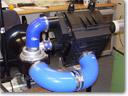 Smoke emissions produced by turbocharged diesel engines under heavy load conditions – such as when accelerating from low engine speeds and other similar transient manoeuvres – can be all but eliminated by a relatively simple and low cost electric supercharger says automotive CO2 reduction specialist Controlled Power Technologies (CPT).