Muscular fender flares front and back, giant 23-inch wheels and a striking face with large air dams and four auxiliary headlights: In a world premiere BRABUS presents the 2007 WIDESTAR wide version for the Mercedes GL-Class at the Frankfurt International Auto Show IAA 2007.
The elegant sweeping lines of the fender flares add five centimeters (two inches) to the width of the large SUV. The corresponding rocker panels have more than just visual effect; they also facilitate entering and exiting of the vehicle in the dark with their integrated entrance lights.
Over the past three decades BRABUS has perfected the art of transplanting large and extremely powerful engines into the bodies of small cars. That path led to numerous world records and entries into the Guinness Book of World Records. The BRABUS BULLIT, built in small-series production based on the new Mercedes C-Class sedan, celebrates its world debut at the IAA 2007 as the ultimate wolf in sheep’s clothing.
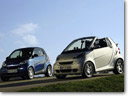
The new smart fortwo BRABUS heralds the second round and sixth year of the successful cooperation between smart and BRABUS, the tuning specialist from Bottrop in Germany. Once again, each partner is bringing a valuable “dowry” into the joint venture: smart the new smart fortwo with its larger body, longer wheelbase, new suspension and further improved safety; BRABUS its expertise as a worldwide renowned specialist for exclusiveness on wheels.
This congenial partnership has once again resulted in a car that is unsurpassed in terms of performance and exclusiveness in its vehicle class: the new smart fortwo BRABUS:
In fact, customers can choose between two models with the striking double B logo – the smart fortwo BRABUS or the smart fortwo BRABUS Xclusive. In addition to sportiness and exclusiveness, the BRABUS models boast a third component that is increasing in importance as a buying factor: individuality. Drivers can choose the smart BRABUS model that best suits their personal taste and lifestyle. Whereas the focus of the smart fortwo BRABUS is primarily on sportiness, in the smart fortwo BRABUS Xclusive this is supplemented by a touch of luxury.
In addition to this, both versions of the smart BRABUS are available as a coupé or a cabrio – giving smart customers even more options and allowing them to choose between the “open air” version with an electrically operated soft top or the coupé with a newly developed polycarbonate panoramic roof.
smart BRABUS: Sporty down to the last detail
One look is enough to see and understand the message of the new smart fortwo BRABUS. Wide tyres measuring 175/50 R 16 (front) and 225/35 R 17 (rear), bright-finish “Monoblock IV” alloy wheels and wider rear wheel arches clearly mark the two-seater as a sporty character that is proud to flex its muscles. The BRABUS sports exhaust system with its dual tailpipe and the BRABUS sports suspension with specially configured sports shock absorbers lowering the body by ten millimetres as against the production model, add to this impression.
The interior also focuses on sportiness. The instruments, pedals and main controls bear the signature of the smart-BRABUS experts. Specifically, the speedometer, rev counter and clock are characterised by specially designed dials, the pedals attract attention with stainless steel and black rubber nubs and the gear knob and hand-brake handle are made of a high quality combination of leather and aluminium. The leather-covered three-spoke sports steering wheel has also been specially developed for the smart fortwo BRABUS.
BRABUS Xclusive: When only the best is good enough
The name “Xclusive” says it all for the second model version of the new smart fortwo BRABUS. Here, sportiness is coupled with an unusually exclusive design and equipment for this vehicle class. Distinguishing features of the Xclusive include the striking front apron with an integrated spoiler and larger air inlets, the side skirts and the distinctive rear apron. All styling parts are painted in the colour of the exterior, giving the body a harmonious look in terms of colour and design.
The front headlights are a further eye-catching feature of the new smart fortwo BRABUS Xclusive. Not just because of their halogen projection technology, but also because of the titanium-coloured inner surrounds that clearly distinguish them from other headlights. Monochrome bulbs are used for the indicators and only appear yellow when the indicator flashes.
In the interior of the Xclusive passengers can enjoy the feel of the soft leather that covers the seats and the BRABUS sports steering wheel. The Brabus double B logo is embossed at the top of the leather seats. The silver leather seams are a further exclusive highlight. The seats are heated and come with head/thorax side airbags as a standard feature.
The leather-effect instrument panel and interior door trim harmonise with the leather of the seat surface in style and colour. The fine silver seams of the instrument panel, which take up a design element of the seats, are a special detail. Aluminium-look trim components frame the cockpit instruments, upgrade the tunnel trim and lend highlights to the door trim. Floor mats made of fine velour are a further standard feature.
Engine: More turbo power coupled with even lower consumption
Both versions of the new smart fortwo BRABUS are powered by a high-performance athletic heart. The smart-BRABUS engineers have improved the rear-mounted three-cylinder turbo engine in a number of details and have boosted the power by more than 30 percent. The engine develops 72 kW/98 bhp at 5500 rpm and this together with the maximum torque of 140 Newton metres from 3500 rpm enables quick intermediate sprints. The sporty two-seater accelerates from zero to 60 km/h in 4.1 seconds and reaches 100 km/h in 9.9 seconds. The maximum speed is electronically limited to 155 km/h.
The weight/power ratio of the 780 kilogram smart fortwo BRABUS is just 7.95 kg/bhp – 24 percent lower than that of the predecessor model.
A look at the consumption and emission figures of the new two-seater BRABUS shows that environmental compatibility and economy on the one hand, and sporty driving fun on the other hand, are not a contradiction in terms. Despite the clear power increase of more than 30 percent as against the predecessor model, the consumption of the smart fortwo BRABUS is still around the five litre mark: The overall consumption in accordance with NEDC is just 5.2 litres per 100 kilometres. The CO2 emissions are equally exemplary at 124 grams per kilometre. The most important engine and performance data of the new smart fortwo BRABUS at a glance:
Engine capacity
999 cc
Rated output
72 kW/98 bhp at 5500 rpm
Maximum torque
140 Nm at 3500 rpm
0-60 km/h
4.1 s
0-100 km/h
9.9 s
Maximum speed
155 km/h (electronically limited)
Fuel consumption*
5.2 l/100 km
CO2 emissions
124 g/km
*NEDC overall consumption
The new engine controller is largely responsible for the spontaneous power development coupled with low energy consumption. The maps controlling ignition, fuel injection and turbocharger are stored in its electronic memory. This enables the three-cylinder engine to fall back on the most suitable data in every driving situation and to precisely regulate the injection quantity, injection timing and charge pressure. The maximum charge pressure of 443 millibars is reached at 3500 rpm.
Transmission: Shifting times reduced by up to 20 percent
As before, the smart fortwo BRABUS features an automated manual transmission that drivers can comfortably operate with shift paddles on the steering wheel. A specially developed transmission controller enables even faster gear shifting than with the other engine versions of the smart fortwo; the shifting times in gears 1 to 4 are reduced by approximately 20 percent – a further important contribution to dynamic driving pleasure.
The clutch is opened and closed by an electric motor which means that there is no clutch pedal in the new smart fortwo BRABUS. A kick-down function that is activated with the accelerator makes quick intermediate sprints possible. This enables the driver to spontaneously change down by one or two gears and to make even better use of the engine’s low-speed torque.
The gearbox modified by smart-BRABUS differs from the standard transmission on account of the shorter ratios of the first and fifth gears. This is manifested in better acceleration and elasticity. For reliable transmission of the higher torque the transmission has been strengthened at various points – for example the transmission shafts and the toothed gear root – with complex surface treatment. The clutch has a diameter of 200 millimetres and has a stiffer torsional spring than the smart fortwo with a 62 kW/84 bhp engine. The final drive and gear ratios of the smart fortwo BRABUS at a glance:
Final drive ratio
4.529
1st gear
3.308
2nd gear
1.913
3rd gear
1.258
4th gear
0.943
5th gear
0.763
Reverse
3.231
Suspension: Sports shock absorbers for agile handling
Like the transmission, the suspension has been adjusted to the agile character and higher performance of the new smart fortwo BRABUS. In line with the sporty character, gas-filled sports shock absorbers with special characteristics and coil springs with specially configured spring rates are fitted that lower the body by ten millimetres.
The wheelbase of 1867 millimetres that is 55 millimetres longer than that of the predecessor model and the wider track of 1270 / 1363 millimetres guarantee high directional stability and safety in conjunction with the stiff suspension setup. The main suspension data of the new smart fortwo BRABUS at a glance:
Wheelbase
1,867 mm
Track width front; rear
1,270 mm; 1,363 mm
Tyres front;rear
175/50 R 16; 225/35 R 17
Wheels front;rear
5.5 x 16 ET 30; 7.5 x 17 ET 33
Turning circle
8.75 m
Like all models of the new smart fortwo, an anti-lock braking system with electronic brake-force distribution, brake assist and an electronic stability programme (ESP®) are included in the standard spec. The dual-circuit brake system with tandem servo assistance is fitted with disc brakes on the front axle and drum brakes on the rear axle.
Brand-New for the Latest Mercedes-Benz C 220 CDI: 50 PS (49 hp) / 36.8 kW more Power and an Extra 80 Nm (59 lb-ft) of Torque with BRABUS D3 S POWER XTRA. An increase in maximum power output from standard 170 PS (168 hp) / 125 kW to 220 PS (217 hp) / 162 kW, a jump in torque from 400 Nm to 480 Nm (295 to 354 lb-ft), combined with maximum environmental friendliness in accordance with Euro IV emission limits, and all that backed by the one-of-a-kind BRABUS Tuning Warranty® of three years, up to 100,000 kilometers (see BRABUS warranty conditions): For the new Mercedes-Benz C 220 CDI BRABUS presents the new BRABUS POWER XTRA D3 S power kit.
The processor-controlled BRABUS auxiliary control unit with integrated injector drive module comes with a ready-to-connect wire harness and detailed installation instructions. It can be installed quickly and easily by any authorized Mercedes-Benz dealer. The BRABUS POWER XTRA D3 Stuning kit works flawlessly in conjunction with the standard particulate filter of the C 220 CDI and increases maximum power output by 50 PS (49 hp) / 36.8 kW and peak torque by 80 Nm (59 lb-ft). Despite the increased performance emissions of the turbodiesel engine remain on the low level of the production car: Even with BRABUS performance tuning the car meets stringent EURO IV emission standards.
The added powerful of the tuned diesel engine is noticeable in every traffic situation: The increase in torque gives the C 220 CDI superior pulling power even at low engine speeds, making passing maneuvers shorter and safer.
Vehicle performance speaks for itself: With a sprint time from 0 – 100 km/h (62 mph) of 7.8 seconds the C 220 CDI with BRABUS D3 S performance kit takes almost a full second less than the production car. The top speed of 239 km/h (149 mph) exceeds that of the production model by 10 km/h (6 mph).
The fully stainless-steel BRABUS quad sport exhaust for the Mercedes C 220 CDI looks great and gives the car a more powerful exhaust note.
In addition to performance tuning BRABUS offers an extensive customization program for the new Mercedes C-Class. The product range includes a sporty yet elegantly shaped aerodynamic-enhancement kit, sporty suspension modifications from a simple lowering kit to a complete sports suspension, high-performance brake systems as well as exclusive interior accessories including handcrafted fully leather interiors made from only the very best materials with utmost precision and loving attention to detail.
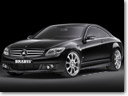
730 hp / 537 kW of power, 1,320 Nm of top and a top speed of 340 km/h: With the BRABUS SV12 S Biturbo coupe based on the latest Mercedes CL 600 model BRABUS presents the world’s fastest and most powerful coupe.
At the heart of this exclusive automobile is the BRABUS SV12 S Biturbo engine. It is based on the turbocharged Mercedes 600 twelve-cylinder engine and represents the most powerful street-legal V12 engine in the world. Installing a special BRABUS crankshaft with longer stroke, combined with a bigger bore and correspondingly sized forged pistons, increases displacement from 5.5 to 6.3 liters. Further engine modifications also include precision-machining the cylinder heads and fitting them with four special camshafts.
In addition the engine peripherals are also modified extensively. The modifications include special exhaust manifolds, two larger turbochargers, a high-efficiency intercooler and a high-performance exhaust system with metal catalysts and low back pressure. Extensive bench tests determined the new programming for the engine electronics that not only maximizes power yield but also ensures that the engine meets stringent Euro IV emission limits.
Performance figures of the BRABUS SV12 S Biturbo displacement engine speak volumes: A rated power output of 730 hp / 537 kW at 5,100 rpm is just as extraordinary as a peak torque of 1,320 Nm at just 2,100 rpm. In the car peak torque is limited electronically to 1,100 Nm.
Power is transferred to the rear wheels via a modified five-speed automatic transmission. The optionally available BRABUS locking differential optimizes traction. All BRABUS drivetrain elements are operated with ARAL high-performance lubricants.
The BRABUS S V12 S Biturbo coupe is not just the most powerful; it is also the fastest street-legal of its kind. 0 – 100 km/h in 4.0 seconds, 200 km/h after just 11.9 seconds and an electronically limited top speed of 340 km/h are all without equal.
The enormous performance of the BRABUS SV12 S Biturbo coupe places exceptionally high demands on the aerodynamic-enhancement parts that were developed in the wind tunnel. The sophisticated shape of the BRABUS front apron reduces lift on the front axle and improves engine and front brake cooling due to its large air inlet. Integrated fog lamps and high beams lend the car a characteristic appearance and further improve active safety by optimizing illumination of the road.
The BRABUS rocker panels optimize the airflow along the sides and feature integrated entrance lights for safe entering and exiting of the vehicle in the dark.
The BRABUS rear apron sports custom-tailored cutouts for the BRABUS quad sport exhaust. Three LED lights integrated into the apron are also activated via the keyless fob. An understated rear spoiler rounds out the sophisticated BRABUS aerodynamics concept, and reduces lift on the rear axle for further improved directional stability at high speeds.
The enormous performance of the BRABUS SV12 S Biturbo coupe is kept safely in check at all times thanks to custom-tailored solutions for tires, suspension and brakes. Among them are BRABUS Monoblock light-alloy wheels with diameters of 18, 19, 20 or 21 inches. The largest tire/wheel combination features BRABUS Monoblock VI and E wheels in sizes 9Jx21 in front and 10.5Jx21 on the rear axle. The largest corresponding tires are size 265/30 ZR 21 in front and size 295/30 ZR 21 in the rear. BRABUS recommends Pirelli and YOKOHAMA high-performance tires.
The BRABUS module for the standard ABC suspension is specifically calibrated to these high-performance tires, and lowers the ride height of the two-door by some 25 millimeters. For further optimized active safety the BRABUS SV12 S Biturbo coupe can be equipped with the BRABUS high-performance brake system. Maximum fade-free stopping power is provided on the front axle by 380 x 36 millimeter discs and 12-piston aluminum fixed calipers. The rear features 355 x 28 millimeter discs and six-piston aluminum fixed calipers.
BRABUS also fulfills any requests imaginable when it comes to exclusive interior options. The list of products ranges from scuff plates with illuminated BRABUS logo or an ergonomically shaped sport steering wheel to an exclusive customized interior crafted from soft yet durable BRABUS Mastik leather and the finest Alcantara.
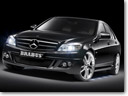
Concurrent with the market introduction of the new Mercedes-Benz C-Class BRABUS presents an exclusive sport program for the new sedan. Highlights of the product lineup are the BRABUS 4.0 displacement engine with 332 hp / 244 kW for the V6 gasoline models, an elegant aerodynamic-enhancement program, light-alloy wheels with 20-inch diameter and corresponding suspensions, plus numerous individual interior options.
BRABUS is world-renowned for its powerful yet clean-burning displacement engines, lubricated exclusively with ARAL motor oil. All tuning components and conversions are backed by the one-of-a-kind BRABUS Tuning Warranty® of three years up to 100,000 kilometers (see BRABUS warranty conditions as of June 2003).
For the new C 280 and C 350 models BRABUS offers its BRABUS 4.0 engine. By installing a special crankshaft and larger pistons displacement is increased to 4.0 liters. Additionally the four-valve cylinder heads are optimized for gas flow, and fitted with special camshafts. The conversion further includes a stainless-steel high-performance exhaust system with metal catalysts, and newly programmed engine electronics.
The impressive results of the conversion are a maximum power output of 332 hp / 244 kW and a peak torque of 420 Nm at 4,200 rpm. Thus equipped, the four-door delivers excellent performance: Just 5.9 seconds pass from 0 – 100 km/h, top speed is 275 km/h in combination with the BRABUS Vmax-Unit.
For the CDI models of the new C-Class BRABUS offers its PowerXtra performance kits. The list starts with the D2 (III) kit that increases power output of the C 200 CDI by 39 hp / 28.7 hp,
and bumps peak torque to 385 Nm. The C 220 CDI with BRABUS D3 (III) kit delivers 195 hp / 143 kW of power and 450 Nm of peak torque. For the top-of-the-line turbodiesel model C 320 CDI there is the D6 (III) power kit. It delivers 48 hp / 35.3 kW of additional power and a peak torque of 590 Nm, turning the new C-Class into one of the world’s sportiest diesel- powered cars with a 0 – 100 km/h time of just 6.9 seconds and a top speed of 250 km/h.
BRABUS stainless-steel quad sport exhaust systems are available for all engine variants.
More dynamics for the new C-Class also come from custom-tailored BRABUS tire/wheel combinations with diameters of 17, 18, 19 and 20 inches and corresponding BRABUS sport suspensions, lowering kits and sport sway bars. The largest wheels for the new C-Class are BRABUS Monoblock VI, E and S light-alloy wheels in size 9Jx20 front and back, fitted with tires is sizes 235/30 ZR 20 in front and 265/25 ZR 20 on the rear axle.
BRABUS high-performance brake systems are available for the W 204 model series in two versions and offer maximum stopping power and endurance.
The BRABUS design team also went into the wind tunnel to develop aerodynamic- enhancement components that not only look great but also offer maximum aerodynamic efficiency. All parts are manufactured from high-quality PUR-Rim in OEM quality.
The sporty styled BRABUS front spoiler lends the C-Class a more characteristic appearance with its generously dimensioned air inlets for improved supply of cooling air for radiators and front brakes. It also minimizes lift on the front axle, thus improving directional stability at high speeds. Four integrated auxiliary headlights further optimize active safety. BRABUS offers a three-piece rear spoiler that serves as its aerodynamic counterpart in the rear.
Strikingly styled BRABUS rocker panels create perfect aerodynamic transitions between front and rear wheel arches. The panels are optionally available with integrated LED entrance lights. For the outside mirrors BRABUS offers custom-tailored carbon-fiber covers.
The new BRABUS rear apron with one cutout left and right for the sport exhaust rounds out the exclusive appearance.
BRABUS also enjoys a great reputation worldwide for exclusive interior design: For the new Mercedes-Benz C-Class the company-own upholstery shop handcrafts exclusive interiors from especially soft and breathable BRABUS Mastik leather and Alcantara with utmost precision. The BRABUS program also includes a wide array of individual accessories for the interior. The lineup ranges from an ergonomically shaped sport steering wheel to aluminum foot pedals and 330- km/h speedometer to stainless-steel door sills with illuminated BRABUS logo to precious- wood and carbon-fiber trim sets.
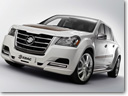
The new concept car from EDAG Engineering + Design AG will be making its first appearance on March 6, 2007, in Geneva – the “EDAG LUV“. The design concept of the “LUV” is based on an luxury-class SUV and incorporates a maritime look from bow to stern: oiled teakwood on the hood, as the flooring on the interior, and on the elegant cargo area conveys a maritime flair. But the “EDAG LUV” is a real eye-catcher in other respects as well: the cargo area, behind the two rows of seats with plenty of room for 5 passengers, has been outfitted with teakwood and distinctly resembles a quarterdeck – in keeping with the maritime look of the concept car.
The Module Concept of the “EDAG LUV” – An Economical Approach to Vehicle Derivatives
But the maritime design of the “EDAG LUV” is just the covering for a modular concept which makes it possible to turn vehicles into derivatives or niche vehicles at reasonable expenditures of time and money.
In coming up with their shell concept, the EDAG team of engineers, headed by project manager Andreas Funk, set themselves the goal of using the greatest possible number of carry-over parts.
Edag Luv
The group can certainly be proud of the results of the intelligent module concept: 90% of the parts required to perform the metamorphosis of a luxury-class SUV into the “EDAG LUV” come off the parts shelf of the basic vehicle. For example, the extension of the floor pan by 512 mm was realized using original parts. The wheelhouses were also used without any modifications, as were the parts for the rear-end finish, which includes integration of the standard power-lift system from the sedan.
“In addition to our efforts to use a maximum number of identical parts, we were especially careful to keep the existing production concept of the basic vehicle in mind during the development of the “EDAG LUV”,” explains Andreas Funk. “The self-supporting body can be completely welded using standard tongs. It goes without saying that we used simulation models during the development of the entire body concept to test crash behavior and rigidity so that we could guarantee the highest level of quality and safety.”
The advantages of the EDAG module concept are obvious. Thanks to the use of identical parts and taking into account the production concept, a vehicle concept which is visually completely new can be realized under economically interesting conditions.
“More and more end customers are asking for niche vehicles, and this type of design turns the production of such cars into a “business case” for the manufacturers,” points out Johannes Barckmann, Head of Design at EDAG, in describing the concept.
The “EDAG LUV” – A New Vehicle Segment
“LUV”, the name of the concept car, is not only a term used by sailors (it is German for “luff”, the windward side of a vessel), but also defines a new vehicle segment – the luxury utility vehicle.
“In taking the maritime world as a leitmotif for the design of the “EDAG LUV”, we deliberately selected a niche theme. We wanted to demonstrate in exemplary fashion that it is possible to create a distinctive vehicle class and not only to give a vehicle a new look. And to do that with as little technical effort as possible,” is how Johannes Barckmann explains the intentions behind the design concept. So the cargo area of the “EDAG LUV” is elegantly tied in with the passenger cell by the harmonious lines of the body design. The utility vehicle character so often evident in pick-up models is no longer discernible in the “EDAG LUV”. On the contrary, the “EDAG LUV” radiates elegance and autonomy and cannot be classified by any of the vehicle segments existing today.
Yet the luxury image which has been created is only one example for the idea of a versatile vehicle concept. Speaking of versatile: the pick-up module can be exchanged for a convertible or coupe module simply by releasing a catch mechanism integrated into the body of the “EDAG LUV”. A clever move by the EDAG developers so that additional derivative variants can be realized flexibly and at low cost.
Innovation in the Interior – The PC Takes Its Place in the Vehicle
The “EDAG LUV” has innovative solutions on the inside as well. The EDAG development team has integrated two UMPCs (UltraMobile PCs) into the headrests, bringing the PC world into the vehicle. The user can use a specially developed mechanism to insert the fully operational PCs easily into the headrests. Passengers in the rear seat can use their Office applications such as PowerPoint, Excel, and Word in the vehicle, plus WLAN and UMTS provide them with Internet access, enabling them to download and answer their e-mails during the trip. Furthermore, integrated Webcams even make it possible to hold Net meetings during the trip. Users can also access their music or DVD collection from the car. The trick: The UMPCs are connected to the vehicle”s audio system so that the MP3 files or videos stored on the computer can also be used in the vehicle. The integration of the computer keyboards into the interior of the “EDAG LUV” has also been handled elegantly: modern form-fitting foil keyboards have been embedded in the folding tables available for use by rear-seat passengers. Background lighting makes it possible to work even while traveling at night and is yet another futuristic design element in the interior.
“The integration of so-called consumer devices into the vehicle architecture is a highly interesting topic for the manufacturers. This can result in a genuine additional value for the end customers by making the functionality of the PC world usable in the vehicle as well,” notes Dr. Robert Hentschel, Director of EDAG Electrics/Electronics.
“Being a full-range developer of vehicles and an integrator in the field of electrics/electronics, we are determined to develop solutions in this area which are stylish, geometrically and functionally high-quality, and practical.”
EDAG is currently pursuing two solution approaches:
1. A second integration stage will tie the UMPCs into the vehicle architecture for luxury-class vehicles. The advantage: the driver can use operating elements – e.g., on the steering wheel – to access directly the functions or data of the UMPC.
2. The EDAG developers are planning the UMPC as an after-market product for compact and midsize cars. The aim here is to develop concepts for various models produced by car-makers so that the devices can be integrated ergonomically and geometrically into the interior without a jarring visual effect. What makes this especially enticing is the possibility of utilizing the UMPC as an on-board computer and high-quality display device by connecting it to the vehicle architecture, providing yet another service, as well as making the complete functionality of a PC available in the car.
With this as a goal, EDAG is working closely with the Intel Corporation on the development of solutions for the electrical and electronic connection as well as on the integration of “nomadic devices” in the vehicle interior. EDAG will rely on the latest in Intel technology, processors, and chip sets. Especially small dimensions for the chips and low energy consumption are only some of the criteria for their use in cars.
The Company is planning to present the “EDAG LUV” at the upcoming IAA in Frankfurt in the second integration stage, i.e., with access to the UMPCs via operating elements of the car.
Innovative Development Competence by EDAG
EDAG will be presenting the “EDAG LUV” in Geneva as proof of its competence, underscoring the capabilities of the world”s largest independent development partner to develop economically sound innovative vehicle concepts optimized for production. The project has been realized in only three months, from definition of the concept and design process to the development to the ready-to-roll prototypes, and is on the verge of being realized as a Premium Edition.
BRABUS is one of the partners in this project. The tuner from Bottrop contributed not only the 462 hp / 340 kW high-performance BRABUS 6.1 displacement engine for the EDAG LUV that allows this all-wheel-drive vehicle to accelerate to 100 km/h in a little more than six seconds for a speed of 250 km/h.
BRABUS also provides the classy 10Jx22 monoblock S wheels fitted with 295/35 ZR 22 YOKOHAMA tires, the air suspension module as well as the high-performance brake system from its product line-up. The 12-piston aluminum fixed calipers and ventilated, perforated 380 x 36 millimeter front brake disks and the 6-piston fixed calipers and 355 x 28 mm rear brake disks reach a braking performance typically achieved only by genuine sports cars.
Exclusive all-leather appointments and attractive interior accessories are an additional BRABUS specialty. The BRABUS saddlery combined the finest white leather with black seams and cords for a superior interior finish of the EDAG LUV that leaves nothing to be desired.
At the Geneva Motor Show smart will be presenting the two BRABUS variants of the new smart fortwo to the public for the first time.
Rated at 72 kW / 98 bhp, the smart fortwo BRABUS and smart fortwo BRABUS Xclusive have more than 30 percent more engine power than the BRABUS variant of the predecessor model. At the same time the low consumption and low CO2 emissions demonstrate that this does not have to come at a cost to the environment and customers’ wallets.
In addition, the two BRABUS variants boast an extremely low weight to power ratio: at just 7.8 kg/bhp this is 24 percent lower than that of the previous BRABUS variant.
smart fortwo BRABUS: Greater power and sports suspension
The smart fortwo BRABUS places the primary focus on sportiness. Its three-cylinder petrol engine with capacity of one litre delivers 72 kW (98 bhp) and together with maximum torque of 140 Newton metres this lends the 770 kilo two-seater remarkably lively agility. The sprint from zero to 100 km/h takes less than ten seconds and the maximum speed (electronically limited) is 155 km/h.
The exterior of the smart fortwo BRABUS is first and foremost characterised by “Monoblock VI” alloy wheels, wider rear wheel arches, a sports exhaust system and fog lights. Furthermore, it has a firmer suspension setup and is lowered by 15 millimetres.
The interior of the smart fortwo BRABUS is distinguished from that of standard smart fortwo models by a number of BRABUS styling elements, for example for the gear knob, hand-brake handle and pedals. The speedometer, rev counter and clock also bear the BRABUS signature.
The same range of exterior colours is available for the smart fortwo BRABUS as for other smart fortwo models.
Smart fortwo Brabus
smart fortwo BRABUS Xclusive: Luxurious equipment
Sportiness combined with a level of luxury that is unusual in this vehicle class – that’s the smart fortwo BRABUS Xclusive. It does not differ from the BRABUS model in terms of drive and performance but it comes with additional equipment that leaves almost nothing to be desired.
Although it also sports wide “Monoblock VI” alloy wheels, wider rear wheel arches, a sports exhaust system and rear apron, it is nevertheless immediately recognisable as a BRABUS Xclusive. This is first and foremost due to the BRABUS front spoiler, BRABUS side skirts and the tinted clear glass headlights.
The interior of the smart fortwo BRABUS Xclusive additionally features heated leather seats embossed with the BRABUS logo. A modified three-spoke leather sports steering wheel with steering wheel gearshift and BRABUS velour floor mats are also included in the standard spec. The instrument panel and door trim have a leather effect. Head/thorax side airbags, otherwise available as an option, are a standard feature in this model. These special side airbags protect the head and chest areas.
The paintwork of the smart fortwo BRABUS Xclusive further underlines the exclusiveness of this model. It is exclusively available in the combinations (tridion safety cell/bodypanels) silver/silver or black/black.
The two BRABUS variants will be launched on the market in the autumn of 2007. The prices will be announced around the middle of the year.
44 hp / 32.4 kW more power and 100 Nm more torque: Those are the two most important performance figures of the BRABUS PowerXtra D8 (III) tuning kit for the two Mercedes models GL 420 CDI and ML 420 CDI. BRABUS offers tuning kits backed by the one-of-a-kind BRABUS Tuning Warranty® of three years up to 100,000 kilometers (see BRABUS warranty conditions, as of June 2003).
The BRABUS PowerXtra D8 (III) power kit unleashes – without compromising safety reserves – the true power inherent in the V8 common-rail turbodiesel engine. With BRABUS PowerXtra D8 (III) tuning rated power output jumps from stock 306 hp / 225 kW to 350 hp / 257 kW at just 3,800 rpm. At the same time peak torque grows from 700 Nm for the production car to 800 Nm with D8 tuning.
Performance benefits accordingly: The tuned ML 420 CDI sprints from 0 – 100 km/h in just 6.0 seconds, half a second faster than the production car. Top speed increases from 235 to 245 km/h. The GL 420 CDI with BRABUS D8 (III) performance tuning also exhibits a more lively character: With 7.1 instead of 7.6 seconds from rest to 100 km/h and a top speed increased from 230 to 240 km/h the big SUV improves noticeably.
BRABUS Mercedes-Benz GL 420 CDI
On and off road the BRABUS-tuned CDI engines offer not only excellent performance but – more importantly – strong pulling power and low fuel consumption, which despite the increase in performance remains on the level of the production car.
Just as exemplary are the vehicle emissions: Like their non -tuned brethren the CDI engines with BRABUS PowerXtra D8 (III) tuning meet stringent Euro 4 emission limits. The D8 kit is also suitable for all models equipped with diesel particulate filter.
The processor-driven BRABUS PowerXtra auxiliary control unit is designed as a ‘plug & play’ device that can be installed in less than 30 minutes by any authorized Mercedes-Benz dealer.
BRABUS B63 S engine tuning enhances the power output of all Mercedes 63 AMG models, with the high-revving 6.2-liter V8 now delivering 550 hp / 404 kW and peak torque of 650 Nm. This results in a sprint time from 0 to 100 km/h in just 4.3 seconds and a top speed of 330 km/h, making the CLS 63 AMG with BRABUS B63 S tuning perform like a true super sports car.
BRABUS power kit includes reprogrammed engine electronics with a unique injection and ignition mapping. In addition, the kit has a sport air filter that enhances the combustion air supply, and high-performance metal catalysts on the exhaust side with low back pressure to comply with EURO IV emission limits.
BRABUS recommends the locking differential for all Mercedes 63 models with rear wheel drive to transfer the increased power to the road with minimum slip. The locking rate of up to 40 percent is great to have.
The BRABUS B63 S performance kit can be installed in all Mercedes 63 AMG models. With 550 hp / 404 kW, the ML 63 can accelerate from 0 -100 km/h in 4.9 seconds and reach a top speed of 275 km/h when combined with the BRABUS V/max unit.
To fully utilize the increased power, modifications to the tires, suspension, and brakes are recommended by BRABUS. Depending on the Mercedes 63 AMG model, custom-tailored tire and wheel combinations up to size 11Jx23 with tires up to 315/25 R 23 in size are available. BRABUS has developed a control module for the ABC suspensions, which lowers the ride height by 20 millimeters to further enhance the already great handling characteristics. Additionally, BRABUS sport stabilizers minimize body roll and optimize turn-in.
BRABUS offers a high-performance brake system for all Mercedes 63 AMG models. This system provides excellent stopping power and endurance, typically only found in sports cars. Customers can also request a special version with ceramic discs. The front axle has 380 x 36 millimeter discs and 12-piston aluminum fixed calipers, while the rear axle has six-piston fixed calipers and 355 x 28 mm brake discs.
BRABUS offers various interior accessories such as genuine carbon-fiber trim, illuminated scuff plates with the BRABUS logo, and sport steering wheels. They also provide a speedometer with a 360-km/h dial.
Customers can request a special interior made of the soft and durable BRABUS Mastik leather and Alcantara from the company’s upholstery shop.
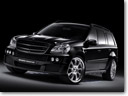 Muscular fender flares front and back, giant 23-inch wheels and a striking face with large air dams and four auxiliary headlights: In a world premiere BRABUS presents the 2007 WIDESTAR wide version for the Mercedes GL-Class at the Frankfurt International Auto Show IAA 2007.
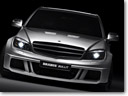 Over the past three decades BRABUS has perfected the art of transplanting large and extremely powerful engines into the bodies of small cars. That path led to numerous world records and entries into the Guinness Book of World Records. The BRABUS BULLIT, built in small-series production based on the new Mercedes C-Class sedan, celebrates its world debut at the IAA 2007 as the ultimate wolf in sheep’s clothing.
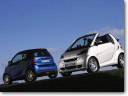
 The new smart fortwo


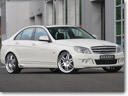
 Brand-New for the Latest
 730 hp / 537 kW of power, 1,320 Nm of top and a top speed of 340 km/h: With the


 Concurrent with the market introduction of the new


 The new concept car from EDAG Engineering + Design AG will be making its first appearance on March 6, 2007, in


 At the

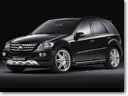 44 hp / 32.4 kW more power and 100 Nm more torque: Those are the two most important performance figures of the BRABUS PowerXtra D8 (III) tuning kit for the two Mercedes models GL 420 CDI and ML 420 CDI. BRABUS offers tuning kits backed by the one-of-a-kind BRABUS Tuning Warranty® of three years up to 100,000 kilometers (see BRABUS warranty conditions, as of June 2003).

