Tag: BMW

  • BMW X6

    In 1999 BMW broke the four-wheel-drive mould when it launched the X5 Sports Activity Vehicle. With a bias towards excellent on-road performance combined with a dynamic design and a premium interior, the BMW X5 was an instant success. And it’s a winning formula that has, unlike most other models, led to increasing sales during its lifecycle with the biggest annual UK sales coming in its penultimate year. The timing of the BMW X5 was perfect and it reflected buyers’ lifestyles and their desire for something unique in the marketplace.

    The introduction of the BMW X6 is a logical next step in the process of anticipating customer demand. The BMW X6 sets a new performance benchmark with the world debut of its innovative Dynamic Performance Control rear differential and advanced stability systems to ensure a new dimension in 4×4 car-like driving capabilities. The drivetrain, incorporating BMW EfficientDynamics technologies, ensures the X6 delivers excellent emissions and fuel consumption figures in conjunction with impressive output and acceleration figures. All that in a dynamic coupe-like body shape and interior that is unique in the premium segment. The BMW X6 is a bespoke proposition, but one that competitors look set to copy…just like the BMW X5.

    Model

    Price OTR

    Power
    (hp)

    Torque (Nm)

    0 – 62mph (secs)

    Top Speed (mph)

    Combined
    mpg

    CO2
    (g/km)

    VED Band

    BMW X6 xDrive30d

    £41,965

    235

    520

    8.0

    137*

    4

    217

    F***

    BMW X6 xDrive35d

    £44,145

    286

    580

    6.9

    147

    34.0

    220

    F***

    BMW X6 xDrive35i

    £42,730

    306

    400

    6.7

    149

    25.9

    262

    G

    BMW X6 xDrive50i

    TBC

    408

    600

    5.4

    155**

    22.6

    299

    G

    *Fitted with dynamic package. ** Electronically-limited. ***VED Band F vehicles qualify for £8-a-day London Congestion Charge.

    The concept of the new BMW X6 is best considered in relation to the link between the BMW 3 Series Saloon, Touring, Coupe and Convertible. People buy all four versions of the 3 Series depending on their circumstances and needs. The same will be the case for the BMW X6 compared to other BMW X models.
    The BMW X6 is undeniably a niche car with BMW UK expecting to sell approximately 1,600 X6s in its first year – by comparison an average of 7,000 X5s are sold every year. Research has shown that three key buyer profiles exist:

    • Buyers who want the command driving position an X product provides, but who also aspire to the sporting style of a Coupe.
    • Early adopters. BMW broke the mould when it launched the X5 and the interest for that model came from early adopters looking for something unique in the market. Early BMW X6 customers are expected to come from a similar demographic.
    • The BMW X5 or other Sports Activity Vehicle owner whose family has left home and still desires a similar car, but one that doesn’t scream ‘family’.

    Klaus Kibsgaard, the new Managing Director of BMW (UK) Ltd, said: “People have questioned why we should launch such a car, but these doubters are the same who said a BMW X5 wasn’t a true BMW and that we shouldn’t produce that. The BMW X5 3.0d has gone on to be the third biggest selling new car in our portfolio* and is one of the most searched for used cars too.

    “While we intend the X6 to be a niche product, BMW is leading the way in introducing new vehicles that challenge convention but are borne out of evolving customer demands. The BMW Z4 Coupe, the BMW 635d and the BMW 1 Series Coupe are all examples of this. The BMW X6 caters for a more discerning sector of the market which wants a specific product and won’t compromise.”

    A quartet of turbocharged engines

    For the first time in BMW’s history a model range has been launched solely powered by turbocharged engines. The BMW X6 xDrive35i is powered by the twin-turbocharged 2007 and 2008 International Engine of the Year winner that produces 306hp. This powerplant is capable of propelling the X6 xDrive35i from zero to 62mph in 6.7 seconds and on to a top speed of 149mph. The 2,979cc-engined X6 is still capable of achieving a combined 25.9mpg and a CO2 figure of 262g/km.

    The BMW X6 xDrive30d and the BMW X6 xDrive35d also both have award-winning powerplants under their bonnets. The former, a single turbocharged unit produces 235hp from its 2,993cc block, while the latter ups the ante by offering 286hp from the same capacity engine but aided by twin-turbochargers.
    The BMW X6 xDrive30d, which is likely to become the biggest selling X6 variant over time, reaches 62mph from zero in 8.0 seconds before going on to a top speed of 137mph*. Emissions and economy figures are equally impressive, recording 217g/km and 34.4mpg respectively. The low CO2 output is enough for the car to qualify for a lower Vehicle Excise Duty band, compared to rival products, and continue to be an ?8-a-day Congestion Charge vehicle in London should current proposals become statute.
    *Note: In 2007 the BMW 320d Saloon accounted for 12,015 sales, BMW 520d Saloon 8,365 sales and the BMW X5 3.0d 6,233 sales.

    The BMW X6 xDrive35d sprints from zero to 62mph in 6.9 seconds before going on to a top speed of 147mph. It too sits under the 225g/km higher Vehicle Excise Duty and Congestion Charge strata. The twin-turbocharged diesel records an emissions figure of 220g/km, while also being capable of 34.0mpg.
    Completing the awesome foursome of powerplants is a new twin-turbocharged, high-precision direct injection, 4.4-litre V8 engine producing 408hp. This all-new engine, not seen in any other BMW product before, is the most powerful production non-M BMW V8 engine ever and makes the flagship X6 the most powerful production X product. It can reach 62mph from standstill in 5.4 seconds – quicker than a Porsche Boxster – before going on to an electronically-limited top speed of 155mph.

    All four X6 models utilise facets of BMW EfficientDynamics technologies. Brake Energy Regeneration is standard across the range and combines with active aerodynamics and low viscosity fluids in the steering and transmission systems. Third-generation common-rail technology diesel-engined cars and high-precision direct injection on the petrol models both serve to optimise the combustion process.

    *Note: In conjunction with dynamic package.

    A new high in dynamic capability

    The power of the BMW X6 is harnessed by an advanced chassis that incorporates Dynamic Performance Control for the first time on a BMW. Dynamic Performance Control offers drivers class-leading cornering ability courtesy of a complex multi-clutch differential that, effectively, helps drive the vehicle around a bend.

    A conventional differential wastes power through wheelslip during cornering. A limited-slip differential locks out an unloaded wheel to transfer drive to the wheel with most grip – but the locked wheel can act as a drag on performance. However, Dynamic Performance Control improves on the traditional, performance oriented limited-slip differential. It allows an inside wheel to still deliver power and provide drive, while at the same time sending more drive to the outside wheel that has more grip. The result, combined with one of the most advanced stability control systems available, is a vehicle that out performs the current benchmark BMW X5 and some sports cars in terms of dynamic capability.
    The BMW X6 range goes on sale on 31 May, 2008. The diesel-engined models and the X6 xDrive35i will initially be offered with the xDrive50i going on sale in November 2008.

    Drivetrain

    BMW’s heritage of producing class-leading, high performance and efficient engines is unrivalled. To highlight this fact, no other manufacturer has won the overall honour at the International Engine of the Year awards more times than BMW. 2008 sees BMW retain the title through the 3.0-litre twin-turbo petrol engine in the X6 xDrive35i meaning that BMW has scooped the outright title six times in the last 10 years, winning more categories than any other manufacturer.

    The BMW X6 is the latest model to benefit from BMW engineers’ technological prowess. The all-new range is offered with a quartet of turbocharged engines – the first time an entire BMW model range has been turbocharged. Three of these are award-winning powerplants, while the 4.4-litre twin-turbocharged V8 petrol engine is new to BMW. All four variants come as standard with a sport-oriented six-speed automatic transmission and all models use elements of BMW EfficientDynamics to achieve impressive performance, economy and emissions statistics.

    BMW X6 xDrive30d

    Powered by a 2,993cc engine, the BMW X6 xDrive30d offers the driver the optimum combination of performance and economy which is unmatched by any other performance-oriented Sports Activity Vehicle.
    The in-line six-cylinder diesel powerplant comes with a single turbocharger and third-generation common-rail injection system with piezo injectors for efficient fuel combustion. This latest incarnation of common-rail diesel operates at 1,600bar pressure. Such an arrangement helps the unit produce 235hp at 4,000 rpm. With peak torque of 520Nm available from 2,000rpm through to 2,750rpm, the BMW X6 xDrive30d provides effortlessly smooth, swift acceleration. It accelerates from zero to 62mph in 8.0 seconds before going on to a top speed of 137mph.

    The BMW X6 xDrive30d’s unique balance of economy, emissions and performance is why BMW expects the model to become the biggest selling variant in the UK. The vehicle records a CO2 emissions figure of 217g/km – low enough for the vehicle to qualify for Band F Vehicle Excise Duty and to remain classed as an ?8-a-day London Congestion Charge vehicle in the future if current proposals become statute. It also records 34.4mpg on the combined cycle. An all-aluminium engine block, the weight of which has been reduced by 25kgs compared to the previous, similar 3.0-litre BMW diesel engine, aids the overall performance statistics.

    Compared to conventional 4×4 competitors, none can offer the all round capability of the BMW X6 xDrive30d. While the Audi Q7 records marginally higher horsepower and torque output, this advantage is not translated to on-road performance as the table below indicates. Meanwhile, the Audi, the Range Rover Sport and the Mercedes fall short on all other counts.

    Model

    Power
    (hp)

    Torque (Nm)

    0 – 62mph (secs)

    Top Speed (mph)

    Combined
    mpg

    CO2
    (g/km)

    VED Band

    BMW X6 xDrive30d

    235

    520

    8.0

    137

    34.4

    217

    F

    Range Rover Sport TDV6

    190

    440

    11.9

    120

    28.3

    265

    G

    Audi Q7 3.0TDI S line

    240

    550

    8.5

    134

    28.8

    260

    G

    Mercedes ML 320CDI Sport

    224

    510

    8.6

    134

    29.4

    254

    G

    BMW X6 xDrive35d

    With its twin turbochargers and third generation common-rail diesel technology, the 3.0-litre engine that propels the xDrive35d is the most powerful six-cylinder production diesel engine in the world. Weighing just 210kgs, this high-performance diesel weighs some 50kgs less than a comparable eight-cylinder engine with a similar output. This weight and power advantage serves to maximise the dynamic driving qualities of the BMW X6 xDrive35d, which accelerates from zero to 62mph in 6.9 seconds before going on to a top speed of 147mph.

    It achieves these benchmark performance figures, in part, due to the unique way its brace of turbochargers operate. The first, small turbocharger functions at low engine speeds, developing superior power and torque with the slightest movement of the accelerator. Then, with engine speed increasing, the second, larger turbocharger spools into action. At higher engine revolutions a flap in the exhaust system closes off the smaller turbocharger so that the larger one can operate alone. This process delivers a seamless wave of acceleration and power from low revs with one turbocharger passing the performance baton to the other at the point its peak operational capability falls away.

    The technology means the BMW X6 xDrive35d produces 286hp at 4,400rpm, while peak torque of 580Nm is available from 1,750rpm to 2,250rpm. Despite this impressive performance and like the X6 xDrive30d, this model falls below the 225g/km higher Vehicle Excise Duty and London Congestion Charge tiers. The 2,993cc engine records an emissions figure of 220g/km while also being capable of 34.0mpg on the combined cycle. So, not only is the xDrive35d rapid transport it also makes financial sense for the personal and company car buyer, and challenges the environmental assumptions of the anti-4×4 brigade.

    Model

    Power
    (hp)

    Torque (Nm)

    0 – 62mph (secs)

    Top Speed (mph)

    Combined
    mpg

    CO2
    (g/km)

    VED Band

    BMW X6 xDrive35d

    286

    580

    6.9

    147

    34.0

    220

    F

    Audi Q7 4.2TDI S line

    326

    760

    6.4

    146

    25.4

    294

    G

    Range Rover Sport TDV8 HSE

    271

    640

    9.2

    130

    25.5

    294

    G

    BMW X6 xDrive35i

    The twin-turbocharged petrol engine that powers the BMW X6 xDrive35i has retained its International Engine of the Year award in 2008. This 2,979cc unit is capable of propelling the X6 from zero to 62mph in 6.7 seconds and on to a top speed of 149mph. It achieves this through a combination of twin-turbocharger technology and a high-precision direct injection system.

    Compared to the twin-turbocharged diesel engine in the X6 xDrive35d, the forced-induction technology operates in a different way. It is more efficient for the engine to operate with two same-sized turbochargers with each one helping to supply three cylinders due to the characteristics of petrol power. This sees the X6 xDrive35i produce a diesel-engine style flat torque curve courtesy of its variable vane turbo technology. The engine’s output is 306hp at 5,800rpm while peak torque is attained at just 1,300rpm through to 5,000rpm.

    The advanced turbocharging system on the BMW X6 xDrive35i enables it to deliver class-leading performance figures. The 2,979cc-powered X6 is still capable of achieving 25.9mpg and a CO2 figure of 262g/km.

    Model

    Power
    (hp)

    Torque (Nm)

    0 – 62mph (secs)

    Top Speed (mph)

    Combined
    mpg

    CO2
    (g/km)

    VED Band

    BMW X6 xDrive35i

    306

    400

    6.7

    149

    25.9

    262

    G

    Porsche Cayenne

    290

    385

    8.5

    141

    21.9

    310

    G

    BMW xDrive50i

    Completing the quartet of forced-induction engines is an all-new twin-turbocharged, high-precision direct injection 4.4-litre V8 powerplant. This engine makes its debut in a BMW product and is the most powerful non-M V8 engine the marque has ever offered. It is also unique as the two turbochargers and the catalytic converter are located within the vee of the engine for the first time. This reduces the length of the ducts while also allowing for a wider cross-section, so pressure loss is significantly minimised both on the intake and exhaust side. This enhances engine performance and benefits packaging too.

    The BMW X6 xDrive50i produces 408hp from 5,500rpm to 6,400rpm from its 4,395cc engine. Peak torque is an impressive 600Nm and this is attained from 1,750rpm to 4,500rpm. The breadth of the engine’s flexibility and power ensures the flagship in the X6 range reaches 62mph from standstill in 5.4 seconds and can hit an electronically-limited top speed of 155mph.

    This is the first time that the use of two turbochargers has boosted output on a BMW eight-cylinder petrol engine. Each of the two turbochargers supplies compressed air to four cylinders, ensuring unparalleled spontaneity and an instantaneous response to the accelerator. A further, important, point is that the engine develops its high torque from low speeds and then maintains this superior torque plateau over an unusually broad speed range.

    The new V8 is the most efficient power unit in its class. Combined with a wide range of BMW’s EfficientDynamics features, it gives the BMW X6 xDrive50i a standard of fuel economy and emission management far better than rivals. Average fuel consumption is 22.6mpg and CO2 emissions are 299g/km. The table below underscores the competitive advantage this BMW X6 model enjoys. Neither the Porsche Cayenne nor the Range Rover Sport can match the BMW X6’s all round capability.

    Model

    Power
    (hp)

    Torque (Nm)

    0 – 62mph (secs)

    Top Speed (mph)

    Combined
    mpg

    CO2
    (g/km)

    VED Band

    BMW X6 xDrive50i

    408

    600

    5.4

    155

    22.6

    299

    G

    Porsche Cayenne GTS

    405

    500

    6.5

    156

    20.3

    332

    G

    Range Rover Sport Supercharged

    396

    550

    7.6

    140

    17.8

    374

    G

    EfficientDynamics

    All four BMW X6 models utilise facets of BMW’s award-winning EfficientDynamics technologies. Brake Energy Regeneration is standard across the range in conjunction with active aerodynamics and low viscosity fluids in the steering and transmission systems. Third generation common-rail systems for the diesel-engined vehicles and high-precision direct injection on the petrol models serve to optimise the combustion process.

    On-demand management of ancillary units likewise serves to further optimise the efficiency of the BMW X6. The power required to drive the fuel and steering assistance pumps has been significantly reduced by matching the uptake to current driving conditions, saving substantial energy in the process. In addition, the clutched air-conditioning compressor automatically disconnects the compressor as soon as the air conditioning is switched off to save energy.

    The X6’s aerodynamics also serve to enhance efficiency, with the cooling air flaps behind the BMW kidney grille and air intake open and close electronically as required in all but the X6 xDrive50i. The flaps reduce air resistance when closed and open only in response to a greater demand for cooling air.

    Transmission

    Power in the BMW X6 is transmitted to the road via a standard fit six-speed automatic transmission with an emphasis on sporting gear change characteristics. Gear changes can be delivered using the ergonomically designed gear selector or by the gearshift paddles behind the steering wheel.

    The gearbox’s default setting is a fully automatic drive mode. However, manual gear changes can be instigated by either moving the gear selector to the left or using the steering wheel paddles. Pulling one of the paddles backwards serves to shift up gears and pressing the paddle forwards changes to a lower gear. Using this paddle gearshift is the quickest way for the driver to change gears.

    Chassis

    The BMW mantra of ‘the ultimate driving machine’ is delivered, in most part, by class-leading drivetrains and innovative chassis technologies. Award-winning engines, BMW’s intelligent xDrive four-wheel-drive technology, Dynamic Stability Control + and optional equipment such as Active Steering and Adaptive Drive, set the foundation for benchmark driving dynamics. Adding to this already impressive line-up on the BMW X6 is the world debut of Dynamic Performance Control – a highly advanced differential that enhances the performance of the X6 as standard across the range.

    Dynamic Performance Control

    New to BMW, Dynamic Performance Control marks the introduction of a new standard in drivetrain capability. Available only in the BMW X6, Dynamic Performance Control is unique in its ability to make a four-wheel-drive vehicle, with its inherently mild understeer characteristic, to perform with the responsiveness of a rear-wheel-drive car.

    It works by switching power between the left and the right rear wheels to stabilise the vehicle within milliseconds to help increase traction and lateral acceleration. Handling is lighter and more precise as a consequence during all driving conditions.

    To visualise how it works, the mechanics of canoeing provides a good analogy. If you want to turn right when canoeing, you can brake the paddle on the right side of the canoe. This is how most common electronic stability programmes work. Alternatively, you could use the left-hand paddle powerfully to deliver more control in moving forwards and turning right. This is the principle behind Dynamic Performance Control.

    The new system links the standard rear differential with a mechanical planetary gear set and an electronically-controlled multi-plate clutch for each rear wheel. This system combines advanced electronics and precise mechanics to process complex data such as the yaw rate, wheel speeds, steering angle and engine torque so it can react immediately. When required, the system ensures that drive power distribution to the rear wheels can be freely varied and increased on either side as needed.

    Dynamic Performance Control increases directional stability when accelerating out of bends and provides the driver with extra support in difficult driving conditions. Before under- or oversteer can take place, lateral guided force is used to keep the vehicle on track.

    The system is also effective when the vehicle is coasting. If the rear wheels are on different types of surface, Dynamic Performance Control improves traction by supplying more power to the wheel with more grip. This increases driving stability and allows for much faster acceleration should it be needed. A wheel torque difference of up to 1,800Nm can be actively created between the left and the right rear wheels.
    As a logical addition to the xDrive all-wheel-drive system, Dynamic Performance Control can be matched to all drive concepts and engines. Whereas xDrive variably controls the power distribution between the front and rear axles, Dynamic Performance Control intelligently distributes power between the two rear wheels for precise handling, whatever the driving conditions.

    The power distribution can be displayed on the onboard computer screen located between the speedometer and the rev counter.

    Integrated Chassis Management

    To allow Dynamic Performance Control to work it has to be co-ordinated by the Integrated Chassis Management (ICM) system. This high-performance electronic control network uses high capability computing power to control the drive and suspension functions of the X6 to deliver maximum dynamic capability regardless of driving condition. ICM controls the xDrive, Dynamic Stability Control + and Dynamic Performance Control actuators and, when fitted, the Active Steering and Adaptive Drive functions.
    To enable ICM to function to the desired level, FlexRay technology, the fastest method of data transmission currently available in a production car, is employed. Through the use of more powerful computer processors, offering what is essentially a greater bandwidth, FlexRay is able to cope with far greater amounts of data than previous car electronic systems.

    The result of ICM featuring FlexRay technology is that all the technological features of the BMW X6 respond near instantaneously to inputs to deliver a large Sports Activity Vehicle with sportscar-like handling and performance.

    Suspension

    The BMW X6 front suspension consists of a double wishbone arrangement similar to that of an open-wheeled racing car. This allows engineers to fine-tune the suspension for the best kinematic configuration which, in turn, delivers outstanding lateral acceleration and directional stability. At the same time, it minimises the impact forces transmitted back through the car. The rear suspension of the new X6 features BMW’s patented Integral IV rear axle.

    The standard sport suspension configuration can be enhanced by specifying Adaptive Drive. This optional system uses active hydraulic anti-roll bars to counteract the cornering forces of the car to keep the body from leaning too heavily in a corner and unsettling the occupants. In addition to this, Adaptive Drive incorporates Electronic Damper Control (EDC) that uses sensors to continuously adjust the damper setting for the optimum comfort. The driver can adjust EDC to one of two settings, Normal and Sport, dependent on required ride performance.

    A unique four-wheel-drive system

    xDrive is BMW’s unique four-wheel-drive system which first appeared on the revised first-generation BMW X5 in 2003. xDrive works by ensuring that drive forces are instantly delivered to the axle that needs them most. The xDrive concept has two key ingredients – a centrally mounted, electronically activated, multi-plate clutch to distribute drive between axles, and the DSC+ system outlined below.

    The electronically controlled clutch in the BMW X6 is superior in all but extreme off-roading to rival all-wheel drive systems, simply because it is able to respond more quickly. Many conventional four-wheel drive systems require the build-up of hydraulic pressure to change drive distribution. With xDrive being allied to the DSC+ system, it is more predictive. The DSC+ sensors constantly monitor individual wheel speed, steering angle, lateral acceleration, throttle input and yaw rate angles, and feed this back to enable xDrive’s multi-plate clutch to switch power between axles.

    The result of this class-leading technology, allied to Dynamic Performance Control, is a vehicle that offers predictable, safe handling but one that still feels as nimble as a sports car.

    Dynamic Stability Control+

    Dynamic Stability Control+ (DSC+) is standard on the new X6 and offers four additional functions for added safety and comfort:

    • Brake Pre-tensioning shortens stopping distances during an emergency stop by priming the brakes should the car detect the driver lifting off the accelerator sharply in reaction to an incident ahead.
    • Brake Drying improves braking performance in the wet by periodically applying the brake pads to scrub away the film of water that can build up on the brake discs.
    • Hill-start Assistant allows a car to pull away smoothly on a steep gradient without rolling backwards. The brakes are held for the short time it takes the driver to apply the accelerator after releasing the foot or handbrake.
    • Brake Fade Compensation applies additional braking without any extra effort from the driver should sensors detect that the brake pads are starting to lose ‘bite’ due to heat build up.

    The driver of a BMW X6 is also able to select the Dynamic Traction Control (DTC) function of DSC+. DTC allows for a greater degree of wheel slip to enable a driver to pull away on loose surfaces such as snow or gravel without the DSC+ intervening through a loss of grip. DTC allows for more spirited driving in the dry without interruption and can be selected via a button on the centre console.

    Steering

    The BMW X6 comes as standard with a performance-oriented steering rack for precise, short steering inputs. Drivers wishing to build on this can opt for BMW’s unique Active Steering system. This varies the steering ratio depending on road speed. It does this by way of an electronically operated planetary gear that intersects the steering shaft. The planetary gear, in conjunction with an electric motor, is able to add more lock than provided by the driver at slow speeds to make parking and slow speed maneouvres effortless. When driving at higher speeds the opposite occurs with Active Steering actually retarding the input from the driver ensuring a smoother, more composed, drive. It also makes a larger car feel more nimble than its outward dimensions might suggest.

    Safety

    A body structure conceived and designed for maximum occupant safety underpins the BMW X6. In combination with the car’s passive safety systems, it fulfils all prerequisites for excellent results in all crash-tests. Occupant safety is ensured by front and side airbags, as well as head airbags all-round, and crash-activated headrests at the front. Bi-xenon dual headlights including a daytime light function, fog lamps, two-stage brake lights, and Run-flat tyres all come as standard.

    Design

    The design and concept of the new BMW X6 sets a new course for Sports Activity Vehicles. Never before in the premium segment has the command driving position of a 4×4 model been combined with the sporting, elegant lines of a coupe. The reason? The same reason that the BMW 3 Series Coupe and Touring models can happily co-exist together to deliver a bespoke design solution to those with specific motoring requirements. Hence the birth of the Sports Activity Coupe.
    In its design the BMW X6 showcases all the typical BMW design signatures while adding a new distinctive look. It has been crafted to be stylish, sporting and with a powerful presence. At 1,983mm, the BMW X6 is 50mm wider than a BMW X5 and it is 23mm longer at 4,877mm. Its dimensions give the model a dramatic footprint and create a striking appearance.

    At the front, large air intakes positioned far to the outside clearly indicate the cooling requirements of the powerful engines. The air intakes are split horizontally by bars in aluminium colour surrounding the round fog lamps to visually enhance the width of the car. The traditional BMW kidney grille is the largest of any previous or current BMW, and needs to be to feed the engine with the required volume of air. This, combined with the pronounced contours on the bonnet and large, standard specification xenon headlights, enhances the imposing on-road presence.

    At the rear, the view is split by horizontal lines and broad shoulders giving the back of the BMW X6 a wider, hunkered down look. Even the rear lights highlight the unique character of the BMW X6, re-interpreting the typical L-shape of a BMW X model and adding a dynamic, flowing look. Extra ground clearance, strikingly-designed wheel arches, four doors, the large rear tailgate as well as the high waistline, bear a clear resemblance in style to BMW’s other X models.
    The unique proportions of the BMW X6 stand out particularly from the side. The short front body overhang emphasises the dynamic character of the vehicle, the roofline tapering out gently to the rear and the long body overhang at the rear end give the BMW X6 its stretched coupe silhouette. The roof is at its highest point directly over the front row of seats.

    Inside, the coupe ethos is carried over with the BMW X6 having accommodation for the driver, front passenger and dedicated two seats for passengers in the rear. A storage compartment separates the two rear seat passengers. Like all BMW X models, the new Sports Activity Coupe offers an elevated, command seating position giving the driver an even better feeling of security and visibility.

    The BMW X6 offers a sports steering wheel with shift paddles as standard. Another interior sporting feature is the knee pads on the centre console that offer both the driver and front passenger additional support and stability.
    The coupe lines might indicate a lack of interior headroom, but that assumption would be wrong. An unusually generous feature for a coupe is the substantial headroom at the rear of 946mm giving even tall passengers maximum comfort at all times. Part of the design teams’ challenge was to ensure that BMW’s Head of Design, Adrian van Hooydonk, could comfortably fit his 6ft 4inch frame into the rear seats. Incidentally, the BMW X6 has more headroom in the back seats than the Mercedes Benz C Class Saloon. (946mm vs 942mm).

    The boot offers a capacious 570 litres, far more than the space usually available in a coupe and more than many conventional 4×4 competitors. This enables four passengers in a BMW X6 to each take along a set of golf bags in the boot. The boot contents are covered by a concertina cover to offer security and easy access. It can also be folded flat and stored if needed. To increase luggage capacity even further, the rear seat backrest folds down in a 60:40 split to offer a maximum of 1,450 litres.

    A two-stage gas spring featured as standard allows the driver and his passengers to determine the final position of the tailgate when open according to their requirements. This avoids the risk of damage, for example, when opening the hatch in an indoor car park with a low ceiling.

    Dimensions

    Q & A

    This is a new section to a BMW press pack, the content of which is based on an interview between a journalist and Martin Sloan, the Product Manager for BMW X products in the UK. The aim of the section is to provide you with the answers to pointed questions that may not be outlined elsewhere in the press pack and for quotes that can be used in your articles.

    What is the point of the X6?

    An X3, X5, 3 Series Touring and 5 Series Touring between them cover off practicality, four-wheel-drive, dynamic driving and the high up driving position.

    The sales growth at BMW in the last 10 years has been all about bringing to market new, niche vehicles that specifically target what certain customers are after. The BMW X6 is just another step in this philosophy. The models you mention all cater to different people even though there might be some cross over. The BMW X6 is aimed at customers who like the high up, command driving position, but appreciate the attributes of styling and performance that are synonymous with a coupe. The BMW X5 is closest to the X6 in terms of positioning, but the X6 has several unique selling points aside from styling – namely Dynamic Performance Control, a more sports-oriented gearbox and a full range of turbocharged engines, two of which don’t feature on the X5.

    Why does the X6 only have four seats?

    The BMW X6 is part coupe and all of our coupes have four seats. The other main consideration is that the buyer profile is different too. For example, the BMW X5 can come with five or possible seven-seat configurations. The BMW X6 will be bought more by two person households so the number of seats is not a high factor in the purchasing decision. They are more like to be taking friends to the cinema, than ferrying children to football training.

    The BMW X5 is a big car already, but the BMW X6 has an even bigger footprint. Is there really a need to build and sell such cars in the UK?

    The BMW X6 might appear an imposing car but that is more down to the styling. By comparison it is smaller in length than an Audi A6 and occupies a footprint barely 500 cm2 larger than that car.

    You say this is the first time a range has been produced that is all powered by turbocharged engines. Why is this?

    This is partly to do with packaging requirements, but the main reason is to achieve our targets for lowering emissions while still improving other performance figures. Additionally, BMW no longer regards turbocharging petrol engines with suspicion, having mastered the art using innovative technology such as high-precision direct injection to great critical acclaim.

    Dynamic Performance Control makes an obvious difference to the performance of an X6. What is the weight penalty and will it appear on any other products?

    The extra weight of the system is 12kgs and that includes all the extra wiring and control unit. This is a small price to pay for the on-road benefits achieved. We are rightly proud of this new differential, but there are no plans, as yet, for it to be introduced onto other models.

    Is Dynamic Performance Control better than the variable M differential that is fitted as standard to all M cars and, if so, will these models get this feature in future?

    The unique differential fitted to all M cars is still superior when it comes to pure traction as it can develop up to 100 per cent locking action. Dynamic Performance Control is nearly as good though in regards to this, but it performs better on a four-wheel-drive platform which has a natural tendency to understeer. Dynamic Performance Control eliminates this for a truly responsive feel.
  • BMW M3

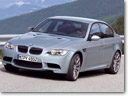
    BMW raises the performance benchmark once again with the introduction of the 2008 M3 Sedan. Sharing the M3 Coupe’s high-revving 414-horsepower V8 and balanced chassis that is designed to be “faster than its engine”, the motorsports arm of the German auto maker, BMW M GmbH, is pleased to offer the most powerful, highest-performing M3 ever with four doors. (more…)

  • Hamann Thunder

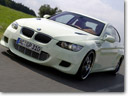
    HAMANN thought wherever a V8 engine can fit, a V10 can fit in as well and look, voilá it fits! The BMW 3-Series coupe comes with a whole array of series-produced engines. The most powerful series-made of these is the M3. When it rolls off the assembly line, it has a 4-litre engine, 420 hp and 400 Nm torque.

    (more…)

  • BMW X6 ActiveHybrid

    English Verison will follow…
    Ein innovatives Fahrzeugkonzept und eine neuartige Antriebstechnologie vereinen sich in einem einzigartigen Automobil. Beim BMW Concept X6 ActiveHybrid kombiniert der deutsche Premiumhersteller das weltweit erste Sports Activity Coupé mit einer ebenfalls noch nie zuvor realisierten Form des Hybrid-Antriebs. Das Ergebnis ist der erste BMW unter den Hybrid-Fahrzeugen. Das BMW Concept X6 ActiveHybrid ermöglicht Freude am Fahren in Verbindung mit einem erheblichen Effizienzgewinn. Sein Antriebskonzept führt zu deutlich höherer Fahrdynamik als bei herkömmlichen Hybrid-Fahrzeugen und zugleich zu einer Verbrauchsreduzierung um bis zu 20 Prozent gegenüber einem vergleichbaren Fahrzeug mit reinem Verbrennungsmotor-Antrieb. (more…)

  • AC Schnitzer GP3.10

    Driving pleasure has been written large at AC Schnitzer for 20 years. And happily, nothing will change for the 62nd IAA. But this goal can be reached in a totally alternative way, as the launch of the superb AC Schnitzer GP3.10 GAS POWERED shows. This high-performance coupé has LPG (Liquified Petroleum Gas) drive, where power and efficiency, economy and ecology, meet in an exciting study.
    (more…)

  • AC Schnitzer ACS5 Touring

    1,1 HP per litre? This figure in relation to a high performance sports car such as the new ACS5 Sport Touring based on the BMW M5 certainly doesn’t refer to the conventional ratio of capacity to power. Instead: 500 litres luggage space meet 552 red-hot HP (406 kW). Plenty of room in every respect for incomparable driving pleasure on one hand, and a hang-glider, surfboard or mountain bike on the other. Drivers of vehicles like this think in different terms from conventional sports car drivers. But no way do they lag behind when it comes to driving dynamics.
    (more…)

  • AC Schnitzer Profile BMW Z4 M Coupe

    Take the first ascent of the 8,848 metre high Mount Everest, the expeditions to the poles or the dive into the 11 km deep canyon of the Mariana Trench. There have always been individuals and
    extreme characters who have pushed our boundaries and discovered new terrain. An extreme region for automotive tuners, where only a few venture, has always been the BMW M-series cars,in particular the uncompromising Z4 M-Coupé, a thoroughbred driving machine.

    But the fact that the limits of this extraordinary car are far from reached is evident from the new concept vehicle by AC Schnitzer – the PROFILE – even at first glance. Classic engine tuning hauls the power of the high-revving six-cylinder in-line plant to a robust 350 HP. Not only is a special “active breathing” airbox used, but the engine control unit has been remapped. But power alone isn’t enough to get the maximum from an athletic heart. So the modified rear axle ratio of 3.91:1 provides better sprint capacity, while the perfectly smooth transmission with the AC Schnitzer Short Shift ensures crisp changes by the driver.

    And as you listen to the sonorous baritone note of  the left/right sports exhaust system with the trapezoid tailpipes, you could be deceived into thinking there are no gear changes, just the playing of an instrument. A feast for all the senses: Visually the stunning colour combination of white-orange casts its spell and perfectly enhances  the exquisite contours of the AC Schnitzer bodykit. From the front skirt with its suggestive cup-wings via the widened wheelarches and flanks with the gill-like vents – as already used on  the legendary BMW 507- the dynamic line is drawn over the bulging side skirts to the rear skirt with carbon diffuser.

    The whole is crowned by a rear spoiler and a fascinatingly styled roof wing. The forged alloy Type V wheels from the standard AC Schnitzer collection are a work of art in themselves. Filigree design yet with an air of solidity, in size 9.0J x 20″ at the front and 10.0J x 20″ at the rear, these wheels are the perfect adornment combined with tyres size 235/30 ZR 20 front and 295/25 ZR 20 rear.

    But traction alone isn’t everything, and the  dynamics are supported by the AC Schnitzer suspension with its racing heritage, set up in the Green Hell of the Nürburgring. An aluminium strut brace in “Racing“ style not only catches  the eye but limits the torsion of the front body. Thanks to the AC Schnitzer racing seats, the driver always holds position. And the carbon interior trim and pedal set, with decor elements of aluminium, radiate pure racing flair. Could there be a better place to experience the limits of potential?

    Performance: 350 HP at 8000 rpm, 370 Nm at 4950 rpm, power upgrade consisting of: special air box, control unit and removal of speed restrictor, engine optics AC Schnitzer rear differential modification, 3,91 :1
    Transmission: AC Schnitzer sports gear change “Short Shift” incl. gear knob
    Exhaust: AC Schnitzer dual sports rear silencer left/right incl. chromed exhaust tailpipes, design “Sports Trim”
    Suspension: AC Schnitzer Racing suspension, height adjustable incl. lowering
    AC Schnitzer aluminium strut brace for front axle, design “Racing”
    Wheels: AC Schnitzer lightweight forged wheel Type V FA: 9,0J x 20″ offset 22 with tyres 235/30 ZR 20 RA: 10,0J x 20″ offset 13 with tyres 295/25 ZR 20
    Bodywork: AC Schnitzer special painting orange – white
    AC Schnitzer front skirt
    AC Schnitzer air outlets for engine bonnet, chromed
    AC Schnitzer fenders incl. air outlets, front
    AC Schnitzer fenders rear
    AC Schnitzer side skirts incl. air intakes for rear brake, set
    AC Schnitzer wing, 3-pieces
    AC Schnitzer carbon rear roof wing
    AC Schnitzer rear skirt incl. wheel house ventilation
    AC Schnitzer carbon rear diffuser
    Interior trim: AC Schnitzer Racing seats
    AC Schnitzer carbon interior orange incl. door handles
    AC Schnitzer carbon cover for centre console
    AC Schnitzer aluminium pedal set
    AC Schnitzer aluminium foot rest
    AC Schnitzer aluminium handbrake handle
    AC Schnitzer floor mats, velours
  • Lumma Design CLR 600 S

    After LUMMA DESIGNed spectacular widening modifications for the BMW M6 tuned as CLR 600 bonding it to racing sports and creating a furore, now the German tuner comes up with a somewhat smaller, but not less imposing version of the body kit.
    This available stylish design intended for all BMW 6-series including M6 and convertibles answers to the name of CLR 600 S. That S stands for street and that’s where all shall be staring from in astonishment as LUMMA DESIGN together with additional modifications succeeds in significantly enhancing the attractiveness of each 6-series BMW.

    (more…)

  • Hamann BMW 3er Series Cabrio

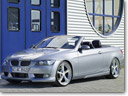
    HAMANN BMW 3 Series E 93 CabrioHAMANN from Laupheim, Germany, has already begun with modifications for the youngest 3-Series Convertible. An aerodynamic kit, power boost, new wheels, suspension components, as well stylish interior enhances the sporty elegant features and improves driving performance of this bavarian beauty

    Power boost for gas engines and diesels

    HAMANN boosts the power in this Convertible by means of optized curved maps. Meaning, the electronic power boost is achieved by recalibrating the standard ECU. The four-cylinder model 320i receives HAMANN´s boost of 10 HP / 7 kW and 10 Nm torque. Enough to speed up the 320i to 233 km/h (standard: 228). The six-cylinder gas engines 325i and 330i experience a plus of 13 HP / 10 kW and 17 HP/ 12 kW and both about 25 Nm torque as well. Top speed climbs to 250, respektively 265 km/h (standard: 325i 245 km/h, 330i 250 km/h). Included in price for the 330i is deactivation of 250 km/h speed restriction.

    Likewise the 335i receives a power boost from 37 HP / 27 kW and an impressive 279 km/h top speed. For easier “breathing“ capabilities of the 6-cylinder model HAMANN offers a sport air filter. For the current diesel model 330d customers can expect a significant power boost of 272 HP/ 200 kW making possible a top speed of 256 km/h (standard: 245) and 600 Nm at 2000 rpm/min.

    By fitting a HAMANN 4-pipe sports rear muffler with four round tailpipes, the 335i publicizes it’s power. The four stainless steel tailpipes, each 76mm in diameter, make the rear end of this Convertible even more attractive.

    Powerful sport aerodynamics

    BMW tailored beautiful body-work for the 3-series Convertible. HAMANN provides customers a even more individual look with specially powerful enhancement. Fitted to the standard bumper is a new, distinctive sportier looking HAMANN designed front spoiler. The visual lowering effect created by the new side sills, lend the side view more character. The buoyancy reducing rear spoiler in combination with the new HAMANN rear center molding designed for conjunction with the HAMANN 4-pipe sport muffler, incorporates matching cutouts for the tailpipes and is a real eye-catcher. Fitted black Carbon-Kevlar mirror caps lends the HAMANN 3-Series Convertible that final polished look.

    Wheels from 18 to 20-inches

    HAMANN really goes to town when it comes to wheels. Three unique individual designs and three sizes from 18 to 20 inch make selection difficult. A multispoke design is featured in the single-piece rim “Anniversary I“ is available in ’silver’ finish and features an outer rim with an INOX steel lip. HAMANN offers it in 18, 19 and 20 inch versions. The wheel PG3 is a multiple five-spoke composite wheel in silver with a high-gloss polished rim flange. Here customers can choose between sizes 19 and 20 inches.

    Unquestionably, 20 inch wheels suit the customized 3-Series Convertible best. HAMANN offers this size as top model design „Edition Race“. The appearance of this three piece, ultra-lightweight, forged rim is a cross-spoke design with a black spider characterized by the 9 main spokes, each of which branches outwards into 2 further spokes. Following this exciting design, the titanium bolts are a particularly attention-getting design. The high-gloss rim flange adds the finishing touch to this stylish look.

    Choice of combination with wider rear axle tires is possible for all 19 and 20 inch versions from Anniversary I and PG3 as in the case of Edition Race wheels as well. HAMANN provides advice as requested regarding all possible combinations.

    Better handling and powerful gripping brakes

    By fitting a suspension lowering kit comprising of four progressive suspension struts, HAMANN succeeds in lowering the vehicle’s center of gravity by 35 mm front and by 20 mm rear. For vehicles with sport suspension tuning systems from stock, that’s still around 15 mm. In both cases, a clearly better handling results. Among race drives it is said “races are won on the brakes“. For those who prefer to use somewhat more rapid acceleration, HAMANN program suggests powerful gripping brakes for security purposes!

    Interior designed with numerable accessories creates an even more pleasurable stay in HAMANN´s 3-Series Cabrio. Thanks to the three-spoke HAMANN airbag sports steering wheel, the driver’s hands always hold the reins securely. A sporty flair is added by the decorative carbon-fiber components, which HAMANN fits to the dashboard, center console, ashtray trim, doors, steering wheel, gearshift knob, handbrake lever and the I-Drive-Controller. HAMANN adds further sporty nuances in the form of sport gearshift knobs (in aluminum or leather/aluminum), aluminum pedals, an aluminum handbrake lever and an aluminum footrest. An exclusive set of floor mats sporting the HAMANN logo in silver rounds off the interior offerings.

    Of course, HAMANN customizes every 3-Series to individual customer requests. For example, luxurious leather upholsteries in a variety of colors are possible, as are extensive multimedia conversions featuring DVD player, TV or Playstation.

  • BMW 1 Series Coupe

    BMW 1 Series CoupeBMW will introduce a modern and authentic performance coupe that draws inspiration from its iconic 2002 models of some 40 years ago. The next BMW legend, the 1 Series Coupe, represents the core BMW philosophies of pure performance and premium design. By combining sporty rear-wheel-drive dynamics, agile handling, powerful engines and seating for four, the 1 Series Coupe will reinvent the niche that the legendary BMW 2002 created.
    On sale in the spring of 2008, the 1 Series Coupe will be available in two versions; the 128i and the 135i. Powered by a 3.0-liter, 230 horsepower inline 6-cyinder engine that generates 200 lb-ft of torque, the 128i Coupe will feature Valvetronic valvetrain management and aluminum/magnesium contruction—core elements of BMW’s EfficientDynamics. The powerful 135i Coupe features BMW’s twin-turbocharged 3.0-liter inline six-cylinder engine that produces 300 horsepower and an incredible 300 lb-ft of torque from as low as 1,400 rpm.

    With its direct piezo gasoline injectors, twin low-mass turbochargers and air-to-air intercooling, optimum performance and economy is achieved with no loss in engine response. For the 135i Coupe, acceleration from 0-62 mph is accomplished in 5.3 seconds and top speed is electronically limited to 155 mph. Both engines feature on-demand engine coolant pumps that improve fuel economy and reduce parasitic losses for increased output.

    Handsome looks with sporting intentions

    The new 1 Series Coupe combines unique, dynamic and unmistakable design elements with a powerful and muscular body. The greenhouse with its characteristic “Hofmeister kink” is moved rearward and offers a particularly nimble look with its long hood. The short overhangs, long wheelbase and large frameless doors sit on a body with a striking shoulder line for a modern interpretation of BMW’s characteristic look. On the 135i Coupe, an M Aerodynamic Kit is standard.

    The 1 Series boasts aggressive rear end styling. The trunklid has an integrated spoiler chiselled into the rear end of the car to accentuate the short rear section. On the 135i, an additional lip spoiler provides greater downforce on the rear end at high speeds.

    The individual sections within the L-shaped rear taillights give the vehicle a lower, sportier look. Horizontal lights integrated in the rear light clusters offer a homogeneous lighting effect with the help of light-emitting diodes (LEDs). This light design, as found on other BMW models, makes the BMW 1 Series Coupe stand out at night. Also, the Adaptive Brakelights operating in two stages in relation to brake application force are yet another feature typical of BMW, with the additional benefit of extra safety on the road.

    The standard Adaptive Xenon headlights (optional on the 128i) complete with integrated Cornering Lights make driving in the dark safer than ever. The daytime headlight function in typical BMW style with two corona rings on each headlight unit enhances the perception of the car under normal and “murky” light conditions.

    Luxurious interior appointments with today’s technology

    The innovative interior design incorporates high-quality and sophisticated trim elements with luxurious upholstery and color choices. A 60/40 split rear seat is standard. The control console for the entertainment and air conditioning functions is integrated smoothly and harmoniously into the dashboard through its soft radii and flowing surfaces.

    The controller featured in the iDrive system with the optional Navigation system is integrated in the center console, again following BMW’s characteristic philosophy. Galvanized pearl gloss surfaces adorn the interior door handles, the glove compartment handle, the radio’s rotary knobs, the knobs of the automatic air conditioning system, the iDrive Controller, and the ornamental trim strips featured on the sports steering wheel.

    The BMW 1 Series Coupe is available with a choice of two upholstery options—sporty and comfortable Leatherette or rich Boston Leather. Boston Leather upholstery adds further style to the high-quality impression of the interior. And as a practical feature, map pockets are integrated in the lower part of the doors. The optional Sport Package includes sports buckets seats with enhanced side support and are finished in highly distinctive leatherette materials or Boston leather.

    Enhanced iDrive and integration of an external MP3 player

    BMW’s iDrive is included with the optional navigation system. It enables the driver to control all secondary and comfort functions such as communication, air conditioning, entertainment and navigation functions easily and conveniently.

    This latest version of iDrive is equipped with six Programmable Memory Keys that allow the driver to program functions that are used particularly often such as navigation destinations, radio stations or specific telephone numbers. Touch-sensative sensors on these buttons preview the function on the iDrive screen before the button is depressed. This allows the driver to choose the stored function safely and conveniently, keeping his or her eyes on the road in the process.

    A wide choice of audio and communication are also available, never before seen in the compact performance market. These features include SIRIUS satellite radio, HD radio, Premium Sound system and Bluetooth interface. For simple and straightforward connection of an MP3 player, an Auxiliary input jack is standard, and a USB port for direct control of an Apple iPod or iPhone media player is available as an option.

    High-tech suspension with newly-developed differential

    In typical BMW style, the new BMW 1 Series Coupe transmits the power of the engine to the rear wheels. This design concept and configuration – engine at the front, drive wheels at the rear – guarantees optimum traction, good weight distribution front-to-rear, excellent directional stability, and predictable handling.

    The new 1 Series Coupe has a sophisticated suspension system with an aluminium double-pivot front suspension and a five-link fully independent rear suspension in lightweight steel. BMW’s Dynamic Stability Control (DSC) also includes a Dynamic Traction Control (DTC) function that provides electronic intervention to prevent loss of vehicle control, but at a higher threshold before activation. This allows the driver to experience more spirited driving on dry roads and offers more flexibility when driving in more challenging conditions such as in the snow.

    If the driver desires, both DSC and DTC can be disabled entirely. Active Steering, a variable ratio steering system exclusive to BMW, is available as an option. The DSC system on the 135i Coupe is designed specifically for performance-oriented driving. For instance, the accelerator pedal has a quicker response rate and electronic rear brake management is used to simulate a differential lock for stronger acceleration in turns.

    The rear differential on the 1 Series comes from a new generation of final drives optimized for running smoothness. Featuring double-helical ball bearings for the first time, the differential runs at an even lower operating temperature reached more quickly than before thanks to the reduction of fluid required in the differential.

    The front suspension on the BMW 1 Series is also built to a standard quite unique to its competitive group. The double-pivot spring and strut front suspension with its anti-roll bar, is made largely of aluminium and offers an optimum combination of stiffness and low weight. The very stable track control arms and thrust rods, as well as exact wheel guidance, make an important contribution to the car’s driving dynamics.

    High safety standards exceed international requirements

    No less than six airbags come standard within the new BMW 1 Series Coupe for optimum protection of the car’s occupants. The advanced frontal airbags are activated in stages in relation to impact severity while the side airbags integrated into the sides of the front seat backrests reduce the risk of injury at chest and hip levels in side impact situations.

    HPS (Head Protection System) side curtain airbags fitted in the roof lining protect both the occupants on the front seats and the passengers at the rear. The new BMW 1 Series Coupe also comes with crash-optimized seats with specially padded headrests and backrests significantly reducing the risk of injury in an impact from the rear.

    All seats within the 1 Series Coupe are fitted with three-point inertia-reel seat belts and headrests, with the front seat belts fastened on the frames of the driver’s and front passenger’s seats, keeping the belt in an optimum position around the occupant’s hips regardless of seat height or for-aft seat adjustment.

    Also, the driver’s pedals move back automatically with a predetermined amount of deformation in the event of a frontal collision so that the risk of driver foot injury is reduced. And last but not least, the rear seats come standard with LATCH attachments for child seats.

    M-inspired performance for the 135i Coupe

    The 135i Coupe offers more performance and a striking look thanks to M-inspired components. Features include an Aero kit for additional downforce at speed, better brake cooling and enhanced aesthetics while the Sports Suspension offers higher traction and reduced body roll with 18-inch wheels and performance tires. The Sports Suspension also includes with a high-performance brake system incorporating six-piston fixed calipers on the front and two-piston fixed calipers at the rear.

    BMW Ultimate ServiceTM:

    Providing owners with incredible value and peace of mind
    The BMW 1 Series Coupe will feature BMW Ultimate ServiceTM, a suite of services that includes the BMW Maintenance Program (formerly called Full Maintenance), Roadside Assistance and the New Vehicle Limited Warranty. BMW AssistTM with TeleService is part of the optional Premium Package or can be ordered separately as a stand-along option.

    BMW Ultimate ServiceTM includes:

    The BMW Maintenance Program is the only no-cost maintenance program in the industry that covers wear and tear items like brake pads and rotors for 4 years or 50,000 miles, whichever comes first. BMW owners pay nothing for all scheduled inspections, oil changes, brake pads, wiper blade inserts and other wear-and-tear items.

    BMW Roadside Assistance is one of the industry’s most comprehensive plans available. Not only is it no-charge for the first 4 years, but there is no mileage limit. BMW drivers enjoy the assurance of on-the-road help 24 hours a day, 7 days a week, anywhere in the United States, Canada and Puerto Rico. This includes everything from flat tire changes, emergency gasoline and lock-out assistance, to towing, alternative transportation and even trip-interruption benefits. This service also includes valuable trip routing advice.

    BMW AssistTM provides the driver with services that enhance on-the-road security and convenience, for added peace of mind. It is a part of the optional Premium package and can also be ordered separately as a stand-alone option. BMW is the only vehicle manufacturer that offers this service for 4 years at no additional cost. Most other manufacturers cover only the first year of service.

    The in-vehicle equipment for BMW AssistTM includes GPS technology and hands-free communication functions accessed via buttons in the overhead or center console. Vehicle occupants may request emergency or other services simply by pressing a button; the BMW AssistTM system then transmits the location and vehicle information to the BMW AssistTM Response Center.

    A response specialist will then speak with the occupants to coordinate dispatch, notify emergency contacts on file, and link BMW Roadside Assistance or emergency services as needed and requested. A severe accident automatically activates the BMW AssistTM call as well. The BMW AssistTM Safety Plan also includes Remote Door Unlock and Stolen Vehicle Recovery services, which can save the owner time and money.

    TeleService automatically notifies the BMW center when a vehicle will need service. This feature allows the Service Advisor to proactively set up a customer appointment and have the needed parts ready.

    BMW AssistTM subscribers can also enroll in the BMW AssistTM Convenience Plan (available at an additional cost of $199 per year) to avail themselves to many BMW AssistTM Concierge services, from travel planning to dining reservations, shopping assistance and event tickets, as well as receive directions, and traffic and weather information. A selected destination and its phone number can be sent directly to the on-board navigation system and Bluetooth®–linked mobile phone, after a push of the new Concierge button.

    The Convenience Plan also includes Critical Calling, a new service that connects the driver in case their mobile phone is not in the vehicle or its battery is discharged. After pushing the SOS button, a BMW AssistTM response specialist will link the driver to his requested party for up to five minutes and for up to four events per year.

    As before, the BMW AssistTM system includes Bluetooth® hands-free phone connectivity with hands-free phonebook access and dialing by name or number via the steering wheel controls. Use of this feature requires a customer-provided compatible Bluetooth® mobile phone.

    Performance with a conscience

    BMW strives to produce its motor vehicles and other products with the utmost attention to environmental compatibility and protection. Integrated into the design and development of BMW automobiles are such criteria as resource efficiency and emission control in production; environmentally responsible selection of materials; recyclability during production and within the vehicle; elimination of CFCs and hazardous materials in production; and continuing research into environmentally friendly automotive power sources.

    Tangible results of these efforts include the recycling of bumper cladding into other vehicle components; water-based paint color coats and powder clear coats; near-future availability of hydrogen-powered models; and various design and engineering elements that help make BMWs easier to dismantle at the end of their service life.

  • BMW 6 Series

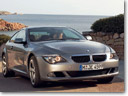
    BMW 6 SeriesTwo dream cars are setting out on the next lap. Featuring highly attractive modifications to their characteristic design, an interior further refined in many details and boasting colour highlights as well as innovations in drive technology and on the driver assistance and safety systems, the BMW 6 Series Coupé and the BMW 6 Series Convertible offer an even greater thrill and more style than ever before.

    Indeed, through their looks and style, combined with cutting-edge technology, both models are an authentic representation of the classic Gran Turismo featuring modern highlights together with classic qualities.

    The most important innovation within the engine compartment is the diesel engine providing superior torque and economy for the first time in a car of this class, the most powerful 3.0-litre straight-six diesel in the world giving the BMW 6 Series EfficientDynamics of a particularly impressive standard.

    The petrol engines also feature a wide range of modern improvements optimising both fuel consumption and exhaust emissions, among them High Precision Injection on the straight-six, that is the most advanced system of direct fuel injection, Brake Energy Regeneration, and on-demand control and management of the car’s ancillaries.

    Six-speed automatic sports transmission is tailored perfectly to the character of the BMW 6 Series, combining comfortable cruising with the option at any time to use the full power and muscle of the engine for all-out acceleration and driving dynamics.

    Style and sport are indeed the strongholds of the BMW 6 Series: Either as an elegant Sports Coupé in the proud tradition of a genuine Gran Turismo or as a dynamic Luxury Convertible enabling the driver and passengers to enjoy the wind rushing by in an incomparable manner. Both models combine their strengths with the convincing everyday driving qualities of a large and spacious 2+2-seater.

    The BMW 6 Series Coupé and Convertible stand for a heritage of no less than 70 years dedicated to the thrill of mobility and success in motorsport.

    Cars such as the BMW 327/328 Coupé, the BMW 3200 CS, the BMW 3.0 CSi or the first generation of the BMW 6 Series to this day still represent the unique combination of elegance and competition-oriented sportiness so characteristic of BMW.

    The history of exclusive and dynamic driving pleasure with nothing but the sky above was originally introduced in the BMW 327 Convertible, the BMW 335 Convertible, and the BMW 503 Convertible, all of them milestones in technology and design, with a strong and lasting impact on the ongoing development of the brand and its products.

    The BMW 6 Series today also plays a significant role within the brand’s model portfolio. It is indeed the benchmark for innovation, a powerful expression of progress in technology and, at the same time, the strong performer interacting with a particularly demanding target group. Cars of this kind establish a particularly active relationship between the manufacturer and the customer, the dedicated driver opting for a BMW 6 Series Coupé or, respectively, a BMW 6 Series Convertible showing a clear preference for the BMW brand and, at the same time, a strong affinity to innovations in technology, premium quality, and individual style.

    An attitude of this kind creates a particularly close relationship with the product and its features not only prior to, but also after purchasing the car.

    Innovations of this standard endorsed and acknowledged by the critical customer of this calibre have the potential to define the progress of the entire brand. This, in turn, makes the BMW 6 Series a role model not only in design, but also in its control and operating concept, its comfort functions, chassis and suspension technology, and driver assistance systems.

    More than 75,500 cars built within just over three years are impressive proof of the close link between the BMW brand and the tradition of the sophisticated, top-quality Gran Turismo. In this segment, facing keen competition from a number of high-ranking competitors, the BMW 6 Series, measured in terms of registration figures, ranks a proud second among all luxury sports cars the world over. In other words, right from the start it immediately left all competitors with comparable all-round qualities far behind.

    Clearly dynamic: highlights in exterior design.

    The BMW 6 Series boasts powerful innovations characteristic of the brand and its leadership over the competition not only through the cars’ power units. For in their design and style, both the 6 Series Coupè and the 6 Series Convertible offer a level of quality only the development process applied by the BMW Group is able to achieve.

    While the engineers responsible for developing the drivetrain benefit from skills and the art of engineering going back decades in enhancing the level of perfection to an ever-increasing standard through technologies such as EfficientDynamics, the success of BMW design lies in the ability to interpret the traditional values of the brand with supreme creativity in looking into the future. Hence, the design and styling of the BMW 6 Series clearly reflect the highly dynamic, refined, top-quality and progressive technical standard of the car as a truly authentic rendition of this supreme standard.

    The overall design and look of both models, offering perfect harmony and balance to the last detail, is borne out in particular by the sculptural look of both cars, the Coupé and Convertible providing a perfect match of all lines and design features. Indeed, the smooth, uninterrupted flow of all characteristic lines on the BMW 6 Series ensures harmonious interplay of the front section, the sides and rear sections of the car, the generous and powerfully curved surfaces all coming together to provide a harmonious picture to be admired in its sporting elegance and dynamic class from every angle and every perspective.

    Offering this unique design language, the BMW 6 Series Coupé stands out as a modern and innovative interpretation of the classic Gran Turismo. And in the same way the BMW 6 Series Convertible, through its design, is a proud symbol of sporting and elegant driving pleasure with nothing but the sky above.

    Powerful and full of presence from every perspective.

    Detailed highlights and special features give the BMW 6 Series even greater presence in and through the elementary messages of the car’s design. Appropriate refinements offer an even clearer and more convincing expression of the car’s sculptural character both at the front, from the sides, and at the rear, focusing in particular on the sporting characteristics and strengths of the BMW 6 Series.

    Both the Coupé and Convertible now have an even more powerful and striking stance on the road, the strong lines extending all the way from the A-pillars along the entire engine compartment lid to the BMW kidney grille and forming a dynamic arrow further emphasised by the powerfully chiselled bars in the lower air intake.

    The air intake itself is even wider than on the former model and borders at the bottom on a contour edge significantly highlighting the wide track of the car. The newly designed direction indicators, in turn, featuring LED light units with a crystalline effect, provide an even more distinctive signal than before.

    Through their striking contours, the headlights give the front end of the BMW 6 Series a clear, focused look, light technology adding further brilliance. Featured as standard, the bi-xenon dual round headlights are covered by a layer of clear glass at the surface, their corona rings now offering BMW’s typical daytime lights function.

    With its long wheelbase, the long and sleek engine compartment lid, the greenhouse moved far to the back and the low roofline tapering out gently to the rear of the car, the BMW 6 Series has all the proportions of a classic coupé. And thanks to its unique Finn roof, the BMW 6 Series Convertible also offers the same, dynamically stretched silhouette.

    The light edge on the side-sills is even more pronounced and distinctive than before on the BMW 6 Series, offering extra volume and contours to highlight the sporting character of the car. The metallic paint colours Deep Sea Blue and Space Grey, as well as three light-alloy rims, offer further options in rounding off the sporting elegance of the BMW 6 Series according to the customer’s individual preferences.

    In the process of modifying the rear end of the car, BMW’s designers have harmoniously continued and enhanced the concept of ongoing lines extending around the entire vehicle. The section of the luggage compartment lid beneath the spoiler lip is even more concave in design than before, rising up less steeply to provide not only an even more dynamic look, but also even more distinctive light/shade contrasts, making the entire rear end of the car look even lower and more dynamic.

    On both the Coupé and Convertible, the additional brake light is now integrated in the spoiler lip. The inner structure of the rear lights has also been modified to reflect the lines of the car, with all light sources now being LED units.

    The harmony of lines on the luggage compartment lid, the rear lights and reflectors is likewise more intense and striking than before, the line formed by the lower edge of the rear spoiler sweeping gently downwards, where it is taken up by the outer contour of the rear lights. Then, following the design of the lights, the spoiler line, while still moving down, sweeps to the inside, where it is taken up by the contour of the low, even more stretched-out and sleeker reflectors.

    BMW 6 Series all the way: harmony of design outside and inside.

    The stylish and elegant dynamism of the car’s exterior design continues smoothly and harmoniously within the interior of the BMW 6 Series. Bearing a clear analogy to the exterior design of the car, the concept of dynamic harmony forms clear, flowing lines and tense, muscular surfaces.

    As an example, the sweeping cover above the dashboard starting beneath the windscreen extends back on both sides in an ongoing, dynamic line leading into the door panels and surrounding the armrests. Both the driver and front passenger are therefore cocooned by tense, even exciting design elements continuing all the way to the centre console between the rear seats, thus emphasizing both the sophisticated style and elegance of the interior in a genuine visual and tangible experience.

    The exclusivity of the BMW 6 Series is enhanced to an even higher standard by appropriate refinements in the quality of materials on specific controls and instruments finished in Chrome Pearl Grey Design as well as colours for the interior trim and upholstery. As an alternative to the “standard” version, optional interior trim strips made of grained maplewood, dark birchwood, or aluminium with a longitudinal grain pattern give the interior either an even more sophisticated, stylish and elegant, or a more technical and progressive touch.

    Optional finish in Pearl exclusive leather, with additional leather on the armrests, the door grab handles and the centre console, is now also available in Chateau Red and in a upholstery colour, Saddle Brown.

    Featuring a combination of leather and Pearl Grey chrome, the iDrive Controller matches the look of the rotary buttons, thus additionally enhancing the overall harmony of the car’s design.

    Precise control of the system is further facilitated by a ring around the Controller made of extra-hard rubber, and to ensure even more intuitive use, the iDrive control system in the BMW 6 Series comes complete with eight programmable favourite buttons allowing direct access to selected functions.

    The engines: even more dynamic, even more efficient – and for the first time also a diesel.

    To show a clear sign of supremacy, a car – just like a human being – has to be a leader. And the BMW 6 Series expresses this leadership once again also in its engine technology, the progressive character of the car being borne out not least by the unique implementation of BMW EfficientDynamics also
    in this segment.

    Forming an major highlight in BMW engine development, the technologies introduced in and through BMW EfficientDynamics to reduce both fuel consumption and exhaust emissions are featured consistently also in the eight- and six-cylinder power units of the BMW 6 Series.

    A particular highlight is the availability of a diesel engine for the first time in this segment, on both the Coupé and Convertible. Indeed, this is the world’s most powerful and dynamic three-litre straight-six diesel now offering its supreme power and efficiency in two particularly desirable cars. Displacing 3.0 litres, the power unit featuring an all-aluminium crankcase, Variable Twin Turbo (VTT) technology and third-generation common rail fuel injection develops maximum output in the BMW 635d Coupé and the BMW 635d Convertible of 210 kW/286 hp, plus maximum torque of 580 Newton-metres/427 lb-ft.

    And through its low weight quite outstanding for a diesel of this calibre, the engine enhances both the efficiency and agility of the BMW 6 Series.

    Referred to also as two-stage turbocharging, the VTT System is made up of two turbochargers varying in size. First, the small turbocharger cuts in at low engine speeds, developing superior power and torque spontaneously and without the slightest delay in response to even the smallest movement of the accelerator pedal thanks to its low level of inertia. Then, with engine speed increasing, the second, larger turbocharger also cuts in, giving the engine its maximum torque at just 1,750 rpm, with maximum engine power at 4,400 rpm.

    The high-performance diesel clearly expresses its sporting character in accelerating to 100 km/h, an exercise completed by the BMW 635d Coupé in 6.3 and by the BMW 635d Convertible in 6.6 seconds. Top speed of both models, in turn, is limited electronically to 250 km/h or 155 mph.

    Returning average fuel consumption in the EU test cycle of 6.9 litres on the Coupé (equal to 40.9 mpg imp) and 7.2 litres on the Convertible (equal to 39.2 mpg imp), the BMW 635d sets the benchmark for efficiency in its segment. The increase in the car’s cruising range all the way to 1,015 kilometres or 629 miles on the Coupé and up to 970 kilometres or 601 miles on the Convertible clearly benefits the long-distance motoring qualities of the car as a traditional symbol of a genuine Gran Turismo.

    Unparalleled supremacy: the eight-cylinder in the BMW 6 Series.

    Offering the pinnacle of supreme power and performance, the BMW 6 Series again comes with an eight-cylinder right at the top of its range: Developing maximum output of 270 kW/367 hp at an engine speed of 6,300 rpm and maximum torque of 490 Newton-metres/361 lb-ft at 3,400 rpm, the 4.8-litre in the BMW 650i Coupé and the BMW 650i Convertible ensures the highest standard of motoring in style.

    This ultra-modern aluminium power unit comes complete with BMW’s throttle-free VALVETRONIC valve management, double-VANOS variable camshaft control on both the intake and exhaust side, as well an intake manifold switching to two different positions.

    Benefiting from these highlights in technology, newly tuned engine management, and a wide range of high-tech features serving to reduce fuel consumption, the eight-cylinder offers not only supreme smoothness and refinement, an immediate response and a “beefy” torque curve, but also a high standard of economy with fuel-efficient lean-burn operation throughout a wide load range including higher engine speeds, thus ensuring a significant reduction of fuel consumption also in everyday traffic.

    BMW 650i Coupé accelerates to 100 km/h in 5.1 seconds, and completing the same exercise in 5.5 seconds, the Convertible also offers the dynamic performance of a thoroughbred sports car. Electronic engine management limits the top speed of both models to 250 km/h or 155 mph.

    Average fuel consumption in the EU test cycle is 11.7 litres/100 kilometres on the Coupé and 12.6 litres/100 km on the Convertible (equal to 24.1 and, respectively, 22.4 mpg imp). On the road, this means a reduction in fuel consumption versus the former models by up to 5 per cent, a clear sign of further progress in the spirit of BMW EfficientDynamics also in this performance class.

    Innovative: straight-six power unit with High Precision Injection.

    The 3.0-litre power unit with its composite magnesium/aluminium crankcase in the BMW 630i represents the latest state of the art in six-cylinder engine technology. The most important innovation in this context is BMW’s High Precision Injection, second-generation direct gasoline injection allowing fuel-efficient lean-burn operation throughout a wide load range including high engine speeds and therefore reducing fuel consumption significantly also in everyday traffic.

    This progress is provided by innovative piezo-injectors arranged between the valves and injecting fuel directly to the area around the spark plug. Together with numerous other technologies serving to reduce fuel consumption, direct fuel injection in the lean-burn mode is part of BMW EfficientDynamics, BMW’s cutting-edge development strategy offering results and improvements now being implemented step-by-step in all of BMW’s model series.

    Standing out as the currently most advanced six-cylinder, this superior power unit develops maximum output of 200 kW/272 hp in the BMW 630i Coupé and the BMW 630i Convertible, that is 10 kW/14hp more than in the former engine with conventional fuel supply and engine management. Maximum torque, in turn, is 320 Newton-metres or 236 lb-ft. On the road, this means acceleration to 100 km/h in the Coupé within 6.2 seconds, and acceleration to 100 km/h in the BMW 630i Convertible in 6.7 seconds. Again, top speed on both models is limited electronically to 250 km/h or 155 mph.

    Average fuel consumption of the BMW 630i in the EU test cycle is just 7.9 litres/100 kilometres on the Coupé and 8.3 litres/100 km on the Convertible, equal to 35.8 and, respectively, 34.0 mpg imp. This is an improvement of up to 15 per cent over the former models, which already boasted a very high standard of fuel efficiency.

    Fuel economy and emissions optimised on all models.

    A wide range of fuel-saving features in and around the engine also serve to make all of the power units in the BMW 6 Series even more efficient.

    One example is Brake Energy Regeneration on all variants of the BMW 6 Series, an intelligent energy flow management concept concentrating the generation of electricity for the car’s on-board network on the overrun and brake phases. And to further promote an economic style of motoring, the manual gearbox versions of the BMW 6 Series also come with a gearshift point indicator.

    Further technologies serving to save fuel provide their superior effect without any intervention by the driver. The belt drive for the a/c compressor, for example, comes with its own clutch automatically disconnecting the compressor as soon as the driver switches off the air conditioning. Cooling air flaps either opened or closed as a function of driving conditions serve likewise to optimise not only noise comfort, but also the car’s streamlining on both the BMW 635d Coupé and the BMW 635d Convertible.

    Incorporating an electrical coolant pump, thermal management on the straight-six power unit in the BMW 630i, in turn, varies the car’s cooling efficiency as a function of actual requirements, regardless of engine speed. And last but certainly not least in this context, the Varioserv steering assistance pump featured on all variants of the BMW 6 Series ensures particularly efficient steering support and assistance according to the driver’s current requirements.

    Automatic sports transmission with paddles on the
    steering wheel.

    On the BMW 630i and the BMW 650i, engine power is delivered to the rear wheels as standard via a six-speed manual gearbox. An alternative also available to the discerning customer is the newly developed six-speed automatic sports transmission featured as standard on the BMW 635d and combining supreme comfort with unusually short reaction and gearshift times in true Gran Turismo style, direct connection to the engine also offering dynamic power and performance for sheer driving pleasure at all times.

    The driver controls the automatic sports transmission by means of an electronic gear selector lever, moving the lever briefly to the left from position D in order to activate the manual gearshift mode. This allows the driver to shift gears either via the gear selector lever or manually in a sequential mode by means of paddles on the steering wheel. Yet a further option is to shift gears manually directly from the paddles, while pressing the Sports button positioned behind the gear selector lever, the driver is able to enjoy an even faster and dynamic gearshift. A further benefit is that the Sports button also modifies the progressive action of the gas pedal and, in conjunction with the car’s standard steering, the Servotronic control map, providing optimum conditions for dynamic acceleration.

    Important innovations for even greater driving pleasure, safety and comfort.

    Greater dynamism, enhanced safety, extra comfort – with its wide range of standard features and numerous other, optionally available high-tech improvements, the BMW 6 Series offers sheer driving pleasure of a truly incomparable, exclusive and fascinating kind. So like the BMW 7 Series, the BMW 6 Series is a particularly impressive demonstration of leadership in technology in terms of its comfort functions, chassis and driver assistance, both the Coupé and Convertible perfectly reflecting the innovative power of the BMW brand.

    All-aluminium suspension for enhanced agility, safety and comfort.

    Both the BMW 6 Series Coupé and the Convertible are characterised by fascinating, sporting and superior driving characteristics at all times and under all conditions. Featuring high-performance power units, rear-wheel drive, excellent axle load distribution, and an ultra-modern all-aluminium suspension, the BMW 6 Series offers a supreme driving experience under all conditions. The principle of lightweight construction on the chassis and suspension, in turn, guarantees supreme stability on low weight and minimises the car’s unsprung masses.

    The high-performance swing-calliper brakes with inner-vented brake discs are controlled hydraulically on the BMW 6 Series, now acting even faster and more precisely than before in guaranteeing maximum stability and full brake power at all times.

    A further important feature of the premium brake system on the BMW 6 Series is its low weight, the high-performance brakes on the BMW 650i being specially adapted to the supreme power of this outstanding eight-cylinder. And last but not least, all models in the BMW 6 Series come with a continuous brake pad wear indicator.

    DSC Dynamic Stability Control with optimised control action.

    Offering a wide range of functions, DSC Dynamic Stability Control supports the driver in the process of handling his BMW safely and with superior style. The first and foremost DSC function is to apply the brakes individually on the car’s various wheels as required, or to intervene in engine management in order to counteract any over- or understeer in bends.

    DSC also comprises the ABS anti-lock brake control system as well as ASC Automatic Stability Control preventing the drive wheels from spinning on loose or slippery ground, a Brake Assistant, and CBC Cornering Brake Control to avoid under- or oversteer in bends.

    Further functions are Fading Compensation whenever the brakes become particularly hot, regular Dry Braking to optimise the car’s stopping power in wet weather, and a Start-Off Assistant enabling the driver to set off smoothly and without the car rolling back on an uphill gradient, without having to use the handbrake.

    The Brake Assistant in the new BMW 6 Series forming part of the DSC control system is networked with the car’s other driver assistance systems, interacting with Active Cruise Control with its Stop & Go function available as an option in order to detect the need for extra stopping power in good time. This is done by radar sensors incorporated in the system, with the brakes being pre-loaded by reducing the normal activation thresholds on the hydraulic Brake Assistant.

    Yet a further innovation is the pre-loading brake function moving the brake pads closer to the discs for immediate build-up of brake pressure, thus avoiding the slightest delay in the process of applying the brakes. In the event of an emergency braking manoeuvre, this precaution enables the brakes to build up their maximum stopping power much faster than usual, making stopping distances a lot shorter and offering valuable safety reserves.

    Activated at the touch of a button, DTC Dynamic Traction Control serves to move up the DSC response thresholds for even more dynamic performance. Specially optimised in the BMW 6 Series, this DTC mode enhances traction on slippery surfaces and ensures an even higher standard of sporting performance under dynamic driving conditions.

    Safety built-in from the start: runflat tyres and tyre defect indicator.

    Both the BMW 630i and the BMW 635d come as standard on 17-inch light-alloy rims. The BMW 650i, in turn, boasts 18-inch light-alloy rims as standard.

    The tyres on all models feature the most advanced runflat technology enabling the driver to continue to the nearest workshop even after a complete loss of pressure. And as a further safety feature, the tyre defect indicator permanently supervises air pressure in the tyres and warns the driver as soon as tyre pressure drops more than 30 per cent below the ideal level by activating an optical signal in the instrument cluster.

    Unique: Active Steering and Dynamic Drive.

    Feature as standard on the BMW 6 Series, Servotronic power steering provides appropriate assistance on the hydraulic rack-and-pinion steering as a function of road speed. Further enhancement of steering comfort is provided by optionally available Active Steering absolutely unique in the BMW 6 Series segment, varying the steering transmission ratio appropriately to provide a larger steering angle at low speeds with the same movement of the steering wheel than at higher speeds. In practice, this allows the driver to manoeuvre his car with less effort and with an even smoother steering effect.

    At higher speeds, on the other hand, Active Steering makes it easier for the driver to remain steadily on course, harmonising the feeling of the steering.

    By way of yaw rate control, Active Steering stabilises the car in brake manoeuvres on varying surfaces (when applying the brakes with a modal split), counter-steering as required for superior safety and balance.

    Yet another innovation ideally reflecting the character of the BMW 6 Series is optionally available Dynamic Drive. This suspension control system features active anti-roll bars with hydraulic swivel motors on the front and rear axle, enabling the car to almost completely set off roll movements in bends and in a sudden change of direction. A further benefit is appropriate control of the car’s steering behaviour in a lane change or in hard manoeuvres serving to avoid an obstacle on the road.

    Active Cruise Control with Stop & Go.

    Active Cruise Control with its Stop & Go function offers the driver better support and greater assistance at the wheel than ever before.

    This innovative system now available as an option in the BMW 6 Series – on cars with automatic transmission – features automatic distance control allowing the driver to comfortably cruise along the motorway or on a country road, while constantly maintaining an appropriate distance to the vehicle ahead also in stop-and-go traffic at very low speeds.

    As soon as the distance pre-set by the driver is no longer maintained, the system adjusts the speed of the car by intervening in drive management and building up brake pressure, thus taking current traffic conditions into account. Then, as soon as the road ahead is free again, Active Cruise Control increases the speed of the car to the limit set by the driver in advance.

    The system even reduces the speed of the car to a standstill whenever necessary on account of current traffic conditions, bringing the car to a halt and holding it in that position.

    The maximum deceleration generated by Active Cruise Control with Stop & Go is 4 metres/sec². And should the driver be required to intervene because the driver ahead is applying the brakes extremely hard, he will be informed to do so by appropriate visual and acoustic signals.

    Lane Departure Warning with vibration signal on the steering wheel.

    To support driver awareness, both the BMW 6 Series Coupé and the BMW 6 Series Convertible come with a newly developed assistance system helping to prevent the driver from inadvertently departing from the right lane on the road. Referred to as Lane Departure Warning, this sophisticated system identifies departure of the car from the right track and gives the driver a discreet but noticeable signal at the most important point in steering the car – on the steering wheel itself.

    The Lane Departure Warning System is made up of a camera fitted near the interior mirror on the windscreen, a control unit for comparing data, and a signal transmitter generating a vibration signal on the steering wheel.

    Even better visibility thanks to variable light distribution.

    Innovative driver assistance systems provide the opportunity to mastermind the bi-xenon headlights of the BMW 6 Series in a particularly intelligent fashion. The optionally available Adaptive Headlights, for example, guarantee appropriate illumination of the road ahead, following the road in bends and on winding passes.

    A further improvement is variable light distribution introduced for the first time on the BMW 6 Series to optimise the headlight beam and illumination also on a straight stretch of road: Operating as a function of road speed, this innovative control system automatically enlarges the driver’s field of visibility by broadening the light beam, the “footprint” of light, as it were. In a typical city light situation at speeds below 50 km/h or 31 mph, this ensures broader distribution of light making it easier to recognise objects on the opposite, oncoming side of the road. In the motorway mode, on the other hand, the driver’s field of vision is extended by giving the light beam a longer range and again offering greater illumination on the left-hand side with oncoming traffic.

    Activation of the foglamps at speeds of up to 70 km/h or 50 mph, in turn, generates broader light distribution and brightens up the area close to the car. And at higher speeds, finally, the headlight range is also extended over and above the broader distribution of light.

    Automatic headlight control featured as standard activates the low-beam headlights without requiring any intervention by the driver whenever this is necessary – for example when driving through a tunnel or with conditions becoming darker at dusk. The rain sensor also featured as standard is an ideal supplement to the headlight control function, conducting optical measurements to automatically determine the onset and degree of precipitation, and thus activating the windscreen wipers accordingly.

    The BMW 6 Series is the only car in its segment available with a High Beam Assistant. This intelligent unit switches off the high beam automatically as soon as the car encounters oncoming traffic or another vehicle ahead comes into sight or if the road ahead – for example in town or a built-up area – is adequately illuminated.

    BMW Night Vision available as an option offers an even higher standard of safety when driving at night. The “heart” of this unique system is a thermal imaging camera able to detect people, animals and objects emitting heat at a distance of up to 300 metres or almost 1,000 feet also next to the road, then transmitting a high-contrast image to the central Control Display also used by the navigation system.

    As an option both the BMW 6 Series Coupé and the BMW 6 Series Convertible are available with a Head-Up Display projecting information relevant to the driver such as the road speed of the car or navigation data to the windscreen directly in front of the driver.

    Comfort and safety on all four seats.

    High-strength load-bearing structures, generous and clearly defined deformation zones front and rear, side impact protection integrated in the doors and rear side panels, and an extremely stiff passenger cell allowing the entire structure around the driver to maintain its function as a survival area also in a severe collision – all these features provide the prerequisites for the exemplary standard of passive safety offered by the BMW 6 Series.

    Other standard features are three-point belt inertia-reel seat belts on all seats as well as frontal and side airbags. The BMW 6 Series Coupé also comes with head airbags, while the BMW 6 Series Convertible features rollbars moving up automatically in the event of a possible rollover within fractions of a second from a module behind the rear headrests.

    Active headrests for an even higher standard of occupant protection.

    Both the BMW 6 Series Coupé and the BMW 6 Series Convertible come as standard with electrically adjustable seats for the driver and front passenger as well as a triple memory function on the driver’s seat. The front seats on the BMW 6 Series Convertible feature an integrated belt system, while on the BMW 6 Series Coupé the belt anchor points allow comfortable and convenient use of the car’s restraint systems.

    Newly developed active headrests on the front seats once again enhance the standard of passive safety in both models, the headrests developing their protective effect in the event of a rear-end collision by automatically moving closer to the occupant’s head, thus preventing any rapid spinning or turning motion of the head, in the process significantly reducing the risk of upper spinal injury for the driver and front passenger.

    To ensure this effect, the headrests are moved forward by 60 millimetres or 2.36´´ and upward by 40 millimetres or 1.57´´ as soon as the airbag control unit registers an impact at the rear of the BMW 6 Series and sends out a signal for pyrotechnical activation of the system. This, in turn, releases two springs moving the upholstered sections of the headrests into position to immediately cushion the heads of the occupants, preventing any spinning or jerking movement resulting from impact energy.

    Top-end navigation and audio systems.

    As a particular highlight in the interest of motoring comfort, both the BMW 6 Series Coupé and the BMW 6 Series Convertible are available as an option with the BMW Professional navigation system now optimised to an even higher level. Among other features, the BMW Professional navigation system features refined graphic presentation on an 8.8-inch Control Display as well as new, particularly reliable voice entry exclusive to BMW cars.

    High-quality audio systems and telematics functions serve to enhance touring comfort and driving pleasure in the BMW 6 Series to an even higher standard. Particularly the newly developed BMW Individual High-End Audio System guarantees exceptional quality of sound ensured above all by the “heart” of the system, trendsetting Dirac Live signal processing. The digital nine-channel amplifier with DSP Digital Signal Processing develops
    maximum output of 825 watt and, together with the particularly sophisticated loudspeakers, sets a benchmark in the quality and reproduction of sound.

    Over and above the AUX-IN bush featured as standard, a USB interface is also available as an option for linking up external audio sources. This allows the user to integrate MP3 players such as an Apple iPod into the audio system and to control the various functions by means of the iDrive Controller or, respectively, the multifunction buttons on the steering wheel.

    The range of multi-media features and options is rounded off by the mobile BMW Online internet portal and BMW Assist telematics services. The BMW Online news menu comprises not only the latest reports provided directly by the German Press Agency (dpa), but also weather reports and forecasts tailored to the driver’s personal needs.

    The BMW Convertible Weather Service, for example, tells the driver whether he can expect to drive his BMW 6 Series Convertible with the roof down on the next day or whether to expect precipitation at his current location. And last but not least, the BMW 6 Series is also available with BMW TeleServices through which the BMW Group offers its customers a universal range of service features serving for example, to make appointments and set the appropriate time for a meeting.

    Leather upholstery with SunReflective Technology on the Convertible.

    One of the particular highlights offered by the BMW 6 Series Convertible is the use of a newly developed type of leather for the seat upholstery and interior panels. In this case so-called “cool pigments” are integrated into the material in a process referred to as SunReflective Technology, reflecting infra-red radiation in the sunlight. This very effectively reduces any undue overheating of the seat surfaces when the car is open, providing a difference in temperatures compared with conventional leather of up to 20 °C or 68 °F in the case of dark colours.

    Together with the characteristic design of both models and their impressive standard of driving dynamics, the comprehensive range of multi-faceted features helps to give the BMW 6 Series its truly authentic and unique identity. Indeed, the BMW 6 Series Coupé and the BMW 6 Series Convertible belong to the small and highly exclusive group of cars fulfilling the greatest demands in every respect and setting benchmarks everywhere. Given the sheer magnitude of their qualities, both models stand out clearly in their respective segments, reflecting the ideals of the discerning motorist dedicated either to the refined dynamics of a four-seater Gran Turismo coupé or the exclusive driving pleasure only a luxury convertible likewise conceived for four occupants is able to offer.

    Through its convincing representation of the latest values including not only uncompromising quality, unpretentious elegance, superior everyday reliability and now also the superior economy of the BMW 635d, the BMW 6 Series is a highly attractive proposition also to the connoisseur outside of the car’s classic target group. So the positive impression the BMW 6 Series leaves behind on the road gives the driver even greater pleasure in identifying with his car.

    The outstanding success of the BMW 6 Series so far clearly proves
    how the car reaches the objectives set not only by BMW, but also by the most demanding customers, of a luxury performance coupé and convertible:

    By the end of February 2007 no less than 75, 352 units of the BMW 6 Series had come off the assembly line, to be precise 41, 446 Coupés and 33, 906 Convertibles. So within just three years, the BMW 6 Series already accounts for more than 85 per cent of its predecessor’s sales volume throughout its entire lifecycle. And now, with both models boasting an even more distinctive profile, everything is in place for continuing the great success of the BMW 6 Series.

  • AC Schnitzer S3 Cabrio

    A Convertible provides the ultimate for the senses: Where can you experience driving more directly than in an open car, with the wind gently emphasising the acceleration, the acoustic muscle play of the engine teasing your ears, and a breathtaking silhouette reflected in every shop window. The new BMW 3-series Convertible, a complete car with folding hard top, stimulates the automotive pleasure centre without setting reason aside. When you’ve had one taste, you soon long for more – for example the ACS3 3.5i Convertible.

    In designing the bodykit, the objective for AC Schnitzer was not to hide the body contours under excessive bulges, but to emphasise the natural characteristics of the vehicle in a structured way. So the front skirt, which simultaneously increases downforce, in its basic design follows the threepiece original but it is substantially  softer, more facetted and more energetic.  Like the AC Schnitzer side skirts which aesthetically highlight the side crease of the Convertible body and with their asymmetric lines, rising towards the back,  emphasise  the  sporting abilities of the vehicle even when stopped. Its charm is enhanced with the clearly marked AC Schnitzer Racing rims type IV  in silver, which at the front measure 9.0Jx20″ and at the rear 10.0Jx20″ (tyres 245/30R20 and 295/25R20). As an alternative, the dark  Type IV BiColor  wheels in 8.5Jx19″ at the front and 9.5Jx19″ at the rear give the BMW a hint of Badboy (tyres 225/35R19 and 255/30R19).

    Although the classic rear view of the new 3-series Convertible is already eyecatching, the AC Schnitzer design language with its more strongly contoured rear skirt expresses  extra sporting ambitions with no loss of credibility or coherence. The twin flow  left/right tailpipes of the AC Schnitzer exhaust contribute to the neat overall impression not just visually but, with the gas pedal pressed, also acoustically with a unique crescendo. The twin sports rear silencer is enhanced by tailpipe trims in “Racing” design, which visually suggest a stylised horizontal figure eight, the mathematical symbol for “infinity”. A reference to the enormous power reserves of the vehicle, expressed above all in the superb BMW six cylinder twin turbo, a power plant which has been praised unanimously by the trade press, and which with its 306 HP/225 kW has caused worries for many competitors. The duel would be even more difficult for them with the AC Schnitzer performance kit  which is currently in development. The 335d will also soon undergo a power make-over at Aachen. For the 3.0 litre diesel (standard 231 HP/170 kW) the tuners already offer a Power-Plus pack that increases the power to 265 HP/195 kW. Power reserves which the chassis can handle easily thanks to fine tuning by AC Schnitzer

    Basic Car: BMW 3 Series Convertible E93 – all engines (the following accessories only depend on engine types if statedexplicitly)
    Performance  Upgrades: 330d Performance upgrade from 170 kW/231 HP up to 195 kW / 265 HP 320d in preparation 335d in preparation 335i in preparatio
    Exhaust: AC Schnitzer sports rear silencer (all models except 335i, 335d) and dual sports rear silencer (only 335i, 335d) both versions incl. “Racing” tailpipes, chromed
    Suspension: AC Schnitzer sports suspension AC Schnitzer spring kits AC Schnitzer special sway bars for rear axle
    AC Schnitzer aluminium strut brace for front axle
    Aerodynamic: AC Schnitzer front spoiler
    AC Schnitzer side skirts
    AC Schnitzer chromline set for side skirts
    AC Schnitzer rear skirt
    Steering: AC Schnitzer 3-spoke sports airbag steering wheels
    AC Schnitzer carbon steering wheel insert silver “Exklusiv”
    Interior: AC Schnitzer carbon interior silver “Exklusiv”
    AC Schnitzer carbon automatic gear knob silver “Exklusiv”
    AC Schnitzer aluminium gear knob, silver
    AC Schnitzer aluminium gear knob “Black Line”
    AC Schnitzer aluminum handbrake handle, silver
    AC Schnitzer aluminum handbrake handle “Black Line”
    AC Schnitzer aluminium cover for i-Drive-Controller, silver
    AC Schnitzer aluminium cover “Black Line” for i-Drive-Controller
    AC Schnitzer aluminium pedal set for cars with manual and automatic transmission
    AC Schnitzer foot rest
    AC Schnitzer floor mats