Category: Redirect

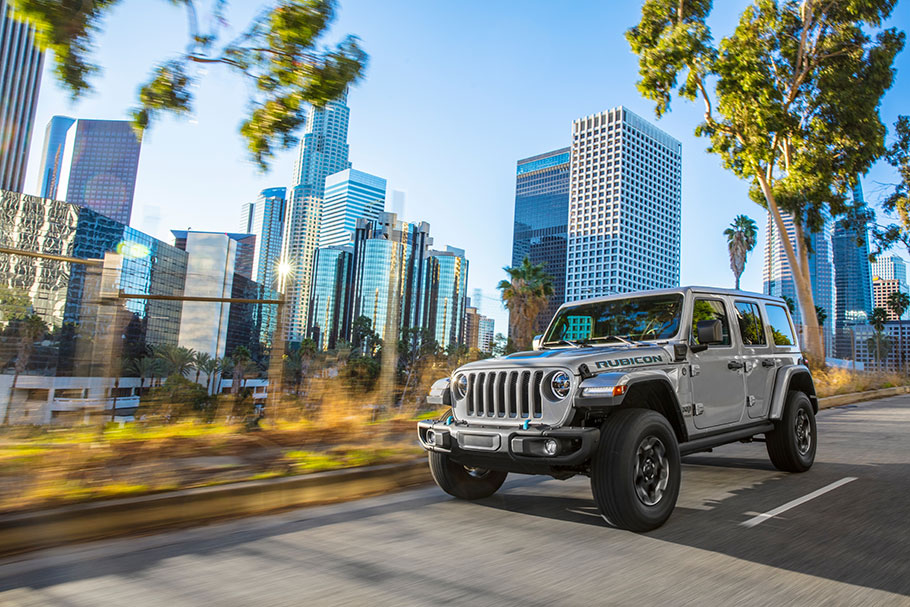
  • Jeep Wrangler 4xe Rubicon

    2021-Jeep-Wrangler-4xe-Rubicon1

    The Jeep® brand has introduced its new Wrangler 4xe, marking the arrival of the most capable, technically advanced, and eco-friendly Wrangler ever. Jeep Wrangler 4xe models will be available in Europe, China, and the United States by early 2021. The Jeep Renegade 4xe and Compass 4xe models – introduced last year in Geneva – began arriving in Europe this summer. The new Jeep 4xe models follow the introduction of the Jeep Grand Commander PHEV in China last year.

    The Wrangler 4xe’s plug-in hybrid powertrain is capable of up to 25 miles of nearly silent, zero-emission, electric-only propulsion, making it commuter-friendly as an all-electric daily driver without range anxiety and the most capable and eco-friendly Jeep vehicle off-road – combined with the open-air freedom that only Jeep Wrangler offers.

    Jeep will offer electrification options on each nameplate in the next few years as it strives to become the leader in eco-friendly premium technology. Electrified Jeep vehicles will carry the 4xe badge. Jeep electric vehicles will be the most efficient and responsible Jeep vehicles ever, taking performance, 4×4 capability, and driver confidence to the next level.

    “Our Jeep 4xe vehicles will be the most efficient, responsible, and capable that the brand has ever created,” said Christian Meunier, Global President of Jeep Brand – FCA. “We are committed to making Jeep the greenest SUV brand. The electrification of the Jeep lineup will allow commuters to travel solely on electric power, delivering an efficient and fun on-road experience and offering an ability to enjoy even more Jeep capability off-road in nearly complete silence.”

    The Wrangler 4xe’s advanced powertrain provides a unique on- and off-road experience through the combination of two electric motors, a high-voltage battery pack, a high-tech 2.0-liter turbocharged I-4 engine, and robust TorqueFlite eight-speed automatic transmission. The most advanced powertrain ever developed for a Jeep Wrangler maximizes efficiency with an estimated 50 miles per gallon equivalent (MPGe) while eliminating range anxiety, delivering pure-electric operation for most daily commutes.

    Torque from the electric motors in the Wrangler 4xe’s hybrid powertrain arrives instantly on-demand from the driver. The powertrain also delivers fuel-saving, seamless, start-stop operation of the engine.

    Jeep has demonstrated 4×4 capability leadership for nearly 80 years. Jeep vehicles were the first to feature an automatic full-time four-wheel-drive system, the first 4:1 transfer case, and the first electronic front sway-bar disconnect system. Merging electrification into the product lineup is a natural evolution.

    The Jeep Wrangler 4xe will be sold globally, with electric vehicle (EV) charge port plugs tailored to specific regions. It is assembled at FCA’s Toledo Assembly Complex in Toledo, Ohio.

    Wrangler 4xe Advanced Powertrain Combines Electric Motors, Turbo Engine
    The Jeep Wrangler 4xe powertrain integrates two electric motors and a 400-volt battery pack with a fuel-efficient, turbocharged, four-cylinder engine and TorqueFlite eight-speed automatic transmission. This configuration maximizes the efficiency of the hybrid propulsion components and mates them with the Wrangler’s world-renowned and proven driveline.

    Key elements of the Wrangler 4xe powertrain include 375 horsepower (280 kW), 470 lb.-ft. (637 N•m) of torque and an estimated 50 MPGe from the following components:

    • 2.0-liter turbocharged I-4
    • Engine-mounted motor-generator unit
    • Transmission-mounted motor-generator unit integrated into eight-speed automatic transmission (ZF 8P75PH)
    • 400-volt, 17-kWh, 96-cell lithium-ion, nickel manganese cobalt battery pack

    The 2.0-liter turbocharged I-4 engine is part of FCA’s Global Medium Engine family. The high-tech, direct-injection engine uses a twin-scroll, low-inertia turbocharger mounted directly to the cylinder head, along with a dedicated cooling circuit for the turbocharger, intake air, and throttle body for exceptional responsiveness, performance, and fuel efficiency.

    A high-voltage, liquid-cooled motor generator unit mounts at the front of the engine, replacing the conventional alternator. A robust belt connects the motor-generator to the engine crankshaft pulley. The motor-generator spins the engine for nearly seamless, fuel-saving, start-stop operation and generates electricity for the battery pack. The Wrangler 4xe does not use a conventional 12-volt starter motor. The Wrangler 4xe is equipped with a 12-volt battery to run accessories.

    The second high-voltage motor-generator is mounted at the front of the transmission case, replacing the conventional torque converter of an automatic transmission.
    Two clutches work to manage power and torque from the e-motor and engine. A binary clutch (on/off) is mounted between the engine and the motor. When this clutch is open there is no mechanical linkage between the engine and the e-motor, which enables it to propel the Wrangler 4xe in electric-only mode.

    When the binary clutch is closed, torque from the 2.0-liter engine and the e-motor flow combine through the automatic transmission. A variable clutch mounted behind the e-motor manages engagement with the transmission to improve drivability and efficiency.

    Battery Pack Preserves Interior Room
    The Jeep Wrangler 4xe’s 400-volt, 17-kWh, 96-cell lithium-ion battery pack uses nickel manganese cobalt (NMC) graphite chemistry. The pack and controls mount underneath the second-row seat, where it is protected from outside elements. The Wrangler 4xe’s second-row seat is redesigned, allowing the bottom cushion to flip forward for access to the battery.

    Encased in an aluminum housing, the pack is fitted with a dedicated heating and cooling circuit to keep the battery at its optimum temperature for best performance. The temperature control circuit includes a dedicated heater unit and a chiller that uses the Wrangler air-conditioning refrigerant to reduce coolant temperature when needed.

    The Wrangler 4xe hybrid system includes an Integrated Dual Charging Module (ICDM), which combines a battery charger and a DC/DC converter in a single unit that is more compact than two separate components, and a next-generation Power Inverter Module (PIM) that is reduced in size. These components are housed and protected from damage in a steel structure mounted below the battery pack.

    All high-voltage electronics, including the wiring between the battery pack and the electric motors, are sealed and waterproof. Like all Trail Rated Jeep Wranglers, the Wrangler 4xe is capable of water fording up to 30 inches (76 cm).

    The electric charge port features a push-open/push-close cover and is located on the left front cowl of the Wrangler 4xe for convenient nose-in parking at charging locations. The charge port includes LED indicators of charging status. An LED battery level monitor is mounted on top of the instrument panel, making it easy to check the battery state of charge at a glance during charging.

    Wrangler 4xe E Selec Modes
    The Jeep Wrangler 4xe driver can tailor the hybrid powertrain to best suit each trip, whether it is filling the needs of most daily commuters in pure-electric operation, a night on the town, or quietly exploring nature off-road.

    The Wrangler 4xe hybrid powertrain has three modes of operation, known as E Selec. The driver can select the desired powertrain mode via buttons mounted on the instrument panel, to the left of the steering wheel. Regardless of the mode selected, the Wrangler 4xe operates as hybrid once the battery nears its minimum state of charge.

    • Hybrid: The default mode blends torque from the 2.0-liter engine and electric motor. In this mode, the powertrain will use battery power first, then add in propulsion from the 2.0-liter turbocharged I-4 when the battery reaches the minimum state of charge
    • Electric: The powertrain operates on zero-emission electric power only until the battery reaches the minimum charge or the driver requests more torque (such as wide-open throttle), which engages the 2.0-liter engine
    • eSave: Prioritises propulsion from the 2.0-liter engine, saving the battery charge for later use, such as EV off-roading or urban areas where internal combustion propulsion is restricted. The driver can also choose between Battery Save and Battery Charge during eSave via the Hybrid Electric Pages in the Uconnect monitor

    To help optimize the benefit of the E Selec modes, the Wrangler 4xe driver information display and the Uconnect touchscreen feature Eco Coaching Pages. The Eco Coaching Pages let owners monitor power flow and see the impact of regenerative braking, schedule charging times to take advantage of lower electric rates, and view their driving history with detail of electric and gasoline usage.

    Regenerative braking is a key part of the Wrangler 4xe eco-friendly equation. When the driver steps on the brake pedal, the powertrain control engages the maximum available regenerative braking, up to 0.25 g, from the electric motors to slow the vehicle, augmented with the Wrangler’s traditional friction brakes. The regenerative braking feature also extends the replacement period for brake pads.

    With 4×4 engaged, all four wheels feed torque for regenerative braking, maximizing the energy recovery. Electricity due to regenerative braking is fed to the battery pack to maintain or increase the state of charge.

    The Wrangler 4xe also features the ability to maximize regenerative energy production via a driver-selectable Max Regen feature.

    When Max Regen is engaged, a more assertive regenerative braking calibration occurs when the vehicle sees zero throttle input from the driver (coasting). Max Regen can slow the Wrangler 4xe faster than standard regenerative braking and generate more electricity for the battery pack. Once selected, the Max Regen feature remains engaged until the driver deselects it.

    Off-road Legend
    Jeep Wrangler’s heritage is defined by its legendary off-road capability. All Wrangler 4xe power modes are available when the drivetrain is shifted to 4Lo. The seamless integration of electric power into the 4×4 drivetrain elevates the Wrangler 4xe to new levels of off-road performance.

    Enthusiasts will find that the instant availability of torque from the Wrangler 4xe’s electric motor delivers a more precise and controlled driving experience for climbing and crawling – there’s no need to build up engine rpm to get the tires to move, minimizing driveline shock loading and maximizing control and speed.

    In EV mode, the Wrangler 4xe treads lightly and silently, conserving fuel and allowing occupants to focus solely on the sights and full sounds of nature.

    The new Jeep Wrangler 4xe is available in three models: 4xe, Sahara 4xe, and Rubicon 4xe. Wrangler 4xe and Wrangler Sahara 4xe models are equipped with full-time 4×4 systems, front and rear next-generation Dana 44 axles and are fitted with the Selec-Trac two-speed transfer case with a 2.72:1 low-range gear ratio. The intuitive system allows the driver to set it and forget it in any environment.

    An available Trac-Lok limited-slip rear differential provides extra grip and capability in low-traction situations, such as driving over sand, gravel, snow, or ice.

    Wrangler Rubicon 4xe models carry the Rock-Trac 4×4 system that includes a two-speed transfer case with a 4:1 low-range gear ratio, full-time 4×4, front and rear next-generation Dana 44 axles, Tru-Lok electric front- and rear-axle lockers. The Wrangler Rubicon 4xe has an impressive crawl ratio of 77.2:1, which makes scaling any obstacle easy. Wrangler Rubicon models also offer improved articulation and total suspension travel with help from a front axle, electronic sway-bar disconnect. Together, these components contribute to the maximum off-road prowess Wrangler Rubicon is known for.

    The Wrangler 4xe includes Selec-Speed Control with Hill-ascent and Hill-descent Control. This allows drivers to control vehicle speed up and down steep, rugged grades with the transmission shift lever.

    Like every Jeep Wrangler, the Jeep Wrangler 4xe models wear a Trail Rated badge that signifies legendary 4×4 capability with equipment that includes:

    • Skid plates and front and rear tow hooks
    • Wrangler Rubicon 4xe approach angle of 44 degrees, breakover angle of 22.5 degrees, departure angle of 35.6 degrees, and ground clearance of 10.8 inches (27.4 cm)
    • Aggressive, available, 17-inch, off-road wheels, and 33-inch tires standard on Rubicon 4xe; 20-inch wheels standard on Wrangler 4xe and Sahara 4xe
    • Up to 30 inches (76 cm) of water fording

    All 4xe models maintain Wrangler’s renowned ease of customization with a host of Jeep Performance Parts from Mopar, available when the vehicle arrives in showrooms.

    ‘Electric Blue’ Design Cues Mark Wrangler 4xe
    The 2021 Jeep Wrangler 4xe maintains a sculptural design aesthetic that’s bold and functional, with a wide stance and trapezoidal wheel flares.

    Exclusive content identifies the Jeep Wrangler 4xe as the most technologically advanced Wrangler ever. New Electric Blue coloring on the front and rear Rubicon tow hooks stand out against the black bumpers. The unique blue coloring also traces the Rubicon name on the bonnet, Jeep badge, and the Trail Rated badge. Select Easter egg design cues also receive the Electric Blue shade. The black bonnet decal is outlined in the special color with “4xe” that lets the body color show through.

    Inside, the Wrangler 4xe Rubicon includes unique Electric Blue stitching on the seats and trim.

    The 2021 Jeep Wrangler 4xe is available in 10 exterior colors: Black, Bright White, Firecracker Red, Granite Crystal Metallic, Hella Yella, Hydro Blue (late availability), Sting-Gray, Snazzberry, Sarge, and Billet Silver Metallic. Two Wrangler interior options are available in the 4xe version: Black with Heritage Tan cloth and Black with Dark Saddle leather.

    Jeep Renegade 4xe and Jeep Compass 4xe
    Presented globally in March 2019 at the Geneva Motor Show, the new Renegade 4xe and Compass 4xe are the first Jeep models with plug-in hybrid electric technology available in Europe. Their arrival was celebrated in January with the exclusive First Edition – a special launch edition made available for customer previews and pre-booking on a dedicated website for select European markets. Renegade 4xe and Compass 4xe began arriving in the European market this summer. Both Renegade 4xe and Compass 4xe models feature a no-compromise hybrid solution that integrates the unmatched technical layout of each Jeep SUV and takes their capability to the next level through some of the most advanced technology, which combines enhanced performance (up to 240 horsepower), improved safety (four-wheel drive is always available) and low environmental impact (less than 50 g/km of CO2 in the hybrid mode).

    The combination of a 1.3-liter turbocharged gasoline engine and the electric unit guarantees performance and extraordinary driving pleasure: acceleration from 0 to 100 km/h in less than 7.5 seconds and full electric top speed is 130 km/h, which reaches 200 km/h in the hybrid mode.

    With the new hybrid technology, Jeep Renegade 4xe and Compass 4xe further improve their benchmark off-road capability courtesy of the greater torque offered by the combination between the two power sources. Thanks to the new Jeep 4xe technology, traction to the rear axle is not provided by a prop shaft, but through the dedicated electric motor. This allows the two axles to be separated and control the torque independently in a more effective way than a mechanical system, giving an instant electric boost to the rear wheels when needed.

    The new Jeep Renegade 4xe and Jeep Compass 4xe began arriving in Jeep dealerships across Europe this summer with a full lineup to include Limited, S, and Trailhawk trim, all with four-wheel-drive configuration.

    Mopar and Jeep Performance Parts Supports Launch of Most Capable, Technically Advanced, Eco-friendly Jeep Wrangler Ever
    When the new 2021 Jeep Wrangler 4xe (pronounced 4byE) plug-in hybrid joins the Jeep brand’s global electric vehicle lineup later this year, Jeep Performance Parts and Mopar will offer a wide variety of factory-engineered, quality-tested performance parts and accessories for the most capable, technically advanced and eco-friendly SUV on the planet.

    The comprehensive portfolio of more than 300 Jeep Wrangler products will include exclusive Jeep Performance Parts (JPP) offerings, allowing customers the opportunity to expand upon the Wrangler’s fun-to-drive on- and off-road experiences. An industry-first, OEM-developed JPP 2-inch lift kit is specifically engineered and tuned for the Wrangler 4xe plug-in hybrid application. Additional products will include bead-lock-capable wheels, off-road bumpers, LED off-road lights, and rock rails, just to name a few. More detailed information will be available closer to launch.

    In addition, Jeep Performance Parts and Mopar will offer a 240-volt at-home electric vehicle (EV) wall charger on Amazon.com and quality installation services, giving customers a fast and convenient way to charge their vehicles at home.

    Unlike any other aftermarket offerings, Jeep Performance Parts and accessories are backed by a full factory warranty. The products are created in close conjunction with the Jeep brand, engineering, and product design-office teams for development, testing, and validation. Strict standards and factory-exclusive data — information not available to the aftermarket — are used to seamlessly integrate performance parts and accessories in order to deliver proper fit, finish, and quality right down to the color, grain, and appearance of each product.

    Jeep Brand
    Built on nearly 80 years of legendary heritage, Jeep is the authentic SUV with capability, craftsmanship, and versatility for people who seek extraordinary journeys. The Jeep brand delivers an open invitation to live life to the fullest by offering a full line of vehicles that continue to provide owners with a sense of security to handle any journey with confidence.

  • Porsche BlackBox Cayenne

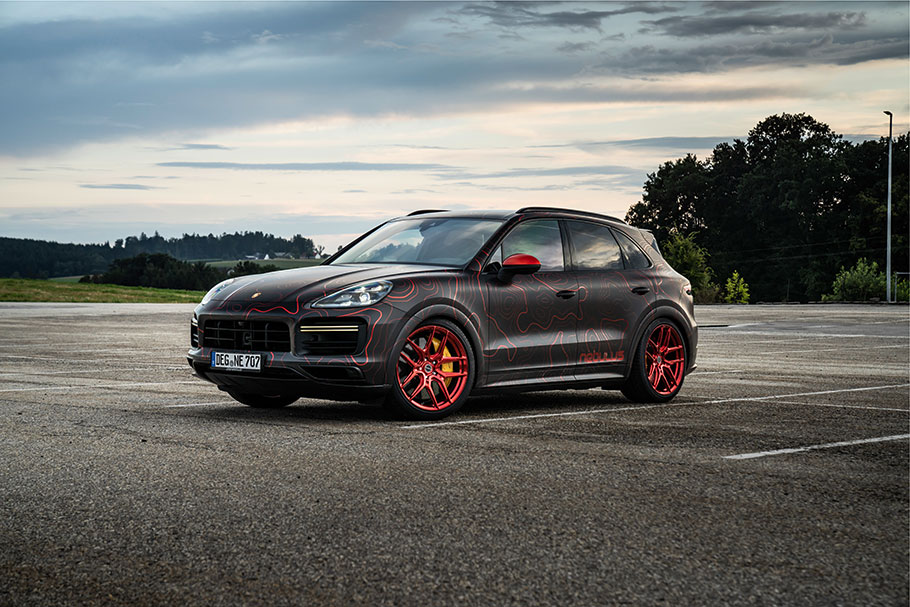
    Nebulus Porsche Cayenne by BLACK BOX-RICHTER

    Magnificent, unique, and literally damn fast: The Porsche Cayenne from the lifestyle brand Nebulus is a very special vehicle. Nebulus’ motto is to offer customers Nebulus branded clothing at a fair price. Independent, eye-catching design, high-quality standards, and perfect customer service have top priority at Nebulus. An owner-managed company from Lower Bavaria with a sense of fashion and lifestyle. The Nebulus brand was launched 13 years ago and is loved by millions of customers around the world.

    Black Box-Richter in Schardenberg, Austria, and their owner Mingo RICHTER are known for truly unusual kinds of adhesive vinyl wraps. In cooperation with HGP Turbo Retrofitting and 811 design, a Porsche Cayenne from Nebulus was both performance-enhanced and perfectly wrapped in vinyl foil. The Black Box Richter team has now given the object of desire – the Porsche Cayenne – a new design.

    In order to increase performance, the product range of HGP Turbo in Ohmden was utilized. After adjusting the engine control and removing the Vmax limitation, a large-volume air filter box, and a sports air filter insert was installed, each with “HGP-turbo” lettering. Interested observers will find large-volume intake hoses (in blue or black) as well as intake manifolds with an enlarged cross-section in front of the turbochargers. The series turbochargers were processed in such a way that larger turbine shafts and the same compressor wheels were installed. Reinforced thrust bearings and enlarged turbocharger inputs have been added as well. The boost pressure sensors have also been changed. All of this, of course, with the approval of the TÜV. The vehicle’s diagnostic capability remains intact, and the manufacturer cannot overwrite it. On request, the performance increase to 962 hp (= 707 kW) and 1.250 Nm can be retrofitted at any time.

    Finally, the full vinyl wrapping requires special mention. First of all, the basic color white metallic glossy was completely wrapped in the PWF special color Obsidian black matte. After that, an additional layer of Ruby-red vinyl was applied with a line layout in different thicknesses. The cross-component accuracy of the bonding was of utmost importance in order to achieve a harmonious overall picture. The design was created by Hajo LEMKEs at 811 design in Erftstadt. It requires about a week to complete this type of adhesive vinyl wrapping.

    Now all one has to do is call, make an appointment, optimize and drive off and experience the Cayenne driving pleasure. True to the motto: power, performance, design, and pure fun!

  • Peugeot 5008 SUV

    2021-PEUGEOT-5008-SUV1

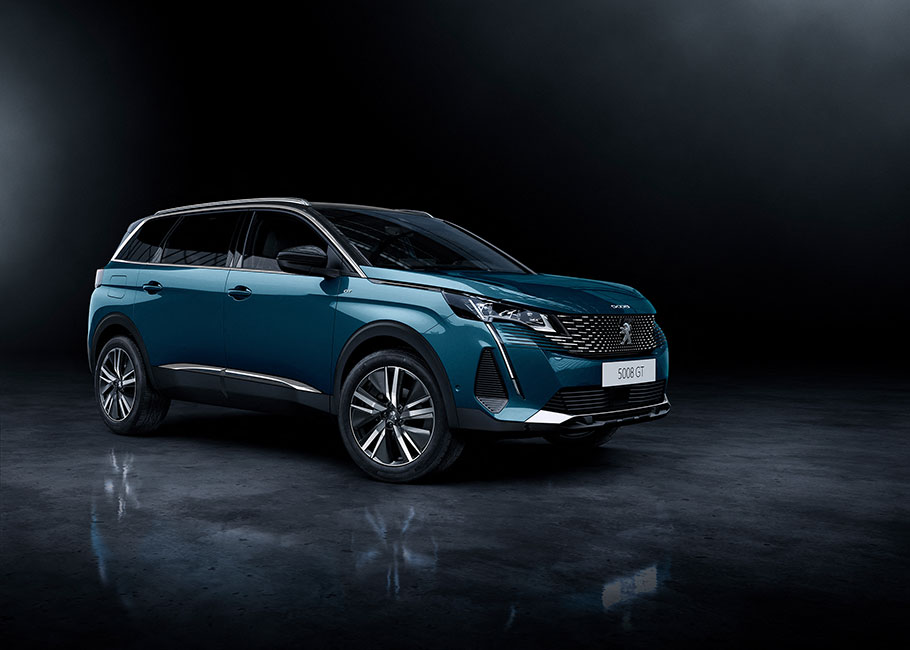
    The new PEUGEOT 5008 SUV will feature a new look, more technology, and class-leading driver assistance systems when it arrives in UK showrooms in the coming months. The new 5008 SUV also features new trim levels and a new ‘Black Pack’ for improved customization.

    BOLD NEW LOOK
    With the new 5008 SUV, PEUGEOT continues its commitment to instinctive design. The front end of the new 5008 SUV has been redesigned with a new frameless grille, while gloss black side scoops and a painted tread plate are integrated into the new bumper design. Top of the range GT and GT Premium models feature their own unique grilles to help them stand out further.

    The new 5008 SUV also features new front lights with a more purposeful look, and every trim level will feature LED light technology. GT and GT Premium models feature Full LED headlights with a new ‘Fog Mode’ function that replaces conventional fog lights.

    At the rear, newly upgraded taillights feature full-LED technology with PEUGEOT’s iconic three-claw rear light signature and sequential indicator lights. The new lights are covered with a clear, smoked glass finish that extends the black boot lid on each side of the vehicle.

    The new 5008 SUV is available in two new color options:

    • Celebes Blue
    • Metallic Copper

    For the first time, a new ‘Black Pack’ will be available as an option on the top-of-the-range GT and GT Premium models. The Black Pack features the following styling additions:

    • Front grille / Lion ‘Dark chrome’.
    • Satin black 5008 / GT / PEUGEOT monograms
    • Gloss black tread plate
    • Gloss black front fender trims
    • Satin black roof bars
    • Gloss black roof trims
    • Gloss black rear trims
    • Gloss black rear bumper sill
    • Black door bottoms
    • 19-inch ‘Washington’ Black Onyx and Black Mist varnish wheels

    NEW AND IMPROVED INTERIOR
    The new PEUGEOT 5008 SUV comes with PEUGEOT’s next-generation digital i-Cockpit® that features a fully customizable 12.3-inch digital instrument display, a compact steering wheel for improved driving dynamics, and a new 10-inch high-definition color touchscreen.

    Owners can customize the 12.3-inch digital display in front of them to show everything from navigation directions to important vehicle information. The central display also shows drivers the selected Drive Mode, which owners can choose from the Drive Mode Selector on the center console. Drivers have a choice between Normal, Sport, and Eco modes.

    The new 10-inch capacitive color touchscreen comes with seven elegant piano ‘toggle switches’ providing direct access to main control functions, including the radio, Connected 3D Navigation, and vehicle settings.

    Owners are also treated to new interior trims inside the new 5008 SUV. The following new trims are available across specific trim models:

    • New Red Nappa Leather upholstery on GT / GT Premium
    • New Mistral Black leather effect / Alcantara® lining on GT / GT Premium
    • New Mistral Nappa Leather upholstery with Tramontane stitching available on Allure and above
    • New leather effect and textile ‘Colyn’ upholstery on Allure / Allure Premium

    The new 5008 SUV also features a new ‘Frameless’ rearview mirror on GT and GT Premium.

    With three rows of seats accommodating up to seven people, the interior of the new 5008 SUV is both practical and versatile. Boot space ranges from 780-liters to 1,940-litres. The middle row features three individual and fully adjustable seats, which feature reclining backrests and can be fully folded. The two seats in the third row can be fully folded and removed, while the front passenger seat can be tipped forward so objects as long as 3.20m can be loaded into the new 5008 SUV.

    ADVANCED TECHNOLOGIES
    The new 5008 SUV comes with class-leading levels of driver assistance and safety technology. For the first time, the new 5008 SUV is available with Night Vision – unique in its segment.

    Using infrared technology, pedestrians and animals detected ahead of the vehicle are highlighted on the 12.3-inch digital instrument display, up to 200m outside the scope of the headlights, ensuring safety even in total darkness.

    The new 5008 SUV also comes with Adaptive Cruise Control (ACC) with Stop & Go on models equipped with the EAT8 automatic gearbox. The clever technology is able to bring the vehicle to a complete stop and move away from stationary without any driver input, in stop-start traffic. Lane Position Assist, which is linked to the ACC helps ensure the new 5008 SUV stays safely centered within its lane. Both technologies are available as part of the Driver Assist Plus Package.

    Owners also benefit from the latest-generation Automatic Emergency Braking technology that works at speeds from 3mph to 86mph (where legal).

    The following driver assistance features are also available on the new 5008 SUV:

    • Adaptive Cruise Control
    • Visiopark 1 with 180° rearview camera
    • Visiopark 2 with 360° front and rear cameras
    • Park Assist: Active assistance in parallel or perpendicular parking
    • Active warning of unintentional lane (or roadside) departure with trajectory correction
    • Driver Warning Alert: Detects driver alertness levels at speeds above 40mph by analyzing steering wheel micro-movements
    • Smart Beam Assist – Automatic high beam dip
    • Speed Sign Recognition and Recommendation
    • Active Blind Spot Monitoring (with trajectory correction): This function is available from 8mph
    • Advanced Grip Control: Optimised traction control with four grip modes (Normal, Snow, Mud, Sand) with specific tyres
    • Hill Assist Descent Control (HADC): Allows drivers to safely control the vehicle and its trajectory on steep slopes
    • Hands-free tailgate
    • Multi-point massage seats

    From Active Premium onwards, all new 5008 SUV models feature Apple CarPlay™, Android Auto™ and MirrorScreen technology for the ultimate in smartphone compatibility. Passengers also benefit from two new USB sockets in the second row, providing enhanced convenience. For the ultimate in sound quality, the new 5008 SUV is available with a 515 Watt FOCAL® High-End HiFi system.

    EFFICIENT LINE-UP OF PETROL AND DIESEL ENGINES
    The new 5008 SUV is available with PEUGEOT’s latest and most efficient petrol and diesel engines, with CO2 emissions as low as 132g/km for the most efficient models.

    The following petrol and diesel engines are available in the new 5008 SUV:
     Petrol

    • 1.2L PureTech 130 S&S 6-speed manual
    • 1.2L PureTech 130 S&S 8-speed automatic
    • 1.6L PureTech 180 8-speed automatic

    Diesel

    • 1.5L BlueHDi 130 S&S 6-speed manual
    • 1.5L BlueHDi 130 S&S 8-speed automatic
    • 2.0L BlueHDi 180 S&S 8-speed automatic

    NEW TRIM LEVELS
    The new PEUGEOT 5008 SUV symbolizes a move upmarket both in terms of style and equipment levels. To make it easier for buyers to choose between the new models, PEUGEOT has introduced a new trim range consisting of three trim levels, each complemented by a ‘Premium’ version containing additional equipment.

    The new 5008 SUV is available in the following trim levels:

    • Active – 17-inch ‘Chicago’ alloy wheels, visibility pack, push-button start, dual-zone air-conditioning, rear parking aid, the third row of seats (two seats).  Reserved for specialist fleets only
    • Active Premium – Mirror Screen, electrically folding door mirrors, VisioPark 1 and front parking aid
    • Allure –  18-inch storm grey ‘Detroit’ alloy wheels, tinted windows, aluminum roof rails, Safety Plus Pack, PEUGEOT connected 3D navigation with a 10-inch display
    • Allure Premium – PEUGEOT open & go.
    • GT – 18-inch onyx black ‘Detroit’ alloy wheels, Black Diamond roof, Drive Assist Plus, full LED headlamps, Alcantara® / leather effect upholstery
    • GT Premium – 19-inch ‘San Francisco’ alloy wheels, hands-free tailgate, Viso Park 2 – 360°Colour camera system and automated parking assistance, Focal® HiFi, massaging electric seats
  • Ferrari GTO Engineering 250 SWB

    2021-Ferrari-GTO-Engineering-250-SWB1

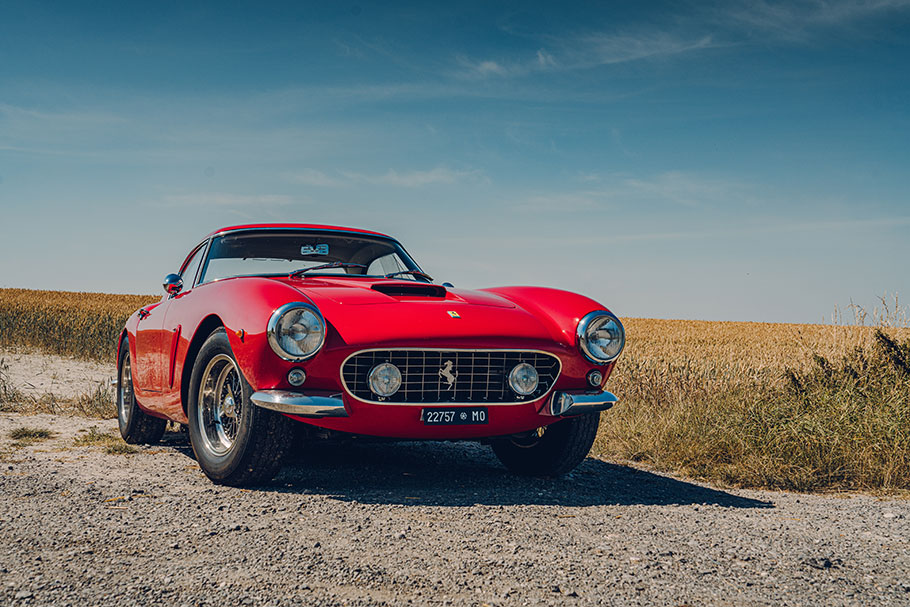
    With over half a million miles under their belt driving some of the most special Ferraris of all time, and over 200 years’ combined experience working on Ferraris, the team at GTO Engineering has created what they believe to be the ultimate interpretation of a legendary Sixties, Ferrari. Named the 250 SWB Revival, based upon the 1960 Ferrari 250 GT SWB Berlinetta Competizione, GTO Engineering has revived a legend with its modern experience and given it ultimate road and track customization opportunities.

    From the chassis to the cockpit, every element of the 250 SWB Revival has been strictly enhanced, improved, or rebuilt at the GTO Engineering UK headquarters, using the team’s extensive knowledge, know-how, historical technical drawings, and industry insight. The result is a visceral experience of a high-revving Columbo V12, enjoyable chassis, lightweight aluminum body with a classic exterior and interior design, plus some modern touches to make it a pleasure to drive daily, on track, or save for Sunday best.

    Inspired by the legendary 1960 Ferrari 250 GT SWB Berlinetta Competizione, which is one of the most successful Ferrari race cars of the period, the GTO Engineering team offers the 250 SWB Revival as a more usable, customizable, and bespoke variant of the highly collectible original Competition car. Driven in period by the likes of Sir Stirling Moss who hailed it as “the greatest GT car in the world” as it took wins at Le Mans (1960 class win), Tourist Trophy (1960), and Spa GP (1960), today it’s regarded one of the most notable, collectible and appreciating cars of its type, this is rarely seen on the road and occasionally at historic race meetings.

    “The 1960 Competition car is the one to have – not only is it the shorter chassis, improving drivability and handling, it has disc brakes [the 250 SWB was the first to have them on a Ferrari GT car], and an aluminum body rather than steel. But it has one major drawback. Because it was made in so few numbers, it’s not really a car you can take to the shops or drive on the lock-stops without fearing damaging the body or destroying originality. The 250 SWB Revival is a ‘best of’, based on original drawings and knowledge, with an added usability, driveability and the option to make it as road or race-focused as you’d like,” explains GTO Engineering Managing Director Mark Lyon.

    Utilizing original drawings, measurements, and knowledge, the GTO Engineering 250 SWB Revival uses a hand-built tubular frame underneath a hand-beaten aluminum body. It’s based on the shorter format of the 1960 Ferrari 250 GT SWB Berlinetta Competizione specifications, which is eight inches shorter than the 250 GT. Each GTO Engineering 250 SWB Revival is created as a bespoke build, with a plethora of options designed for enjoying the car on the road, used for rallying, touring, sprinting, and racing.

    “It’s hard to beat perfection [the 250 SWB], but you can make it more drivable, liveable, and easier to use on a daily basis. You can also provide drivers the option for different V12 engines and gearboxes, which you can’t with an original. We wanted to give flexibility to owners who either want a grand tourer, a faster set-up road car, or full race car that you can drive to and from events. The 250 SWB Revival was designed to be versatile, usable but also completely customizable,” further comments GTO Engineering Managing Director Mark Lyon.

  • Ford Mustang Mach-E

    2021-Mustang-Mach-E1

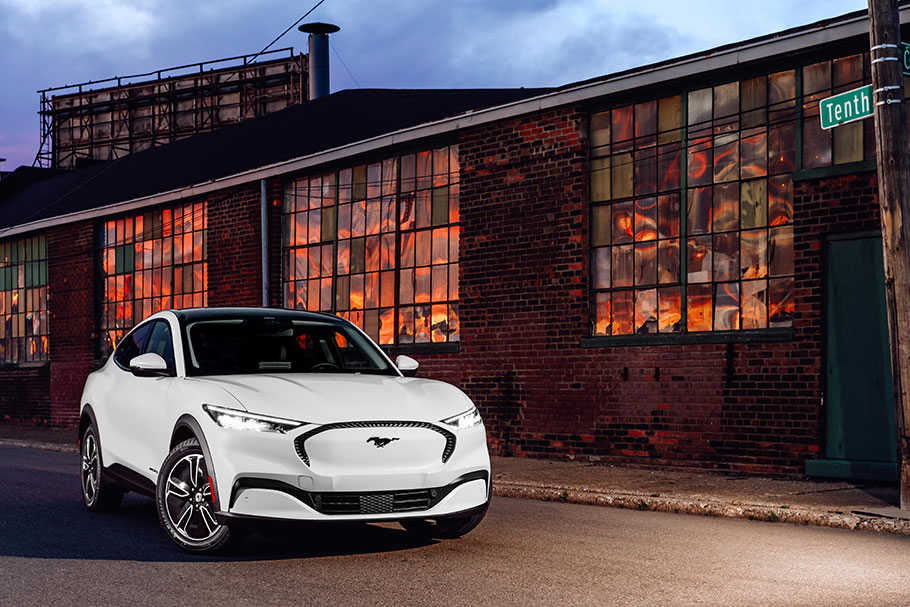
    Inspired by classic 80’s sci-fi cinema, Ford sound designers worked with the studio Ozone Sound to craft electronic sounds that can be heard inside and outside of the Mustang Mach-E while the car is moving.

    That piqued the interest of Dear, a founding member of world-renowned electronic music label Ghostly International and originator of the “Hands Up for Detroit” anthem. Dear used the synth-heavy sounds to create “New Breed,” a hypnotic electronic arrangement that’s distinctly Mustang Mach-E.

    “The idea of remixing the sounds from the Mustang Mach-E was immediately interesting because I’ve always considered myself to be a ‘sound tinkerer,’” said Dear. “But after I got to actually hear and experience the digital propulsion sounds that Ford created, I was sold on the project. The sounds are cooler than I thought they’d be — cinematic and sci-fi — and all the noises the car makes have a sense of modern musicality. Creating “New Breed” was a new experience and I think the song — like the car — takes its passengers on a voyage.”

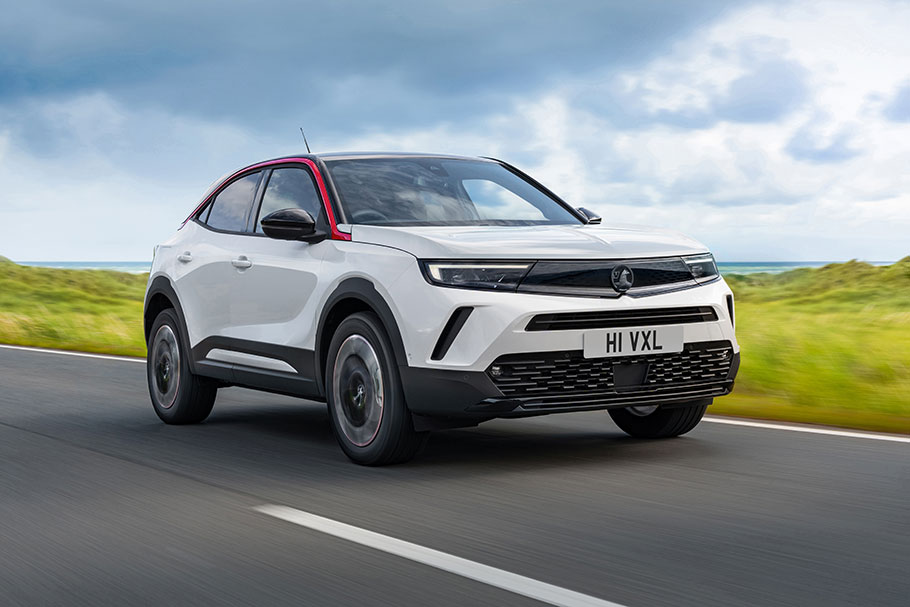
  • Vauxhall reveals all-new Mokka

    2021-Vauxhall-Mokka1

    Hot on the heels of the new battery-electric Vauxhall Mokka-e, Vauxhall has revealed details of the advanced petrol and diesel engines that will power the all-new Mokka. Highly efficient and more compact than ever, the all-new Mokka is the perfect combination of fun and modernity – ideal for urban trips and long motorway drives.

    The design of the Mokka features stunning proportions and captivating precision with bold looks characterized by short overhangs and a wide, well-planted stance. The newcomer also stands out as the first model that features the future brand face and next-generation fully digital cockpit: the Vauxhall Vizor and Pure Panel, respectively.

    The horizontally stretched instrument panel integrates two widescreen displays; the one in front of the driver measuring up to 12 inches. The intuitive system is designed to keep the driver’s focus on the road and Vauxhall’s designers have retained separate controls for essential functions, avoiding hazardous exploration into sub-menus.

    Despite a slightly longer wheelbase (+2.0 mm), the  Mokka is 12.5 cm shorter than the previous model, while offering its five passengers a similar loading space of up to 350 liters in its luggage compartment. Its total length of only 4.15 meters makes it super-easy to maneuver and park in urban and suburban areas.

    Stephen Norman, Group Managing Director, Vauxhall Motors, said: “The all-new Vauxhall Mokka is the start of the long-awaited new direction for Vauxhall. New Corsa punted the ball up, new Mokka decisively converts the try. With its bold design that becomes part of the signature look for all future models, the all-new Mokka features everything that will define the brand from now on. With a choice of a fully electric powertrain or a line-up of highly efficient petrol and Diesel engines, the all-new Mokka is the new and exciting future for Vauxhall.”

    With the SRi trim, Vauxhall is, for the first time, offering a sportier version of the Mokka. SRi models come standard with a red signature daylight opening, a high-gloss black Vizor chrome exterior trim elements and badges, specific front seat fabric, and red instrument panel trim. Also standard are 18-inch alloy wheels with black and red accents, a two-tone roof, and black headliner.

    Innovative technologies for the all-new Mokka
    The Mokka stays true to Vauxhall’s brand-defining tradition of making innovative technologies from higher vehicle classes available to a wide range of buyers. These include Advanced Driver Assist Systems such as Adaptive Cruise Control and Active Lane Positioning Assistant. The lighting system also features state-of-the-art technologies with the adaptive and glare-free IntelliLux LED matrix light featuring 14 elements, unique in the category. All Mokka models feature standard LED lamps at the front and rear, an electric parking brake as well as traffic sign recognition. A 180-degree panoramic rear-view camera is also available.

    The new Mokka is based on a new version of the company’s highly efficient multi-energy CMP (Common Modular Platform) platform. This lightweight and efficient system offers maximum flexibility in vehicle development and allows the use of a purely battery-electric drive as well as the latest petrol or diesel engines.

    Vauxhall’s engineering team has focused on weight reduction, saving up to 120kg versus the previous generation model, while simultaneously enhancing body stiffness – gaining up to 30 percent torsional stiffness in the case of the electric version with its low-sitting integrated battery structure. The benefits are obvious: the all-new Mokka consumes substantially less energy while being much more responsive, agile, and fun to drive.

    New engines: Ideal balance between efficiency and performance
    The lively yet economical petrol and diesel engines offer power outputs ranging from 100hp to 130hp. Low fuel consumption and superior performance are characteristic of all powertrain options:

    • The fun starts with the entry-level 100hp 1.2 Turbo combined with a six-speed manual gearbox (preliminary fuel consumption WLTP 6mpg to 51.4mpg and 124g/km to 128g/km CO2).
    • Higher performance is supplied by the 130hp 1.2 Turbo. Despite the strong power output, the fuel consumption of the all-aluminum engine remains competitive with either of the six-speed manual or eight-speed automatic transmissions (preliminary fuel consumption WLTP 4mpg to 51.4mpg and 123g/km to 126g/km CO2).

    Wide torque plateau for petrol engines: Top driveability
    High efficiency and lively performance are characteristic of the new petrol engines, which feature a low friction design to optimize efficiency. The turbocharger also reacts immediately, with strong torque development at low rpm. The maximum torque of the 100hp 1.2 is 205Nm; the top 130hp unit develops 230Nm. With the majority of maximum torque available in a wide band, both engines are notable for their flexibility. At least 95 percent of maximum torque is available between 1,500 and 3,750rpm – in combination with the low vehicle weight and optimized gear ratios, this enables very good driveability.

    The driving performance matches the high efficiency of the engines. The  Mokka 130hp 1.2 Turbo with six-speed manual transmission has a maximum speed of 125mph[1], with 0-62mph acceleration taking 9.2 seconds. The 100hp model has a top speed of 113mph and accelerates from 0-62mph in around 11 seconds.

    The 100hp entry-level engine is fitted with a six-speed manual gearbox as standard. With the 130hp 1.2, customers can choose from a six-speed manual or a smooth eight-speed automatic. The automatic features state-of-the-art adaptive shift programs and Quickshift-technology, allowing drivers to control gear selection via the standard steering wheel shift paddles.

    High-tech and high efficiency: 1.5 diesel
    The two petrol engines are joined by a lively 1.5-liter diesel with a six-speed manual transmission, producing 110hp and maximum torque of 250Nm (preliminary fuel consumption WLTP 62.8mpg to 65.7mpg and 114g/km to 117g/km CO2).

    For optimum exhaust after-treatment, the diesel engine’s emissions reduction system – consisting of a passive oxidation catalyst/NOx adsorber, AdBlue injector, SCR catalyst, and Diesel Particulate Filter (DPF) – is grouped together as a compact single unit, as close as possible to the engine. The NOx adsorber acts as a cold start catalyst, reducing NOx emissions during cold starts.

    Fans of electric-mobility can order the Vauxhall Mokka-e as the Common Modular Platform (CMP) accommodates a variety of powertrains.

    Mokka engines 1.2 Turbo 1.2 Turbo 1.2 Turbo 1.5 Diesel
    Power (kW/hp) @ rpm 74/100 @ 5000 100/130 @ 5500 100/130 @ 5500 81/110 @ 3500
    Torque (Nm @ rpm) 205 @ 1750 230 @ 1750 230 @ 1750 250 @ 1750
    Emissions Euro 6d Euro 6d Euro 6d Euro 6d
    Transmission MT6 MT6 AT8 MT6

    A leader in the segment: high-tech assistance systems and lighting technology
    The all-new Mokka arrives in the B-segment with innovations that until recently have only been available in higher vehicle classes. Forward collision alert with automatic emergency braking and pedestrian detection operates at speeds above 3mph. If a vehicle or pedestrian ahead is approached too fast, the system sounds a warning chime and displays a message in the Driver Information Cluster. If a collision is imminent, the braking system is prepared and, if necessary, emergency braking is deployed to minimize the effects of a potential collision. Below 18mph the system can bring the vehicle to a complete stop. If the speed exceeds 18mph, speed is reduced and the driver must actively brake.

    The adaptive cruise control maintains a certain distance between the new Mokka and the vehicle ahead, using radar and camera sensors. Operative from 18mph, the vehicle speed increases or decreases to follow the vehicle ahead, but will not exceed the set speed. With an automatic transmission, the system offers additional stop and go functionality. It can break the car to a standstill and follow the vehicle ahead in traffic jams.

    Vauxhall is also a leader in lighting technology. All Mokka variants are equipped with the latest generation LED lamps – from daytime running lights to front fog lights. An absolute highlight in this segment is the adaptive IntelliLux LED matrix lights with a total of 14 individual elements. As with the Vauxhall Insignia, Astra, and the new Corsa, the lighting system enables driving on a permanent high beam.

    In order to prevent glare for drivers of oncoming or preceding vehicles, the individual LED elements are switched off in milliseconds to cut vehicles out of the light cone – so oncoming drivers are not dazzled, yet Mokka passengers experience stadium-like illumination. In the rear, the choice for LED-only technology has allowed designers to go for very thin, stretched lights enhancing the feeling of precision and quality.

    Excellent seating engineering is typical of Vauxhall. Various six-way ergonomic seats are available in the new Mokka, which are individually adjustable. A sporty Alcantara and a classic full leather interior are both available – highly unusual for a vehicle in the B segment. The crowning glory is the heated leather seat with perforated surface and massage function for the driver.

    The driver and front-seat passenger can place their smartphones in the storage tray provided in the center console. Compatible telephones recharge here wirelessly, while a specially shaped rubber mat prevents devices from sliding around. The new infotainment range perfectly networks and entertains Mokka drivers and passengers. Multimedia Radio and Multimedia Navi systems with a 7-inch color touchscreen and the top-of-the-range system Multimedia Navi Pro with a high-resolution 10-inch color touchscreen are available. The monitors are integral to the new Pure Panel from Vauxhall and ideally positioned towards the driver.

    The multimedia systems feature integrated voice control and are Apple CarPlay and Android Auto compatible. The new Mokka also offers the Vauxhall Connect service for customers. LIVE navigation with real-time traffic information, plus a direct link to breakdown assistance and eCall, make journeys, even more, relaxing for drivers and passengers. If the airbags or seatbelt tensioners deploy in an accident, eCall contacts the local Public Safety Answering Point (PSAP) automatically.

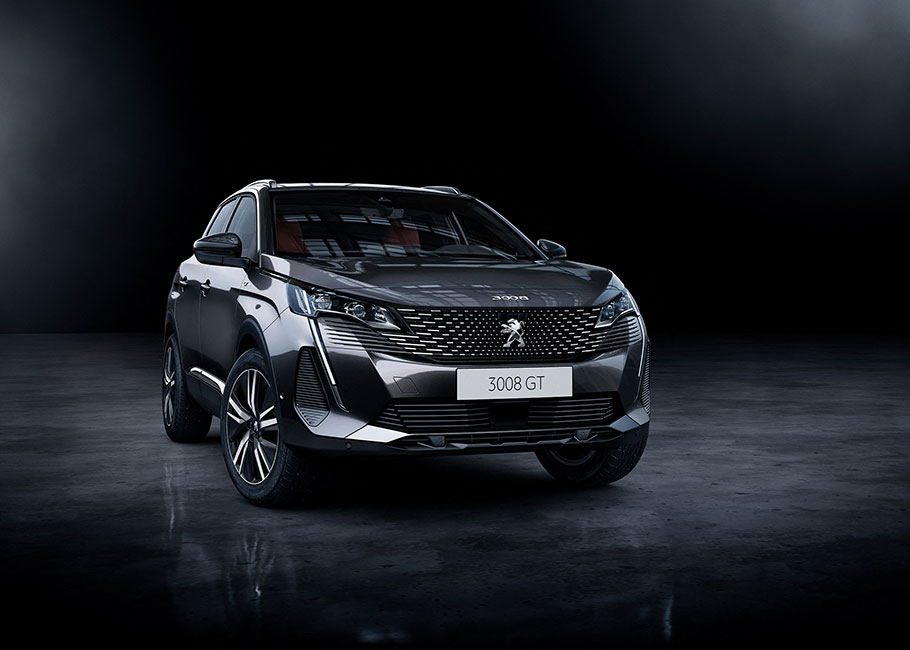
  • Peugeot 3008 SUV

    2021-PEUGEOT-3008-SUV1

    The new PEUGEOT 3008 SUV introduces new styling features, more technology, and class-leading safety features to the compact SUV segment. With a choice of plug-in hybrid, petrol and diesel powertrains, plus new trim levels, the new 3008 SUV will arrive in UK showrooms in the coming months.

    A STRIKING NEW DESIGN
    As part of PEUGEOT’s commitment to instinctive design, the front end of the new PEUGEOT 3008 SUV has been made even more striking. A new frameless grille features at the front, while gloss black side scoops and a painted treadplate are integrated with the new bumper design as standard. Top-level GT and GT Premium trims receive their own bespoke front grilles to stand out even more.

    The front headlights have also been redesigned to be more aggressive, and feature LED technology across the range. GT and GT Premium trim levels feature full LED headlights with an extended light signature.

    The new 3008 SUV comes with ‘Fog Mode’, which replaces the previous fog lights. The mode is integrated into the full LED headlights and switches on the low beam headlights with reduced intensity when the rear fog lights are activated.

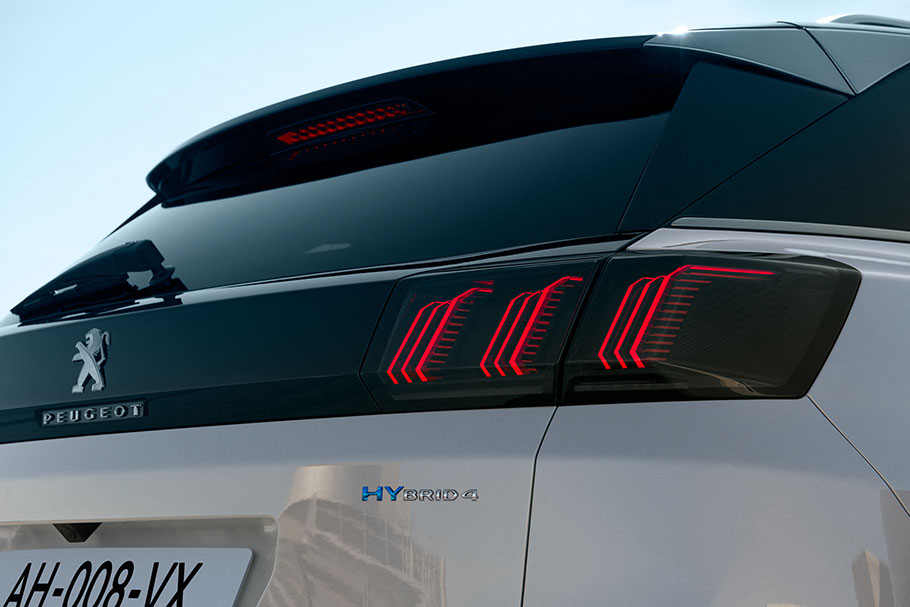
    At the rear, newly upgraded taillights feature full-LED technology with PEUGEOT’s iconic three-claw rear light signature and sequential indicator lights.

    The new 3008 SUV will be available with the following new color options

    ·        Celebes Blue

    ·        Vertigo Blue

    Buyers will be able to option a new ‘Black Pack’, available on the top-of-the-range GT and GT Premium models. The Black Pack features the following styling additions:

    •             Front grille / Lion ‘Dark chrome’

    •             Satin black 3008 / GT / PEUGEOT badging

    •             Glossy black tread plate

    •             Glossy black front fender trims

    •             Satin black roof bars

    •             Glossy black roof trim

    •             Glossy black spoiler trim

    •             Glossy black rear bumper sill

    •             Black door bottoms

    •             19” Washington Black Onyx and Black Mist varnish alloy wheels

    2021-PEUGEOT-3008-SUV2

    IMPROVED INTERIOR TECHNOLOGY & FEATURES
    The new 3008 SUV features PEUGEOT’s next-generation digital i-Cockpit® technology with a 12.3-inch digital head-up instrument panel, a compact steering wheel for improved driving dynamics, and, now, across all trim levels, a 10-inch capacitive color touchscreen.

    The new 10-inch touchscreen comes with seven elegant piano ‘toggle switches’ providing direct access to main control functions, including the radio, Connected 3D Navigation, and vehicle settings. HYBRID variants feature a specific button to access information relating to the electric powertrain.

    Petrol and diesel models equipped with PEUGEOT’s eight-speed automatic transmission now come fitted as standard with a drive mode selector that allows the driver to choose between Normal, Sport, and Eco modes.

    In HYBRID models, the drive mode selector allows owners to switch between Electric (the default mode on start-up), Hybrid, Sport and 4WD modes, with the latter reserved for the HYBRID4 300 models only.

    PEUGEOT has also updated the interior trims available in the new 3008 SUV

    ·        New Mistral Nappa Leather upholstery is available across the trim levels

    ·        New mid-PET and textile upholstery is available on Allure and Allure Premium trim levels

    ·        New Mistral Black PET and New Red Nappa Leather upholstery are available on GT and GT Premium models

    GT and GT Premium models will also be available with New Dark Lime Wood window winder with chrome inserts and a new ‘Frameless’ rear-view mirror.

    CLASS-LEADING LEVELS OF TECHNOLOGY
    The new PEUGEOT 3008 SUV comes with the latest driving aids and safety features to protect both its occupants and other road users. The following technologies are available:

    ·        Night Vision: Unique for the compact SUV segment, the 3008 SUV features PEUGEOT’s innovative Night Vision technology that allows drivers to view pedestrians and animals on the 12.3-inch digital instrument panel up to 200m beyond the scope of the headlights

    ·        Adaptive Cruise Control with Stop and Go: Available on models with eight-speed automatic transmission

    ·        Lane Positioning Assist: As part of the Adaptive Cruise Control, the Lane Positioning Assist technology ensures the vehicle stays within its lane.

    ·        Latest-Generation Automatic Emergency Braking: Capable of detecting both pedestrians and cyclists at night at speeds from 3mph to 86mph.

    From Active Premium level up, all-new 3008 SUV models come standard with Apple CarPlay™, Android Auto, and Mirror Screen. There are also two new USB sockets installed for rear passengers to use. The New 3008 SUV can also be equipped with a 515 Watt FOCAL® premium HiFi system.

    2021-PEUGEOT-3008-SUV3

    A CHOICE OF EFFICIENT POWERTRAINS
    As part of PEUGEOT’s new philosophy of ‘choose your PEUGEOT, choose your powertrain,’ the new 3008 SUV is available with a choice of efficient diesel and petrol engines, as well as two advanced plug-in hybrid electric (PHEV) options.

    Built on PEUGEOT’s Efficient Modular Platform 2 (EMP2), the HYBRID4 300 e-EAT8 features a 200hp (147kW) PureTech petrol engine and two electric motors for a combined power output of 300hp (223kW), with ultra-low emissions of 29g/km CO2 and up to 36 miles of zero-emissions range. It is also the only variant available with 4WD.

    The HYBRID 225 e-EAT8 features a smaller 180hp (132kW) PureTech petrol unit combined with a single 110hp (80kW) electric motor for a combined 225hp (165kW) power output. Under WLTP testing, the HYBRID 225 e-EAT8 achieves just 30g/km CO2, and in fully electric mode provides a zero-emissions range of 34 miles.

    Both HYBRID models feature a 13.2kWh lithium-ion battery and come with two types of on-board chargers. A 3.7kW single-phase onboard charger is included as standard, with a full charge taking four hours, while an optional 7.4kW  onboard charger is also available. A full charge using a 7.4kW Wall Box will take just one hour and 45 minutes.

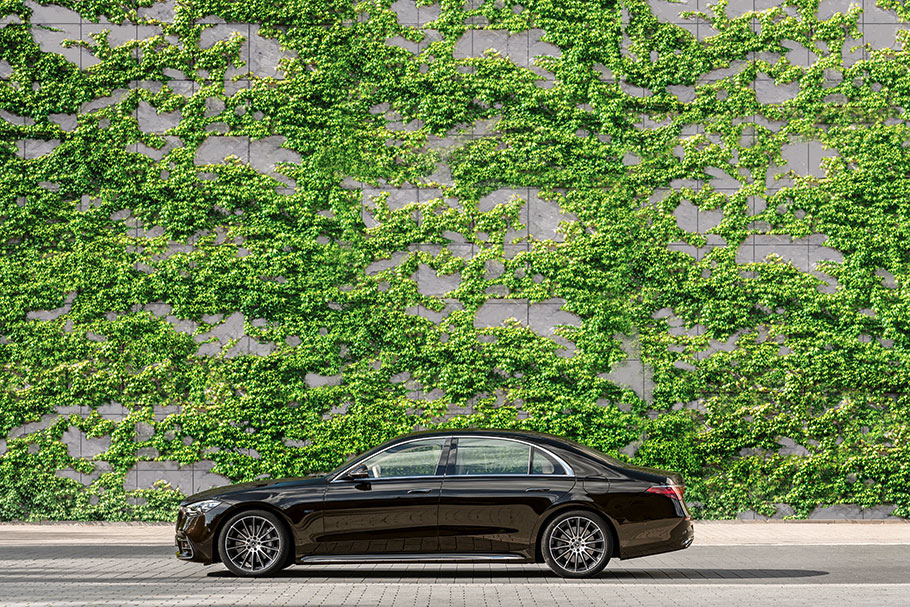
  • Mercedes-Benz S-Class

    2021-Mercedes-Benz-S-Class1

    The S-Class stands for the fascination of Mercedes-Benz: legendary and traditional engineering expertise defines the luxury segment in the automobile industry. The new S-Class can be experienced with all the senses – seeing, feeling, hearing, and smelling – while offering numerous innovations in the areas of driver assistance, protection, and interaction. Mercedes-Benz is shaping the next generation of individual mobility for our times with innovations that place the focus on people. The new S-Class uses digitization for a car that responds empathetically to the needs and wishes of its driver and passengers. Here is an overview as a mindmap:

    The ten most important new features:

    The second generation of MBUX (Mercedes-Benz User Experience) débuts in the new S-Class. Another milestone as the interface between the driver, passengers, and vehicle: there are up to five screens* on board, some with OLED technology. At the touch of a button, the new 3D driver display for the first time allows spatial perception of the scene with a real 3D effect thanks to eye-tracking. A similarly impressive feature is the very large head-up display with augmented reality content. When navigating, for example, animated turn-off arrows (“fishbones”) are virtually and precisely projected onto the road lane.

    Using cameras in the overhead control panel and learning algorithms, MBUX Interior Assist [not currently offered in the UK] recognizes and anticipates the wishes and intentions of the occupants. It does this by interpreting head direction, hand movements, and body language, and responds with corresponding vehicle functions. For example, if the driver looks over his/her shoulder towards the rear window, Interior Assist automatically opens the sunblind.

    The active ambient lighting (optional extra) supplements ambient lighting (standard equipment) with an additional layer of light. With around 250 LEDs it is integrated into the driving assistance systems and is able to reinforce their warnings visually. In addition, feedback is possible when operating the climate control system or the ‘Hey Mercedes’ voice assistant, for instance.

    The latest generation of the Driving Assistance Package has new and numerous improved functions. One example is the intelligent compliance with speed limits. The new assistance display in the driver display clearly shows the operating principle of the driving assistance systems as a full-screen view.

    During severe frontal collisions, the rear airbag [not currently offered in the UK] can considerably reduce the loads acting on the head and neck area of the seat-belt-wearing occupants in the outer rear seats. The frontal airbag for the rear seat deploys particularly gently thanks to its innovative construction using a tubular structure.

    Thanks to rear-axle steering [not currently offered in the UK], the S-Class is as maneuverable as a compact car in the city. The steering angle at the rear axle is up to ten degrees. The turning circle is reduced by up to two meters.

    More than 50 electronic components in the new S-Class can be updated with new software over-the-air (OTA). These include the entire MBUX infotainment system, the driver display, the driving assistance systems, and the MULTIBEAM LED and DIGITAL LIGHT lighting systems. This technology saves the customer time, as he/she does not need to visit a workshop for this purpose. Furthermore, the vehicle remains up to date throughout its lifecycle and is equipped for new features. The explicit consent of the user is always a precondition for OTA updates.

    When a side impact with another vehicle threatens, the vehicle body can be raised by the E-ACTIVE BODY CONTROL suspension [not currently offered in the UK] within a few tenths of a second. This is a new function of PRE-SAFE® Impulse Side: It can reduce the loads acting on the occupants because it directs the impact forces towards particularly resistant structures in the lower area of the vehicle.

    It is expected that from the second half of 2021 the S-Class will be able to drive in conditionally automated mode with the new DRIVE PILOT (optional extra), in situations where traffic density is high or in tailbacks, on suitable motorway sections in Germany. By taking pressure off the driver, this allows them to undertake secondary activities such as browsing on the internet or dealing with emails in the In-Car Office, and so win extra time.

    The revolutionary headlamp technology DIGITAL LIGHT (optional extra) allows completely new functions, e.g. the projection of marking aids or warning symbols onto the road ahead. In each headlamp, DIGITAL LIGHT has a light module with three extremely powerful LEDs with light that is refracted and directed by 1.3 million micro-mirrors. The resolution is therefore more than 2.6 million pixels per vehicle.

    Interesting facts & figures

    Sometimes numbers say more than a thousand words.

    The turning circle is reduced by up to 2 meters with rear-axle steering compared to a model without it.
    The maximum steering angle is 10°.

    27 languages are supported by “Hey Mercedes” with Natural Language Understanding (NLU).

    31 loudspeakers and eight exciters are included in the Burmester® high-end 4D surround sound system.

    Comfort on the front passenger seat is assisted by up to 19 motors (8 for adjustments, 4 for massage and 5 for ventilation, one for the lumbar support, and one to move the monitor on the reverse).

    10 different massage programs are available in the new S-Class.

    The plug-in hybrid variant of the S-Class will have an electric range of up to 100 kilometers.

    The display area of the augmented reality head-up display corresponds to a monitor with a diagonal of 77 inches.

    The boot capacity has increased by 20 liters to up to 550 liters compared to the previous model.

    With a Cd figure from 0.22, the S-Class is one of the world’s most aerodynamic cars. Its drag coefficient is, therefore, lower than before, despite a larger frontal area 200 sq. cm.

    Compared to the preceding model, elbow-room for the driver has increased by 38 millimeters and by up to 23 millimeters for rear passengers. The headroom in the rear has increased by up to 16 millimeters.

    The resolution of DIGITAL LIGHT per vehicle is over 2.6 million pixels.

    The computing power of MBUX (Mercedes-Benz User Experience) has increased by 50 percent compared to the system in the previous model. The memory bandwidth is 41,790 MB/s.

    When a side impact threatens, the vehicle body can be raised by up to 8 centimeters by the E-ACTIVE BODY CONTROL suspension (optional) within a few tenths of a second. This is a new function of PRE-SAFE® Impulse Side:

    17 step motors control the temperature and air distribution in the Thermotronic system. The 4-zone climate control Thermotronic Rear even has 20 step motors. These electric motors operate the air flaps.

    In the Active Ambient Lighting system, there is an LED in an optical fiber every 1.6 centimeters. There are around 250 in all.

    The new OLED central display measures 239.06 mm x 218.8 mm and has an active screen diagonal of 12.8 inches. The screen area is 64 percent larger than in the preceding model. The driver display measures 291.6 mm x 109.4 mm and has a diagonal of 12.3 inches.

    The tubular structure of the innovative rear airbag is around 16 liters, while the total volume of the deployed bag is up to 70 liters.

    The control units of E-ACTIVE BODY CONTROL analyze the driving situation and adjust the suspension 1000 times per second.

    The designation “S-Class” was officially introduced with the 116 series in 1972.

    More than 98 kg of components made from resource-conserving materials is used in the S-Class. The number of components containing recyclates is now 120 – more than twice as many as in the preceding model. Another 40 kg or so are made from renewable raw materials.

    223 is the internal designation of the new model series.

    The new tool used to micro-perforated the seats operates with 16,000 needles.

    The loyalty rate for the S-Class is especially high. Some 80 percent of S-Class customers in Western Europe go on to choose another vehicle from Mercedes-Benz. In the US, more than 70 percent do so.

    More than one-third of all saloons of the last generation of the S-Class (model series 222; début 2013) went to China. S-Class customers in China are the youngest with an average age of 40 years. Around the world the S-Class Saloon is predominantly sold in the long-wheelbase version: around 9 out of 10 customers opt for the long version of the S-Class Saloon. All in all, since the launch of the generation that is now in its runout phase, more than 500,000 S-Class Saloons have been sold.

    “The S-Class is the world’s best-selling luxury saloon. With the latest generation we want to offer our customers innovation, safety, comfort, and quality as never before,” says Ola Källenius, Chairman of Daimler AG and Mercedes-Benz AG. “The new S-Class underpins our claim to produce the best automobile in the world”, states Markus Schäfer, Member of the Board of Management of Daimler AG and Mercedes-Benz AG; responsible for Daimler Group Research and Mercedes-Benz Cars COO. “This is where covetable luxury meets the greatest possible safety and the highest level of comfort.” The new S-Class can be ordered in Germany from mid-September 2020 and will be in the dealerships in December 2020.

    Modern luxury attains the next level in the interior of the S-Class. The designers have created a feel-good ambiance with lounge character marked by elegance, high quality, and lightness. The dashboard with its new architecture, modern surface design, and ergonomic display arrangement is a particular highlight. But the feel-good aspect goes even deeper: With high ride quality and low noise levels as well as an extensive range of ENERGIZING Comfort programs, the S-Class looks after the well-being of its passengers. They also stay fit thanks to the effective air filtering system, which signals its newly gained capability with the new name ENERGIZING Air Control.

    The new Mercedes-Benz S-Class has become more intelligent in many areas, and the driving experience is at the next level. Digital innovations such as in MBUX (Mercedes-Benz User Experience) are joined by innovations that increase driving enjoyment while making driving even safer: among them is rear-axle steering with a large steering angle and safety innovations such as the rear airbag. As a new function of PRE-SAFE® Impulse Side, the active E-ACTIVE BODY CONTROL* suspension can raise the vehicle body (on both sides) just before an impending side impact. Following systematic further development, the driving assistance systems are a further step towards autonomous driving. Thanks to improved environmental sensors, for example, the parking systems give the driver even better support when maneuvering at low speed. The integration into MBUX means that the level of visualization has now entered a whole new dimension.

    For over 100 years: the luxury class as the embodiment of the Mercedes-Benz brand

    The S-Class is the centerpiece of the brand and stands for the fascination of Mercedes-Benz: legendary engineering expertise and a heritage of craftsmanship meet progressive digital innovation. The S-Class combines artificial intelligence with the experience gained from 135 years of automobile engineering. Around 70 years ago, Mercedes-Benz laid the foundations for this model series with model 220. Since its market launch in 1951, more than 4 million S-Class Saloons have been delivered to customers around the world. The designation “S-Class” was officially introduced with the 116 series in 1972. In the last 10 years, the S-Class Saloon has been particularly popular in China, the USA, South Korea, and Germany. All in all, since the launch of the generation that is now in its runout phase, more than 500,000 S-Class Saloons have been sold.

    The loyalty rate for this model series is especially high. For example, around 80% of customers in Western Europe who previously drove an S-Class once again opted for a Mercedes-Benz model. In the US, more than 70 percent do so. Around the world the S-Class Saloon is predominantly sold in the long-wheelbase version: Around 9 out of 10 customers opt for the long version of the S-Class Saloon.

    MBUX: a new dimension in personalization and interaction

    No other innovation in recent years has so radically changed the operation of a Mercedes-Benz as MBUX (Mercedes-Benz User Experience). The second generation of this learn-capable system now débuts in the new S-Class. The vehicle interior is even more digital and intelligent, as both the hardware and software have made great strides: brilliant displays on up to five* large screens [three screens in the UK], in part with OLED technology, make the control of vehicle and comfort functions even easier. The possibilities for personalization and intuitive operation have become far more extensive. This certainly applies in the rear, but also to the driver: For example, the new 3D driver display allows a spatial view at the touch of a button for the first time. A real three-dimensional effect is achieved without having to wear 3D glasses.

    Two different head-up displays (HUDs) are available on request. The larger HUD provides augmented reality (AR) content. When navigating, for example, animated turn-off arrows (“fishbones”) are virtually and precisely projected onto the road lane. For the assistance functions, information from e.g. Active Distance Assist is shown. The image appears virtually at a distance of 10 meters. the display area corresponds to a monitor with a 77-inch diagonal.

    The voice assistant “Hey Mercedes” is, even more, learn- and dialogue-capable by activation of online services in the Mercedes me App. Moreover, certain actions can be performed even without the activation keyword “Hey Mercedes”. These include accepting a telephone call. “Hey Mercedes” now also explains vehicle functions and answers general knowledge questions. In the S-Class, the voice assistant can also be controlled from the rear.

    Using cameras in the overhead control panel and learning algorithms, MBUX Interior Assist recognizes and anticipates the wishes and intentions of the occupants. It does this by interpreting head direction, hand movements, and body language, and responds with corresponding vehicle functions. As well as enhancing operating convenience, MBUX Interior Assist improves safety. Even before the journey begins, it notifies the driver if the camera has detected a child seat on the front passenger seat but seat belt is not fastened, for example.

    With the MBUX Smart Home function, the S-Class now also becomes a control center for the home, because the homes of many people are increasingly intelligent: mobile intelligence ensures maximum operating convenience from afar. WLAN and sensors make the home capable of communication: temperature and lighting, roller blinds, and electrical appliances can be remotely monitored and controlled. Motion detectors and window contacts inform the user of welcome or unwelcome visitors.

    Dimensional concept and interior design: generous ambiance with a lounge-like nature

    The S-Class has always been a place for comfortable travel and relaxed working. With the new generation, the interior has fully evolved into a “third place”, a refuge between the home and workplace. Nearly all comfort-related dimensions of both variants, the S-Class with a short and long wheelbase, have been improved in the front as well as on the rear seats. The sense of space is accordingly generous.

  • Jaguar F-PACE SVR

    2021-Jaguar-F-PACE-SVR1

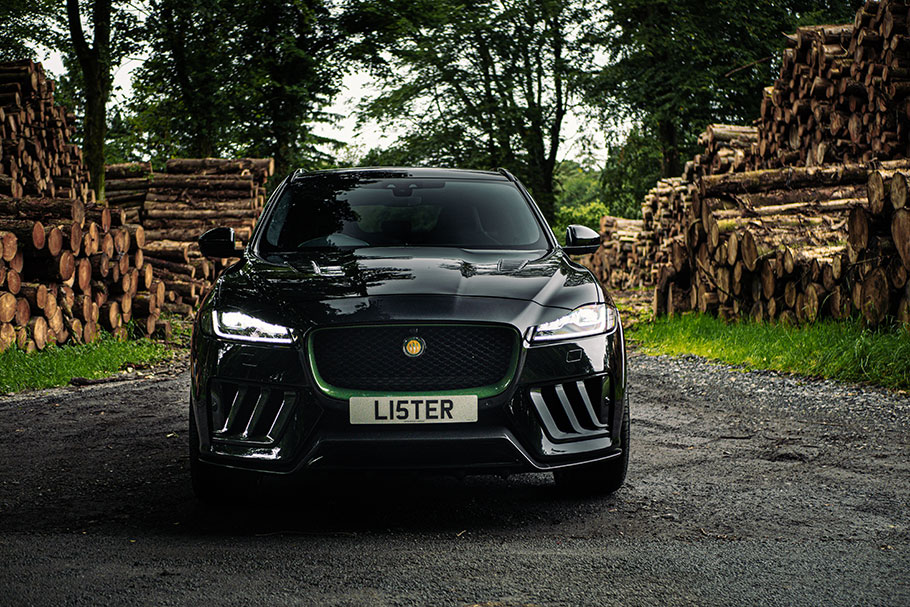
    Lister Motor Company, Britain’s oldest racing car company, has taken the wraps off Britain’s fastest and most powerful SUV – the Lister Stealth. Based on the already dynamic Jaguar F-PACE SVR, the 666bhp Stealth is the latest in a long line of stunning, hand-crafted, and bespoke products from the Cambridgeshire manufacturer – a lineage spanning nearly seven decades.

    Lister’s renowned skill for creating exclusive and luxurious, high-performance cars is already evidenced with the introduction of the Jaguar F-TYPE SVR based LFT-666 coupe and LFT-C convertible. Now, Lister enhances that reputation further with the mind-blowing power and speed of the Stealth.

    To claim the title of Britain’s fastest SUV, the Stealth required a thorough update to the 5.0-liter supercharged V8 engine found in the factory F-PACE SVR. Lister’s core DNA of performance and driving enjoyment is abundant within the Stealth. The company’s team of highly experienced engineers set to work on the engine and cooling system to ensure it delivers an outstanding 666bhp and 881Nm of torque – a 22% increase over the standard car.

    The process began with a custom-built intercooler and high-performance air filtration system for optimising combustion temperatures and airflow into the unit. Upgraded dual supercharger pulleys have the cumulative effect of forcing more air into the combustion chamber for unrivalled levels of performance for this vehicle segment.

    Like in the LFT-666 and LFT-C, Lister’s Engineering Team has applied the brand’s proprietary Lister Engine Management System to the Stealth, modifying the programme mapping throughout the process to exploit the Stealth’s full capabilities. The result is a five-seat SUV that can deliver a devilish 666bhp with ease.

    The Stealth will accelerate with the same urgency as a modern supercar and keep on going to its top speed of 195mph. In a sprint from 0-60mph, the Stealth takes a mere 3.6 seconds, making it not only the fastest accelerating SUV Britain has ever produced, but also the most powerful to date. The Stealth adds proof to its claim of being Britain’s fastest SUV after recently beating the Lamborghini Urus, Aston Martin Vantage, and McLaren 570 GT in a drag race at the renowned testing ground, VMAX200.

    The Lister Stealth showcases its intent with a number of handmade bodywork enhancements that not only exude visual appeal but also contribute to the car’s aerodynamic performance and engine cooling. The redesigned carbon fibre front bumper features two large air intakes to aid airflow into the engine, while the front splitter increases aerodynamic efficiency at speed while adding to the Stealth’s dynamic handling. Uprated brakes, front, and rear, ensure the Stealth stops as well as it accelerates.

    A large carbon fibre rear diffuser sits in the middle of an exclusively sculpted rear bumper, creating additional downforce in tandem with the front splitter. Lister has also fitted a custom-designed, stainless-steel exhaust system complete with carbon fibre tips delivering gains in overall power output, giving the Stealth an unmistakable and thunderous soundtrack.

    Completing the distinctive exterior look are matching side skirts and wider wheel arches to give the Stealth its purposeful stance. This is all complemented by bespoke, Lister-designed 23-inch Vossen forged wheels – the only element of the Lister Stealth not made in the UK.

    No expense has been spared in the design of the Stealth’s sumptuous interior. Alongside performance, luxury is one of the hallmarks of every Lister model.

    The Stealth features the highest-grade Bridge of Weir Nappa leather interior that is tailored to every customer’s specification. Up to 36 individual colour choices are available with a further 90 different stitching options covering all aspects of the cabin from the seatbelts, sport seats, dashboard, steering wheel, and roof lining. With this level of customisation available, each Lister will boast its own unique identity that’s truly personal to each owner.

    As with all Lister models, exclusivity is guaranteed. Just 100 examples of the UK’s fastest and most powerful SUV are earmarked for production worldwide. Prices start from £109,950 for this ultimate expression of luxury, practicality, and performance, with client consultation appointments available via the Lister website.

    Warrantywise, the UK’s best-used car warranty, provides complete peace of mind for customers with an incredible and unprecedented seven-year warranty for this class of performance luxury SUV.

    Lawrence Whittaker, CEO of The Lister Motor Company, said: “Creating Britain’s fastest SUV is not without its challenges, but our in-house design and development team have created a truly unique and world-class product with the Lister Stealth. The launch of the Stealth continues our track record of creating bespoke, beautiful cars that major on performance, luxury, and most of all owner and driver enjoyment, with a price point that significantly undercuts the competitors in this marketplace.”

  • Audi Q2

    2021-Audi-Q21

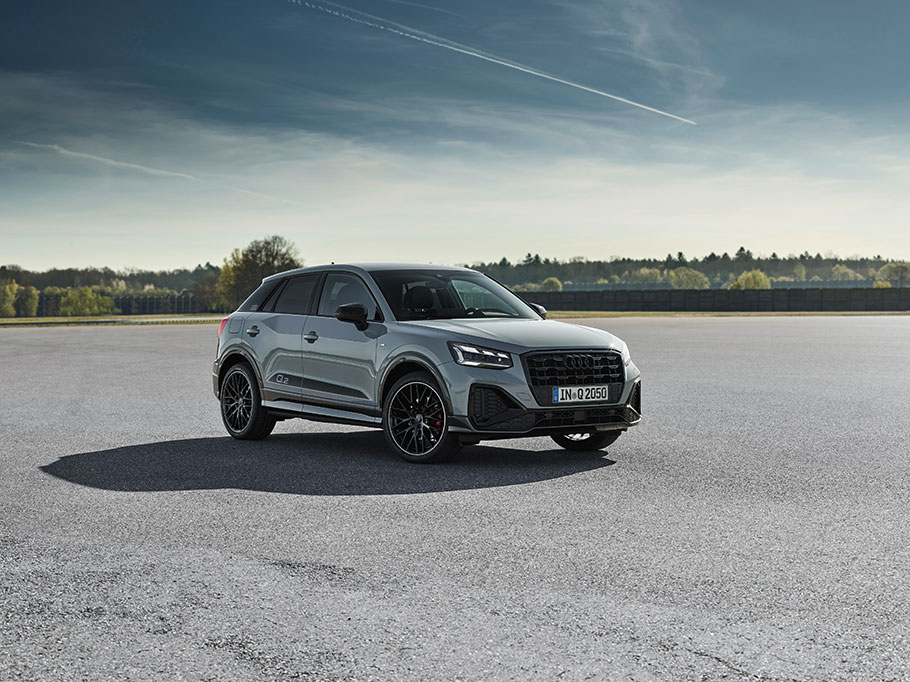
    The Audi Q2 has always been notable for striking out in a new design direction that marked it out from other members of the Q family, and as part of an update of the range announced this week that visual distinction has been further emphasized, while the advantage of family ties has also brought greater technological sophistication to the compact SUV. Carefully considered resculpting of the body has been combined with upgraded lighting, while the cabin offers enhanced equipment, improved web-based Audi connect functionality, and an expanded portfolio of driver assistance features. Technik, Sport, S line, Black Edition, and particularly extensively equipped Vorsprung versions of the new generation Q2 will become available to order in October and will reach their first customers in the autumn.

    “In its styling, the Q2 has always gone against the grain to a certain extent, which is part of its appeal,” says Director of Audi UK Andrew Doyle. “I’m pleased that the designers have chosen to accentuate this facet of its character as part of this update program, which leaves the Q2 not only looking even sharper and more distinctive but also feeling even more mature and sophisticated thanks to its detail changes and technology upgrades.”

    The principle of polygons: the exterior design

    Crisp, sharply defined corners and edges give the most compact SUV in the Audi range a purposeful, confident stance. The frontal and shoulder line styling has always used a polygon motif as its basis, and the same is now true of the rear end, which incorporates a new bumper design with an integrated diffuser insert featuring large five-sided polygons.

    The front end also now has a more striking look, particularly in the area below the upgraded headlights. Its octagonal Singleframe is slightly lower, making the front section appear wider, and its insert also references the polygon motif. The design of the large implied air intakes is also more expressive, particularly in models equipped to S line specification and above, and the exclusive styling treatment that has always characterized these more performance-focused variants has also been made more distinct by the addition of narrow slits between the radiator grille and the bonnet that are reminiscent of the iconic Audi Sport Quattro. New alloy wheel designs for most variants also contribute to the fresher image.

    The revisions result in an increase of a few millimeters in the length of the Q2, which now extends to 4.21 meters, but don’t impact on its 1.79-meter width, 1.54-meter height or lowest-in-class drag coefficient of 0.31 (with sport suspension).

    LED headlights now standard, Matrix LED for Vorsprung versions

    LED headlamps now enable drivers of all versions of the updated Q2 to see and be seen even more clearly. Vorsprung versions are further upgraded to incorporate Matrix LED units housing seven individual LEDs in a shared module that produce an intelligently controlled high beam light without dazzling other road users. Ten light-emitting diodes installed behind rhomboid optical components generate the daytime running light, while seven further LEDs are the light sources for the dynamic indicators. Dynamic indicators are also standard at the rear in Vorsprung versions, which also feature front and rear light sequencing when the car is locked and unlocked.

    The color palette available for the compact SUV has also expanded to include five new shades: Apple green makes its debut with Audi here, and Manhattan grey, Navarra blue, arrow grey, and Turbo blue are new to the Q2. Depending on specification, the blades on the C-pillars which have always been a stand-out feature are either body-colored or painted black, grey or silver, while the lower section of the bumpers will have a black grained look in Technik models, a Manhattan grey finish in Sport versions or a full-body color treatment in conjunction with S line specification and above.

    Detail enhancements, equipment upgrades

    The spacious interior of the Audi Q2 accommodates five passengers, and its clean-cut lines clearly draw inspiration from the taut design language of their exterior. The air vents and the gear lever knob, or S Tronic selector lever, have a new look, the door panels are freshened by new fabrics and the seats offer more comfort now that electric four-way lumbar support is standard right across the UK range. The sophistication of the onboard infotainment technology also increases for UK Sport, S line, and Black Edition models, which are newly equipped with the fully digital virtual cockpit with its 12.3-inch binnacle display and MMI navigation plus with its 8.3-inch monitor controllable via rotary pushbutton or natural language voice control.

    MMI navigation plus includes an LTE module for fast data transmission and introduces the many internet-derived benefits of Audi connect into the Q2, including online traffic, weather, and local fuel pricing information and Google Earth navigation mapping. It also now includes the new features Audi connect emergency call & service and Audi connect remote & control, which via the smartphone-based myAudi app allow the owner to lock the vehicle remotely or check the fuel fill level and range, for example. The transfer of data can be deactivated by the driver by selecting a new privacy mode in the MMI system.

    Features common to all versions include powered tailgate operation, the Audi Smartphone Interface, rear parking sensors, and cruise control, and on top of their visual and technological gains Sport, S line, and Black Edition models are enhanced by additions such as front sport seats, those in the latter two variants finished with a cloth and leather combination upholstery, and the Audi drive select dynamic handling system. Black Edition specification also brings a black styling treatment for many exterior details, combined with larger 19-inch alloy wheels for maximum visual impact, while Vorsprung models take all of these benefits and embed even more luxury, technology and safety. Fine Nappa leather upholstery and seat heating, a panoramic sunroof, Bang & Olufsen audio and an upgrade to dual-zone climate control soothe occupants of these top specification models, as do advanced LED ambient lighting and softly backlit inlays whose color scheme can be selected via the MMI.

    For the Q2 Vorsprung driver, there is also a step up to adaptive sport suspension with damping control for increased comfort and handling reward, a rearview camera for easier maneuverability, and the benefit of every other driver assistance system available for the Q2. Over and above Audi pre sense front, which is standard across the range and uses radar to observe the area in front of the car in order to avoid accidents or reduce their severity, Vorsprung specification adds park assist for automatic steering into and out of parking spaces, side assists blind-spot monitoring, the rear cross-traffic assist reversing aid and the Audi pre sense basic and Audi pre sense rear collision prevention and mitigation systems.

    Adaptive cruise assist new to Vorsprung models

    As part of the model update, the adaptive cruise assist system featured by Audi models in the classes above is also adopted by the Q2, and more specifically by Vorsprung versions exclusively. It enables the driver to let the system largely take over the tasks of accelerating, decelerating, and steering within a lane with the help of its frontal camera and sophisticated sensors. In order to maintain automatic lateral guidance, the driver needs only gently touch the steering wheel, which is part of the system, to prove that they are paying attention. The adaptive cruise assist operates across the entire speed range, and in combination with camera-based traffic sign recognition can initiate automatic deceleration and acceleration in certain situations, for example when entering and leaving towns.

    Three TFSI engines and two TDIs in the longer term

    At launch, the new generation Q2 will be available with the powerful 1.5 TFSI petrol engine with its cylinder on demand efficiency system, which delivers peak power and torque outputs of 150PS and 250 Nm (184.4 lb-ft). Further TDI and TFSI engines will be added before the end of the year. All engines comply with the new Euro 6 AP emission standard, and the twin dosing technology of the diesel engines minimises NOx emissions. This is achieved through the use of two SCR catalytic converters, one located directly behind the engine and the other installed in the vehicle floor, which cover different operating situations and have complementary effects.

    The Q2 with the 1.5 TFSI engine features a manual six-speed transmission as standard, with the seven-speed S Tronic available as an option. When additional engines arrive some will be available in conjunction with Quattro all-wheel-drive based around a new generation multi-plate clutch, which transfers part or all of the engine torque to the rear wheels as needed. The latest version is around one kilogram lighter than its predecessor while offering increased efficiency thanks to enhancements to various details such as bearings and oil supply.

    The base character of the Q2: sporty and agile

    Regardless of specification, the compact Q2 is an agile SUV. Comfortable yet well-controlled suspension with a standard set-up is common to all versions except the Vorsprung models with their adaptive damping and sport tuning, while progressive steering is fitted without exception, its response becoming increasingly direct as the steering movement increases to optimize handling and vehicle dynamics during maneuvering and on winding roads. On rougher terrain ground clearance of almost 15 centimeters and Electronic Stabilisation Control (ESC) with an integrated off-road mode also serve the compact SUV well.

  • Kia Sorento PHEV

    2021-KIA-Sorento-PHEV1

    Kia Motors has today revealed the All-New Kia Sorento Plug-in Hybrid for the first time, and ultra-low emissions version of the brand’s flagship global SUV. The new variant combines supreme practicality with low running costs and high power and broadens the appeal for the D-segment SUV.

    The Sorento Plug-in Hybrid is the second electrified model in the all-new Sorento line-up and sits alongside the low-emissions Sorento Hybrid. The new variant combines a powerful turbocharged petrol engine with a high capacity battery pack and high output electric motor, giving drivers the ability to complete shorter drives on all-electric, zero-emissions power.

    The Plug-in Hybrid variant achieves this while maximising space and versatility, with the innovative platform that underpins the fourth-generation Sorento designed from the outset to accommodate electrified powertrains. The new platform and large body ensures the Plug-in Hybrid model retains the generous cabin and luggage space and five- and seven-seat layouts that define other models in the line-up.

    Pablo Martinez Masip, Director of Product Planning and Pricing at Kia Motors Europe, comments: “The Sorento Plug-in Hybrid completes the new fourth-generation Sorento line-up, and is one of two electrified models available to European drivers. It deploys a turbo hybrid powertrain to boost performance while reducing the car’s environmental impact and running costs. Plug-in models continue to grow in popularity across Europe, and the new Sorento will be one of the most spacious, practical, and versatile electrified models available.”

    In the first half of 2020, electrified models – including mild-hybrid, hybrid, battery-electric, and plug-in hybrid vehicles – accounted for around one in four of all Kia vehicles sold in Europe*, with sales accelerating year-on-year.

    Sales of the Sorento Plug-in Hybrid will commence in select European markets in early 2021, with Kia’s unique seven-year, 100,000 miles warranty as standard. UK on-sale date, pricing, and specification will be announced in due course.

    High-power, low emissions
    The Sorento Plug-in Hybrid isn’t just the lowest-emitting model in the Sorento lineup in Europe, but also the most powerful. The beating heart of its ‘turbo hybrid’ powertrain is its 1.6-litre T-GDi (Turbocharged Gasoline Direct injection) engine, which, on its own, produces up to 180ps and 265Nm torque. The engine is paired with a high-capacity 13.8kWh lithium-ion polymer battery pack and a powerful electric motor which produces 66.9kW and 304Nm torque.

    Combined, these powertrain components enable the Sorento Plug-in Hybrid’s powertrain to produce up to 265ps and 350Nm torque.

    The Sorento Plug-in Hybrid’s all-electric range will be sufficient to enable drivers to complete most short drives on electric power alone. Its all-electric range and CO2 emissions are pending homologation and will be confirmed by Kia closer to the car’s on-sale date.

    Power is sent to all four wheels through a six-speed automatic transmission. The transmission allows the full power of the engine and motor to be transferred in parallel, with minimal loss of energy. The result is immediate acceleration response at any speed and direct access to available battery power at higher speeds.

    A range of innovations throughout the powertrain also ensures the Sorento Plug-in Hybrid is the most advanced, efficient PHEV to-date from Kia. The new model represents Kia’s first use of an independent battery pack water-cooling system in a PHEV, ensuring optimal heat management and efficiency for the high-voltage battery pack. For the 66.9 kW electric motor, the rotor benefits from a new two-stage lamination process to reduce noise and vibration levels.

    The engine features Kia’s latest ‘Smartstream’ innovations, including Continuously Variable Valve Duration technology, which regulates the duration that the intake valves open and closes depending on driving conditions. This enables the engine to operate on different combustion cycles, seamlessly optimising engine performance and fuel efficiency.

    Design and packaging
    Kia’s new midsized SUV platform, introduced with the fourth-generation Sorento and underpinning the new Plug-in Hybrid model, plays a key role in accommodating the new powertrain. Its innovative structure and layout maximises space for passengers and luggage, with the battery pack located beneath the floor of the cabin.

    As a result, the Sorento Plug-in Hybrid offers generous space for up to five or seven passengers like its Hybrid and diesel counterparts. It also offers one of the largest cargo capacities in its class, with the larger battery pack not taking up significant amounts of boot space – up to 809 litres (for seven-seat models) or 898 litres (five-seat models) with two rows of seats in place. In seven-seat models, with all seven seats in place, boot space is 175 litres (compared to 179 litres for its Hybrid counterpart).

    Visually, Sorento Plug-in Hybrid models retain the same modern exterior design as other variants in the line-up, with ‘eco plug-in’ badges and a charging port on the rear quarters standing out as the only points of differentiation.

    Inside, the cabin also remains largely unchanged, although the 12.3-inch fully-digital instrument cluster is redesigned, with new graphics and dials to provide drivers with a clear picture of the powertrain’s status. It enables drivers to keep track of the battery’s state of charge, as well as the flow of electric and petrol power through the powertrain. The 10.25-inch touchscreen infotainment system also features new functionality to enable drivers to easily locate vehicle charging points on-the-go.

    The same comprehensive range of ‘connected car’ and safety technology
    The Sorento Plug-in Hybrid offers the same high level of technological innovation as other Sorento models. The touchscreen infotainment system enables full, seamless smartphone integration with Apple CarPlay™ and Android Auto™. A powerful 12-speaker BOSE® surround-sound audio system is also available, delivering a more immersive sound to all passengers, as well as a cabin Mood Lighting system, with up to 64 colors for users to choose from.

    It also offers Kia’s innovative UVO Connect telematics system, connecting drivers by providing invaluable information via the in-car touchscreen and on their smartphone. Featuring Kia Live services, it provides drivers with live traffic information, weather forecasts, points of interest, and details of potential on- and off-street parking (including price, location, and parking availability) – in addition to nearby vehicle charging points. UVO Connect also enables drivers to send route directions to their car before a journey, and check the location of their vehicle at any time.

    The Sorento Plug-in Hybrid offers a range of Kia’s Advanced Driver Assistance Systems (ADAS) to help reduce many of the inherent hazards and stresses of driving. Available technologies include Forward Collision-Avoidance Assist (FCA) technology with a pedestrian, cyclist, and vehicle detection and FCA Junction, which detects vehicles at junctions when turning; Blind-Spot View Monitor (BVM); Surround View Monitor (SVM) and Blind-spot Collision-Avoidance Assist (BCA); Intelligent Speed Limit Assist (ISLA); Smart Cruise Control with Stop&Go (SCC) and Navigation-based SCC (NSCC); Lane Following Assist (LFA); Driver Attention Warning (DAW); and Highway Driving Assist (HDA). It also offers a Rear View Monitor (RVM) with Reverse Parking Collision-Avoidance Assist (PCA) and Rear Cross-traffic Collision-Avoidance Assist (RCCA). The Sorento’s Safe Exit Assist (SAE) feature also prevents rear doors from opening if the vehicle detects a hazard approaching from behinds, such as a cyclist or another vehicle.

    The Sorento also implements Kia’s first Multi-Collision Brake system, which enables the Sorento to mitigate the severity of secondary collisions. It automatically applies vehicle brakes when the airbags have been deployed after an initial collision, further protecting occupants from secondary frontal or side impacts.

    UK specification will be announced in due course.

    Sales commence in 2021 with Kia’s seven-year, 100,000 miles warranty included
    The All-New Sorento Plug-in Hybrid will be built for Europe and many other markets at Kia’s Hwasung manufacturing facility in Korea. European sales are due to commence in early 2021 in select markets. Every model sold in Europe will offer Kia’s unique seven-year, 100,000 miles warranty as standard, extending to cover the battery pack and motor. UK on-sale date, pricing, and specification will be announced in due course.

  • Bentley Flying Spur

    2020-Bentley-Flying-Spur1

    Bentley is introducing a new Styling Specification for the Flying Spur, allowing customers to emphasize the sporting credentials of the world’s fastest production sedan and give the car an, even more, sporting aesthetic to match its unrivaled performance.

    The Flying Spur sets the luxury benchmark in agility and dynamism using the latest chassis technology including active all-wheel drive, all-wheel steering, torque vectoring, and 48V electric anti-roll bar system – first introduced by Bentley. The aesthetics of the new Styling Specification complement the Flying Spur’s peerless capabilities, ensuring that Bentley’s new flagship looks as stunning as it is to drive.

    Crafted by hand in high gloss carbon fiber to exact tolerances following an extensive development program, the Styling Specification includes a front bumper splitter, side skirts with metallic Bentley badges, rear diffuser, and boot lid spoiler.

    Enhanced sporting appeal
    Like the veneer that adorns the cabin space, the carbon fiber exterior components are mirror-matched across the centreline of the car for precise visual appeal. The carbon fiber weave is a 2×2 twill pattern, woven in the same direction for all components to ensure consistency. The carbon fiber is laid-up in multiple layers, each oriented for optimum strength and durability whilst maintaining minimal weight.

    The side skirts include an exquisite detail with the inclusion of a three-dimensional electroformed Bentley badge. The profile of the badge was developed especially for the Styling Specification, to minimize the risk of air bubbles forming in the lacquer overcoat while still providing the eye-catching faceted appearance.

    The Styling Specification is specifically designed to complement the aerodynamic performance of the Flying Spur. The first designs are assessed and refined using computational fluid dynamics (CFD) software for aerodynamic performance including front and rear lift and overall drag. Simulations are also made of the effect on powertrain cooling, brake cooling, and noise, vibration and harshness (NVH). Electrical testing seeks to minimize any effect that the carbon fiber parts may have on vehicle systems from PDC (park distance control) to radar systems and antennae for onboard communications and entertainment.

    Only once these virtual assessments are complete are the first physical prototypes manufactured, before being refined in the wind tunnel and on the test track. The parts are also assessed across all driving conditions up to and including top speed, for stability, feel, and performance under both acceleration and braking to ensure that the Bentley driving dynamic is maintained.

    Once the functionality is signed-off, the parts are assessed through a variety of validation tests. These include durability programs – including overall vehicle tests of 100,000 km – to abuse testing such as wading, kerb strikes, and rough roads. Rig testing in Bentley’s Quality lab assesses performance through the rigors of vibration, thermal cycling, point loading, and impacts.

    Once all test and development work is completed, the manufacturing process is refined over a number of development cycles to give consistent, repeatable manufacturing tolerances meeting the exacting requirements expected of a Bentley. 3D scanning and comparison to a nominal metrology buck assess manufacturing accuracy.

    The Styling Specification is available to order through Bentley’s network of retailers and can be specified when a new car is ordered or retrofitted at a later date to enhance a customer’s existing car.

    Performance Orientated Driving Dynamics
    When the new Bentley Flying Spur was introduced in 2019 it set a new benchmark in performance, agility, and dynamism. A key element when designing the new Flying Spur was moving the front axle position forwards to improve weight distribution, enabling improved dynamic precision, handling, and balance when coupled with active all-wheel drive, all-wheel steering, and Bentley Dynamic Ride.

    Depending on the road conditions, the powertrain can vary up to 480 Nm of torque from the rear of the car to the front axle offering greater grip and driveability, through the active all-wheel-drive system. The front end now feels the much lighter and turn-in response is also dramatically improved. The understeer effect experienced with fixed all-wheel drive is virtually eliminated, making the car feel more balanced over all.

    Torque distribution varies according to the selected Drive Dynamics Mode. In Sport, the system limits the available torque to the front axle to 280 Nm, maintaining a higher torque level at the rear for a more dynamic feel. Torque is also managed across each axle by a torque-vectoring-by-brake system.

    Electronic all-wheel steering enhances both stability at highway speeds and maneuverability around town. During low-speed maneuvers, the system steers the rear wheels in the opposite direction to the front wheels. This has the effect of shortening the wheelbase, reducing the turning circle nearly to that of the Continental GT, increasing agility, and making parking noticeably easier.

    During high-speed maneuvers, the system steers the rear wheels in the same direction as the front wheels, increasing stability and making overtaking and lane-changes more assured. Electronic all-wheel steering means no compromise between high-speed confidence and low-speed convenience.
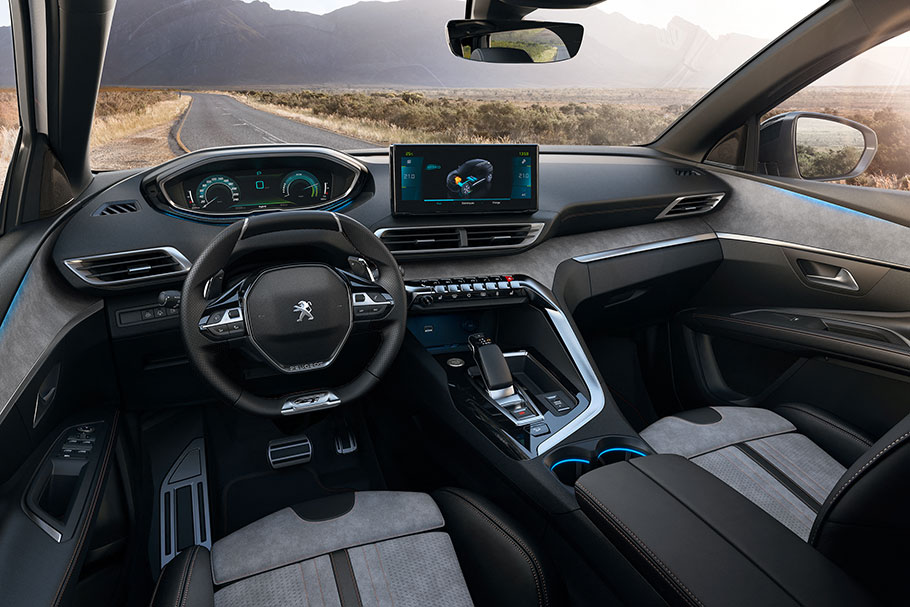
    The Flying Spur uses three-chamber air springs which contain 60 percent more air volume compared to the previous model. This allows more scope to vary from sporting levels of spring stiffness to luxury limousine refinement depending upon which mode the driver has selected. The new car features CDC (Continuous Damping Control), which allows continuous regulation of the dampers.

    Four ride height sensors constantly measure the distance between the axle and the body. If the system detects a difference compared with the normal height, the air volume in the springs is corrected accordingly to restore the normal height.

    The Bentley Dynamic Ride System is designed to improve both handling and ride comfort. A 48-volt system controls an electronic actuator unit which manages the stiffness of the anti-roll bar, changing the stiffness on-demand to combat cornering forces and keep the Flying Spur level.